The Velvet Revolution (1989, Czechoslovakia)
The Velvet Revolution (1989, Czechoslovakia) — an illustrated history story, featuring Vaclav Havel, Gustáv Husák, Alexander Dubček, set in Czechoslovakia. 10 illustrated pages, free to read on Wonder History.
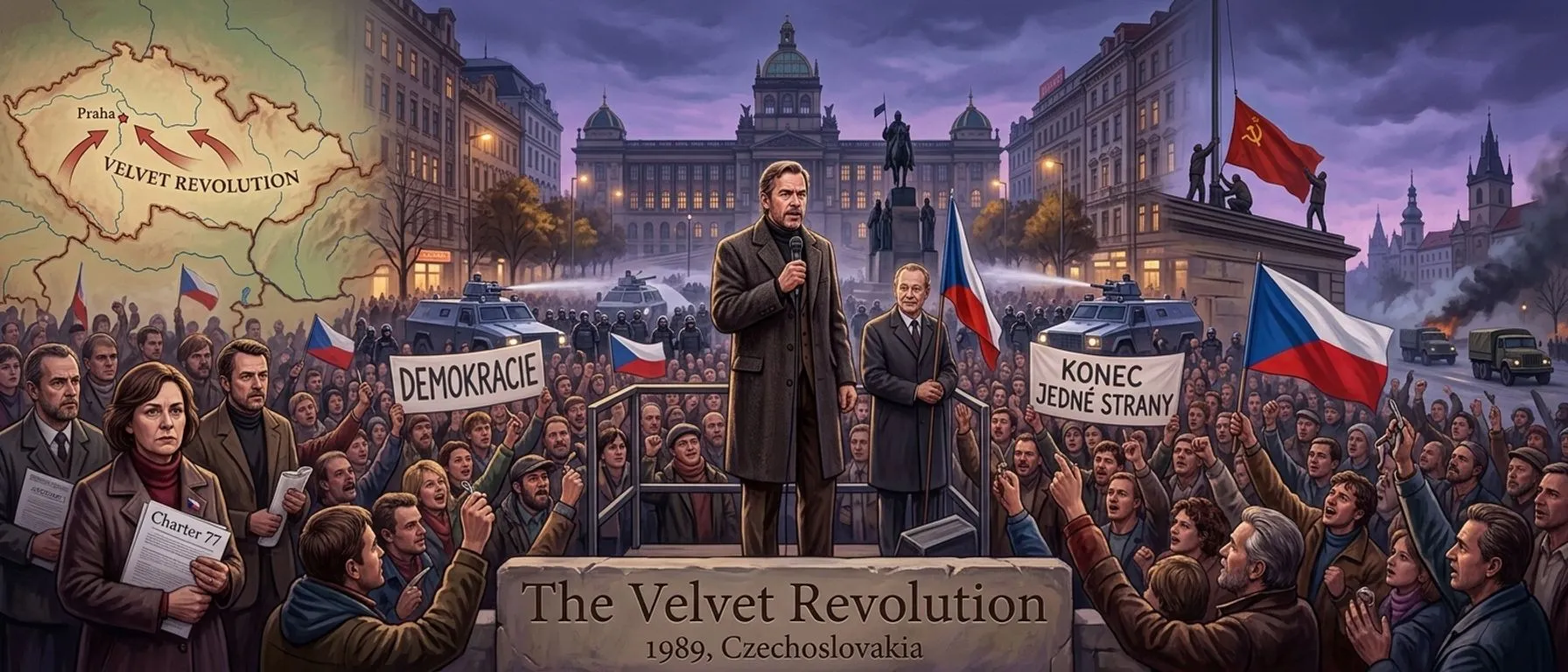
Page 1
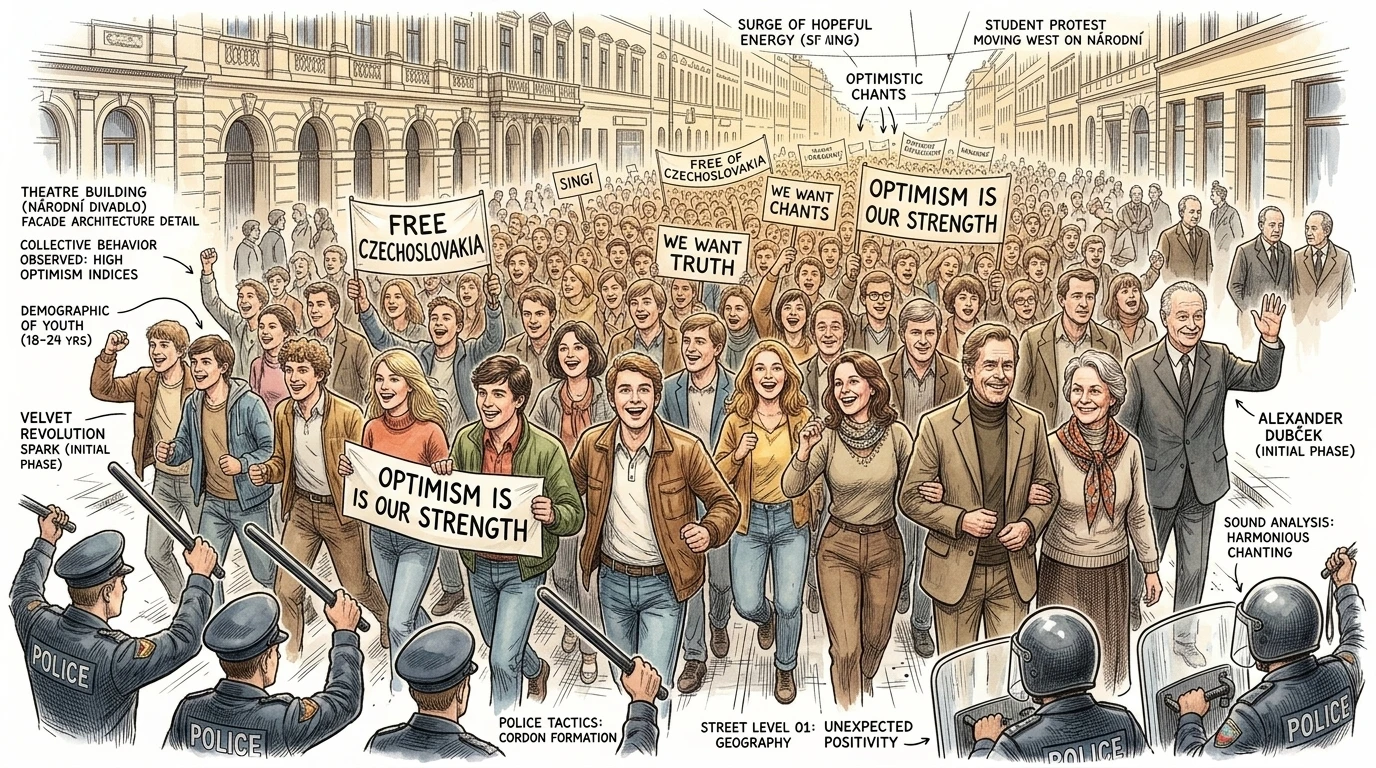
November 17, 1989, Prague. A wave of students surged down Národní třída, their chants echoing through the night. Police lines tightened, batons raised. It was a spark, lit by the memory of Jan Palach and the yearning for freedom, and how did Czechoslovakia reach this point of no return?
Page 2
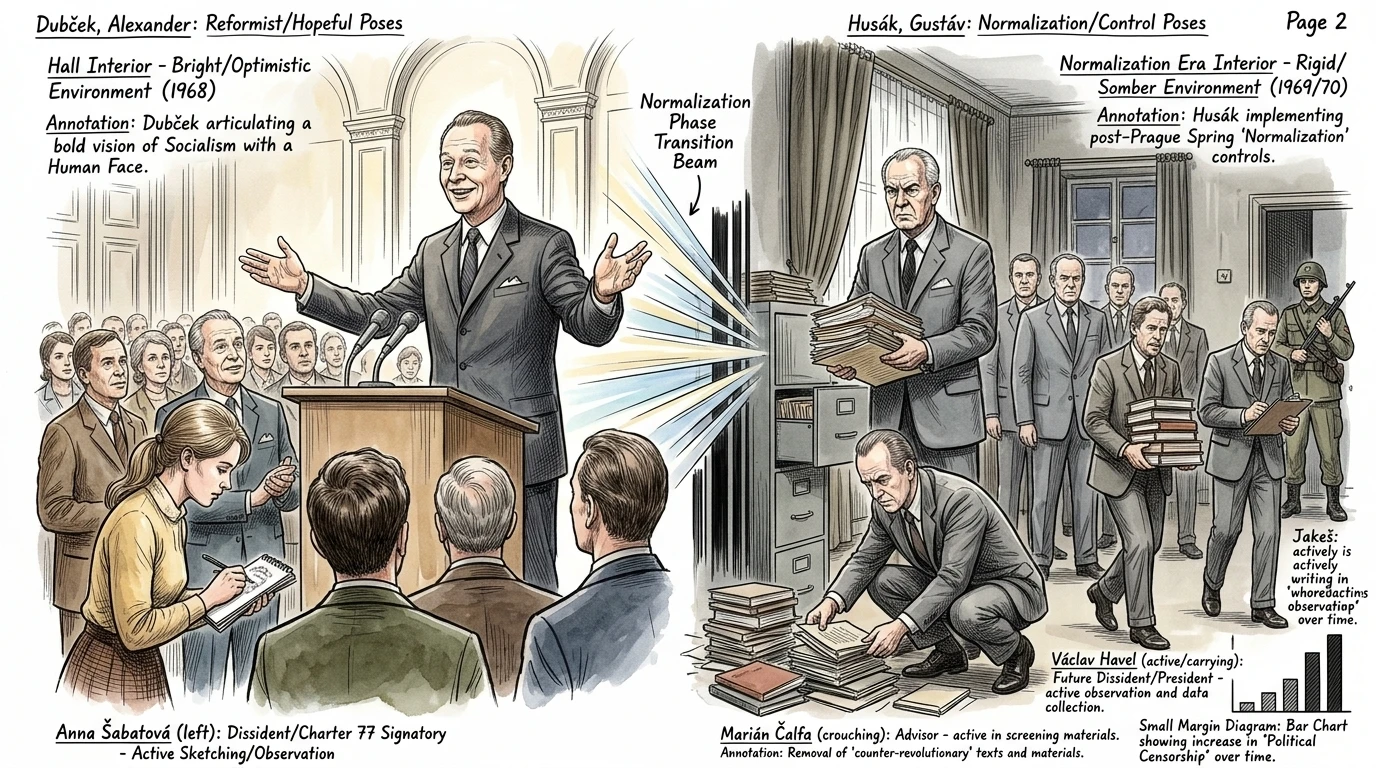
Prague, 1968. Alexander Dubček, then the First Secretary of the Communist Party of Czechoslovakia, initiated a series of reforms known as the Prague Spring. "We are carrying out a policy... of building an advanced socialist society on sound economic foundations... a socialism that corresponds to the historical traditions of Czechoslovakia," Dubček had declared. But Moscow would not allow such deviations. The Warsaw Pact invasion crushed the reforms, ushering in an era of 'normalization' under Gustáv Husák.
Page 3
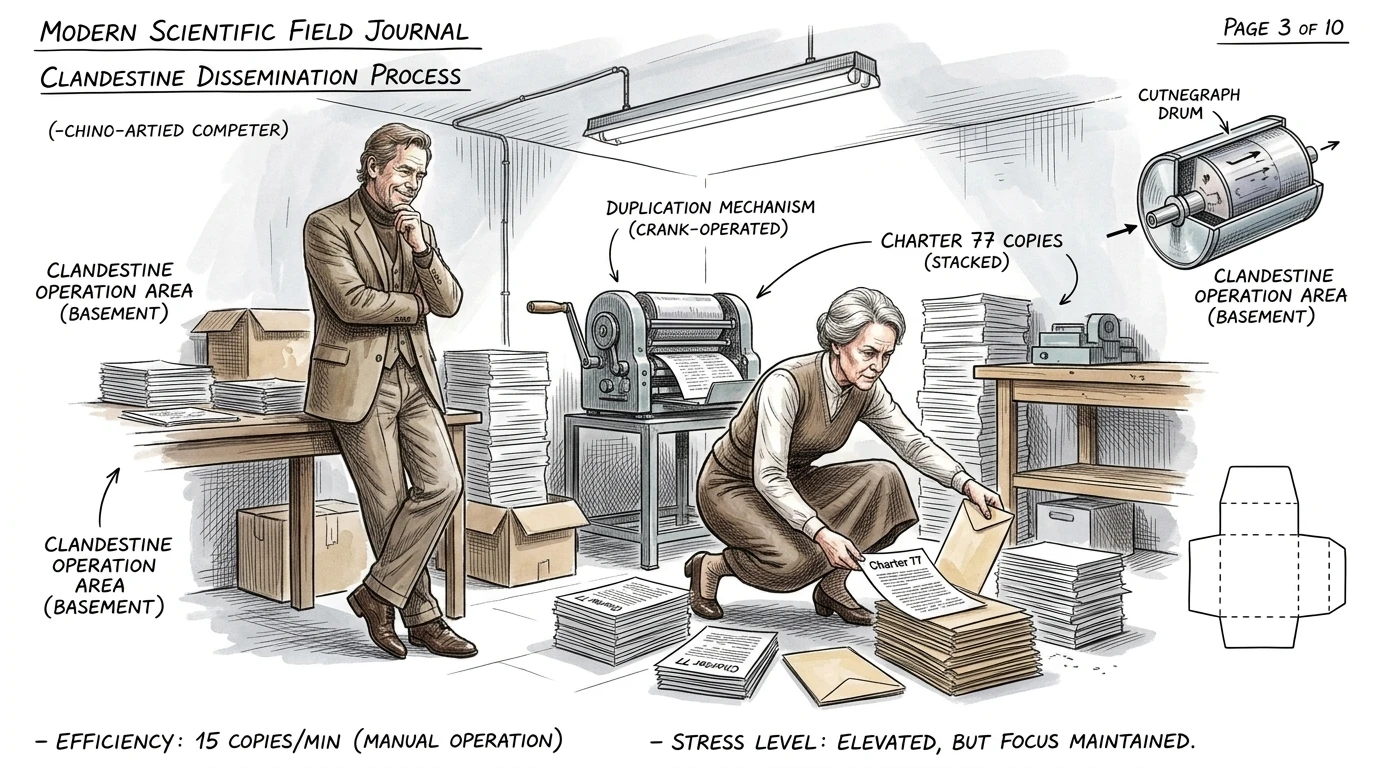
Charter 77 emerged as a response to the suppression of dissent. Led by Václav Havel and Anna Šabatová, the human rights document called for the Czechoslovak government to adhere to international human rights standards. Anna Šabatová, a determined dissident, worked tirelessly to disseminate the Charter. "The power of the powerless," Havel called it, a force that could challenge the regime's authority.
Page 4
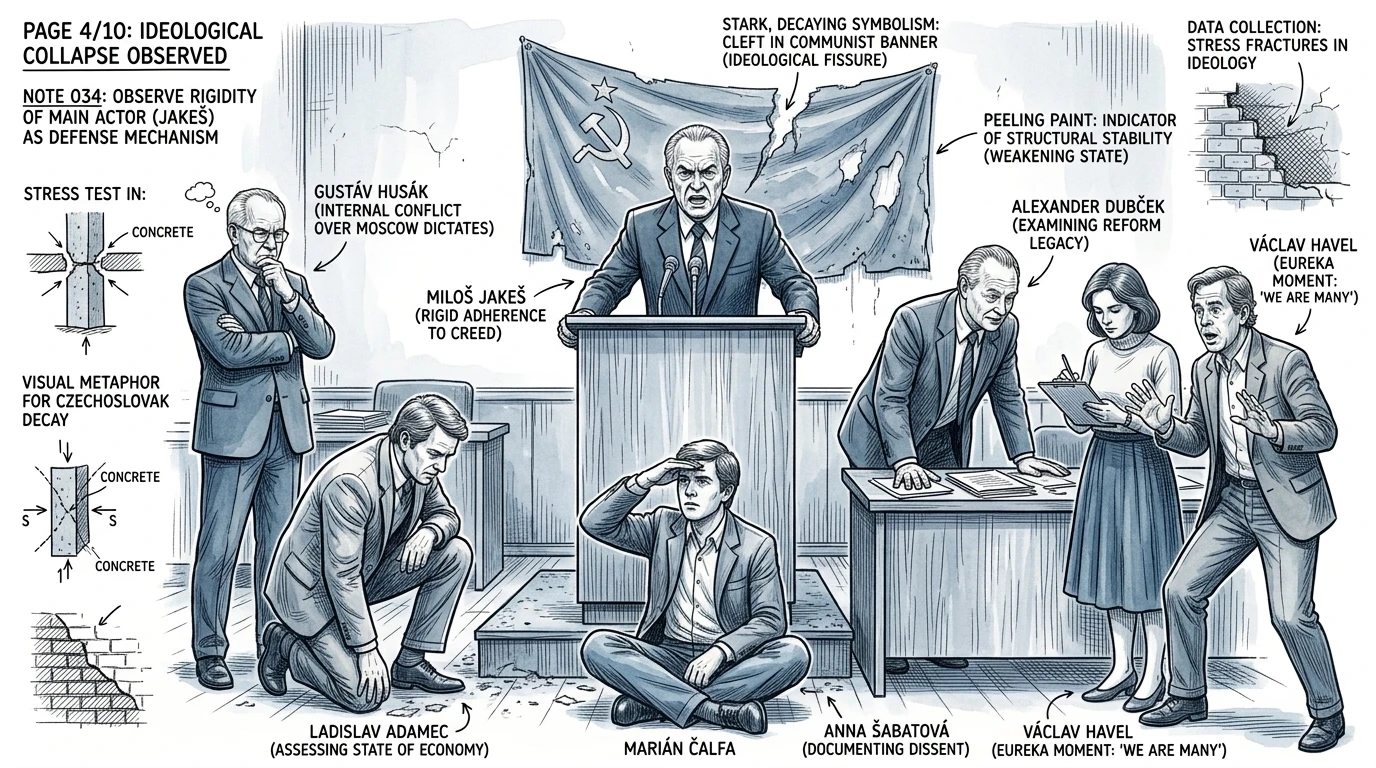
As the 1980s drew to a close, pressure for change mounted. Miloš Jakeš, the General Secretary of the Communist Party of Czechoslovakia, remained a staunch defender of the status quo. However, his grip on power was weakening. "The Soviet Union is our example," Jakeš proclaimed, clinging to a crumbling ideology while the world around him transformed.
Page 5
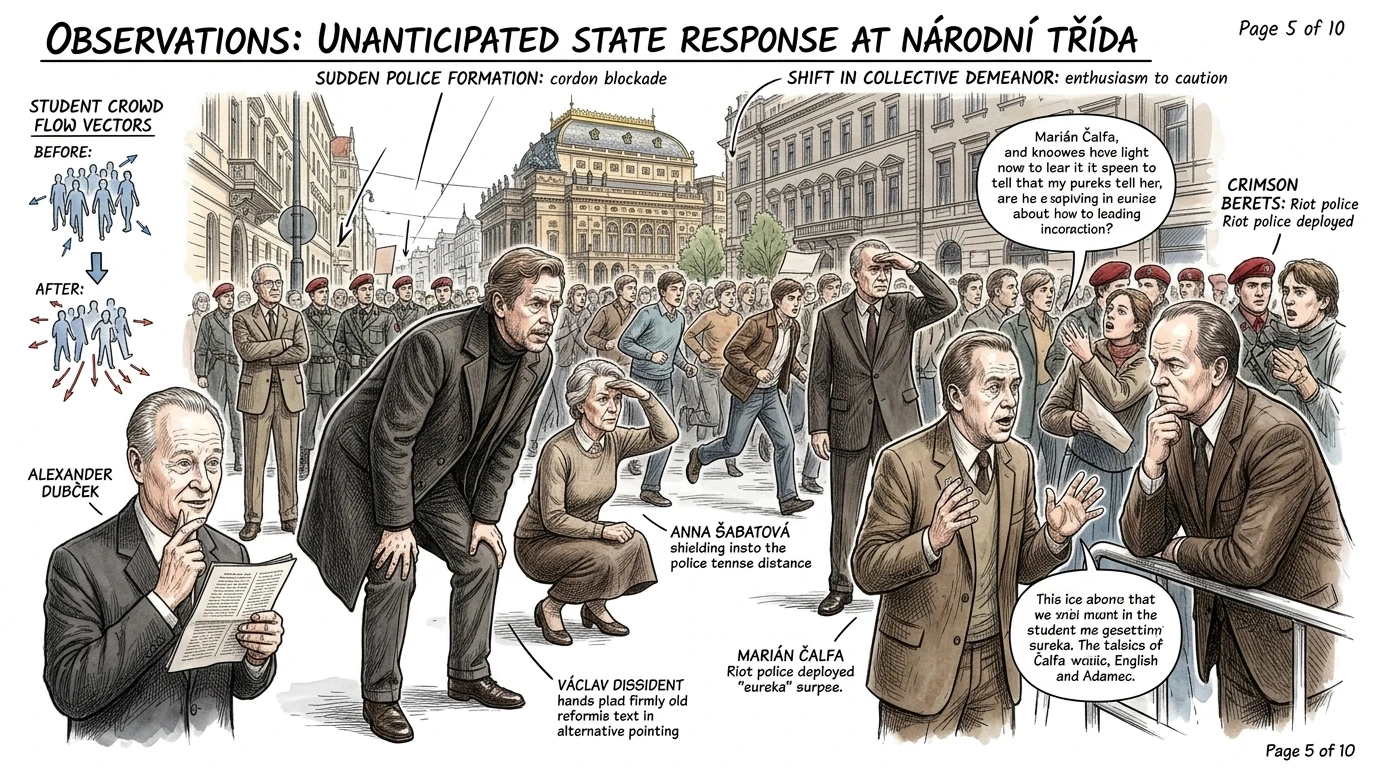
November 17, 1989. Students gathered in Albertov for a permitted demonstration, commemorating International Students' Day. The march was peaceful, but as the students approached Národní třída, they were met by riot police. The police blocked their path, batons at the ready. The atmosphere, pregnant with unease, ignited.
Page 6
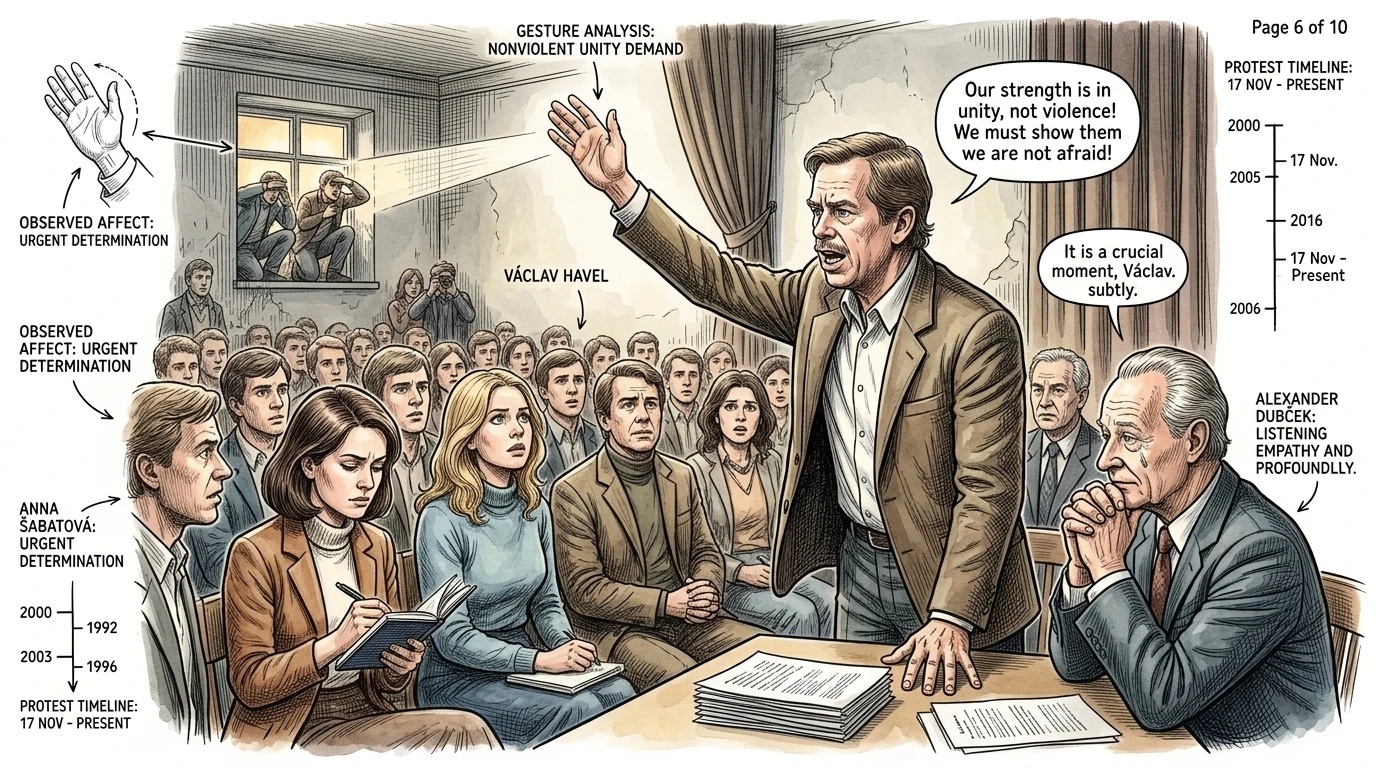
The brutal crackdown on Národní třída galvanized the opposition. News of the police brutality spread quickly, sparking outrage across the country. Václav Havel called for a general strike. "We must stand together," he urged, "and demand an end to this tyranny!"
Page 7
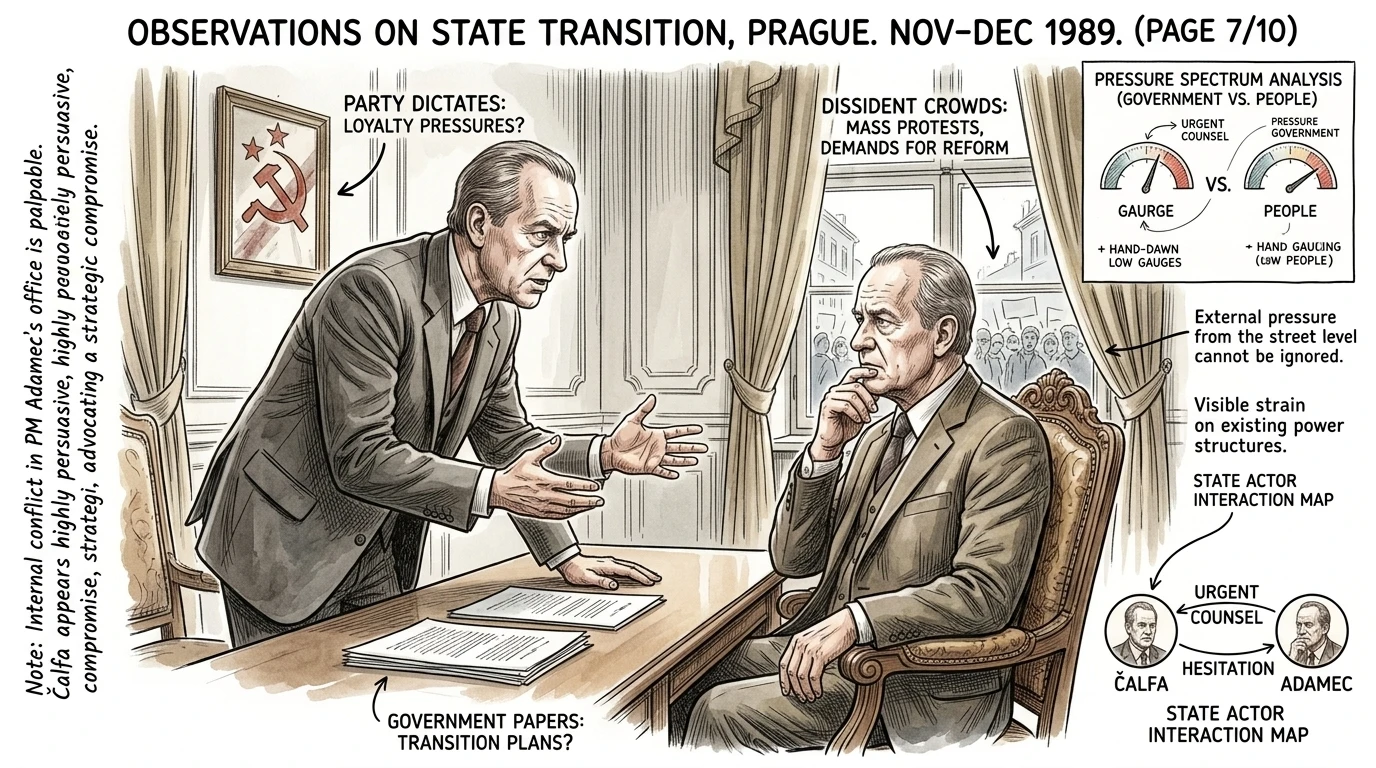
Ladislav Adamec, the Prime Minister, sought to negotiate a way out of the crisis. Marián Čalfa, his advisor, urged him to seek dialogue with the opposition. "We must listen to the people," Čalfa advised, "or risk a violent confrontation that will tear this country apart.". Adamec, however, still hesitated, caught between the demands of the people and the dictates of the Party.
Page 8
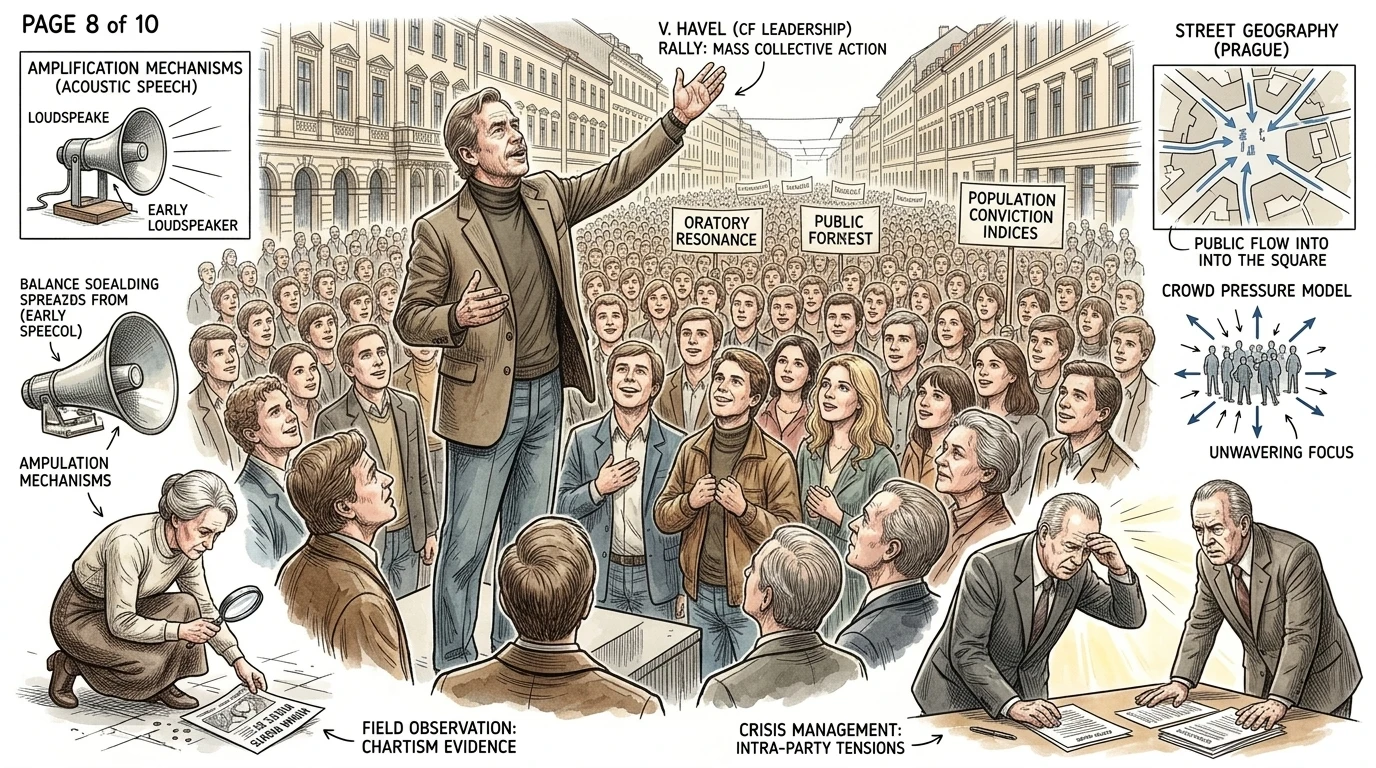
The Civic Forum, led by Václav Havel, emerged as the voice of the revolution. Negotiations began with the government, but the people remained vigilant. "The arc of the moral universe is long, but it bends toward justice," Havel declared, echoing the words of Martin Luther King Jr. in addressing a crowd. The pressure from below was relentless, refusing to be compromised.
Page 9
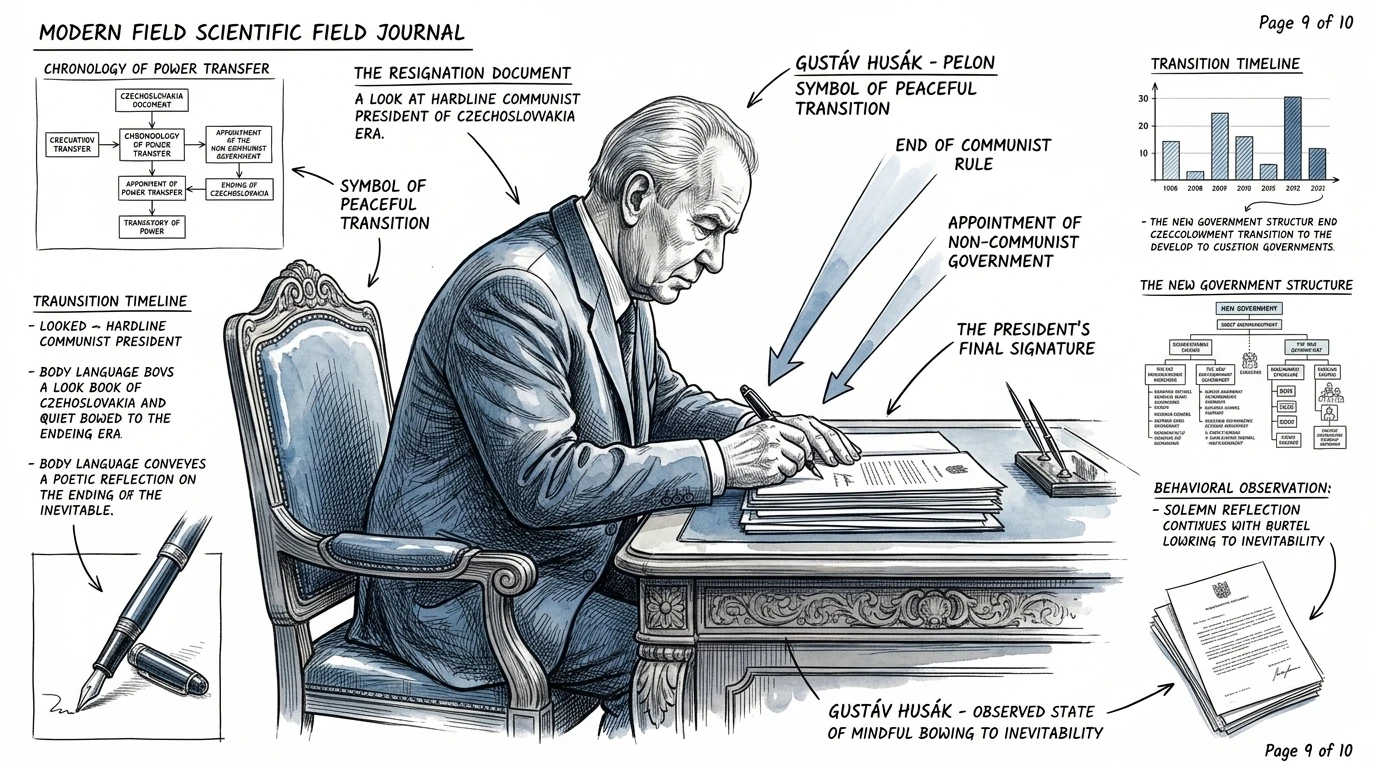
December 10, 1989. Gustáv Husák, bowing to the inevitable, appointed the first government in Czechoslovakia since 1948 that was not dominated by the Communist Party. Husák knew his time had come to an end. The transfer of power was peaceful, a triumph of people power. "We are all in the gutter, but some of us are looking at the stars," Husák mumbled, recalling Oscar Wilde's words as he signed the documents.
Page 10
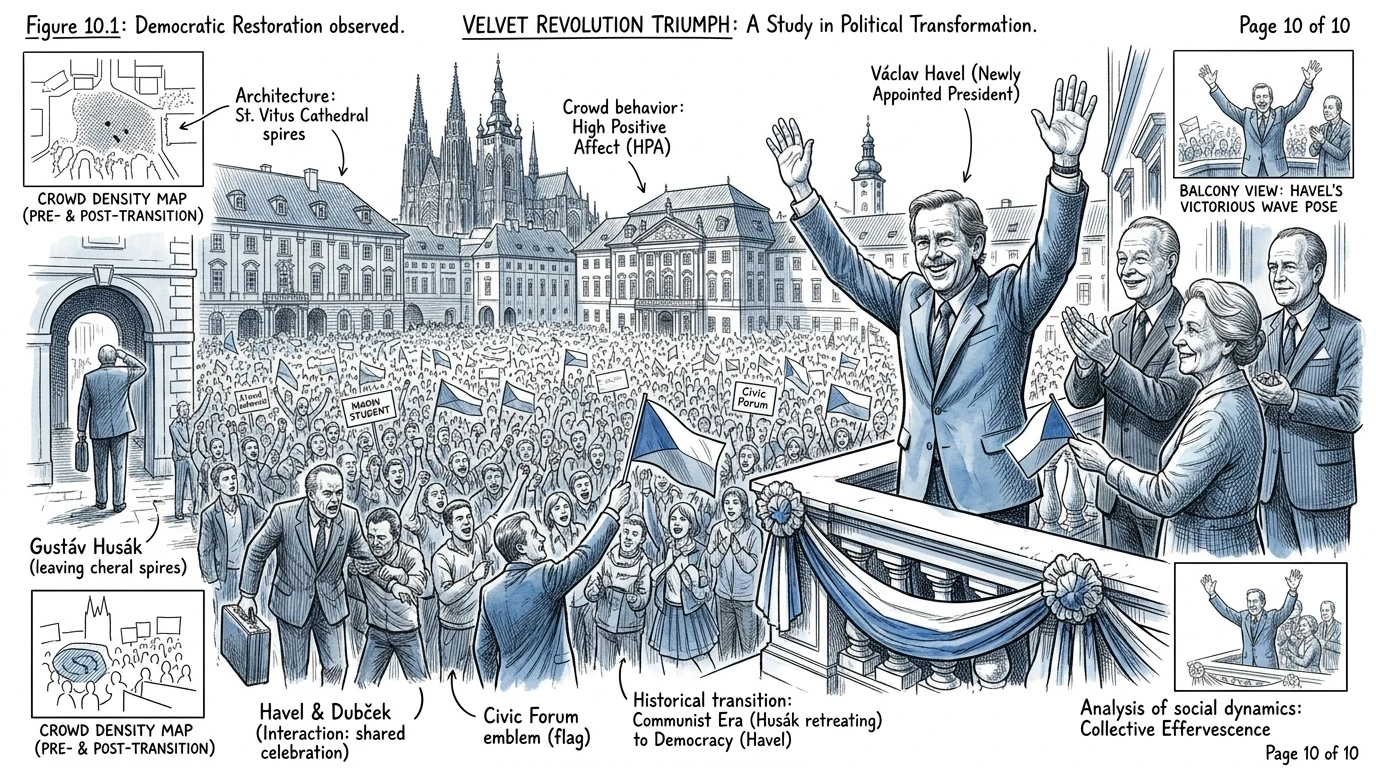
Czechoslovakia had its Velvet Revolution. Václav Havel became President, ushering in an era of democracy and freedom. Though Czechoslovakia peacefully dissolved into the Czech Republic and Slovakia in 1993, the Velvet Revolution remains a testament to the power of non-violent resistance and the enduring human desire for freedom. The peaceful transition stands as a beacon of hope for nations struggling against oppression.
About this story
- Historical figures: Vaclav Havel, Gustáv Husák, Alexander Dubček
- Location: Czechoslovakia
- Period: Contemporary
- Audience: general readers
Questions and answers
Questions and answers about The Velvet Revolution (1989, Czechoslovakia)
Read Wonder History on your phone
Wonder History is available on Android. Get Wonder History on Google Play.