The Waitangi Treaty is Signed (1840, Europe)
The Waitangi Treaty is Signed (1840, Europe) — an illustrated history story, featuring William Hobson, Hone Heke, Henry Williams, set in Europe. 10 illustrated pages, free to read on Wonder History.
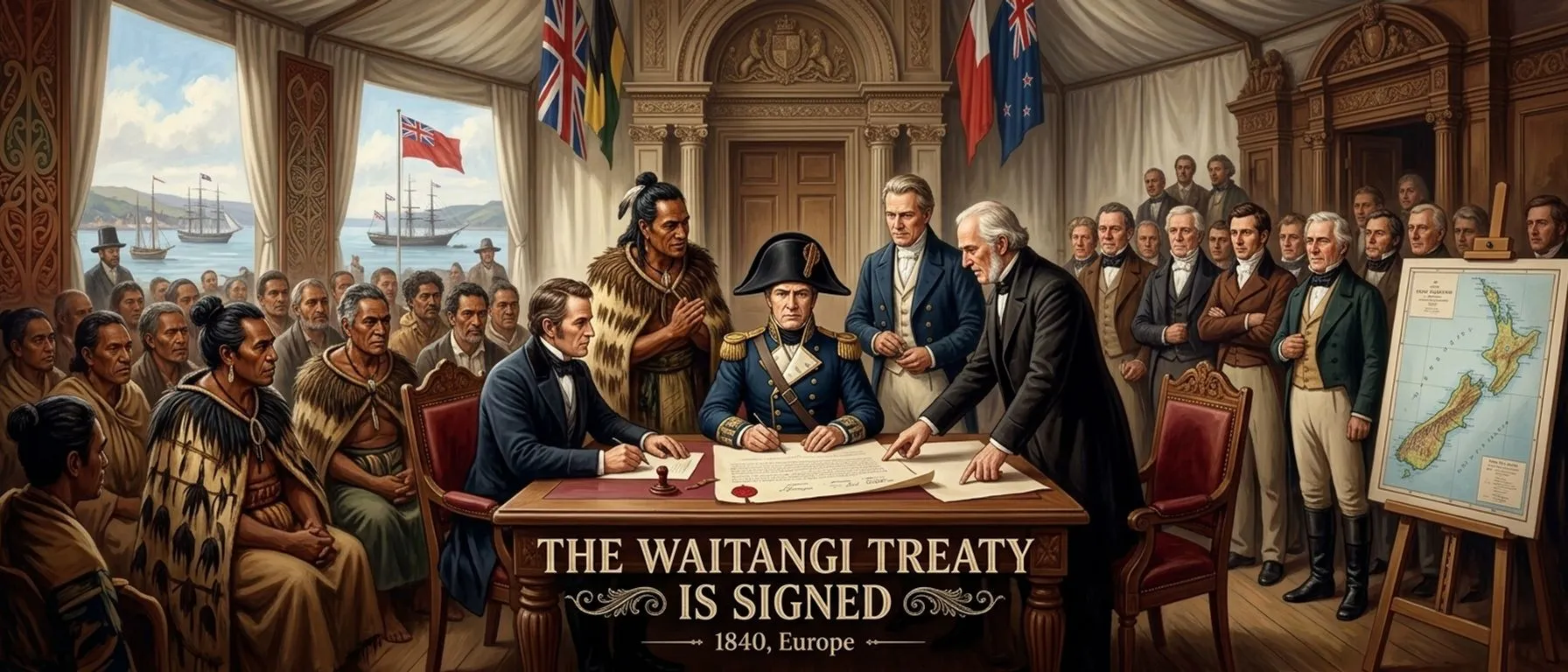
Page 1

February 6th, 1840. Hundreds of Māori chiefs and British representatives converged on the grounds near James Busby's house. The fate of Aotearoa hung in the balance as Governor William Hobson stepped forward. But what led to this pivotal gathering on the shores of the Bay of Islands?
Page 2
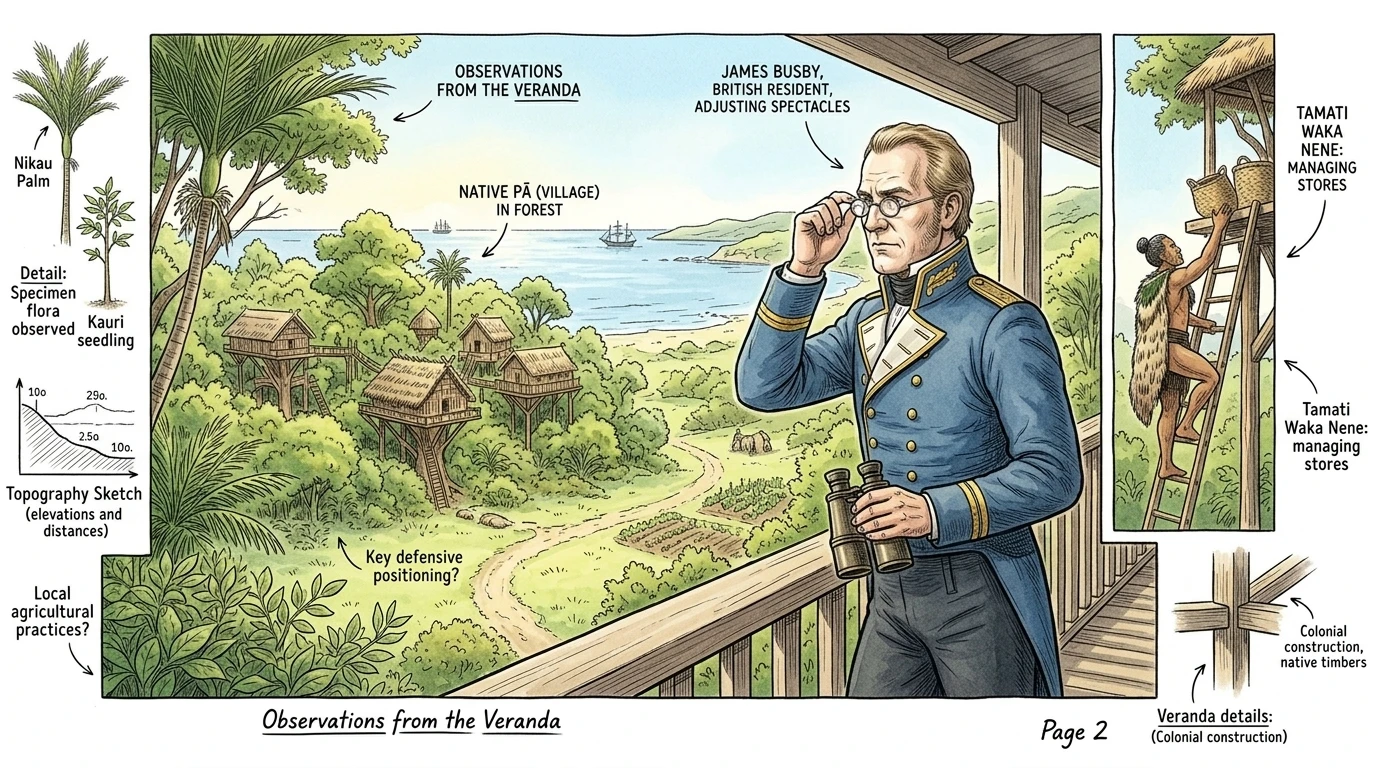
In the years leading up to the Treaty, James Busby, the British Resident, struggled to maintain order among the growing number of European settlers and the Māori tribes. He looked out from his veranda, the settlement quiet below, contemplating the challenges that lay ahead. "The situation is becoming untenable," he muttered to himself, adjusting his spectacles.
Page 3
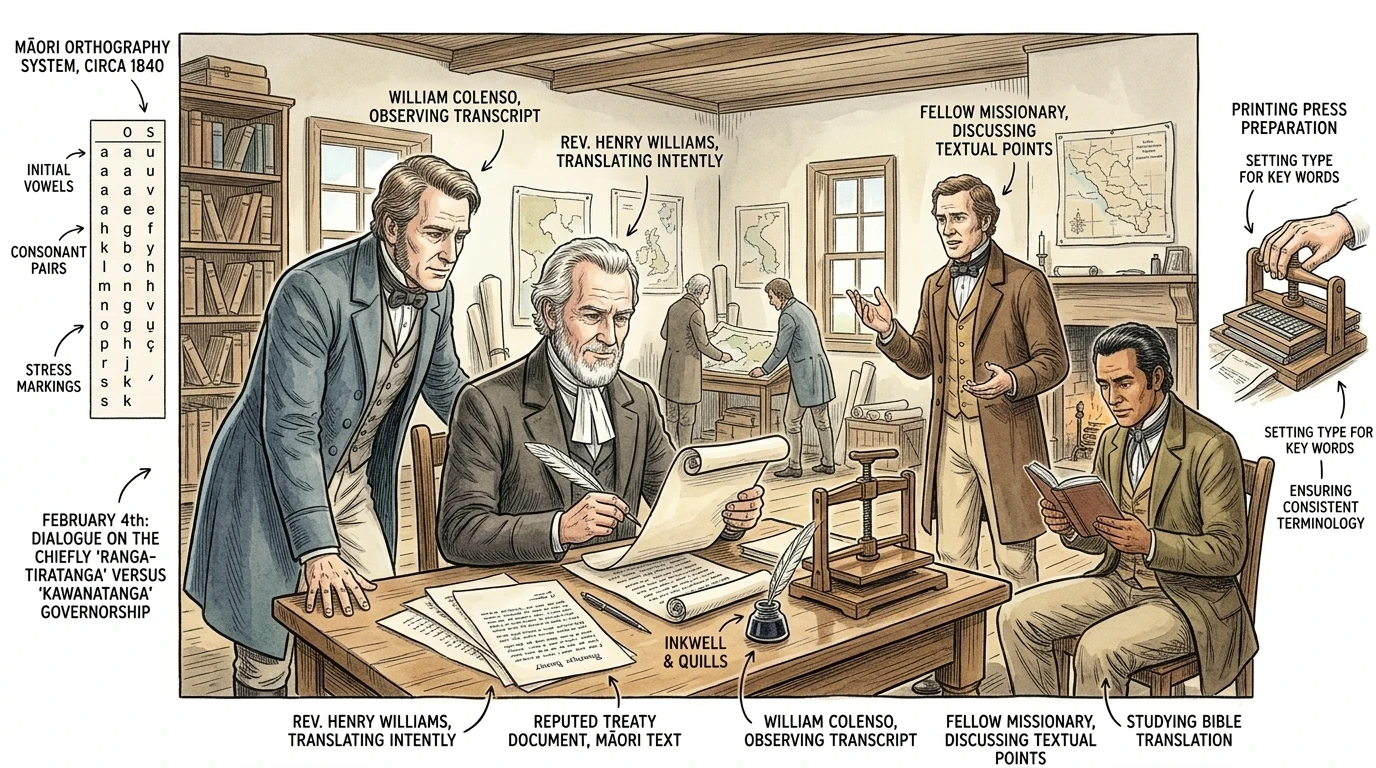
Henry Williams, the influential missionary, understood the need for a formal agreement. He worked tirelessly to translate the Treaty into Māori, hoping to ensure a fair understanding for all parties involved. "It is crucial that the Māori chiefs comprehend every clause," Williams declared to his fellow missionaries, carefully reviewing the translated document.
Page 4
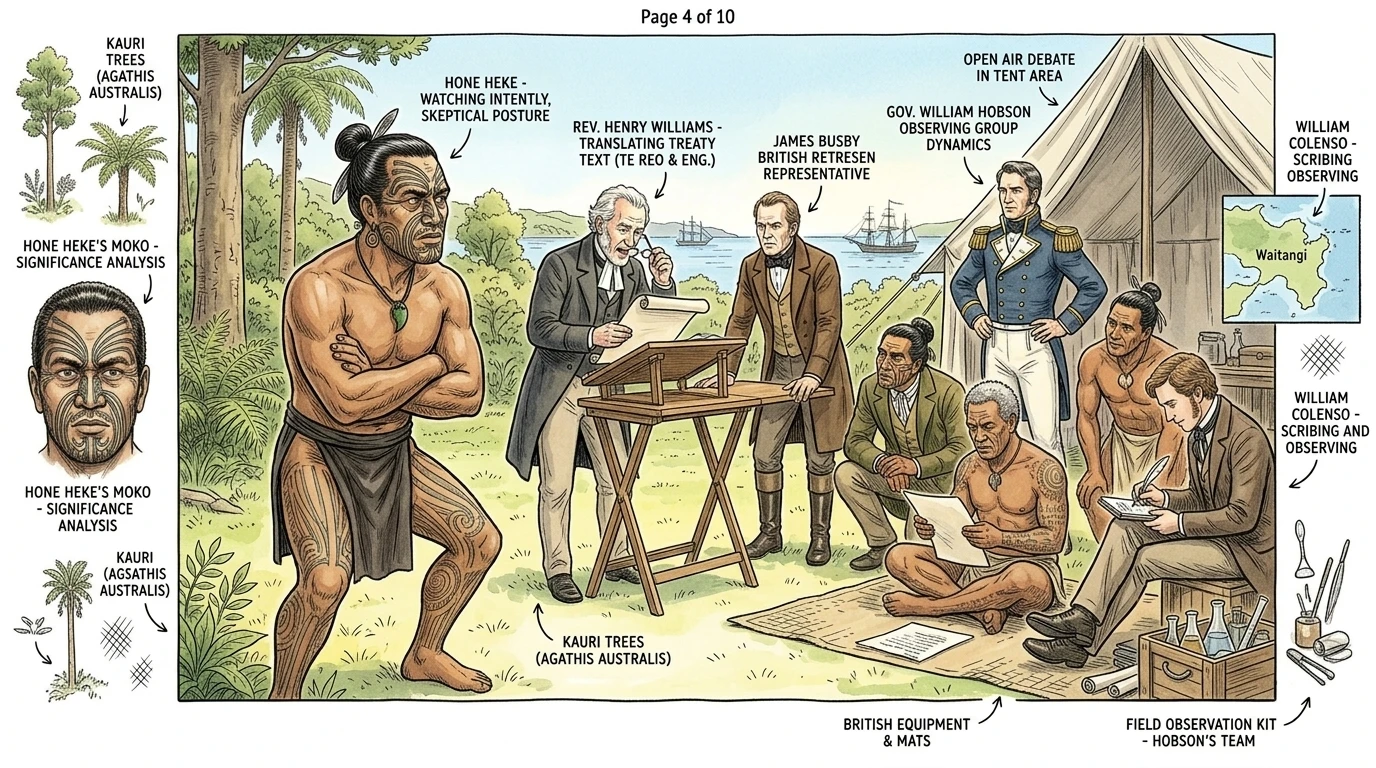
Hone Heke, a respected Māori chief, listened intently as the Treaty was read aloud. He was skeptical of the British intentions and sought assurances that Māori sovereignty would be protected. "How can we be sure that the words spoken here will be honored?" Heke challenged, his voice echoing across the gathering.
Page 5

Tamati Waka Nene, another influential chief, believed that signing the Treaty was the best path to stability and trade. He stood in support of the British proposal, urging his fellow chiefs to consider the benefits of cooperation. "We must embrace this opportunity for peace and prosperity," Nene proclaimed, his voice filled with conviction.
Page 6
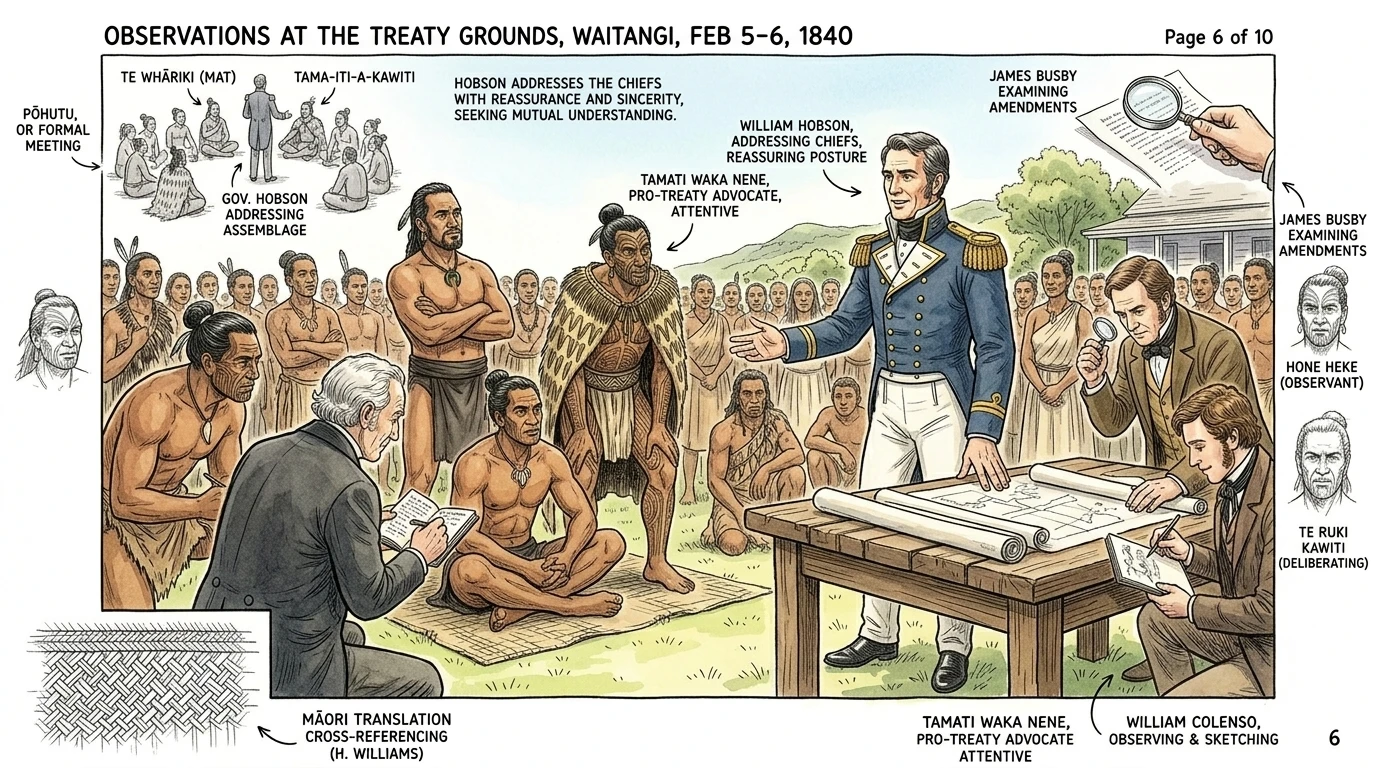
As the debate raged, Governor Hobson pressed for a swift resolution. He emphasized the Queen's desire to protect Māori interests and establish a just society. "Her Majesty seeks only the well-being of the Māori people," Hobson stated firmly, attempting to reassure the assembled chiefs.
Page 7
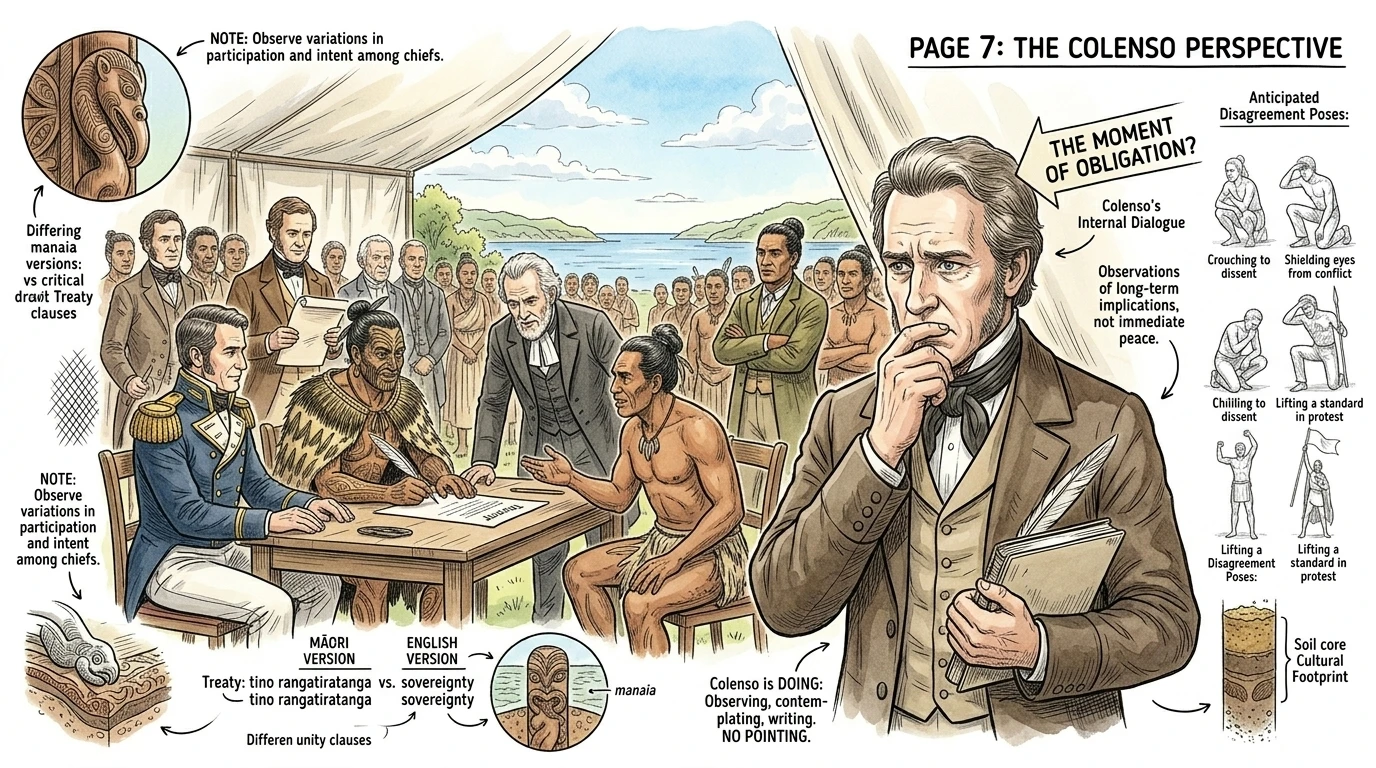
"Remember," William Colenso, the missionary printer, later said, "history will judge us by our actions here today." He observed the signing with growing unease, aware of the potential for misunderstanding and future conflict. Colenso whispered this quote to himself to recall that actions have consequences.
Page 8
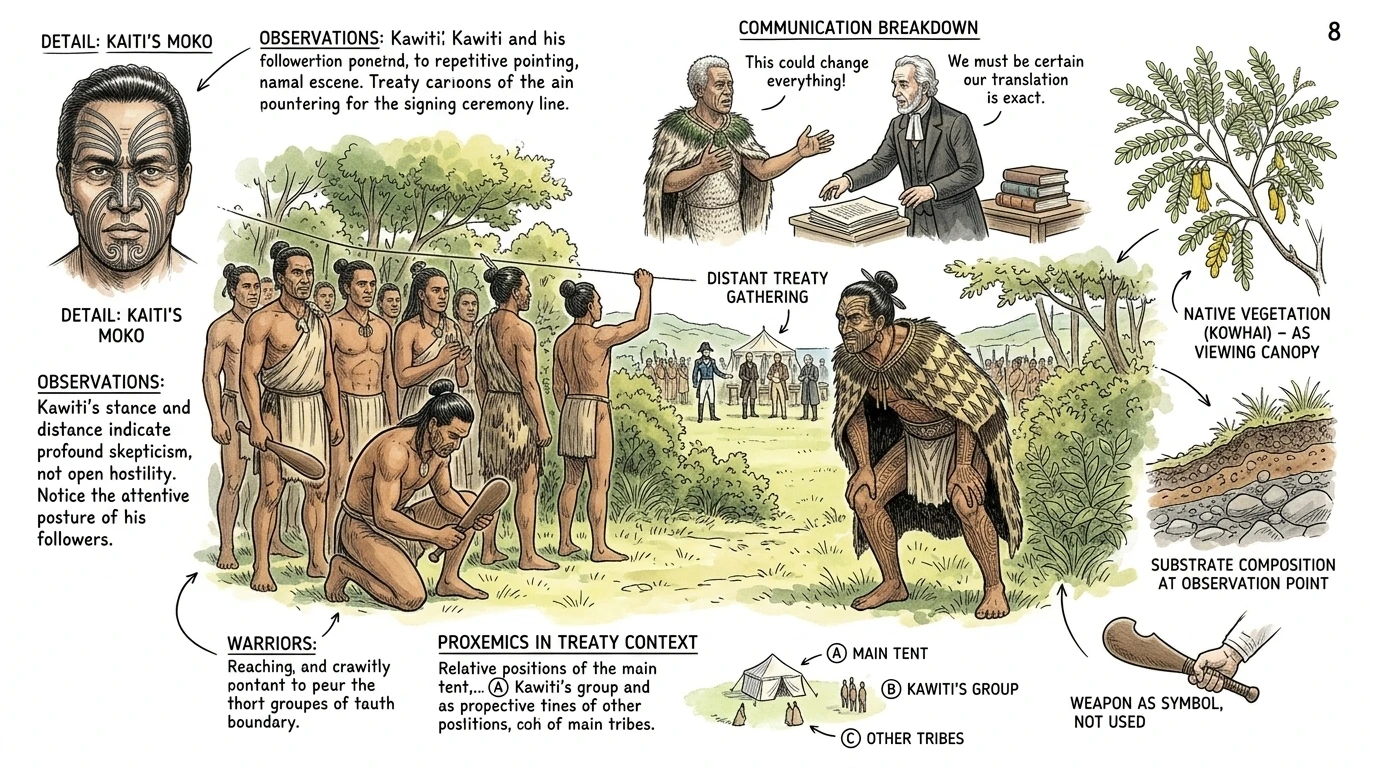
Te Ruki Kawiti, a powerful chief who initially refused to sign, watched from a distance, skeptical and unconvinced. His warriors stood behind him, ready to defend their land if necessary. He stated firmly that "the shadow of the Queen is longer than her arm and will reach across the sea to take what is ours."
Page 9

With signatures secured, Governor Hobson declared the Treaty of Waitangi in effect. But the seeds of discord had already been sown, and the true meaning of the agreement would soon be contested. Hobson nodded to James Busby and said "The Treaty is signed, but our duty now is to ensure that it is upheld, whatever may come."
Page 10
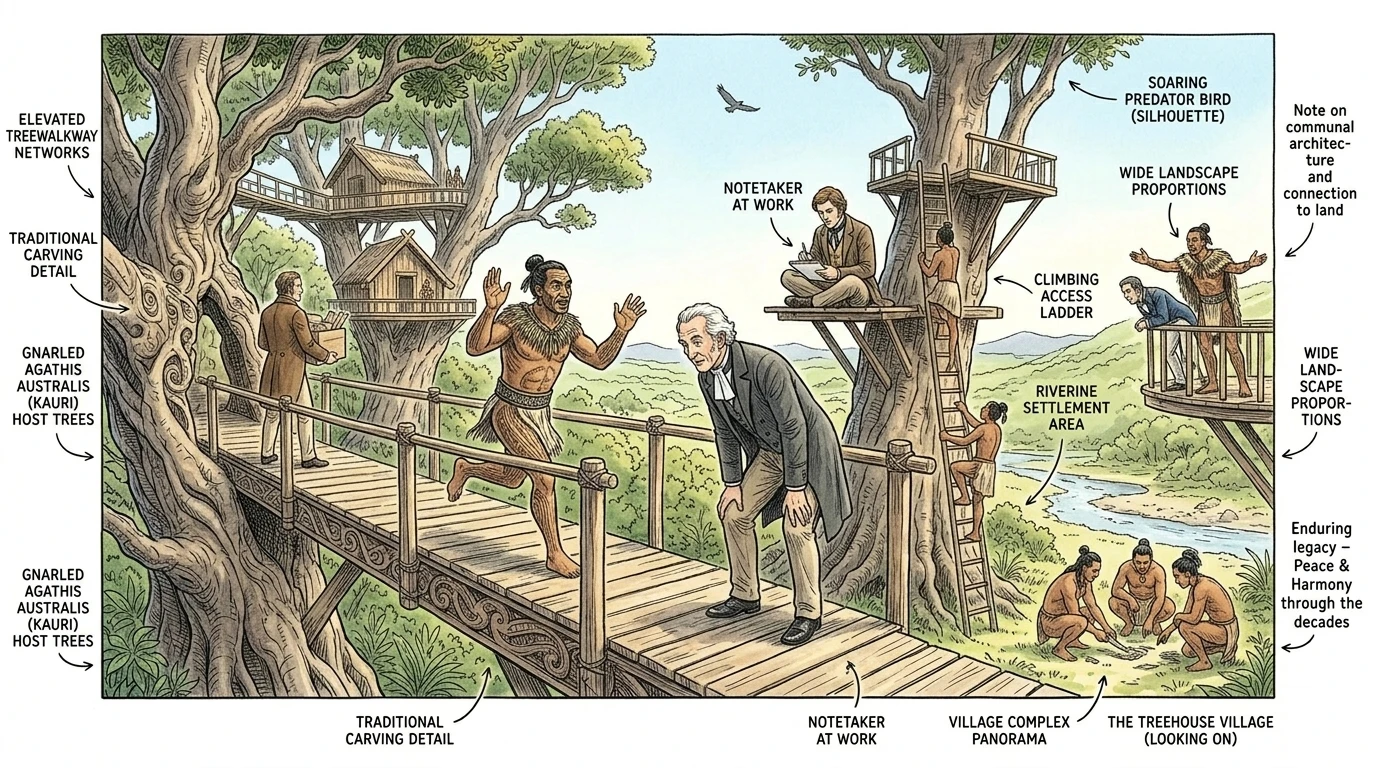
The Treaty of Waitangi remains a foundational document in New Zealand history, a source of both unity and division. Its legacy continues to shape the relationship between the Crown and the Māori people, a testament to the enduring power of words and the complexities of history. A lone bird call sounds over the land.
About this story
- Historical figures: William Hobson, Hone Heke, Henry Williams
- Location: Europe
- Period: Modern
- Audience: general readers
Questions and answers
Questions and answers about The Waitangi Treaty is Signed (1840, Europe)
Read Wonder History on your phone
Wonder History is available on Android. Get Wonder History on Google Play.