The Zapatista Uprising (1994, North America)
The Zapatista Uprising (1994, North America) — an illustrated history story, featuring Subcomandante Marcos, Bishop Samuel Ruiz García, Comandanta Ramona, set in North America. 10 illustrated pages, free to read on Wonder History.
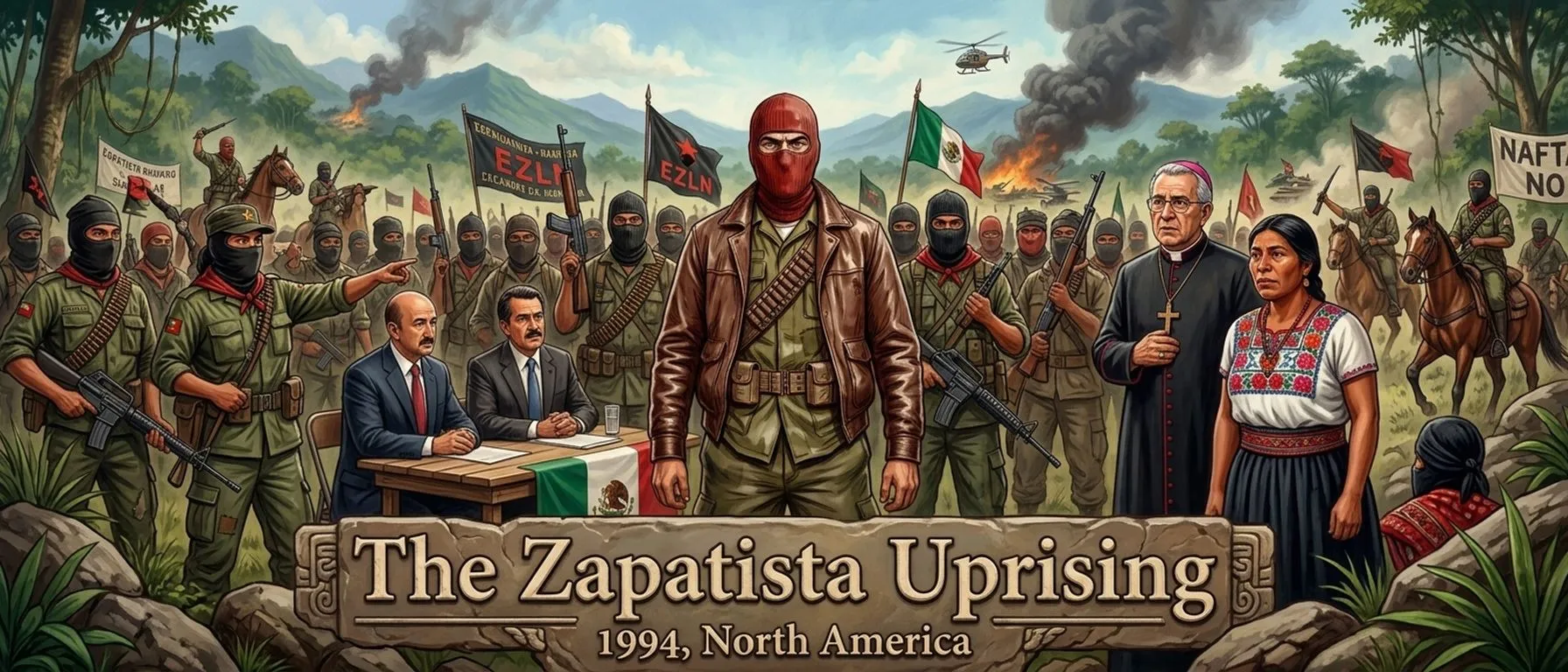
Page 1
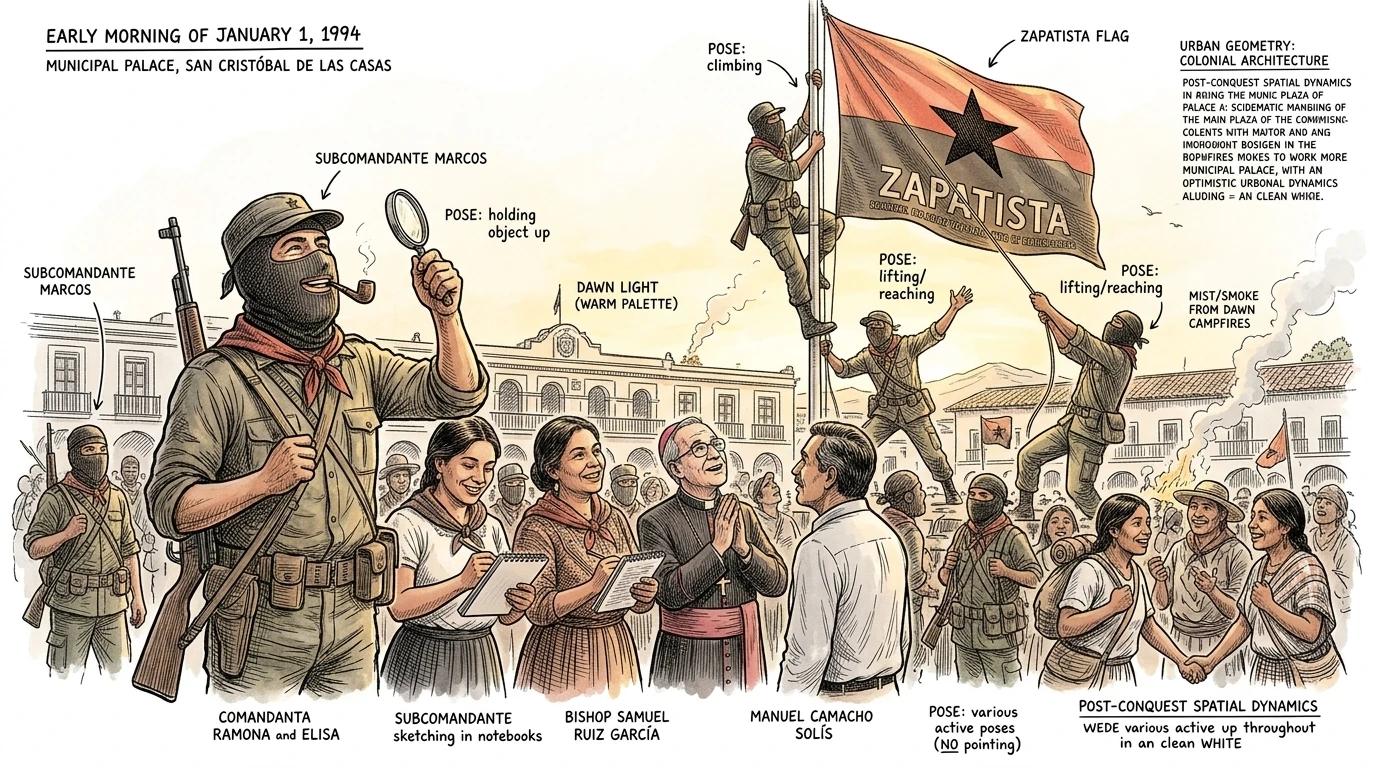
January 1, 1994. Smoke billowed from the municipal palace in San Cristobal de las Casas. Subcomandante Marcos, masked and rifle in hand, watched his Zapatista soldiers raise their flag. The world had changed, but how did a movement born in the shadows erupt into open rebellion?
Page 2
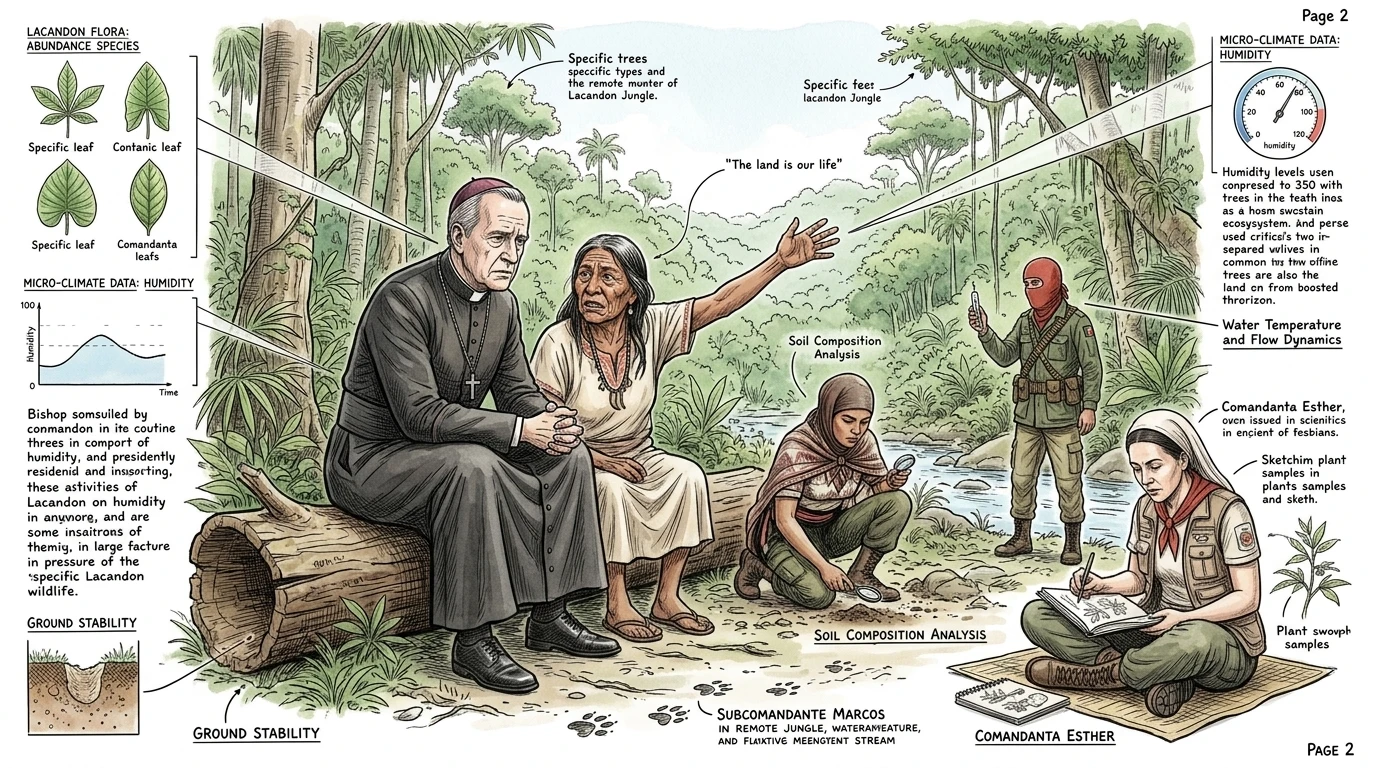
Years before the uprising, in the remote Lacandon Jungle, Bishop Samuel Ruiz García, a man known as 'Tatic' by the indigenous communities, listened to their grievances. 'The land is our life,' one elder explained, 'but the government ignores our cries.' Ruiz García, his heart heavy, knew the desperation simmering beneath the surface.
Page 3
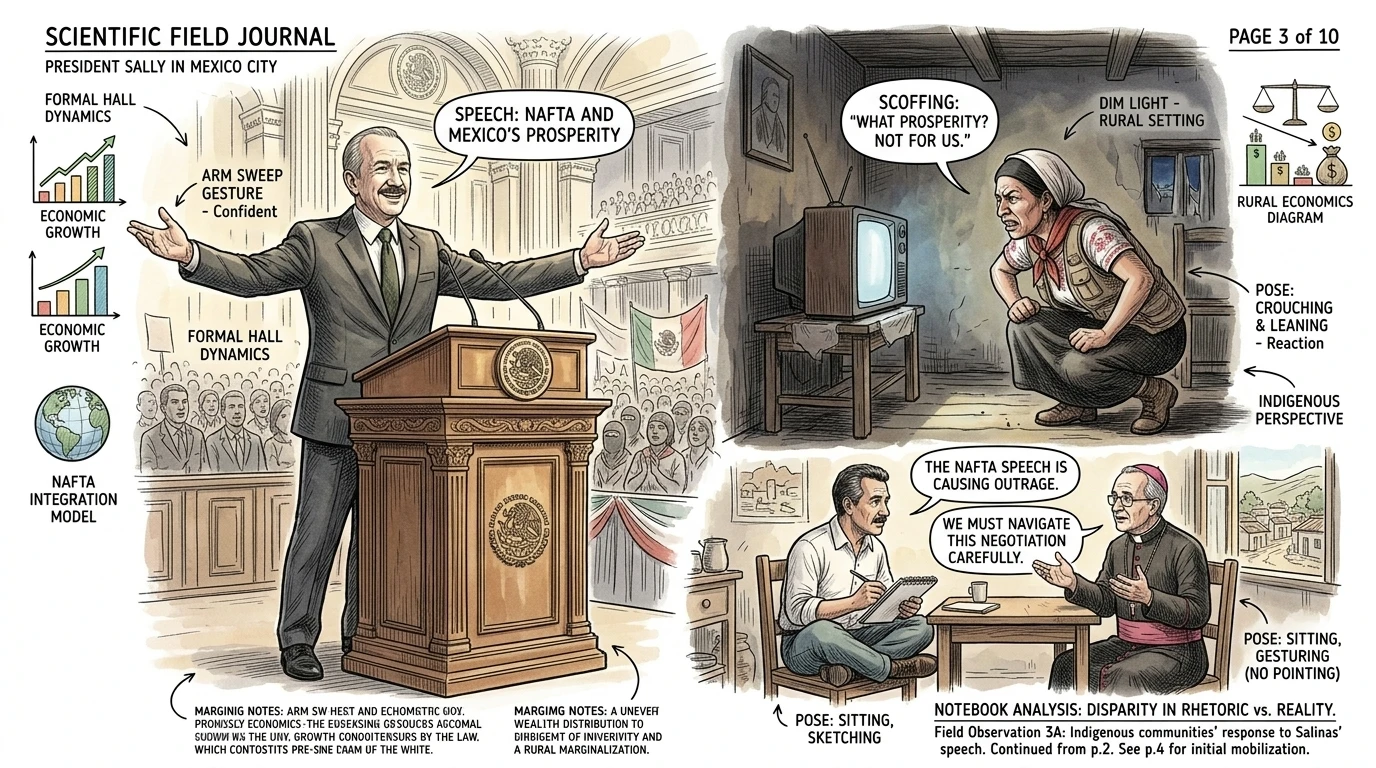
In Mexico City, President Carlos Salinas de Gortari addressed the nation, praising the North American Free Trade Agreement (NAFTA). 'This agreement will bring prosperity to all Mexicans!' he declared on December 8, 1993. But Comandanta Esther, a young Indigenous woman, scoffed at the television. 'Prosperity for whom?' she asked, her voice filled with anger.
Page 4
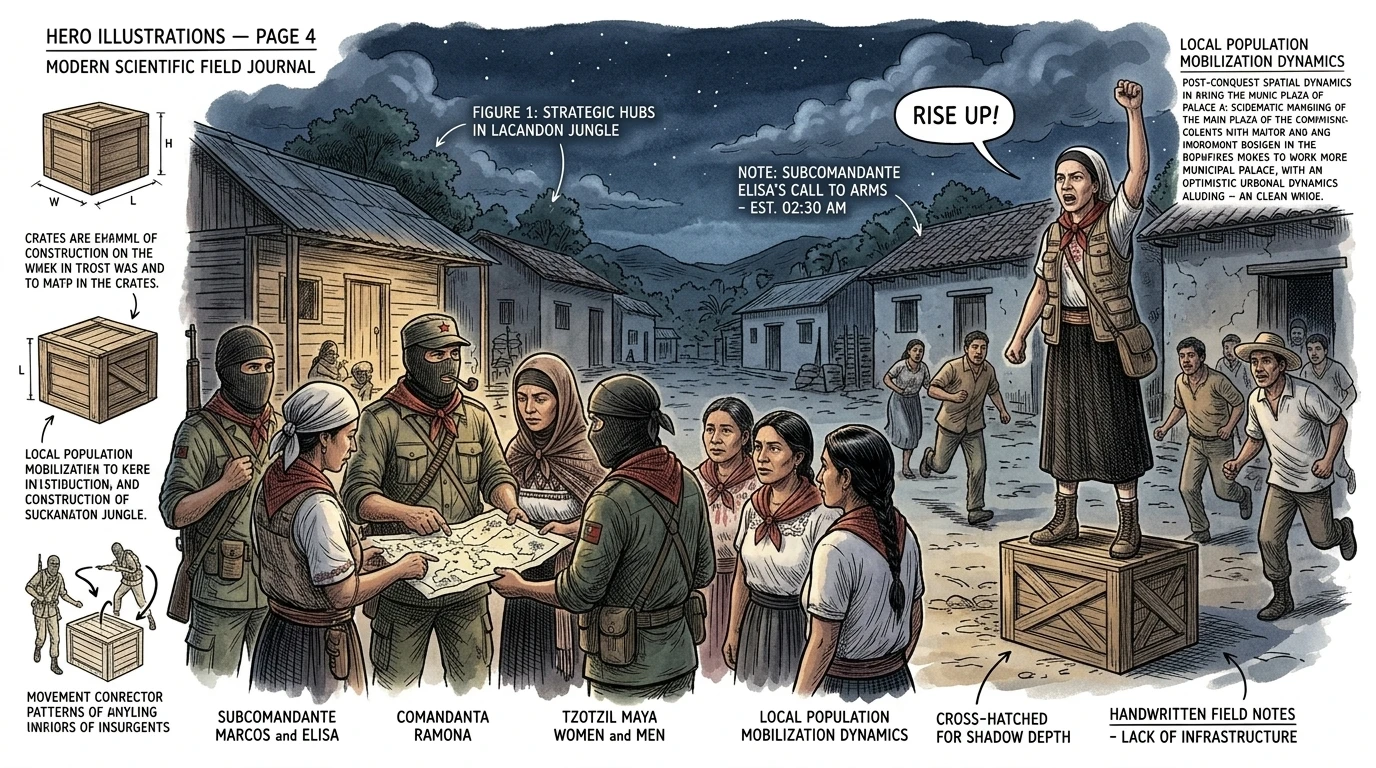
The Zapatistas, under the leadership of Subcomandante Marcos and Comandanta Ramona, began to organize in the shadows. 'We must rise up!' Comandante Elisa urged her fellow insurgents, 'We must show them we will not be ignored!' The call to arms echoed through the remote villages.
Page 5
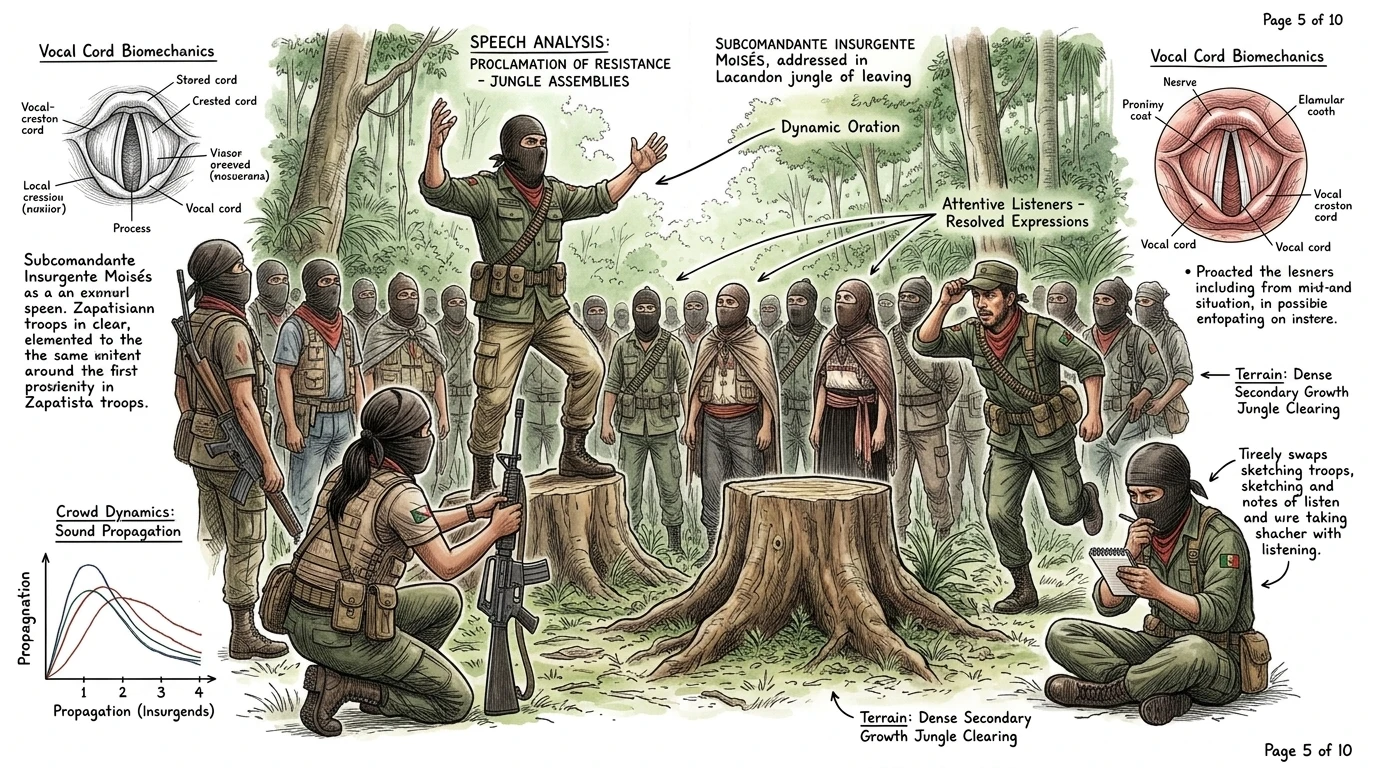
As the clock ticked towards January 1, 1994, the date NAFTA came into effect, Subcomandante Insurgente Moisés rallied his troops. 'The government has abandoned us, stolen our land, and denied us our rights,' Moisés proclaimed. 'As Nelson Mandela said, 'Education is the most powerful weapon which you can use to change the world.' Therefore, we fight for our dignity, our land, and our children's future!'
Page 6
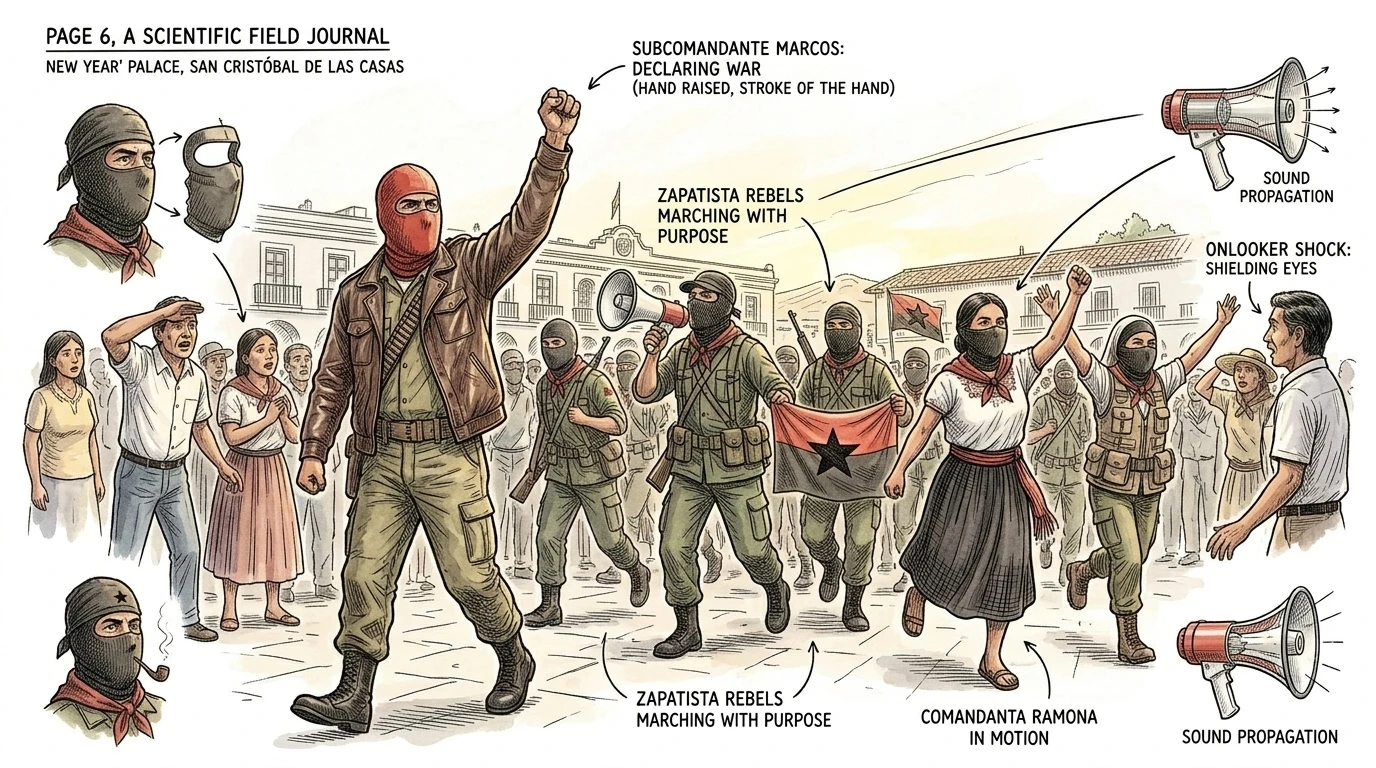
On New Year's Day, the Zapatista National Liberation Army (EZLN) seized several towns in Chiapas. The world watched in shock as masked rebels marched into San Cristobal de las Casas. Subcomandante Marcos, in the town square, declared war on the Mexican government. The rebellion had begun.
Page 7
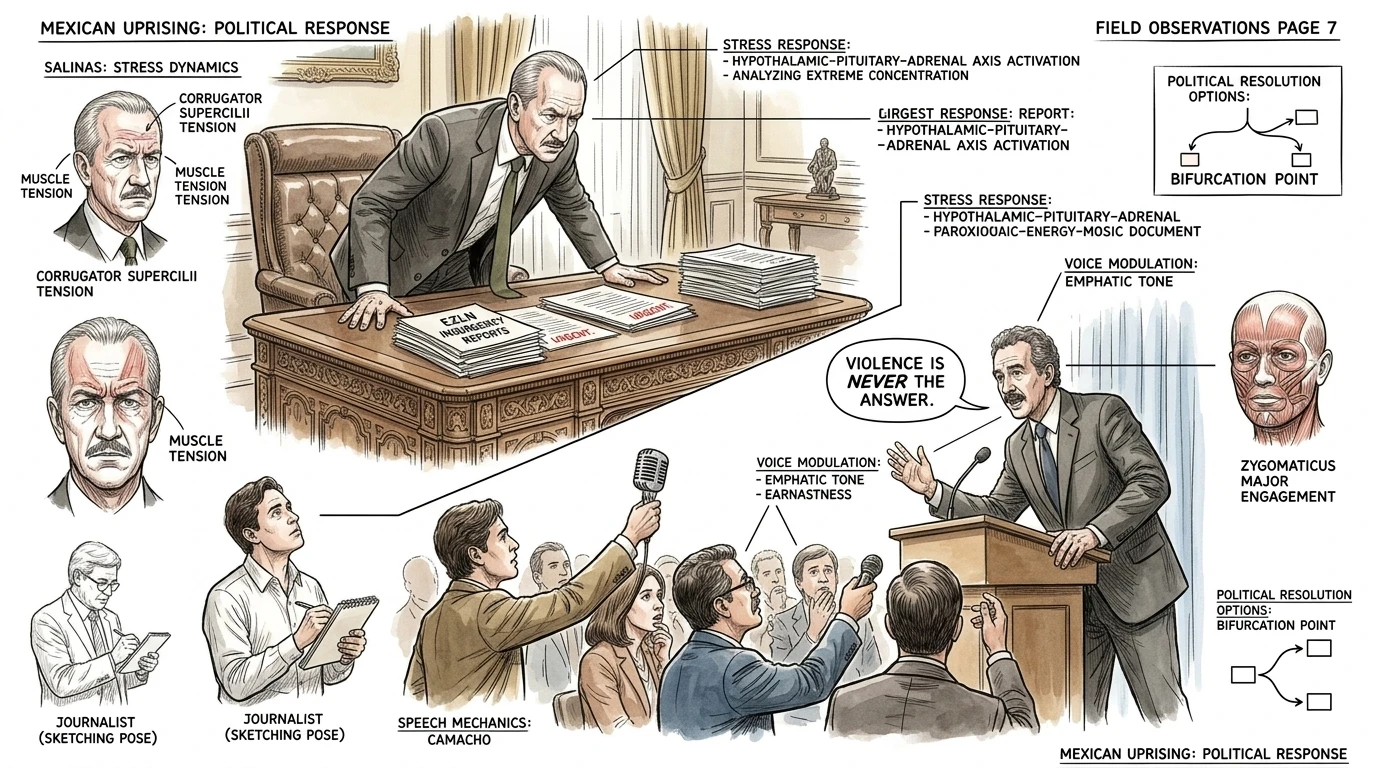
President Salinas, reeling from the unexpected uprising, appointed Manuel Camacho Solís as peace commissioner. Camacho Solís, a seasoned politician, immediately sought dialogue with the Zapatistas. 'We must find a peaceful resolution to this conflict,' Camacho Solís declared during a press conference, 'Violence is never the answer.'
Page 8
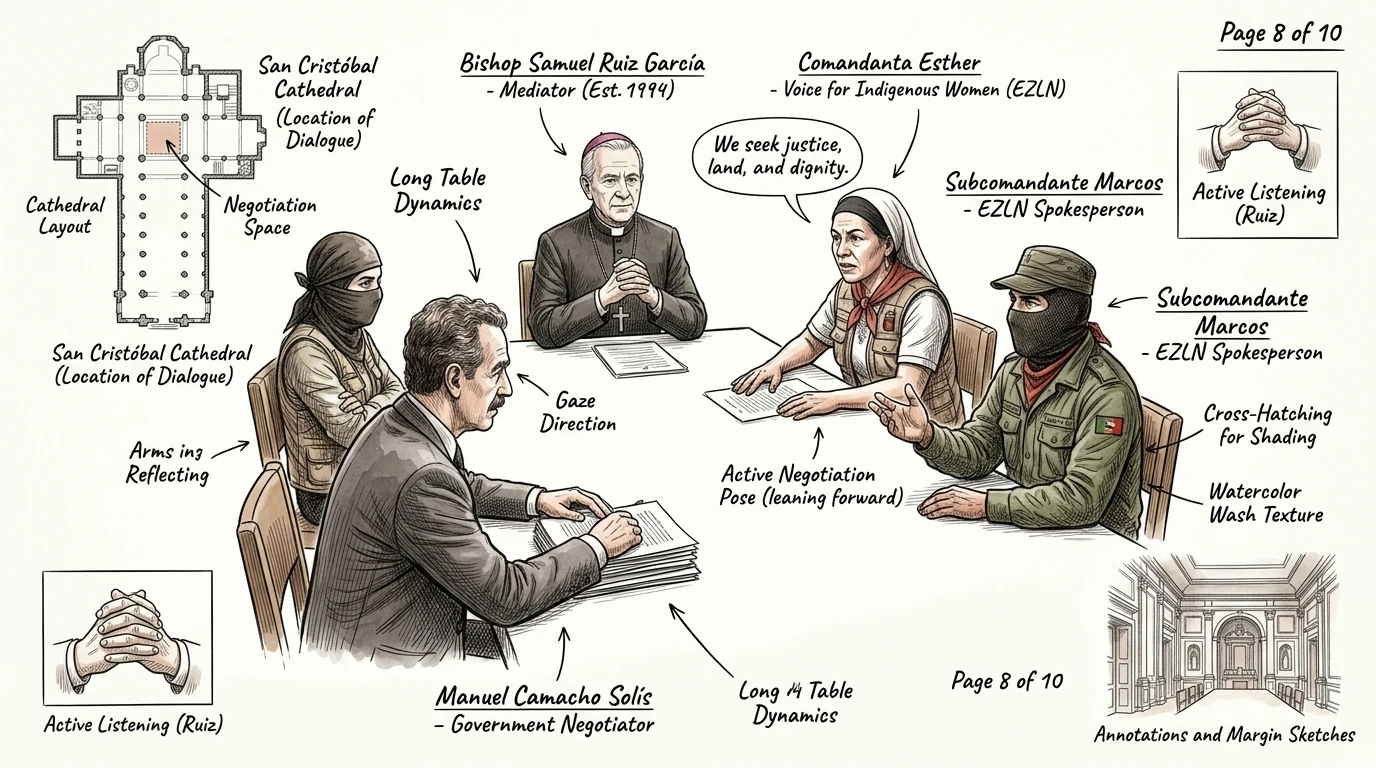
Negotiations between the government and the EZLN began in San Cristobal. Bishop Samuel Ruiz García mediated the talks, trying to bridge the gap between two opposing sides. 'We seek justice, land, and dignity,' Comandanta Esther stated firmly to the government representatives. 'We will not rest until our demands are met.'
Page 9
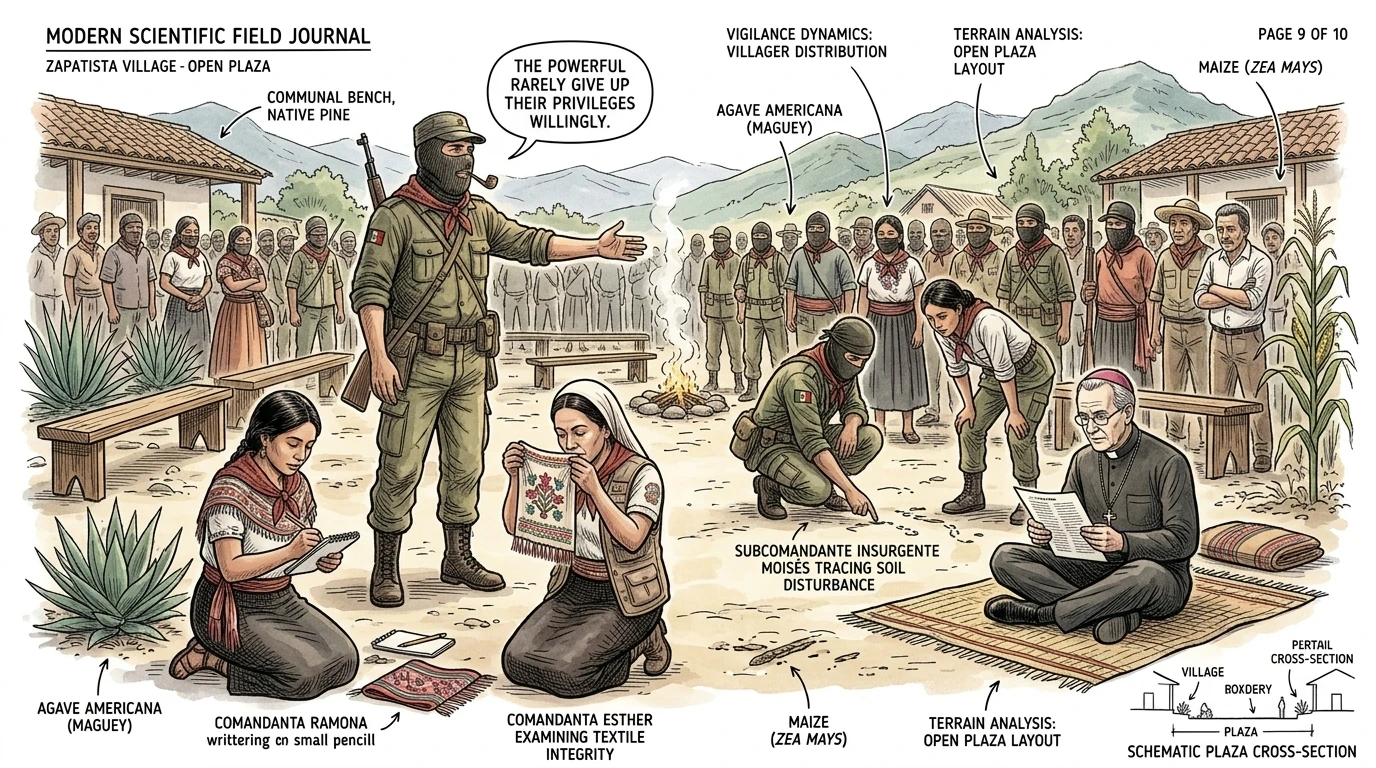
Despite initial progress, the peace process stalled. Disagreements over land rights and indigenous autonomy proved insurmountable. Subcomandante Marcos, disillusioned, addressed the Zapatista communities, 'The powerful rarely give up their privileges willingly,' he proclaimed, 'We must remain vigilant and defend what is ours.'
Page 10
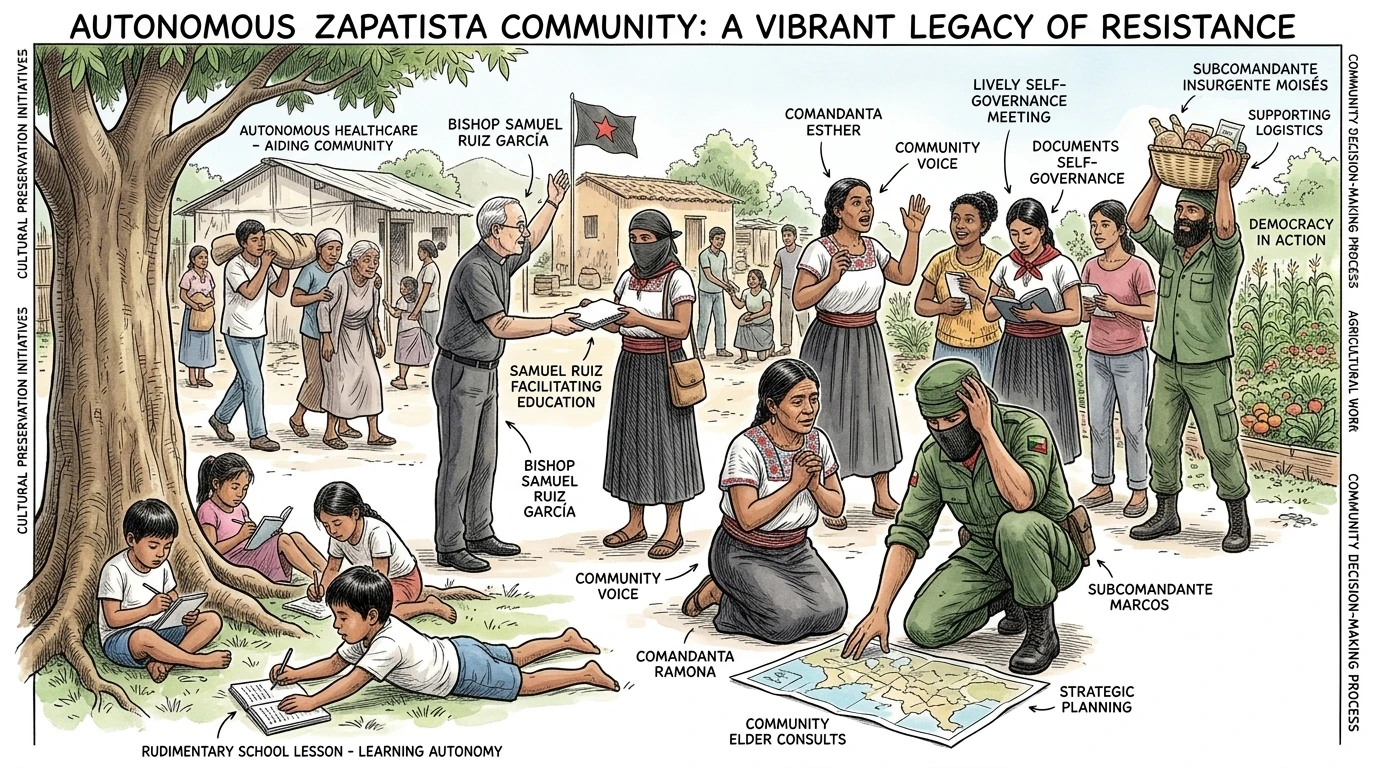
Though the initial armed conflict ended, the Zapatista struggle for indigenous rights continued. The EZLN established autonomous communities, promoting education, healthcare, and self-governance. Their legacy: a testament to the power of resistance and the enduring fight for dignity and justice.
About this story
- Historical figures: Subcomandante Marcos, Bishop Samuel Ruiz García, Comandanta Ramona
- Location: North America
- Period: Contemporary
- Audience: general readers
Questions and answers
Questions and answers about The Zapatista Uprising (1994, North America)
Read Wonder History on your phone
Wonder History is available on Android. Get Wonder History on Google Play.