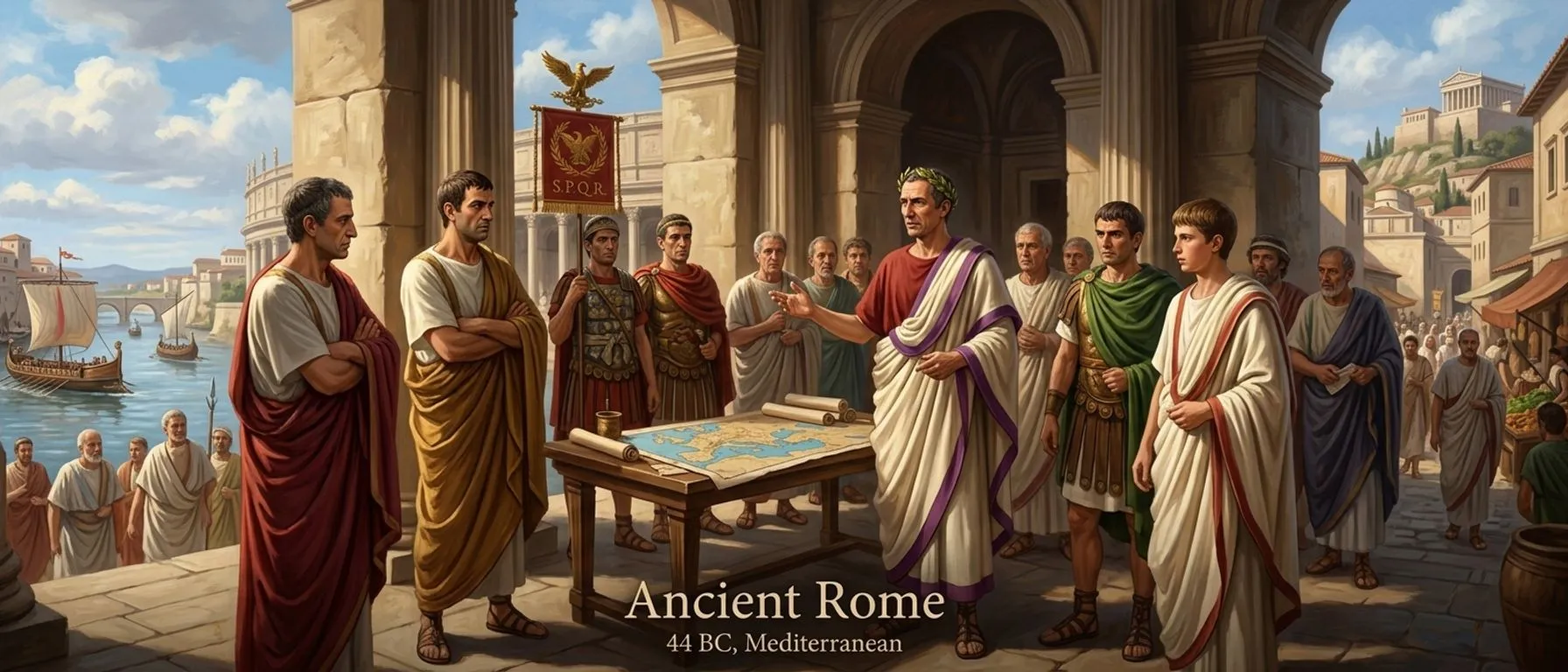
Ancient Rome (44 BC, Mediterranean)
Follow Rome from republican virtue to Caesar, civil war, Augustus, and the imperial order that reshaped the Mediterranean world.
Page 1
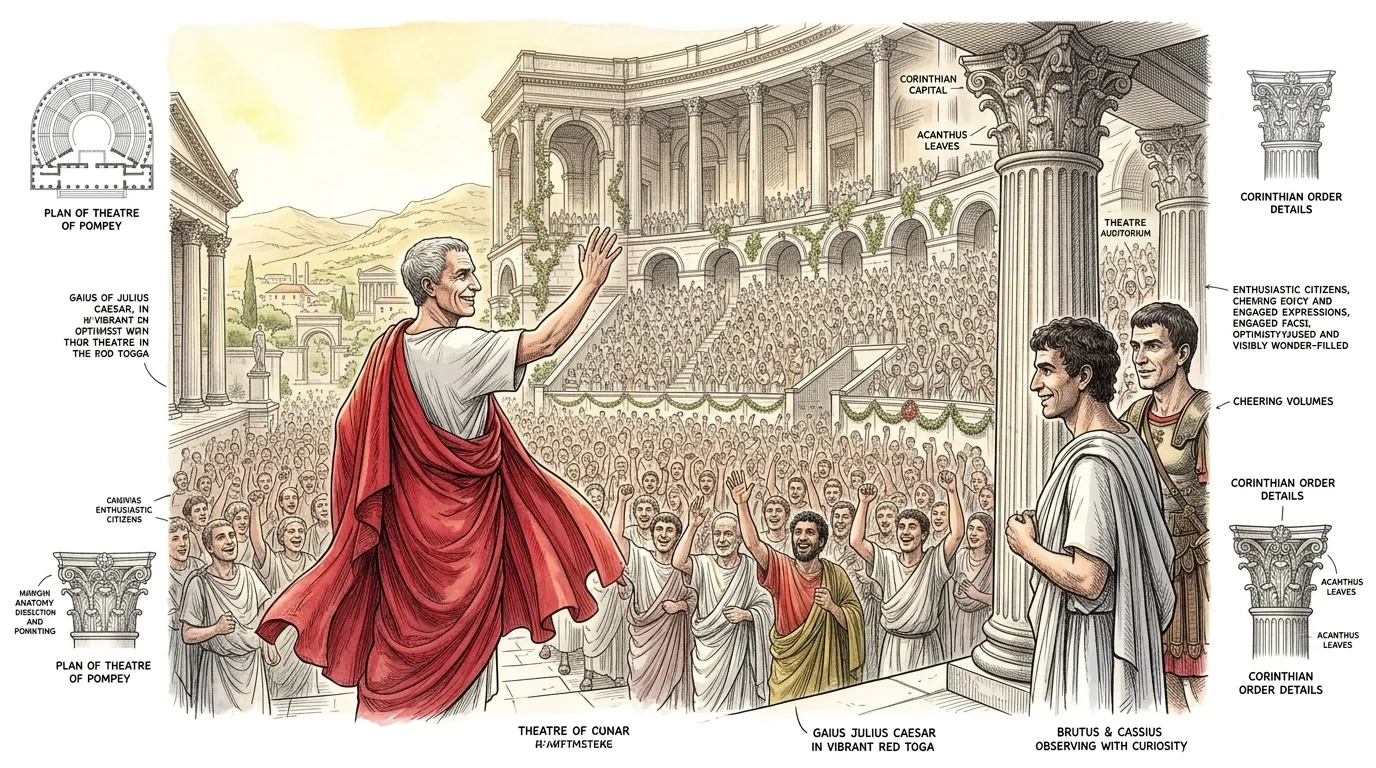
March 15, 44 BC. The Ides of March. Thousands packed the Theatre of Pompey. Gaius Julius Caesar, the dictator of Rome, was about to learn the price of ambition. Marcus Junius Brutus, Caesar's friend, and Gaius Cassius Longinus, a seasoned general, stood ready. Their daggers poised. The fate of the Roman Republic hung in the balance. The air crackled with anticipation and dread as Caesar entered the theater, oblivious to the storm about to break. But what led to this pivotal moment?
Historical Fact: Julius Caesar was assassinated on March 15, 44 BC.
Page 2
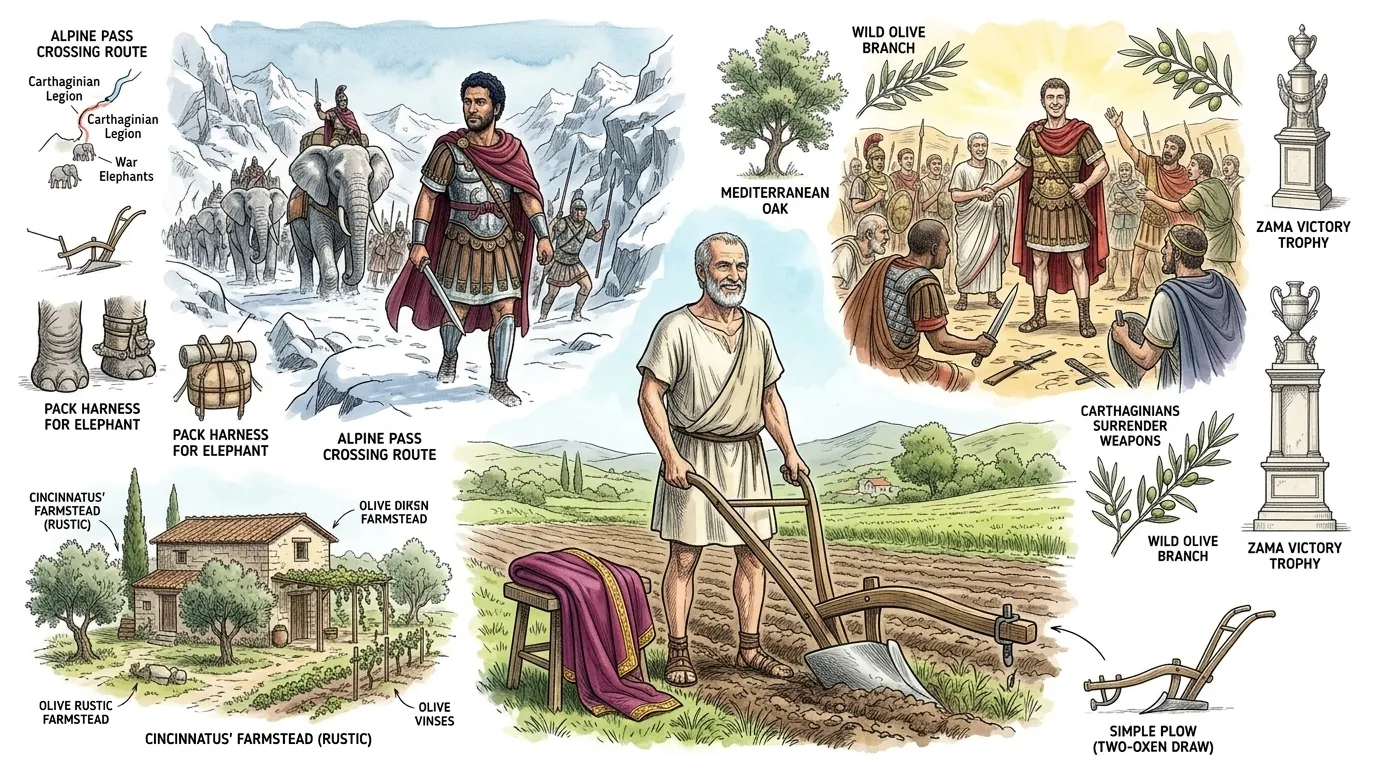
Five centuries before Caesar's death, the Roman Republic was born. Lucius Quinctius Cincinnatus, a farmer, was appointed dictator to defend Rome. After defeating the enemy, Cincinnatus relinquished power and returned to his plow. His dedication was the ideal of Roman civic virtue. But over time, ambition and greed corroded these ideals. Powerful generals like Hannibal Barca challenged Rome's dominance, testing the Republic's strength. Scipio Africanus defeated Hannibal, securing Rome's future but also creating a cult of personality around military leaders.
Historical Fact: Cincinnatus embodied Roman civic virtue by returning to his farm after serving as dictator.
Page 3
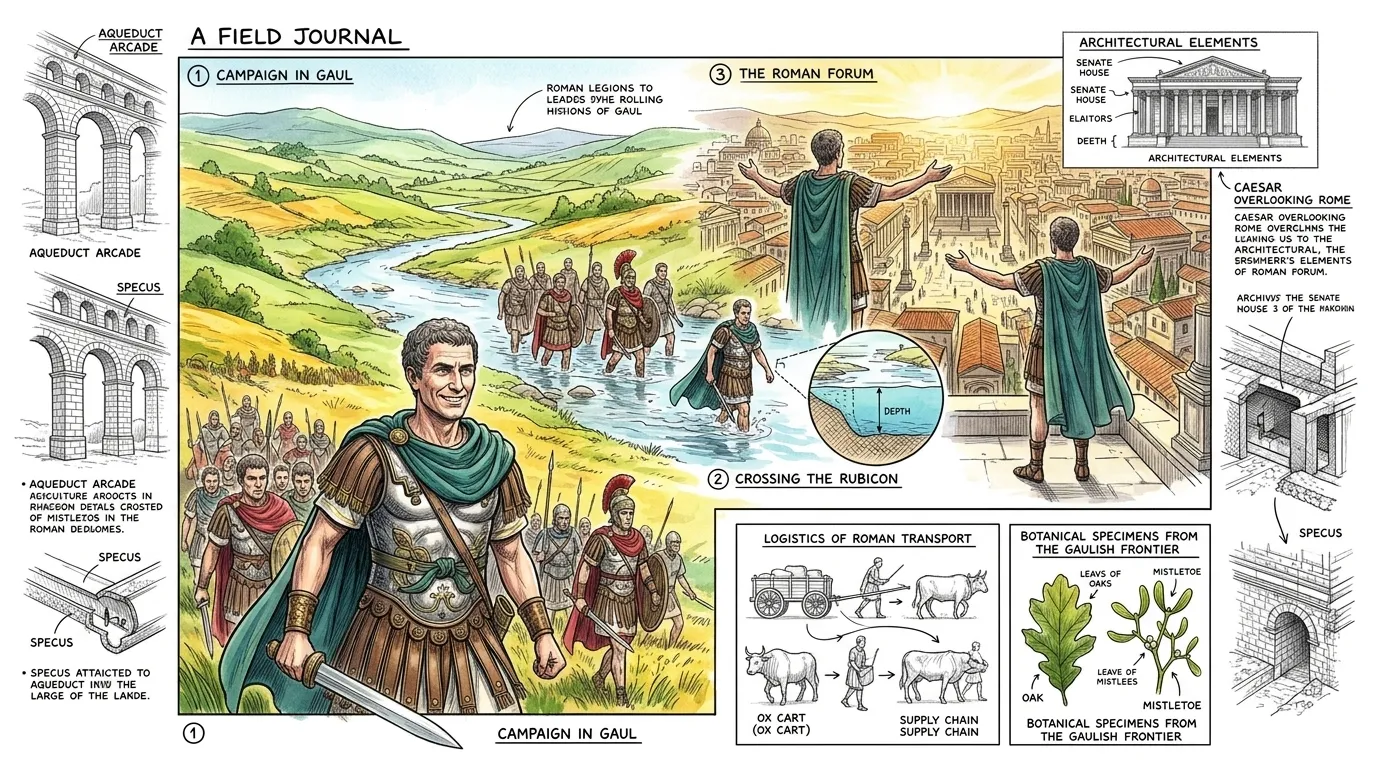
Gaius Julius Caesar was a brilliant general and politician. Through military victories in Gaul, he gained fame and a loyal army. The First Triumvirate, an alliance with Pompey and Crassus, allowed Caesar to bypass the Senate's authority. When Crassus died and Pompey turned against him, Caesar crossed the Rubicon River in 49 BC. This act of defiance plunged Rome into civil war. His victories were swift, and soon Caesar stood supreme.
Historical Fact: Caesar's crossing of the Rubicon in 49 BC marked the beginning of the Roman Civil War.
Page 4
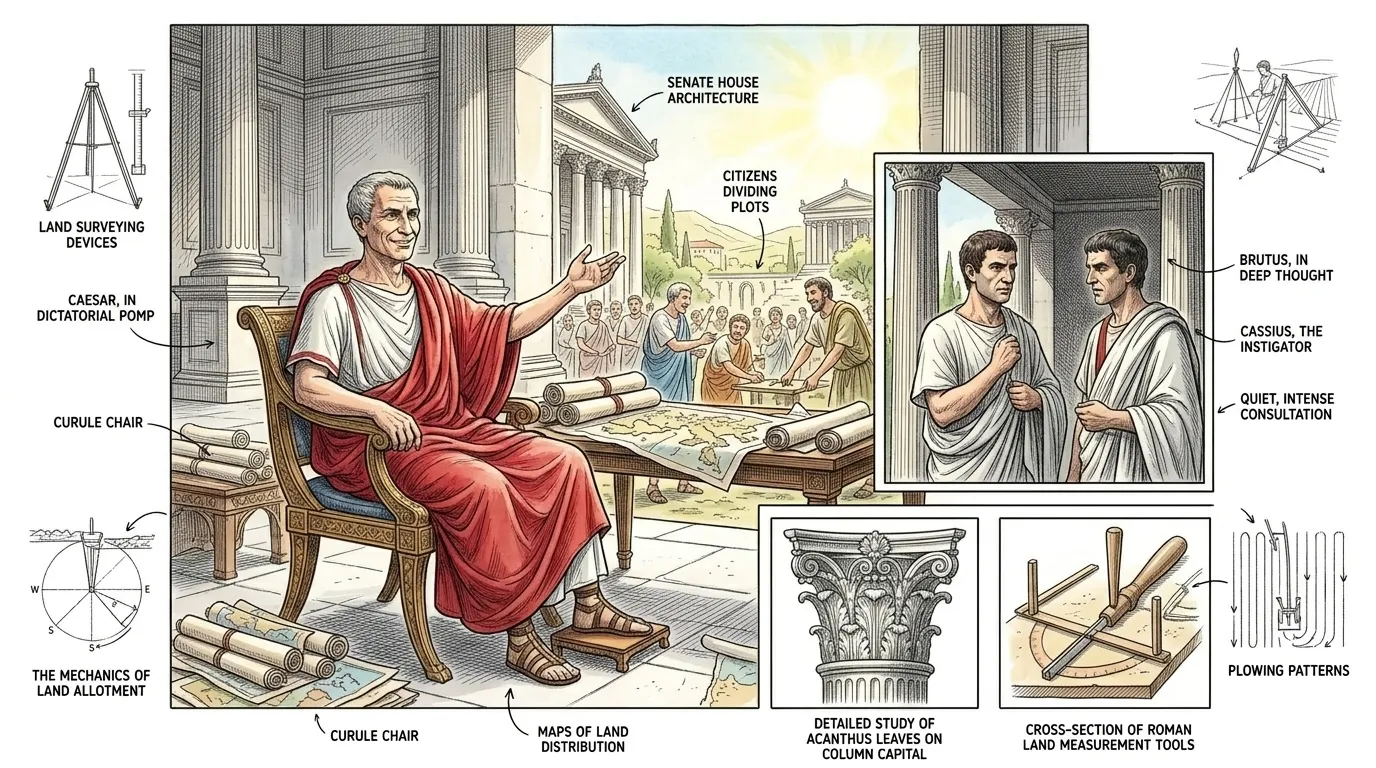
Victorious in the civil war, Caesar consolidated his power. He was appointed dictator for life. He implemented reforms: granting citizenship, redistributing land, and reforming the calendar. However, Caesar's ambition and disregard for Republican traditions alienated many senators. They feared he would become a king, destroying the Republic. Gaius Cassius Longinus and Marcus Junius Brutus led the conspiracy to assassinate him. They believed they were acting to save Rome from tyranny.
Historical Fact: Caesar's reforms and ambition led to his assassination by senators fearing a monarchy.
Page 5
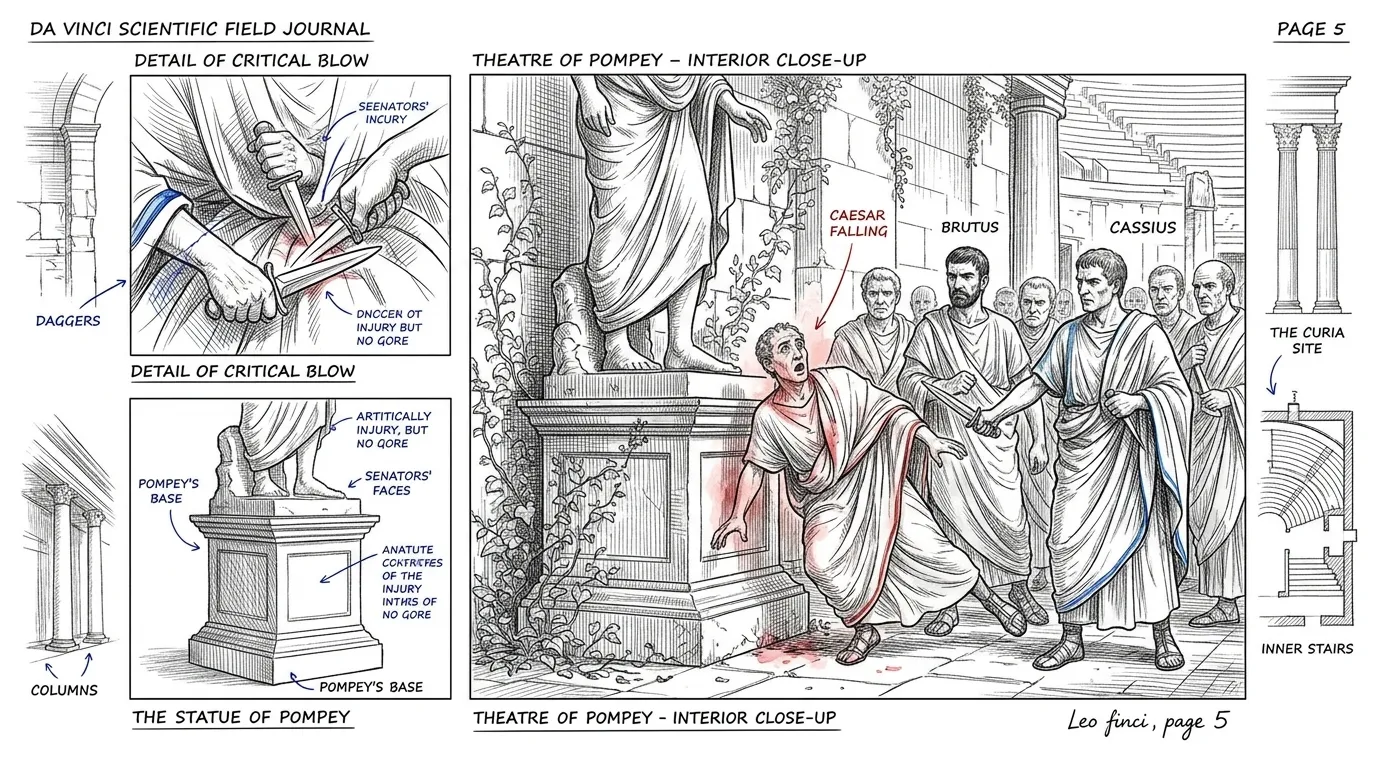
On that fateful day, the senators gathered at the Theatre of Pompey. As Caesar entered, they surrounded him. Cassius struck the first blow. Brutus followed. Caesar, realizing his friend was among the assassins, reportedly cried out, "Et tu, Brute?" He fell, bleeding, at the foot of Pompey's statue. The conspirators believed they had restored the Republic. But their act unleashed chaos.
""Et tu, Brute?""
Historical Fact: Caesar's last words, "Et tu, Brute?", are among the most famous in history.
Page 6
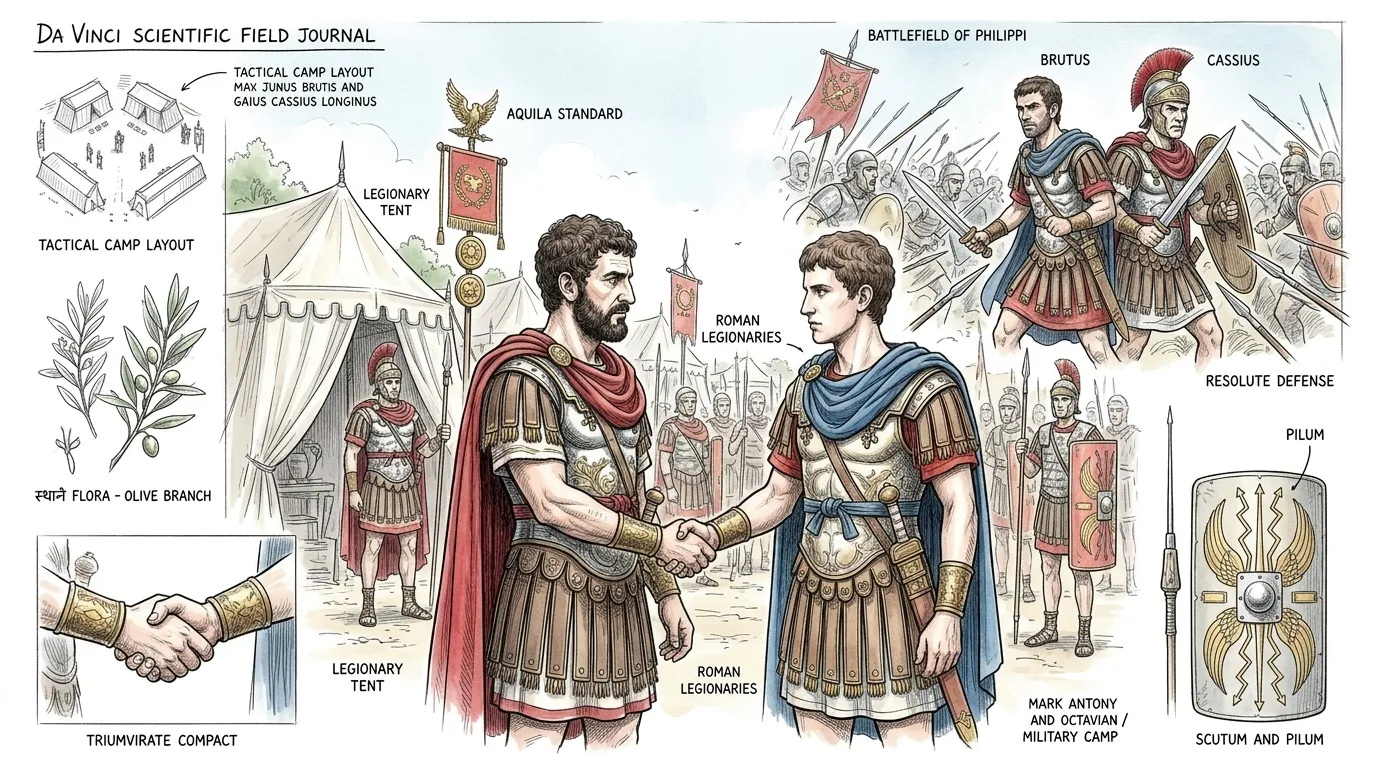
The assassination did not restore the Republic. Instead, it triggered another civil war. Mark Antony, Caesar's lieutenant, formed the Second Triumvirate with Octavian (later Augustus) and Lepidus. They hunted down Caesar's assassins, including Brutus and Cassius, who were defeated at the Battle of Philippi in 42 BC. The triumvirs divided the Roman world among themselves, but their alliance was fragile.
Historical Fact: The Second Triumvirate was formed to avenge Caesar's death and restore order, but it led to more conflict.
Page 7
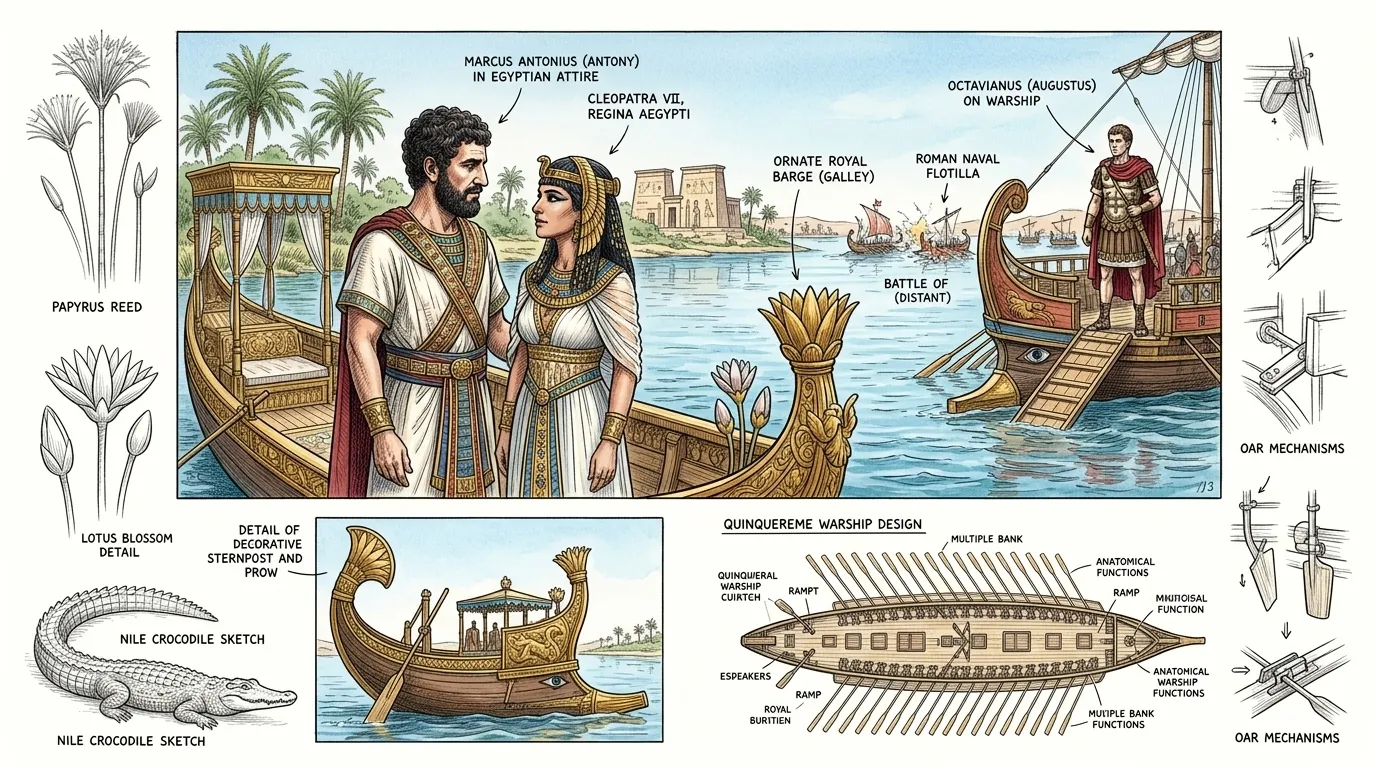
Mark Antony allied himself with Cleopatra, the Queen of Egypt. Their relationship defied Roman norms. Octavian used this alliance to turn public opinion against Antony. He portrayed Antony as a traitor, seduced by a foreign queen. The final showdown came at the Battle of Actium in 31 BC. Octavian's forces triumphed. Antony and Cleopatra fled to Egypt, where they committed suicide. Octavian was now the sole ruler of Rome.
Historical Fact: The Battle of Actium in 31 BC marked the end of the Roman Republic and the rise of Octavian.
Page 8
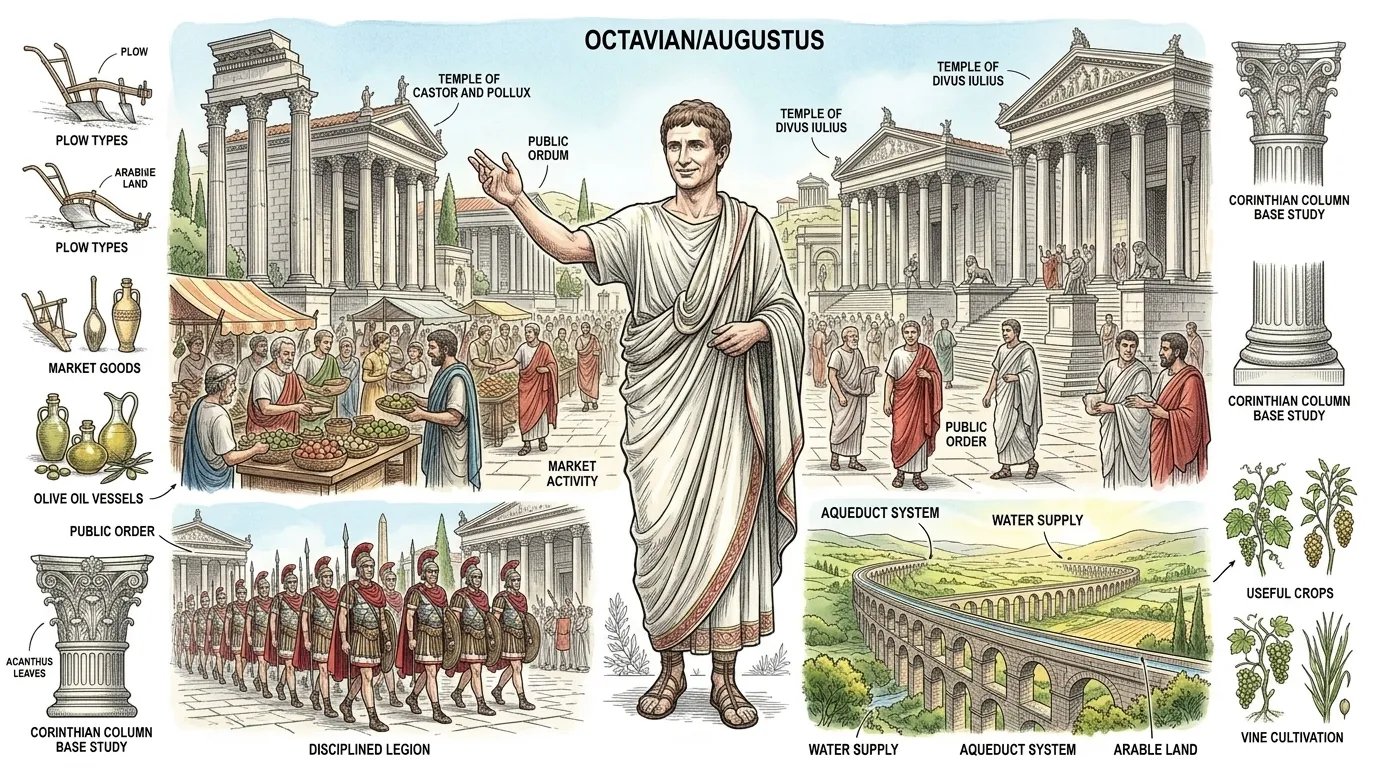
Octavian, now Augustus, ushered in an era of peace and prosperity known as the Pax Romana. He reformed the government, created a professional army, and sponsored public works. Augustus understood the need for stability after decades of civil war. He carefully cultivated an image of a wise and benevolent ruler, all the while centralizing power in his hands. The Republic was dead, replaced by the Roman Empire.
Historical Fact: Augustus established the Roman Empire and ushered in an era of peace and prosperity known as the Pax Romana.
Page 9
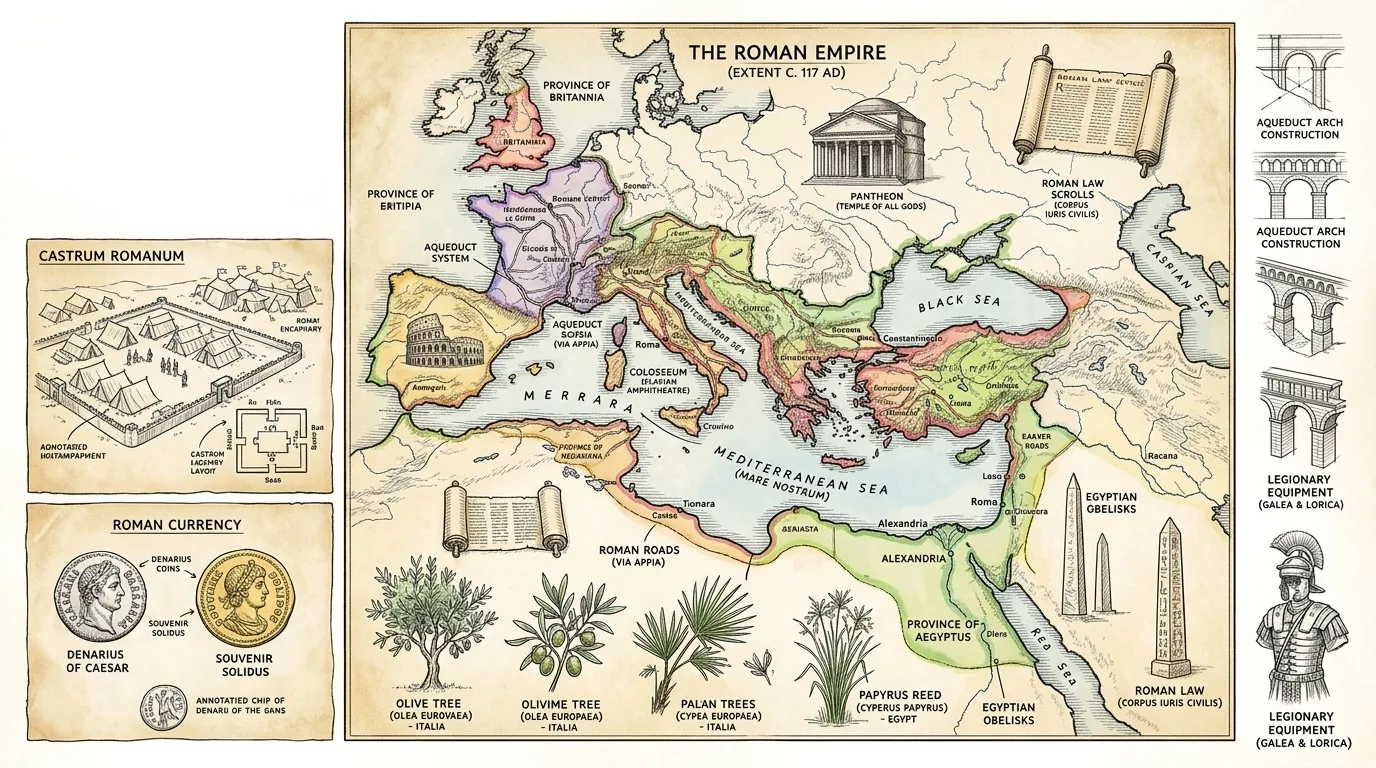
The Roman Empire expanded across Europe, North Africa, and the Middle East. Roman law, architecture, and language shaped Western civilization. The Empire's roads and aqueducts facilitated trade and communication. Roman ideals of citizenship and governance, though imperfectly realized, influenced political thought for centuries. Even after the Western Roman Empire fell in 476 AD, its legacy continued to resonate.
Historical Fact: Roman law, architecture, and language profoundly influenced Western civilization.
Page 10
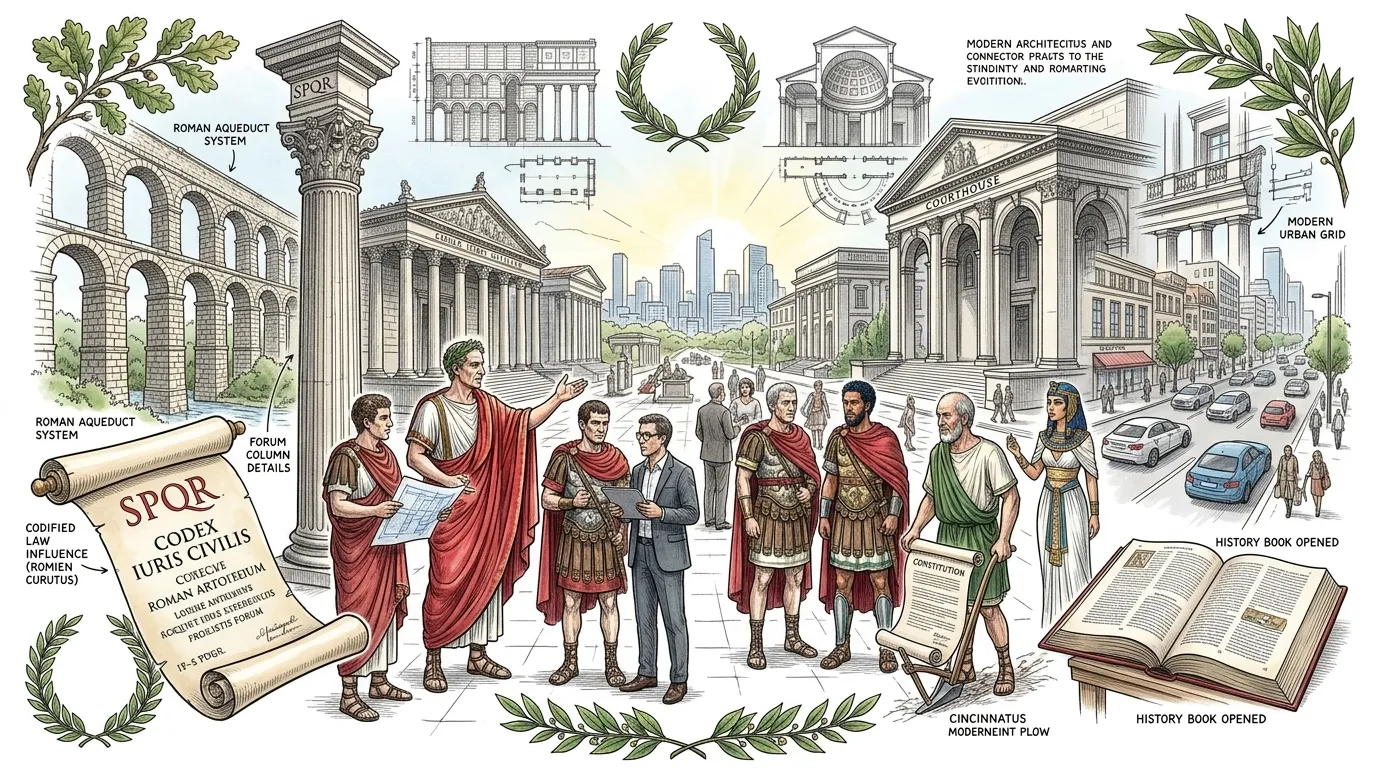
The story of Ancient Rome remains relevant today. It is a cautionary tale about the dangers of unchecked ambition and the fragility of republics. It also demonstrates the power of law, infrastructure, and cultural influence to shape societies for centuries. The echoes of Rome can be heard in our legal systems, our architecture, and our language, reminding us of the enduring power of this ancient civilization.
Historical Fact: The legacy of Ancient Rome continues to shape our world in law, architecture, language, and political thought.
About this story
- Historical figures: Julius Caesar, Marcus Junius Brutus, Gaius Cassius Longinus
- Location: Mediterranean
- Period: Ancient
- Audience: general readers
Questions and answers
Questions and answers about Ancient Rome (44 BC, Mediterranean)
Read Wonder History on your phone
Wonder History is available on Android. Get Wonder History on Google Play.