The French Defeat at Agincourt (1415, France)
This story’s pages describe the 1415 English victory at Agincourt, where Henry V used terrain and longbowmen to devastate a larger French force.

Page 1
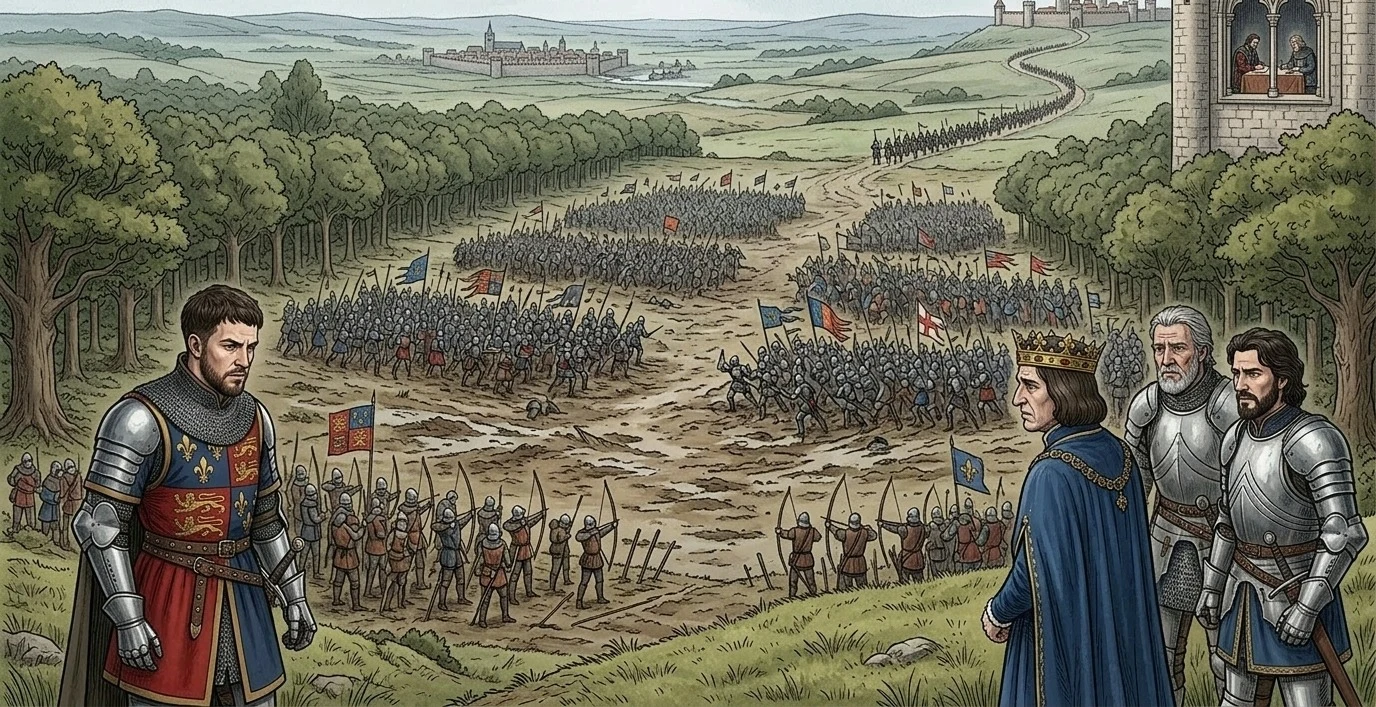
On October 25, 1415, the muddy fields near Azincourt bore witness to a catastrophic defeat for the French. King Charles VI, though absent from the field due to his recurring illness, was nominally in command, his authority challenged by powerful nobles. The flower of French chivalry, led by figures like the Constable Charles d'Albret and the Duke of Orléans, faced a numerically inferior English army under King Henry V. Thousands of French knights, bogged down in the heavy mud, were cut down by English longbowmen, resulting in a staggering loss of life and a turning point in the Hundred Years' War. The defeat exposed deep fissures within French society and the limitations of its military tactics against the ascendant English.
Historical Fact: French losses at Agincourt are estimated between 7,000 and 10,000, including a significant portion of the nobility.
Page 2

The reign of King Charles VI of France, beginning in 1380, was marked by increasing instability. Charles, plagued by bouts of mental illness, was often incapable of ruling effectively. This created a power vacuum exploited by ambitious members of the royal family and leading nobles. Two main factions emerged: the Armagnacs, led by the Count of Armagnac and supporting the Duke of Orléans, and the Burgundians, led by the Duke of Burgundy. Their rivalry escalated into open warfare, further weakening the French monarchy and dividing the kingdom.
Historical Fact: Charles VI's mental illness manifested in periods of delusion and incapacitation, undermining his authority.
Page 3
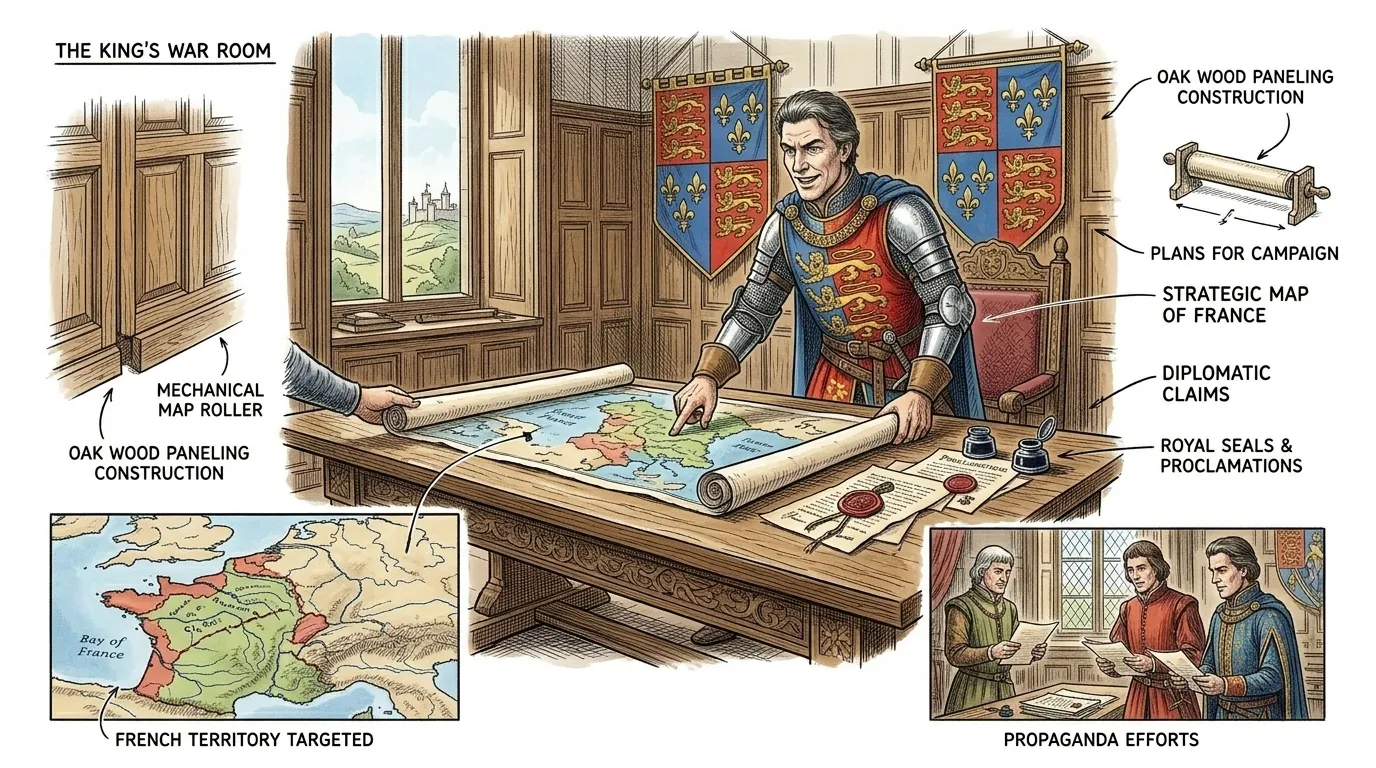
King Henry V of England, ascending to the throne in 1413, inherited the English claim to the French throne, a legacy of Edward III. Driven by ambition and a desire to solidify his rule, Henry sought to revive the Hundred Years' War. He skillfully used diplomatic maneuvering and propaganda to rally support for his cause, portraying himself as a righteous king seeking to reclaim his rightful inheritance. The internal divisions within France presented a perfect opportunity for English intervention.
Historical Fact: Henry V renewed the English claim to the French throne, sparking renewed conflict in the Hundred Years' War.
Page 4
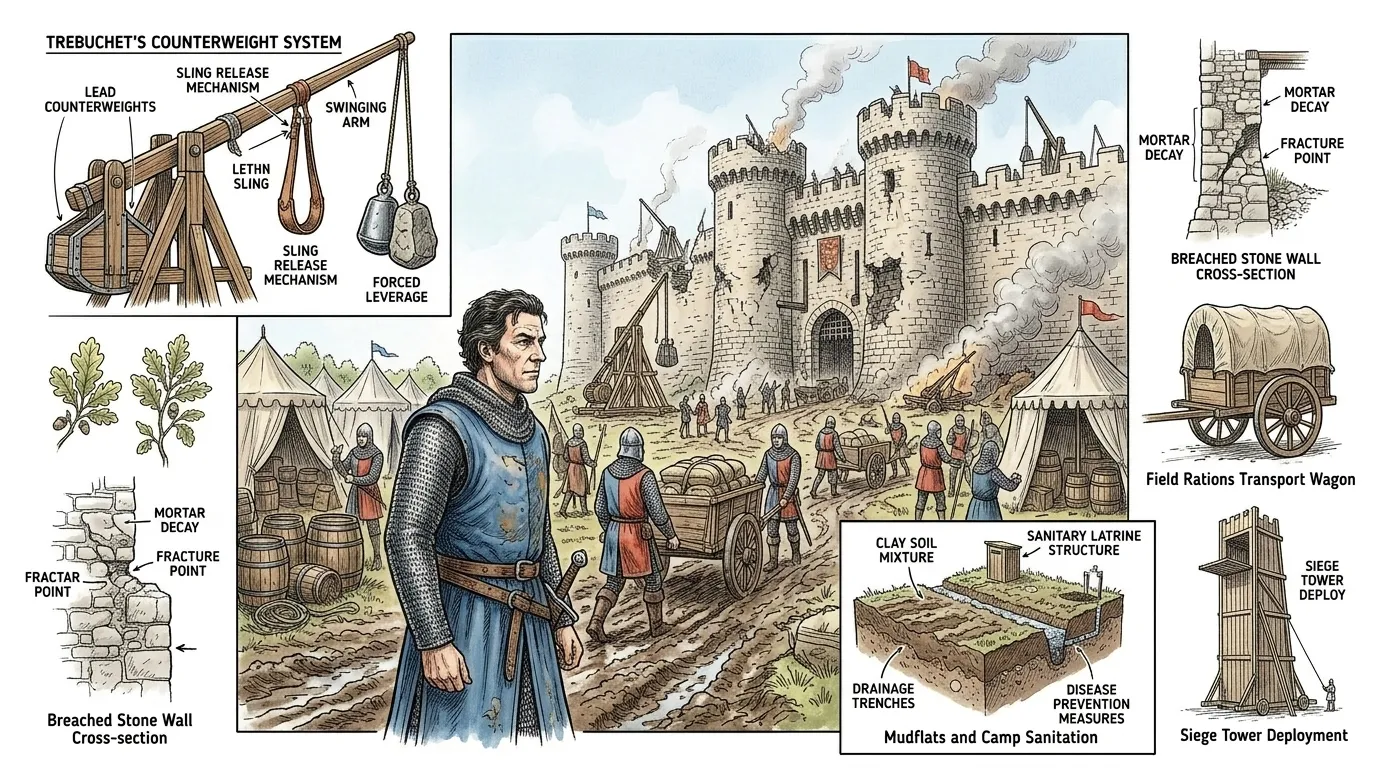
In August 1415, Henry V landed in Normandy and laid siege to the strategically important port city of Harfleur. The siege proved to be a grueling ordeal, lasting for over a month. English forces faced fierce resistance from the city's garrison, and disease ravaged their ranks. Despite heavy losses, the English eventually captured Harfleur, but their army was significantly weakened and delayed.
Historical Fact: The siege of Harfleur significantly reduced Henry V's army due to disease, delaying his campaign.
Page 5
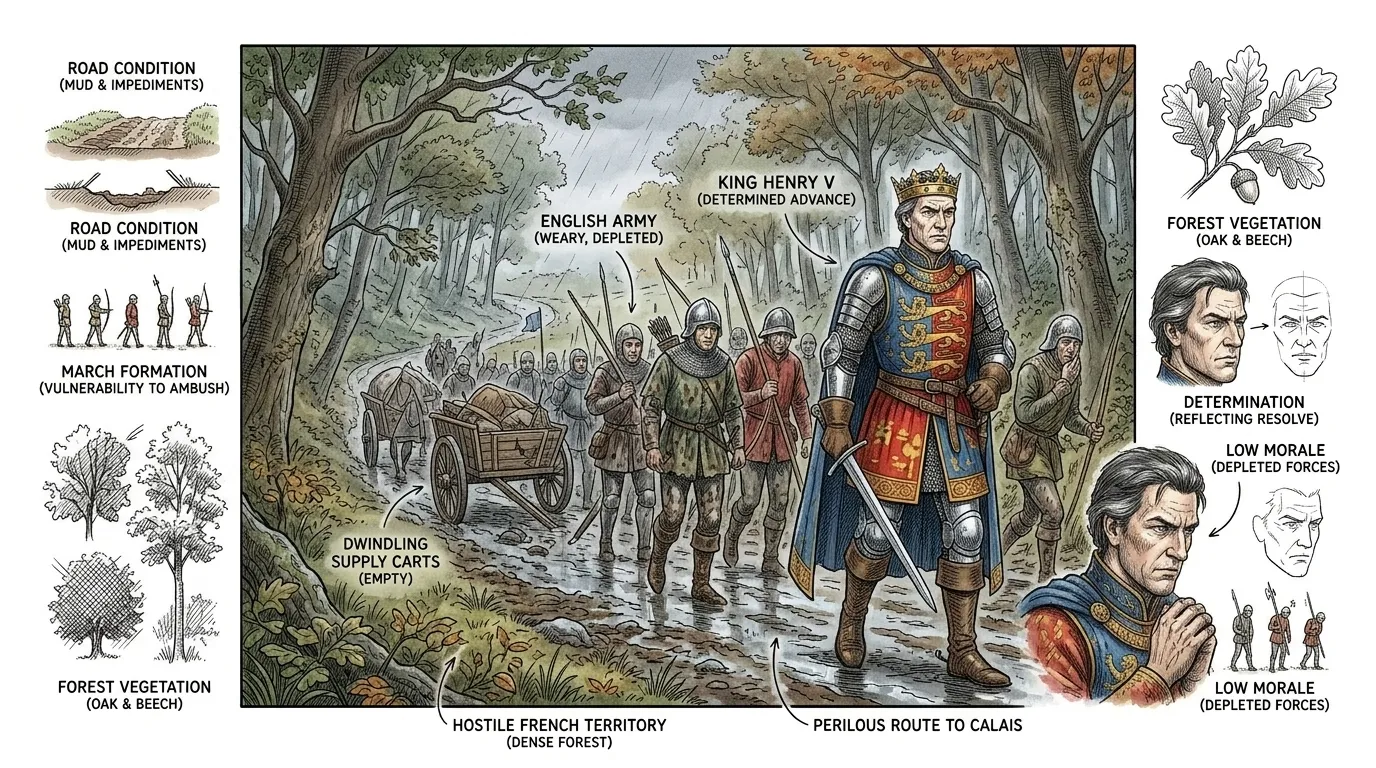
With his army depleted and the campaigning season drawing to a close, Henry V decided to march his forces to the English-held city of Calais. He hoped to resupply and regroup before returning to England. The march was a dangerous undertaking, as the English army had to traverse hostile territory and faced the risk of encountering a much larger French army. Food and supplies were running low, and morale was dwindling.
Historical Fact: The English army's march to Calais was hampered by dwindling supplies and the threat of a larger French force.
Page 6
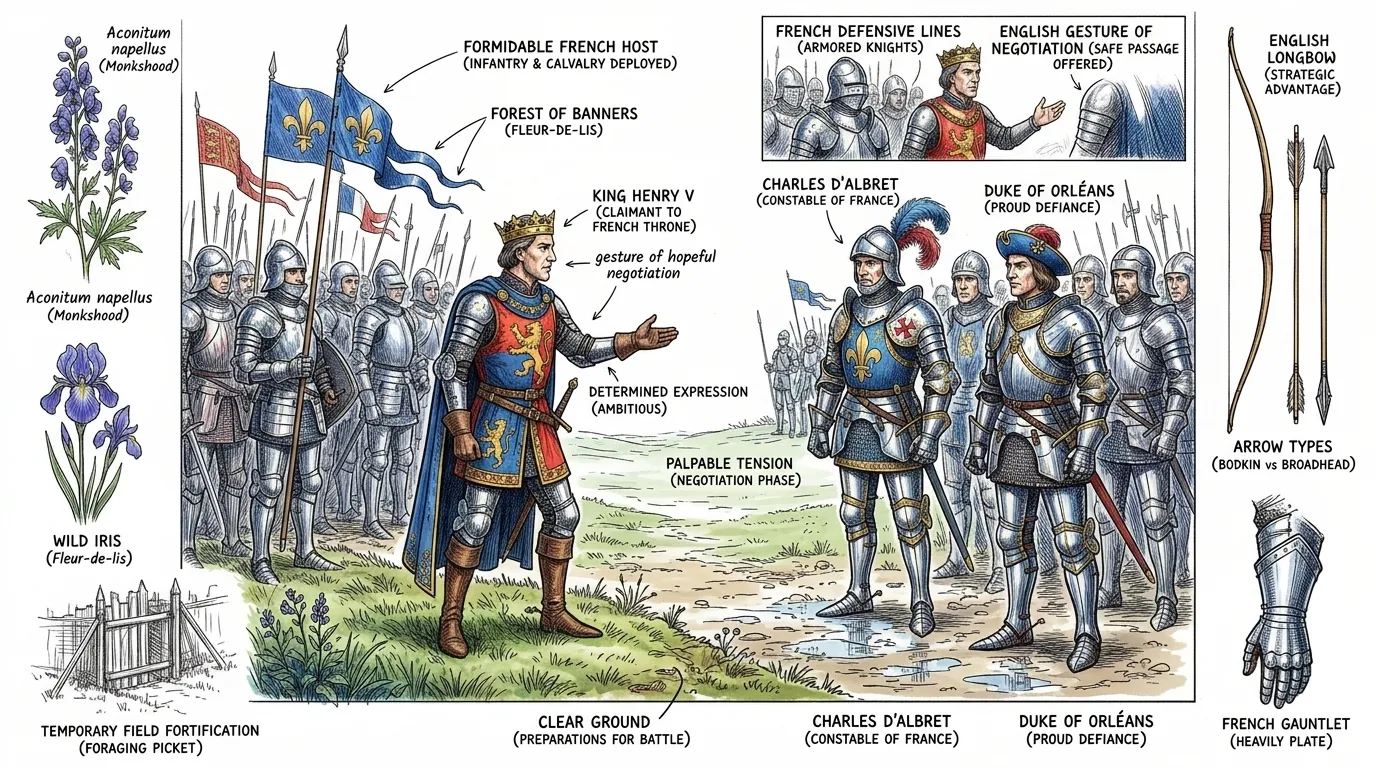
As the English army approached Agincourt, they were intercepted by a massive French force. Faced with overwhelming odds, Henry V attempted to negotiate with the French, offering to renounce his claim to the French throne in exchange for safe passage to Calais. However, the French, confident in their numerical superiority, rejected his offer, demanding unconditional surrender. The stage was set for a decisive battle.
"We shall have no ransom! I am King! I will have my city!"
Historical Fact: French rejection of Henry V's negotiation attempts made battle inevitable.
Page 7
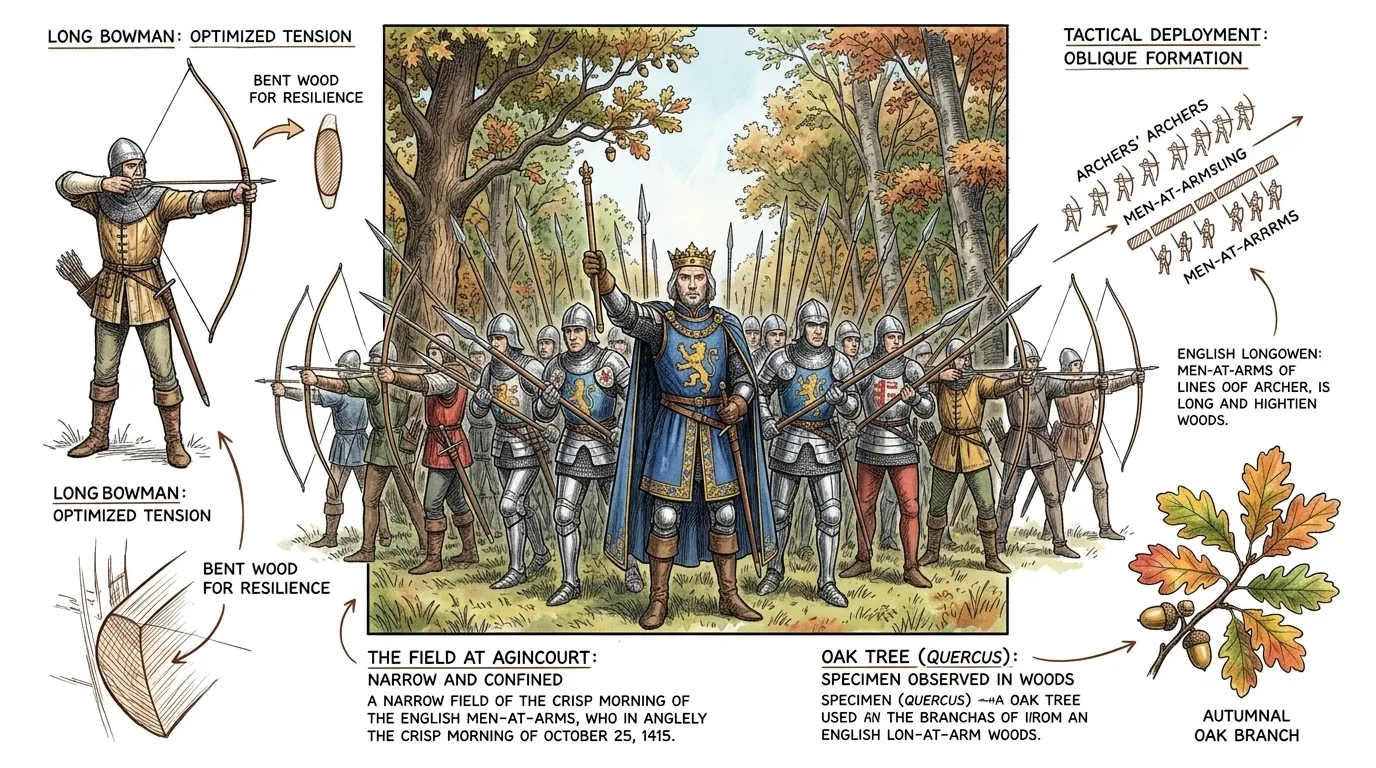
On the morning of October 25, 1415, Henry V deployed his army in a defensive position on a narrow field flanked by woods. He placed his longbowmen on the flanks, knowing their superior range and rate of fire would be crucial. The English men-at-arms were positioned in the center, forming a solid line of defense. Henry himself took his place in the front rank, determined to lead his men into battle.
Historical Fact: English longbowmen positioned on the flanks were a key element in their tactical deployment.
Page 8
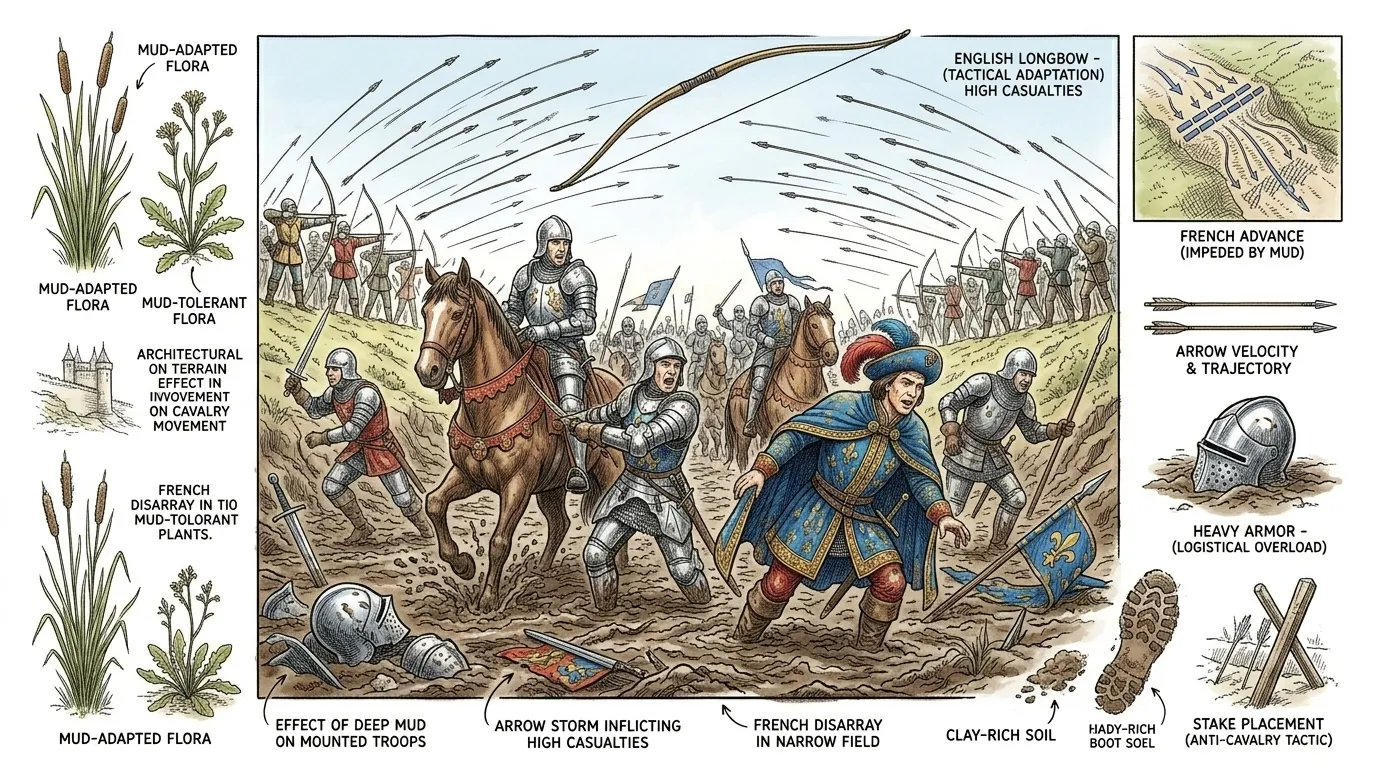
The French launched a series of uncoordinated assaults against the English lines. Heavily armored knights, weighed down by the mud and hampered by the narrow battlefield, struggled to break through the English defenses. The English longbowmen unleashed a devastating hail of arrows, inflicting heavy casualties on the advancing French. The French assault quickly devolved into chaos and carnage.
Historical Fact: The muddy battlefield and narrow confines hindered the French knights' effectiveness.
Page 9
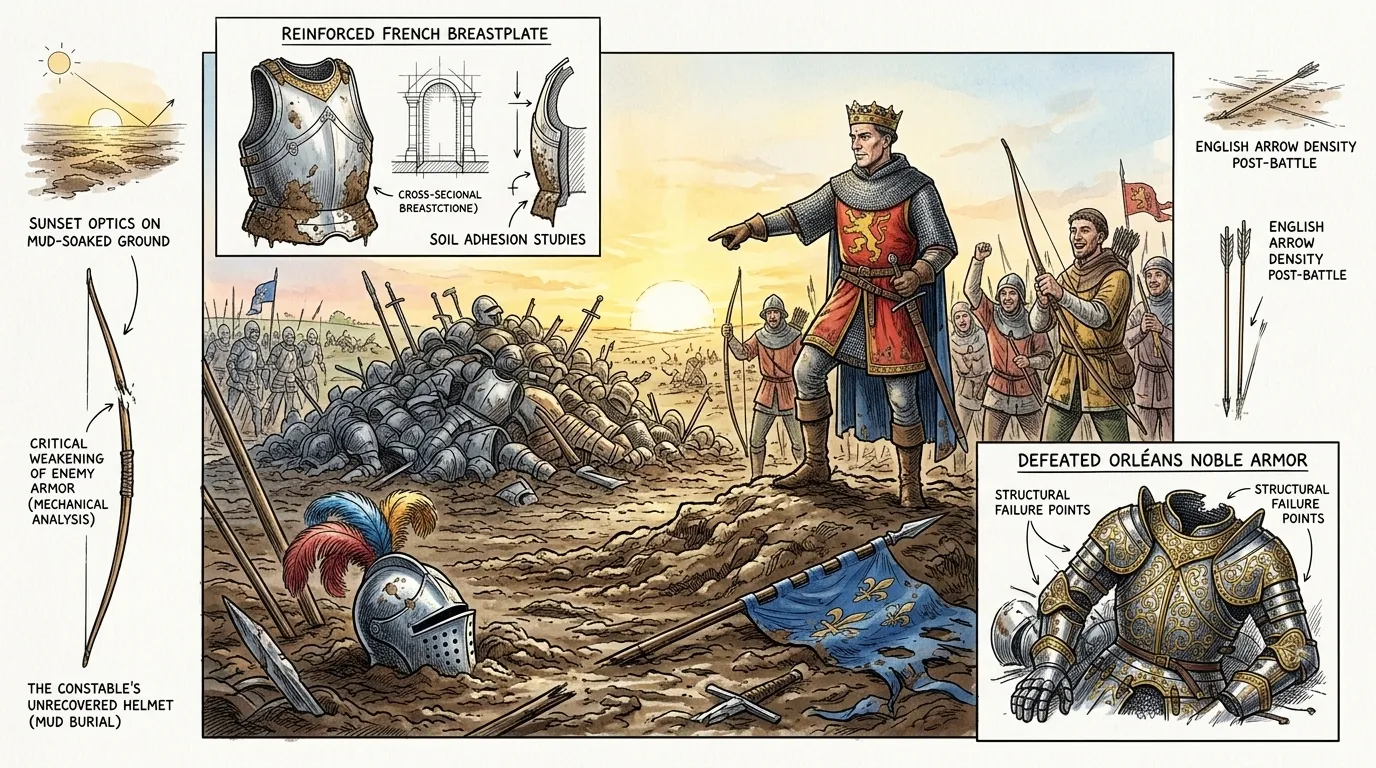
The Battle of Agincourt ended in a decisive English victory. Thousands of French knights and nobles lay dead on the battlefield, including the Constable of France and many other prominent figures. The English, despite their heavy losses at Harfleur, had achieved a stunning triumph. The victory boosted English morale and strengthened Henry V's position, paving the way for further English conquests in France.
Historical Fact: The English victory at Agincourt significantly boosted English morale and paved the way for further conquests.
Page 10
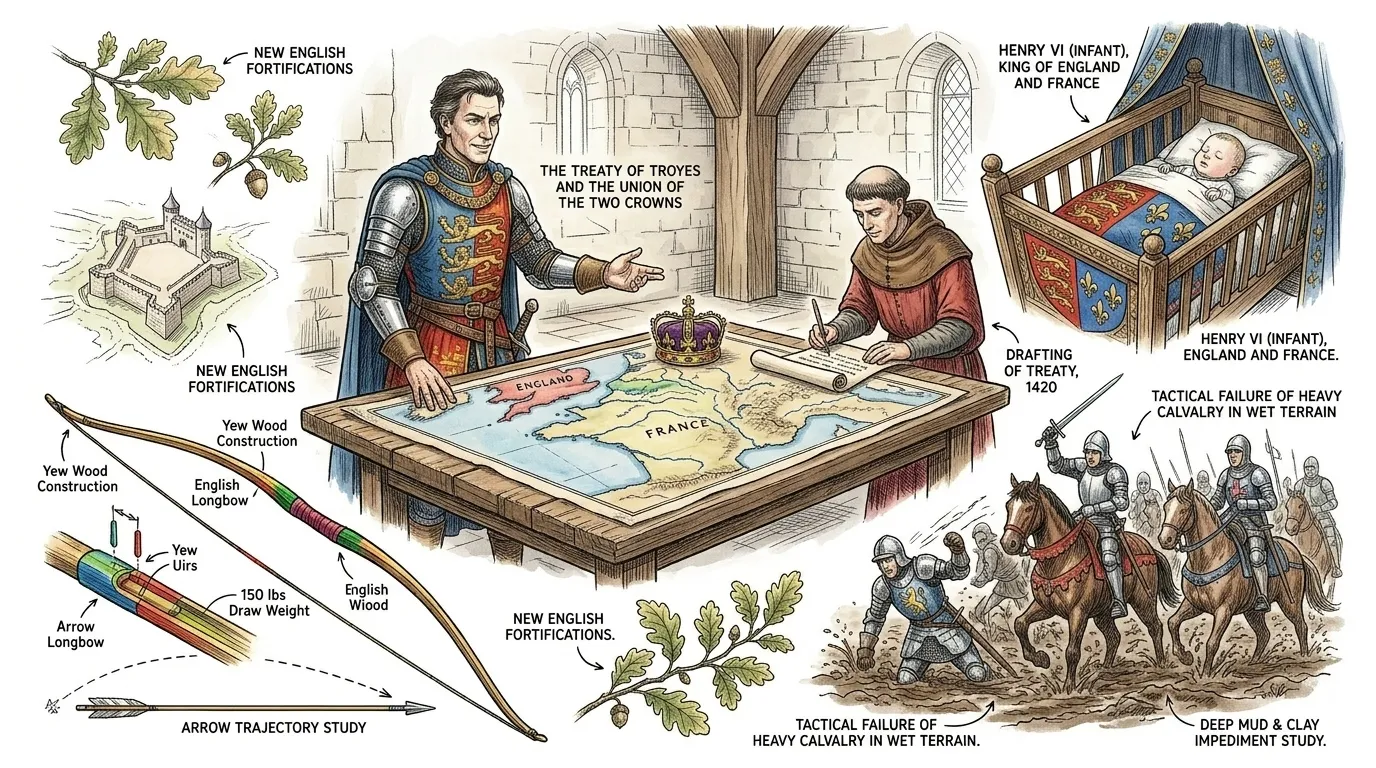
The Battle of Agincourt had a profound impact on the course of the Hundred Years' War and the history of both England and France. The English victory led to the Treaty of Troyes in 1420, which recognized Henry V as heir to the French throne. Though Henry died prematurely in 1422, his son, Henry VI, was proclaimed King of both England and France. The battle also highlighted the effectiveness of English longbowmen and the limitations of traditional French military tactics. Agincourt remains a symbol of English military prowess and a reminder of the devastating consequences of internal division and strategic miscalculation. The battle resonates even today because it demonstrated that even a smaller, well-led force with superior tactical deployment can overcome a larger, but poorly managed, army.
Historical Fact: Agincourt's legacy includes the Treaty of Troyes, a symbol of English military power, and the reevaluation of medieval warfare.
About this story
- Historical figures: Henry V, Charles VI, Charles d'Albret, Duke of Orléans
- Location: France
- Period: Middle Ages (500–1500)
- Audience: general readers
Questions and answers
Questions and answers about The French Defeat at Agincourt (1415, France)
Read Wonder History on your phone
Wonder History is available on Android. Get Wonder History on Google Play.