Battle of Talas (751 AD, Central Asia)
Follow the 751 clash at Talas, where Tang and Abbasid forces battled for influence and the aftermath reshaped Central Asia.
Page 1

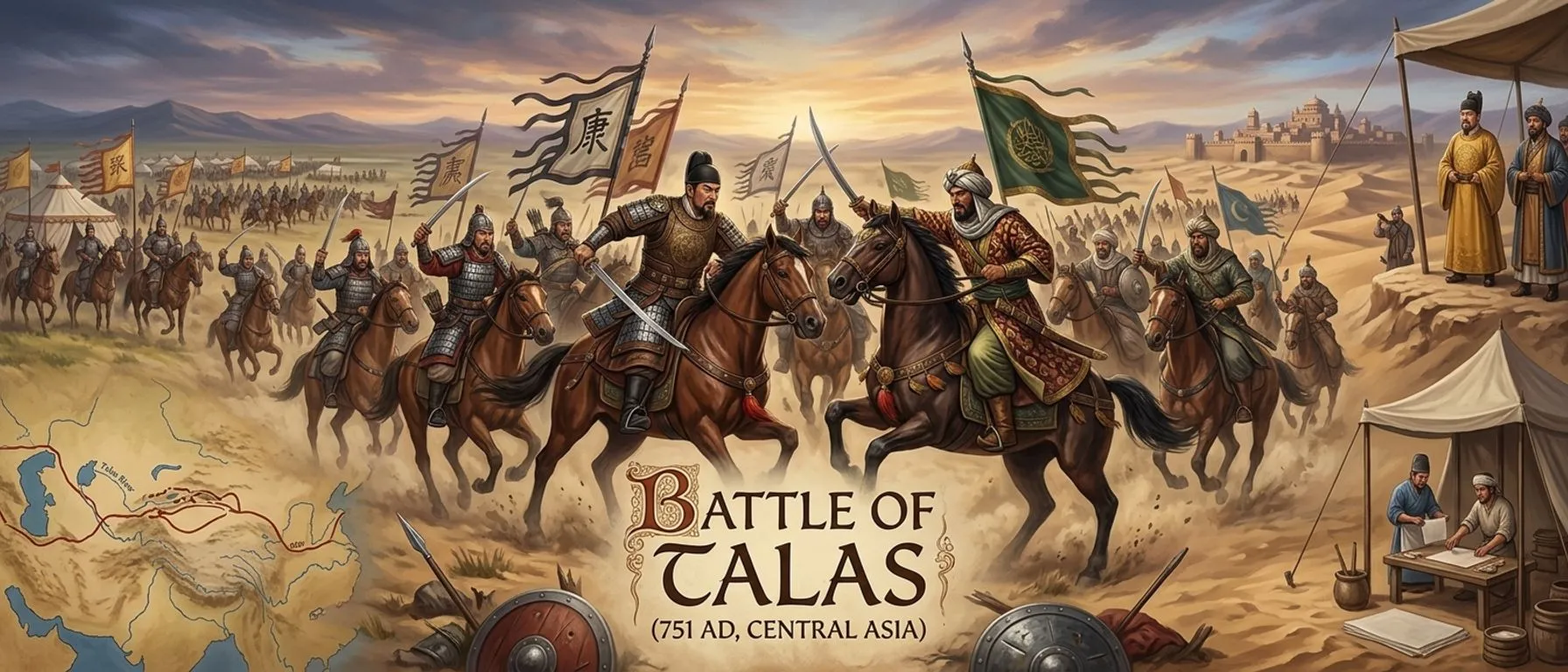
July 751 AD. The Talas River valley, near present-day Kyrgyzstan. A maelstrom of dust and steel engulfs the landscape. On one side, the Tang Dynasty's General Gao Xianzhi, a commander of Korean descent, leads a force of approximately 30,000. Opposite him, Ziyad ibn Salih, the Abbasid general, marshals an army of similar size, bolstered by Turkic allies. The fate of Central Asia hangs in the balance. The echoes of clashing swords and desperate cries mark a pivotal moment – a collision between the eastward expansion of the Abbasid Caliphate and the westward ambitions of the Tang Empire. But how did these two colossal powers converge on this remote battlefield?
Historical Fact: The Battle of Talas is dated to July 751 AD based on historical records from both Chinese and Arab sources.
Page 2
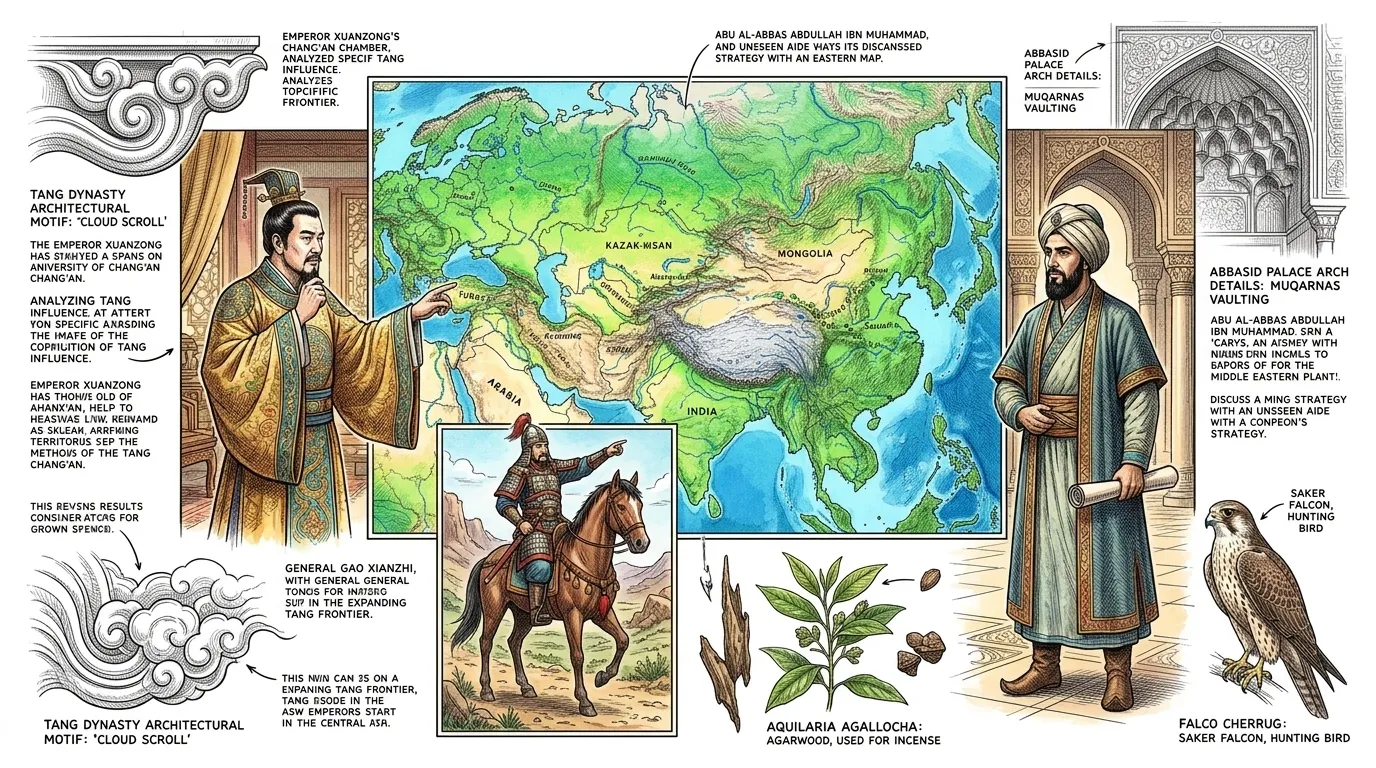
The year is 750 AD. In the opulent Tang Dynasty capital of Chang'an, Emperor Xuanzong, though nearing the end of his reign, still oversaw a vast and prosperous empire. His general, Gao Xianzhi, had been instrumental in extending Tang influence deep into Central Asia, a region of strategic importance for trade and resources. Simultaneously, to the west, the Abbasid Caliphate was consolidating its power, having overthrown the Umayyad dynasty. Abu al-Abbas Abdullah ibn Muhammad, the first Abbasid Caliph, sought to expand his new empire eastward, bringing Islam and Abbasid authority to new lands. The stage was set for an inevitable clash.
Historical Fact: Emperor Xuanzong reigned from 712 to 756 AD, a period initially marked by prosperity and expansion but later overshadowed by the An Lushan Rebellion.
Page 3

The Ferghana Valley, a fertile and strategically vital region, became the focal point of the escalating tensions. Al-Farabi, the ruler of Ferghana, found himself caught between the two expanding empires. Seeking to secure his own position, Al-Farabi initially sought Tang support. However, his increasingly erratic and oppressive rule led to discontent among his own people. This internal instability prompted rival factions within Ferghana to appeal to the Abbasids for intervention, presenting Abu al-Abbas with an opportunity to extend his influence eastward.
Historical Fact: The Ferghana Valley was a key stop on the Silk Road, making it a valuable prize for both the Tang Dynasty and the Abbasid Caliphate.
Page 4
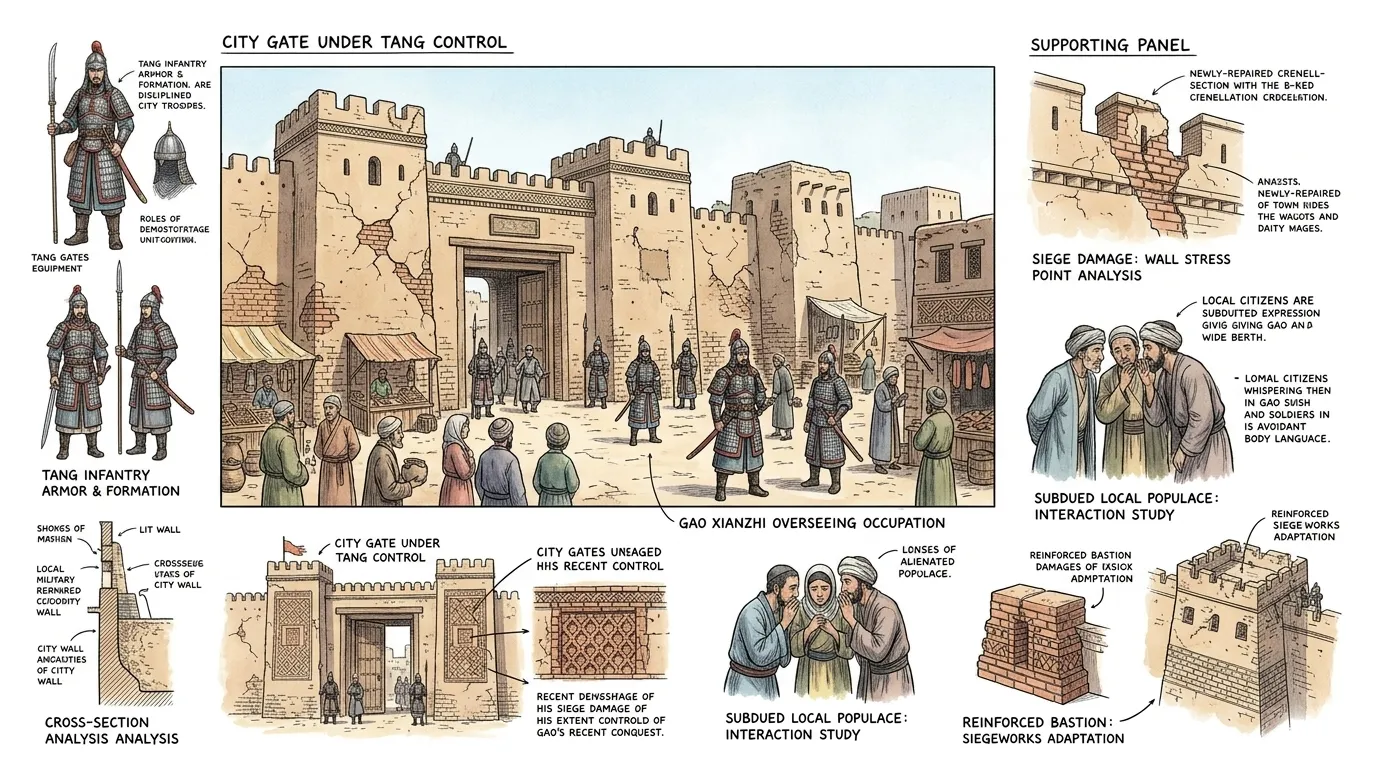
In 750 AD, Gao Xianzhi, ever ambitious, launched a campaign to consolidate Tang control over the region. He marched on Shas, a key city-state allied with Ferghana. After a swift siege, Gao captured the city and brutally suppressed any resistance. His actions, perceived as excessively cruel, further alienated the local population and fueled resentment towards Tang rule. This heavy-handed approach inadvertently played into the hands of the Abbasids, who could now portray themselves as liberators.
Historical Fact: Gao Xianzhi's campaign in Central Asia was marked by both military success and brutality, contributing to the Tang Dynasty's ultimate downfall in the region.
Page 5
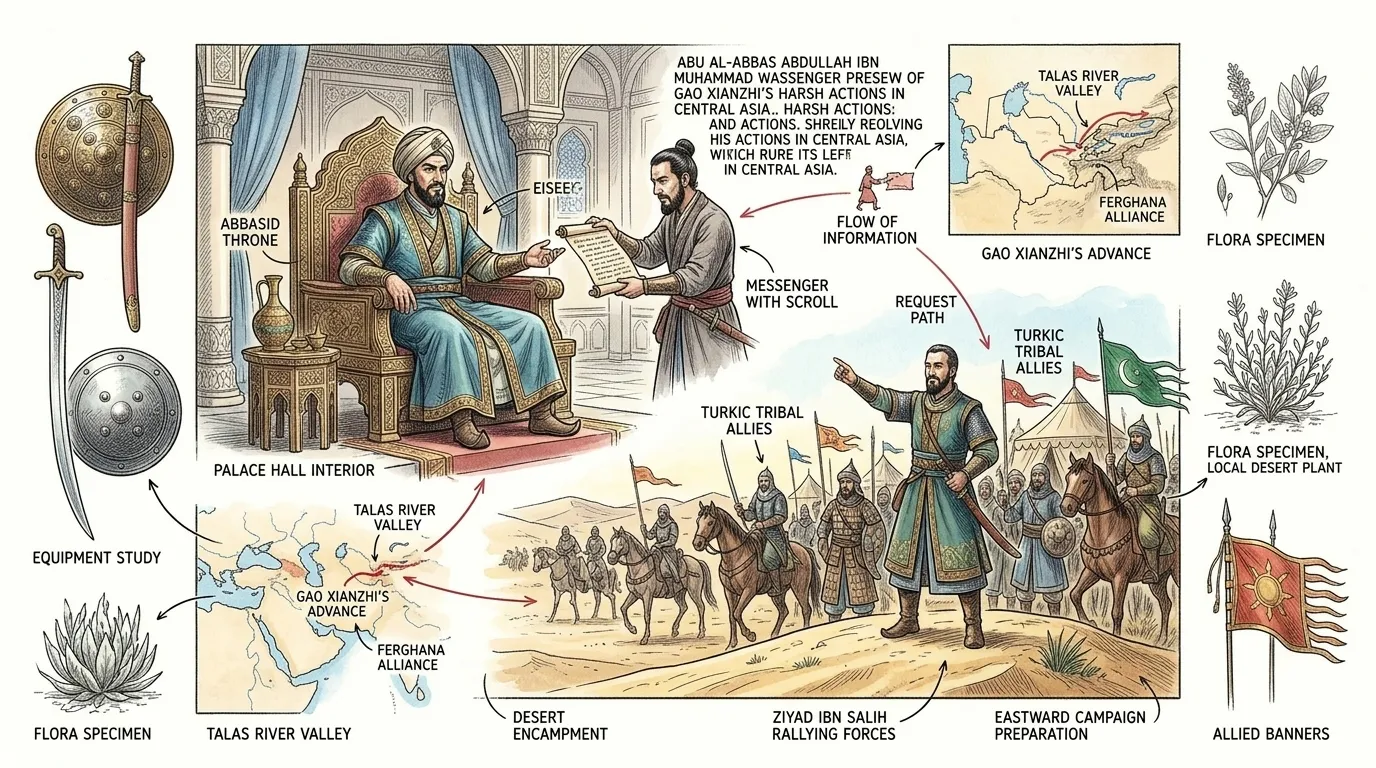
News of Gao Xianzhi's actions and the pleas from Ferghana reached Abu al-Abbas in his capital. Recognizing a golden opportunity to challenge Tang influence, he dispatched Ziyad ibn Salih, a skilled and experienced general, to lead an army eastward. Ziyad, rallying support from Turkic tribes and other local allies, assembled a formidable force. The stage was now set for a direct confrontation between the two empires.
Historical Fact: Ziyad ibn Salih's ability to rally diverse forces under the Abbasid banner was crucial to their victory at Talas.
Page 6
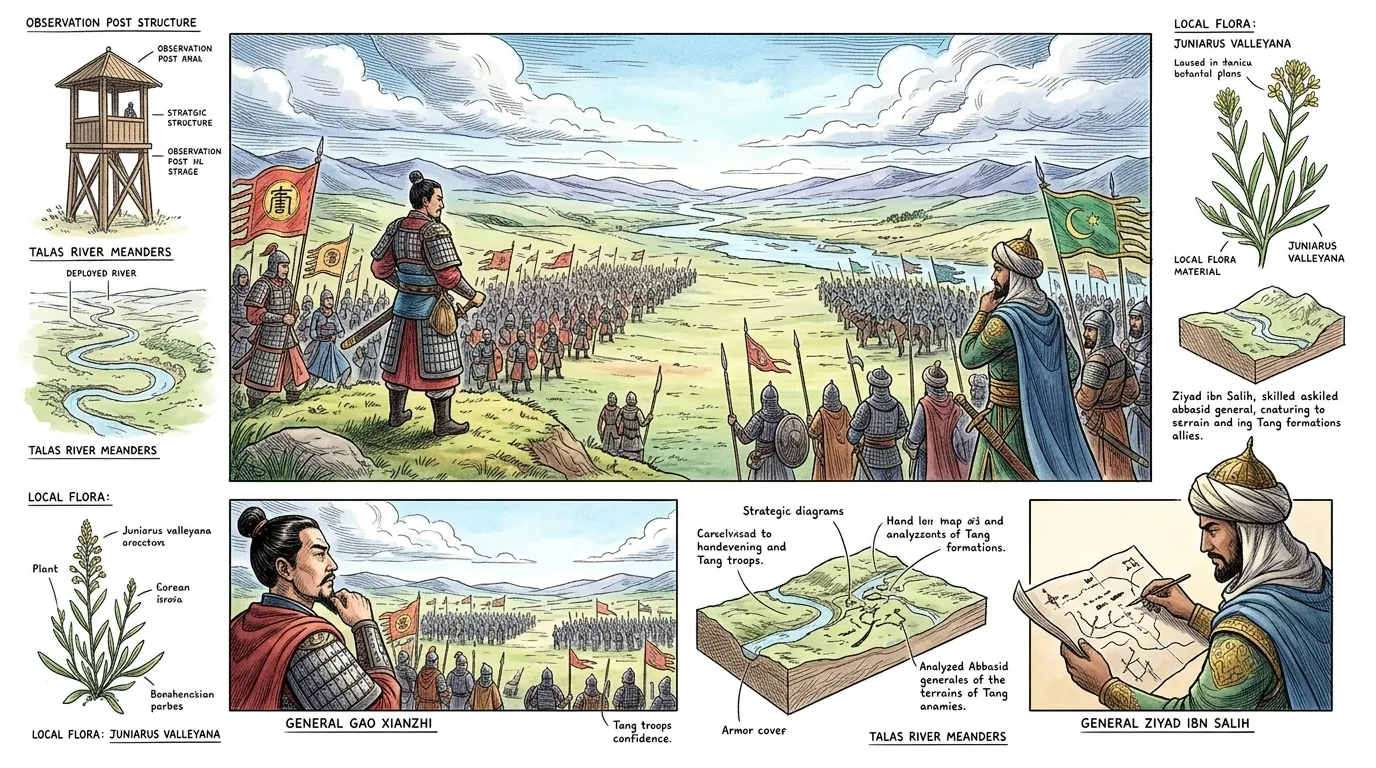
As the armies of Gao Xianzhi and Ziyad ibn Salih converged on the Talas River valley, both commanders prepared for a decisive engagement. Gao, confident in the strength and discipline of his Tang troops, deployed his forces in a traditional battle formation. Ziyad, aware of the terrain and bolstered by his Turkic allies, planned to exploit any weaknesses in the Tang lines. The tension was palpable as the two armies stood poised to clash.
Historical Fact: The Battle of Talas involved forces of approximately 30,000 soldiers on each side, a significant engagement for the period.
Page 7
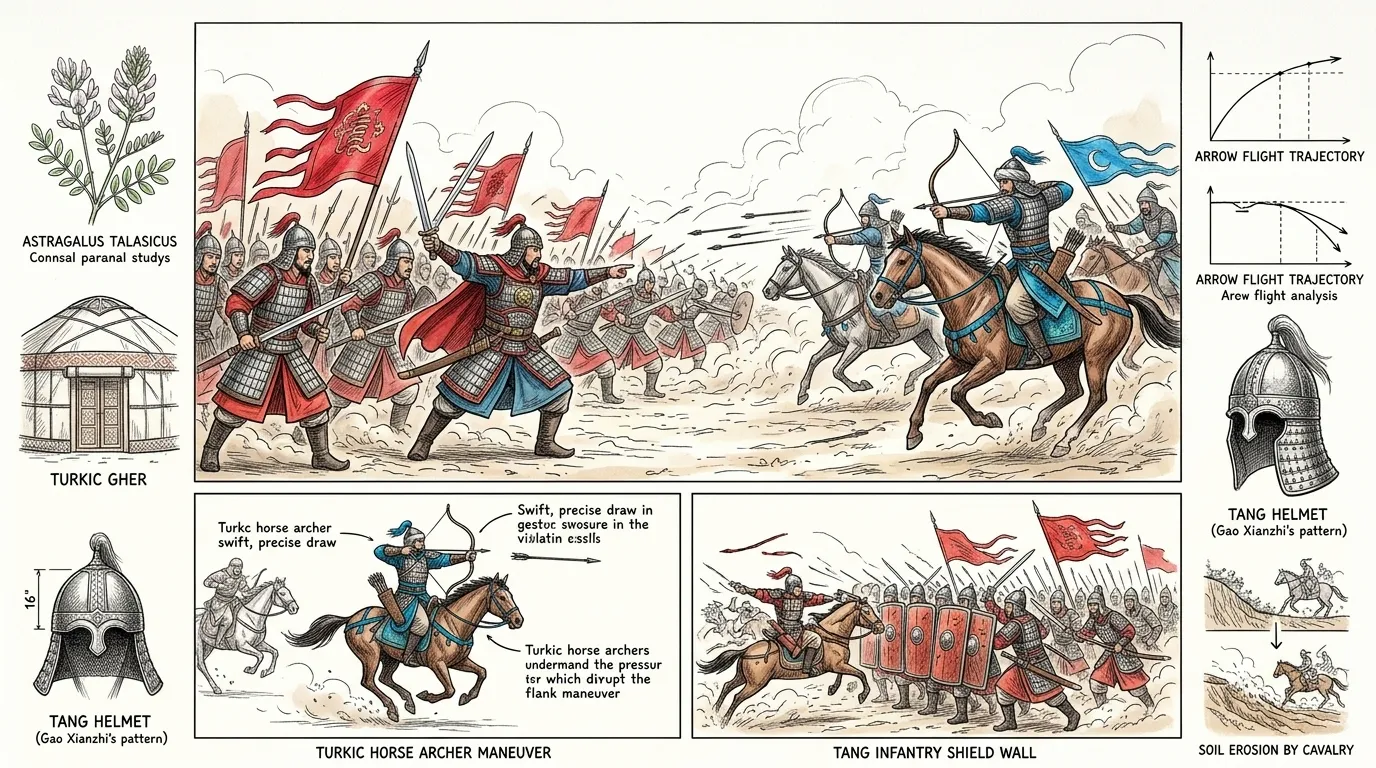
The battle commenced with a thunderous clash. Tang infantry, renowned for their discipline and skill, pressed relentlessly against the Abbasid lines. Turkic horse archers harassed the Tang flanks, disrupting their formations. The fighting raged for days, with neither side gaining a decisive advantage. The air filled with the screams of the wounded and dying, the clang of steel, and the dust of battle.
Historical Fact: The battle lasted for several days, indicating the fierce determination of both sides and the relatively equal strength of their forces.
Page 8
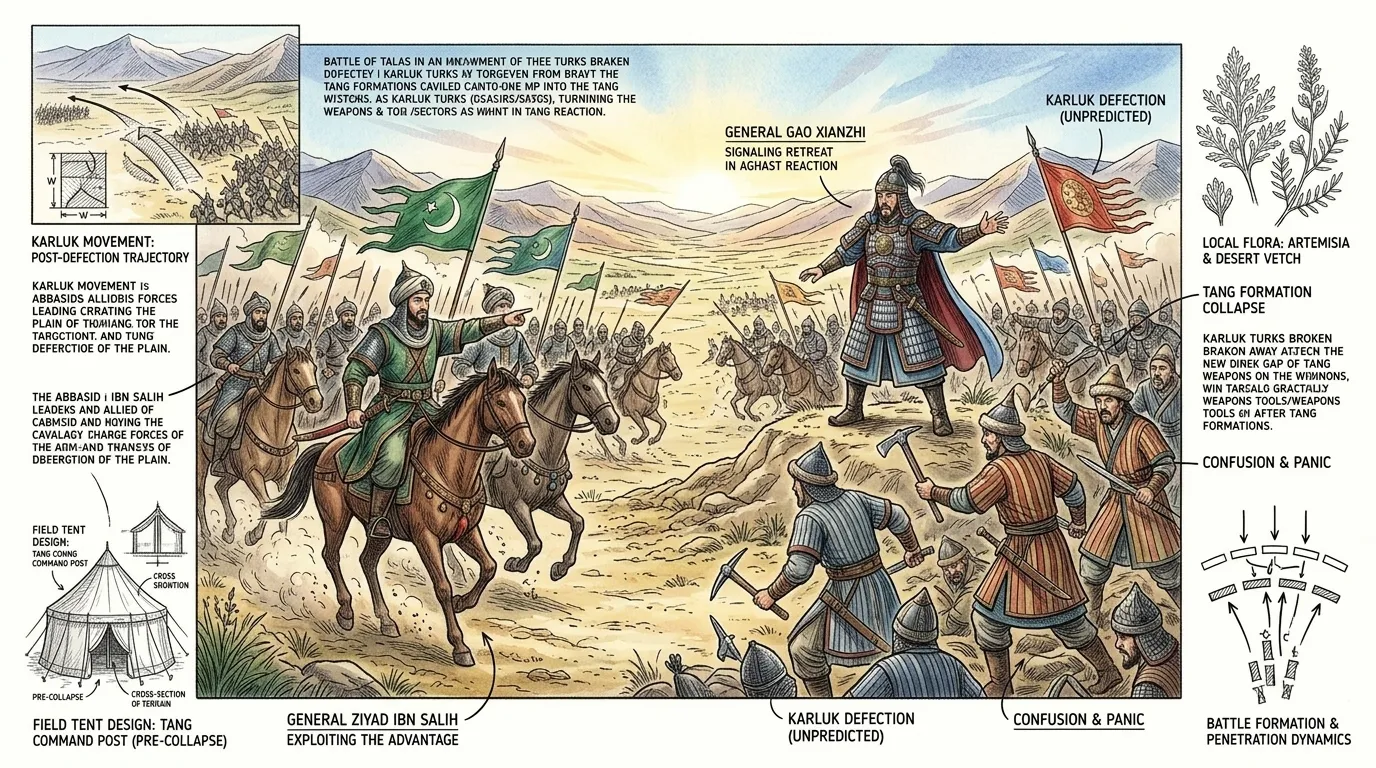
The tide of battle turned when a faction of Karluk Turks, who had initially allied with the Tang, defected to the Abbasid side. This unexpected betrayal shattered the Tang lines and created a critical opening for Ziyad ibn Salih to exploit. Gao Xianzhi, realizing the situation was untenable, ordered a retreat. The Tang army, though still fighting valiantly, was forced to withdraw from the field.
Historical Fact: The defection of the Karluk Turks is widely considered the decisive factor in the Abbasid victory at Talas.
Page 9
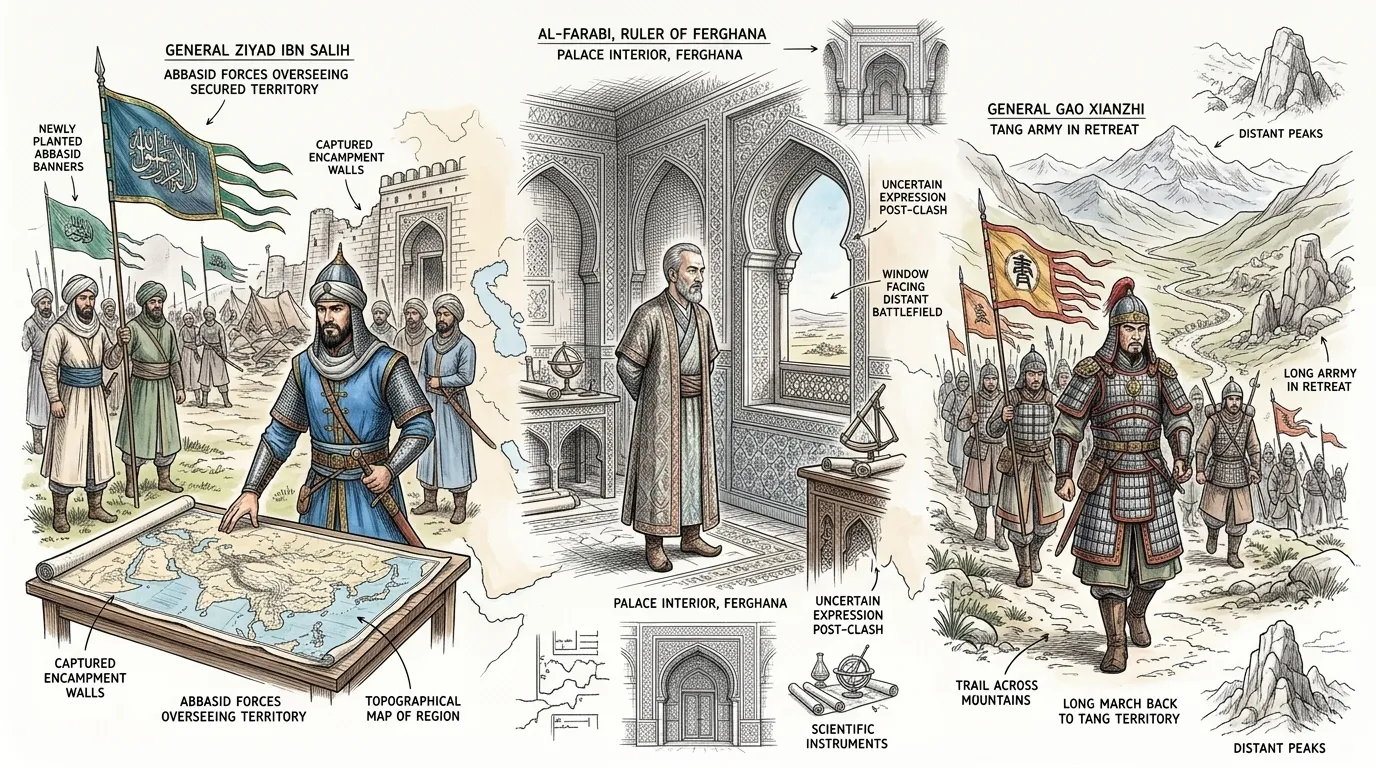
The Battle of Talas concluded with a clear Abbasid victory. Gao Xianzhi, though defeated, managed to lead a significant portion of his army back to Tang territory. Ziyad ibn Salih secured Abbasid control over much of Central Asia. Al-Farabi's fate remained uncertain, his kingdom caught in the crossfire of empires. Despite the Abbasid victory, the Tang Dynasty maintained a presence in some parts of Central Asia for several more decades.
Historical Fact: Gao Xianzhi, despite his defeat, retained the trust of Emperor Xuanzong and continued to serve in the Tang military.
Page 10

The Battle of Talas marked a turning point in the history of Central Asia. While not an immediate, decisive conquest, it halted the westward expansion of the Tang Dynasty and solidified Abbasid influence in the region. Crucially, the battle led to the transfer of Chinese papermaking technology to the Islamic world. This innovation, spreading westward, revolutionized communication and scholarship. The battle also contributed to the gradual Islamization of Central Asia, shaping the region's cultural and religious landscape for centuries to come. The Battle of Talas remains a powerful reminder of how seemingly isolated military engagements can have far-reaching and transformative consequences.
Historical Fact: The introduction of papermaking to the Islamic world is considered one of the most significant long-term consequences of the Battle of Talas.
About this story
- Historical figures: Gao Xianzhi, Ziyad ibn Salih, Emperor Xuanzong
- Location: Central Asia
- Period: Middle Ages
- Audience: general readers
Questions and answers
Questions and answers about Battle of Talas (751 AD, Central Asia)
Read Wonder History on your phone
Wonder History is available on Android. Get Wonder History on Google Play.
More Wonder History stories
- Battle of Tsushima (1905, Tsushima Strait)
- Christopher Columbus’ First Voyage — Caribbean (1492, Caribbean)
- Commodore Perry’s Expedition — Japan (1853, Japan)
- How Gold from Africa Built European Kingdoms (1400, Mediterranean)
- How Homes Changed from Caves to Castles (30000 BC, Chauvet Cave)
- How Music Was Made Before Recordings (1750, Vienna)