Battle of Salamis (480 BC, Greece)
Relive the Battle of Salamis, where Themistocles lured Xerxes’s fleet into narrow waters and turned a Persian invasion into a Greek victory.
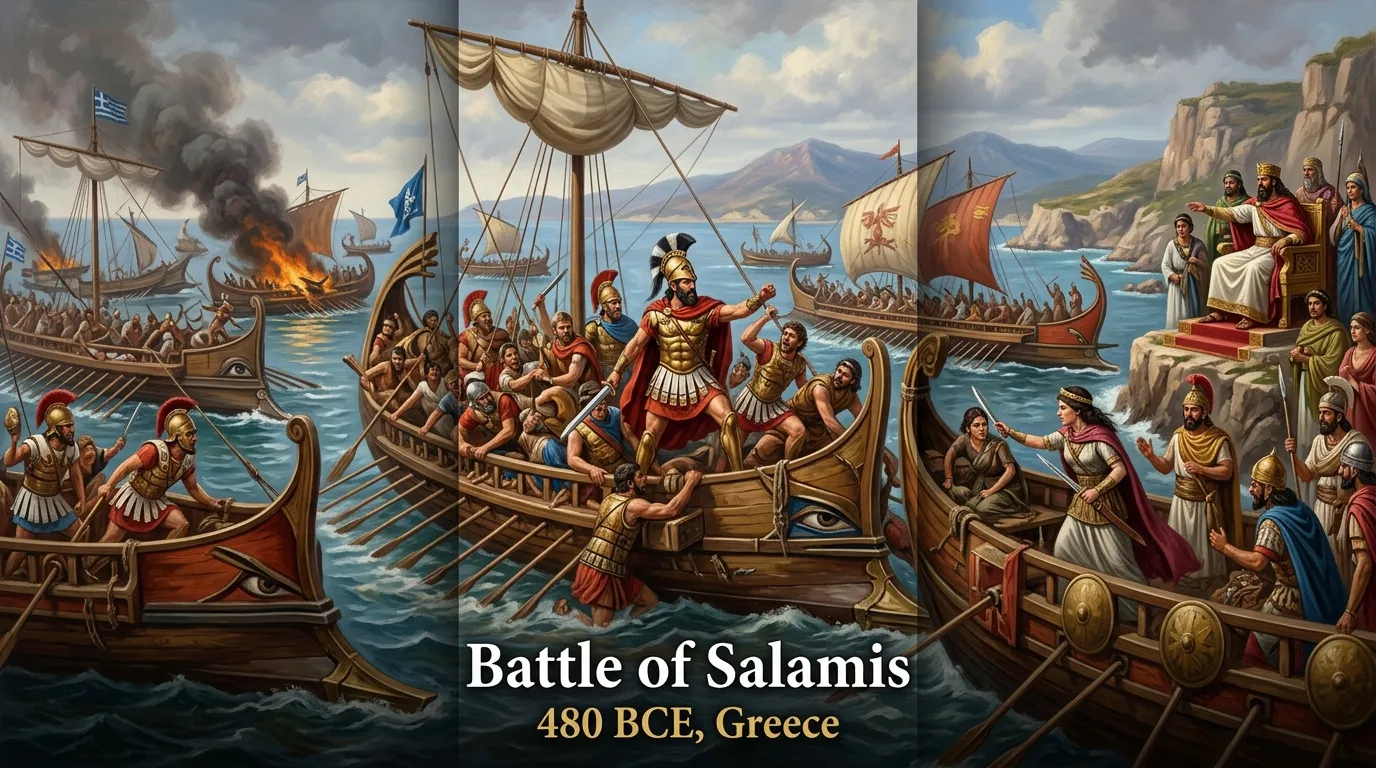
Page 1
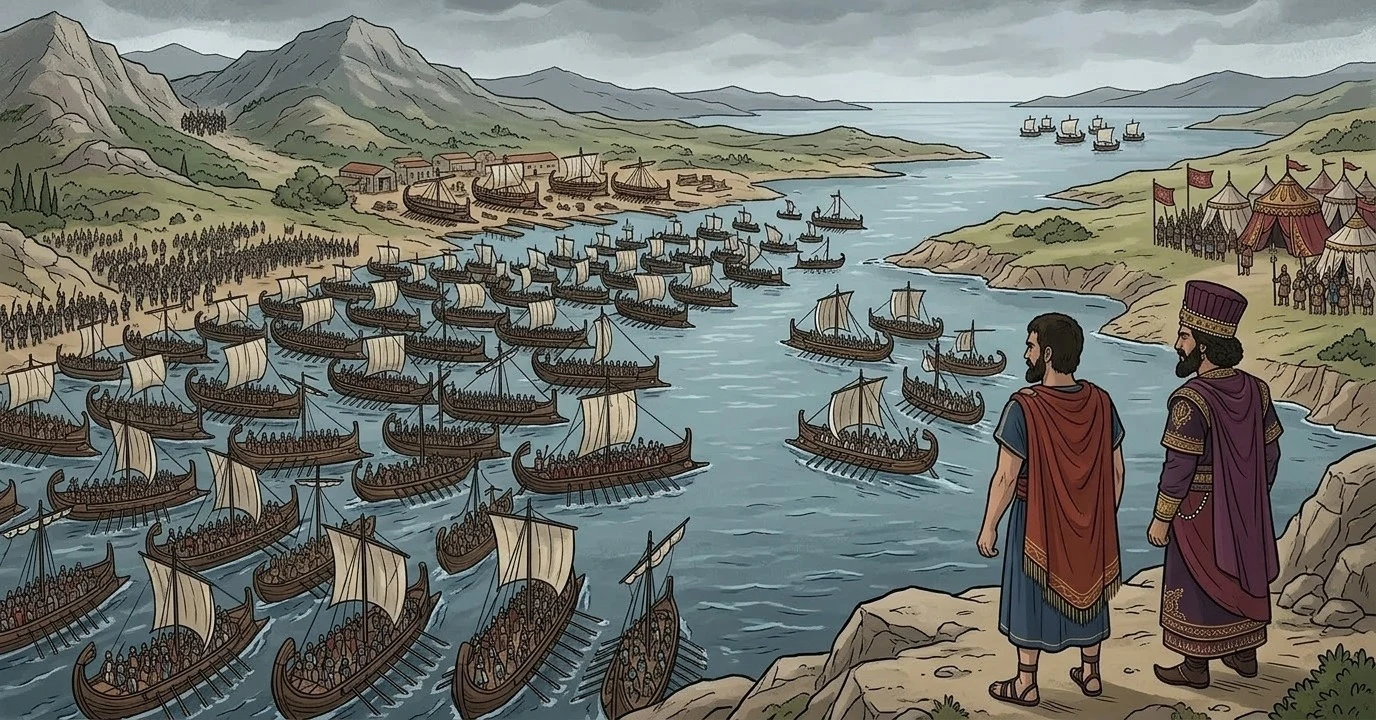
September 29, 480 BC. In the narrow straits of Salamis, the fate of Greece hung in the balance. Themistocles, the Athenian admiral, had masterminded a daring plan. Xerxes I, the Persian king, watched from his throne on the shore, confident of victory. Artemisia I of Caria, Xerxes's naval commander, advised caution, but her warnings were ignored. Themistocles's outnumbered Greek fleet, a mere 370 triremes, faced Xerxes's armada of over 1,200 ships. Themistocles knew that defeating them here was the only chance to save their homeland. Themistocles' bold strategy would change the course of history forever. But how did these two empires clash on this small island?
Historical Fact: The Battle of Salamis is estimated to have involved over 1,500 ships.
Page 2
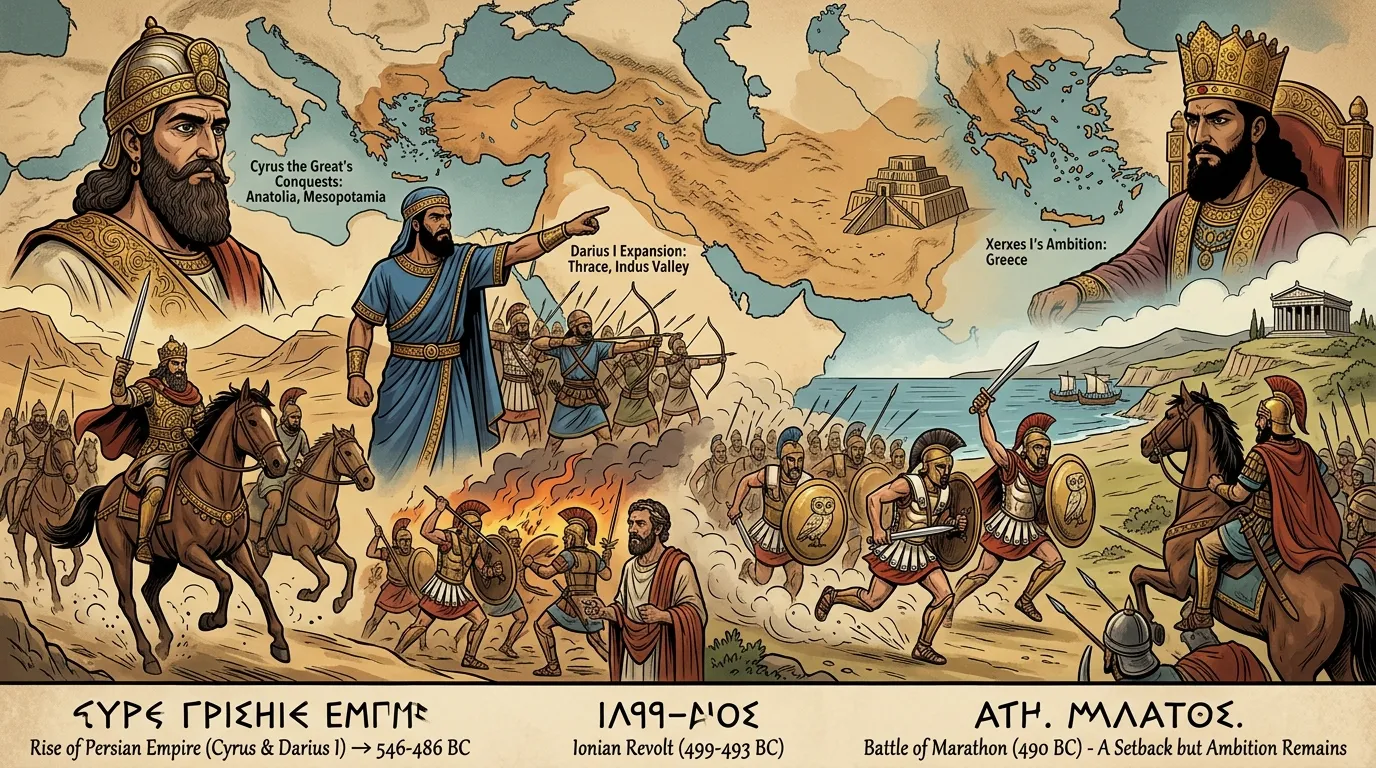
Decades before Salamis, the Persian Empire, under Cyrus the Great and later Darius I, had expanded rapidly, swallowing up kingdoms from Anatolia to the Indus Valley. By the reign of Xerxes I, Persia sought to incorporate Greece into its vast dominion. The Greek city-states, fiercely independent and often at odds with one another, represented a challenge to Persian authority. The Ionian Revolt, instigated by Aristagoras of Miletus, had already demonstrated Greek resistance to Persian rule. Darius I's subsequent invasion, culminating in the Battle of Marathon in 490 BC, proved a setback for Persia but only fueled their ambition for total conquest.
Historical Fact: The Persian Empire stretched across three continents: Asia, Africa, and Europe.
Page 3
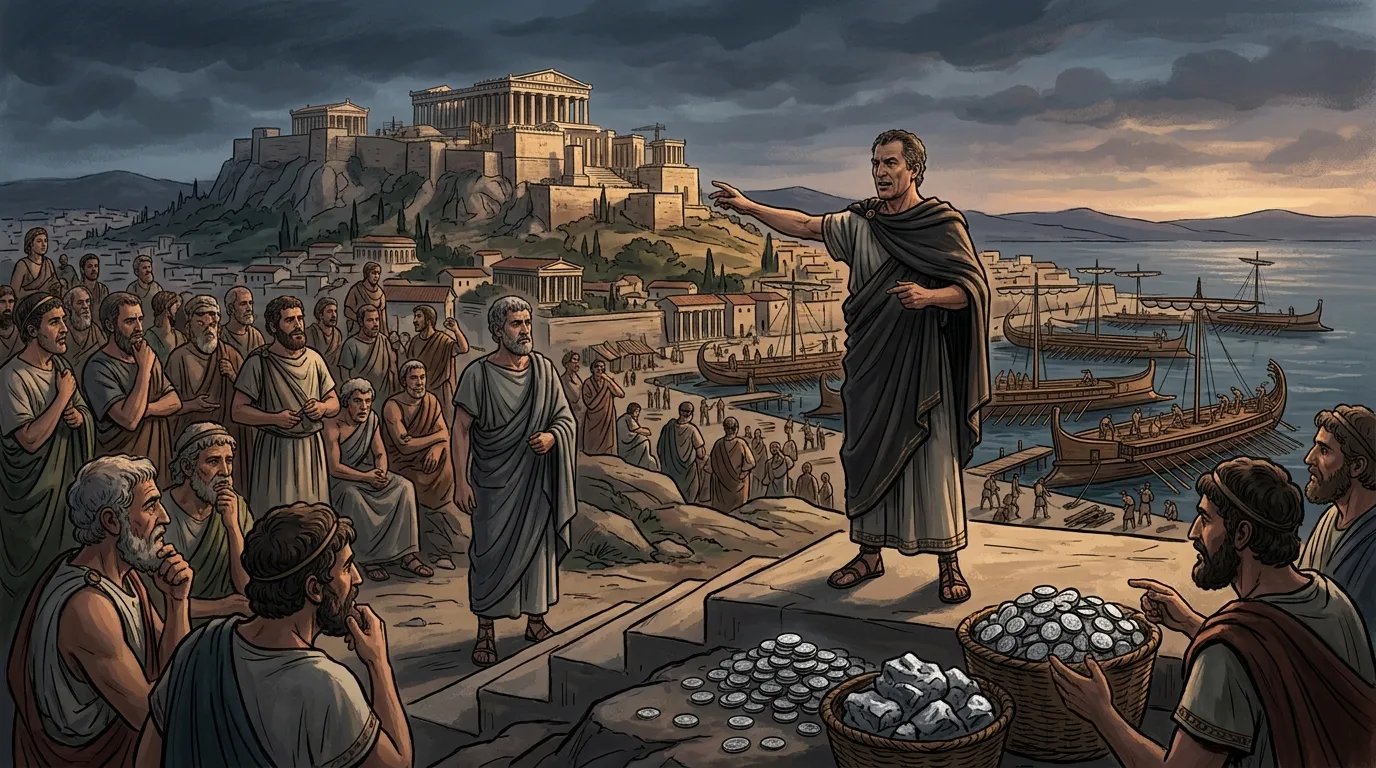
Amidst the looming Persian threat, Themistocles, a visionary Athenian statesman, recognized the paramount importance of a strong navy. He convinced the Athenians to use the silver discovered at Laurium to build a fleet of triremes, transforming Athens into a naval power. His foresight was crucial in preparing the Greeks for the inevitable clash with Persia. His political rivals, like Aristides, initially opposed his policies, but Themistocles's unwavering determination and strategic brilliance ultimately prevailed. He understood that a land battle against the vast Persian army was a near-certain defeat; the sea offered the best hope.
Historical Fact: The silver mines of Laurium provided Athens with the resources to build its powerful navy.
Page 4
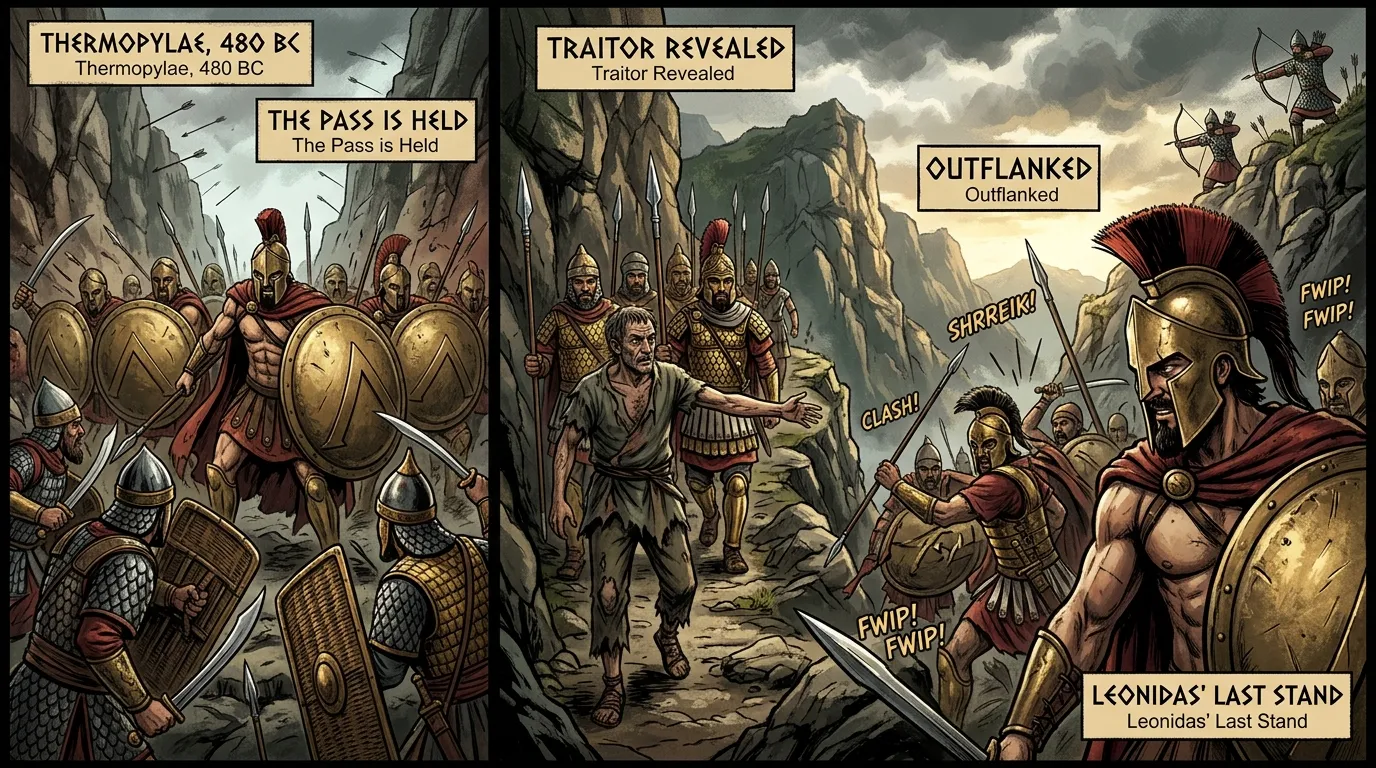
In 480 BC, Xerxes I led a massive Persian army into Greece. A small Greek force, led by King Leonidas of Sparta, made a valiant stand at the narrow pass of Thermopylae. For three days, the Greeks held off the Persian onslaught, inflicting heavy casualties. However, a Greek traitor, Ephialtes, revealed a secret path that allowed the Persians to outflank the Greek position. Leonidas, knowing the situation was hopeless, dismissed most of his troops, remaining with a small contingent of Spartans to fight to the death. Their sacrifice bought precious time for the rest of Greece to prepare.
Historical Fact: Only 300 Spartans, along with other Greek soldiers, fought to the death at Thermopylae.
Page 5
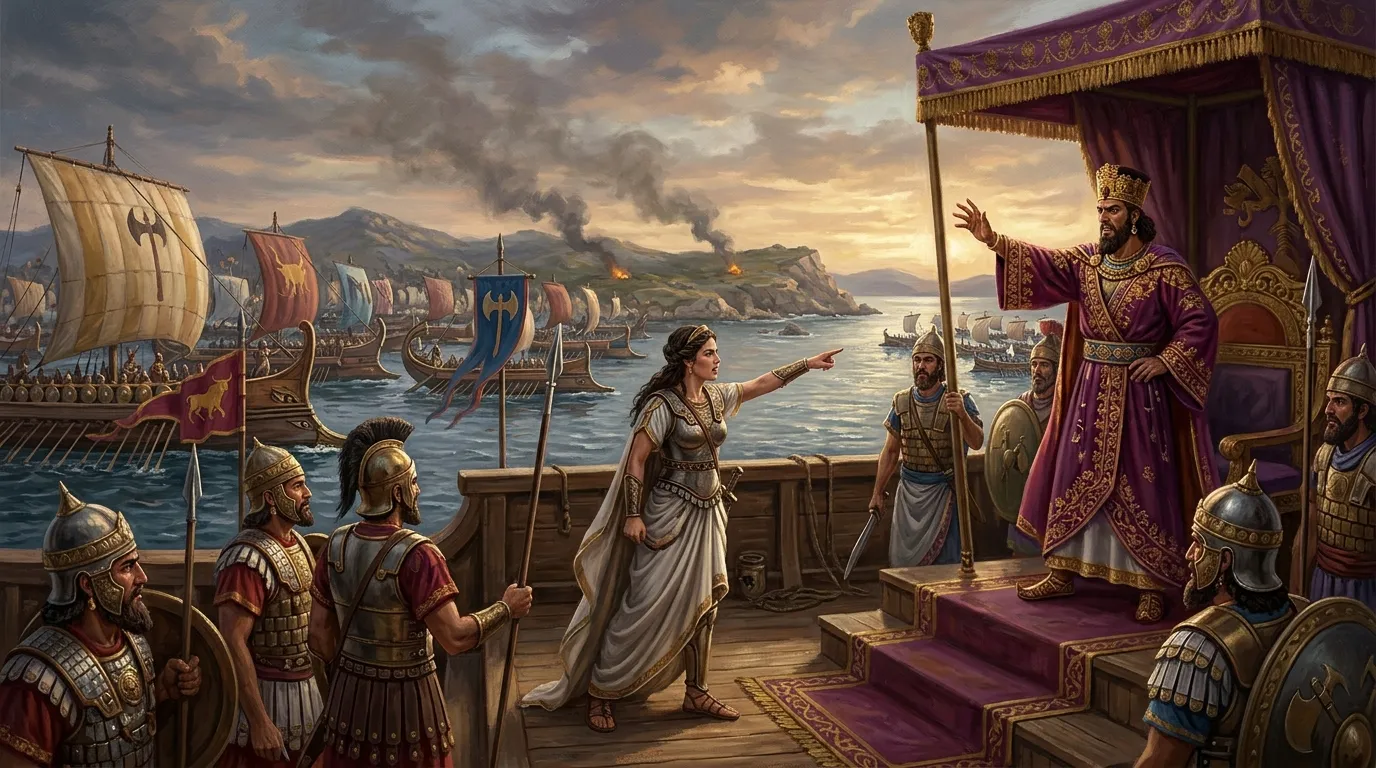
As the Persian fleet approached Salamis, Artemisia I of Caria, a queen and skilled naval commander allied with Xerxes, advised against engaging the Greek fleet in the narrow straits. She argued that the Persians' superior numbers would be negated in such confined waters. Instead, she suggested blockading the Peloponnese and forcing the Greeks to surrender through attrition. However, Xerxes, eager for a decisive victory, dismissed her advice. "My men have always fought harder than your own. I will not delay the final victory!" he exclaimed. Artemisia's warning proved prescient, as the narrow straits favored the smaller, more maneuverable Greek ships.
""My men have always fought harder than your own. I will not delay the final victory!""
Historical Fact: Artemisia I commanded a squadron of five ships in Xerxes's fleet.
Page 6
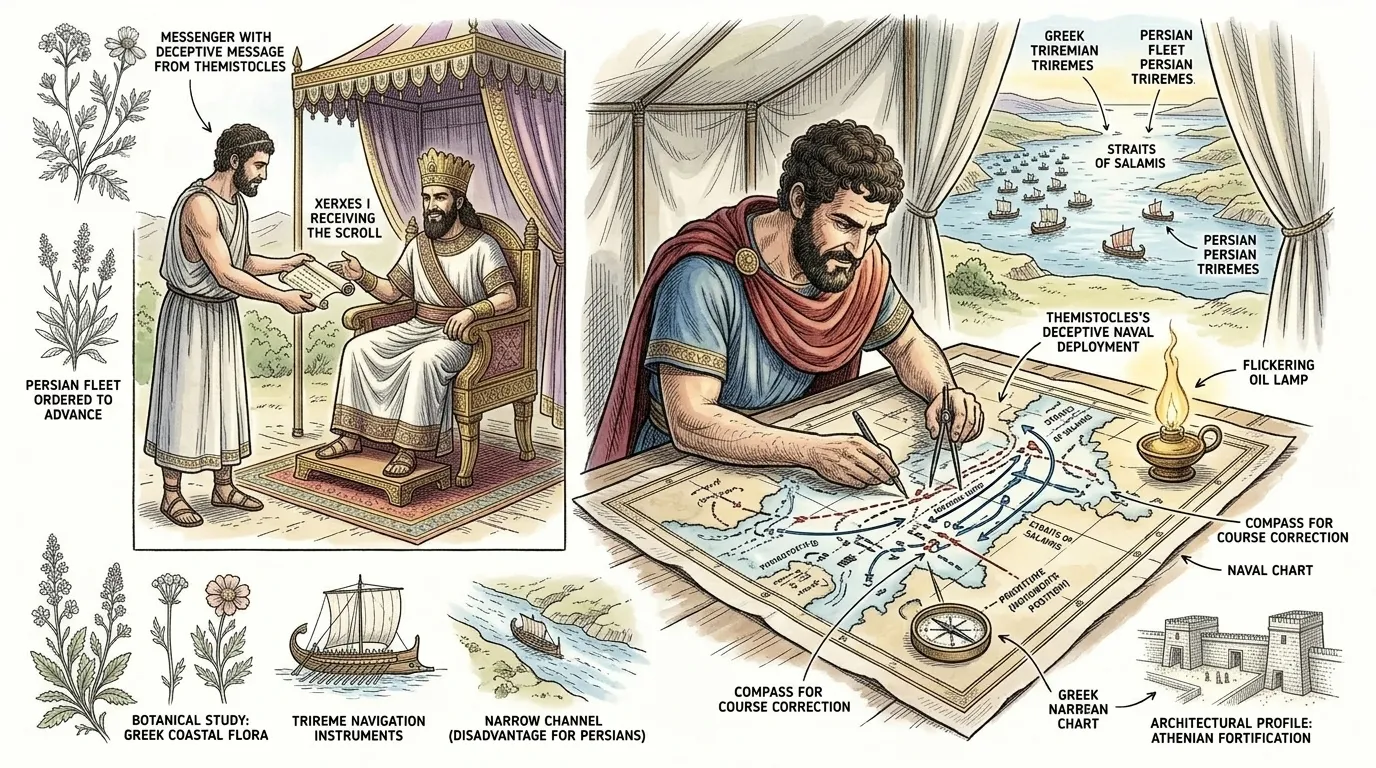
Themistocles, facing a numerically superior enemy, devised a cunning strategy. He used deception to lure the Persian fleet into the narrow straits of Salamis. He sent a false message to Xerxes, suggesting that the Greek fleet was divided and ready to flee, thus enticing the Persians to attack. The cramped conditions neutralized the Persians' advantage in numbers and allowed the smaller Greek ships to maneuver more effectively. Themistocles's leadership and strategic brilliance were crucial in uniting the often-fractious Greek city-states and preparing them for the battle.
Historical Fact: Themistocles sent a message to Xerxes through a trusted slave named Sicinnus.
Page 7
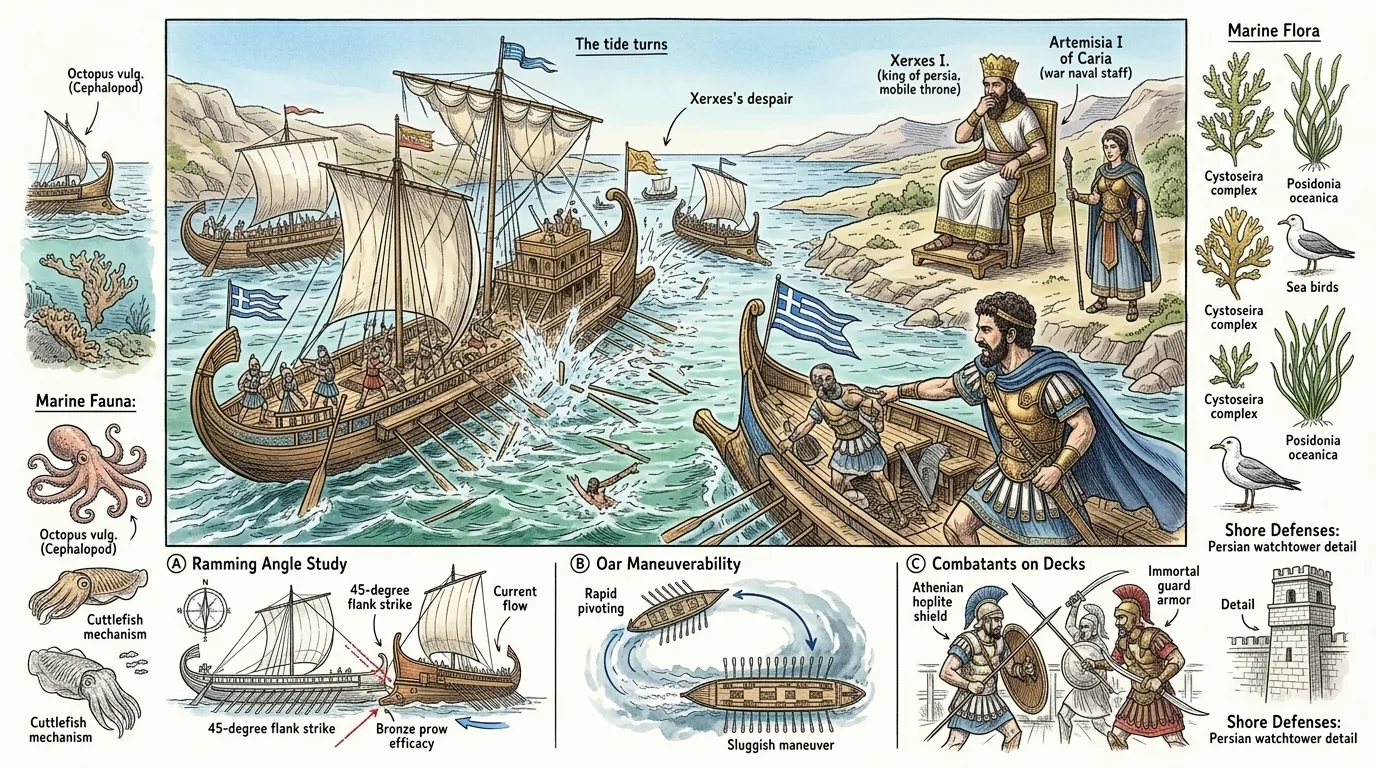
As the Persian fleet entered the straits, the Greeks launched their attack. The smaller, more agile Greek triremes rammed into the larger, less maneuverable Persian ships, causing chaos and destruction. The Athenian fleet, with its superior seamanship, played a crucial role in disrupting the Persian formation. The fighting was fierce and brutal, with sailors and soldiers battling hand-to-hand on the decks of the ships. The narrow straits became a scene of carnage, with wrecked ships and drowned bodies filling the sea.
Historical Fact: The Greek triremes were designed for speed and maneuverability, giving them an advantage in the narrow straits.
Page 8
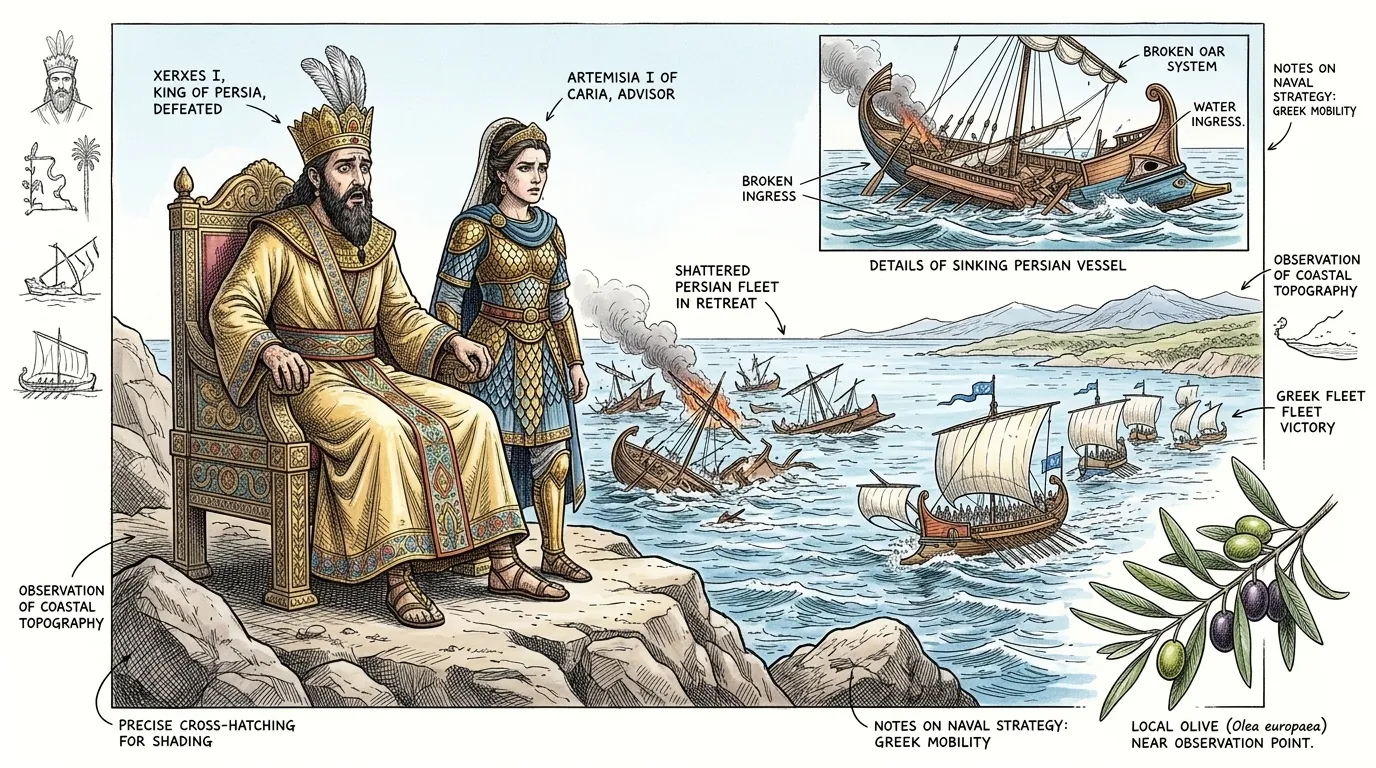
The Battle of Salamis proved to be a decisive victory for the Greeks. The Persian fleet suffered heavy losses, and Xerxes, witnessing the disaster from his throne on the shore, ordered a retreat. The defeat shattered Persian morale and effectively ended their campaign to conquer Greece. Xerxes returned to Persia with a significant portion of his army, leaving behind a smaller force under the command of Mardonius to continue the war. However, the Greeks, emboldened by their victory at Salamis, were now confident of their ability to defend their homeland.
Historical Fact: Xerxes had a throne erected on Mount Aigaleo to observe the battle.
Page 9
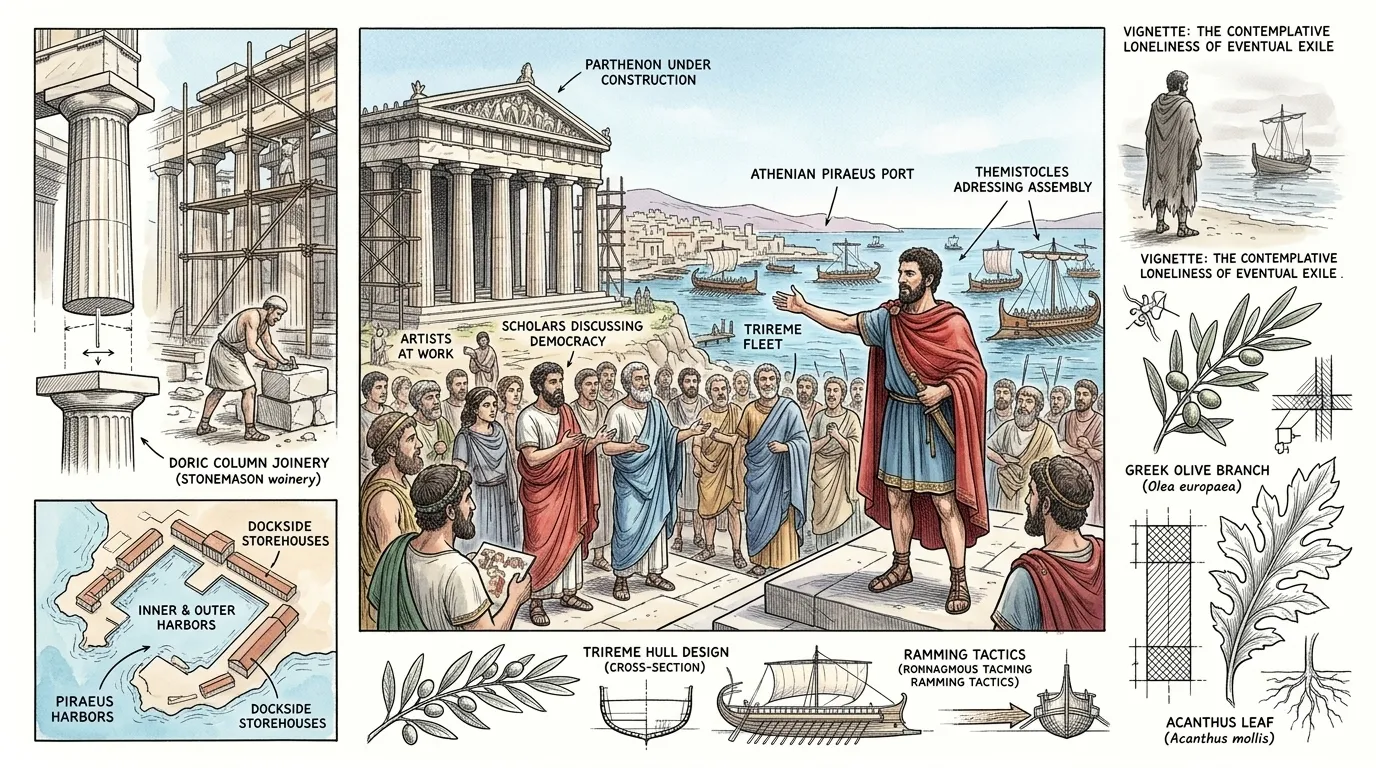
The Greek victory at Salamis had profound consequences. It saved Greece from Persian domination, preserving its culture, philosophy, and democratic ideals. The victory also marked the beginning of Athens's golden age, as the city-state emerged as the dominant naval power in the Aegean. The Delian League, led by Athens, was formed to continue the war against Persia and liberate the Greek cities of Asia Minor. Themistocles, hailed as a hero, became a dominant figure in Athenian politics, though his later exile highlights the fickleness of Athenian democracy.
Historical Fact: Themistocles was later ostracized from Athens, a common practice in Athenian democracy.
Page 10
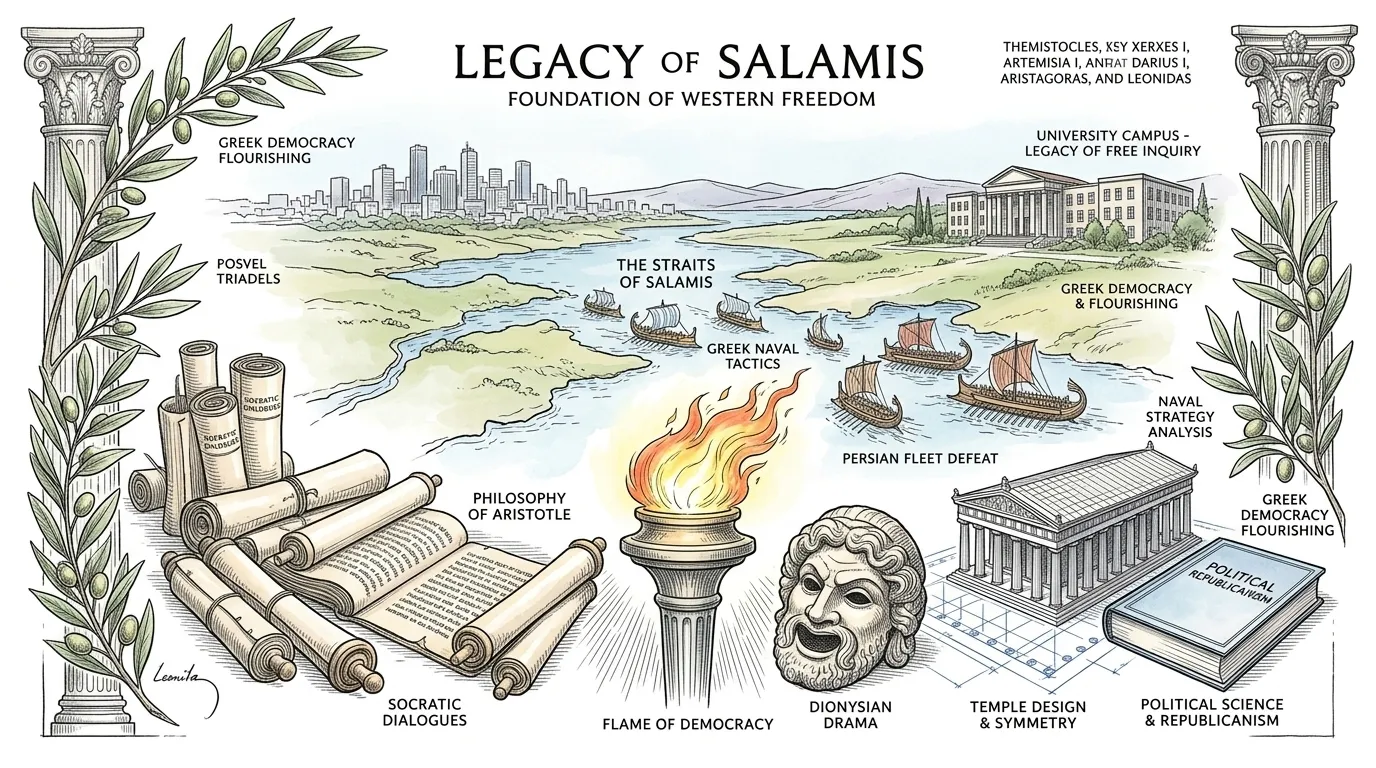
The Battle of Salamis remains one of the most significant naval battles in history. It demonstrated the importance of strategic planning, naval power, and the defense of freedom against tyranny. The Greek victory at Salamis allowed Western civilization to flourish, influencing art, philosophy, politics, and literature for centuries to come. Had the Persians won, the course of history would have been drastically altered. Today, historians study Salamis to understand the dynamics of ancient warfare, the importance of leadership, and the enduring legacy of ancient Greece. The Battle of Salamis preserved the flame of democracy for future generations.
Historical Fact: The victory at Salamis allowed Greek culture and democratic ideals to flourish and influence Western civilization.
About this story
- Historical figures: Themistocles, Xerxes I, Artemisia I of Caria
- Location: Greece
- Period: Ancient
- Audience: general readers
Questions and answers
Questions and answers about Battle of Salamis (480 BC, Greece)
Read Wonder History on your phone
Wonder History is available on Android. Get Wonder History on Google Play.
More Wonder History stories
- Battle of Talas (751 AD, Central Asia)
- Battle of Tsushima (1905, Tsushima Strait)
- Christopher Columbus’ First Voyage — Caribbean (1492, Caribbean)
- Commodore Perry’s Expedition — Japan (1853, Japan)
- How Gold from Africa Built European Kingdoms (1400, Mediterranean)
- How Homes Changed from Caves to Castles (30000 BC, Chauvet Cave)