Battle of Mohacs (1526, Hungary)
In 1526, the Battle of Mohács pitted the Kingdom of Hungary against the Ottoman Empire, resulting in a devastating defeat for the Hungarians and opening the way for Ottoman expansion into Europe. This battle reshaped Central Europe's political landscape and marked the end of Hungary's independence.
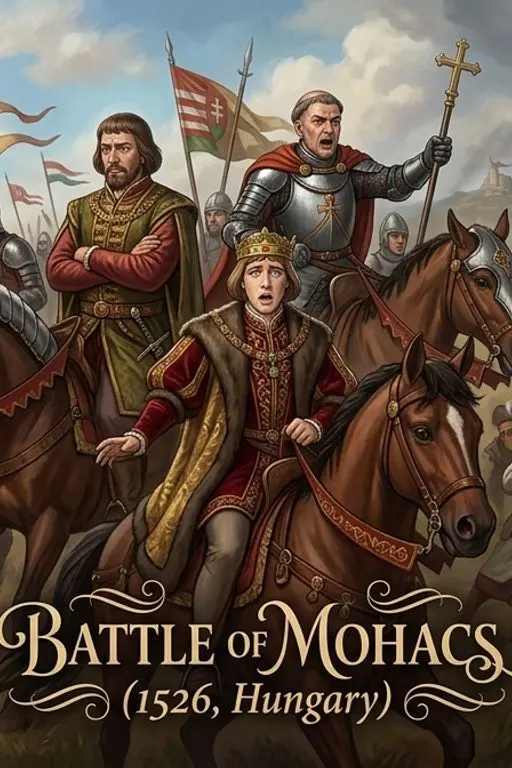
Page 1
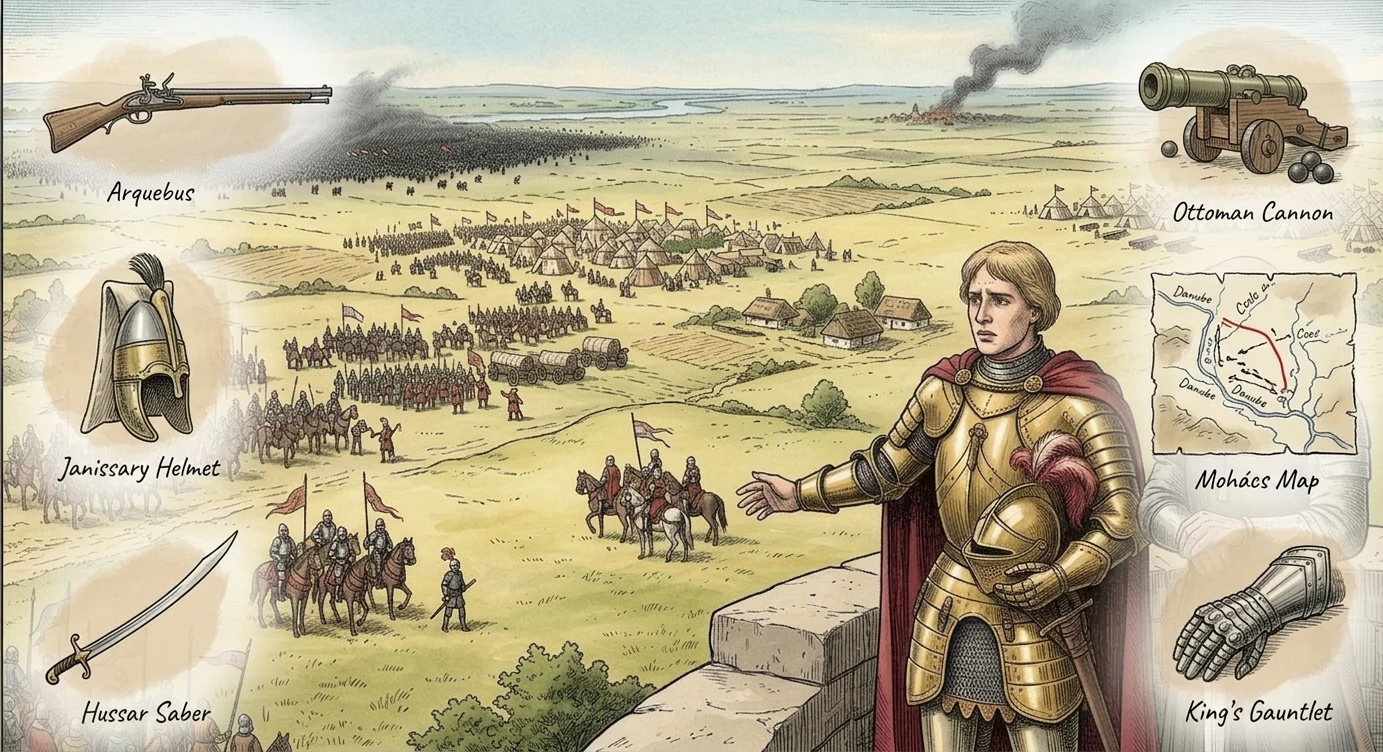
August 29, 1526. The Hungarian army, led by King Louis II, stood arrayed against the Ottoman forces of Suleiman the Magnificent near Mohács. The clash would determine the fate of Hungary and send shockwaves across Europe. Archbishop Pál Tomori, a seasoned military leader, commanded the Hungarian right flank, while György Zápolya, a powerful nobleman, held back a significant reserve force. The vast plain trembled as the Ottoman Janissaries advanced, a wall of steel and gunpowder against the outnumbered Hungarian knights. The scale of the battle was immense: nearly 60,000 Ottoman soldiers against roughly 26,000 Hungarians. Within hours, Hungary's hopes would be shattered. But where did this catastrophic encounter originate?
Historical Fact: The Battle of Mohács took place on August 29, 1526.
Page 2
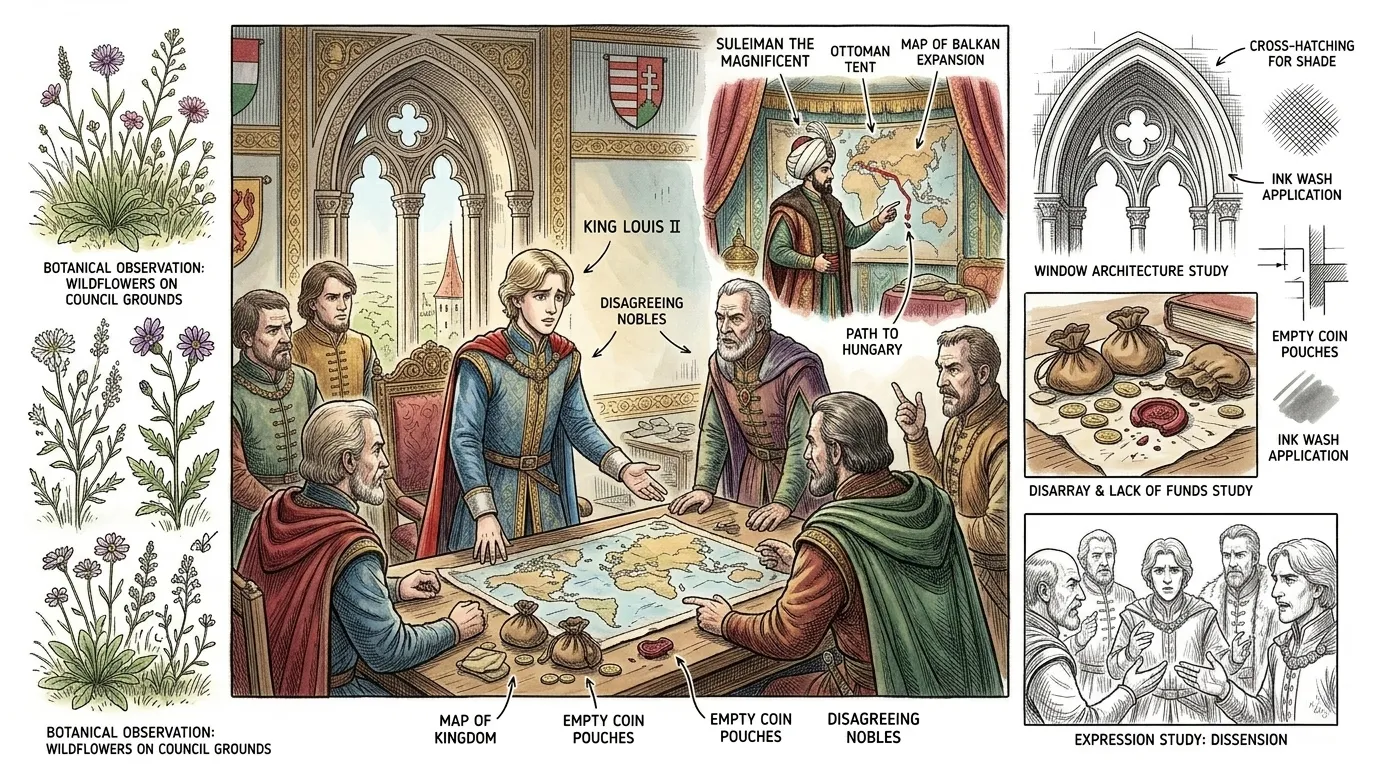
The Kingdom of Hungary, once a regional power, had been weakened by internal divisions and a series of weak rulers. King Louis II, a young and inexperienced monarch, inherited a realm plagued by factionalism among the nobility. The treasury was depleted, and the military was outdated and ill-equipped. Meanwhile, the Ottoman Empire, under the ambitious Suleiman the Magnificent, had been steadily expanding its reach into the Balkans. The fall of Belgrade in 1521 signaled Suleiman's intent to advance further into Europe, with Hungary directly in his path. The Hungarian Diet debated endlessly, unable to agree on a unified strategy to counter the Ottoman threat. Some advocated for seeking aid from the Holy Roman Empire, while others favored a more cautious approach.
Historical Fact: Suleiman the Magnificent ascended to the Ottoman throne in 1520.
Page 3
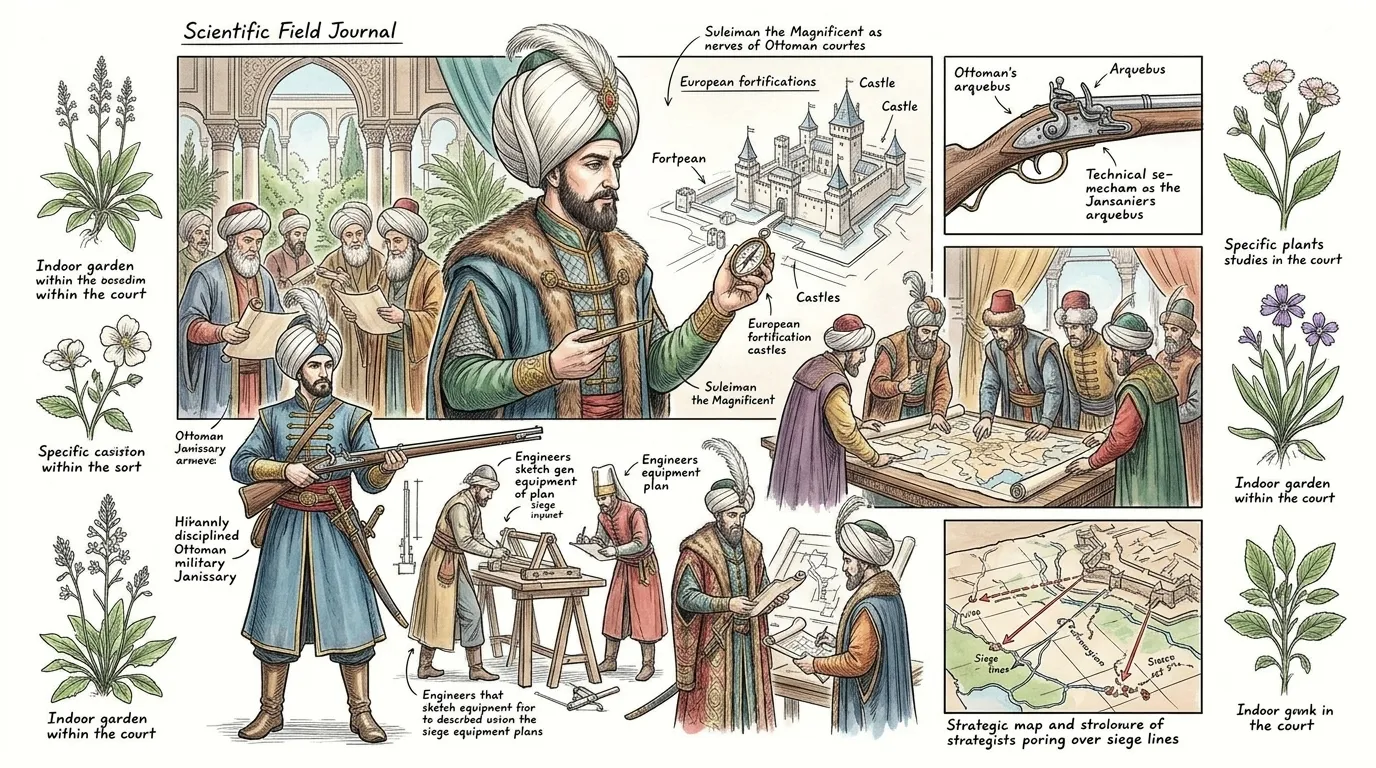
Suleiman I, known as 'the Magnificent' in the West and 'the Lawgiver' in the Islamic world, was a formidable ruler. He had transformed the Ottoman army into a highly disciplined and technologically advanced force. The Janissaries, elite infantry armed with arquebuses, formed the backbone of his army, supported by skilled cavalry and a powerful artillery corps. Ottoman engineers were adept at siege warfare, capable of breaching even the strongest fortifications. Suleiman's ambition was boundless. He saw himself as a divinely ordained leader destined to conquer Europe. His court was a center of culture and learning, but also a hub of military planning. He carefully orchestrated his campaigns, gathering intelligence and securing supply lines before launching his offensives.
Historical Fact: The Janissaries were an elite infantry unit in the Ottoman army, often composed of conscripted Christian boys.
Page 4
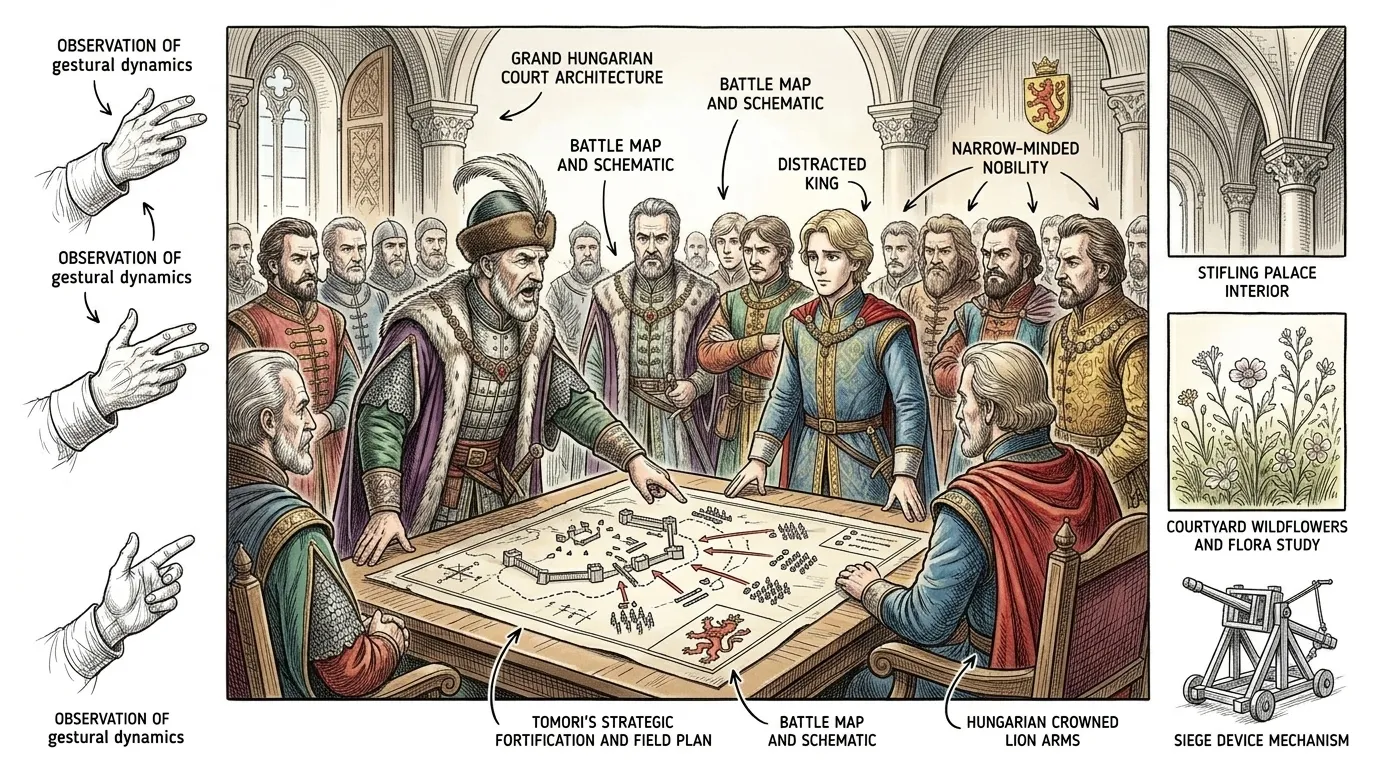
Archbishop Pál Tomori, despite his religious office, was a seasoned military commander. He understood the gravity of the Ottoman threat and urged King Louis to prepare for a decisive battle. Tomori recognized the weaknesses of the Hungarian army – its outdated tactics, its reliance on heavy cavalry, and its lack of coordinated leadership. He advocated for a more defensive strategy, utilizing fortifications and ambushes to weaken the Ottoman advance. He also stressed the importance of securing alliances with other European powers, particularly the Habsburgs. However, his warnings were often ignored or dismissed by the court, which was mired in political infighting. Tomori felt increasingly isolated, aware that the fate of Hungary rested on his shoulders.
Historical Fact: Pál Tomori was the Archbishop of Kalocsa and a skilled military leader.
Page 5
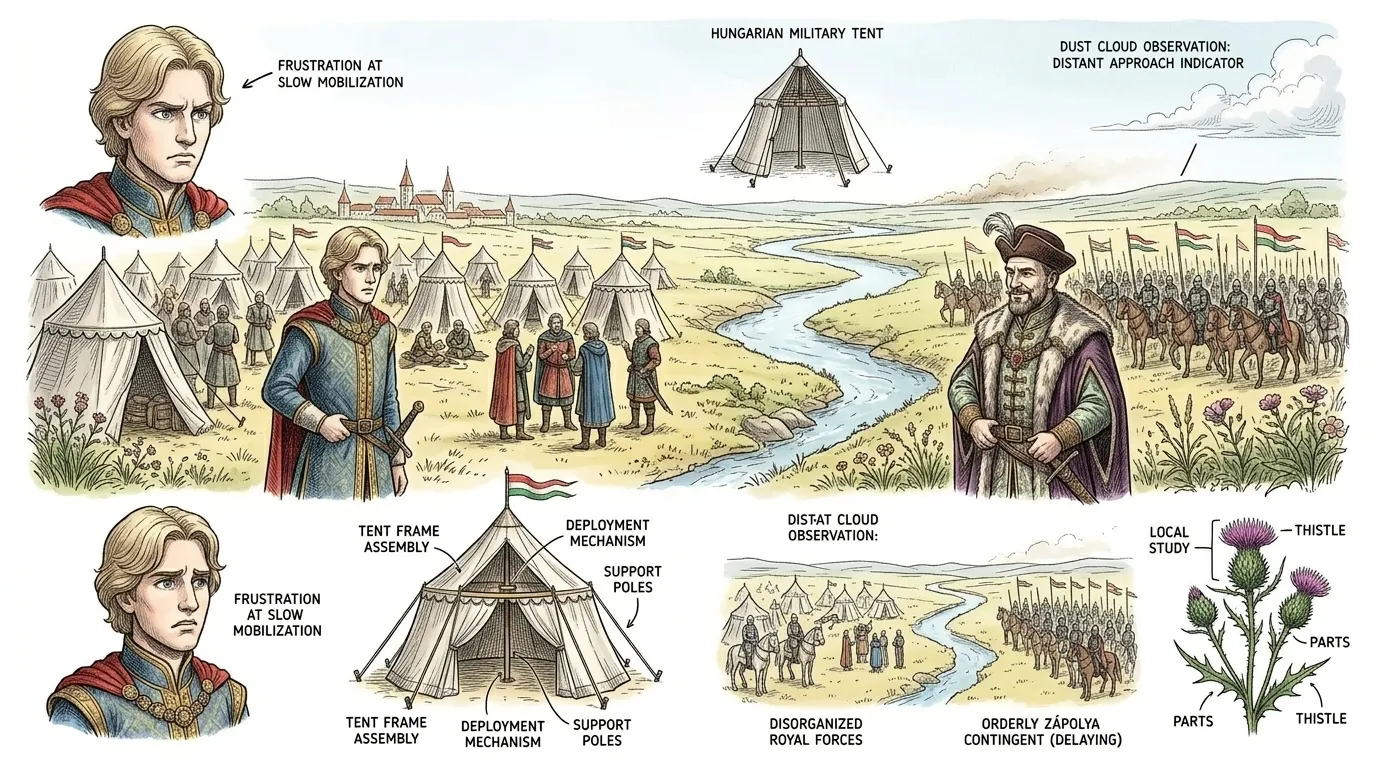
As the Ottoman army advanced through the Balkans, King Louis II finally mobilized the Hungarian forces. However, the response was slow and fragmented. Many nobles were reluctant to commit their troops, either due to mistrust of the king or a desire to protect their own interests. György Zápolya, one of the most powerful magnates in Hungary, deliberately delayed his arrival with a large contingent of soldiers, further weakening the Hungarian army. Despite the looming threat, the Hungarian Diet continued to squabble, unable to provide the king with adequate resources. The sense of impending doom grew stronger as the Ottoman juggernaut approached the plains of Mohács.
Historical Fact: György Zápolya was a powerful Hungarian nobleman who harbored ambitions for the throne.
Page 6
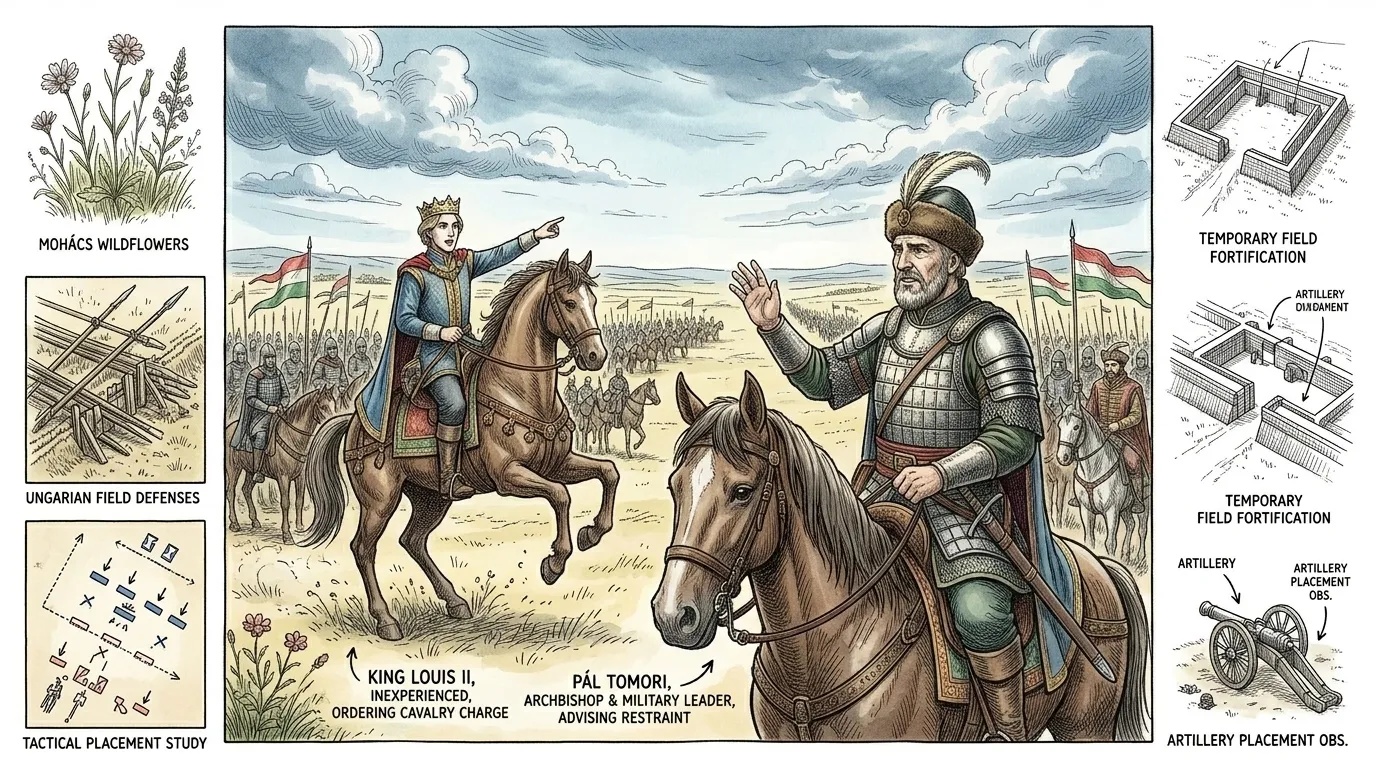
On August 29, 1526, the Hungarian army deployed on the plains near Mohács. Archbishop Pál Tomori, commanding the right flank, positioned his forces to take advantage of the terrain. The Hungarian battle plan was based on a traditional cavalry charge, hoping to break the Ottoman lines with a swift and decisive attack. However, Tomori knew that this strategy was risky against the well-disciplined Janissaries and the Ottoman artillery. He urged King Louis to adopt a more cautious approach, but the young king was eager to prove his mettle in battle. The Hungarian soldiers, outnumbered and outgunned, braced themselves for the onslaught.
Historical Fact: The Hungarian army numbered approximately 26,000 men at the Battle of Mohács.
Page 7
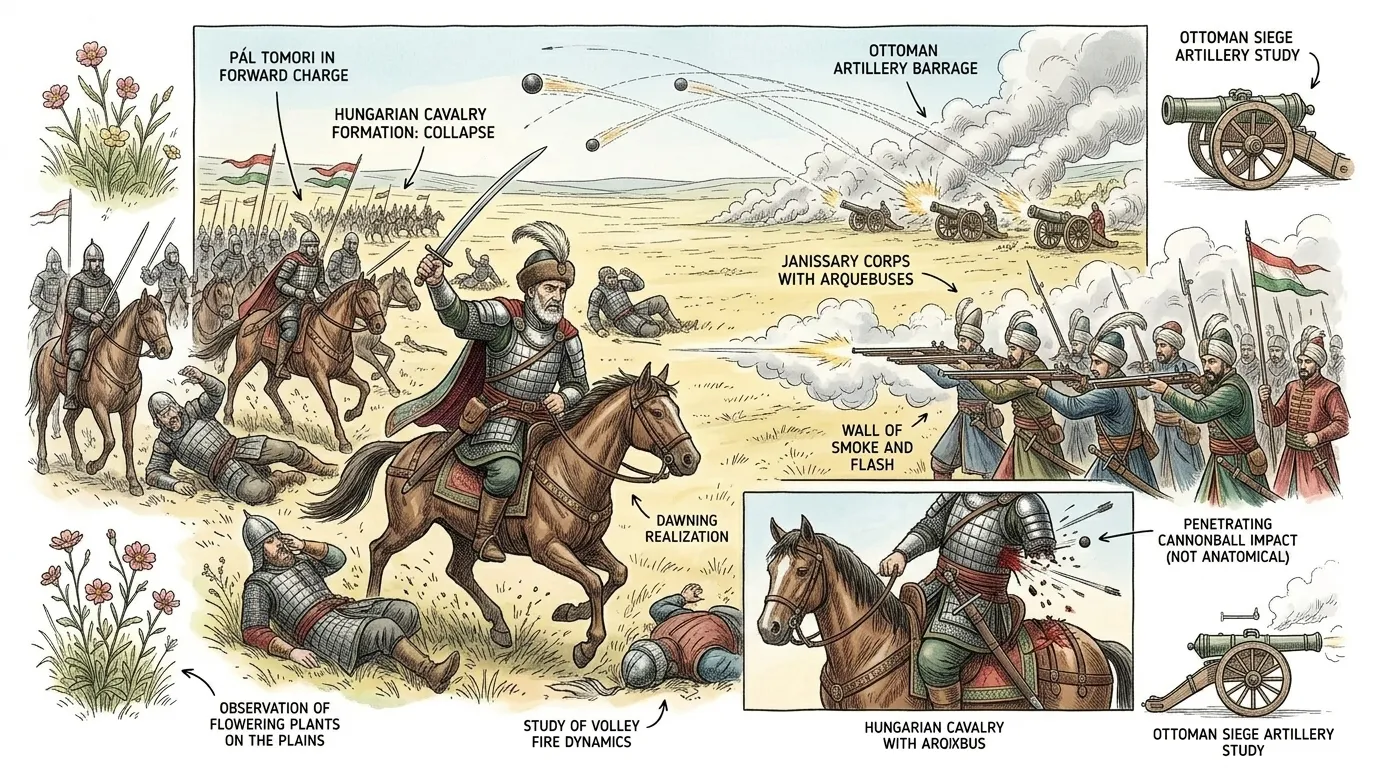
The battle began with a thunderous barrage from the Ottoman artillery. Cannonballs ripped through the Hungarian ranks, causing chaos and confusion. The Hungarian cavalry, eager to engage, launched their charge, but they were met withering fire from the Janissaries. The Ottoman infantry, armed with arquebuses, unleashed volley after volley, decimating the charging knights. The Hungarian attack faltered, and the Ottoman forces counterattacked, pushing back the Hungarian lines. Archbishop Pál Tomori fought bravely, leading his troops with courage and determination, but he could not stem the tide. He knew that the battle was lost.
Historical Fact: Ottoman artillery played a crucial role in their victory at Mohács.
Page 8
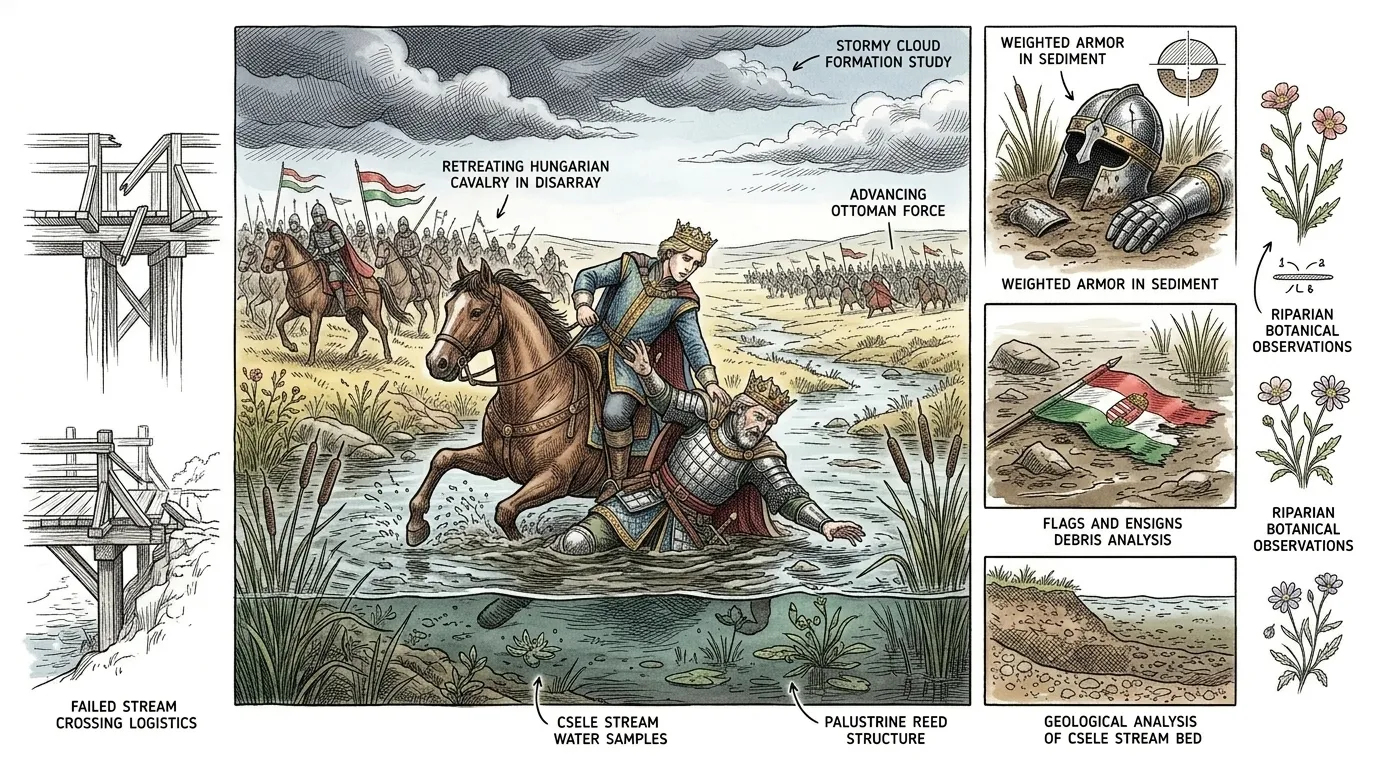
As the battle turned into a rout, King Louis II attempted to flee the battlefield. However, while attempting to cross the Csele stream, his horse stumbled, and he was thrown into the water, weighed down by his heavy armor. He drowned in the muddy stream, his reign tragically cut short. With the death of their king, the Hungarian army collapsed completely. Thousands of soldiers were slaughtered on the field of Mohács, and many more were taken prisoner. The Ottoman victory was decisive and devastating. The kingdom was thrown into chaos.
Historical Fact: King Louis II was 20 years old when he died at the Battle of Mohács.
Page 9
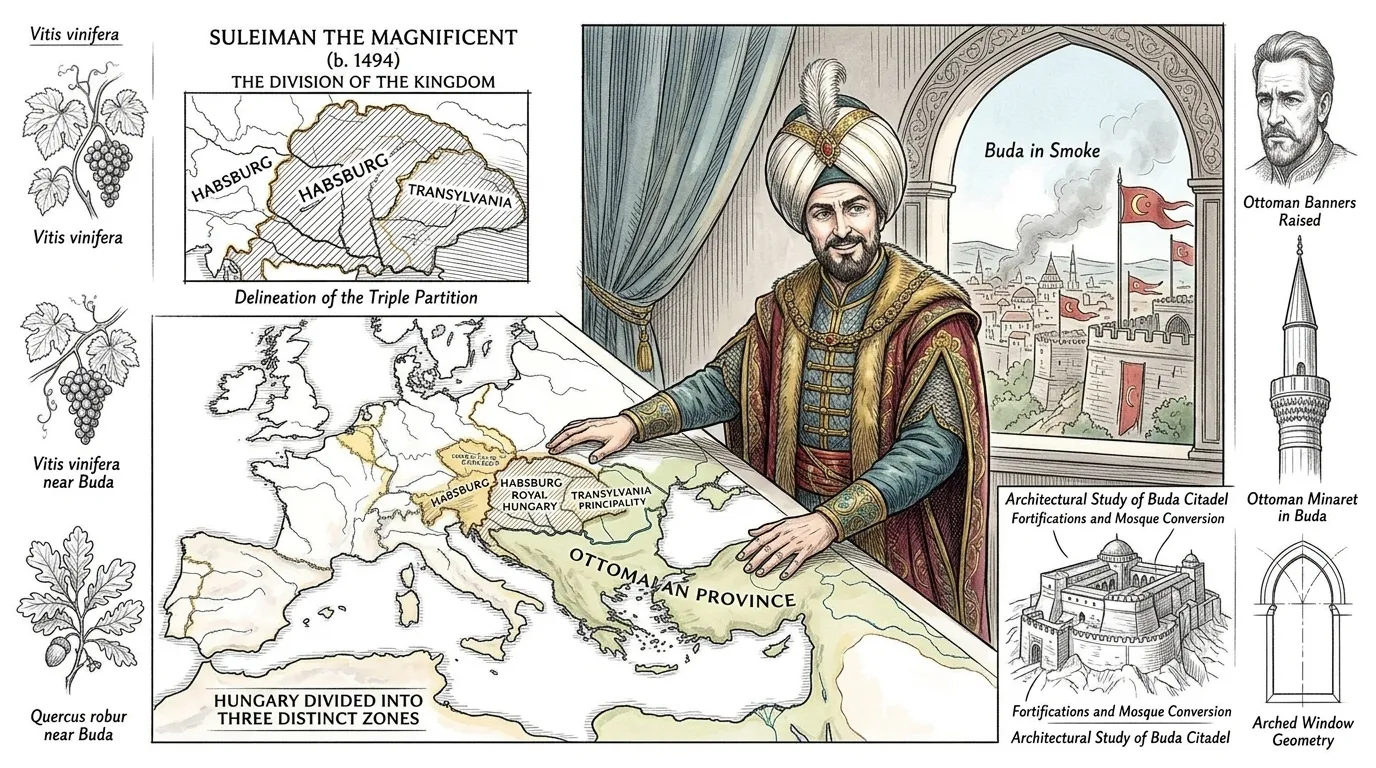
Following their victory at Mohács, the Ottomans sacked Buda, the Hungarian capital, and plundered the countryside. Hungary was divided into three parts: Ottoman Hungary, Habsburg Hungary, and Transylvania, each ruled by different powers. The Battle of Mohács marked the end of Hungary as an independent kingdom and the beginning of Ottoman domination in Central Europe. Suleiman the Magnificent had achieved his goal, opening the way for further expansion into Europe. The defeat at Mohács sent shockwaves across the continent, prompting other European powers to unite against the Ottoman threat.
Historical Fact: Buda, the Hungarian capital, was sacked by the Ottomans after the Battle of Mohács.
Page 10
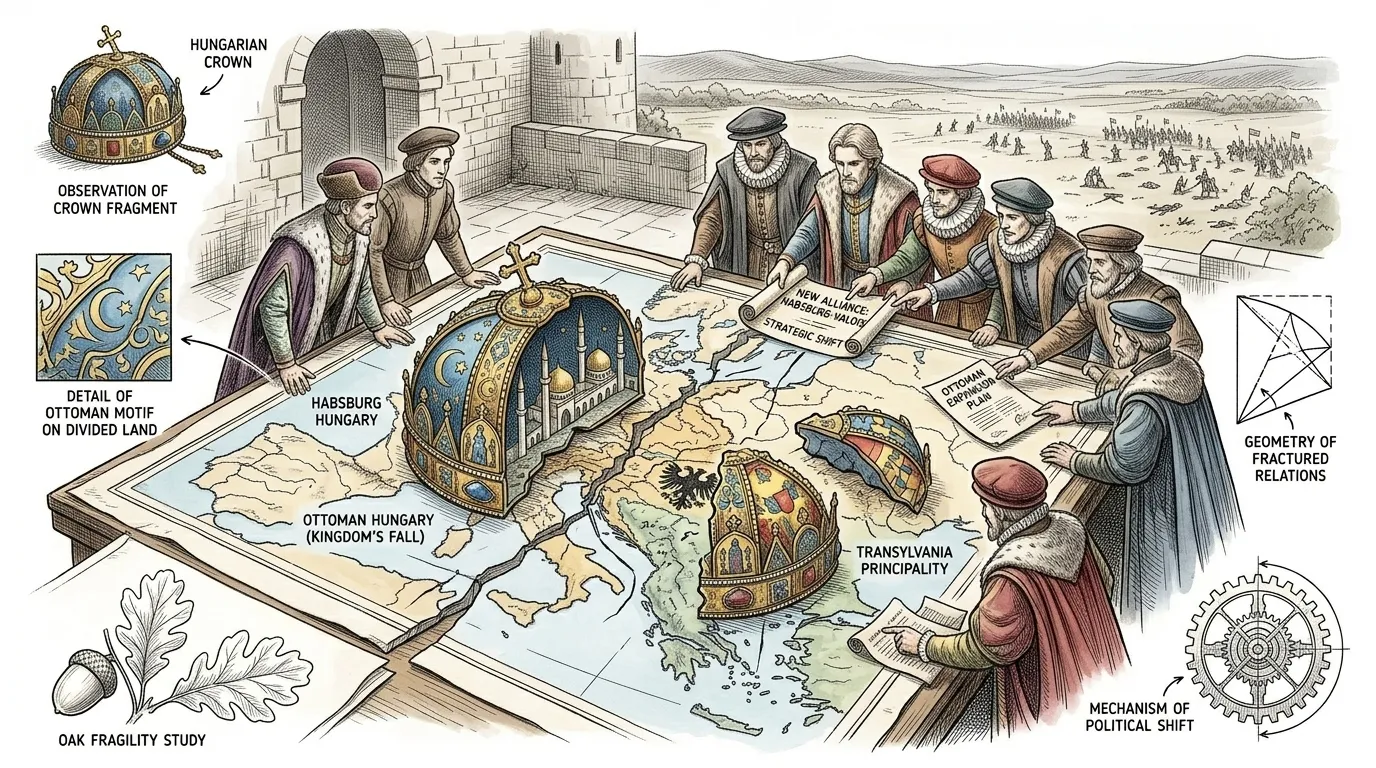
The Battle of Mohács remains a pivotal moment in Hungarian history, a symbol of national tragedy and loss. It demonstrated the vulnerability of Europe to Ottoman expansion and prompted the development of new military strategies and alliances. The long-term consequences of the battle were profound, shaping the political and cultural landscape of Central Europe for centuries. Ottoman control pushed further into Europe, changing political alliances. The battle illustrates the dangers of internal division and the importance of strong leadership in the face of external threats. It serves as a reminder that even powerful kingdoms can be brought down by a combination of strategic miscalculations and overwhelming force. The echoes of Mohács continue to resonate in Hungarian culture and identity, a constant reminder of the fragility of independence.
Historical Fact: The Battle of Mohács is a significant event in Hungarian national identity, symbolizing loss and resilience.
About this story
- Historical figures: Suleiman the Magnificent, Louis II of Hungary, Louis II
- Location: Hungary
- Period: Early Modern
- Audience: general readers
Questions and answers
Questions and answers about Battle of Mohacs (1526, Hungary)
Read Wonder History on your phone
Wonder History is available on Android. Get Wonder History on Google Play.