The Zong Massacre Trials (1783, United Kingdom)
The Zong Massacre Trials (1783, United Kingdom) — an illustrated history story, featuring Granville Sharp, Luke Collingwood, James Kelsall, set in United Kingdom. 10 illustrated pages, free to read on Wonder History.
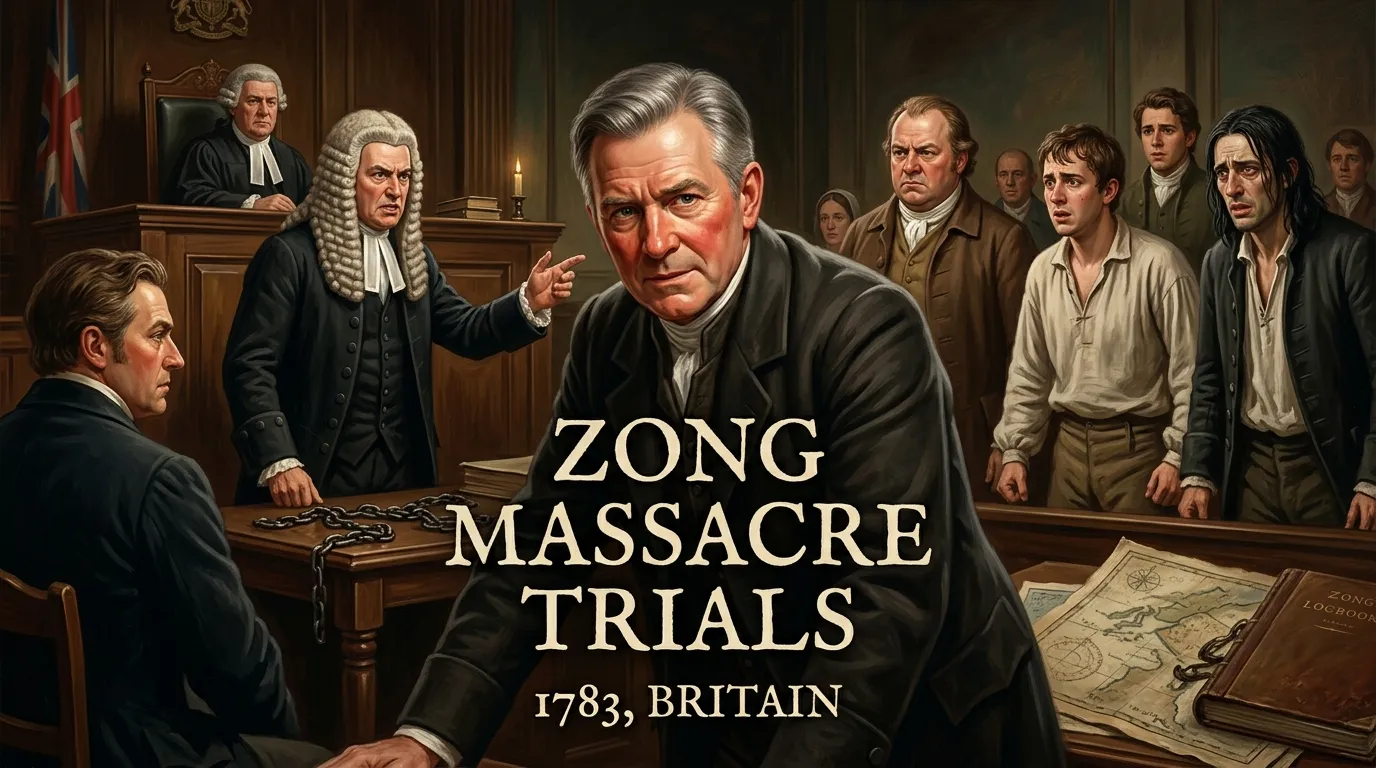
Page 1
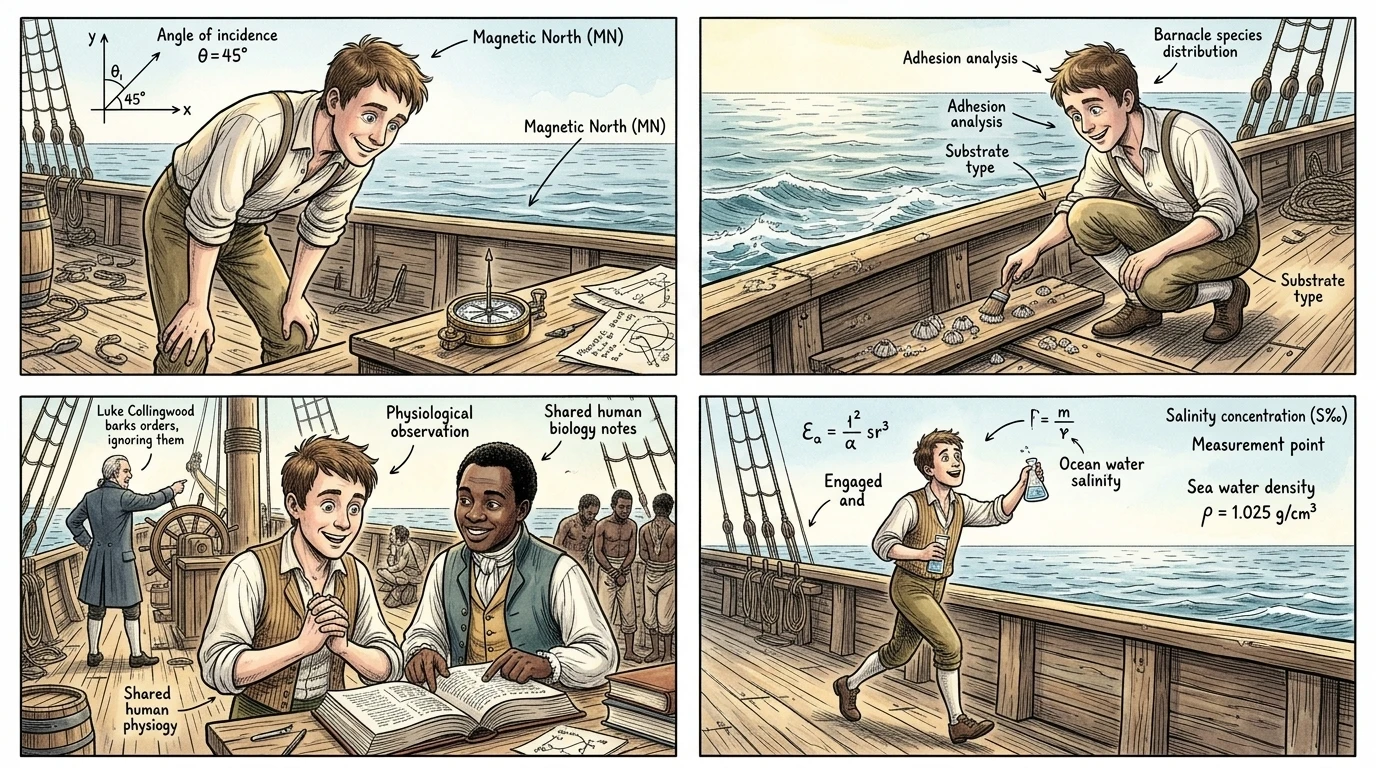
On the deck of the Zong, chaos reigned. Shackled Africans, some already lifeless, were being thrown overboard into the churning Atlantic. James Kelsall, a terrified crew member, watched in horror as Luke Collingwood, the captain, barked orders. But what chain of events brought these men and women to this desperate moment?
Page 2
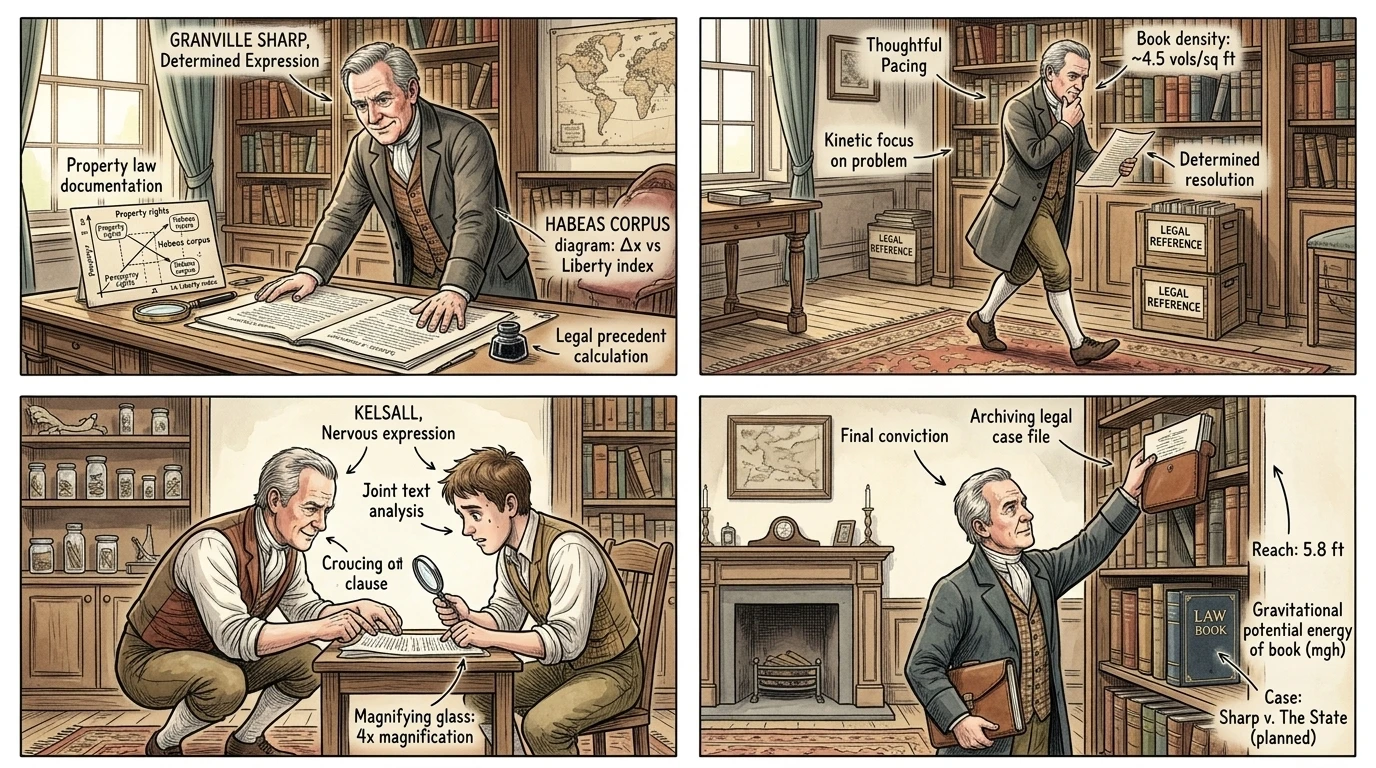
In London, Granville Sharp, a middle-aged man with a determined expression, studied the legal documents. He had heard rumors of the Zong and its horrific cargo, thrown overboard to claim insurance on 'lost property'. "This is not justice, this is murder," he muttered, pacing his book-lined study. He resolved to fight for the rights of the enslaved, unaware of the battle that lay ahead.
Page 3

Olaudah Equiano, a freed slave and author, spoke passionately to Thomas Clarkson, a young abolitionist. "They treat us as cargo, not as human beings!" Equiano exclaimed, his voice shaking with emotion. Clarkson, deeply moved, pledged his support to the cause. They knew that exposing the truth about the Zong was crucial to ending the slave trade.
Page 4

In the courtroom, John Lee, the lawyer representing the Zong's owners, argued his case before Lord Chief Justice Mansfield. "The slaves were property, and the captain acted in the best interest of preserving that property," Lee stated coldly. Mansfield, an elderly man with a stern face and a powdered wig, listened intently, his expression unreadable. The fate of the Zong's victims hung in the balance.
Page 5

James Kelsall, the former crew member, wrestled with his conscience. Robert Stubbs, another crew member, urged him to remain silent. "They'll ruin us if we speak out!" Stubbs warned, his face pale with fear. Kelsall knew that telling the truth could destroy his life, but the images of the Zong haunted him.
Page 6

Back on the Zong, Luke Collingwood continued to oversee the gruesome task. The remaining slaves, weakened by disease and starvation, watched in despair as their companions were cast into the sea. Some fought back, but their resistance was futile against the armed crew. The desperation was palpable; the cries echoed across the ocean.
Page 7

Granville Sharp confronted John Lee outside the courtroom. "How can you defend such an atrocity?" Sharp demanded, his voice filled with righteous anger. Lee sneered. "I am merely fulfilling my duty to my client," he replied coldly. Sharp knew that he was fighting not just a legal battle, but a moral one.
Page 8
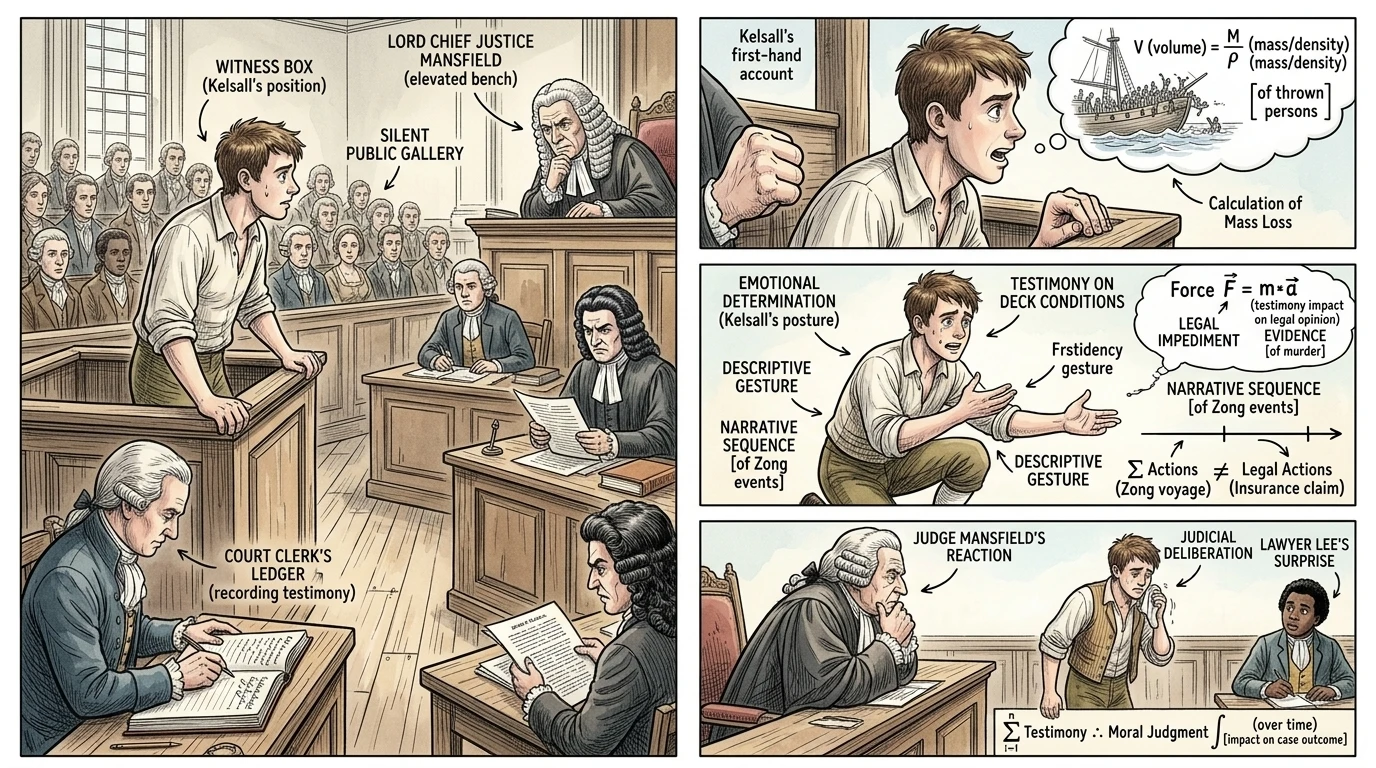
James Kelsall, despite his fear, decided to testify. He described the events on the Zong in vivid detail, his voice trembling but firm. "They weren't sick enough to die! They were thrown overboard to save the owners money!" he declared. The courtroom was silent, every eye fixed on the young man.
Page 9

Lord Mansfield delivered his verdict. "This is a case of considerable consequence," he began, his voice echoing through the room. "While the law acknowledges slaves as property, throwing them overboard in this manner is... unacceptable." He ruled against the owners' insurance claim, though stopped short of calling it murder. "As Voltaire said, 'It is dangerous to be right when the government is wrong.' And in this case, the government has been profoundly wrong," Mansfield conceded, his expression grave.
Page 10

Though the Zong massacre trials did not immediately end the slave trade, they ignited a flame. William Wilberforce joined the cause, inspired by Sharp's unwavering dedication. The horrors of the Zong became a symbol of the brutality of slavery, fueling the abolitionist movement for decades to come. The fight for justice had begun.
About this story
- Historical figures: Granville Sharp, Luke Collingwood, James Kelsall
- Location: United Kingdom
- Period: Early Modern
- Audience: general readers
Questions and answers
Questions and answers about The Zong Massacre Trials (1783, United Kingdom)
Read Wonder History on your phone
Wonder History is available on Android. Get Wonder History on Google Play.