Ancient Mesopotamia (2250 BC, Mediterranean)
Explore the ascent and decline of empires in ancient Mesopotamia, from Akkad to Babylon. Discover the pivotal moments that shaped the region's history and the legacies of its rulers.
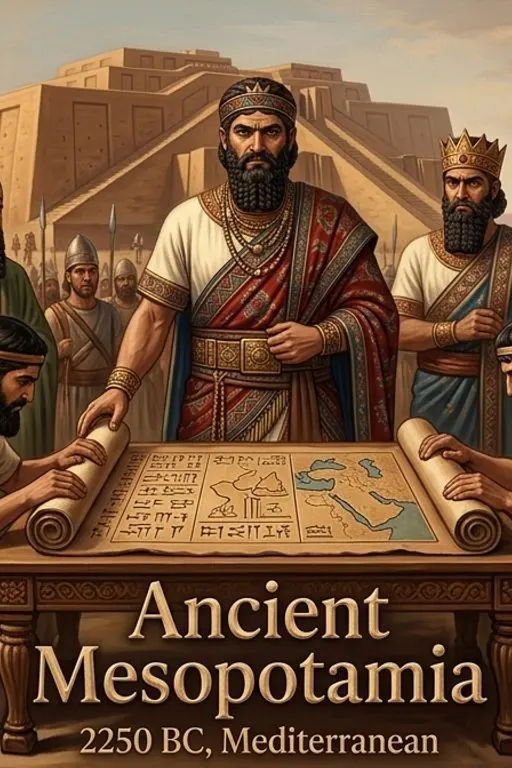
Page 1
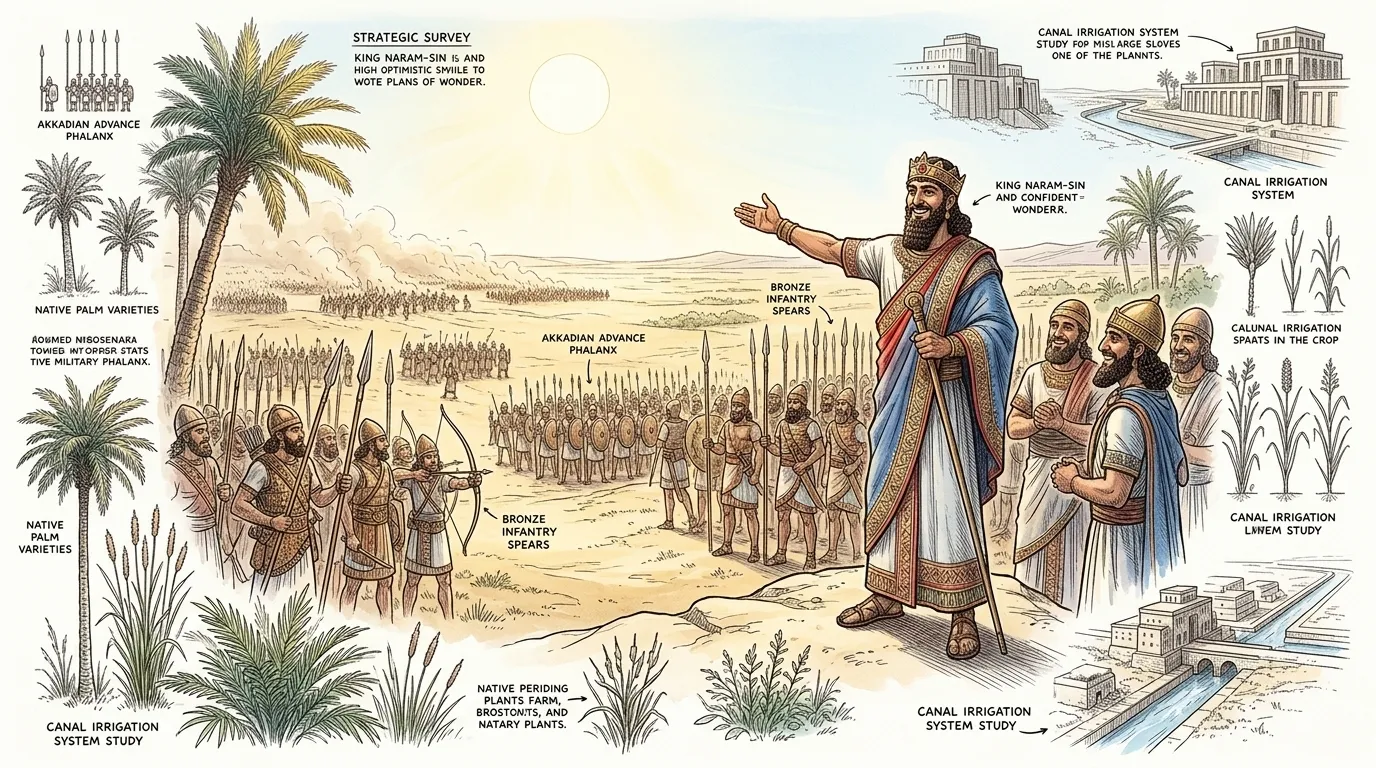
In the arid plains between the Tigris and Euphrates rivers, circa 2250 BCE, the world's first empire stood at a precipice. King Naram-Sin, the mighty ruler of Akkad and grandson of the legendary Sargon, found himself besieged not just by external threats but by a widespread 'Great Revolt' of Sumerian city-states. Armies numbering in the tens of thousands clashed across the fertile crescent, challenging the very notion of a unified Mesopotamian dominion. Naram-Sin, a figure who had declared himself a god among men, faced the ultimate test of his divine authority and military prowess. His generals, hardened by countless campaigns, rallied the Akkadian forces, their bronze weapons glinting under the unforgiving sun. The future of empire itself hung in the balance, a concept born from the ambition of Sargon and now defended by his formidable successor. The very earth seemed to tremble with the cries of soldiers and the thunder of chariot wheels as Naram-Sin prepared to confront the rebellious forces head-on, determined to preserve the sprawling domain that stretched from the Persian Gulf to the Mediterranean Sea. But how did this land, this 'land between the rivers,' reach this crucible of fire and rebellion, forging the very definition of civilization and power?
Historical Fact: The 'Great Revolt' against Naram-Sin involved a coalition of Sumerian cities, representing a significant challenge to Akkadian imperial control.
Page 2
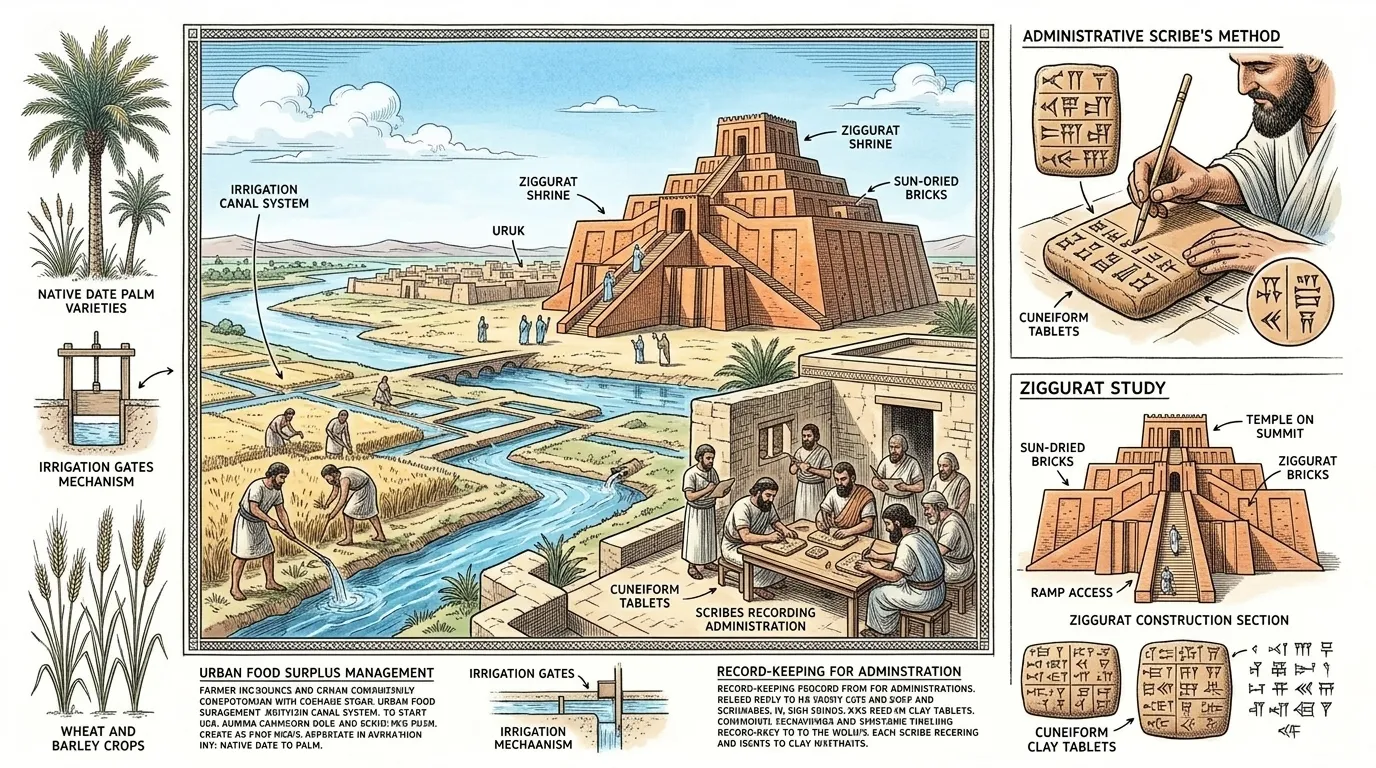
Before the rise of empires, the landscape of Mesopotamia was a mosaic of burgeoning city-states, each a testament to human ingenuity. Originating in the fertile plains, communities like Uruk, Ur, and Lagash began as small agricultural settlements around 6000 BCE, drawing life from the Tigris and Euphrates. The annual floods, though destructive, deposited rich silt, transforming the land into a fertile crescent. By 3500 BCE, these villages had evolved into complex urban centers, driven by innovations in irrigation that allowed for surplus food production. Priests, who served as intermediaries between gods and humans, governed these early societies from towering ziggurats—temple-towers that dominated the skyline. The needs of administration—managing resources, recording transactions, and tracking temple offerings—led to the revolutionary invention of cuneiform writing. Scribes, using reed styluses, pressed wedge-shaped marks onto clay tablets, laying the foundation for all subsequent written communication. This organizational leap, coupled with advanced bronze metallurgy and monumental architecture, transformed simple communities into the vibrant, competitive city-states that would eventually become the prize of aspiring conquerors. It was within this rich tapestry of independent, god-ruled cities that the seeds of a unified empire would eventually be sown.
Historical Fact: Uruk, circa 3200 BCE, was home to an estimated 50,000-80,000 inhabitants, making it one of the largest cities in the world at that time.
Page 3
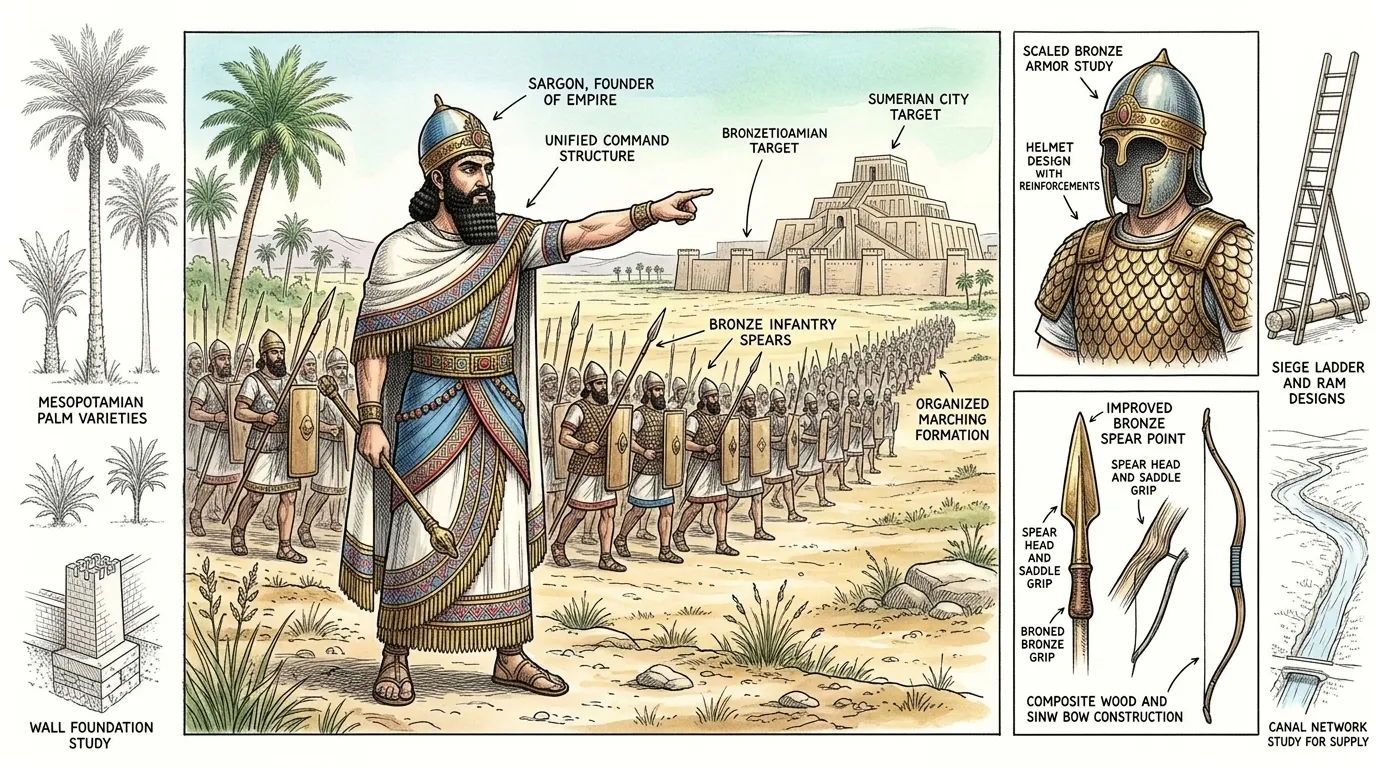
The fragmented world of Sumerian city-states was irrevocably altered by the arrival of a figure of unparalleled ambition: Sargon of Akkad. Born, according to legend, of humble origins—a cup-bearer to the king of Kish—Sargon's strategic brilliance and military acumen soon became undeniable. Around 2334 BCE, he overthrew his patron, King Ur-Zababa, seizing control of Kish. From this base, he embarked on a series of swift and decisive campaigns, systematically conquering the powerful Sumerian cities, including Uruk and Ur. Sargon understood that true power lay not in ephemeral alliances but in unified control. He established his new capital, Akkad (its precise location still unknown), and forged a formidable professional army, equipped with improved bronze weaponry. His campaigns stretched across Mesopotamia, extending his influence westward to Syria and eastward into Elam. Sargon's reign marked a radical departure from the localized city-state politics. He imposed Akkadian language and administration, integrating the conquered territories into a cohesive imperial structure. For the first time, a single ruler commanded a vast, multi-ethnic domain, laying the foundational blueprint for all future empires.
Historical Fact: Sargon's strategy included tearing down the defensive walls of conquered cities to prevent future rebellions, a stark symbol of his intent for permanent rule.
Page 4
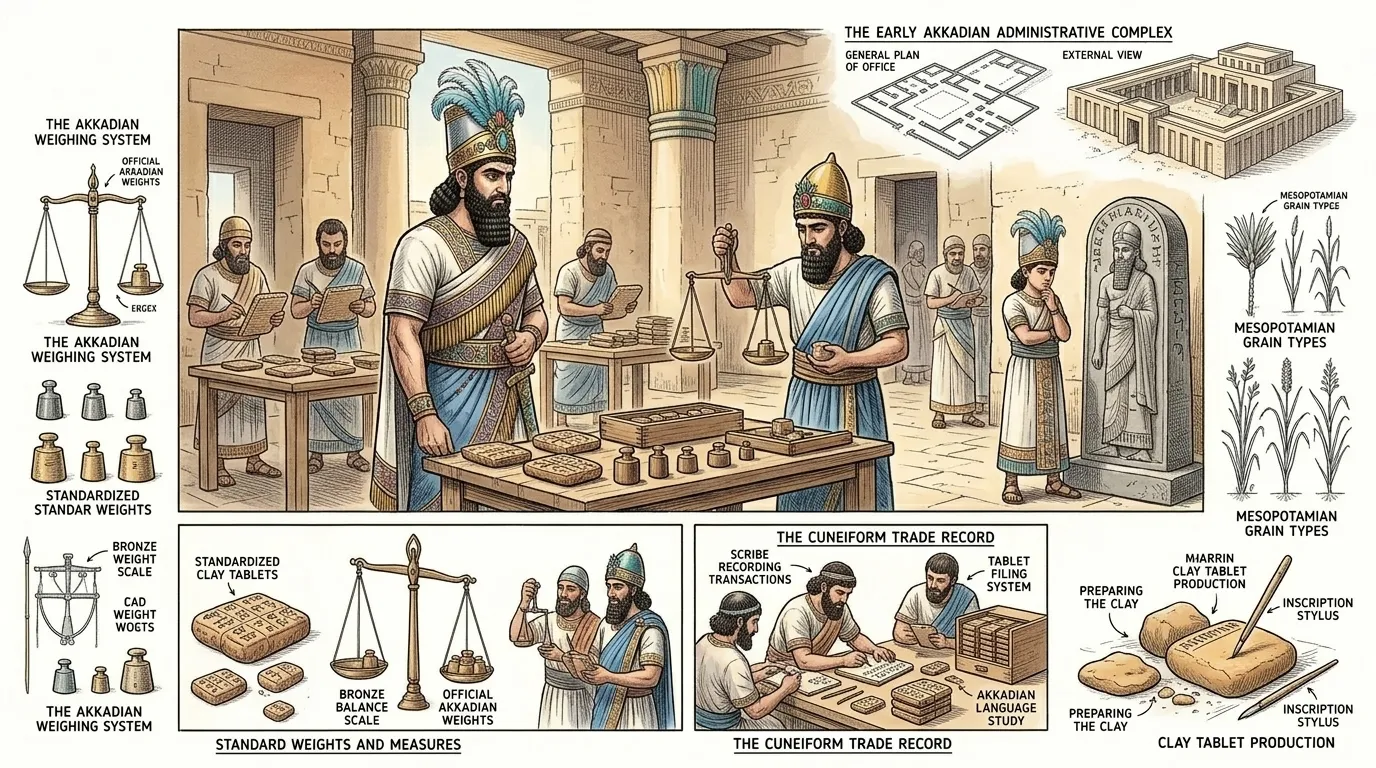
Under Sargon and his successors, the Akkadian Empire was more than just a military conquest; it was a profound administrative and cultural revolution. Sargon established a centralized bureaucracy, appointing loyal Akkadian officials to govern conquered Sumerian cities, replacing local rulers. This system ensured direct control and facilitated the extraction of resources. To further unify his vast domain, Sargon initiated standardized weights and measures, simplifying trade and administration across diverse regions. The Akkadian language gained prominence, gradually becoming the lingua franca of the empire, though Sumerian remained important for religious texts. Crucially, the Akkadian kings, particularly Sargon's grandson Naram-Sin, began to assert a concept of divine kingship, with the ruler not just as a mortal leader but as a god-like figure, a direct agent of the gods on Earth. This divine sanction elevated their authority above that of mere mortals and served as a powerful tool for legitimizing their rule over disparate peoples. Through these innovations, the Akkadians transformed a collection of independent city-states into a cohesive, if often tumultuous, imperial entity, setting precedents for governance and cultural integration that would echo through millennia.
Historical Fact: Akkadian kings innovated by establishing a professional army directly loyal to the king, rather than relying solely on levies from individual cities.
Page 5
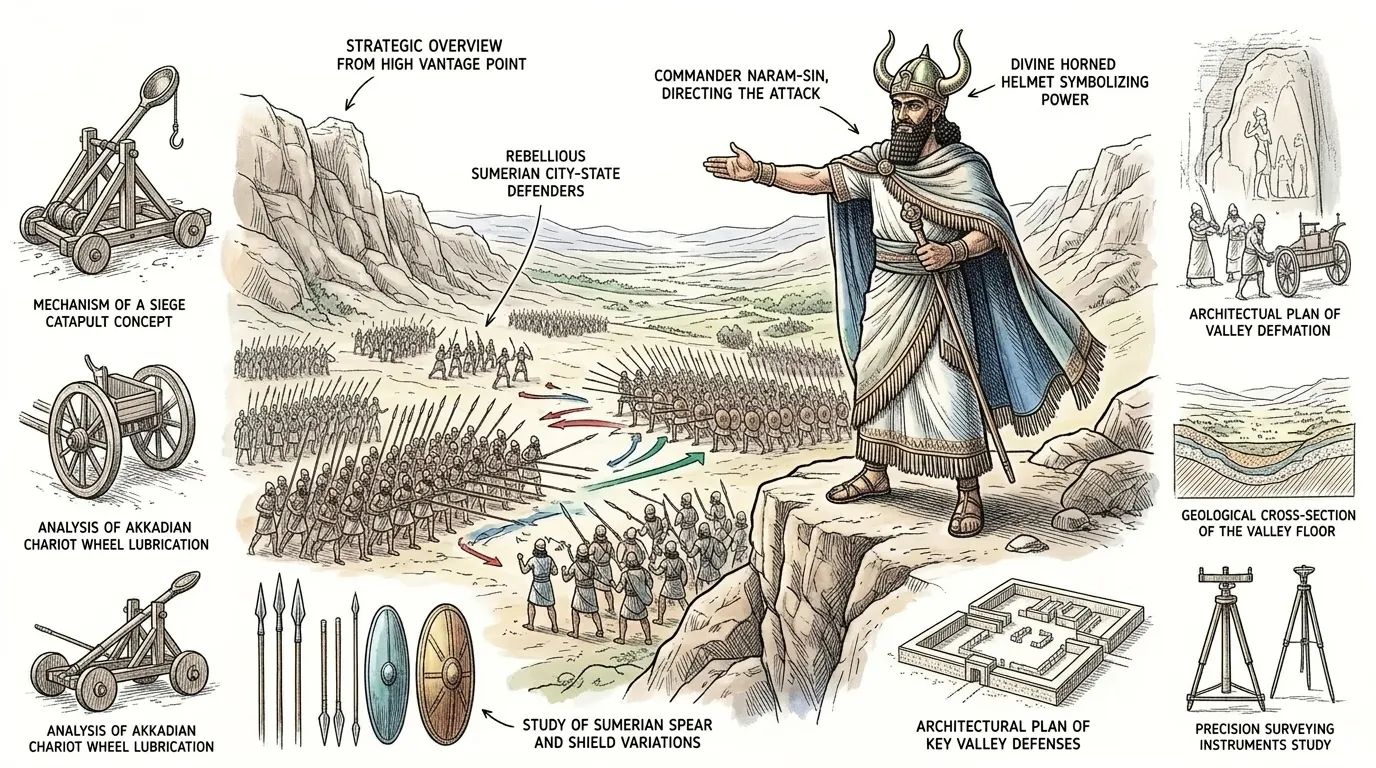
The reign of Naram-Sin, Sargon's grandson, marked both the zenith and the gravest challenge to Akkadian imperial power. Following in his grandfather's footsteps, Naram-Sin engaged in extensive military campaigns, expanding the empire's borders further north into Assyria and beyond, and solidifying control over Elam. His monumental 'Stele of Naram-Sin' depicts him as a divine conqueror, treading over his enemies, wearing the horned helmet of a god. Yet, this assertion of divine authority and the empire's relentless expansion fueled resentment among the conquered Sumerian city-states. The 'Great Revolt'—a massive uprising involving cities like Ur, Uruk, and Lagash—erupted, threatening to tear the vast empire apart. Naram-Sin responded with characteristic ruthlessness and military genius. He personally led his armies against the rebels, fighting a series of brutal campaigns to reassert Akkadian dominance. This period was one of intense conflict and bloodshed, demonstrating the inherent instability of early empires built on conquest. Naram-Sin's efforts ultimately succeeded in quelling the revolt, but the cost was immense, highlighting the constant struggle to maintain control over a disparate empire in a turbulent world.
Historical Fact: Naram-Sin was the first Mesopotamian king to explicitly claim divinity for himself, asserting 'King of the Four Quarters' of the world.
Page 6
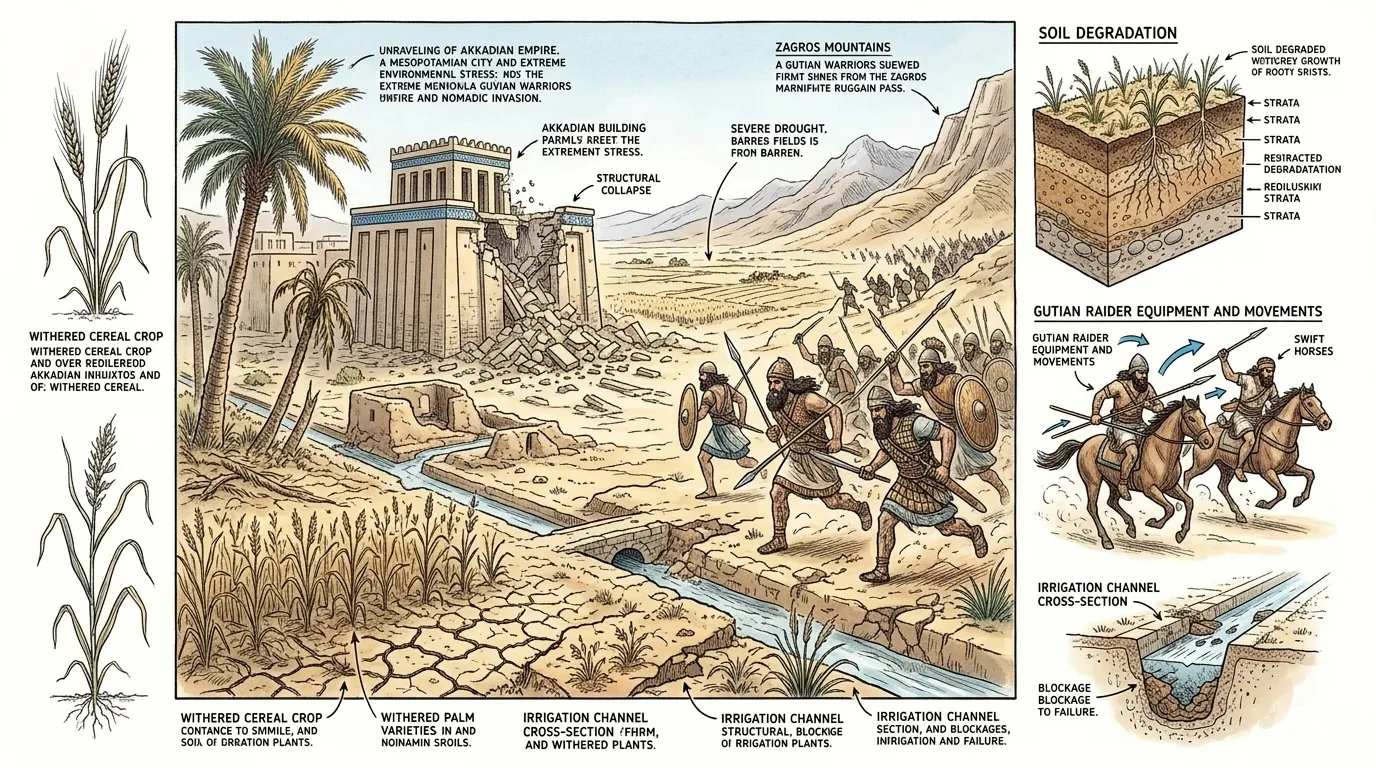
Despite Naram-Sin's victories, the Akkadian Empire began to unravel after his reign. A combination of internal strife, overextension, and severe environmental changes led to its eventual collapse around 2154 BCE. Archaeological evidence suggests a period of significant aridification—a climate shift that caused widespread drought and agricultural collapse in Mesopotamia. This environmental stress likely weakened the central authority of Akkad and made it vulnerable to external pressures. Nomadic groups, particularly the Gutians from the Zagros Mountains, seized the opportunity. These fierce, less civilized warriors swept down from the highlands, raiding and ultimately occupying much of Mesopotamia. Their rule, often described as a 'dark age,' was characterized by instability and a decline in centralized governance. Cities were plundered, trade routes disrupted, and the sophisticated administrative structures of Akkad crumbled. For nearly a century, Mesopotamia languished under fragmented rule, awaiting a new power to emerge and restore order. The grand imperial vision of Sargon and Naram-Sin had failed, demonstrating the fragility of even the mightiest empires in the face of ecological disaster and persistent external threats.
Historical Fact: The 'Sumerian King List' dramatically describes the Gutian period as a time when 'the kingship was taken to the land of Gutium; for 91 years and 40 days, the kingship of Akkad was lost.'
Page 7
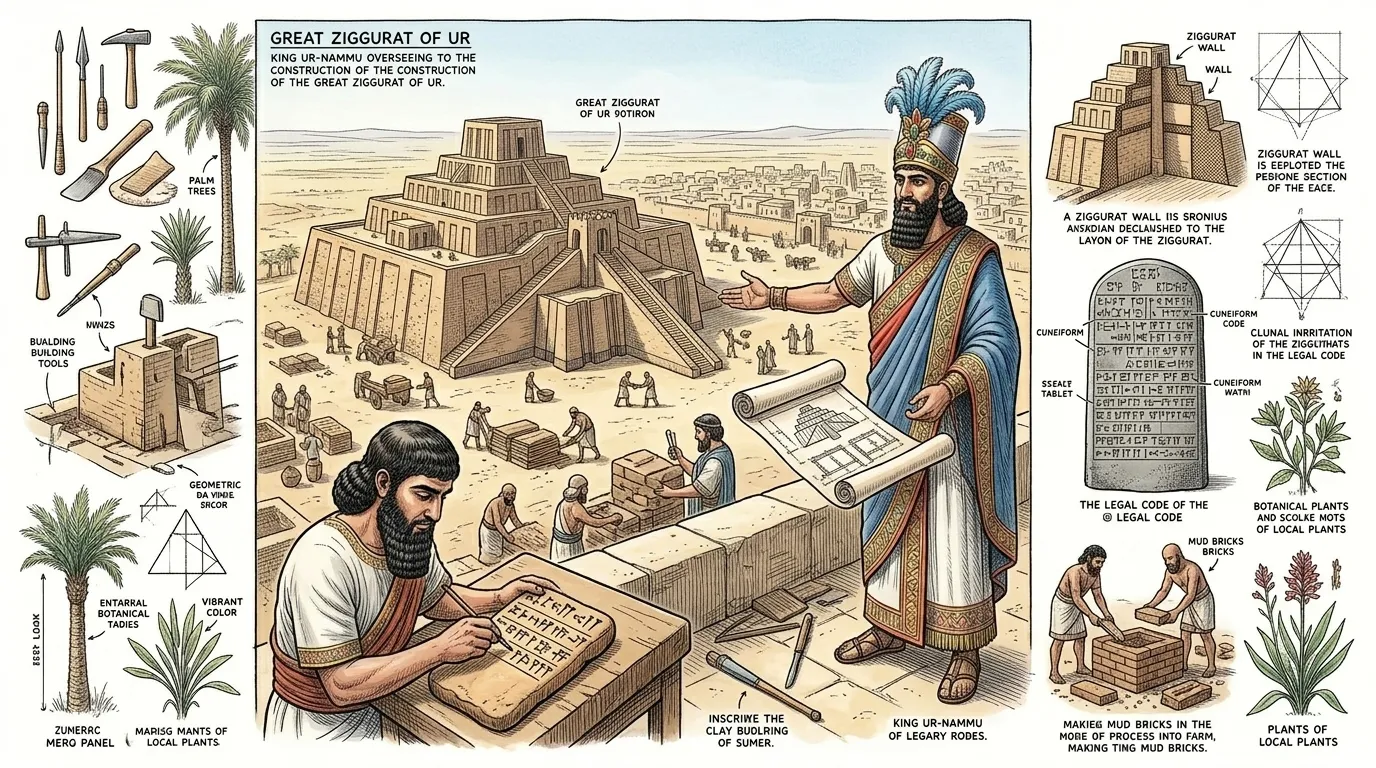
From the ashes of Akkadian decline and the chaos of Gutian rule, a powerful resurgence of Sumerian culture and political authority emerged. This 'Neo-Sumerian' renaissance was spearheaded by Ur-Nammu, who founded the Third Dynasty of Ur around 2112 BCE. Ur-Nammu effectively expelled the Gutians, reunifying much of Mesopotamia under his rule. Unlike the aggressive imperial expansion of Akkad, Ur-Nammu's reign emphasized cultural revival, justice, and monumental construction. He implemented one of the earliest known written law codes, predating Hammurabi's by centuries, establishing clear legal principles for his subjects. His most enduring legacy, however, lies in his extensive building projects. Ur-Nammu embarked on a massive program of temple and ziggurat construction, including the iconic Great Ziggurat of Ur. These massive, stepped platforms were not only centers of religious worship but also symbols of the renewed strength and piety of the Ur III state. The Neo-Sumerian period saw a flourishing of art, literature, and administrative efficiency, signaling a golden age that temporarily restored the glory of Sumerian civilization before its eventual decline.
Historical Fact: The Great Ziggurat of Ur, commissioned by Ur-Nammu, measured approximately 64 by 45 meters at its base and originally stood about 30 meters high.
Page 8
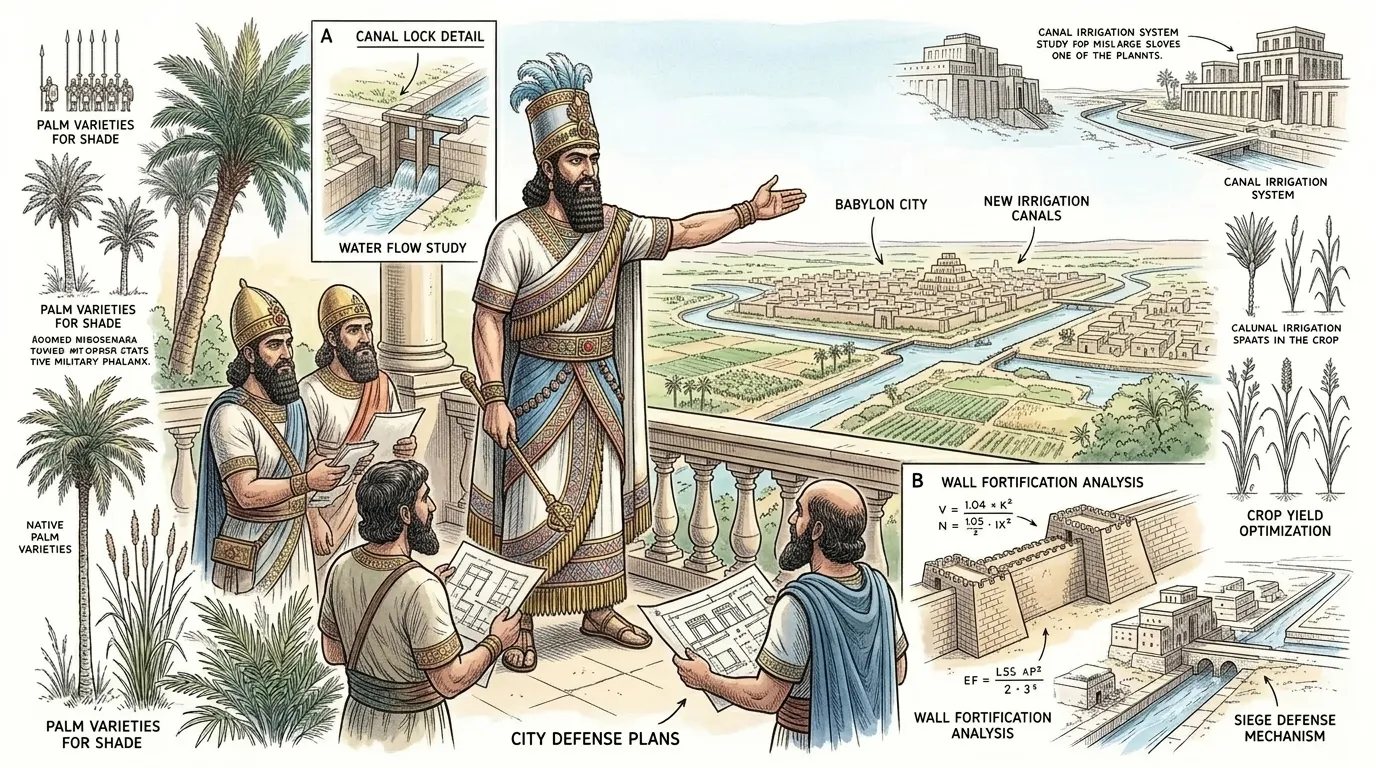
Centuries after the fall of Ur and a renewed period of fragmentation, a new power emerged in the heart of Mesopotamia: Babylon. Its most renowned ruler was Hammurabi, who ascended to the throne around 1792 BCE. Initially, Babylon was just one of many competing city-states. However, through a shrewd combination of diplomacy, strategic alliances, and relentless military campaigns, Hammurabi systematically defeated his rivals, including mighty Larsa, Mari, and Elam. His reign transformed Babylon into the dominant power in Mesopotamia, creating a vast empire that stretched across the fertile crescent. But Hammurabi's legacy extends far beyond military conquest. He was a meticulous administrator, overseeing vast irrigation projects, strengthening defenses, and promoting trade. His most profound contribution, however, was the compilation of his famous legal code. Hammurabi understood that a stable empire required clear, enforceable laws that applied to all subjects, fostering justice and preventing chaos. This ambitious legal framework would solidify his control and establish a new standard for governance.
Historical Fact: Hammurabi ruled for 42 years, strategically consolidating power through shifting alliances and calculated military action before his definitive conquests.
Page 9
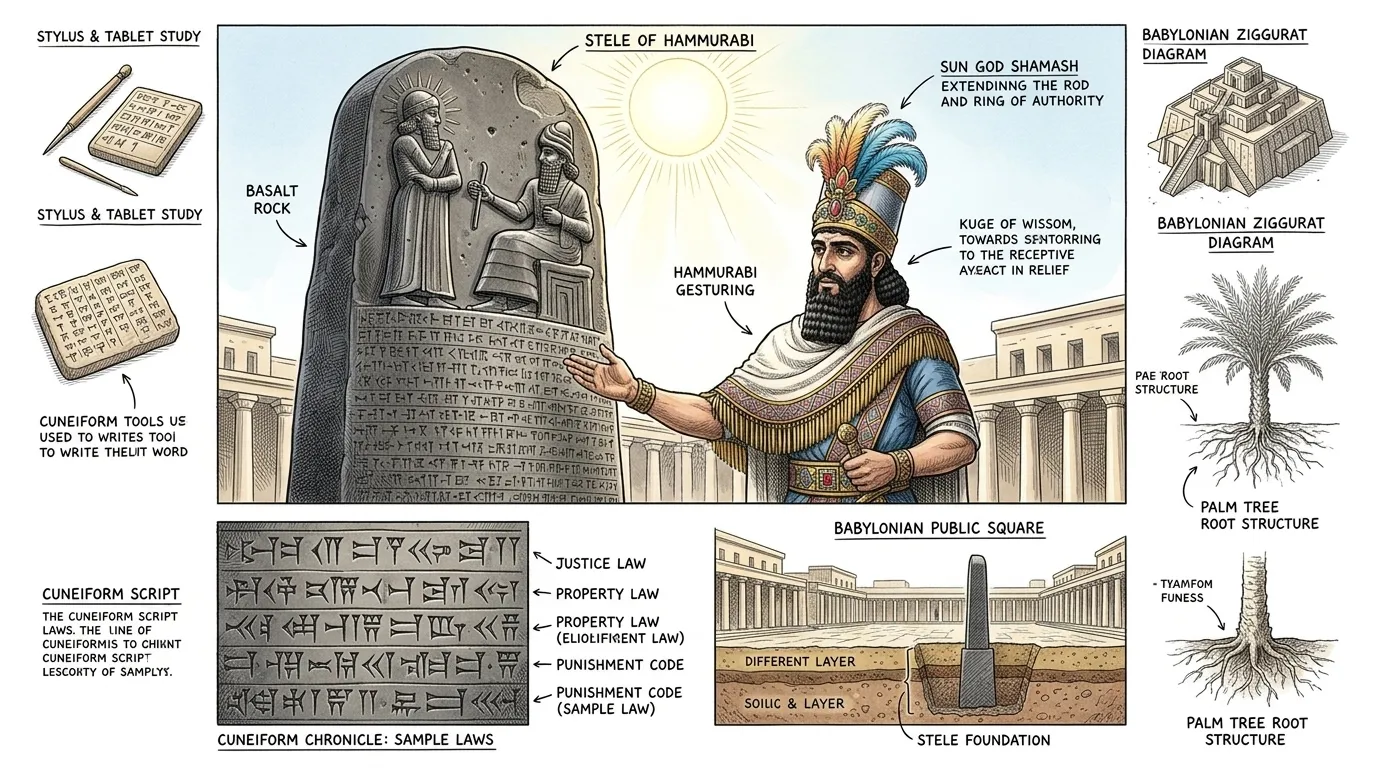
At the culmination of his reign, Hammurabi commissioned a monumental achievement: a comprehensive legal code, meticulously inscribed on a basalt stele, standing over two meters tall. This 'Code of Hammurabi,' comprising 282 laws, was not merely a collection of decrees but a systematic attempt to establish universal justice across his diverse empire. Displayed publicly in major cities, it covered a vast array of societal aspects, from property rights and trade regulations to family law and criminal justice. Its famous principle, 'an eye for an eye, a tooth for a tooth,' articulated a clear, albeit often harsh, system of retribution based on social status. Hammurabi proclaimed that his code was divinely inspired, given to him by the sun god Shamash, thus lending it immutable authority. The Code solidified social hierarchies, protected the vulnerable (within the existing social structure), and enforced a common standard of conduct, significantly reducing arbitrary judgments. It transformed the legal landscape of Mesopotamia, creating a framework that influenced legal systems for millennia and served as a tangible symbol of Babylon's centralized power and commitment to order.
""I brought the land into a common law, I made the people of the land secure.""
Historical Fact: The Code of Hammurabi included provisions for legal procedure, requiring written evidence and witness testimony in court cases.
Page 10
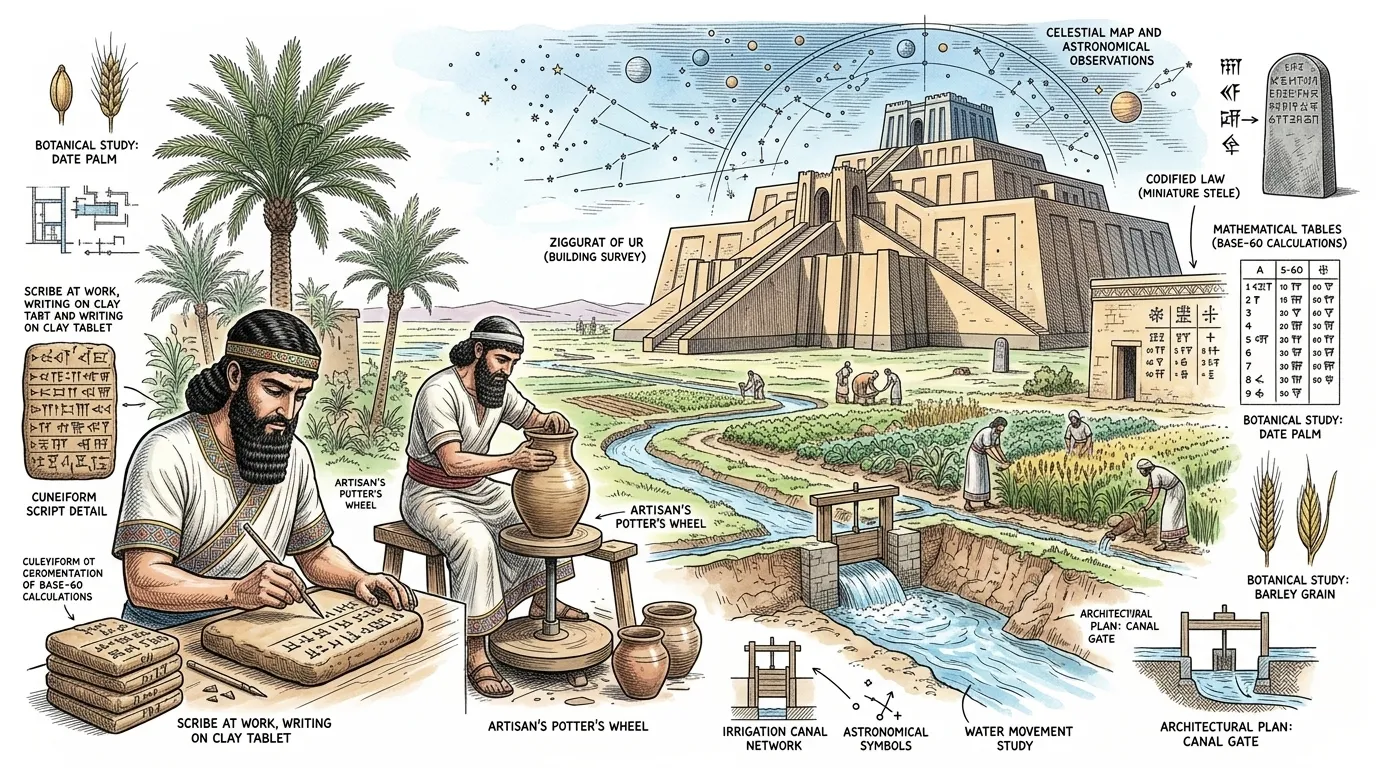
The civilizations of Ancient Mesopotamia, from the early Sumerian city-states to the mighty empires of Akkad and Babylon, ultimately faded into history. Yet, their impact on the trajectory of human civilization is immeasurable and indelible. It was in this 'land between the rivers' that humanity first harnessed writing, moving beyond oral tradition to recorded history, literature, and complex administration. The invention of the wheel revolutionized transport and pottery. Sophisticated irrigation systems transformed barren lands into fertile breadbaskets, fueling urban growth. Mesopotamian advancements in mathematics, including the sexagesimal (base-60) system, still influence our measurement of time and circles today. Their astronomical observations laid the groundwork for celestial mapping and astrology. The concept of codified law, as exemplified by Ur-Nammu and Hammurabi, provided a blueprint for justice and social order. The very idea of 'empire' – a centralized state ruling over diverse peoples – was born here, profoundly shaping political structures for millennia. The ziggurats, though largely crumbled, stand as testaments to monumental architecture and spiritual devotion. From the epic tales of Gilgamesh to the foundational principles of urban living, Mesopotamia's innovations reverberate through every subsequent civilization, making it the true wellspring of many of the fundamental elements that define our modern world.
Historical Fact: The Mesopotamian base-60 numerical system is the reason we have 60 seconds in a minute, 60 minutes in an hour, and 360 degrees in a circle.
About this story
- Historical figures: Sargon of Akkad, Naram-Sin, Hammurabi
- Location: Mediterranean
- Period: Ancient
- Audience: general readers
Questions and answers
Questions and answers about Ancient Mesopotamia (2250 BC, Mediterranean)
Read Wonder History on your phone
Wonder History is available on Android. Get Wonder History on Google Play.