The Yalta Conference (1945, United States)

The Yalta Conference (1945, United States) — an illustrated history story, featuring Franklin Delano Roosevelt, Winston Churchill, Joseph Stalin, set in United States. 10 illustrated pages, free to read on Wonder History.
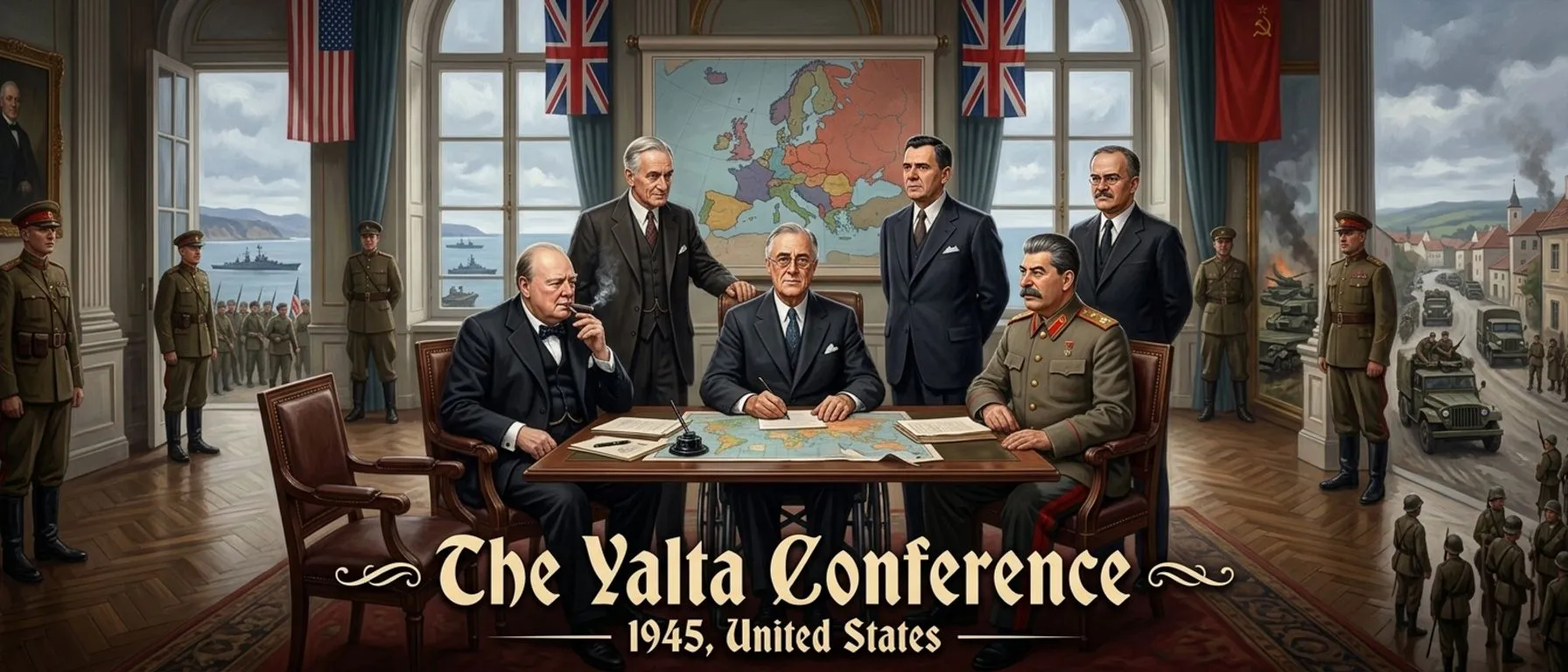
The Yalta Conference (1945, United States) — book cover — Wonder History
The Yalta Conference (1945, United States) — an illustrated history story, featuring Franklin Delano Roosevelt, Winston Churchill, Joseph Stalin, set in United States. 10 illustrated pages, free to read on Wonder History.

Page 1
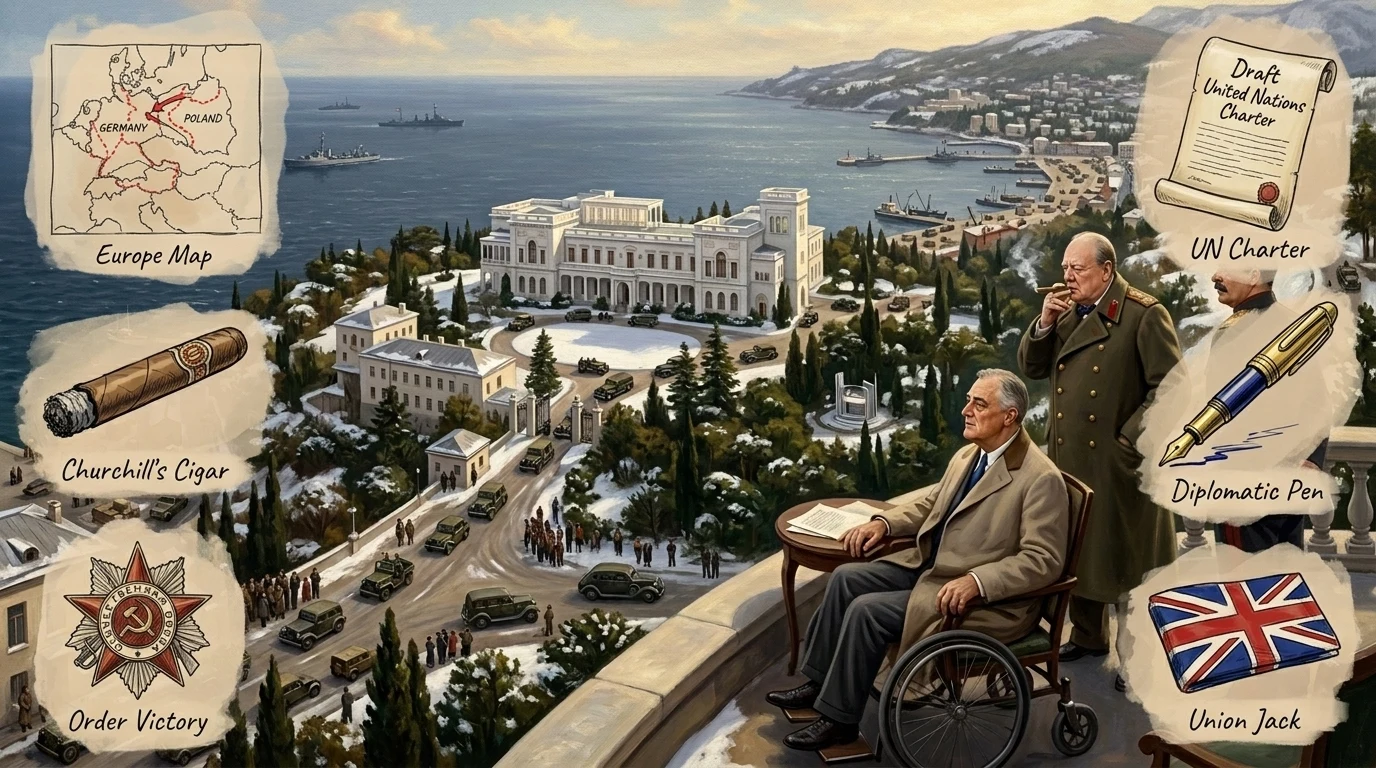
February 1945: the Livadia Palace in Yalta, Crimea, became the epicenter of a world still reeling from war. Franklin Delano Roosevelt, President of the United…
February 1945: the Livadia Palace in Yalta, Crimea, became the epicenter of a world still reeling from war. Franklin Delano Roosevelt, President of the United States, sat exhausted but resolute, facing Joseph Stalin, the implacable leader of the Soviet Union, and Winston Churchill, the cigar-chomping Prime Minister of Great Britain. The fate of post-war Europe hung in the balance, but where would these three powerful leaders find common ground?

February 1945: the Livadia Palace in Yalta, Crimea, became the epicenter of a world still reeling from war. Franklin Delano Roosevelt, President of the United States, sat exhausted but resolute, facing Joseph Stalin, the implacable leader of the Soviet Union, and Winston Churchill, the cigar-chomping Prime Minister of Great Britain. The fate of post-war Europe hung in the balance, but where would these three powerful leaders find common ground?

Page 2
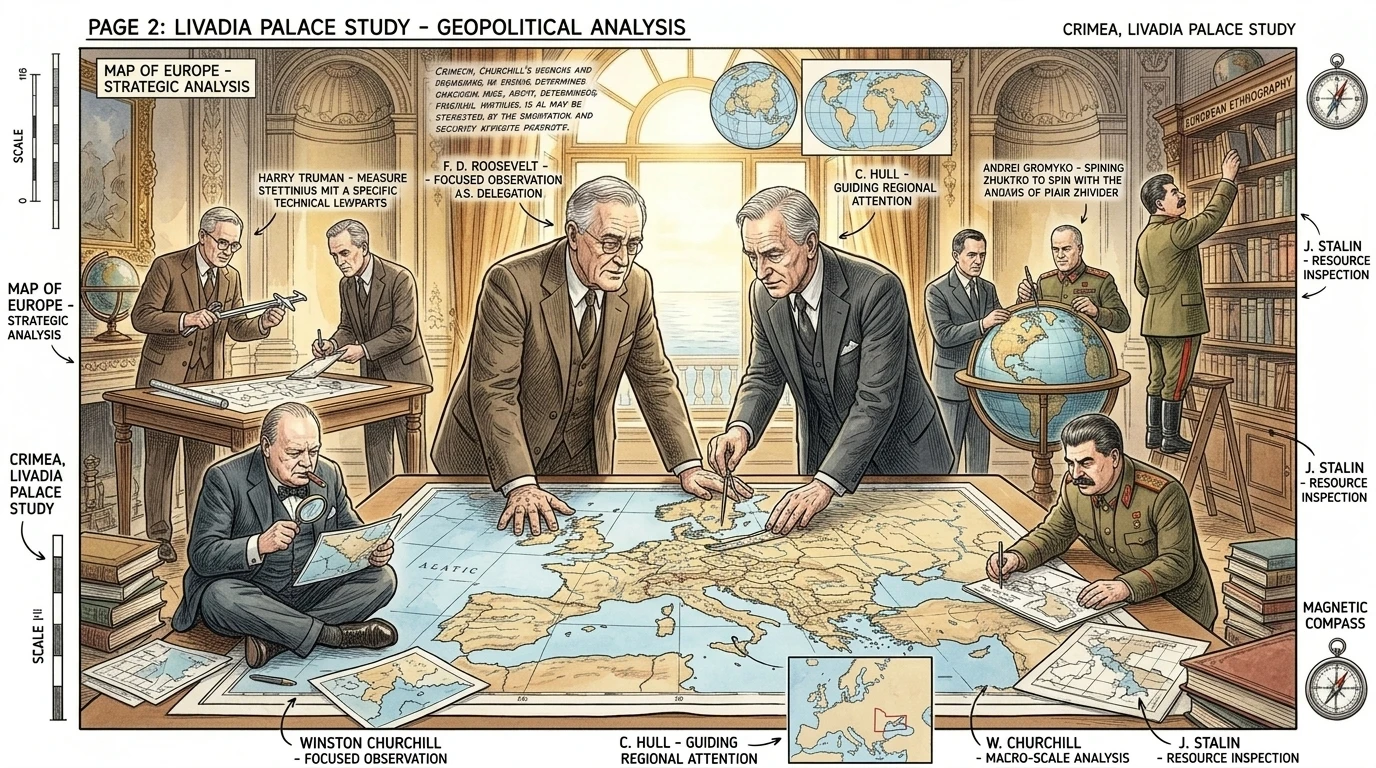
Years of conflict had led to this moment. Roosevelt, guided by his advisor Cordell Hull, sought to establish a lasting peace and a new world order based on…
Years of conflict had led to this moment. Roosevelt, guided by his advisor Cordell Hull, sought to establish a lasting peace and a new world order based on cooperation. Churchill, ever mindful of Britain's imperial interests, aimed to preserve its influence in a rapidly changing world. Stalin, with the Red Army controlling much of Eastern Europe, was determined to secure the Soviet Union's borders and expand its sphere of influence.

Years of conflict had led to this moment. Roosevelt, guided by his advisor Cordell Hull, sought to establish a lasting peace and a new world order based on cooperation. Churchill, ever mindful of Britain's imperial interests, aimed to preserve its influence in a rapidly changing world. Stalin, with the Red Army controlling much of Eastern Europe, was determined to secure the Soviet Union's borders and expand its sphere of influence. The seeds of future tensions were already sown, but the immediate need was to defeat Nazi Germany and ensure a more stable future.

Page 3
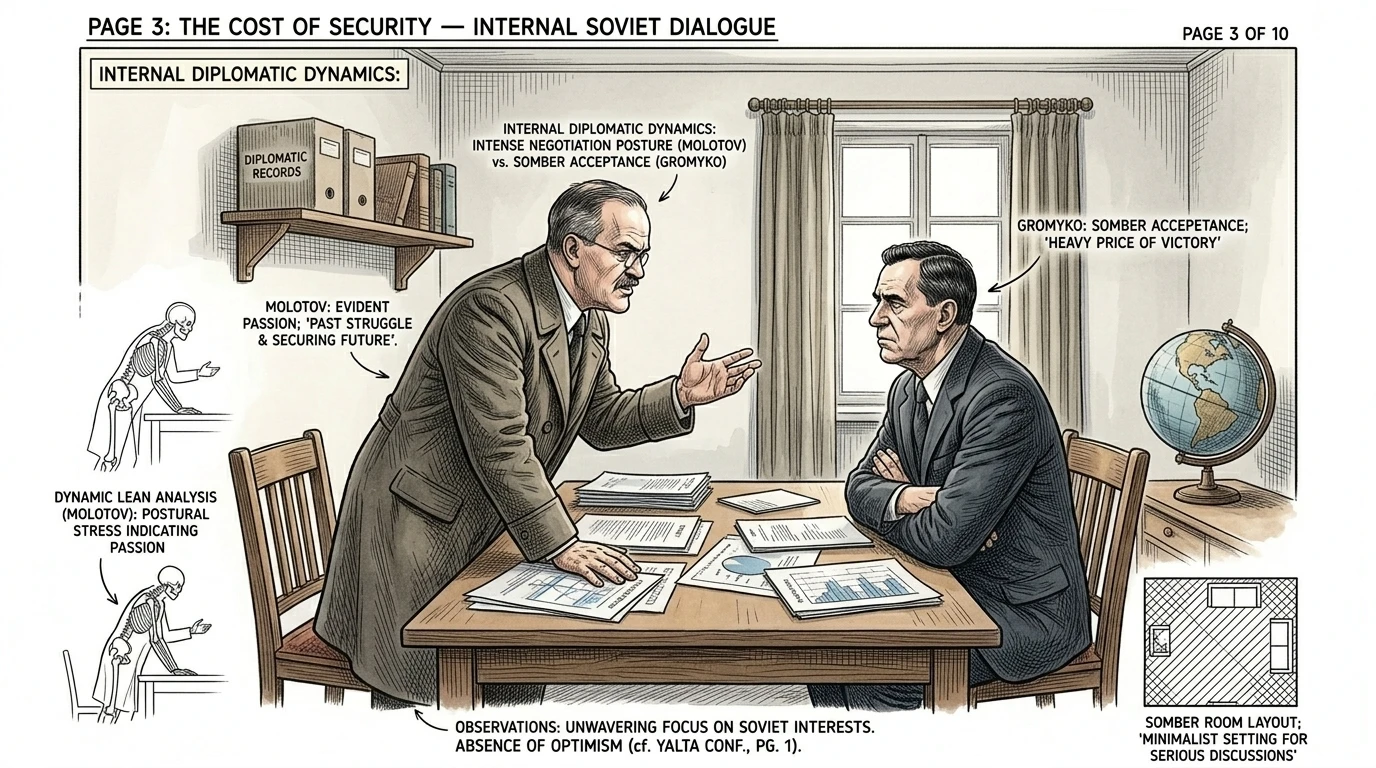
Vyacheslav Molotov, Stalin's trusted diplomat, presented a stark assessment of the Soviet Union's war effort. "Our people have endured unimaginable suffering,"…
Vyacheslav Molotov, Stalin's trusted diplomat, presented a stark assessment of the Soviet Union's war effort. "Our people have endured unimaginable suffering," Molotov declared to Andrei Gromyko, another key Soviet diplomat. "We must ensure that such devastation never happens again. Our borders must be secure!" Gromyko nodded grimly, understanding the heavy price paid for victory and the imperative to safeguard the Soviet Union's future.

Vyacheslav Molotov, Stalin's trusted diplomat, presented a stark assessment of the Soviet Union's war effort. "Our people have endured unimaginable suffering," Molotov declared to Andrei Gromyko, another key Soviet diplomat. "We must ensure that such devastation never happens again. Our borders must be secure!" Gromyko nodded grimly, understanding the heavy price paid for victory and the imperative to safeguard the Soviet Union's future.

Page 4
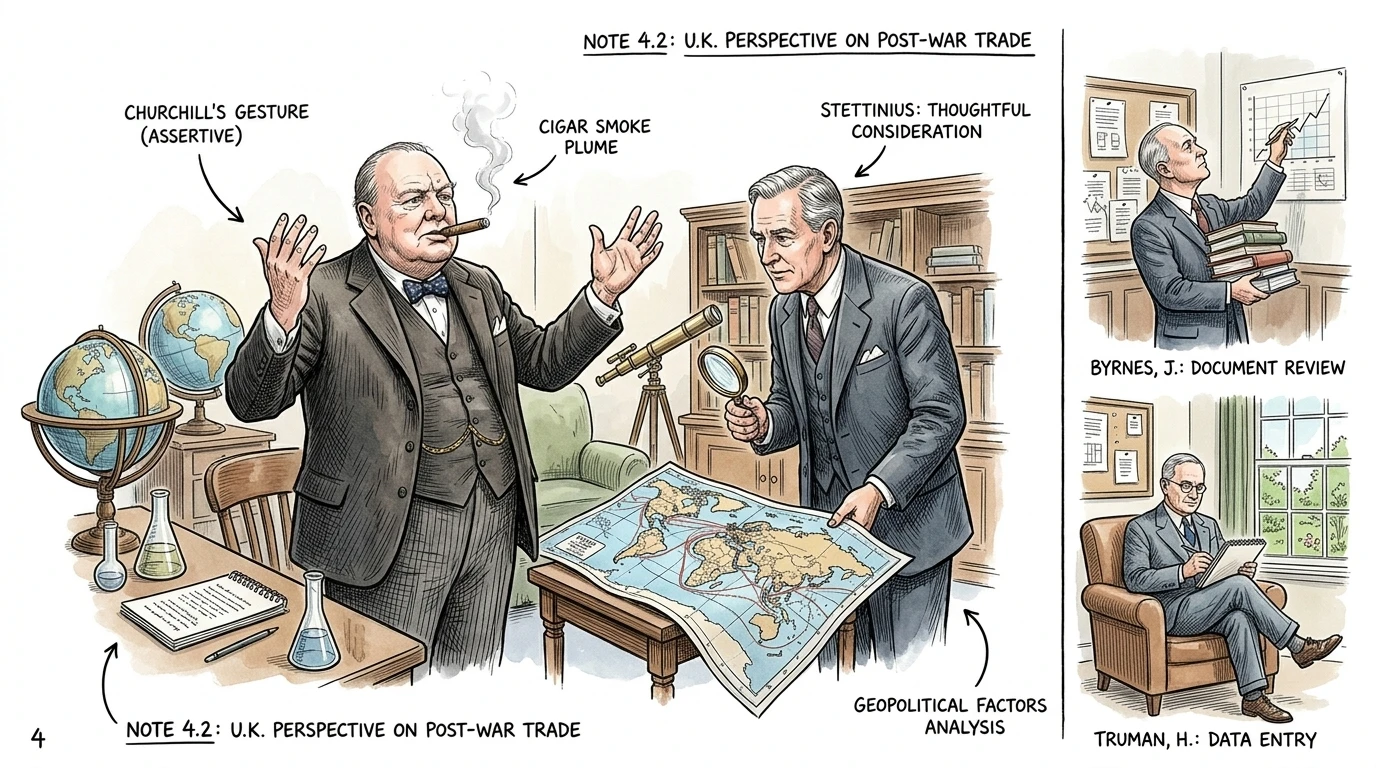
At a preliminary meeting, Churchill, with his characteristic bluntness, expressed his concerns about the Soviet Union's intentions in Eastern Europe.
At a preliminary meeting, Churchill, with his characteristic bluntness, expressed his concerns about the Soviet Union's intentions in Eastern Europe. "We must be vigilant, gentlemen," Churchill boomed, puffing on his cigar, to Edward Stettinius, Roosevelt's Secretary of State. "We must ensure that democracy prevails and that the peoples of these lands are free to choose their own destinies."

At a preliminary meeting, Churchill, with his characteristic bluntness, expressed his concerns about the Soviet Union's intentions in Eastern Europe. "We must be vigilant, gentlemen," Churchill boomed, puffing on his cigar, to Edward Stettinius, Roosevelt's Secretary of State. "We must ensure that democracy prevails and that the peoples of these lands are free to choose their own destinies."

Page 5
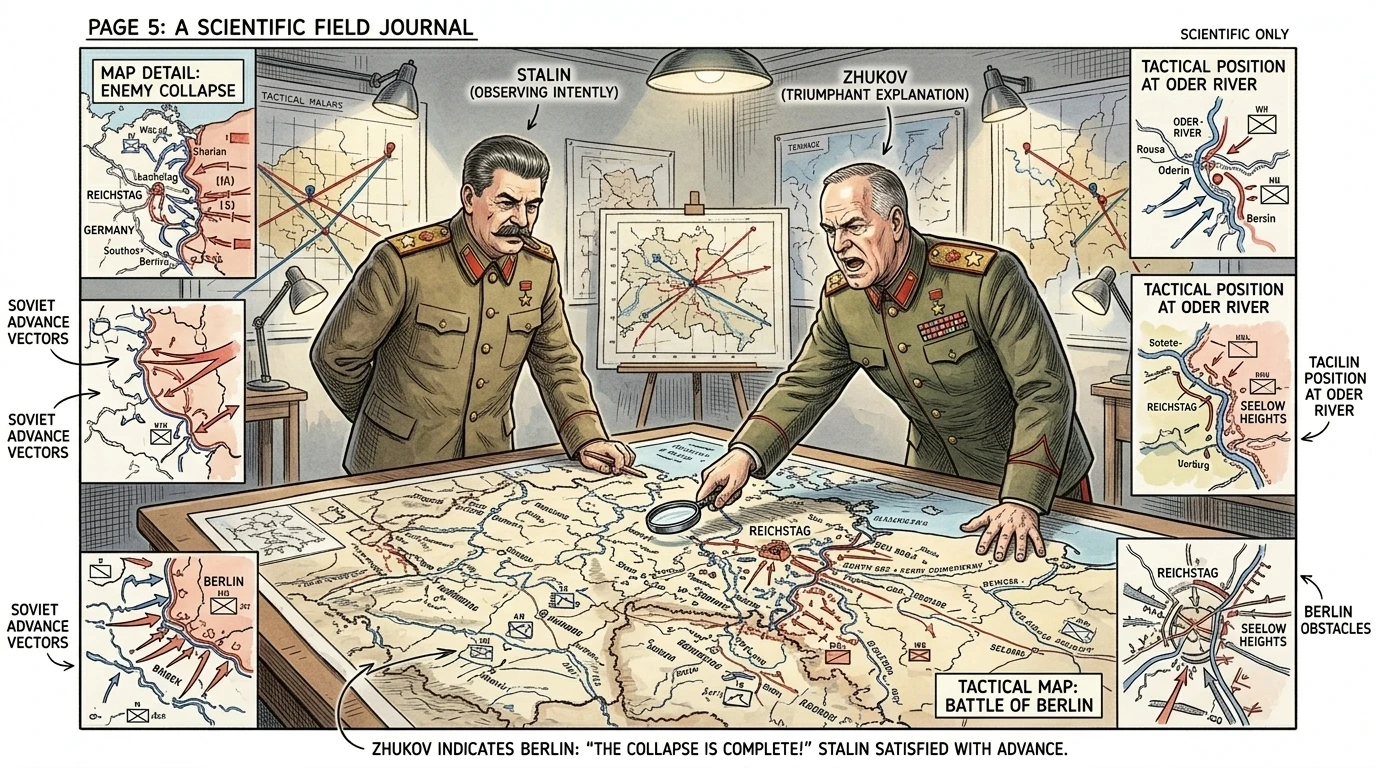
The military situation remained fluid, with the Red Army advancing rapidly across Eastern Europe. Georgy Zhukov, the famed Soviet General, briefed Stalin on the…
The military situation remained fluid, with the Red Army advancing rapidly across Eastern Europe. Georgy Zhukov, the famed Soviet General, briefed Stalin on the latest developments on the Eastern Front. "The enemy is collapsing, Comrade Stalin!" Zhukov declared, pointing to a map of Germany. "Berlin will fall soon!"

The military situation remained fluid, with the Red Army advancing rapidly across Eastern Europe. Georgy Zhukov, the famed Soviet General, briefed Stalin on the latest developments on the Eastern Front. "The enemy is collapsing, Comrade Stalin!" Zhukov declared, pointing to a map of Germany. "Berlin will fall soon!"

Page 6
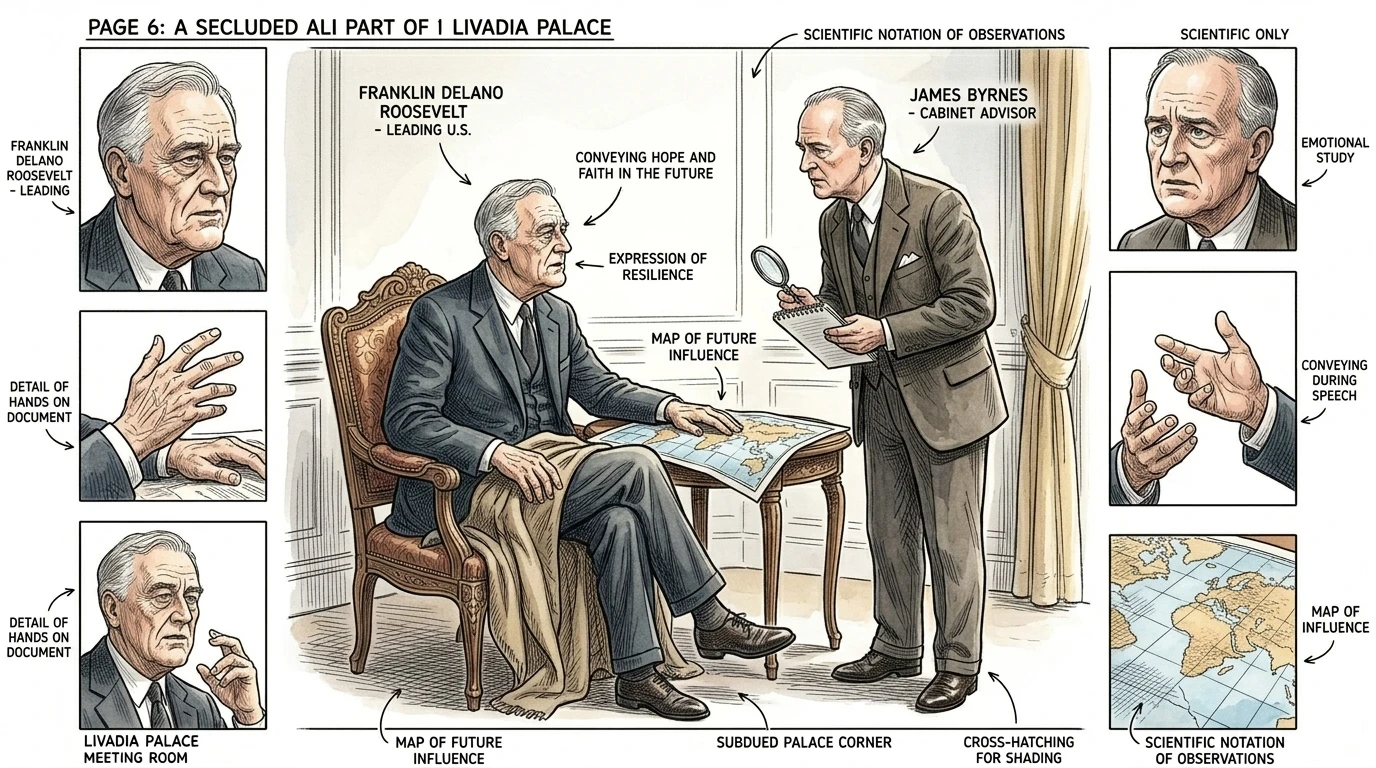
Back in Yalta, the atmosphere grew increasingly tense as the leaders grappled with the complex issues of Poland's future, the division of Germany, and the…
Back in Yalta, the atmosphere grew increasingly tense as the leaders grappled with the complex issues of Poland's future, the division of Germany, and the formation of the United Nations. Roosevelt, weakened by illness, sought to find a compromise that would satisfy all parties and secure a lasting peace. "We must remember," Roosevelt said to James Byrnes, one of his closest advisors, "as Franklin D.

Back in Yalta, the atmosphere grew increasingly tense as the leaders grappled with the complex issues of Poland's future, the division of Germany, and the formation of the United Nations. Roosevelt, weakened by illness, sought to find a compromise that would satisfy all parties and secure a lasting peace. "We must remember," Roosevelt said to James Byrnes, one of his closest advisors, "as Franklin D. Roosevelt once said, 'The only limit to our realization of tomorrow will be our doubts of today.' We must have faith!"

Page 7
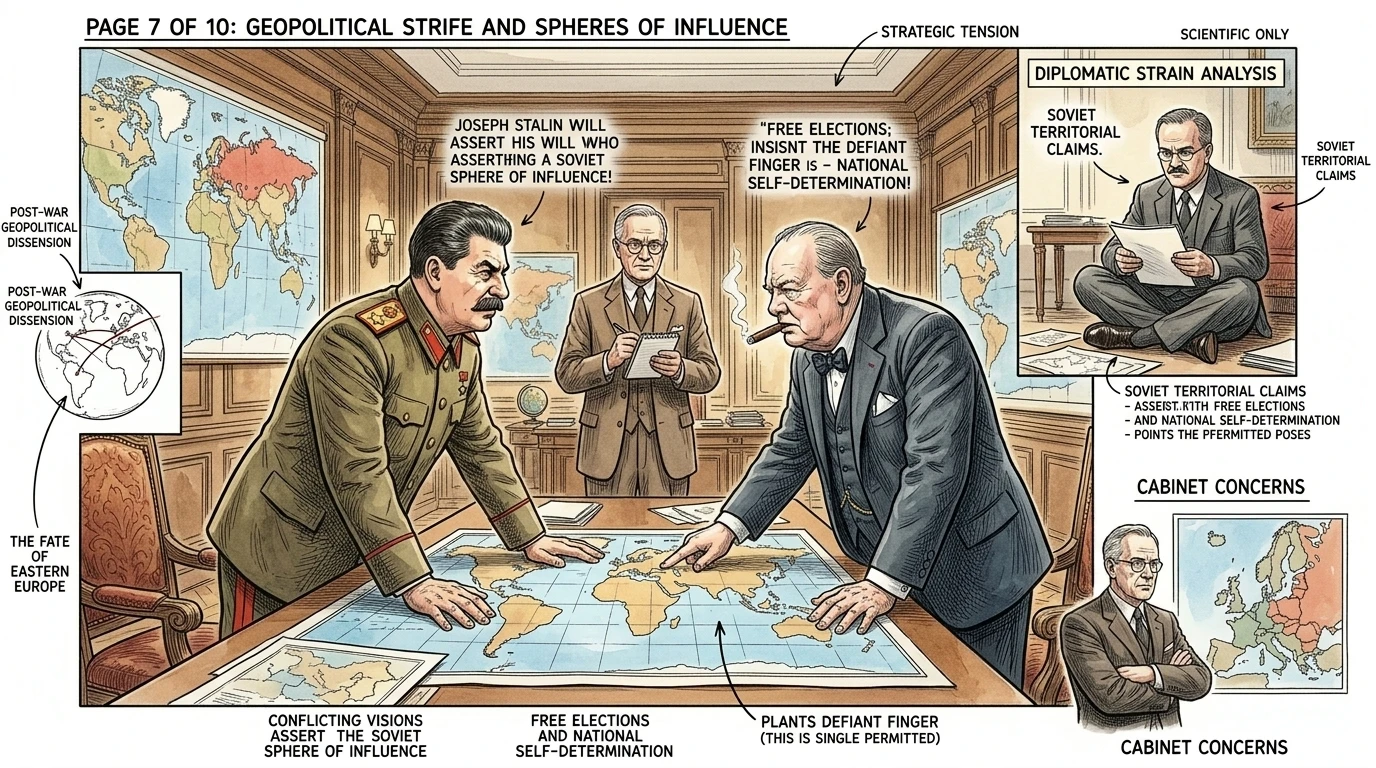
The negotiations reached a critical point when Stalin demanded a Soviet sphere of influence in Eastern Europe. Churchill, reluctantly, recognized the reality of…
The negotiations reached a critical point when Stalin demanded a Soviet sphere of influence in Eastern Europe. Churchill, reluctantly, recognized the reality of the Red Army's presence, but insisted on guarantees of free elections and democratic governance. The future of millions hung in the balance, with many questions still lingering for Harry Truman, who followed closely as Roosevelt's health began to fail.

The negotiations reached a critical point when Stalin demanded a Soviet sphere of influence in Eastern Europe. Churchill, reluctantly, recognized the reality of the Red Army's presence, but insisted on guarantees of free elections and democratic governance. The future of millions hung in the balance, with many questions still lingering for Harry Truman, who followed closely as Roosevelt's health began to fail.

Page 8
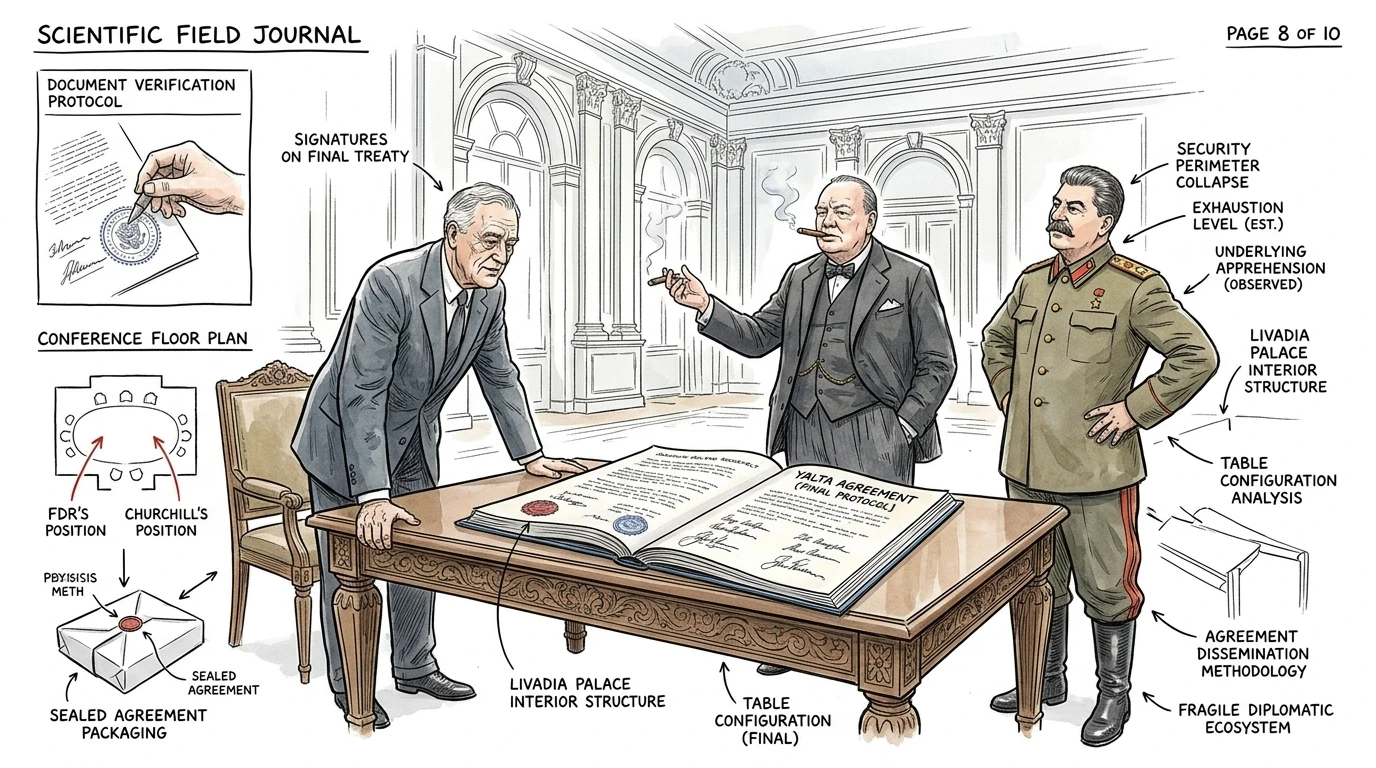
The Yalta Conference concluded with a fragile agreement. The leaders pledged to establish a new United Nations, committed to free elections in Eastern Europe…
The Yalta Conference concluded with a fragile agreement. The leaders pledged to establish a new United Nations, committed to free elections in Eastern Europe, and agreed on the division of Germany into zones of occupation. The world breathed a sigh of relief, but the seeds of the Cold War had already been sown, soon to be a global ideological division.

The Yalta Conference concluded with a fragile agreement. The leaders pledged to establish a new United Nations, committed to free elections in Eastern Europe, and agreed on the division of Germany into zones of occupation. The world breathed a sigh of relief, but the seeds of the Cold War had already been sown, soon to be a global ideological division.

Page 9
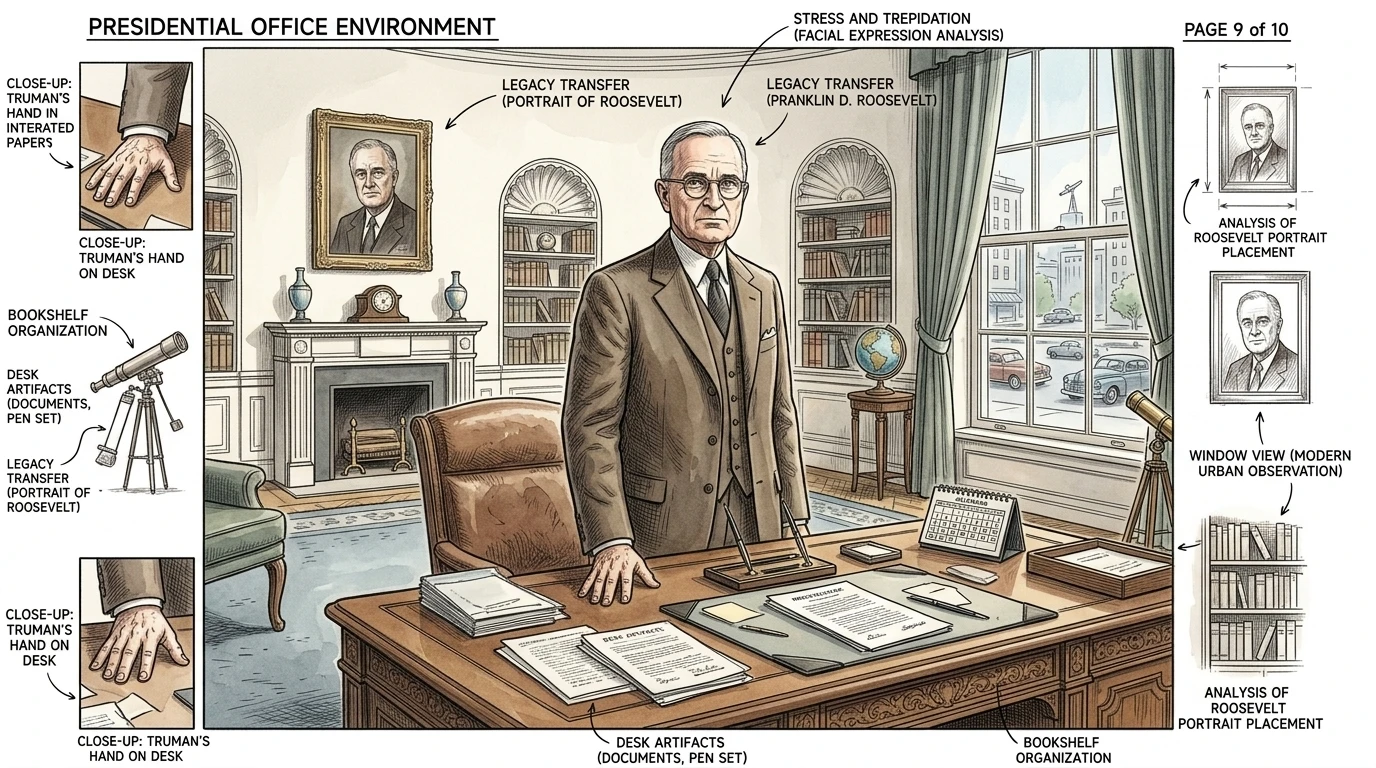
Months later, Roosevelt passed away, and the world mourned the loss of a leader who had guided the United States through the Great Depression and the Second…
Months later, Roosevelt passed away, and the world mourned the loss of a leader who had guided the United States through the Great Depression and the Second World War. Harry Truman, now President, inherited the daunting task of navigating the post-war world. "The responsibility now falls to me," Truman declared, with a mix of determination and trepidation.

Months later, Roosevelt passed away, and the world mourned the loss of a leader who had guided the United States through the Great Depression and the Second World War. Harry Truman, now President, inherited the daunting task of navigating the post-war world. "The responsibility now falls to me," Truman declared, with a mix of determination and trepidation.

Page 10
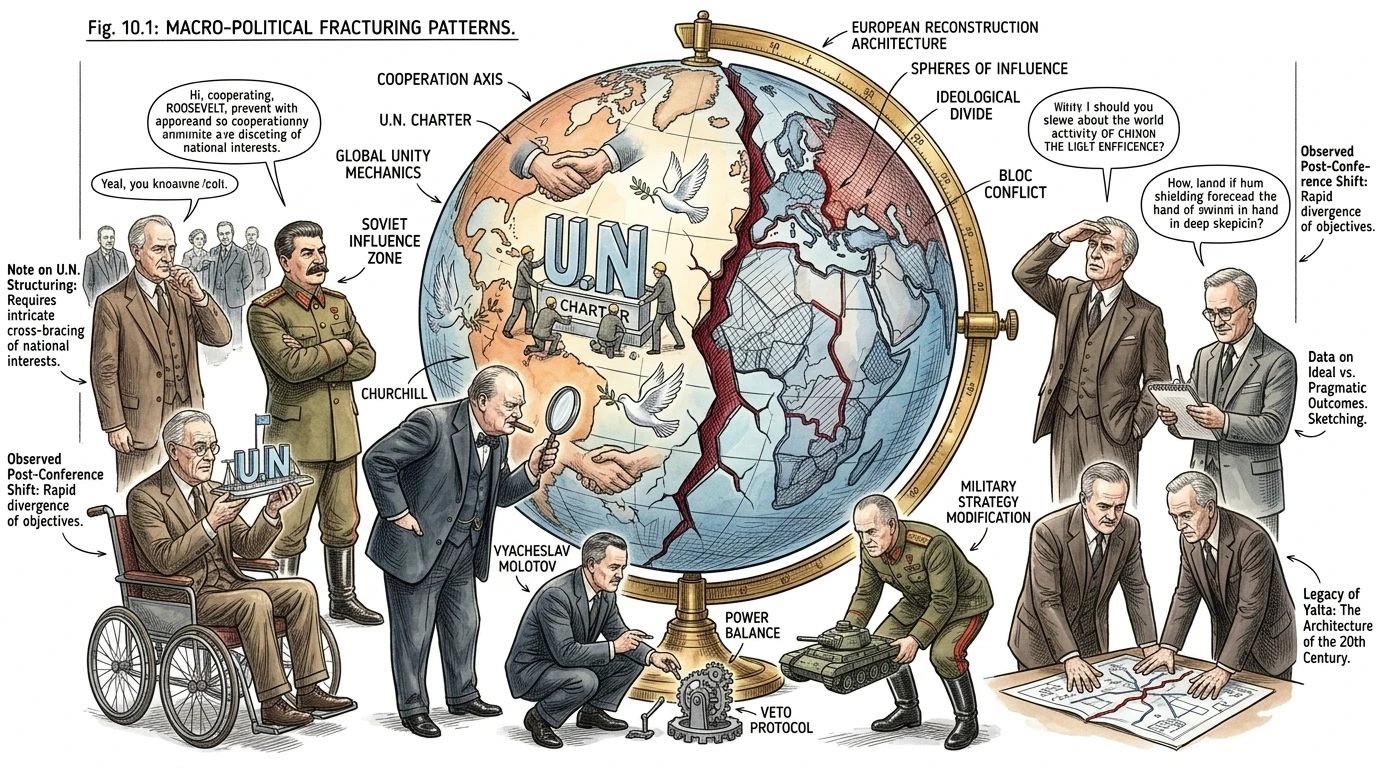
The Yalta Conference, despite its imperfections, shaped the post-war world for decades to come. The United Nations became a forum for international cooperation…
The Yalta Conference, despite its imperfections, shaped the post-war world for decades to come. The United Nations became a forum for international cooperation, but the Cold War divided the world into two opposing blocs. The legacy of Yalta remains a subject of debate, but its significance as a pivotal moment in history is undeniable.

The Yalta Conference, despite its imperfections, shaped the post-war world for decades to come. The United Nations became a forum for international cooperation, but the Cold War divided the world into two opposing blocs. The legacy of Yalta remains a subject of debate, but its significance as a pivotal moment in history is undeniable.

About this story

  • Historical figures: Franklin Delano Roosevelt, Winston Churchill, Joseph Stalin
  • Location: United States
  • Period: Modern
  • Audience: general readers

Questions and answers

Questions and answers about The Yalta Conference (1945, United States)

Read Wonder History on your phone

Wonder History is available on Android. Get Wonder History on Google Play.

More Wonder History stories

All Wonder History stories · Open the library