Teleprompter
Teleprompter — an illustrated inventions story, set in Global. 10 illustrated pages, free to read on Wonder Inventions.
Page 1
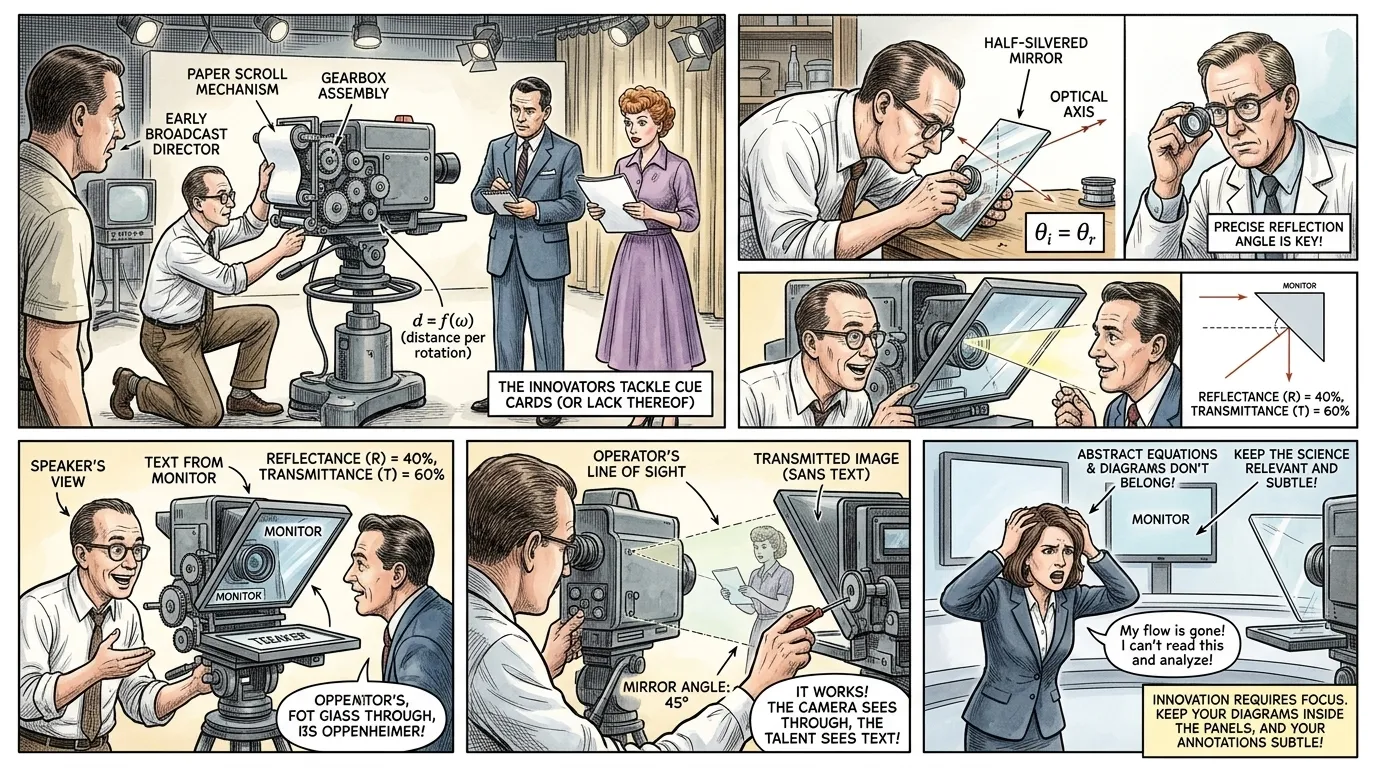
Before the mid-20th century, delivering extensive speeches or complex dialogue on live television or stage demanded prodigious memorization or the awkward reliance on visible cue cards. This precarious balance often compromised the speaker's connection with the audience, interrupting the vital illusion of spontaneity. The intense pressure to deliver flawless, lengthy segments without faltering was a significant technical and performance challenge for broadcasters and public figures alike.
Page 2
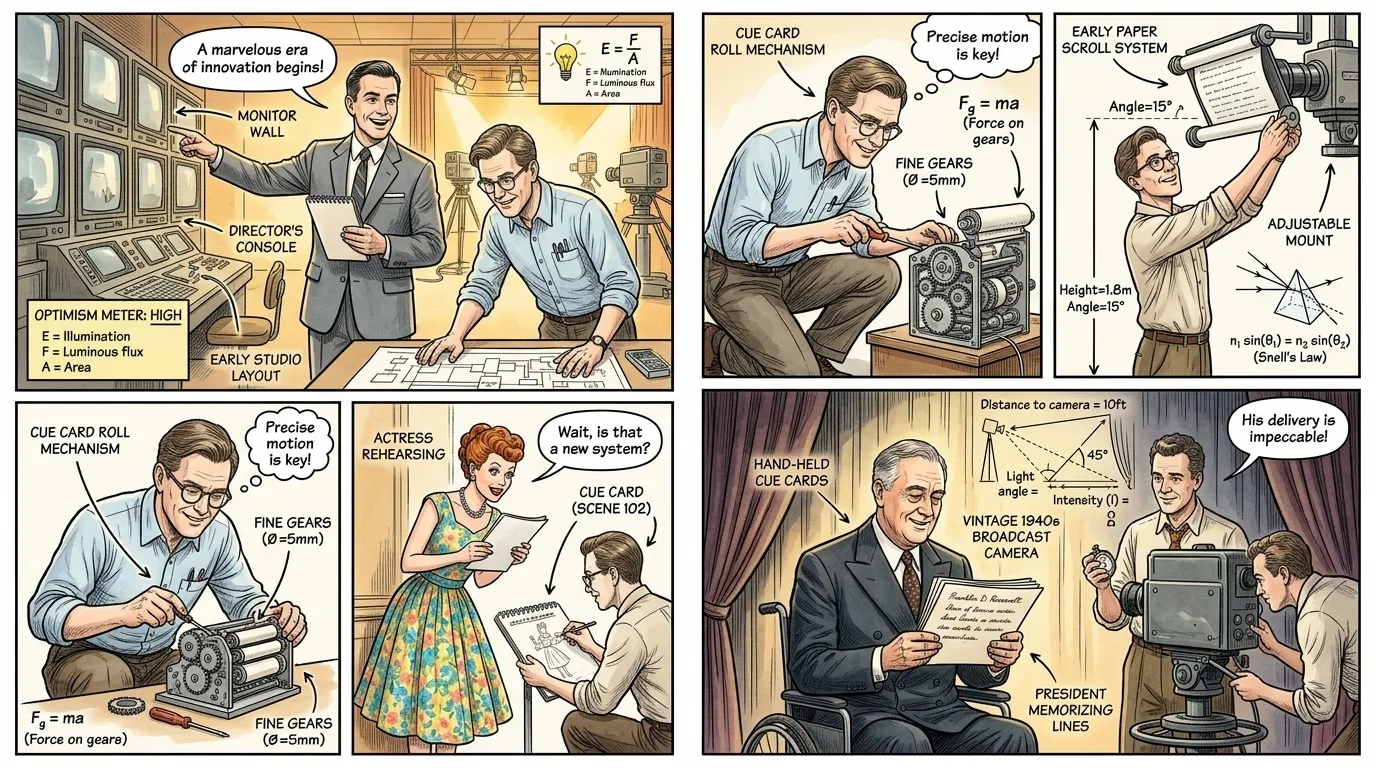
The dawn of live television presented unprecedented demands for consistent, error-free delivery, especially for complex productions with intricate timing. Iconic shows, broadcast live to millions, highlighted the limitations of existing methods. Actors and presenters struggled to recall lengthy scripts while simultaneously engaging the audience naturally, leading to stiff performances or costly retakes in pre-recorded segments.
"Jess Oppenheimer, a pioneering television producer, once observed, 'The demand for precision on live television is relentless. We need actors to be natural, yet they must deliver every line perfectly. It's a conflict between spontaneity and accuracy.'"
Page 3
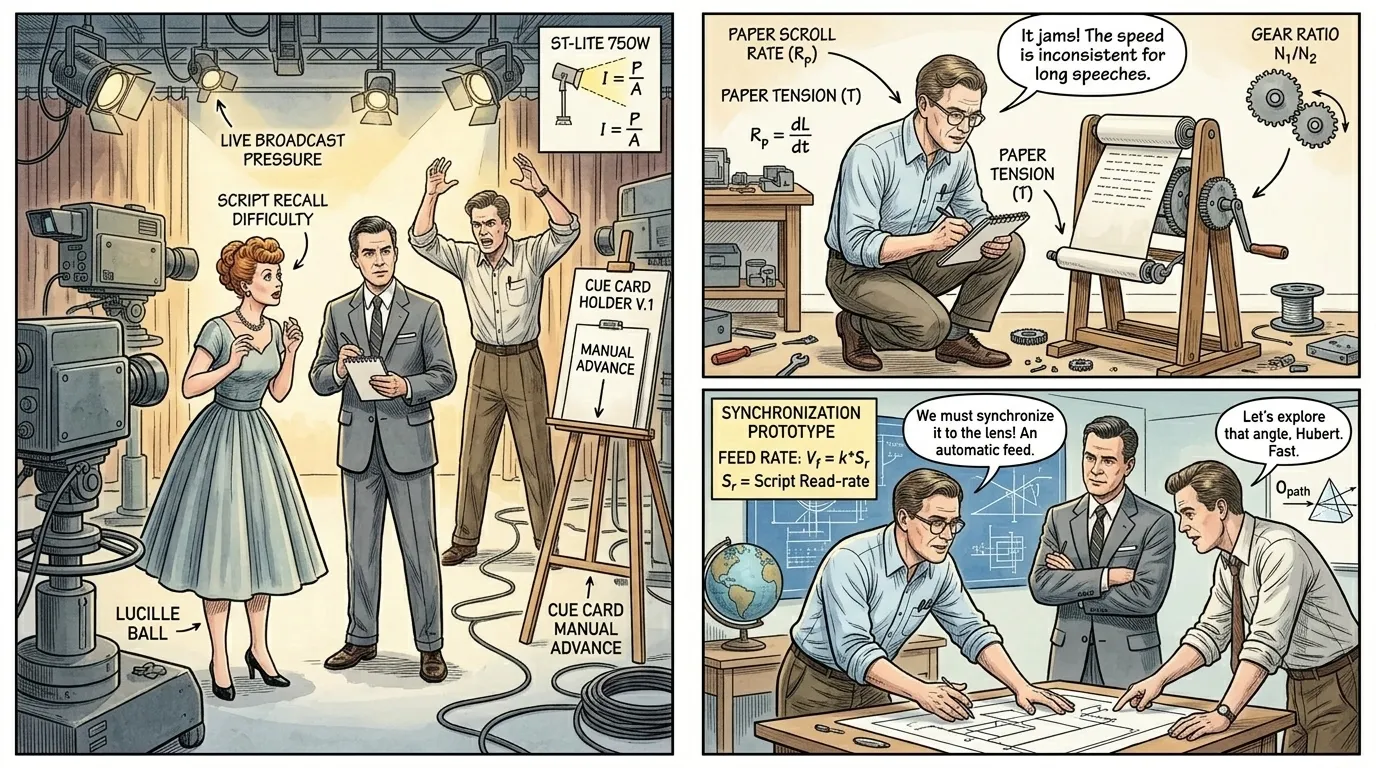
Hubert Schlafly, an innovative engineer at the TelePrompTer Corporation, recognized this critical dilemma. He understood that the fundamental problem wasn't merely about displaying text, but about bridging the gap between a speaker's need to read and the audience's expectation of direct, engaging eye contact. His keen observation of broadcasting failures spurred him to seek a truly novel solution.
"Schlafly, reflecting on the challenge, reportedly stated, 'The speaker needs the script, but the camera needs the speaker's eyes. As the American president Franklin Roosevelt once remarked, 'The only thing we have to fear is fear itself.' The fear of forgetting lines was crippling performance. We needed to banish that fear by making the script appear where the speaker's gaze naturally fell.'"
Page 4
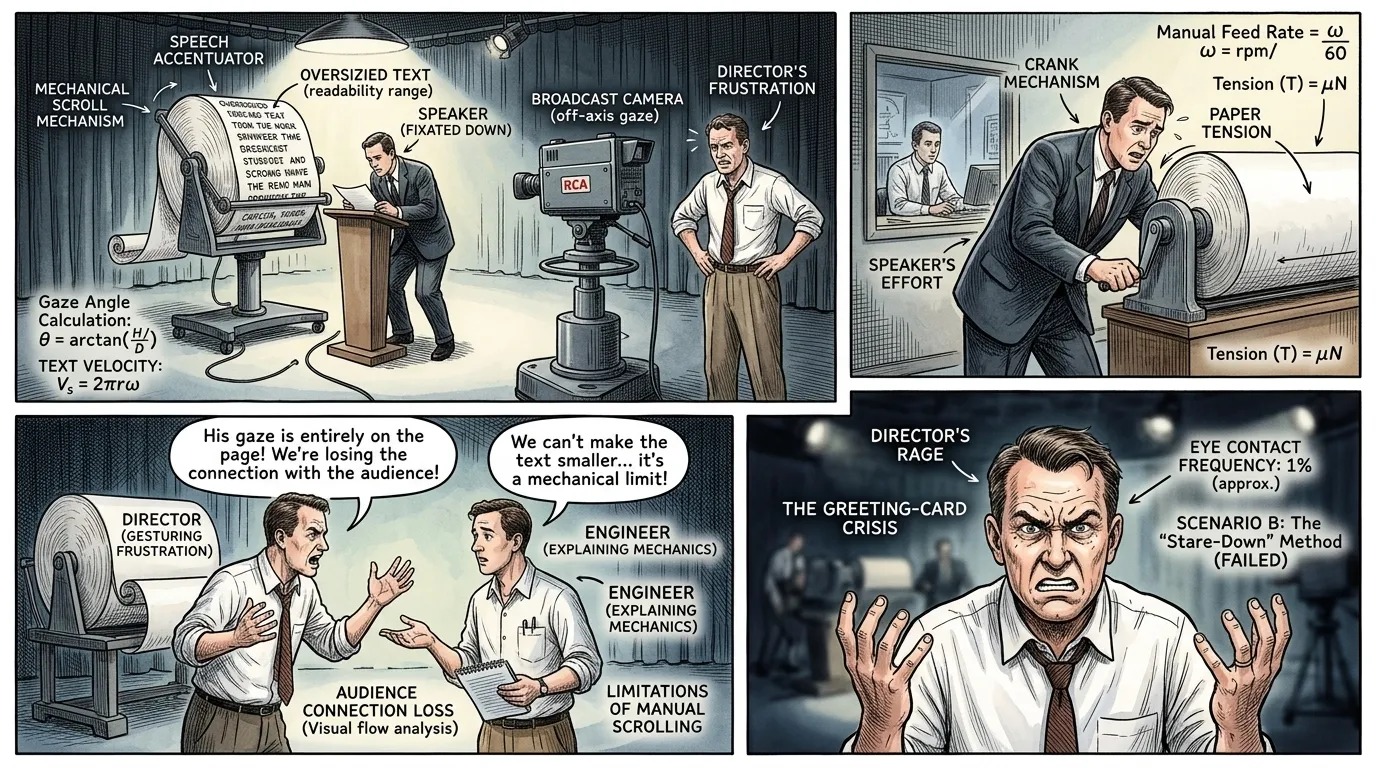
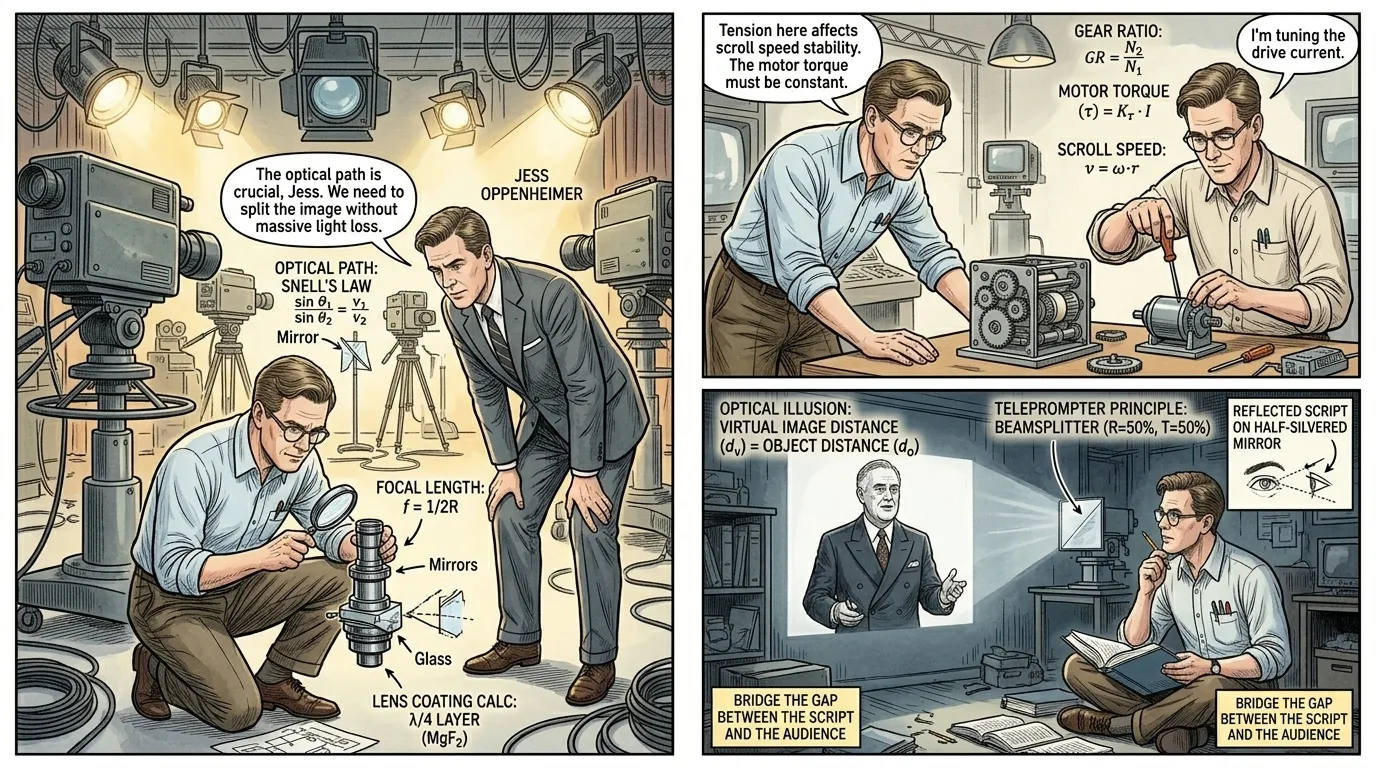
Before the optical breakthrough, initial attempts often involved purely mechanical systems. The 'speech accentuator,' a cumbersome device developed earlier, featured a long paper roll with oversized text that scrolled manually or electrically. While it eliminated loose notes, it still forced speakers to look down, severing the crucial visual connection with their audience and cameras. This design underscored the inadequacy of purely physical text presentation.
"An early broadcast director, struggling with a speaker using the accentuator, might have remarked, 'He can read it, yes, but he's talking to his shoes, not the audience! This isn't live communication; it's a glorified reading exercise.'"
Page 5
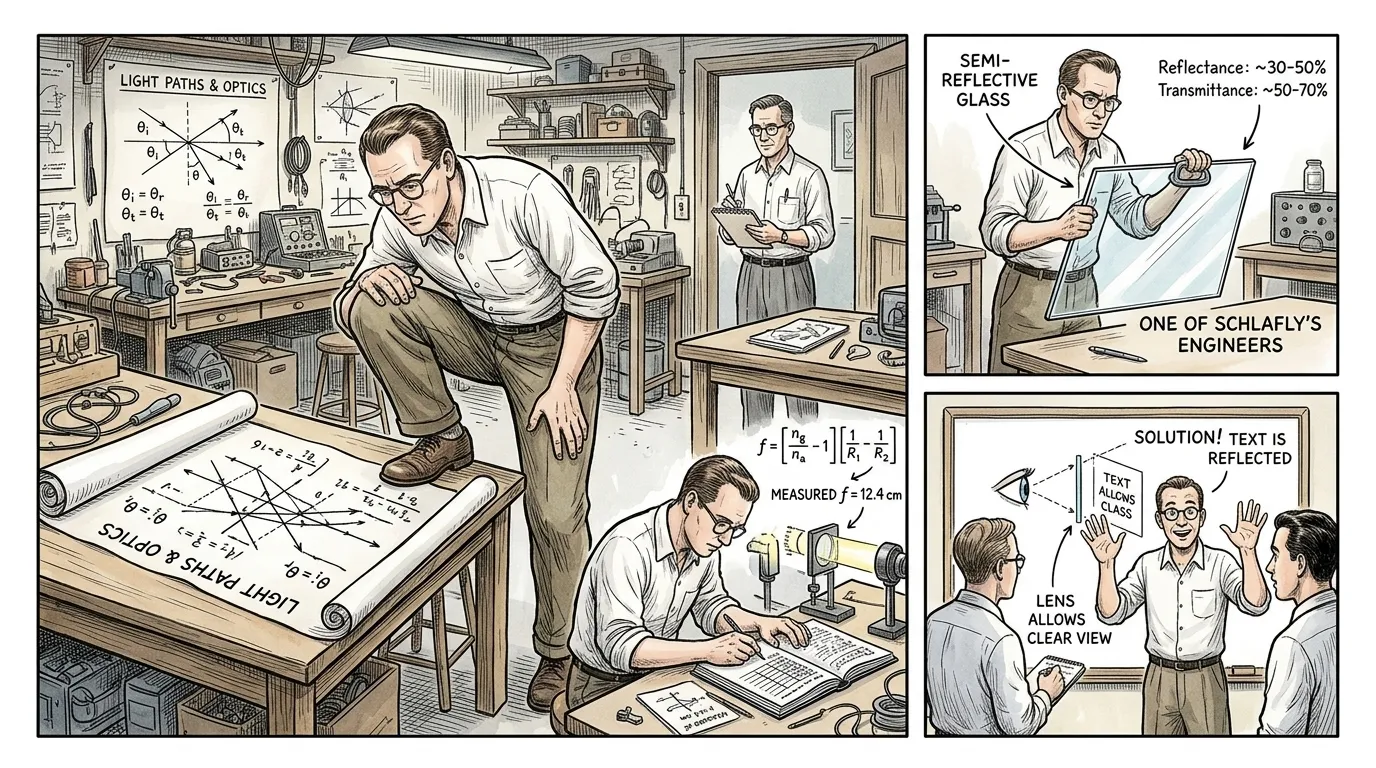
The challenge was clear: how to project text that was perfectly legible to the speaker, positioned directly in their line of sight, yet completely invisible to the camera lens filming them. This required a paradigm shift from direct display to an ingenious optical illusion. Schlafly's team needed to engineer a solution that leveraged light and reflection without obstructing the camera's view, a concept previously unexplored in broadcast technology.
"One of Schlafly's engineers, looking at a previous design, might have mused, 'If we project onto glass, the light scatters. If we use a solid screen, the camera can't see through it. We need a material that does both, simultaneously!'"
Page 6
The pivotal innovation arrived with the integration of a specially coated, partially silvered mirror – a 'two-way mirror.' This ingenious optical component became the heart of the Teleprompter. Placed at a 45-degree angle directly in front of the camera lens, it allowed a monitor's text to reflect off its surface towards the speaker, while simultaneously permitting the camera to film unimpeded through the transparent portion of the glass. This simple yet profound optical principle transformed broadcast delivery.
"Schlafly, explaining the concept, might have declared, 'The two-way mirror is the key. The monitor's light reflects to the speaker's eyes, while the camera sees straight through. It's an optical sleight of hand – the script is there, yet invisible to the audience!'"
Page 7
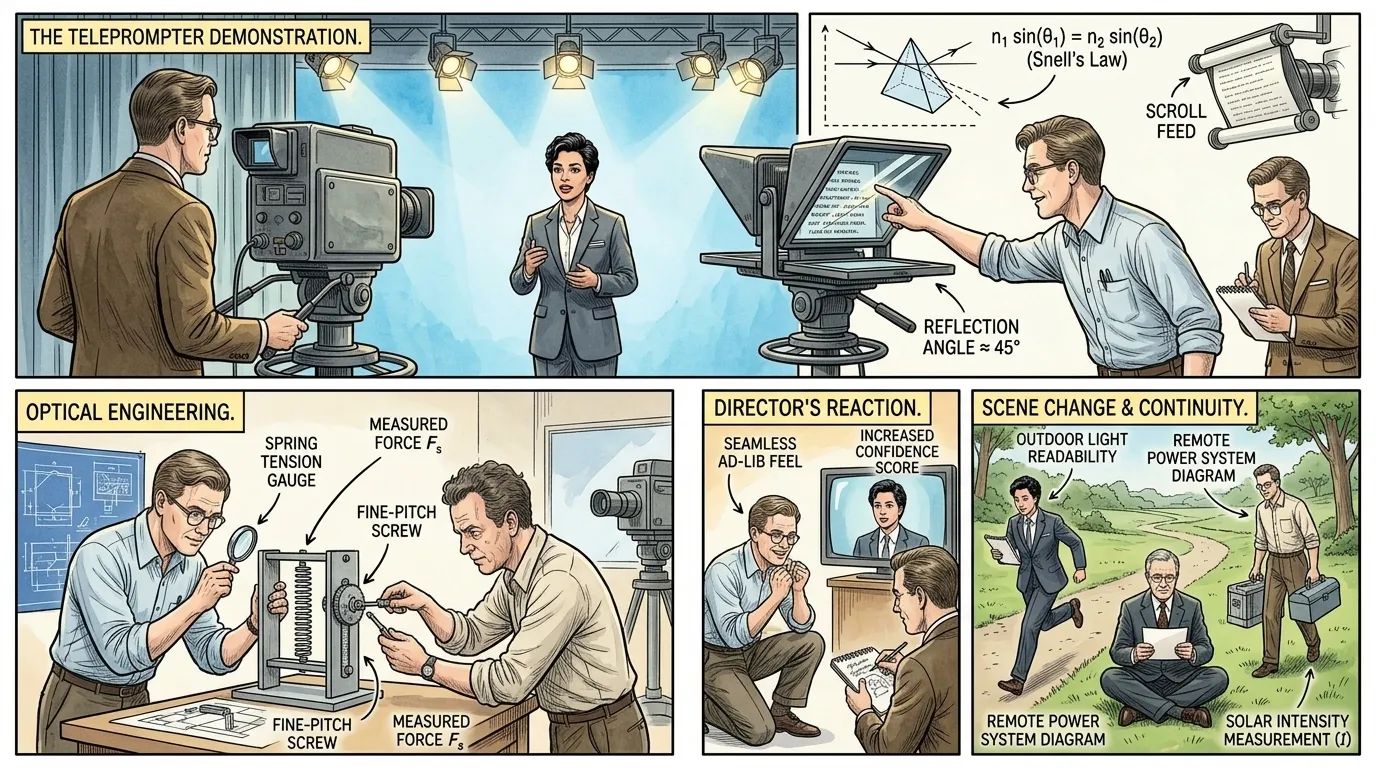
The operational elegance of the Teleprompter lies in its simplicity. A monitor, typically placed below the camera, displays the scrolling text. This text is then reflected by an angled sheet of glass (the two-way mirror) positioned directly in front of the camera lens. The speaker looks directly into the lens, perceiving the reflected text as if it floats in mid-air, maintaining direct eye contact with the audience without appearing to read from any device.
"An instructional voice (perhaps an off-screen narrator) explaining, 'Observe the path of light. The speaker sees the reflection, creating the illusion of direct address, while the camera captures the unhindered scene. It's a seamless integration of technology and performance.'"
Page 8
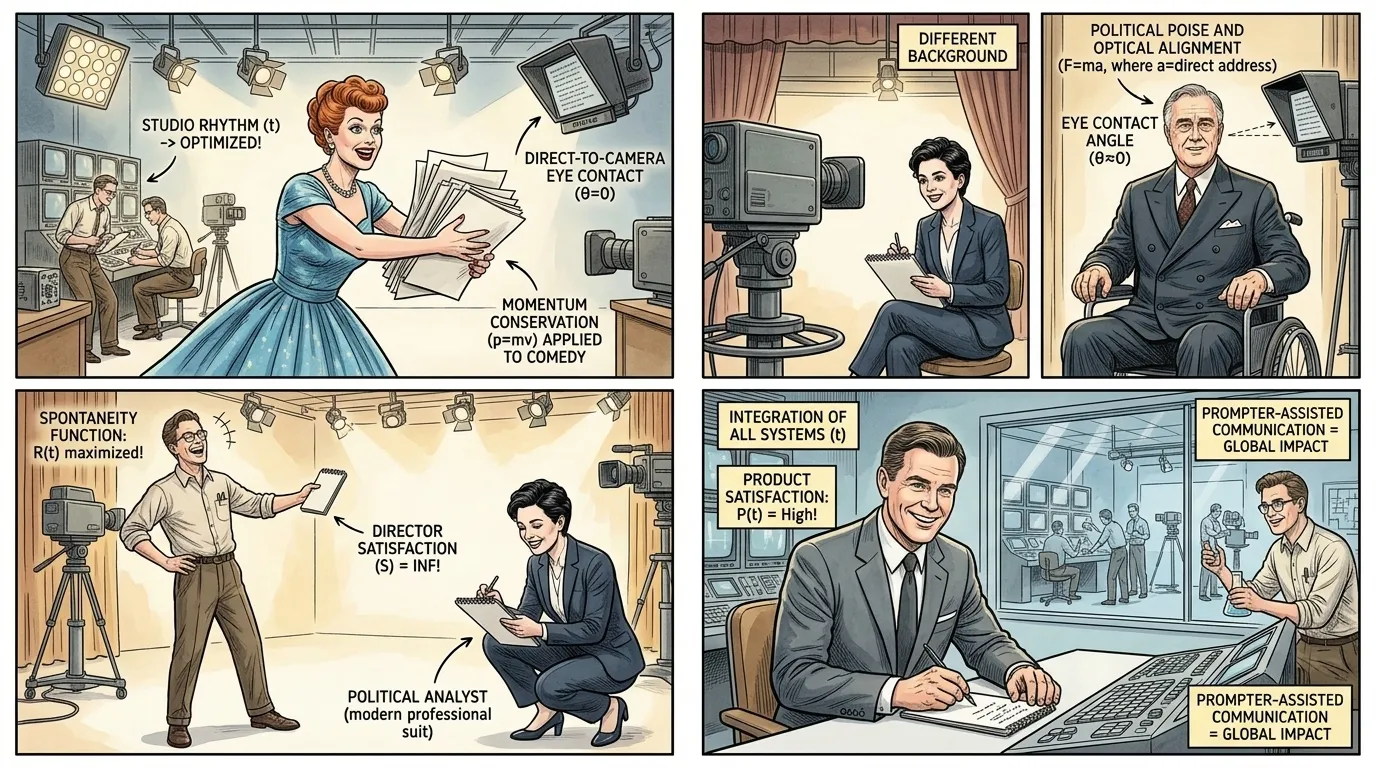
The Teleprompter quickly transformed live broadcasting. Actors like Lucille Ball could now deliver their intricate comedic lines with perfect timing and apparent spontaneity, greatly enhancing production quality. Simultaneously, politicians embraced the device, enabling them to deliver long, complex speeches with an unprecedented level of polish, maintaining unwavering eye contact with voters through the camera lens. The impact on perceived sincerity was immediate and profound.
"Jess Oppenheimer, decades later, might have reflected, 'That seemingly simple trick of reflection, making text appear where the camera sits, completely revolutionized our ability to produce engaging, precise television. Lucille could now focus on character, not memorization.'"
Page 9
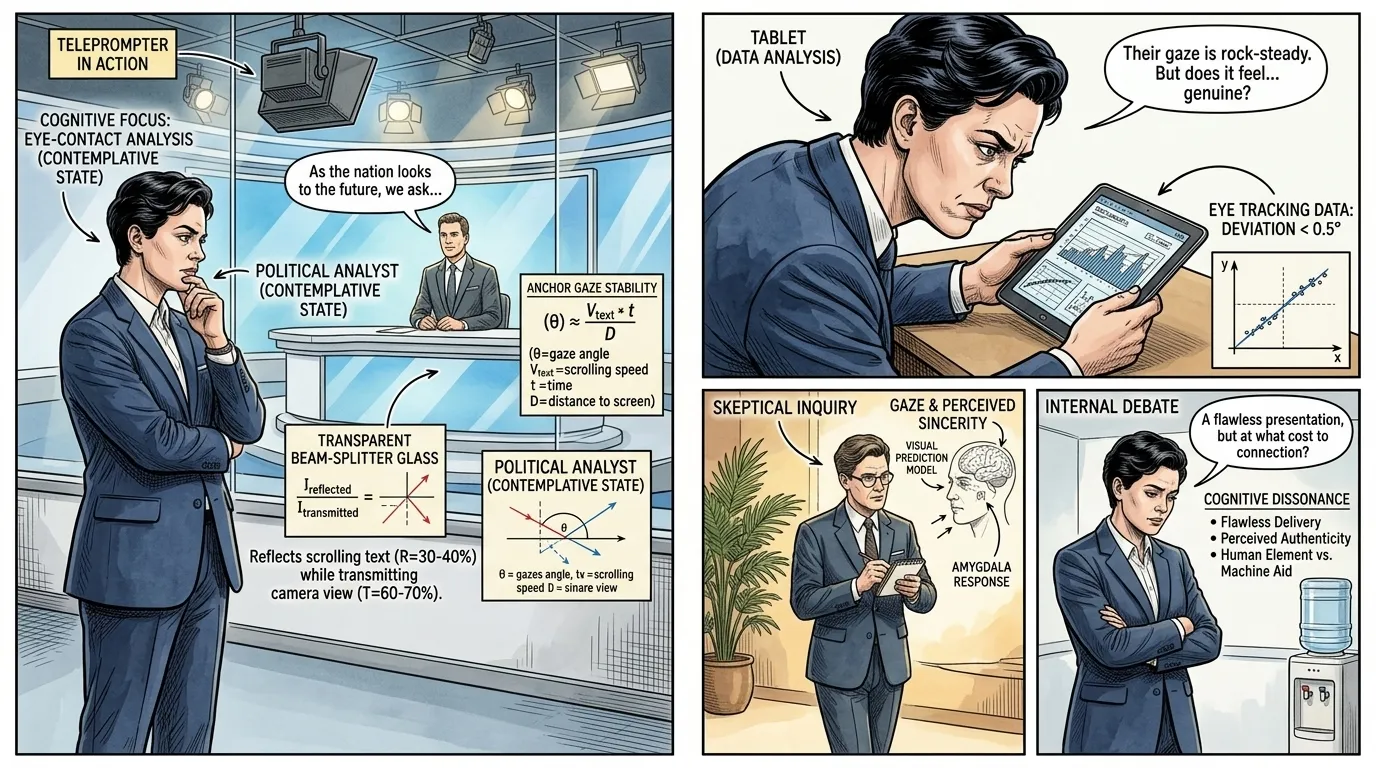
The widespread adoption of the teleprompter ushered in a new era of carefully crafted public address. From news anchors to corporate executives, the device allowed for a level of consistency and professionalism previously unattainable. However, its use also sparked debates about authenticity, with critics questioning whether a speaker's words were genuinely heartfelt or merely read from a script. This controversy continues to shape perceptions of public figures.
"A political analyst, decades after its introduction, might have commented, 'The teleprompter gave politicians power over their words, but it simultaneously raised questions of genuine connection. Is it true communication if every word is read, or just an illusion of intimacy?'"
Page 10
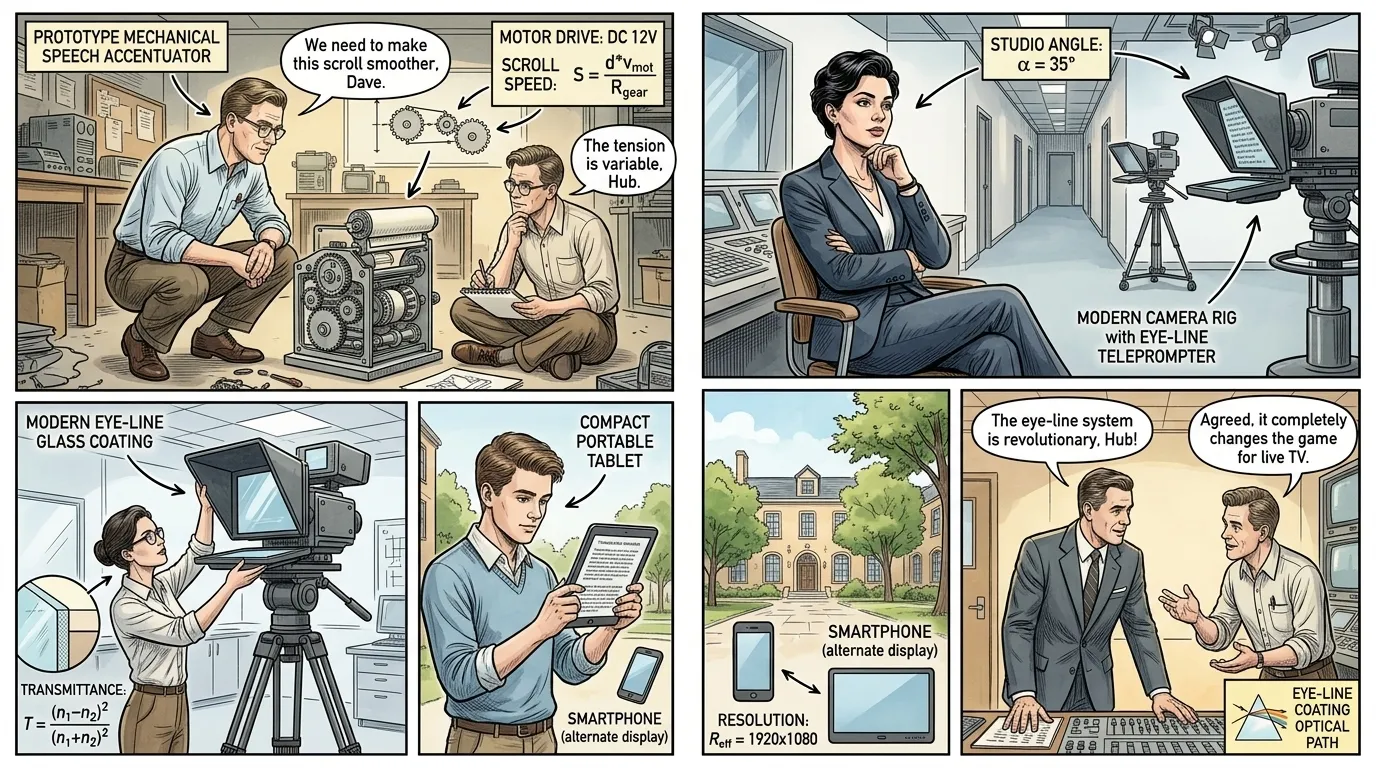
From its bulky origins to today's compact, software-driven solutions, the teleprompter remains an indispensable tool across diverse sectors. It has evolved from large mechanical scrolls to elegant, eye-line systems, and even portable tablet-based applications. Its core function – to facilitate seamless, confident communication while maintaining vital eye contact – continues to define its enduring legacy in media, politics, and beyond.
About this story
- Location: Global
- Audience: kids (ages 6–12)
Questions and answers
Read Wonder Inventions on your phone
Wonder Inventions is available on Android. Get Wonder Inventions on Google Play.