Père Goriot
A father who gave his daughters everything he had, and the young man from the provinces who watched it happen
Page 1
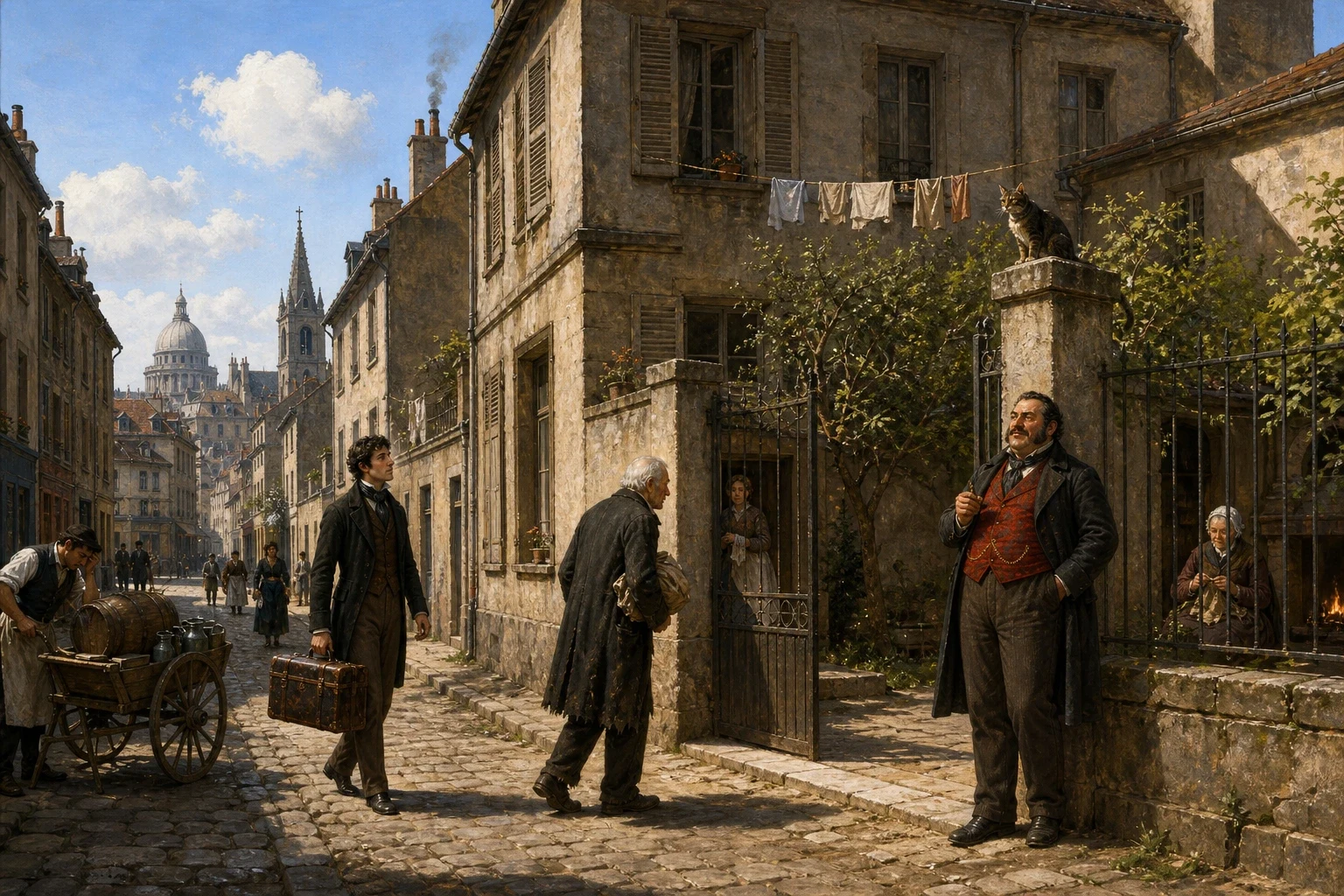
In the year 1819, on a poor street called the Rue Neuve-Sainte-Geneviève in Paris, there stood a shabby boarding house kept by a widow named Madame Vauquer. It took in lodgers too poor for anywhere better, and fed them thin soup at a long table every evening. Among them that year were three people whose lives were about to be tangled together. There was old Jean-Joachim Goriot, once a rich vermicelli merchant, now living in the cheapest room upstairs, and nobody understood why a man who had once been wealthy would choose to live so plainly. There was Eugène de Rastignac, a young law student newly come from the provinces, poor but burning to rise in Paris. And there was a loud, broad-shouldered boarder called Vautrin, who seemed to know everyone's business and feared nothing. All three watched each other, and all three were waiting, though none of them yet knew for what.
Page 2
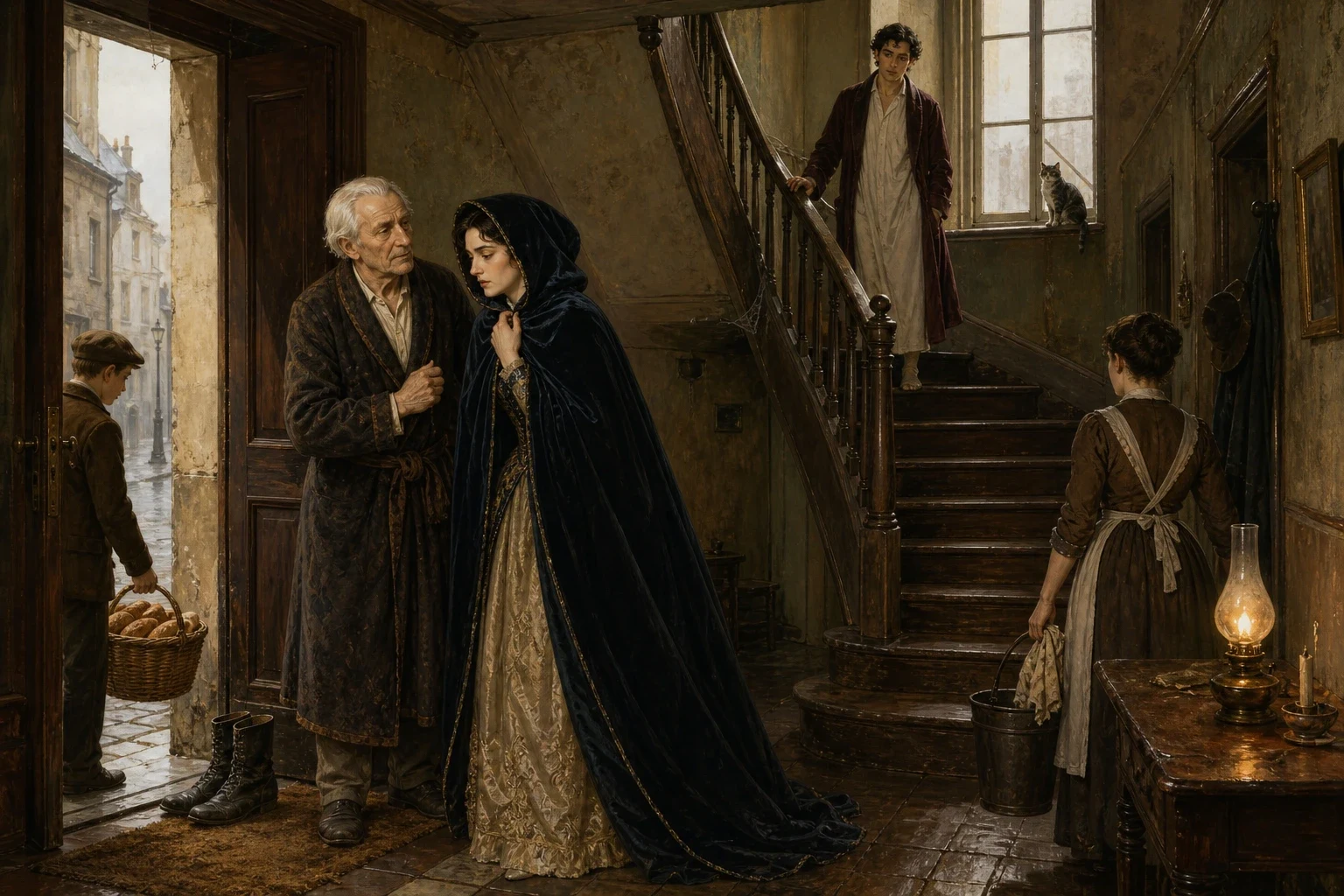
One morning, before the house was awake, Rastignac came down the stairs early and stopped on the landing. Below him, at the front door, old Goriot was saying a hushed, tender goodbye to a beautiful young woman in a dark cloak, her face half turned away. She slipped out into the grey street and was gone before Rastignac could see her clearly. The other boarders had long gossiped that Goriot kept a secret mistress — how else, they said, could a once-rich merchant explain giving away his money to a string of fine young women, while he himself lived on nothing? Rastignac said nothing of what he had seen, but he did not forget her face, and before long he would see it again in a very different room, under a very different name.
Page 3
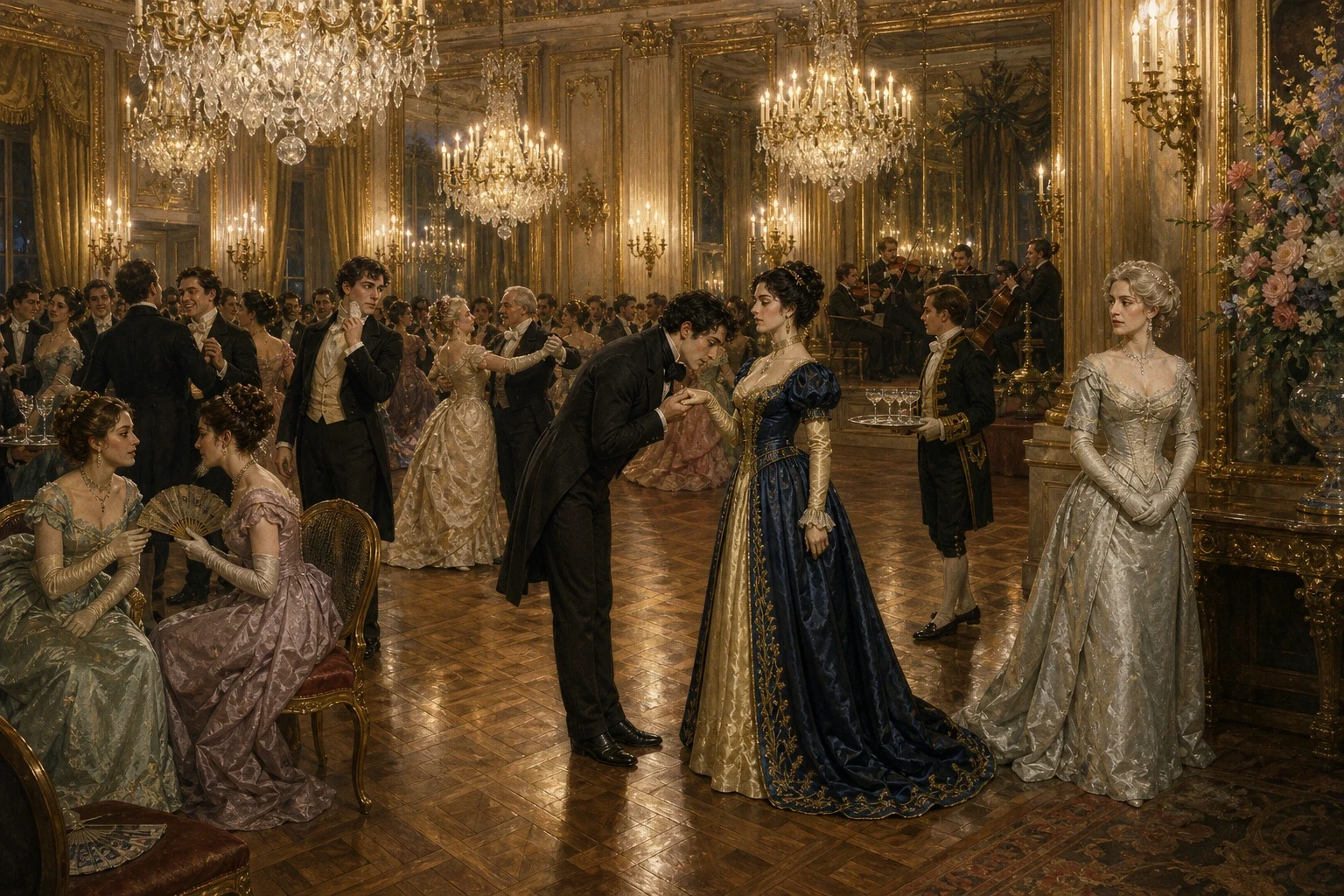
Using the name of his distant cousin, Madame de Beauséant, Rastignac talked his way into her grand ball in the Faubourg Saint-Germain — a world of chandeliers and silk utterly unlike the Maison Vauquer. There he was introduced to a beautiful young Comtesse, and as he bowed over her hand he realized, with a small shock, that she was the very woman he had seen slipping out of old Goriot's door at dawn. He said nothing of it to her. Madame de Beauséant watched the two of them from across the room, amused and a little sad, for she alone knew exactly whose daughter the Comtesse de Restaud really was, and exactly how far Rastignac still had to climb before Paris would let him in.
Page 4
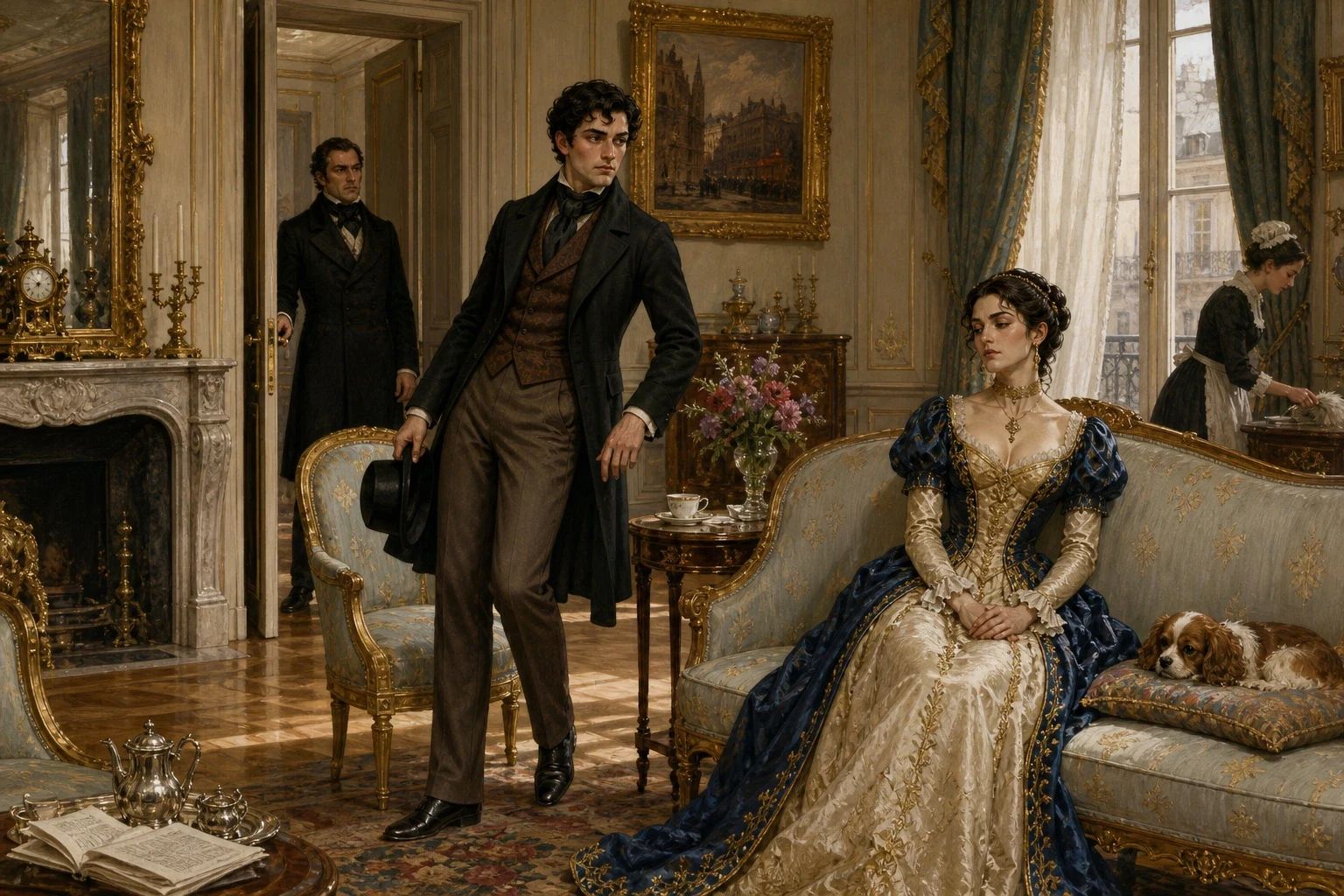
Rastignac called formally on the Comtesse de Restaud, and for a while the visit went pleasantly. Then, trying to make easy conversation, he mentioned that he lodged in the same house as a certain old Monsieur Goriot — not knowing the Comte de Restaud had just entered the room behind him. At the name, the Comte's face went rigid and Anastasie turned pale. Within minutes Rastignac found himself shown coldly to the door, told plainly that the house was not open to him again, with no explanation offered for what he had done wrong. He left utterly bewildered, with no idea that he had just stumbled, by accident, straight onto the one subject this family could never forgive.
Page 5
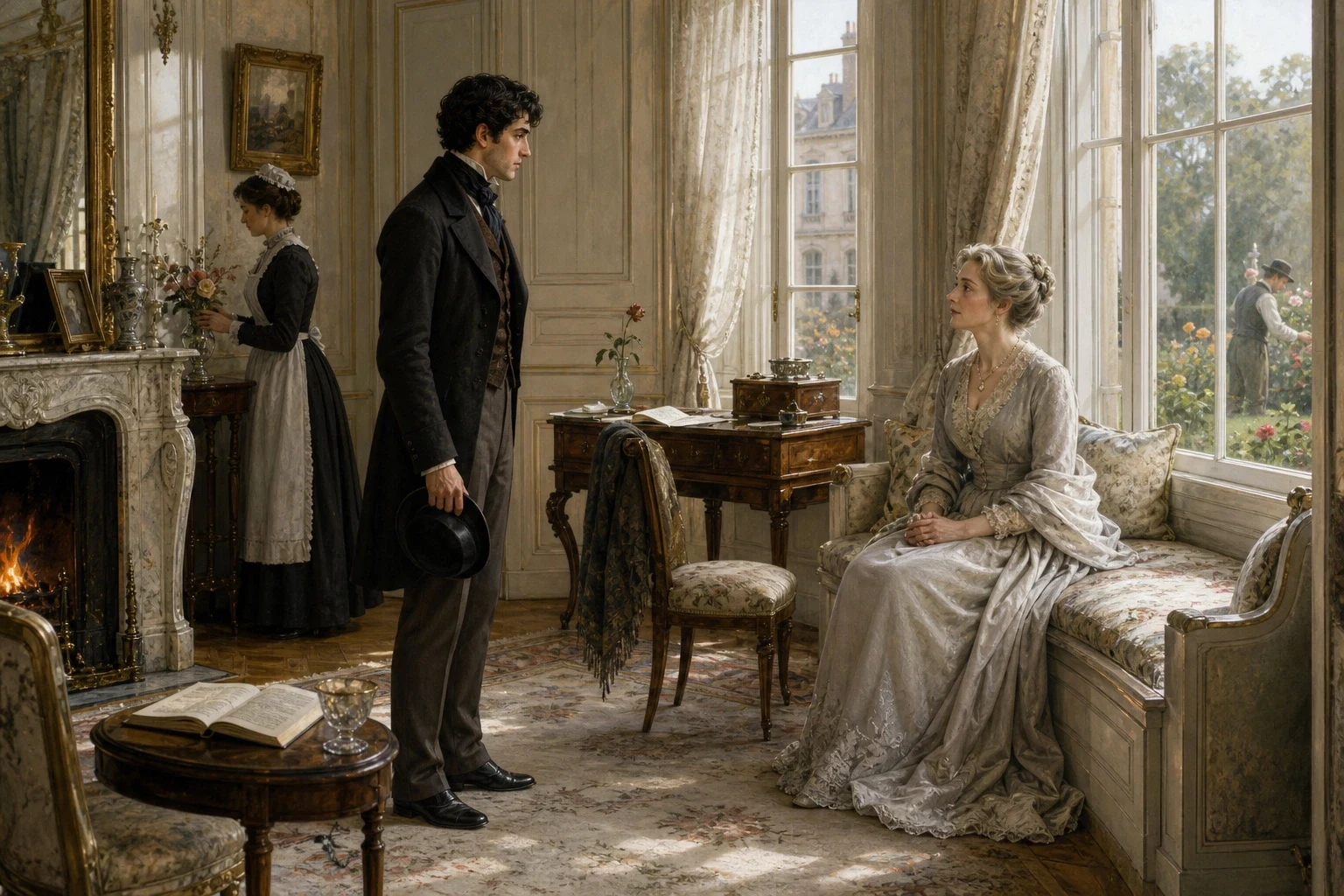
Stung and confused, Rastignac went straight to his cousin for an explanation. Madame de Beauséant, herself quietly nursing a broken heart over a faithless lover, told him plainly how Paris really worked. Old Goriot, she said, had given his daughters everything he owned to make them rich, and they were ashamed of him for it — ashamed enough to shut their doors on his very name. If the elder daughter's house was closed to him now, she said, he should turn to the younger one instead, Delphine de Nucingen, who was jealous of her sister's position and hungry for exactly the kind of devoted attention a clever young man could offer her.
Page 6
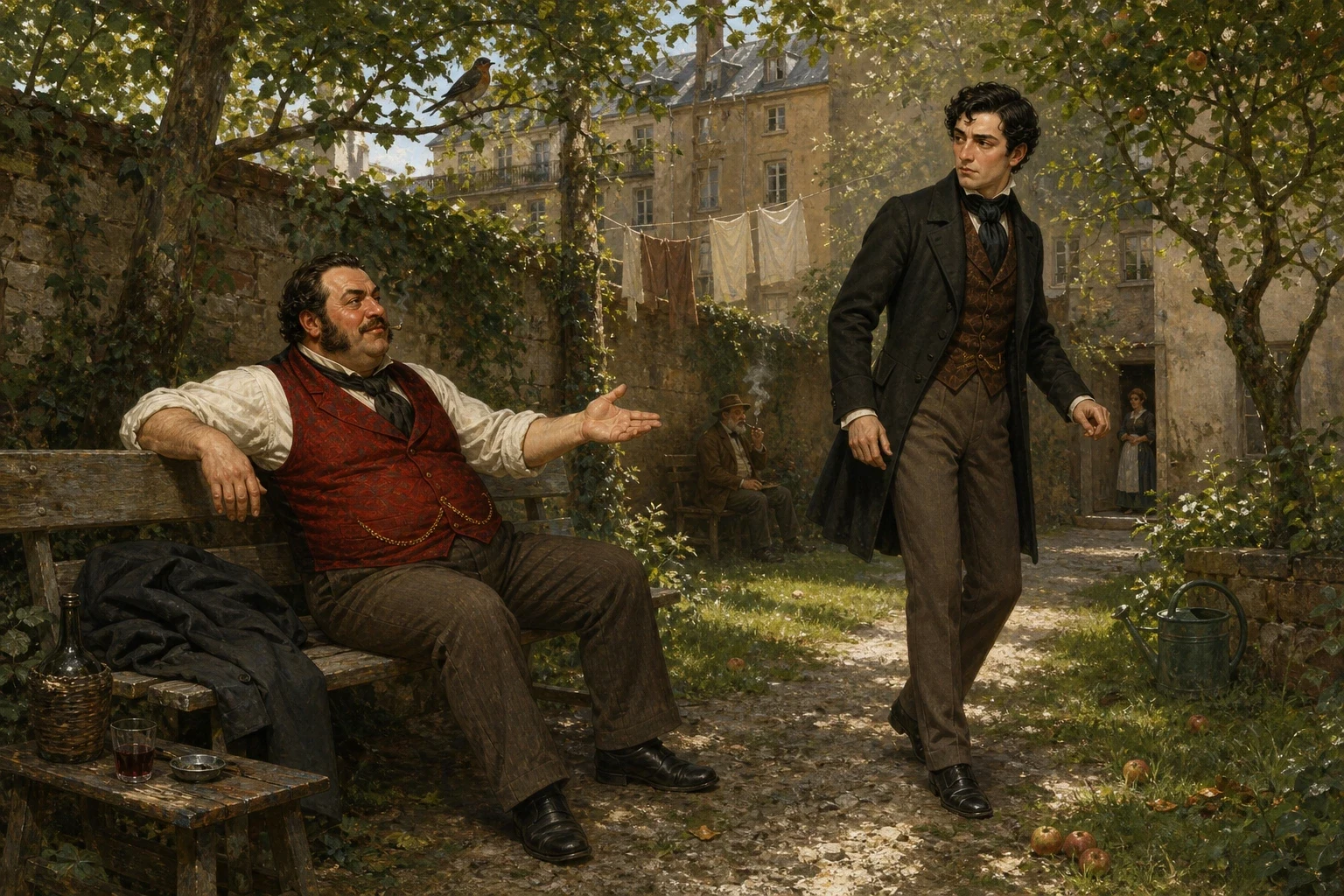
Back at the boarding house, Vautrin found Rastignac troubled over money and love, and walked him into the quiet garden to make him a terrible offer. There was a girl in the house, he said, named Victorine Taillefer, disinherited by her rich father in favor of her brother. Marry her, Vautrin said, and he himself would see to it — through a duel, nothing more — that the brother died, leaving Victorine suddenly worth a fortune, and Rastignac rich along with her. He laid the whole scheme out calmly, almost kindly, as if it were simple arithmetic rather than a plan for murder. Rastignac refused, horrified, and tried to put the conversation out of his mind — though the money Vautrin described was exactly the money he needed.
Page 7
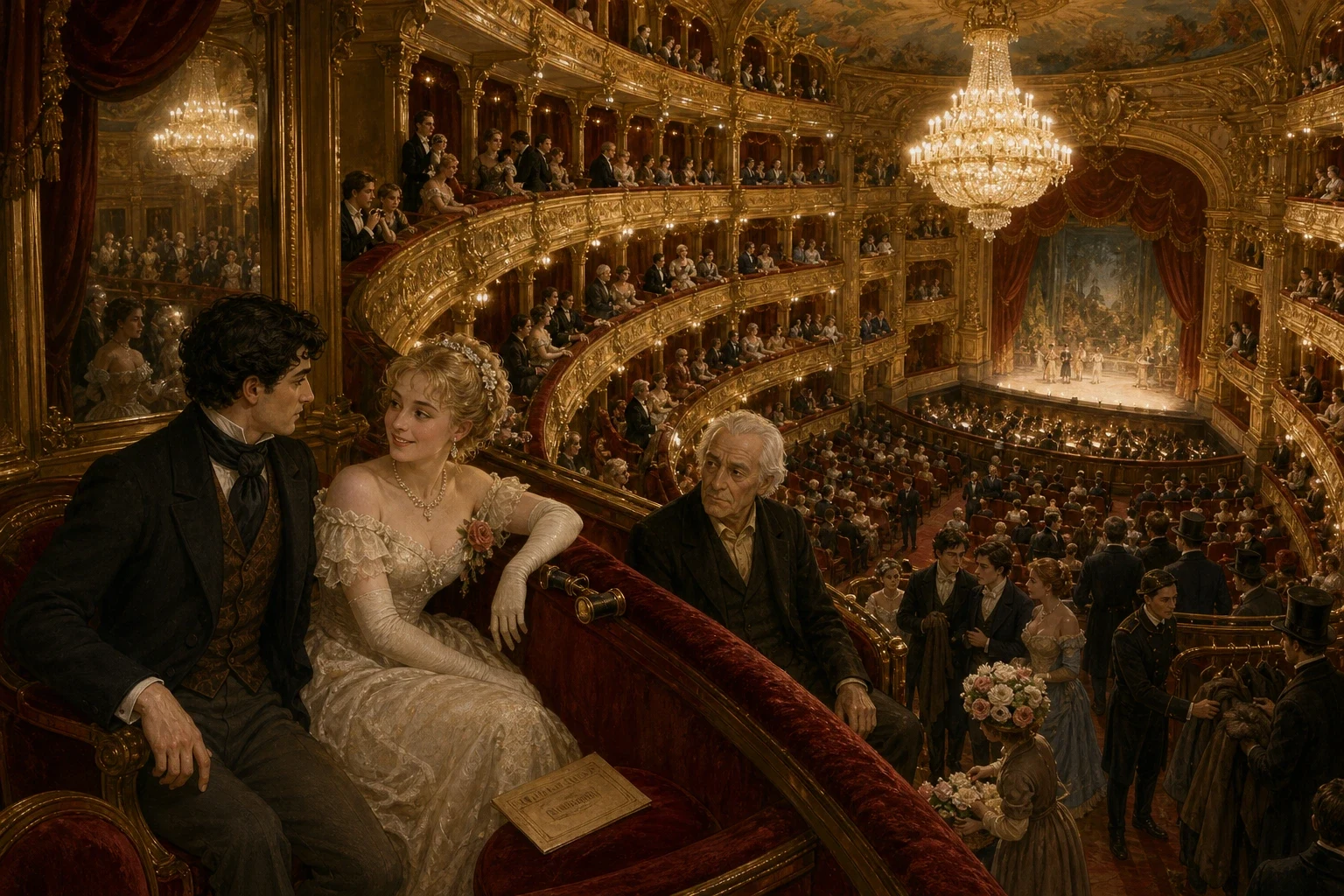
Delighted that his younger daughter had taken an interest in Rastignac, old Goriot quietly arranged for the two to be introduced at the Opera, and watched proudly from a little distance as Delphine de Nucingen, fair and charming, took to the young student at once. Bit by bit that evening Rastignac learned that Delphine, for all her jewels, was unhappy too — trapped in a cold marriage to a banker who kept her money entirely out of her own hands. What he did not yet know was that Goriot, far from comfortable, had been quietly selling off his last silver and belongings to pay her debts and buy the very box seats she now sat in, asking nothing in return but the sight of her smiling.
Page 8
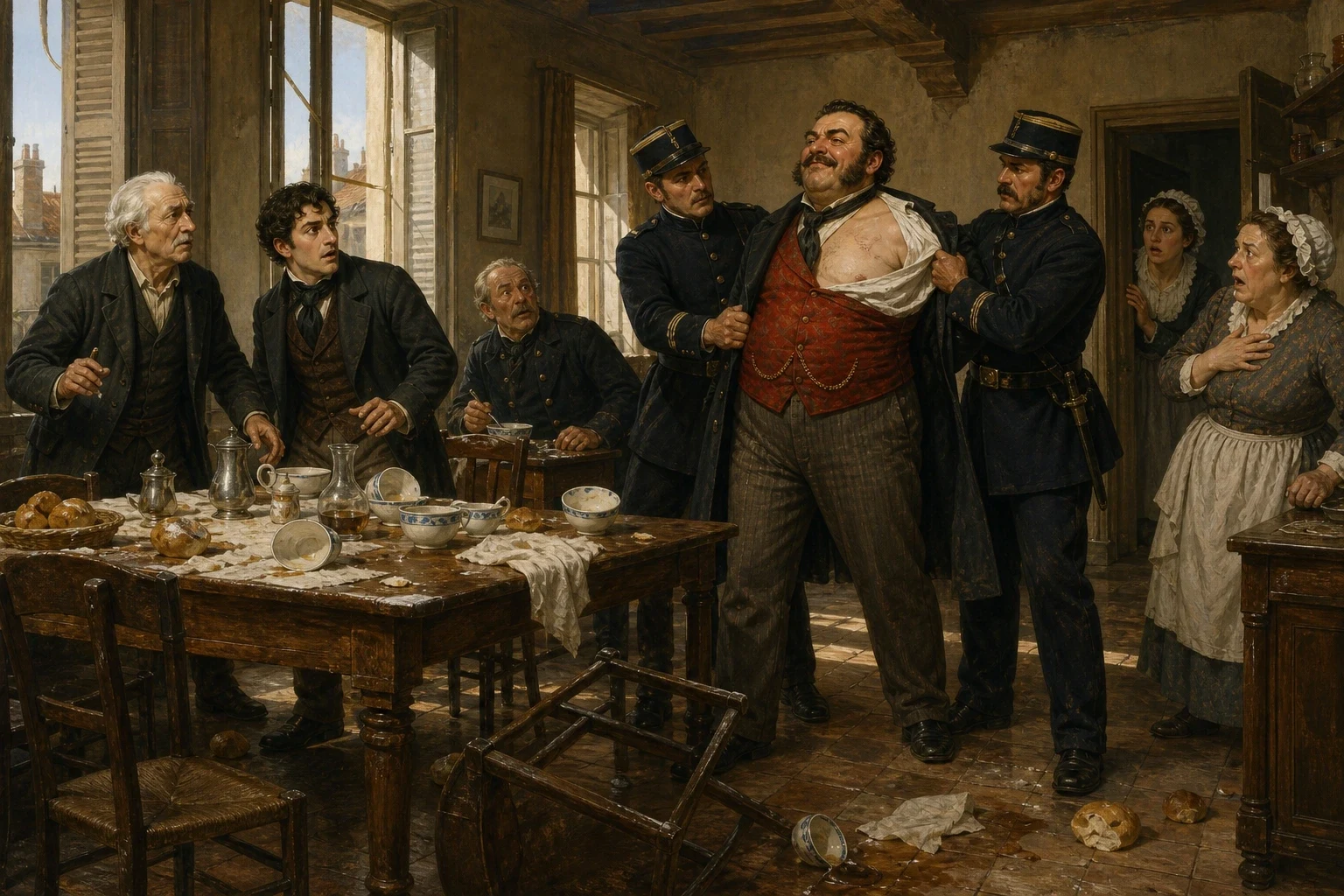
One ordinary morning at breakfast, Vautrin suddenly swayed and collapsed at the table, drugged by another boarder for a reward. Before anyone could do more than cry out, police officers who had been quietly watching the house for weeks stepped forward and seized him. His shirt was pulled open at the shoulder to show an old branded mark: he was not Vautrin at all, but Jacques Collin, called Trompe-la-Mort, an escaped convict long hunted across Paris. In a moment he recovered himself completely, straightened to his full height, and faced the whole stunned table with a cold, mocking bow before he was led away, promising calmly that this would not be the last any of them saw of him.
Page 9
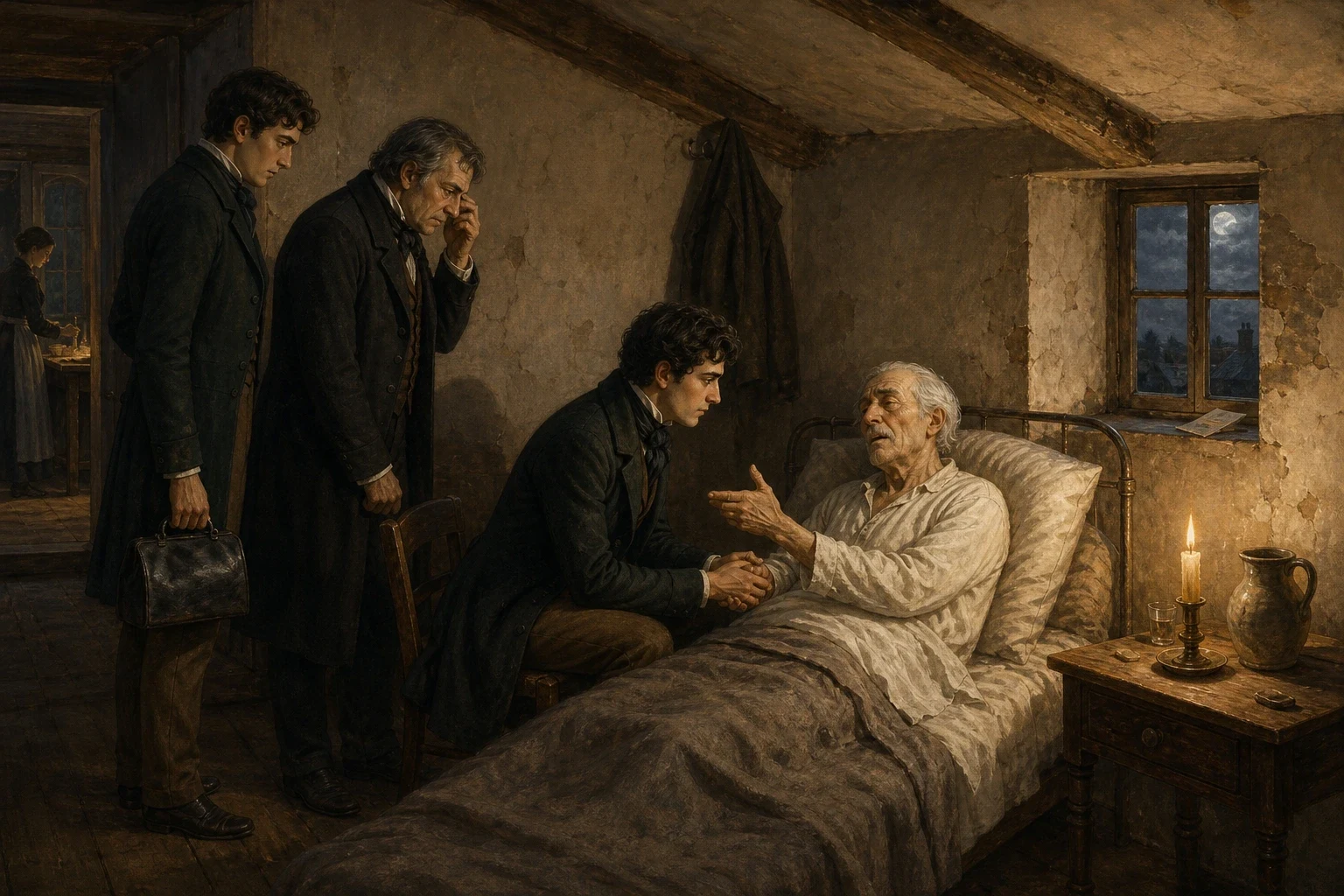
Worn out at last by years of secretly giving away everything he owned, Goriot collapsed after his two daughters quarreled bitterly over money in front of him one final time, each too wrapped up in her own trouble to notice what it cost him. He was carried up to his bare garret room and sank quickly. Rastignac and a friend sat with him through his last hours, while Goriot drifted between calling tenderly for Anastasie and Delphine and crying out bitterly that they had abandoned him. Word was sent to both their houses, but neither daughter came. He died still believing that if he only had money again, they would have loved him to the end.
Page 10
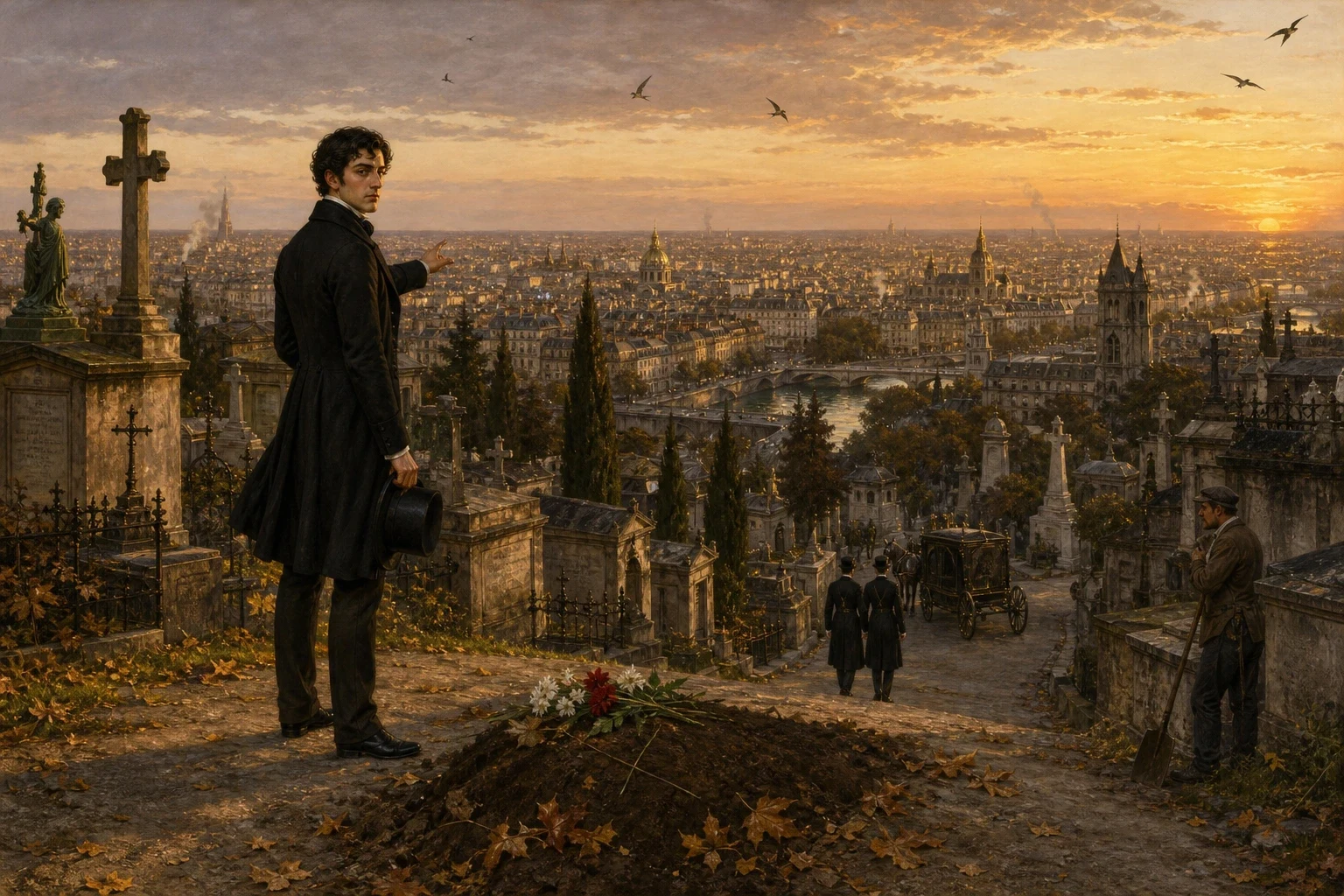
Goriot was buried at Père Lachaise cemetery, the cost paid quietly by Rastignac and his one true friend, with no mourner from his own blood — only a single footman sent from each daughter's house stood at the grave in their place. When the short, plain service ended, Rastignac climbed alone to the highest ground in the cemetery and looked down at the whole of Paris spread out below him in the evening light — the same city that held both the Restauds and the Nucingens, every salon that had shut its door on an old man's name. He wiped his eyes, and spoke to the city itself. Then he turned and walked down the hill toward it, to go and dine with Delphine.
About this story
- Audience: general readers
Read Wonder Novels on your phone
Wonder Novels is available on Android. Get Wonder Novels on Google Play.