Romance of the Three Kingdoms
A faithful retelling of the classic Chinese novel by Luo Guanzhong
Page 1
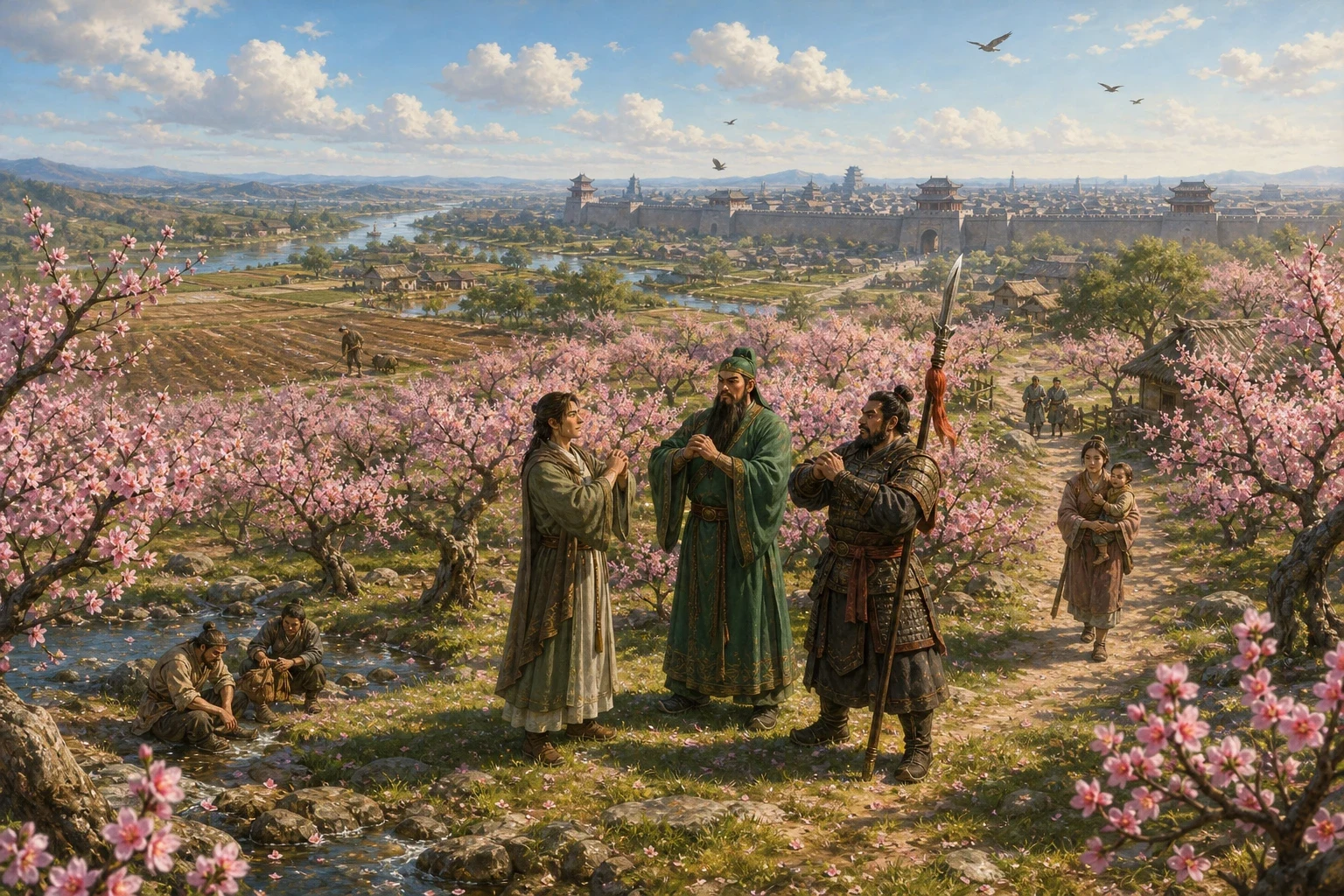
At the very end of the great Han Dynasty, the vast land of China found itself plunged into deep trouble. The Emperor's once-mighty power had weakened, and a widespread uprising known as the Yellow Turban Rebellion swept across the provinces, causing widespread chaos and despair. Honest, hardworking people suffered terribly, their homes and livelihoods threatened by the constant unrest. In response to this fracturing realm, strong, ambitious leaders began to emerge, each hoping to seize control and restore some form of order. It was in this turbulent time, filled with uncertainty and conflict, that three extraordinary men, driven by a shared sense of duty, met in a beautiful, blossoming peach garden. Liu Bei, a man known for his kindness and unwavering honor, nurtured a deep dream of restoring true peace and justice to the troubled empire. Here, he encountered Guan Yu, a mighty warrior whose loyalty was as legendary as his martial skill, and Zhang Fei, a fierce, passionate fighter overflowing with courage and a strong sense of right. As they sat beneath the fragrant peach trees, they spoke at length of the suffering people, the rampant injustice, and their shared, burning wish to help. Their hearts, once strangers, quickly united in a solemn purpose, and they decided to join forces, swearing an oath of brotherhood to face the immense challenges ahead as one family.
Page 2
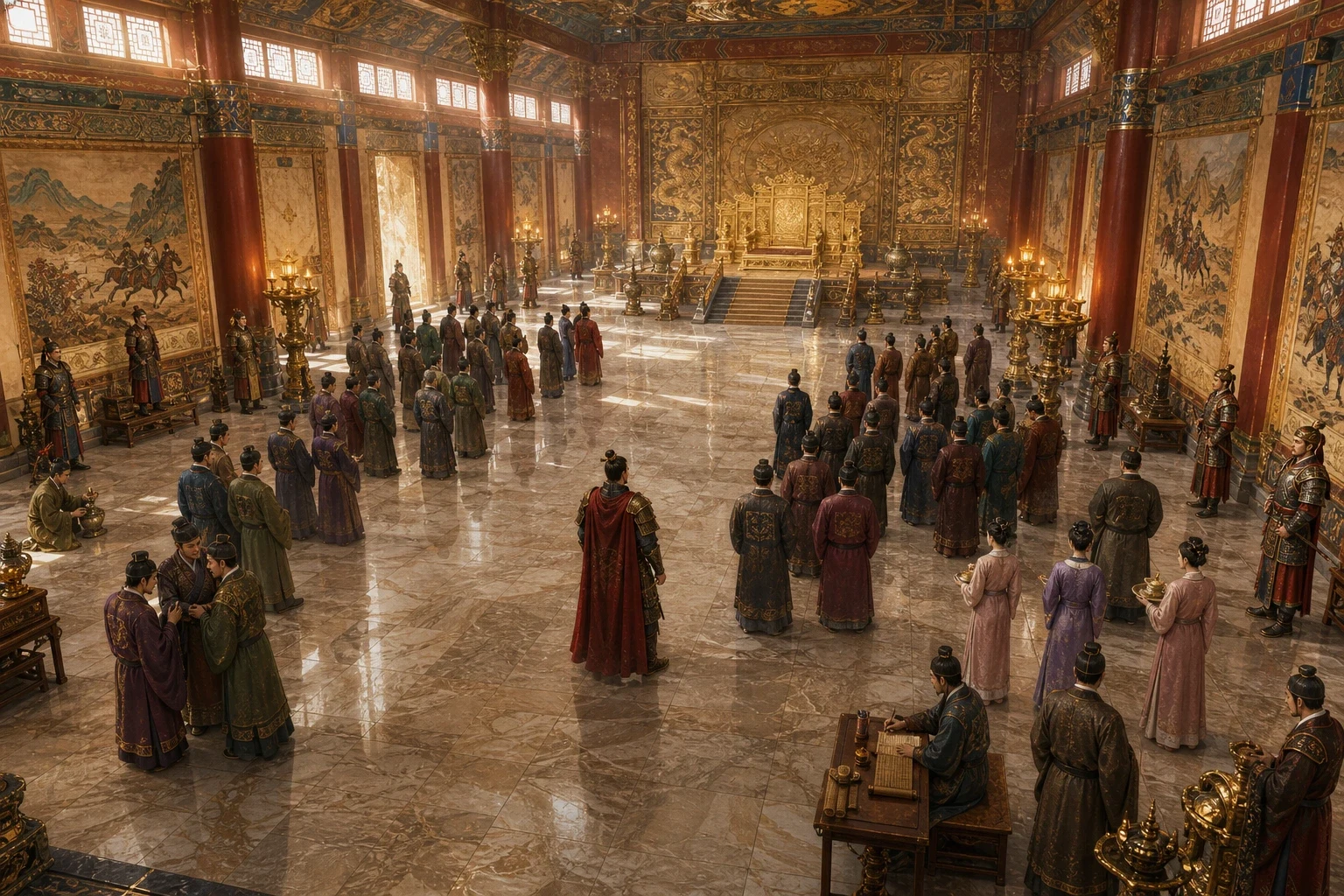
In the wake of the Yellow Turban Rebellion and the declining authority of the Han Emperor, a dark shadow fell over the Imperial Court. A notoriously cruel and ruthlessly ambitious minister named Dong Zhuo forcefully seized control, establishing his tyrannical grip within the grand palace in Luoyang. He held the young Emperor as little more than a puppet, pulling the strings of power to suit his own selfish desires. Dong Zhuo ruled with an exceptionally heavy hand, his every command bringing more suffering to the people and deeper fear to the hearts of honest officials. His power seemed absolute, and the imperial capital itself became a place of hushed whispers and terrified obedience. Many good men within the court trembled, completely unable to openly oppose the tyrant's iron will. From a distance, Cao Cao, a clever and increasingly ambitious warlord who had already begun to skillfully gather his own strength and loyal followers, observed these unfolding events with profound concern. He understood that the very soul of the empire was at stake, and that for the land to ever find lasting peace, Dong Zhuo's oppressive tyranny simply had to be brought to an end. The entire empire groaned under the immense weight of this cruel rule, desperately longing for a true hero to rise and bravely challenge the monstrous tyrant.
Page 3
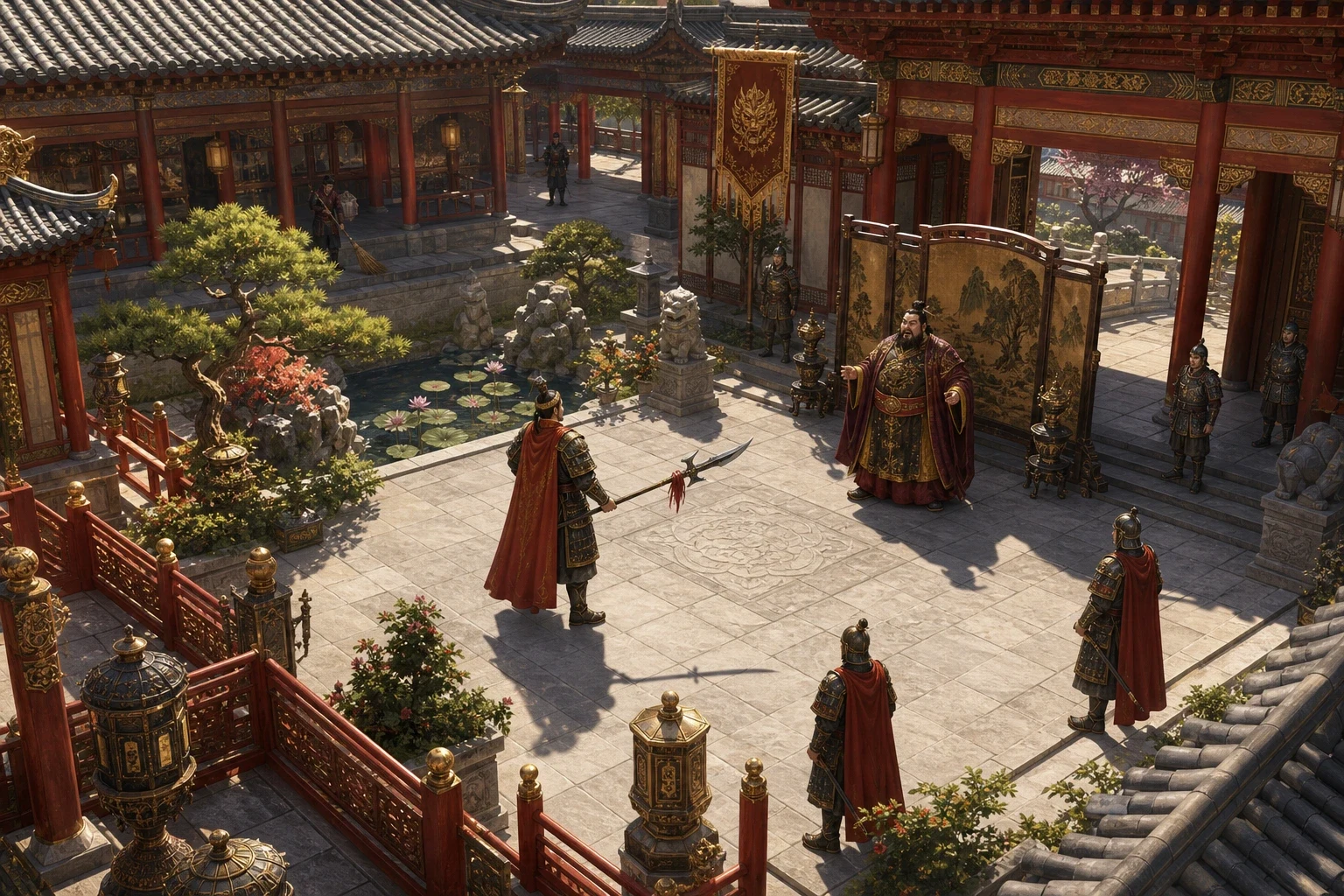
Dong Zhuo's cruel and oppressive reign, marked by injustice and fear, seemed to have no end, casting a long shadow over the Imperial Court and the entire empire. However, a clever and brave official named Wang Yun began to secretly weave an intricate plan to remove the tyrant from power. This daring scheme centered around Dong Zhuo's own powerful adopted son, Lu Bu, a warrior of immense strength and formidable skill, who was widely known for his fiery spirit and unpredictable temper. Though Lu Bu was loyal in his own way, he had privately grown increasingly weary of his foster father's endless tyranny and his disregard for human life. Wang Yun skillfully exploited this growing discontent, carefully manipulating events to turn the mighty Lu Bu against the very man who had adopted him. The climax arrived in a dramatic and decisive confrontation within the opulent confines of Dong Zhuo's own residence in Chang'an. There, before a hushed assembly, Lu Bu, his patience exhausted, finally defied his oppressive father. Dong Zhuo's tyrannical rule came to a swift and abrupt end, and across the land, people breathed a collective sigh of relief, though the dream of true peace and stable governance was still a distant horizon.
Page 4
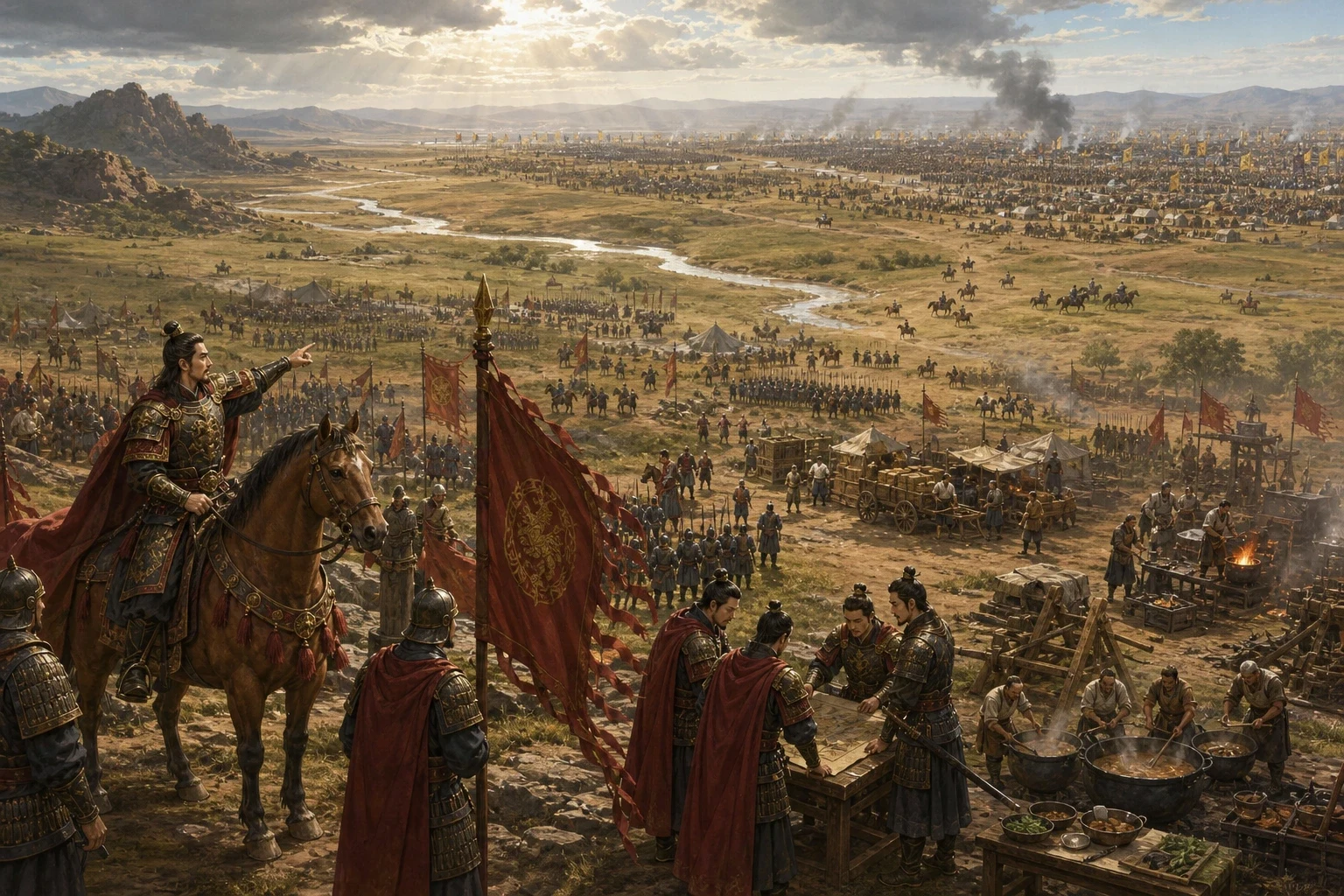
With the brutal tyrant Dong Zhuo finally removed from power, the vast land of China fractured even further. Many ambitious warlords, each commanding their own forces, rose up across the provinces, every one of them vying fiercely for control and dominance. Among these powerful figures, Cao Cao quickly distinguished himself as the most cunning, resourceful, and truly formidable. He steadily and strategically built his influence, patiently consolidating his power by conquering numerous smaller rivals and incorporating their territories and soldiers into his growing domain. His greatest and most dangerous challenge, however, came from Yuan Shao, another highly influential warlord who commanded an astonishingly vast army, far outnumbering Cao Cao's forces. The two great powers inevitably met on the wide, windswept plains of Guandu for a monumental clash that would decide the fate of the north. Despite facing overwhelming numerical odds, Cao Cao, with his exceptional military genius, employed brilliant strategy, daring tactics, and well-timed surprise attacks to cleverly outwit his overconfident opponent. In a decisive and historic clash, Yuan Shao's mighty army was thoroughly defeated and scattered, a monumental victory that firmly solidified Cao Cao's position as the undisputed strongest power in the entire north of China. The path toward a unified China seemed to narrow, with only a few dominant figures remaining, but the immense struggle for ultimate control was still far from its conclusion.
Page 5
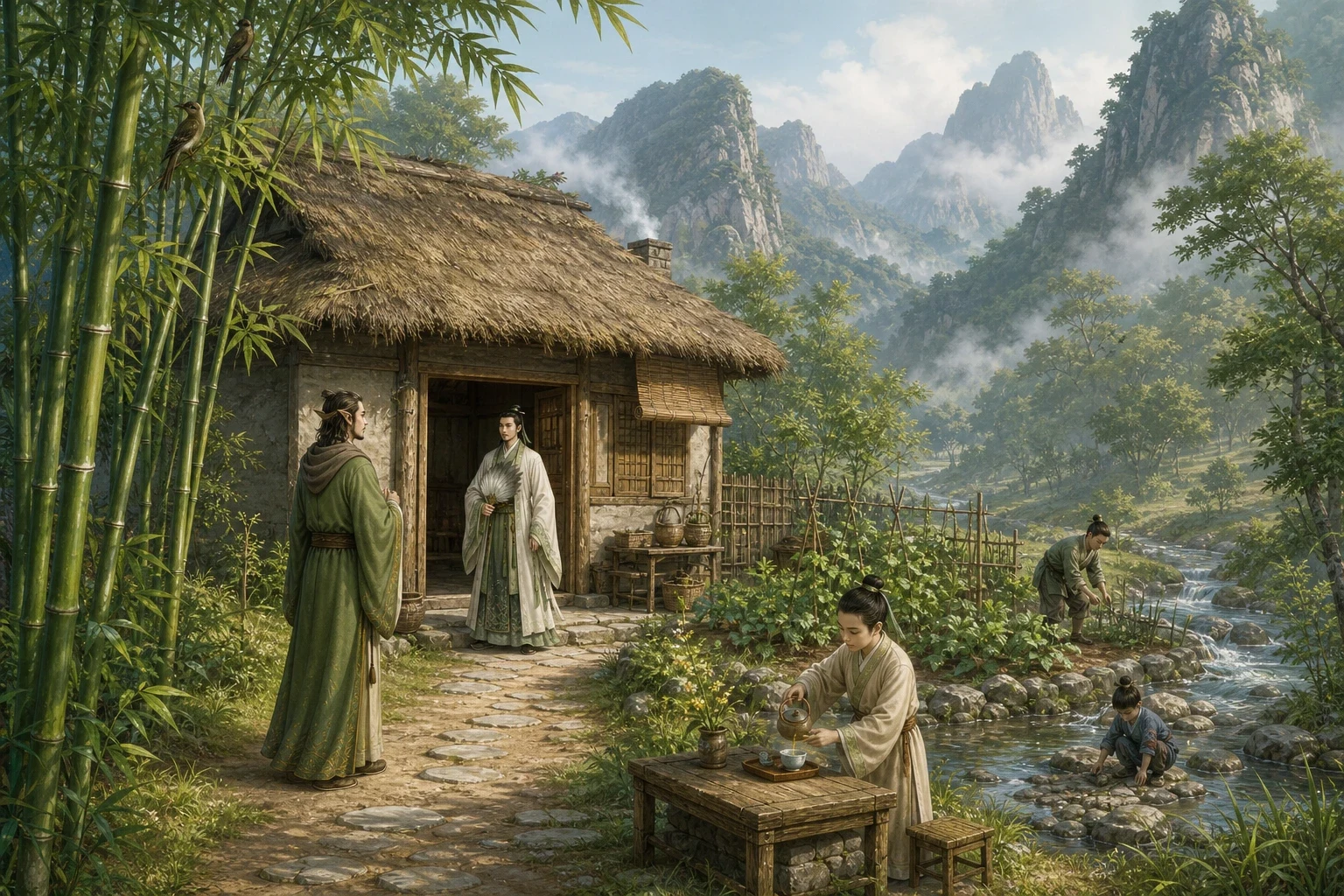
Despite his noble intentions and the loyalty of his sworn brothers, Liu Bei found himself facing many setbacks and trials, realizing he desperately needed the guidance of a truly brilliant strategist to advance his noble cause. He had heard persistent tales of Zhuge Liang, a remarkably young yet exceptionally wise and learned scholar who had chosen to live in peaceful seclusion on the picturesque Sleeping Dragon Ridge. Zhuge Liang was rumored to possess an unparalleled understanding of warfare, politics, and the workings of the heavens. Determined to recruit this legendary figure, Liu Bei, showing profound humility and respect, embarked on an arduous journey to make three personal visits to Zhuge Liang's humble thatched cottage. On his first two attempts, to his disappointment, he found the scholar absent, engrossed in his studies or wandering the mountains. Yet, Liu Bei's unwavering resolve and deep respect never faltered. On his third and final visit, after patiently waiting for a long time outside the cottage, Zhuge Liang finally appeared. Deeply moved by Liu Bei's extraordinary sincerity, his genuine respect, and the clear earnestness of his plea, Zhuge Liang at last agreed to leave his quiet, scholarly life. He pledged his brilliant mind and strategic genius to Liu Bei's grand quest to restore the noble Han Dynasty, marking a turning point in history.
Page 6
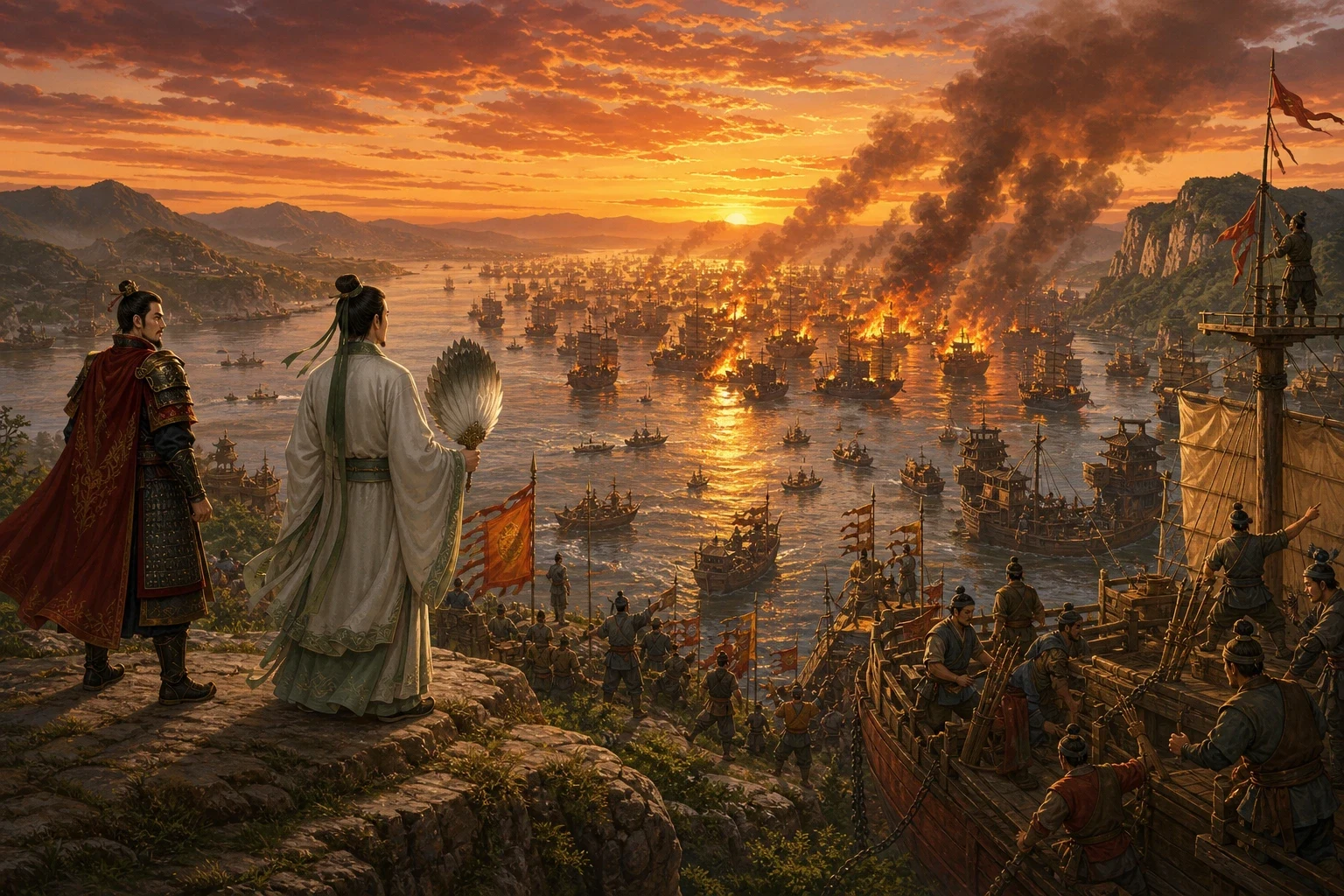
With the brilliant Zhuge Liang now by his side, Liu Bei faced his first truly immense challenge: Cao Cao's colossal army, which had swept down from the north, determined to conquer the entire land and unite it under his iron rule. Cao Cao commanded an enormous, seemingly invincible fleet of ships, stretching for miles across the wide Yangtze River, ready to overwhelm the south. Liu Bei, with his brave but smaller forces, allied with Sun Quan's kingdom of Wu, appeared hopelessly outmatched against such a vast power. However, Zhuge Liang, with his unparalleled strategic genius and his ability to read the signs of nature, devised an ingenious and daring plan. He predicted the rare change in wind direction to an east wind, and at the opportune moment, the allied forces launched their brilliant, fiery surprise attack. Cao Cao's tightly linked ships, caught entirely unaware, were swiftly engulfed in a sea of roaring flames, turning his mighty fleet into a blazing inferno. This devastating event scattered his vast army in a monumental and irreversible defeat. It was a victory that fundamentally changed the course of history, saving the south from Cao Cao's absolute grasp and irrevocably marking the true beginning of the era of the Three Kingdoms.
Page 7
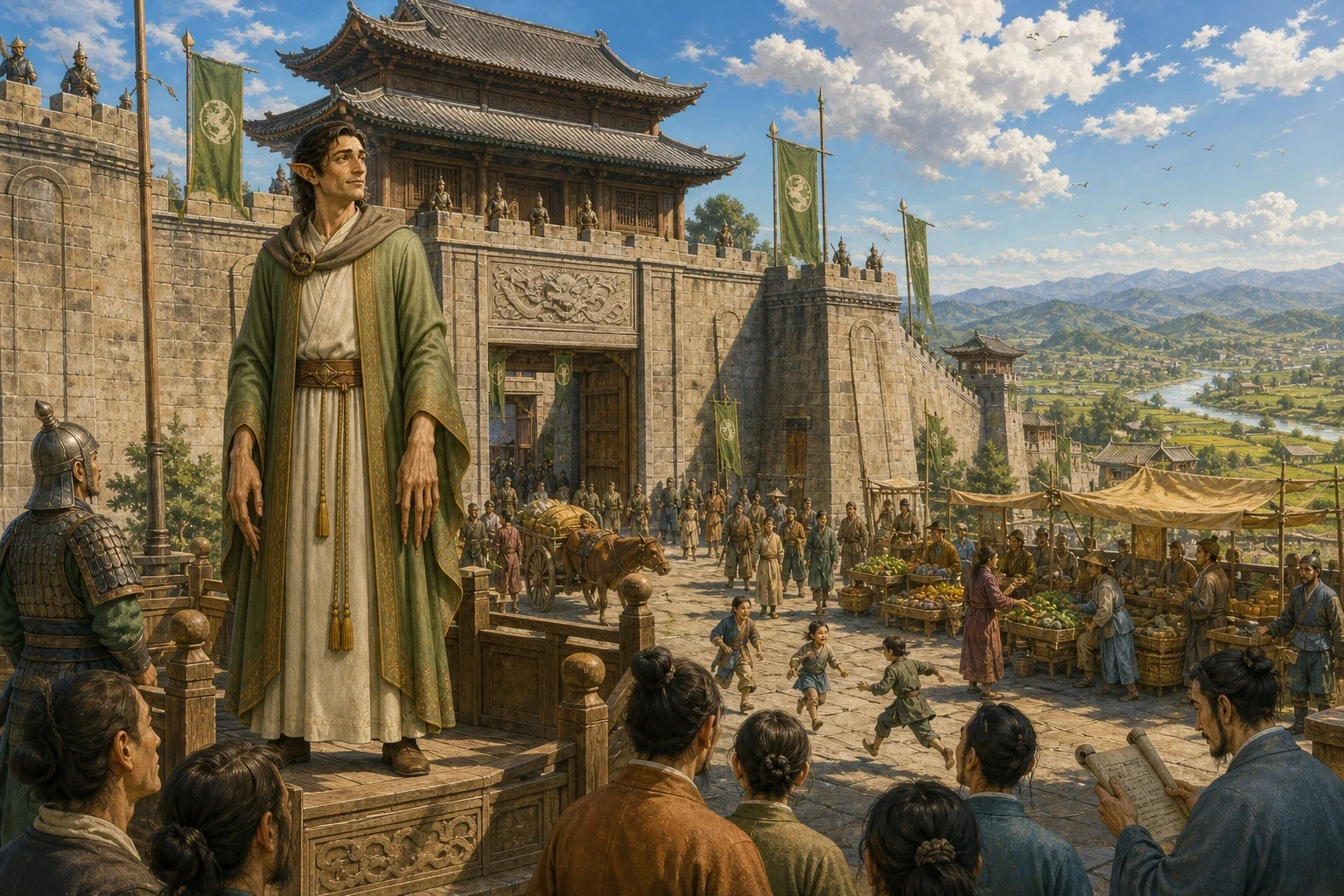
Following the great and decisive victory at the Battle of Red Cliffs, the political landscape of China was irrevocably altered. The land was no longer a single, unified empire under the declining Han Dynasty. Instead, three formidable and distinct powers began to firmly take shape, each asserting its dominance over a different region. In the north, Cao Cao's strong and militarily powerful kingdom of Wei held sway, consolidating its vast territories. To the east, along the fertile Yangtze River, lay Sun Quan's prosperous and naval-focused kingdom of Wu, rich in resources and skilled sailors. And in the west, Liu Bei, with the brilliant and tireless help of Zhuge Liang, steadily expanded his territory into the rich, mountainous lands of Shu. Through strategic campaigns, he successfully captured the vital and economically important city of Chengdu, establishing it as the grand capital of his new and hopeful kingdom, Shu Han. For a significant period, the vast land remained divided, each kingdom strong in its own right, fiercely independent and vying for supremacy. The complex and long-standing struggle for ultimate control and the dream of true reunification continued, shaping the destiny of an entire generation.
Page 8
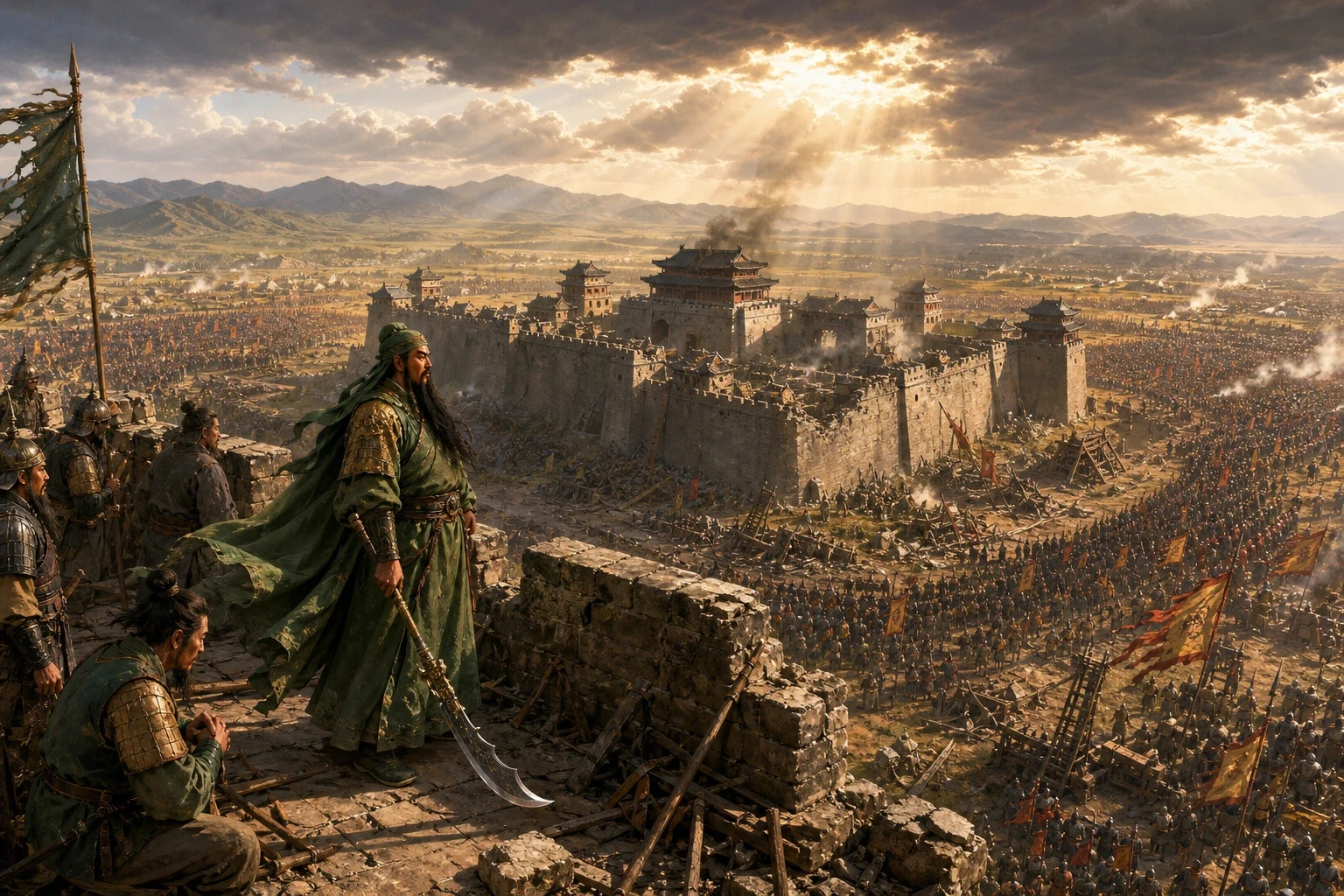
For many long and bloody years, the three great kingdoms of Wei, Shu Han, and Eastern Wu engaged in a continuous struggle for dominance, each seeking to unite the land under its own banner. During this time, Guan Yu, the revered and loyal sworn brother of Liu Bei and Zhang Fei, served as a fearsome and highly respected general, defending a crucial territory for the kingdom of Shu Han. His legendary bravery and martial prowess were known across the land. However, through a cunning and unexpected strategy devised by Sun Quan's forces of Eastern Wu, Guan Yu found himself isolated, cut off, and hopelessly surrounded and outnumbered at the strategic fortress of Maicheng. Despite fighting with incredible valor and leading his remaining loyal troops with unwavering courage against overwhelming odds, he was eventually overcome and captured by the relentless enemy forces. His tragic loss was an absolutely terrible and devastating blow to Liu Bei and Zhang Fei, who received the news with profound grief and mourned their beloved brother deeply. This profound sorrow not only tested the unbreakable bond of their brotherhood but also fueled a burning desire for justice and revenge, setting the stage for further conflict.
Page 9
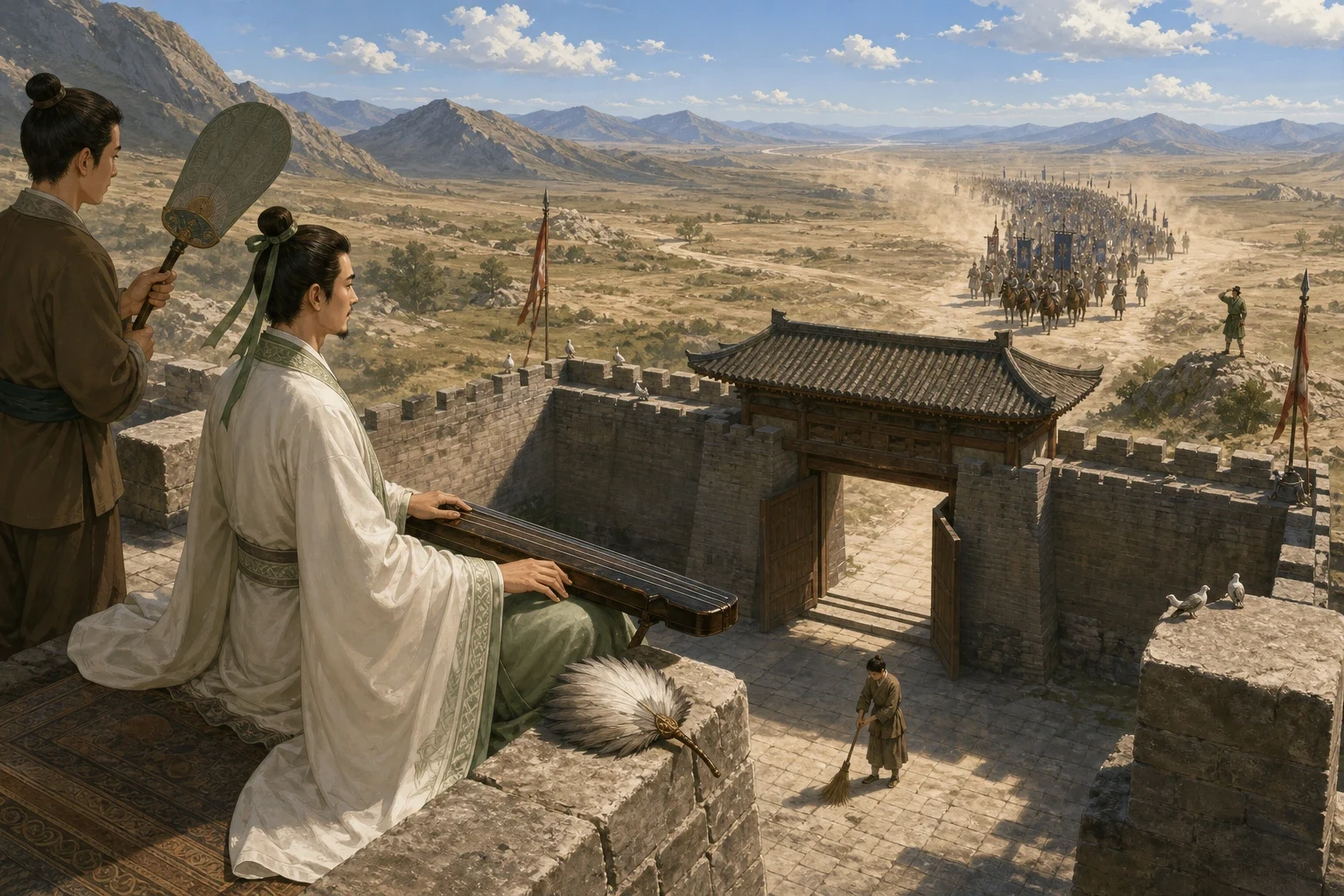
After Liu Bei's passing, Zhuge Liang became the regent of Shu Han, dedicating himself to the dream of unifying China under a just rule. He launched several Northern Expeditions against Cao Cao's powerful kingdom of Wei. During one such campaign, Zhuge Liang found himself in a desperate situation: a large Wei army was rapidly approaching a fort he held, but most of his own soldiers were away on other tasks. Instead of fleeing, Zhuge Liang famously employed the 'Empty Fort Strategy.' He ordered the gates thrown open and sat calmly on the city wall, playing his guqin. The Wei general, fearing a trap, ordered his army to retreat, tricked by Zhuge Liang's incredible cleverness. It was a victory of wits over brute force.
Page 10
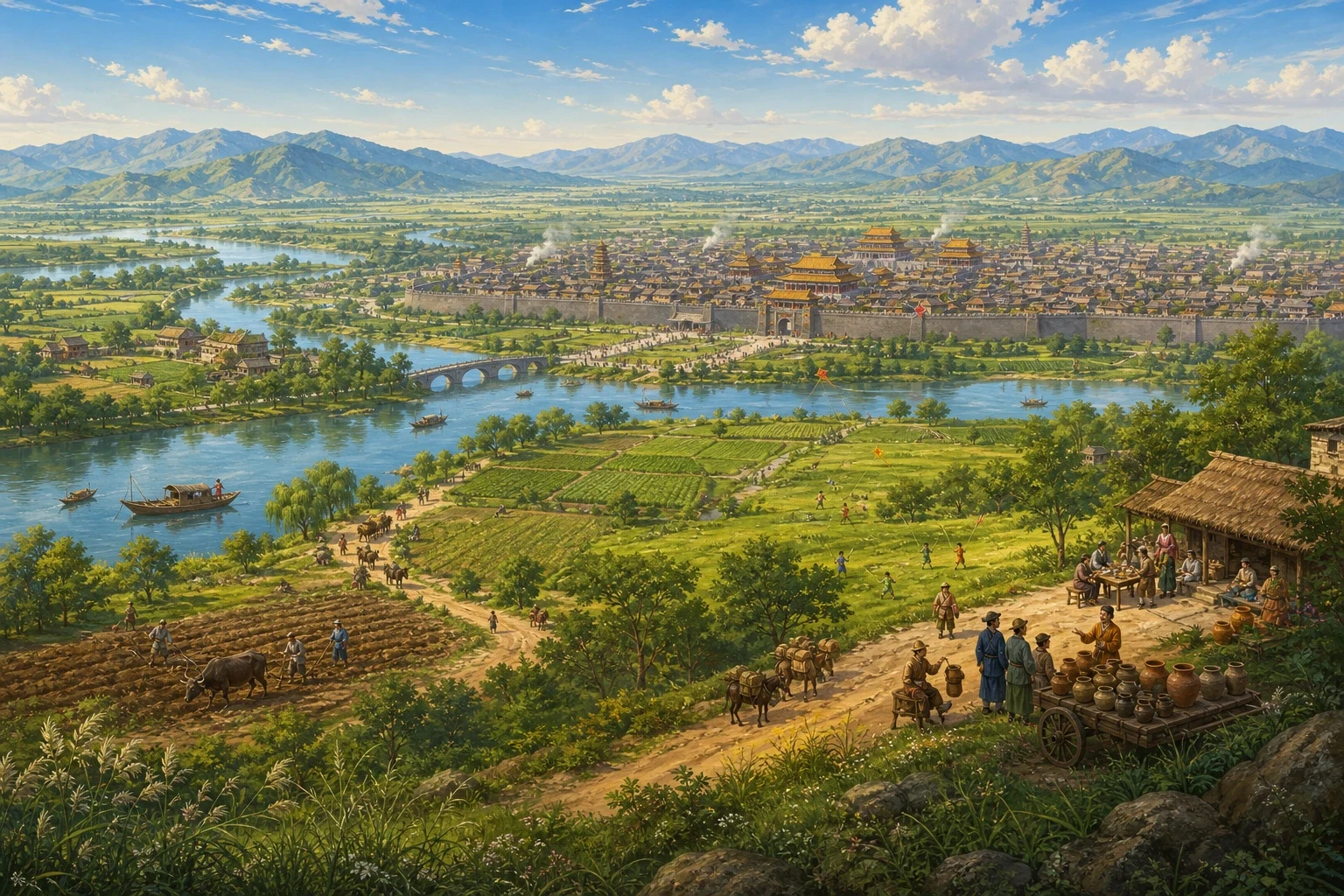
After many long decades filled with heroic struggles, brilliant cunning strategies, and countless fierce battles, the tumultuous era of the Three Kingdoms finally drew to its inevitable close. The once-mighty kingdoms of Cao Wei, Shu Han, and Eastern Wu, which had dominated the vast land for so many years and witnessed the rise and fall of countless heroes, all eventually faded into the annals of history. The grand cycle of division and unity, a recurring theme throughout the long and rich history of China, once again turned, bringing an end to the prolonged period of fragmentation. A powerful new dynasty, known as the Jin, skillfully rose to power, and under its unified rule, the entire central plains were at last reunited, bringing peace and stability back to the war-weary land. The long and arduous struggle for dominance, the unbreakable brotherhoods that had been forged in fire, and the immense sacrifices made by countless individuals—all these became an enduring and cherished part of the empire's grand story, forever reminding future generations of the extraordinary heroes and their epic deeds that had shaped its ultimate destiny.
About this story
- Audience: kids (ages 6–12)
Read Wonder Novels on your phone
Wonder Novels is available on Android. Get Wonder Novels on Google Play.