The Home and the World
A woman's awakening, a nation's turmoil, and the true cost of freedom
Page 1

Raja Nikhil was a man of modern thought, living in an ancient palace. He believed that his wife, Bimala, should not remain confined to the zenana, the women's quarters, but should step out into the wider world. He loved Bimala deeply, not as a possession, but as an equal, and longed for her to experience the world's richness. Bimala, however, found comfort and duty in tradition. Her days were spent overseeing the household, her world bounded by the palace walls. She had known no other way, and the thought of stepping beyond her accustomed world, though tempting, filled her with a subtle apprehension. Yet, Nikhil's gentle persistence and his vision of a shared life slowly began to plant seeds of curiosity within her heart.
Page 2

One day, Sandip, a charismatic leader of the Swadeshi movement, arrived at the palace. Nikhil, ever hospitable, welcomed him as a guest and a fellow intellectual, keen to hear his views on the nation's future. Bimala, who had recently ventured to meet guests in the outer chambers at Nikhil's gentle urging, was formally introduced. Sandip possessed a compelling presence, his words flowing with passion and conviction, speaking of India's freedom, the power of its people, and the glory of self-sacrifice. Bimala, accustomed to the quiet philosophical discussions of her husband, found herself mesmerized by his fiery oratory. His idealism ignited a spark within her, a desire to be part of something grander, a world beyond the palace walls that Nikhil had always encouraged her to see. Sandip, noticing her rapt attention and the nascent desire in her eyes, directed his gaze and his most fervent arguments towards her, subtly drawing her into his magnetic sphere, subtly planting seeds of a new kind of loyalty.
Page 3
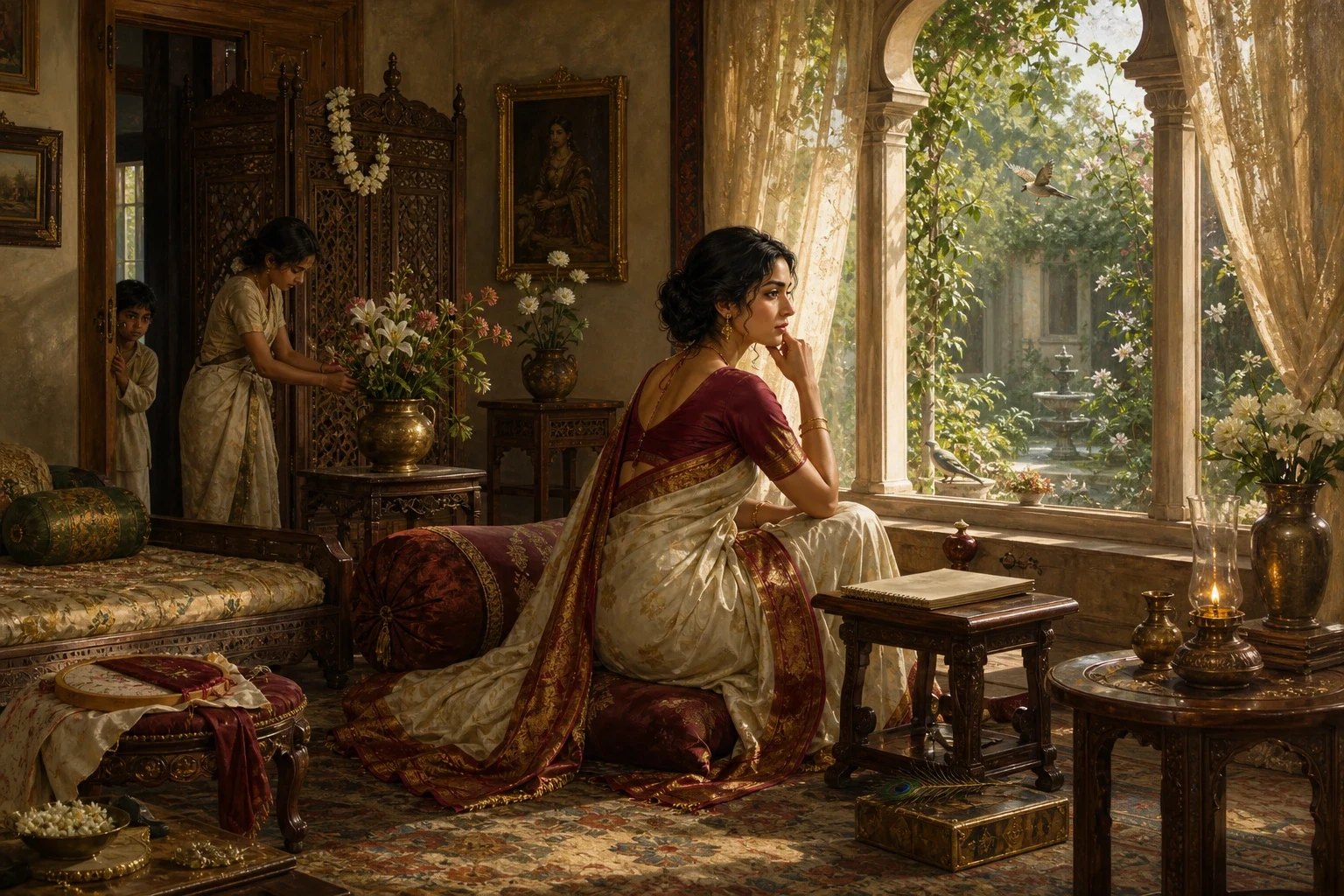
After meeting Sandip, Bimala found her peaceful internal world profoundly shaken. She retreated to her private chambers, a haven of quiet reflection, her mind ceaselessly replaying Sandip's fervent words, his passionate appeals for the motherland. The ideals of Swadeshi, of self-reliance and national pride, resonated with a dormant part of her spirit, stirring a longing she hadn't known she possessed. She felt a powerful sense that her life had been too small, too confined by tradition, and too focused on personal contentment. Nikhil's gentle encouragement to embrace the world, once abstract, now seemed to find its tangible purpose through Sandip's fiery call for action. Was this the 'world' Nikhil spoke of? A world of fervent action and national service, not just quiet contemplation. A profound longing grew within her, a desire to break free from the invisible chains of custom and prove her worth, not just as Nikhil's wife, but as a woman capable of grand deeds for a greater cause.
Page 4
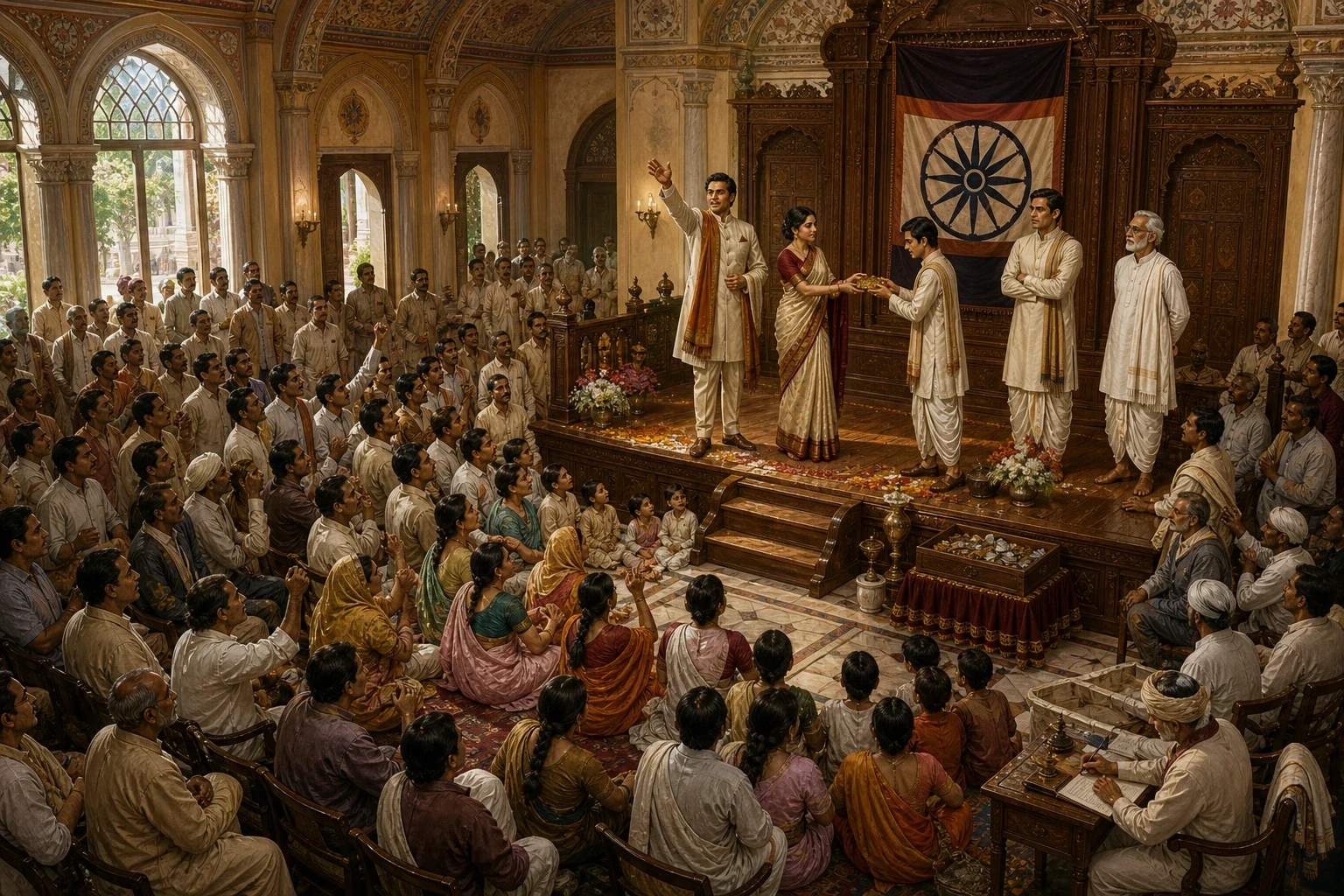
Sandip began to hold public meetings in the palace assembly hall, addressing not only the educated elite but also the common villagers, drawing them into the fervent embrace of nationalism. His speeches were electrifying, delivered with captivating rhetoric, full of impassioned calls to reject foreign goods, embrace swadeshi, and reclaim India's dignity. He spoke of Mother India, awakening her sleeping children, demanding their unwavering loyalty and sacrifice. Bimala, now a fervent supporter, sat proudly by his side on the dais, her presence a potent symbol of the Raja's implicit endorsement, captivating the crowd. Swept up in the fervor, and in a grand gesture of devotion to the cause, she publicly removed her precious gold bangles and a heavy necklace, offering them to the movement's funds. The crowd roared with approval, seeing her act as a profound sacrifice and a rallying cry, deepening their commitment to Sandip's powerful vision.
Page 5
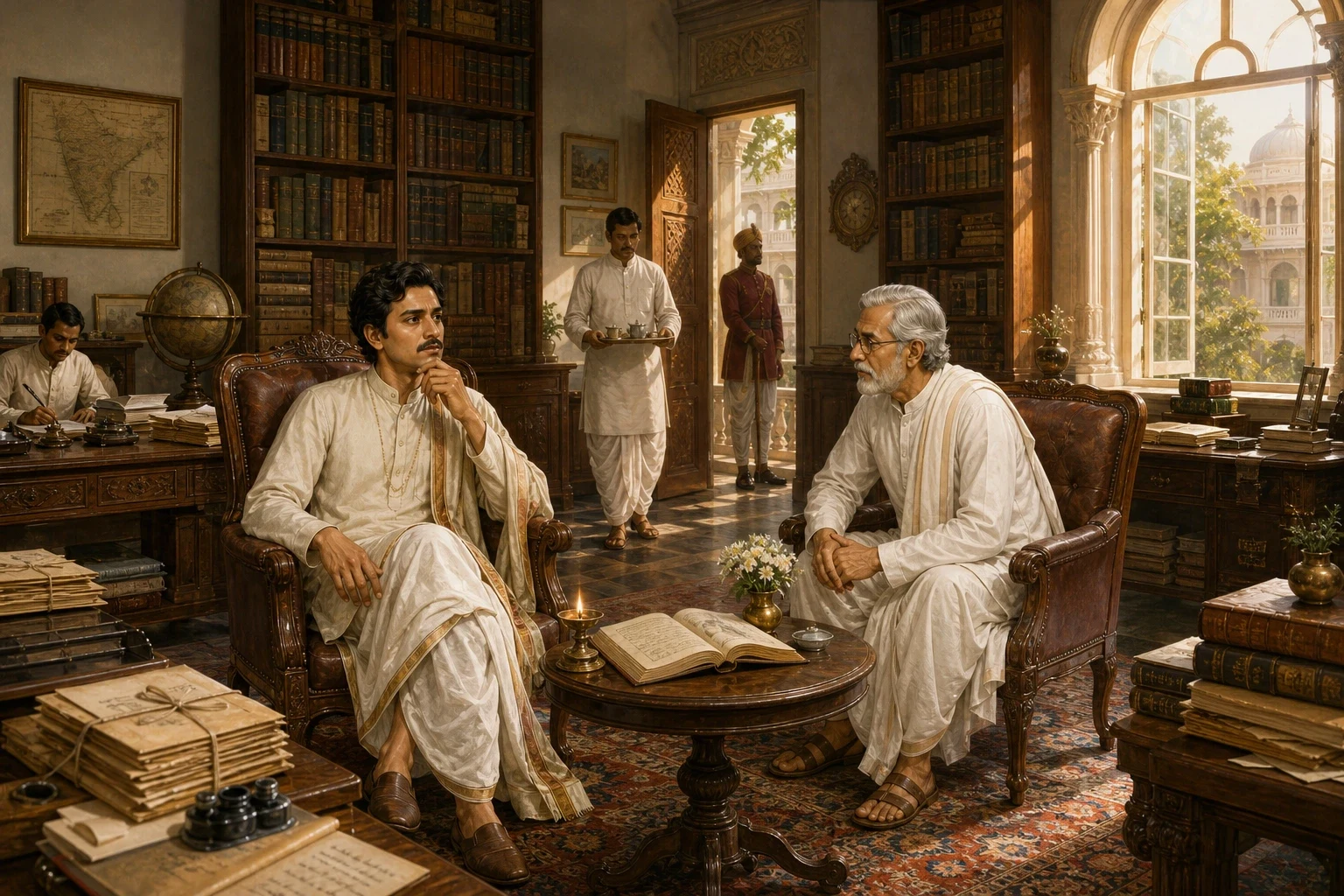
While Bimala was swept up in the emotion of the movement, Nikhil remained in his study, grappling with the profound philosophical implications of Sandip's increasingly coercive methods. He frequently discussed his deep concerns with his old tutor, Chandranath Babu, a man of profound wisdom and unwavering moral compass. Nikhil believed in true freedom and genuine self-rule, but not at the cost of truth or through manipulative coercion. He saw how Sandip was skillfully manipulating raw emotions, not awakening true understanding or reason, and how his fiery rhetoric was beginning to sow dangerous seeds of division rather than fostering unity among the people. The thought of Bimala's naive trust in Sandip, and her growing emotional distance from his own gentle ideals, caused him deep, internal sorrow. He knew he could not forbid her, for freedom, even the freedom to make mistakes, was essential to growth. But the path Sandip was leading them down filled him with a powerful sense of foreboding, a premonition of darker times ahead.
Page 6

The idealistic fervor of the Swadeshi movement that gripped the palace soon began to manifest in increasingly coercive ways in the nearby villages. In the bustling market square, Sandip's young and zealous followers, prominently led by Amulya, started enforcing strict rules with an air of unquestionable authority. Villagers were pressured, sometimes outright forced, to buy only locally made goods, regardless of their quality or cost, and to boycott all foreign products entirely. Those who dared to resist faced public shaming, confiscation, or worse, a subtle threat lingering in the air. The vibrant market, once a place of free and easy exchange, now buzzed with an uncomfortable undercurrent of tension and fear. Farmers struggled desperately to sell their produce, and ordinary people found their livelihoods disrupted, their choices dictated by a movement that had begun with inspiring promises of liberation. The early joy of nationalism was visibly giving way to deep resentment and widespread hardship among the common folk.
Page 7
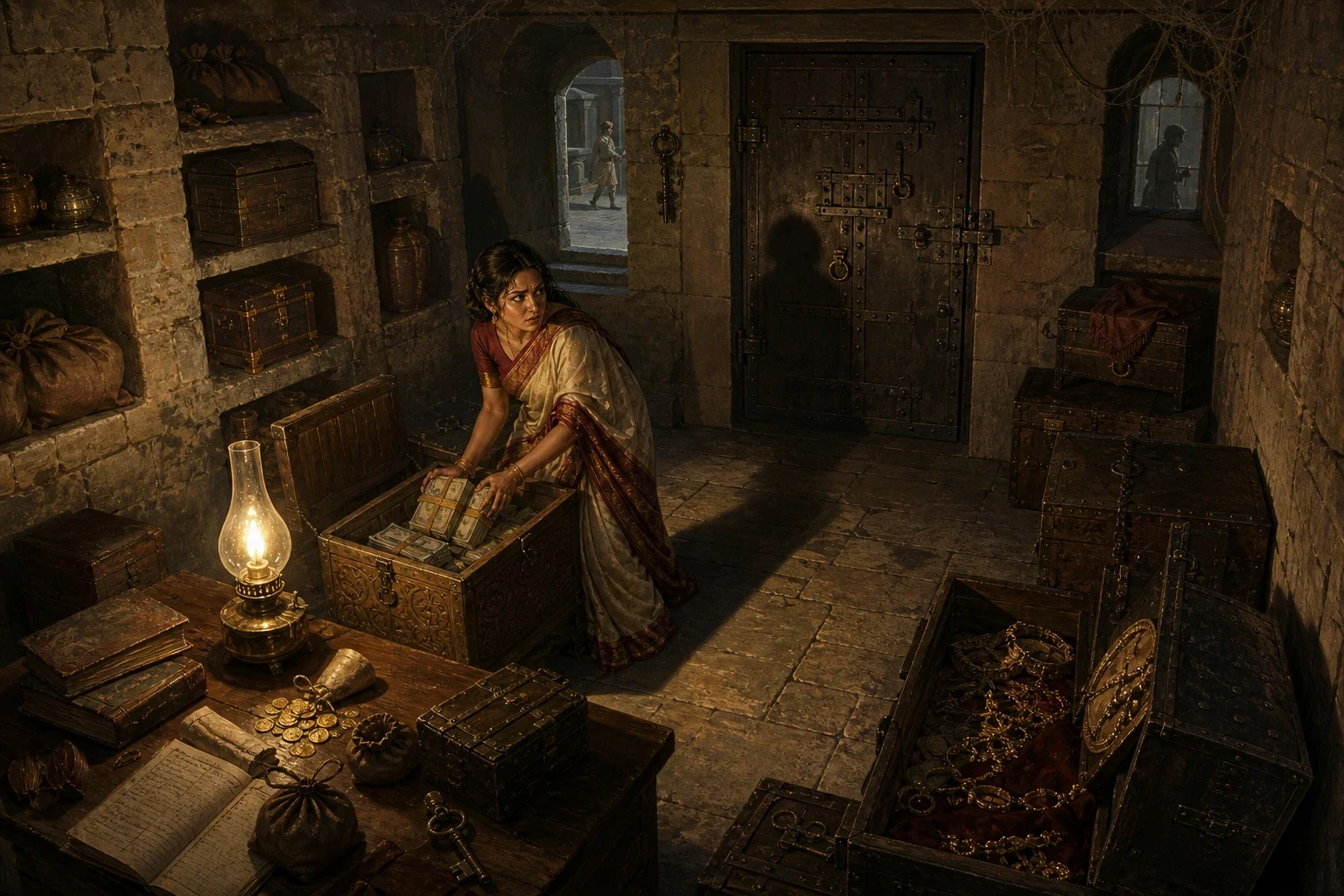
Sandip's demands for funds grew ever more insistent as the movement struggled to sustain itself, draining Nikhil's generous contributions. Bimala, still convinced that she was serving a higher cause and desperate to maintain Sandip's approval, found herself pushed to an unimaginable, illicit act. One night, filled with a complex mix of fervent belief, gnawing guilt, and a desperate fear of disappointing Sandip, she slipped silently into Nikhil's private treasury. The heavy, cold air of the vault, thick with the scent of old papers, metal, and forgotten wealth, pressed down on her as she hesitated, her breath catching. Her heart pounded a frantic, deafening drumbeat of betrayal against her ribs. She took a significant sum of money, rationalizing the theft as a necessary sacrifice for Mother India, for the urgent needs of the cause. But as she hurried away, clutching the stolen bundles, the true weight of her deed, a profound betrayal of the man who loved her unconditionally, began to settle in her soul, heavy and cold as the coins she carried.
Page 8
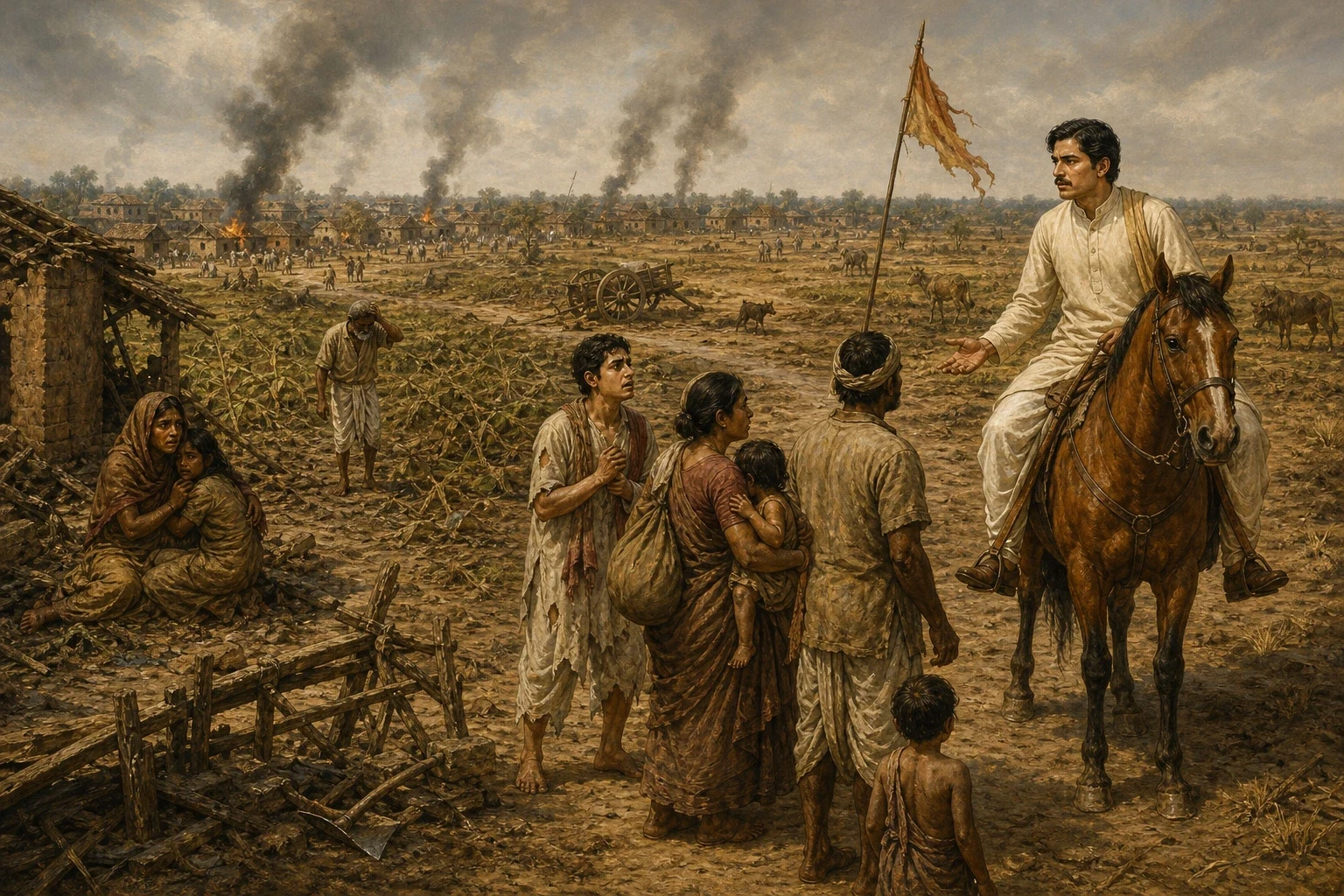
Sandip's divisive rhetoric, which had initially rallied powerful support, now spiraled tragically out of control, igniting widespread communal unrest and dissolving the fragile peace. The harmony between different communities shattered, leading to pervasive turmoil and devastation. Villages were plunged into upheaval, shops looted of their meager wares, homes damaged or abandoned, and countless people were driven in fear from their ancestral fields and livelihoods. Nikhil, witnessing the mounting chaos and the suffering of his tenants, left the relative safety of the palace, his heart aching with a profound sense of responsibility. He rode out into the vast, open fields bordering a Muslim village, desperately trying to bring calm and protect the innocent caught in the devastating crossfire of hatred. He found Amulya among the disoriented, terrified villagers, now witnessing firsthand the destructive consequences of the movement he had so passionately supported. The young man's fervent idealism had crumbled to dust, replaced by horror and deep regret at the devastation Sandip's selfish actions had wrought upon the very people they claimed to serve.
Page 9

The harsh truth of Sandip's character finally, brutally revealed itself to Bimala. He had used her, used Nikhil's resources, and stirred up a dangerous storm only to abandon it when it became too perilous for his own comfort. As the communal violence escalated outside the palace walls, Sandip, ever the opportunist and self-preserver, made preparations to flee, leaving the chaos he had ignited behind. Bimala confronted him in his rooms, now in disarray as he hurriedly packed his belongings. Her heart, once so full of adoration and blind loyalty, was now heavy with bitter disillusionment and a profound sense of betrayal. He admitted his cynical motives without remorse, declaring his true gods to be 'power' and 'self-interest', not the idealized Mother India he had so eloquently preached. The charismatic orator, the fiery leader, dissolved before her eyes into a calculating, self-serving man. Bimala saw him for what he truly was: a hollow, false idol. Her grand awakening had led to a profound and agonizing realization of her own folly, her misplaced trust, and the true, unwavering, selfless love of her husband, Nikhil.
Page 10

As dusk settled softly over the palace gardens, casting long, fading shadows, Bimala waited with a heavy, anxious heart. News had arrived that Nikhil, while trying to protect his people from the spreading unrest and communal violence, had been hurt and was currently being brought back to the palace. Her heart, once so proud and misguided by false ideals, was now filled with a profound remorse for her actions and a deep, aching love for her husband, a love she had taken for granted. Chandranath Babu sat silently beside her on the stone bench, offering quiet, compassionate comfort, his presence a steady anchor. The tumultuous world outside, which she had so eagerly sought and that had promised liberation, had ultimately brought her chaos, pain, and bitter disillusionment. Yet, paradoxically, it had also brought her a clear, agonizing understanding of true devotion, selfless sacrifice, and the quiet strength of genuine love. She finally realized that Nikhil’s gentle, unwavering affection, his principled stance, and his quiet strength, represented the real freedom, the true 'world' she had always needed. Now, all she could do was wait, her awakened spirit longing for his safe return, praying with every fiber of her being for the man who had always loved her for who she truly was, not for what she could be used for.
About this story
- Audience: general readers
Read Wonder Novels on your phone
Wonder Novels is available on Android. Get Wonder Novels on Google Play.