The Queen of Spades
A secret of three cards, a desperate young man, and a night at the gambling table
Page 1
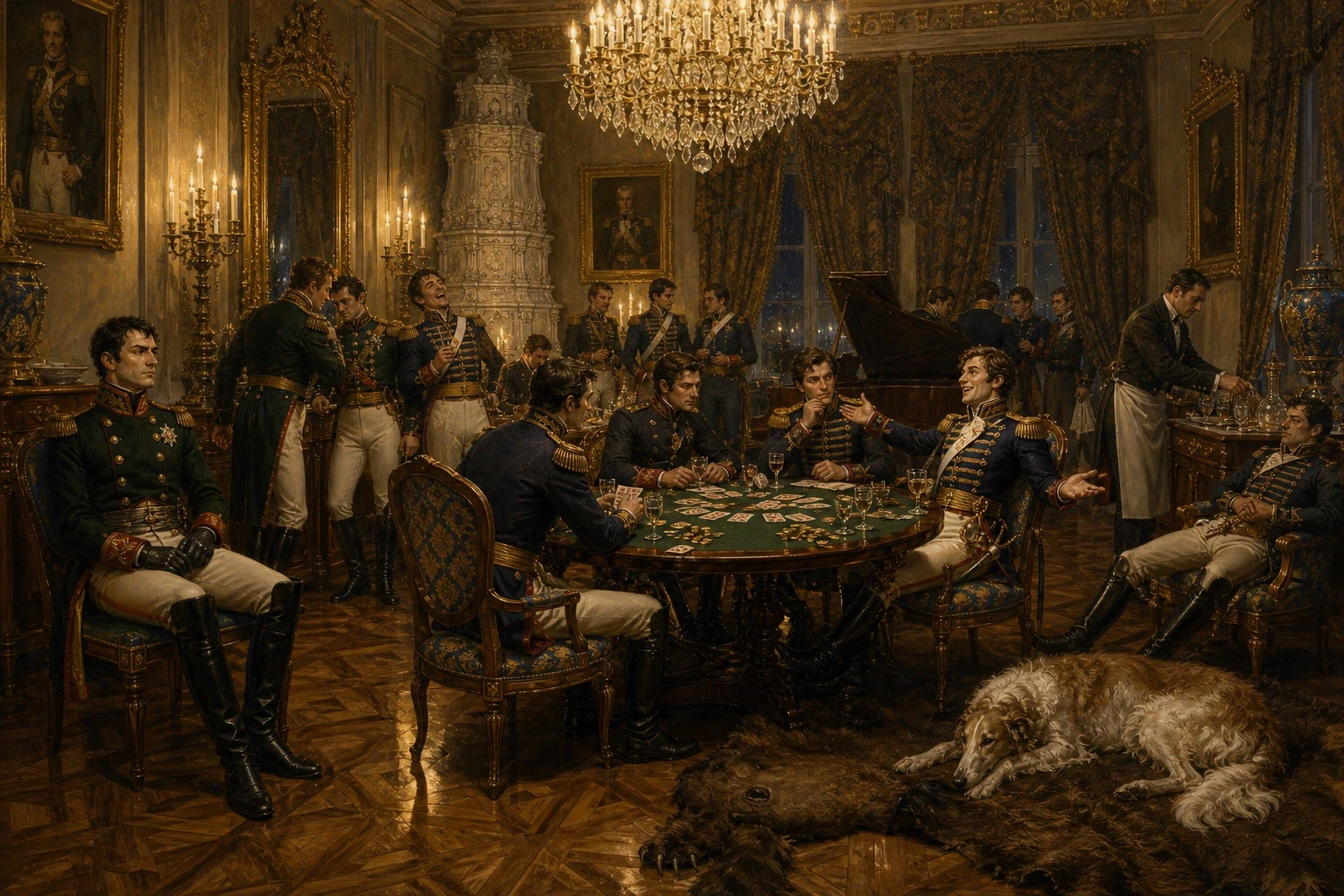
The snow fell thick on the St. Petersburg streets, but inside Officer Narumov’s apartments, the night was long. A group of young men gambled until dawn. One officer, Hermann, did not play. The son of a German, he had a small inheritance which he would not risk, and he sat and watched, his face grim. Near dawn, Tomsky told a story. “My grandmother,” he said, “the Countess Anna Fedotovna, once lost a fortune at cards in Paris. She was saved by the Count of St. Germain. He told her a secret—the three cards that are certain to win.” The other men laughed, demanding to know the cards. “That is the secret,” Tomsky said with a shrug. “She told it once to a man named Chaplitsky, and he won back everything he had lost.” Hermann leaned forward, his dark eyes fixed on the storyteller. “You are joking,” he said, his voice quiet. Tomsky shook his head. “I swear it is true.”
Page 2
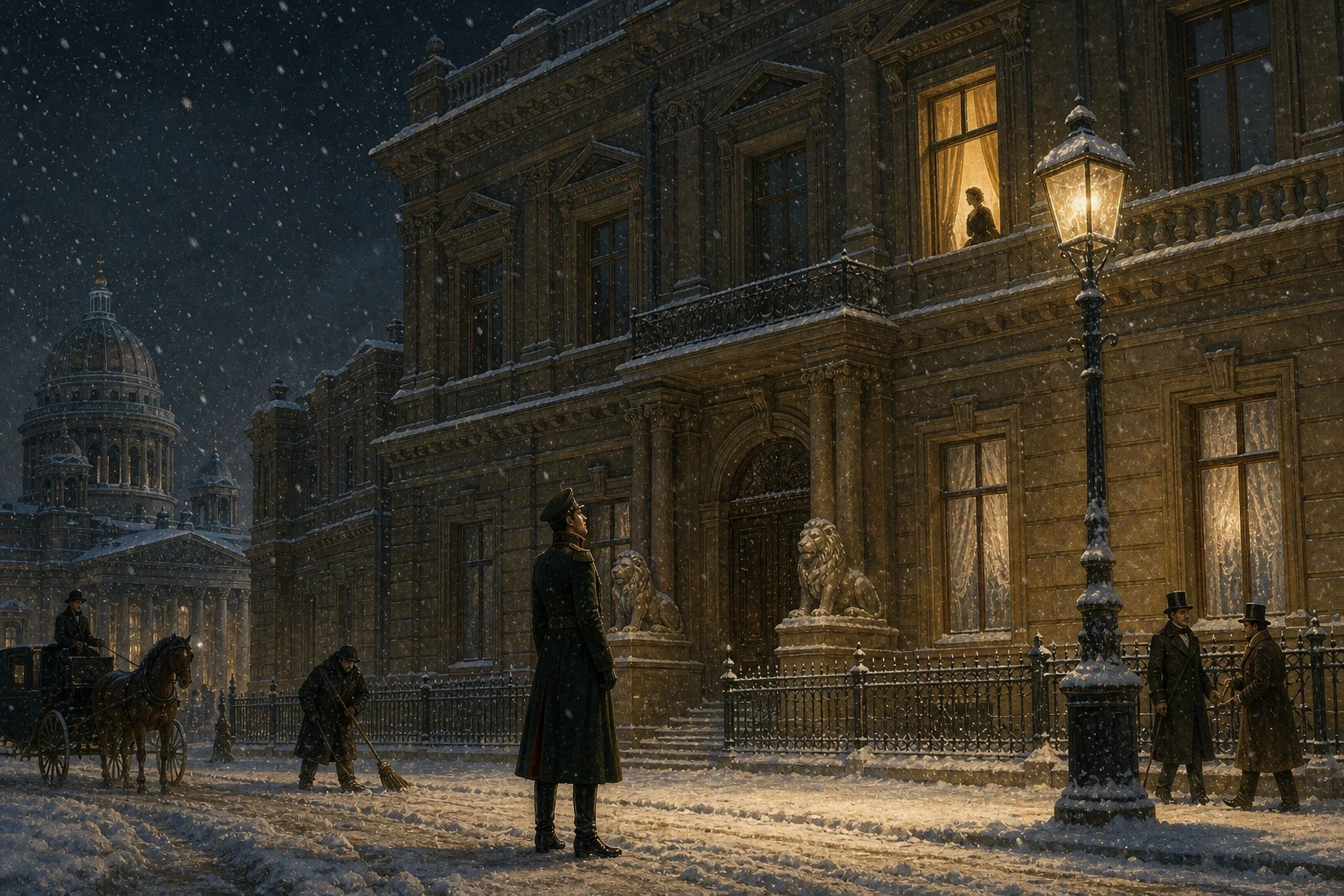
Hermann became a man possessed. The secret of the three cards was all he could think of. How could he learn it? He had to get to the old Countess. Soon he found himself standing night after night across the street from her great, cold mansion. He would stare up at the windows for hours, imagining the wealth and power the secret could give him. One evening, he saw a young woman’s face at a window. It was Lizaveta Ivanovna, the Countess's unhappy ward. She was pretty, and her expression was sad. An idea formed in Hermann’s mind. He was not a romantic man, but he knew how to act like one. He muttered to himself, watching her light go out. “She is the key. I will use this girl to get into the house.” He stood for another hour in the freezing cold. “The secret will be mine,” he promised the silent building. “One way or another.”
Page 3
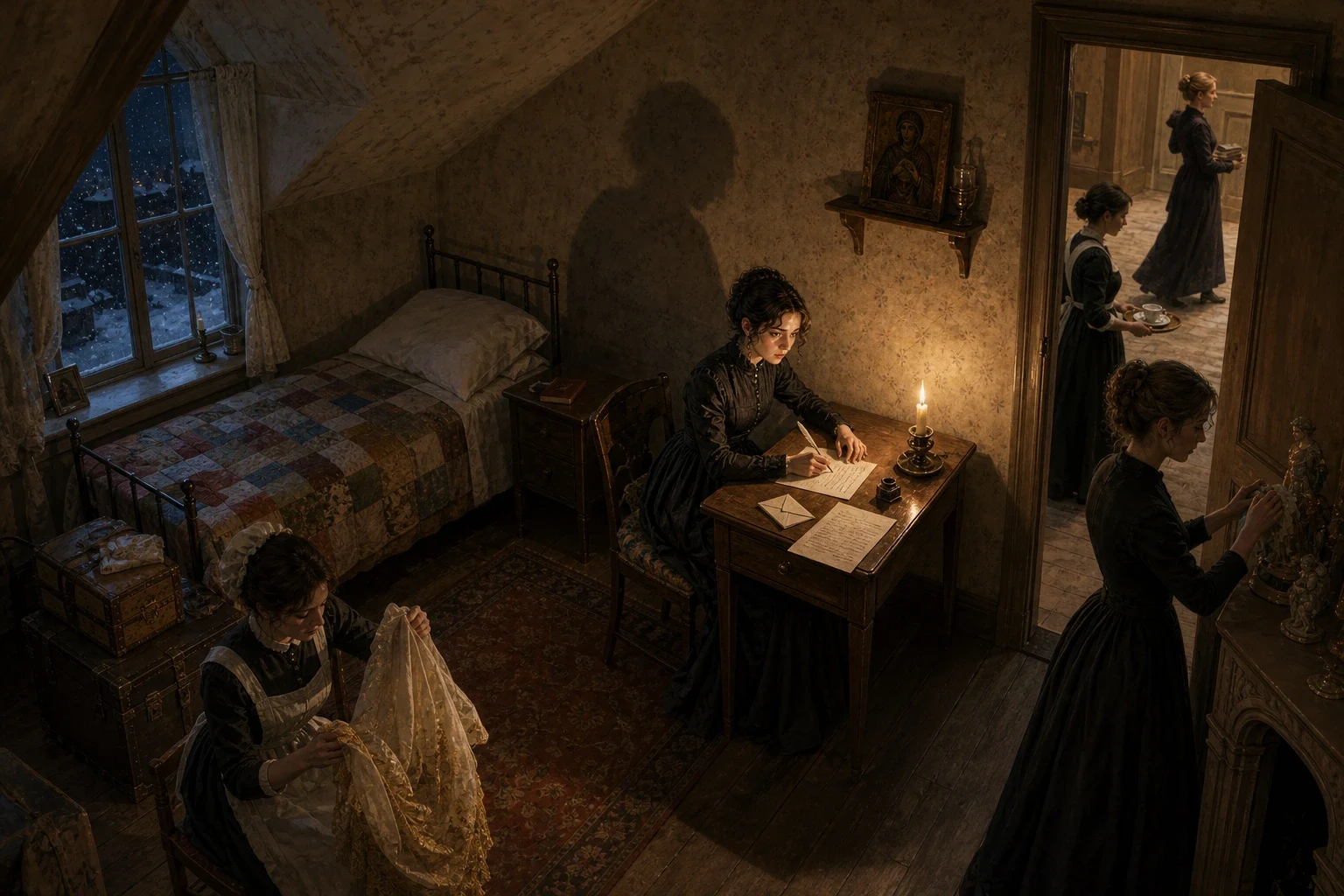
Lizaveta’s life was one of bitter dependence. The old Countess treated her with cold disdain, and she was terribly lonely. So when a young officer began sending her passionate letters, her heart began to flutter. She did not know his name, but his words were full of a fire she had never known. She read them over and over. Finally, after a particularly cruel evening with the Countess, she made a decision. She would not endure this life a moment longer. She took out a pen and paper. “I am writing to you because I must,” she wrote. “I believe you, and I will see you.” Her hand trembled as she gave him instructions on how to enter the house secretly, and how to find her room. “Come tomorrow, after the ball,” she finished. “Wait for me. I will be there.” She sealed the letter, her heart pounding with a mixture of terror and hope.
Page 4
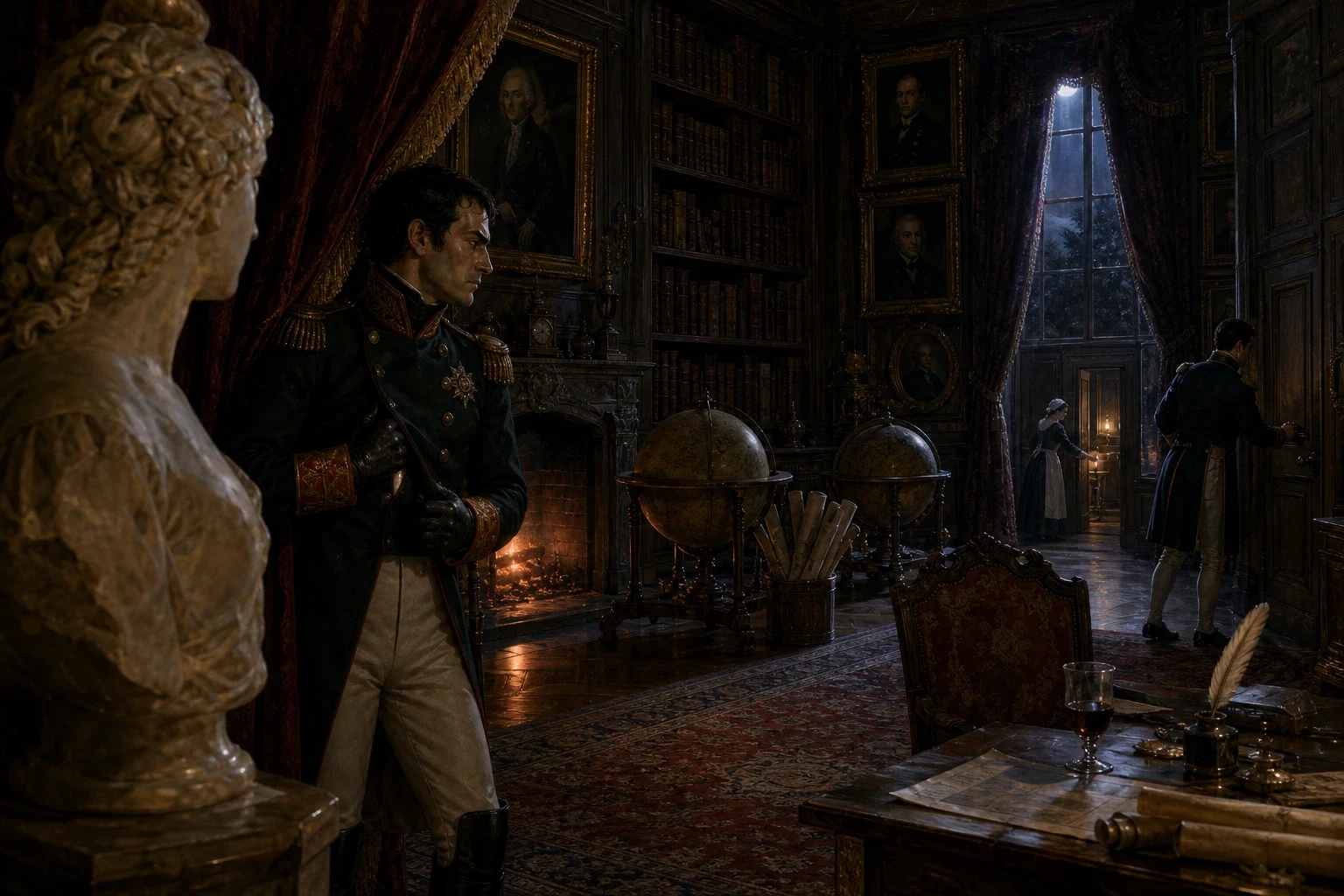
The next night, Hermann let himself into the vast, silent mansion. The air was cold and smelled of old perfume. He followed Lizaveta’s directions up a winding staircase, his heart pounding, but he did not go to her room. Instead, he slipped into the Countess’s study and concealed himself behind a heavy curtain. He wanted the secret, not the girl. He waited in the darkness, listening. Hours passed. Finally, he heard the sound of a carriage outside, then footsteps echoing in the hall. The Countess was home. Hermann held his breath as servants bustled past, their voices faint. He heard her complaining, frail and sharp. Then, the house fell silent again. “Now,” he whispered to himself, his hand on the pistol in his pocket. “The time is now.” He pushed the curtain aside. “She is alone.”
Page 5
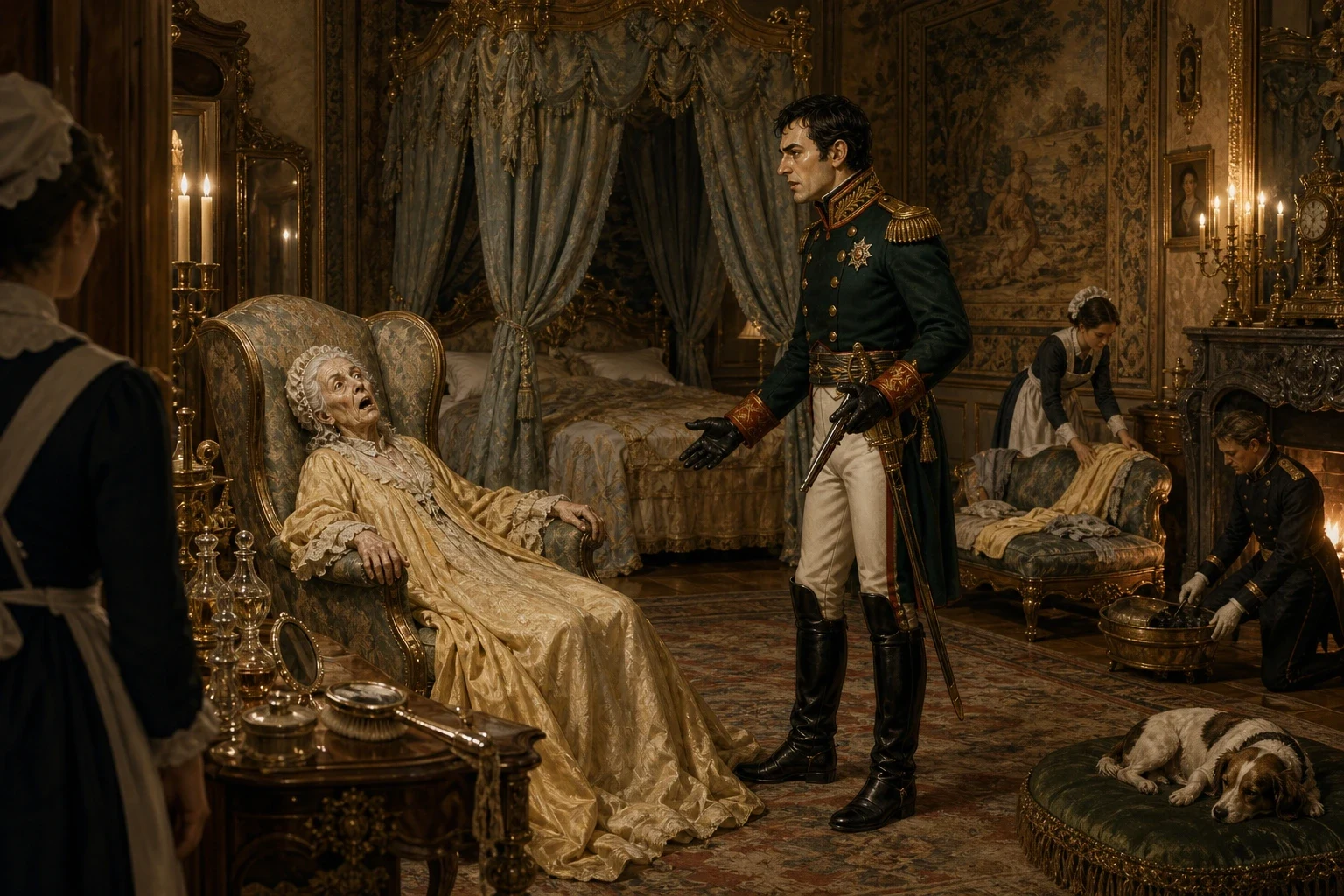
Hermann stepped from the study into the Countess's bedroom. The old woman sat in a deep armchair, a tiny, shrivelled thing in yellow silk. “Do not be alarmed, Countess,” Hermann said, his voice trembling. “I have come to ask a favour.” The Countess stared at him, her face a blank mask. She did not seem to understand. “Your secret,” Hermann pleaded, his voice growing desperate. “The three cards! I must have them.” The Countess remained silent, her lips drawn into a thin line. Hermann fell to his knees. “If you have ever known love, I beg you! Name the cards!” Still, she said nothing. In a final, terrible impulse, Hermann pulled an unloaded pistol from his pocket. “Old witch!” he cried. “I will make you answer!” At the sight of the gun, the old woman gave a single, violent shudder, then fell back hard against the chair. Hermann grabbed her hand. It was cold. The Countess was dead.
Page 6
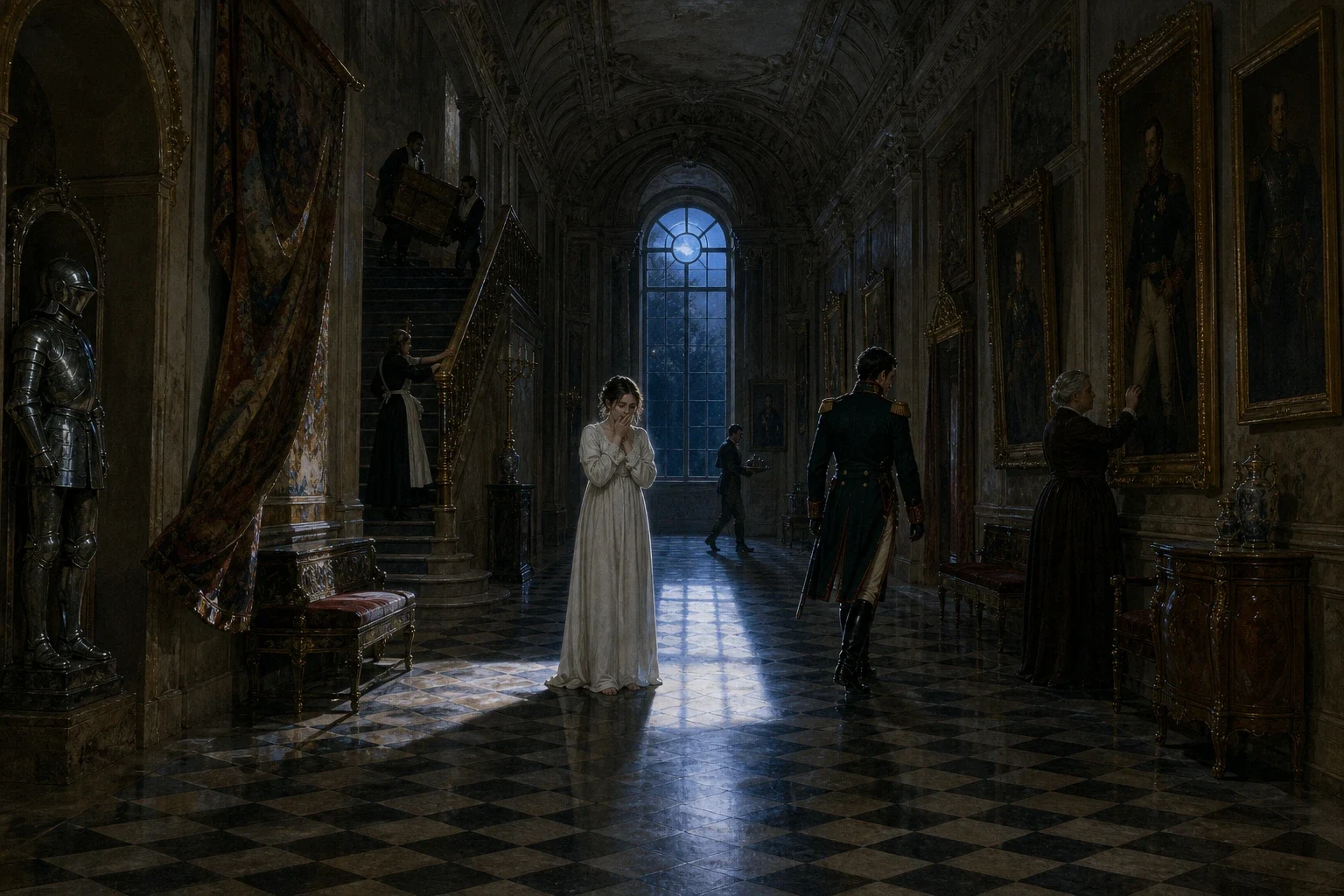
He had learned nothing. Shaking, Hermann left the bedroom and made his way down the secret staircase. Lizaveta was waiting for him in a dark corridor, dressed in white, her face alight with hope. “You are here!” she whispered, rushing to him. “The Countess is dead,” Hermann said flatly, his mind a storm of lost hope. Lizaveta stared at him, her eyes wide with horror as the truth dawned. “So it was not for me,” she said, her voice barely audible. “It was for the money. You never loved me.” Hermann did not answer. He could not think of her, or of what he had done. His obsession was all that remained. “Where is the key?” he demanded. She handed it to him without a word. He pushed past her and fled the house, leaving her alone in the darkness, her dreams destroyed.
Page 7
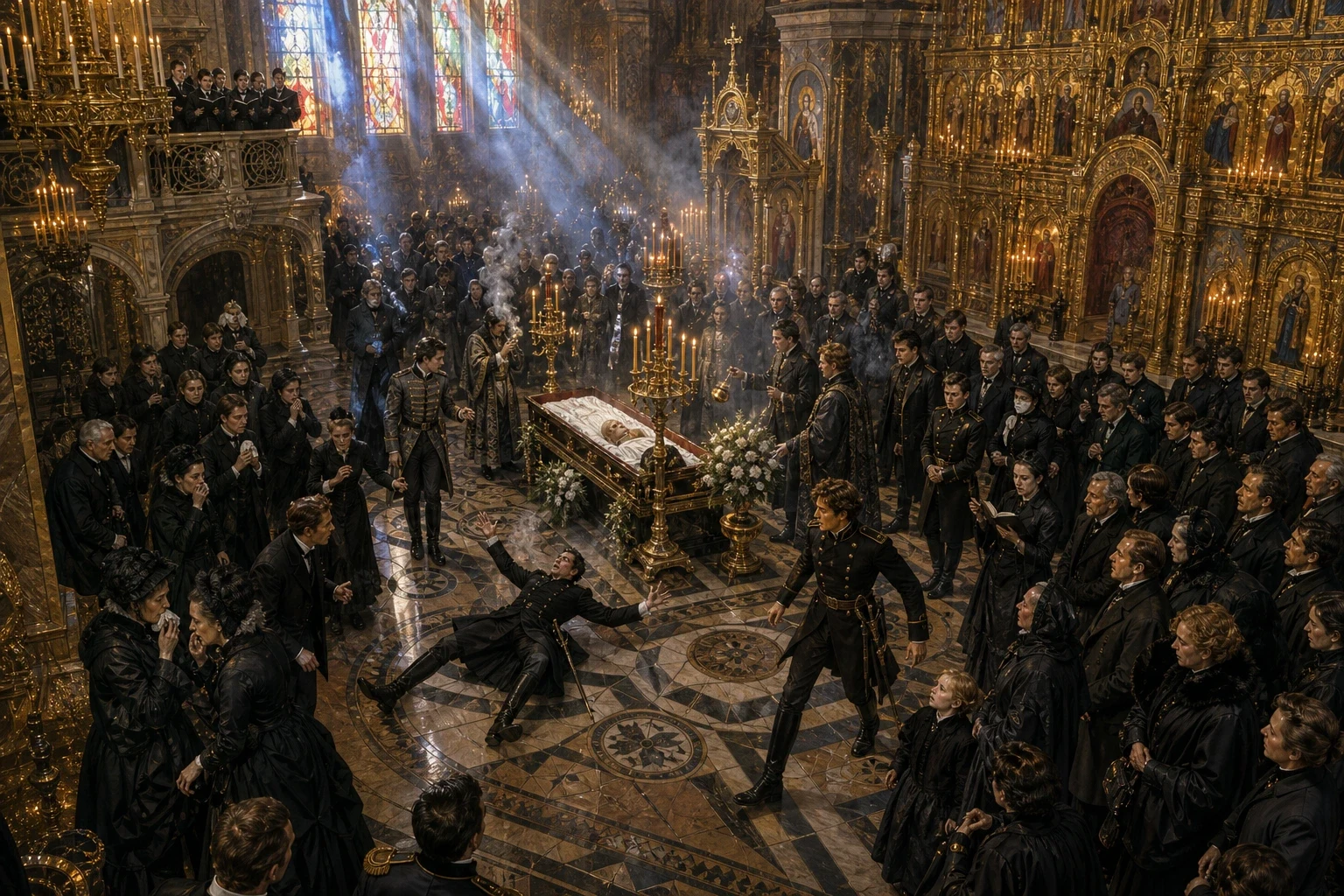
The death of the Countess was news all over St. Petersburg. Hermann hid his part in it, but he was haunted. He felt a strange compulsion to attend her funeral. The monastery church was filled with the city’s elite. One by one, they approached the open coffin to pay their last respects. When it was Hermann’s turn, he walked slowly toward the bier. The Countess lay there, waxy and still. He bowed his head, but as he did, he had the sudden, terrifying sensation that the dead woman opened one eye and winked at him. A cry of horror escaped his lips. He staggered backward and collapsed onto the cold stone floor, fainting dead away. A murmur went through the crowd. “What is wrong with him?” someone asked. Tomsky rushed to his side. “It is Hermann, the engineer,” he explained to a neighbor. “He was an acquaintance of my grandmother.”
Page 8
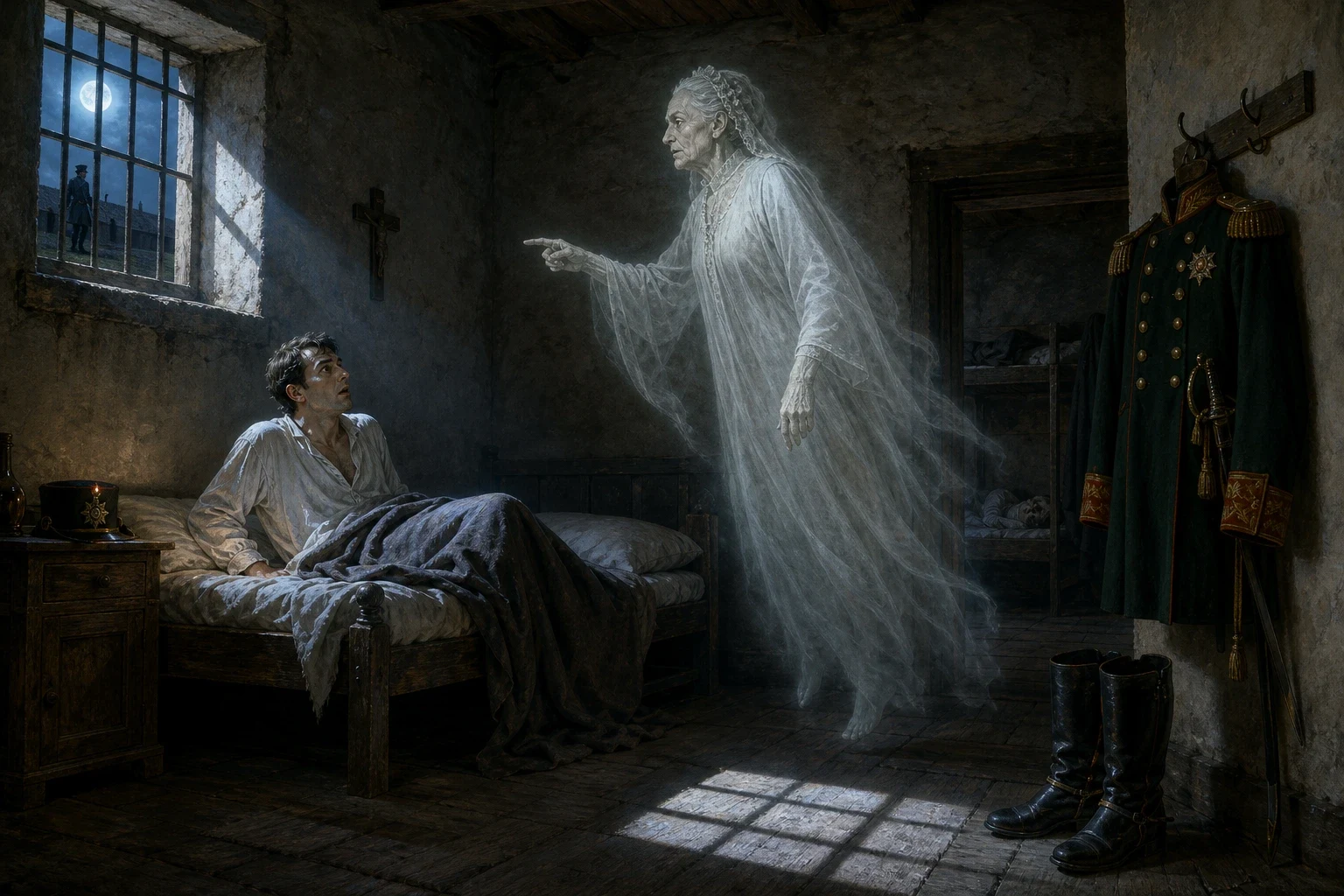
That night, Hermann drank heavily and fell into a troubled sleep. He woke suddenly. The moon lit his small barracks room. A figure in white was standing by the door. It was the ghost of the old Countess. “I have come to you against my will,” the apparition said, its voice a dry, shuffling whisper. “But I am commanded to grant your request.” Hermann sat frozen in his bed, unable to speak or move. “The Three,” the ghost said, its voice flat and toneless. “The Seven. The Ace. These are the cards. You must play them, one each night, and then you must never gamble again.” The ghost paused, its empty eyes fixed on him. “I forgive you for my death, on one condition: that you marry my ward, Lizaveta Ivanovna.” The figure then turned, glided to the door, and vanished, leaving Hermann alone in the silent, moonlit room.
Page 9
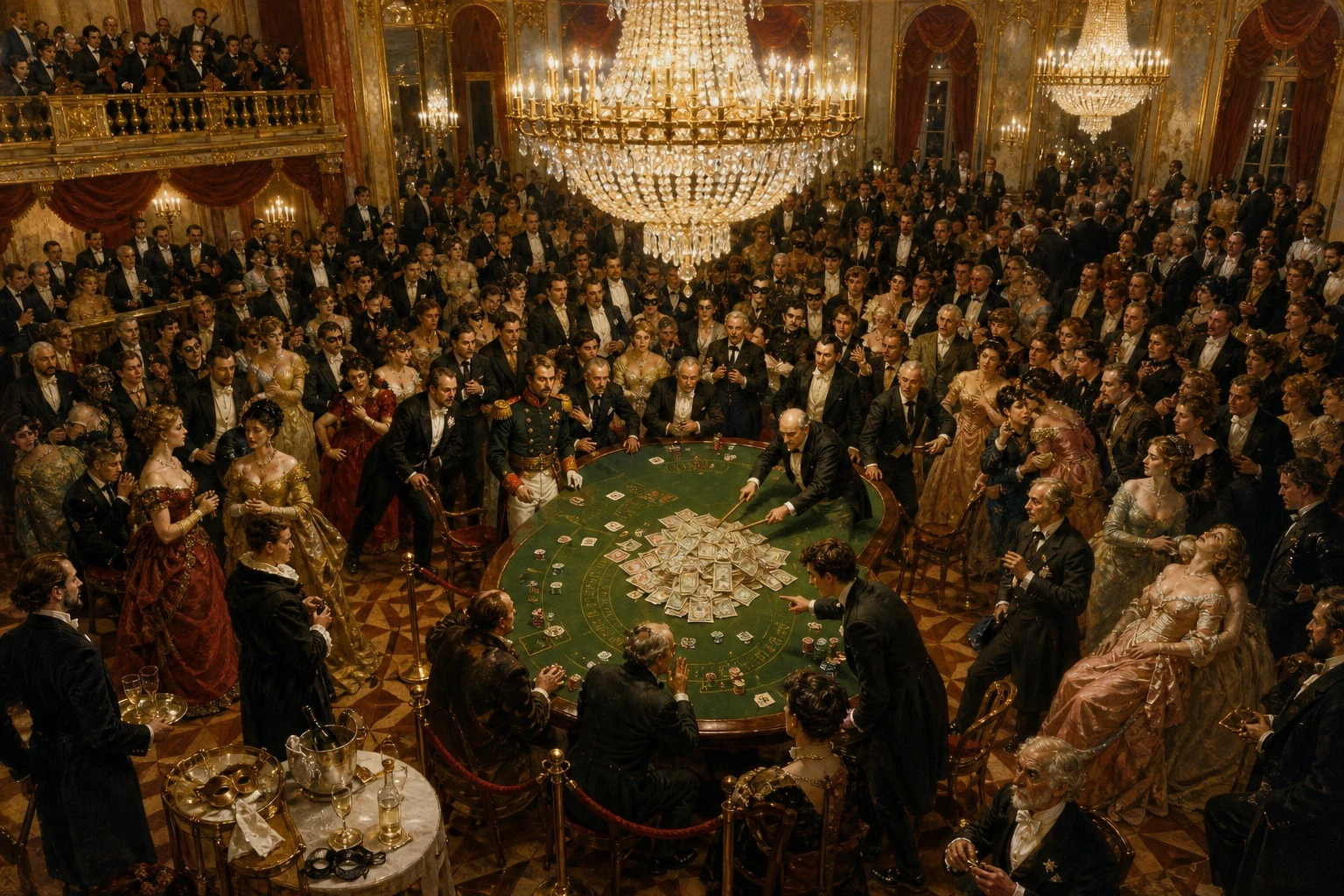
Three, Seven, Ace. The numbers were seared into his brain. Hermann went to the lavish salon of the famous gambler, Chekalinsky. He staked his entire inheritance on the Three and won. The next night, he bet everything on the Seven and won again, doubling his fortune. He became a legend. On the third night, the salon was packed. He pushed forward a mountain of banknotes—his entire fortune. “I bet on the Ace,” he announced, his voice calm. Chekalinsky dealt the cards. “Your Ace wins,” the gambler said politely. A triumphant, cold smile touched Hermann's lips. He turned over his card for all to see. But it was not the Ace. It was the Queen of Spades. Hermann stared. The woman on the card seemed to squint and mock him. "The old woman!" he screamed, seeing the Countess's face in the portrait. He had lost everything.
Page 10
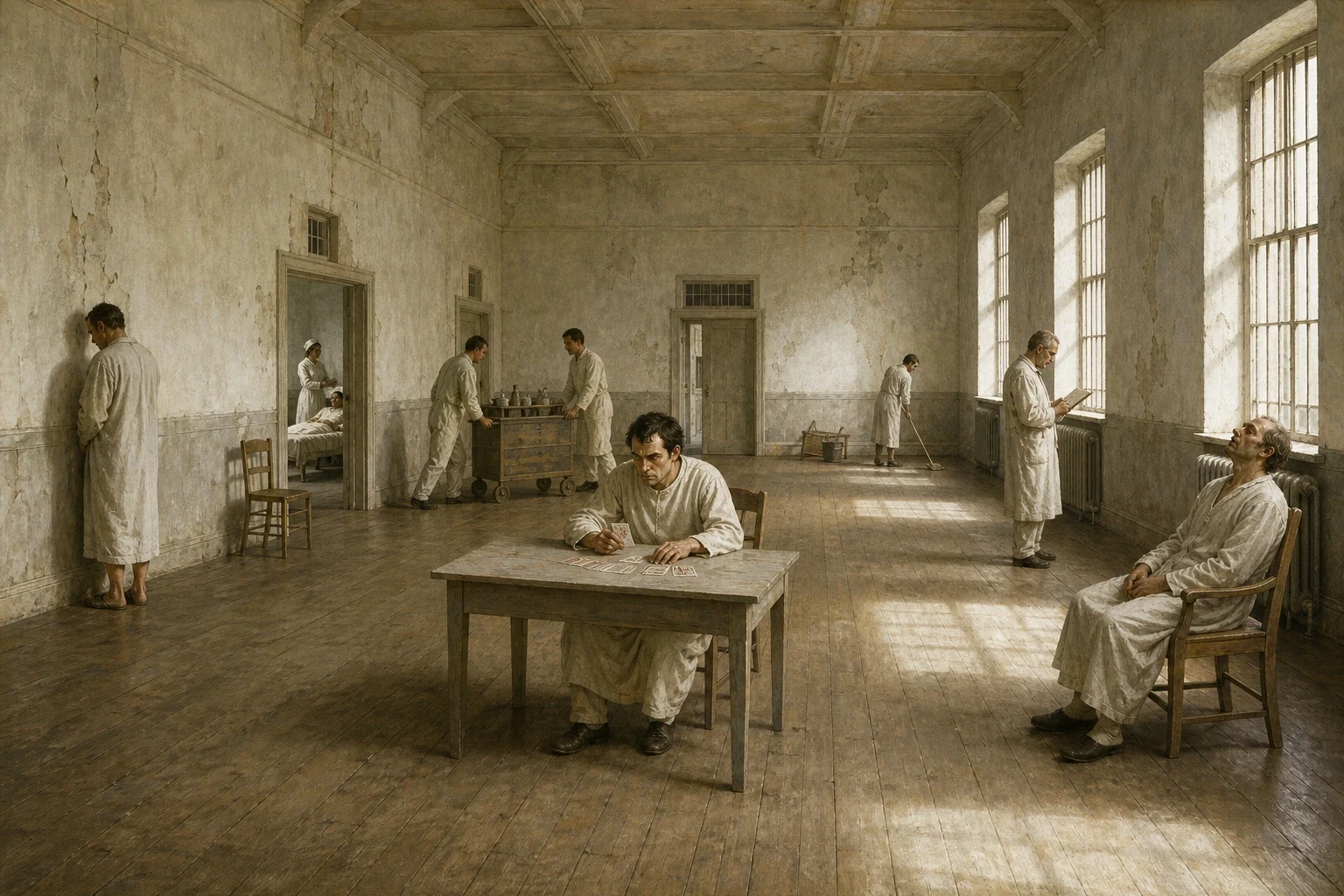
Hermann’s mind had shattered. He was taken to the Obukhov Asylum, where he now lives in Room 17. He does not answer any questions, but only mutters constantly. “It went well yesterday,” he tells a visitor who is not there, dealing imaginary cards onto the table. “Three, seven, ace!” He pauses, then his face twists in agony. “No! Three, seven, queen!” Lizaveta Ivanovna, free from the Countess, married a pleasant young man and found a quiet happiness. Tomsky was promoted and married a princess. But for Hermann, there is only one reality, a constant, looping replay of his downfall. His visitors hear him whisper the same litany, the source of his fortune and his ruin. He plays his phantom game all day, his voice a low, rhythmic chant.
About this story
- Audience: general readers
Read Wonder Novels on your phone
Wonder Novels is available on Android. Get Wonder Novels on Google Play.