The Sea-Wolf
A literary critic thrown overboard into a captain's fists, and the long voyage that broke them both
Page 1
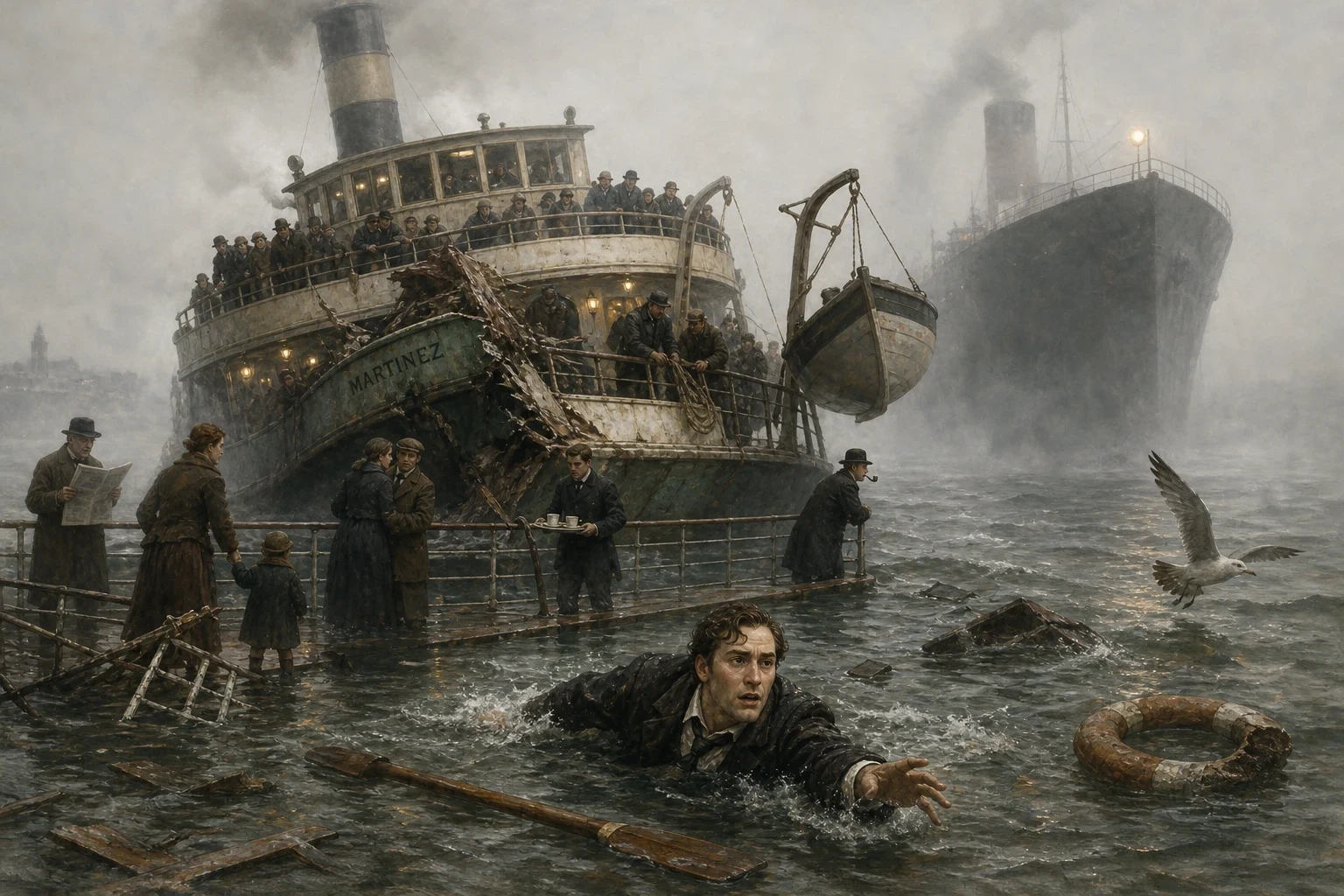
On a foggy January morning in San Francisco Bay, a literary critic named Humphrey Van Weyden was crossing the bay on the ferry Martinez to see a friend. He had never done a day's hard work in his life and had never needed to. The fog was so thick that the ferry's whistle seemed to come from nowhere and everywhere at once. Then, without warning, another steamer loomed up out of the white and struck the Martinez amidships. The deck tilted under Van Weyden's feet, and passengers screamed and scrambled for the lifeboats. In the confusion he was thrown clear of the rail and into the freezing water. The cold closed over his head like a fist. He came up gasping, and the fog had already swallowed the ferry, the shouting, and every light. He could not swim well, and he did not know which way land lay.
Page 2
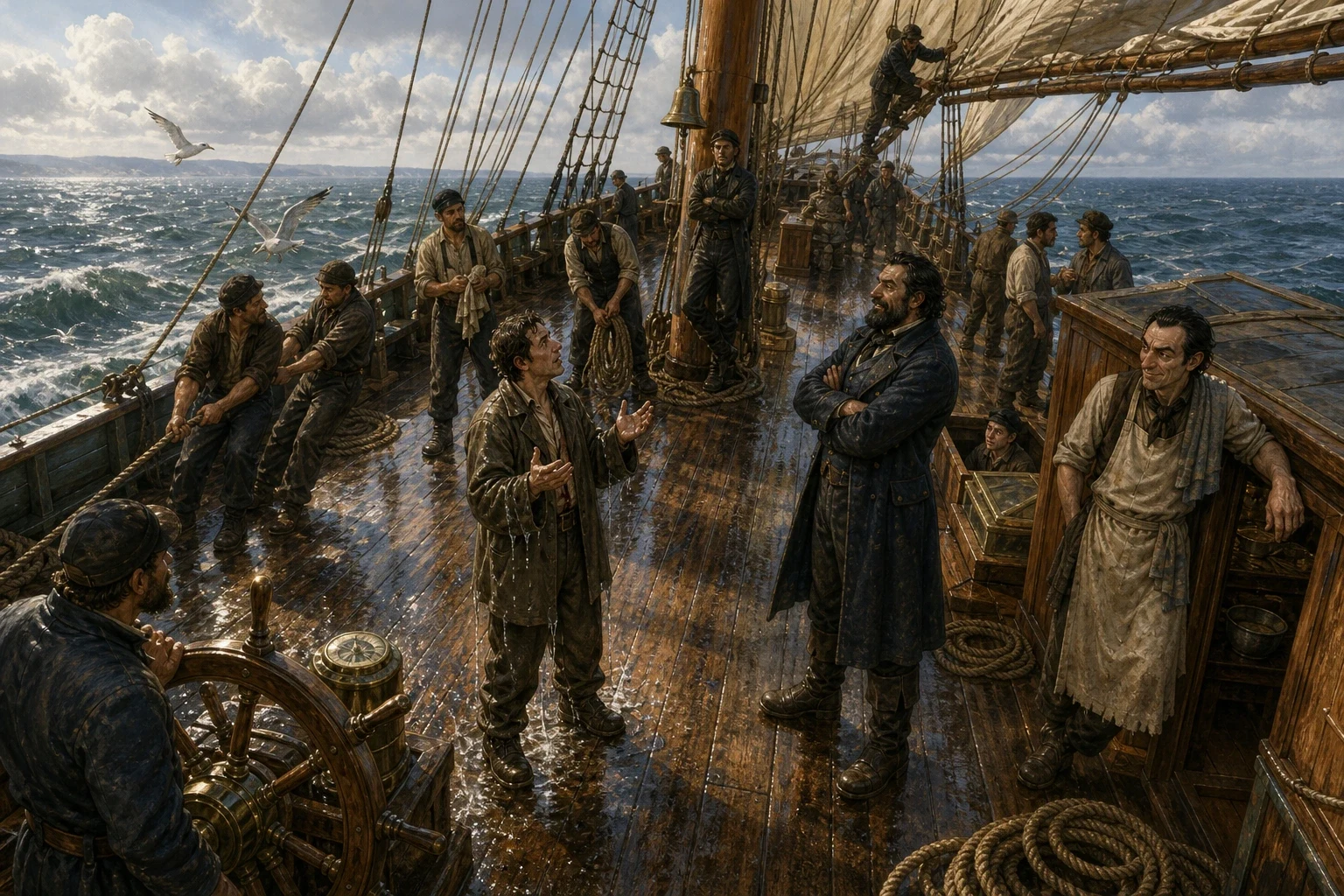
Van Weyden was hauled from the water by the crew of a sealing schooner called the Ghost, bound out of San Francisco for the seal islands of Japan. Her captain was a dark, powerfully built man named Wolf Larsen, who looked at the soaked critic with something between amusement and contempt. Van Weyden asked to be put ashore or set aboard a boat bound for the city. Larsen refused outright. He said the Ghost was not turning back for any man, and that a passenger who ate without working was no use to him. He told Van Weyden he would work as cabin boy under the ship's cook, Thomas Mugridge, for his food and his berth, and that he had better learn fast. Mugridge grinned at this, pleased to have someone beneath him at last. Van Weyden tried to protest, but Larsen simply turned away, and the schooner sailed on into open water, the coast already lost behind her.
Page 3
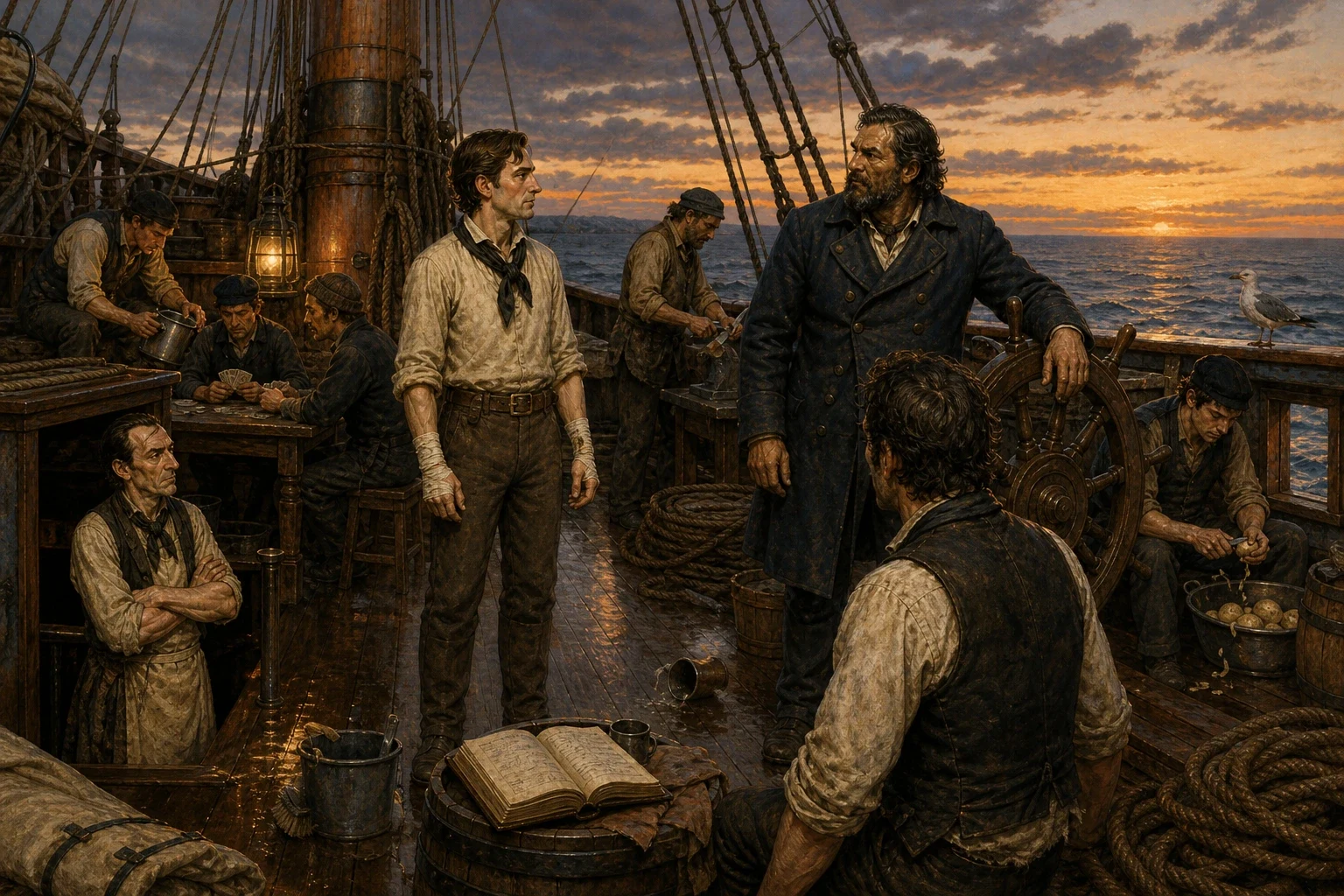
Weeks at sea toughened Van Weyden's soft hands into blistered, then calloused ones. Mugridge worked him mercilessly in the galley and mocked him whenever he stumbled, until Van Weyden finally stood up to him and the cook backed down. Among the crew, a hot-tempered young sailor named George Leach made no secret of his hatred for Wolf Larsen's iron rule, muttering against the captain whenever he thought no one in authority could hear. Then, in a night storm off the coast, the ship's mate was swept overboard and lost in the black water before any boat could be lowered for him. Larsen stood over the empty place at the rail without much grief, and the next morning he named Van Weyden mate in his place, telling him he had grown hard enough at last to be of some use. The crew took the news in sullen silence, and Leach spat over the side and said nothing at all.
Page 4
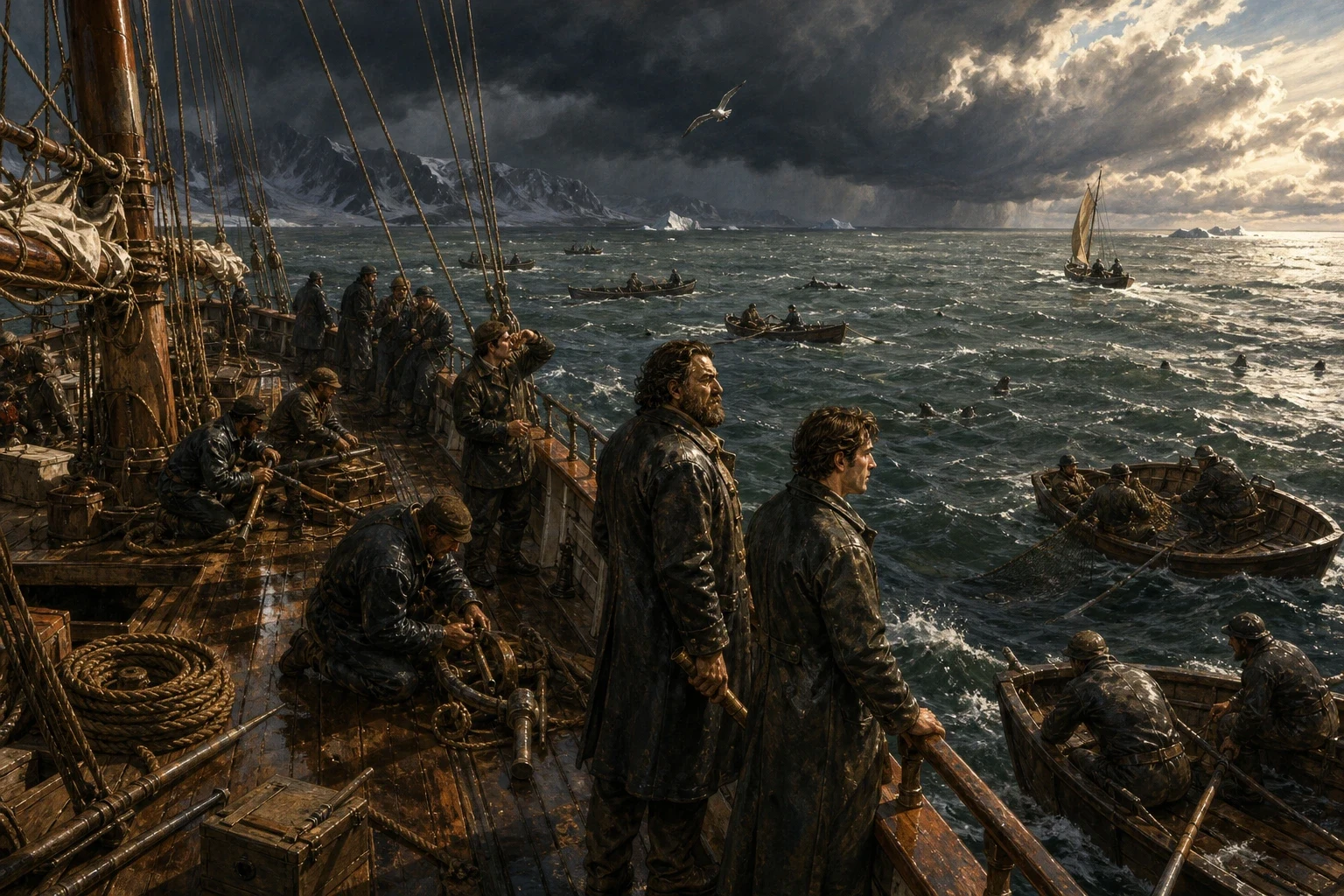
The Ghost reached the sealing grounds, and every fine morning the small hunting boats were lowered to go out after the herds of fur seals that filled the sea for miles. Wolf Larsen drove the hunters and boat-pullers without rest or mercy, and the crew's hatred of him grew with every day of it. George Leach, who had never forgiven Larsen for his iron rule, watched the weather for his chance. When a storm began building fast along the horizon one afternoon, Leach and another sailor, Johnson, were out in one of the hunting boats, and instead of pulling back to the schooner, they turned the boat's head away and vanished into the rising wind and spray, choosing to take their chances alone on the open sea rather than return to Larsen's deck. Van Weyden, now mate, watched them go from the Ghost's rail and said nothing, and Larsen only laughed and said the sea would deal with them as it pleased.
Page 5
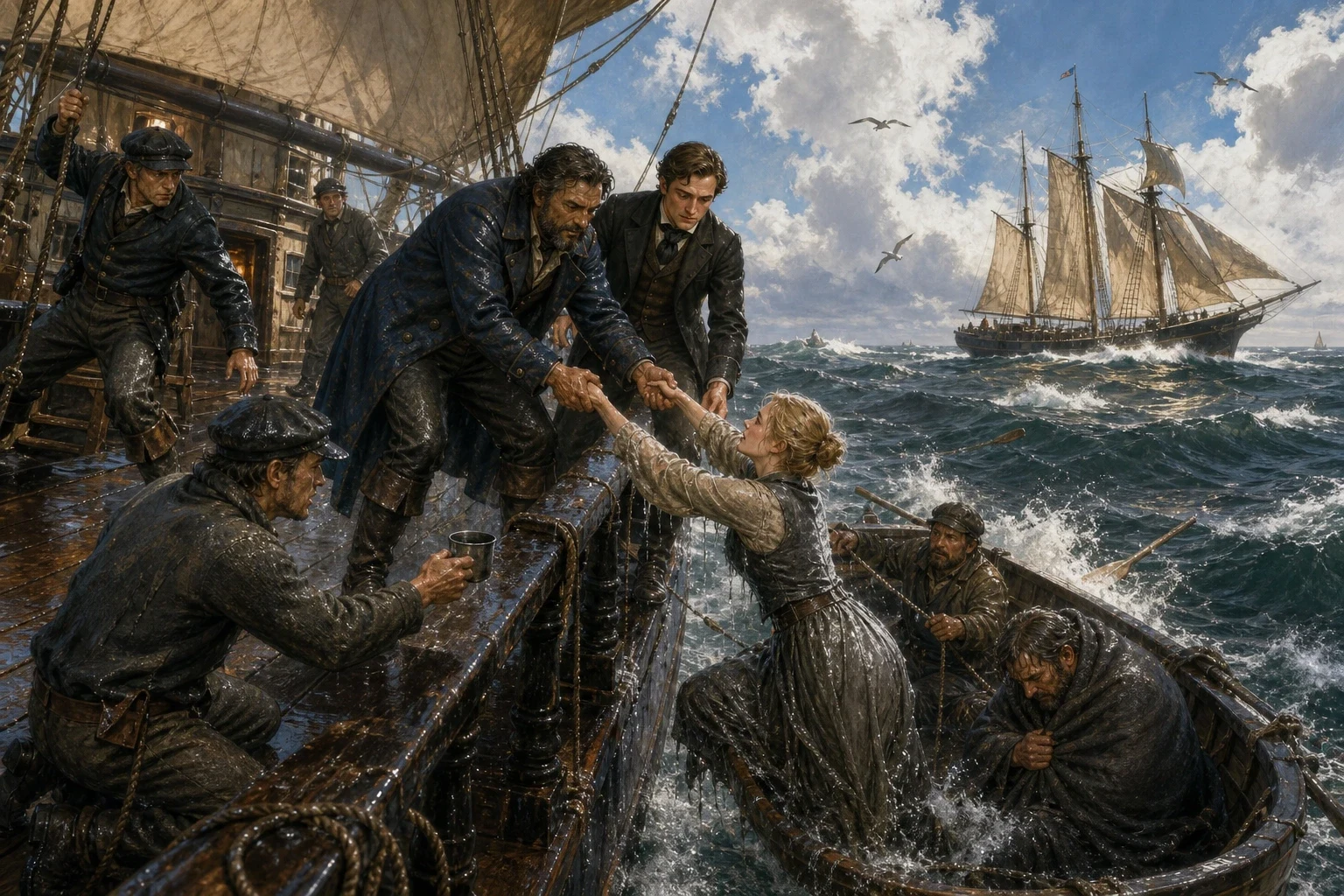
Some time later, in heavy swell far from any shore, the Ghost's lookout sighted a half-swamped lifeboat wallowing among the waves. Wolf Larsen brought the schooner alongside, and the survivors of a wrecked steamer were hauled up over the rail one by one, soaked through and exhausted. Among them was a slight, fair-haired young woman named Maud Brewster, a poet whose books Van Weyden had read and admired long before this voyage. Larsen welcomed her with an odd, courtly politeness that sat strangely on him, while Van Weyden felt a sudden, sharp relief at finding another civilized mind aboard the Ghost. Not far off, another sealing schooner crossed the same hunting grounds — the Macedonia, commanded by Larsen's own brother, Death Larsen, a harder and crueler man even than Wolf, and the two ships eyed each other across the water like old enemies.
Page 6
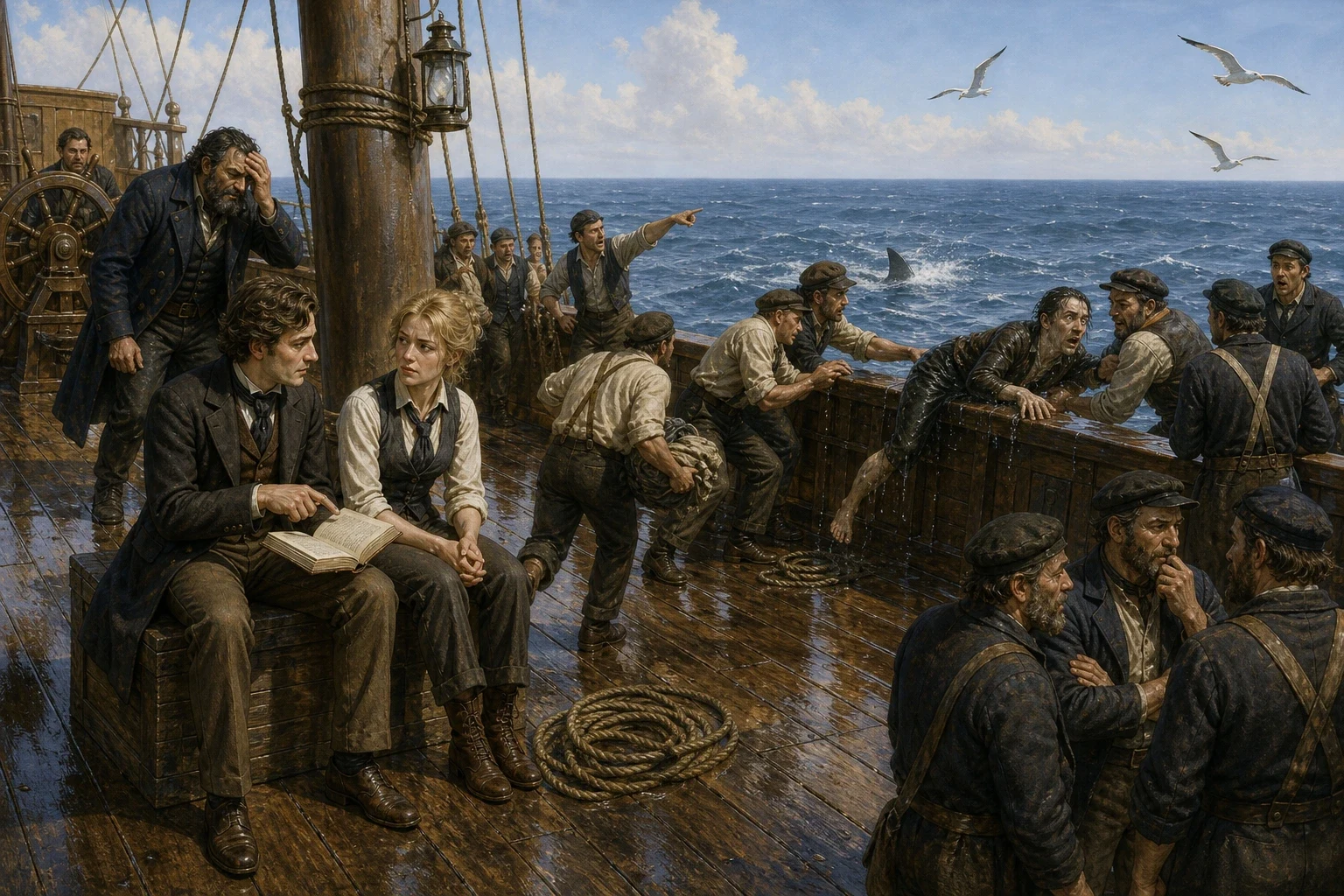
One afternoon, leaning too far out over the rail to mock the hunters below, Thomas Mugridge lost his footing and fell into the sea. By the time the crew hauled him back aboard, a shark had already taken his foot, and he was carried below white and shaking, his sea-going days as a nimble man finished for good. Around the same time, Wolf Larsen began to suffer sudden, blinding headaches that doubled him over without warning, though he would admit to no weakness in front of his crew. Through all of this, Van Weyden and Maud Brewster found comfort in each other's company — two educated people thrown together in a brutal place, reading and talking quietly in the evenings while Larsen watched them with a jealousy he would not name. The Ghost sailed on, her captain's body failing by degrees even as his will stayed as hard and watchful as ever.
Page 7
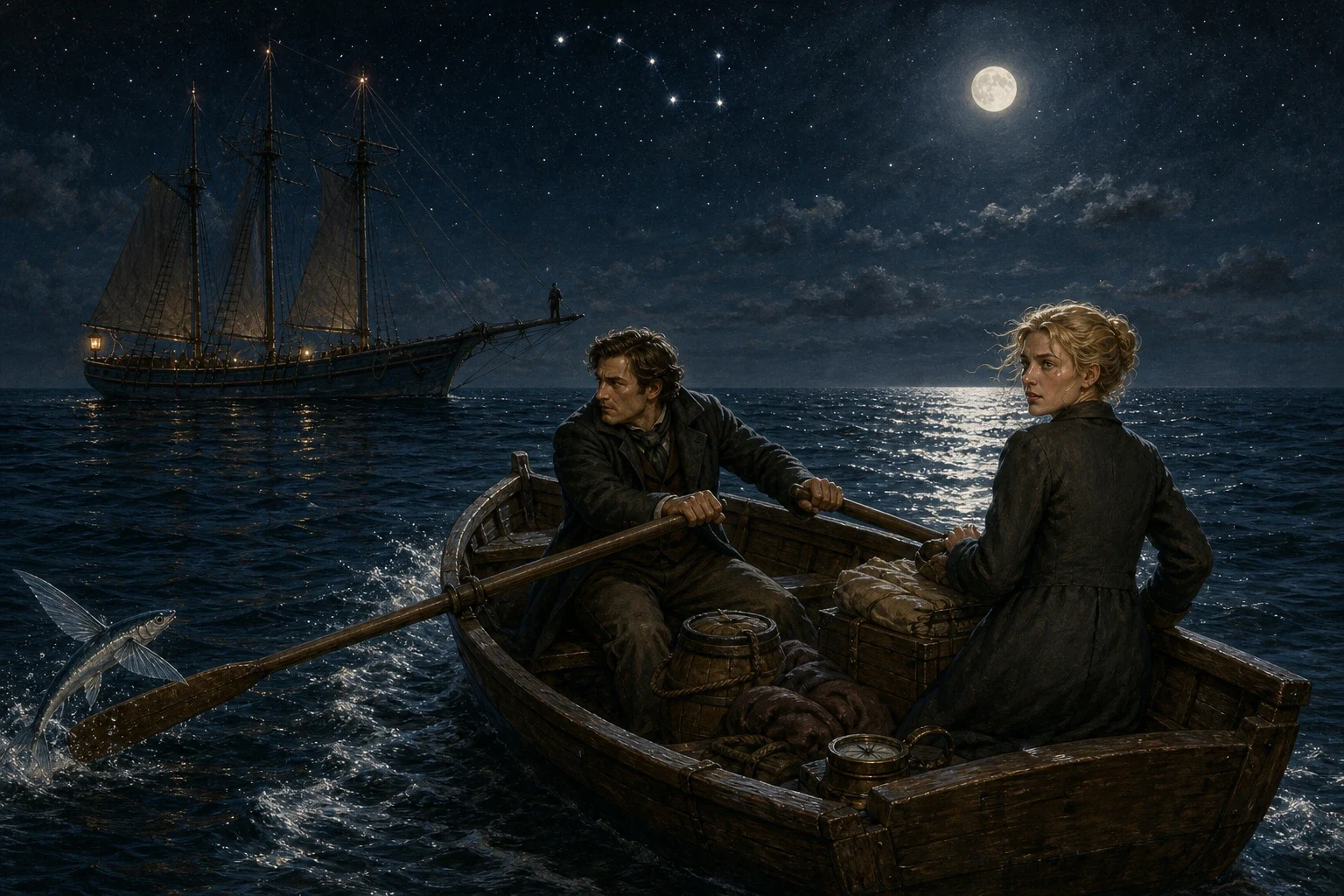
As Wolf Larsen's health worsened and his moods grew darker and more dangerous, Van Weyden and Maud Brewster decided between them that they could not stay aboard the Ghost any longer. One moonless night, while most of the crew slept, they quietly loaded a small hunting boat with what food and water they could carry without being seen, lowered it over the side without a sound, and climbed down after it. They rowed away from the schooner as softly as they could, each stroke of the oars muffled, until the Ghost's dark shape and few riding lights had dropped far behind them into the night. Ahead there was nothing but black water and stars, and behind them a captain neither of them trusted to let them go peacefully if he woke and found them missing.
Page 8
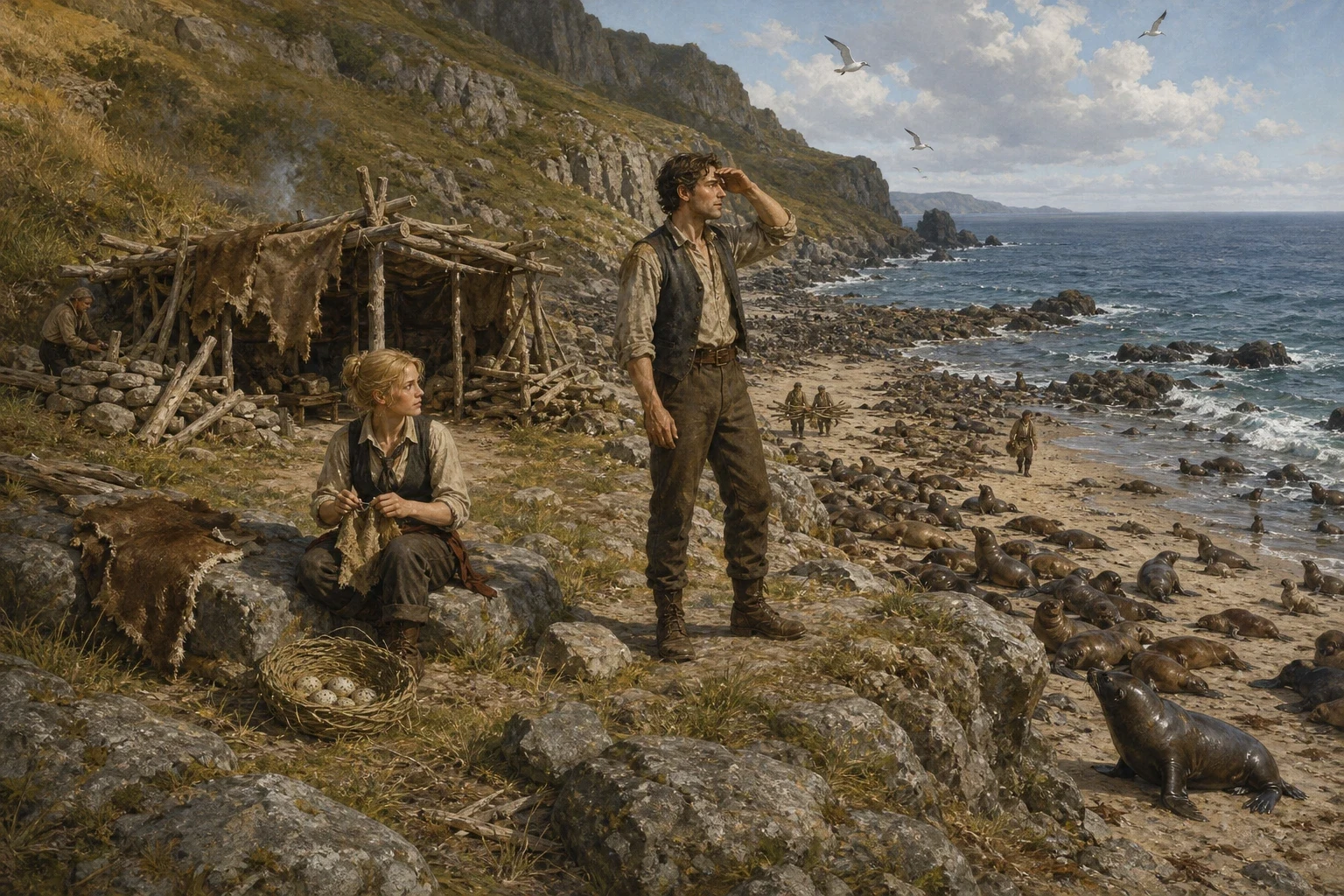
After days adrift, Van Weyden and Maud came ashore on a bare, windswept island thick with breeding fur seals, which Van Weyden came to call Endeavor Island for the effort it cost them simply to survive there. They built a low hut of driftwood and old seal hides against the worst of the wind, and lived through the weeks that followed on seal meat and the eggs of seabirds, growing harder and more capable by the day. There was no other ship, no other soul, nothing but rock, grass, wind and the endless roar of the seal herds along the shore. For the first time since the fog on San Francisco Bay, Van Weyden felt something close to safety, and he began to let himself believe that Wolf Larsen and the Ghost belonged to a life now entirely behind them.
Page 9
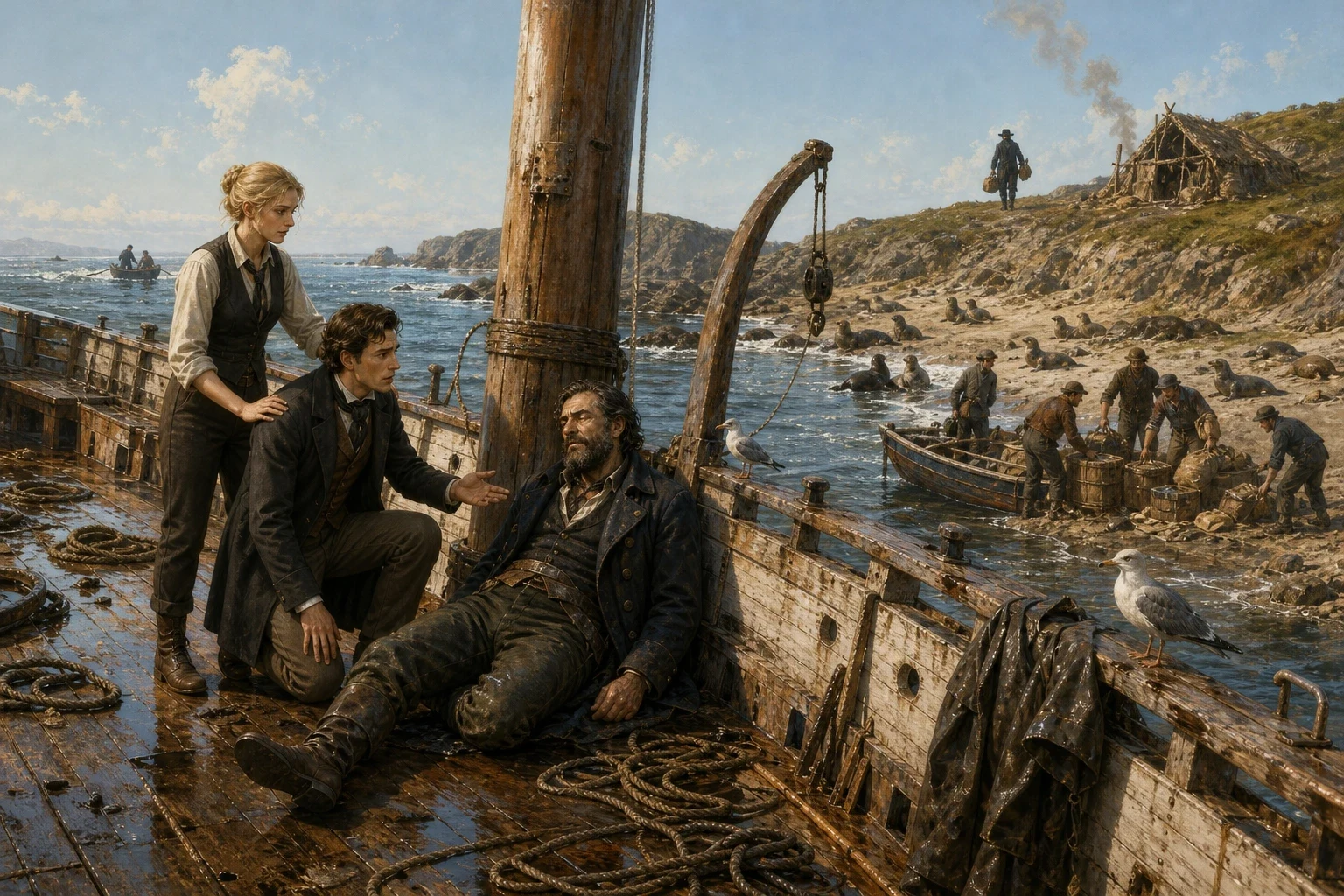
Weeks into their life on the island, Van Weyden and Maud woke one morning to find a familiar hull run aground in their own cove — the Ghost, but stripped nearly bare, her sails gone, her boats gone, her rigging cut away. Her crew had mutinied and gone over to Death Larsen's ship, taking everything of value and leaving the schooner to drift where the wind carried her. Aboard her, alone in the wreck of his own command, they found Wolf Larsen, now completely blind and partly paralyzed down one side, too weak even to stand, the illness in his brain having finally claimed nearly everything of the man he had been. He could still speak, and his will was as hard as ever, but his body had failed him utterly. Van Weyden and Maud stood over him and had to decide, there on the ruined deck, what they owed a man who had once owned their lives.
Page 10
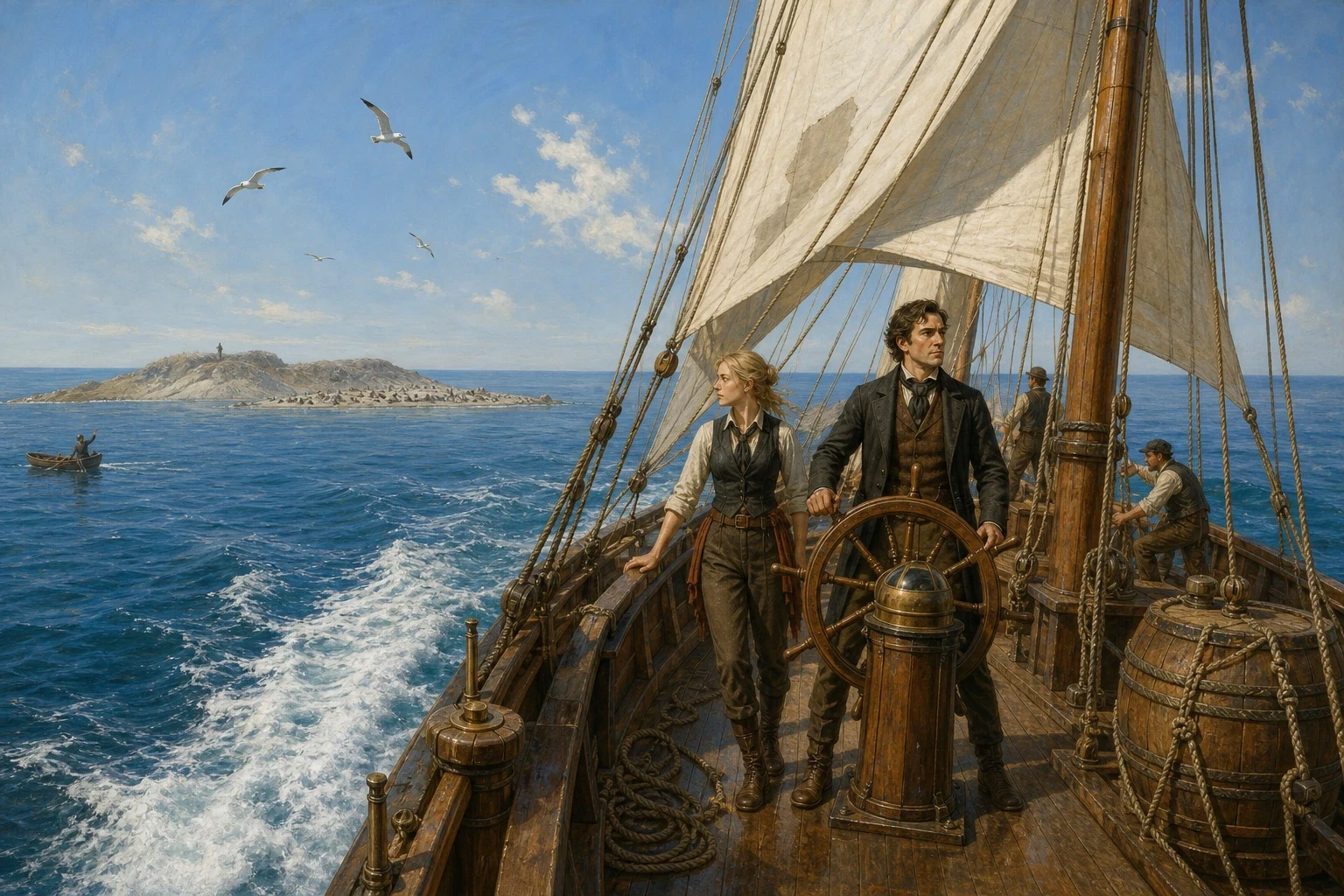
For weeks Van Weyden and Maud worked almost alone to make the Ghost seaworthy again, splicing rigging, raising new sails cut and stitched by hand, hauling the hull free of the rocks by main effort and patience. Wolf Larsen lingered aboard through all of it, blind and failing further each week, speaking less and less until one quiet night he died, and they buried him at sea in the old way, sewn in canvas and slipped over the side without ceremony, as a sailor is buried. When the ship was finally ready, they raised her sails and steered her away from Endeavor Island and its seals and its rocks, out into open water at last, two people who had been thrown together by a wreck now sailing on together by their own choice, toward whatever harbor would take them in.
About this story
- Audience: general readers
Read Wonder Novels on your phone
Wonder Novels is available on Android. Get Wonder Novels on Google Play.