How Lenses Bend Light
How Lenses Bend Light — an illustrated science story, set in United States. 10 illustrated pages, free to read on Wonder Science.
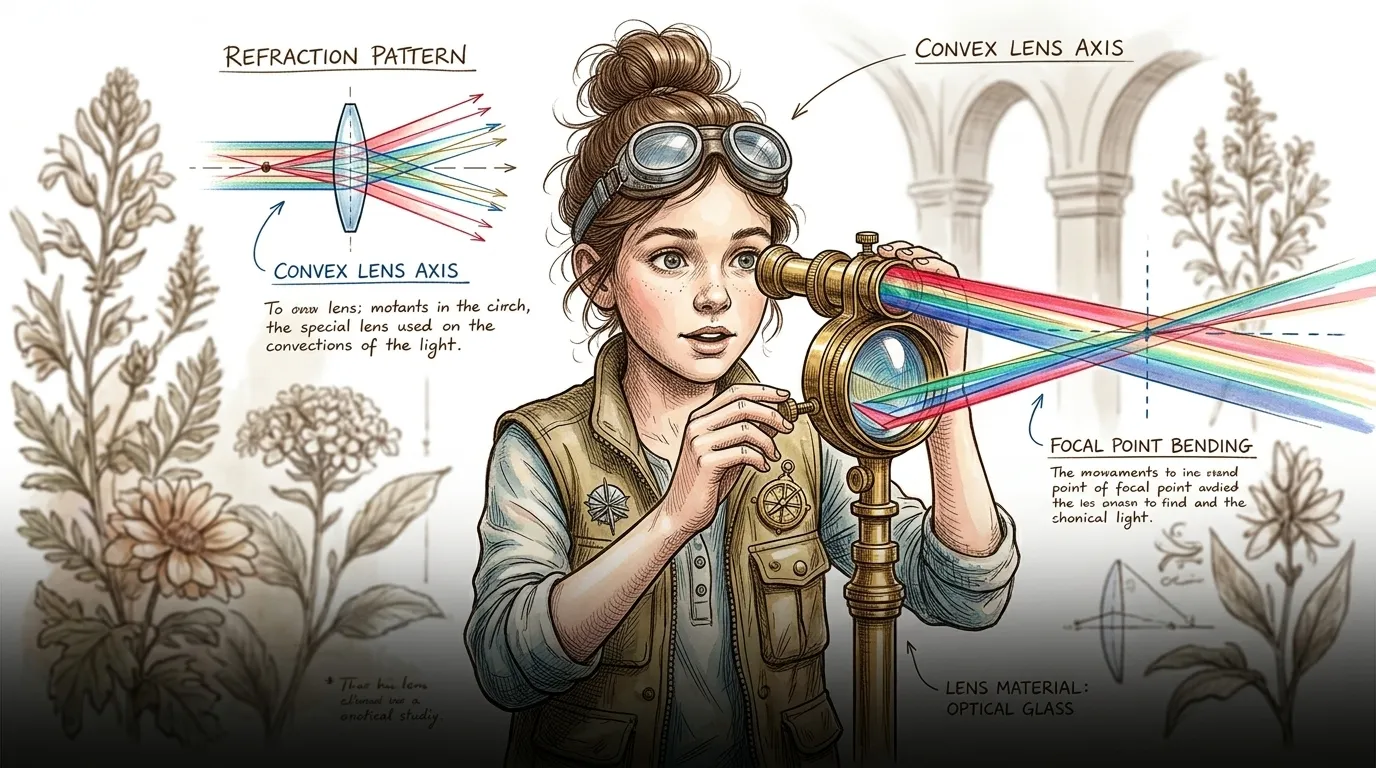
Page 1
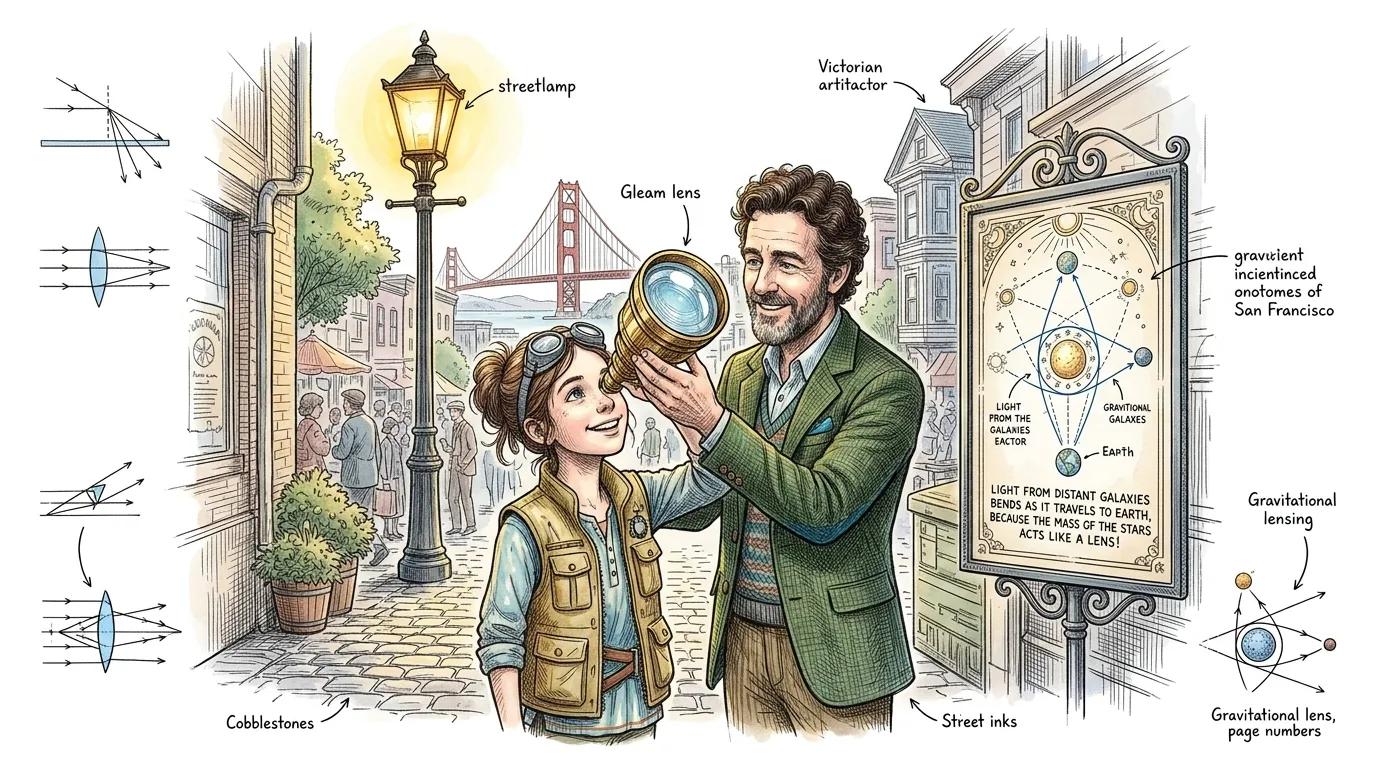
In the heart of San Francisco's Noe Valley, a hidden world exists beneath the bustling streets. Tonight, under the glow of a single streetlamp, something extraordinary is about to happen involving lenses. It's a phenomenon so precise that the slightest shift can alter its path. Did you know that light from distant galaxies bends as it travels to earth, because the mass of the stars acts like a lens?\n\n Fact: Light from distant galaxies bends as it travels to earth, because the mass of the stars acts like a lens!
Page 2
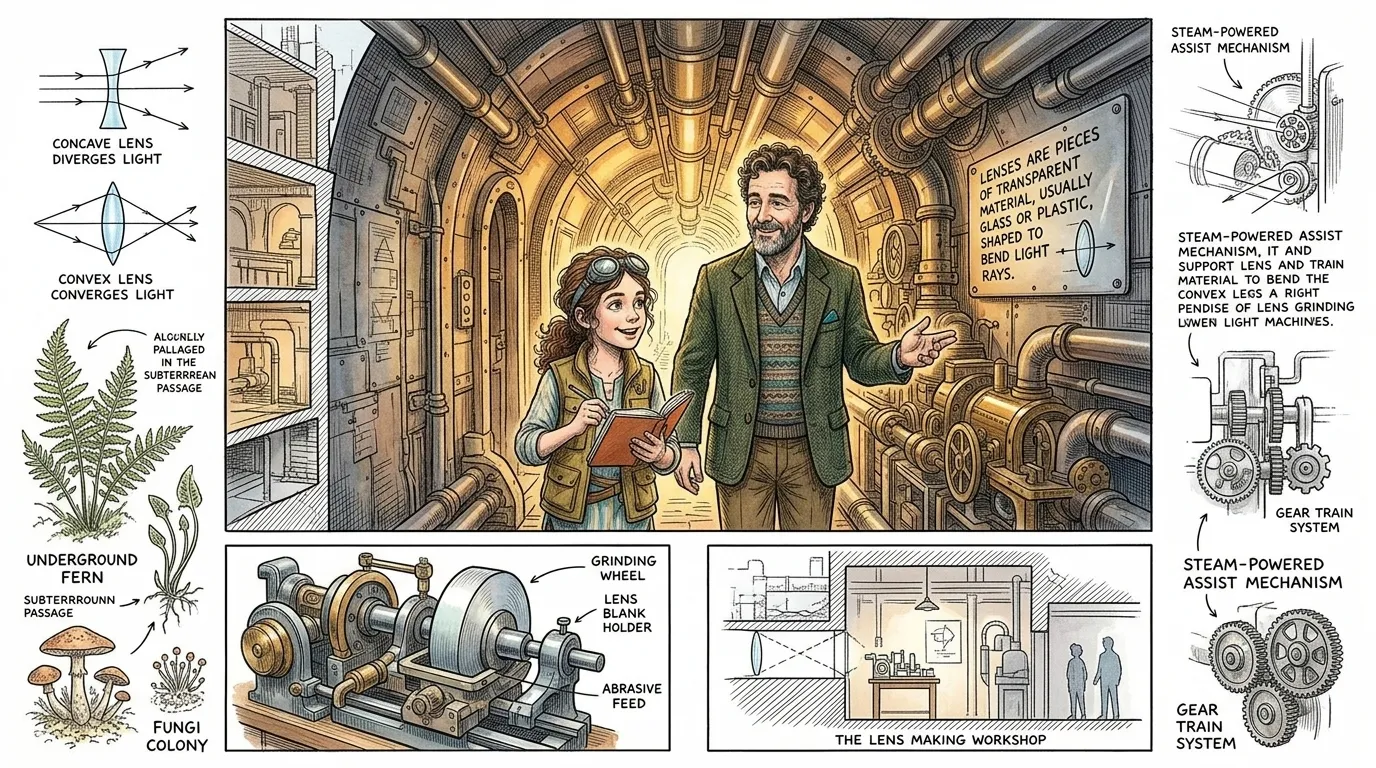
Rio, an adventurous 11-year-old, adjusted her notebook as she followed her dad down the narrow passage. The air grew warmer, filled with the whirring of machinery. "Lenses are pieces of transparent material, usually glass or plastic, shaped to bend light rays," her dad explained, his voice echoing in the tunnel. "They focus or spread out light, creating images."\n\n""Dad, this place is amazing! What exactly do they do here?""\n\n Fact: Lenses are pieces of transparent material, usually glass or plastic, shaped to bend light rays.
Page 3
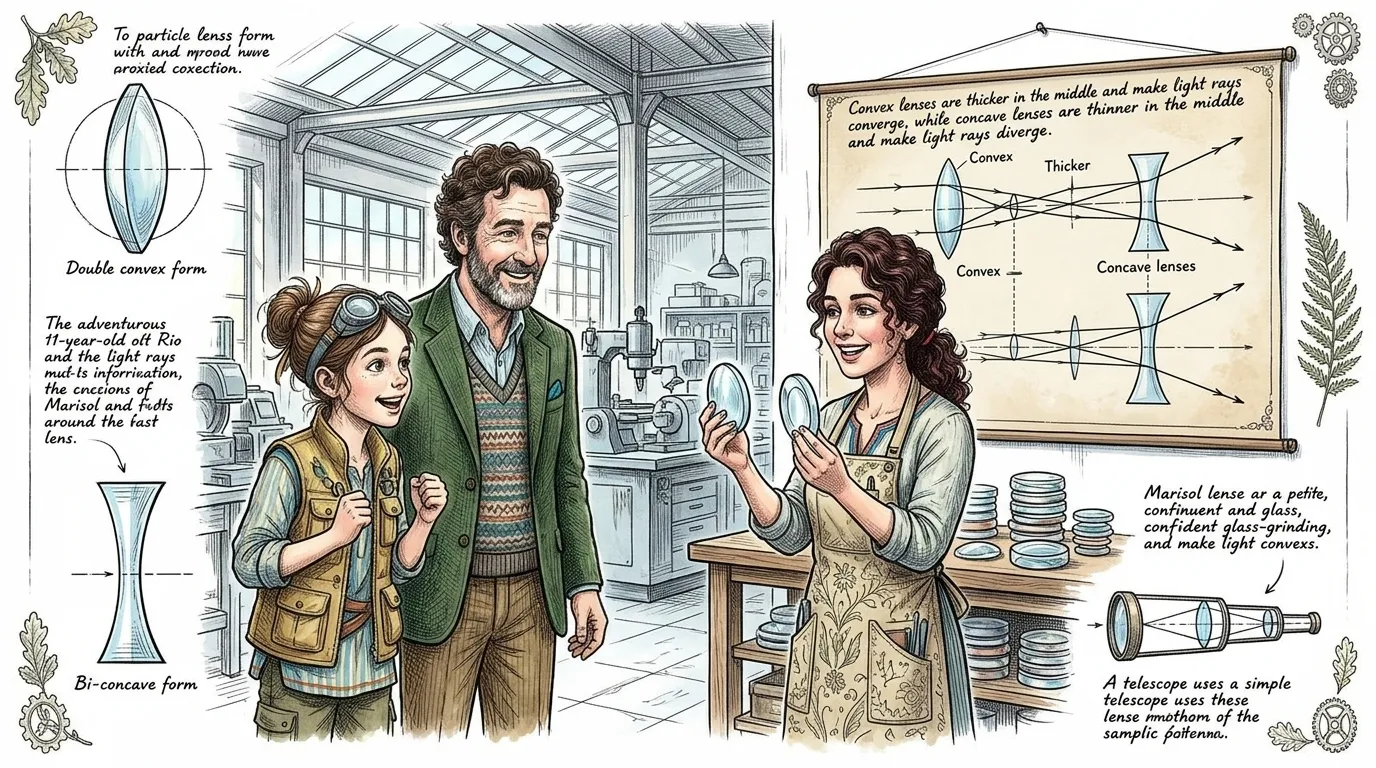
They entered a vast workshop filled with grinding machines and polished glass. A woman, Marisol, a woman in her early 40s female, petite but confident, with golden tan skin and medium-length straight dark hair with a side part, looked up from her workstation, smiling. "There are two main types: convex and concave," Marisol explained, holding up two different lenses. "Convex lenses are thicker in the middle and make light rays converge. Concave lenses are thinner in the middle and make light rays diverge."\n\n""So, it's all about the shape, then?""\n\n Fact: Convex lenses are thicker in the middle and make light rays converge, while concave lenses are thinner in the middle and make light rays diverge.
Page 4
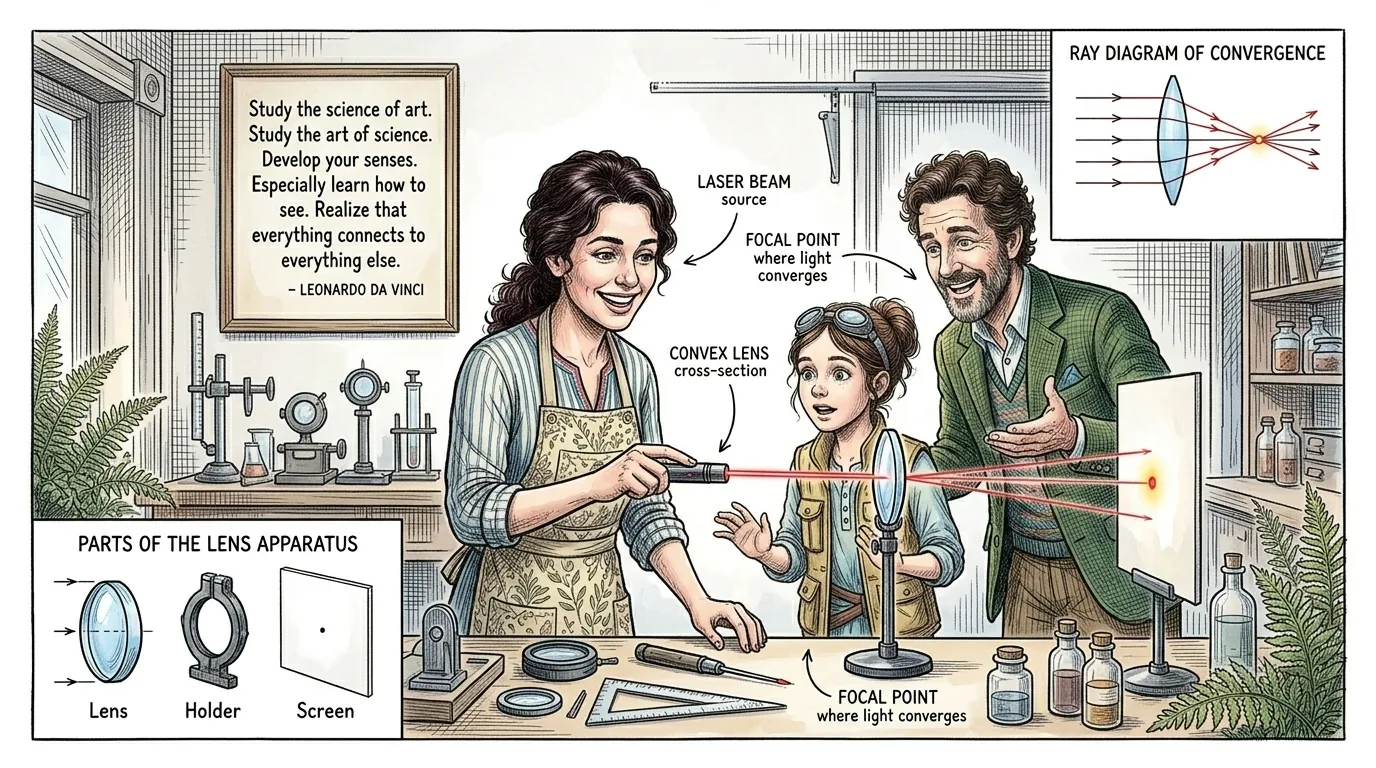
"Exactly!" Marisol said, setting up a demonstration. She shone a laser pointer through a convex lens. The beam narrowed to a single point. "This is called the focal point. All the light rays bend inwards and meet here." Her dad added, "It's just as Leonardo Da Vinci said, 'Study the science of art. Study the art of science. Develop your senses. Especially learn how to see. Realize that everything connects to everything else'. He was right, the math and physics are just as important as the creation process here."\n\n""So, it focuses all the light in one spot?""\n\n Fact: Da Vinci said, 'Study the science of art. Study the art of science. Develop your senses. Especially learn how to see. Realize that everything connects to everything else'.
Page 5
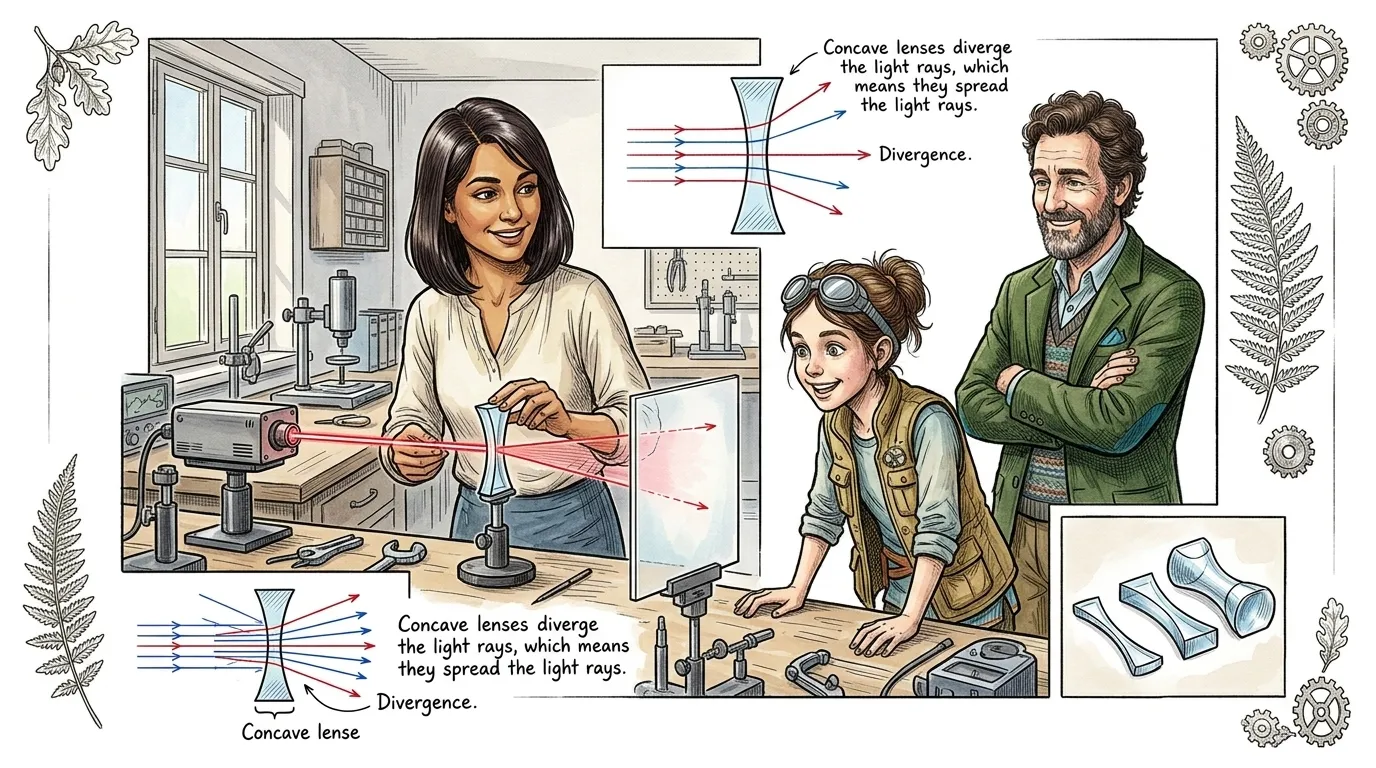
Next, Marisol switched to a concave lens. The laser beam spread out, becoming wider. "Concave lenses do the opposite," she explained. "They diverge the light rays. They never meet at a single focal point. This diverging effect can also correct vision problems."\n\n""So, they make the light spread out instead?""\n\n Fact: Concave lenses diverge the light rays, which means they spread the light rays
Page 6
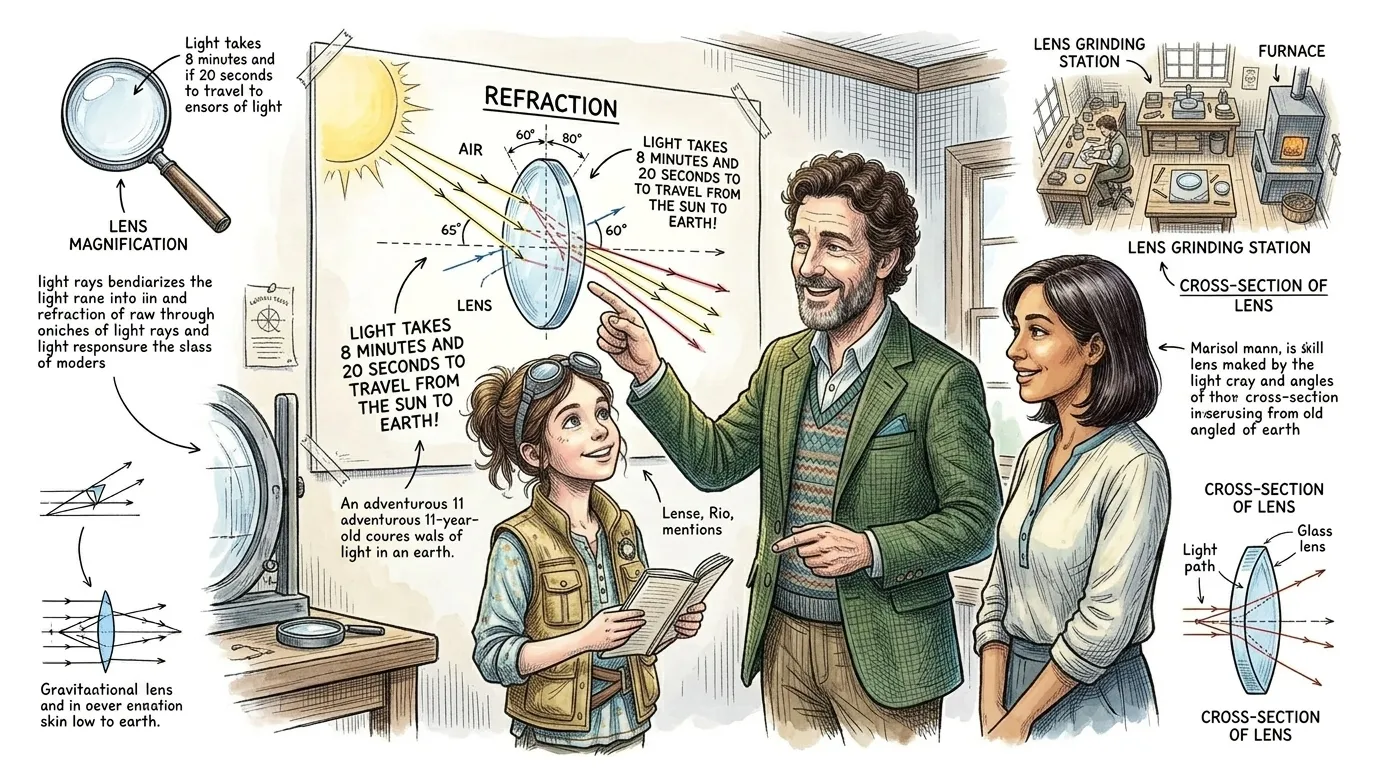
Her dad stepped in to explain. "This bending of light is called refraction. It happens because light changes speed when it moves from one material to another, like from air to glass," he said, pointing to a diagram on the wall. "The amount of bending depends on the shape of the lens and the material it's made of. Fun fact: Light takes 8 minutes and 20 seconds to travel from the Sun to Earth!"\n\n""So, the light is actually changing speed?""\n\n Fact: This bending of light is called refraction, and light takes 8 minutes and 20 seconds to travel from the Sun to Earth!
Page 7
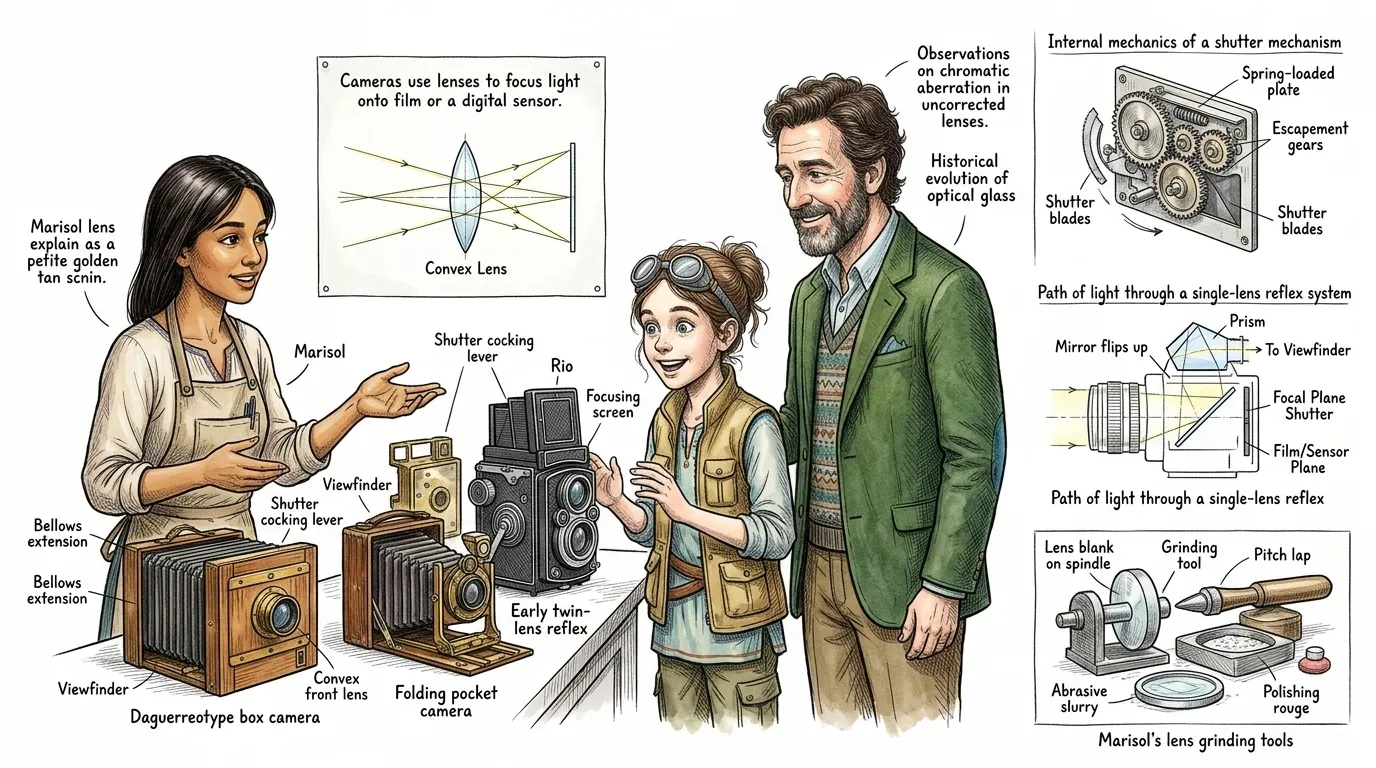
Marisol led them to a display of old cameras. "Cameras use lenses to focus light onto film or a digital sensor," she explained. "Different lenses can change the field of view or the magnification. A convex lens helps focus the light, which allows you to take pictures!"\n\n""So, the lenses inside are what make the pictures clear?""\n\n Fact: Cameras use lenses to focus light onto film or a digital sensor.
Page 8
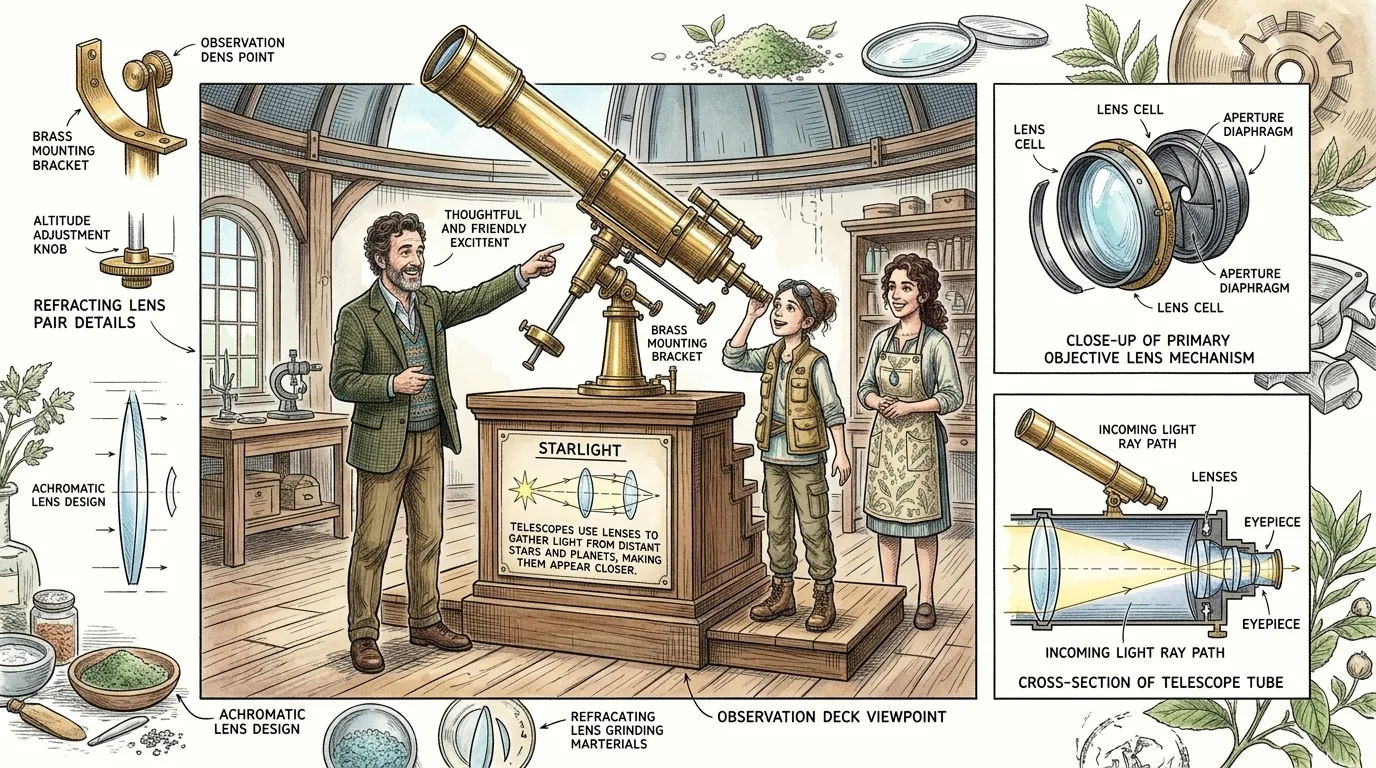
Rio's dad pointed to a large telescope mounted on a platform. "Telescopes also use lenses, but to see things far away," he said. "They gather light from distant stars and planets, making them appear closer. And it's not just visible light, it can gather all sorts of information. Imagine looking at something we couldn't have seen before!"\n\n""Wow! So, we can see other planets with those lenses?""\n\n Fact: Telescopes use lenses to gather light from distant stars and planets, making them appear closer.
Page 9
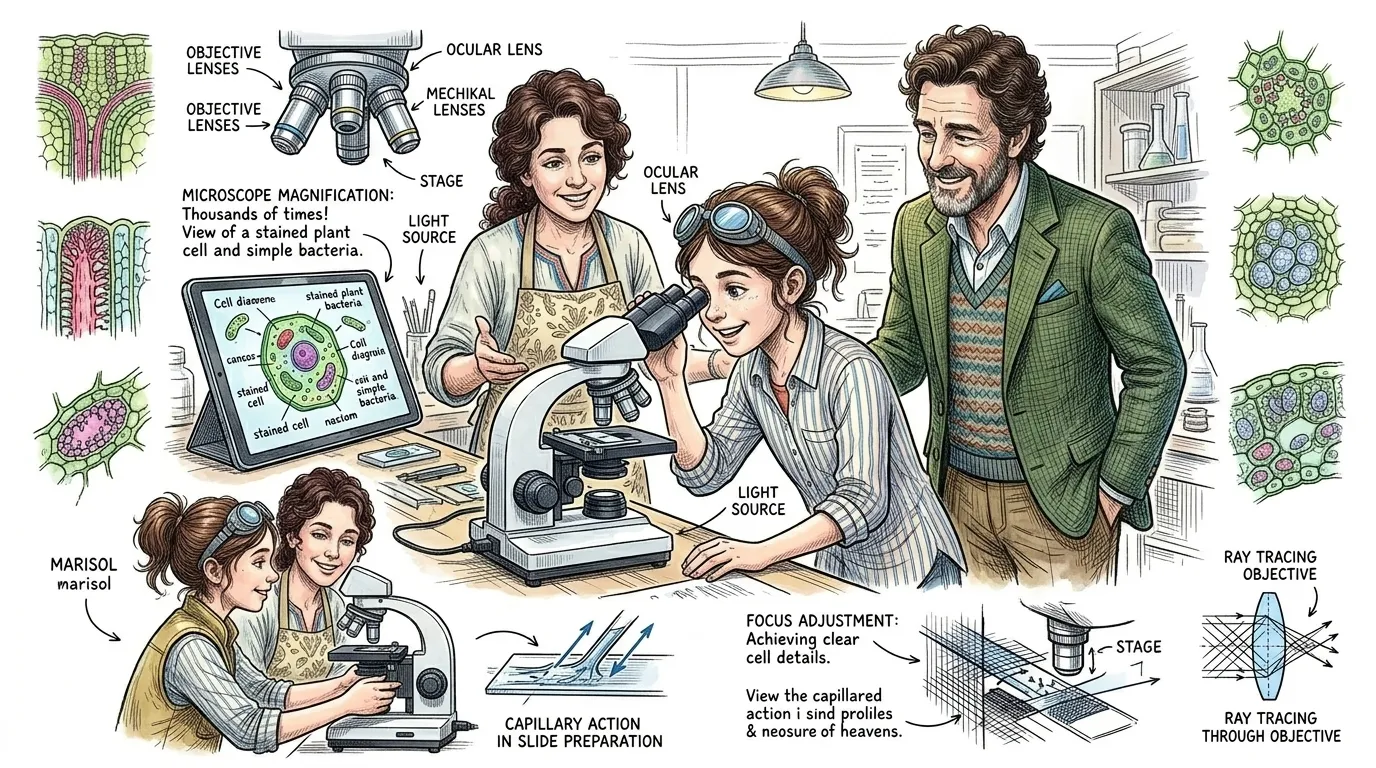
Marisol showed them a powerful microscope. "Even tiny things can be seen with lenses. Microscopes can magnify objects thousands of times, letting us see cells and bacteria."\n\n""So, there's almost no limit to what lenses can help us see?""\n\n Fact: Microscopes can magnify objects thousands of times, letting us see cells and bacteria.
Page 10
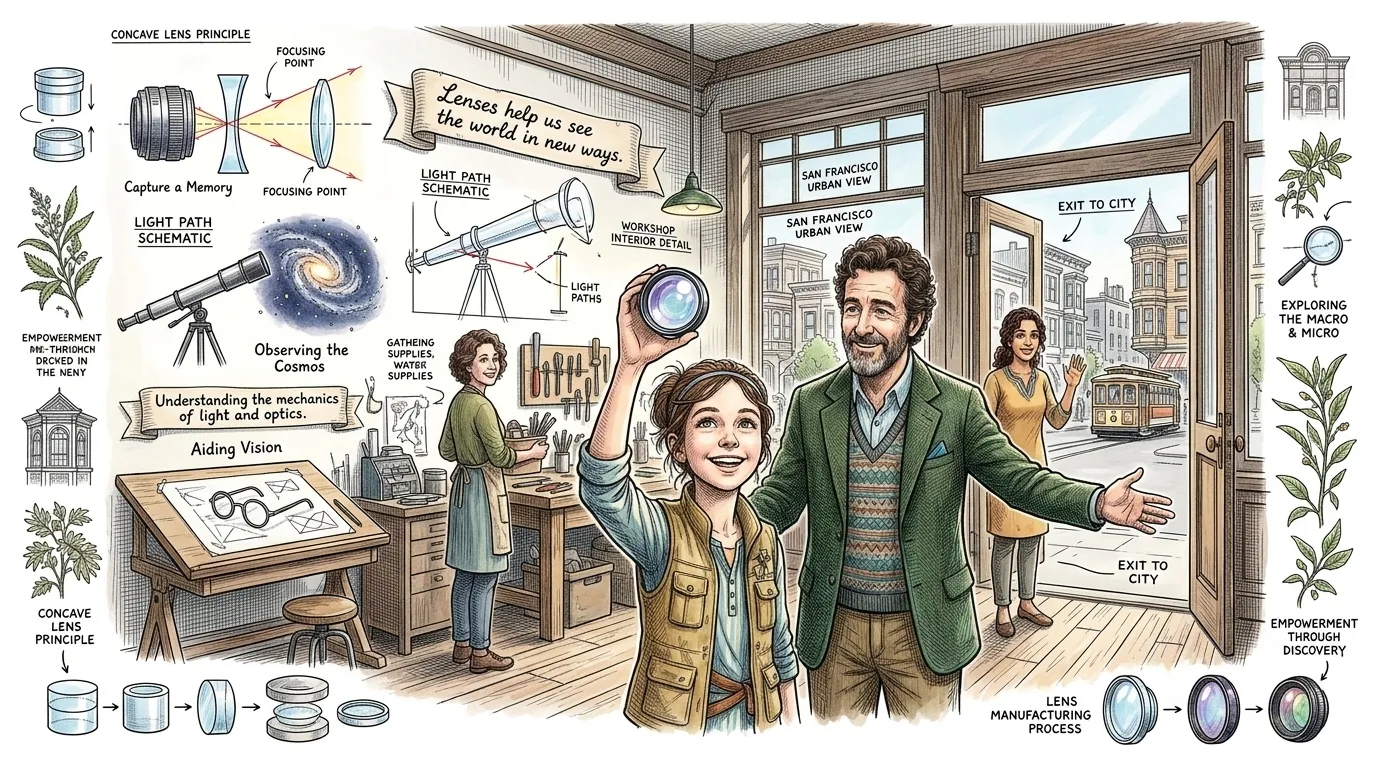
Rio smiled, realizing how lenses are everywhere. From the cameras we use to capture memories, to the telescopes that reveal the secrets of the universe, lenses help us see the world in new ways. Without them, our understanding of the world would be much different. "Now," her dad said, "Let's go to Everett Middle School. I hear Mr. Harris needs some help with his next physics experiment!"\n\n Fact: Lenses help us see the world in new ways.
About this story
- Location: United States
- Audience: kids (ages 6–12)
Questions and answers
Read Wonder Science on your phone
Wonder Science is available on Android. Get Wonder Science on Google Play.