May-Britt Moser
May-Britt Moser — an illustrated science story, set in Global. 10 illustrated pages, free to read on Wonder Science.
Page 1
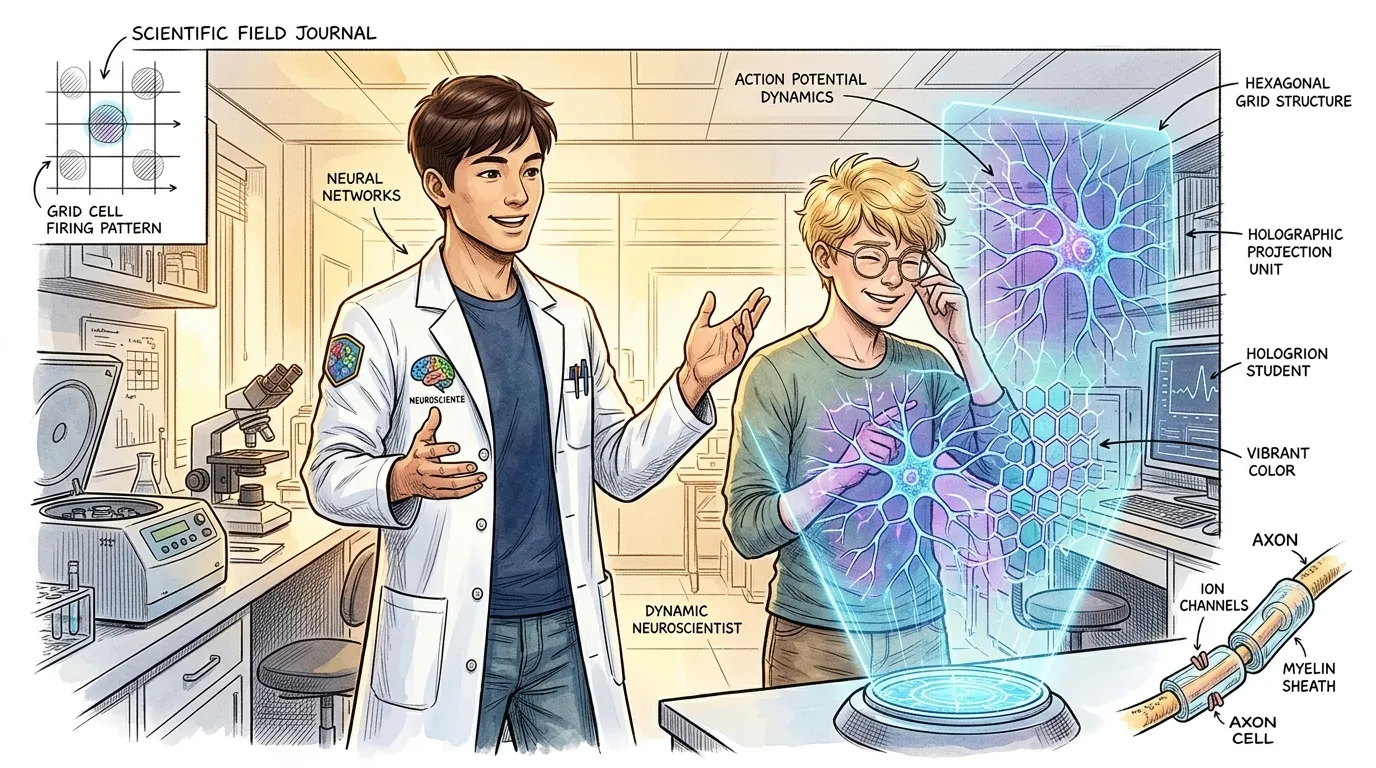
Inside a cutting-edge neuroscience lab, the hum of equipment fills the air. Yuto gestures towards a large holographic display, where intricate neural pathways pulse with light.
""This isn't just a map, boys," Yuto explains, his voice a low, excited murmur. "This is the brain mapping itself, a discovery that fundamentally changed how we understand navigation. Do you know who helped us find this incredible inner GPS, Atlas?"
Atlas squints at the shimmering display, a complex hexagonal pattern emerging. "I think so, Yuto! Is it May-Britt Moser and Edvard Moser? They won a Nobel Prize for it!"
"Precisely, Atlas! And it all began with a profound sense of wonder, much like what Albert Einstein once said: 'The most beautiful thing we can experience is the mysterious. It is the source of all true art and all science.' May-Britt Moser truly embraced that mystery, uncovering how our brains know where we are, and where we're going.""
Page 2
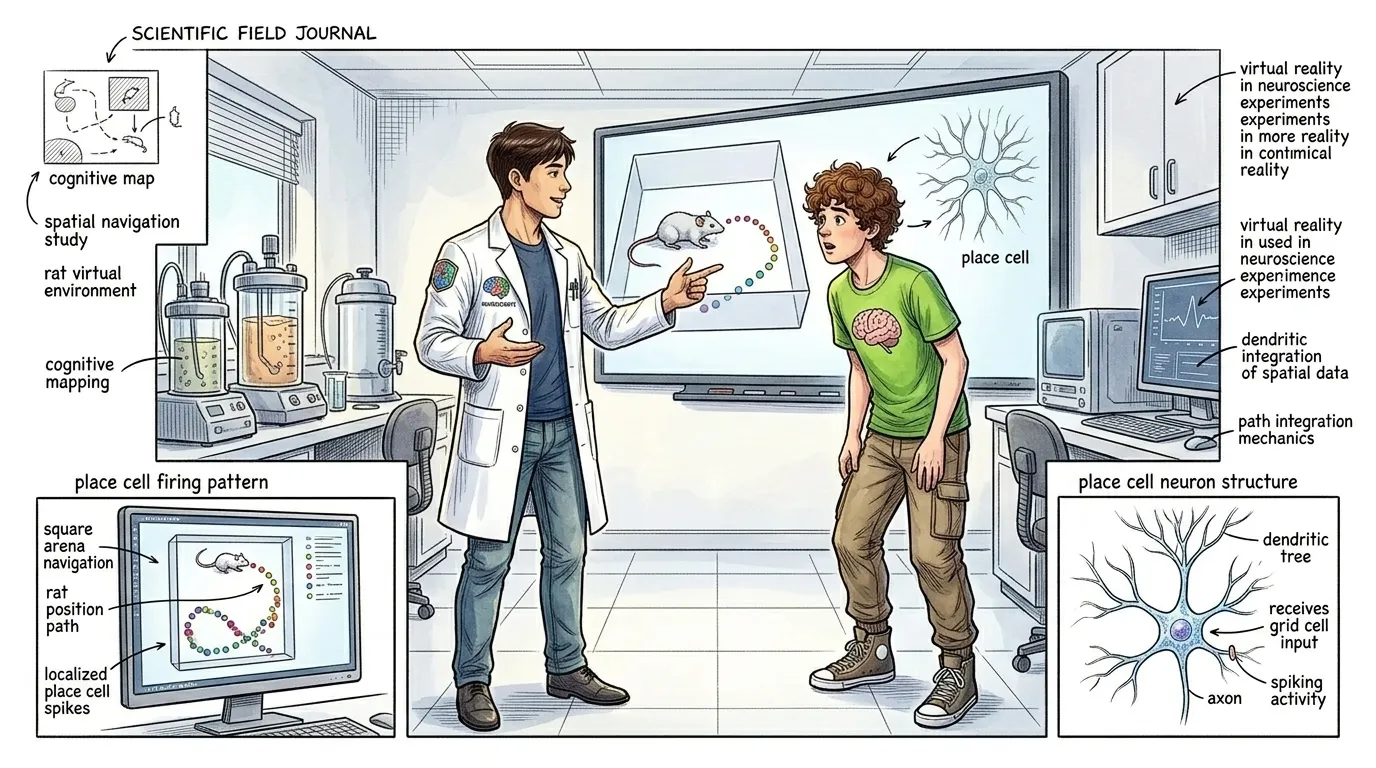
Yuto leads them to a screen displaying a virtual rat navigating a simple square enclosure, its path leaving a trail of colored dots.
""Imagine you're a tiny mouse, Leon, looking for your cheese in a new room," Yuto begins, pointing to the screen. "How does your brain know where you are? Well, back in the 1970s, a scientist named John O'Keefe discovered something amazing: 'place cells' in the hippocampus."
Leon's eyes widen. "Place cells? Do they tell you, 'You are here'?"
"Exactly! When the virtual rat enters a specific part of the room, certain neurons, these 'place cells,' light up like tiny beacons. They tell the rat: 'This is the northwest corner!' or 'You're right by the wall!' But there was a missing piece to the puzzle.""
Page 3
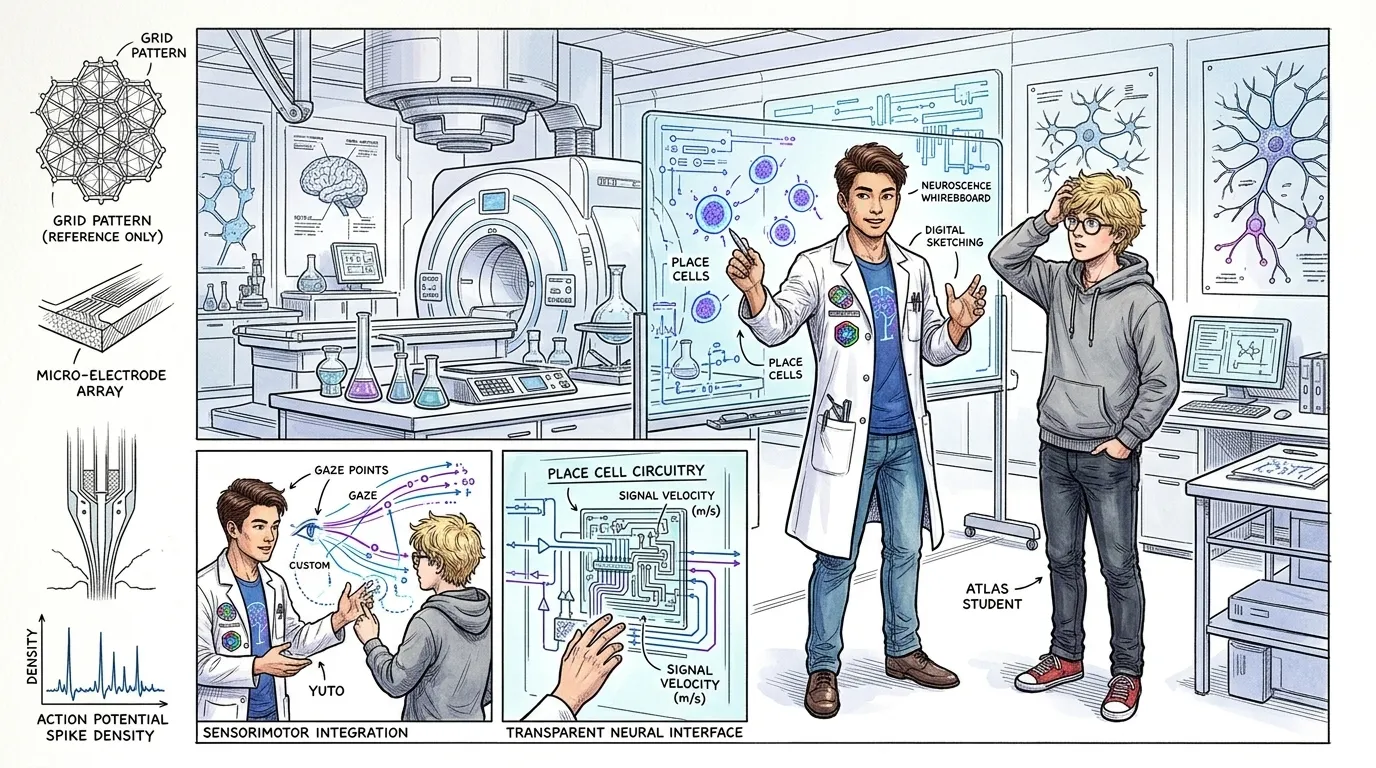
Yuto now sketches on a transparent digital whiteboard, illustrating the limitations of place cells.
""Think about it, Atlas," Yuto prompts, drawing a few isolated circles on the board. "Place cells are like individual pins on a map, telling you 'here' and 'here.' But how do you know the distance between those pins? How do you know if you've moved five steps or fifty steps? Place cells don't give you a sense of scale or direction over a larger area."
Atlas scratches his head. "So, if I know 'this is my room' and 'this is the kitchen,' but not how to get between them efficiently, or how big the house is?"
"Exactly! The brain needed a way to measure and maintain a consistent sense of space, a universal coordinate system that could link all those 'places' together. That's the huge problem May-Britt and Edvard Moser were trying to solve!""
Page 4
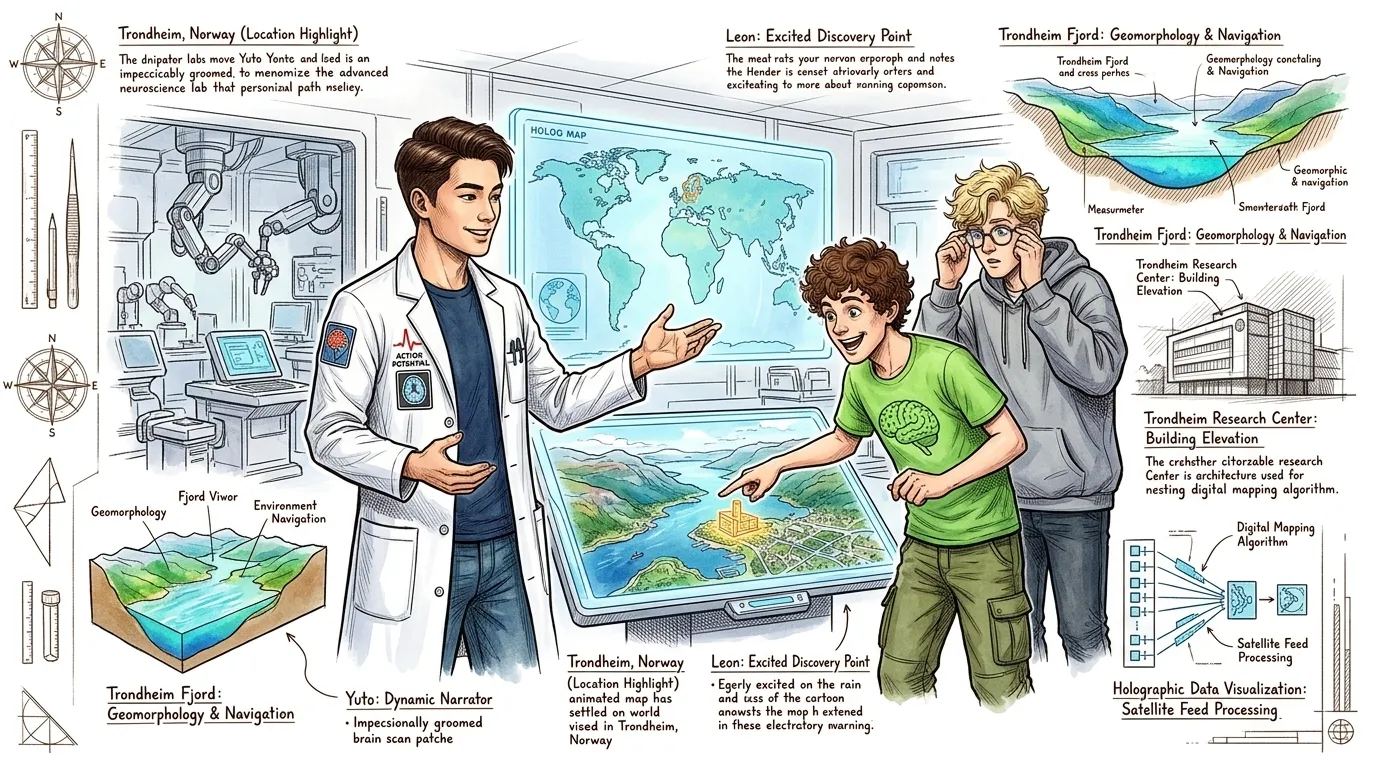
The holographic display shifts, showing an animated journey across a digital globe, settling on a beautiful fjord landscape with the city of Trondheim, Norway.
""Our story takes us far north to Trondheim, Norway, a hub of scientific discovery," Yuto narrates, gesturing towards the scenic digital map. "This is where May-Britt and Edvard Moser established their research at the Kavli Institute for Systems Neuroscience. They were driven by an immense curiosity: how does the brain build its own map of the world?"
Leon points to a glowing building on the map. "So, they decided to find the brain's real map-maker there?"
"Indeed! They suspected there had to be more than just 'place cells.' They hypothesized a more fundamental system, a neural blueprint that allowed us to understand our environment's geometry. Their quest was to find the neurons responsible for this internal coordinate system.""
Page 5
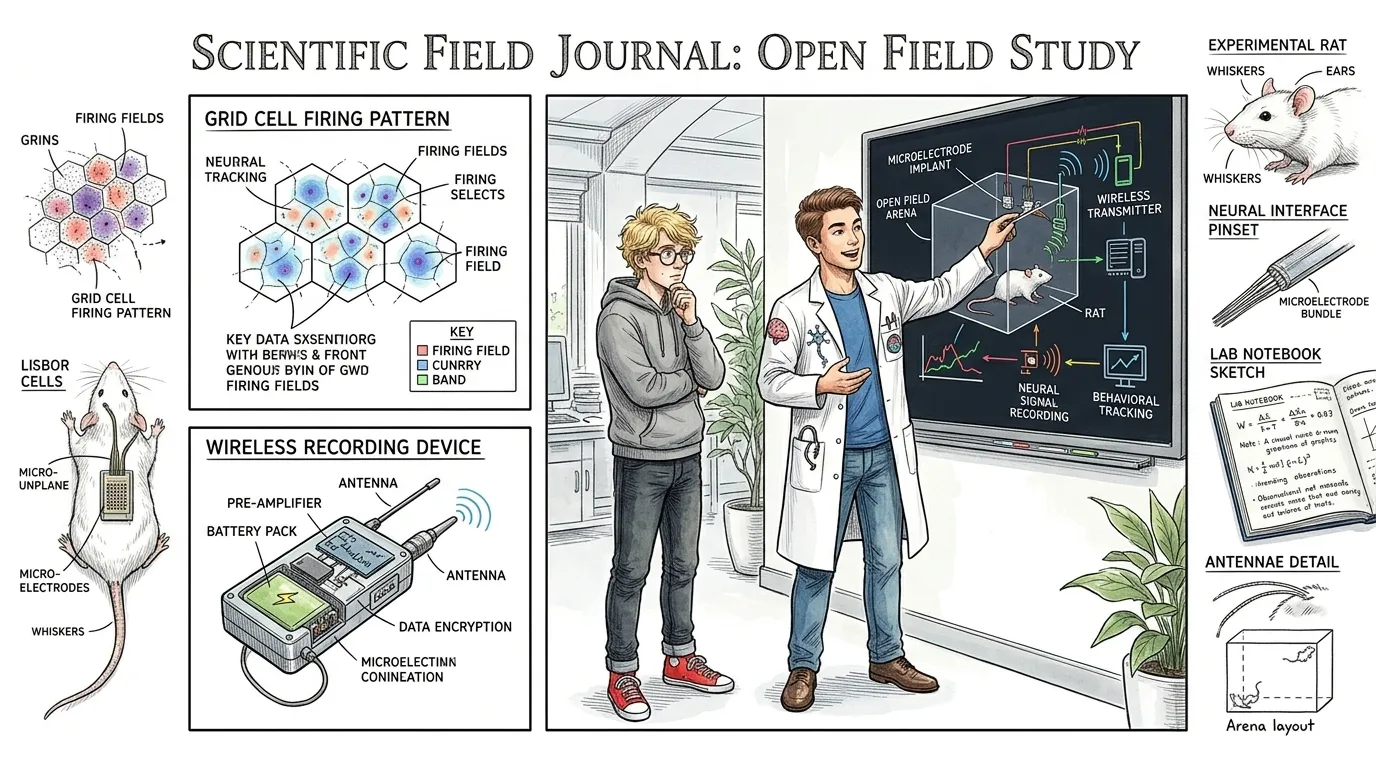
The scene transitions to a detailed scientific diagram of an experimental setup, showing a rat in a large, open arena, with microelectrodes implanted in its brain, wirelessly connected to recording equipment.
""To find this hidden map, the Mosers needed to listen in on the brain directly," Yuto explains, tracing lines on the diagram. "They placed tiny, harmless microelectrodes into a specific part of the rat's brain called the entorhinal cortex, right next to the hippocampus. This allowed them to record the electrical chatter of individual neurons as the rat explored a wide, open arena."
Atlas nods. "So, they're like tiny microphones listening to the brain cells talking?"
"Exactly! The rat was free to roam, chase treats, and play, all while the scientists observed which neurons 'fired' and when. They were looking for any repeating patterns, any signs of a consistent spatial code beyond just 'being here'.""
Page 6
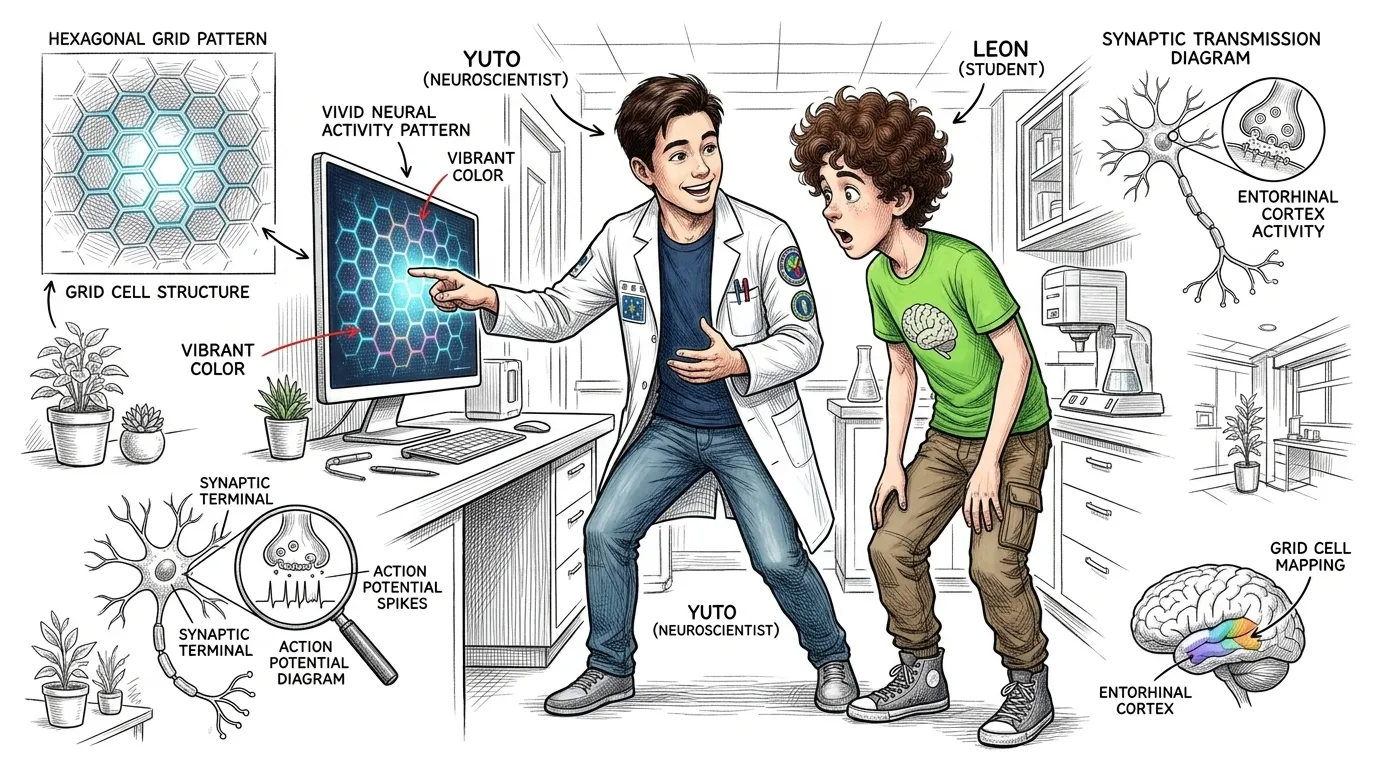
The screen now displays the astonishing results: a vivid, glowing hexagonal grid pattern emerging from the recorded neural activity as the rat moved.
""And then, they saw it – a pattern no one had predicted, a true 'aha!' moment!" Yuto exclaims, his finger tracing the intricate design on the screen. "As the rat explored, certain neurons in the entorhinal cortex fired not just in one spot, but in multiple, equally spaced locations, forming a perfect hexagonal lattice! They called these 'grid cells.'"
Leon gasps. "Like a honeycomb! So the brain has its own invisible graph paper?"
"Yes, Leon, precisely! Each grid cell fires at different points in space, and when you combine many of them, they create a breathtaking, geometrically precise map of the environment. This was the missing piece – the brain's built-in coordinate system!""
Page 7
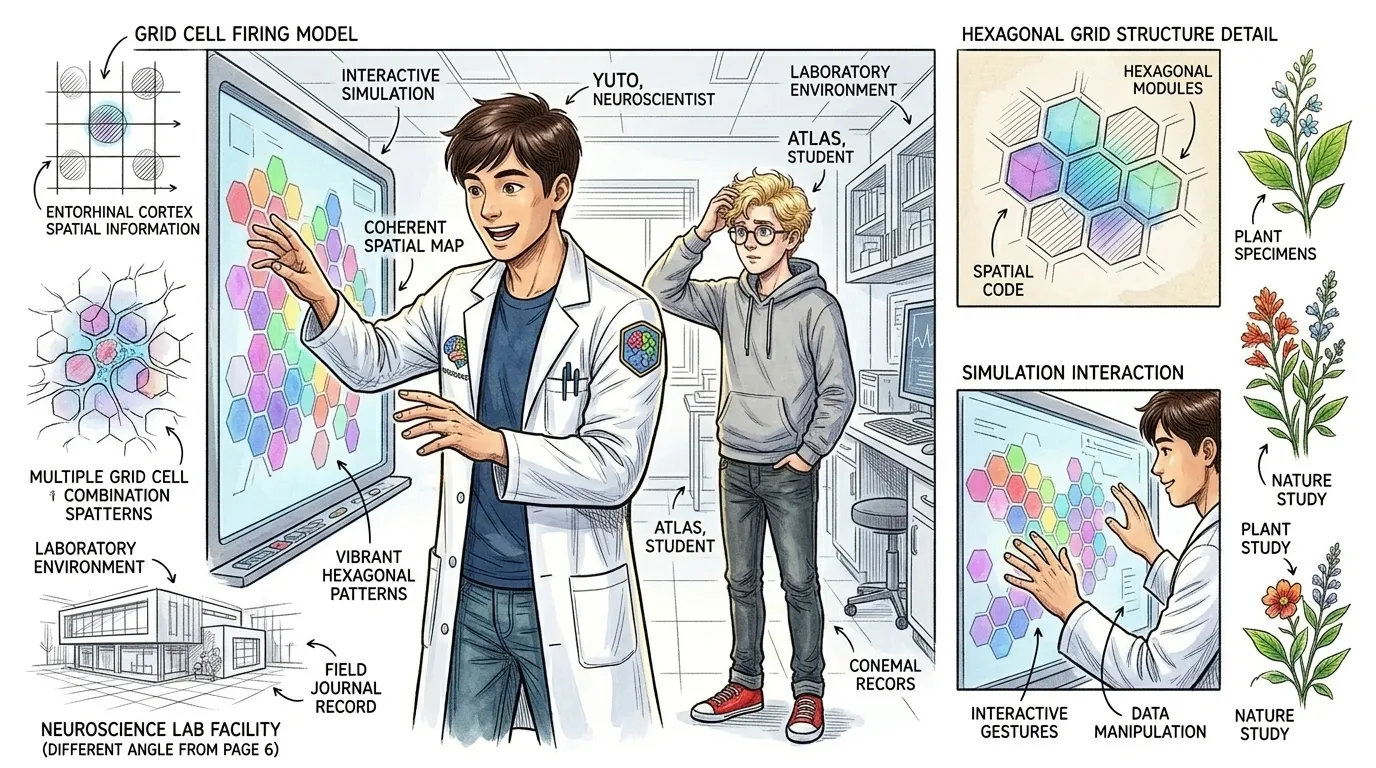
Yuto now uses a sophisticated interactive simulation, demonstrating how multiple grid cells combine to create a coherent spatial map.
""Imagine individual grid cells are like tiny rulers or compasses, each with a different 'scale' or 'orientation,'" Yuto explains, manipulating the simulation. "One cell might fire every five steps in a certain direction, another every ten steps in a different direction. But when these grid cells work together, their hexagonal patterns overlap, creating a super-precise map that tells the brain exactly where it is in an environment, how far it's traveled, and in what direction."
Atlas looks thoughtful. "So it's not just 'you are here,' but 'you are exactly here on the map, and you can get there by following these coordinates'?"
"Spot on! This grid cell system acts as a mental GPS, allowing us to navigate new places, remember routes, and form mental maps of our surroundings. It's an elegant, universal solution for spatial understanding.""
Page 8
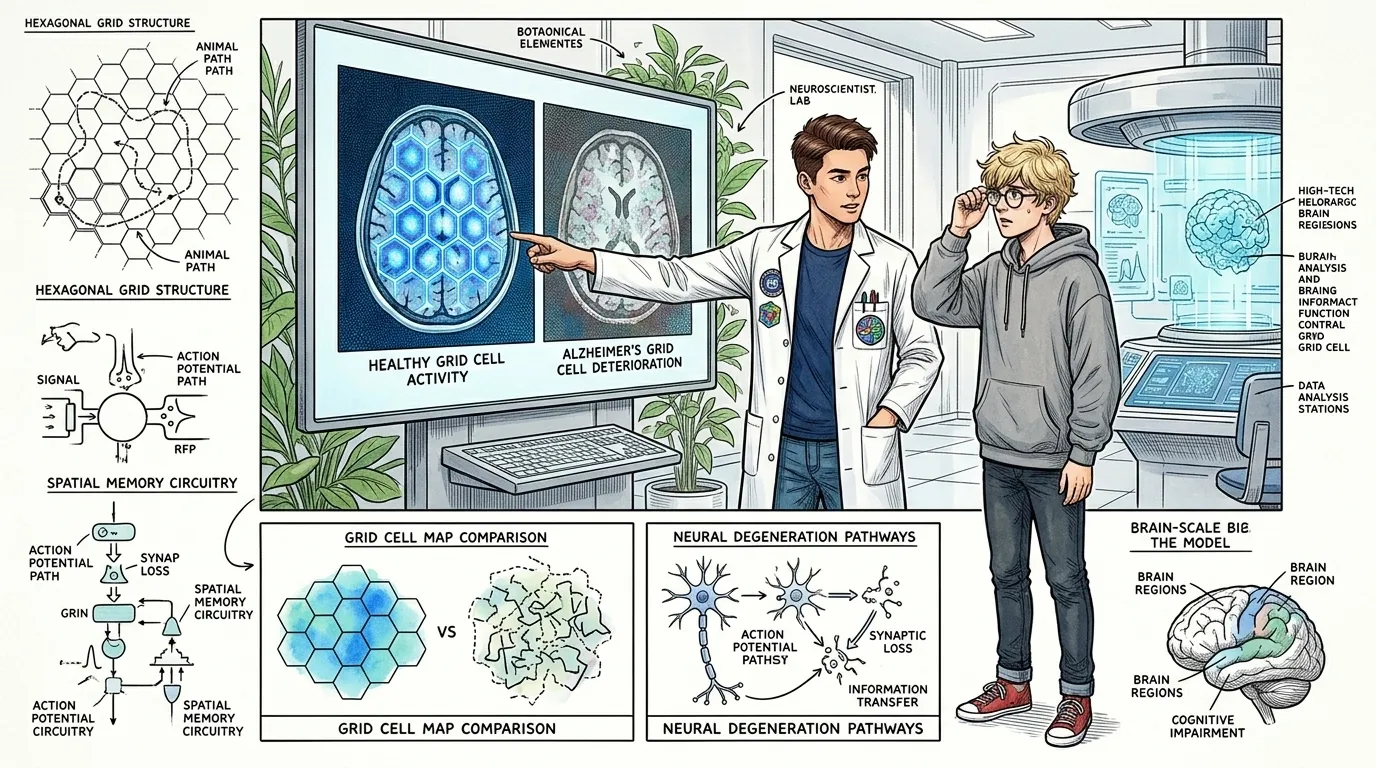
The display changes to a comparison of healthy brain activity versus that of an Alzheimer's patient, highlighting the deterioration of the grid cell system.
""This discovery wasn't just fascinating; it has profound implications for understanding human health," Yuto says, pointing to a brain scan on the left, showing robust grid cell activity. "One of the earliest symptoms of Alzheimer's disease is often disorientation and getting lost, even in familiar surroundings. Now we understand why."
Atlas's voice softens. "Is it because their grid cells stop working?"
"Precisely. Research shows that the entorhinal cortex, home to grid cells, is one of the first brain regions affected by Alzheimer's. Their internal GPS breaks down. Understanding this mechanism is crucial for developing new treatments and diagnostic tools to combat this devastating disease.""
Page 9
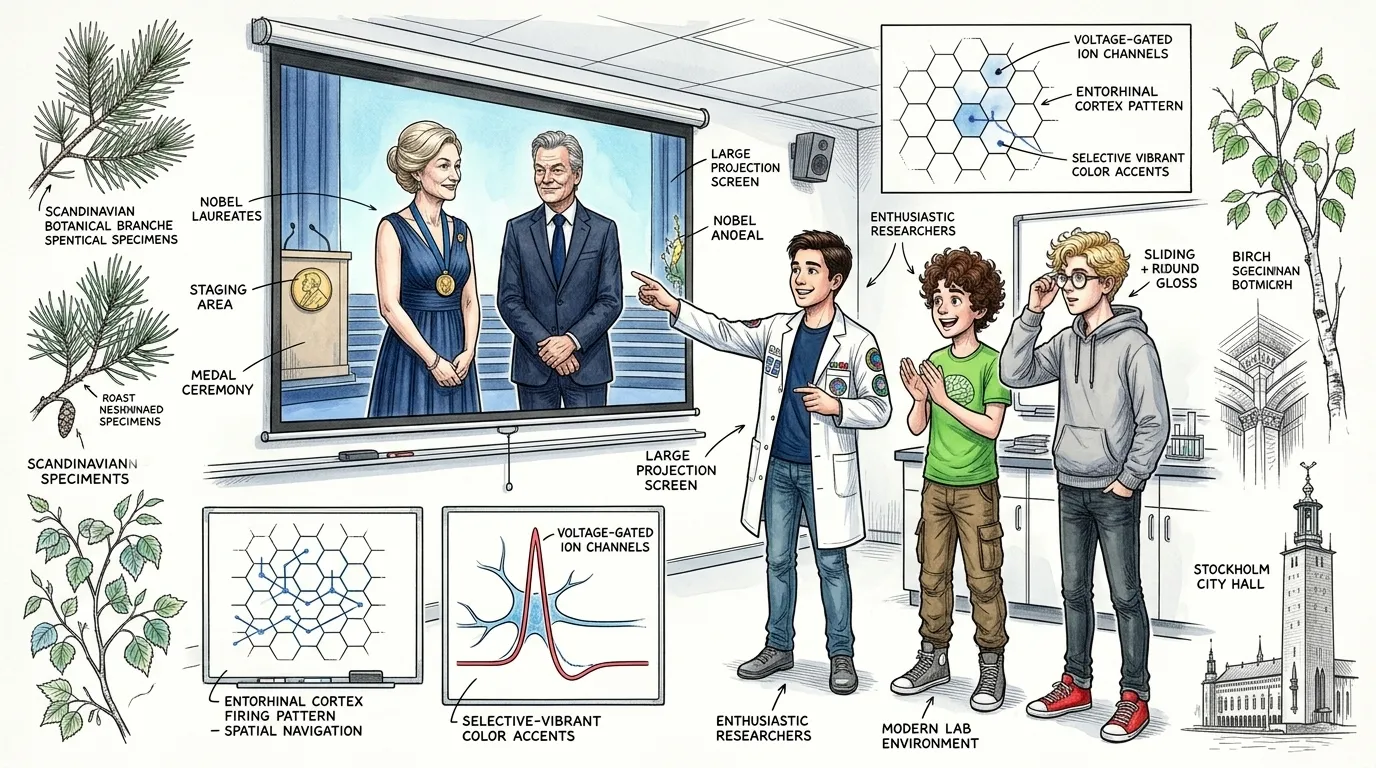
The scene shifts to a celebratory image of May-Britt Moser and Edvard Moser, receiving their Nobel Prize, while Leon, Atlas, and Yuto watch a broadcast on a screen.
""The significance of the Mosers' work was undeniable," Yuto says, a proud smile on his face as the screen shows a historical moment. "In 2014, May-Britt Moser and Edvard Moser, along with John O'Keefe, were awarded the Nobel Prize in Physiology or Medicine for their discoveries of cells that constitute a positioning system in the brain. It was a moment of global recognition for unraveling one of the brain's deepest secrets."
Leon claps excitedly. "A Nobel Prize for discovering the brain's GPS! That's so cool!"
"Absolutely, Leon. Their work didn't just explain how we find our way; it opened new pathways to understanding memory, learning, and how our brains construct our perception of the world. It's a foundational piece of the puzzle for all neuroscience.""
Page 10
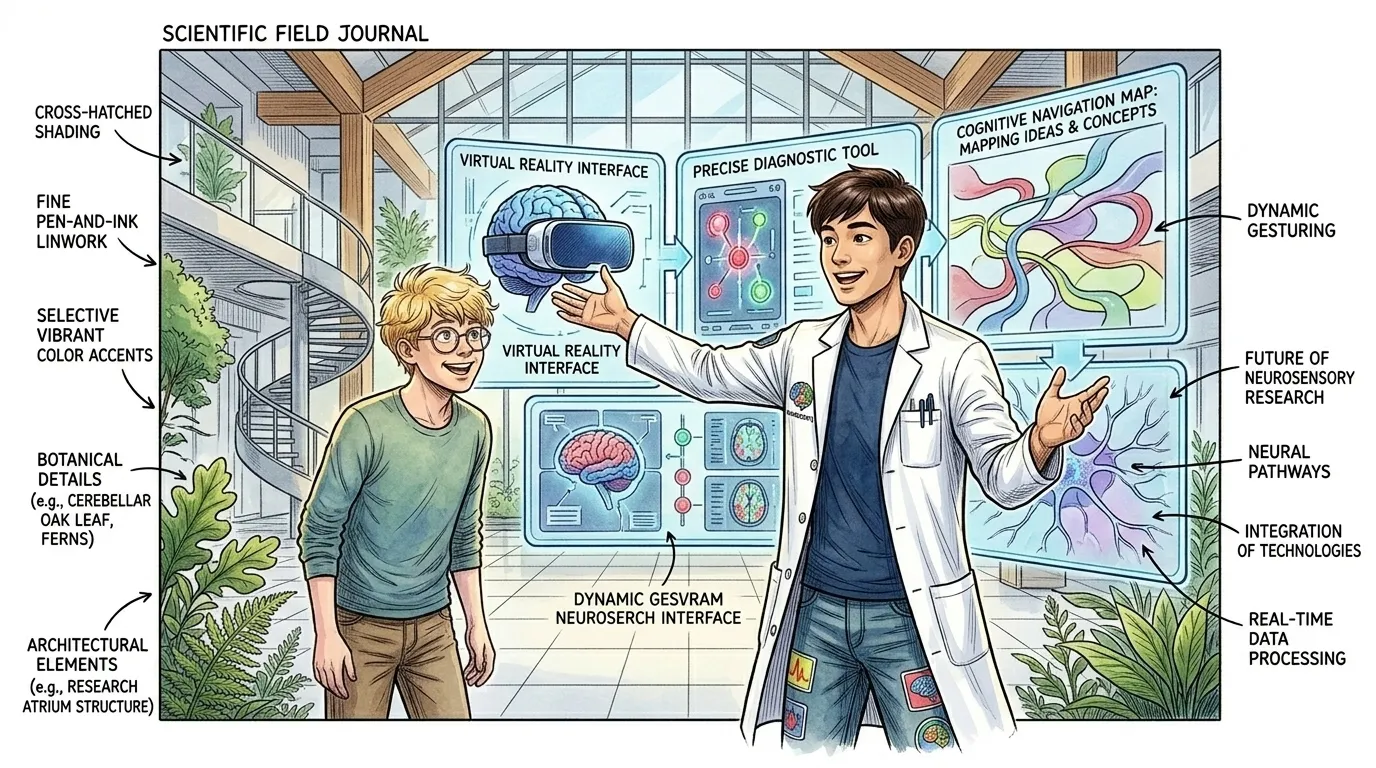
The final display is a dynamic montage, illustrating the widespread impact and ongoing research inspired by May-Britt Moser's discoveries across various fields.
""May-Britt Moser's pioneering work continues to inspire scientists around the globe," Yuto concludes, sweeping his arm across the montage of images. "From developing better diagnostic tools for neurological disorders to exploring how virtual reality might restore navigational abilities, her legacy drives countless research efforts. We're also studying how grid cells might be involved in abstract thought, helping us 'navigate' ideas and concepts!"
Atlas grins. "So, grid cells don't just help us find our way to the store, but also help us find new ideas?"
"The brain, boys, is the universe's most complex and wondrous creation. And thanks to scientists like May-Britt Moser, we continue to unlock its amazing secrets, one grid at a time. The adventure of discovery never truly ends.""
About this story
- Location: Global
- Audience: general readers
Questions and answers
Read Wonder Science on your phone
Wonder Science is available on Android. Get Wonder Science on Google Play.