Murray Gell-Mann
Murray Gell-Mann — an illustrated science story, set in Global. 10 illustrated pages, free to read on Wonder Science.
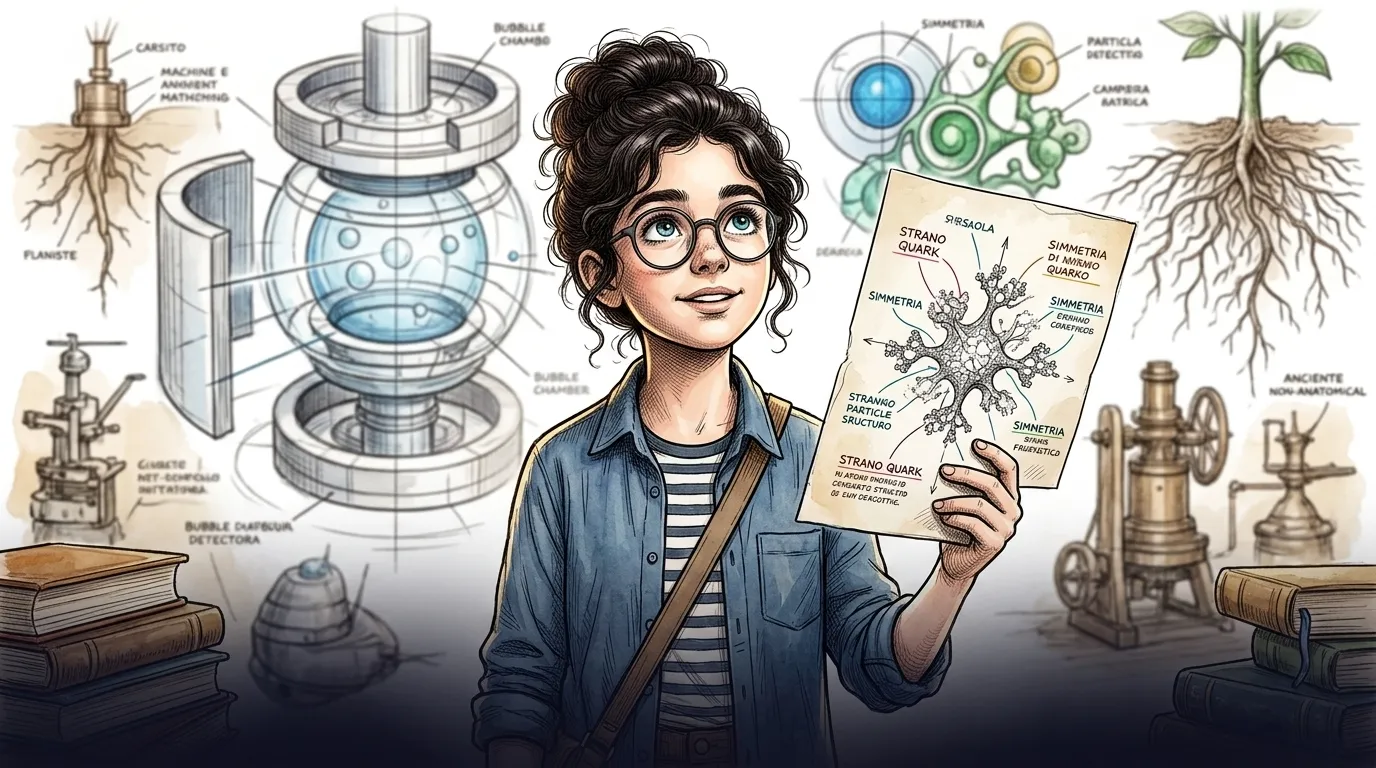
Page 1
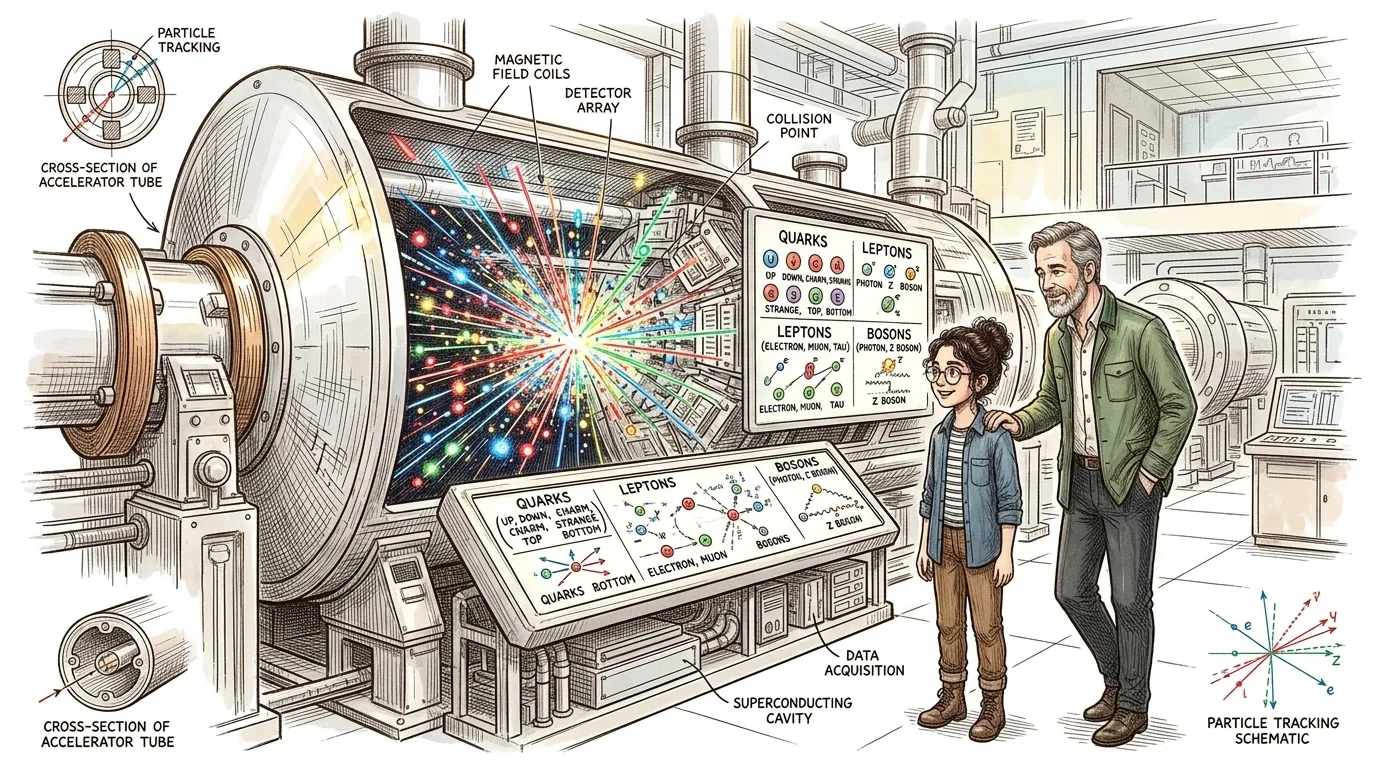
In the heart of the atom, a storm of particles dances – quarks, leptons, bosons – an intricate ballet governed by nature's most fundamental forces. Murray Gell-Mann, a name synonymous with this subatomic world, brought order to this chaos, revealing the elegant patterns hidden within.
Fact: The image visualizes the subatomic world, showcasing a particle collision inside an accelerator. The complex machinery and showering particles are key, along with the overlay of a diagram explaining particle types. The main characters are present as observers.
Page 2
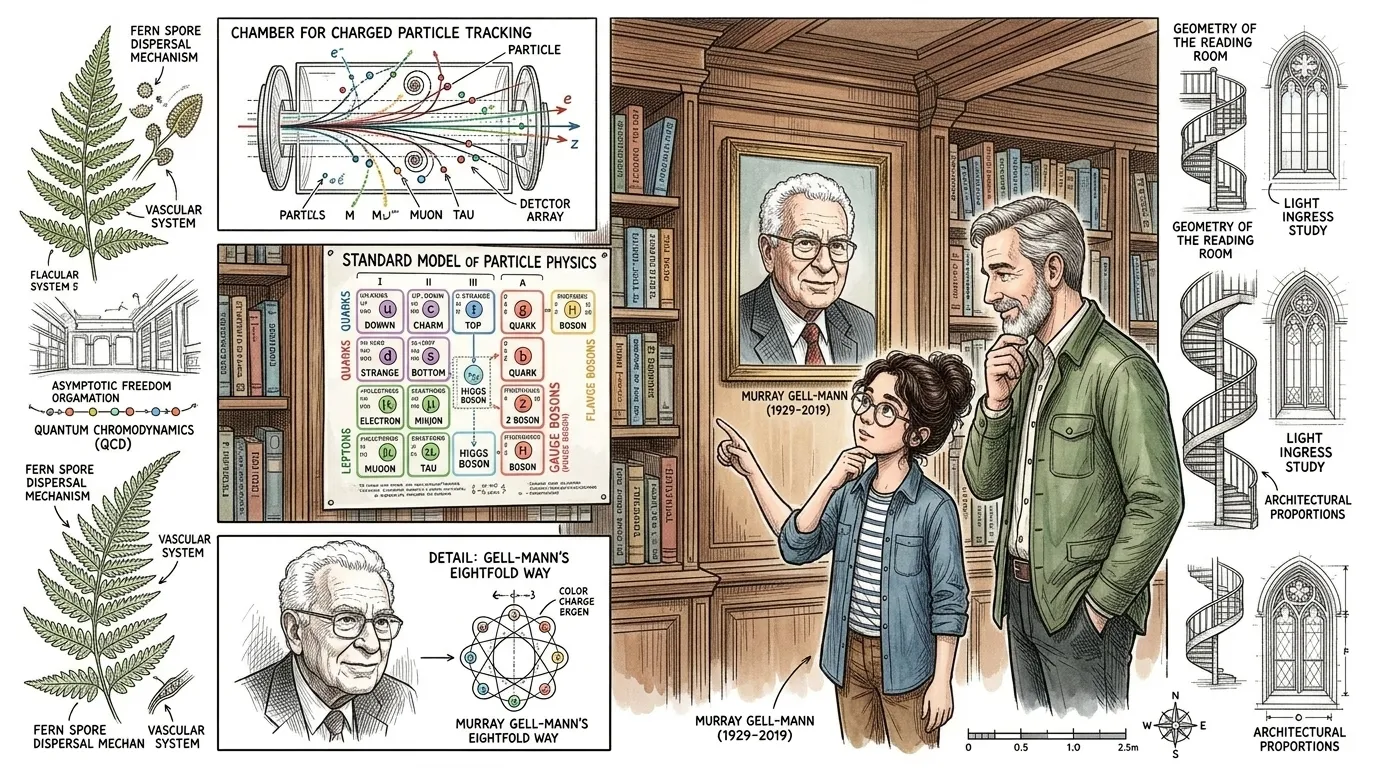
Born in New York City in 1929, Gell-Mann showed early promise, entering Yale at the tender age of 15. His insatiable curiosity led him to Caltech, where he would spend most of his career, unraveling the deepest secrets of matter.
"'Dad, all these particles... it seems so chaotic. How did anyone make sense of it all?' Mariam asked, tilting her head."
Fact: Mariam and her father are in a library, with a portrait of Murray Gell-Mann visible in the background. The Standard Model poster on the wall offers additional visual information.
Page 3
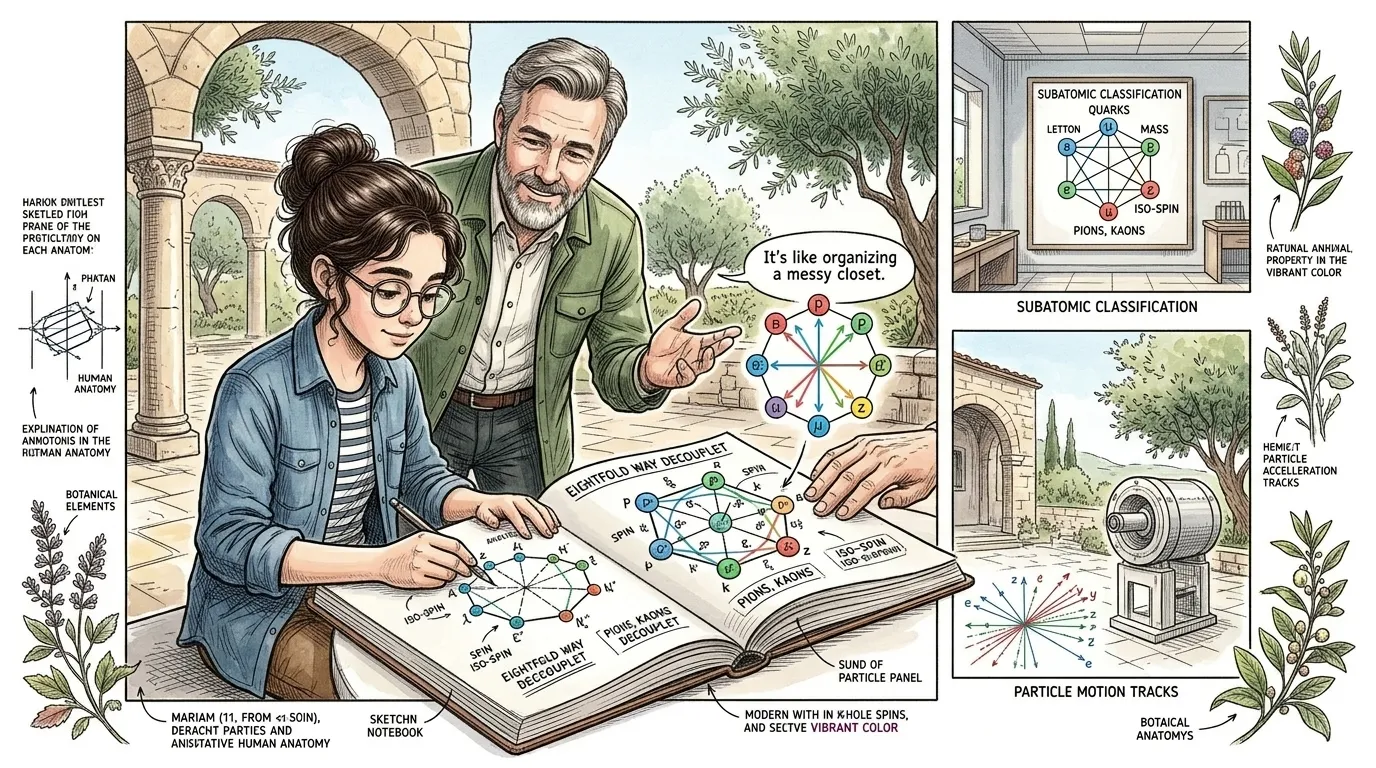
The key to understanding the particle zoo, as it was then known, lay in recognizing patterns. Gell-Mann, along with Yuval Ne'eman, independently discovered a mathematical scheme called the Eightfold Way, a system of organization that grouped particles based on their properties.
"'It's like organizing a messy closet,' Father explained. 'Imagine all sorts of clothes – shirts, pants, socks – scattered everywhere. The Eightfold Way was like creating neat piles, grouping similar items together.'"
Fact: A close-up of Mariam and her notebook, showing the Eightfold Way diagram. The image focuses on the visual representation of this organizational system.
Page 4
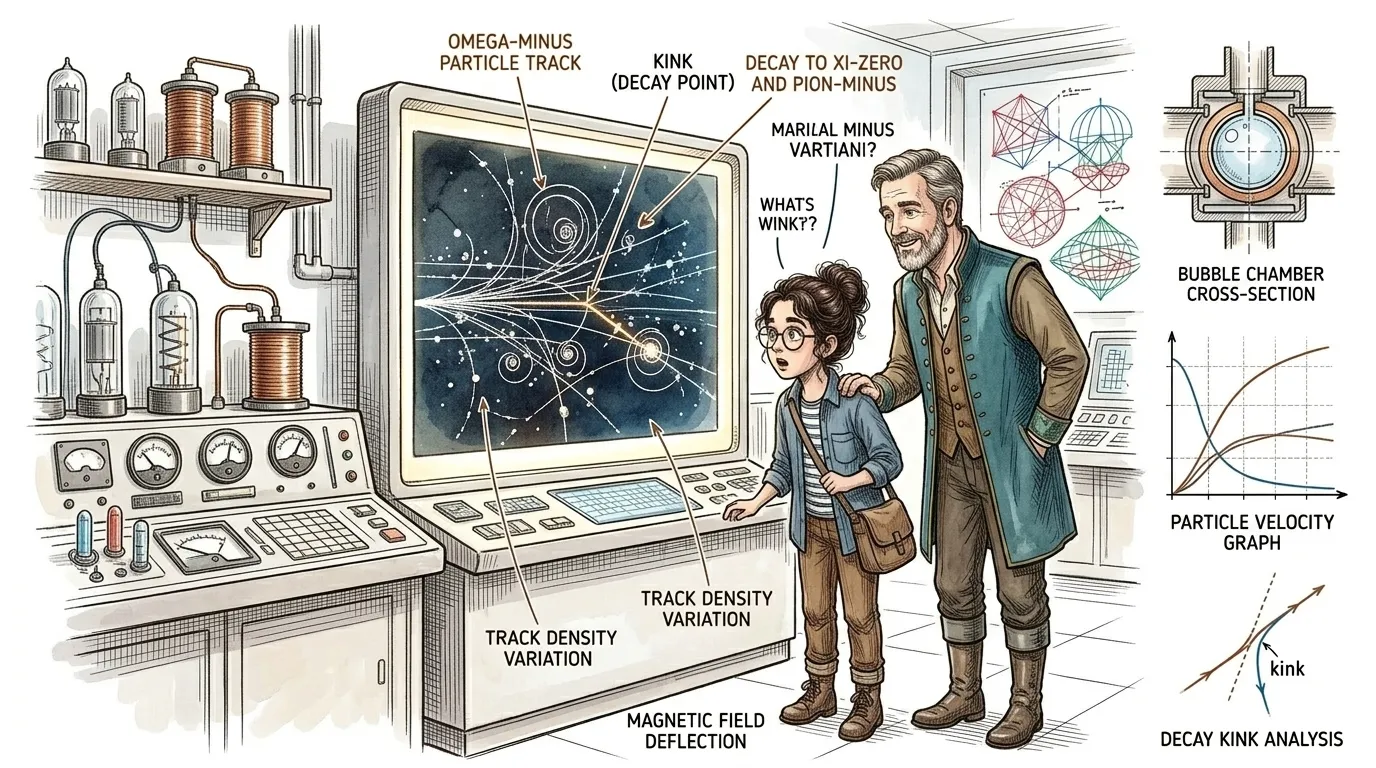
The Eightfold Way wasn't just a classification system; it predicted the existence of new particles. One such particle, the Omega-minus, was predicted to have specific properties. Its subsequent discovery in 1964 was a triumph for Gell-Mann's theory.
"'So, it's like saying, 'If my theory is correct, then something should exist,' and then finding that thing?' Mariam asked, her eyes widening."
Fact: Mariam and her father are observing the discovery of the Omega-minus particle in a lab setting. The bubble chamber photograph is a key element.
Page 5
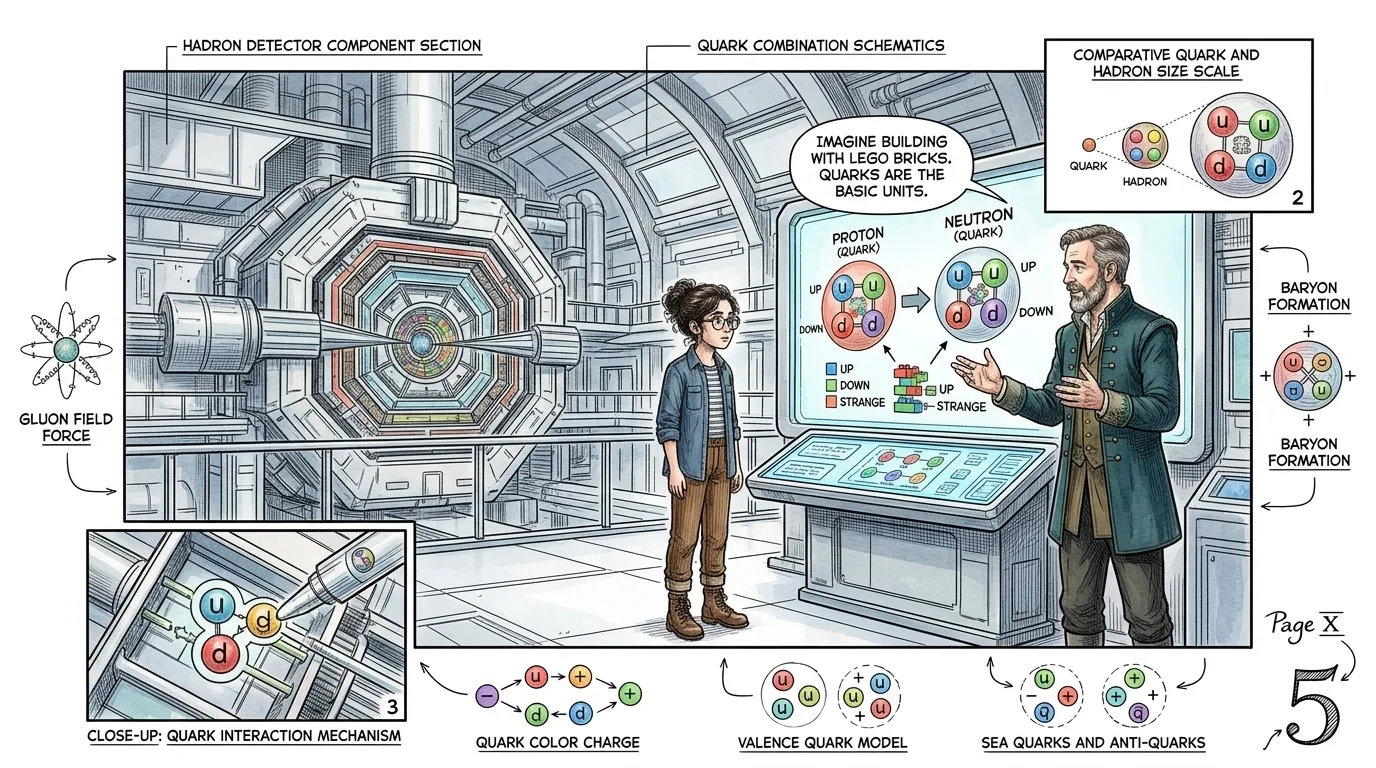
But Gell-Mann's most profound contribution was the concept of quarks. In 1964, he proposed that protons and neutrons, previously considered fundamental particles, were actually composed of even smaller entities: quarks. Initially, he envisioned three types: up, down, and strange.
"Father explained, 'Imagine building with Lego bricks. Protons and neutrons, which we thought were basic, are actually made of even smaller blocks – these are quarks.'"
Fact: A visual breakdown of protons and neutrons into their quark components. The color-coded quarks are crucial for understanding the concept.
Page 6
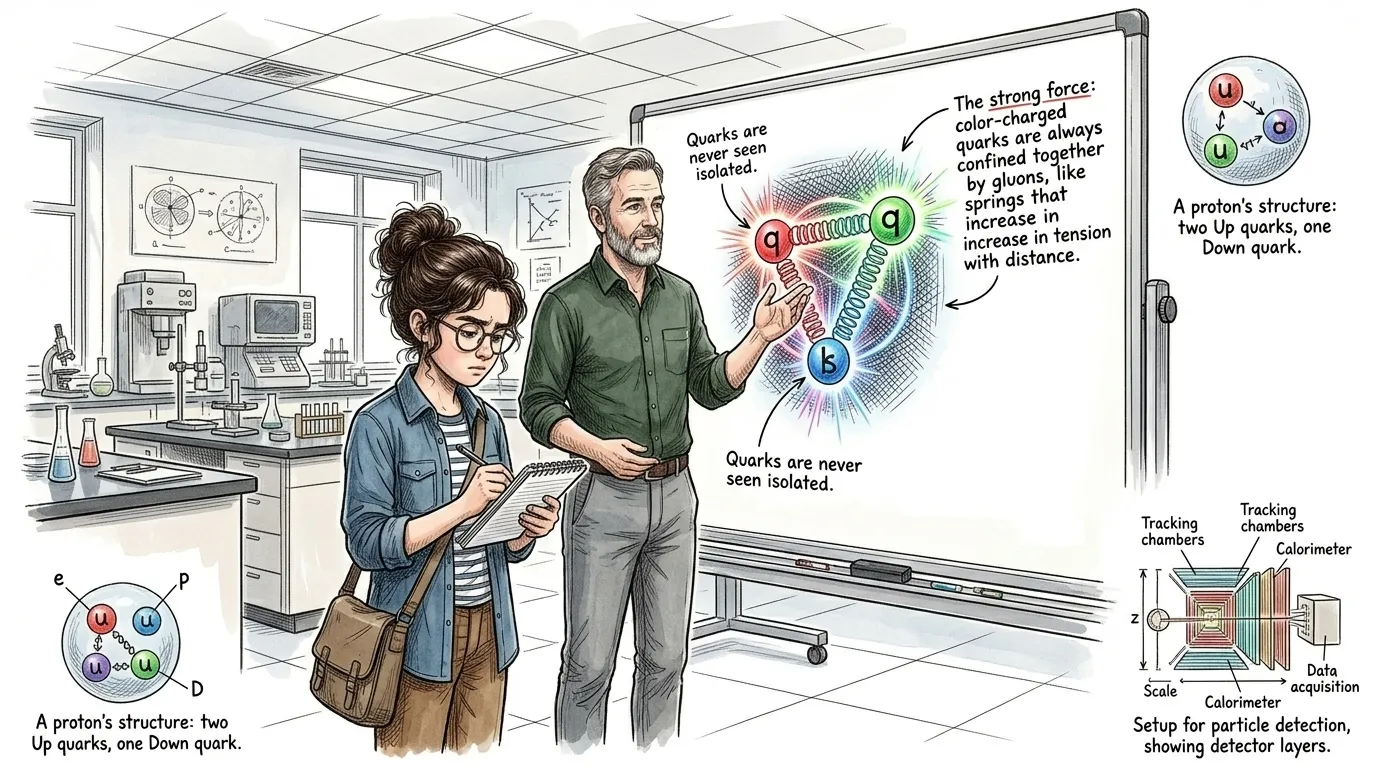
The idea was revolutionary, providing a new level of simplicity and order to the subatomic world. However, the existence of quarks was initially met with skepticism, as they were never observed in isolation. This led Gell-Mann to propose that quarks are permanently confined within hadrons, like protons and neutrons.
"Father added, 'It's like they're always in a group, never alone. They're confined."
Fact: An illustration explaining quark confinement. The spring-like force field and confined region are key visual elements. Mariam is actively learning.
Page 7
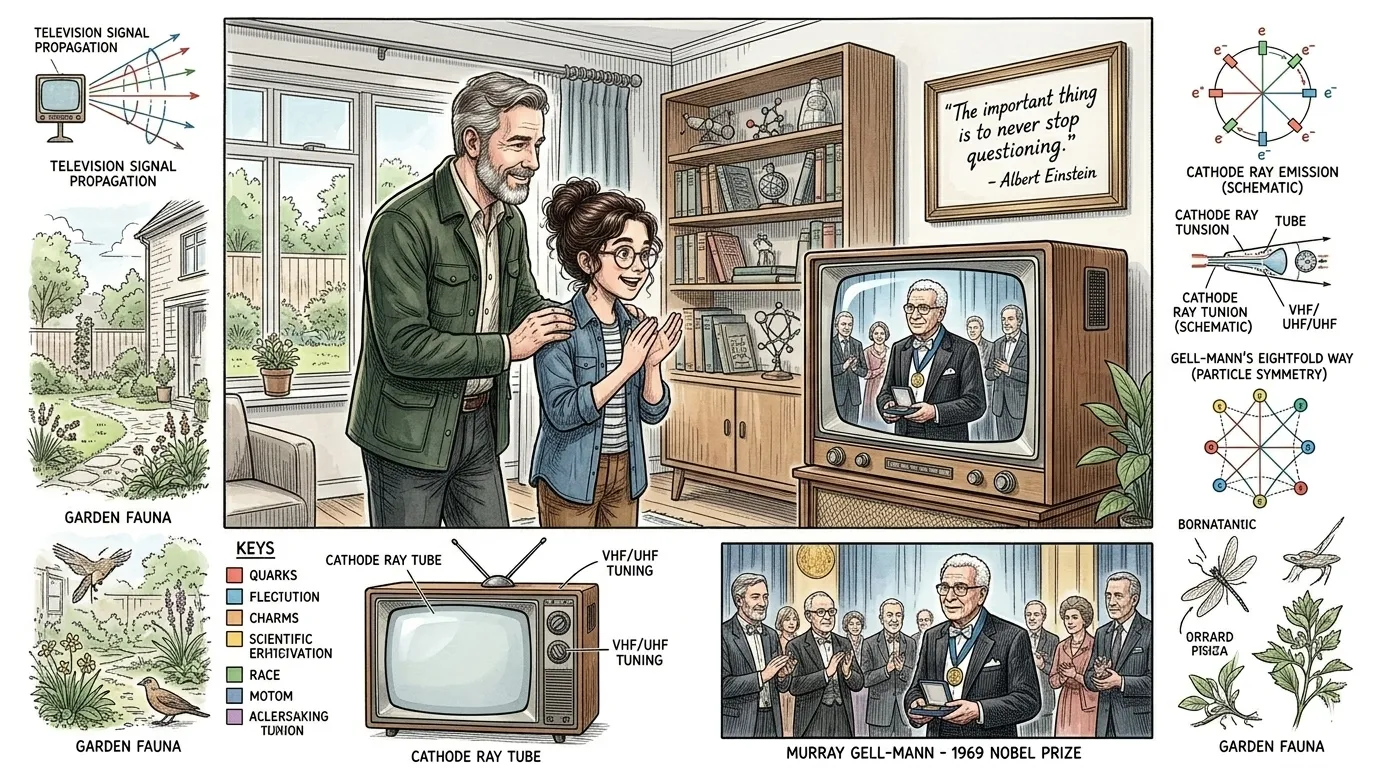
Gell-Mann received the Nobel Prize in Physics in 1969 for his contributions to the theory of elementary particles. His work not only revolutionized our understanding of matter but also paved the way for future discoveries, including the existence of more quarks and the development of the Standard Model.
"'That's amazing,' Mariam said. 'He won the Nobel Prize for figuring out how everything is made of smaller things?' 'Exactly,' replied her Father, 'like what Albert Einstein said, "The important thing is to never stop questioning."'"
Fact: The scene shows Mariam and her father watching Murray Gell-Mann receiving the Nobel Prize. The television broadcast is a key visual element.
Page 8
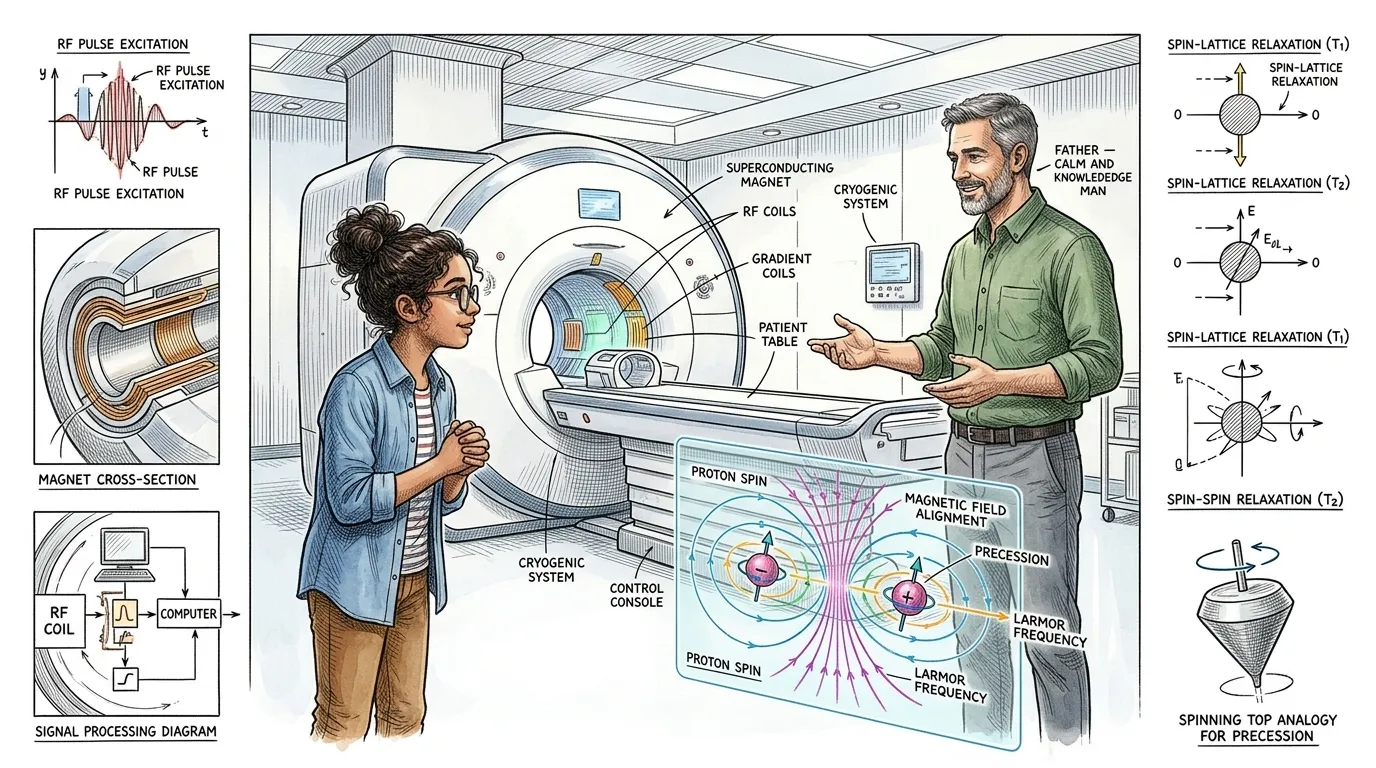
The impact of Gell-Mann's work extends far beyond theoretical physics. The understanding of quarks and the Standard Model has led to the development of new technologies, including medical imaging techniques and advanced materials.
"Father: 'Those giant machines we saw earlier that smash atoms together, they wouldn't exist without Gell-Mann's discoveries.'"
Fact: An MRI machine, emphasizing the link between particle physics and medical technology. Mariam is observing the machine with curiosity. The overlay diagram illustrates the quantum physics behind MRI.
Page 9
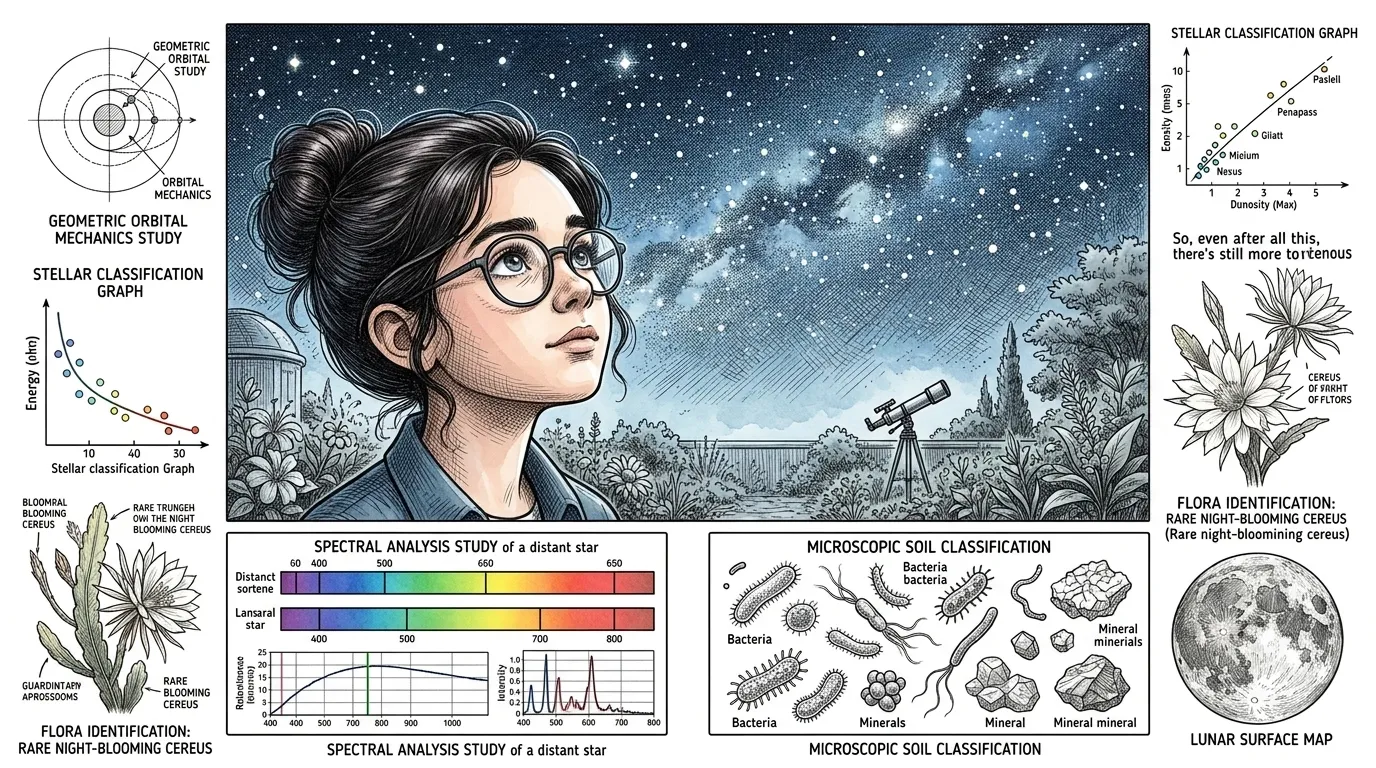
Even today, questions remain about the nature of quarks and the fundamental forces that govern the universe. Gell-Mann's legacy is one of relentless curiosity, a drive to uncover the deepest truths about the world around us.
"Mariam asks, 'So, even after all this, there's still more to find out?'"
Fact: A close-up showing Mariam gazing at the stars with a contemplative expression. The starry night sky represents the mysteries yet to be uncovered.
Page 10
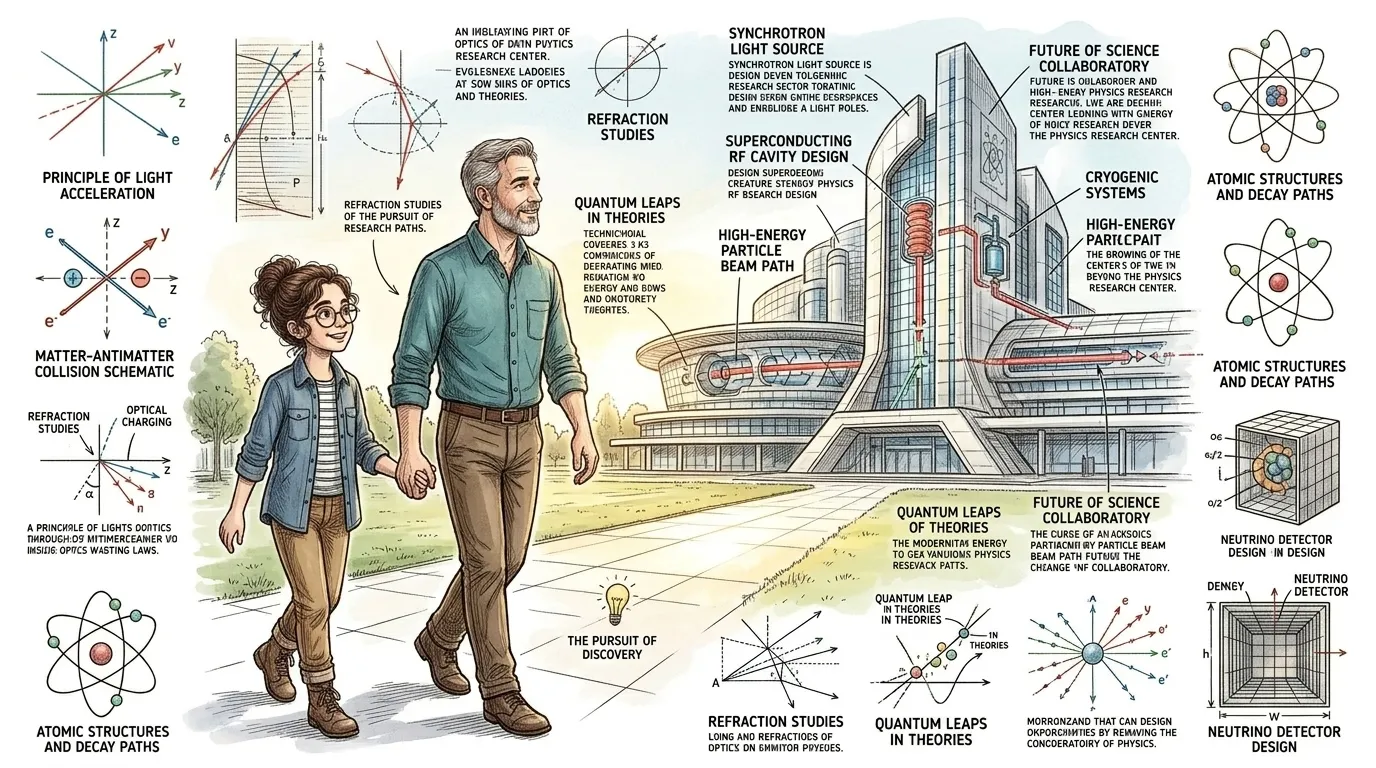
Murray Gell-Mann's journey reminds us that even the most complex mysteries can be unraveled through dedication, insight, and a relentless pursuit of knowledge. His work continues to inspire scientists to explore the frontiers of physics, pushing the boundaries of human understanding.
Fact: The final scene offers a of a modern physics research center, symbolizing the ongoing pursuit of knowledge. Mariam and her father are walking towards the center, representing the future generation of scientists.
About this story
- Location: Global
- Audience: kids (ages 6–12)
Questions and answers
Read Wonder Science on your phone
Wonder Science is available on Android. Get Wonder Science on Google Play.