Neil Armstrong
Neil Armstrong — a science story. Topics: Pioneers of Space Exploration, Global, Unknown Era, Scientific Revolution to space age. 10 illustrated pages, narrated, free to read on Wonder Science.
Page 1
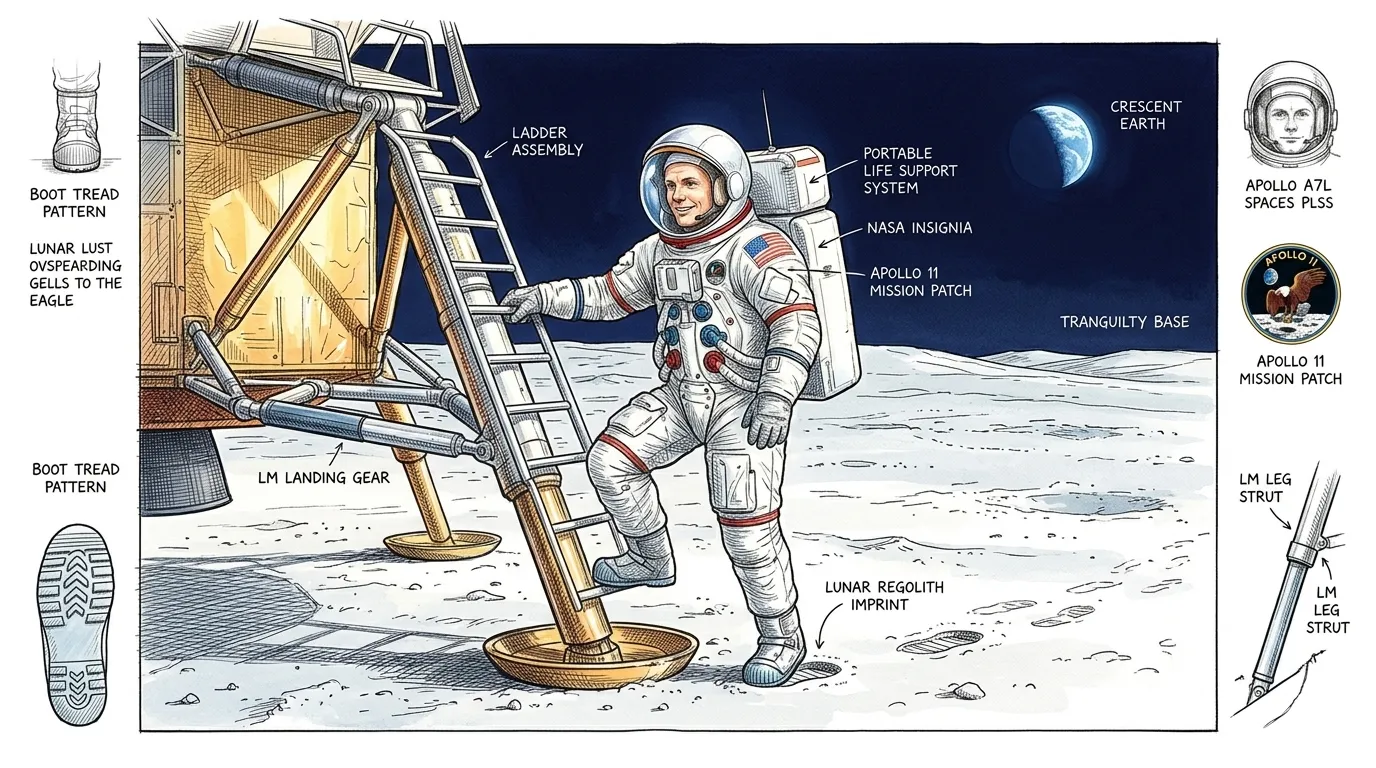
At 22:56 UTC on July 20, 1969, a human being stepped onto an extraterrestrial body for the very first time. Neil Armstrong, commander of Apollo 11, descended the ladder of the lunar module 'Eagle' and planted his boot firmly into the powdery regolith of Tranquility Base. This single, deliberate action transcended national boundaries and united a global audience in a shared moment of profound awe and achievement. The silent vastness of the Moon bore witness to humanity's audacious leap into the cosmos, forever altering our perception of what is possible.
Page 2
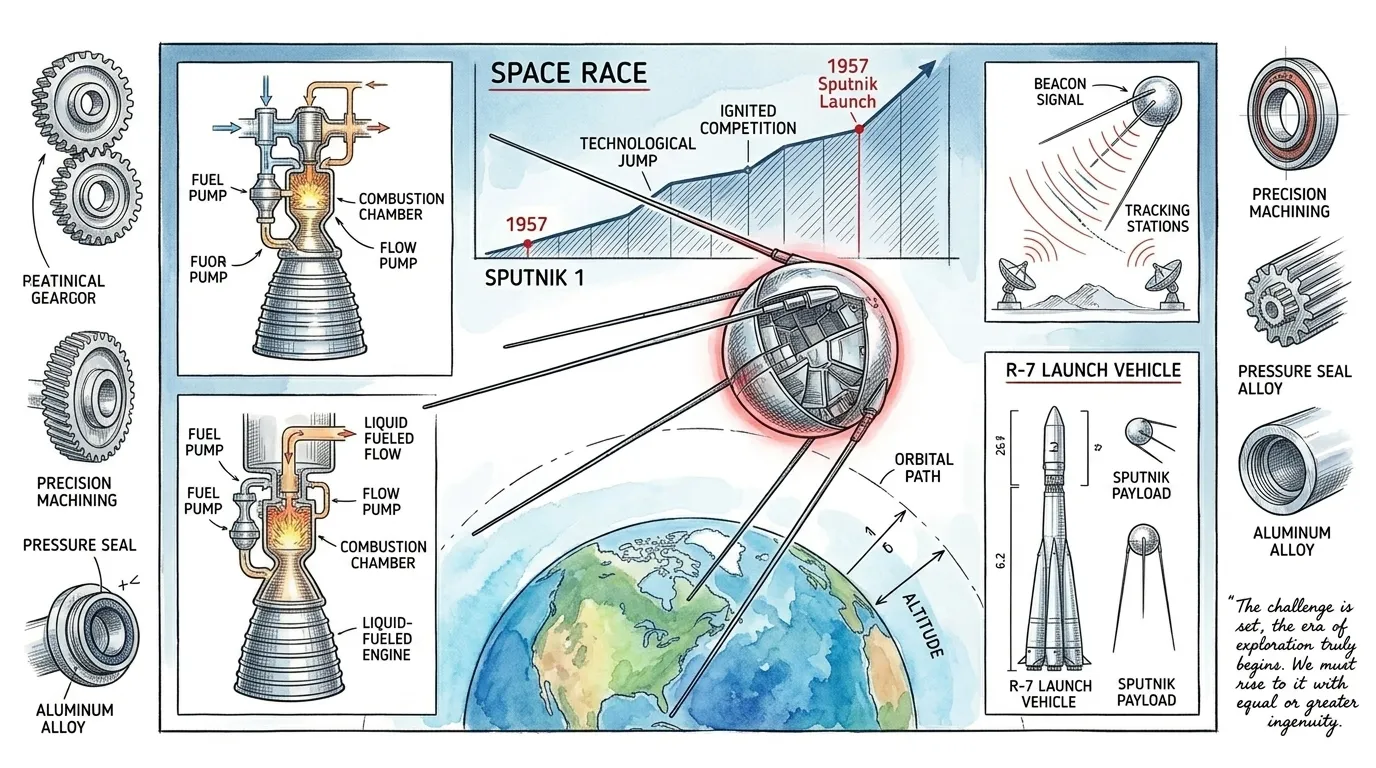
The journey to that lunar footprint began not with a single visionary, but with the geopolitical crucible of the Cold War and the launch of Sputnik 1 by the Soviet Union in 1957. This startling technological achievement ignited the 'Space Race,' prompting the United States to dramatically accelerate its own nascent space program. It was a contest of ideologies, a technological arms race, and a monumental scientific challenge, driven by the ambition to demonstrate global supremacy through space exploration.
Page 3
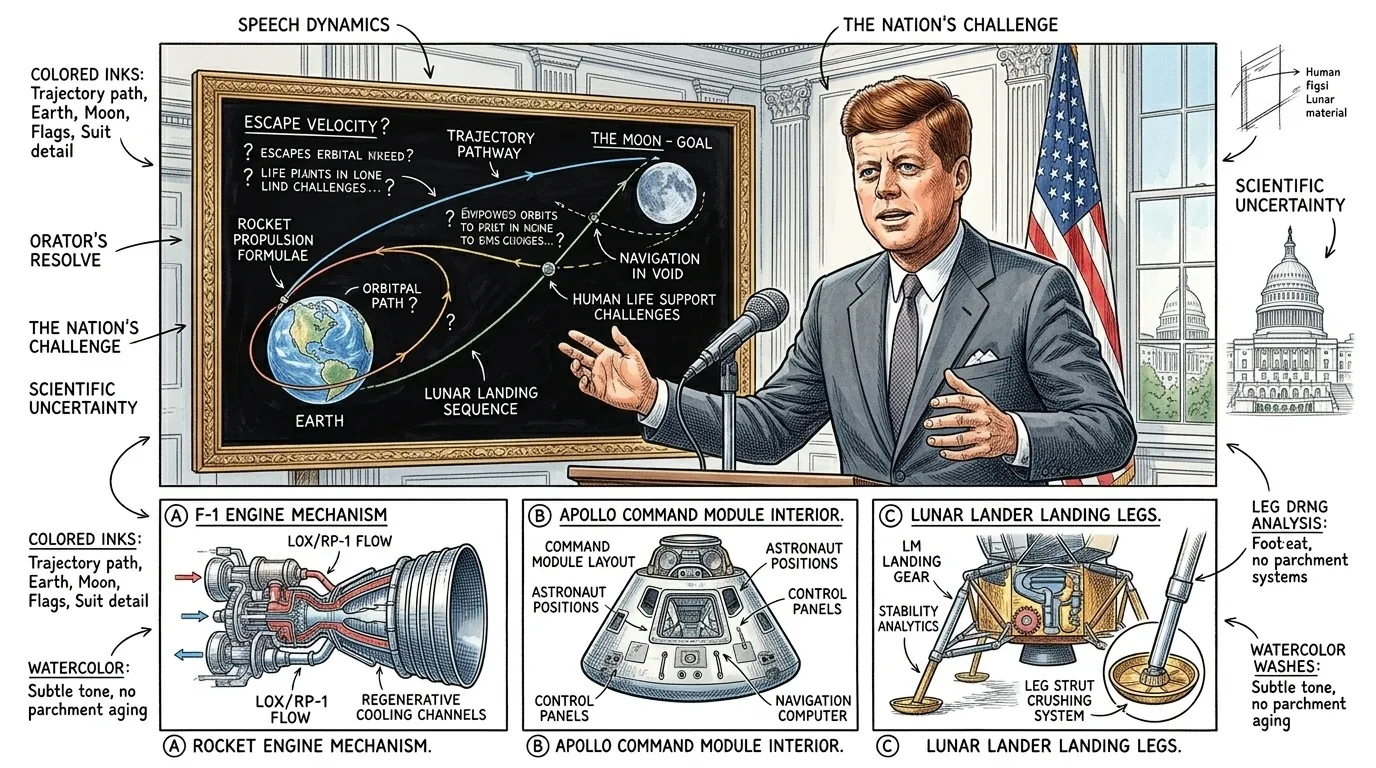
On May 25, 1961, President John F. Kennedy articulated an audacious national goal: to land a man on the Moon and return him safely to Earth before the decade was out. This was a challenge of unprecedented scale, requiring solutions to problems that were, at the time, barely understood. It demanded breakthroughs in rocketry, navigation, life support, and atmospheric re-entry, pushing the boundaries of engineering and human endurance beyond anything previously conceived.
Page 4
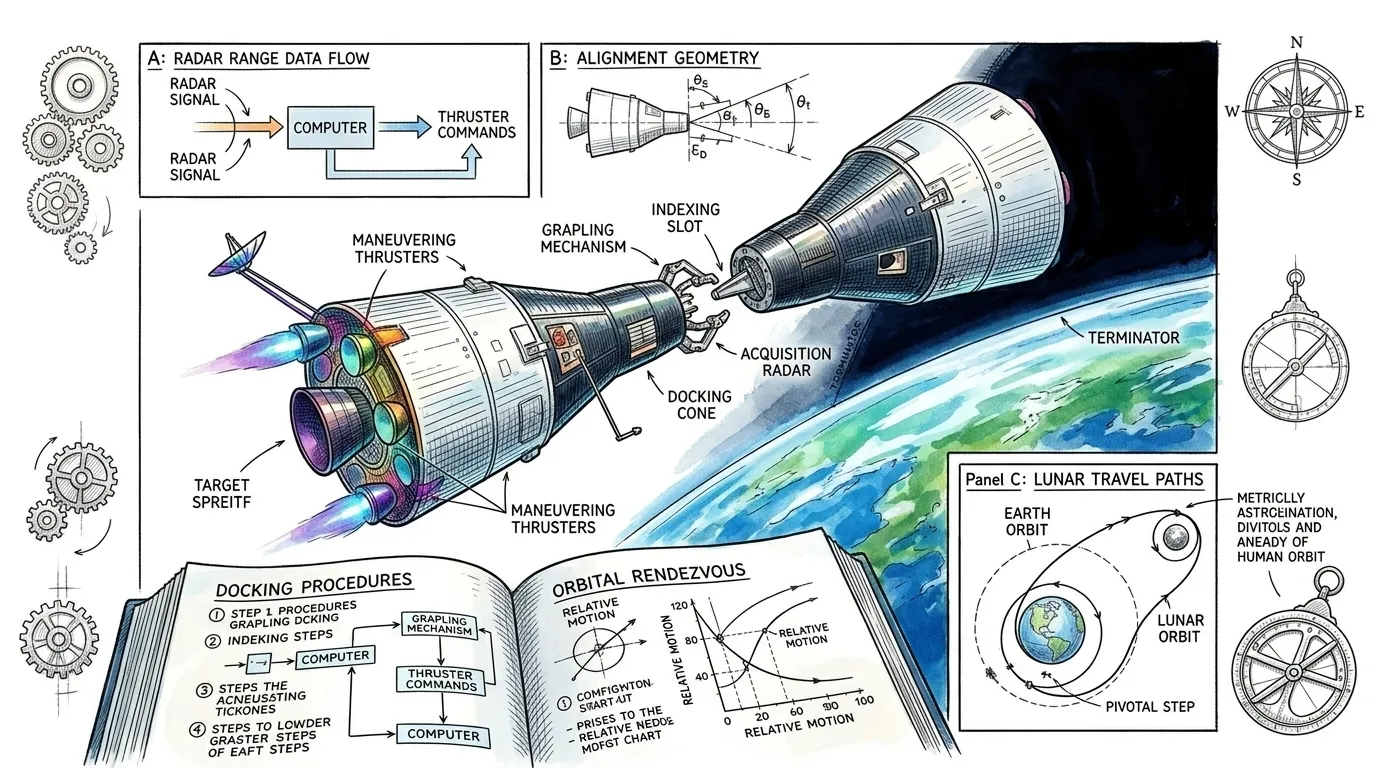
Before the Moon could be touched, critical steps had to be mastered closer to home. The Mercury program proved humans could survive in space, but the subsequent Gemini missions were pivotal, perfecting crucial techniques like orbital rendezvous and docking. These complex maneuvers, essential for the Apollo lunar orbit rendezvous strategy, required precision flight control and advanced engineering, validating the bold architectural plan for reaching the Moon.
Page 5
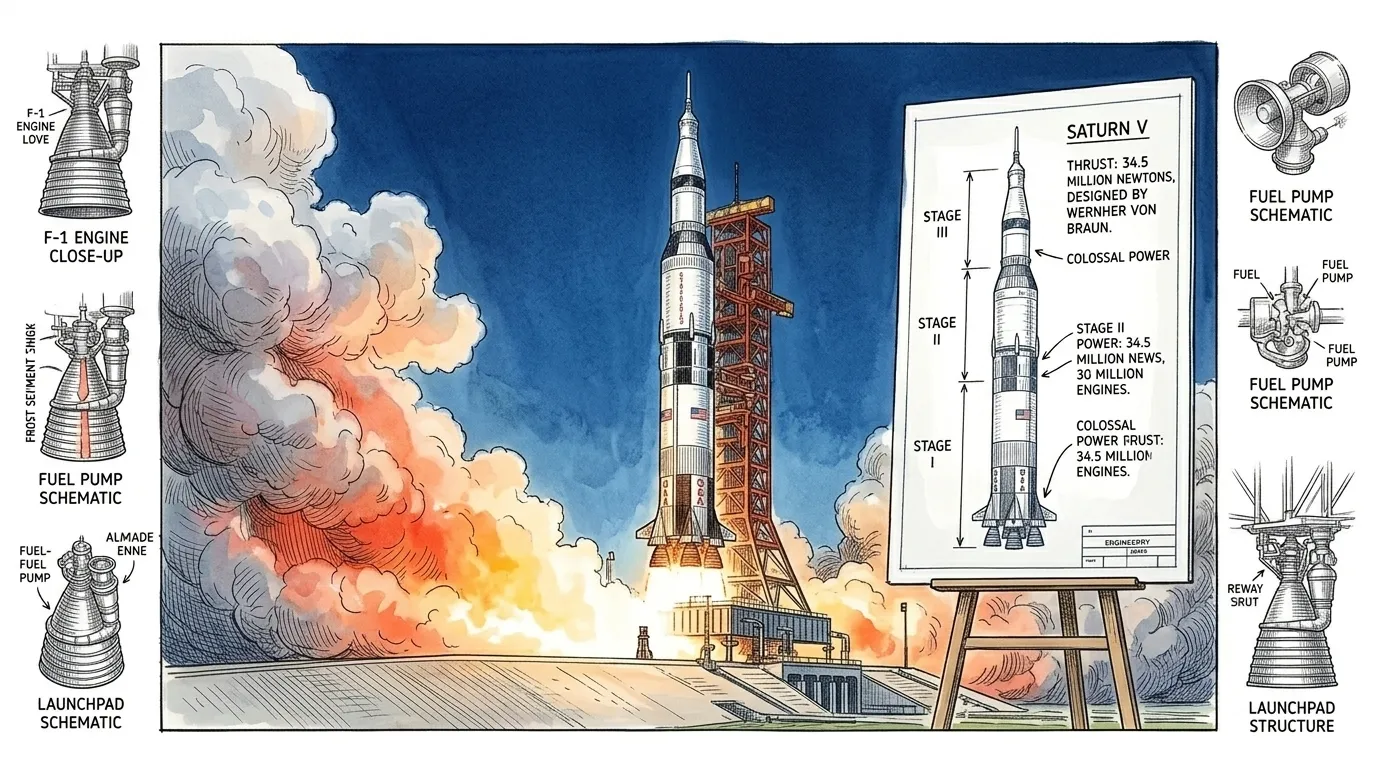
The cornerstone of the Apollo missions was the Saturn V rocket, an engineering marvel designed by Wernher von Braun and his team, standing 111 meters tall and generating 34.5 million newtons of thrust. Its three stages provided the colossal power needed to escape Earth's gravity, propel the spacecraft towards the Moon, and finally, inject it into lunar orbit. This sheer force was a testament to the immense energy required to conquer the vacuum of space.
Page 6
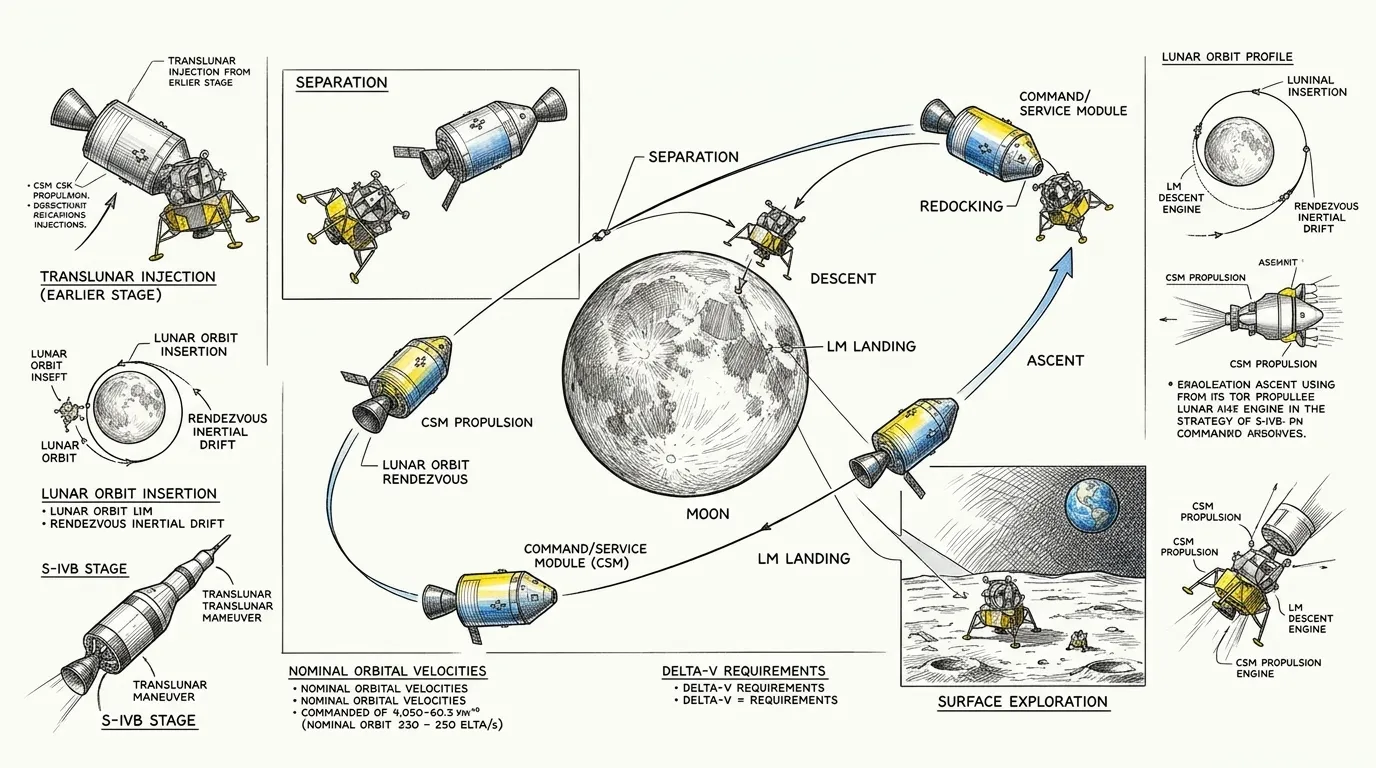
Apollo's chosen mission profile, Lunar Orbit Rendezvous, was both elegant and incredibly risky. Rather than launching a single, massive vehicle directly to the lunar surface and back, the Command/Service Module (CSM) would remain in lunar orbit while the smaller Lunar Module (LM) descended. After exploration, the LM's ascent stage would rejoin the CSM in orbit, transferring the crew for the return journey. This intricate dance required perfect timing and navigation in a hostile environment.
Page 7
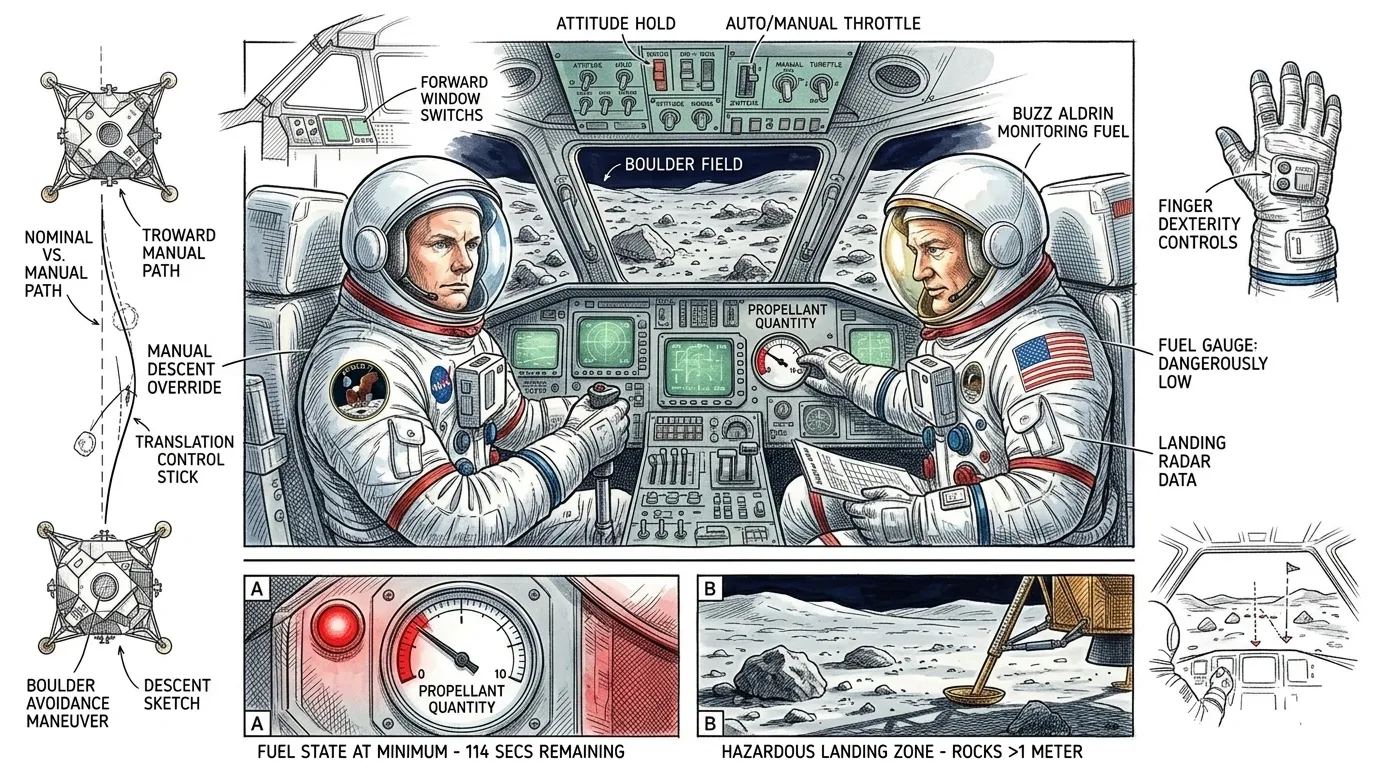
The final descent of the 'Eagle' was fraught with peril. Armstrong and Buzz Aldrin navigated through a field of boulders, manually overriding the computer's initial landing site, searching for a safer spot as fuel dwindled. With only seconds of fuel remaining, Armstrong skillfully guided the craft to a gentle touchdown. His calm resolve and expert piloting in the face of immense pressure were crucial in securing this monumental success, bringing humanity within reach of the Moon's surface.
Page 8
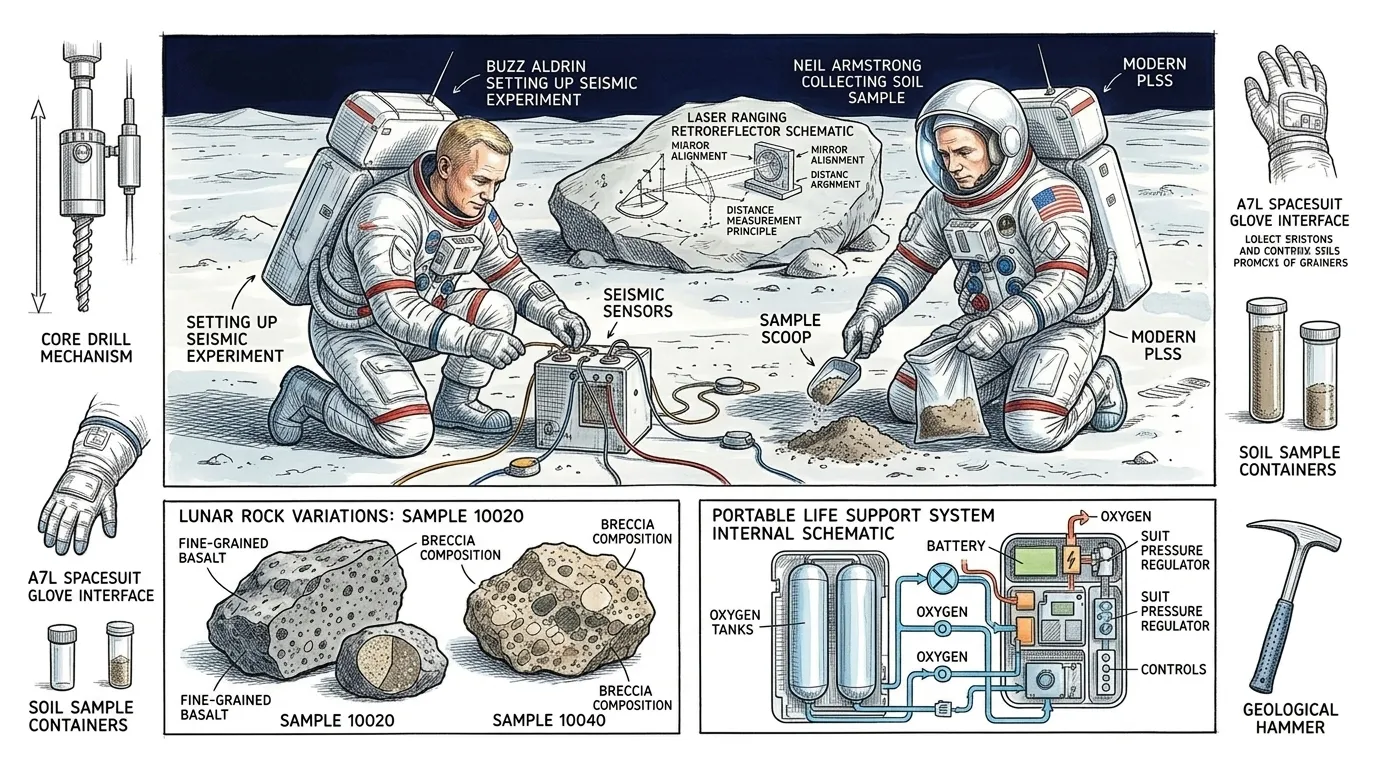
Beyond the symbolic victory, the Apollo 11 mission yielded invaluable scientific data, radically transforming our understanding of the Moon. Armstrong and Aldrin collected 21.5 kilograms of lunar rocks and soil, which, upon analysis back on Earth, revealed insights into the Moon's formation and composition. They also deployed experiments like a Passive Seismic Experiment to detect moonquakes and a Laser Ranging Retroreflector, still used today to precisely measure the Earth-Moon distance, confirming Einstein's theory of relativity.
Page 9
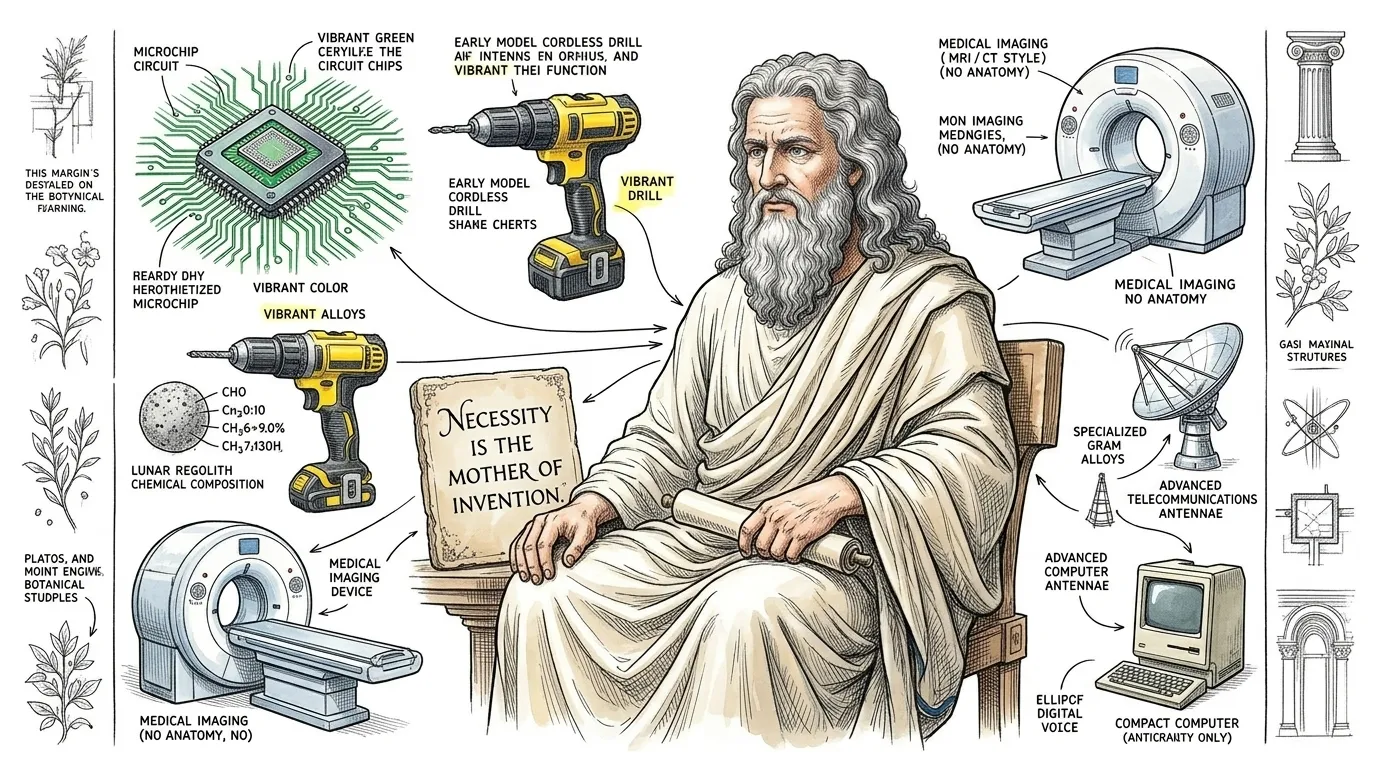
The drive to reach the Moon spurred an explosion of innovation, resulting in countless technological advancements that permeated daily life. From microelectronics and advanced computing that powered the Apollo spacecraft, to new materials, medical imaging, and even cordless tools, the investment in space exploration brought unforeseen benefits. The meticulous systems engineering and problem-solving required for Apollo accelerated progress across myriad industries, demonstrating that 'necessity is the mother of invention,' a sentiment often attributed to Plato.
"'Necessity is the mother of invention,' an adage often attributed to the ancient Greek philosopher Plato, certainly proved true for the Apollo program's engineers and scientists. Their relentless pursuit of lunar travel led to breakthroughs far beyond just spaceflight."
Page 10
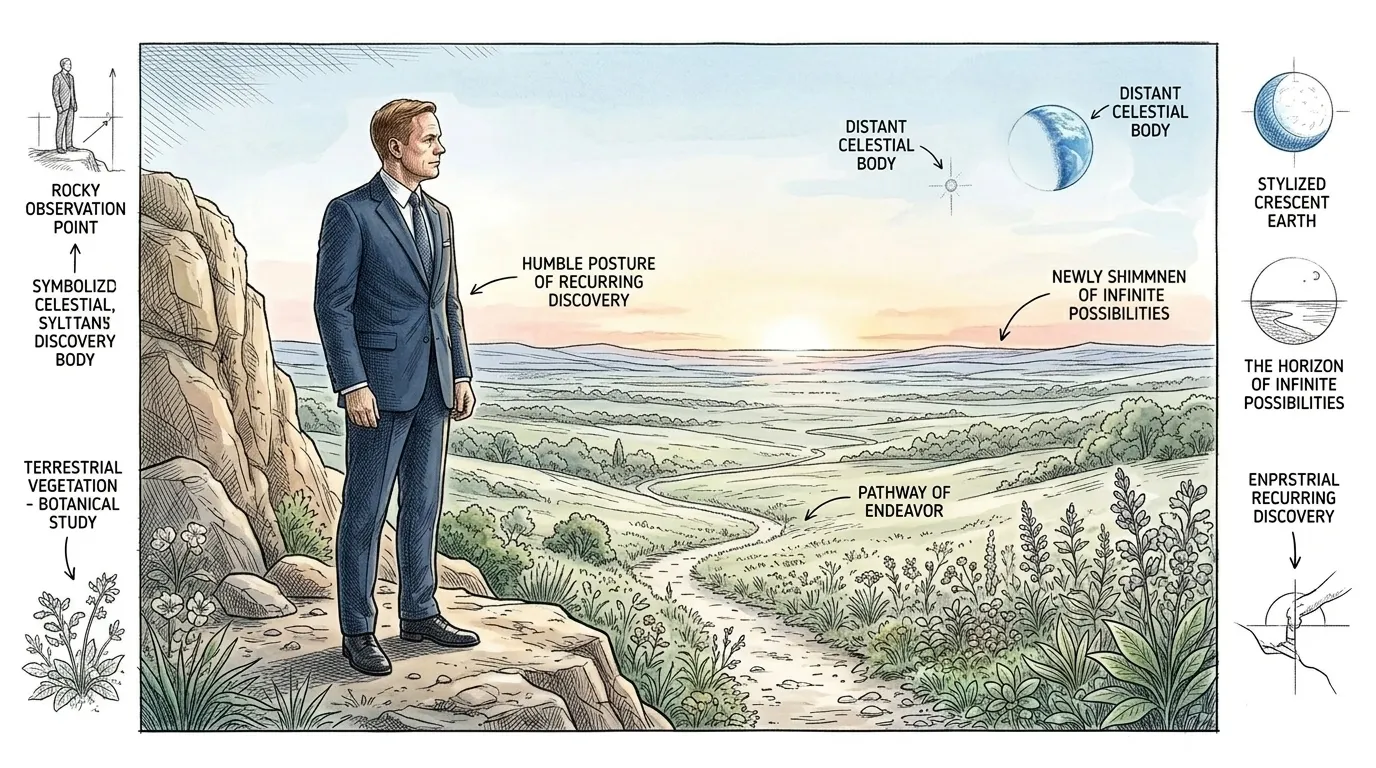
Neil Armstrong, the quiet engineer who became the first human to walk on the Moon, remained a humble figure, reluctant to embrace celebrity. His legacy, however, is monumental: a testament to human ingenuity, perseverance, and the collective will to achieve the seemingly impossible. Apollo 11's success continues to inspire new generations, not just in space exploration, but in every field where boundaries are pushed, reminding us that even the most distant horizons can be reached through unwavering dedication and collaborative effort. The quest for knowledge and the drive to explore remain a fundamental human impulse, perpetually beckoning us towards new frontiers.
About this story
- Location: Global
- Audience: general readers
- Format: 10 illustrated pages, narrated, free to read on Wonder Science
Questions and answers
Read Wonder Science on your phone
Wonder Science is available on Android. Get Wonder Science on Google Play.