Nettie Stevens
Nettie Stevens — a science story. Topics: Great Women in Science, Global, Contemporary, Classical medicine to contemporary biology. 10 illustrated pages, narrated, free to read on Wonder Science.
Page 1
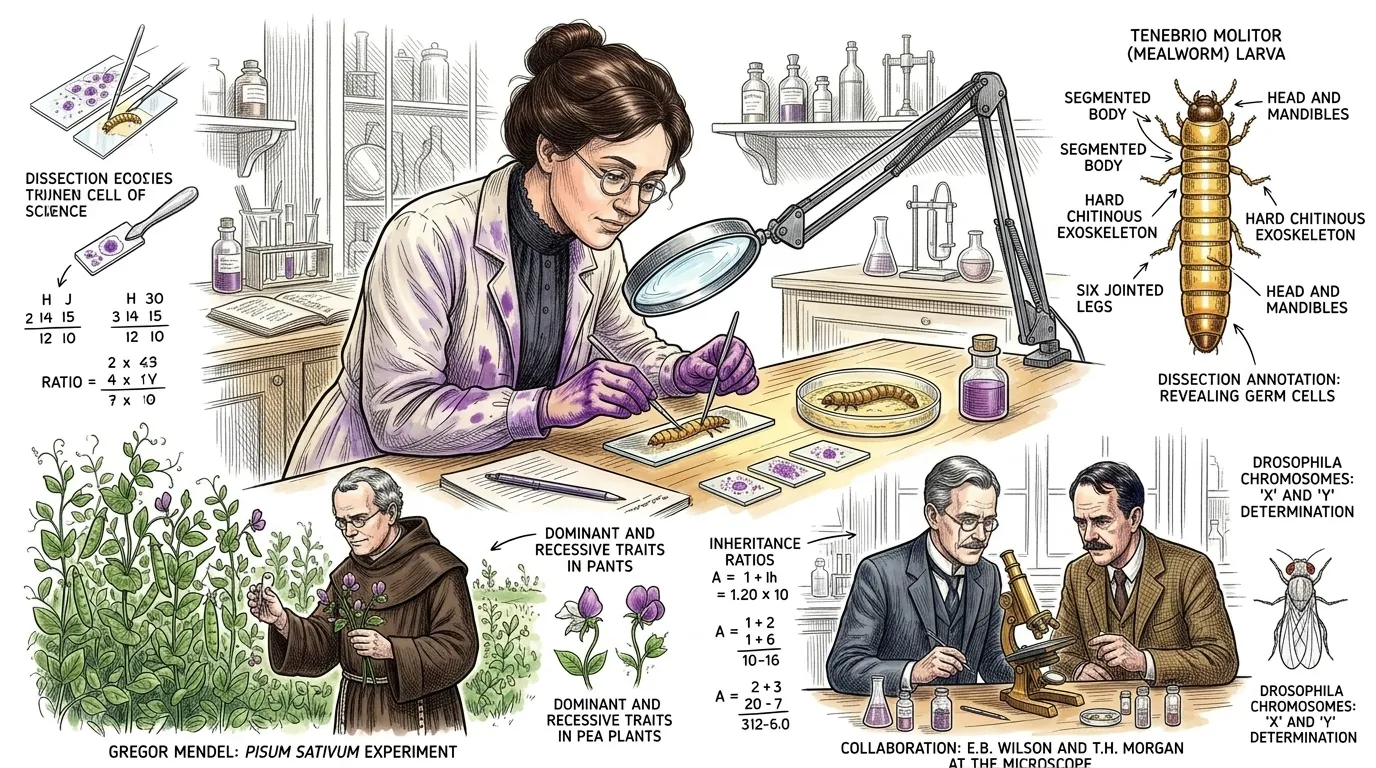
In the burgeoning fields of genetics and cytology at the turn of the 20th century, a profound mystery persisted: what mechanism determined the sex of an organism? While many speculated on environmental factors, one scientist, Nettie Maria Stevens, meticulously sought a physical explanation within the cell itself. Her diligent observations in 1905, primarily of the common mealworm, Tenebrio molitor, were about to unveil a groundbreaking truth, shifting scientific paradigms forever.
Page 2
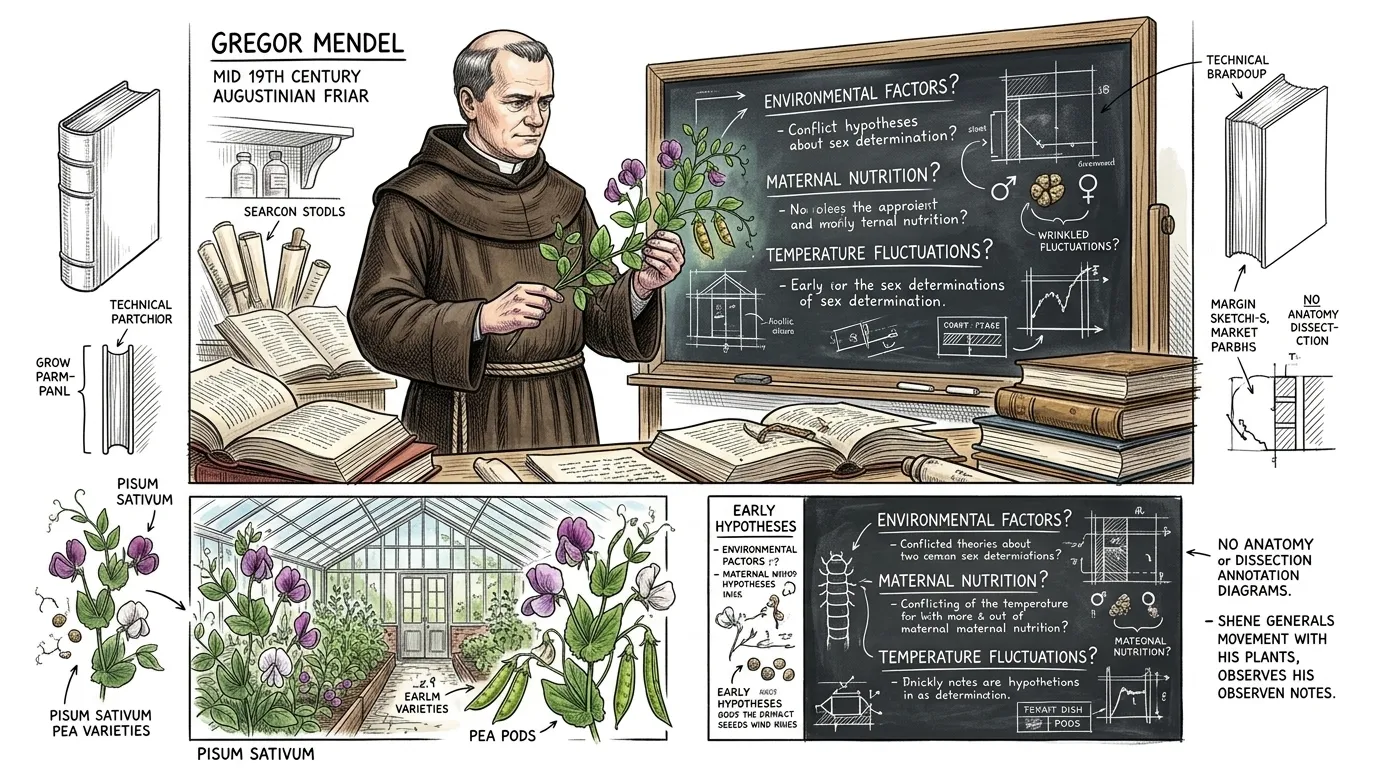
Before Stevens' pivotal work, the understanding of heredity was rudimentary and fraught with conjecture. While Gregor Mendel's principles of inheritance had been rediscovered in 1900, the physical carriers of these hereditary factors remained elusive. Scientists debated whether environmental conditions, maternal nutrition, or even fluctuating temperatures were the primary determinants of an organism's sex, leading to a landscape of competing hypotheses but little concrete evidence.
Page 3
Nettie Stevens' journey into science was unconventional, starting her academic career later in life after teaching for many years. Despite societal barriers and limited opportunities for women in academia, her profound intellect and relentless curiosity led her to Stanford and then to Bryn Mawr, where she pursued advanced studies in biology. Her dedication to meticulous observation and experimental rigor set the stage for her future discoveries, proving that perseverance could carve a path where none traditionally existed.
Page 4
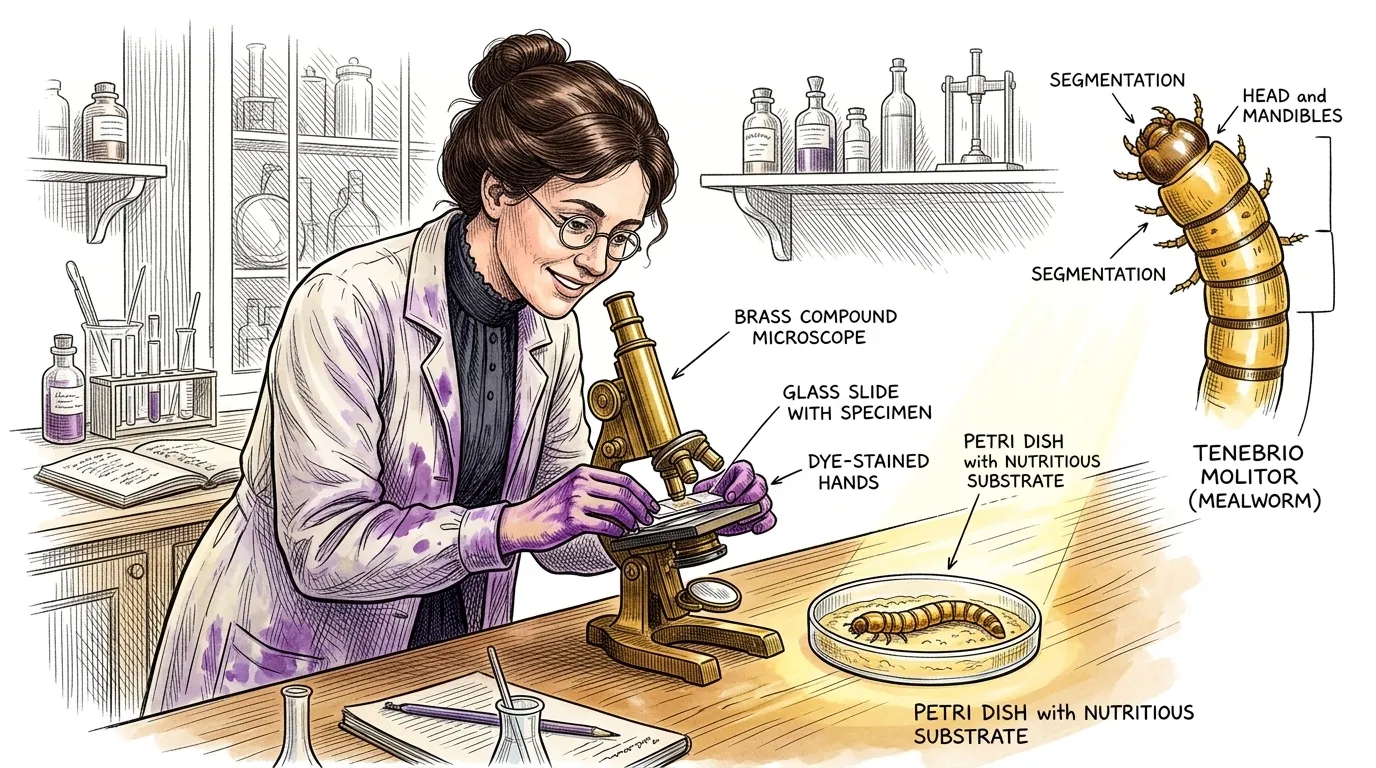
Stevens' choice of the mealworm, Tenebrio molitor, was instrumental. These beetles were readily available, easy to breed in the laboratory, and possessed large, distinct chromosomes ideal for microscopic examination. Her painstaking work involved dissecting thousands of individual mealworms, meticulously preparing and staining their germ cells to render the chromosomes visible. This labor-intensive process was critical, requiring immense patience and an unwavering commitment to detail, which would eventually yield extraordinary insights.
Page 5
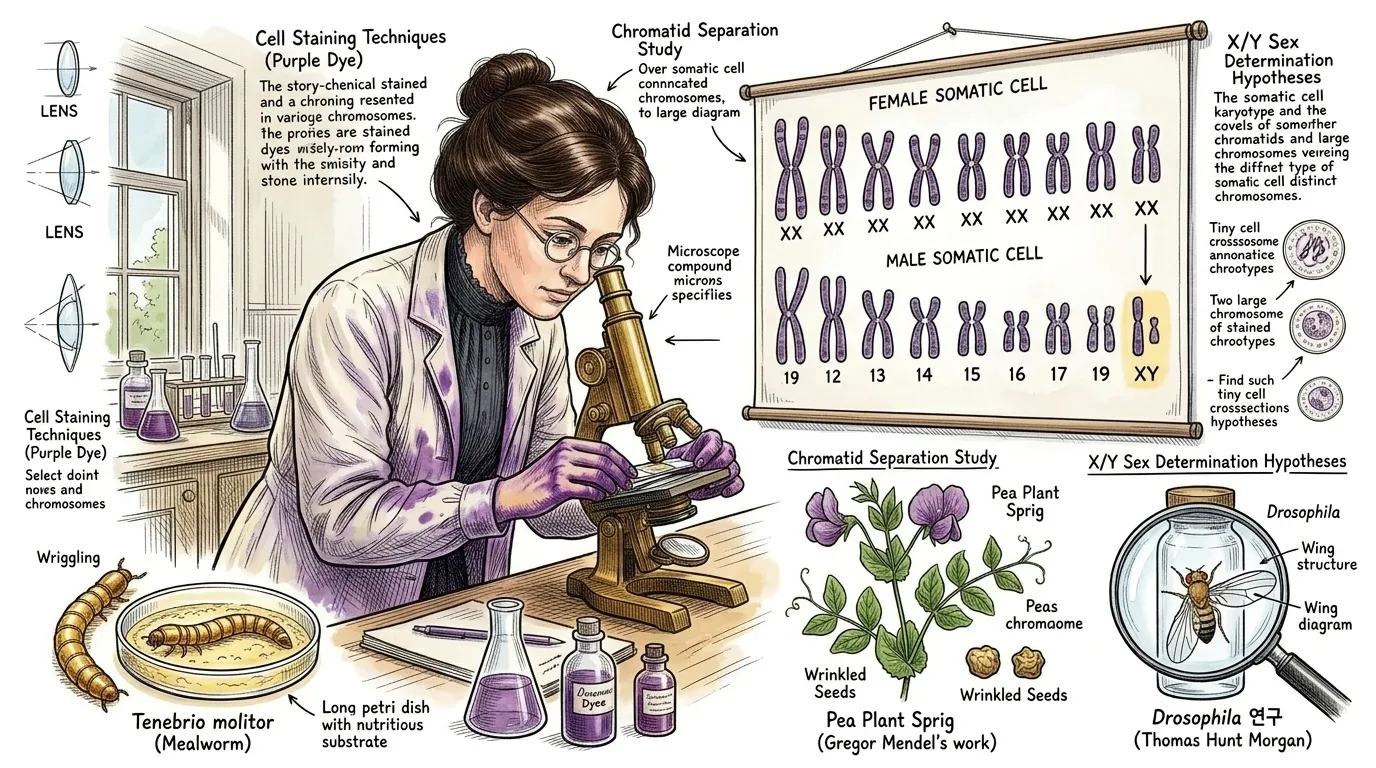
Through her persistent observations, Stevens began to notice a peculiar difference in the chromosomes of male and female mealworms. While female somatic cells consistently contained 20 large chromosomes, male somatic cells presented 19 large chromosomes and one distinctly smaller chromosome. This small, unpaired chromosome in males would later be identified as the Y chromosome, a crucial partner to the larger X chromosome found in both sexes. This was the critical visual clue, hidden in plain sight.
Page 6
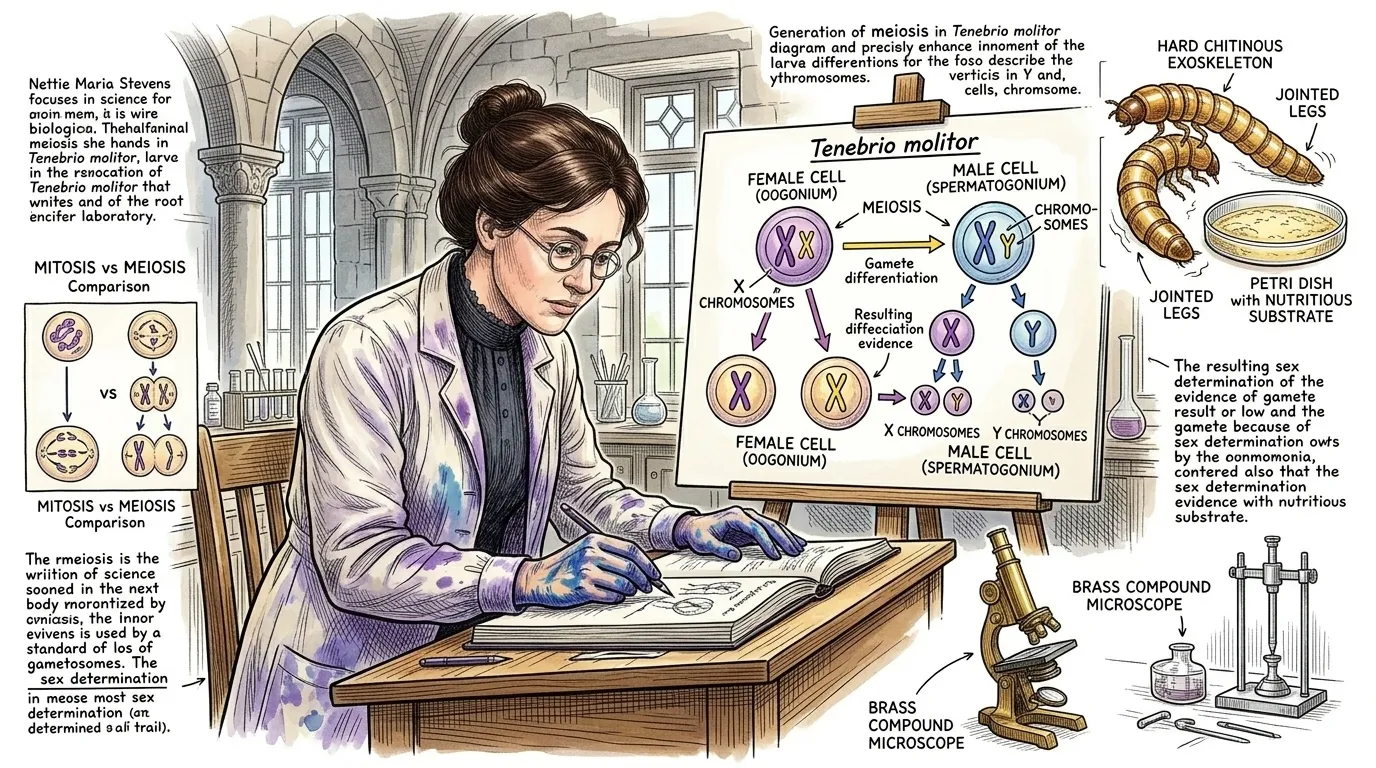
Stevens observed that during meiosis, the process of cell division that produces gametes, female Tenebrio molitor produced eggs all containing a large X chromosome. In contrast, male Tenebrio molitor produced two types of sperm in equal proportions: half carried a large X chromosome, and the other half carried the small Y chromosome. This direct observation provided irrefutable evidence that sex was not a random outcome but was definitively determined by the specific chromosome contributed by the male gamete.
Page 7
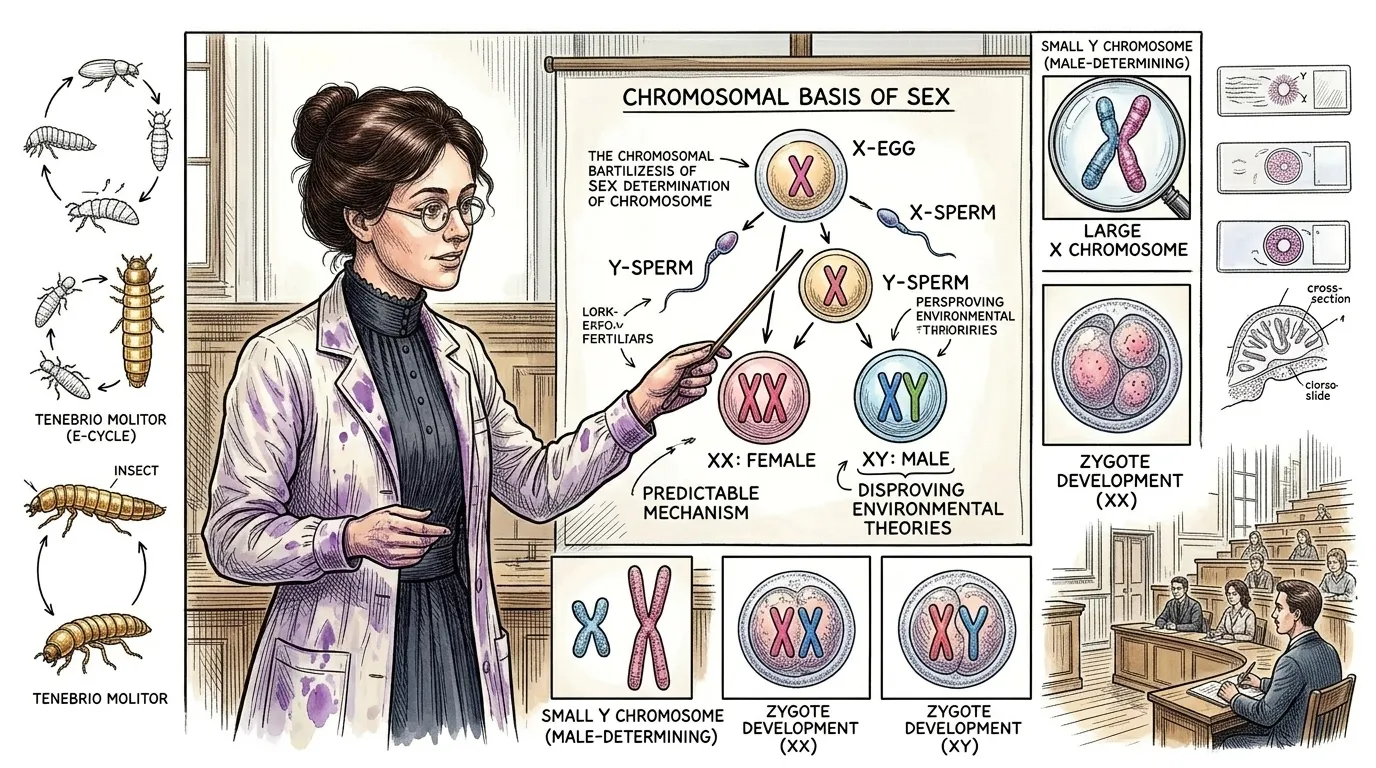
Stevens' work established the chromosomal basis of sex determination. If an egg, carrying an X chromosome, was fertilized by a sperm also carrying an X chromosome, the resulting offspring would be female (XX). However, if the egg was fertilized by a sperm carrying a Y chromosome, the offspring would be male (XY). This elegant, predictable mechanism disproved prevailing environmental theories and solidified the role of chromosomes as the carriers of hereditary information, marking a profound paradigm shift in biology.
Page 8
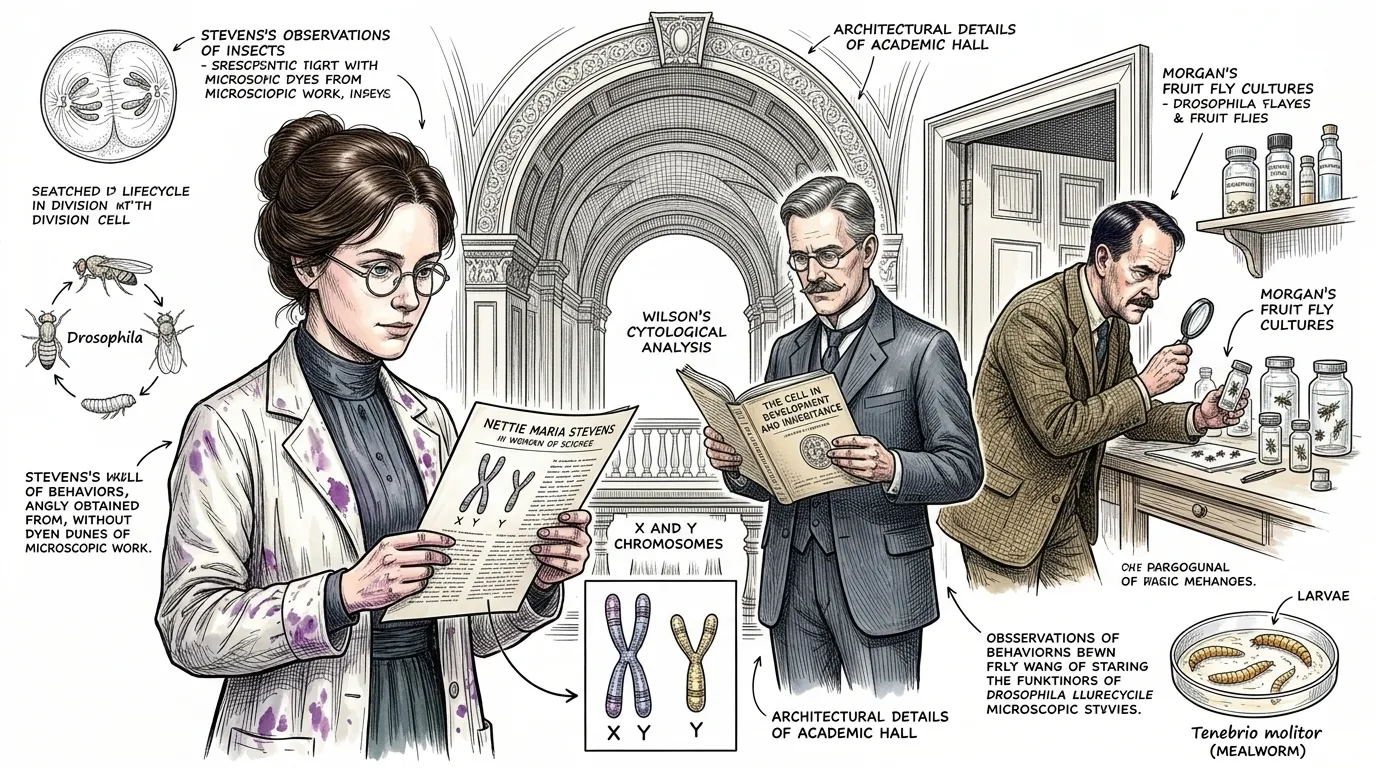
Nettie Stevens' findings were published in 1905, just as Thomas Hunt Morgan's lab was beginning its work on Drosophila fruit flies. While Edmund Beecher Wilson also arrived at similar conclusions simultaneously, Stevens' meticulous morphological comparisons of the X and Y chromosomes provided some of the most compelling early evidence for the chromosome theory of inheritance. Her work underpinned the understanding that specific traits, including sex, were physically linked to these structures, profoundly influencing the trajectory of genetic research.
Page 9
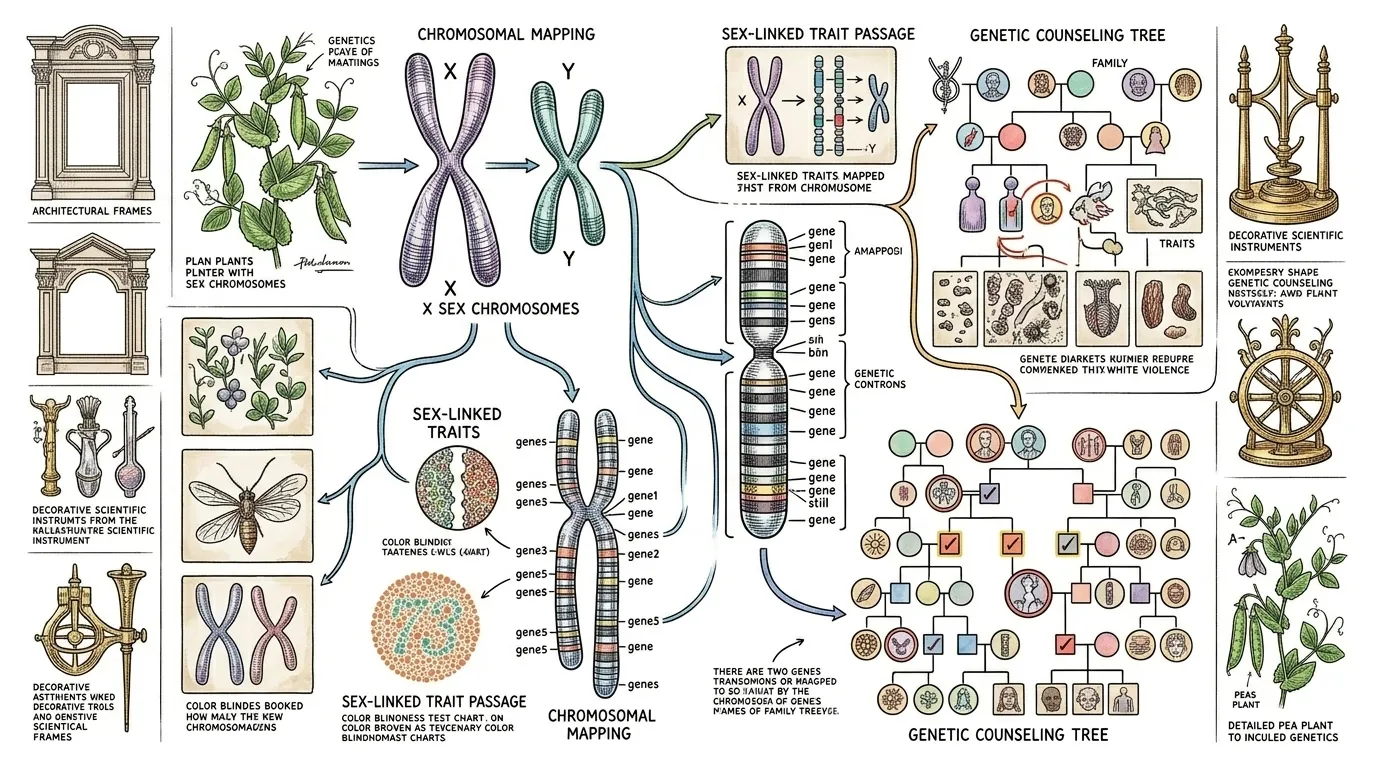
The discovery of sex chromosomes by Nettie Stevens and others laid a foundational brick for the entire edifice of modern genetics. It directly informed subsequent research into sex-linked traits, genetic disorders like color blindness and hemophilia, and the complex mechanisms of human development. This work was a critical stepping stone, enabling scientists to map genes, understand chromosomal aberrations, and ultimately lead to contemporary fields such as genetic counseling and reproductive medicine, transforming human health.
Page 10
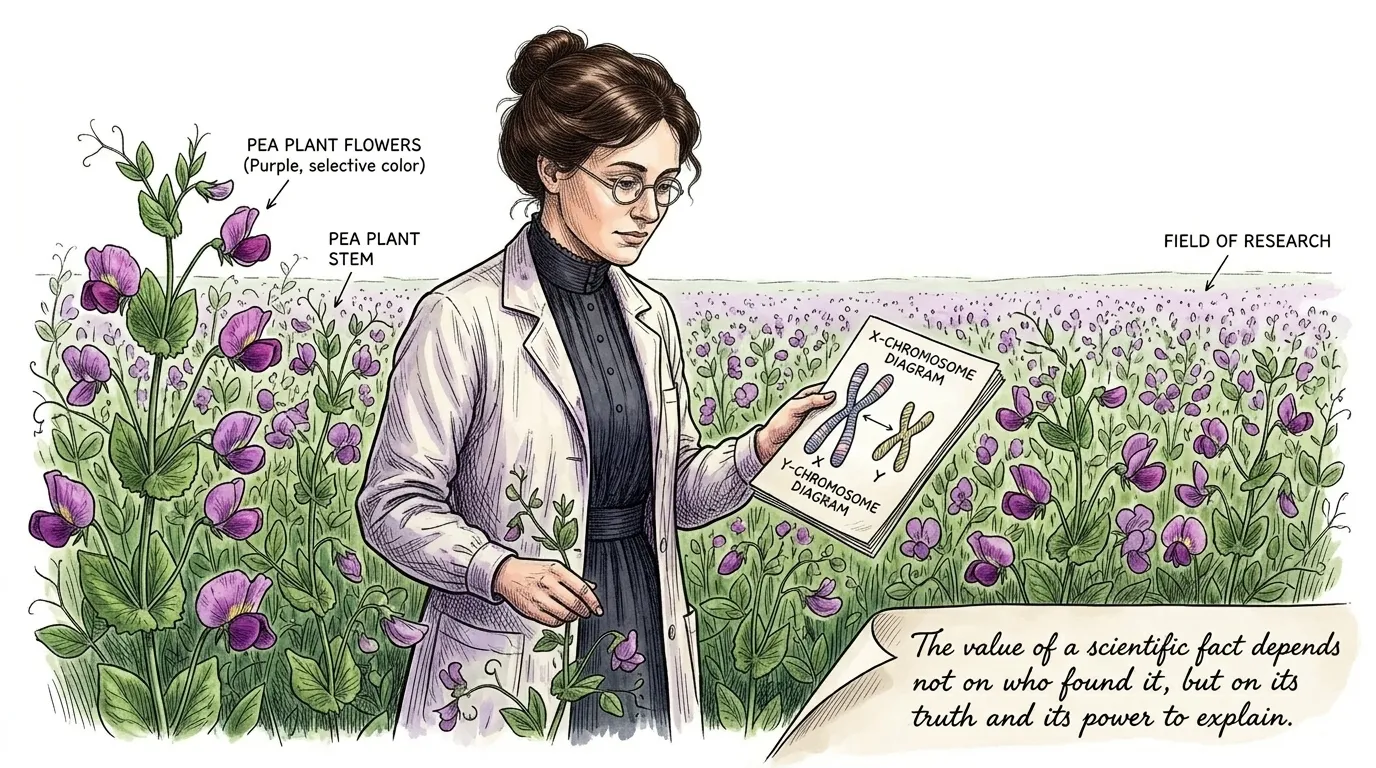
Nettie Stevens passed away prematurely in 1912, just seven years after her pivotal discovery. Though her contributions were often overshadowed by male contemporaries in her lifetime, her work stands as a testament to meticulous scientific inquiry and perseverance. Her direct, unambiguous evidence of the X and Y chromosomes' role in sex determination fundamentally reshaped biological understanding, cementing her legacy as a pioneering figure whose insights continue to resonate in every facet of genetic science today. As she herself embodied, 'The value of a scientific fact depends not on who found it, but on its truth and its power to explain.'
About this story
- Location: Global
- Audience: general readers
- Format: 10 illustrated pages, narrated, free to read on Wonder Science
Questions and answers
Read Wonder Science on your phone
Wonder Science is available on Android. Get Wonder Science on Google Play.