Nicolaus Copernicus
Nicolaus Copernicus — an illustrated science story, set in Global. 10 illustrated pages, free to read on Wonder Science.
Page 1
For millennia, humanity gazed at the night sky, convinced Earth stood immobile at the universe's heart. This belief, deeply rooted in philosophy and observation, shaped our understanding of cosmic order. Yet, the intricate dance of planets hinted at a deeper, unseen truth.
""Imagine believing the entire cosmos revolved around us, an absolute certainty," Amara mused, studying a celestial globe. "The complexity they created to make sense of it all is astounding.""
Page 2
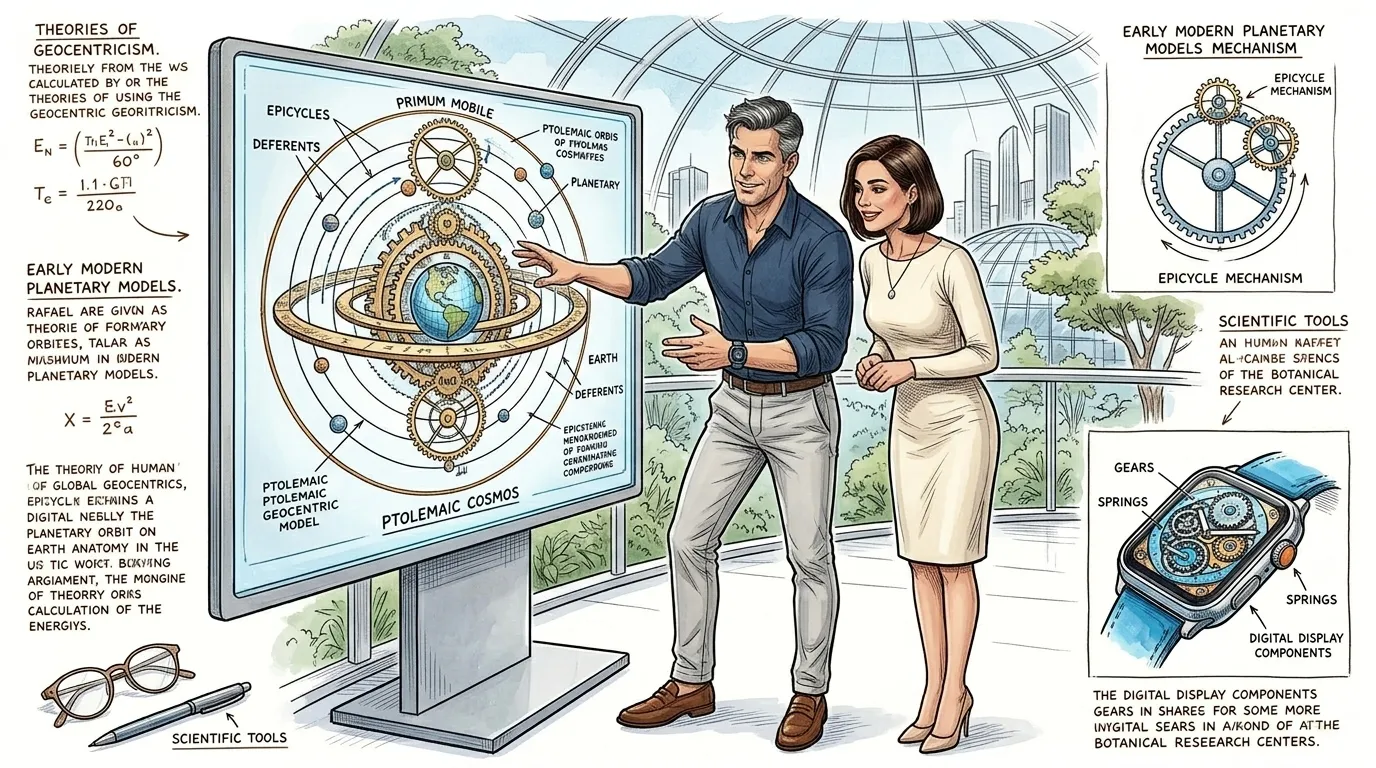
The Ptolemaic system, refined over centuries, placed Earth firmly at the center, with the Sun, Moon, and planets orbiting in complex, perfectly circular paths. To account for observed anomalies like planetary retrograde motion, where planets appeared to move backward against the stars, Ptolemy introduced a masterful but increasingly intricate web of epicycles and deferents.
""The ingenuity of the Ptolemaic model is remarkable, but look at this," Rafael pointed to a swirling diagram on a holographic display, "epicycles upon epicycles, just to explain the retrograde motion. It's like adding more gears to a clock to fix a fundamental design flaw." Tala nodded, scrutinizing the celestial mechanics. "And the equant—that point around which a planet appears to move uniformly—it wasn't even the center of the orbit, introducing a philosophical unease about perfect circles.""
Page 3
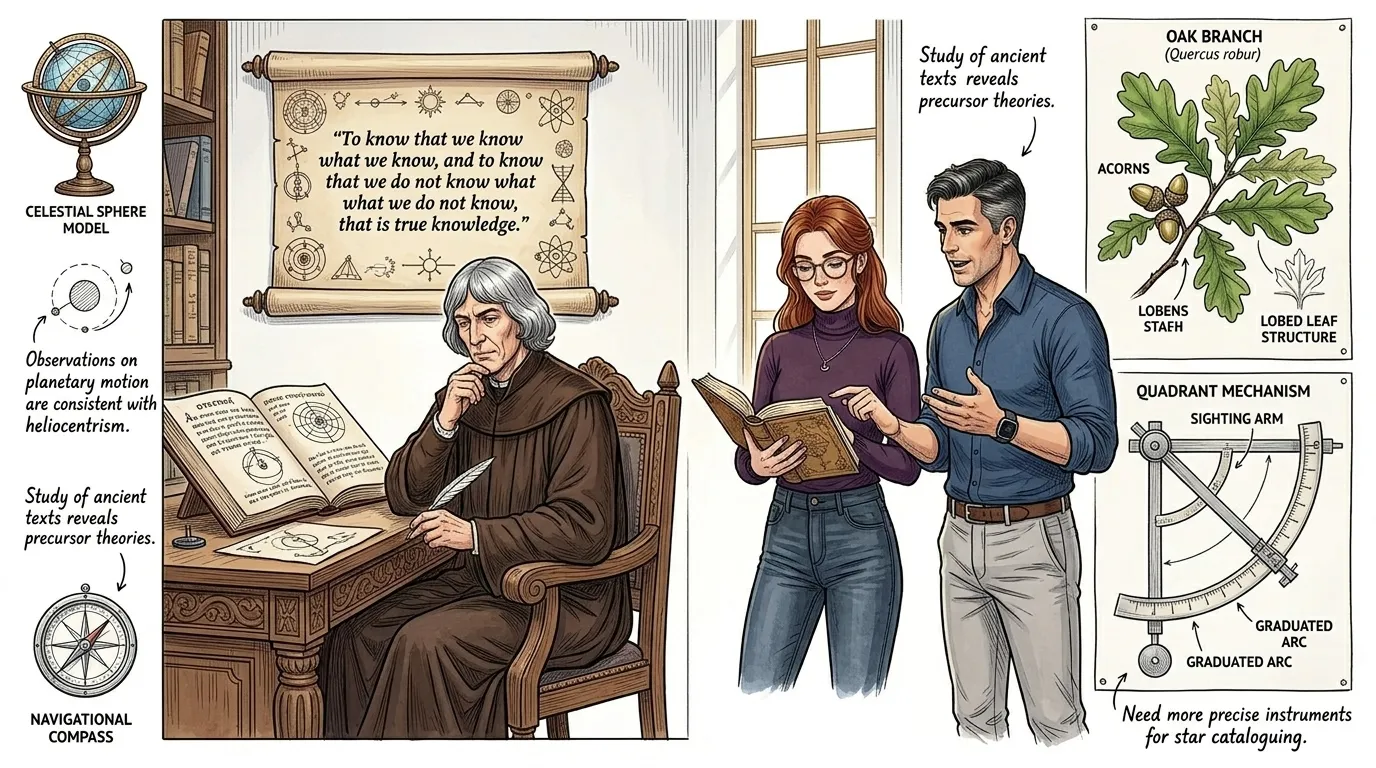
Despite its predictive power, the geocentric model's growing complexity bothered Renaissance scholars, including Nicolaus Copernicus. He sought a more elegant, harmonious explanation for the cosmos, drawing inspiration from ancient Greek philosophers who had, centuries earlier, contemplated the possibility of a heliocentric universe. This pursuit of a simpler truth fueled his revolutionary thinking.
""Copernicus studied ancient texts, noticing how even some Greek thinkers proposed Earth's motion," Amara explained, holding an open, aged book. "He believed mathematics should simplify nature, not complicate it." Rafael added, "As he himself observed, 'To know that we know what we know, and to know that we do not know what we do not know, that is true knowledge.' He wasn't afraid to question what was universally accepted, driven by a quest for genuine understanding.""
Page 4
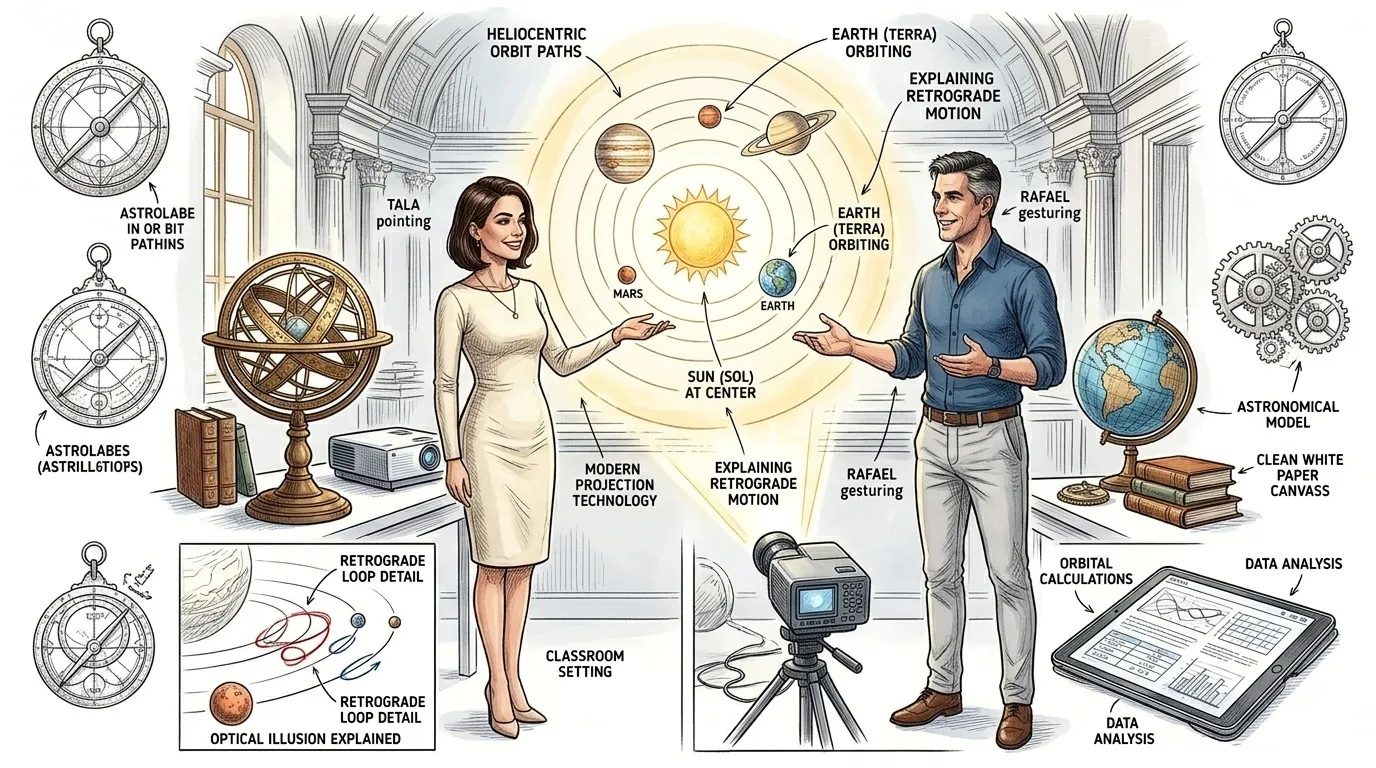
Copernicus proposed a radical new cosmology: the heliocentric model, where the Sun, not Earth, resided at the universe's center. He theorized that Earth, along with the other planets, revolved around the Sun, and that Earth's rotation on its axis explained the daily movement of the stars. This profound shift reordered humanity's place in the cosmos.
""The beauty of Copernicus's hypothesis was its elegance," Tala commented, gesturing towards a glowing holographic projection. "By placing the Sun at the center, the motions of the planets, previously so complex, suddenly made more intuitive sense." Rafael nodded, "Retrograde motion, for instance, became a natural optical illusion, an effect of Earth simply overtaking slower-moving outer planets, rather than requiring those strange epicycles.""
Page 5
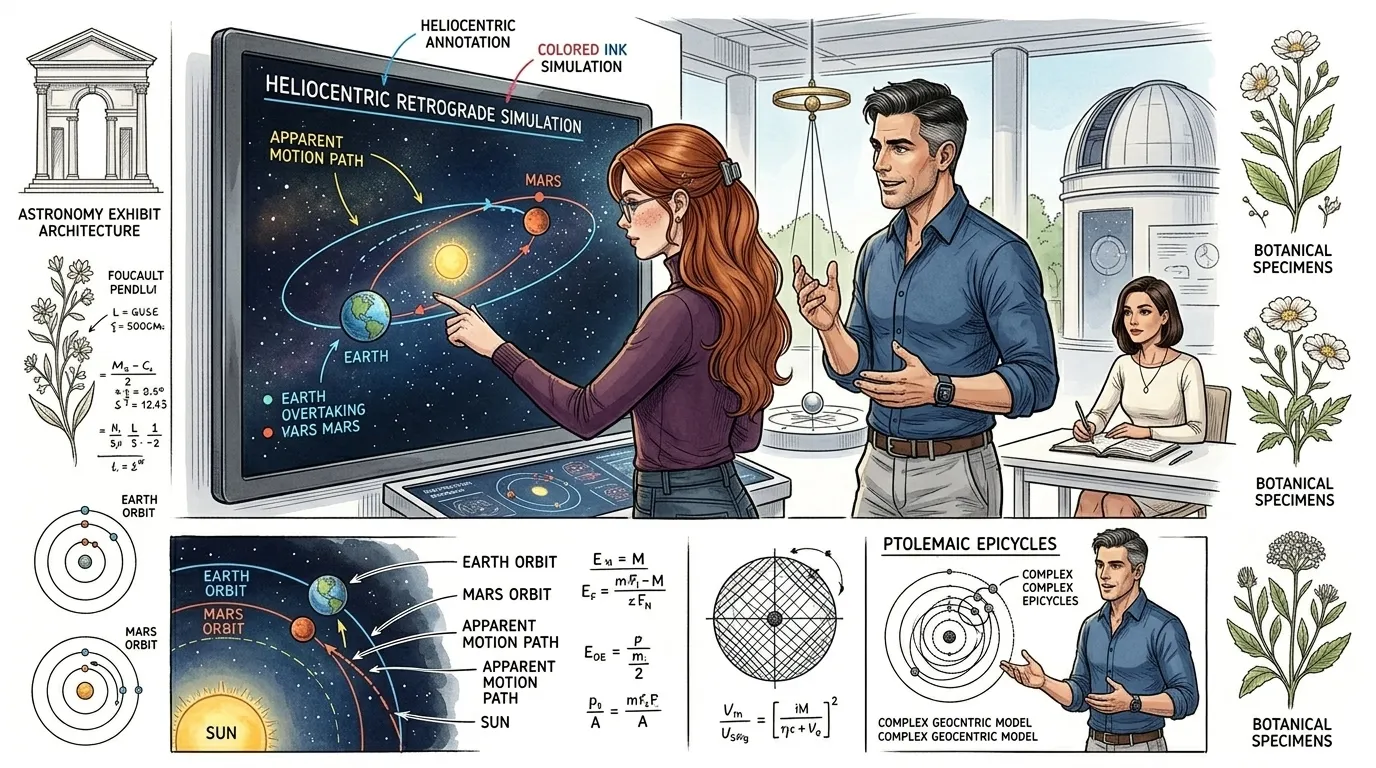
The heliocentric model offered a natural, geometric explanation for phenomena that the geocentric system struggled to reconcile. Retrograde motion, once a perplexing problem requiring complex mathematical constructions, was now simply a matter of perspective. As Earth, in its faster orbit, passed a slower outer planet, that planet would appear to temporarily reverse its direction across the sky.
""Observe how elegantly this explains planetary retrograde motion," Amara directed, pointing to a dynamic simulation on a large interactive screen. "When Earth, in its inner, faster orbit, overtakes Mars, Mars appears to loop backwards against the distant stars." Rafael added, "The Ptolemaic solution required an elaborate series of epicycles, whereas Copernicus's model demonstrates this as a natural consequence of relative speeds and orbital geometry.""
Page 6
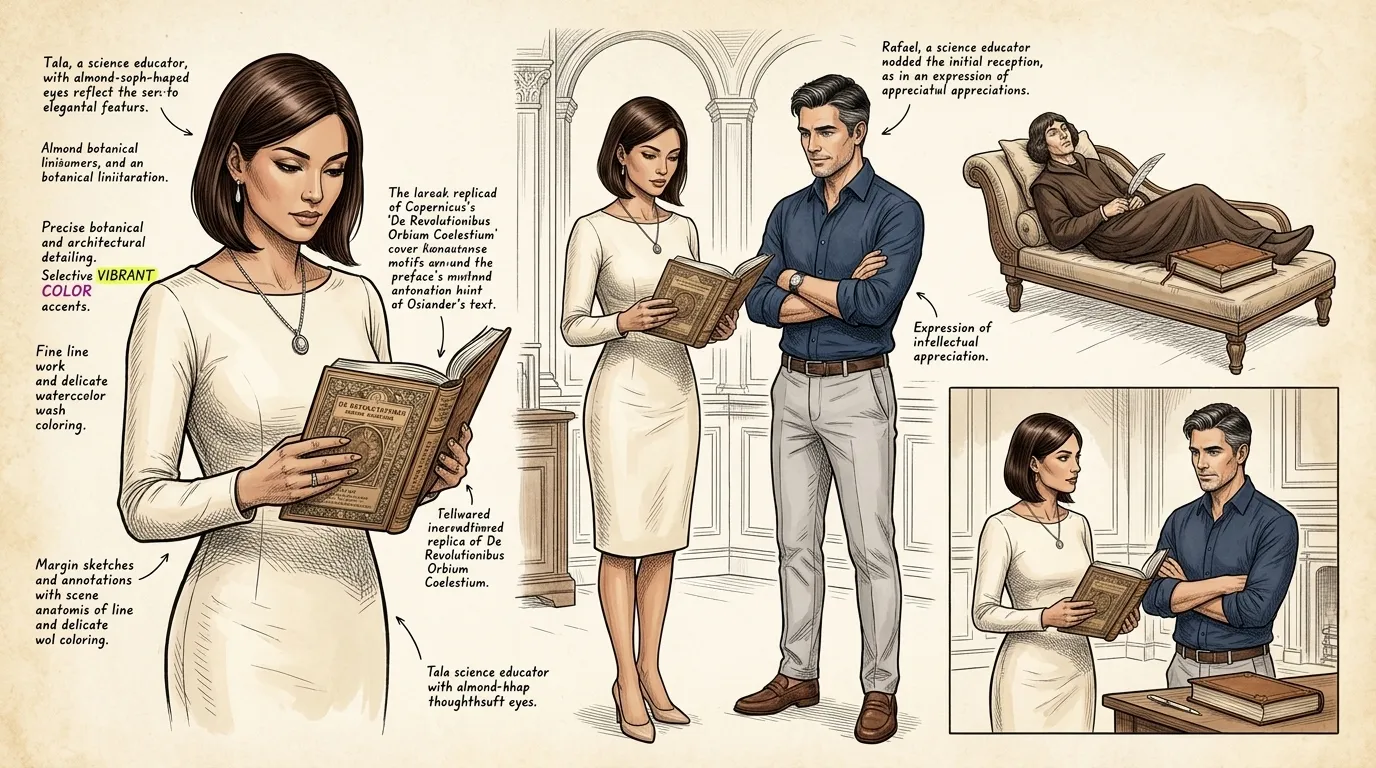
Copernicus's monumental work, 'De Revolutionibus Orbium Coelestium' (On the Revolutions of the Heavenly Spheres), was published in 1543, the year of his death. Its initial reception was muted, partly due to a cautious preface by Andreas Osiander that presented the heliocentric model as a mere mathematical hypothesis rather than a physical reality, tempering its immediate impact and avoiding widespread theological condemnation.
""The book's preface, added by Osiander, actually helped it survive initially," Tala observed, examining a replica of Copernicus's book. "It presented the heliocentric idea as a mathematical tool, not a literal truth, which was a clever way to bypass immediate challenges to established dogma." Rafael nodded thoughtfully. "It bought time, allowing the scientific arguments to slowly permeate scholarly circles without direct confrontation with religious authority.""
Page 7
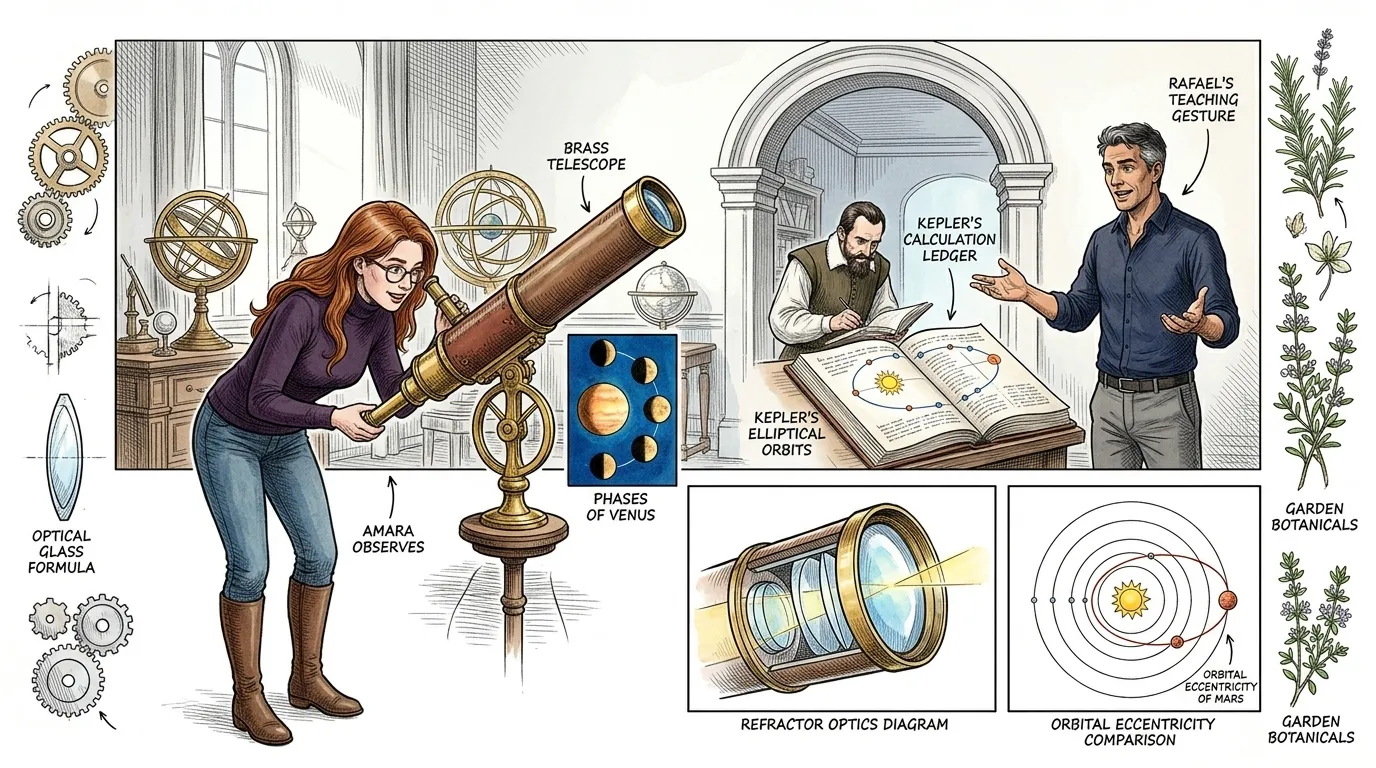
Decades later, courageous astronomers like Galileo Galilei provided crucial observational evidence supporting Copernicus. Galileo's telescope revealed the phases of Venus, mirroring those of the Moon, which could only be explained if Venus orbited the Sun. His discovery of Jupiter's moons demonstrated that not everything revolved around Earth, further dismantling the geocentric paradigm. Johannes Kepler, through meticulous calculations, then refined Copernicus's circular orbits into ellipses, completing the heliocentric framework.
""Galileo's telescopic observations were game-changers," Amara declared, peering into a replica of an early telescope. "The phases of Venus, for example, proved it orbited the Sun, exactly as the Copernican model predicted." Rafael added, "And Kepler's mathematical laws, showing elliptical orbits, truly solidified the heliocentric theory, transforming it from a hypothesis into a predictive scientific model.""
Page 8
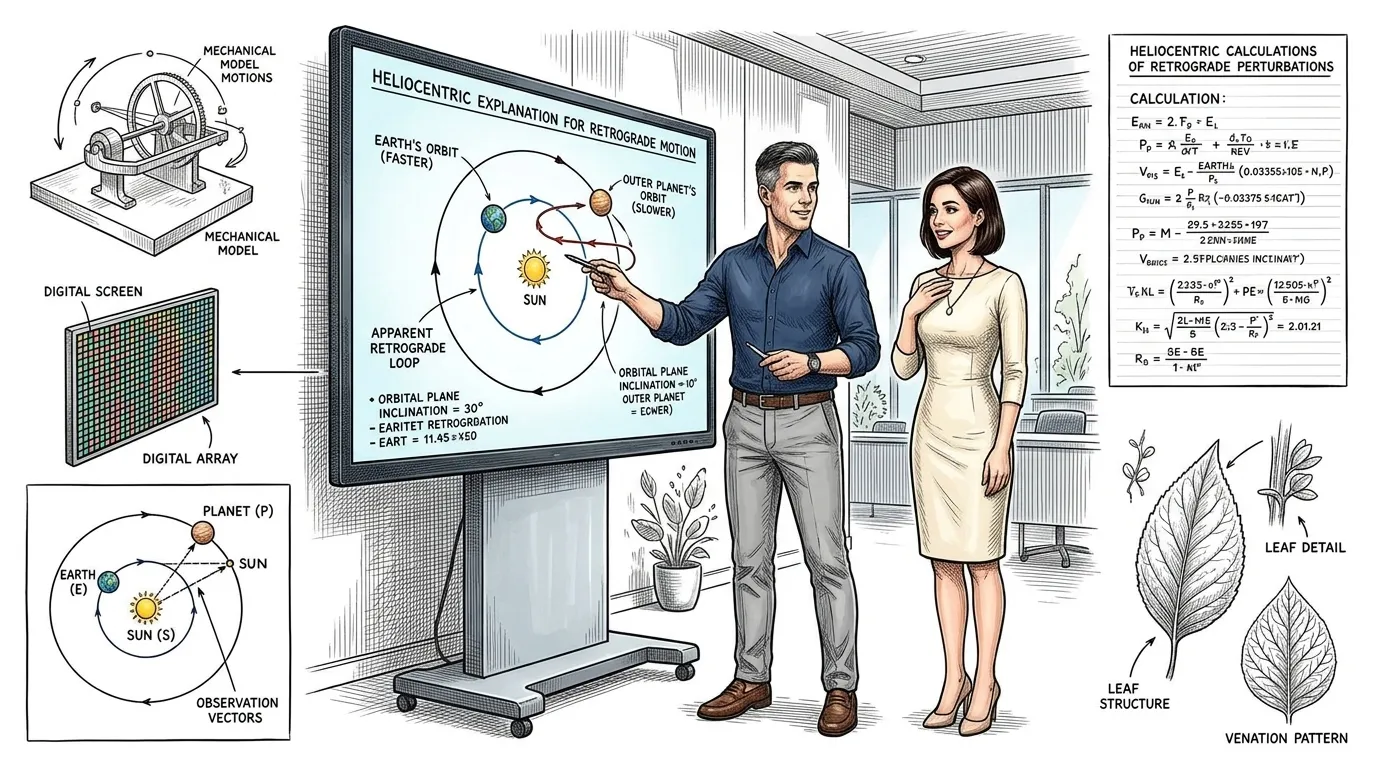
The heliocentric model, once a daring philosophical proposition, evolved into a powerful scientific framework. The problem of planetary retrograde motion, which required Ptolemy's ever-more-complex system of epicycles and equants, was now elegantly explained by the simple relative motion of Earth and other planets around the Sun. This profound simplification was the true triumph of the Copernican revolution.
""This is the payoff, precisely what we discussed earlier about the Ptolemaic complexity," Rafael stated, highlighting a diagram showing the heliocentric explanation for retrograde motion. "Copernicus eliminated the need for those philosophical compromises and mechanical kludges." Tala chimed in, "His model provided an aesthetically pleasing and mathematically coherent explanation for celestial phenomena, transforming what seemed like chaotic wanderings into a predictable, elegant dance.""
Page 9
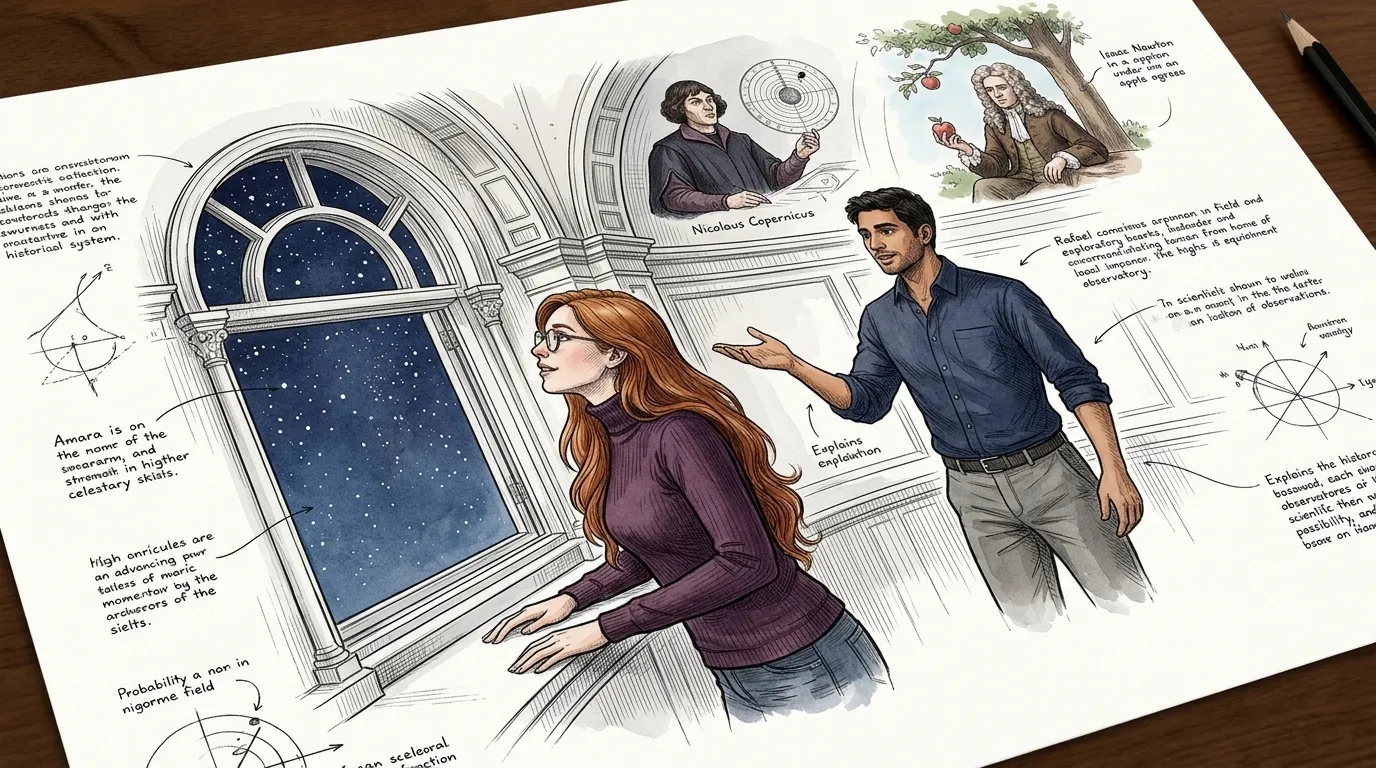
Copernicus initiated a paradigm shift that extended far beyond astronomy, challenging humanity's anthropocentric view of the universe. His work laid the intellectual groundwork for the Scientific Revolution, inspiring future generations of scientists like Isaac Newton to seek universal laws governing celestial and terrestrial mechanics. It was a profound call to observe, to question, and to derive understanding from evidence rather than tradition.
""Copernicus's work wasn't just about planets; it fundamentally altered how we approach knowledge," Amara articulated, gazing out through a large observatory window at a star-filled night sky. "It was a powerful demonstration that even the most deeply ingrained beliefs must yield to observational evidence and mathematical reasoning." Rafael added, "His quiet revolution gave us the intellectual tools to question, to seek simpler explanations, and ultimately, to discover deeper truths about the universe.""
Page 10
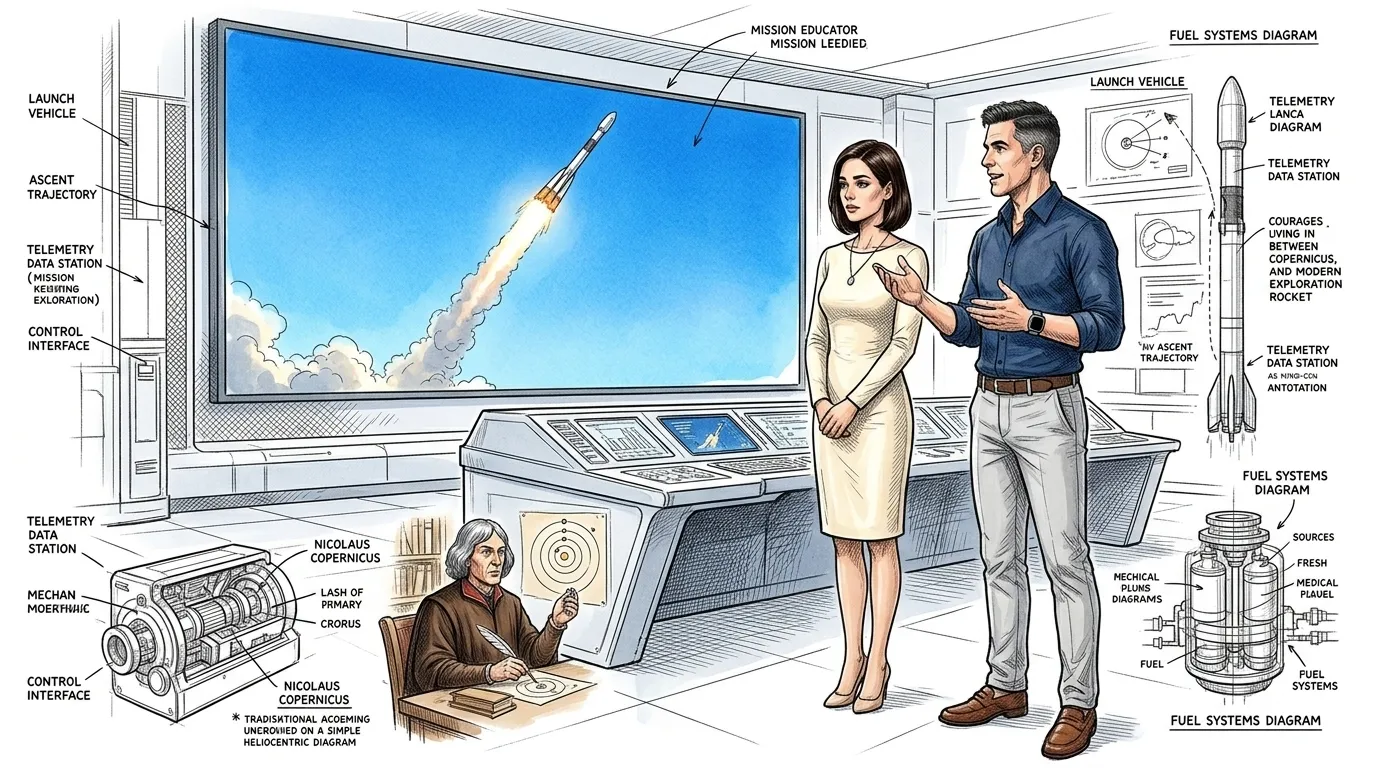
From his quiet studies in Frombork, Nicolaus Copernicus set in motion an intellectual earthquake. His daring hypothesis ultimately transformed our cosmic perspective, making possible the rigorous science that would later launch humanity beyond Earth's gravity. The exploration of space, the intricate choreography of orbital mechanics, and our ceaseless quest for cosmic understanding all stand as testaments to his profound legacy.
""From a quiet suggestion, a complete transformation of thought emerged," Tala stated, watching a live feed of a rocket launch on a massive screen. "The very journey to other worlds, and the navigation of our own satellites, relies on the heliocentric framework Copernicus dared to propose." Rafael concluded, "His courage to challenge orthodoxy truly paved the way for all future space science and exploration.""
About this story
- Location: Global
- Audience: general readers
Questions and answers
Read Wonder Science on your phone
Wonder Science is available on Android. Get Wonder Science on Google Play.