Paul Dirac
Paul Dirac — an illustrated science story, set in Global. 10 illustrated pages, free to read on Wonder Science.
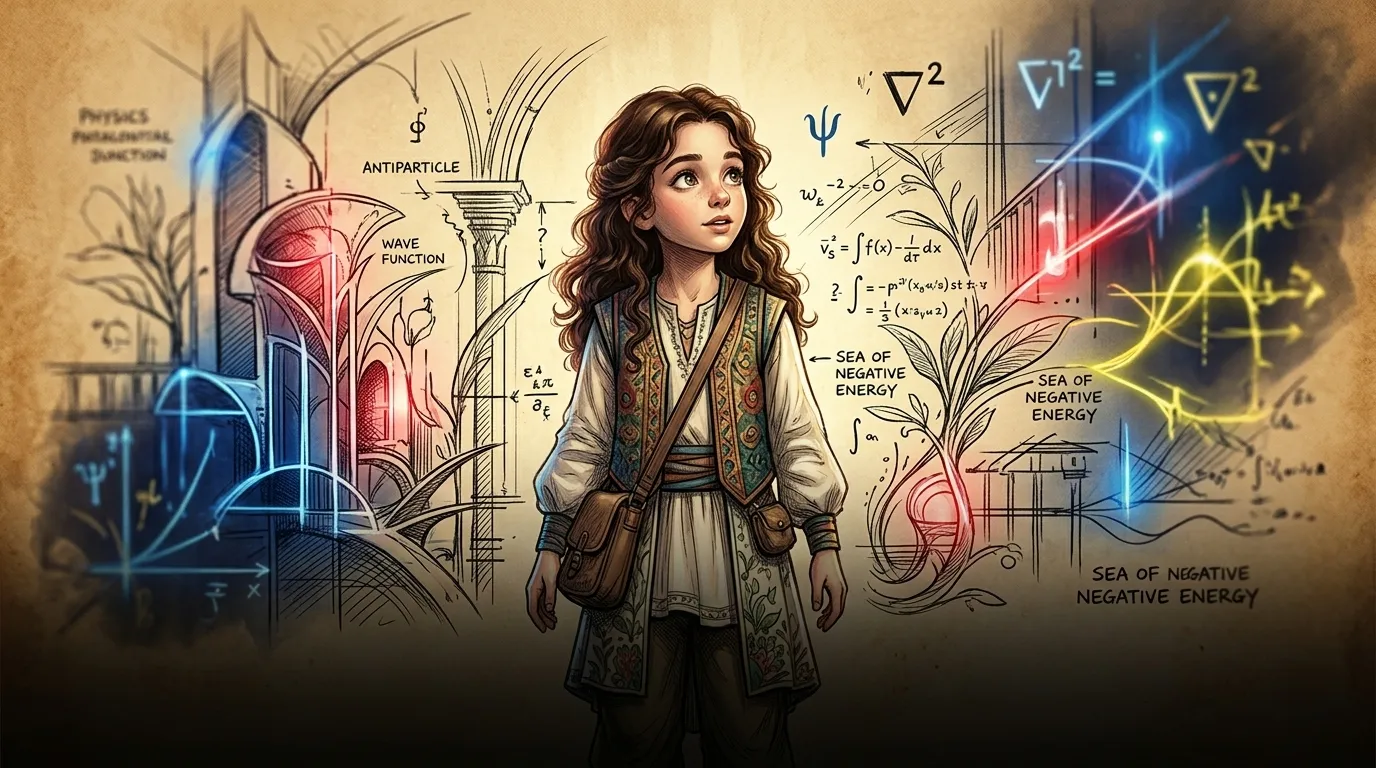
Page 1
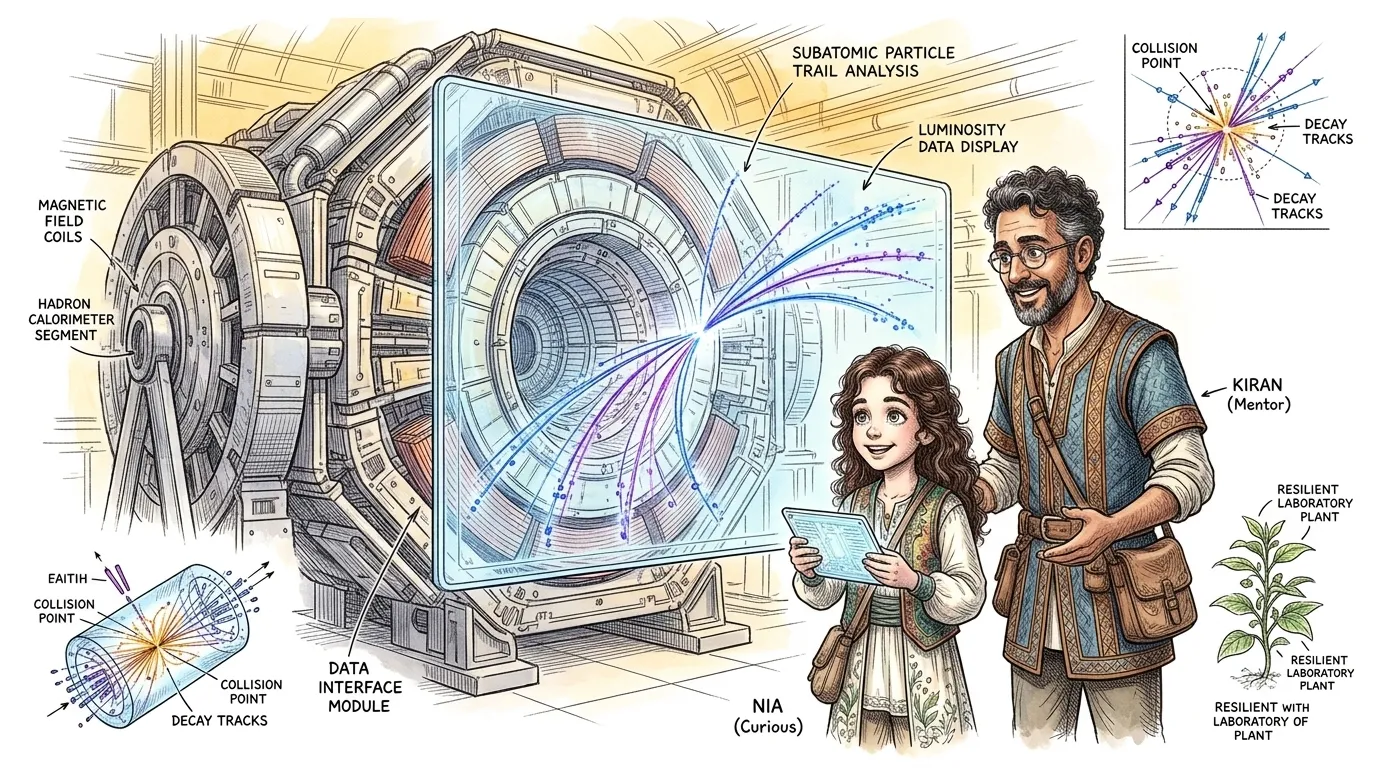
The shimmering trails of subatomic particles danced across the screen, captured by the massive detectors at CERN. An intricate tapestry of energy and matter revealed the hidden architecture of reality. It's a complex world, but one that could be elegantly described. But how?
Page 2
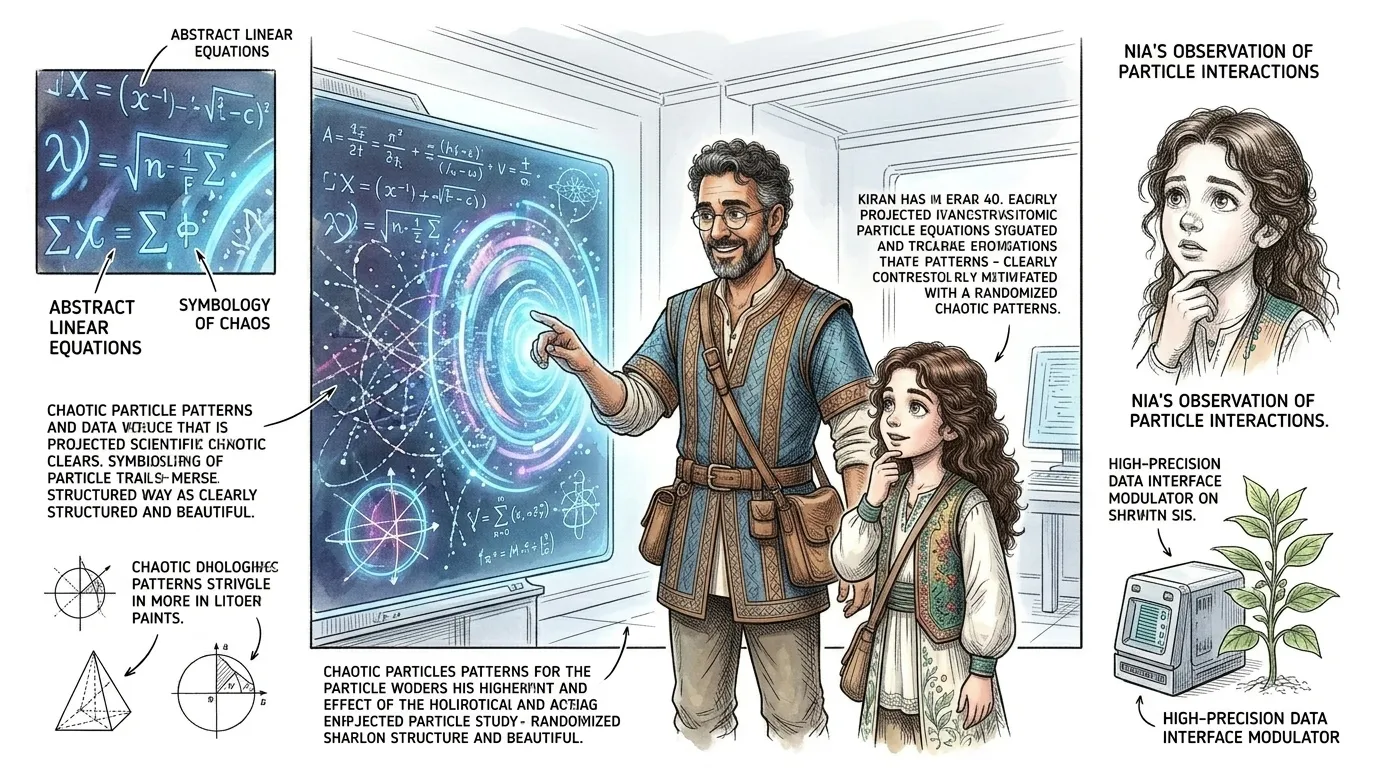
Kiran tapped the holographic display. "This chaos, Nia, can be tamed with an equation – a single, elegant line of symbols that predicted something revolutionary." He smiled. "It all began with Paul Dirac, a name synonymous with quantum mechanics and the pursuit of mathematical beauty in the physical world."
Page 3
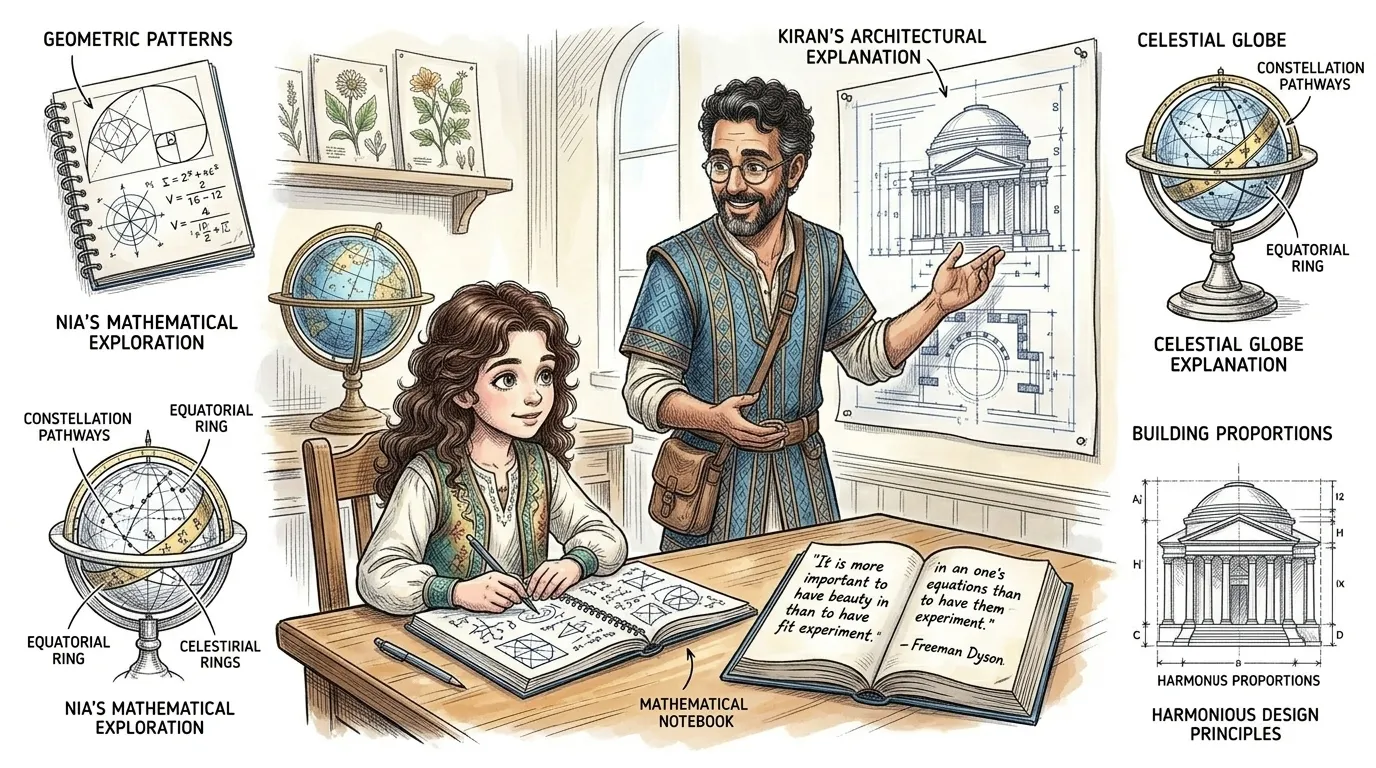
Nia scribbled in her notebook. "But why does math have to be... beautiful?" Kiran chuckled. "Dirac believed the most fundamental laws of nature should possess mathematical beauty. He famously said, 'It is more important to have beauty in one's equations than to have them fit experiment.' That's what he felt, according to Freeman Dyson!"
Page 4
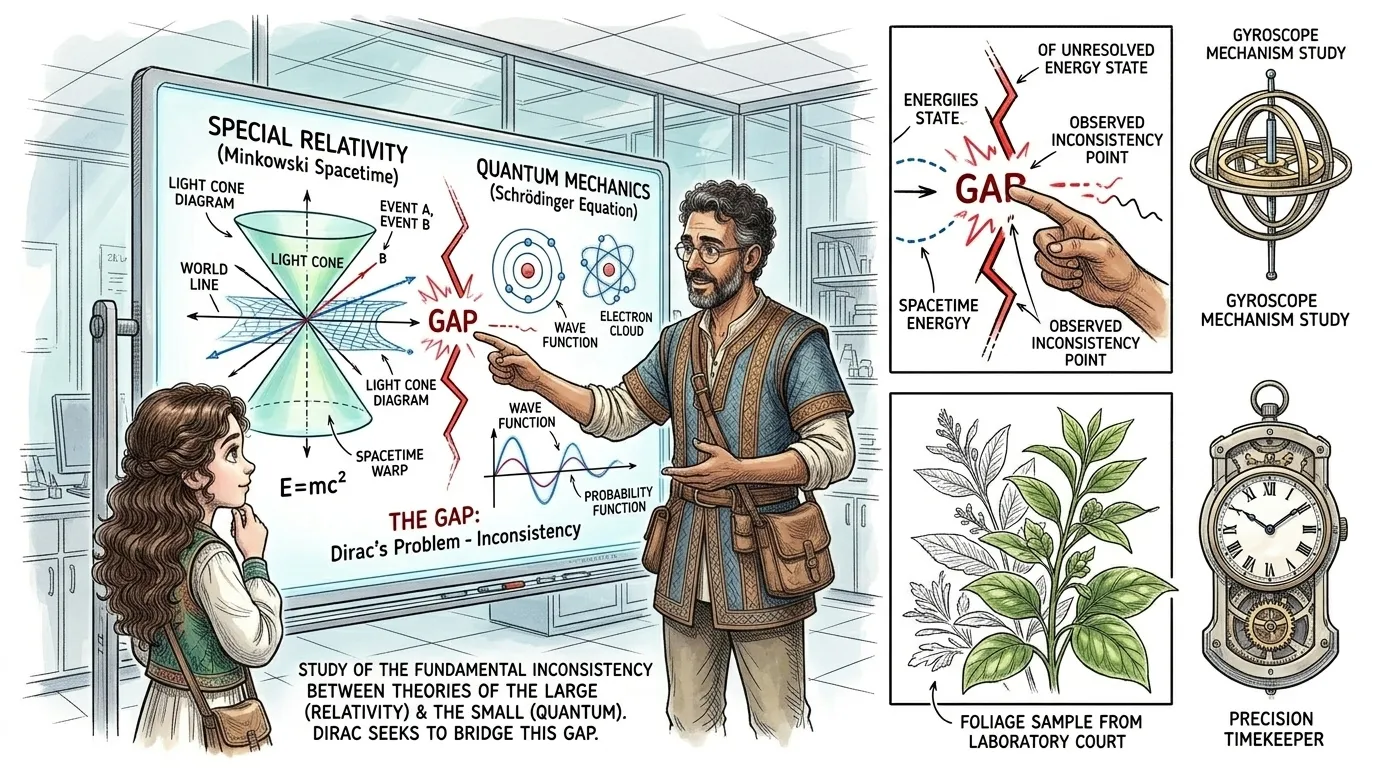
Dirac's genius lay in uniting two powerful theories: Einstein's theory of special relativity and quantum mechanics. The problem was, quantum mechanics, as it stood in the 1920s, didn't account for relativity. This led to inconsistencies when describing high-speed particles. Dirac sought to fix that.
Page 5
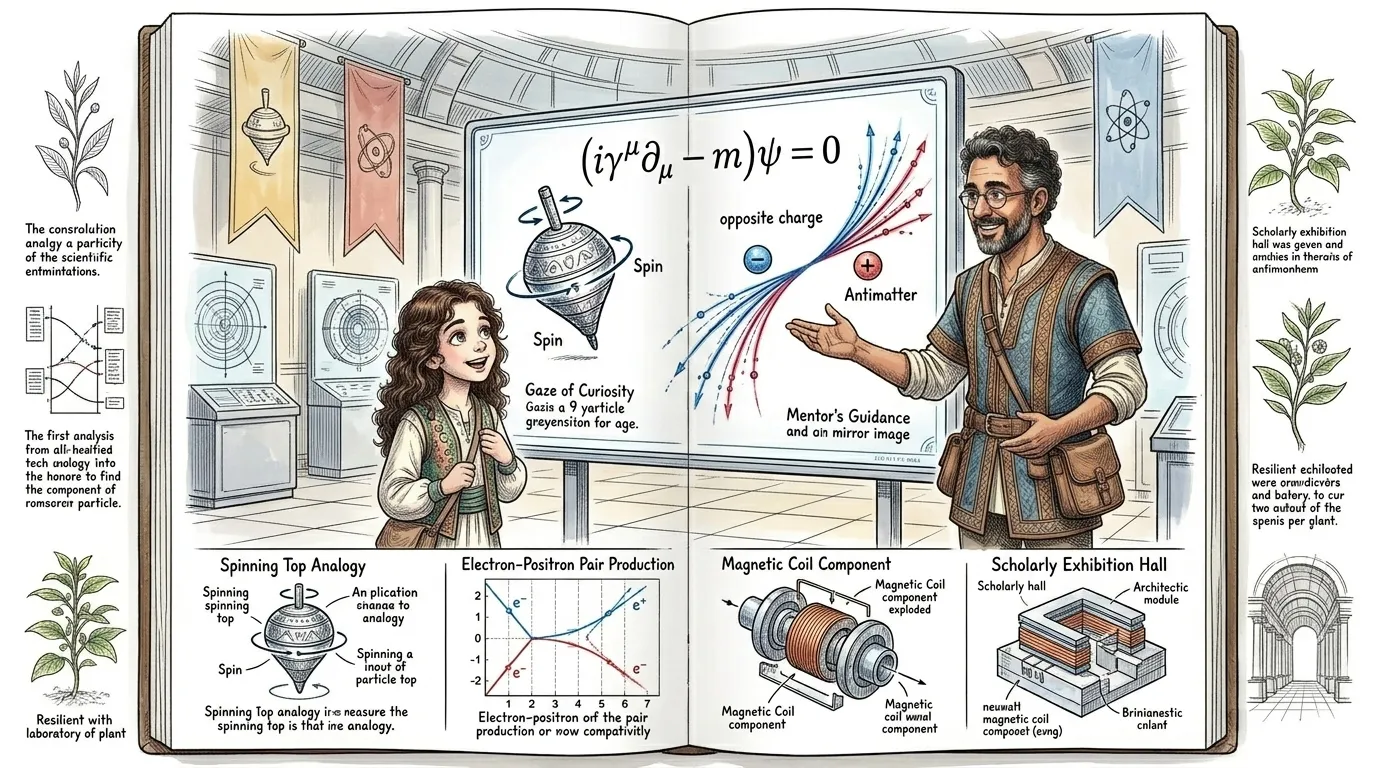
The Dirac equation, formulated in 1928, elegantly solved the problem. It predicted the existence of 'spin' – an intrinsic angular momentum of particles, like a tiny spinning top. More astonishingly, it predicted antimatter: particles with the same mass but opposite charge. The antimatter prediction stunned the scientific community.
Page 6
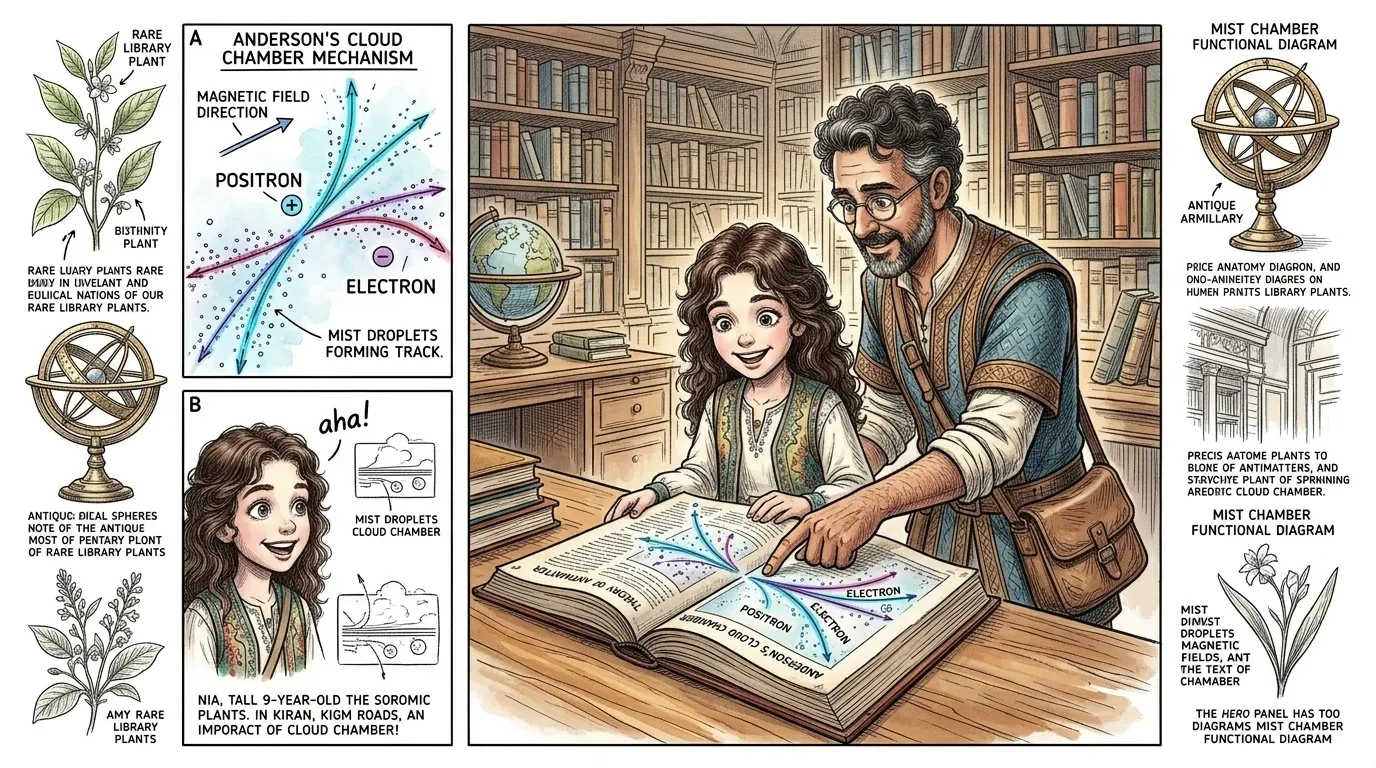
Initially, many were skeptical of Dirac's prediction. Was it just a mathematical quirk? Then, in 1932, Carl Anderson discovered the positron, the antiparticle of the electron, in cosmic ray experiments. This confirmed Dirac's theory and revolutionized physics. It proved antimatter was real, not just a theoretical possibility.
Page 7
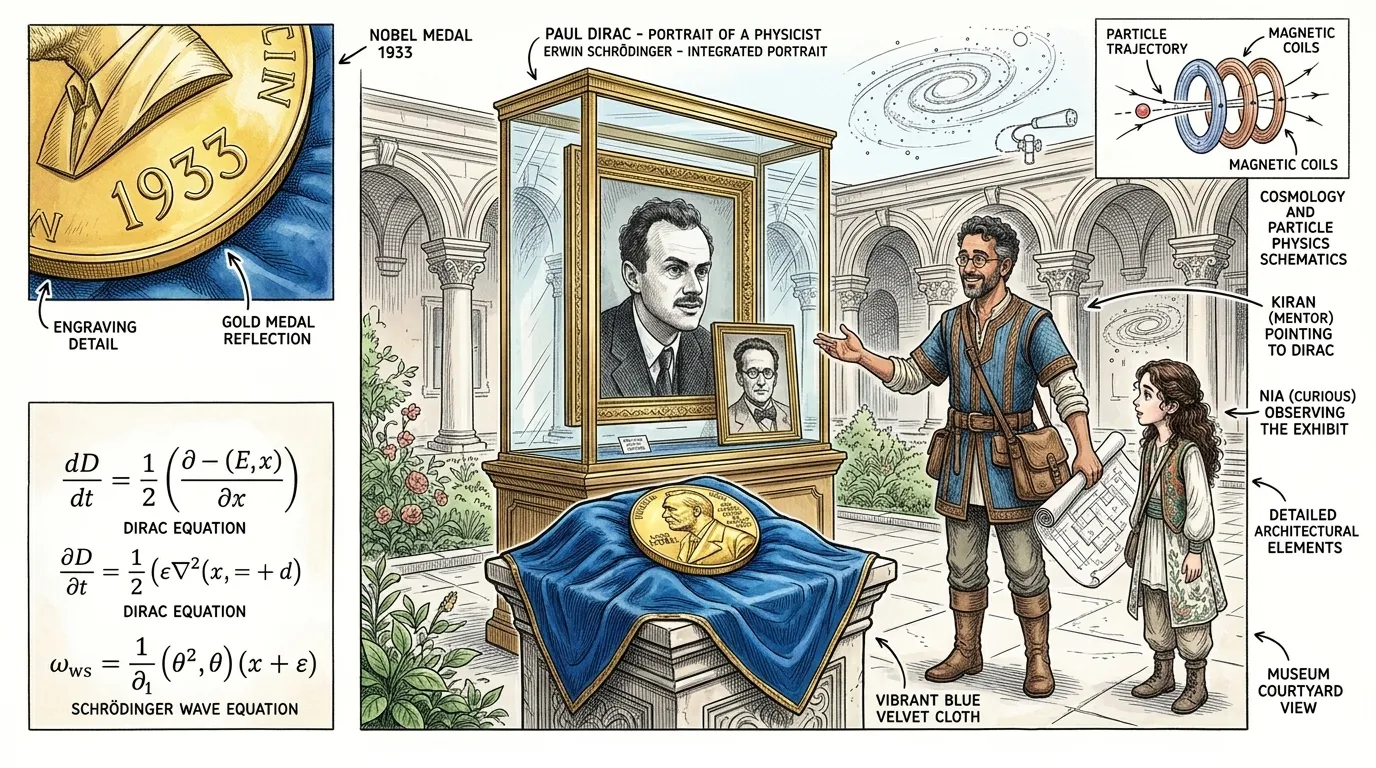
In 1933, Dirac shared the Nobel Prize in Physics with Erwin Schrödinger "for the discovery of new productive forms of atomic theory." His equation became a cornerstone of modern physics, influencing everything from particle physics to cosmology. Yet, Dirac remained a humble and somewhat enigmatic figure.
Page 8
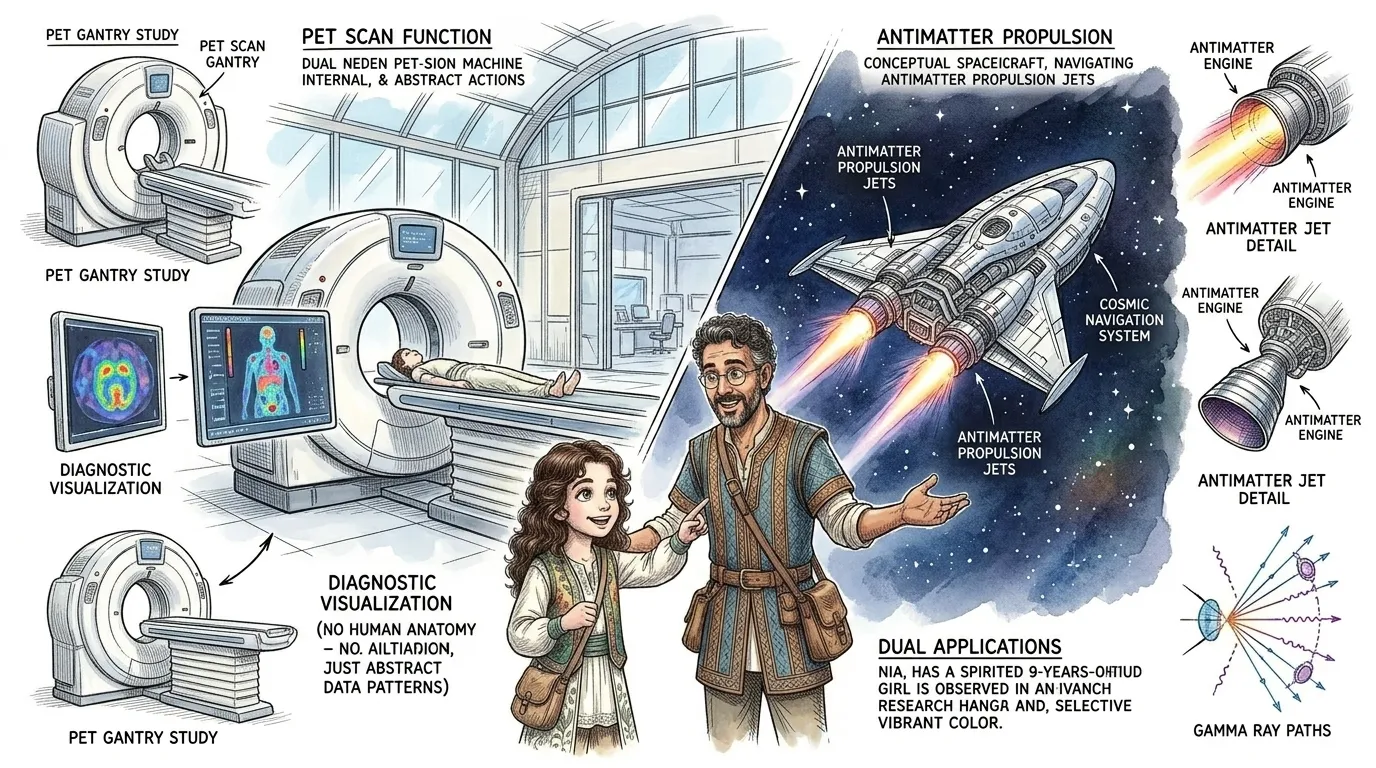
Antimatter is no longer just a theoretical curiosity. It's used in PET scans in medicine to diagnose diseases. Scientists are even exploring its potential as a fuel source for spacecraft, though many technological hurdles remain. But the foundations were laid by Dirac's elegant equation.
Page 9
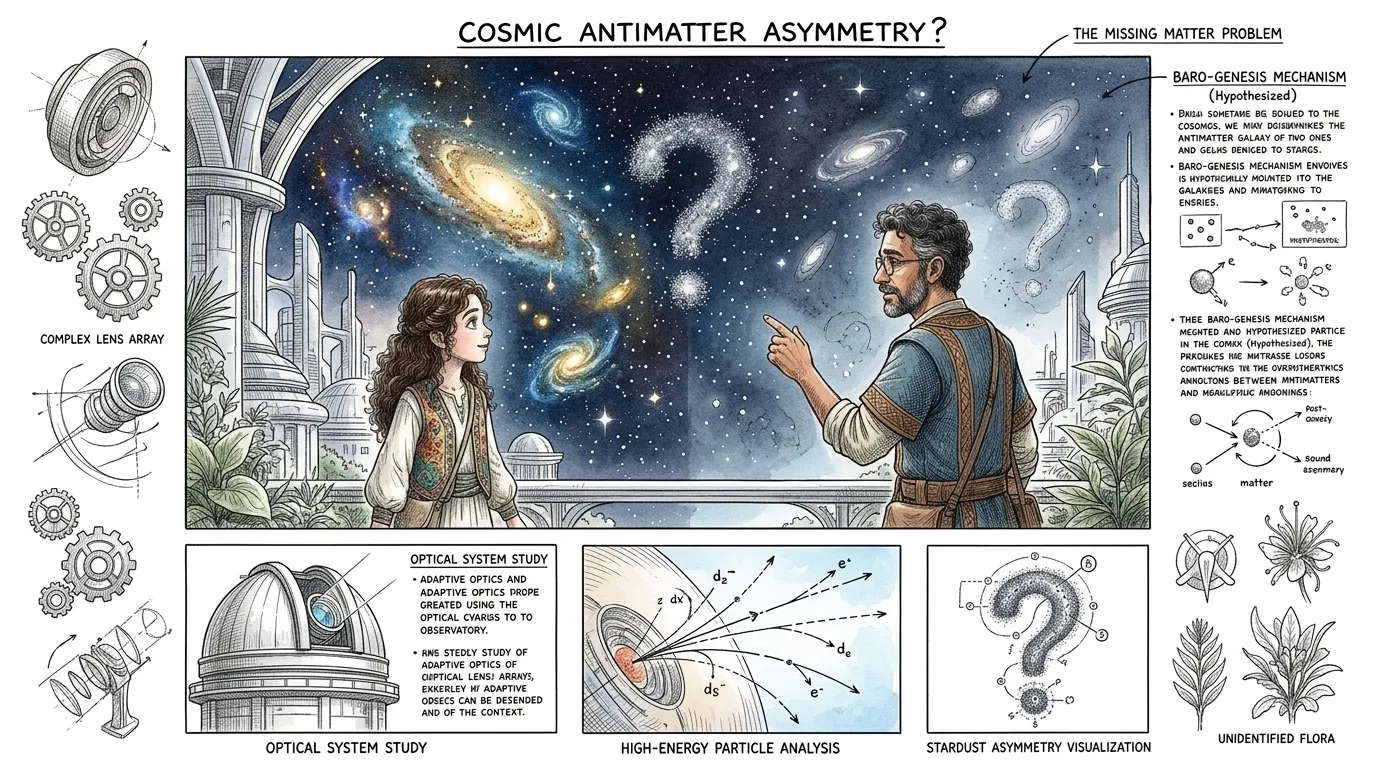
One of the biggest mysteries in cosmology is the antimatter asymmetry. If the Big Bang created equal amounts of matter and antimatter, why is the universe dominated by matter today? Where did all the antimatter go? Dirac's work opened the door to this profound question.
Page 10
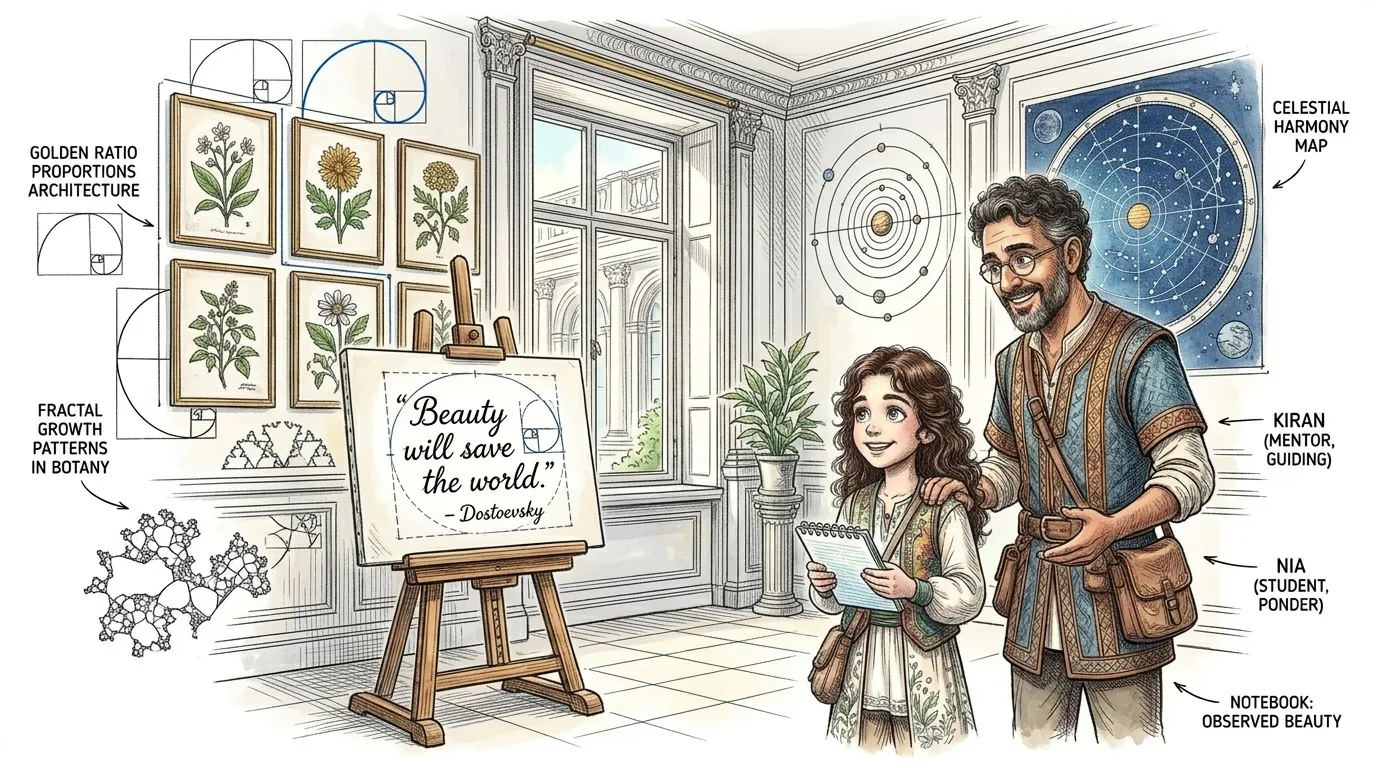
Kiran smiled. "Dirac's legacy extends beyond his specific discoveries. It's about the power of mathematical reasoning and the pursuit of beauty in understanding the universe. As Dostoevsky wrote, 'Beauty will save the world.' Dirac certainly believed beauty could reveal its deepest secrets."
About this story
- Location: Global
- Audience: kids (ages 6–12)
Questions and answers
Read Wonder Science on your phone
Wonder Science is available on Android. Get Wonder Science on Google Play.