Percival Lowell
Percival Lowell — an illustrated science story, set in Global. 10 illustrated pages, free to read on Wonder Science.
Page 1
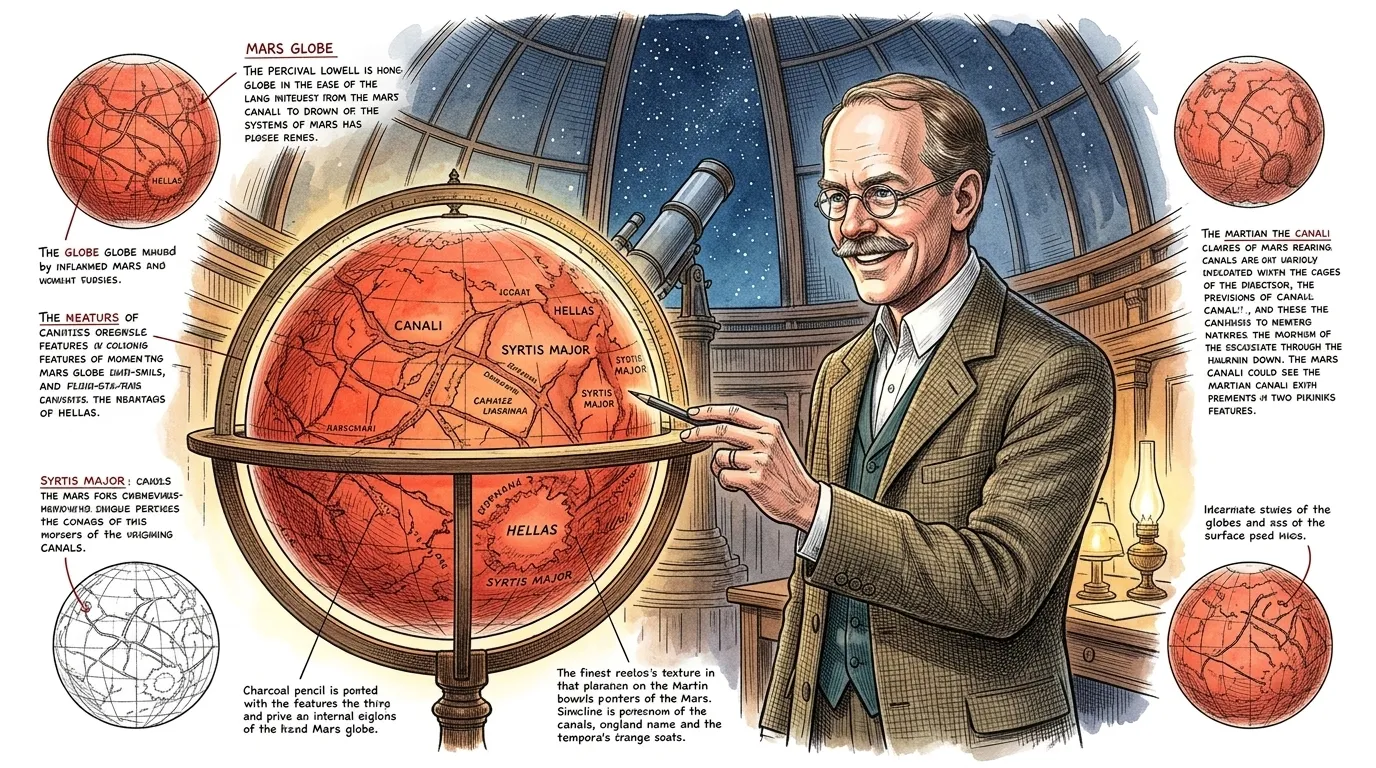
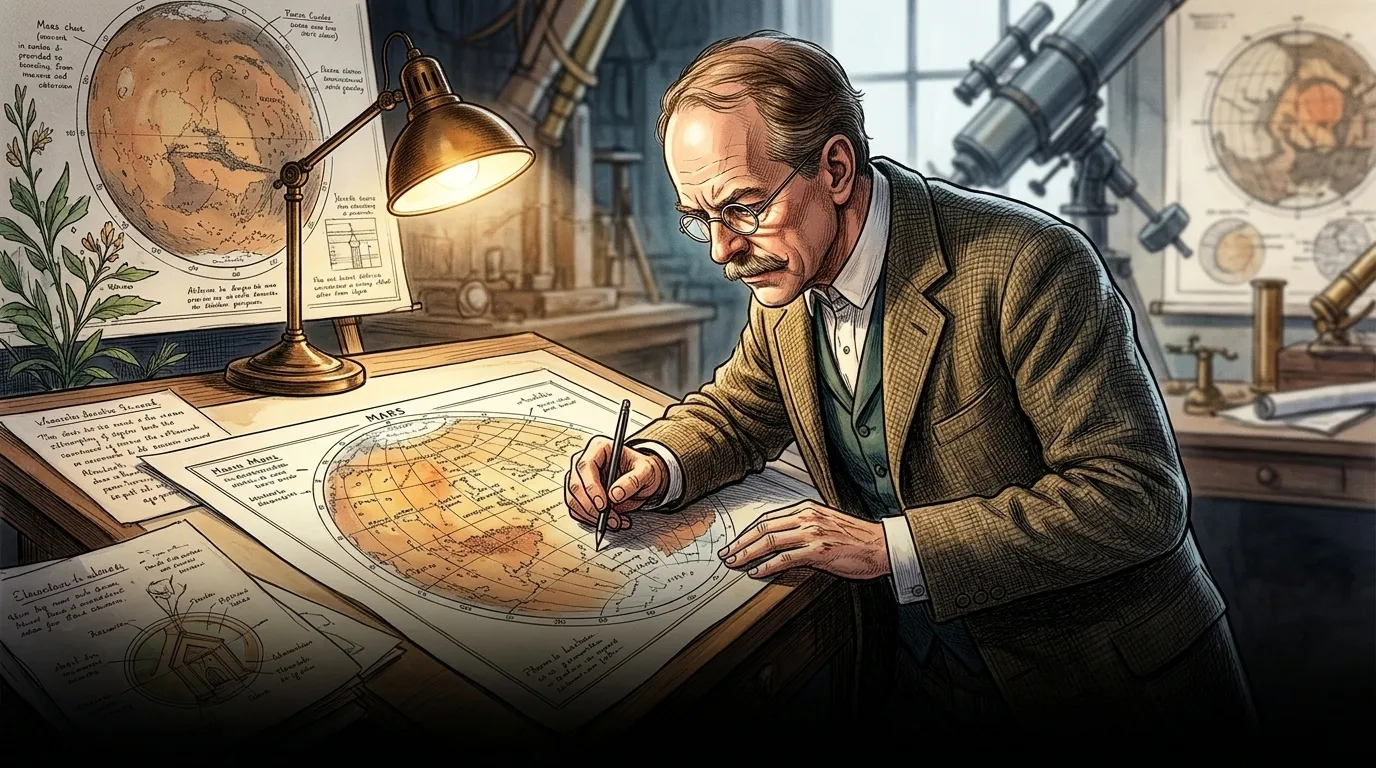
At the dawn of the 20th century, humanity gazed at Mars, eager to unlock its secrets. For decades, astronomers had observed enigmatic linear features crisscrossing its ruddy surface. Yet, it was the persistent, almost obsessive work of one man, Percival Lowell, that ignited a global fascination with a potentially inhabited Red Planet, capturing public imagination and forever altering the course of planetary science. His grand vision, born from meticulous observation at his dedicated observatory, posited not mere geological features, but an intricate network of artificial canals, a testament to intelligent life.
Page 2
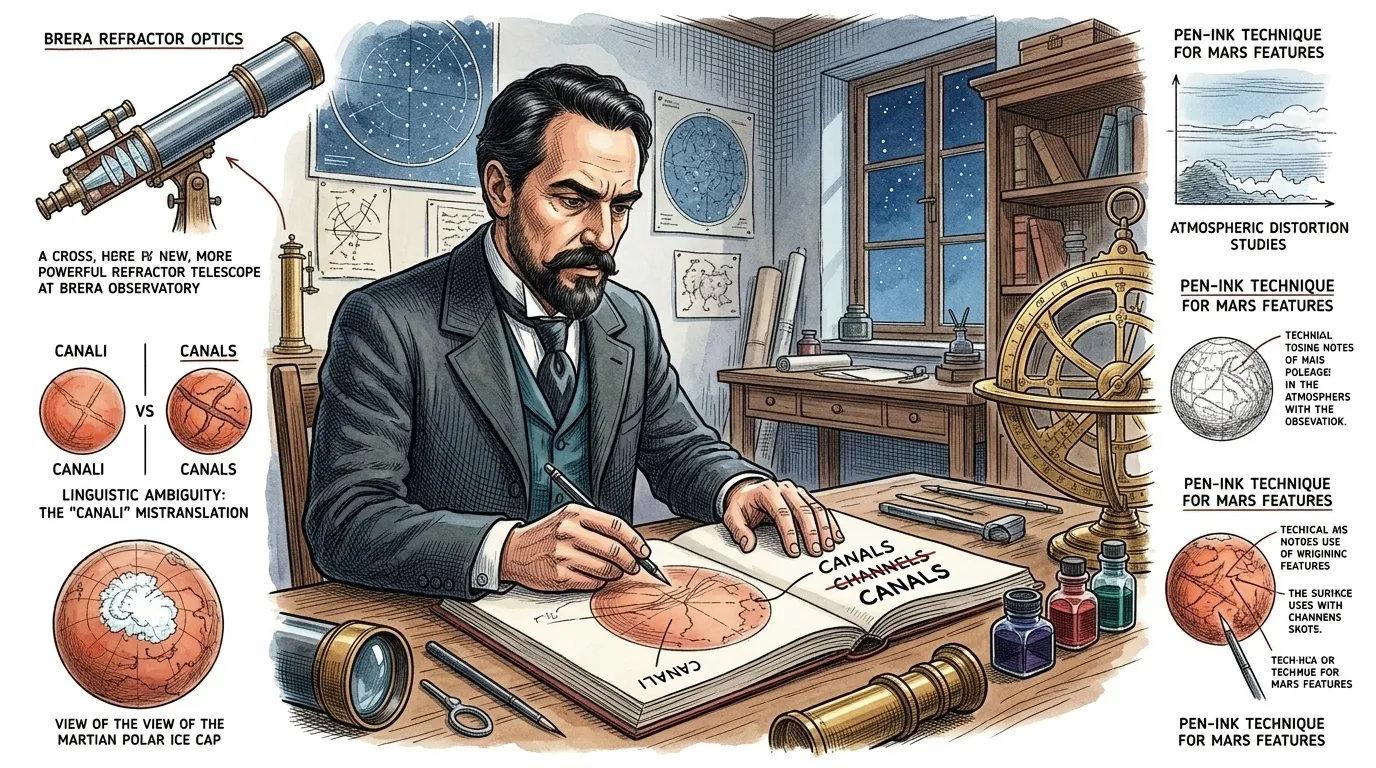
The fascination with Mars was not unique to Lowell. As early as 1877, Italian astronomer Giovanni Schiaparelli, using a modest 8.6-inch refractor, sketched faint linear markings on Mars, which he termed 'canali'—Italian for 'channels.' This neutral term, however, was mistranslated into English as 'canals,' imbuing these natural formations with an artificial, almost engineered connotation. This linguistic twist inadvertently fueled speculation, transforming a scientific observation into a tantalizing hint of intelligent Martian inhabitants struggling against a drying world, setting the stage for Lowell's later, more definitive, pronouncements.
Page 3
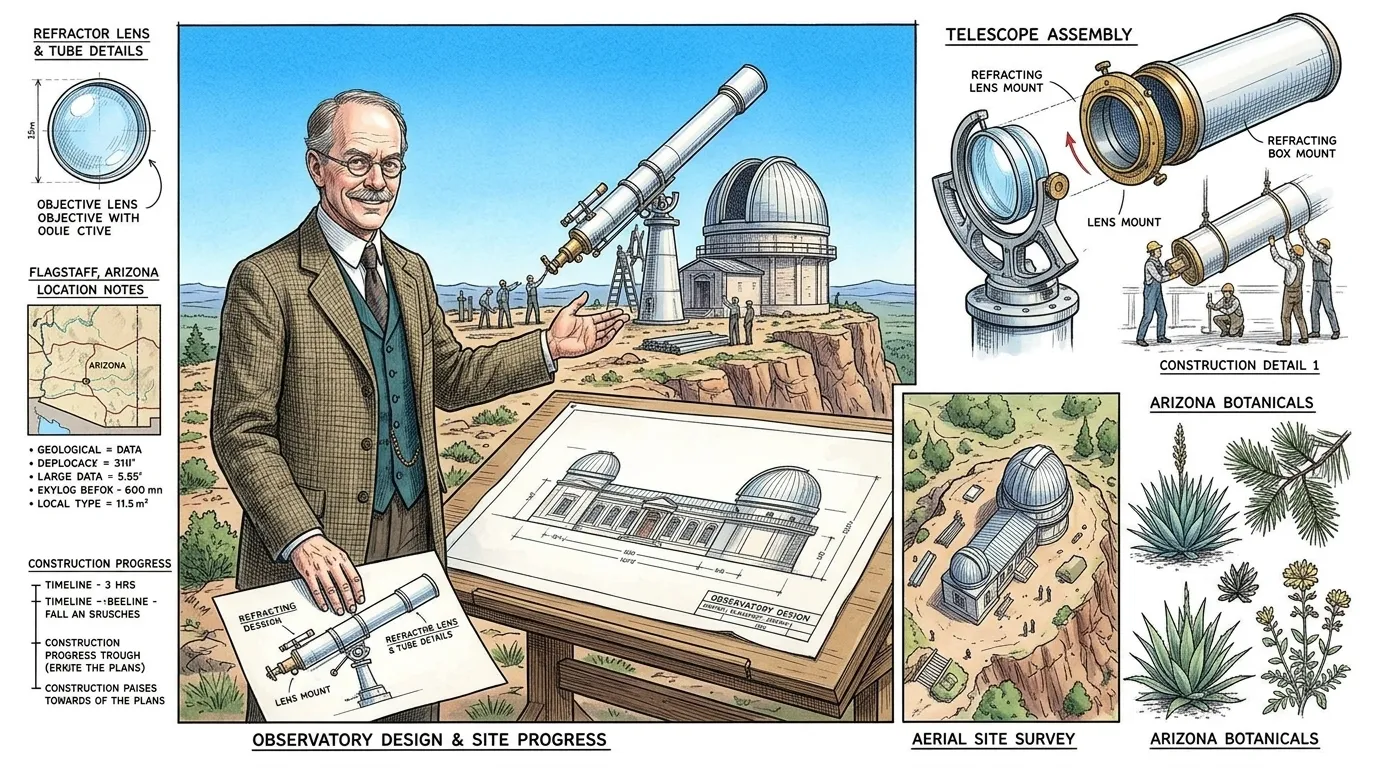
Driven by an insatiable curiosity and considerable personal wealth, Percival Lowell resolved to settle the debate. He sought the clearest skies on Earth, establishing his observatory in Flagstaff, Arizona, at an elevation of over 7,000 feet, far from urban light pollution. Inaugurated in 1894, Lowell Observatory became a state-of-the-art facility, housing powerful refracting telescopes specifically designed for planetary observation. This monumental undertaking reflected Lowell's conviction that only through unparalleled observational conditions could humanity truly peer into the celestial realm and discern the intricate truths hidden within its planets, especially Mars.
Page 4
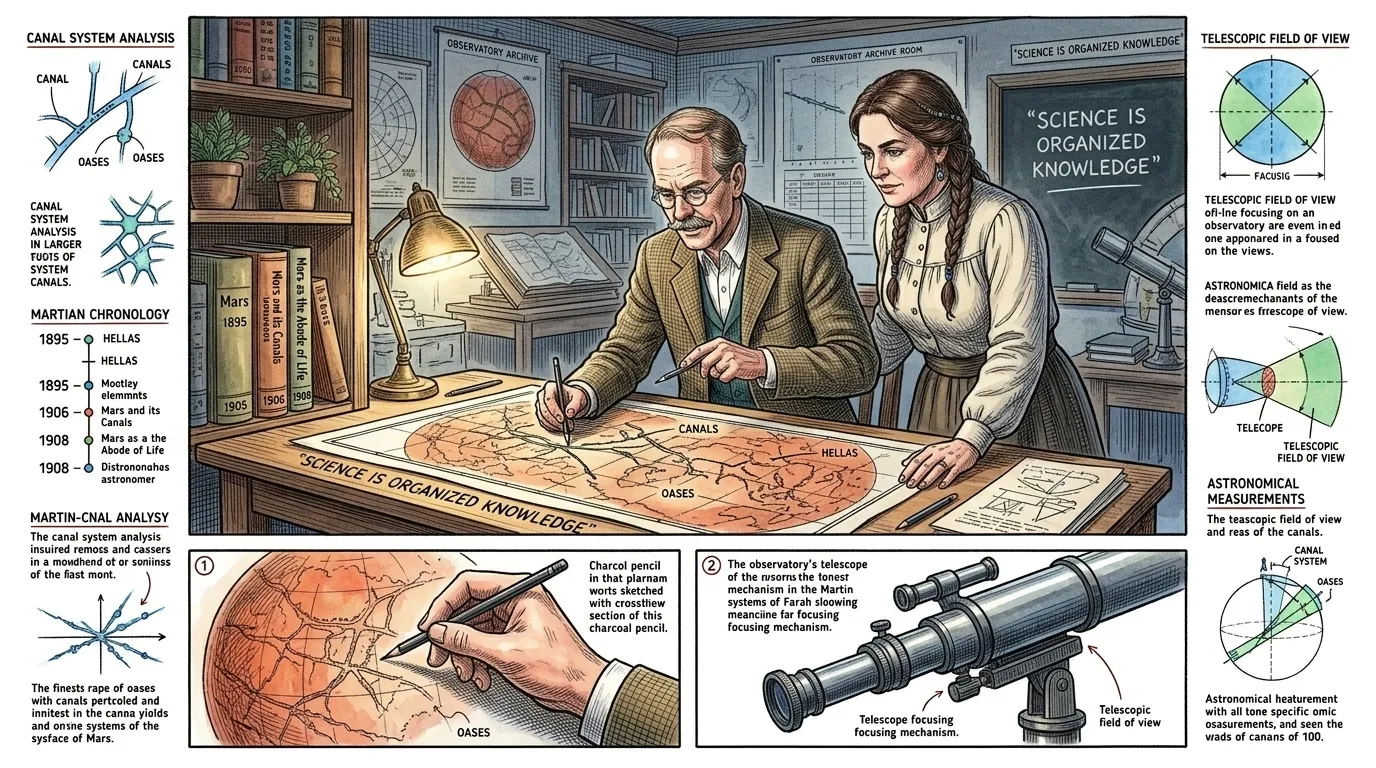
For years, Lowell meticulously observed Mars, spending countless hours at the eyepiece, painstakingly sketching what he believed were irrefutable lines on the Martian surface. He published his findings in influential books like 'Mars' (1895), 'Mars and its Canals' (1906), and 'Mars as the Abode of Life' (1908), presenting a coherent, if ultimately flawed, theory. He argued that these 'canals' were irrigation systems, constructed by an advanced but dying Martian civilization attempting to transport water from the poles to their arid equatorial regions. His detailed maps, showing hundreds of interconnecting lines and 'oases' at their intersections, presented a compelling, if controversial, visual narrative.
"Percival Lowell, a determined man in his 50s with a neatly trimmed mustache and spectacles, is bent over a large, illuminated desk, meticulously sketching on a detailed map of Mars. He is dressed in a tweed jacket over a white shirt and vest. An older, distinguished astronomer, Farah, a man in his mid-50s, stocky and strong, with fair skin with a slight blush and long braided dark brown hair with small beads, stands beside him, peering over his shoulder. 'They are here, clear as day,' Lowell declares, tapping the map with a charcoal pencil. 'As the great German philosopher Immanuel Kant once said, "Science is organized knowledge." And this, Farah, is the most organized knowledge of an alien world we have ever possessed.' Farah nods slowly, eyes fixed on the intricate lines."
Page 5
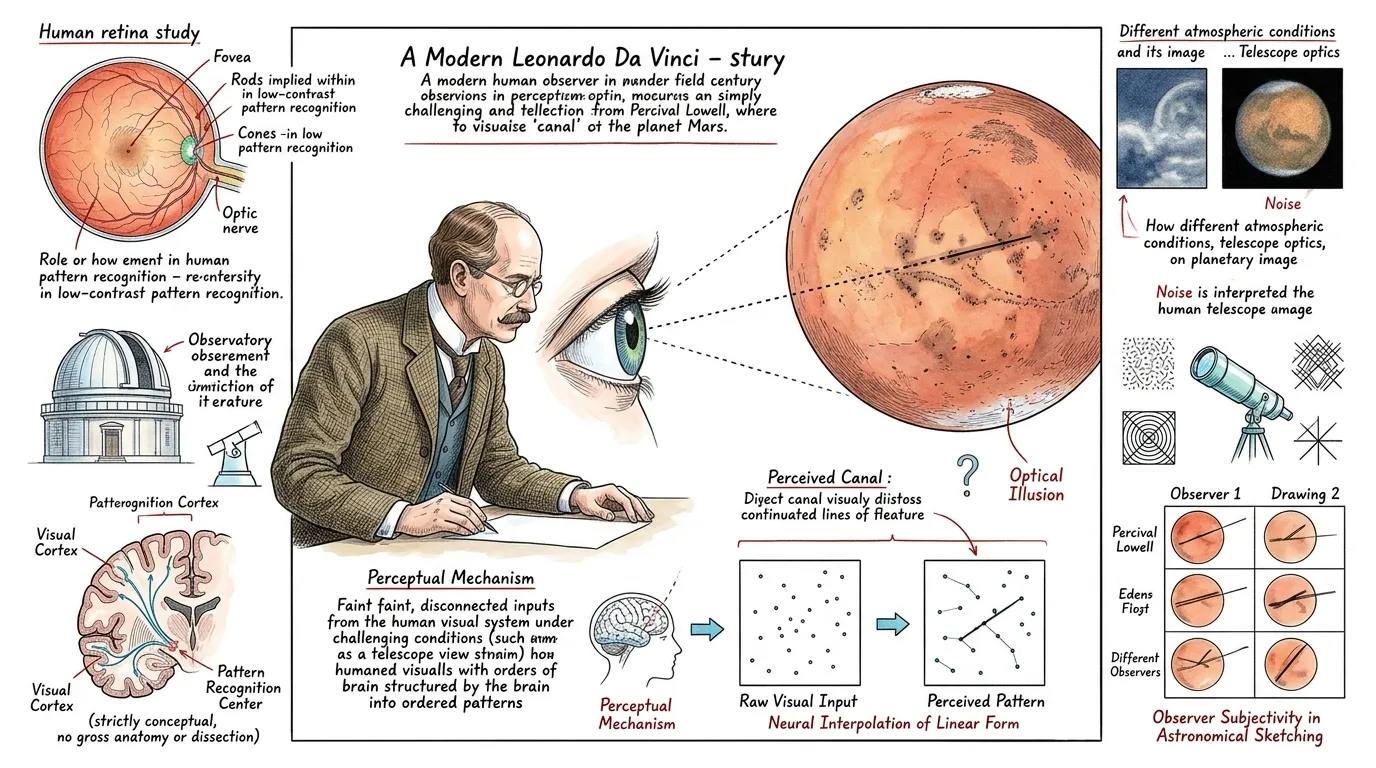
The scientific community, however, was sharply divided. While some astronomers claimed to see the canals, many others, equipped with equally powerful telescopes, saw nothing but natural, indistinct features. Modern research, much later, revealed the truth: the 'canals' were largely optical illusions. Under challenging viewing conditions, the human eye and brain, wired to detect patterns, would connect disparate dark spots and irregularities into continuous lines. Furthermore, Lowell's own observational technique, staring intensely at the limits of visibility, inadvertently encouraged this pattern recognition, creating a subjective reality that proved difficult to shake for a generation.
Page 6
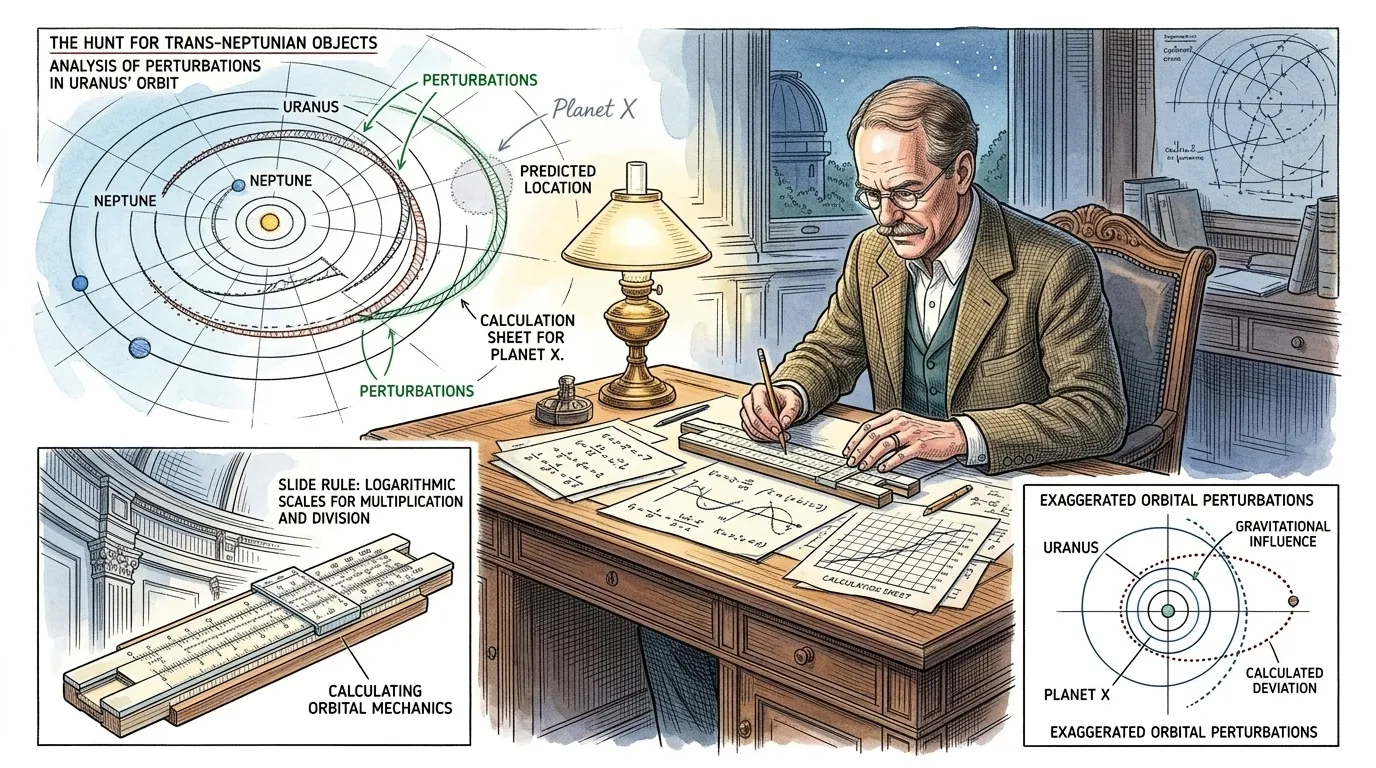
Despite the persistent controversy surrounding his Martian canals, Lowell's scientific ambition extended far beyond Mars. He turned his attention to the outer reaches of the solar system, specifically the unexplained orbital perturbations of Uranus and Neptune. These slight deviations from their predicted paths suggested the gravitational influence of an unseen, massive ninth planet, which Lowell dubbed 'Planet X.' Employing meticulous mathematical calculations, Lowell predicted its approximate location in the sky, initiating a dedicated photographic search at his observatory in 1906. This was a profoundly different kind of hunt, grounded in celestial mechanics rather than direct observation, demonstrating Lowell's multifaceted commitment to astronomical discovery.
Page 7
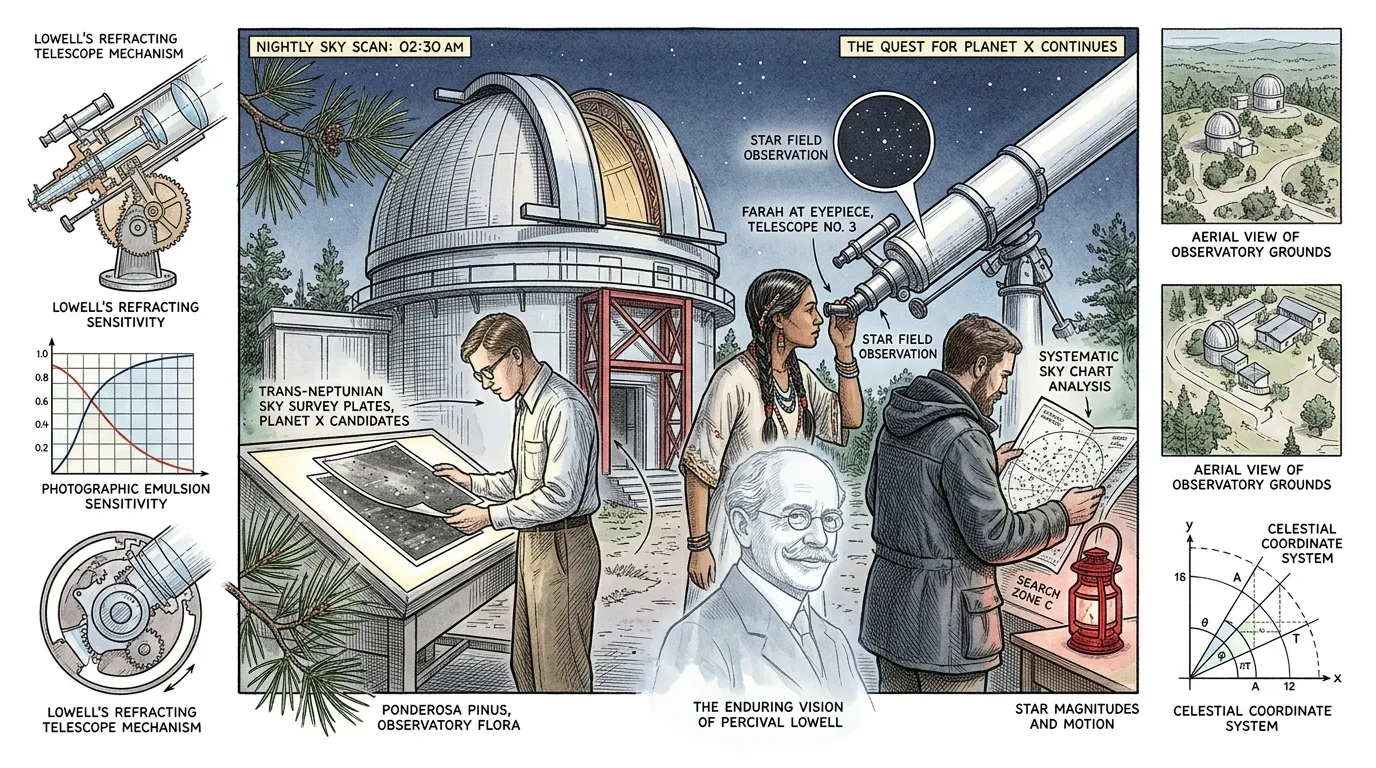
The search for Planet X continued for years, driven by Lowell's detailed predictions, yet the elusive world remained hidden. Lowell himself passed away in 1916, never knowing if his calculations would bear fruit. However, his work had established a crucial framework and a compelling objective for future astronomers. The Lowell Observatory remained committed to the quest, undertaking a systematic sky survey that would eventually yield a momentous discovery. This tenacious pursuit, initiated by Lowell's theoretical foresight, underscored his profound influence, transcending the controversies of his Martian observations and demonstrating an enduring impact on solar system exploration.
Page 8
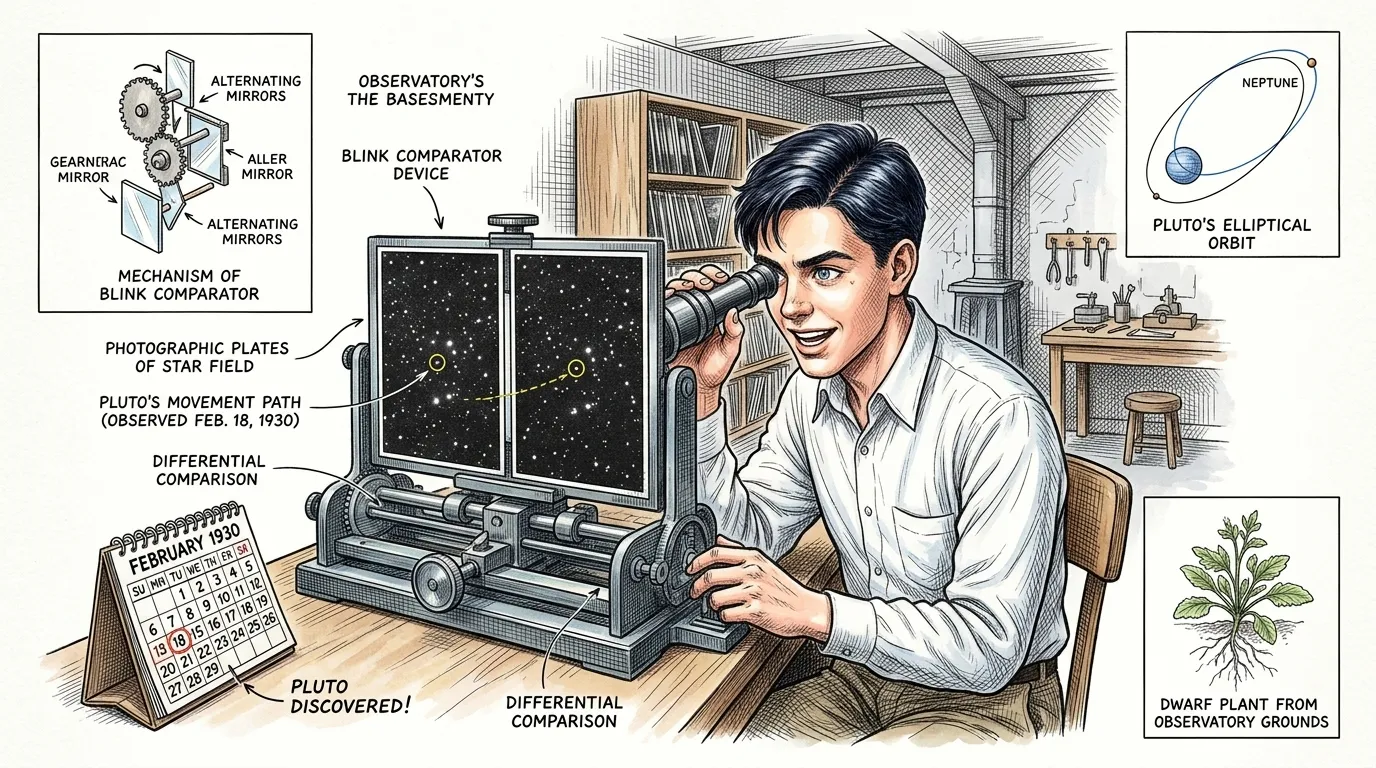
Years after Lowell's death, in 1930, a young astronomer named Clyde Tombaugh, employed at the very observatory Lowell founded, embarked on a new, systematic photographic search for Planet X. Armed with a blink comparator—a device that allowed rapid alternation between two photographic plates of the same sky region taken days apart—Tombaugh painstakingly examined millions of stellar images. His diligence was rewarded when, on February 18, 1930, he spotted a tiny, moving speck against the starry background: Pluto. This discovery, made possible by Lowell's foundational predictions and the infrastructure he established, dramatically expanded our known solar system.
Page 9
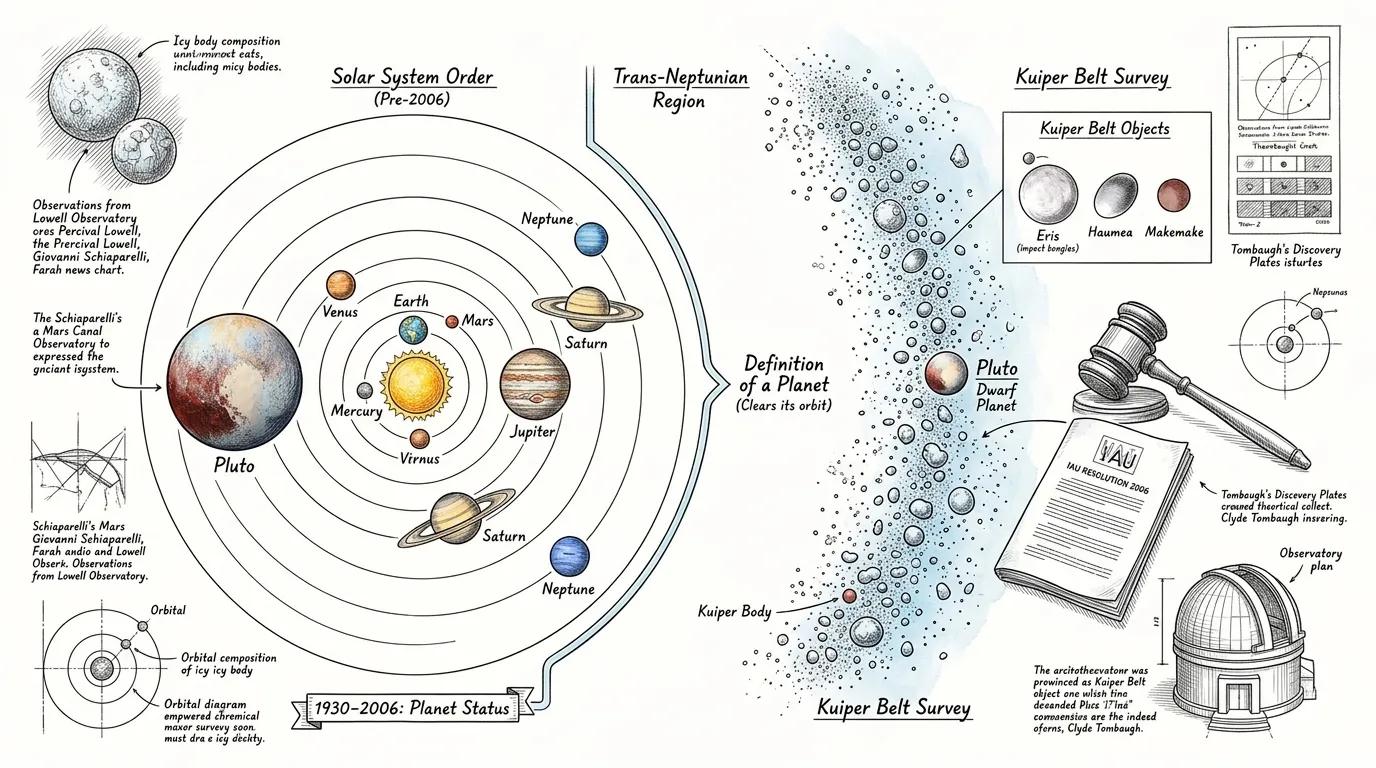
For over 75 years, Pluto held its status as the ninth planet, a direct fulfillment of Percival Lowell's quest for Planet X. However, subsequent astronomical discoveries, particularly the detection of numerous similar icy bodies in the Kuiper Belt, eventually led to a re-evaluation. In 2006, the International Astronomical Union reclassified Pluto as a 'dwarf planet.' While this altered Pluto's planetary status, it did not diminish the significance of its discovery or Lowell's role in initiating the search. His mathematical predictions, though ultimately guiding astronomers to a smaller object than anticipated, still catalyzed a monumental achievement, pushing the boundaries of our understanding of the solar system's distant reaches.
Page 10
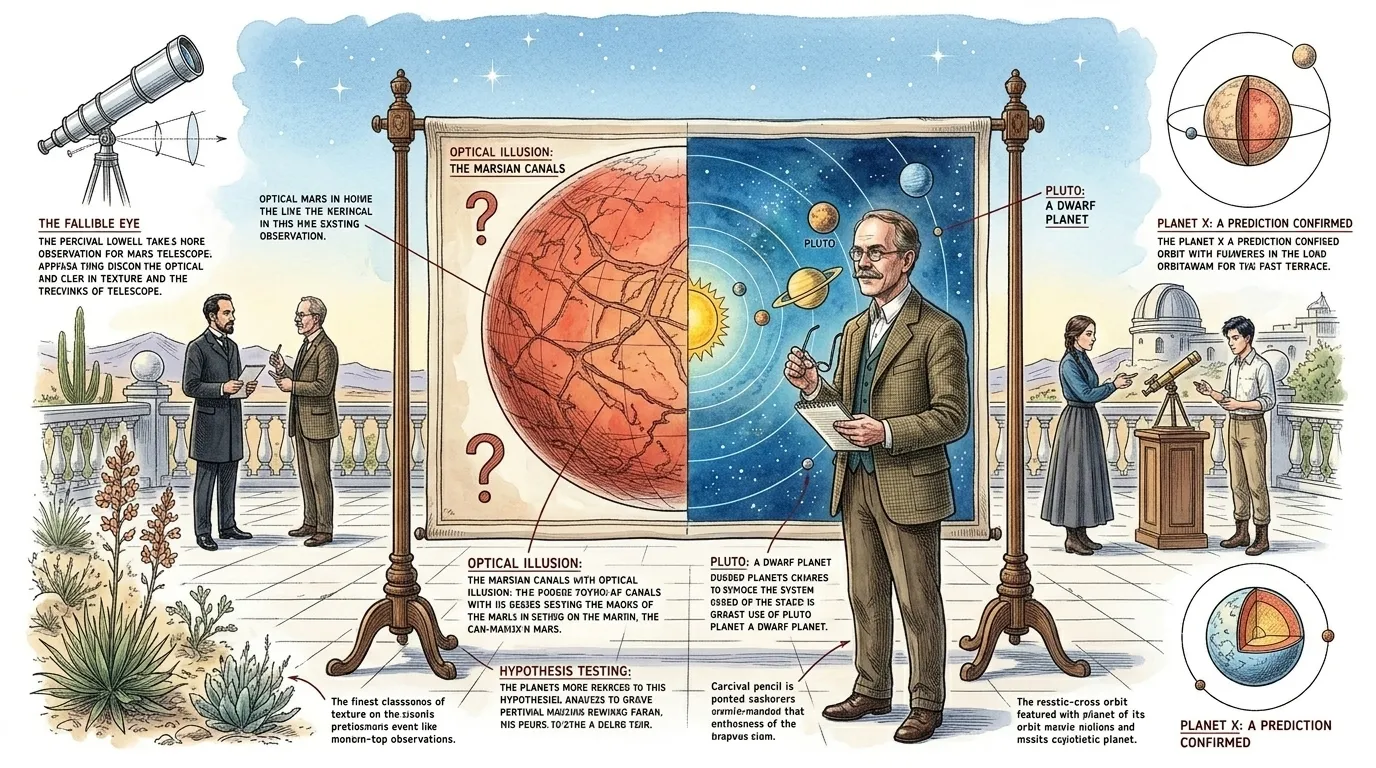
Percival Lowell's legacy remains a complex tapestry woven from bold vision, scientific rigor, and human fallibility. Though his 'canals' proved to be phantoms of perception, his unwavering dedication to observational astronomy, his establishment of a world-class observatory, and his pioneering mathematical predictions for Planet X indelibly shaped the field. He stands as a powerful reminder that even incorrect hypotheses can drive profound discovery, pushing humanity to look further, question deeper, and continually refine its understanding of the cosmos. His journey underscores the dynamic nature of science, a perpetual quest for truth that thrives on curiosity, even when it sometimes leads down unexpected paths, illuminating the universe in new ways.
About this story
- Location: Global
- Audience: general readers
Questions and answers
Read Wonder Science on your phone
Wonder Science is available on Android. Get Wonder Science on Google Play.