Rachel Carson
Rachel Carson — an illustrated science story, set in Global. 10 illustrated pages, free to read on Wonder Science.
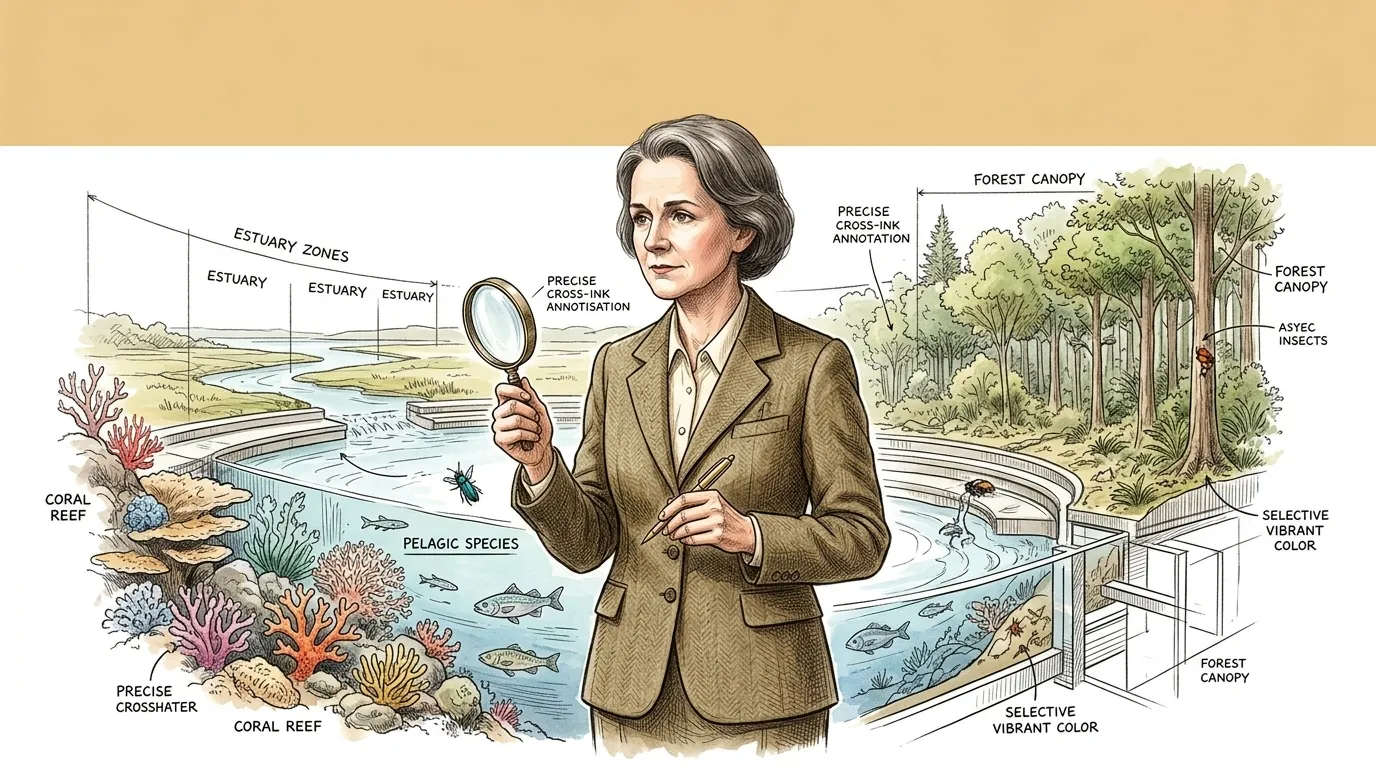
Page 1
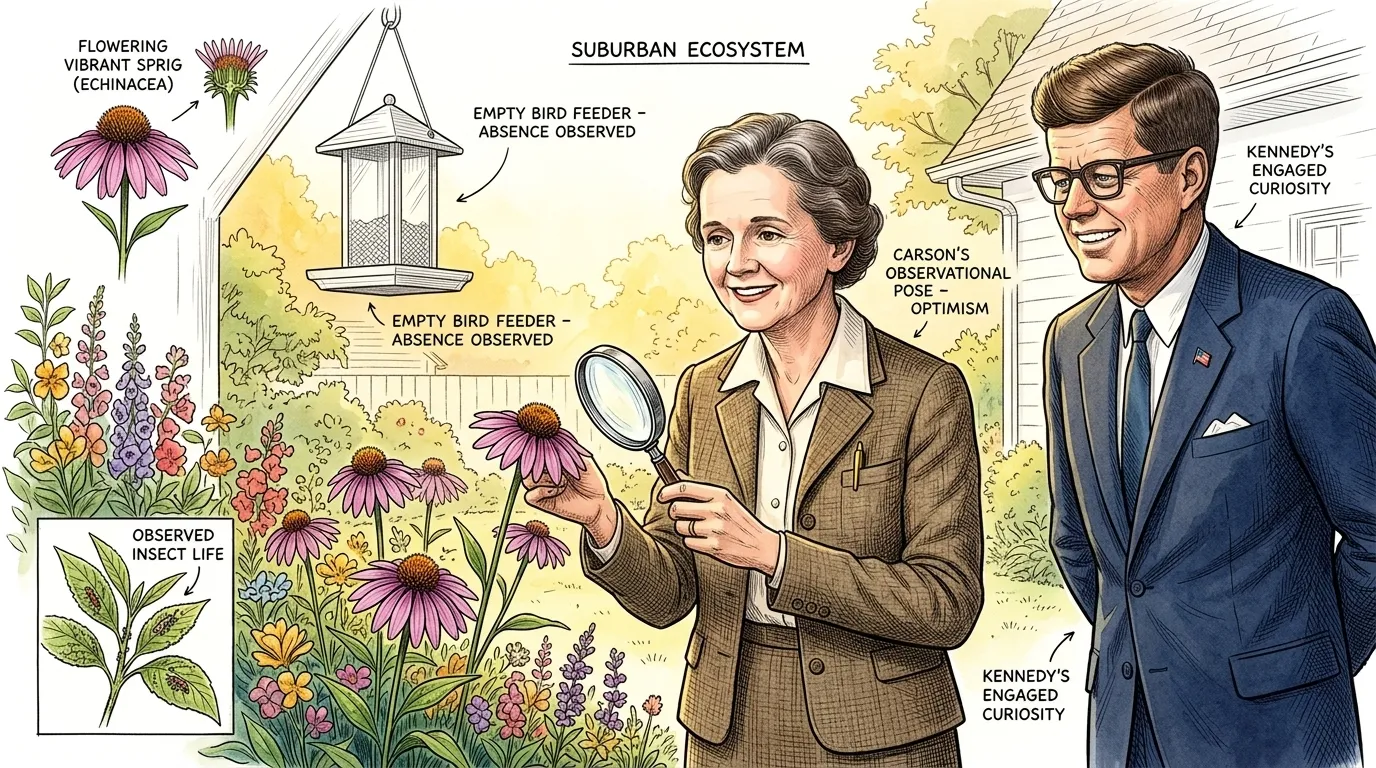
In the early 1960s, a profound disquiet began to settle over America's seemingly tranquil suburban landscapes. Songbirds were vanishing, insects lay dead in unprecedented numbers, and the vibrant tapestry of nature seemed to unravel with alarming speed. It was into this growing environmental crisis that Rachel Carson, a marine biologist and meticulous writer, launched her seminal work, Silent Spring.
Page 2
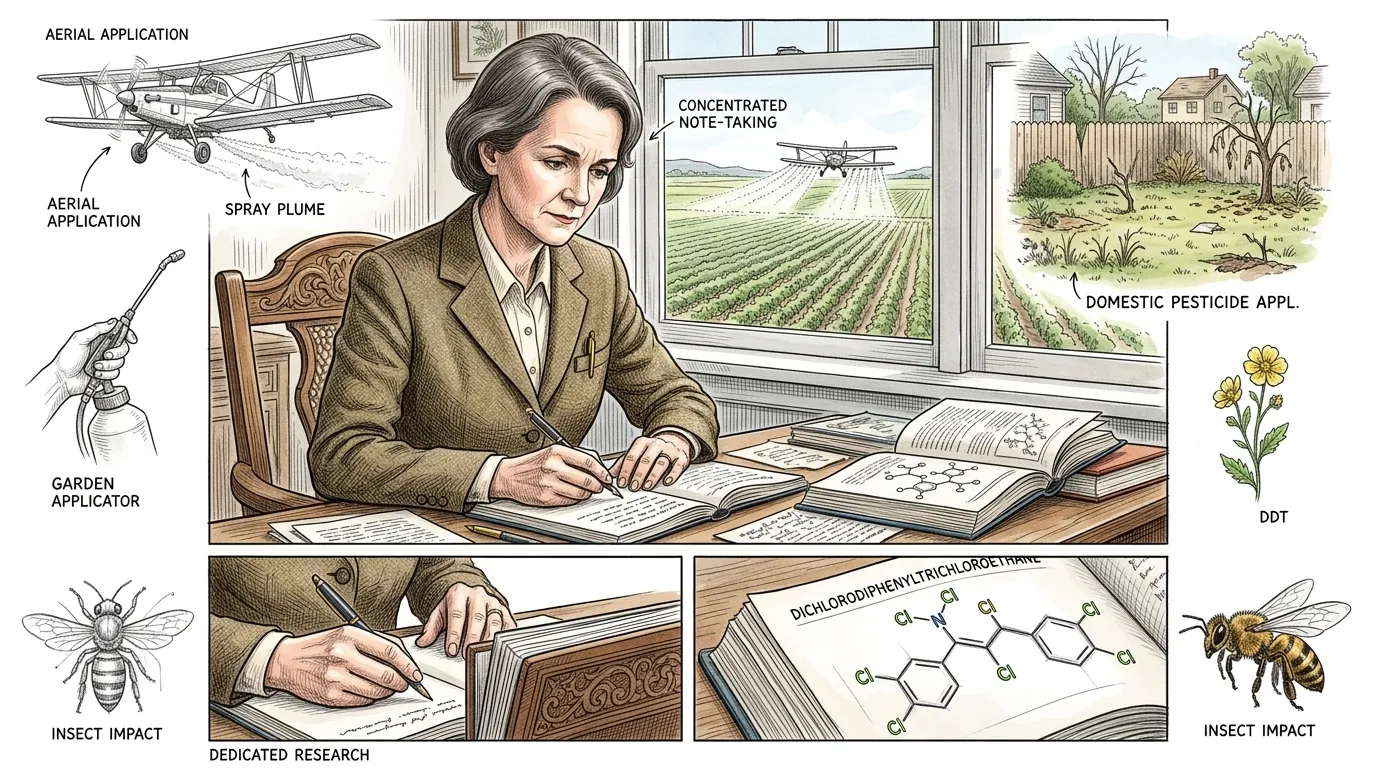
Carson meticulously documented how synthetic pesticides, especially dichlorodiphenyltrichloroethane, or DDT, were not merely targeting pests but infiltrating entire ecosystems. This new generation of chemicals, celebrated as a triumph of modern science, was unleashed across vast agricultural fields, forests, and residential areas, hailed as a panacea for everything from crop destruction to disease vectors like malaria-carrying mosquitoes. Yet, the jubilant promises obscured a pervasive, insidious threat to life itself. As Carson once penned, 'The 'control of nature' is a phrase conceived in arrogance, born of the Neanderthal age of biology and philosophy, when it was supposed that nature exists for the convenience of man.'
Page 3
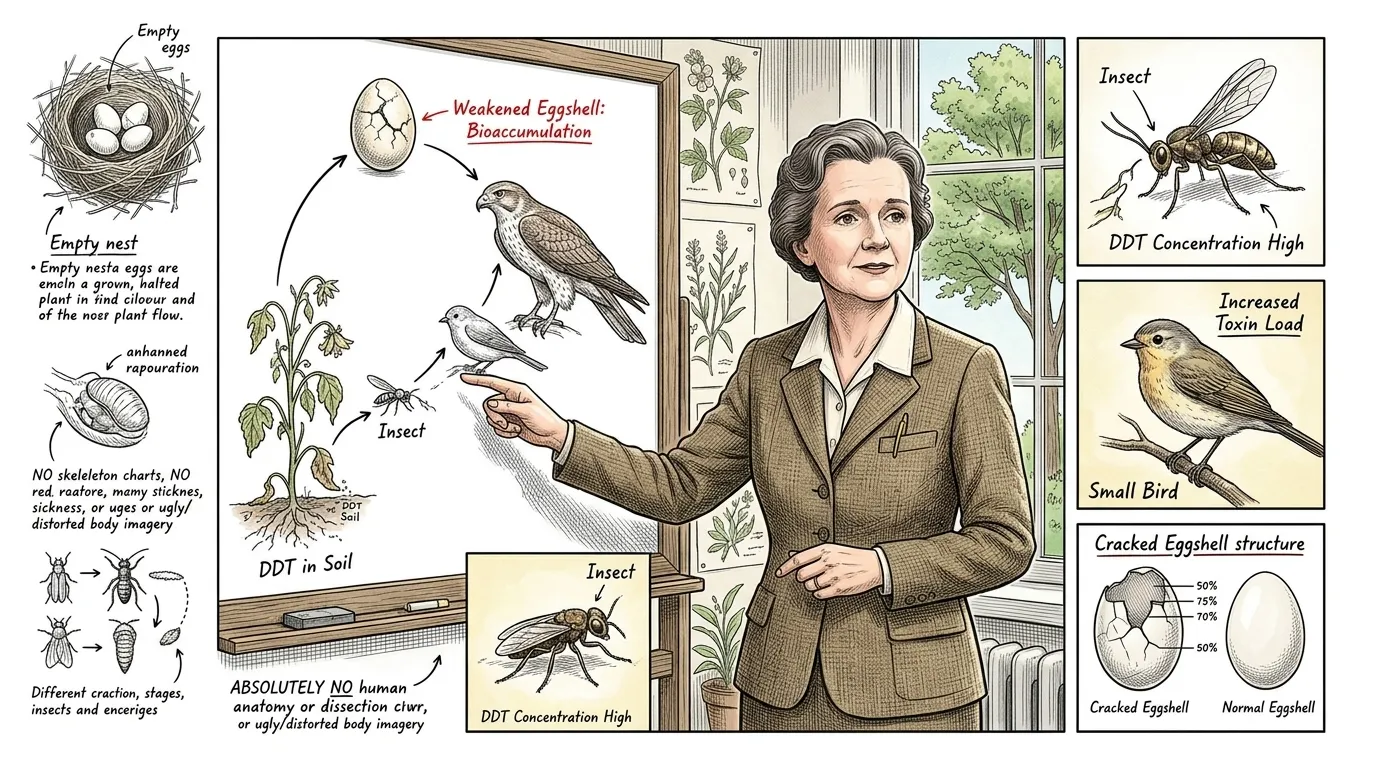
One of Carson's most compelling narratives revolved around the mysterious disappearance of birds from once-vibrant landscapes. She elucidated how DDT, persistent in the environment, would accumulate in soil and water, eventually entering the food chain. Insects would ingest it, small birds would consume those insects, and larger predatory birds would, in turn, consume the smaller birds, leading to a catastrophic bioaccumulation that weakened eggshells and ultimately led to population crashes. The very 'sound of spring' was being silenced.
Page 4
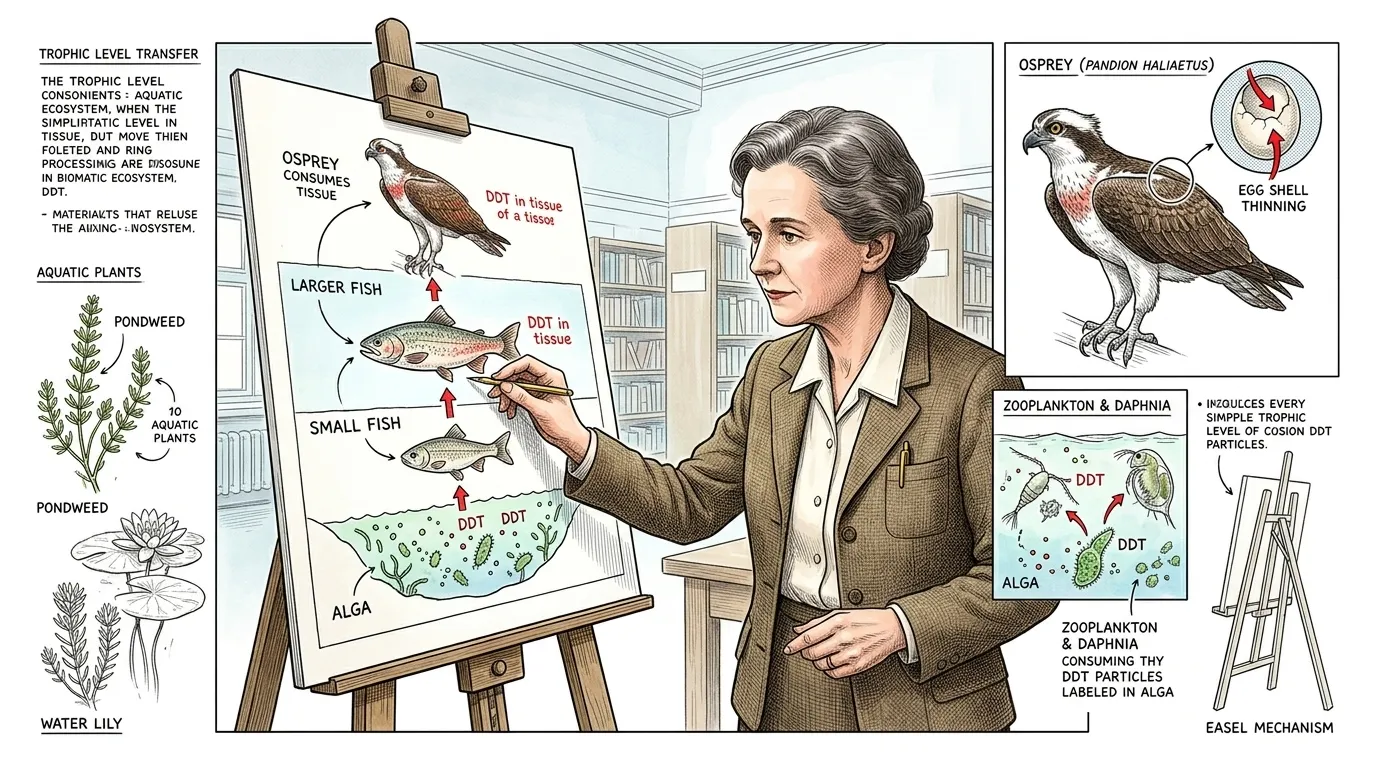
The core scientific problem was a phenomenon now understood as bioaccumulation and biomagnification. DDT, being fat-soluble, was not readily excreted by organisms, building up in their fatty tissues over time. As it moved up the trophic levels, from plants to herbivores to carnivores, its concentration amplified, reaching toxic levels in apex predators. This wasn't merely local contamination; it was a systemic poisoning of Earth's biological systems, a consequence unheeded by those who championed the chemicals' immediate efficacy. The interconnectedness of life made it vulnerable.
Page 5
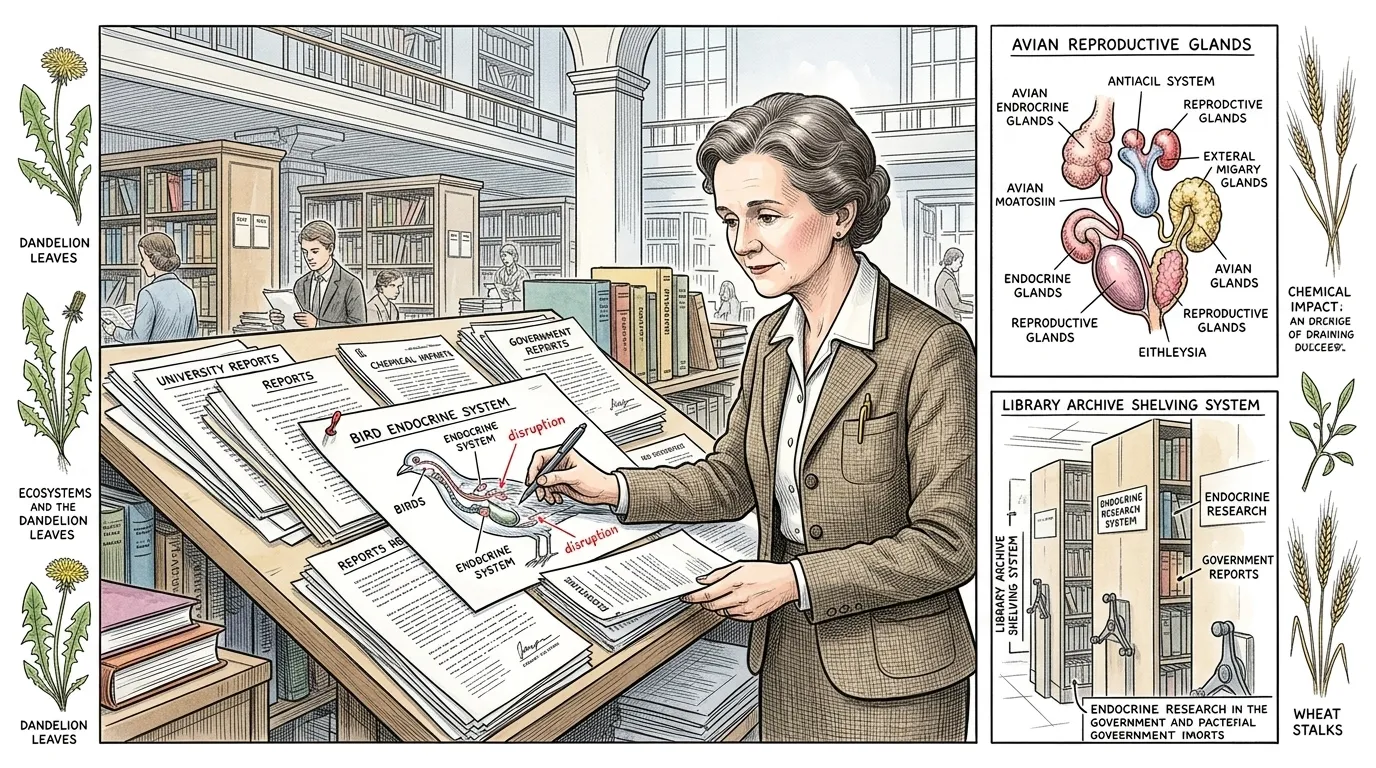
Carson's research was exhaustive, drawing upon obscure scientific papers, government reports, and the direct accounts of naturalists and doctors. She synthesized disparate pieces of evidence into a coherent, undeniable indictment of indiscriminate pesticide use. Her methodical approach involved consulting toxicologists, entomologists, and ecologists, piecing together how these chemicals disrupted not only the nervous systems of pests but also the endocrine systems of birds and mammals, including humans. This was not anecdotal observation; it was a scientifically rigorous exposé.
Page 6
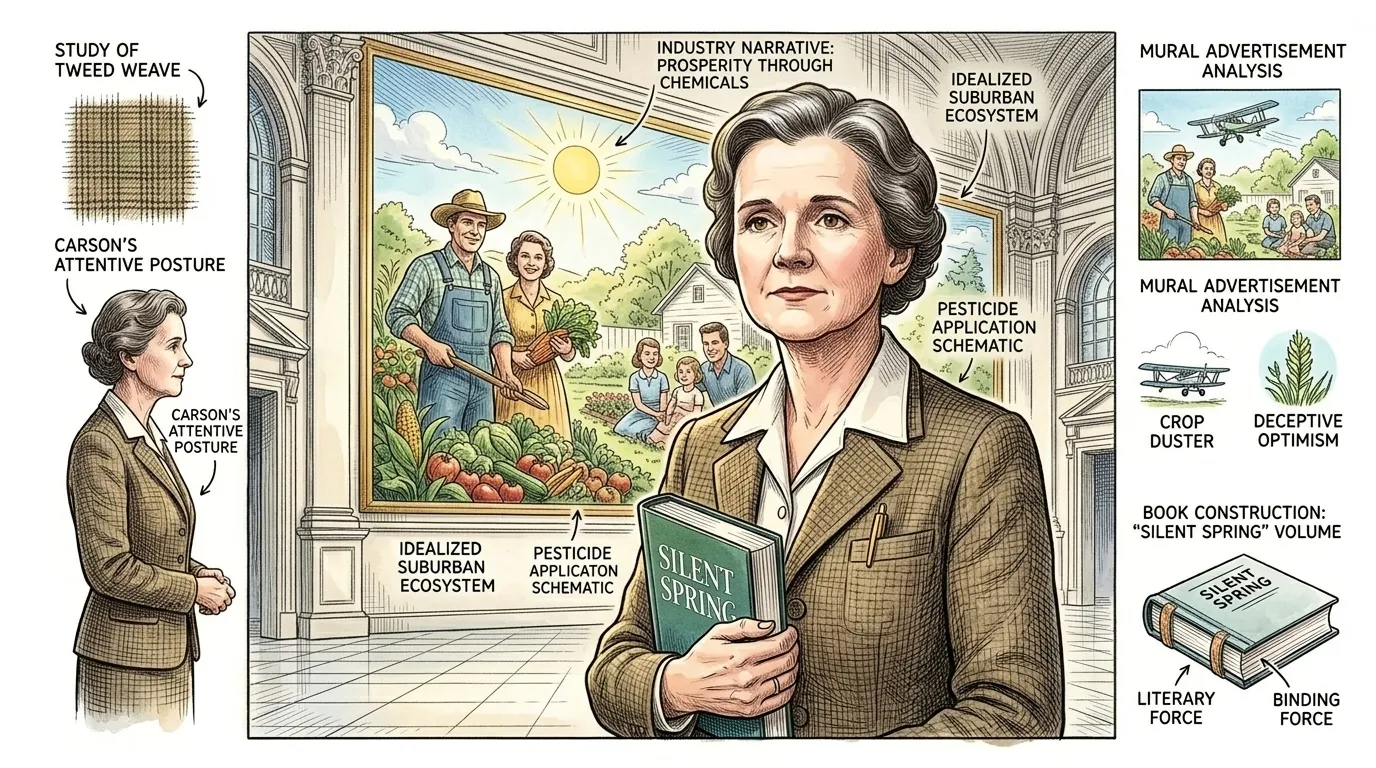
The publication of Silent Spring was met with fierce resistance and vitriolic personal attacks from the chemical industry and its allies. They accused Carson of being an alarmist, a hysterical woman, and even a communist. Millions of dollars were spent on campaigns to discredit her science and undermine her credibility. This concerted effort aimed to preserve the massive profits generated by pesticide sales, framing the chemicals as essential for food production and public health, despite mounting evidence of their ecological harm.
Page 7

Despite the relentless attacks, Carson's eloquent and accessible writing resonated deeply with the public. Her powerful narrative transformed complex scientific concepts into a story of personal urgency, captivating millions who began to question the unchecked power of industrial science. Citizens wrote letters to politicians, formed environmental groups, and demanded action. The book sparked widespread public debate, raising awareness about environmental degradation and laying the groundwork for a burgeoning environmental consciousness. It was a pivotal moment in public engagement with science.
Page 8
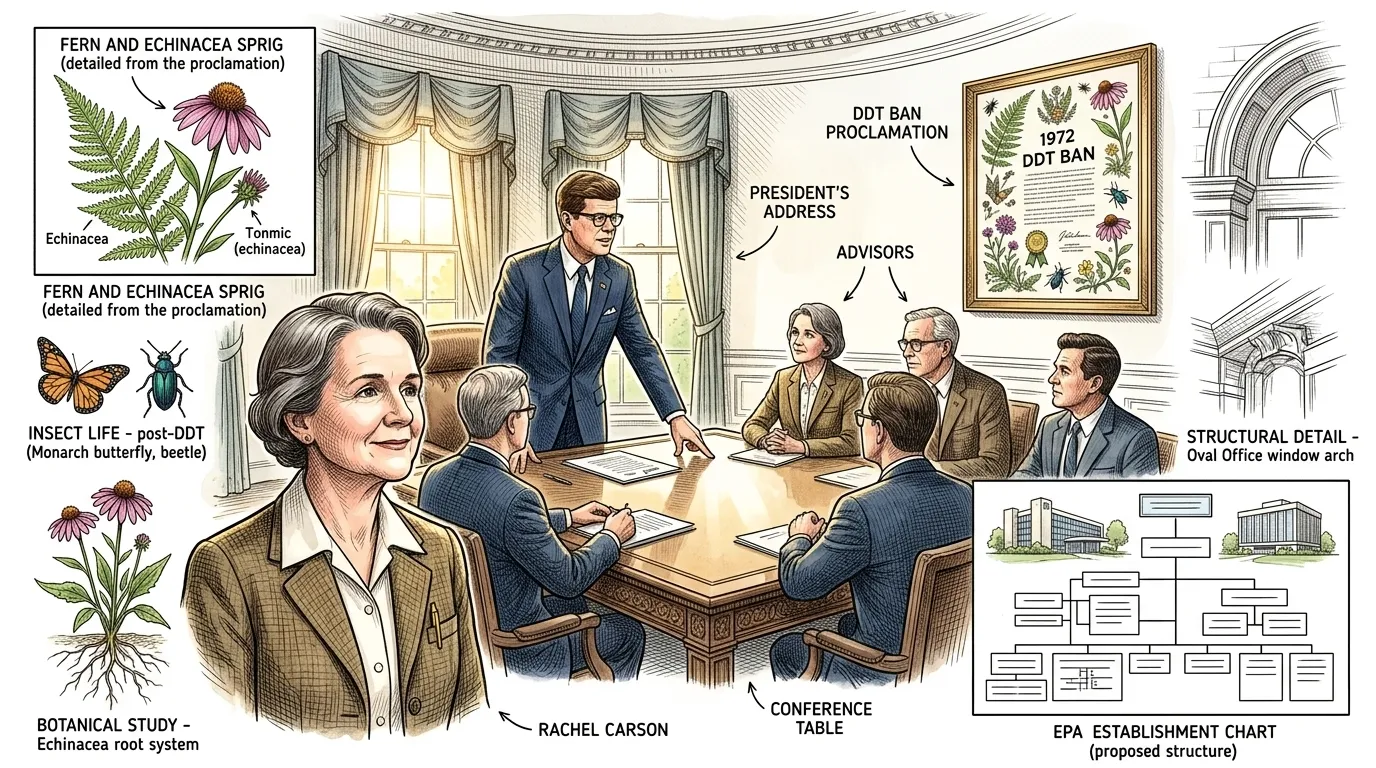
The public outcry ignited by Silent Spring could not be ignored. It prompted President John F. Kennedy to establish a Science Advisory Committee to investigate Carson's claims, which largely validated her findings. This scientific endorsement paved the way for unprecedented legislative action. New environmental laws were drafted, culminating in the establishment of the U.S. Environmental Protection Agency (EPA) in 1970 and a nationwide ban on DDT in 1972, fundamentally reshaping environmental policy and regulation. This marked a monumental shift from a paradigm of unchecked chemical use to one of environmental stewardship.
Page 9
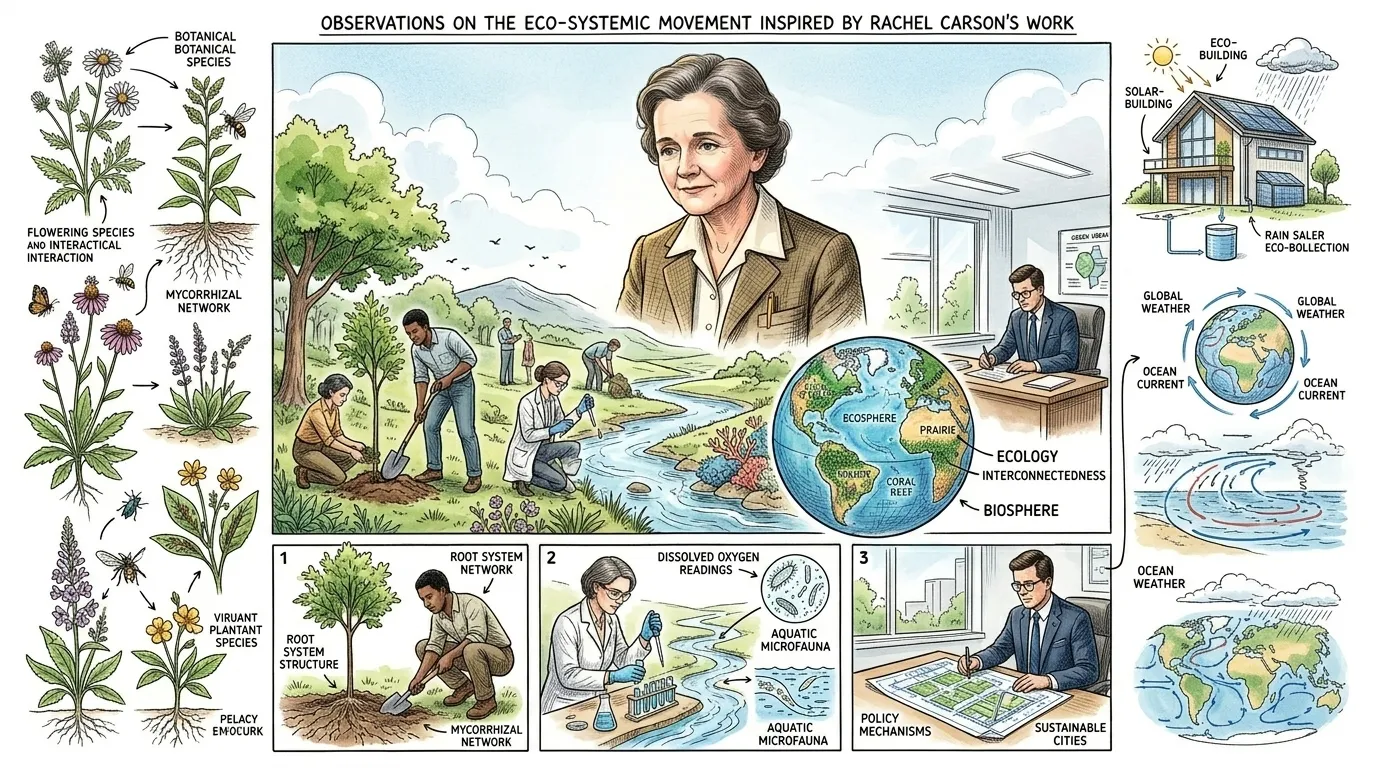
Rachel Carson's Silent Spring did more than expose the dangers of pesticides; it fundamentally altered humanity's relationship with the natural world. It awakened a generation to the concept of ecology, the interconnectedness of all living things, and the profound impact human actions could have on planetary health. Though she tragically succumbed to cancer in 1964, her work continued to fuel the nascent environmental movement, inspiring scientists, activists, and policymakers worldwide to advocate for a more sustainable future. Her legacy is not merely the banning of a chemical, but the enduring spirit of environmental consciousness.
Page 10
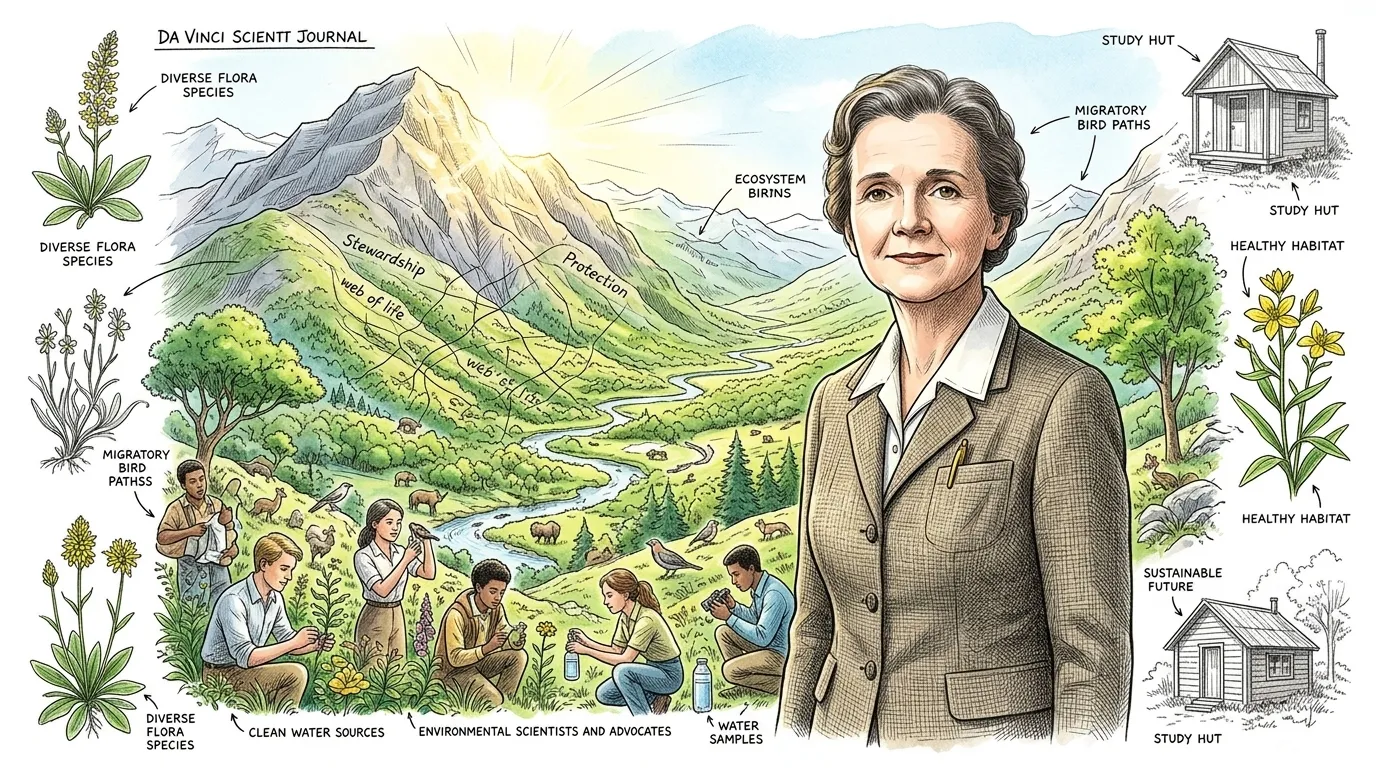
Rachel Carson's contribution stands as a powerful testament to the transformative power of scientific integrity and eloquent communication. Her work challenged prevailing norms, faced down immense corporate opposition, and ultimately catalyzed a global movement dedicated to protecting the planet. She taught us that the intricate web of life is fragile and that our stewardship is paramount. Her pioneering spirit continues to inspire new generations of environmental scientists and advocates, reminding us that even a single voice, armed with truth and courage, can move mountains and safeguard the silent springs for all future beings.
About this story
- Location: Global
- Audience: general readers
Questions and answers
Read Wonder Science on your phone
Wonder Science is available on Android. Get Wonder Science on Google Play.