Richard Feynman

Richard Feynman — an illustrated science story, set in Global. 10 illustrated pages, free to read on Wonder Science.
Richard Feynman — book cover — Wonder Science
Richard Feynman — an illustrated science story, set in Global. 10 illustrated pages, free to read on Wonder Science.

Page 1
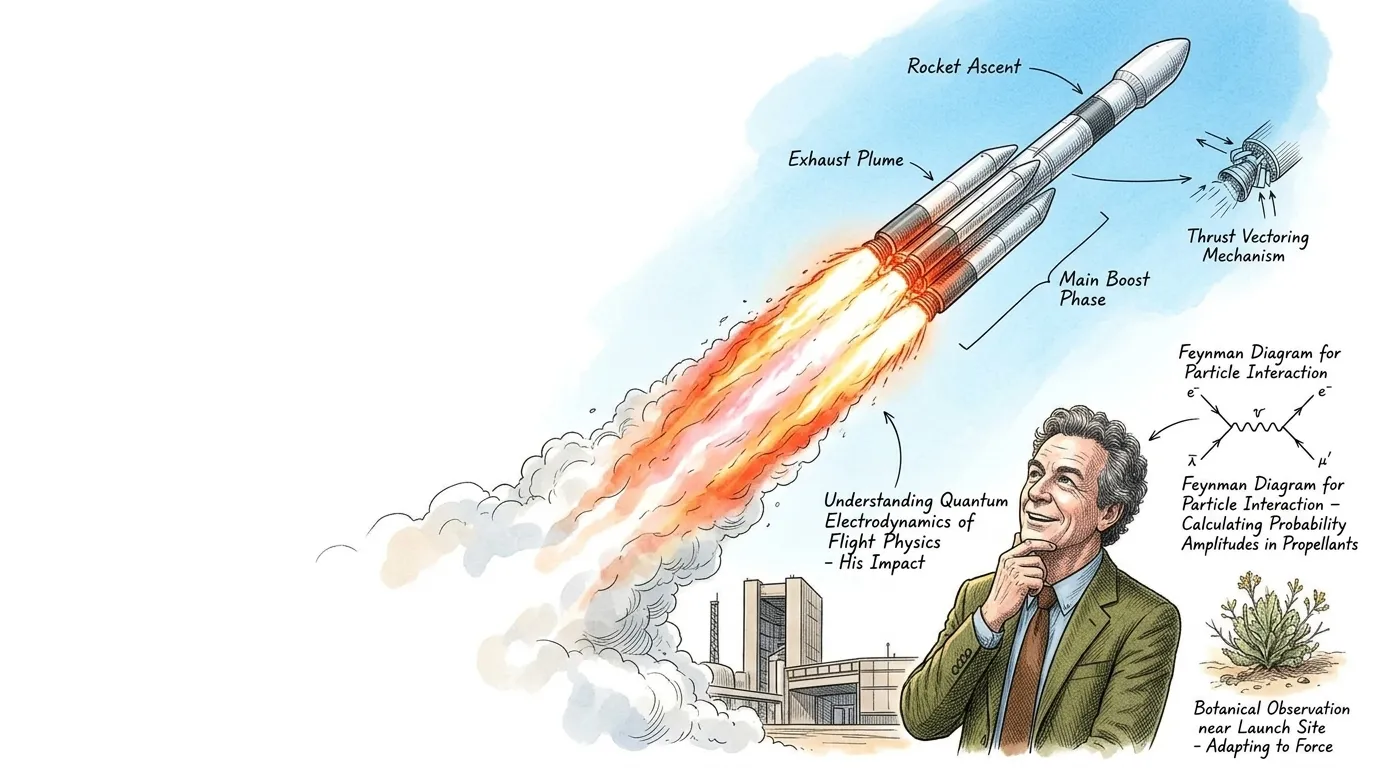
A massive rocket launches, spewing fire and smoke as it climbs into the sky. The sheer power is awe-inspiring. But what makes this metal giant defy gravity?
A massive rocket launches, spewing fire and smoke as it climbs into the sky. The sheer power is awe-inspiring. But what makes this metal giant defy gravity? The answer, in part, lies with the genius of Richard Feynman, whose work helped unlock some of the universe's deepest secrets. His impact is so significant, it's hard to imagine modern physics without him.\n\n Fact: Depicts a modern rocket launch, symbolizing the impact of Feynman's work on modern technology and our…

A massive rocket launches, spewing fire and smoke as it climbs into the sky. The sheer power is awe-inspiring. But what makes this metal giant defy gravity? The answer, in part, lies with the genius of Richard Feynman, whose work helped unlock some of the universe's deepest secrets. His impact is so significant, it's hard to imagine modern physics without him.\n\n Fact: Depicts a modern rocket launch, symbolizing the impact of Feynman's work on modern technology and our understanding of physics.

Page 2
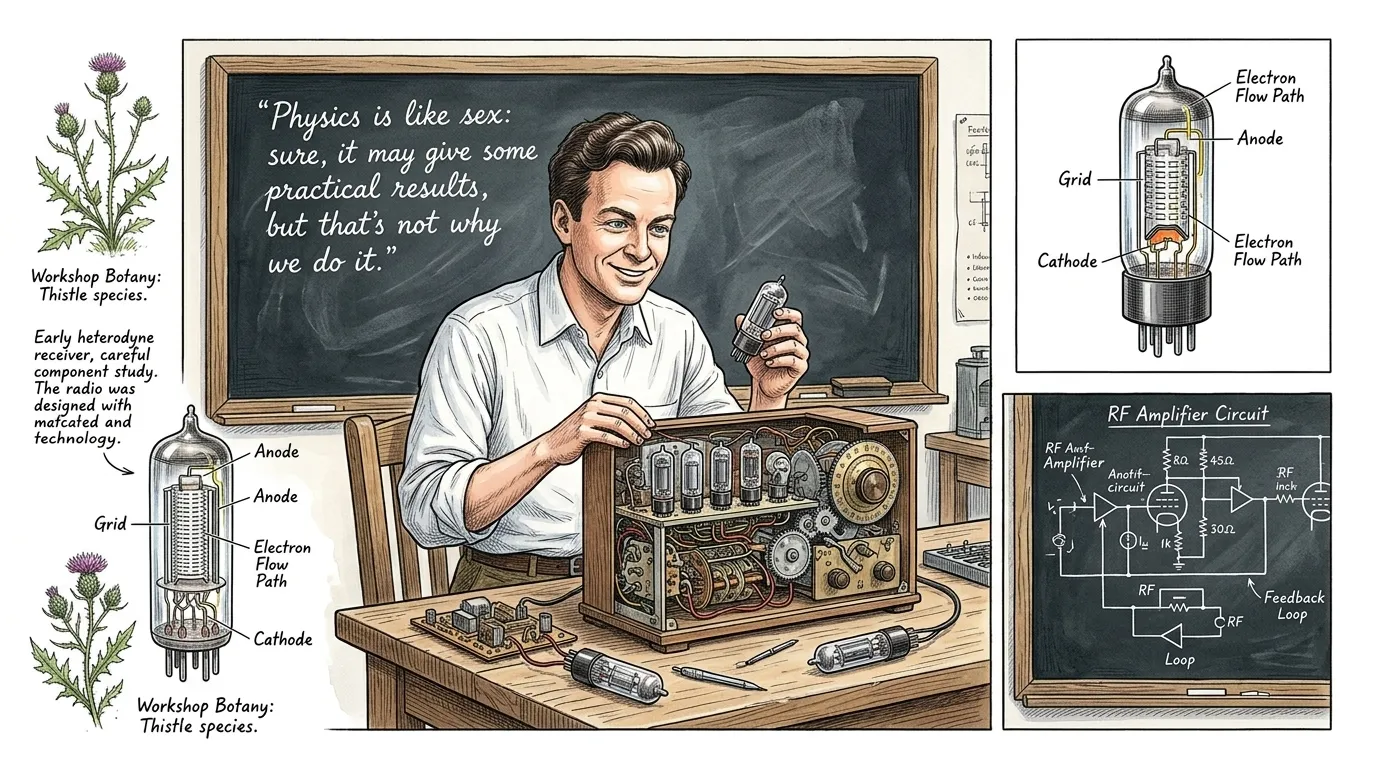
Born in 1918, Richard Feynman wasn't just a brilliant physicist; he was a charismatic storyteller. From a young age, he questioned everything, taking apart…
Born in 1918, Richard Feynman wasn't just a brilliant physicist; he was a charismatic storyteller. From a young age, he questioned everything, taking apart radios to understand how they worked. "Physics is like sex: sure, it may give some practical results, but that's not why we do it," Feynman would later quip, revealing his playful approach to science.

Born in 1918, Richard Feynman wasn't just a brilliant physicist; he was a charismatic storyteller. From a young age, he questioned everything, taking apart radios to understand how they worked. "Physics is like sex: sure, it may give some practical results, but that's not why we do it," Feynman would later quip, revealing his playful approach to science. These early curiosities sparked a lifelong pursuit of knowledge.\n\n Fact: Illustrates Feynman's early fascination with how things work, a key trait that drove his later scientific pursuits.

Page 3

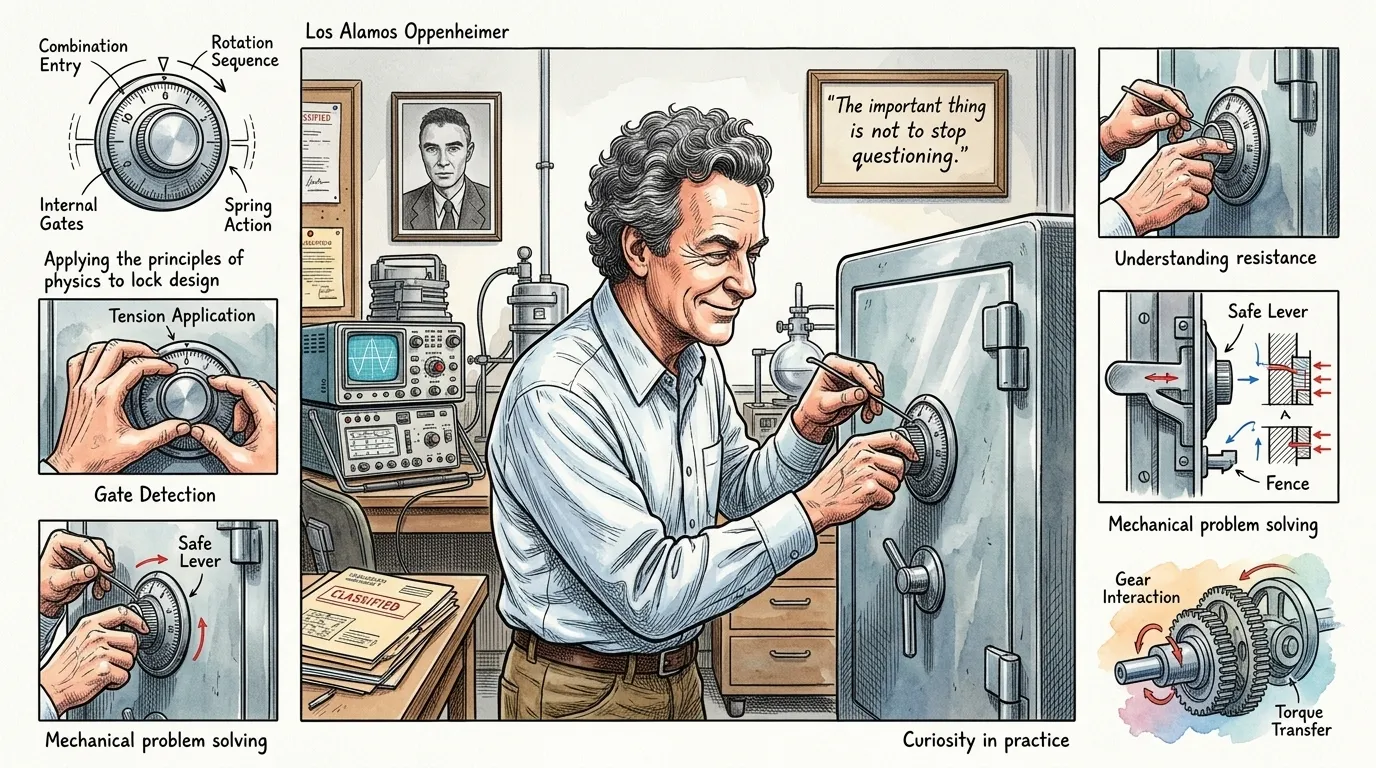
Feynman's unique approach wasn't always appreciated. He challenged established norms, often finding simpler, more intuitive ways to explain complex phenomena.
Feynman's unique approach wasn't always appreciated. He challenged established norms, often finding simpler, more intuitive ways to explain complex phenomena. During his time at Los Alamos, working on the Manhattan Project, Feynman wasn't just calculating; he was picking locks and cracking safes, a testament to his restless mind.

Feynman's unique approach wasn't always appreciated. He challenged established norms, often finding simpler, more intuitive ways to explain complex phenomena. During his time at Los Alamos, working on the Manhattan Project, Feynman wasn't just calculating; he was picking locks and cracking safes, a testament to his restless mind. As Albert Einstein said, "The important thing is not to stop questioning," a philosophy Feynman embodied throughout his life.\n\n Fact: Shows Feynman's ability to think outside the box, even in high-pressure environments like the Manhattan Project.

Page 4
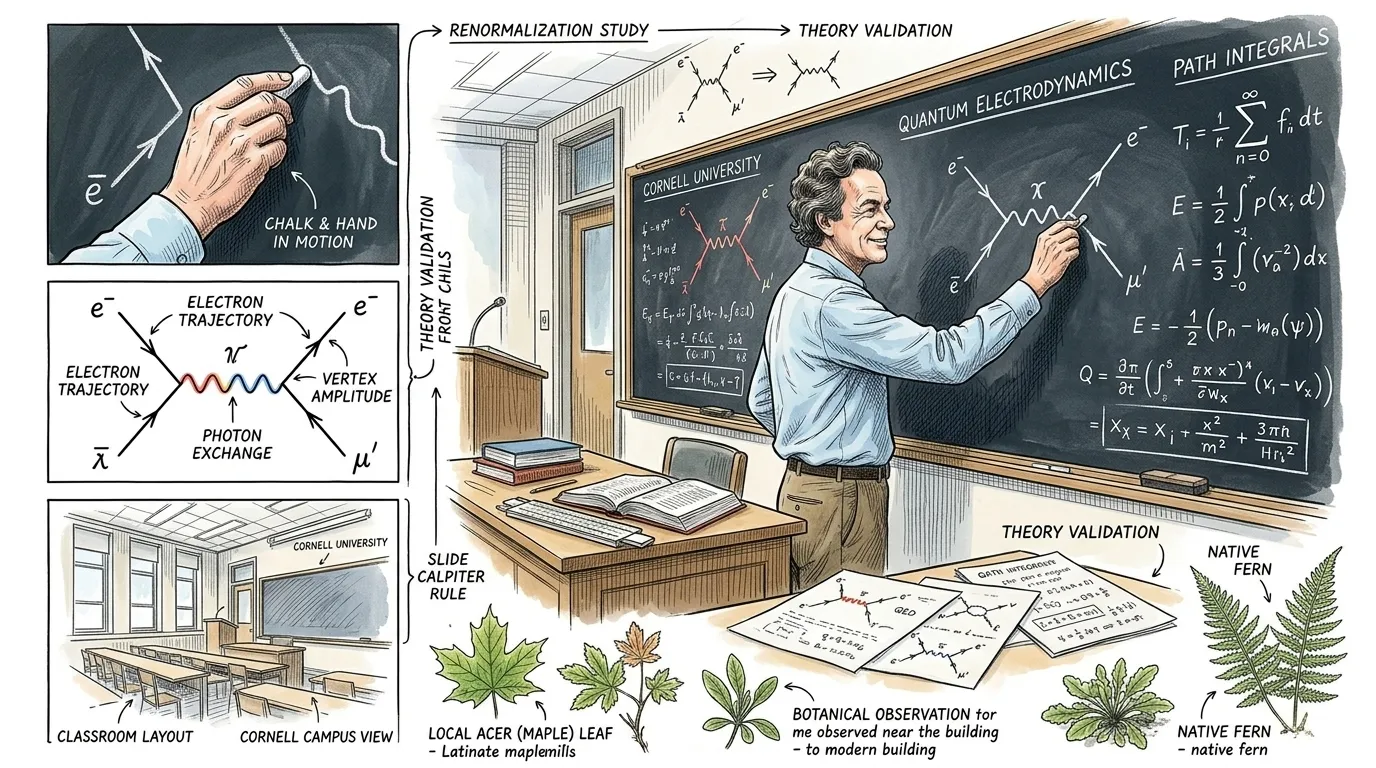
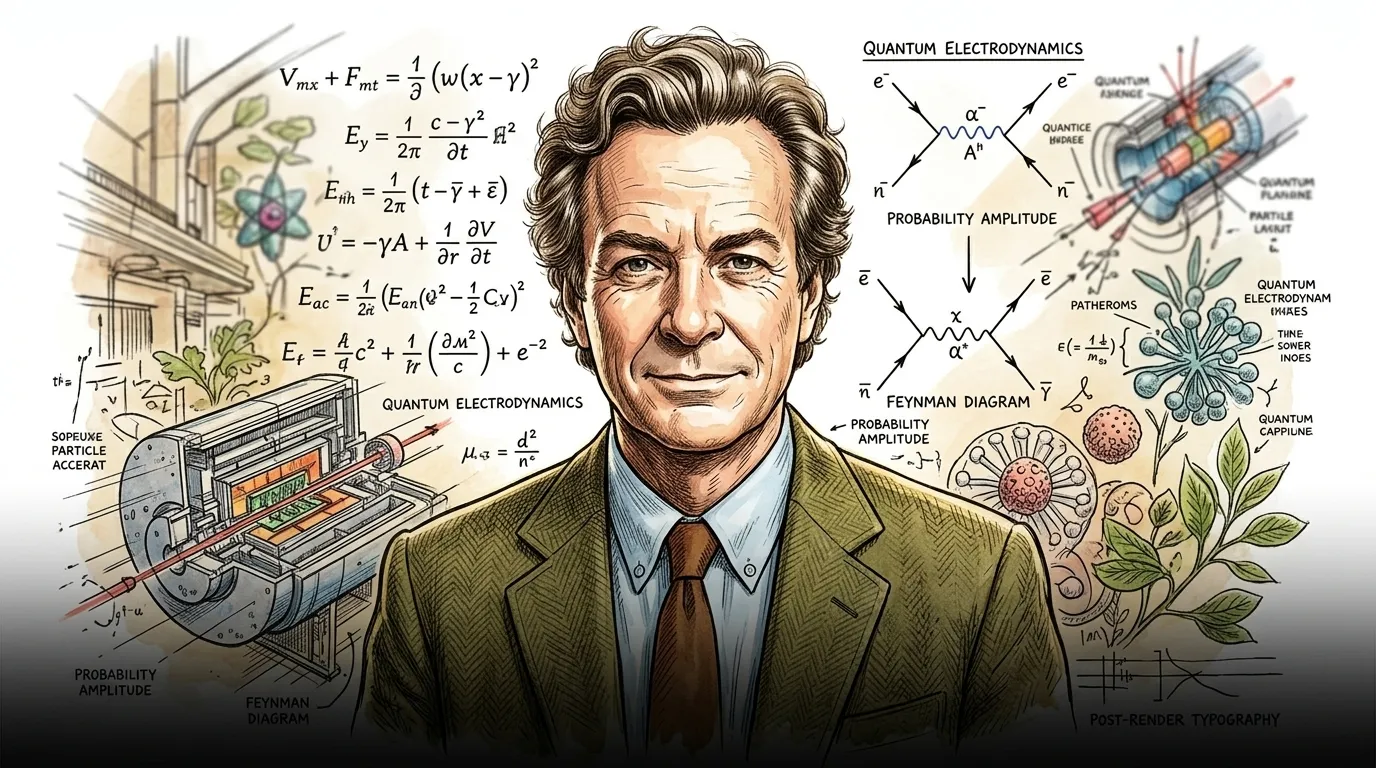
After the war, Feynman joined Cornell University and began developing his famous diagrams. These weren't just doodles; they were a revolutionary way to…
After the war, Feynman joined Cornell University and began developing his famous diagrams. These weren't just doodles; they were a revolutionary way to visualize the interactions of subatomic particles. Imagine a world where electrons and positrons are represented by lines, and their interactions by vertices.

After the war, Feynman joined Cornell University and began developing his famous diagrams. These weren't just doodles; they were a revolutionary way to visualize the interactions of subatomic particles. Imagine a world where electrons and positrons are represented by lines, and their interactions by vertices. The diagrams made quantum electrodynamics (QED) – the theory of how light and matter interact – accessible, even beautiful.\n\n Fact: Illustrates the concept of Feynman diagrams, showing their visual simplicity and power in explaining complex quantum interactions.

Page 5

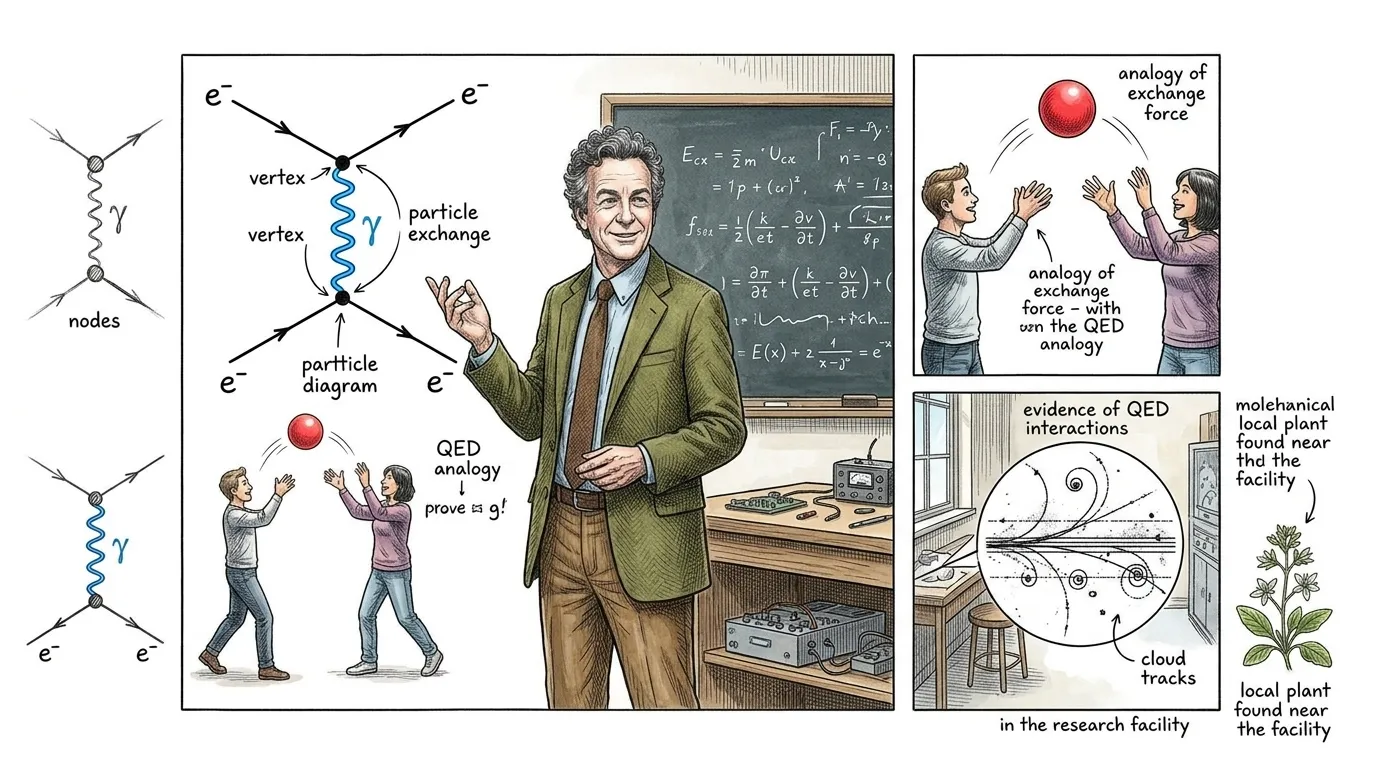
QED describes how light and matter interact. Think of it: when two electrons approach each other, they don't directly collide.
QED describes how light and matter interact. Think of it: when two electrons approach each other, they don't directly collide. Instead, they exchange photons – tiny packets of light – which mediate the force between them. Feynman's diagrams provided a way to calculate these interactions with incredible accuracy.

QED describes how light and matter interact. Think of it: when two electrons approach each other, they don't directly collide. Instead, they exchange photons – tiny packets of light – which mediate the force between them. Feynman's diagrams provided a way to calculate these interactions with incredible accuracy. One way to visualize this: the exchange of photons between electrons is similar to two people tossing a ball back and forth.\n\n Fact: Visually represents the core concept of QED: the exchange of photons between charged particles as the basis of electromagnetic force.

Page 6
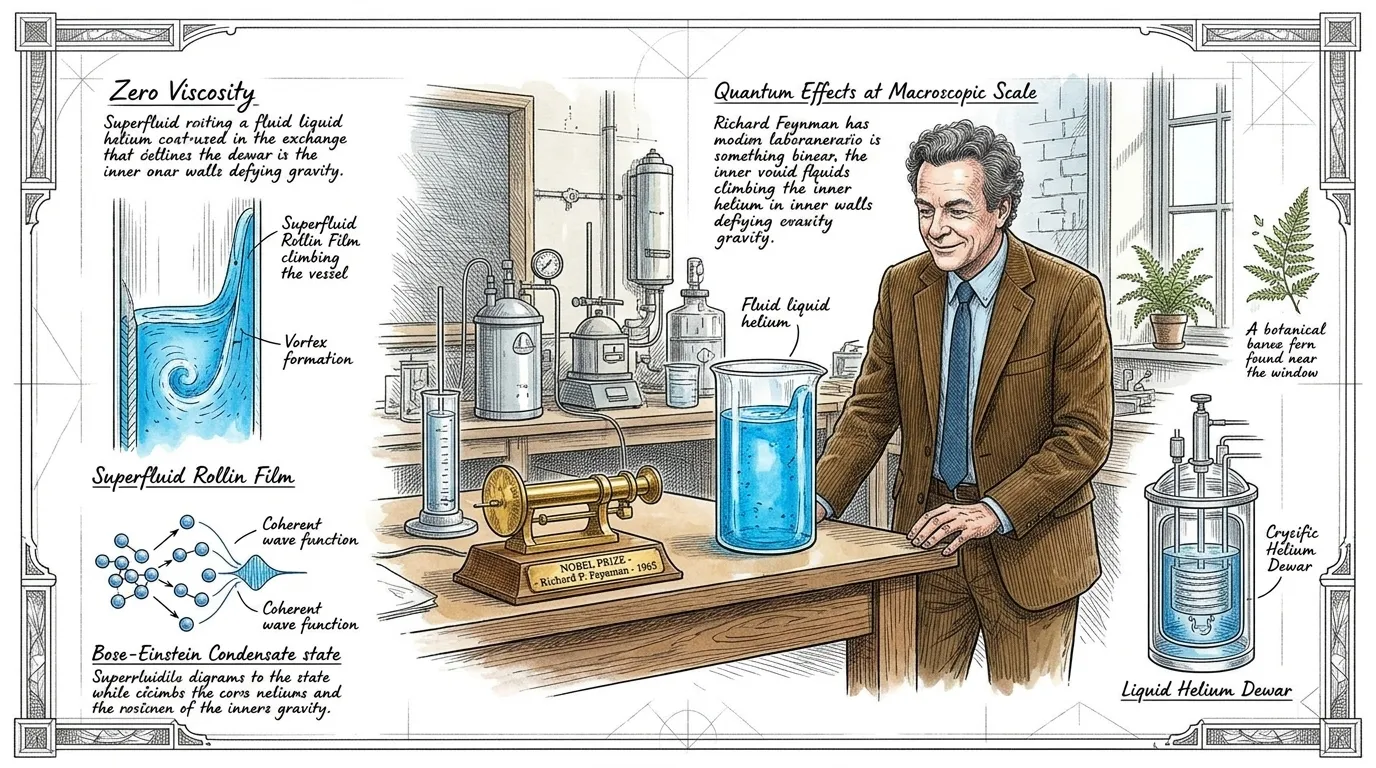
Feynman's work didn't stop with QED. He also made significant contributions to the theory of superfluidity, explaining how liquid helium can flow without any…
Feynman's work didn't stop with QED. He also made significant contributions to the theory of superfluidity, explaining how liquid helium can flow without any viscosity at extremely low temperatures. Imagine a fluid that climbs up the walls of its container, defying gravity! This bizarre behavior is a consequence of quantum mechanics on a macroscopic scale.

Feynman's work didn't stop with QED. He also made significant contributions to the theory of superfluidity, explaining how liquid helium can flow without any viscosity at extremely low temperatures. Imagine a fluid that climbs up the walls of its container, defying gravity! This bizarre behavior is a consequence of quantum mechanics on a macroscopic scale. He was awarded the Nobel Prize in Physics in 1965, shared with Julian Schwinger and Sin-Itiro Tomonaga.\n\n Fact: Visualizes the phenomenon of superfluidity, illustrating liquid helium climbing the walls of its container.

Page 7

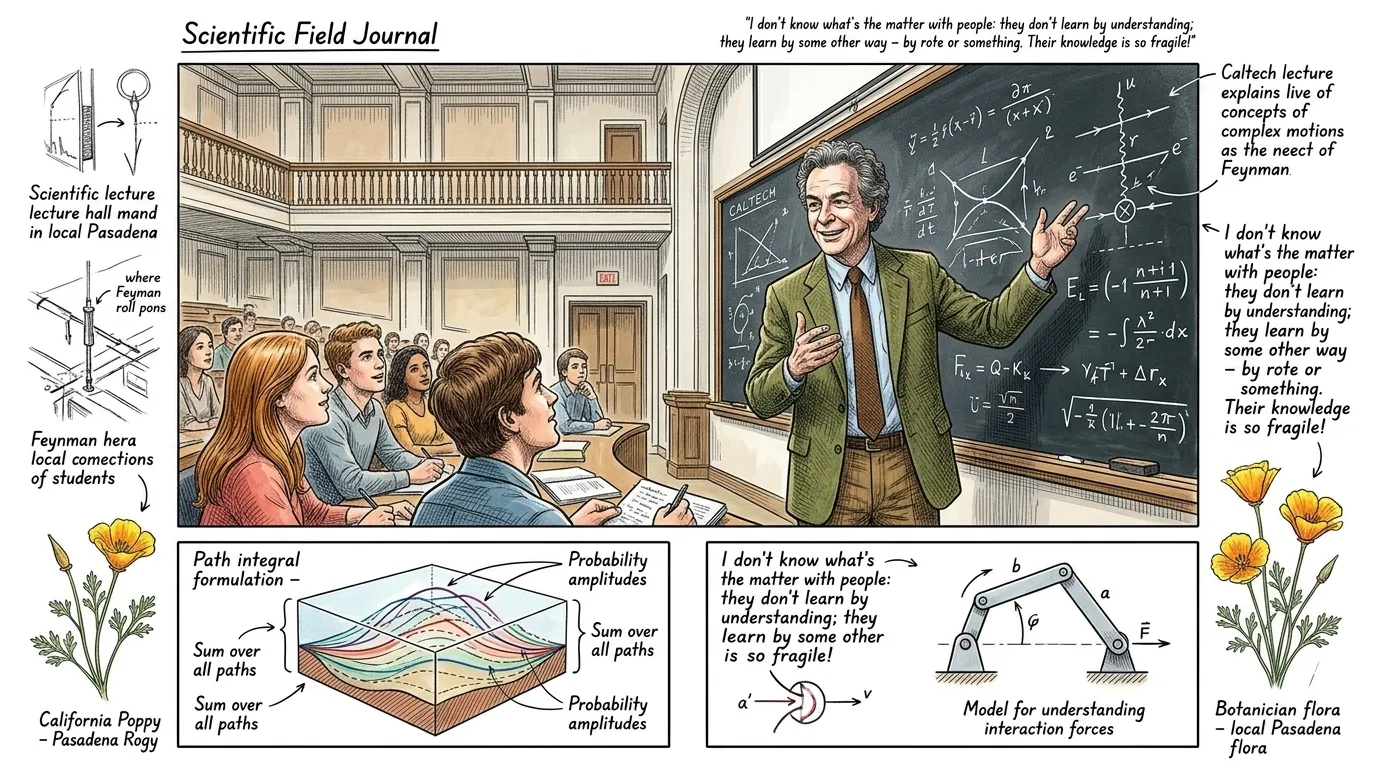
Feynman was also a gifted teacher. His lectures at Caltech were legendary, filled with wit, insight, and a deep love of physics.
Feynman was also a gifted teacher. His lectures at Caltech were legendary, filled with wit, insight, and a deep love of physics. He encouraged students to think for themselves, to question everything, and to never be afraid to make mistakes. "I don't know what's the matter with people: they don't learn by understanding; they learn by some other way – by rote or something.

Feynman was also a gifted teacher. His lectures at Caltech were legendary, filled with wit, insight, and a deep love of physics. He encouraged students to think for themselves, to question everything, and to never be afraid to make mistakes. "I don't know what's the matter with people: they don't learn by understanding; they learn by some other way – by rote or something. Their knowledge is so fragile!" he once lamented, highlighting his passion for true understanding.\n\n Fact: Depicts Feynman as a dynamic and engaging teacher, inspiring students with his passion for physics.

Page 8
Beyond his theoretical work, Feynman was involved in practical investigations. He served on the Rogers Commission, investigating the Space Shuttle Challenger…
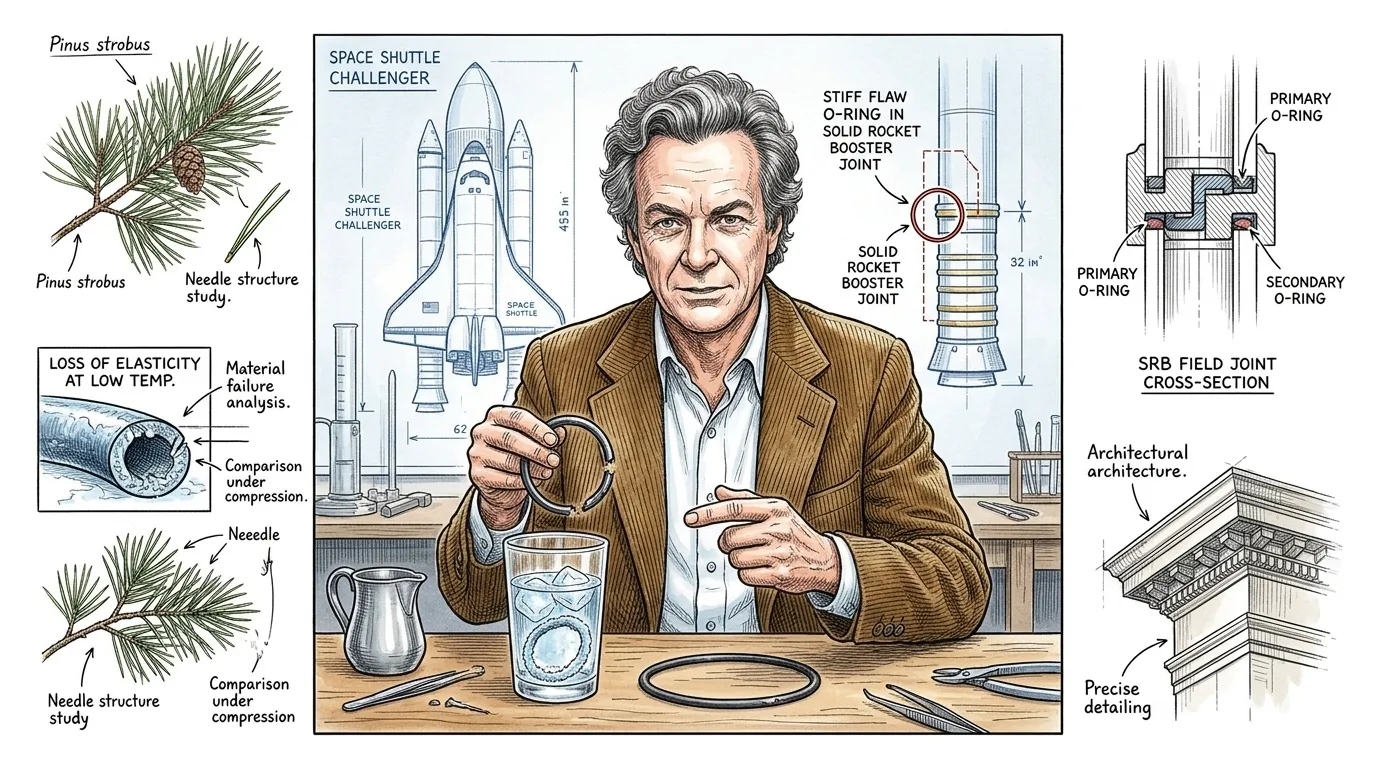
Beyond his theoretical work, Feynman was involved in practical investigations. He served on the Rogers Commission, investigating the Space Shuttle Challenger disaster in 1986. With a simple experiment involving a glass of ice water and an O-ring, he demonstrated the critical flaw that led to the tragedy: the O-rings lost their elasticity in cold temperatures, causing the shuttle to fail.

Beyond his theoretical work, Feynman was involved in practical investigations. He served on the Rogers Commission, investigating the Space Shuttle Challenger disaster in 1986. With a simple experiment involving a glass of ice water and an O-ring, he demonstrated the critical flaw that led to the tragedy: the O-rings lost their elasticity in cold temperatures, causing the shuttle to fail. This demonstration was a key moment in understanding the disaster.\n\n Fact: Shows Feynman's demonstration of the O-ring failure, highlighting his commitment to practical investigations and clear communication.

Page 9
Feynman's legacy extends far beyond his scientific achievements. He was a cultural icon, a symbol of intellectual curiosity and independent thinking.
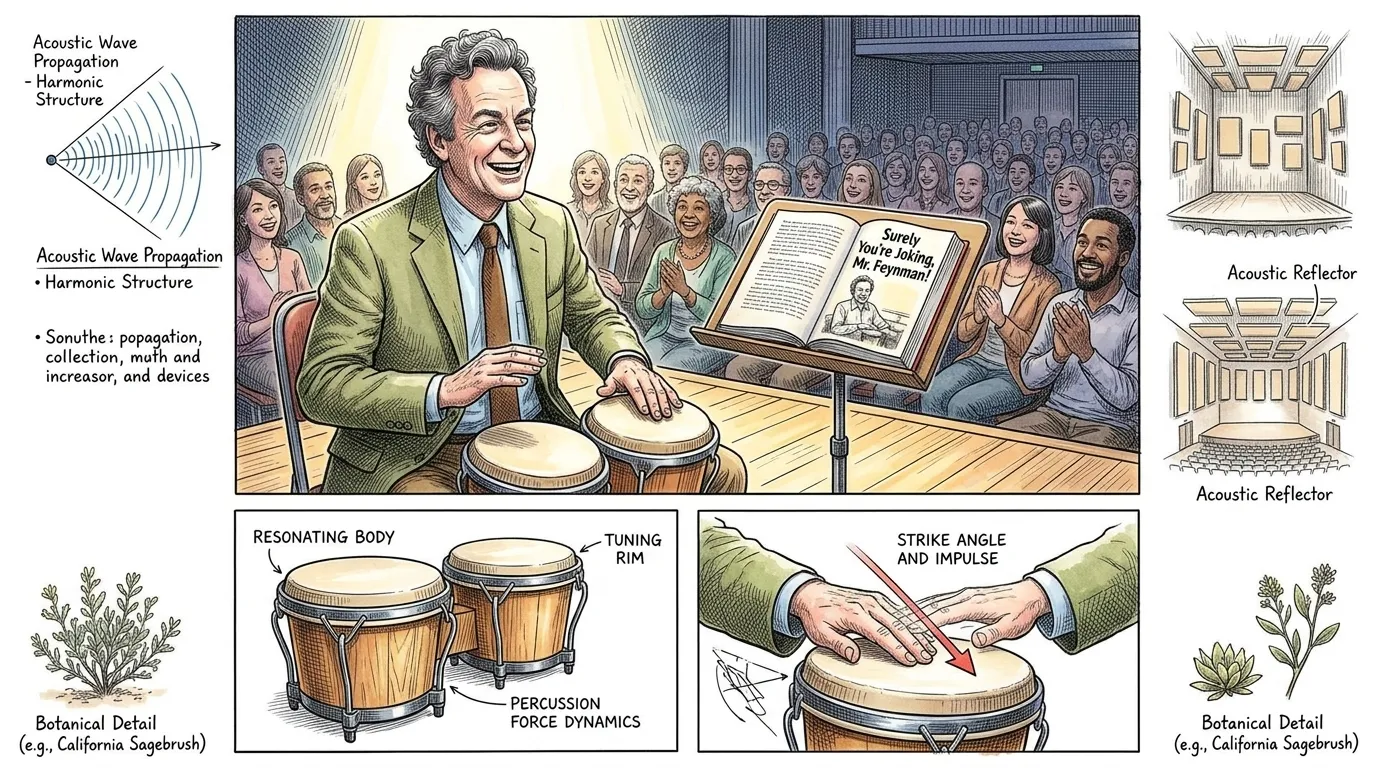
Feynman's legacy extends far beyond his scientific achievements. He was a cultural icon, a symbol of intellectual curiosity and independent thinking. From playing the bongos to writing autobiographical books like "Surely You're Joking, Mr. Feynman!", he inspired people from all walks of life to embrace learning and to question the world around them.

Feynman's legacy extends far beyond his scientific achievements. He was a cultural icon, a symbol of intellectual curiosity and independent thinking. From playing the bongos to writing autobiographical books like "Surely You're Joking, Mr. Feynman!", he inspired people from all walks of life to embrace learning and to question the world around them. He was the original science rockstar.\n\n Fact: Depicts Feynman as a cultural icon, playing the bongos and engaging with his audience, emphasizing his broader appeal beyond science.

Page 10
Richard Feynman died in 1988, but his influence continues to resonate. His Feynman diagrams are still used by physicists around the world, his lectures are…
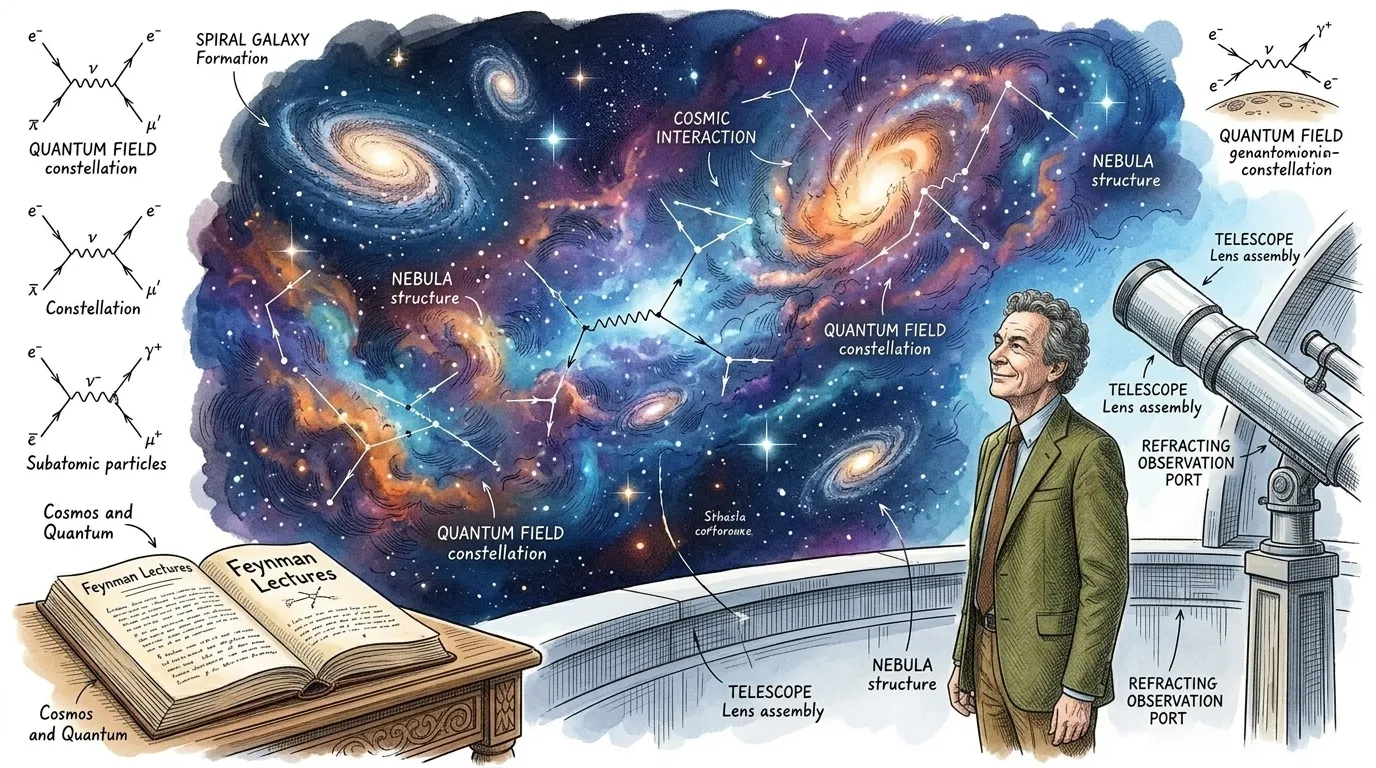
Richard Feynman died in 1988, but his influence continues to resonate. His Feynman diagrams are still used by physicists around the world, his lectures are still read by students, and his spirit of curiosity still inspires us to explore the mysteries of the universe. He reminded us that science is not just about memorizing facts; it's about understanding the underlying principles and finding joy in the process of discovery.\n\n Fact: Concludes with a symbolic image of the…

Richard Feynman died in 1988, but his influence continues to resonate. His Feynman diagrams are still used by physicists around the world, his lectures are still read by students, and his spirit of curiosity still inspires us to explore the mysteries of the universe. He reminded us that science is not just about memorizing facts; it's about understanding the underlying principles and finding joy in the process of discovery.\n\n Fact: Concludes with a symbolic image of the universe, highlighting Feynman's lasting impact on our understanding of physics and his place within the grand cosmic scheme.

About this story

  • Location: Global
  • Audience: general readers

Read Wonder Science on your phone

Wonder Science is available on Android. Get Wonder Science on Google Play.

More Wonder Science stories

All Wonder Science stories · Open the library