Robert Millikan
Robert Millikan — an illustrated science story, set in Global. 10 illustrated pages, free to read on Wonder Science.

Page 1
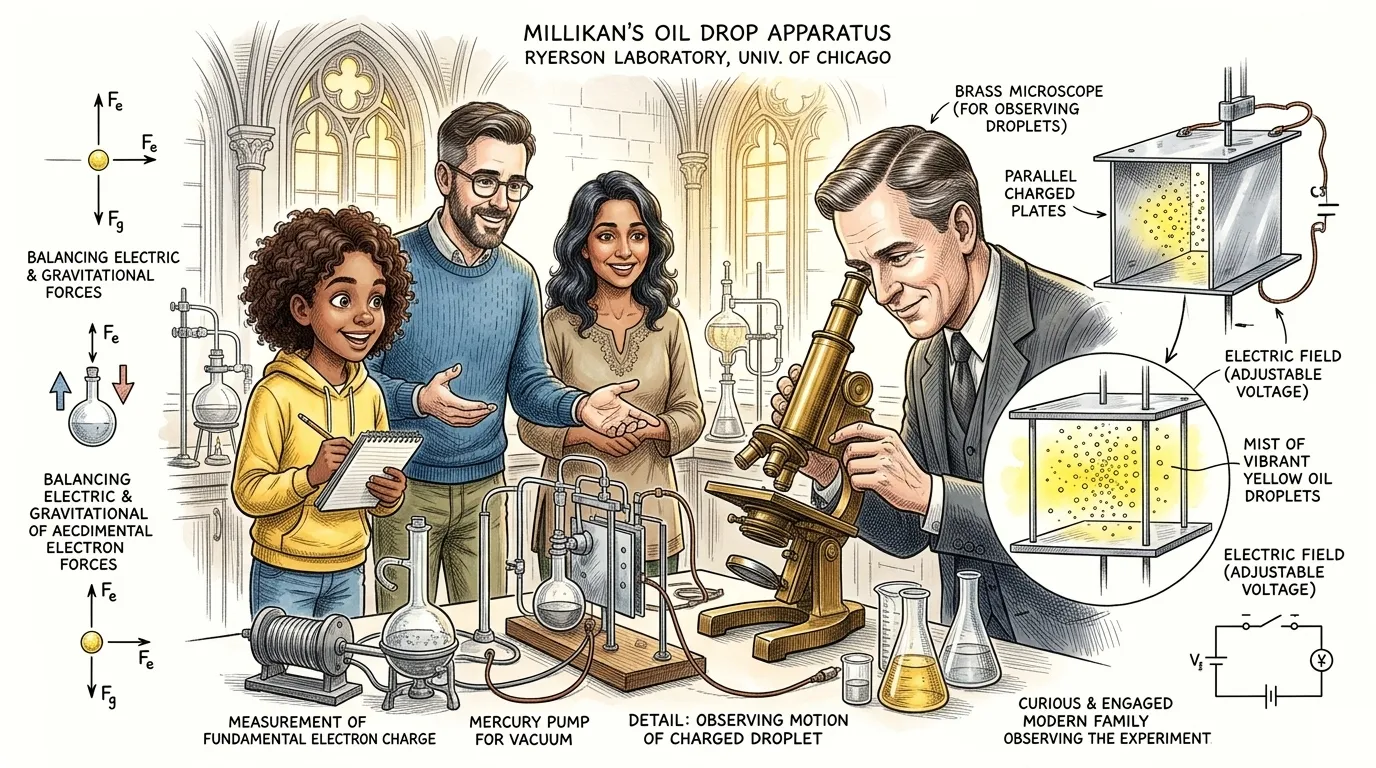
The year is 1909. The place: the Ryerson Physical Laboratory at the University of Chicago. A fine mist of oil droplets hangs in the air between two metal plates. Robert Millikan, a physicist driven by an intense curiosity, peers through a microscope, meticulously observing the movement of these tiny spheres. He knows that what he's about to witness will change our understanding of the fundamental nature of electricity.\n\n Fact: Establishing the historical context and introducing the main figure and setting. The lab apparatus is the central element.
Page 2
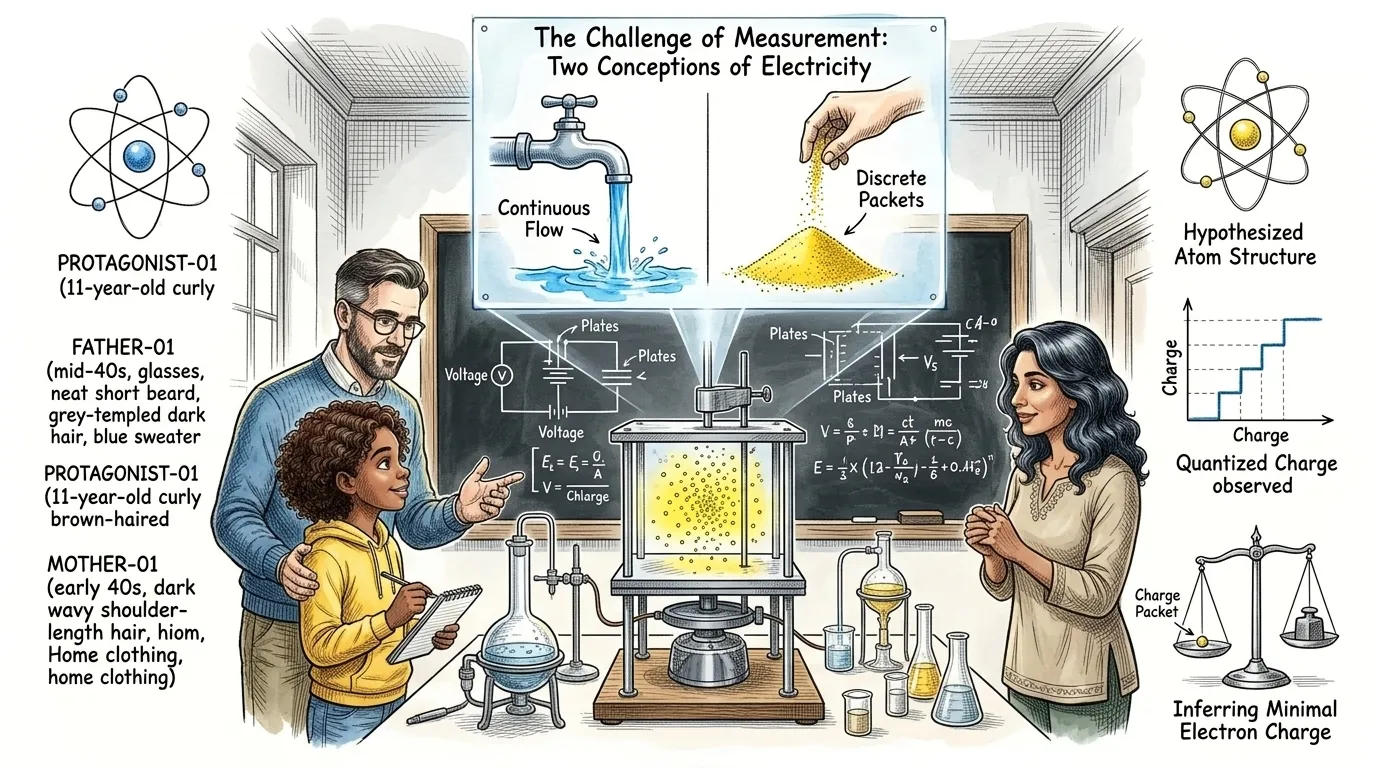
Electricity, before Millikan, was a mysterious fluid. Scientists knew it existed, but its fundamental nature remained elusive. Was it continuous, like water flowing from a tap? Or was it made up of tiny, discrete packets, like grains of sand? Millikan sought to answer this question by measuring the charge of a single electron – the smallest unit of electrical charge. He aimed to find the 'atom' of electricity.\n\n Fact: Zooming in on the apparatus to explain the core challenge. Overlaying a diagram helps visualize the electrical components.
Page 3
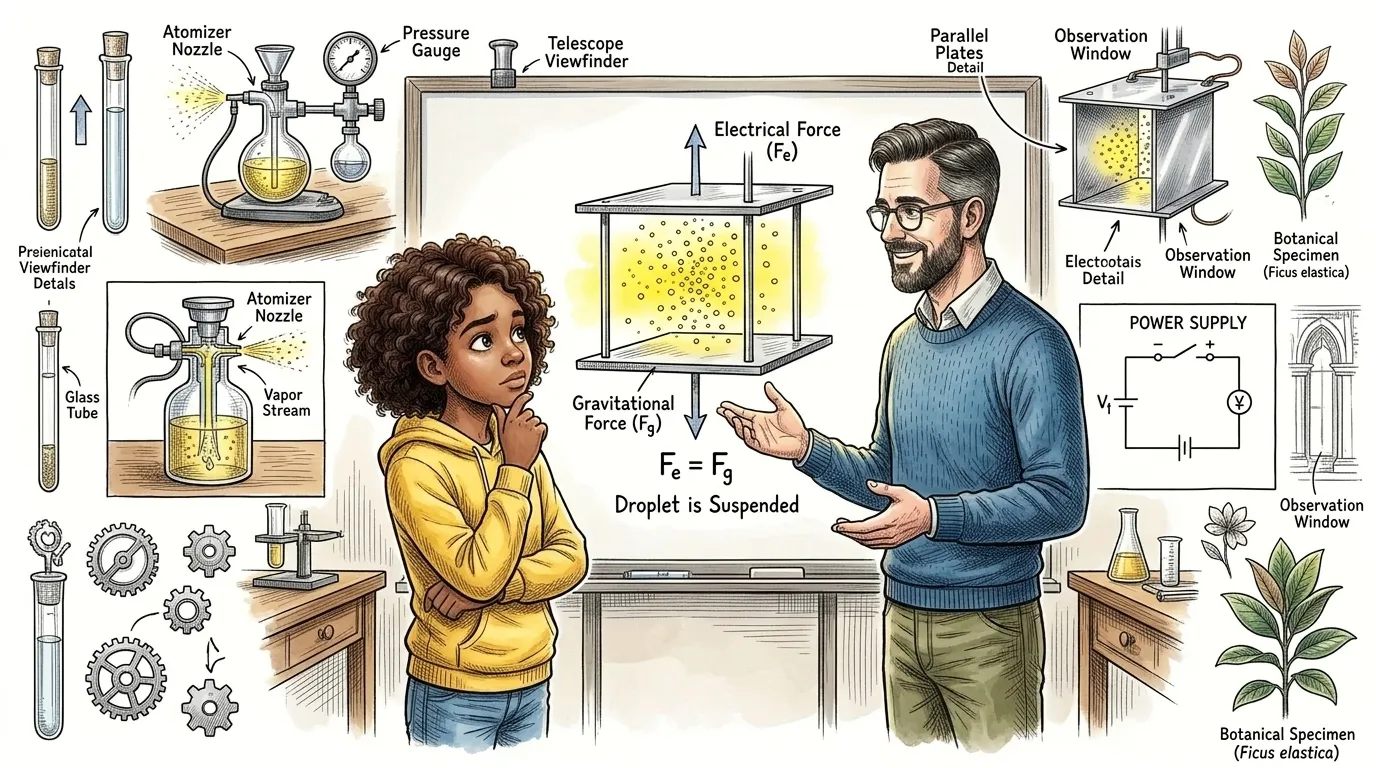
"The important thing is not to stop questioning," Stella's father explained, recalling the words of Albert Einstein. "Millikan used a clever trick. He sprayed tiny oil droplets between the plates, then applied an electrical field. By carefully adjusting the field, he could suspend the charged droplets in mid-air, balancing the force of gravity against the electrical force." By measuring this electrical force, Millikan could calculate the charge on the droplet.\n\n Fact: Visualizing the forces involved. Combining a real-world scene with an animated illustration creates an accessible explanation.
Page 4
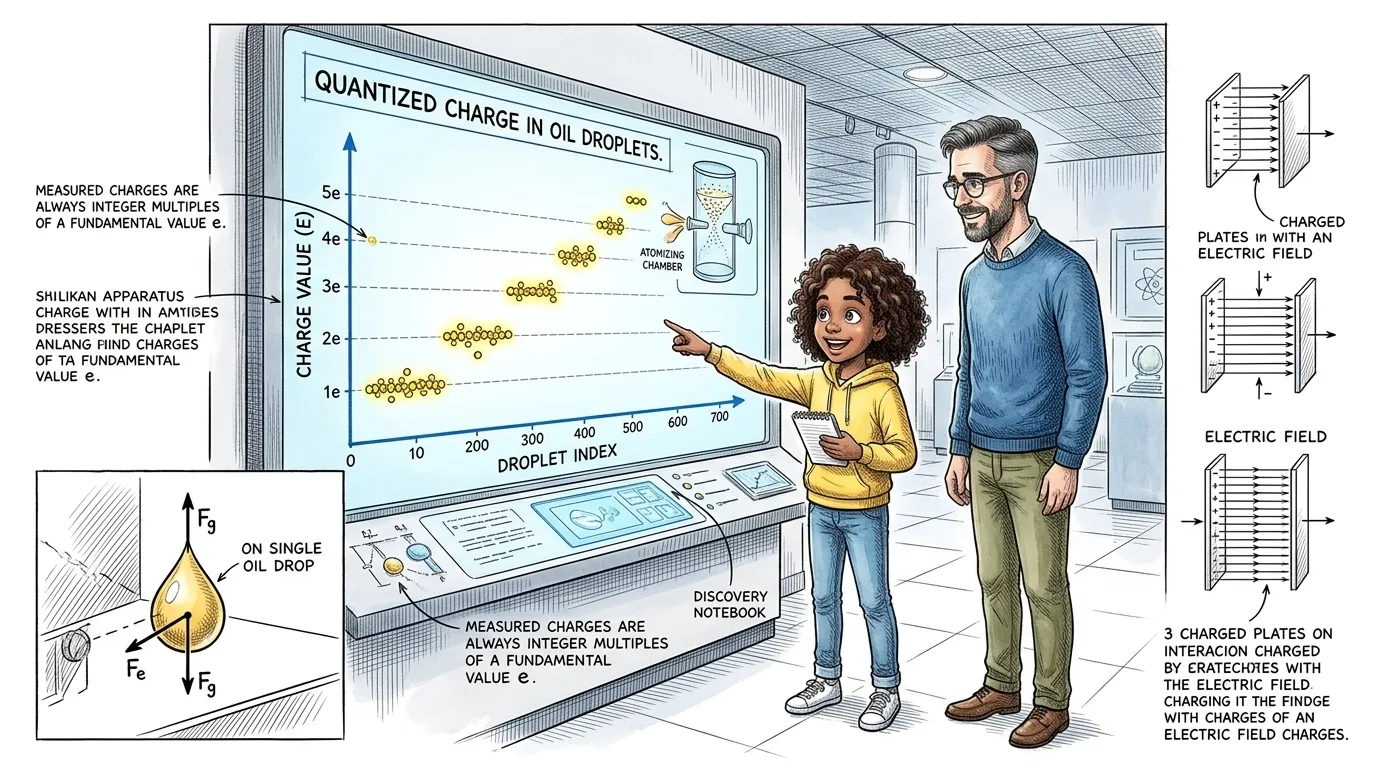
The truly groundbreaking part of Millikan's experiment wasn't just measuring the charge on a single droplet. It was realizing that all the charges he measured were multiples of a single, fundamental value. Some droplets had one unit of charge, some had two, some had three, but none had, say, 2.5. This meant that electrical charge wasn't continuous, but quantized – it came in discrete packets, the size of the electron's charge.\n\n Fact: Connecting the experiment to a modern museum exhibit. Using a graph to visually represent the quantized nature of charge.
Page 5
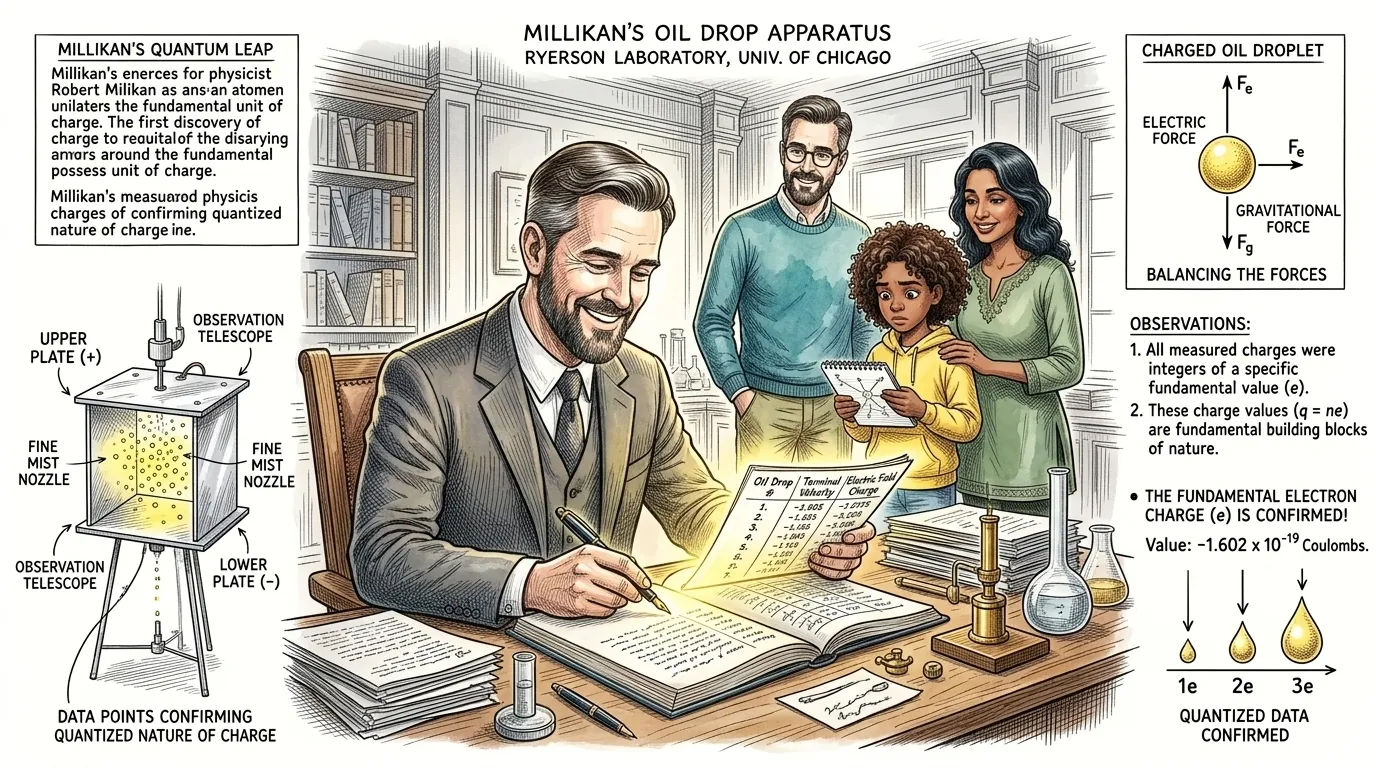
Imagine Millikan's excitement as he meticulously reviewed his data! Each data point, representing the charge on a single oil droplet, fell neatly into place. It was like discovering the fundamental building block of the universe, the atom of electricity. He had not only measured the charge of the electron but had also proven its existence as a fundamental particle.\n\n Fact: Visually conveying the sense of discovery. The beam of light symbolizes the breakthrough moment.
Page 6
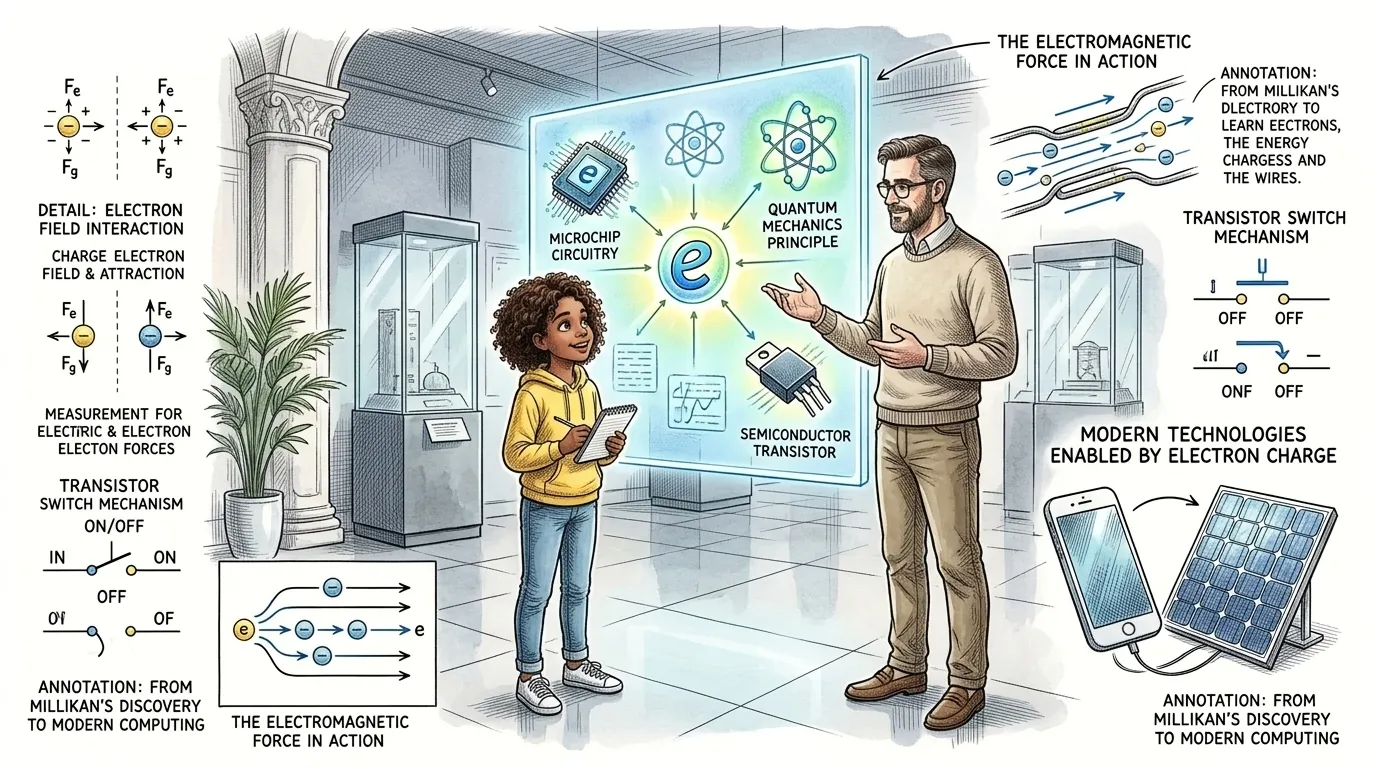
Millikan's precise measurement of the electron's charge, denoted as 'e', wasn't just a number; it was a key to unlocking further secrets of the atom. Knowing 'e' allowed scientists to calculate other fundamental constants and understand the relationships between electricity, magnetism, and matter. It paved the way for advancements in electronics, quantum physics, and countless technologies we rely on today.\n\n Fact: Showing the far-reaching impact of Millikan's discovery. Using an infographic helps connect the abstract concept to tangible technologies.
Page 7

In 1923, Robert Millikan was awarded the Nobel Prize in Physics for his work on the elementary charge of electricity and for his work on the photoelectric effect. His meticulous experiments and clear explanations solidified his place as one of the most influential physicists of the 20th century. His work demonstrated the power of careful observation and rigorous analysis.\n\n Fact: Contextualizing the Nobel Prize win. A domestic scene creates a personal connection.
Page 8
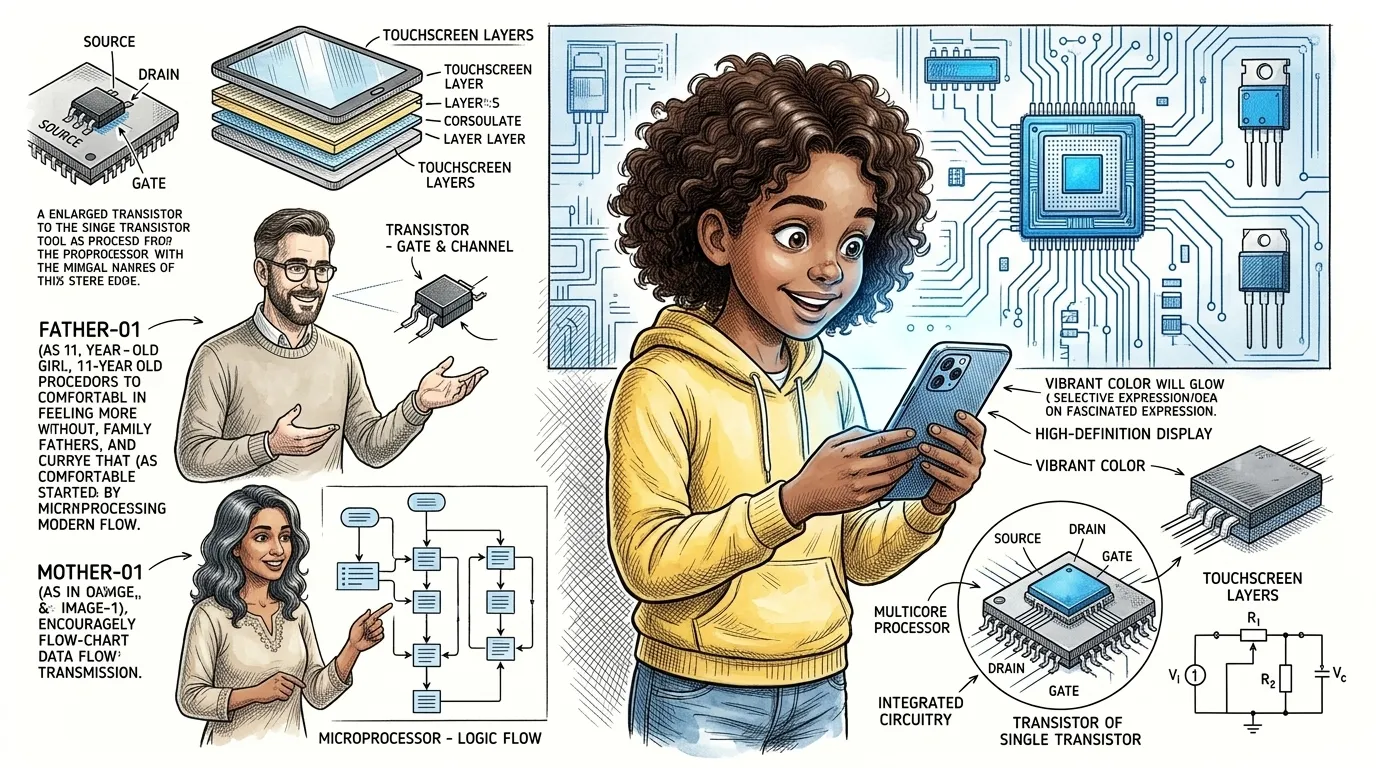
Millikan's discovery had implications far beyond the physics laboratory. The understanding of the electron's charge was essential for the development of modern electronics, from transistors to computer chips. Without his work, our digital world simply wouldn't exist. Every time you use your phone, computer, or any electronic device, you're benefiting from Millikan's groundbreaking research.\n\n Fact: Illustrating the connection between the fundamental discovery and its widespread impact on technology.
Page 9
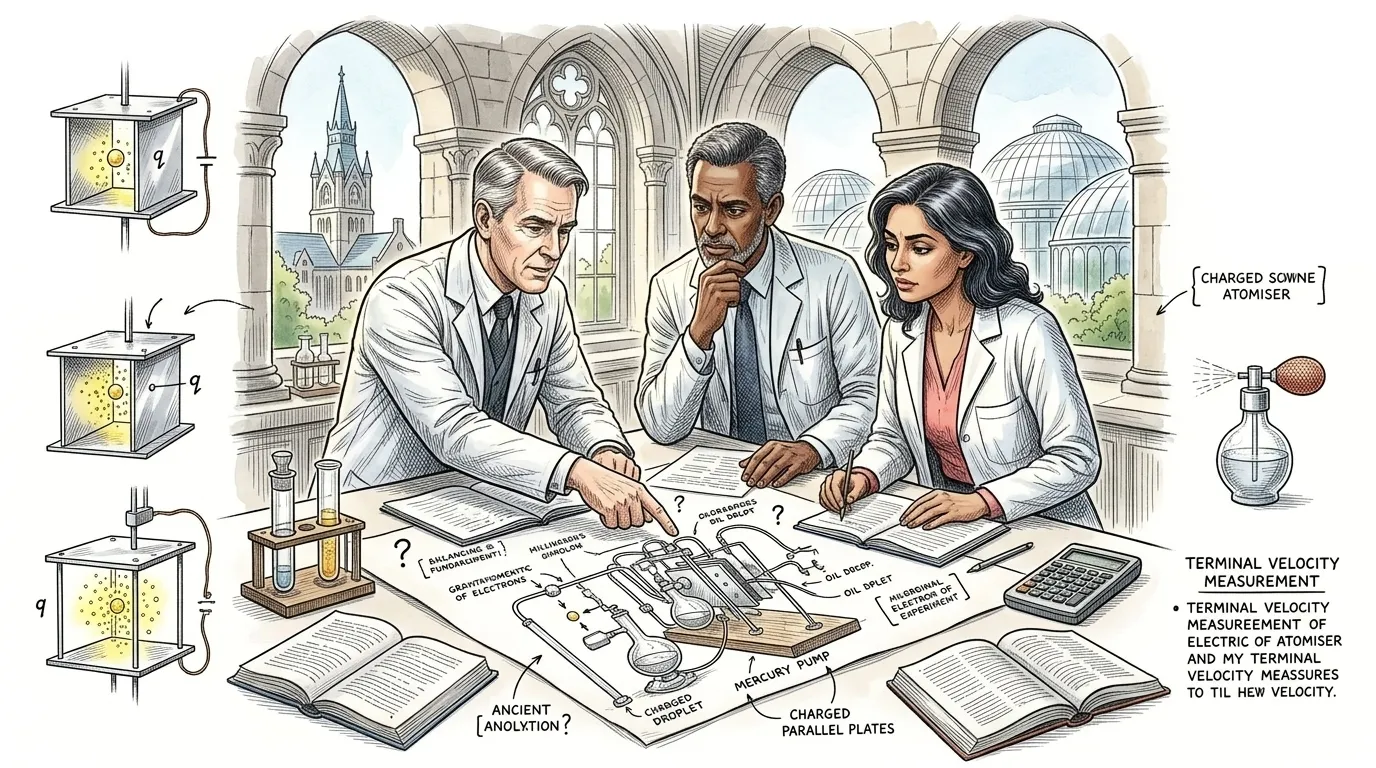
While Millikan's meticulous work has been validated repeatedly, it wasn't without controversy. Questions about data selection and interpretation have been raised over the years. Still, his experiment remains a cornerstone of physics, a testament to the power of careful experimentation and a reminder that even the most groundbreaking discoveries are subject to scrutiny and refinement.\n\n Fact: Acknowledging the controversies surrounding Millikan's work. The subtle question marks create a visual reminder of the ongoing scientific process.
Page 10
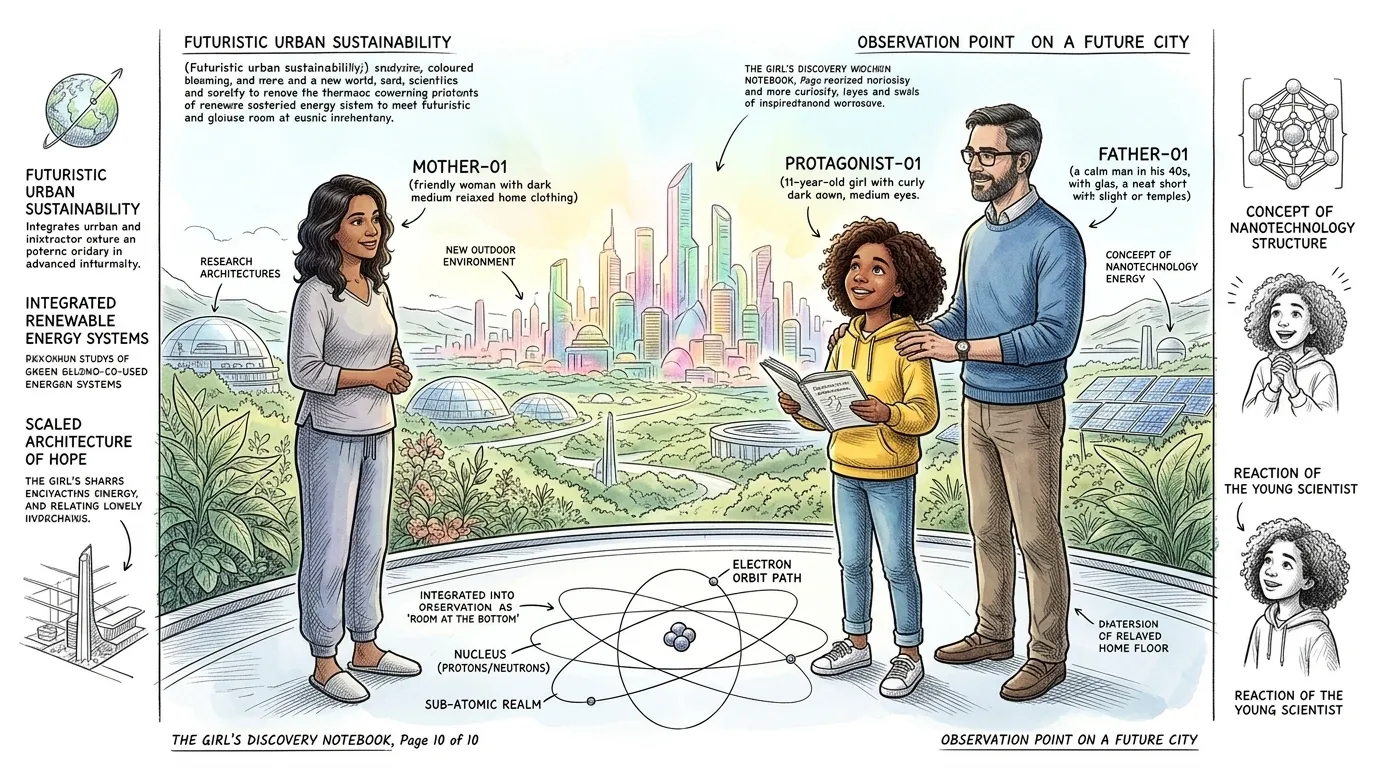
Millikan's dedication to unraveling the mysteries of the universe continues to inspire scientists today. He showed us that even the smallest things, like the charge of an electron, hold the key to understanding the biggest questions. As the famous physicist Richard Feynman said, "There's plenty of room at the bottom" – meaning there's always more to discover at the fundamental level.\n\n Fact: Concluding with a sense of inspiration and wonder. The city skyline represents the tangible impact of scientific progress.
About this story
- Location: Global
- Audience: kids (ages 6–12)
Read Wonder Science on your phone
Wonder Science is available on Android. Get Wonder Science on Google Play.