Rosalind Franklin
Rosalind Franklin — an illustrated science story, set in Global. 10 illustrated pages, free to read on Wonder Science.
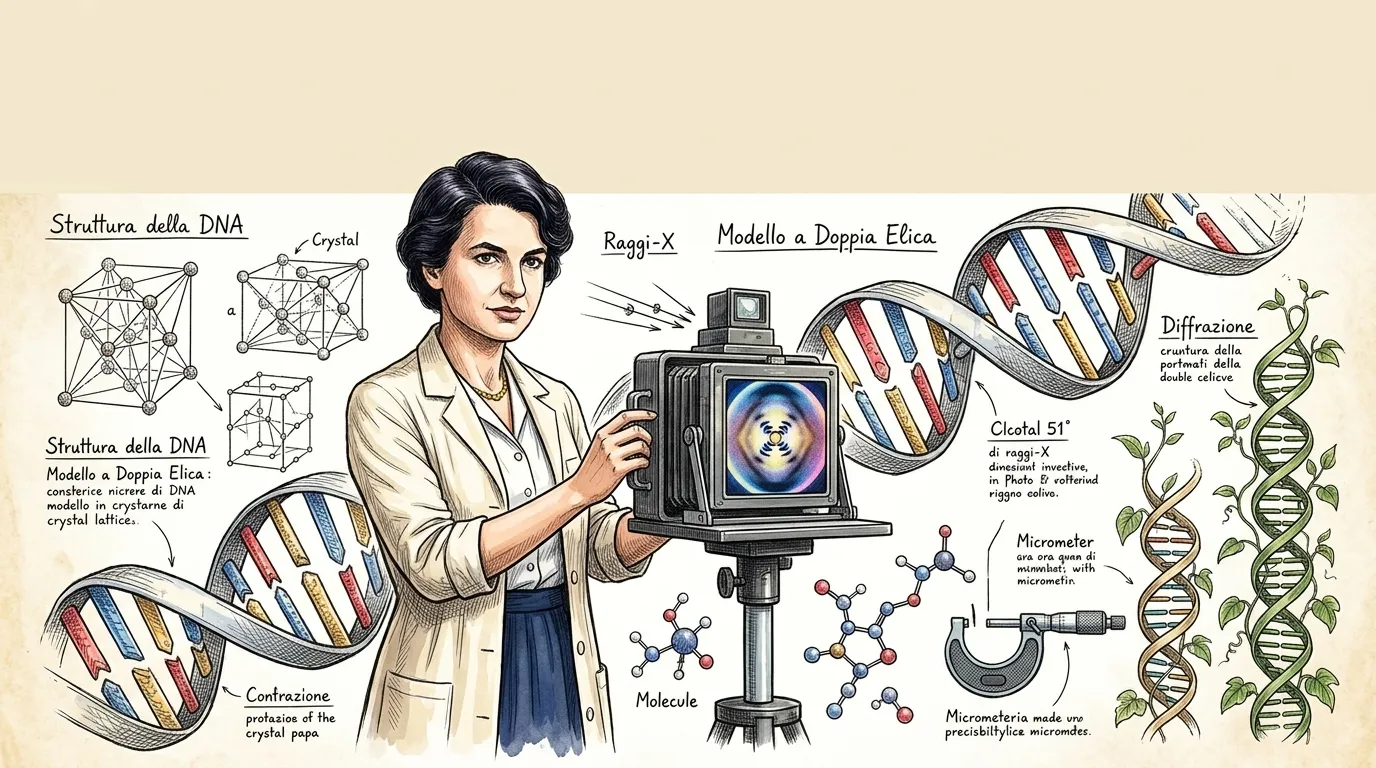
Page 1
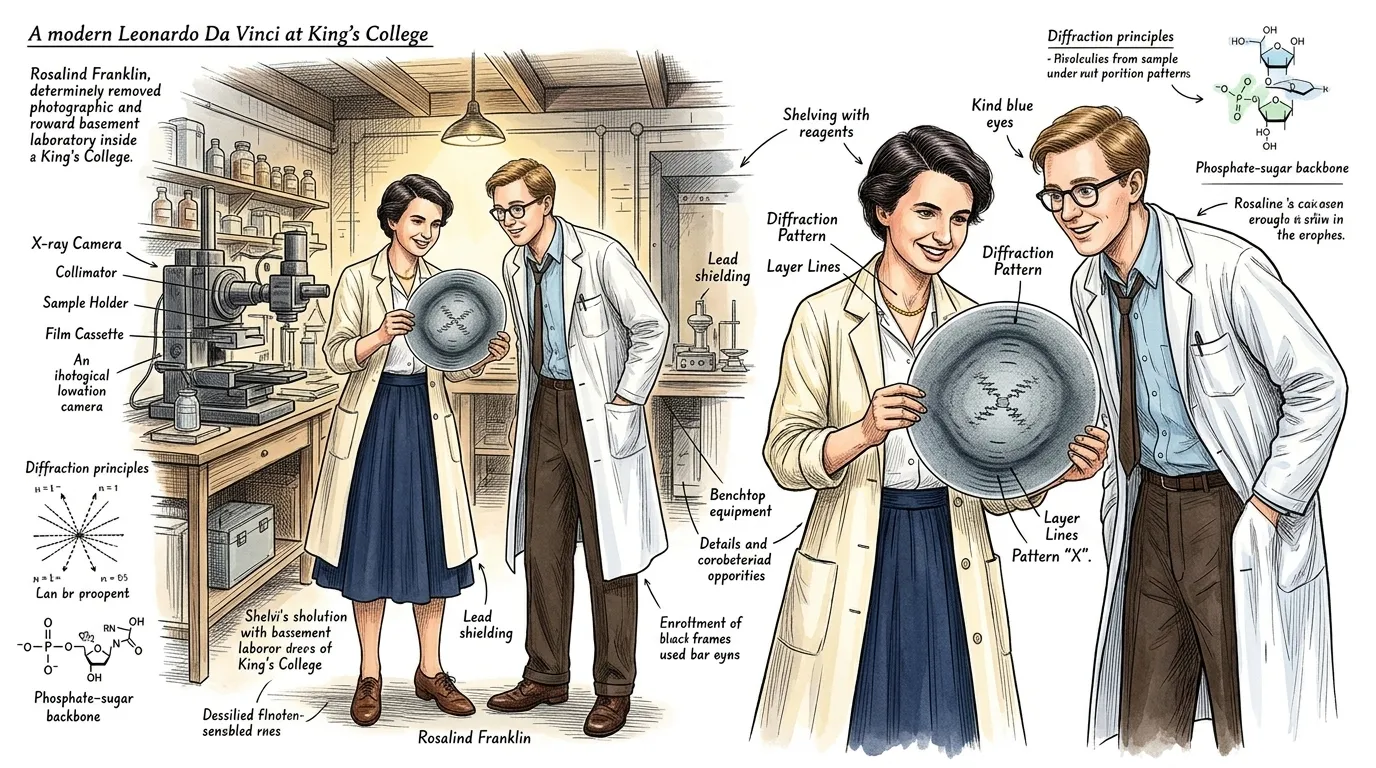
London, 1952. In the dimly lit basement laboratories of King's College, a single photographic plate held a secret that would redefine life itself. This wasn't merely a picture; it was a ghost-like imprint of the most vital molecule in biology, captured with painstaking precision.\n\n"Dr. Rosalind Franklin carefully removed the film from the X-ray camera, her expression intense as she prepared to develop it. "The clarity of these patterns," she remarked to her colleague, Raymond Gosling, "is paramount. Every subtle curve, every shadowed void, speaks volumes about the atomic arrangement.""
Page 2
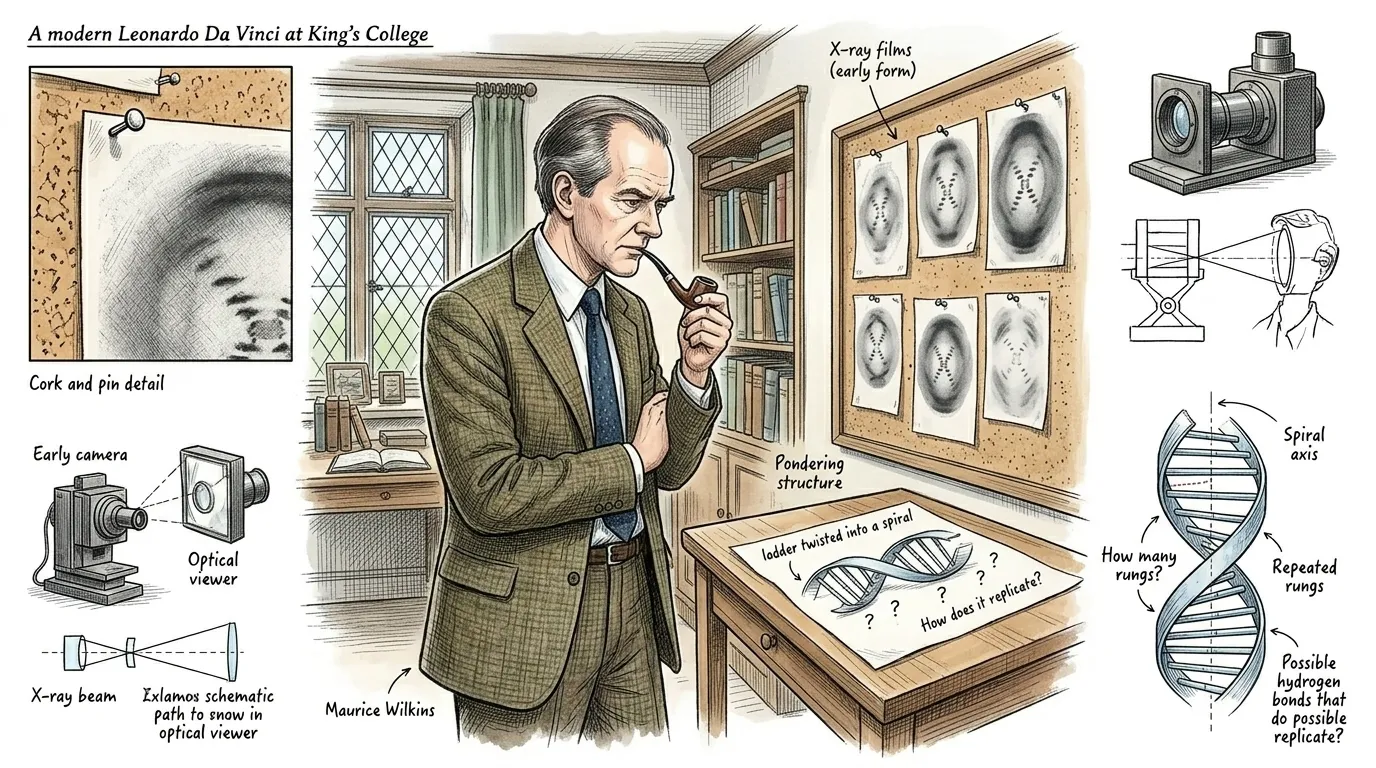
Before Franklin's meticulous work, the very essence of heredity—how traits passed from one generation to the next—remained shrouded in mystery. Scientists understood that deoxyribonucleic acid, or DNA, was the carrier of genetic information, but its three-dimensional form, crucial to its function, was unknown. It was a lock without a key, a blueprint without a structure.\n\n""Imagine a ladder twisted into a spiral," Maurice Wilkins, another scientist at King's College, might have pondered, staring at earlier, less defined X-ray images. "But what kind of spiral? How many rungs? How does it replicate?" These were the fundamental questions demanding answers."
Page 3
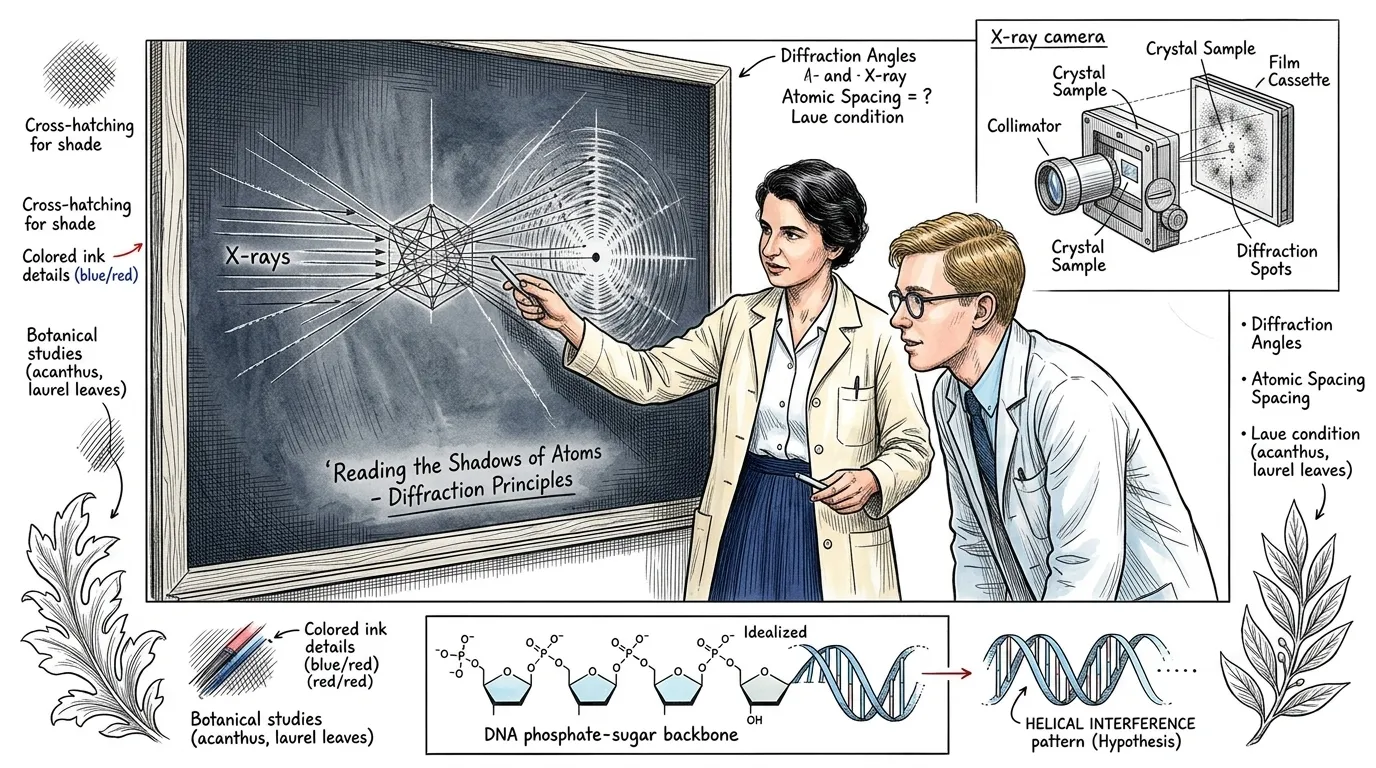
To unlock DNA's secrets, scientists needed a tool that could 'see' beyond the capabilities of optical microscopes, which couldn't resolve objects as small as individual atoms. X-ray crystallography emerged as the cutting-edge technique, a sophisticated method to deduce the arrangement of atoms within crystalline solids. It would be the primary 'item' for their breakthrough.\n\n""This technique is like reading the shadows of atoms," Dr. Franklin might have explained to Gosling, gesturing towards a diagram. "When X-rays hit a crystal, they scatter, creating a diffraction pattern. From these patterns, we can calculate the precise three-dimensional positions of the atoms within the molecule. It's a language of light and shadow, revealing hidden structures.""
Page 4
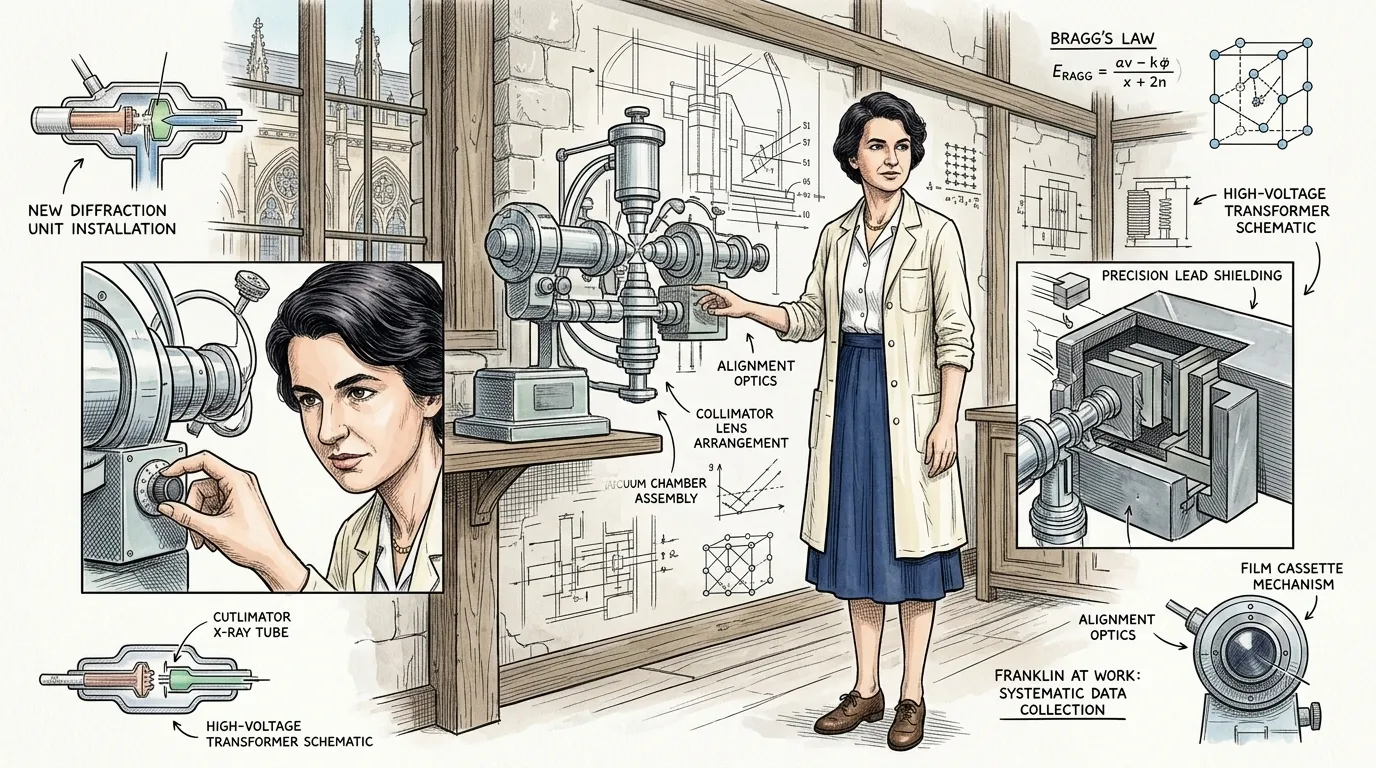
Rosalind Franklin, already a distinguished physical chemist, arrived at King's College London in 1951, having refined her X-ray diffraction techniques studying coal and viruses in Paris. She was tasked with investigating DNA, a field ripe for discovery. However, the collaborative environment she expected was complicated by misunderstandings regarding her role and the prior work of Maurice Wilkins.\n\n""My appointment here was to set up a new X-ray unit for DNA studies," Franklin might have firmly stated, reflecting on the initial confusion. "The very instruments are extensions of my own expertise. Precision, not presumption, will guide our path." This underlying tension, while challenging, fueled her intense focus on data."
Page 5
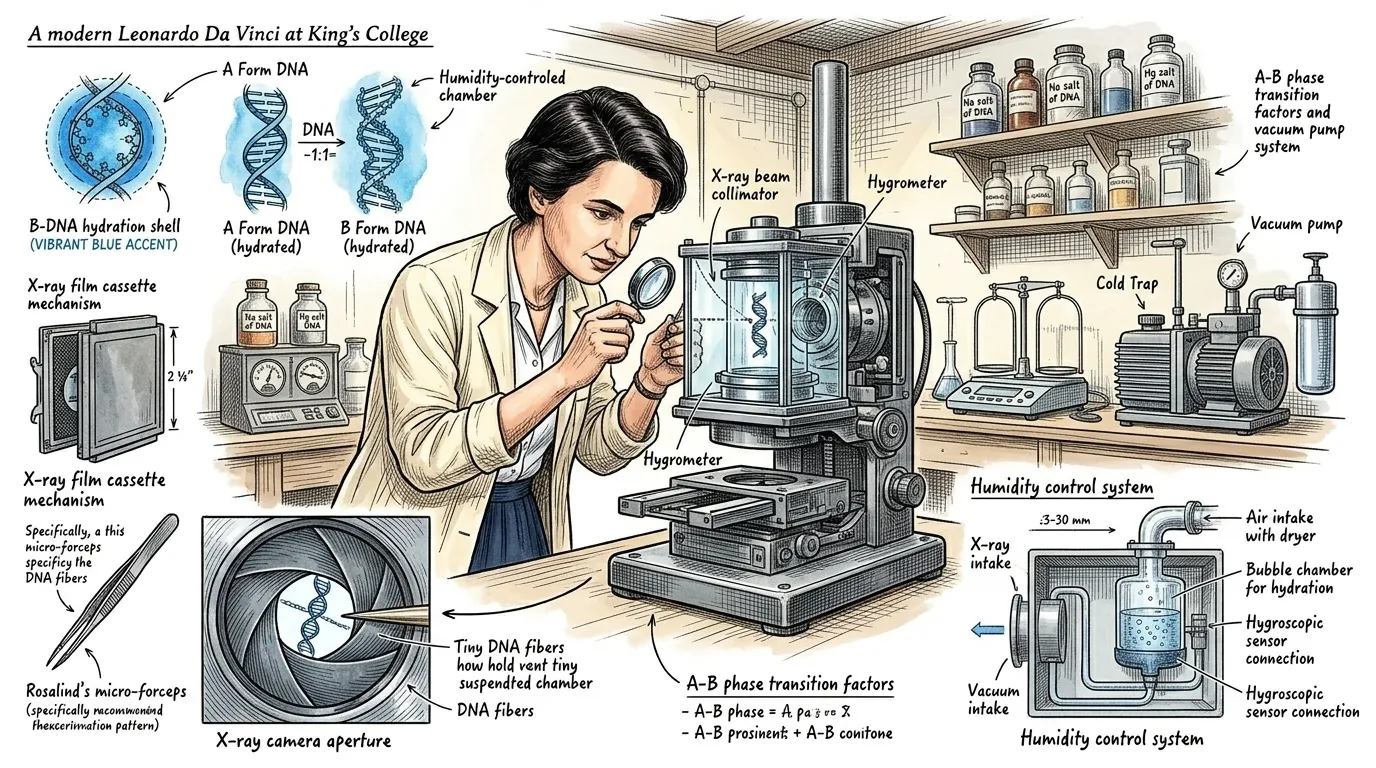
Franklin's approach to X-ray crystallography was characterized by meticulous attention to detail and experimental rigor. She isolated two forms of DNA, 'A' and 'B,' depending on humidity. The 'B' form, found in a more hydrated state, was especially challenging but yielded the most revealing patterns. This 'wet' form of DNA was essential for unlocking the helix. The process involved suspending tiny DNA fibers and exposing them to X-ray beams for hours, sometimes even days, to capture the subtle scattering.\n\n""Each exposure is a monumental undertaking," Dr. Franklin stated, observing the specialized camera. "Varying the humidity by a fraction of a percent can alter the entire diffraction pattern. It's not just about pointing X-rays; it's about creating the perfect molecular environment for the truth to reveal itself.""
Page 6
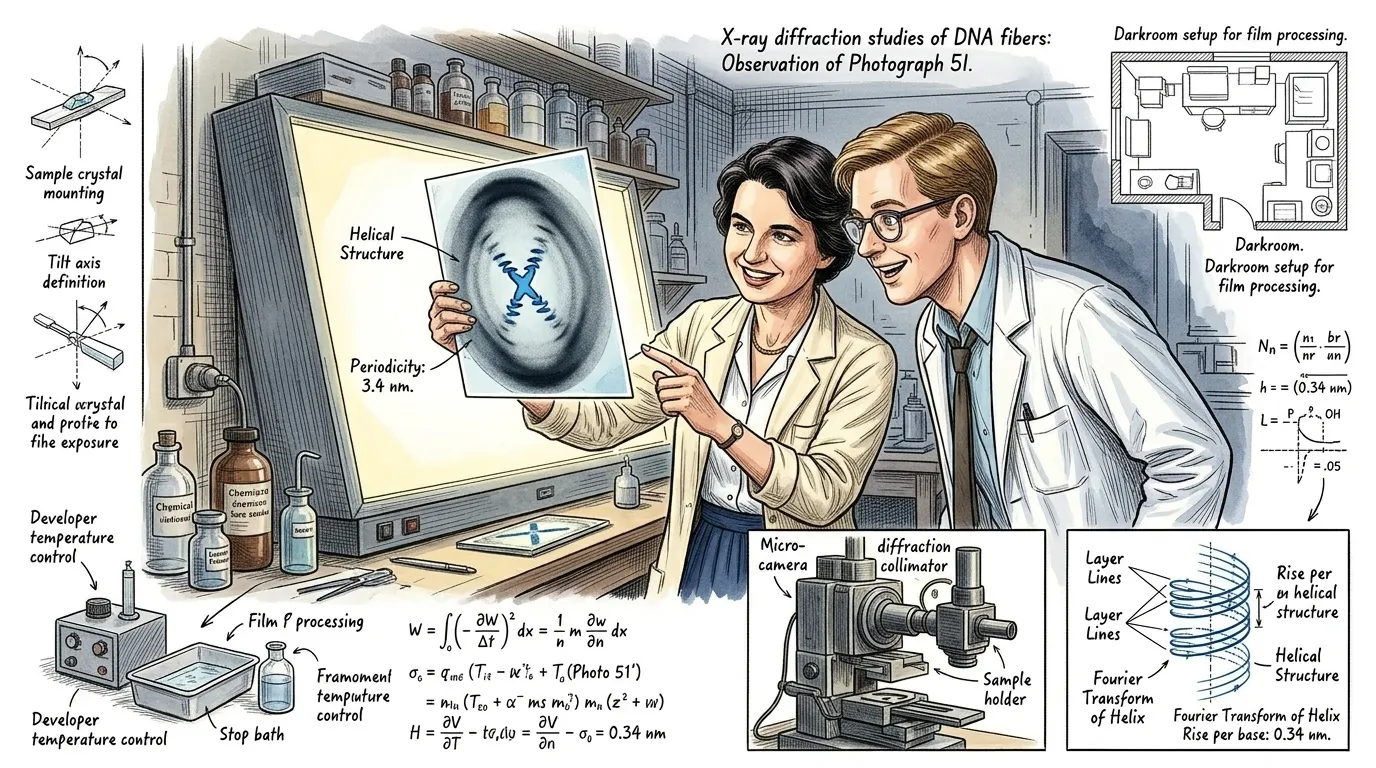
Amidst countless experiments, one image stood out: Photo 51. Taken by Raymond Gosling under Franklin's supervision in May 1952, it was the clearest X-ray diffraction pattern of the 'B' form of DNA ever produced. It showed a striking 'X' shape surrounded by a series of dark arcs, indicative of a helical structure. This image, though seemingly abstract, contained quantitative data about the helix's dimensions and repeating units.\n\n""Look at this," Franklin exclaimed to Gosling, holding the developed film up to a light box. "The cross shape is unmistakable evidence of a helix. And the strong reflections at the top and bottom? They suggest a repeating structure, a periodicity of 3.4 nanometers. This isn't just a pattern; it's a direct measurement of the molecular architecture.""
Page 7
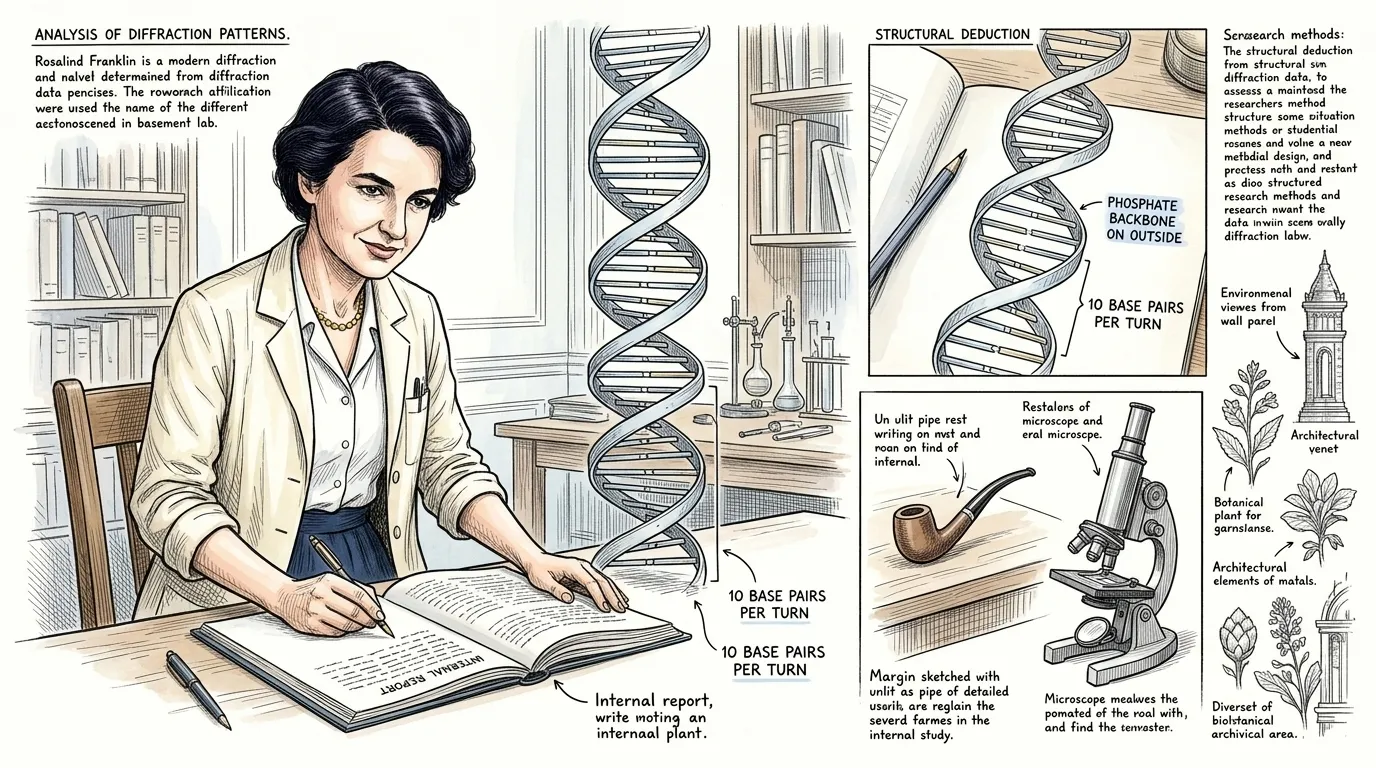
Franklin's meticulous analysis of Photo 51 and other data allowed her to deduce critical parameters of the DNA molecule. She confirmed the helical nature, identified the phosphate backbone on the outside, and calculated the number of bases per turn. Her unpublished reports, shared with King's College and later indirectly accessed by others, provided the concrete evidence needed to build a comprehensive model. She noted the two different forms, 'A' and 'B,' and how the 'B' form suggested a double helix.\n\n""The evidence from Photo 51 is unequivocal," Franklin articulated in her internal report. "The symmetry and spacing strongly indicate a double helix with 10 base pairs per turn. This isn't a hypothesis; it's a structural deduction from the diffraction data." Her words, grounded in empirical data, laid the foundation for the ultimate discovery."
Page 8
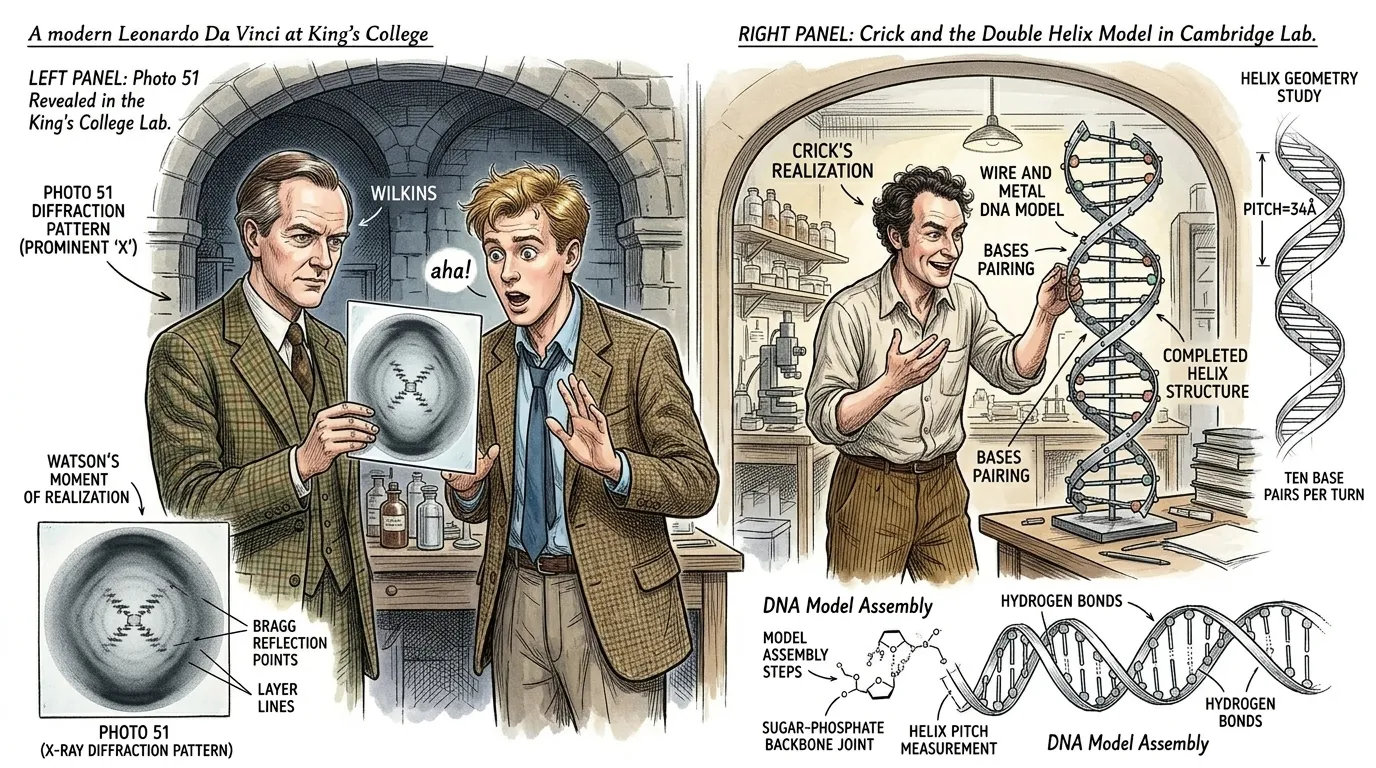
While Franklin was meticulously refining her analysis, James Watson and Francis Crick at Cambridge University were building theoretical models. Unbeknownst to Franklin, Maurice Wilkins showed Photo 51 to Watson without her direct permission. This crucial visual, combined with Franklin's detailed measurements shared in an unpublished King's report (also seen by Watson and Crick), provided the 'aha!' moment needed. The information from Photo 51 was the critical payoff, confirming their intuited double helix model and allowing them to precisely position the bases and sugar-phosphate backbone.\n\n""The instant I saw that picture, my mouth fell open," James Watson would later write about Photo 51. "The 'X' was clear evidence for a helix." Francis Crick, equally astonished, likely agreed, realizing the profound implications. "The pattern was so striking; it essentially told you it was a helix.""
Page 9
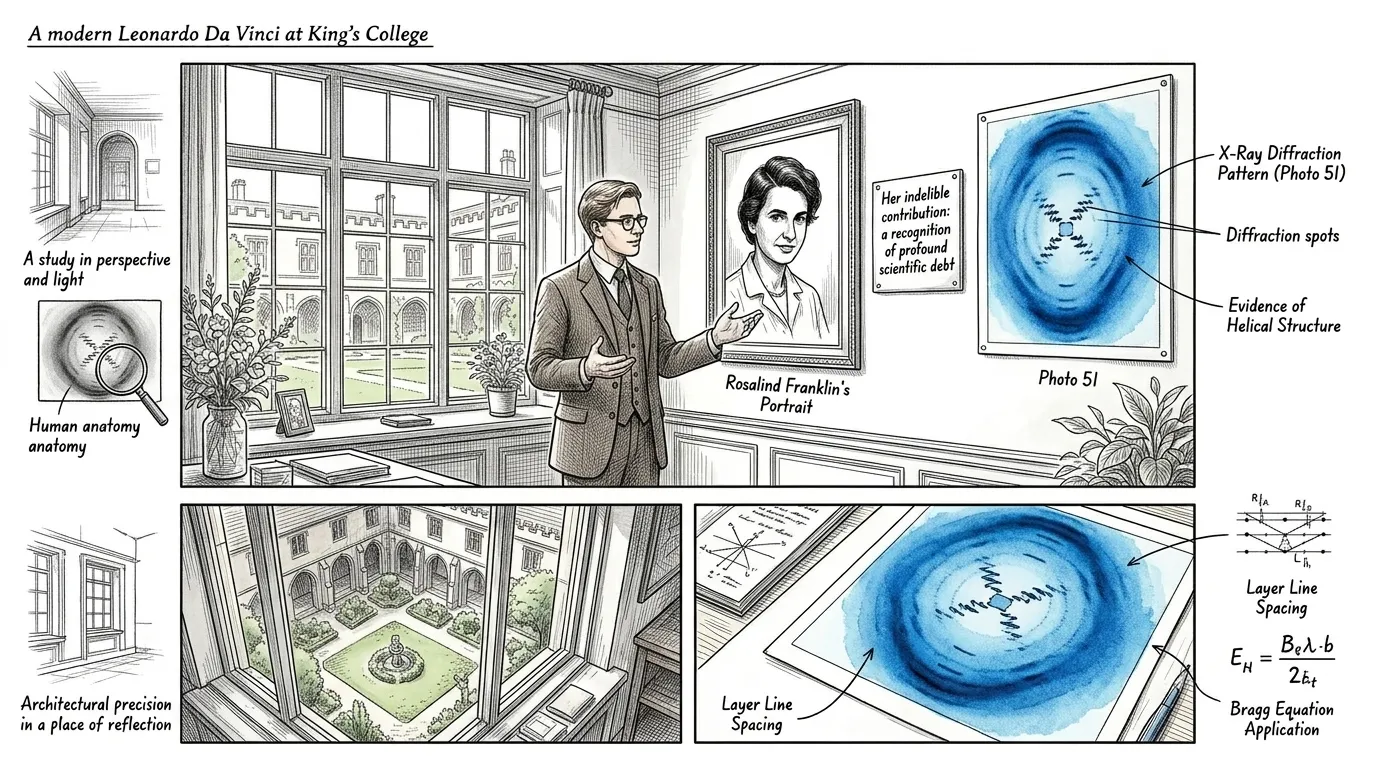
In 1962, the Nobel Prize in Physiology or Medicine was awarded to Watson, Crick, and Wilkins for their discovery of the structure of DNA. Rosalind Franklin had tragically passed away from ovarian cancer four years earlier, at the age of 37, making her ineligible for the award. Her critical contributions, particularly Photo 51 and her analytical work, were essential, yet her role was largely overlooked in popular accounts for decades. This omission underscored the systemic biases prevalent in science at the time.\n\n""The debt to Dr. Franklin's exceptional data and analysis is profound and undeniable," a historical commentator might now state, reflecting on the situation. "Her precise measurements, especially from Photo 51, were the empirical bedrock upon which the double helix model was finalized. Without her, the path to understanding DNA would have been significantly longer and more arduous.""
Page 10
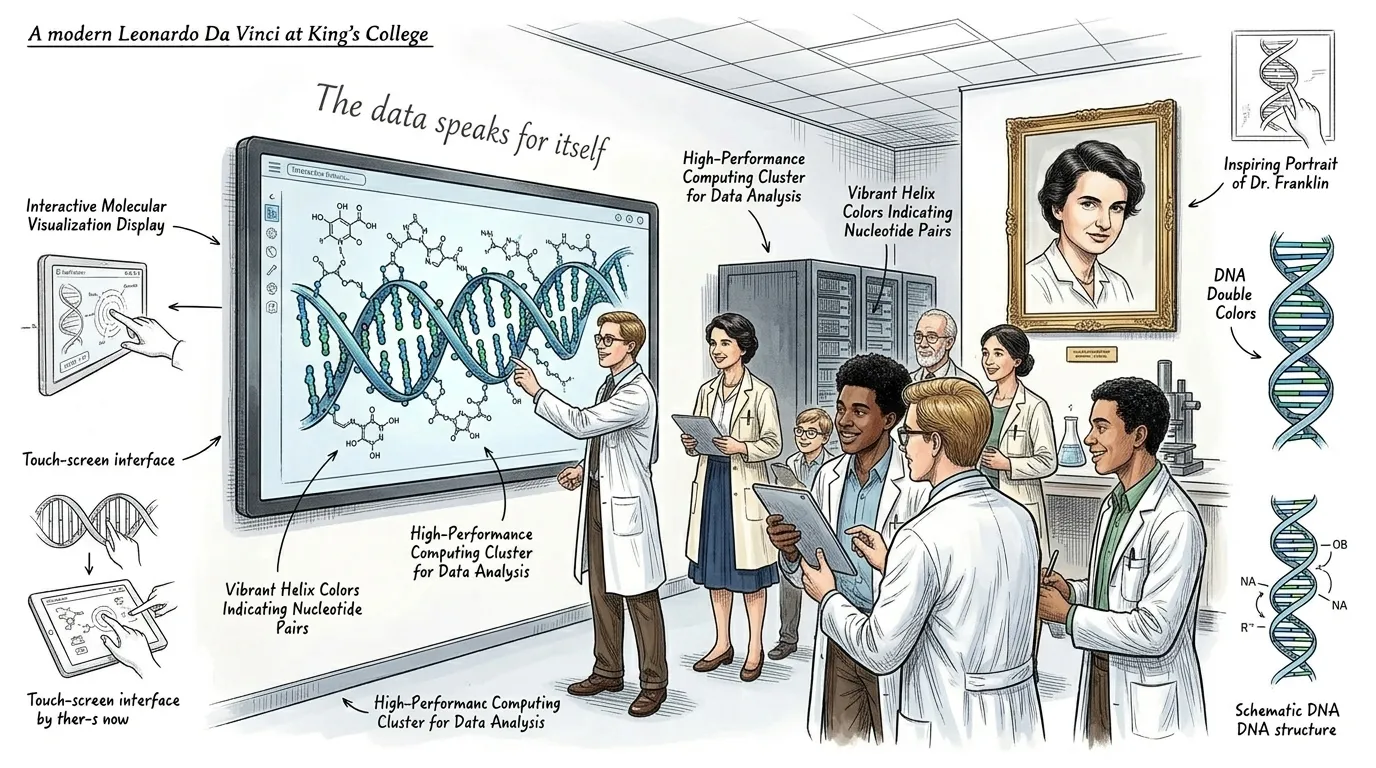
Rosalind Franklin's work on DNA, RNA, and viruses laid fundamental groundwork for molecular biology. Her rigorous, methodical approach to experimental science ensured the accuracy of the data that propelled subsequent discoveries. Today, her legacy extends beyond DNA to the broader understanding of scientific ethics and the importance of acknowledging the contributions of all researchers, regardless of gender or circumstance. Her commitment to evidence over speculation remains a beacon for scientific integrity.\n\n""Science, ultimately, thrives on truth, rigorously pursued," we might imagine Franklin herself saying, a testament to her philosophy. "The data speaks for itself, and with enough precision, it will always reveal the underlying structure of the universe." Her contributions continue to inspire generations of scientists to challenge assumptions and pursue discovery with unwavering dedication."
About this story
- Location: Global
- Audience: general readers
Read Wonder Science on your phone
Wonder Science is available on Android. Get Wonder Science on Google Play.