Sara Seager
Sara Seager — an illustrated science story, set in Global. 10 illustrated pages, free to read on Wonder Science.
Page 1
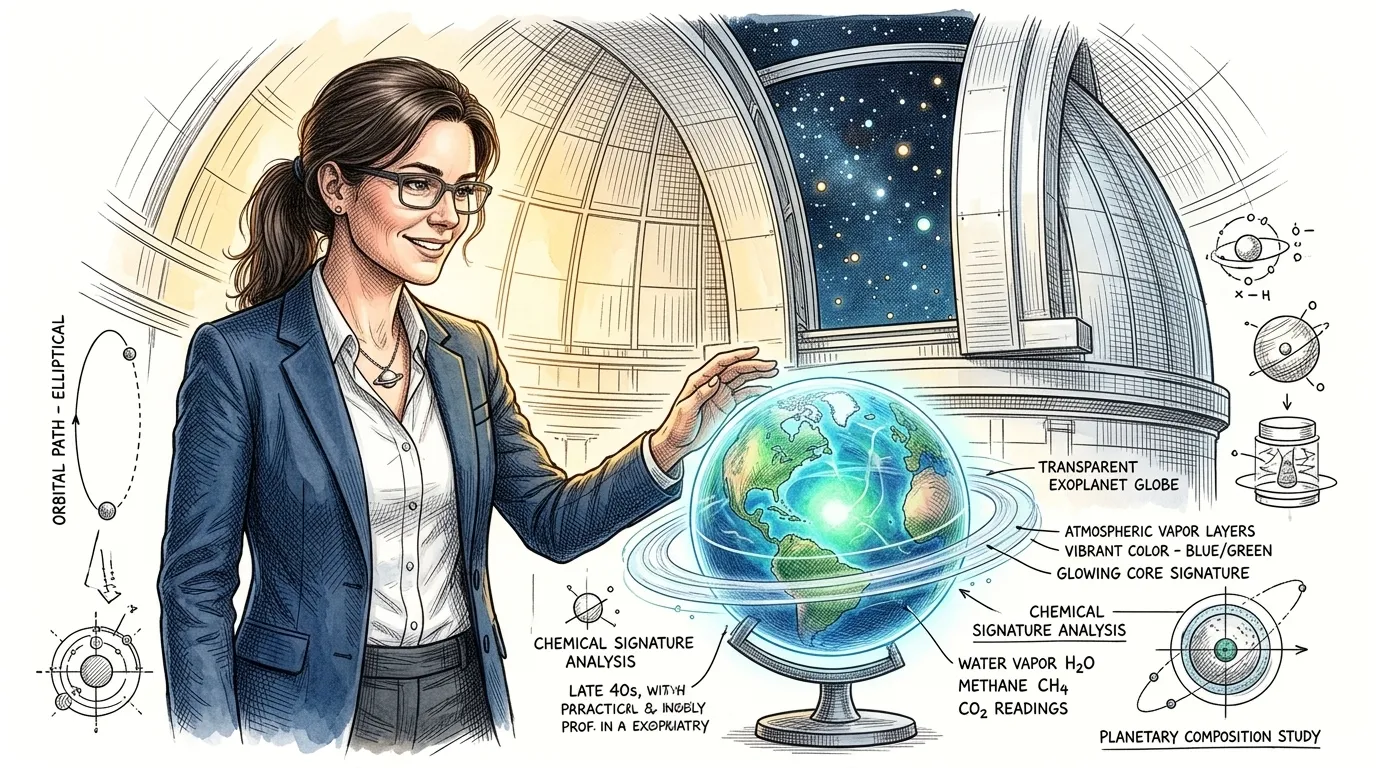
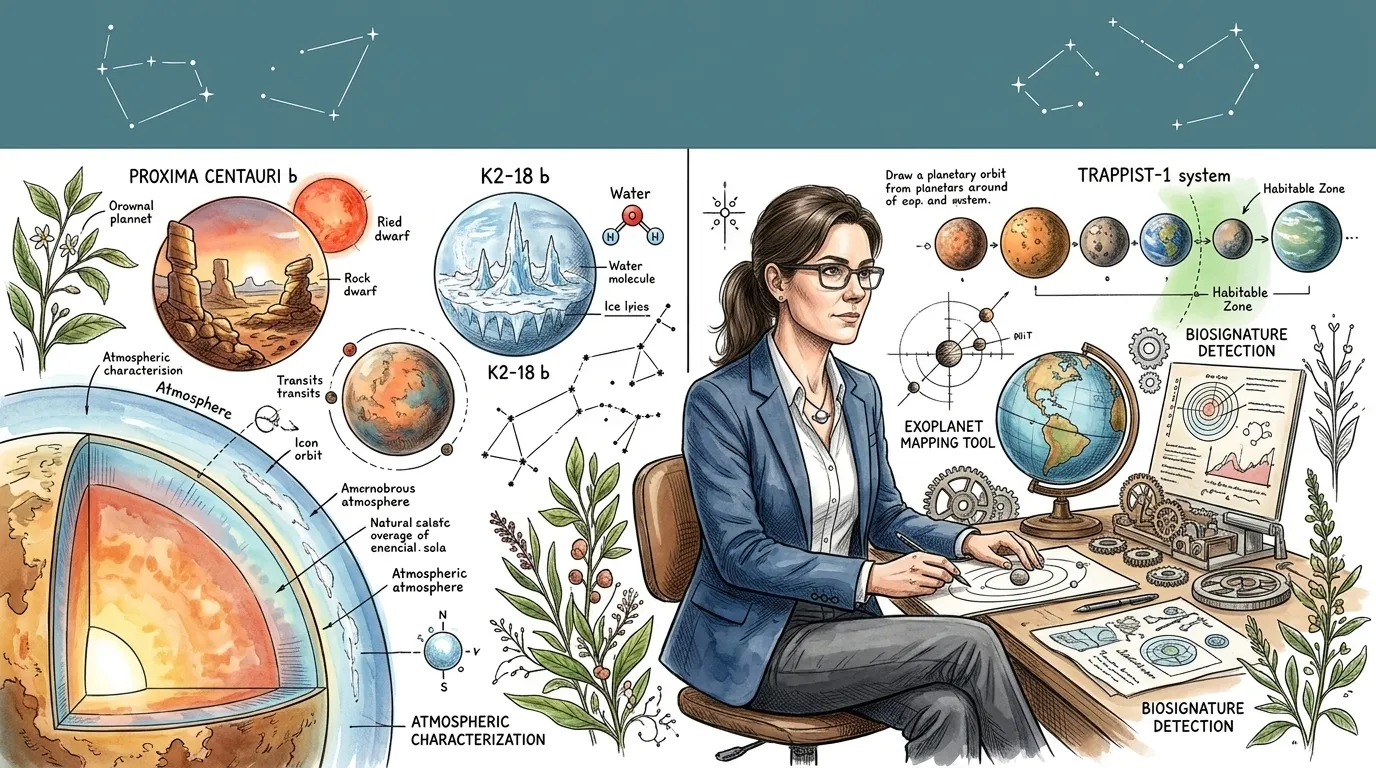
In the vast cosmic ocean, billions of exoplanets orbit distant stars, each a unique, unseen world. For decades, these celestial bodies remained mere theoretical constructs, their atmospheres and potential for life unknowable. It took a new generation of scientists to develop the tools and theories to peer across interstellar distances, deciphering the faint chemical signatures that could reveal alien ecosystems. Dr. Sara Seager, an astrophysicist at MIT, stands at the forefront of this monumental endeavor, pioneering the science of exoplanet atmospheric characterization. Her work has fundamentally reshaped our approach to finding habitable worlds and the quest for life beyond Earth, transforming speculative wonder into a verifiable scientific pursuit.
Page 2
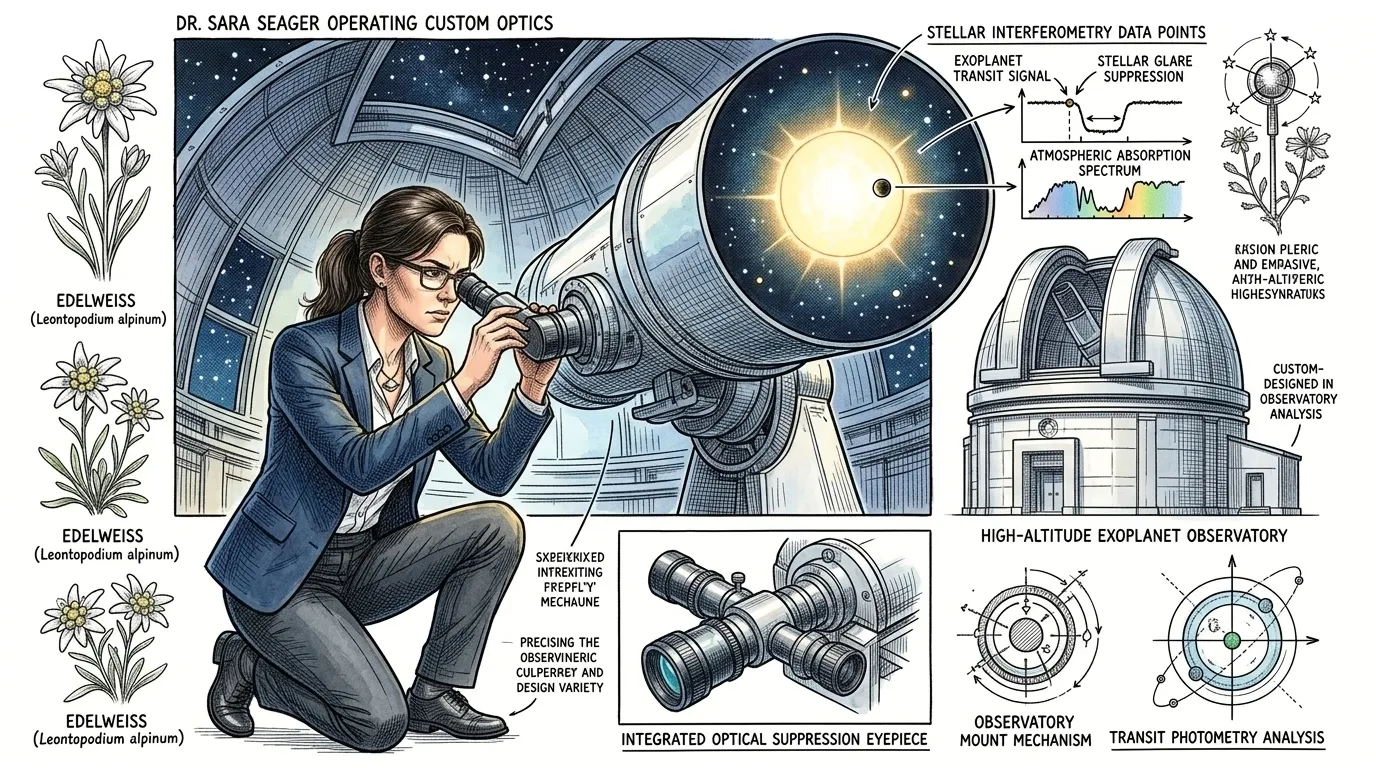
Detecting an exoplanet is an extraordinary feat, akin to spotting a firefly in front of a distant lighthouse. Yet, merely knowing a planet exists offers little insight into its potential habitability. The true challenge lies in analyzing its atmosphere, a delicate veil of gases that can hide the secrets of its climate, geology, and even biology. Before Seager's pioneering work, the prevailing methods were insufficient to extract detailed atmospheric data from these incredibly distant worlds. Scientists faced the daunting task of filtering minuscule signals from overwhelming stellar glare, a problem demanding innovative theoretical frameworks and observational techniques.
Page 3
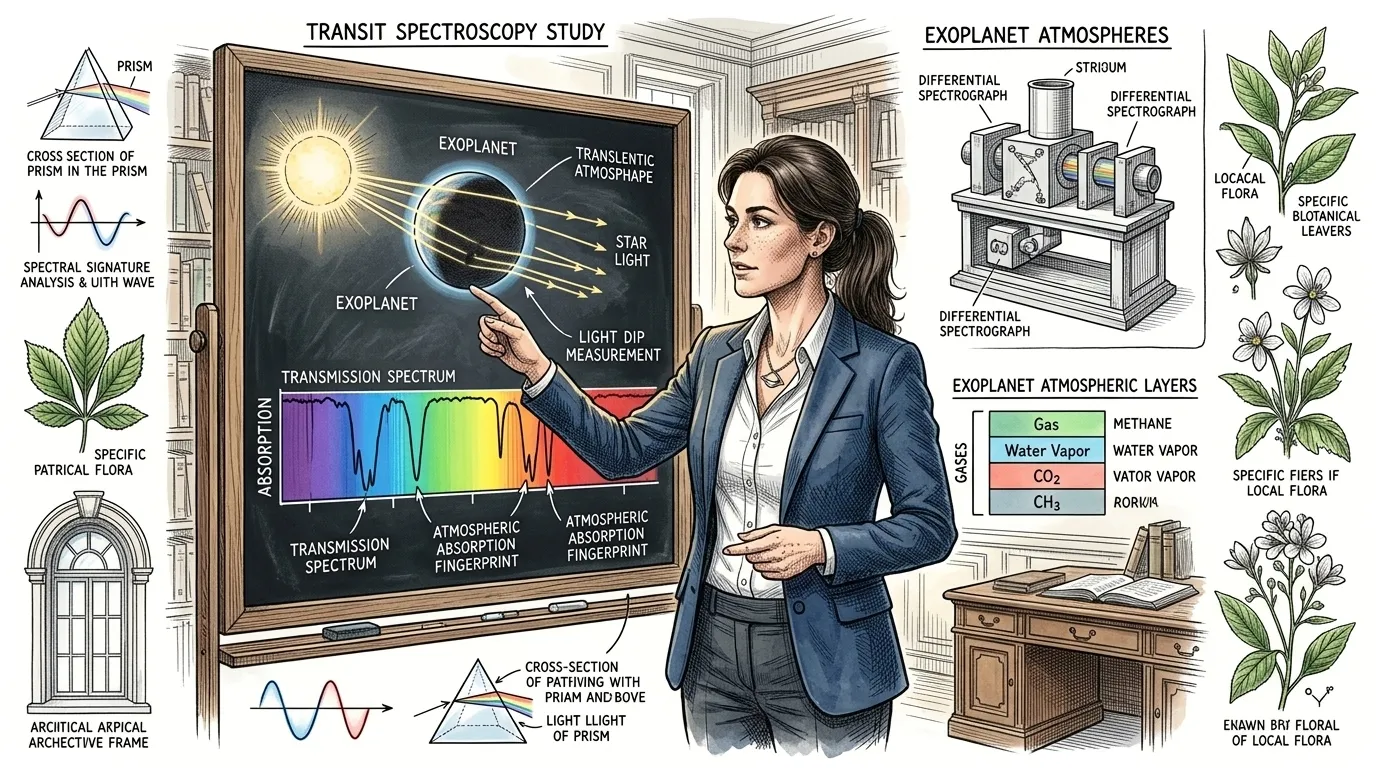
The primary method for studying exoplanet atmospheres relies on the 'transit technique.' When a planet passes directly in front of its host star from our perspective, a tiny fraction of the star's light is filtered through the planet's atmosphere. Different gases absorb specific wavelengths of light, leaving characteristic 'fingerprints' in the starlight that reaches our telescopes. By meticulously analyzing these subtle changes in the star's light spectrum during a transit, scientists can deduce the chemical composition of the exoplanet's atmosphere. This concept, while elegant, required rigorous mathematical models and sophisticated data processing to become a practical tool.
Page 4
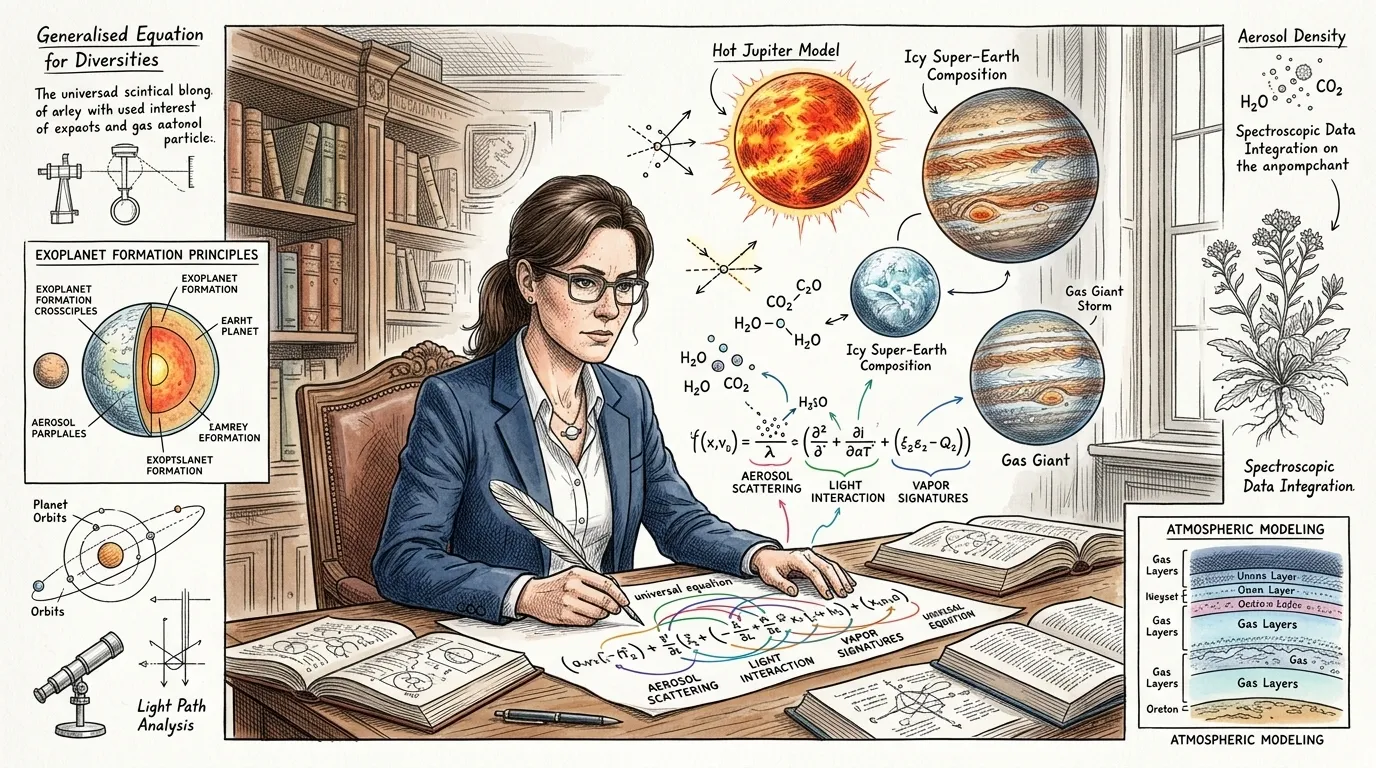
Early models for exoplanet atmospheres were often adapted from terrestrial planets, proving inadequate for the extreme diversity of alien worlds. Sara Seager recognized the need for a generalized theory, a 'universal equation' that could predict the atmospheric properties of any planet, regardless of its size, temperature, or proximity to its star. She developed groundbreaking mathematical frameworks that accounted for the complex interactions of light, gases, and aerosols in these varied environments. This theoretical leap provided astronomers with the necessary tools to interpret the faint spectral signals collected by telescopes, turning raw data into meaningful chemical compositions.
Page 5
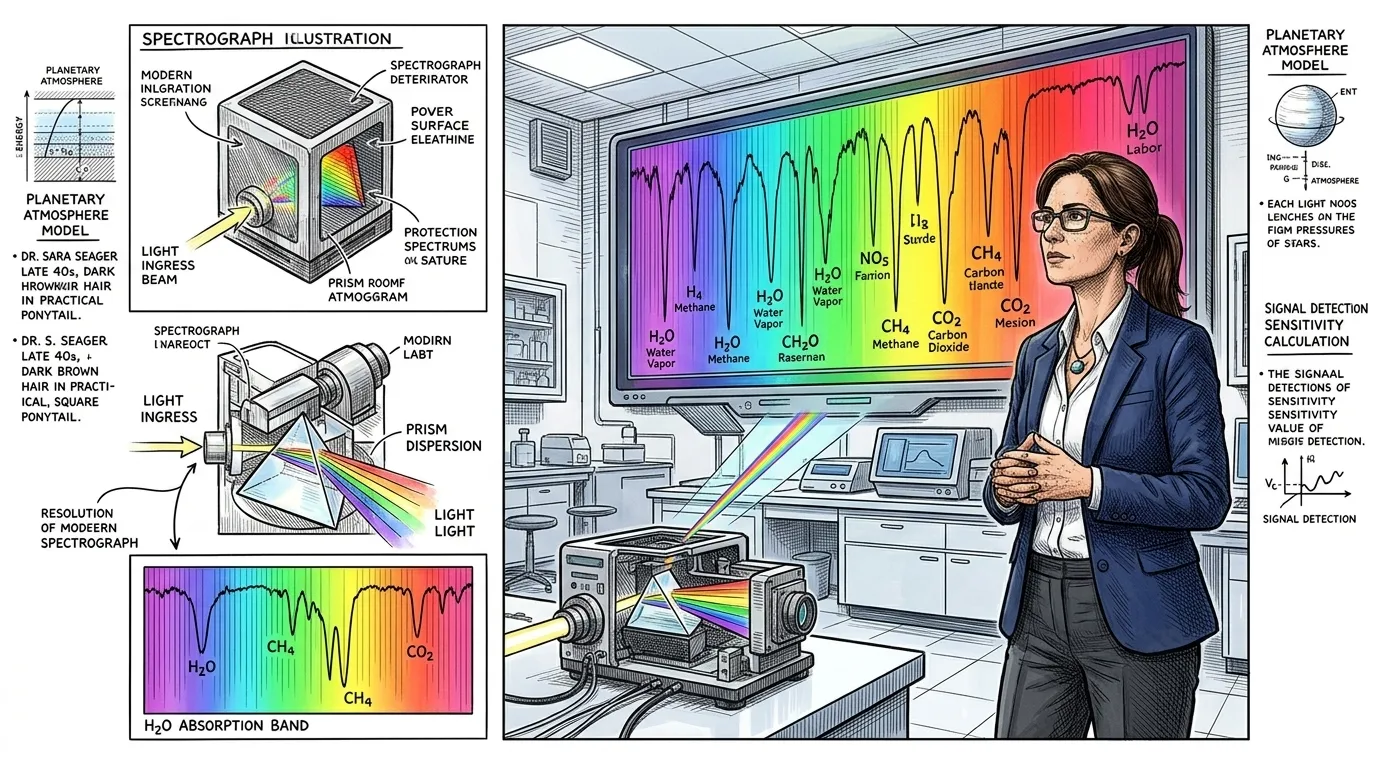
Once the starlight passes through an exoplanet's atmosphere, it carries the imprinted 'chemical fingerprints.' Sophisticated instruments called spectrographs then split this light into its constituent wavelengths, producing a spectrum. Each dip or peak in this spectrum corresponds to a specific element or molecule present in the atmosphere. Water vapor, methane, carbon dioxide, sodium, and even exotic compounds like phosphine – each leaves a unique signature. Seager's work provided the theoretical underpinnings for interpreting these spectra, moving beyond mere detection to a deep understanding of exoplanetary atmospheric chemistry and dynamics.
Page 6
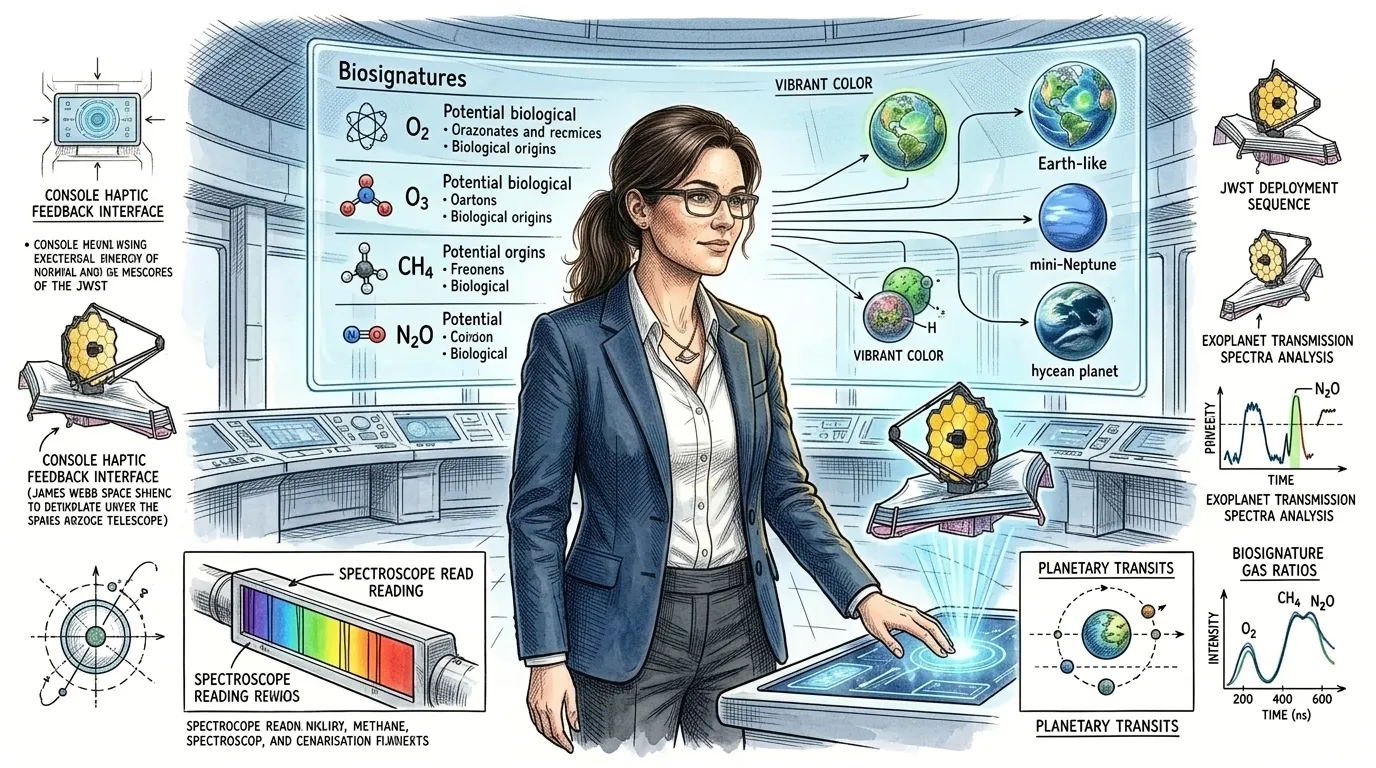
The ultimate goal of exoplanet atmospheric studies is the detection of biosignatures: gases that, in combination, strongly suggest the presence of life. Oxygen, ozone, methane, and nitrous oxide are examples of gases produced by biological processes on Earth. While each can have abiotic sources, their co-existence in significant quantities can be a powerful indicator. Sara Seager has been instrumental in defining these potential biosignatures for a variety of exoplanet types, expanding the search beyond Earth-like conditions and challenging conventional wisdom about what alien life might produce. Her work guides future missions like the James Webb Space Telescope in prioritizing targets and interpreting unexpected findings.\n\n"A scientist, reflecting on the profound implications of her field, once observed, 'There's an emotional component to the search for exoplanets. It's really tied to: Are we alone? Is there life out there? It's a very human question.' These words, spoken by Sara Seager herself, encapsulate the fundamental driver of this scientific quest."
Page 7
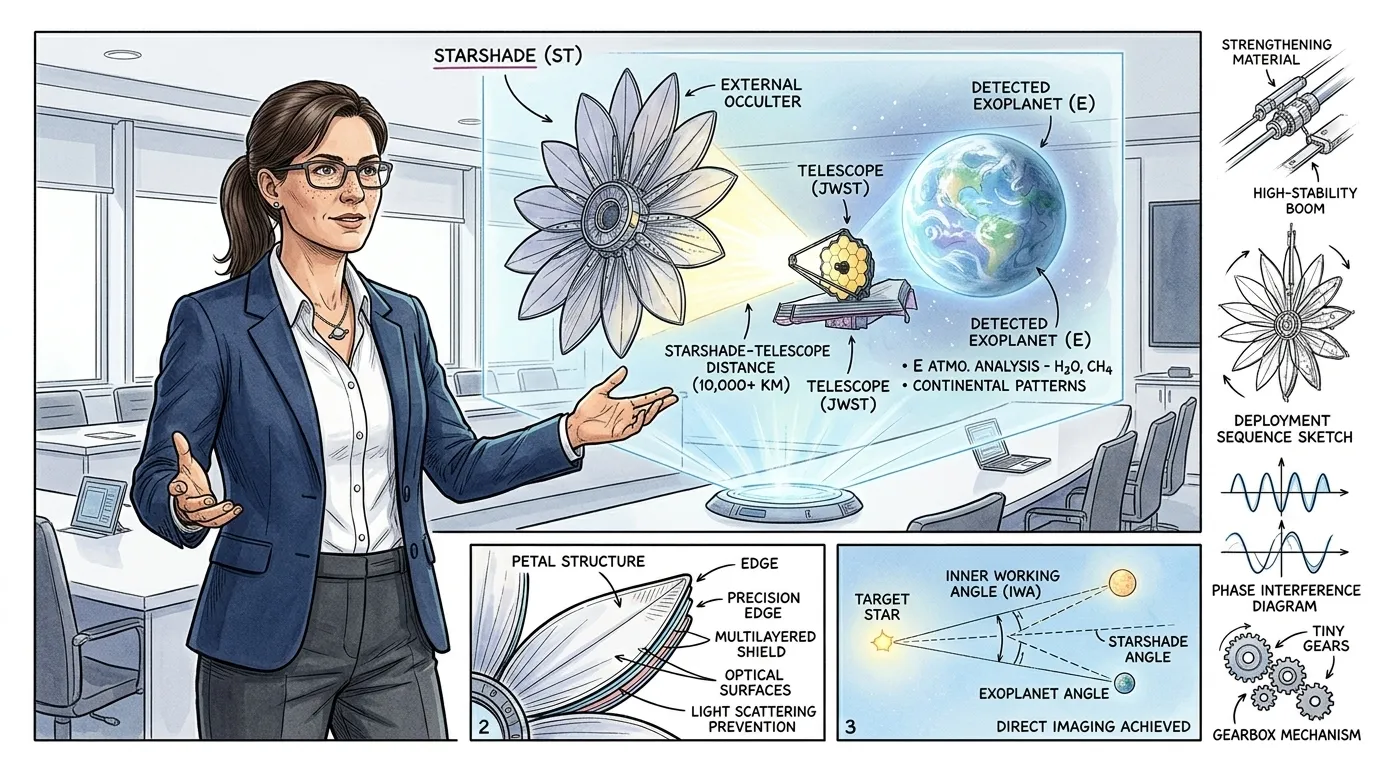
While transit spectroscopy is powerful, it offers indirect data. To truly 'see' an exoplanet and its atmosphere directly, scientists envision giant 'starshades' – massive, flower-shaped spacecraft designed to fly tens of thousands of kilometers ahead of a telescope. These starshades would precisely block the blinding light of a host star, allowing the telescope to capture the faint reflected light directly from orbiting planets. This radical concept, championed by Seager, promises to open a new era of exoplanet characterization, offering unprecedented detail, including potential images of alien continents or weather patterns.
Page 8
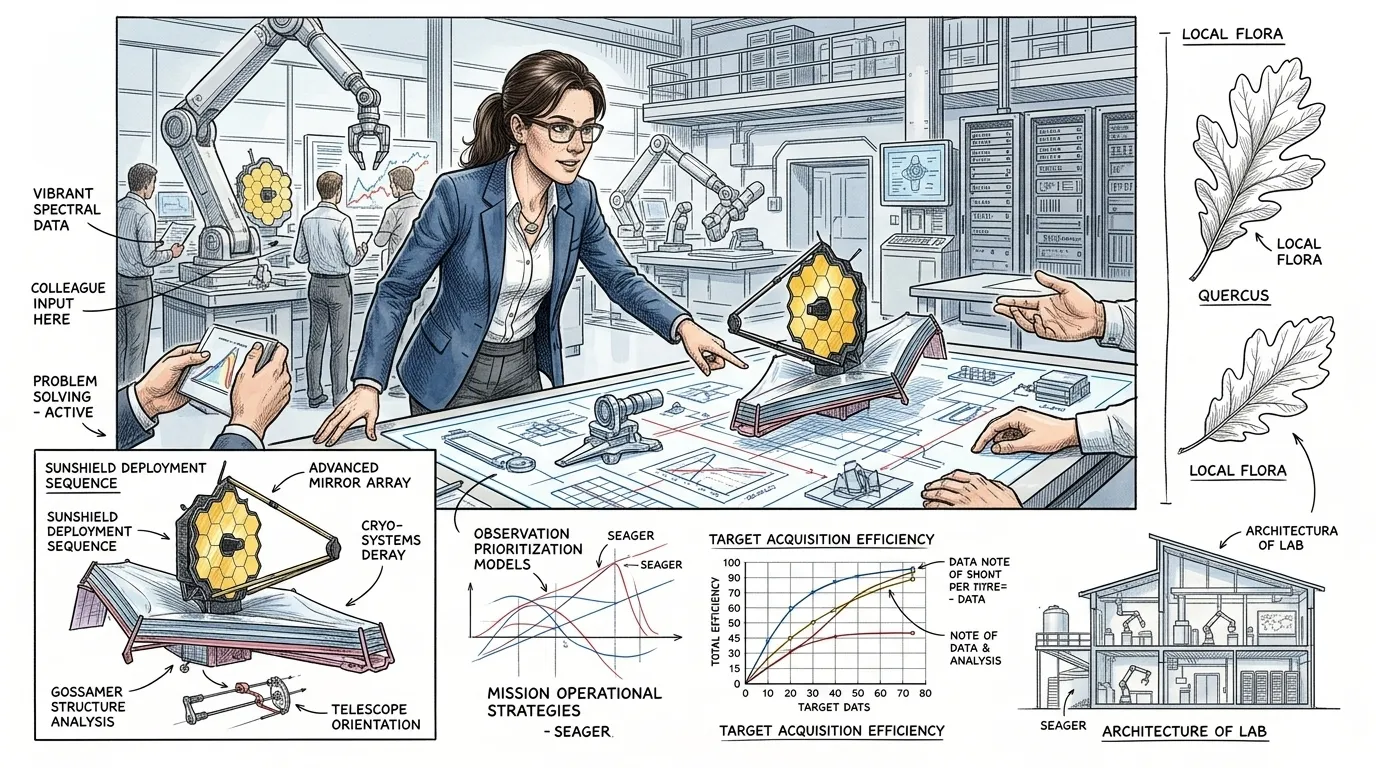
Sara Seager's theoretical and observational contributions have not only advanced the field but also directly influenced the design and operational strategies of next-generation space telescopes. Her models are crucial for prioritizing observations, guiding instruments like the James Webb Space Telescope to target exoplanets with the highest potential for biosignatures. Future missions, from dedicated exoplanet hunters to ambitious starshade deployments, are being conceived and planned with her foundational work at their core. This paradigm shift has transformed exoplanet science from a niche sub-discipline into a central pillar of astrophysics and astrobiology.
Page 9
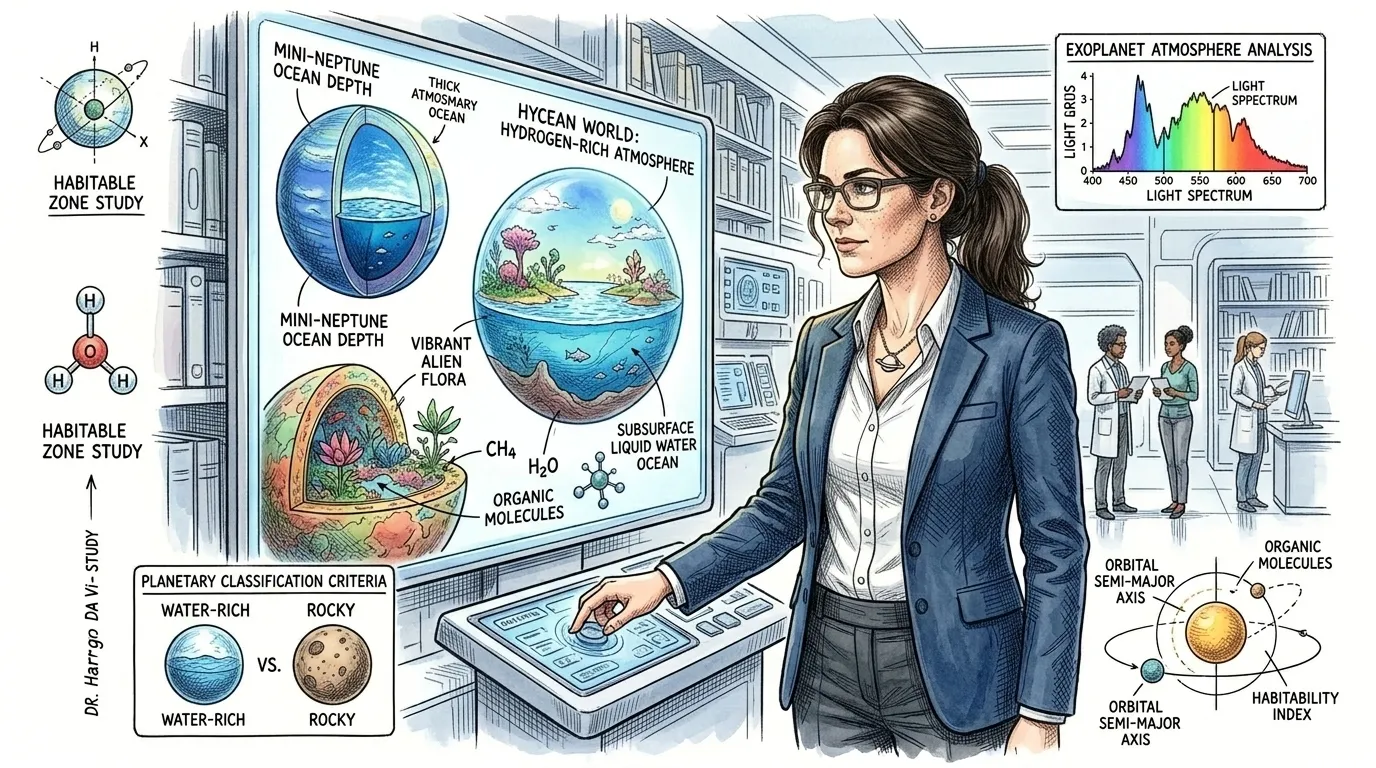
Beyond defining atmospheric characteristics, Seager's research has profoundly influenced astrobiology by broadening our understanding of potential life-hosting environments. She has explored the concept of 'mini-Neptunes' as potential water worlds, and considered how 'hycean planets' (hydrogen-rich ocean planets) might harbor life in vast subsurface oceans. This expansive perspective challenges the Earth-centric bias in the search for life, acknowledging that alien biology might thrive in conditions vastly different from our own. Her work pushes the boundaries of our imagination, reminding us that the cosmos is far stranger and more diverse than we can easily conceive.
Page 10
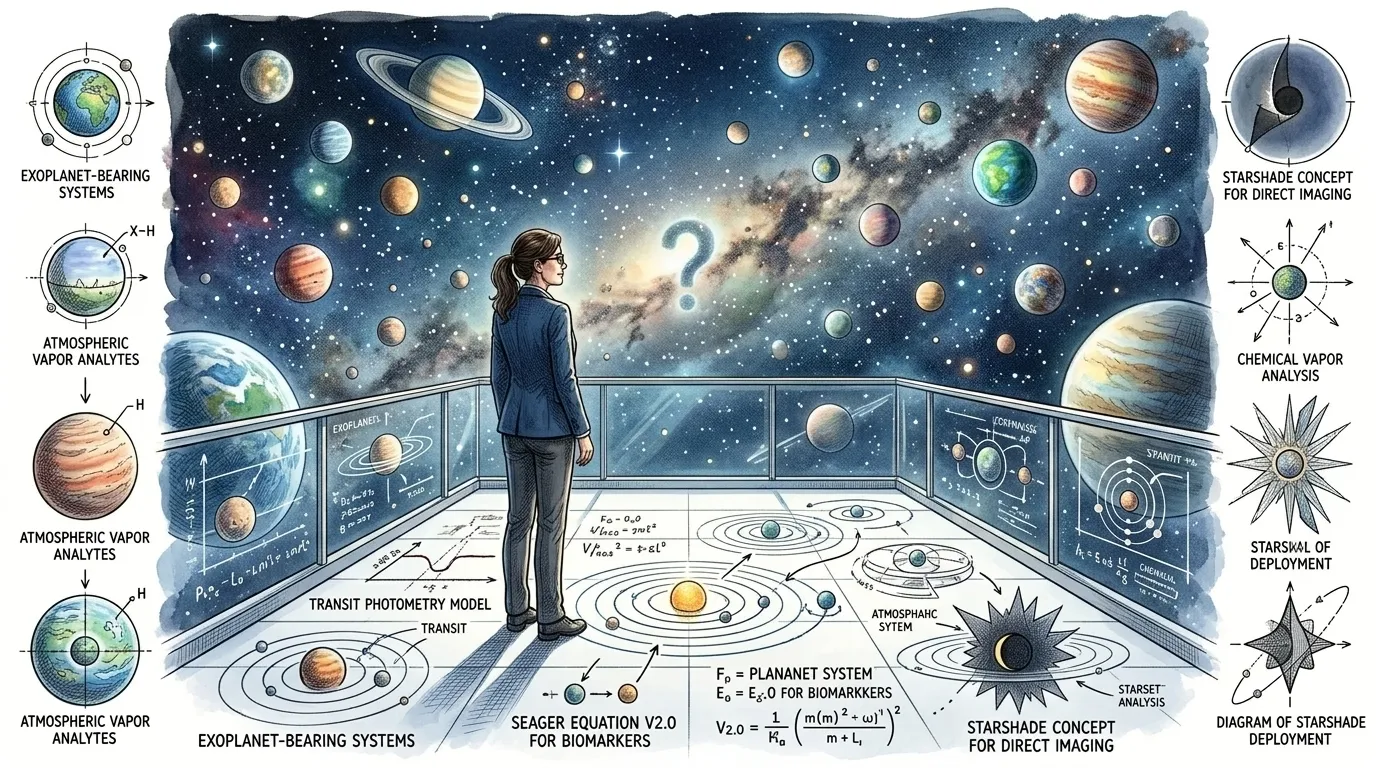
Sara Seager's contributions extend beyond specific discoveries; she has fundamentally transformed the methodology and ambition of exoplanet science. Her theoretical models and advocacy for audacious missions like the starshade have propelled the field forward, laying the groundwork for future generations of cosmic explorers. Her legacy is not just in the data points gathered, but in the conceptual architecture she built, allowing humanity to ask, with scientific rigor, the most profound question of all: Are we alone? The universe, once a silent expanse, is now a chorus of possibilities, and Seager's work continues to help us listen.
About this story
- Location: Global
- Audience: general readers
Read Wonder Science on your phone
Wonder Science is available on Android. Get Wonder Science on Google Play.