Severo Ochoa
Severo Ochoa — an illustrated science story, set in Global. 10 illustrated pages, free to read on Wonder Science.
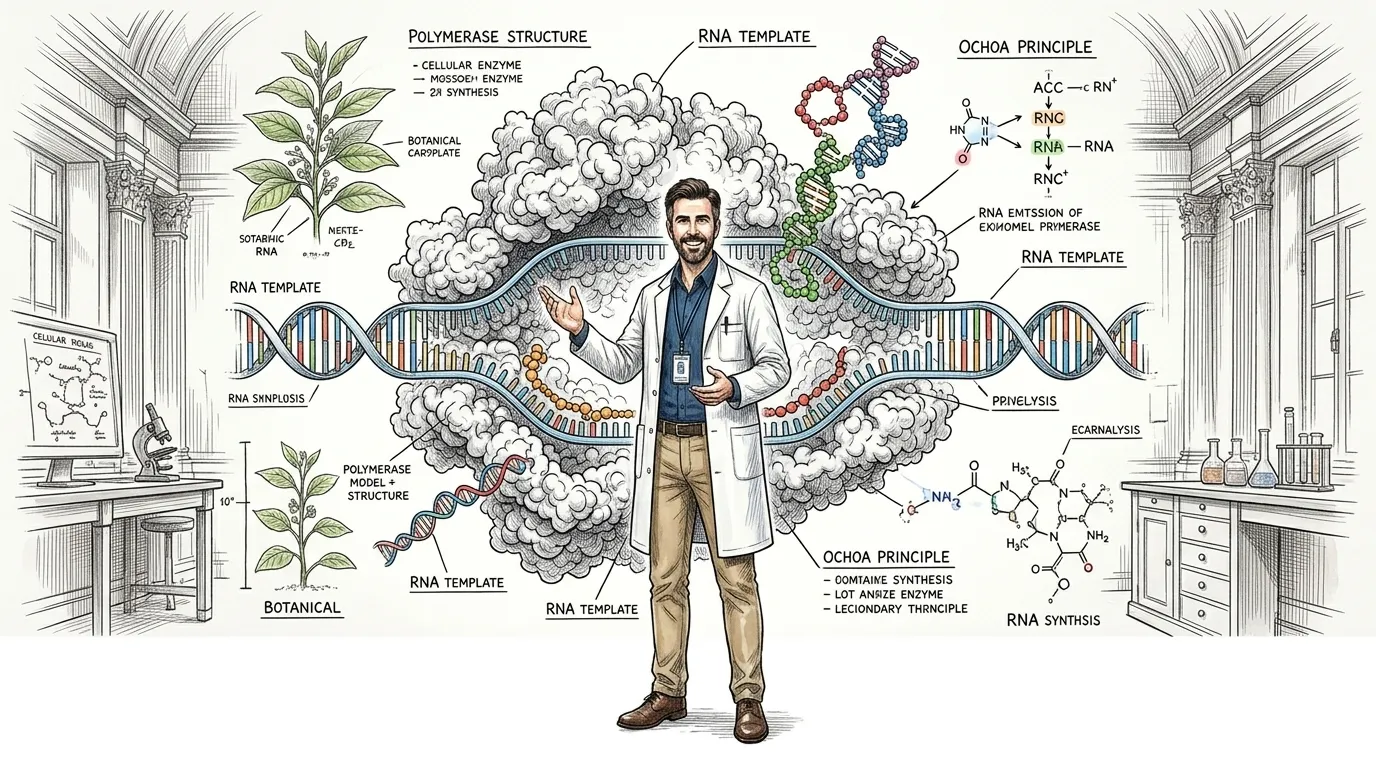
Page 1
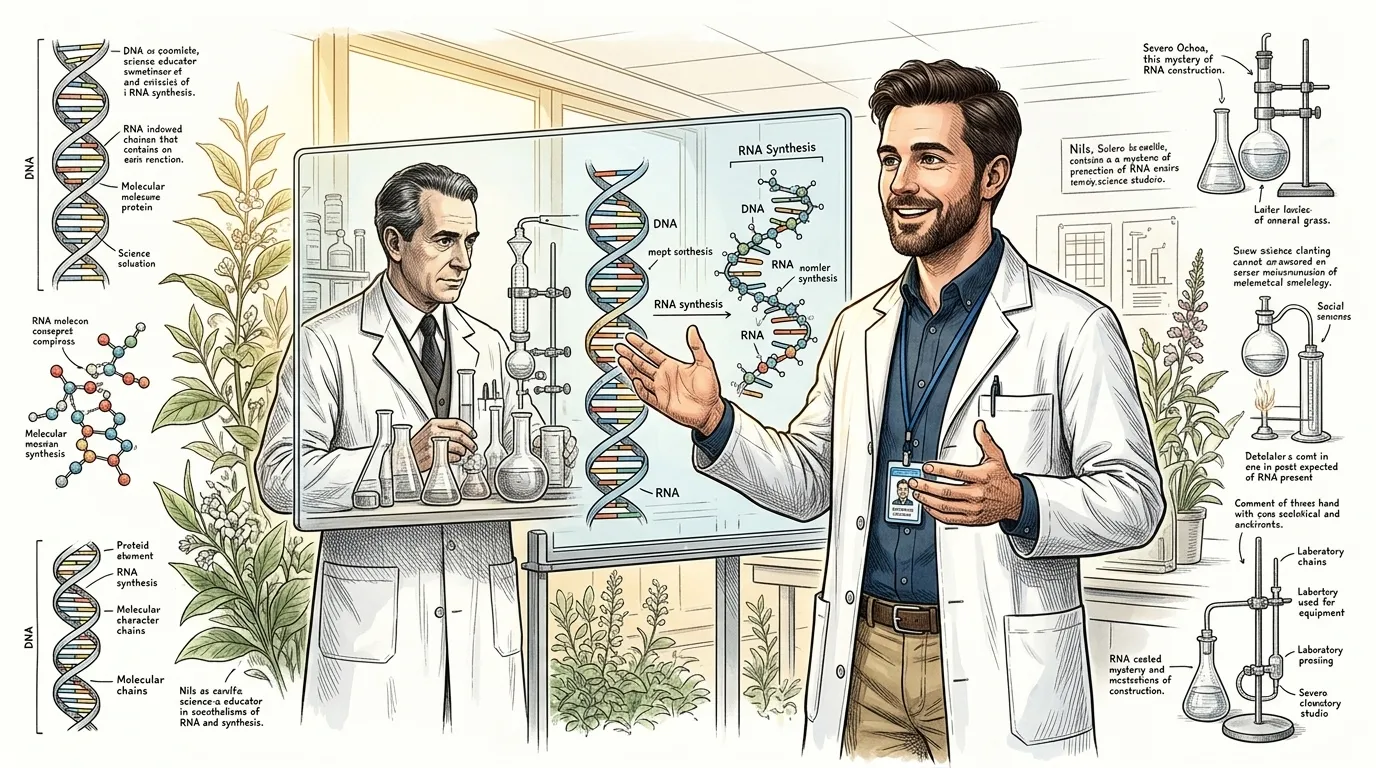
In the mid-20th century, the very blueprint of life, DNA, had been unveiled, yet a profound mystery lingered: how did this master plan translate into action? How were the vital messenger molecules, RNA, actually constructed within a living cell, or even more astonishingly, in a laboratory?\n\n"'Imagine trying to build a complex machine without knowing how its individual parts are assembled,' Nils explains, gesturing toward a complex molecular diagram. 'That was the challenge facing scientists like Severo Ochoa in the 1950s—the synthesis of RNA, the genetic messenger.'"
Page 2
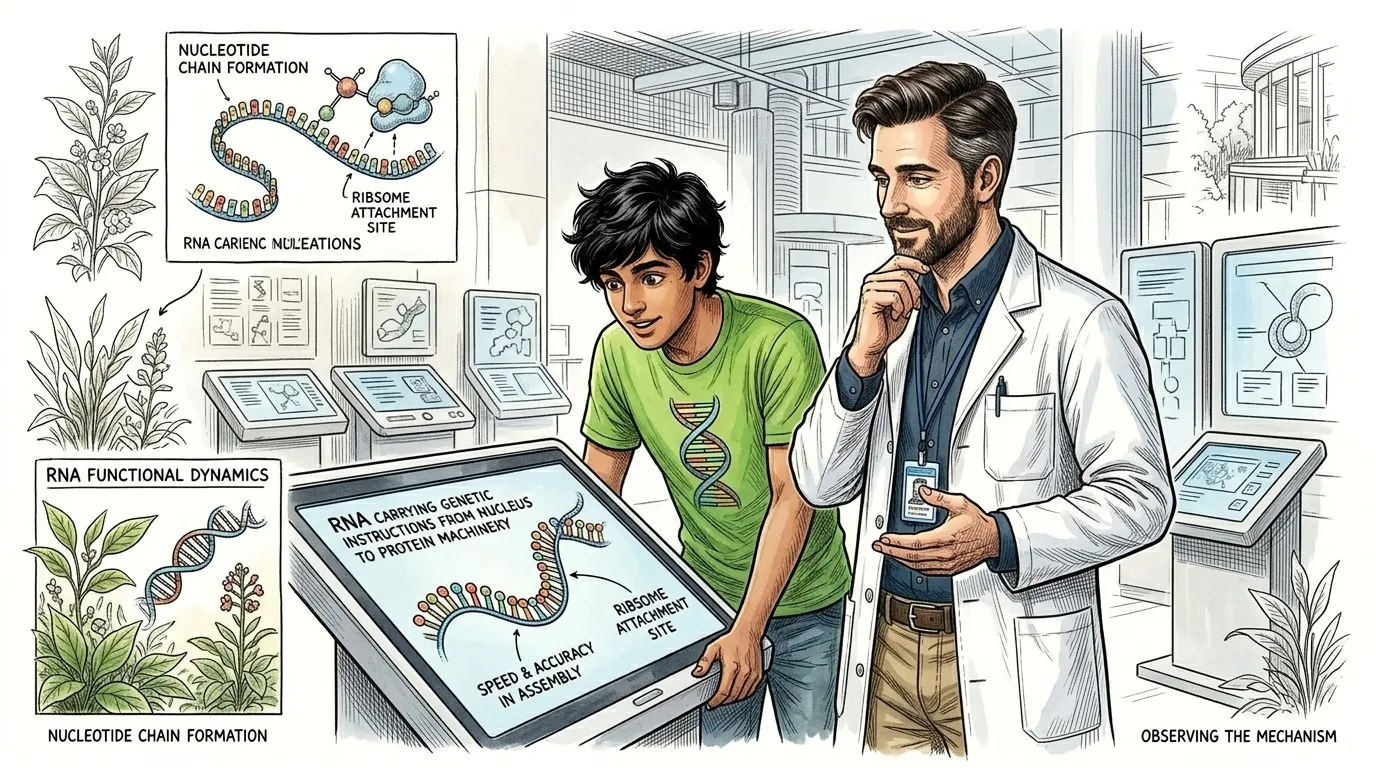
Before Ochoa's groundbreaking work, RNA was known as DNA's crucial partner, responsible for carrying genetic instructions from the nucleus to the cell's protein-making machinery. Yet, the precise enzymatic process that built these vital strands remained elusive, a fundamental gap in molecular biology.\n\n"'Cells constantly produce RNA to create proteins,' Arjun states, looking at a diagram on a screen. 'But how do they get the right building blocks and assemble them correctly, so fast?' Nils nods, 'Exactly. Think of RNA as a delicate chain, each link a nucleotide. The cell needs to string these links together with incredible speed and accuracy.'"
Page 3
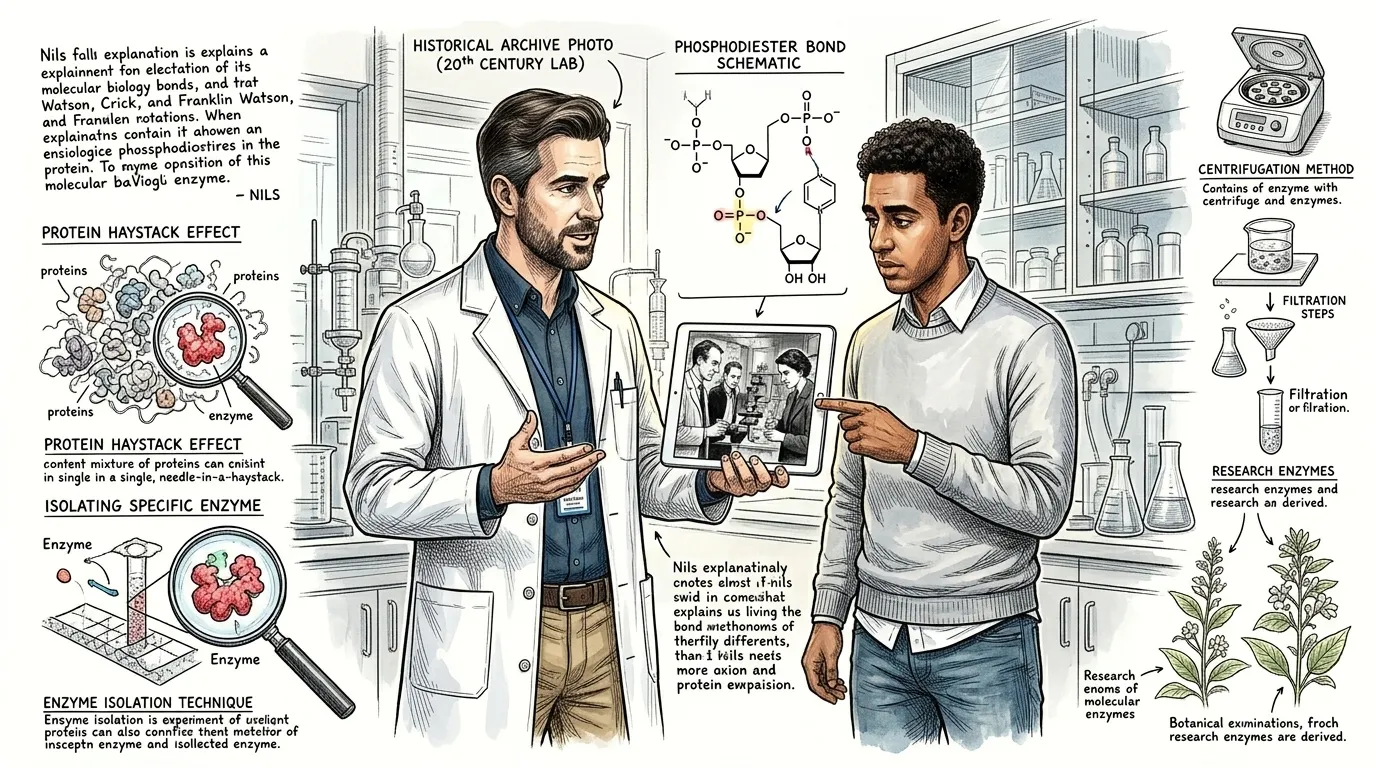
The challenge was isolating the specific enzyme responsible for forging the phosphodiester bonds that link nucleotides into an RNA strand. Many assumed a 'DNA-like' polymerase would exist for RNA, but finding it amidst the cell's intricate molecular machinery proved exceptionally difficult.\n\n"'Scientists knew DNA polymerase existed,' Hassan remarks, pointing to a historical photo on a digital tablet Nils holds. 'But an RNA polymerase seemed to be hiding!' Nils explains, 'Indeed, the complexity of cellular extracts made it like searching for a specific needle in a haystack of thousands of different proteins. The bonds formed are crucial for genetic stability, so the enzyme had to be precise.'"
Page 4
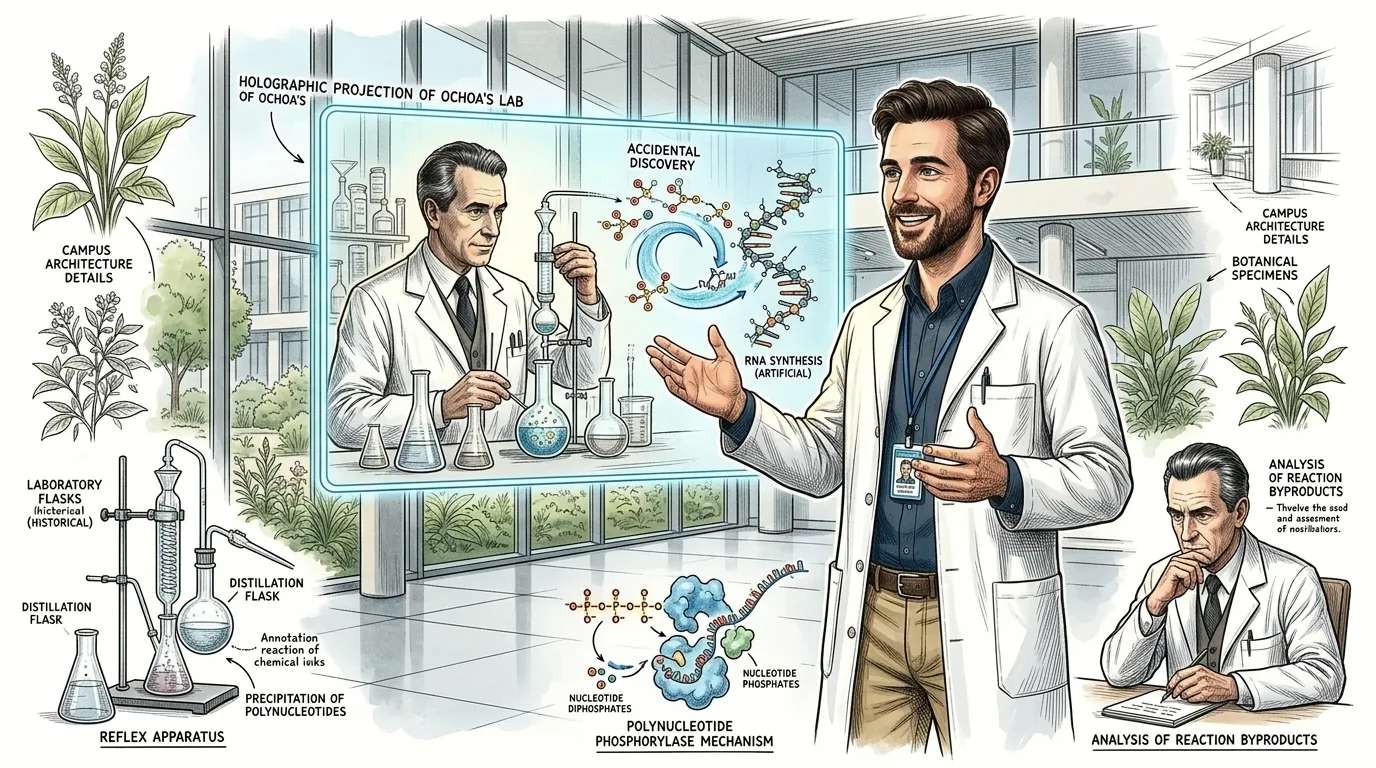
Severo Ochoa, working in New York, pursued this challenge with relentless rigor. His breakthrough came not with a direct 'RNA polymerase' as expected, but with an enzyme he named polynucleotide phosphorylase. This enzyme had an unexpected but profound ability to synthesize RNA.\n\n"'It was almost an accidental discovery, in a way,' Nils elaborates, as they observe a holographic projection of Ochoa's lab setup. 'He wasn't looking for this exact enzyme, but it revealed a crucial pathway for RNA synthesis, using nucleotide diphosphates, which was surprising at the time.'"
Page 5
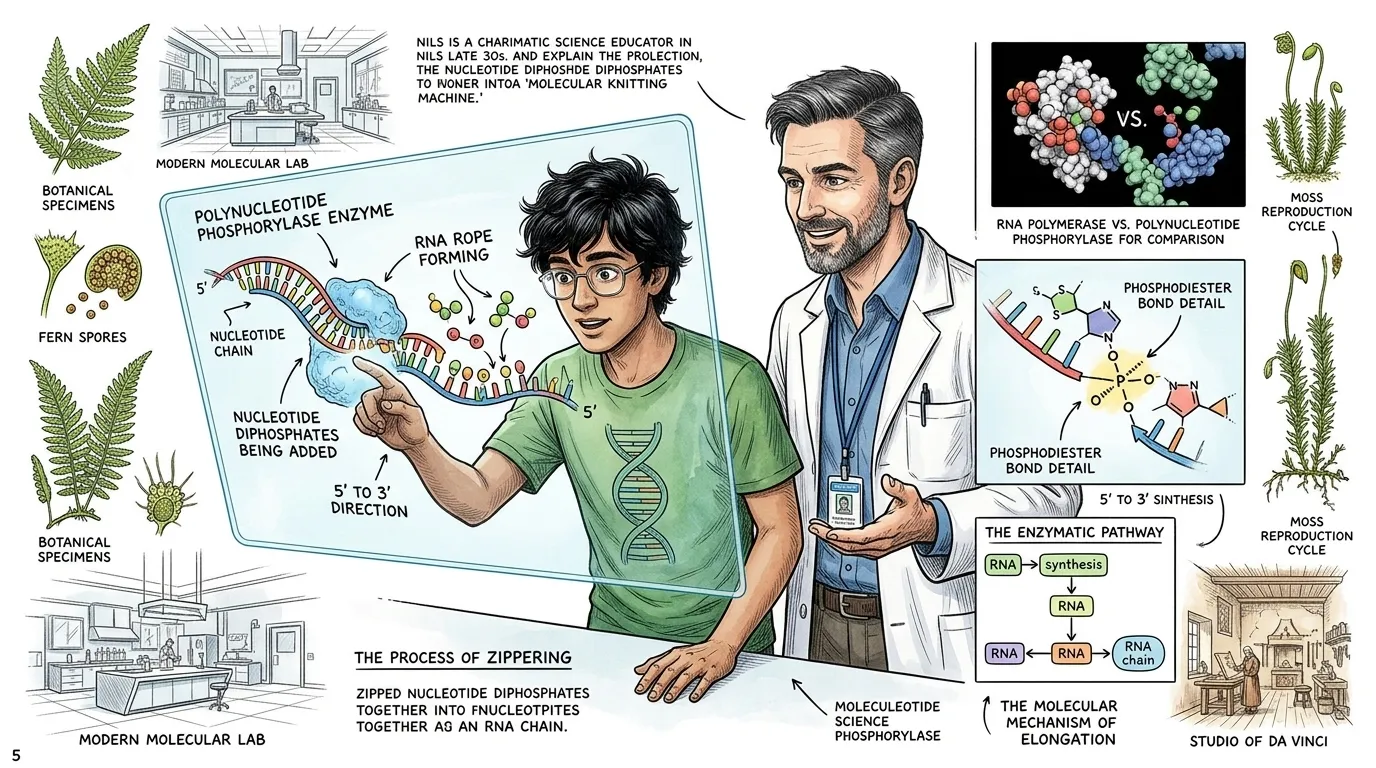
Ochoa's enzyme, polynucleotide phosphorylase, was unique. Unlike the templated synthesis of DNA and later-discovered RNA polymerases, this enzyme could string together nucleotide diphosphates without a pre-existing RNA template, forming long RNA chains.\n\n"'So, it just takes these individual 'links'—the nucleotide diphosphates—and zips them together?' Arjun asks, tracing a finger on a transparent interactive screen that shows the enzymatic process. Nils confirms, 'Precisely! It removes a phosphate group from each diphosphate and forms a new phosphodiester bond, extending the RNA chain. It's like a molecular knitting machine.'"
Page 6
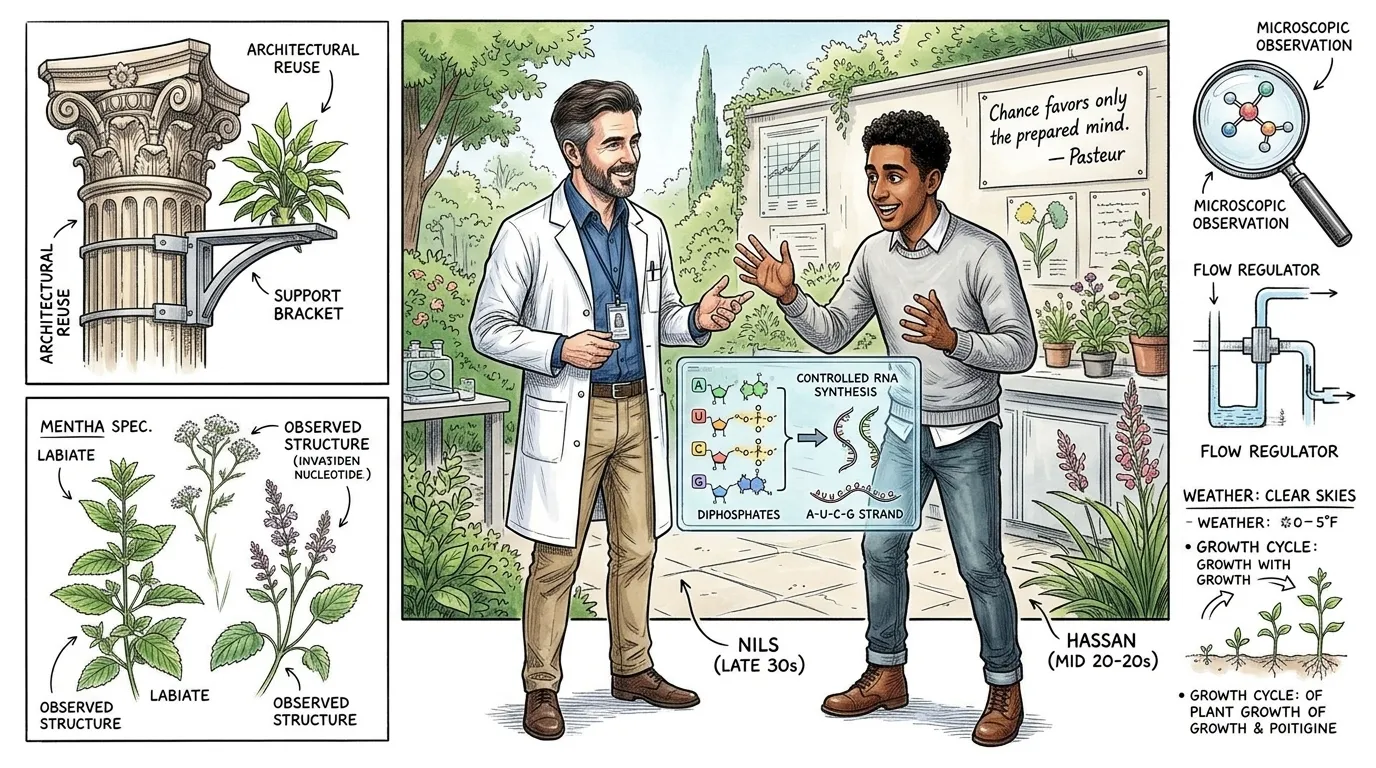
This 'template-independent' synthesis was revolutionary. For the first time, scientists could create RNA molecules of specific, controlled compositions in a test tube. This synthetic RNA would prove invaluable in understanding how genetic information was encoded.\n\n"'So, he could make RNA with just A's, or just U's, or a mix?' Hassan asks, excitedly. Nils smiles, 'Exactly! He could feed the enzyme specific nucleotide diphosphates and control the composition. As Louis Pasteur famously said, 'Chance favors only the prepared mind.' Ochoa's meticulous preparation allowed him to seize this serendipitous discovery and turn it into a powerful tool.'"
Page 7
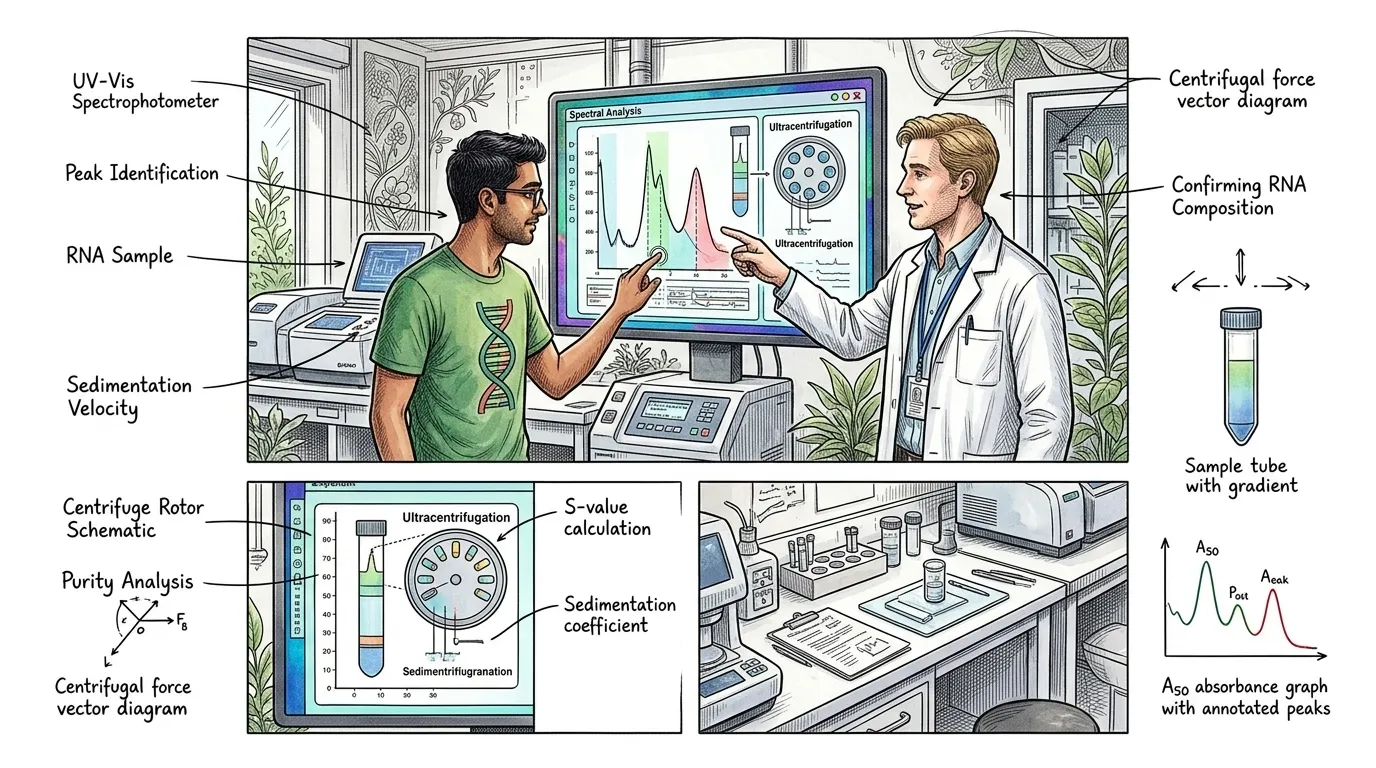
While polynucleotide phosphorylase wasn't the primary RNA polymerase of cells (which is template-dependent), its ability to produce synthetic RNA was an unparalleled experimental triumph. It provided scientists with the tools to decipher the genetic code itself.\n\n"'How did they know it was really RNA, and not just some random polymer?' Arjun inquires, tapping on a digital display showing spectral analysis data. Nils points to a graph, 'They used techniques like ultracentrifugation and spectral analysis to confirm its size, purity, and composition. The synthetic RNA behaved exactly as expected, opening the door for monumental experiments.'"
Page 8
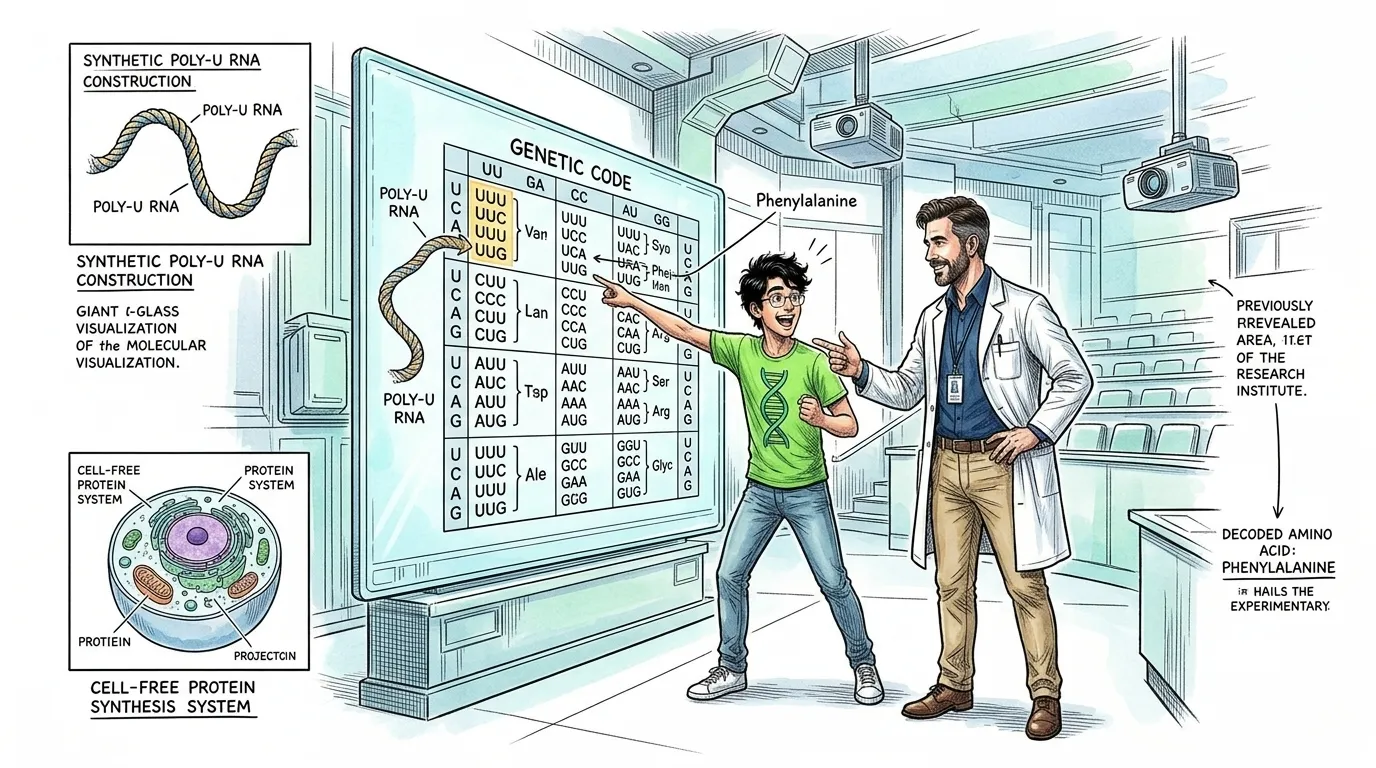
The synthetic RNA produced by Ochoa's enzyme became an indispensable tool for Marshall Nirenberg and Heinrich Matthaei. They used poly-U RNA, a chain made solely of uracil nucleotides, to identify the first 'codon': UUU, which codes for the amino acid phenylalanine.\n\n"'This is where the structure of those nucleotide diphosphates really paid off!' Arjun exclaims, looking at a diagram showing genetic codons. 'Because Ochoa could control the RNA sequence, Nirenberg could test specific 'words' of the genetic code.' Nils confirms, 'Exactly. Without synthetic RNA, cracking the genetic code would have been a far more arduous, perhaps impossible, task. It's a foundational piece of a grand puzzle.'"
Page 9
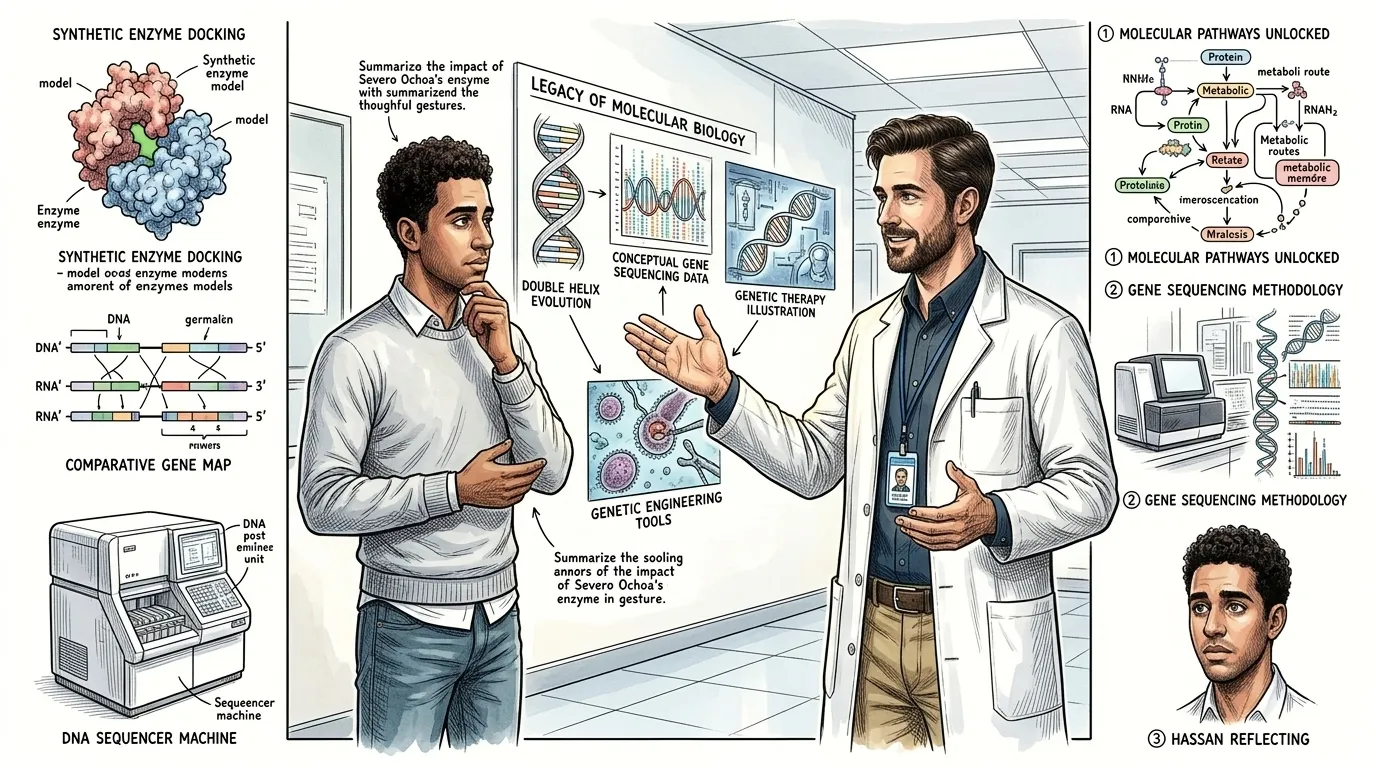
The ability to synthesize RNA in a test tube and then use it to decode the genetic language fundamentally reshaped biology. It propelled the field into the era of molecular biology, paving the way for genetic engineering, gene sequencing, and eventually, gene therapy.\n\n"'So, Ochoa's enzyme was like a key that unlocked so many doors for understanding life,' Hassan summarizes, thoughtfully. Nils affirms, 'Indeed. His work, alongside Kornberg's for DNA synthesis, provided the experimental foundation. These were not just theoretical breakthroughs, but practical tools that allowed generations of scientists to manipulate and understand the very fabric of life.'"
Page 10
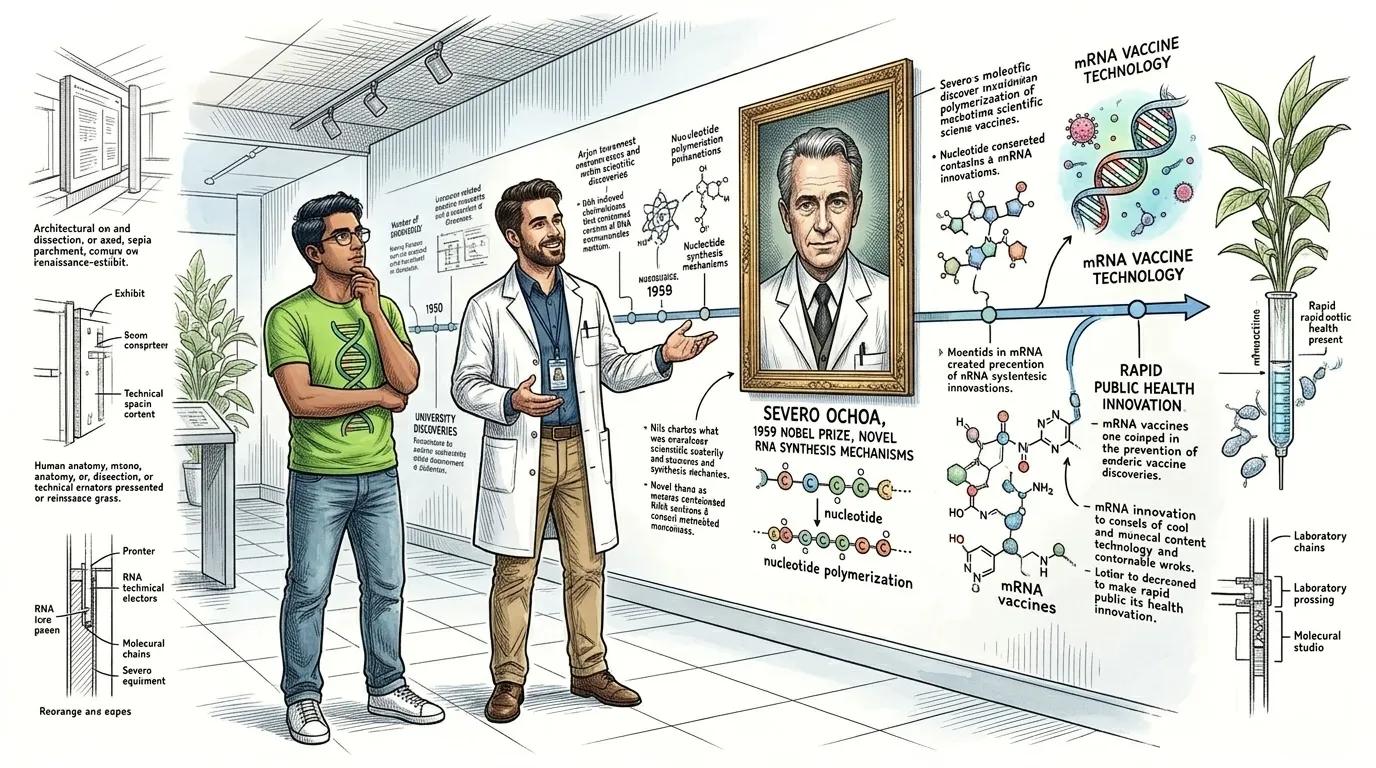
Severo Ochoa's Nobel Prize in 1959 recognized a pivotal moment in science. His tireless dedication to biochemistry provided the tools that allowed humanity to finally read and eventually rewrite the instructions of life, a legacy that continues to impact medicine and our understanding of evolution and genetics today.\n\n"'It's incredible to think how one discovery can lead to so many others, shaping the future of medicine,' Arjun muses, looking at a wall display of scientific timelines. Nils concludes, 'Ochoa's work truly highlights the interconnectedness of science, from fundamental biochemistry to public health innovations like mRNA vaccines, a testament to pure, driven curiosity.'"
About this story
- Location: Global
- Audience: general readers
Read Wonder Science on your phone
Wonder Science is available on Android. Get Wonder Science on Google Play.