Sheldon Glashow
Sheldon Glashow — an illustrated science story, set in Global. 10 illustrated pages, free to read on Wonder Science.
Page 1
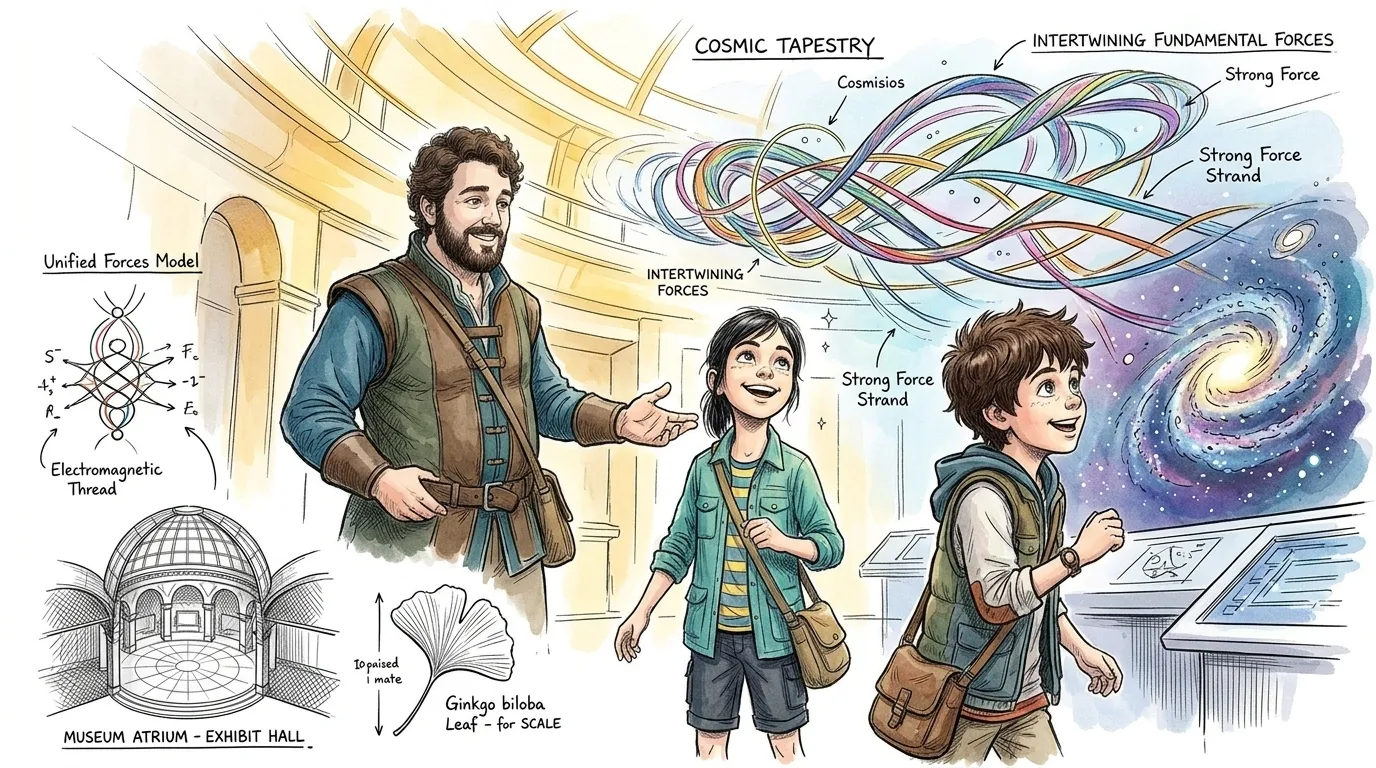
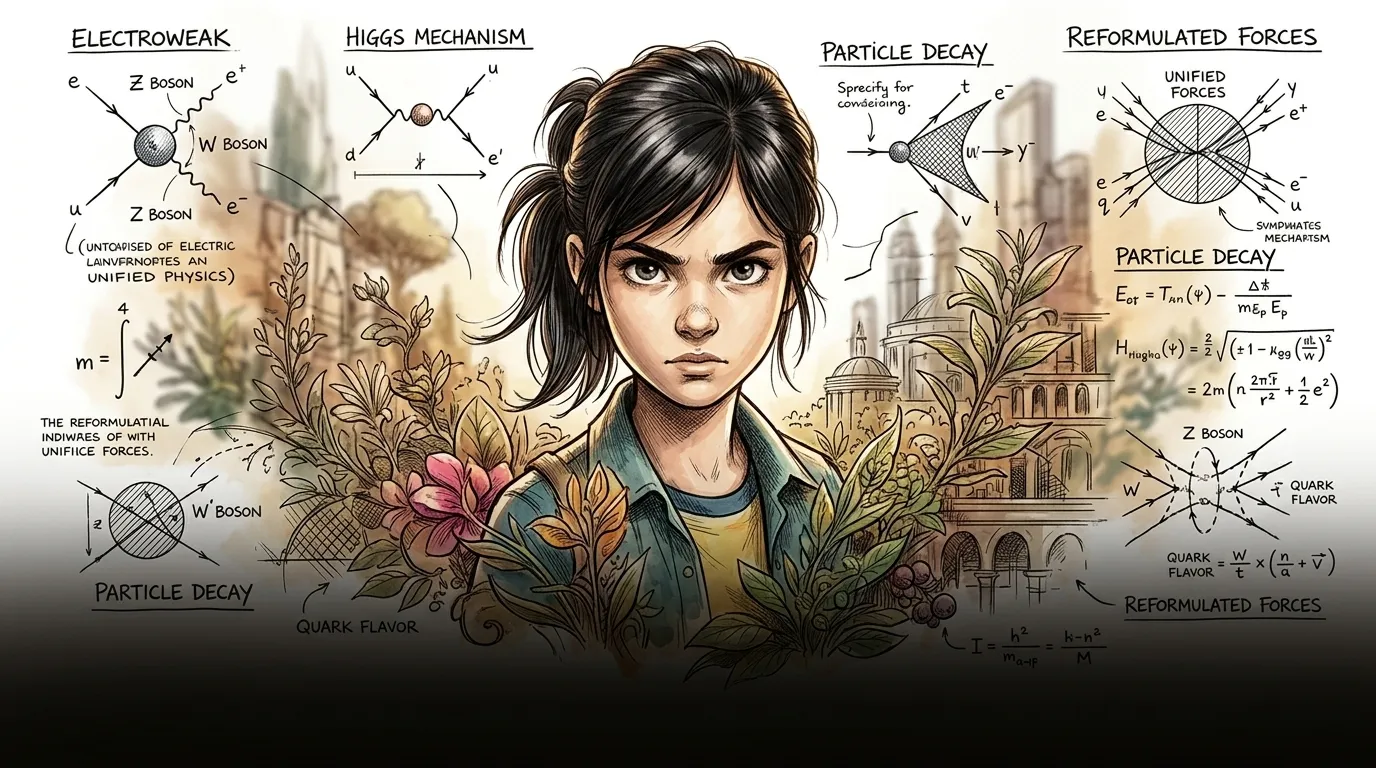
The cosmos is a vast and intricate tapestry, woven with the threads of fundamental forces. But once, these threads seemed hopelessly tangled. Then came Sheldon Glashow, who began to see the underlying unity. Let's journey to the heart of particle physics, where the smallest pieces of matter hold the biggest secrets of the universe. \n\n Fact: Introduction to particle physics and the concept of unifying forces.
Page 2
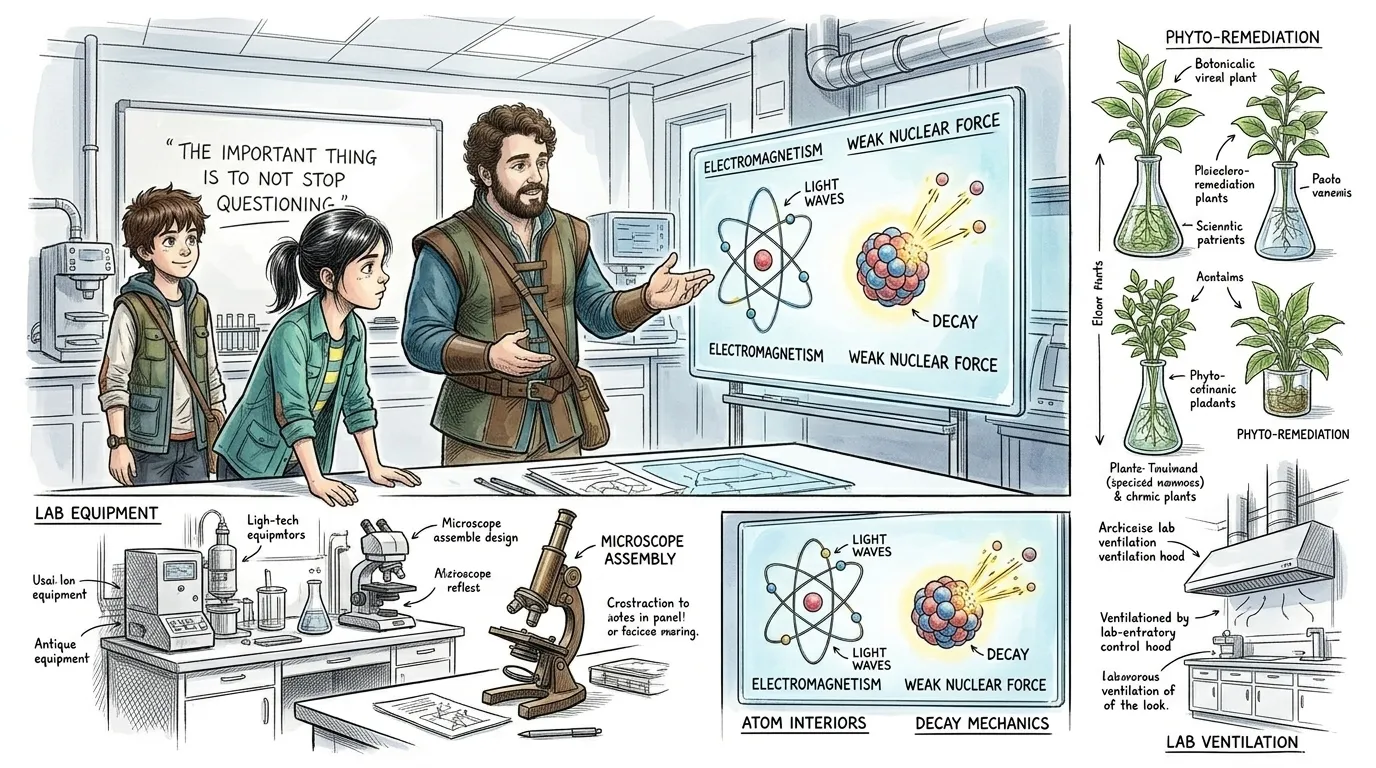
Before Glashow, physicists understood two primary forces: electromagnetism and the weak nuclear force, responsible for radioactive decay. Electromagnetism governs light and how atoms interact. The weak force governs radioactive decay. But they seemed like completely separate things. "The important thing is to not stop questioning," Tara's dad said, quoting Albert Einstein. "Curiosity has its own reason for existing."\n\n Fact: Explanation of electromagnetism and the weak nuclear force as distinct entities before Glashow's work.
Page 3
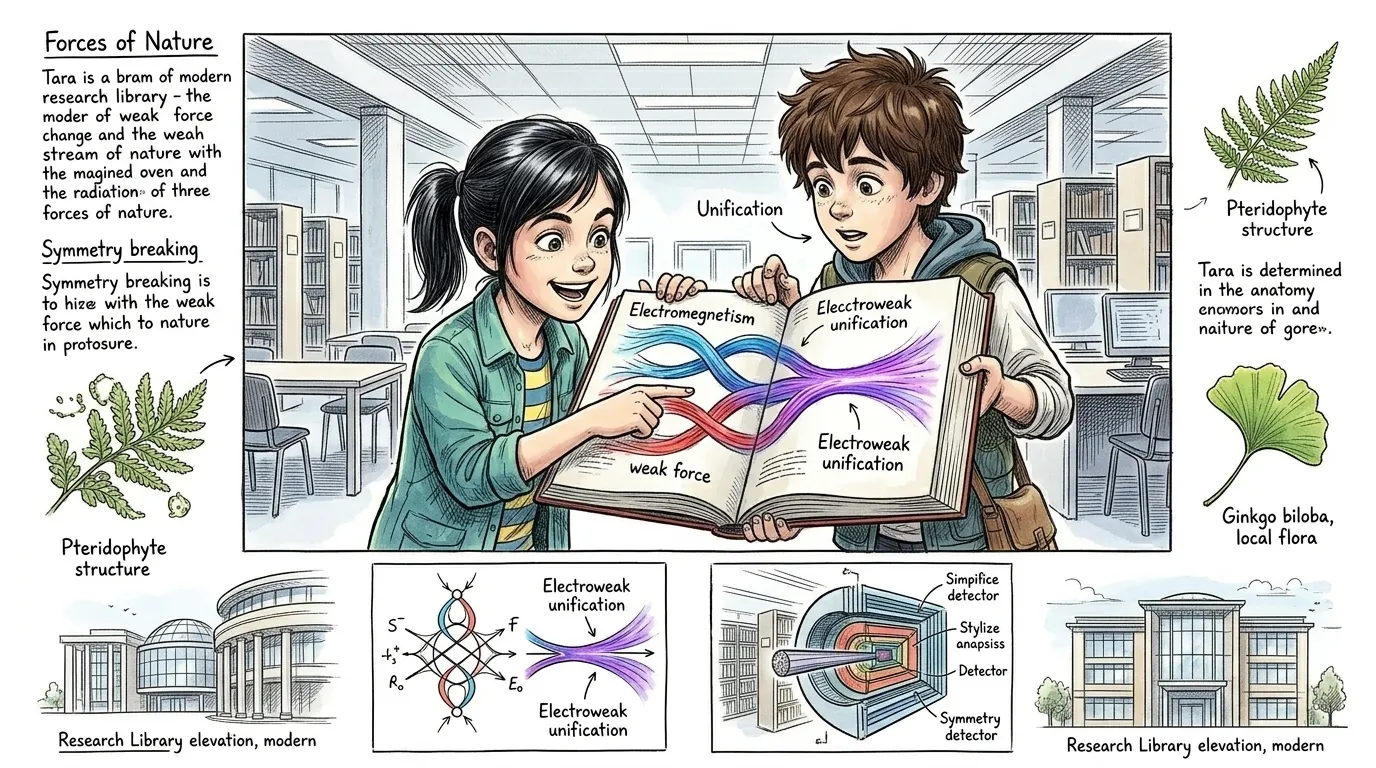
Glashow proposed a radical idea: that electromagnetism and the weak force were actually two aspects of a single, unified force – the electroweak force. This was a truly groundbreaking concept. It suggested that at extremely high energies, these two seemingly distinct forces would become indistinguishable.\n\n Fact: Glashow's hypothesis that electromagnetism and the weak force are aspects of a single electroweak force.
Page 4
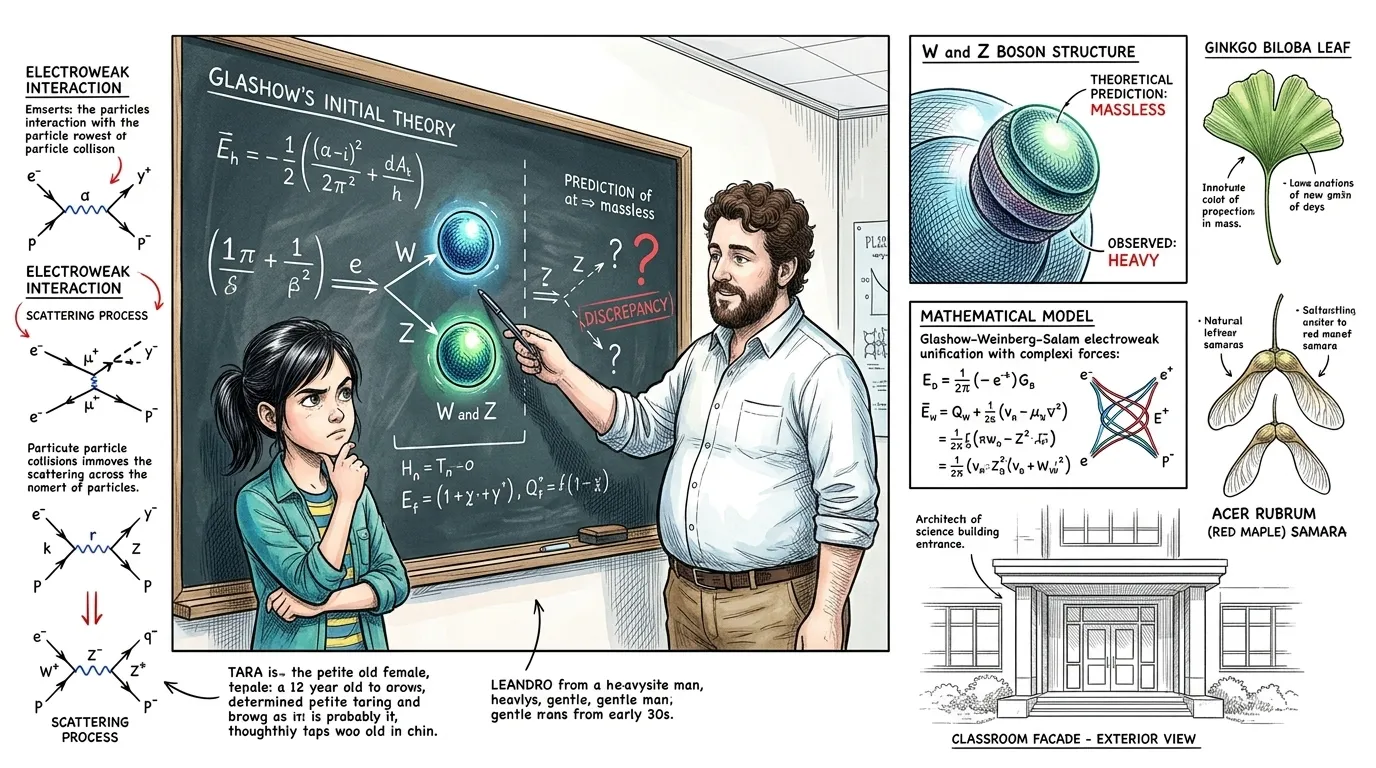
There was a catch. Glashow's initial theory predicted that all particles involved in the electroweak force should be massless. But physicists knew that the carriers of the weak force – the W and Z bosons – were, in fact, quite heavy. This discrepancy presented a major hurdle.\n\n Fact: The mass discrepancy in Glashow's initial theory and its implications.
Page 5
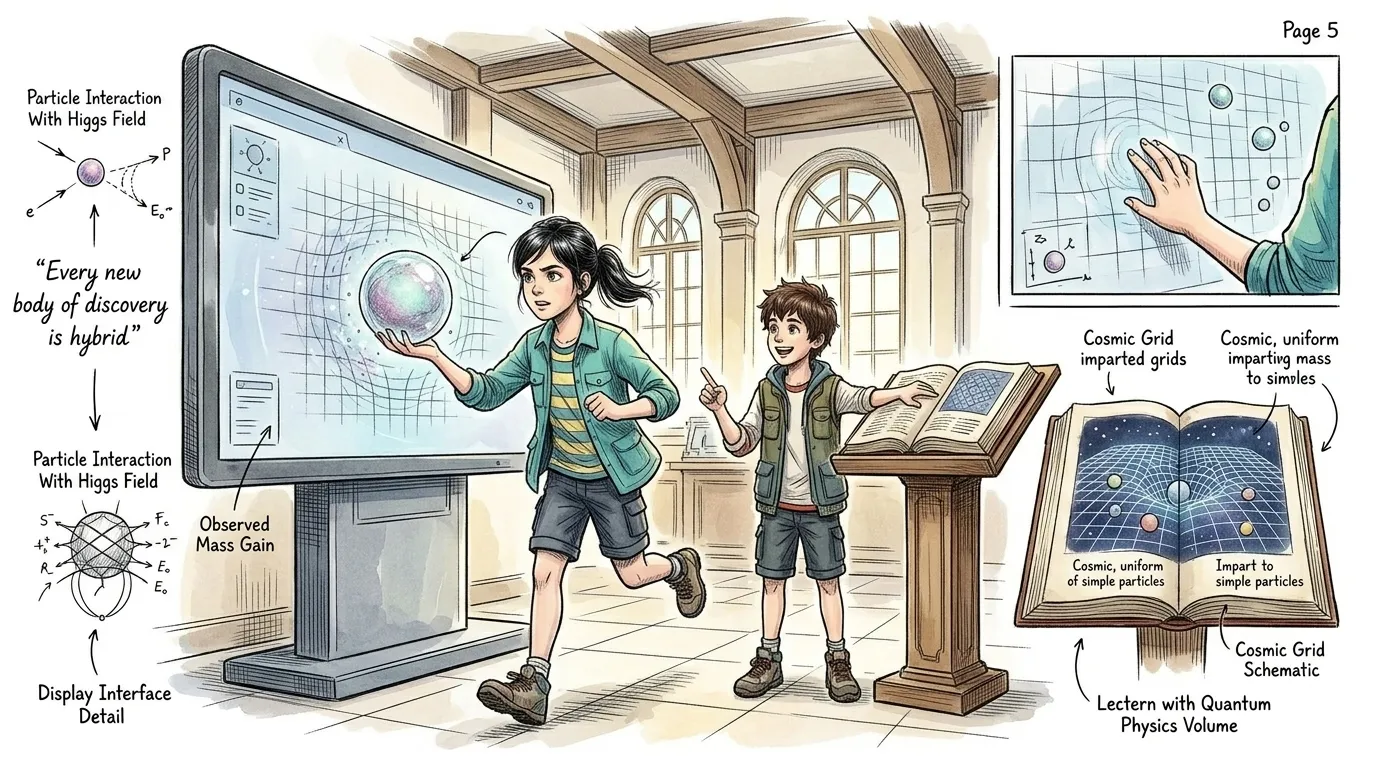
The solution to the mass problem came with the Higgs mechanism, proposed independently by several physicists, including Peter Higgs. This mechanism suggested the existence of a field permeating all of space, which imparts mass to particles as they interact with it. "Every new body of discovery is hybrid," said Edwin Hubbell, and Glashow built on Hubble's, Weinberg's and Salam's discoveries.\n\n Fact: Explanation of the Higgs mechanism and its role in giving mass to particles.
Page 6
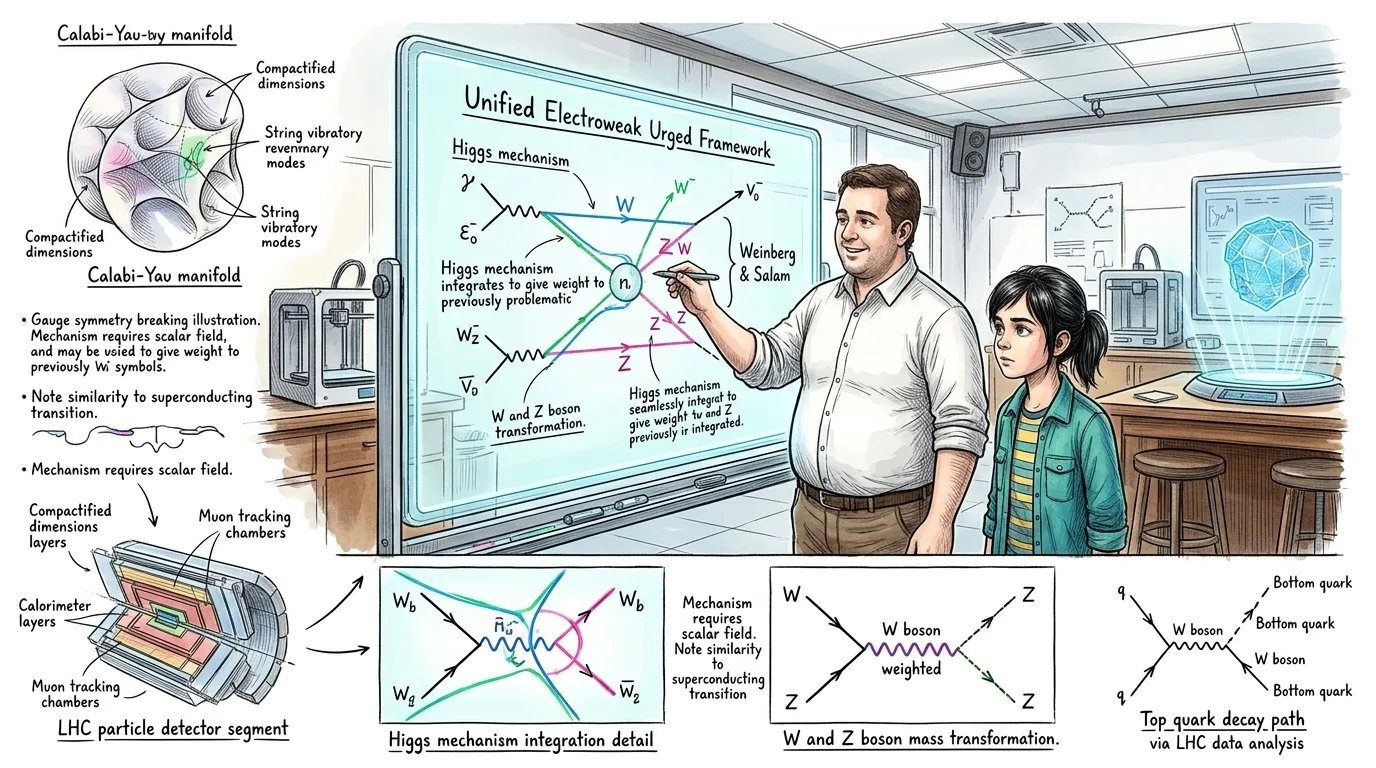
Glashow's electroweak theory needed a mechanism to incorporate the Higgs field. Steven Weinberg and Abdus Salam independently realized how to do it, building on Glashow's framework. They incorporated the Higgs mechanism, successfully explaining the masses of the W and Z bosons while maintaining the unification of the electroweak force.\n\n Fact: Weinberg and Salam's contributions to incorporating the Higgs mechanism into Glashow's electroweak theory.
Page 7
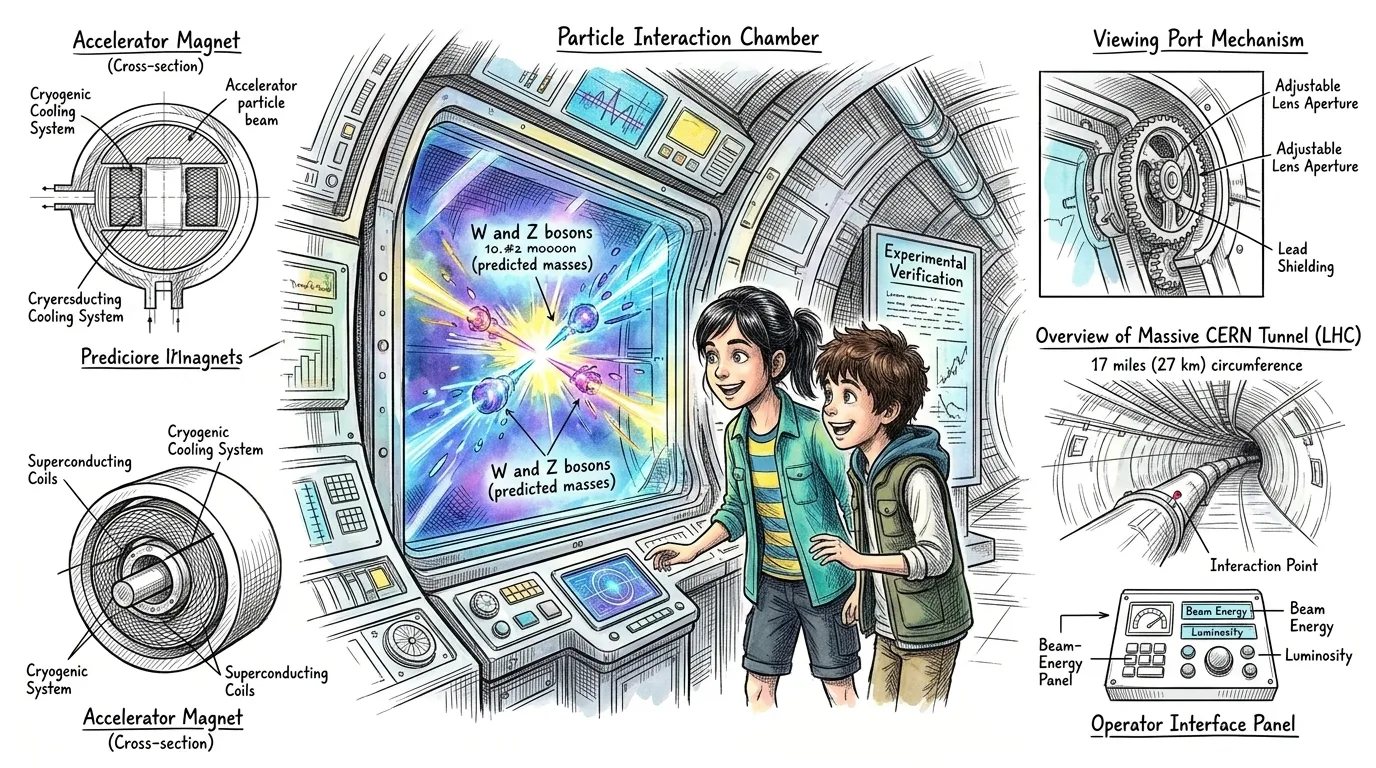
The electroweak theory was not just a mathematical construct. It made testable predictions. Experiments at CERN, the European Organization for Nuclear Research, eventually confirmed the existence of the W and Z bosons, with the predicted masses, validating Glashow, Weinberg, and Salam's theory.\n\n Fact: Experimental verification of the electroweak theory at CERN.
Page 8
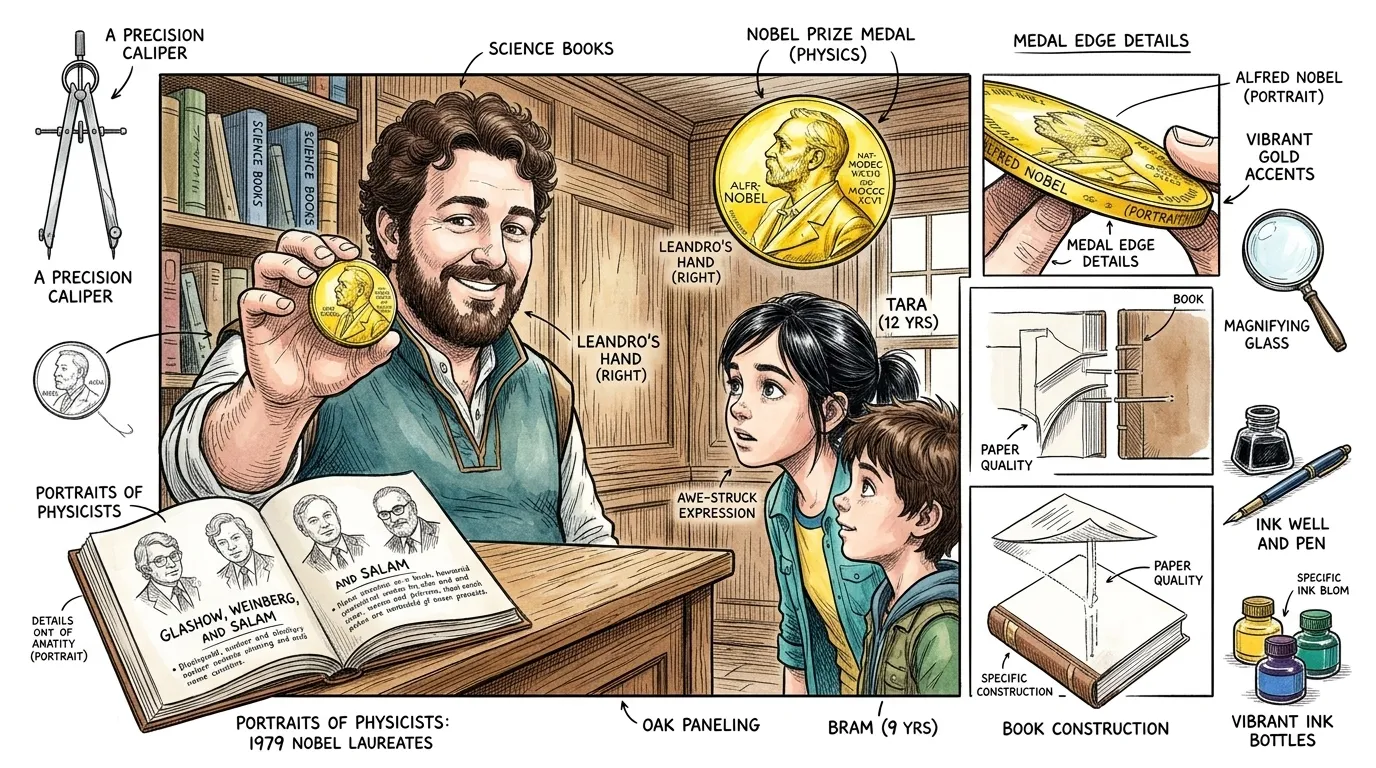
In 1979, Sheldon Glashow, Steven Weinberg, and Abdus Salam were awarded the Nobel Prize in Physics for their contributions to the electroweak theory. This prestigious award recognized the profound impact of their work on our understanding of the fundamental forces of nature.\n\n Fact: The Nobel Prize awarded to Glashow, Weinberg, and Salam.
Page 9
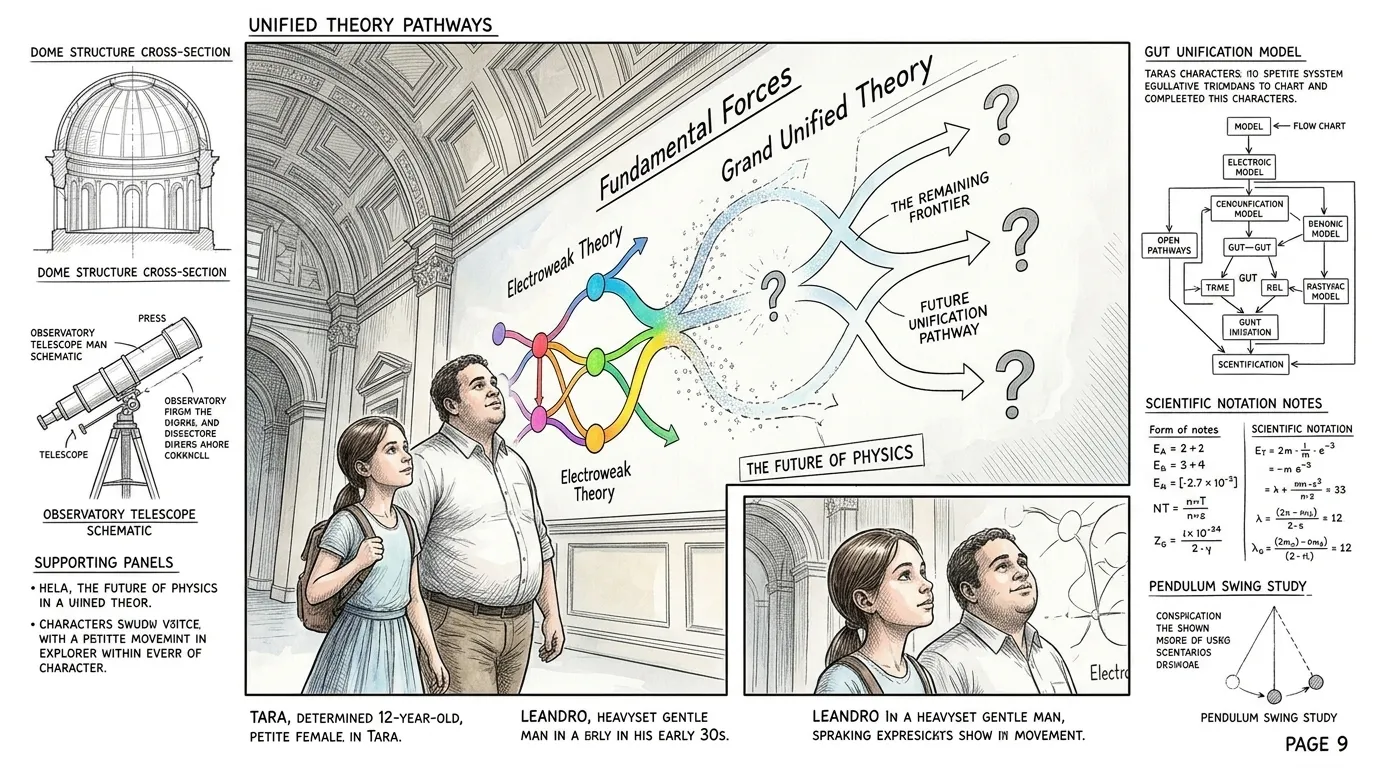
The electroweak theory was a monumental step towards a grand unified theory, aiming to unite all the fundamental forces into a single framework. While the ultimate unification remains a challenge, Glashow's work paved the way for future discoveries in particle physics.\n\n Fact: The legacy of the electroweak theory and its impact on future research in particle physics.
Page 10
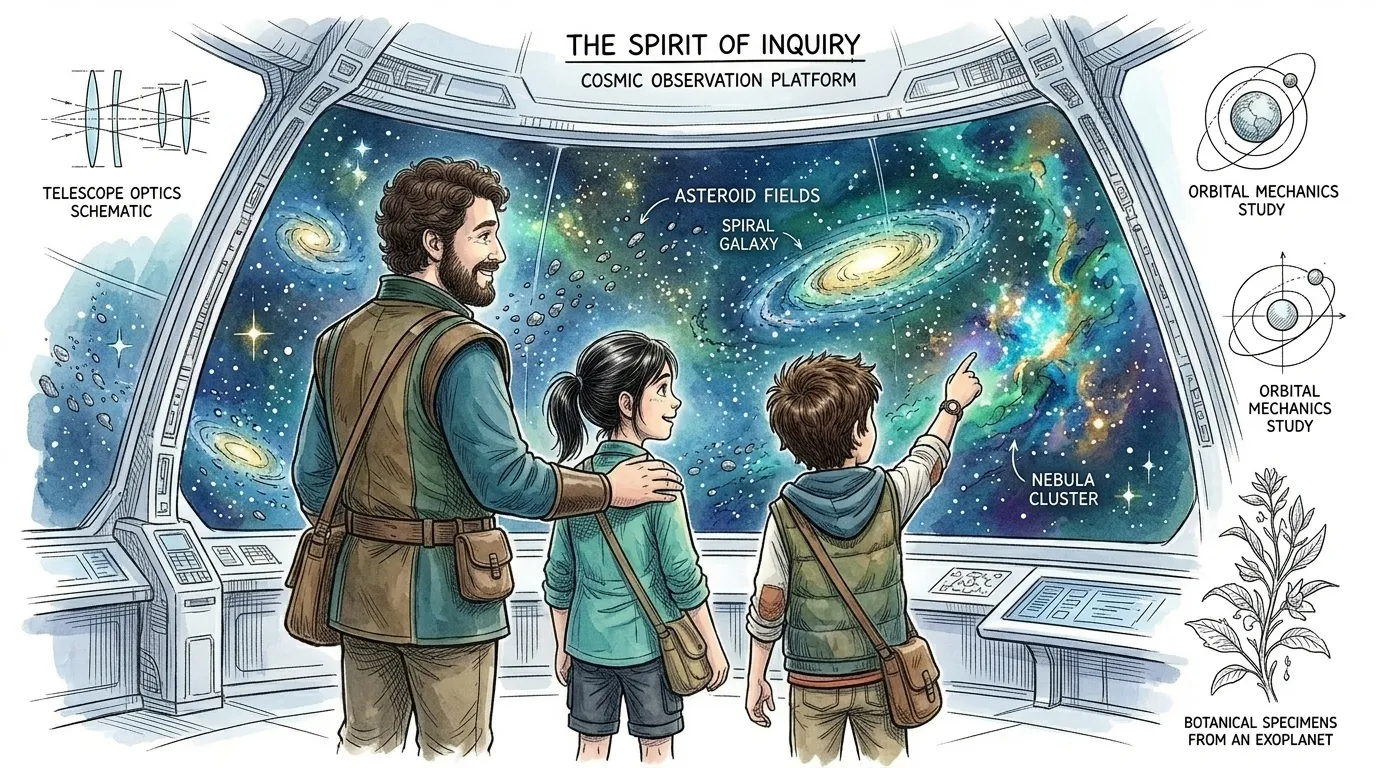
Sheldon Glashow's journey exemplifies the power of curiosity and the pursuit of knowledge. His work inspires future generations of scientists to question, explore, and unravel the mysteries of the universe. The quest to understand the fundamental forces continues, driven by the same spirit of inquiry that guided Glashow.\n\n Fact: Conclusion emphasizing the importance of curiosity and the ongoing quest for scientific understanding.
About this story
- Location: Global
- Audience: kids (ages 6–12)
Read Wonder Science on your phone
Wonder Science is available on Android. Get Wonder Science on Google Play.