Sunita Williams
Sunita Williams — an illustrated science story, set in Global. 10 illustrated pages, free to read on Wonder Science.
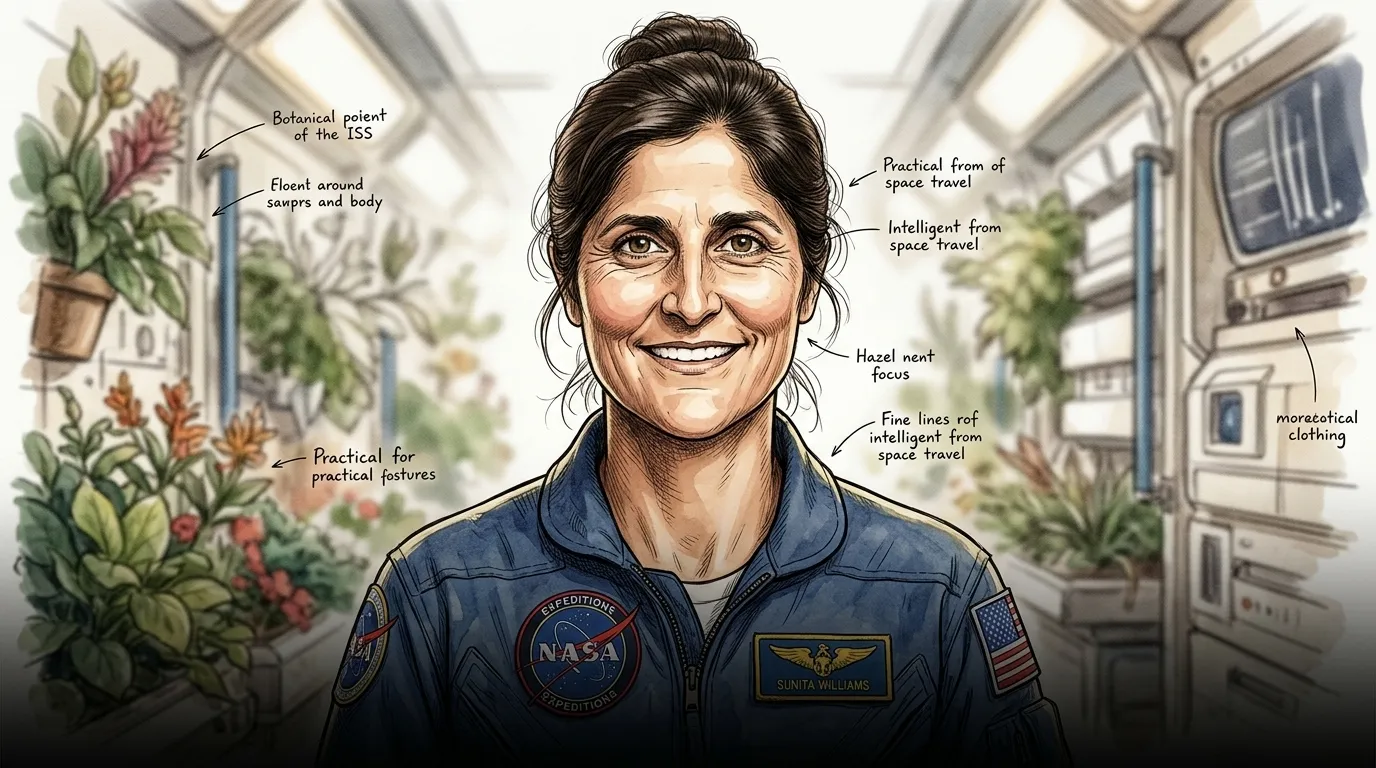
Page 1
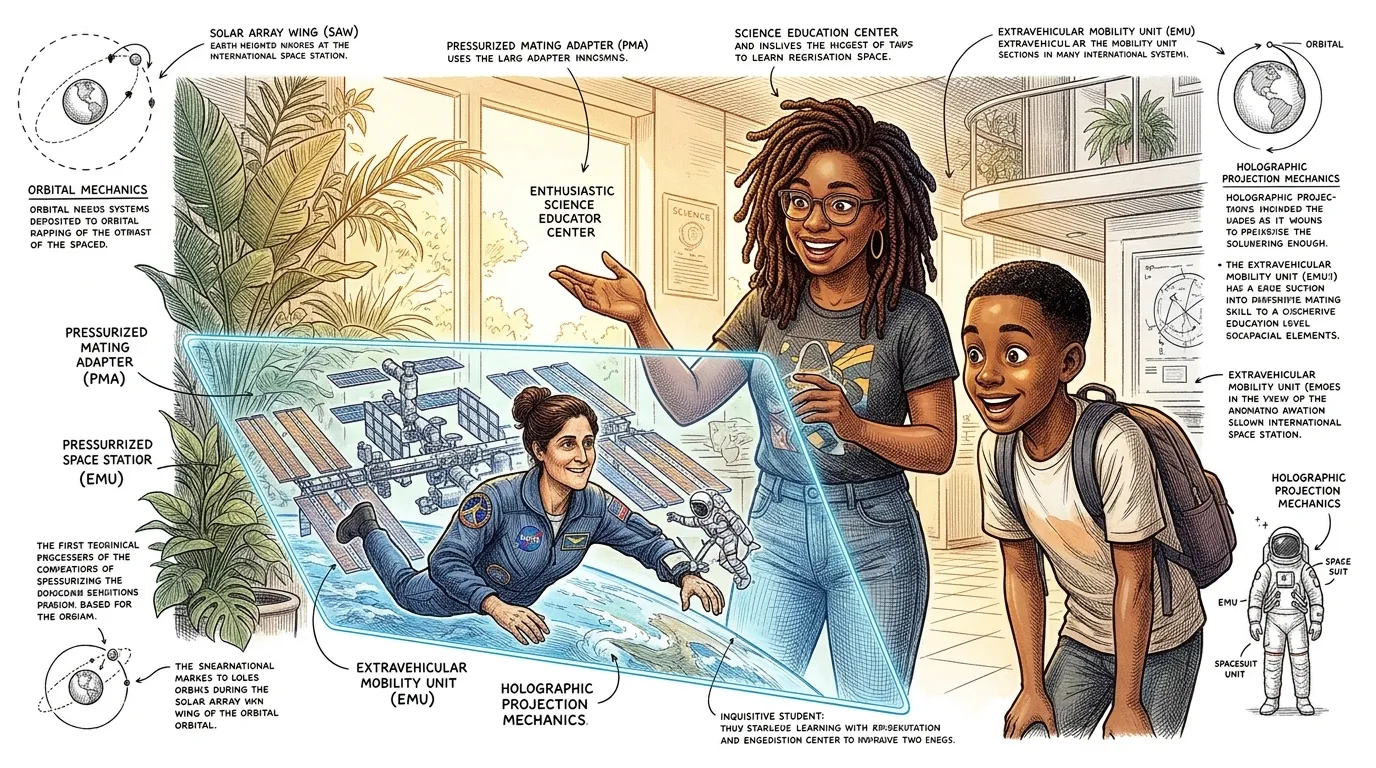
Orbiting 400 kilometers above Earth, the International Space Station represents humanity's continuous presence in space, a beacon of international collaboration and scientific pursuit. Among the most distinguished individuals to call this extraordinary outpost home is Sunita Williams, an American astronaut whose career has redefined the limits of human endurance and technical skill beyond our planet.\n\n"Dayo explained, motioning toward a large holographic display: "Sunita Williams isn't just an astronaut; she's a pioneer who embodies the sheer will required to thrive in the vacuum of space, particularly during spacewalks." Kofi's eyes widened. "She really walked in space? What's it like out there?""
Page 2
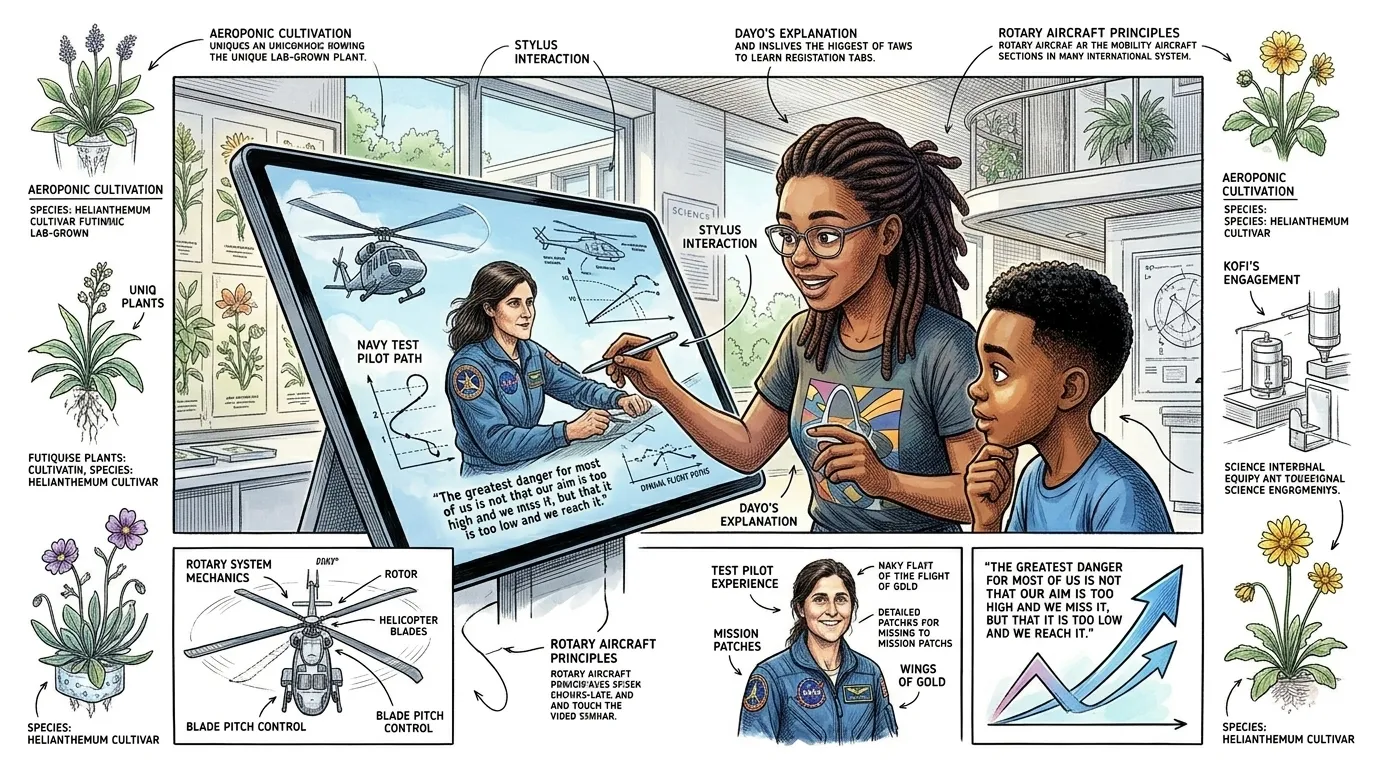
Born in Ohio, Sunita Williams's journey to the stars was forged through a formidable career in the United States Navy, where she distinguished herself as a test pilot for rotary-wing aircraft. This rigorous background in engineering and operational command provided an unparalleled foundation for the complex demands of spaceflight, shaping her into an astronaut capable of profound contributions.\n\n""Her training as a helicopter test pilot was absolutely crucial," Dayo emphasized, tapping a stylus on a screen displaying Williams's early career. "She learned how to manage high-stakes situations with immense precision. Imagine, as the artist Michelangelo once said, 'The greatest danger for most of us is not that our aim is too high and we miss it, but that it is too low and we reach it.' Williams continually set her aims higher, never settling for less than extraordinary." Kofi nodded, deeply engaged. "So, she was already super brave even before NASA?""
Page 3
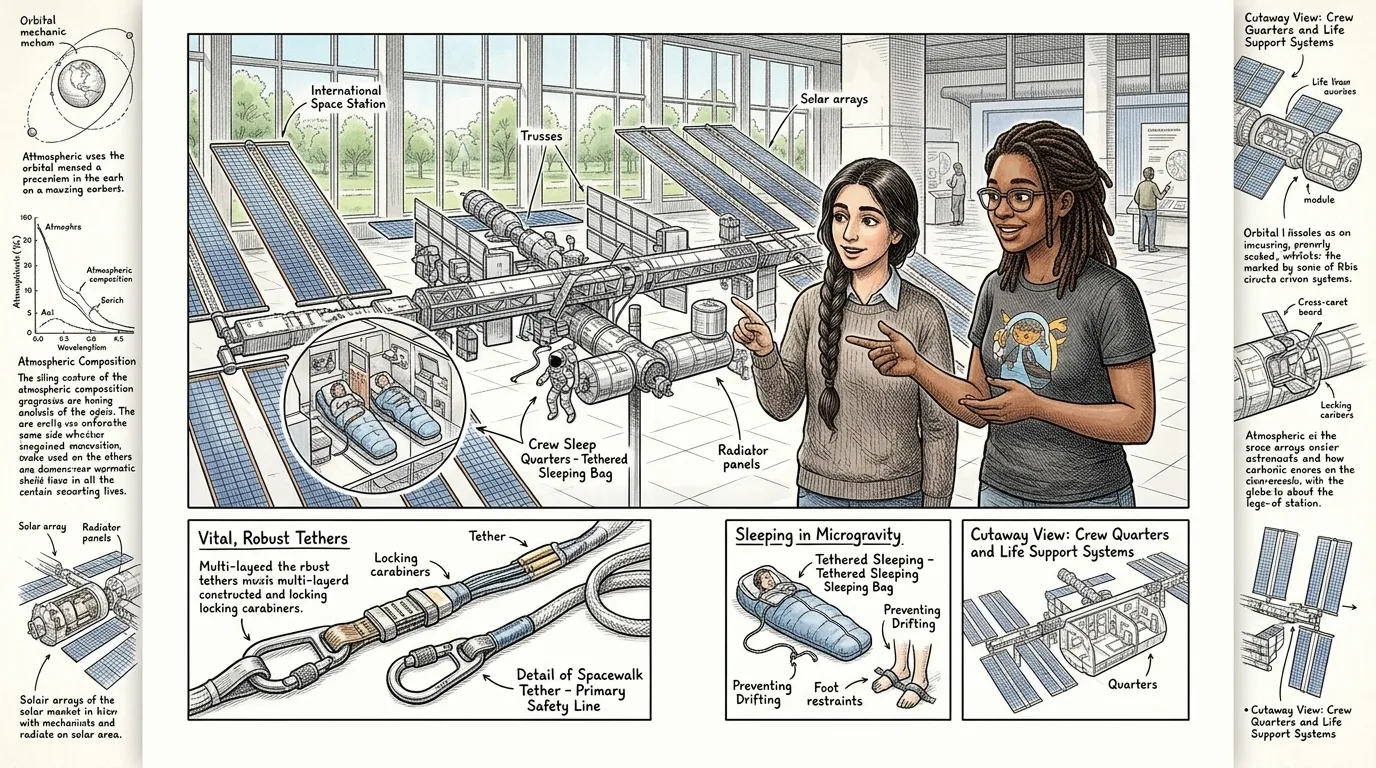
The International Space Station, a marvel of human ingenuity, orbits Earth at 28,000 kilometers per hour. Living and working within this orbiting laboratory presents a unique set of physiological and engineering challenges. Astronauts like Williams spend months combating the effects of microgravity, ensuring the station's operational integrity, and conducting critical scientific research.\n\n""The ISS is like a city in the sky, constantly moving," Rania exclaimed, pointing at a detailed model of the station. "But how do they even sleep without floating away, Dayo?" Dayo smiled. "That's where engineering meets everyday life. They sleep in small crew quarters, essentially sleeping bags tethered to a wall. But for spacewalks, it's those vital, robust tethers, attaching them to the station, that ensure they don't drift into the infinite void. It's a fundamental piece of safety equipment, providing both security and a path back. Every tool is carefully tethered too, so nothing floats away.""
Page 4
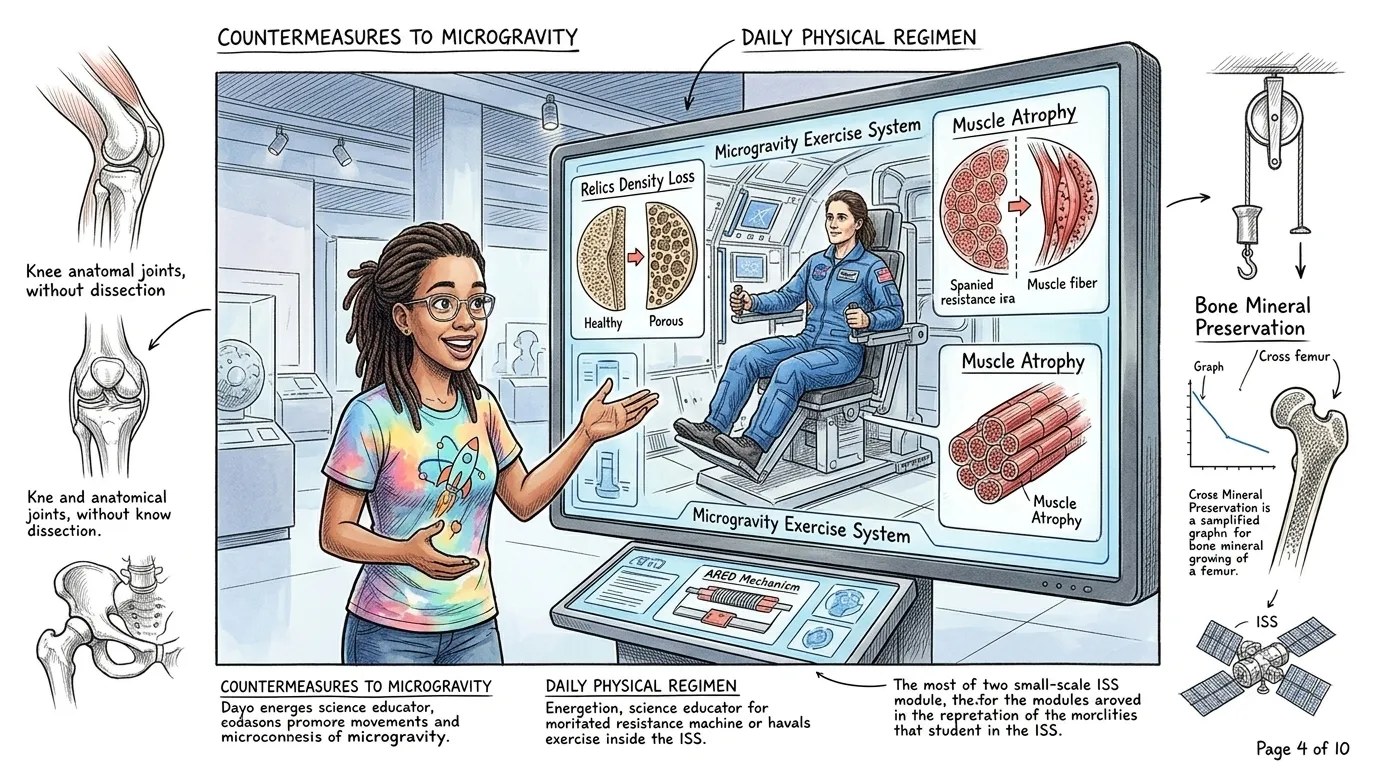
The absence of normal gravity profoundly affects the human body. Astronauts in microgravity experience bone density loss, muscle atrophy, and cardiovascular deconditioning. Mitigating these effects is paramount for long-duration missions and future interplanetary travel, demanding innovative solutions and unwavering discipline from the crew.\n\n""It's not just floating around that's the challenge," Dayo clarified, gesturing towards a display showing an astronaut exercising. "The human body isn't designed for zero-G. Bones thin, muscles weaken. Astronauts must dedicate hours every day to intense physical exercise, strapping themselves to specialized equipment to simulate resistance. It's a constant fight against physiological degradation.""
Page 5
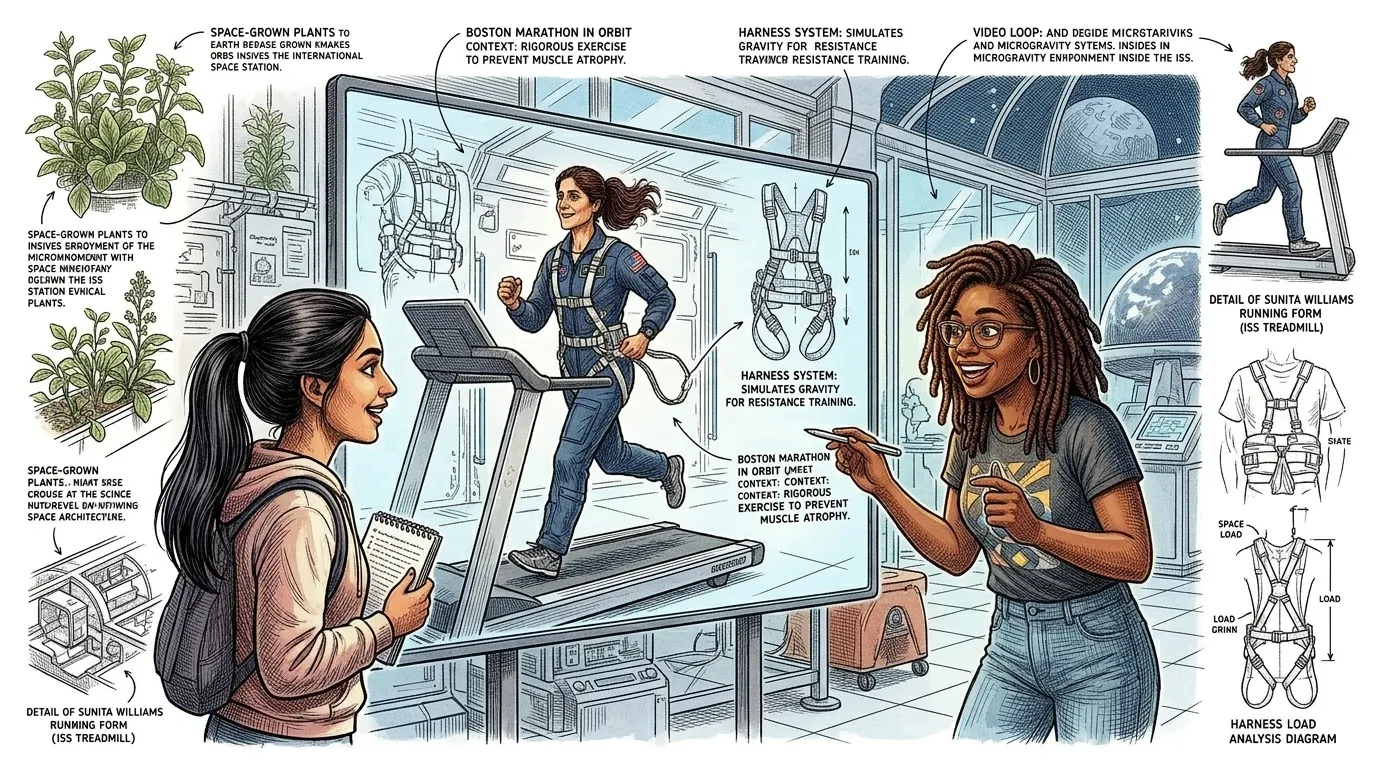
Sunita Williams became renowned not only for her engineering prowess but also for her incredible physical stamina. During her Expedition 14 mission in 2007, she famously completed the Boston Marathon while orbiting Earth, simultaneously running on the ISS treadmill and logged in virtually with the race on the ground. This feat underscored the extreme physical regimen required for spaceflight.\n\n""Imagine running a marathon, but without gravity pulling you down!" Rania exclaimed, looking at a video loop of Williams on the treadmill. "How is that even possible?" Dayo elaborated, "She used a harness system that pulls her down onto the treadmill, mimicking the force of gravity. This wasn't just for fun; it demonstrated the absolute necessity of rigorous daily exercise for astronauts to maintain bone and muscle mass against the adverse effects of microgravity. It was a powerful statement about human resilience.""
Page 6
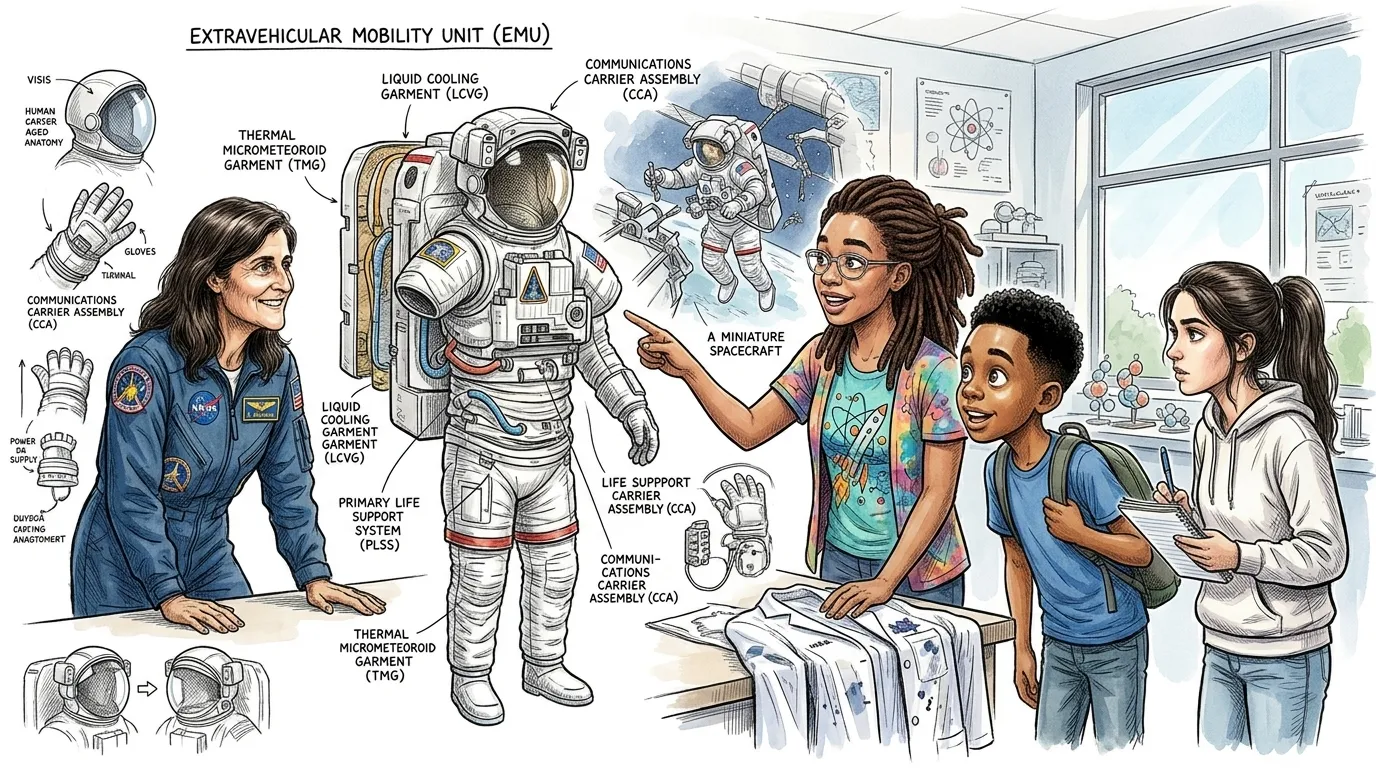
Spacewalks, or Extravehicular Activities (EVAs), are critical for maintaining, upgrading, and repairing the International Space Station. These operations are among the most dangerous and physically demanding aspects of spaceflight, requiring astronauts to operate complex tools in a vacuum, with only the protection of their highly specialized Extravehicular Mobility Unit (EMU) space suit.\n\n""Every spacewalk is a complex ballet of engineering and human skill," Dayo clarified, pointing to a diagram of a space suit. "The EMU suit itself is a miniature spacecraft, providing oxygen, temperature control, and radiation protection. Astronauts train for thousands of hours to use specialized tools in zero-G. It's not just floating; it's intricate, heavy-duty work performed in an incredibly hostile environment.""
Page 7
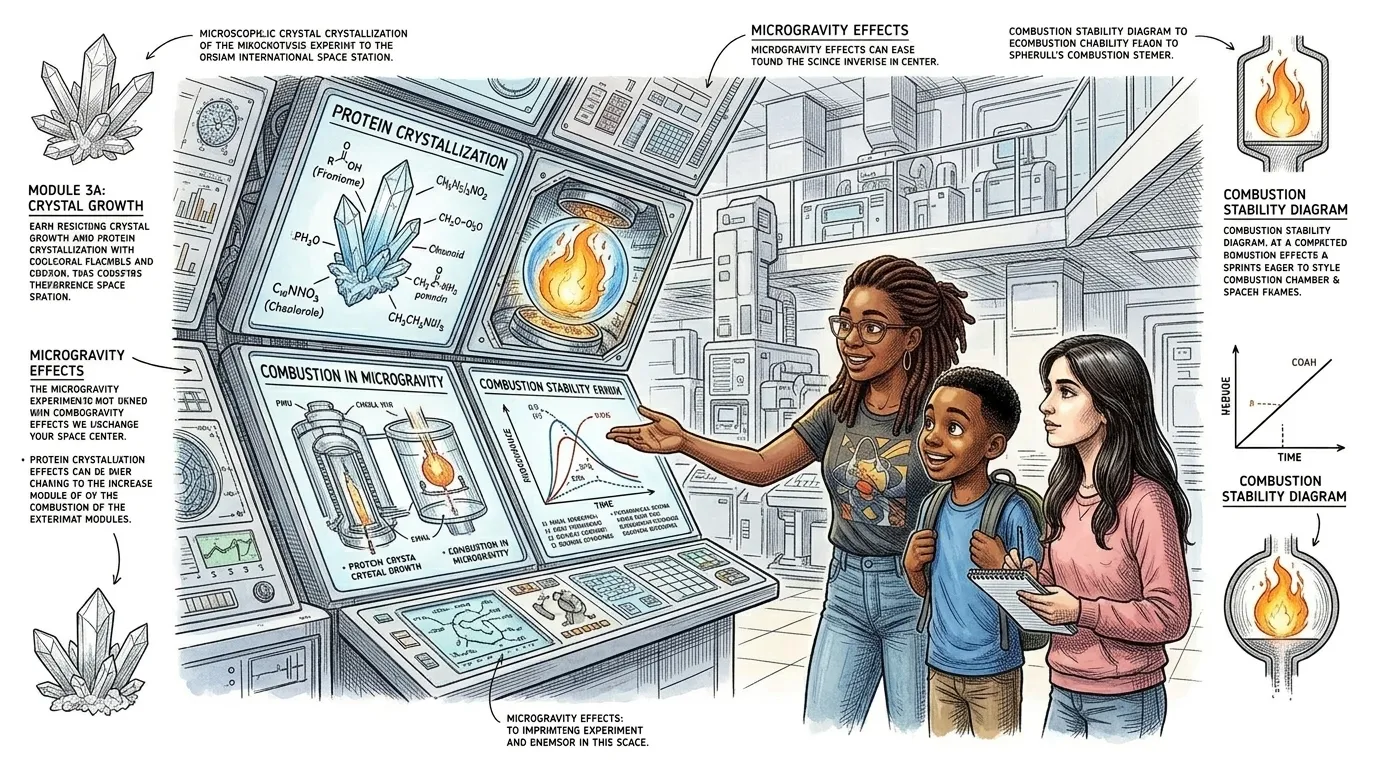
Beyond maintenance and endurance, Williams's missions were integral to hundreds of scientific experiments conducted aboard the ISS. These investigations spanned fields from human physiology and biology to material science and astrophysics, contributing invaluable data that benefits life on Earth and prepares for future deep-space missions.\n\n""The ISS is truly humanity's largest orbiting laboratory," Dayo stated, guiding Kofi and Rania to a display featuring various experimental modules. "Sunita Williams and her crews performed groundbreaking research on everything from protein crystallization to understanding combustion in microgravity. These experiments often have direct applications, like developing new medicines or fire suppression techniques here on Earth.""
Page 8
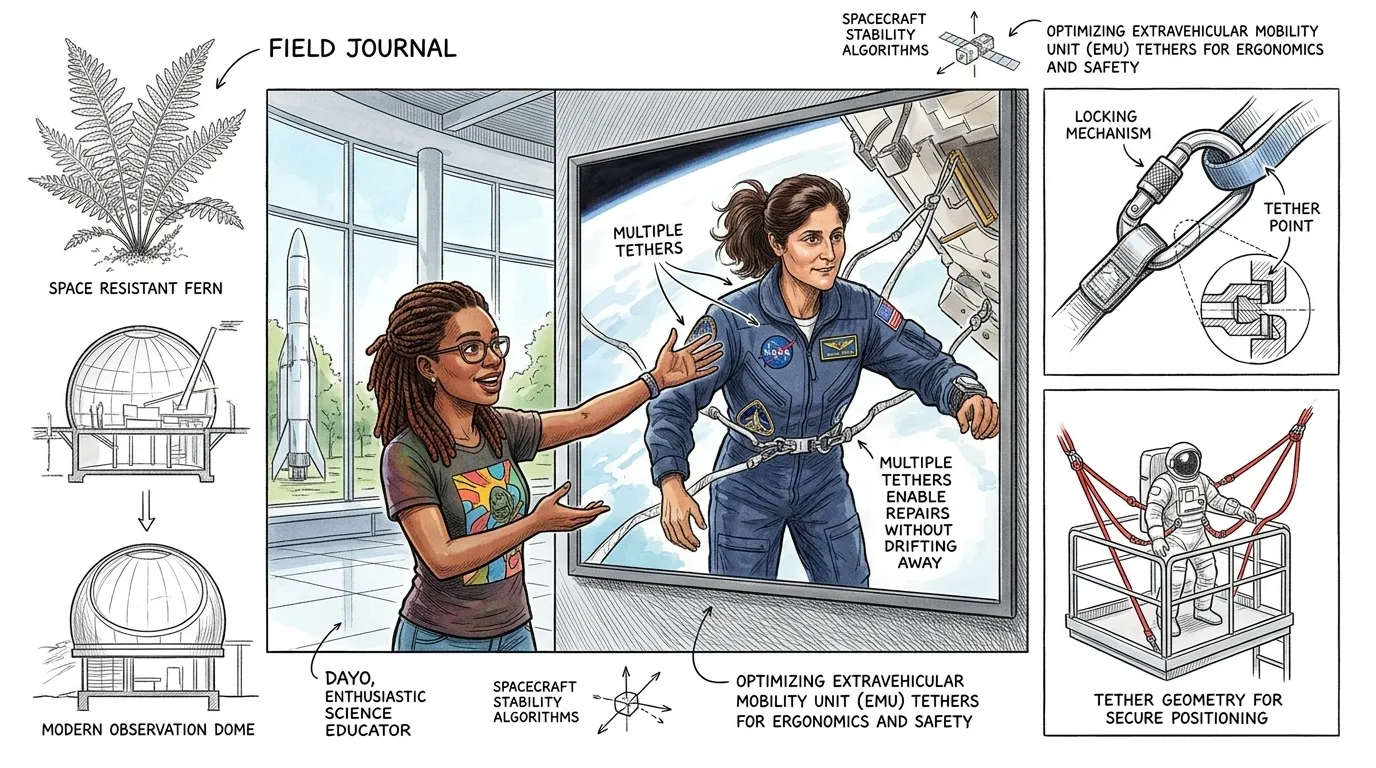
Sunita Williams commanded Expedition 33, demonstrating exceptional leadership in an environment where stakes are perpetually high. Her cumulative time in space and her record for spacewalks by a woman solidified her place as a true trailblazer. She undertook vital repairs, upgraded crucial systems, and executed complex scientific protocols, all while inspiring a global audience.\n\n""Her leadership was critical, especially during complex spacewalks," Dayo explained, gesturing to a large photographic display of Williams outside the ISS. "Remember how we talked about the tethers? Here, you can see her perfectly using multiple tethers to secure herself to the station while working. This precise tethering allows her to apply force for repairs without drifting away, a direct application of that essential safety knowledge and training. It's what makes such intricate work possible in the void.""
Page 9
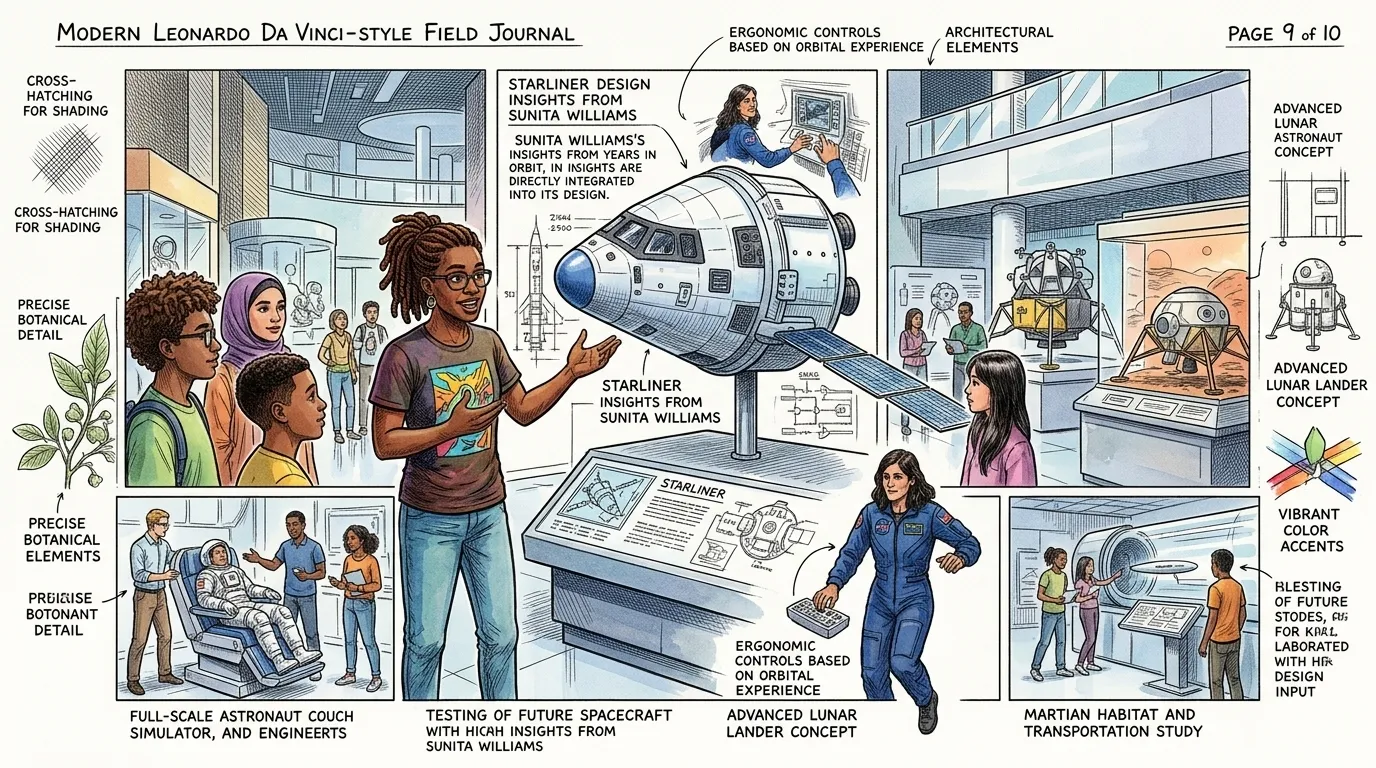
Williams's contributions extend beyond her missions. She played a pivotal role in the development and flight testing of NASA's Commercial Crew Program, including the Boeing Starliner spacecraft. Her experience is instrumental in shaping the next generation of space vehicles designed to transport astronauts to the ISS and ultimately, further into the solar system.\n\n""Sunita Williams isn't just a part of history; she's actively shaping our future in space," Dayo articulated, as they approached an exhibit featuring future spacecraft models. "Her insights from years in orbit are directly integrated into the design of new vehicles like the Boeing Starliner. It's about taking lessons learned from past successes and challenges to build safer, more efficient spacecraft for lunar and Martian missions.""
Page 10
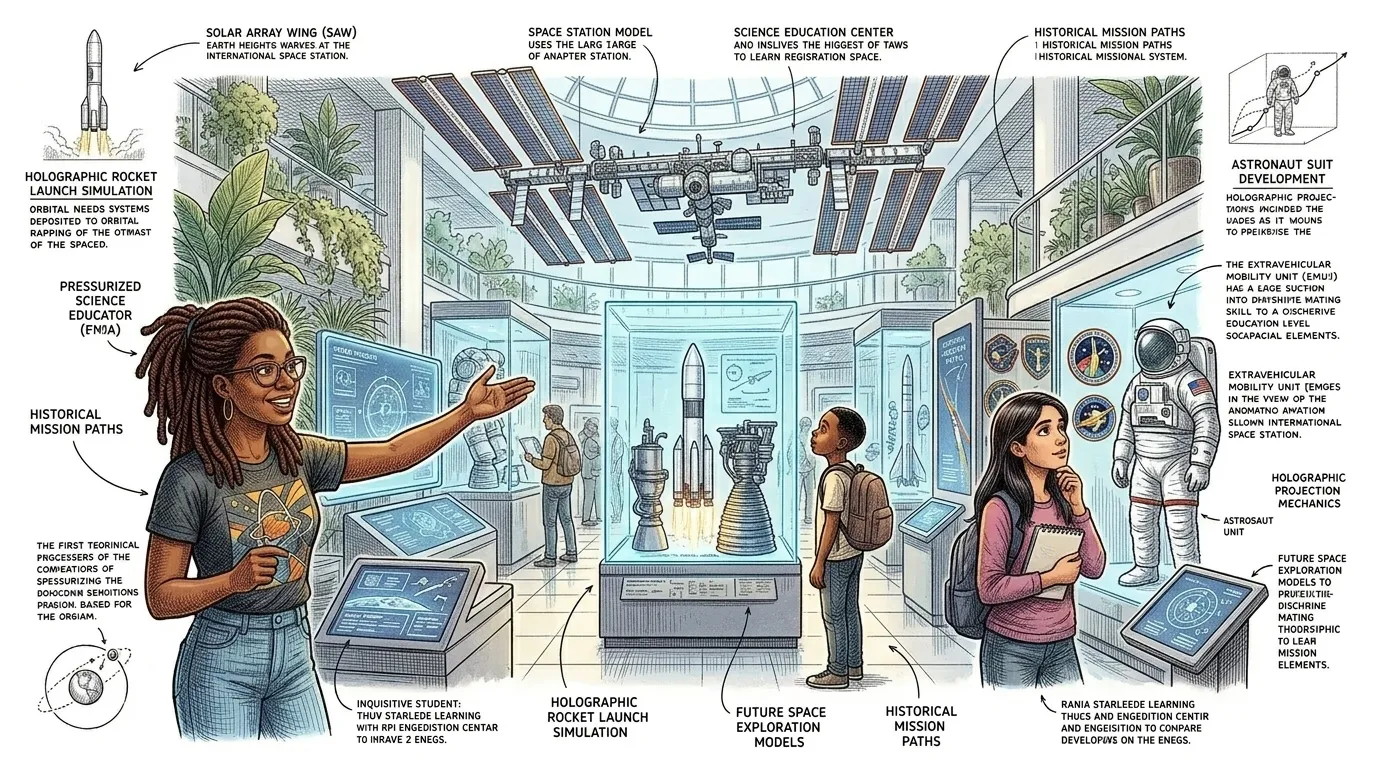
Sunita Williams's career embodies the relentless pursuit of knowledge and the enduring spirit of human exploration. Her pioneering achievements on the International Space Station, her record-breaking spacewalks, and her continued involvement in developing future space vehicles ensure her legacy as a cornerstone in the ongoing narrative of space science. She stands as a testament to what dedication and ambition can achieve, inspiring a new generation to look beyond Earth.\n\n"Dayo concluded, sweeping her arm across the vast, inspiring museum space: "Sunita Williams's impact transcends her individual missions; it's about pushing the boundaries of what humans can achieve. She represents the global collaboration, the scientific inquiry, and the sheer audacity of dreaming beyond our planet." Kofi and Rania stood quietly, gazing at the exhibits around them, a new understanding of space and human potential settling over them."
About this story
- Location: Global
- Audience: general readers
Read Wonder Science on your phone
Wonder Science is available on Android. Get Wonder Science on Google Play.