The Atmosphere's Layers

The Atmosphere's Layers — an illustrated science story, set in France. 10 illustrated pages, free to read on Wonder Science.
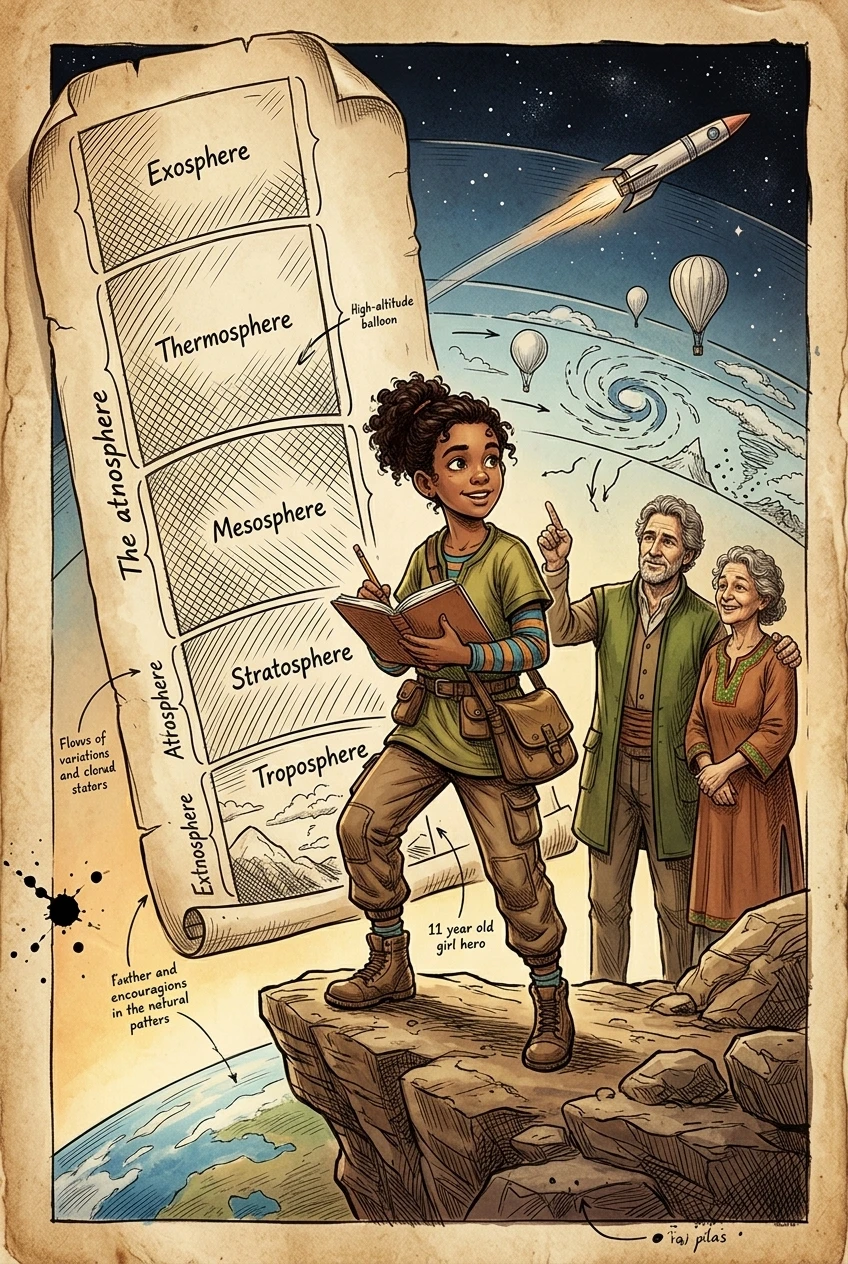
The Atmosphere's Layers — book cover — Wonder Science
The Atmosphere's Layers — an illustrated science story, set in France. 10 illustrated pages, free to read on Wonder Science.

Page 1
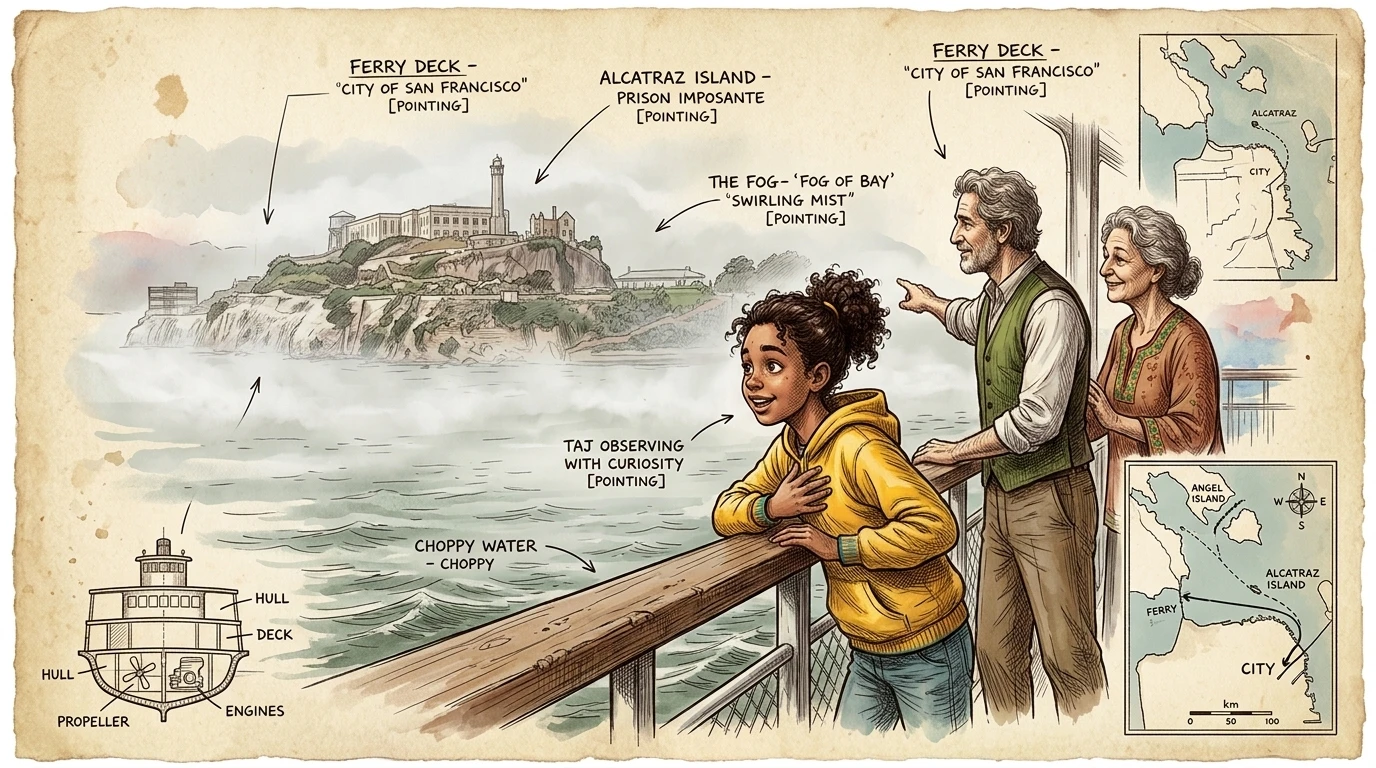
The ferry chugged across the choppy San Francisco Bay, its horn echoing in the cool air. Taj leaned over the railing, watching the imposing shape of Alcatraz…
The ferry chugged across the choppy San Francisco Bay, its horn echoing in the cool air. Taj leaned over the railing, watching the imposing shape of Alcatraz Island grow closer. "Look how thick the fog is getting!" she exclaimed, pulling her yellow hoodie tighter as her father and mother joined her. "It's like we're sailing right into a cloud."

The ferry chugged across the choppy San Francisco Bay, its horn echoing in the cool air. Taj leaned over the railing, watching the imposing shape of Alcatraz Island grow closer. "Look how thick the fog is getting!" she exclaimed, pulling her yellow hoodie tighter as her father and mother joined her. "It's like we're sailing right into a cloud."

Page 2
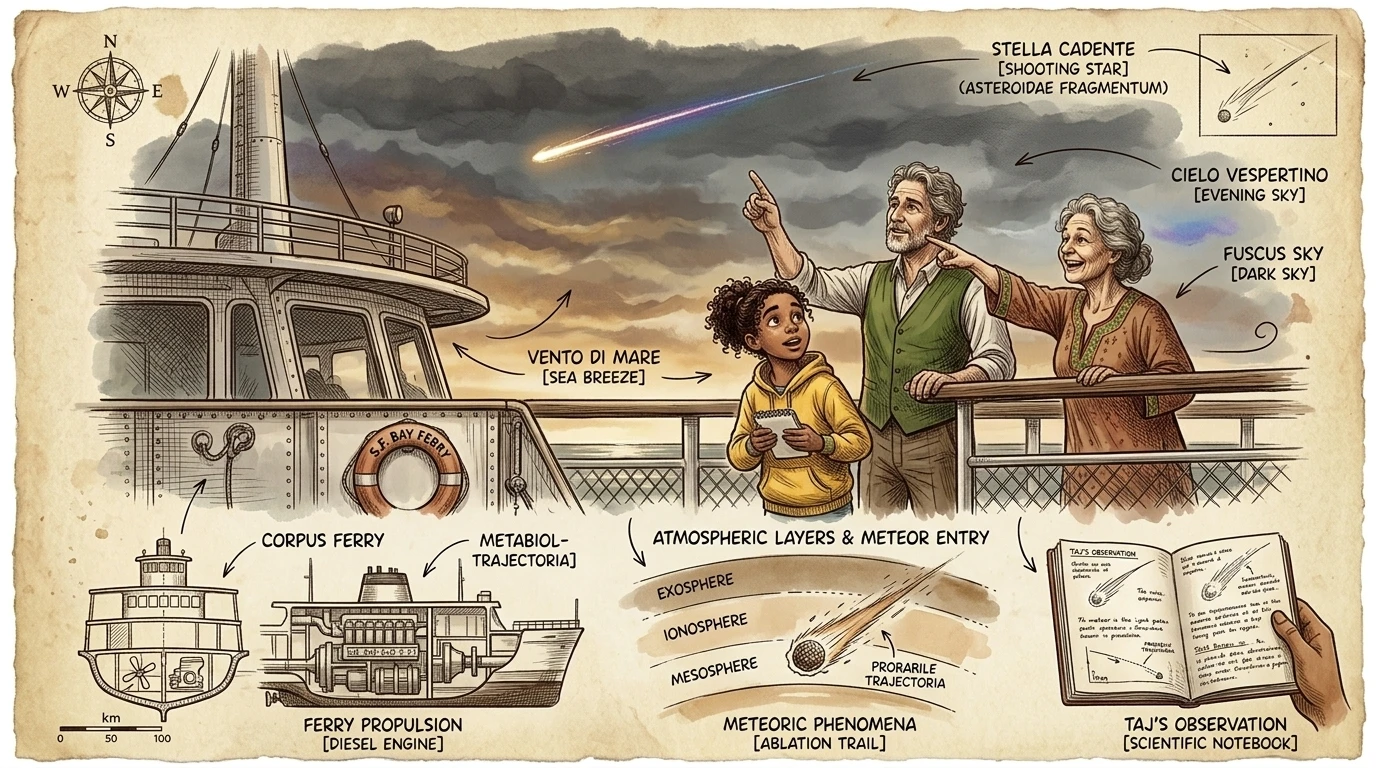
"This fog is all part of the atmosphere, Taj," her father explained, pointing up into the grey sky. "It's the very bottom layer we live in." As dusk began to…
"This fog is all part of the atmosphere, Taj," her father explained, pointing up into the grey sky. "It's the very bottom layer we live in." As dusk began to settle, her mother suddenly gasped, "Oh, look, a shooting star!" A quick, bright streak zipped across the sky before vanishing. "Wow! But why do they burn up like that?" Taj asked, her eyes wide with curiosity.

"This fog is all part of the atmosphere, Taj," her father explained, pointing up into the grey sky. "It's the very bottom layer we live in." As dusk began to settle, her mother suddenly gasped, "Oh, look, a shooting star!" A quick, bright streak zipped across the sky before vanishing. "Wow! But why do they burn up like that?" Taj asked, her eyes wide with curiosity.

Page 3
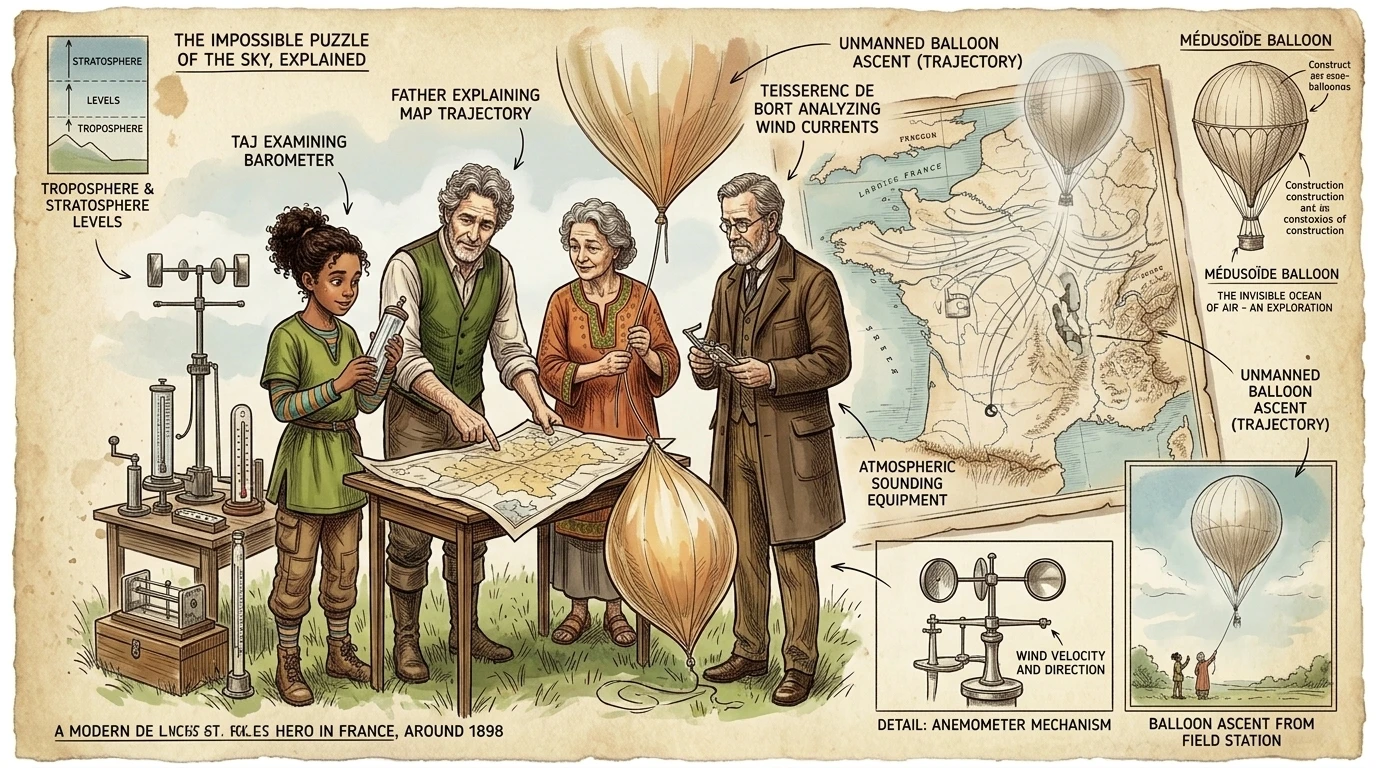
To answer that, we have to travel back in time, to a place where scientists first began exploring that invisible ocean of air above us.
To answer that, we have to travel back in time, to a place where scientists first began exploring that invisible ocean of air above us. Our journey takes us to France, in the late 1890s. Here, scientists were trying to solve the impossible puzzle of the sky, sending instruments higher than anyone had ever gone before.

To answer that, we have to travel back in time, to a place where scientists first began exploring that invisible ocean of air above us. Our journey takes us to France, in the late 1890s. Here, scientists were trying to solve the impossible puzzle of the sky, sending instruments higher than anyone had ever gone before.

Page 4
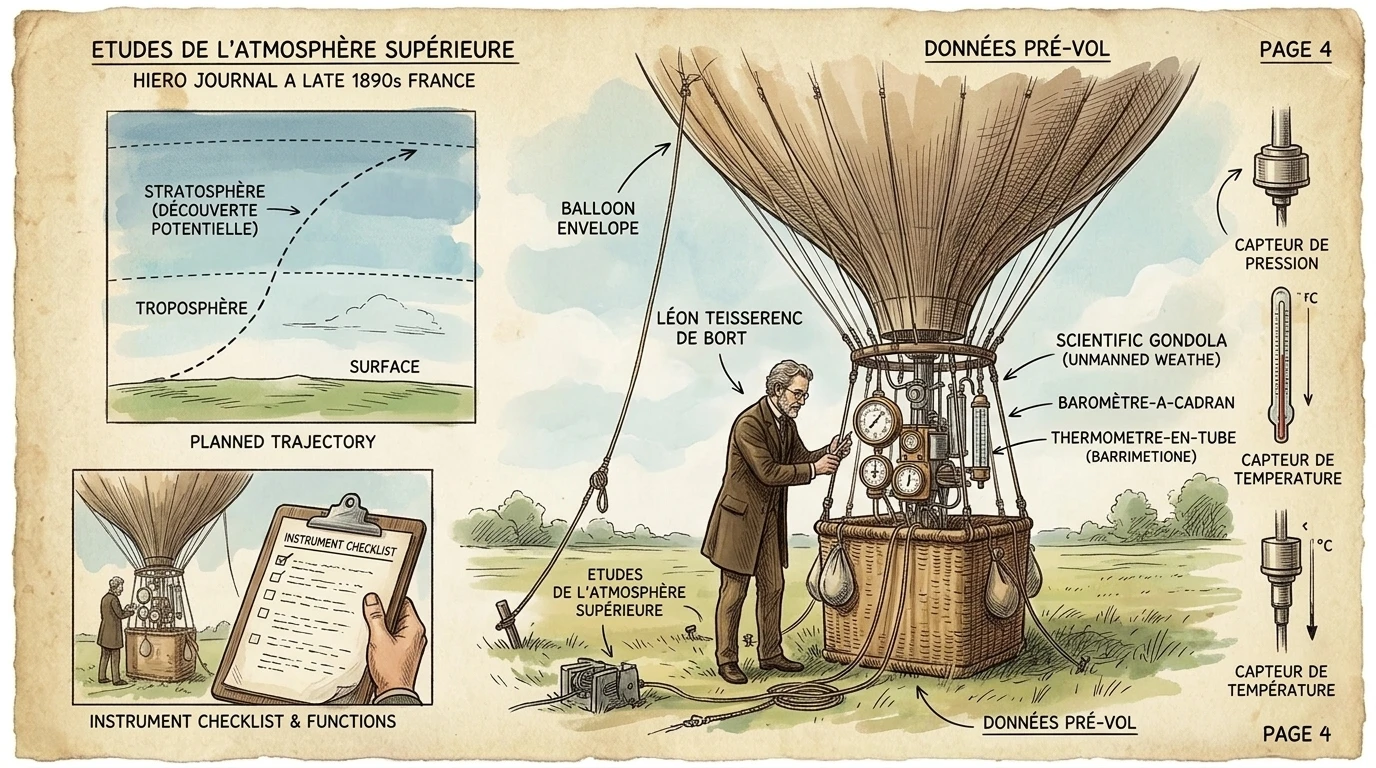
"This is the French meteorologist Léon Teisserenc de Bort," Taj's father's voice explained. "He was obsessed with understanding the weather and launched…
"This is the French meteorologist Léon Teisserenc de Bort," Taj's father's voice explained. "He was obsessed with understanding the weather and launched hundreds of unmanned balloons right from here." De Bort carefully checked the instruments tethered to his massive balloon. "He wanted to map the entire atmosphere, layer by layer."

"This is the French meteorologist Léon Teisserenc de Bort," Taj's father's voice explained. "He was obsessed with understanding the weather and launched hundreds of unmanned balloons right from here." De Bort carefully checked the instruments tethered to his massive balloon. "He wanted to map the entire atmosphere, layer by layer."

Page 5
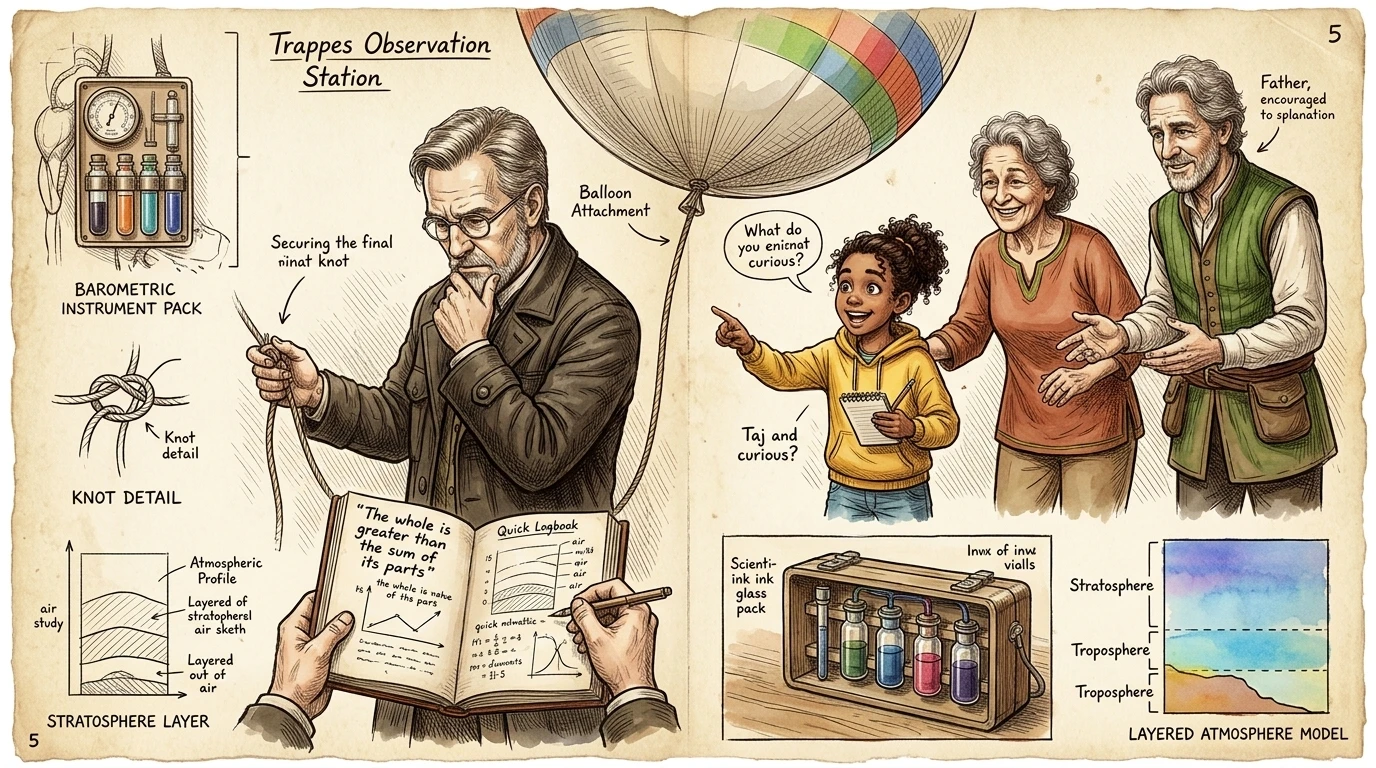
De Bort knew that understanding the sky wasn't about just one part, but all of it working together. He scribbled in his logbook, thinking about what the ancient…
De Bort knew that understanding the sky wasn't about just one part, but all of it working together. He scribbled in his logbook, thinking about what the ancient philosopher Aristotle said: 'The whole is greater than the sum of its parts.' "Each layer must have its own purpose," he murmured to his assistant, securing a final knot. "We just need to find them."

De Bort knew that understanding the sky wasn't about just one part, but all of it working together. He scribbled in his logbook, thinking about what the ancient philosopher Aristotle said: 'The whole is greater than the sum of its parts.' "Each layer must have its own purpose," he murmured to his assistant, securing a final knot. "We just need to find them."

Page 6
His balloons soared for miles, recording the temperature as they climbed. At first, the air got colder and colder, just as everyone expected.
His balloons soared for miles, recording the temperature as they climbed. At first, the air got colder and colder, just as everyone expected. But then, something amazing happened: at about seven miles up, the temperature suddenly stopped dropping and began to rise! De Bort had discovered a boundary, proving the atmosphere had different layers.

His balloons soared for miles, recording the temperature as they climbed. At first, the air got colder and colder, just as everyone expected. But then, something amazing happened: at about seven miles up, the temperature suddenly stopped dropping and began to rise! De Bort had discovered a boundary, proving the atmosphere had different layers.

Page 7
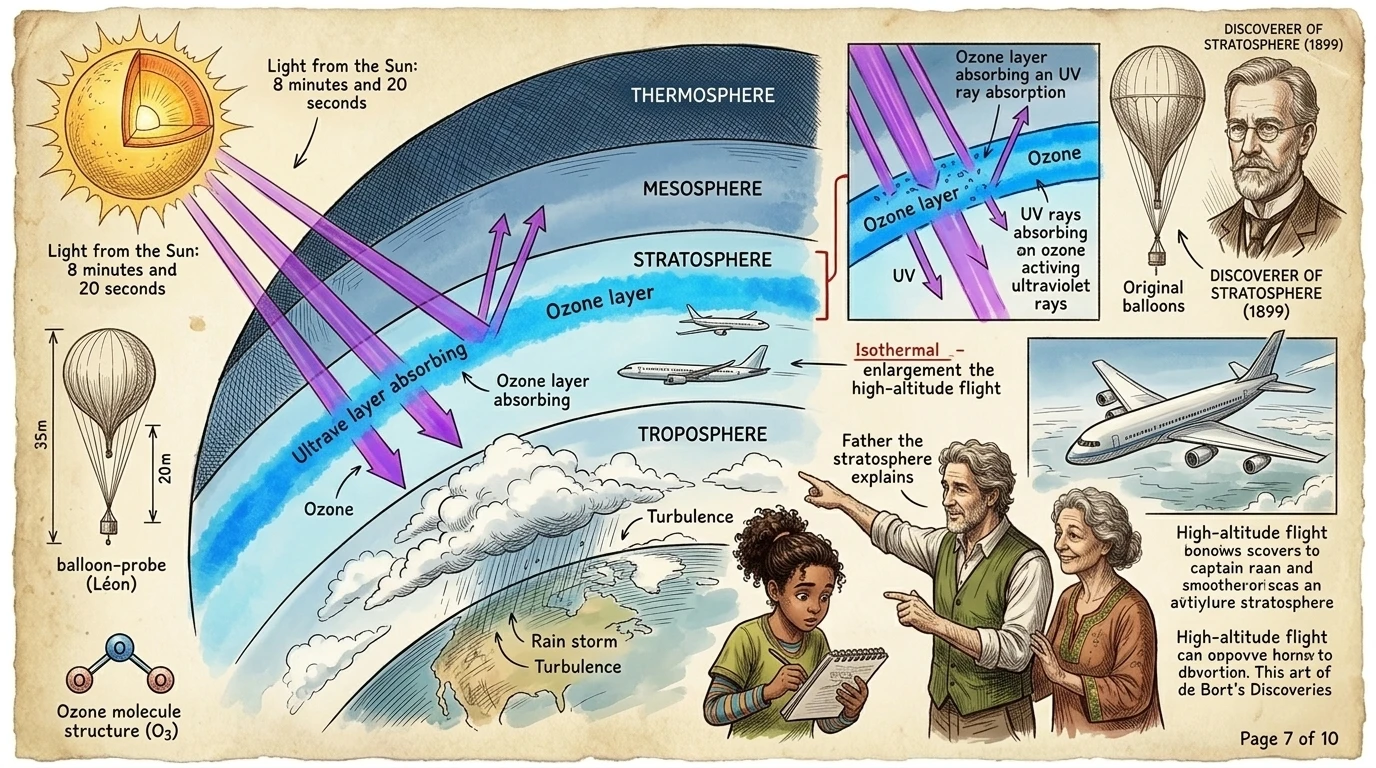
"He called that upper layer the Stratosphere, and his discovery changed everything," Taj's mother's voice narrated. "Inside it lies the ozone layer, which…
"He called that upper layer the Stratosphere, and his discovery changed everything," Taj's mother's voice narrated. "Inside it lies the ozone layer, which absorbs almost all of the Sun's dangerous ultraviolet rays." Light from the Sun takes 8 minutes and 20 seconds to reach us, but this layer makes sure only the safe light gets through. It's also why passenger jets fly there, above all the stormy weather.

"He called that upper layer the Stratosphere, and his discovery changed everything," Taj's mother's voice narrated. "Inside it lies the ozone layer, which absorbs almost all of the Sun's dangerous ultraviolet rays." Light from the Sun takes 8 minutes and 20 seconds to reach us, but this layer makes sure only the safe light gets through. It's also why passenger jets fly there, above all the stormy weather.

Page 8
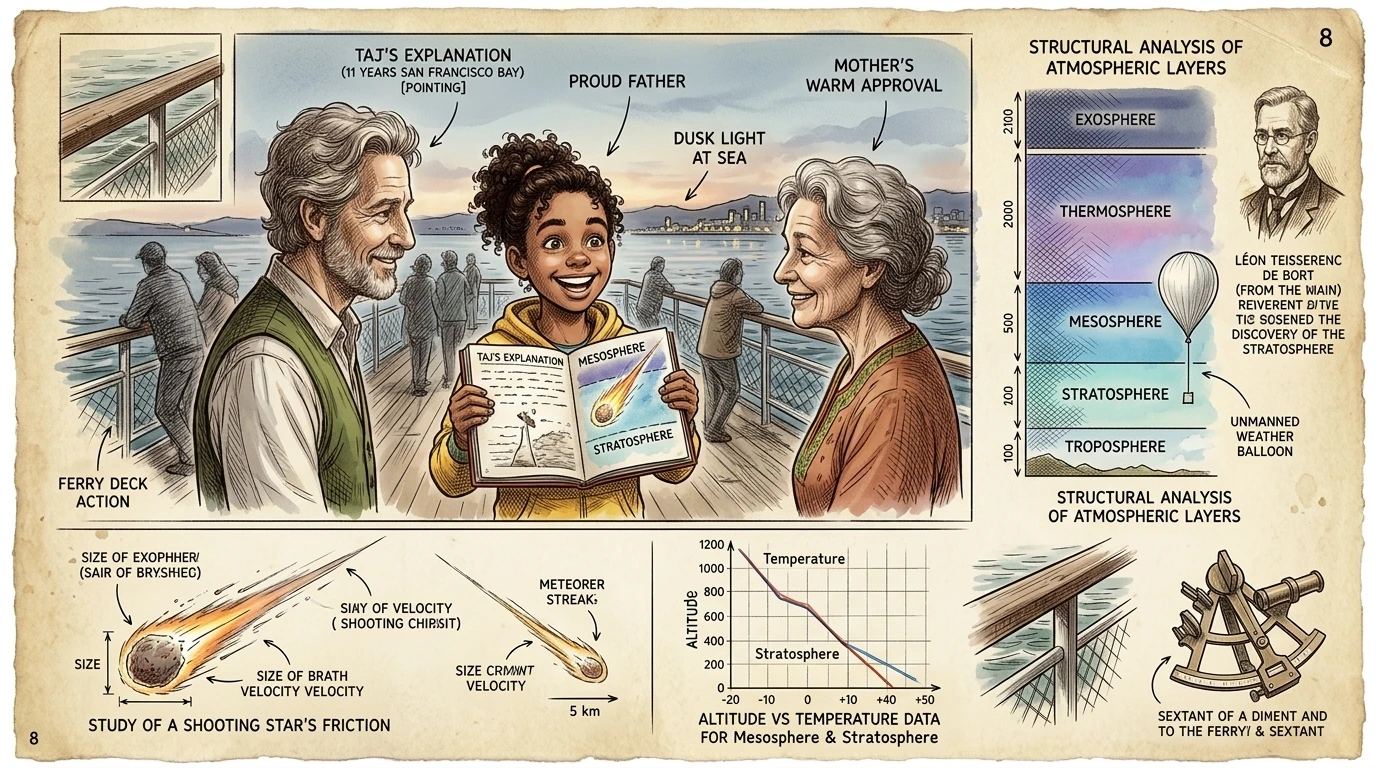
Back on the ferry, Taj's face lit up with a huge smile. "I get it now!" she announced to her parents. "That shooting star we saw wasn't a star at all.
Back on the ferry, Taj's face lit up with a huge smile. "I get it now!" she announced to her parents. "That shooting star we saw wasn't a star at all. It was a meteor, burning up way, way above the Stratosphere in a layer called the Mesosphere, protecting us!"

Back on the ferry, Taj's face lit up with a huge smile. "I get it now!" she announced to her parents. "That shooting star we saw wasn't a star at all. It was a meteor, burning up way, way above the Stratosphere in a layer called the Mesosphere, protecting us!"

Page 9
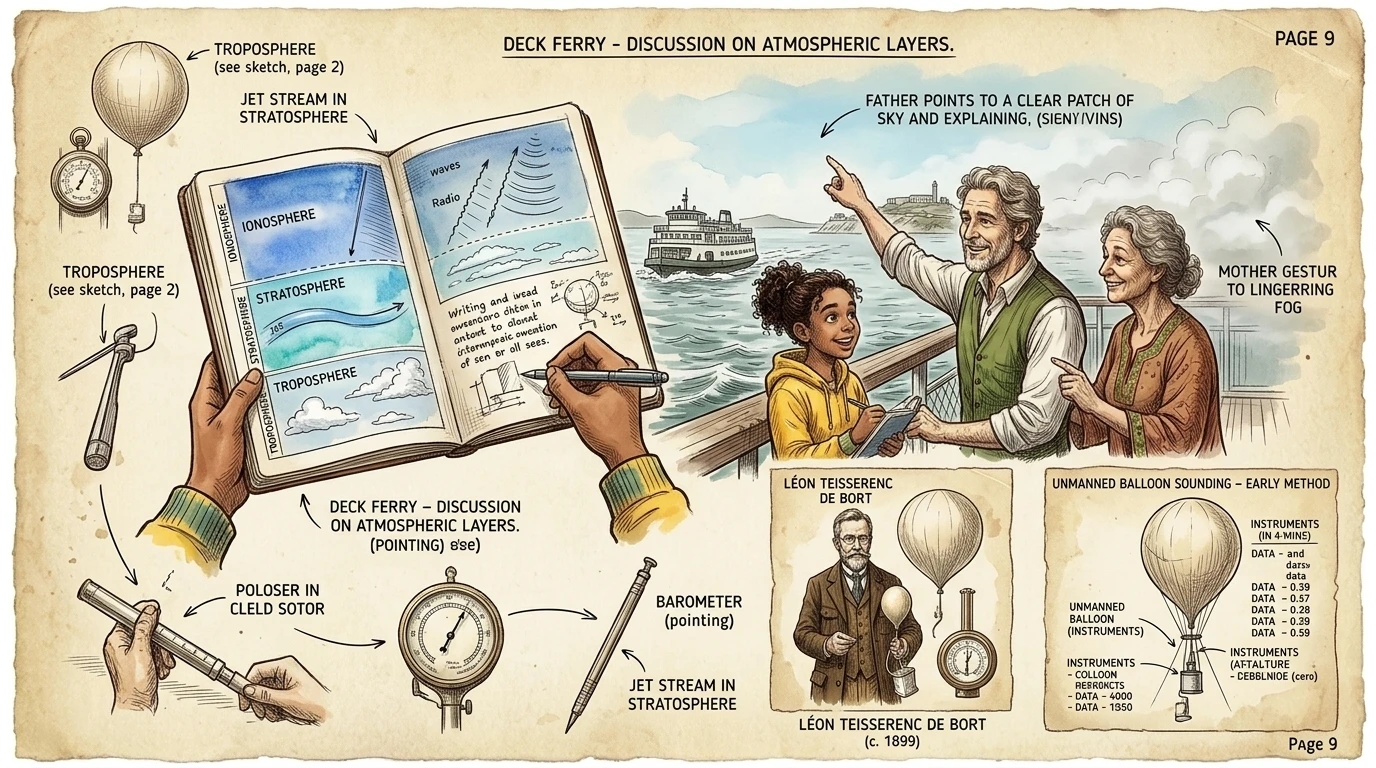
"So that's why airplanes try to fly up in the stratosphere, to avoid turbulence!" her father said, connecting the dots. "And all our clouds and rain happen…
"So that's why airplanes try to fly up in the stratosphere, to avoid turbulence!" her father said, connecting the dots. "And all our clouds and rain happen right here, in the troposphere," added her mother, gesturing to the fog. "And even higher up, radio waves bounce off the ionosphere, which is part of the thermosphere, to travel around the world!" Taj added, writing in her notebook.

"So that's why airplanes try to fly up in the stratosphere, to avoid turbulence!" her father said, connecting the dots. "And all our clouds and rain happen right here, in the troposphere," added her mother, gesturing to the fog. "And even higher up, radio waves bounce off the ionosphere, which is part of the thermosphere, to travel around the world!" Taj added, writing in her notebook.

Page 10
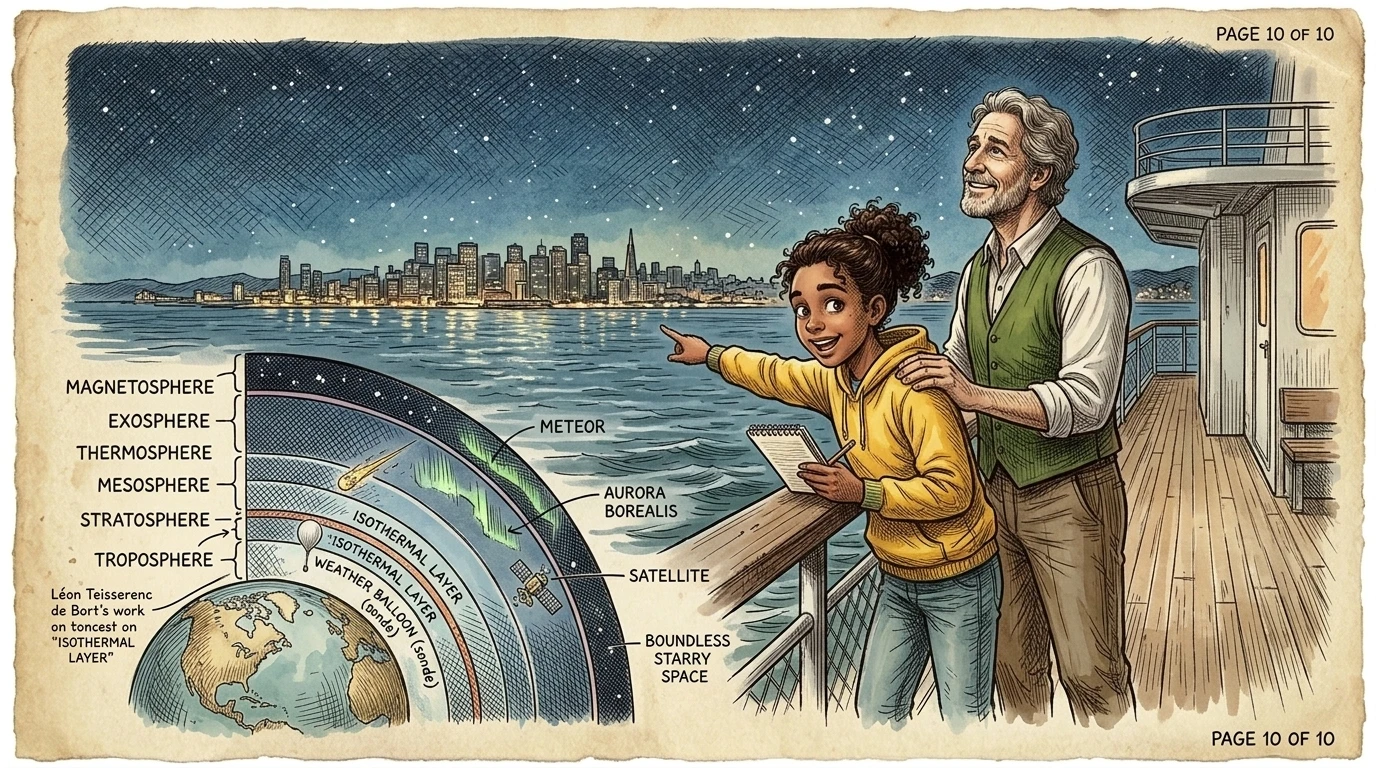
"So the atmosphere isn't just air," Taj concluded, looking out at the city lights. "It's a giant, invisible shield with special layers protecting our whole…
"So the atmosphere isn't just air," Taj concluded, looking out at the city lights. "It's a giant, invisible shield with special layers protecting our whole planet." Her father smiled and looked up toward the stars. "It makes you wonder," he said thoughtfully, "what's past the very last layer, the exosphere, where our shield ends and space begins?"

"So the atmosphere isn't just air," Taj concluded, looking out at the city lights. "It's a giant, invisible shield with special layers protecting our whole planet." Her father smiled and looked up toward the stars. "It makes you wonder," he said thoughtfully, "what's past the very last layer, the exosphere, where our shield ends and space begins?"

About this story

  • Location: France
  • Audience: kids (ages 6–12)

Read Wonder Science on your phone

Wonder Science is available on Android. Get Wonder Science on Google Play.

More Wonder Science stories

All Wonder Science stories · Open the library