The Chemistry of Cooking
The Chemistry of Cooking — an illustrated science story, set in France. 10 illustrated pages, free to read on Wonder Science.
Page 1

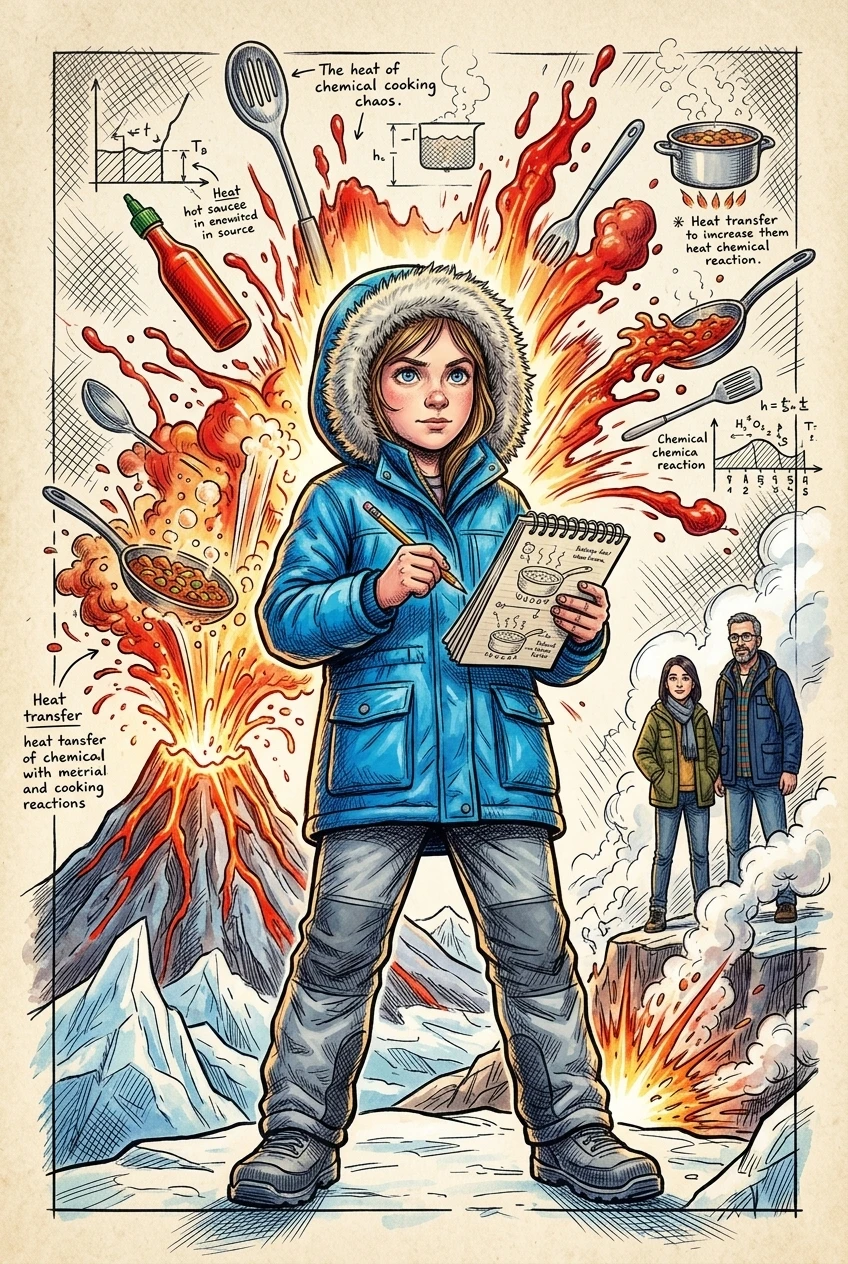
Adam zipped up her parka as she, her mom, and her dad stood at the edge of a vast, snow-covered plain. "Wow, this is incredible, Dad!" Adam exclaimed, looking out at the icy expanse. "I wonder how people manage to cook anything out here?"
Page 2

Adam's mom chuckled, "It's definitely a different challenge than our kitchen back in Noe Valley! I saw some researchers using a strange setup that looked like it was cooking food, and the steam was the same as a rice cooker. I think they used a chemical reaction to generate heat." Adam's dad added, "It's all chemistry, just like Mr. Harris taught you at Everett Middle School. It might be thermodynamics.
Page 3
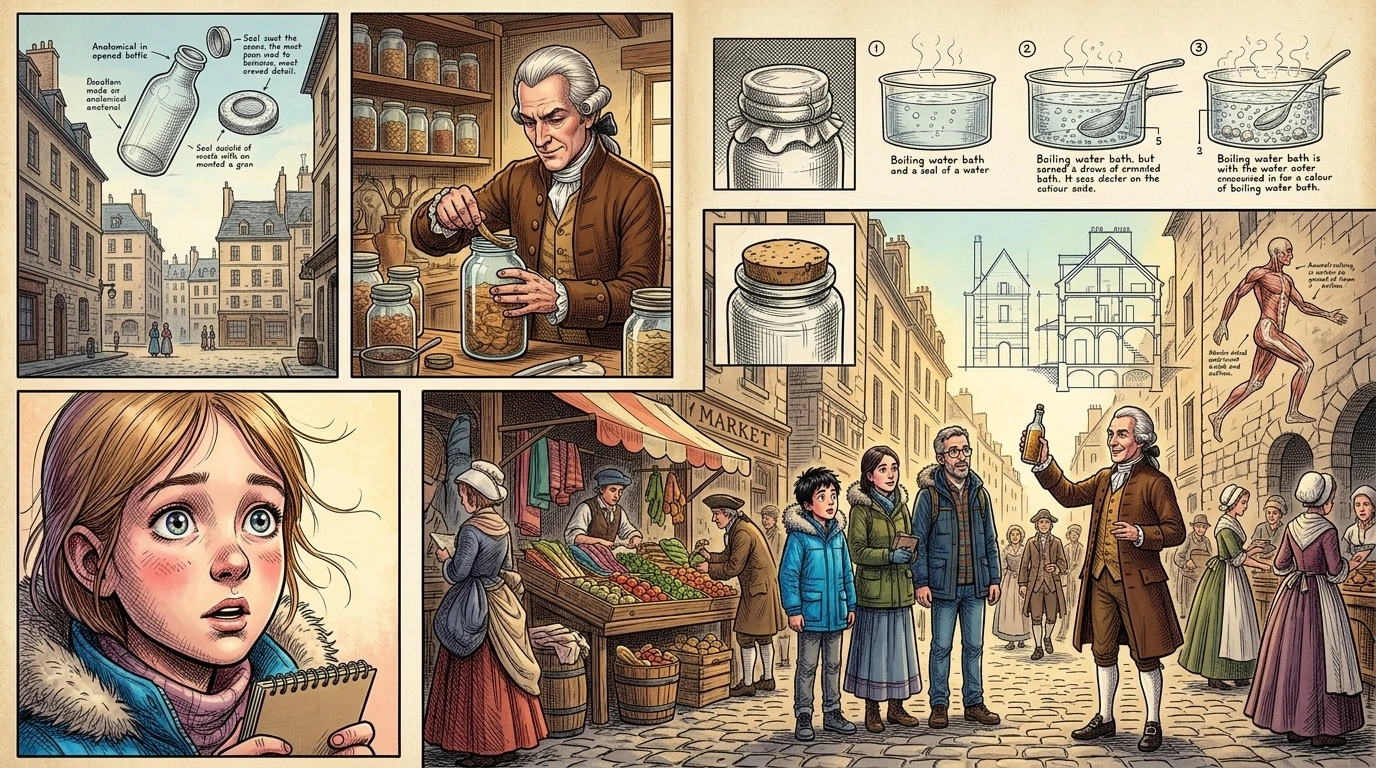
"1770s, France," the narrator began, "A time of great scientific advancement, but also great culinary innovation. The air in Paris buzzed with new ideas, both in the laboratory and in the kitchen." A transition visual appeared showing a bustling Parisian street scene, full of people in period clothing. "One man was about to change cooking forever...
Page 4
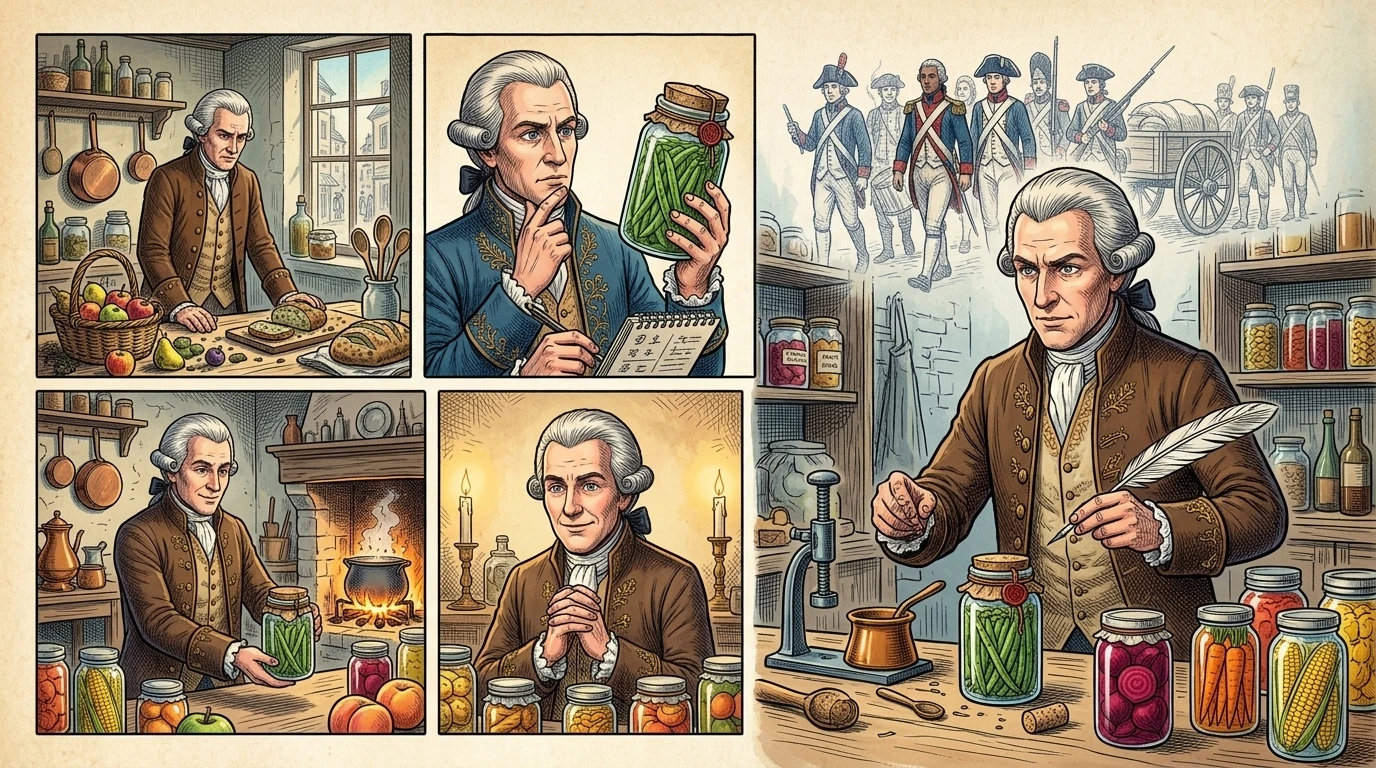
Nicolas Appert, a confectioner and chef, was fascinated by the problem of food preservation. He wanted to find a way to feed Napoleon's armies, and he was facing food spoilage that was killing soldiers! Appert, who later won a prize of 12,000 francs from the French government for his invention, dedicated his life to finding a solution.
Page 5
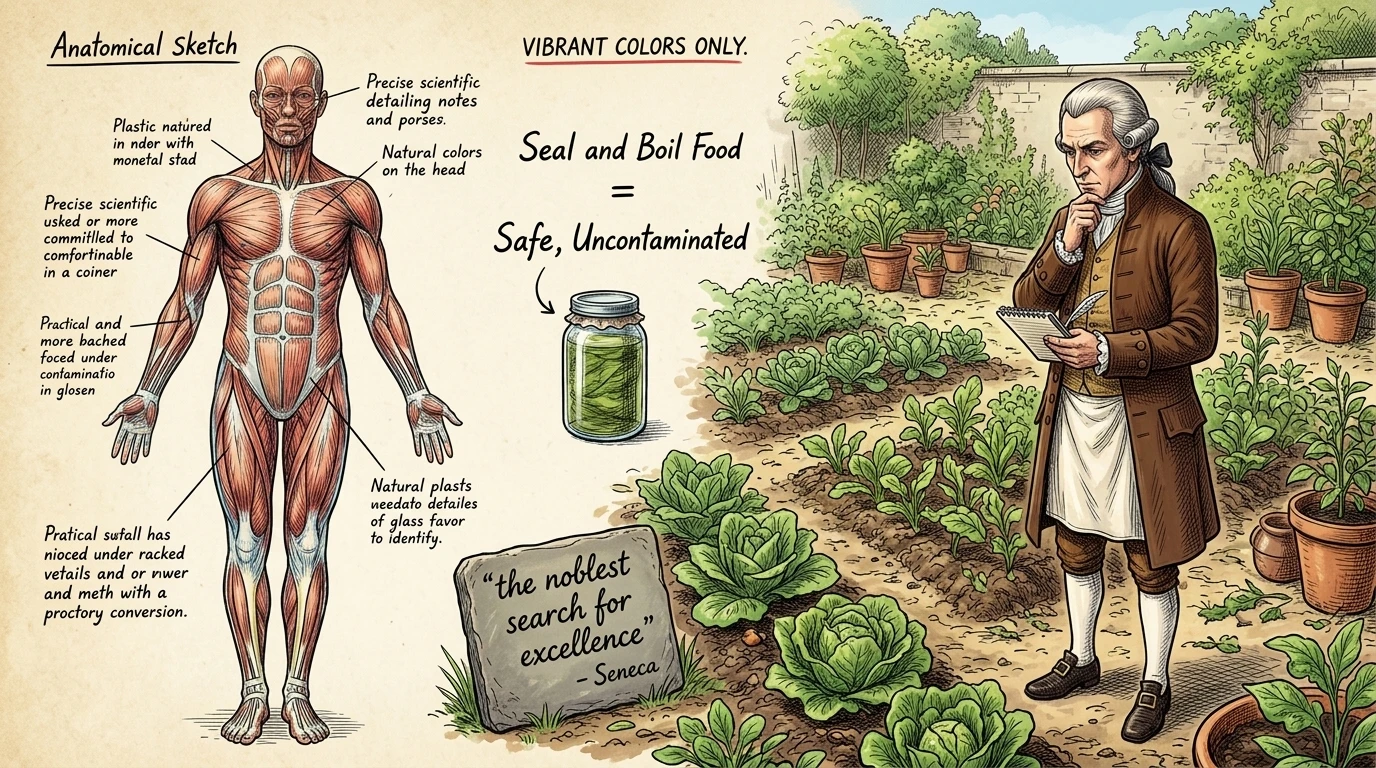
Appert often pondered as he walked through his garden. One day, while staring at his vegetable patch, he thought of something Pasteur would later prove: 'If you can seal and boil food, it will stay safe because it will not be contaminated'. He also loved poetry, and often said, 'The noblest search is that for excellence,' quoting the Roman philosopher Seneca.
Page 6
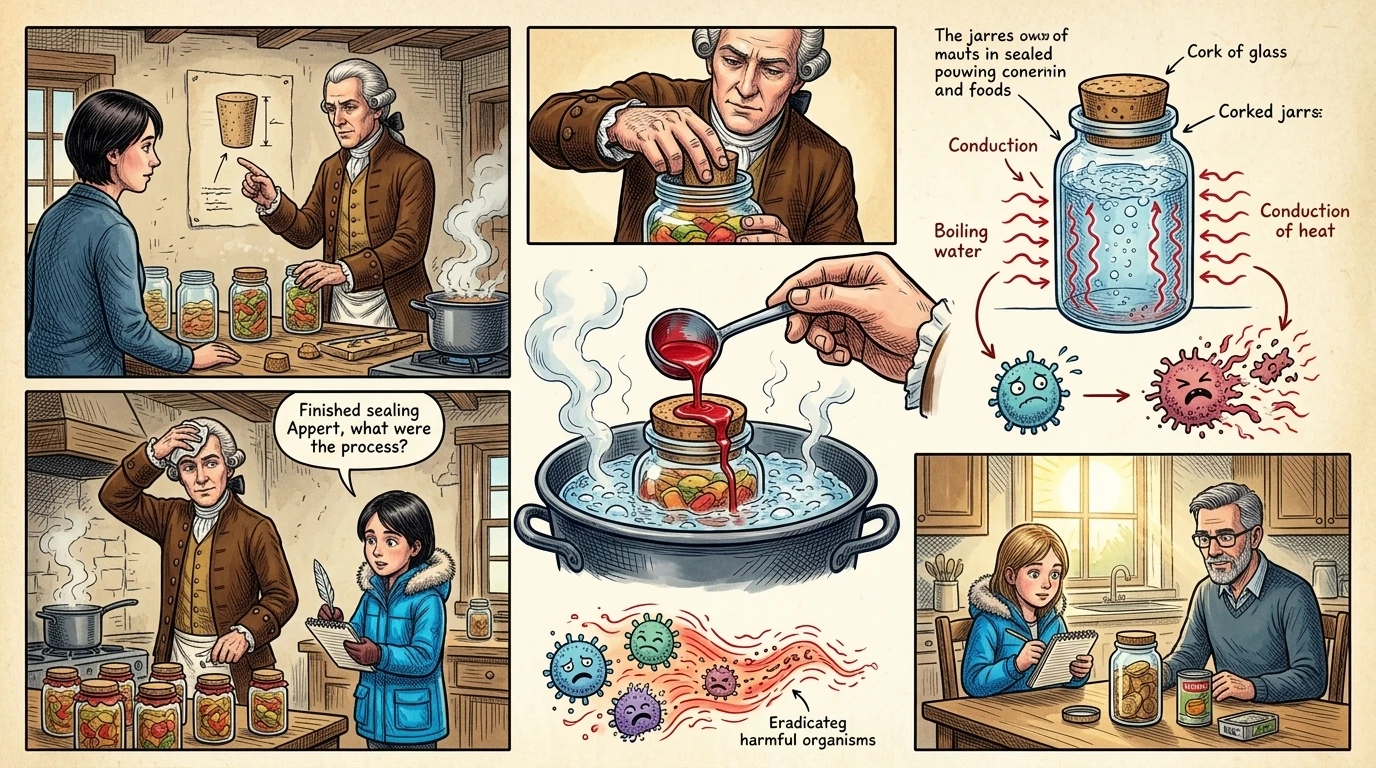
Appert began experimenting: He put food into glass jars, sealed them tightly with cork and wax, then boiled them in water. He observed that food treated this way lasted much longer! This simple process worked because the heat killed microbes that caused spoilage. This is called conduction.
Page 7
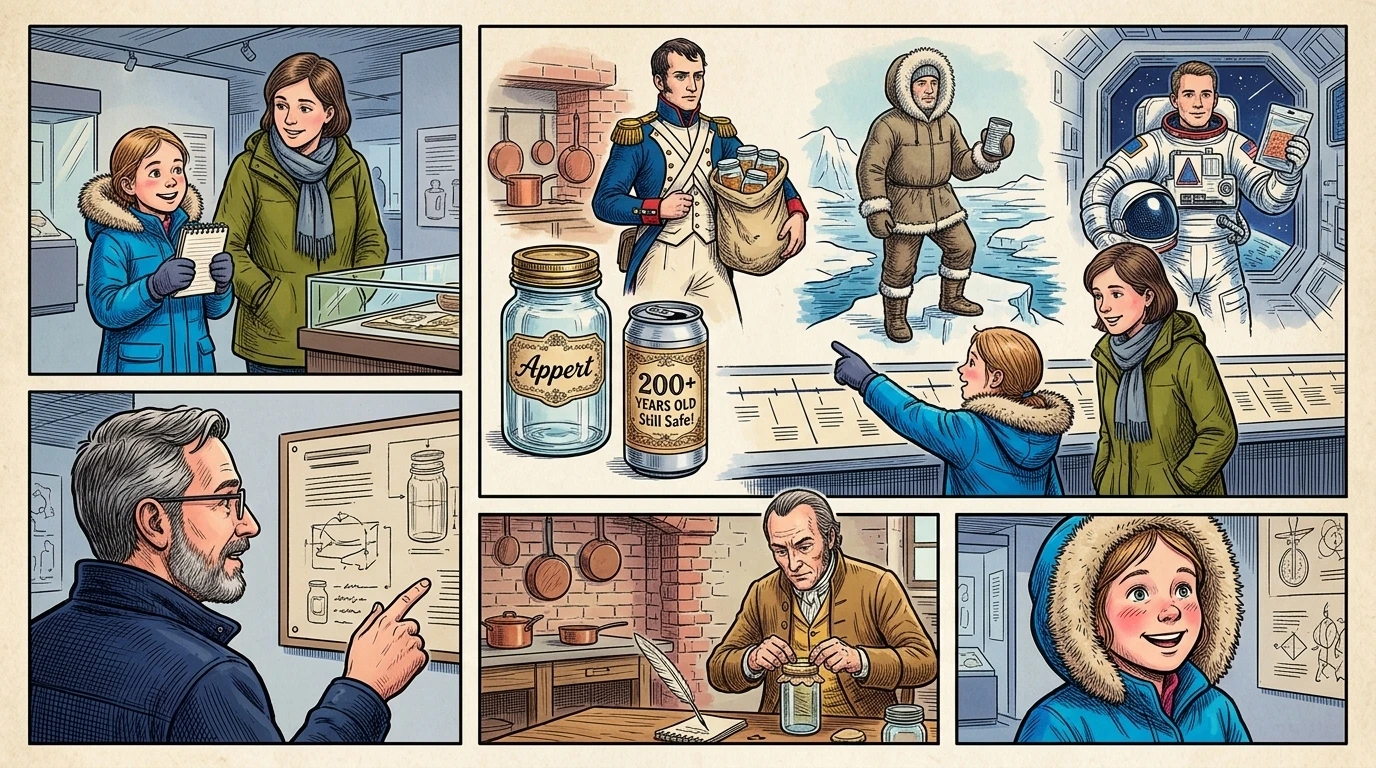
Appert's method, called 'appertisation', revolutionized food preservation. It allowed Napoleon's armies to be fed with safe, long-lasting food. Later it helped explorers, and even today, preserved food is vital for space travel. Today we use aluminum cans, but it's the same process! "Did you know that the oldest canned food ever found was over 200 years old and was still safe to eat?"
Page 8
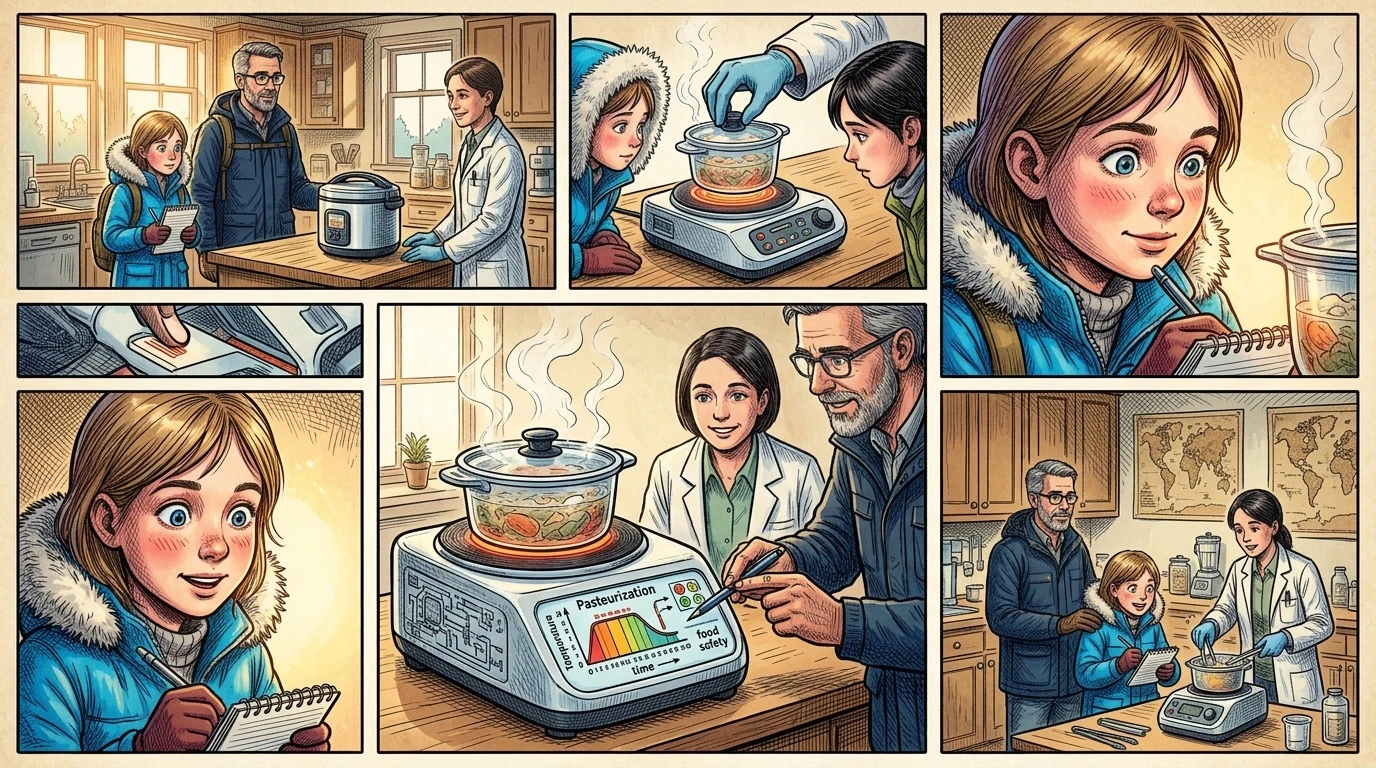
Back in the tundra, Adam watched the researchers carefully. "So," she said to her parents, "they're using some kind of chemical reaction to heat up the cooking pot, like a big, fancy hand warmer." Her dad nodded. "Exactly! And the sealed container keeps the food from spoiling, just like Appert discovered centuries ago, and it's very similar to pasteurization."
Page 9
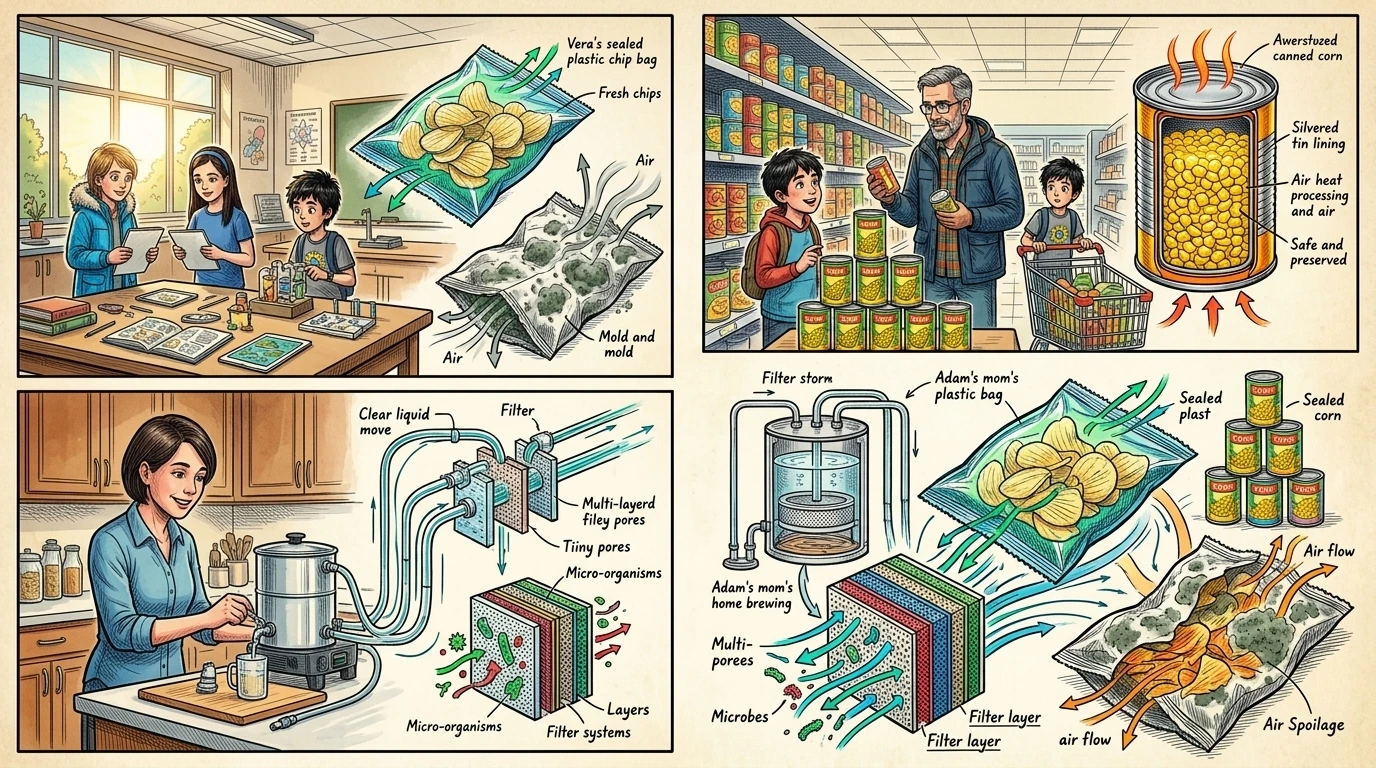
"That's amazing!" Adam exclaimed. "So it's just like mom's home brew that she filters for bacteria!" Adam's mom chuckled. "Exactly, sweetie!" Adam added, "This is just like Vera's project when she showed that a sealed bag of chips will not mold as fast as one with a hole! Hiro said that's why he only buys cans of corn instead of fresh!"
Page 10

\"So,\" Adam summarized, \"cooking is just chemistry controlling heat to change food safely!\" Suddenly, a researcher approached.
About this story
- Location: France
- Audience: kids (ages 6–12)
Read Wonder Science on your phone
Wonder Science is available on Android. Get Wonder Science on Google Play.