The Comet Dust Puzzle's Hidden Echo
The Comet Dust Puzzle's Hidden Echo — an illustrated science story, set in Italy. 10 illustrated pages, free to read on Wonder Science.
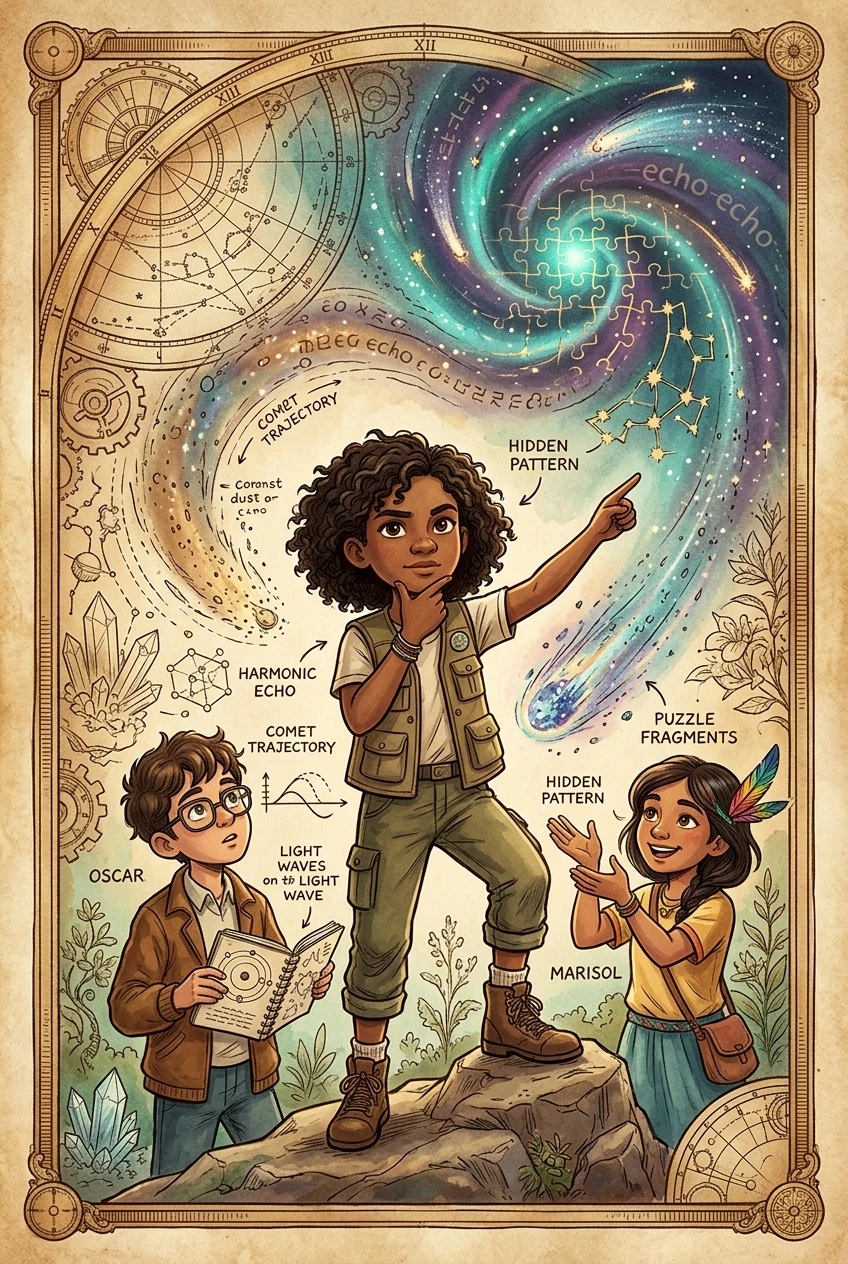
Page 1
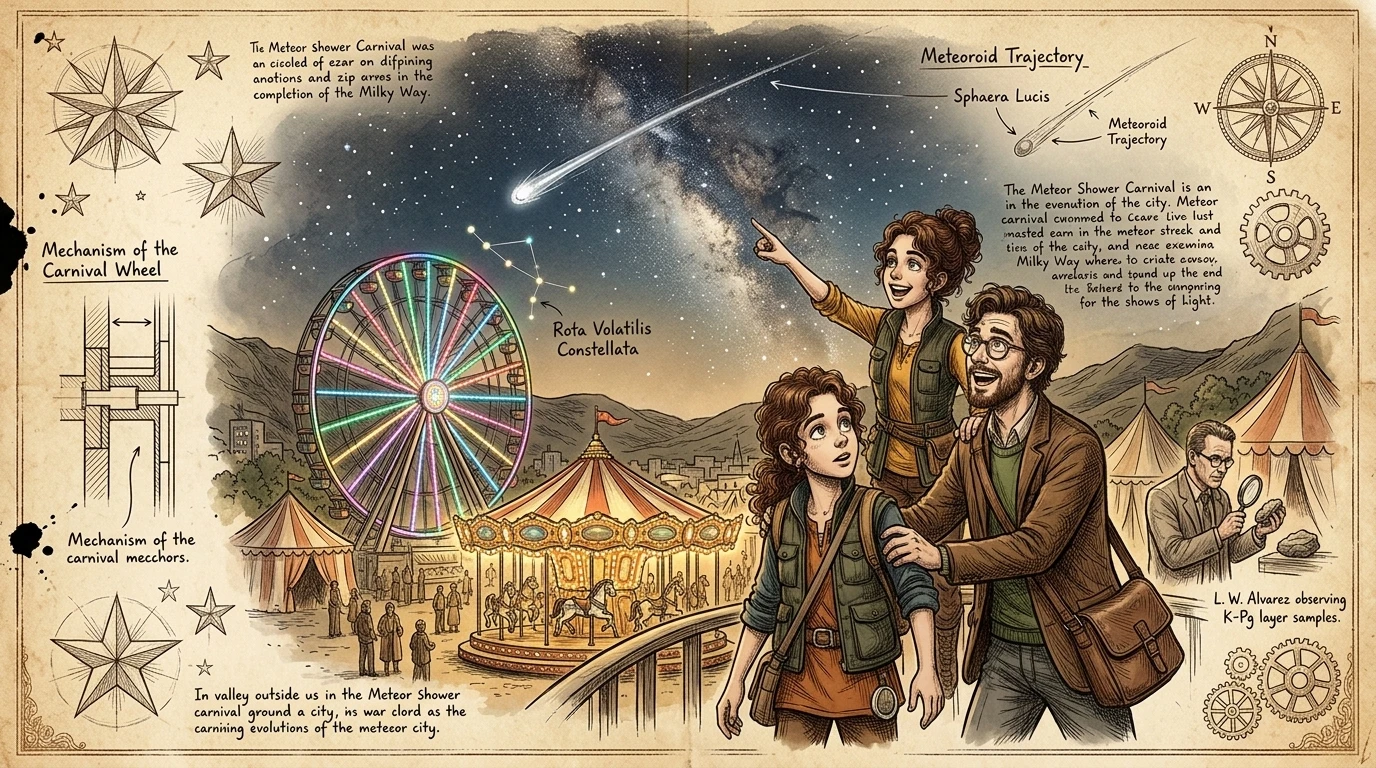
The Meteor Shower Carnival glowed in a valley just outside the city, its Ferris wheel a spinning constellation of lights. "Look!" shouted Marisol, pointing from the top of the carousel. "I can see the whole Milky Way from here!" Oscar squinted at the sky as a silver streak zipped across the darkness. "Another one!" he exclaimed, grabbing Ezra's arm in excitement. "Are those really stars falling?"
Page 2
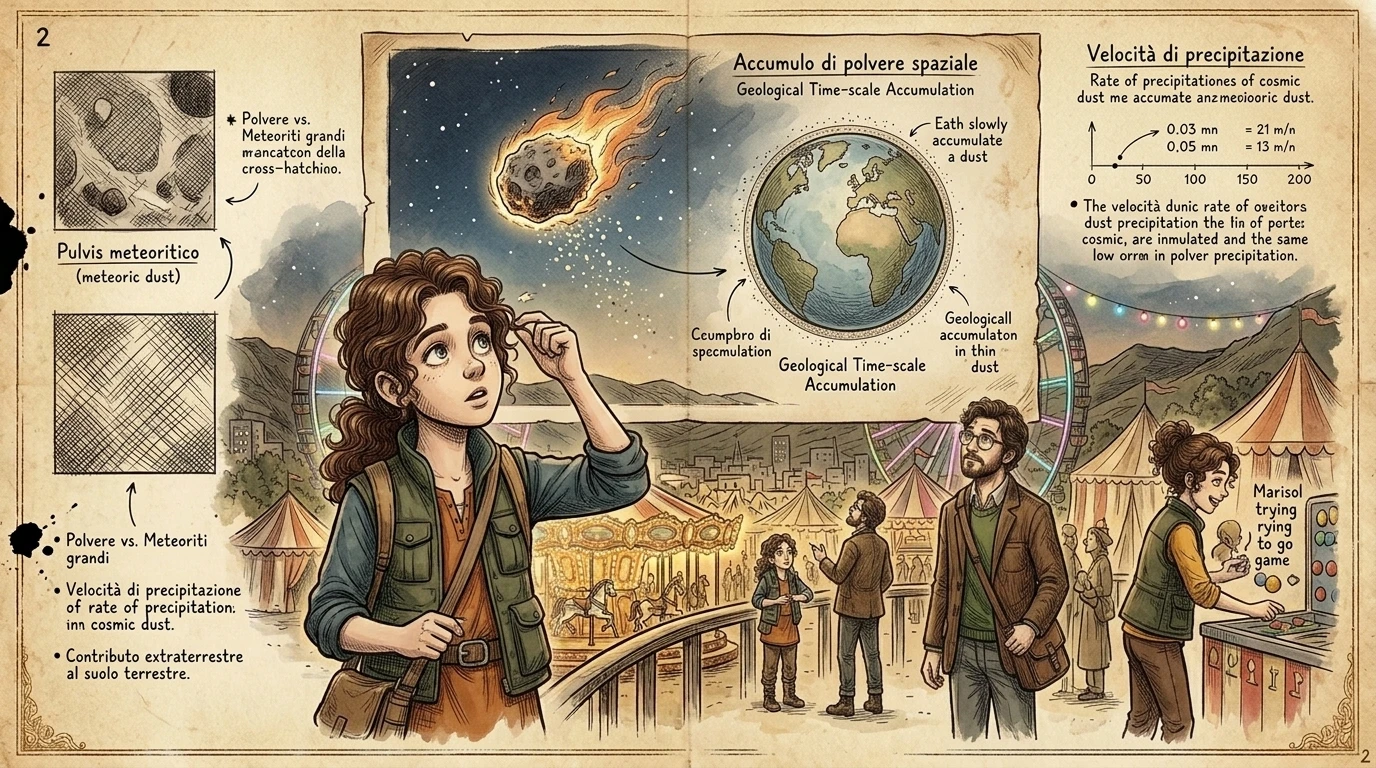
"Not stars, but space rocks burning up," Ezra corrected gently, her eyes wide with thought. "Everything up there is shedding dust, like cosmic glitter." She looked down at the ground, then back up at the sky. "I wonder, does all that space dust just pile up on Earth over millions of years? If so, where is it?"
Page 3
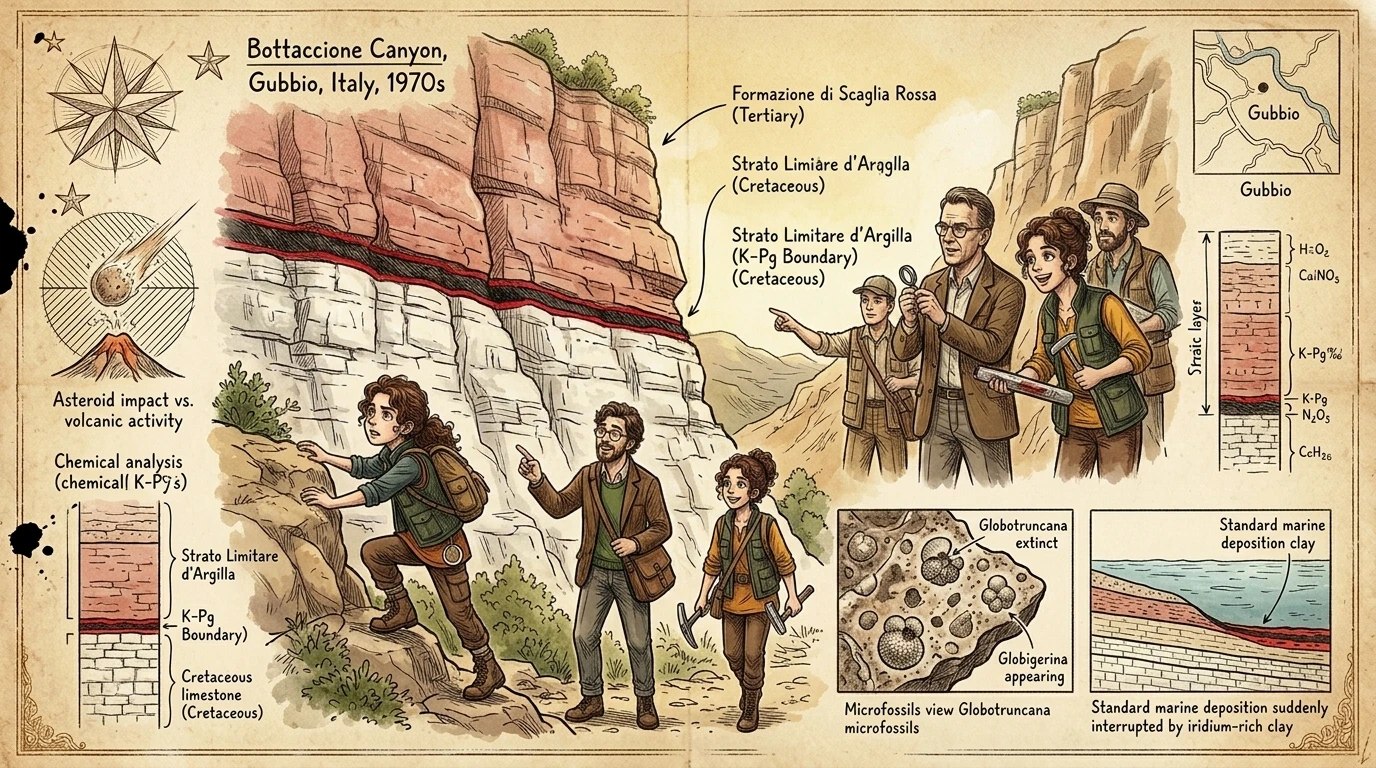
Their question echoed through time, landing in a rocky canyon near Gubbio, Italy, in the 1970s. A team of geologists stared at a peculiar sight exposed in the cliffside. Between a thick layer of white Cretaceous rock and a pinkish layer of Tertiary rock was a single, thin, dark line of clay. This strange layer was a shadow in the Earth's storybook, a page that didn't seem to belong.
Page 4
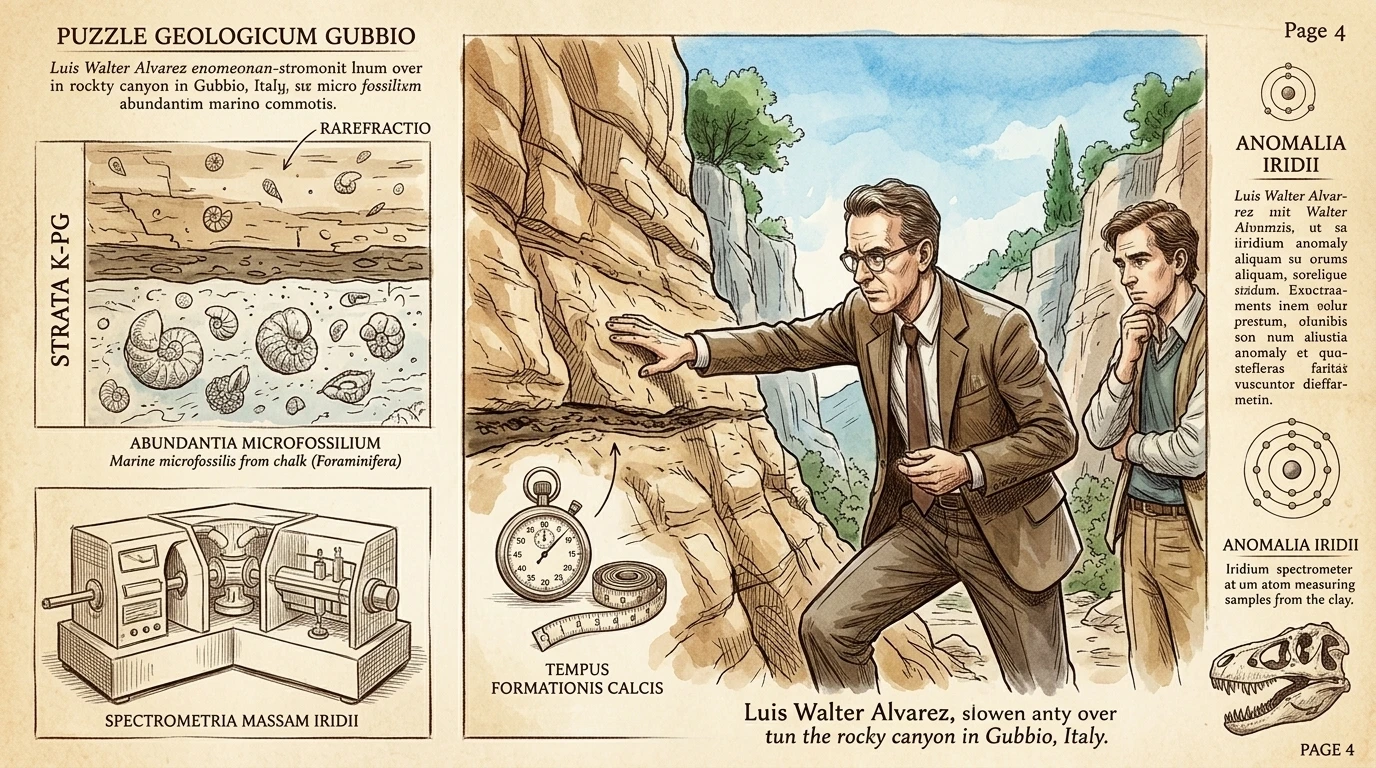
"This makes no sense, Walter," said a man with determined eyes, running his hand over the rock. This was Nobel Prize-winning physicist Luis Walter Alvarez, and he was here with his son, geologist Walter Alvarez. While Walter saw a geological puzzle, Luis saw a measurement problem. "How long did it take for this tiny layer of clay to form?"
Page 5
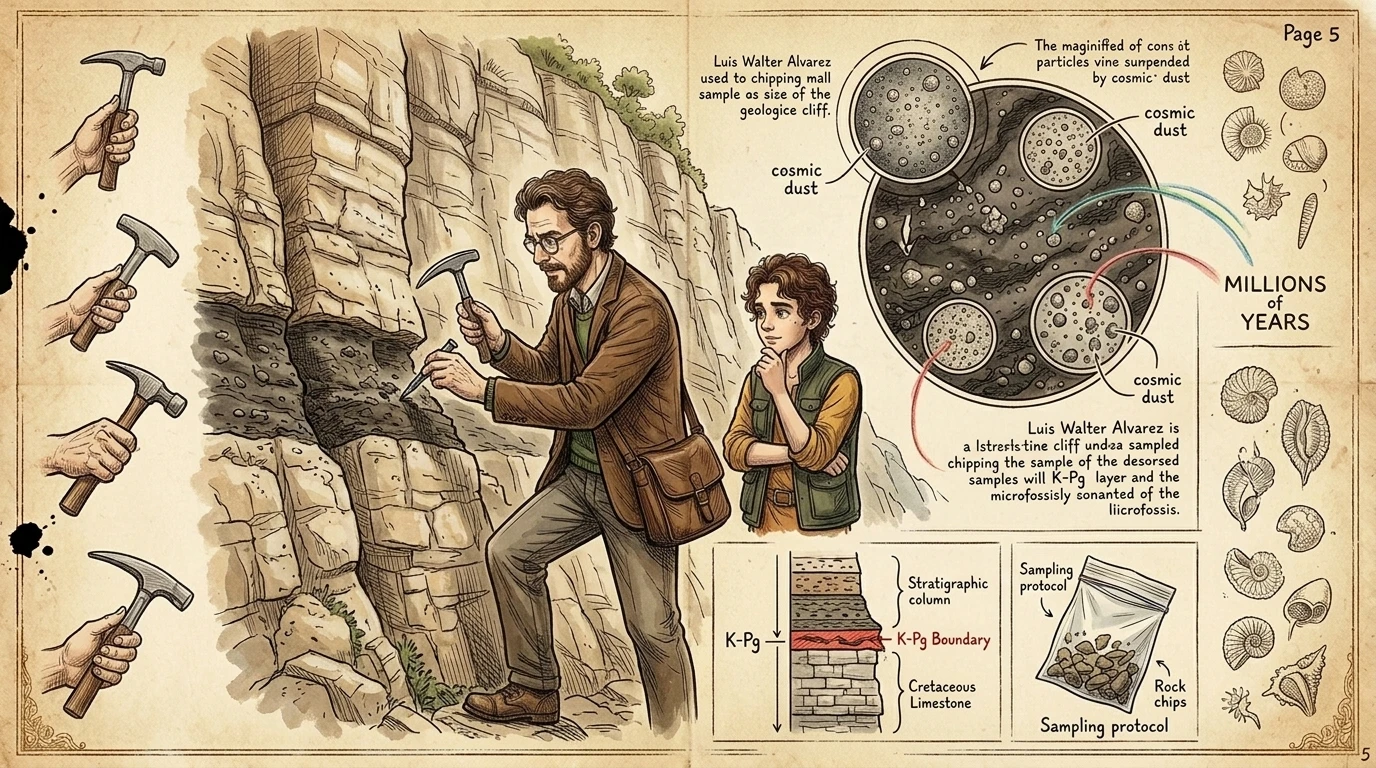
Luis wasn't a geologist, but he approached every mystery with relentless perseverance. "If we can measure how much cosmic dust is in this clay, we can calculate how many years it represents," he reasoned aloud. He carefully chipped away a small sample of the dark clay, his movements precise and full of purpose. His son watched, knowing his father's mind was seeing particles and time where others just saw dirt.
Page 6
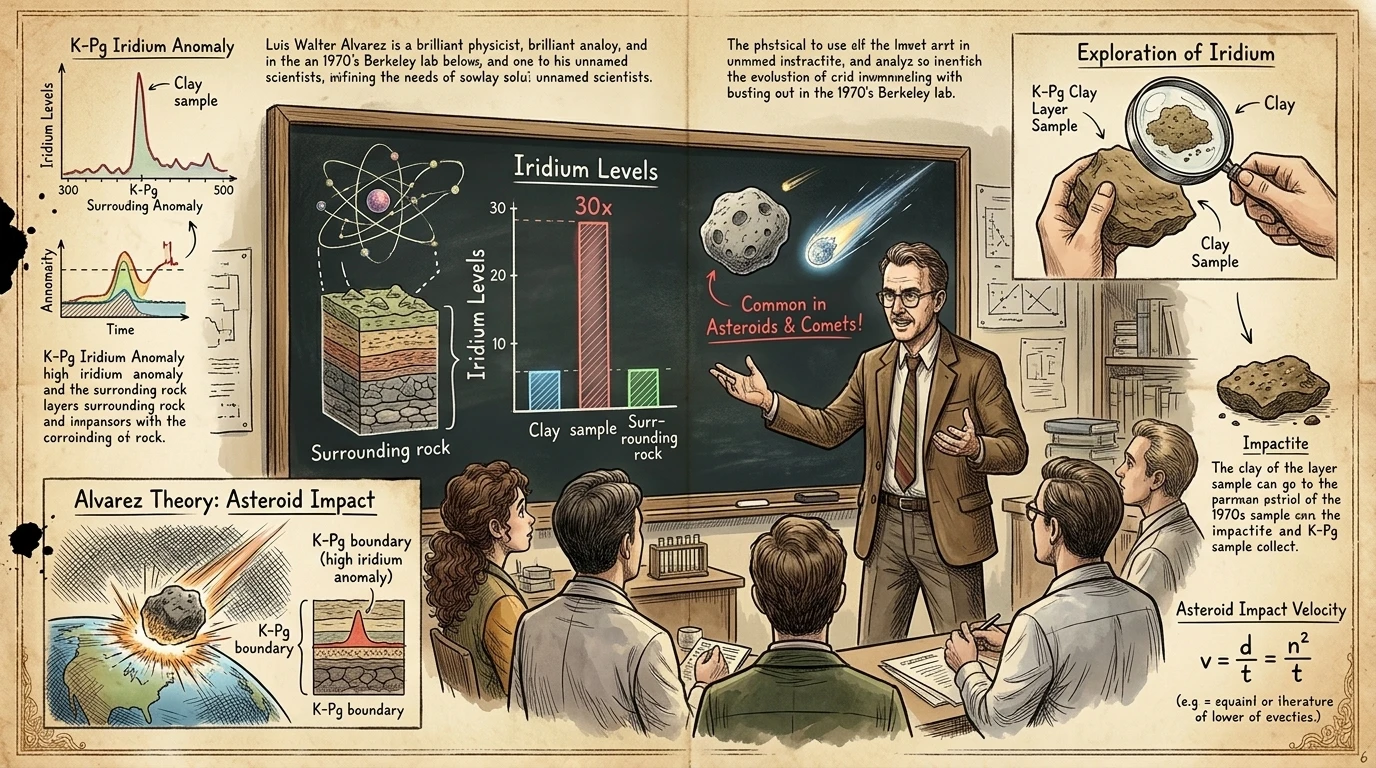
Back in his lab at Berkeley, the results were shocking. The clay contained over 30 times more iridium than the rock layers above or below it! "Iridium is rare on Earth's surface," Luis explained to his team, his voice electric with excitement. "But it's common in asteroids and comets!" This thin layer of clay wasn't from Earth at all; it was the dusty echo of something from deep space.
Page 7
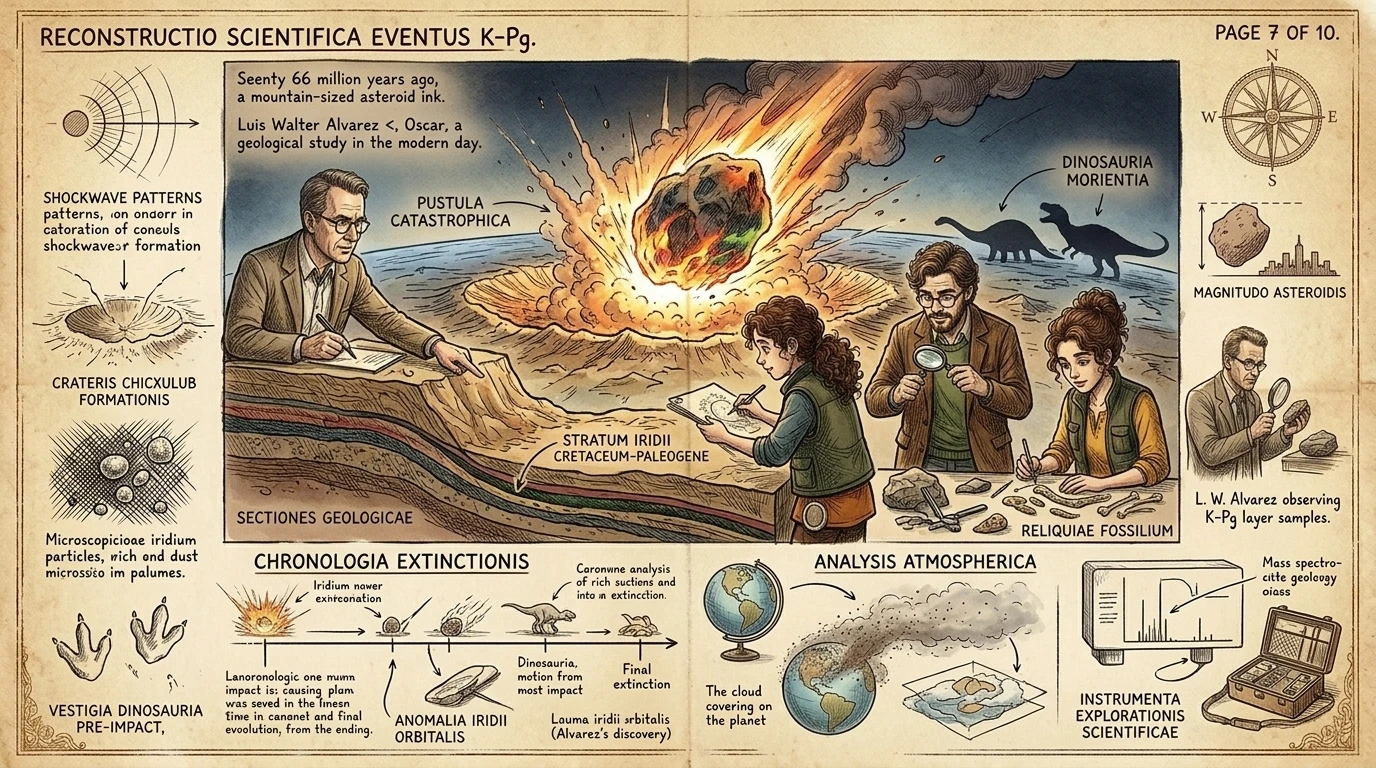
The Alvarez team proposed a mind-blowing theory: sixty-six million years ago, an asteroid the size of a mountain slammed into Earth. The impact blasted trillions of tons of vaporized rock and iridium-rich dust into the atmosphere, blocking the sun for years. This catastrophic event caused the mass extinction that wiped out the dinosaurs, and the thin clay layer was the dust that settled afterward, all over the world.
Page 8
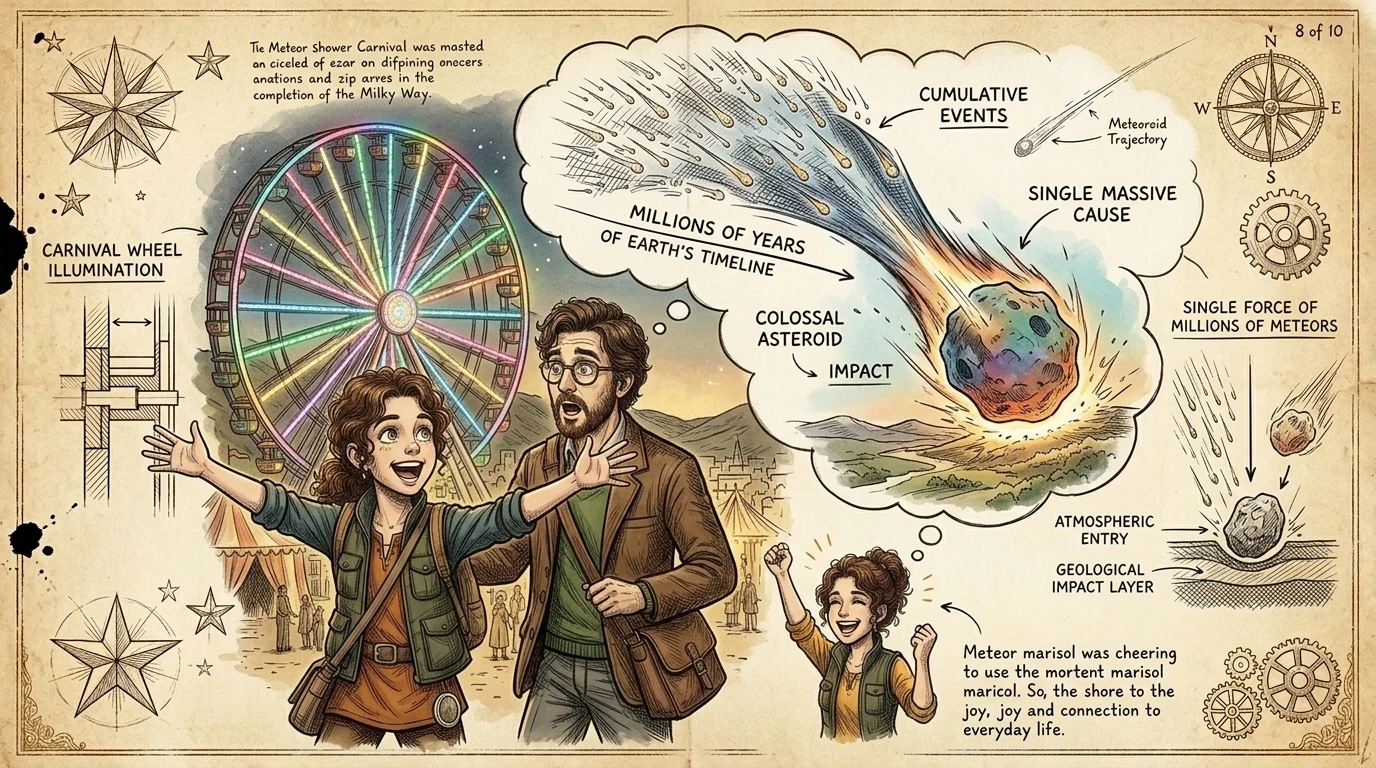
Back at the carnival, Ezra's eyes shone as brightly as the Ferris wheel. "So that's the answer!" she exclaimed to her friends. "The space dust is there, hidden in that thin layer of clay!" Oscar's jaw dropped. "Whoa, so that impact was like a billion years of normal meteor dust falling all at once!"
Page 9
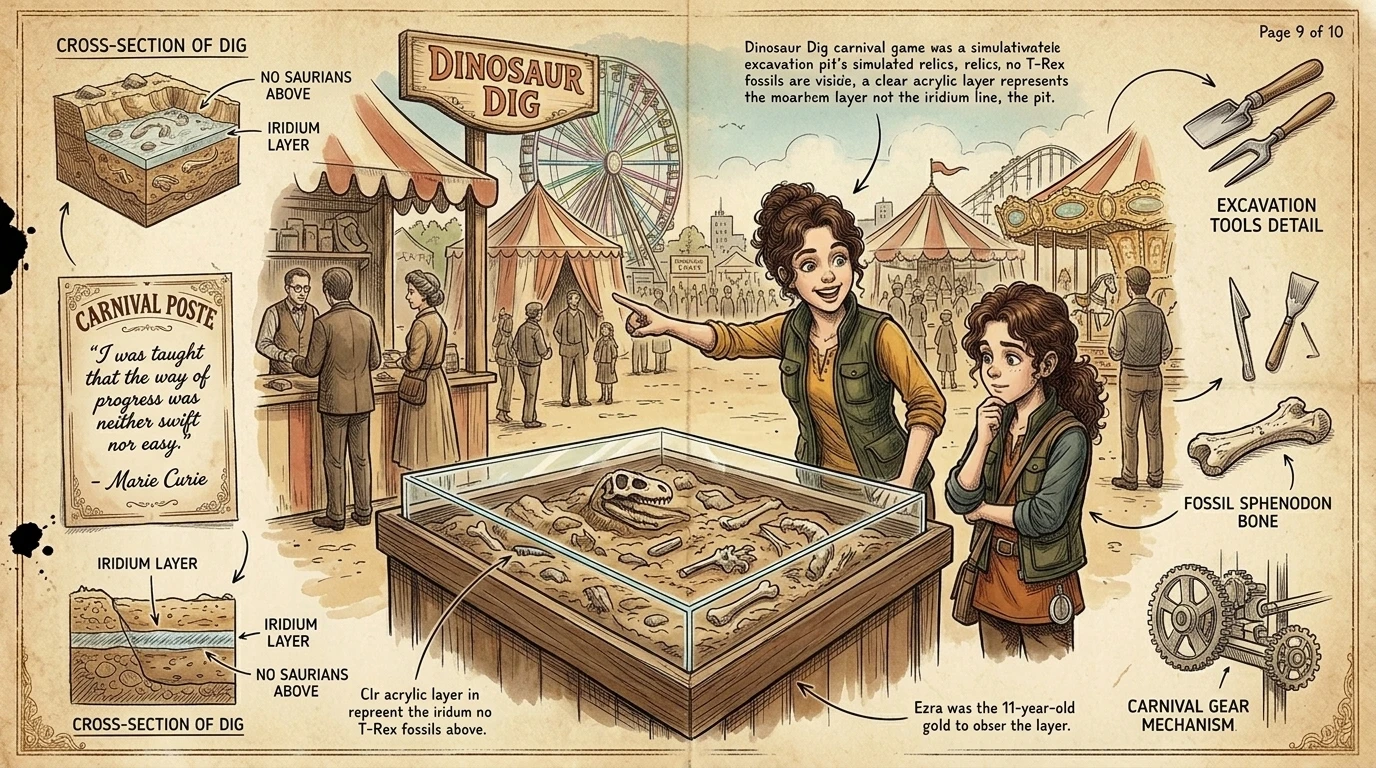
Marisol pointed to a 'Dinosaur Dig' carnival game. "And that's why they never find T-Rex fossils above that iridium line!" Ezra nodded, recalling the years it took for the Alvarez theory to be accepted. "It reminds me of what the scientist Marie Curie said: 'I was taught that the way of progress was neither swift nor easy.' They had to persevere to prove it."
Page 10
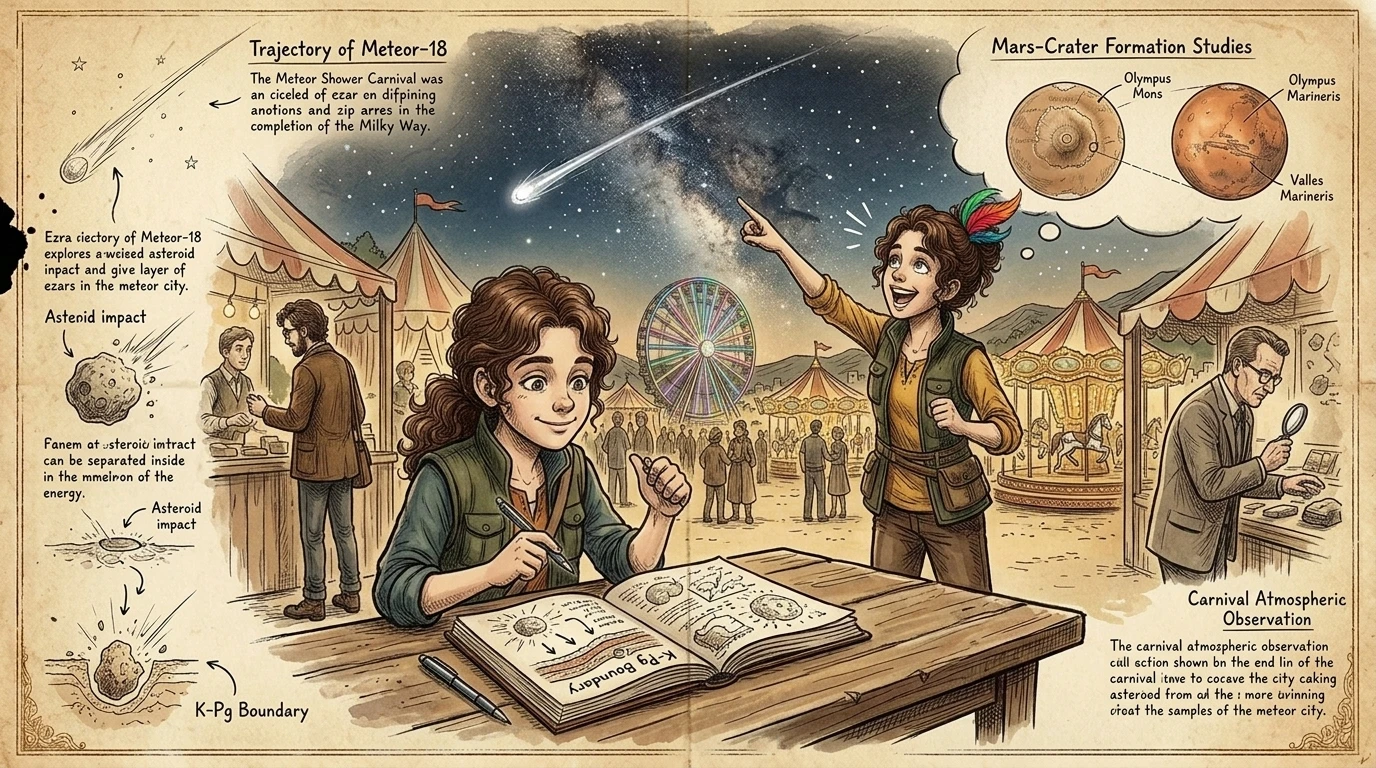
"So a physicist and a geologist used space dust to solve one of the biggest mysteries on Earth," Ezra summarized, scribbling in her notebook. She clicked her pen shut with a satisfied smile. Watching another meteor streak across the sky, Marisol looked up and asked, "If asteroids hit Earth, do they hit other planets, too? I wonder what the craters on Mars look like!"
About this story
- Location: Italy
- Audience: kids (ages 6–12)
Read Wonder Science on your phone
Wonder Science is available on Android. Get Wonder Science on Google Play.