The Doppler Effect in Real Life
The Doppler Effect in Real Life — an illustrated science story. 10 illustrated pages, free to read on Wonder Science.
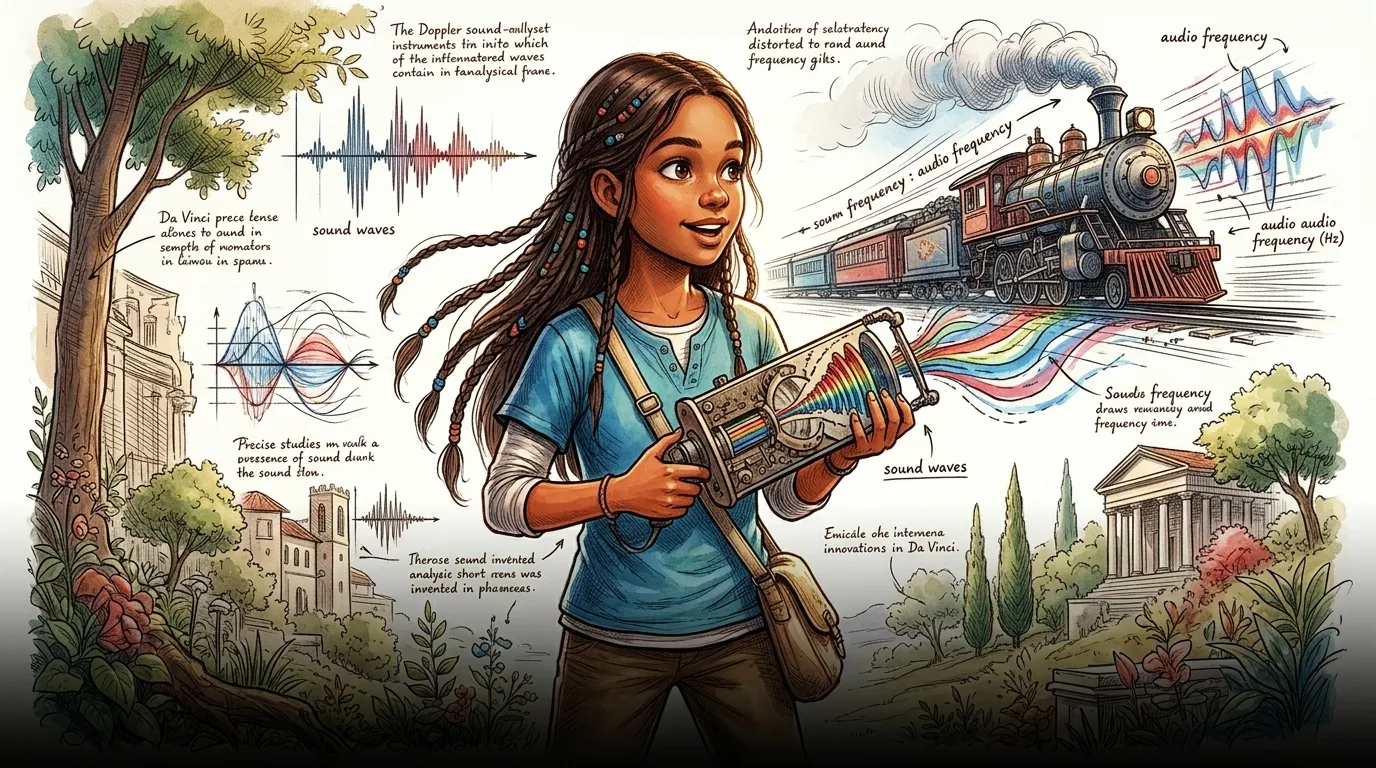
Page 1
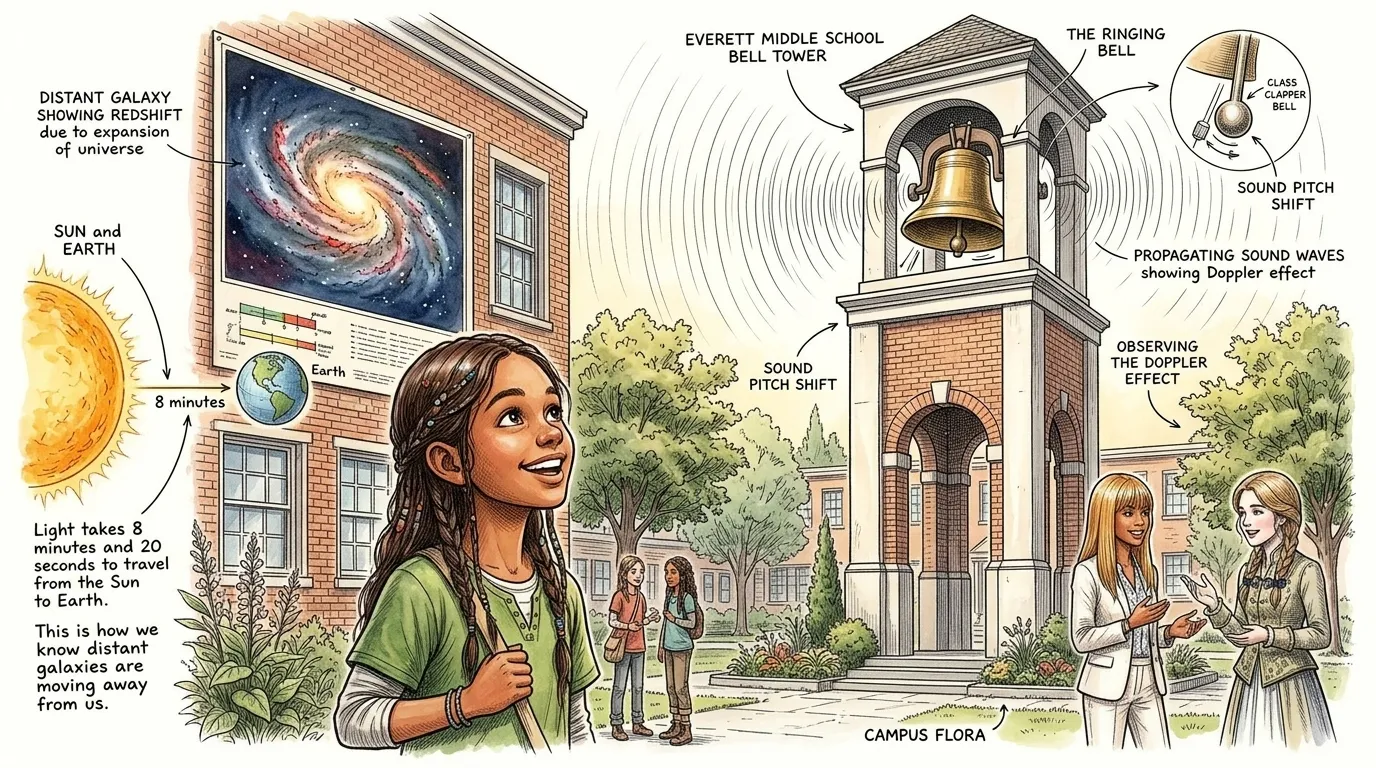
The Doppler effect. It's happening right now at Everett Middle School in San Francisco. What seems like an ordinary school bell ringing is actually a wave of sound, shifting in pitch as it races through the air.\n\n Fact: The Doppler effect also works with light! This is how we know distant galaxies are moving away from us. Fun fact: Light takes 8 minutes and 20 seconds to travel from the Sun to Earth.
Page 2
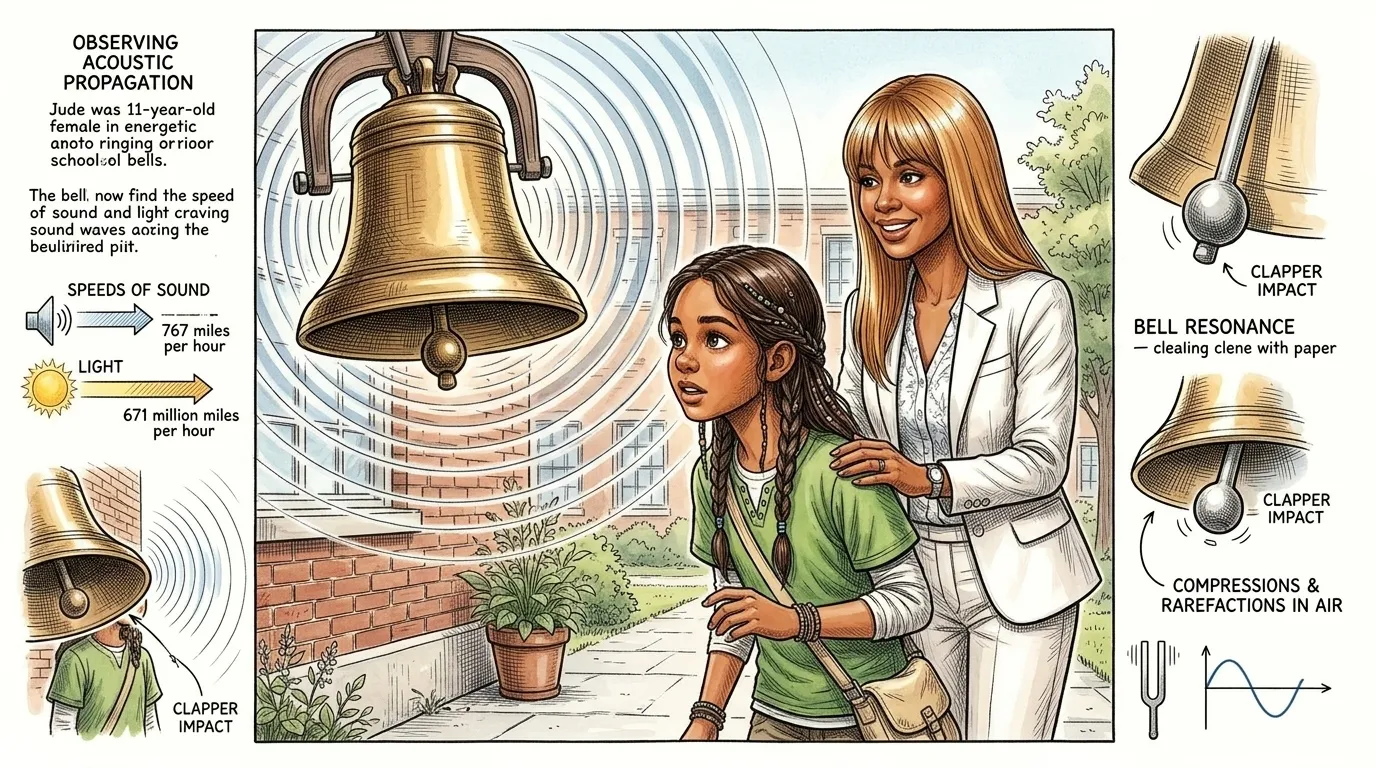
As the bell rings, sound waves travel outward. These waves are compressions and rarefactions in the air, like ripples in a pond, but invisible. When the bell is stationary, the waves spread out evenly.\n\n"'Hey Jude, whatcha lookin' at?'"\n\n Fact: Sound travels about 767 miles per hour (1,234 kilometers per hour) in dry air, depending on the temperature. The speed of light is way faster—about 671 million miles per hour!
Page 3
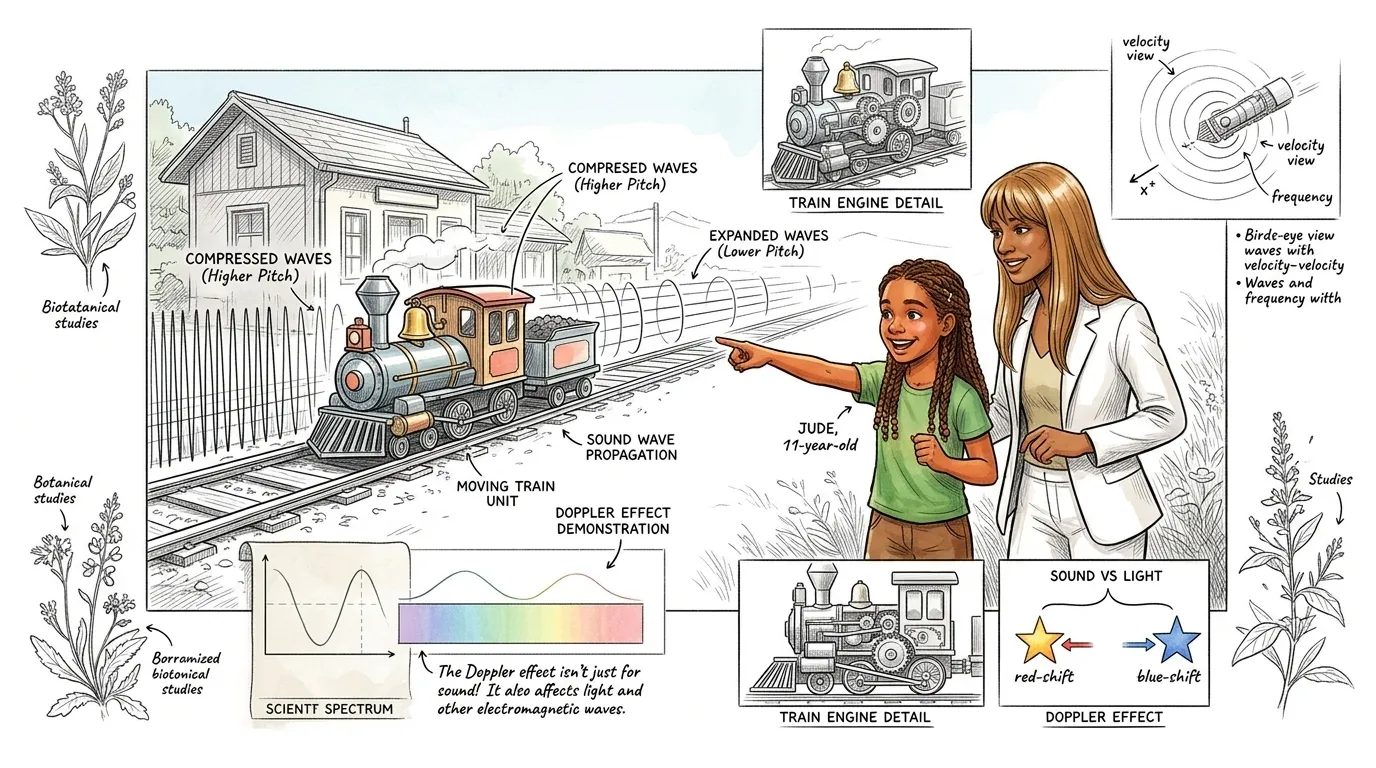
But what happens when the source of the sound is moving? The waves in front of the moving object get compressed, while the waves behind get stretched out. This change in wavelength is what we perceive as a change in pitch.\n\n"That's Emilia, my physics tutor. I'll be right back!"\n\n Fact: The Doppler effect isn't just for sound! It also affects light and other electromagnetic waves.
Page 4
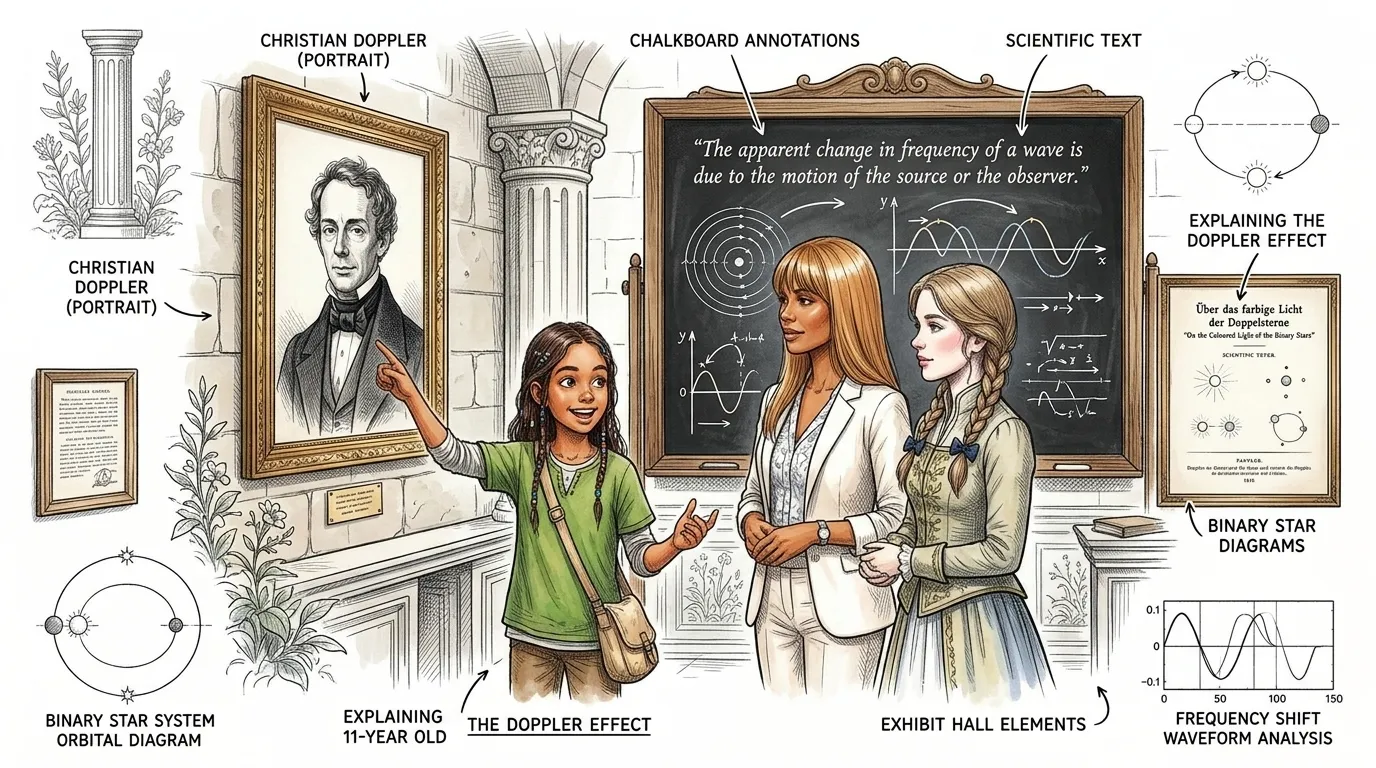
In 1842, Christian Doppler, an Austrian mathematician and physicist, described this phenomenon. He realized that the observed frequency of a wave depends on the relative motion between the source and the observer.\n\n"Doppler said that 'The apparent change in frequency of a wave is due to the motion of the source or the observer'."\n\n Fact: Doppler first presented his theory in a paper titled 'Über das farbige Licht der Doppelsterne' ('On the Coloured Light of the Binary Stars').
Page 5
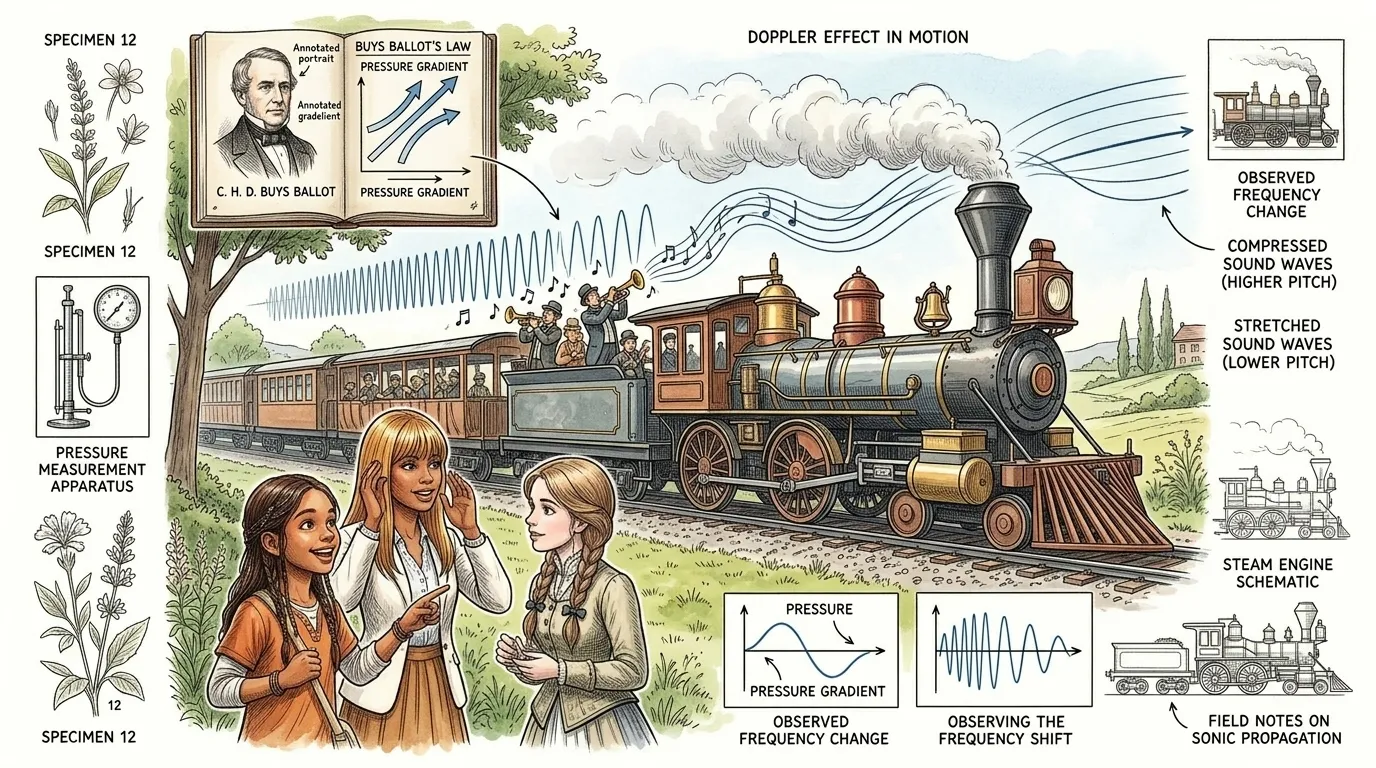
Doppler's theory was confirmed experimentally by Buys Ballot in 1845. Ballot had a group of musicians play a single note on trumpets from a moving train. Observers on the ground noticed the pitch changed as the train passed.\n\n Fact: Buys Ballot was a Dutch meteorologist and physicist. He also formulated Buys Ballot's law, which relates wind direction to pressure gradients.
Page 6
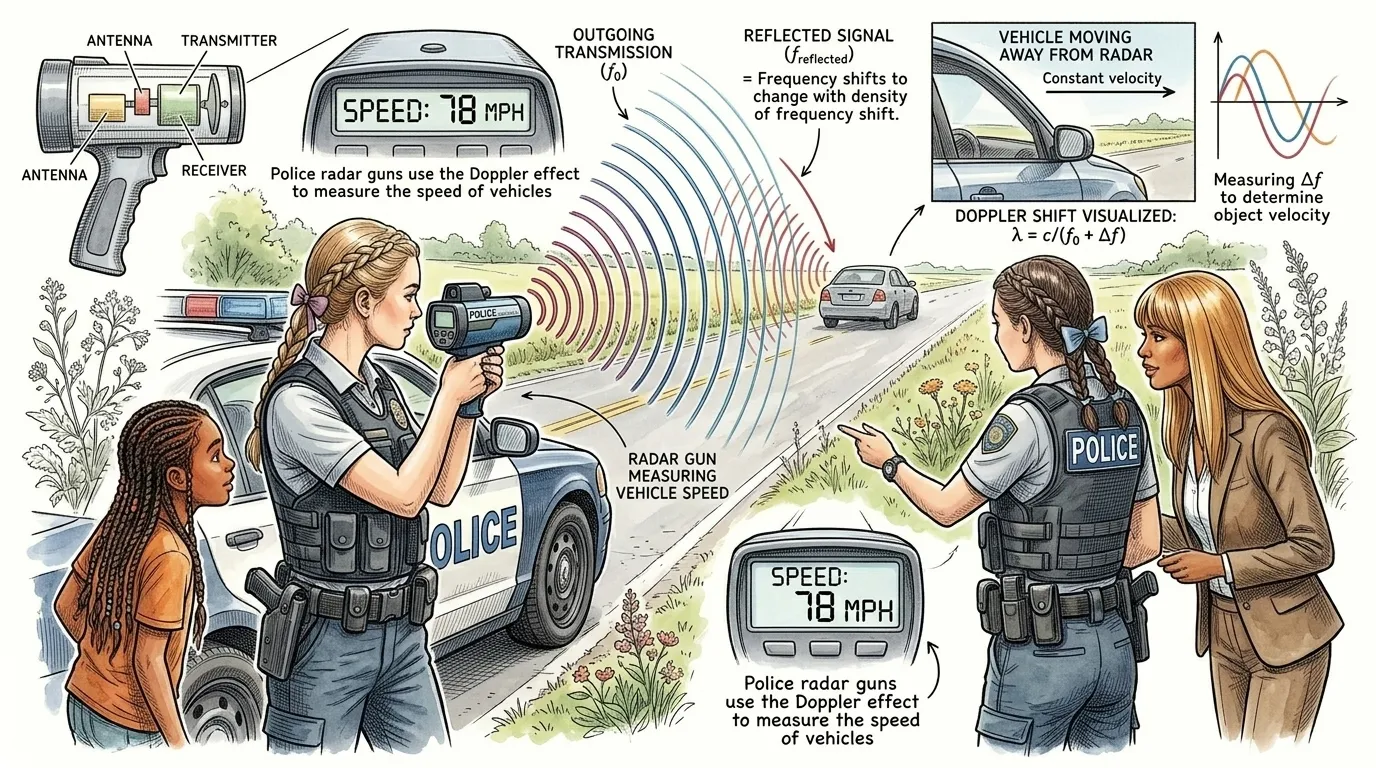
The amount of frequency shift is directly related to the speed of the moving object. By measuring this shift, we can determine how fast something is moving – without even seeing it.\n\n Fact: Police radar guns use the Doppler effect to measure the speed of vehicles.
Page 7
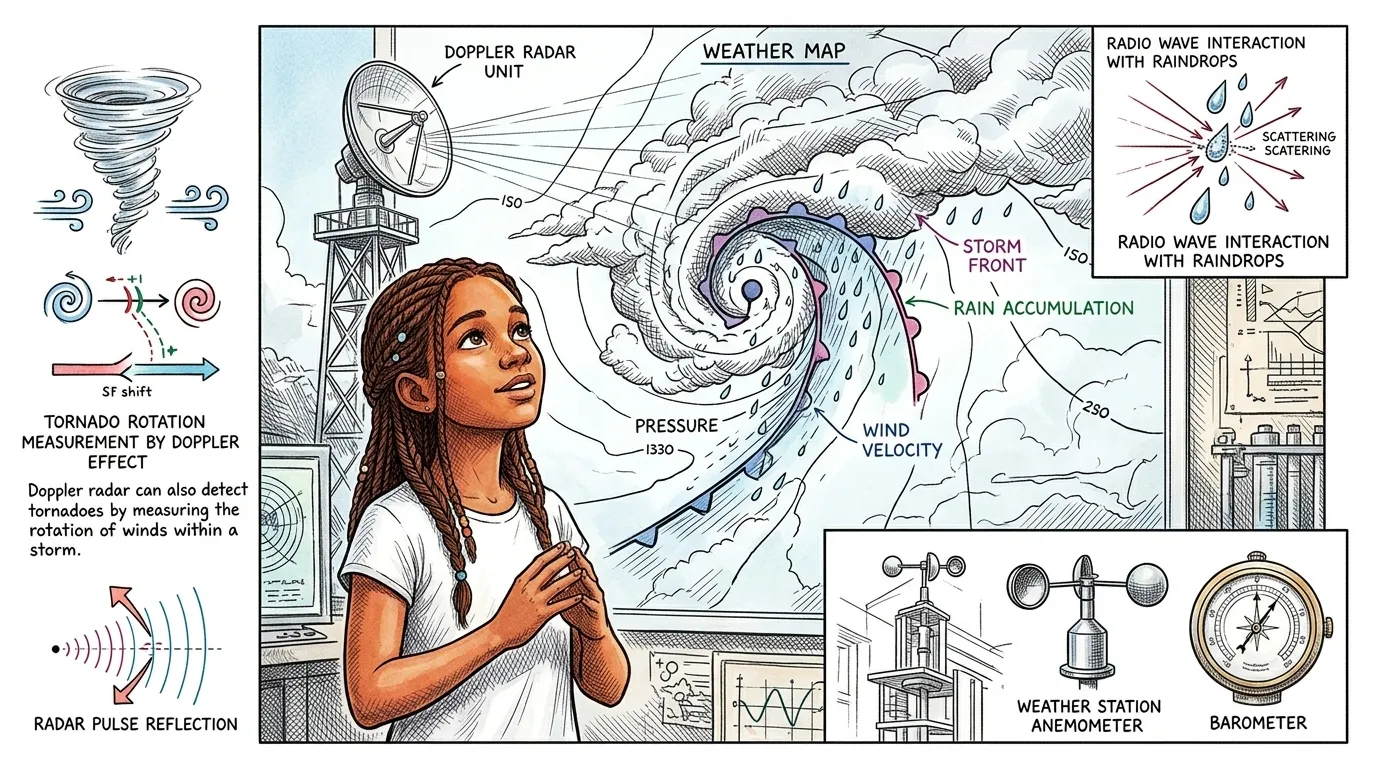
Meteorologists use the Doppler effect in weather radar to track the movement of storms. By bouncing radio waves off raindrops, they can measure the wind speed inside a storm, even from hundreds of miles away.\n\n"Imagine knowing where a storm is heading just by listening to its echoes!"\n\n Fact: Doppler radar can also detect tornadoes by measuring the rotation of winds within a storm.
Page 8
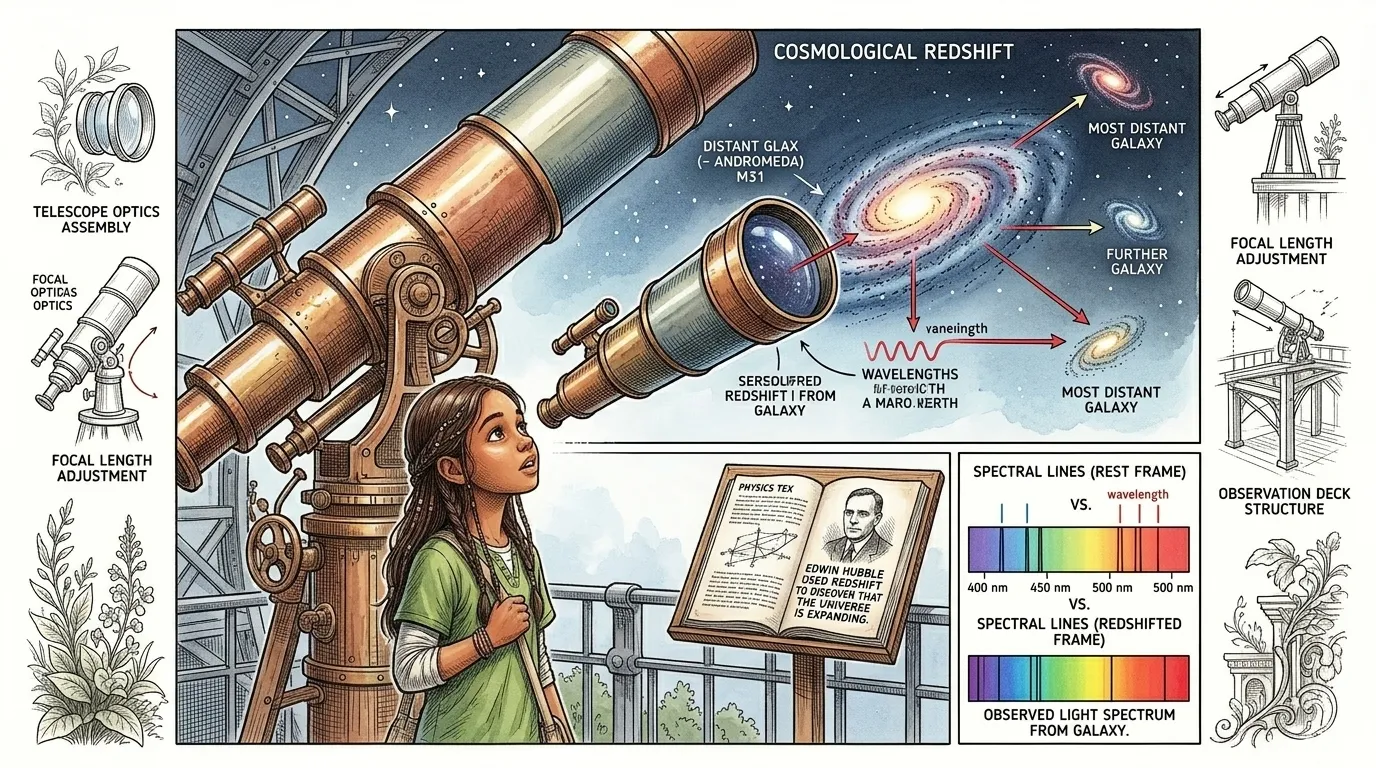
Astronomers use the Doppler effect to measure the speed of distant galaxies. Light from galaxies moving away from us is 'redshifted,' meaning the wavelengths are stretched out. The greater the redshift, the faster the galaxy is receding.\n\n"So the universe is expanding?"\n\n Fact: Edwin Hubble used redshift to discover that the universe is expanding.
Page 9
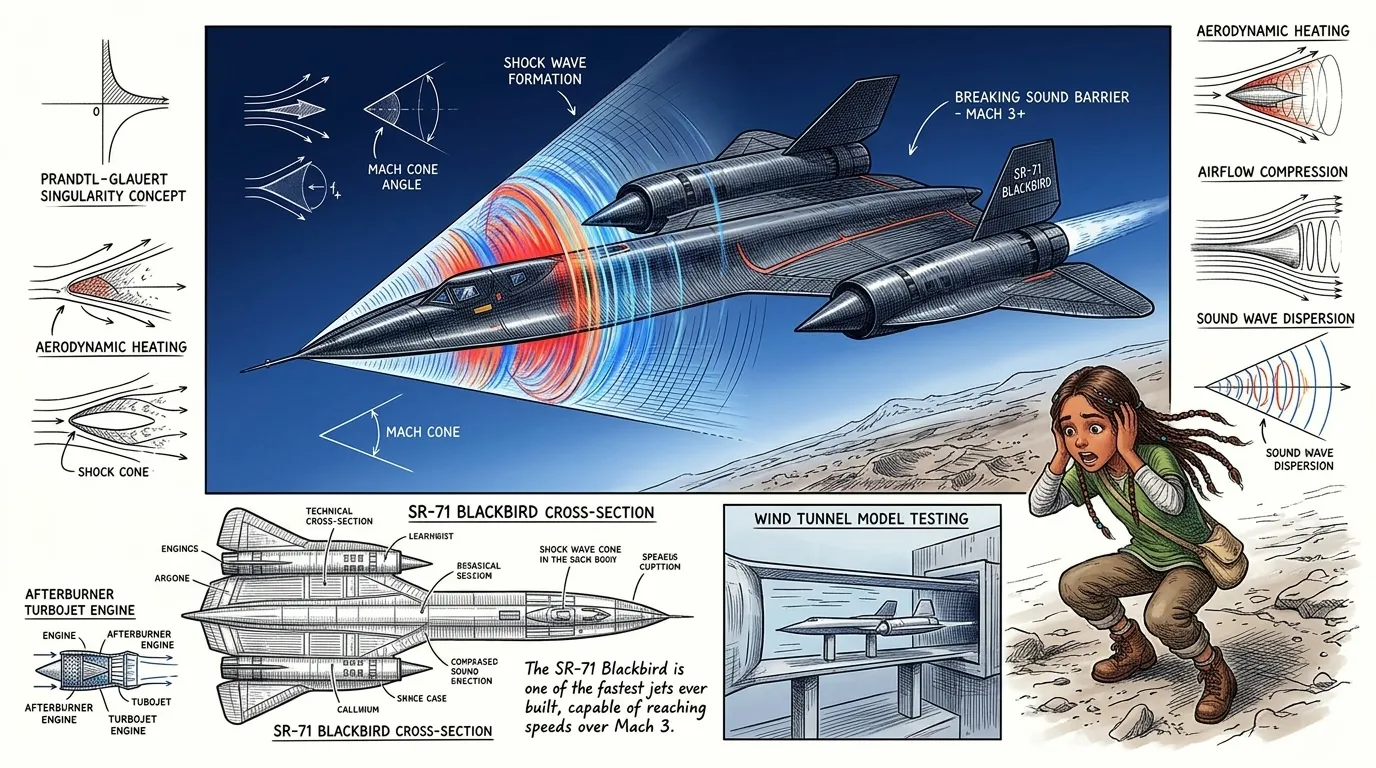
When an object moves faster than the speed of sound, it creates a sonic boom. The sound waves pile up in front of the object, creating a cone-shaped shock wave.\n\n"That's so loud!"\n\n Fact: The SR-71 Blackbird is one of the fastest jets ever built, capable of reaching speeds over Mach 3.
Page 10
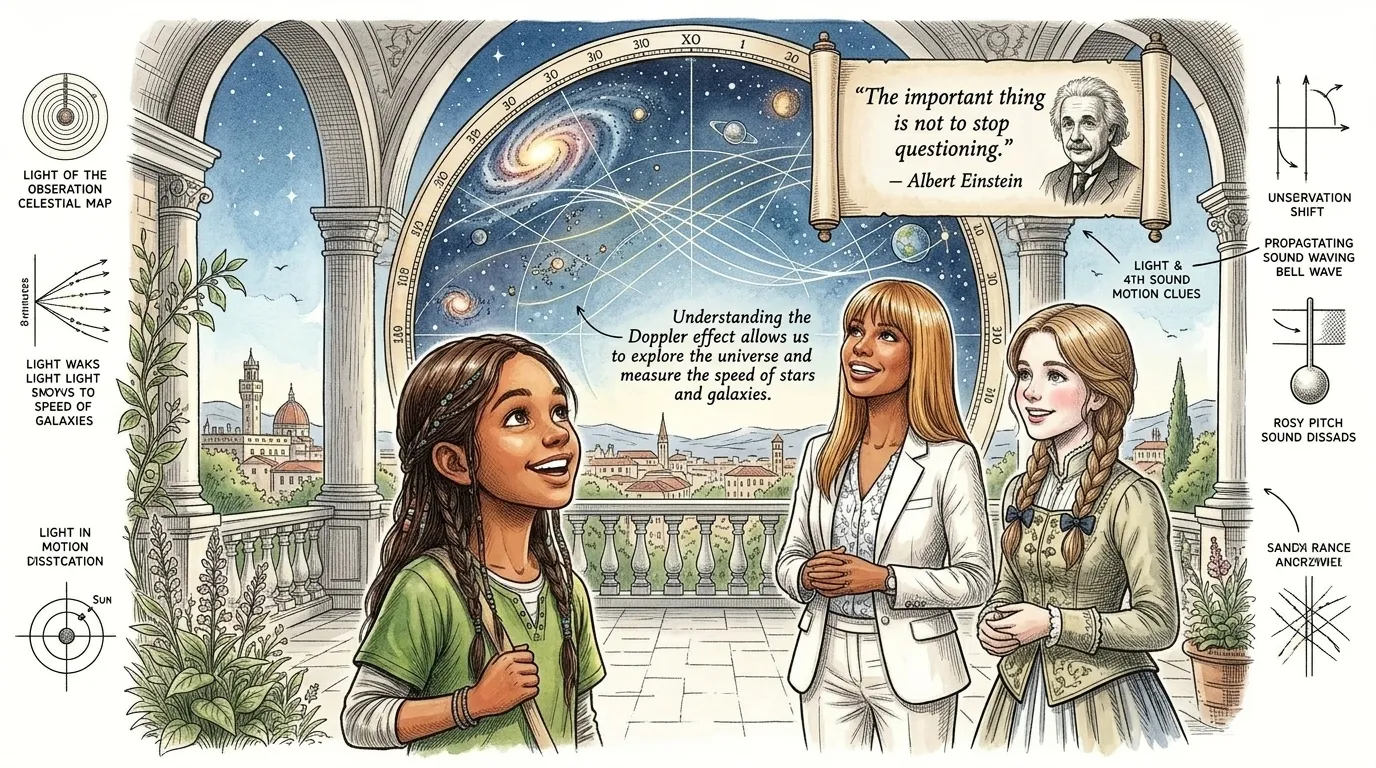
The Doppler effect teaches us that the universe is constantly in motion, and that light and sound carry clues about that motion. 'The important thing is not to stop questioning,' said Albert Einstein. By listening closely and looking carefully, we can unlock the secrets of the cosmos.\n\n Fact: Understanding the Doppler effect allows us to explore the universe and measure the speed of stars and galaxies.
About this story
- Audience: kids (ages 6–12)
Read Wonder Science on your phone
Wonder Science is available on Android. Get Wonder Science on Google Play.