The Ice Age Story

The Ice Age Story — an illustrated science story, set in United States. 10 illustrated pages, free to read on Wonder Science.
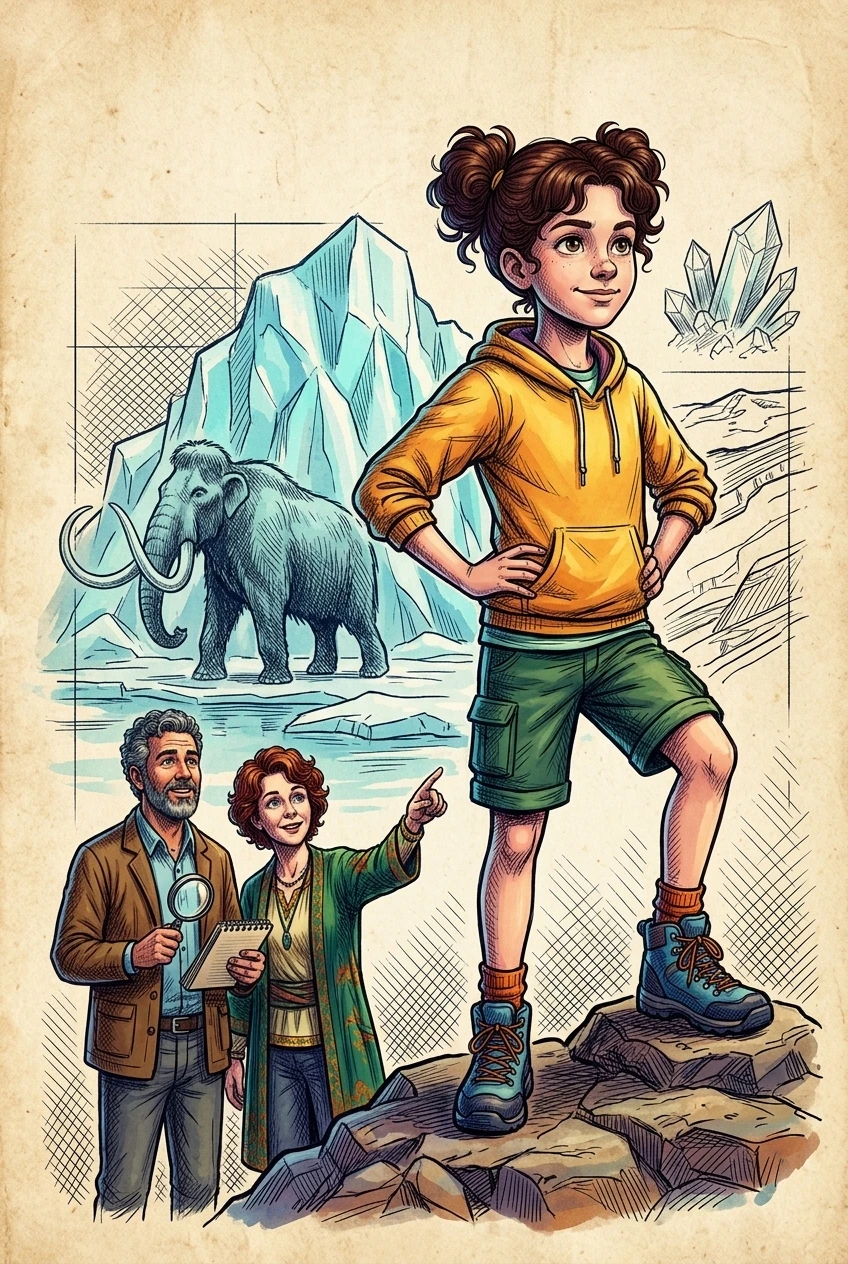
The Ice Age Story — book cover — Wonder Science
The Ice Age Story — an illustrated science story, set in United States. 10 illustrated pages, free to read on Wonder Science.

Page 1
Felix scrambled up the huge, gray rock in Golden Gate Park, her sneakers finding easy grips. "Dad, come look at this!" she called out, running her fingers over…
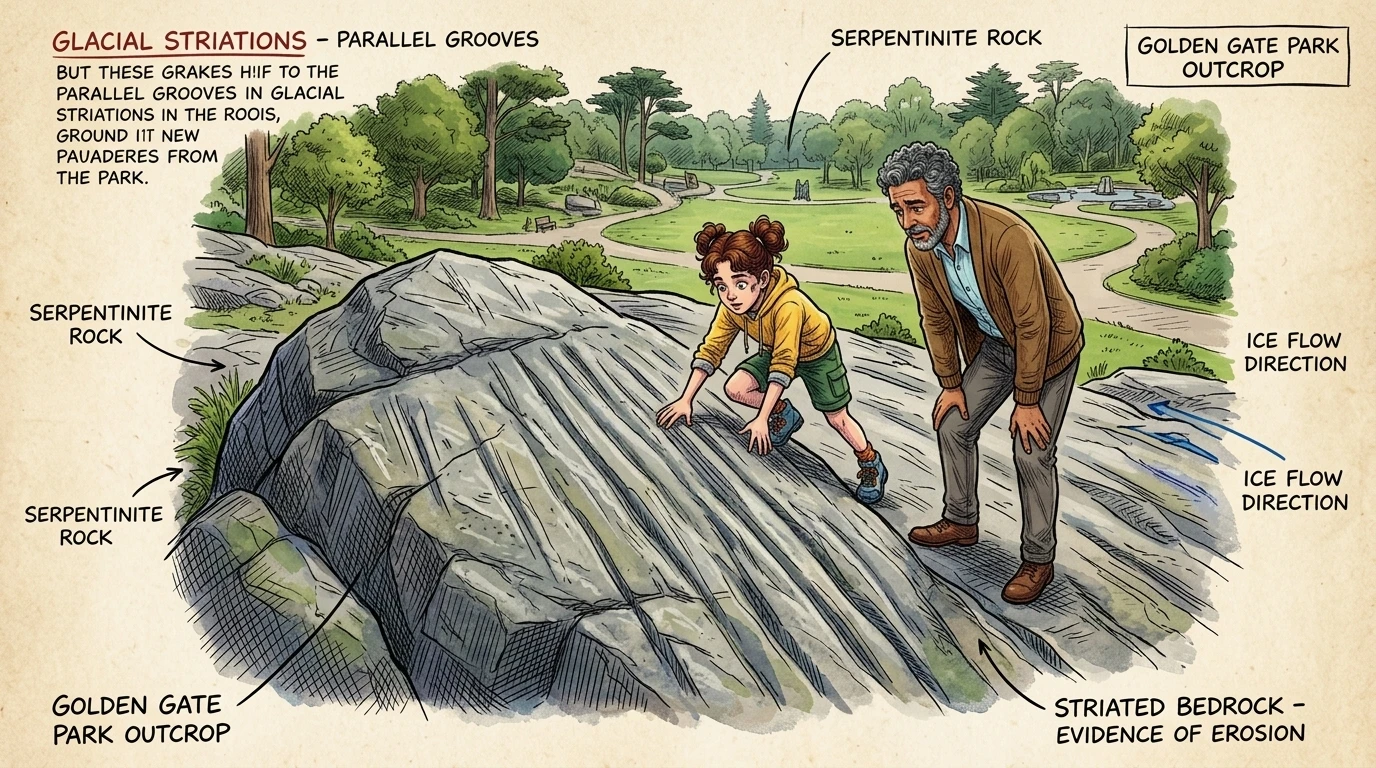
Felix scrambled up the huge, gray rock in Golden Gate Park, her sneakers finding easy grips. "Dad, come look at this!" she called out, running her fingers over deep, parallel grooves cut into the stone's surface. Her father joined her, looking down at the strange marks. "They look like giant claw marks, but there aren't any animals big enough to do that, right?"

Felix scrambled up the huge, gray rock in Golden Gate Park, her sneakers finding easy grips. "Dad, come look at this!" she called out, running her fingers over deep, parallel grooves cut into the stone's surface. Her father joined her, looking down at the strange marks. "They look like giant claw marks, but there aren't any animals big enough to do that, right?"

Page 2
Back home in their Noe Valley house, Felix pulled up a photo of the rock on a tablet. "See? The scratches are all going the same way," she said, tracing the…
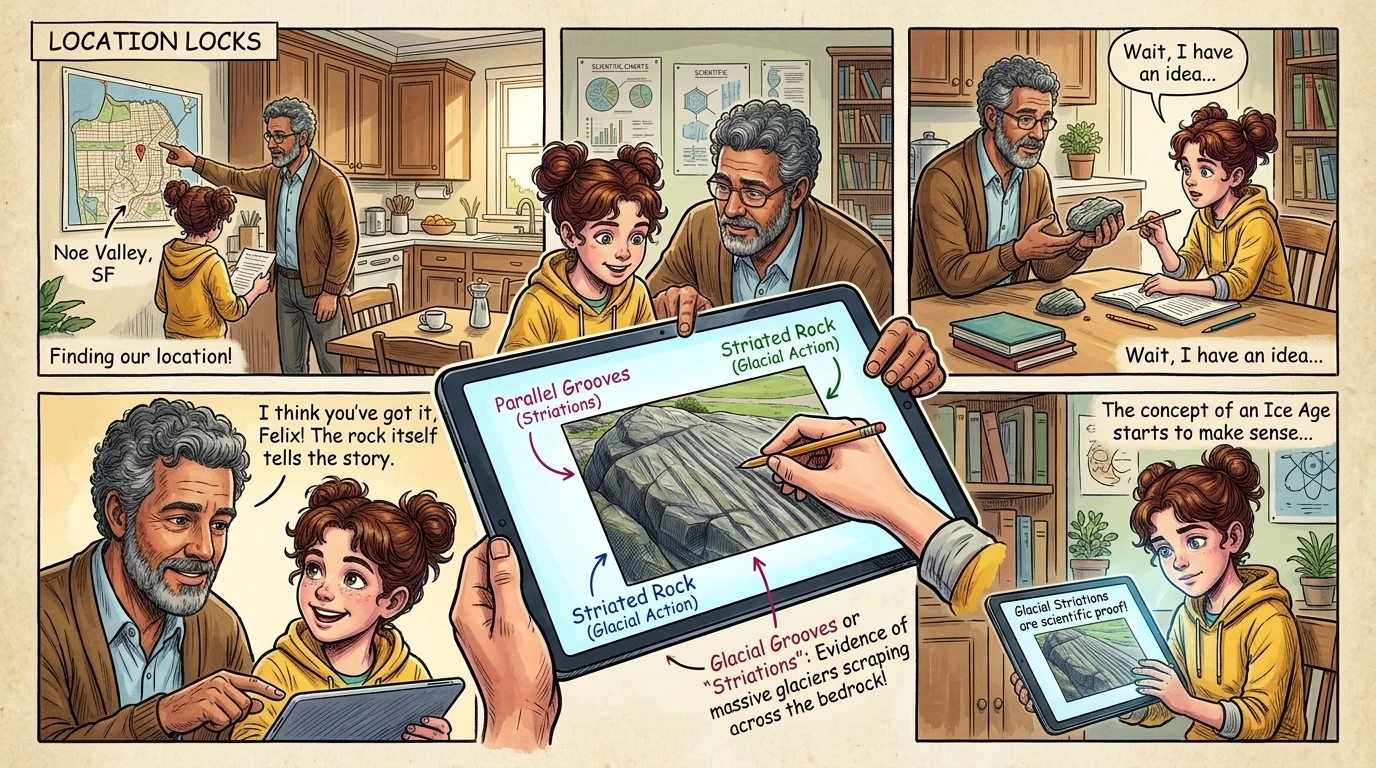
Back home in their Noe Valley house, Felix pulled up a photo of the rock on a tablet. "See? The scratches are all going the same way," she said, tracing the lines on the screen. "Scientists call those rocks 'erratics,' and those scratches are called striations," her Dad explained, leaning over her shoulder. "They're clues to a time when our planet was a very different place—an Ice Age."

Back home in their Noe Valley house, Felix pulled up a photo of the rock on a tablet. "See? The scratches are all going the same way," she said, tracing the lines on the screen. "Scientists call those rocks 'erratics,' and those scratches are called striations," her Dad explained, leaning over her shoulder. "They're clues to a time when our planet was a very different place—an Ice Age."

Page 3
The world outside their window seemed to melt away, replaced by the vast, icy peaks of the Swiss Alps in the early 1800s.
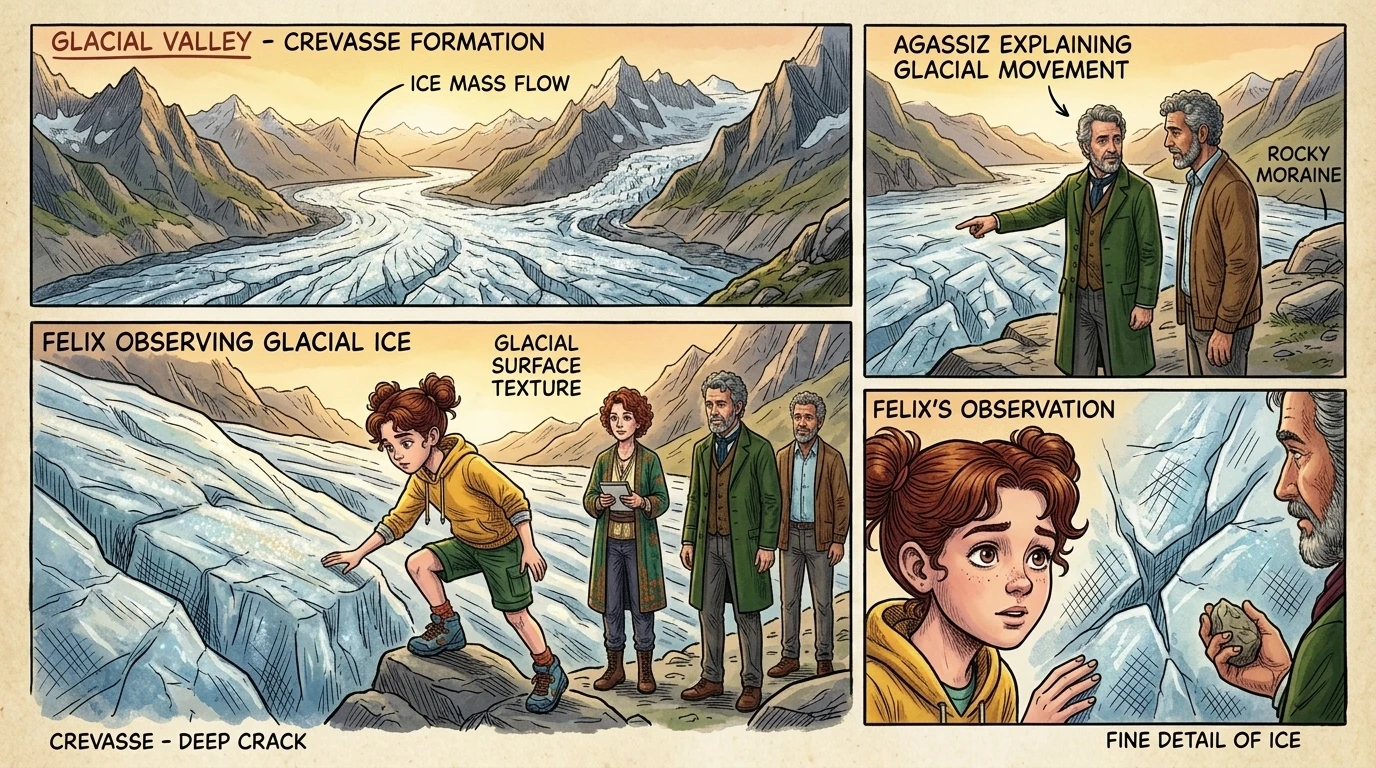
The world outside their window seemed to melt away, replaced by the vast, icy peaks of the Swiss Alps in the early 1800s. Immense rivers of ice, called glaciers, crept slowly down the valleys, their surfaces cracked and glittering under a cold sun. The air was crisp and still, filled only with the faint sound of grinding ice. It was a landscape carved by immense power, ancient and imposing.

The world outside their window seemed to melt away, replaced by the vast, icy peaks of the Swiss Alps in the early 1800s. Immense rivers of ice, called glaciers, crept slowly down the valleys, their surfaces cracked and glittering under a cold sun. The air was crisp and still, filled only with the faint sound of grinding ice. It was a landscape carved by immense power, ancient and imposing.

Page 4
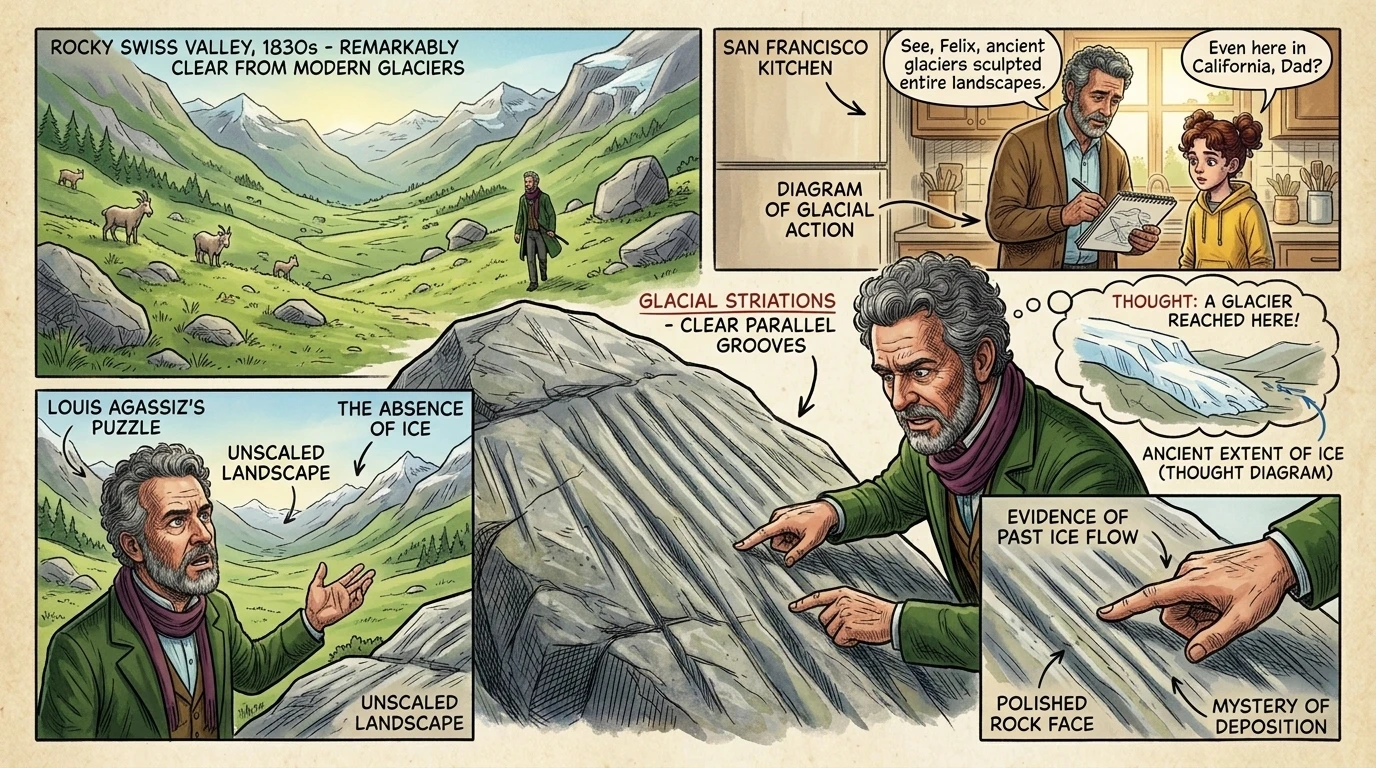
"A Swiss scientist named Louis Agassiz was fascinated by these glaciers," Felix's father's voice narrated. "In the 1830s, he saw the same polished rocks and…
"A Swiss scientist named Louis Agassiz was fascinated by these glaciers," Felix's father's voice narrated. "In the 1830s, he saw the same polished rocks and deep scratches far down in the valleys, miles from any ice." Agassiz couldn't stop thinking about a simple, huge question. "How could these glaciers have shaped a land they no longer touched?"

"A Swiss scientist named Louis Agassiz was fascinated by these glaciers," Felix's father's voice narrated. "In the 1830s, he saw the same polished rocks and deep scratches far down in the valleys, miles from any ice." Agassiz couldn't stop thinking about a simple, huge question. "How could these glaciers have shaped a land they no longer touched?"

Page 5
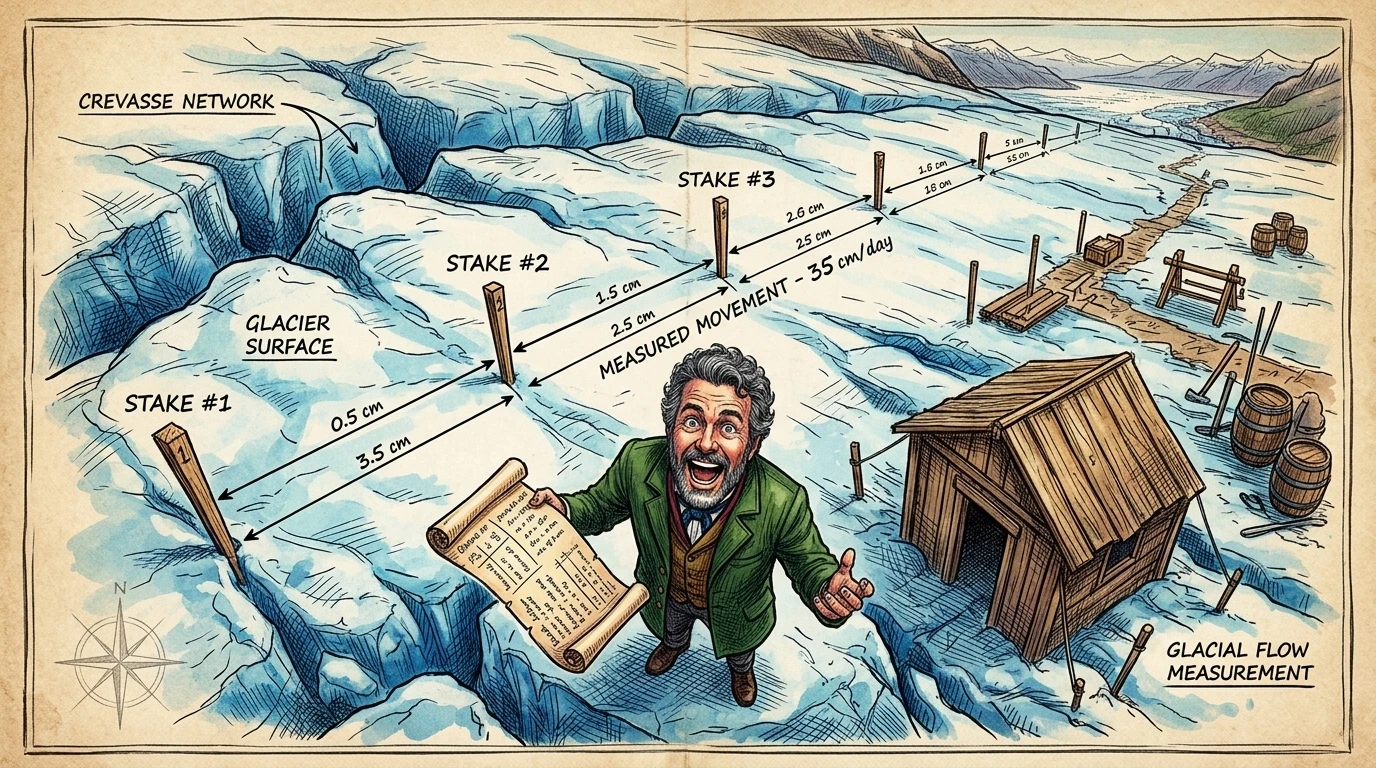
Agassiz built a hut right on a glacier to study its movement day and night. He drove stakes into the ice and measured their slow, unstoppable creep down the…
Agassiz built a hut right on a glacier to study its movement day and night. He drove stakes into the ice and measured their slow, unstoppable creep down the valley. "They move!" he exclaimed to his colleagues, gesturing wildly at his data. "The ice flows like a tremendously slow river, carrying the rocks and dirt with it!"

Agassiz built a hut right on a glacier to study its movement day and night. He drove stakes into the ice and measured their slow, unstoppable creep down the valley. "They move!" he exclaimed to his colleagues, gesturing wildly at his data. "The ice flows like a tremendously slow river, carrying the rocks and dirt with it!"

Page 6
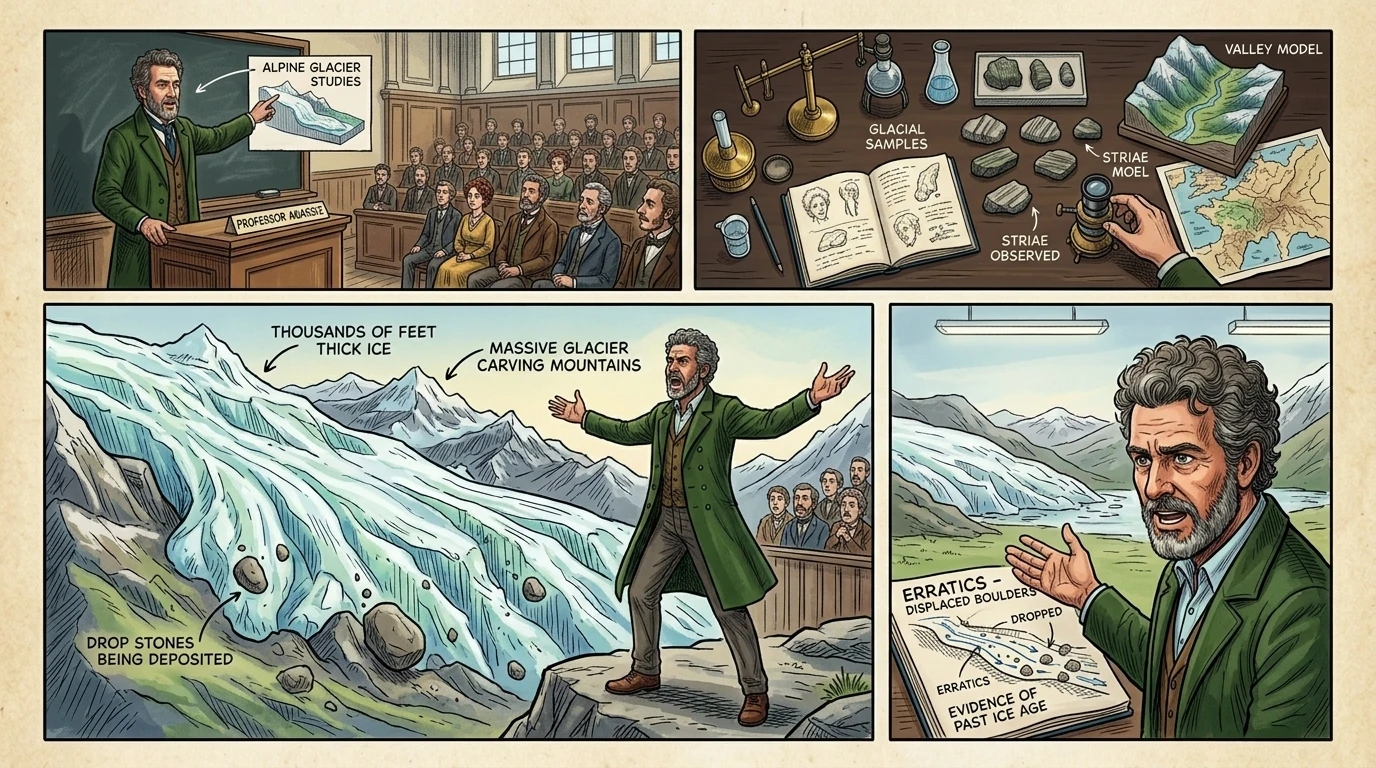
This led Agassiz to a breathtaking idea: what if these glaciers were once much, much bigger? He proposed that a great "Ice Age" had once covered huge parts of…
This led Agassiz to a breathtaking idea: what if these glaciers were once much, much bigger? He proposed that a great "Ice Age" had once covered huge parts of the Earth, with ice sheets thousands of feet thick. "These glaciers were the tools that carved our mountains and dropped these great boulders!" he declared. This theory was so radical that many other scientists initially refused to believe him.

This led Agassiz to a breathtaking idea: what if these glaciers were once much, much bigger? He proposed that a great "Ice Age" had once covered huge parts of the Earth, with ice sheets thousands of feet thick. "These glaciers were the tools that carved our mountains and dropped these great boulders!" he declared. This theory was so radical that many other scientists initially refused to believe him.

Page 7
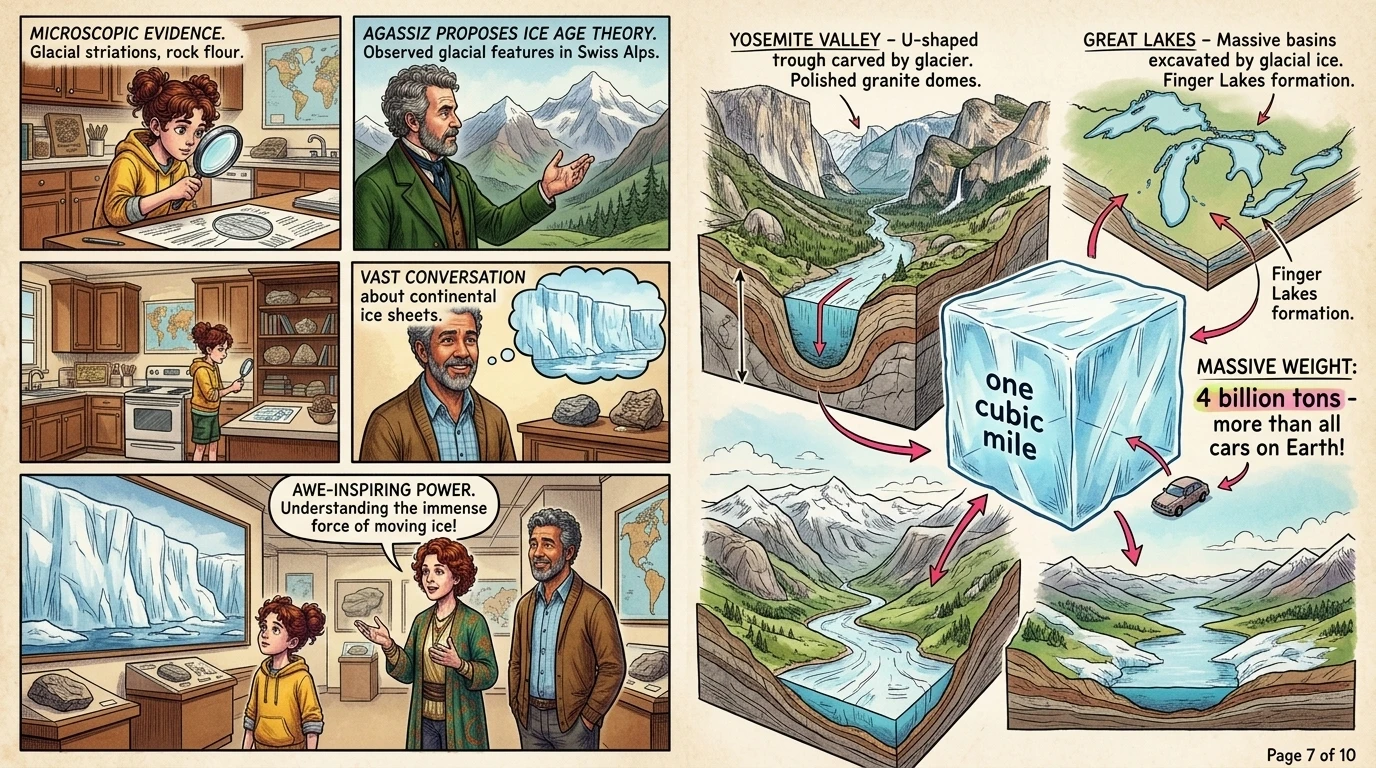
Agassiz's theory changed everything we knew about Earth's history. We now know these Ice Ages have happened many times, shaping landscapes from Yosemite Valley…
Agassiz's theory changed everything we knew about Earth's history. We now know these Ice Ages have happened many times, shaping landscapes from Yosemite Valley to the Great Lakes. The incredible weight of the ice was powerful enough to press down the Earth's crust. A single cubic mile of glacial ice can weigh over four billion tons—more than all the cars on Earth combined!

Agassiz's theory changed everything we knew about Earth's history. We now know these Ice Ages have happened many times, shaping landscapes from Yosemite Valley to the Great Lakes. The incredible weight of the ice was powerful enough to press down the Earth's crust. A single cubic mile of glacial ice can weigh over four billion tons—more than all the cars on Earth combined!

Page 8
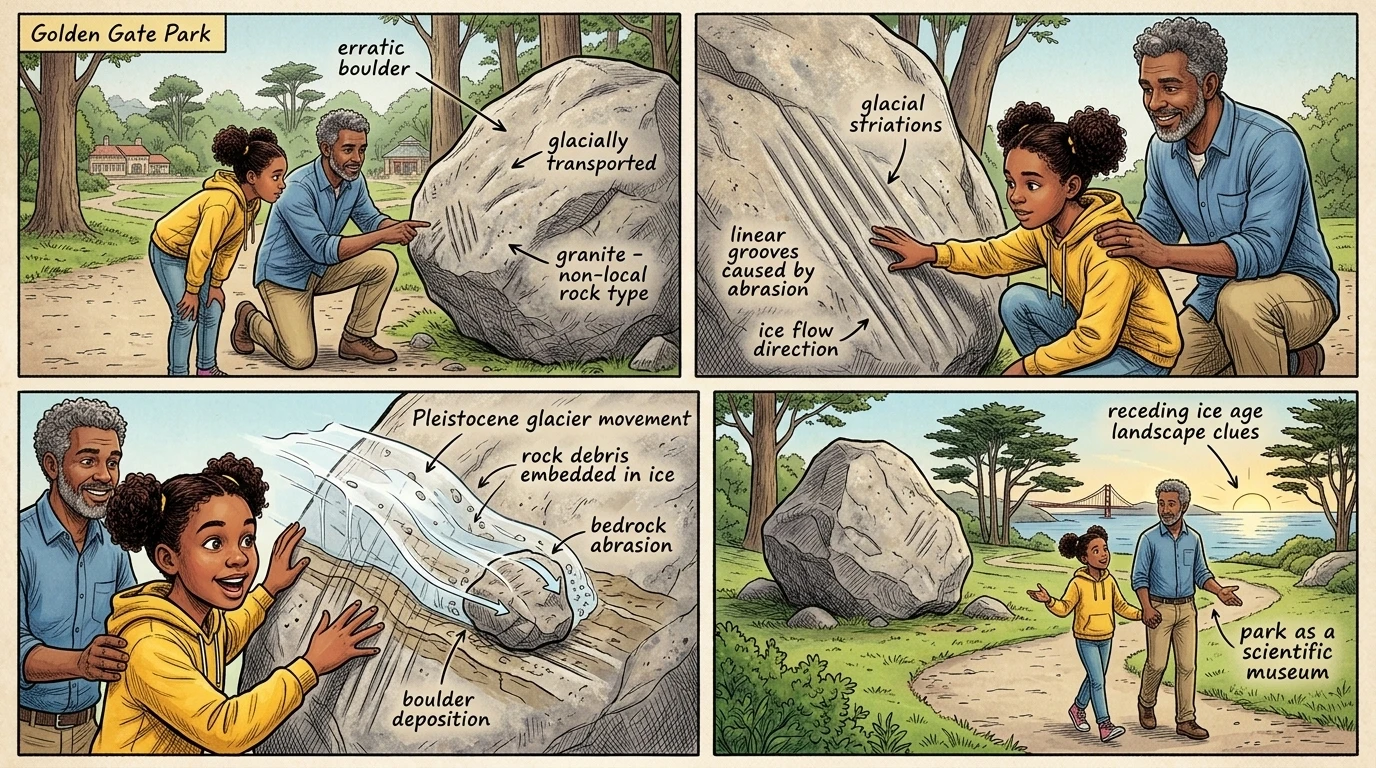
Back in Golden Gate Park, Felix stood before the giant erratic, seeing it in a whole new light. "So it wasn't a giant's claw marks!" she exclaimed to her dad.
Back in Golden Gate Park, Felix stood before the giant erratic, seeing it in a whole new light. "So it wasn't a giant's claw marks!" she exclaimed to her dad. "A glacier, a real river of ice, picked up this rock hundreds of miles away and scraped it along the ground as it moved!" Her dad nodded, smiling, "Exactly. It's a traveler from a different time."

Back in Golden Gate Park, Felix stood before the giant erratic, seeing it in a whole new light. "So it wasn't a giant's claw marks!" she exclaimed to her dad. "A glacier, a real river of ice, picked up this rock hundreds of miles away and scraped it along the ground as it moved!" Her dad nodded, smiling, "Exactly. It's a traveler from a different time."

Page 9
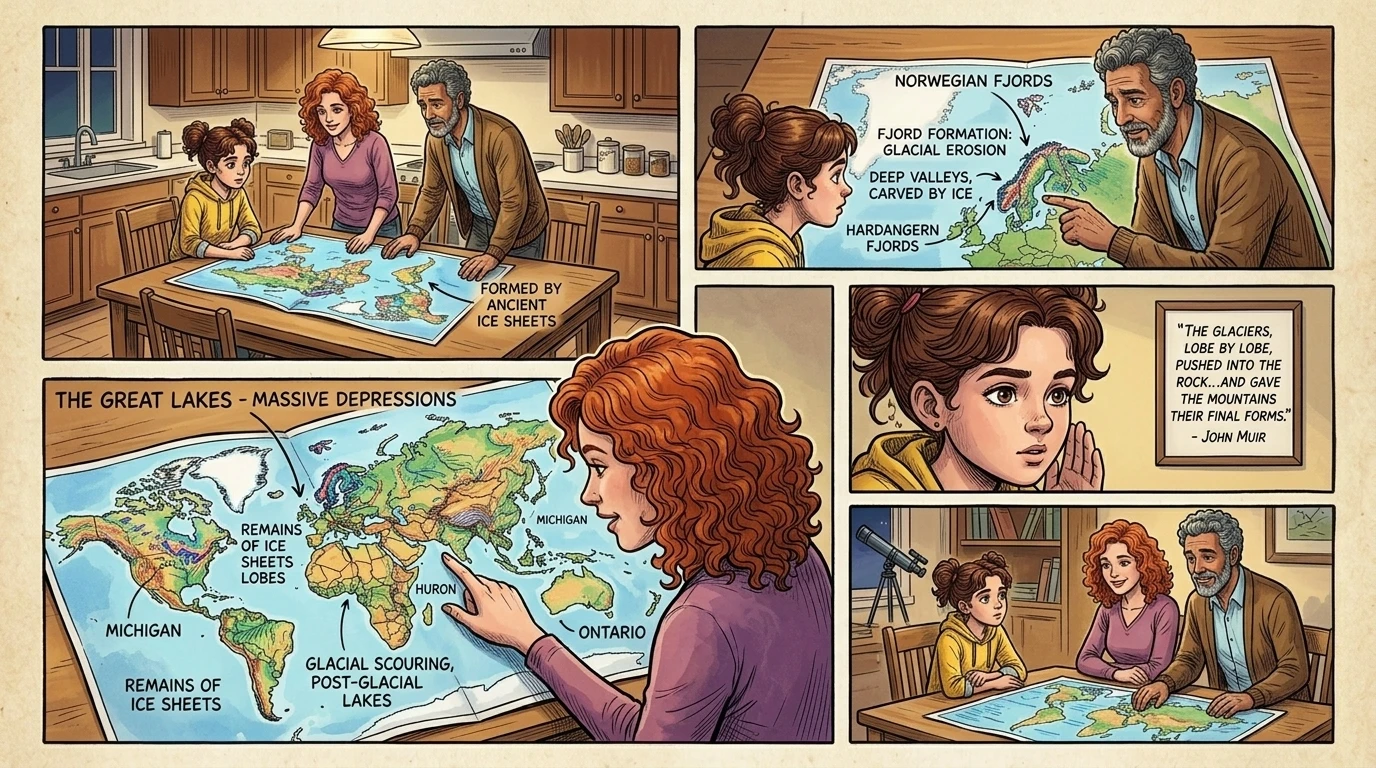
That evening, Felix, her mom, and her dad looked at a world map spread on the dining table. "Look, the Great Lakes were carved out by the ice sheets!" her Mom…
That evening, Felix, her mom, and her dad looked at a world map spread on the dining table. "Look, the Great Lakes were carved out by the ice sheets!" her Mom said, tracing their shapes. Her dad pointed to Norway, adding, "And so were these fjords." Felix remembered something the naturalist John Muir once said, whispering, "'In every walk with nature, one receives far more than he seeks.' We just went for a walk and found a whole Ice Age!"

That evening, Felix, her mom, and her dad looked at a world map spread on the dining table. "Look, the Great Lakes were carved out by the ice sheets!" her Mom said, tracing their shapes. Her dad pointed to Norway, adding, "And so were these fjords." Felix remembered something the naturalist John Muir once said, whispering, "'In every walk with nature, one receives far more than he seeks.' We just went for a walk and found a whole Ice Age!"

Page 10
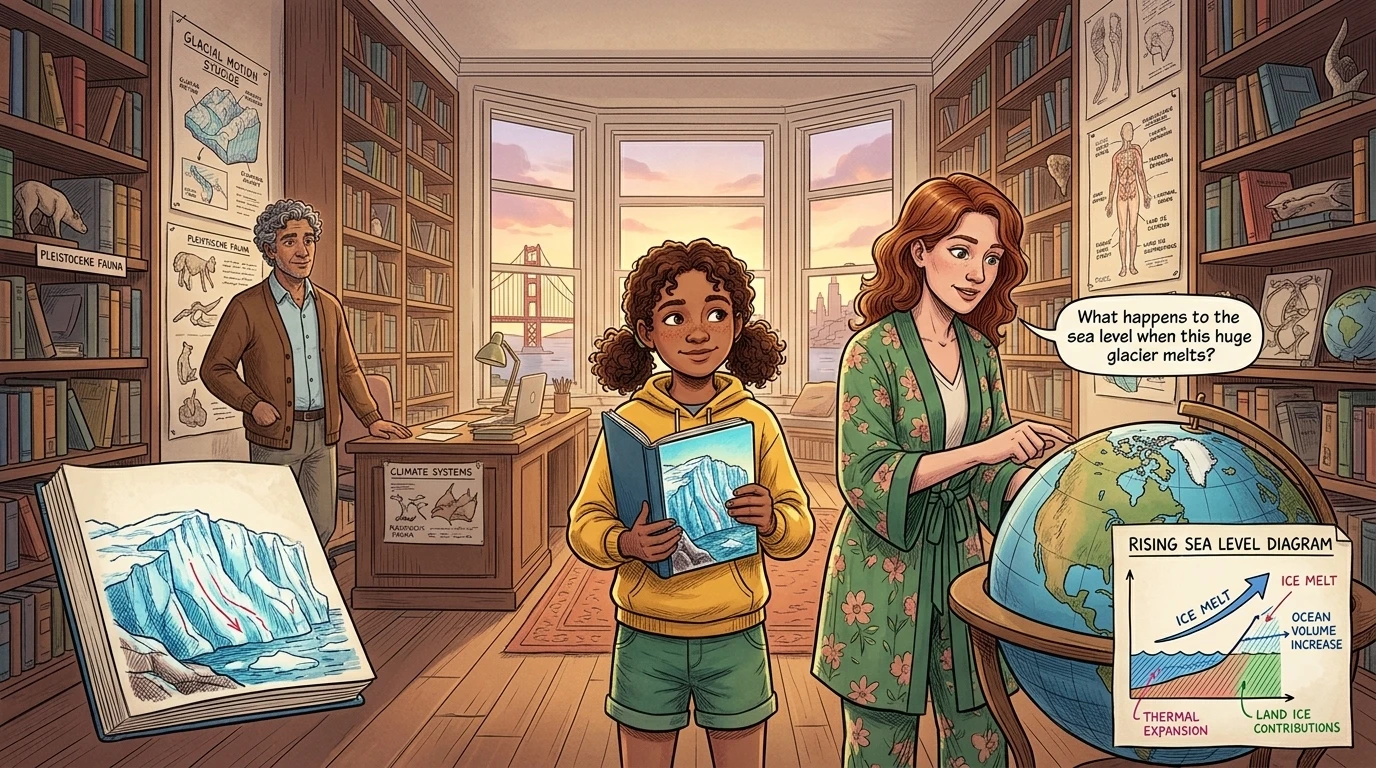
Felix closed her notebook, a new drawing of a glacier inside. "So our whole planet has this secret history, written in rocks and valleys," she summarized…
Felix closed her notebook, a new drawing of a glacier inside. "So our whole planet has this secret history, written in rocks and valleys," she summarized happily. Her mom smiled and tapped the map where the oceans were. "It makes you wonder," she began, "if all that ice melted, where did all the water go, and what did it do to the sea levels?"

Felix closed her notebook, a new drawing of a glacier inside. "So our whole planet has this secret history, written in rocks and valleys," she summarized happily. Her mom smiled and tapped the map where the oceans were. "It makes you wonder," she began, "if all that ice melted, where did all the water go, and what did it do to the sea levels?"

About this story

  • Location: United States
  • Audience: kids (ages 6–12)

Read Wonder Science on your phone

Wonder Science is available on Android. Get Wonder Science on Google Play.

More Wonder Science stories

All Wonder Science stories · Open the library