The Mystery of Gravity
The Mystery of Gravity — an illustrated science story. 10 illustrated pages, free to read on Wonder Science.
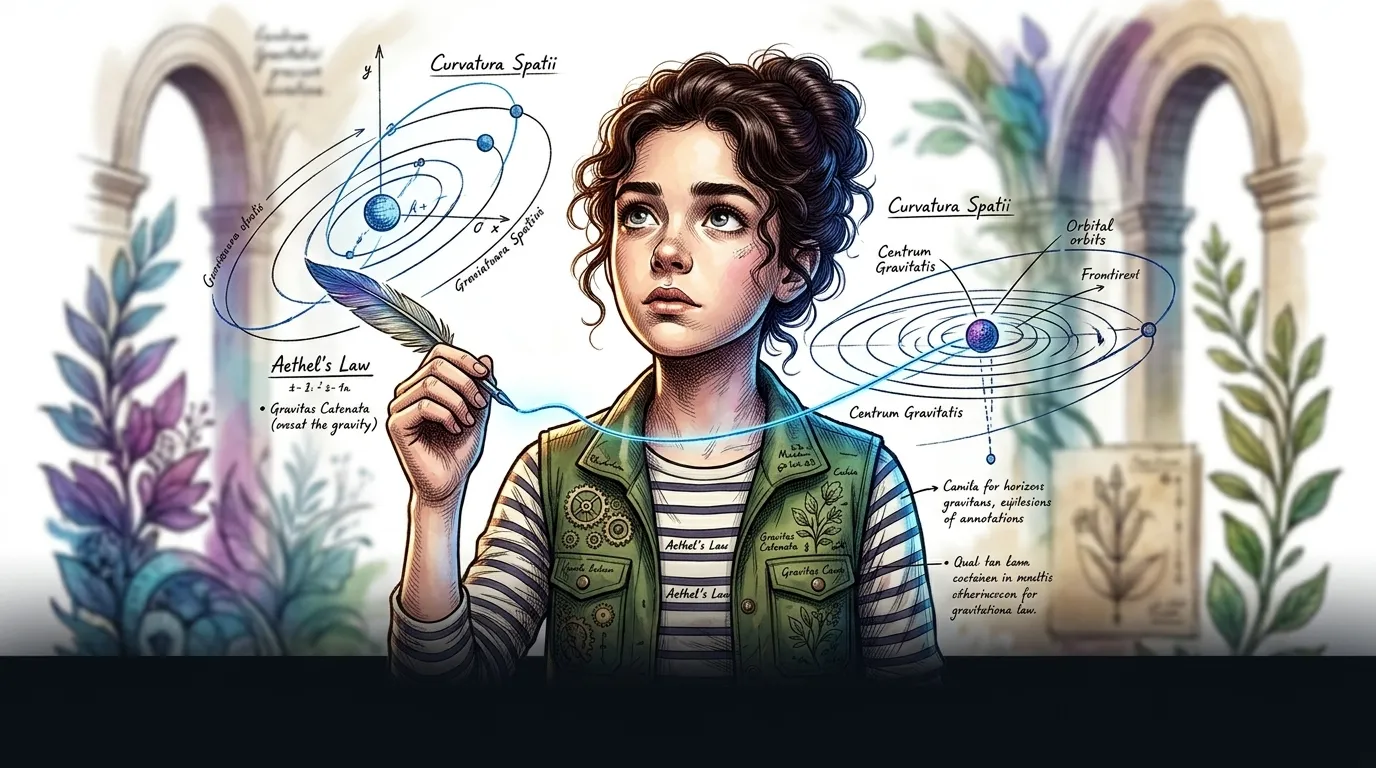
Page 1
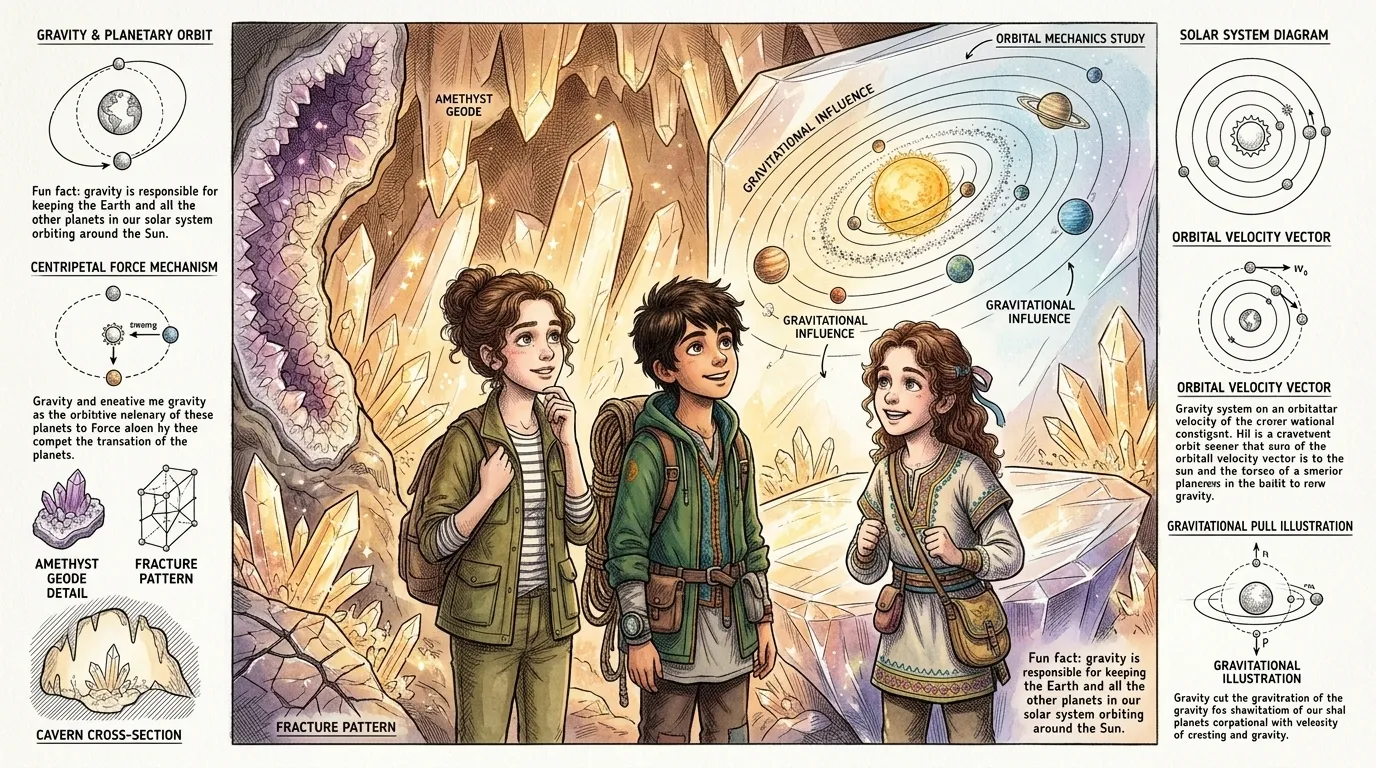
In the heart of a shimmering crystal cave, gravity makes its presence known. Here in Noe Valley, San Francisco, gravity constantly pulls everything towards the Earth. But what is this mysterious force? Fun fact: gravity is responsible for keeping the Earth and all the other planets in our solar system orbiting around the Sun.\n\n Fact: Gravity is not just about things falling down; it's the force that governs the motion of celestial bodies.
Page 2
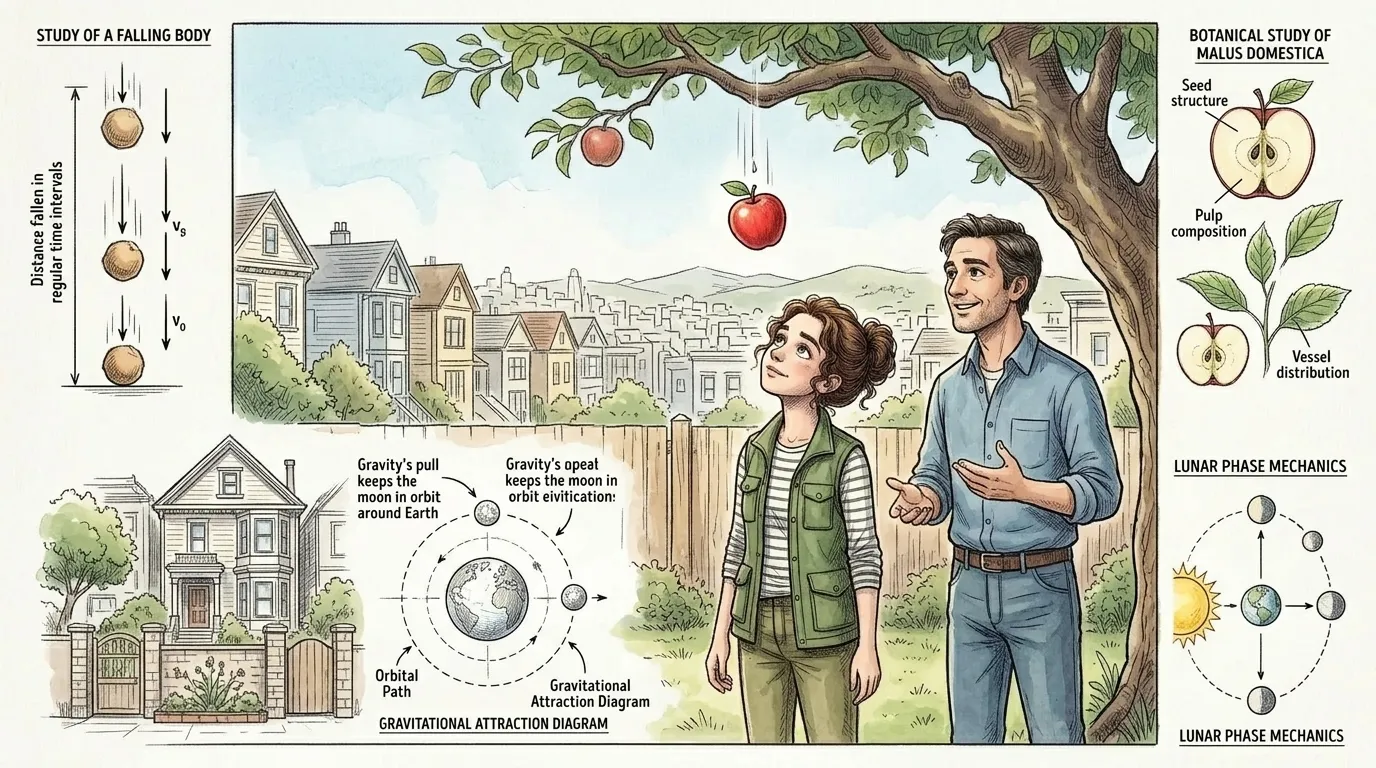
Back home in Noe Valley, Camila observes an apple falling from a tree in her backyard. "Why does everything fall down, and not up?" she asks her dad. It's a question that has puzzled scientists for centuries. Remember, an astronaut on the ISS is still pulled by 90% of Earth's gravity – they're just falling sideways so fast they keep missing the ground!\n\n""Why does everything fall down and not up?" Camila asks."\n\n Fact: Gravity's pull keeps the moon in orbit around Earth, preventing it from drifting off into space.
Page 3
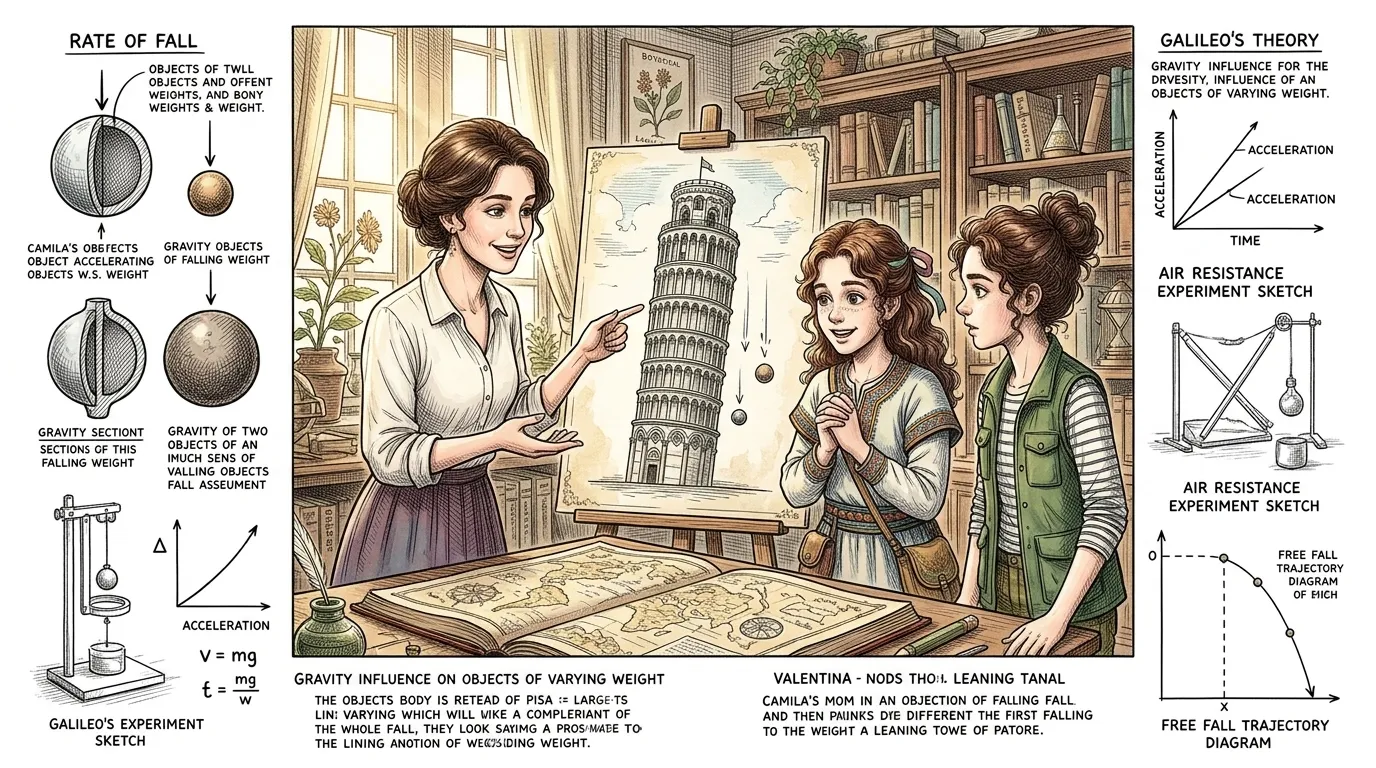
Camila's mom chimes in, remembering a famous scientist. "Galileo Galilei, the Italian astronomer, conducted experiments with falling objects in the late 16th century. He supposedly dropped objects of different weights from the Leaning Tower of Pisa to demonstrate that they fall at the same rate, regardless of their mass." Valentina nods thoughtfully, "As the great Leonardo da Vinci said, 'Intellectual passion drives out sensuality'. He was right - finding out about gravity can be our great passion!"\n\n""Galileo supposedly dropped objects of different weights from the Leaning Tower of Pisa to demonstrate that they fall at the same rate," Camila's Mom says. "As Leonardo da Vinci said, 'Intellectual passion drives out sensuality.' He was right - finding out about gravity can be our great passion!" adds Valentina."\n\n Fact: Galileo's experiments challenged the long-held beliefs of Aristotle, paving the way for modern physics.
Page 4
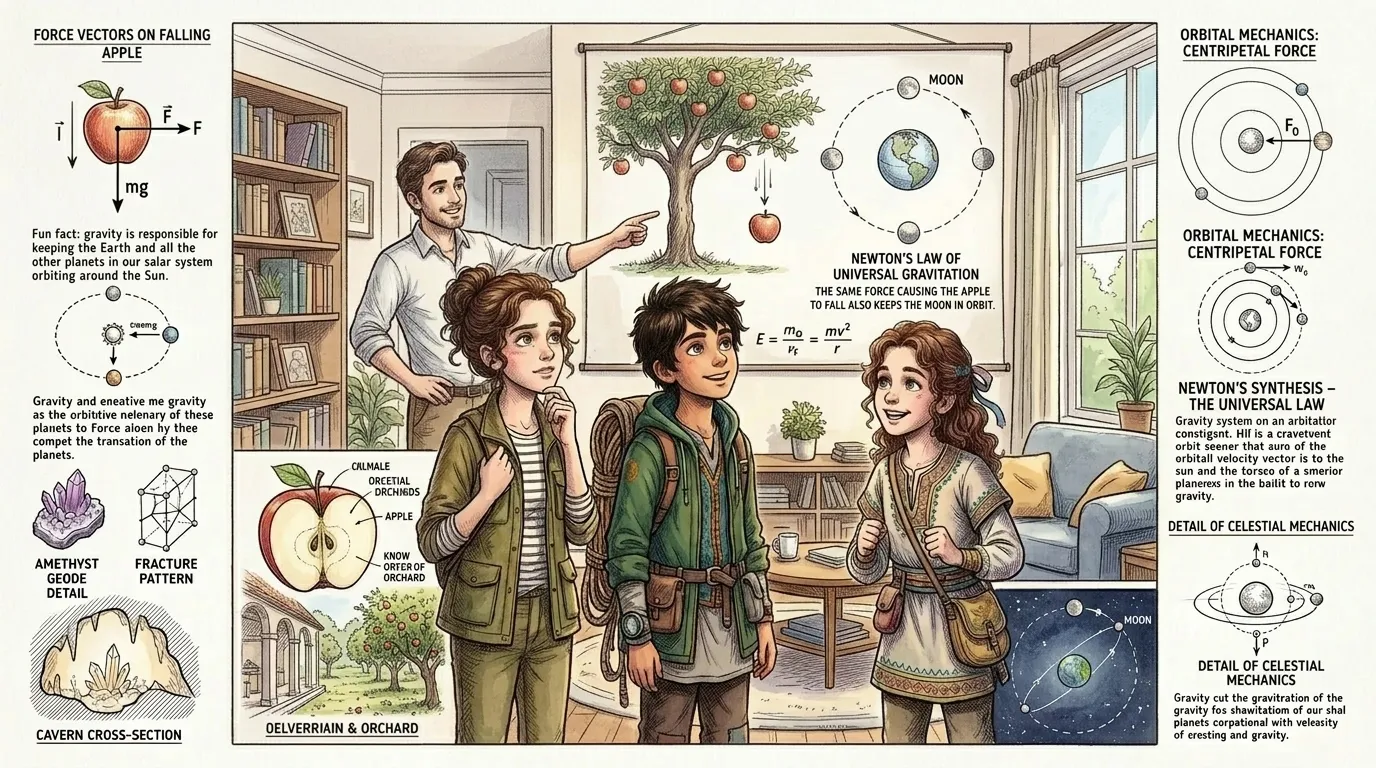
Camila's dad explains, "Sir Isaac Newton, in the late 17th century, connected the falling apple to the motion of the Moon. He realized that the same force causing the apple to fall was also keeping the Moon in orbit around Earth. He called this force gravity, and he formulated the Law of Universal Gravitation. Gravity is a force that attracts any two objects with mass toward each other. The more massive the objects, the stronger the attraction."\n\n""Newton realized that the same force causing the apple to fall was also keeping the Moon in orbit around Earth," Camila's Dad explains. "He called this force gravity, and he formulated the Law of Universal Gravitation.""\n\n Fact: Newton's Law of Universal Gravitation describes how gravity affects objects throughout the universe.
Page 5
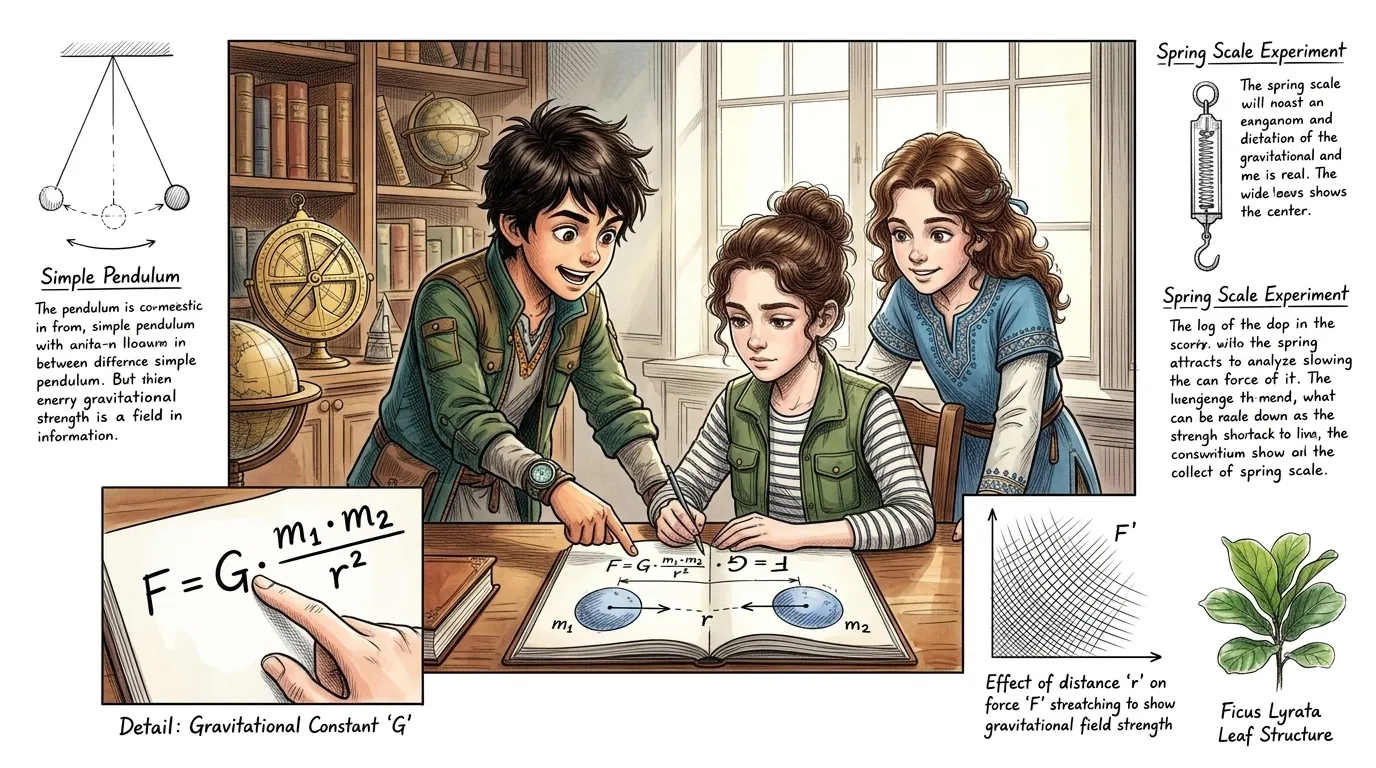
Vivaan joins the conversation, "So, gravity depends on mass and distance, right? The more massive the objects, the stronger the gravity, and the closer they are, the stronger the gravity too!" Camila's notebook displays the equation for Newton's Law of Universal Gravitation. F G (m1 m2) / r 2, where F is the gravitational force, G is the gravitational constant, m1 and m2 are the masses of the two objects, and r is the distance between their centers.\n\n""So, gravity depends on mass and distance, right?" Vivaan asks. "The more massive the objects, the stronger the gravity, and the closer they are, the stronger the gravity too!""\n\n Fact: Newton's Law of Universal Gravitation explains why you weigh less on the Moon than on Earth.
Page 6
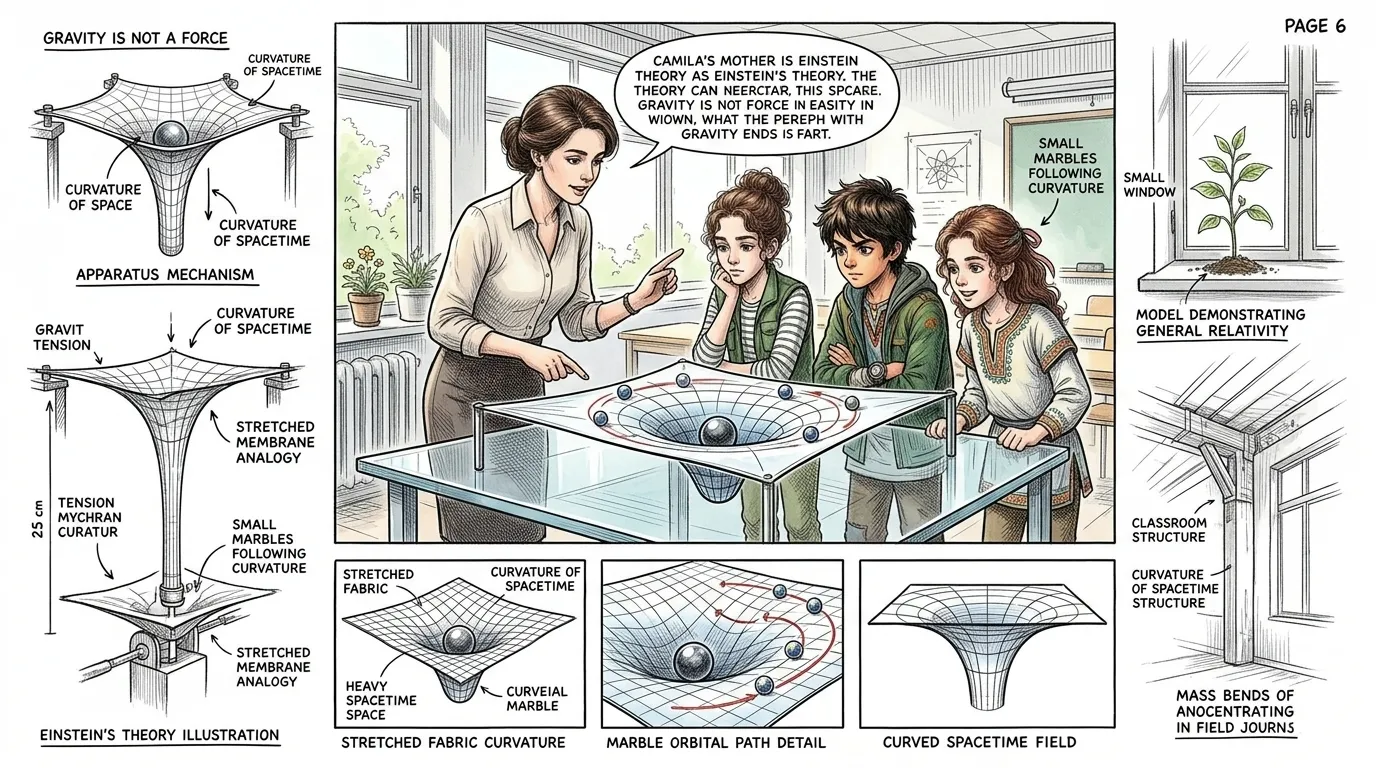
"But Einstein changed our understanding of gravity," Camila's mother says. "In the early 20th century, Albert Einstein introduced the theory of General Relativity. Einstein described gravity not as a force, but as a curvature of spacetime caused by mass and energy. Objects move along the curves in spacetime, which we perceive as gravity. So instead of objects attracting each other, the objects are simply falling inward toward the other!"\n\n""But Einstein changed our understanding of gravity," Camila's mother says. "Einstein described gravity not as a force, but as a curvature of spacetime!""\n\n Fact: Einstein's General Relativity predicts phenomena like gravitational lensing, where light bends around massive objects.
Page 7
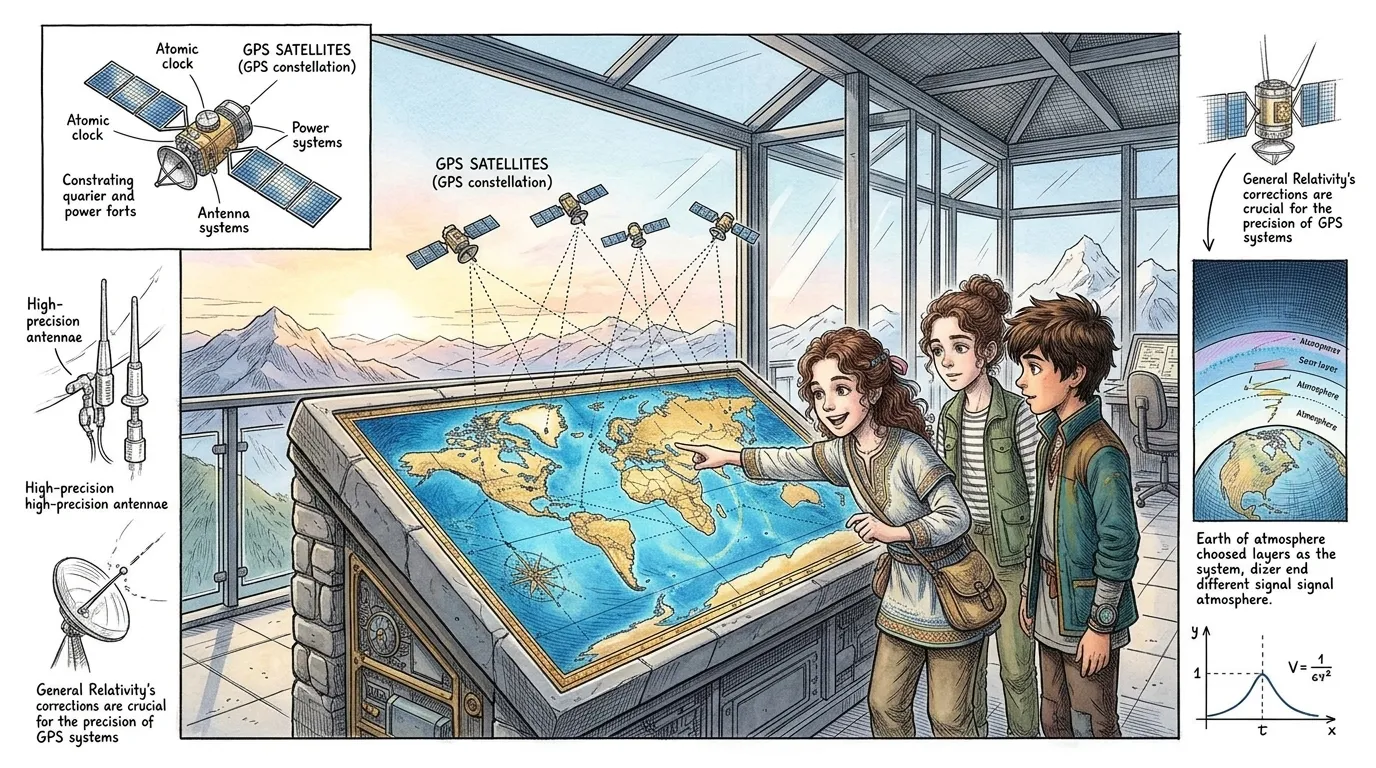
Valentina mentions, "Gravity affects GPS satellites too! These satellites need to be incredibly accurate. If gravity's effects weren't accounted for, GPS would quickly become useless!" Einstein's theories are essential for accurate GPS. Without those corrections, the GPS in your phone could be off by several meters each day.\n\n""Gravity affects GPS satellites too!" Valentina exclaims. "If gravity's effects weren't accounted for, GPS would quickly become useless!""\n\n Fact: General Relativity's corrections are crucial for the precision of GPS systems that guide planes, ships, and cars.
Page 8
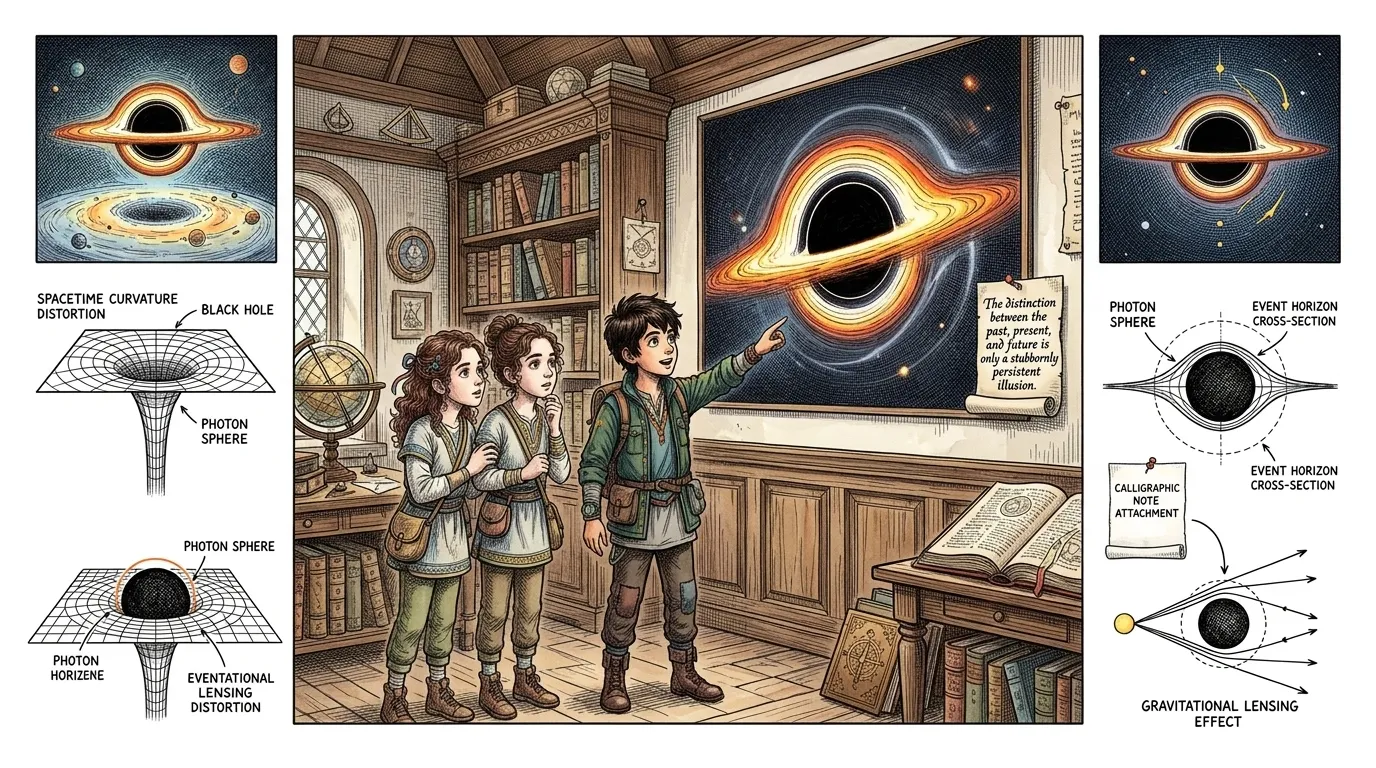
Vivaan is excited. "And what about black holes? Aren't they the most extreme example of gravity?" Black holes are regions of spacetime where gravity is so strong that nothing, not even light, can escape. The gravity around black holes is so intense that it bends light, warps space, and distorts time. Black holes help us see the relationship between space and time. Einstein once said, 'The distinction between the past, present, and future is only a stubbornly persistent illusion'.\n\n""And what about black holes? Aren't they the most extreme example of gravity?" Vivaan asks. "As Einstein once said, 'The distinction between the past, present, and future is only a stubbornly persistent illusion'," he adds."\n\n Fact: A teaspoon of neutron star weighs 6 BILLION tons - that's heavier than every car on Earth combined!
Page 9
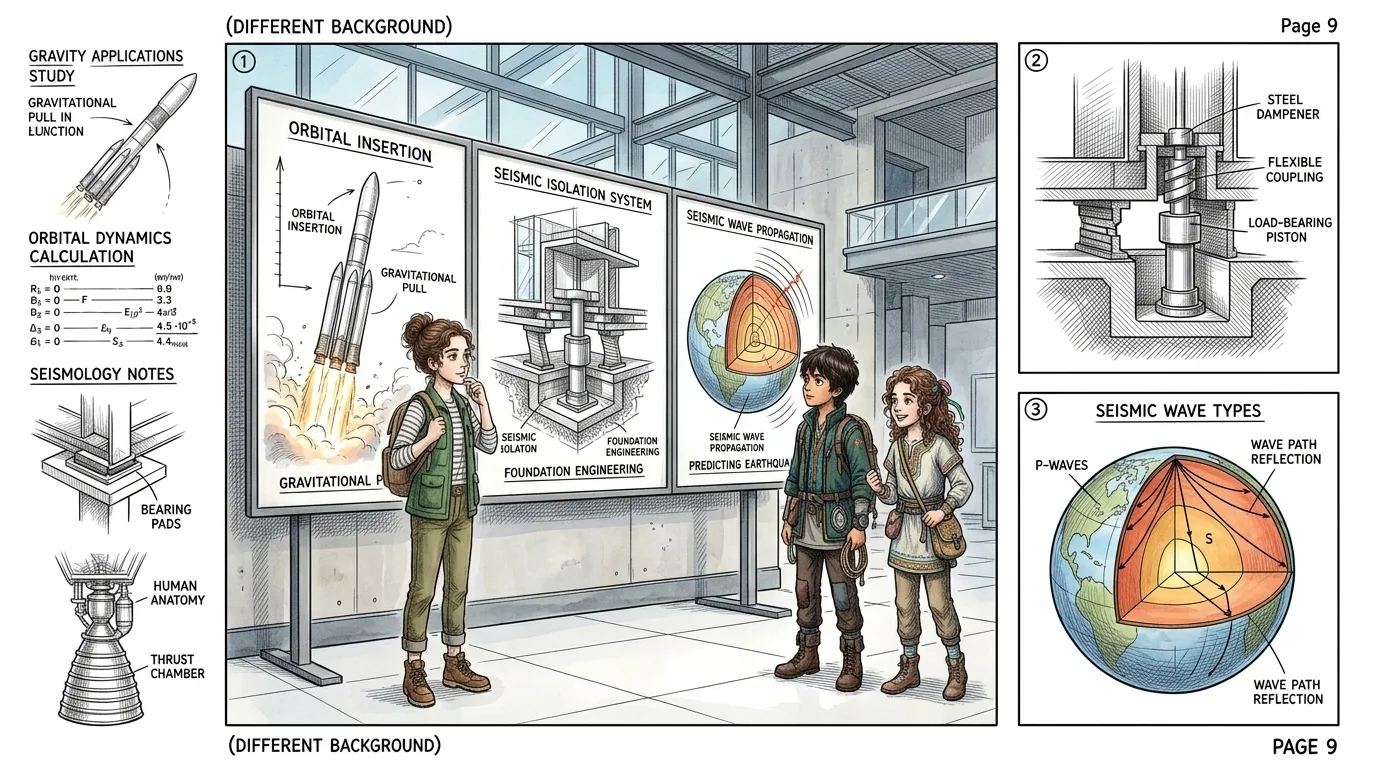
The friends discuss gravity's reach. "Understanding gravity is important for space exploration, building better structures, and even predicting earthquakes!" Camila says. We still don't understand dark matter and dark energy. Scientists are trying to unify gravity with the other fundamental forces of nature. \n\n""Understanding gravity is important for space exploration, building better structures, and even predicting earthquakes!" Camila says."\n\n Fact: Understanding gravity can help us predict and mitigate natural disasters like earthquakes and tsunamis.
Page 10
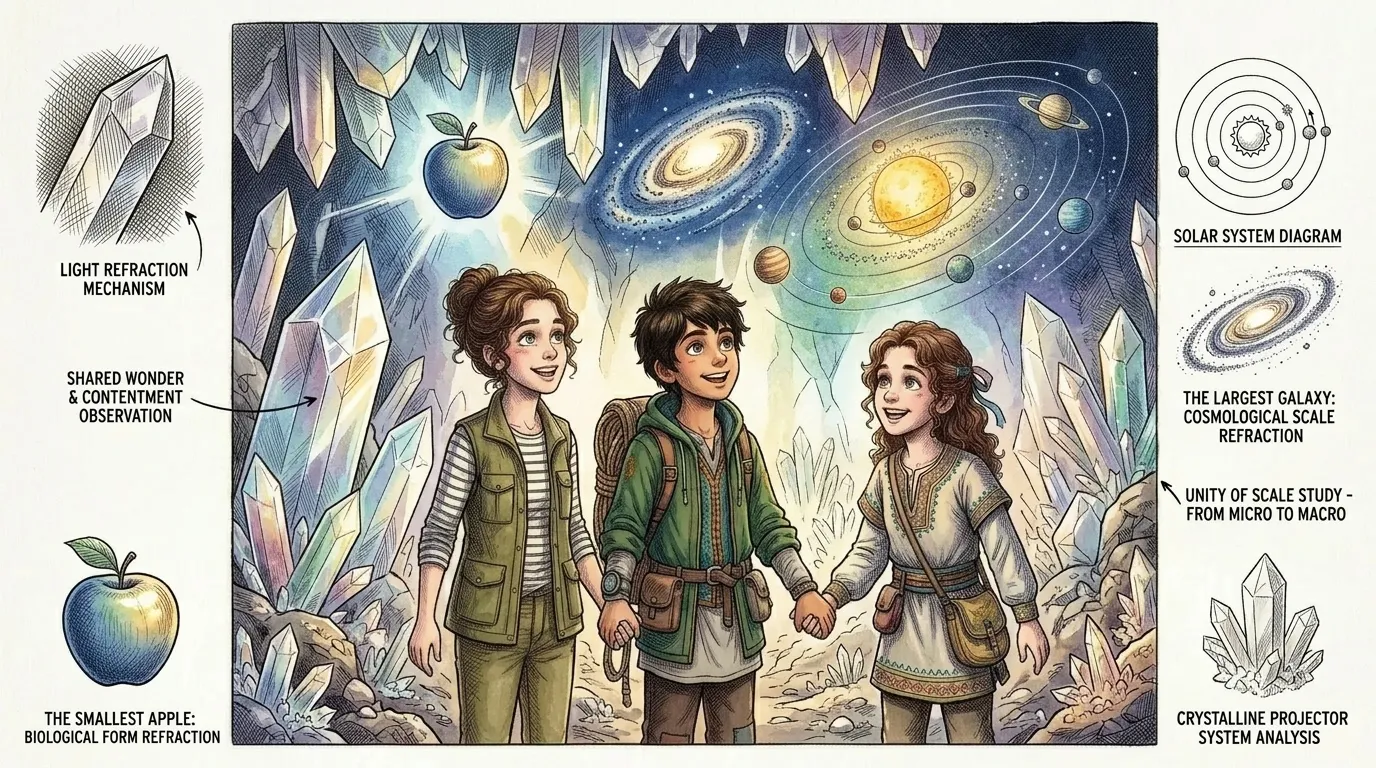
Back in the crystal cave, the friends reflect. "Gravity connects everything in the universe, from the smallest apple to the largest galaxy," Camila says. Understanding this force is key to understanding our place in the cosmos. Camila looks around, amazed at the beauty and complexity of nature. The cave echoes with the mysteries of the universe, waiting to be discovered.\n\n""Gravity connects everything in the universe, from the smallest apple to the largest galaxy," Camila says."\n\n Fact: The quest to understand gravity continues, promising new insights into the nature of the universe.
About this story
- Audience: kids (ages 6–12)
Questions and answers
Read Wonder Science on your phone
Wonder Science is available on Android. Get Wonder Science on Google Play.