The Physics of Music

The Physics of Music — an illustrated science story, set in Greece. 10 illustrated pages, free to read on Wonder Science.
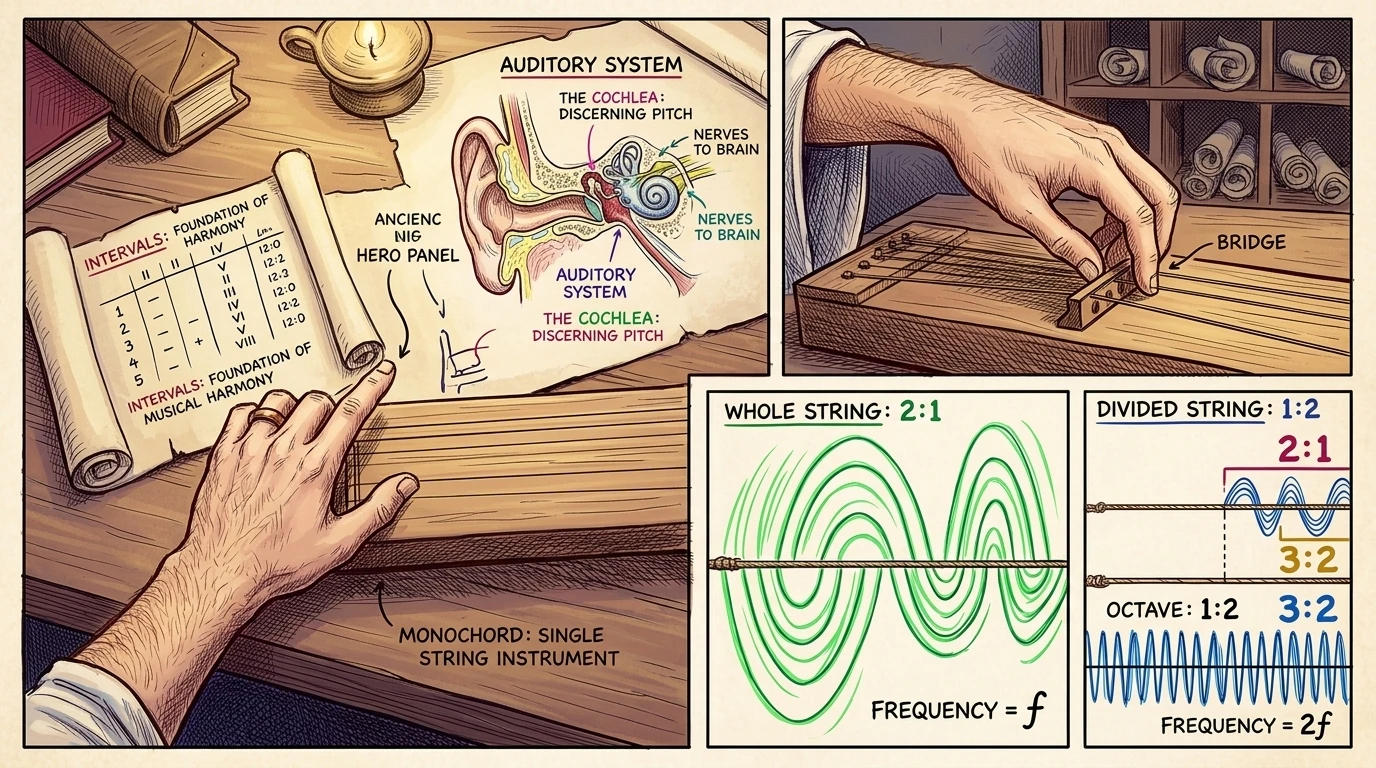
The Physics of Music — book cover — Wonder Science
The Physics of Music — an illustrated science story, set in Greece. 10 illustrated pages, free to read on Wonder Science.

Page 1

On a sunny afternoon in Mission Dolores Park, Kai groaned, his fingers fumbling on the guitar strings. "Ugh, this sounds terrible!" he exclaimed, playing a…
On a sunny afternoon in Mission Dolores Park, Kai groaned, his fingers fumbling on the guitar strings. "Ugh, this sounds terrible!" he exclaimed, playing a jumbled, clashing noise. Ezra and Maya winced, covering their ears playfully. "But when I play this," Kai said, shifting his fingers, "it sounds...nice." A clear, pleasant chord rang out across the grassy hill. "Why is one sound good and the other just noise?"

On a sunny afternoon in Mission Dolores Park, Kai groaned, his fingers fumbling on the guitar strings. "Ugh, this sounds terrible!" he exclaimed, playing a jumbled, clashing noise. Ezra and Maya winced, covering their ears playfully. "But when I play this," Kai said, shifting his fingers, "it sounds...nice." A clear, pleasant chord rang out across the grassy hill. "Why is one sound good and the other just noise?"

Page 2
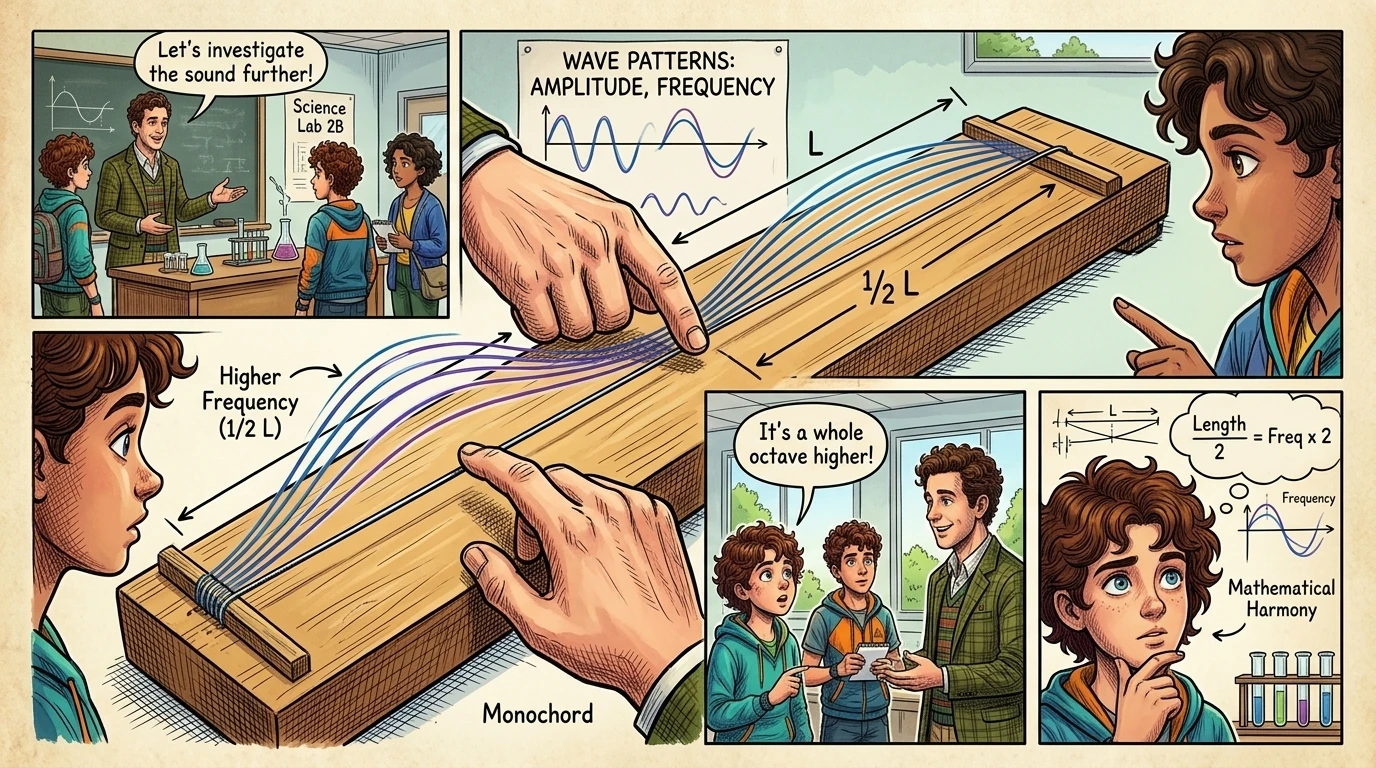
The next day in the science lab at Everett Middle School, Ezra explained their puzzle to their teacher, Mr. Harris. "It's about harmony," he said, plucking a…
The next day in the science lab at Everett Middle School, Ezra explained their puzzle to their teacher, Mr. Harris. "It's about harmony," he said, plucking a single, long string on a wooden instrument. "This is a monochord, and every sound is just a vibration." He then pressed his finger down exactly in the middle of the string and plucked it again, producing a note that was perfectly in tune, but higher. "See?

The next day in the science lab at Everett Middle School, Ezra explained their puzzle to their teacher, Mr. Harris. "It's about harmony," he said, plucking a single, long string on a wooden instrument. "This is a monochord, and every sound is just a vibration." He then pressed his finger down exactly in the middle of the string and plucked it again, producing a note that was perfectly in tune, but higher. "See? By changing the string's length, we change the vibration, and a pattern emerges."

Page 3
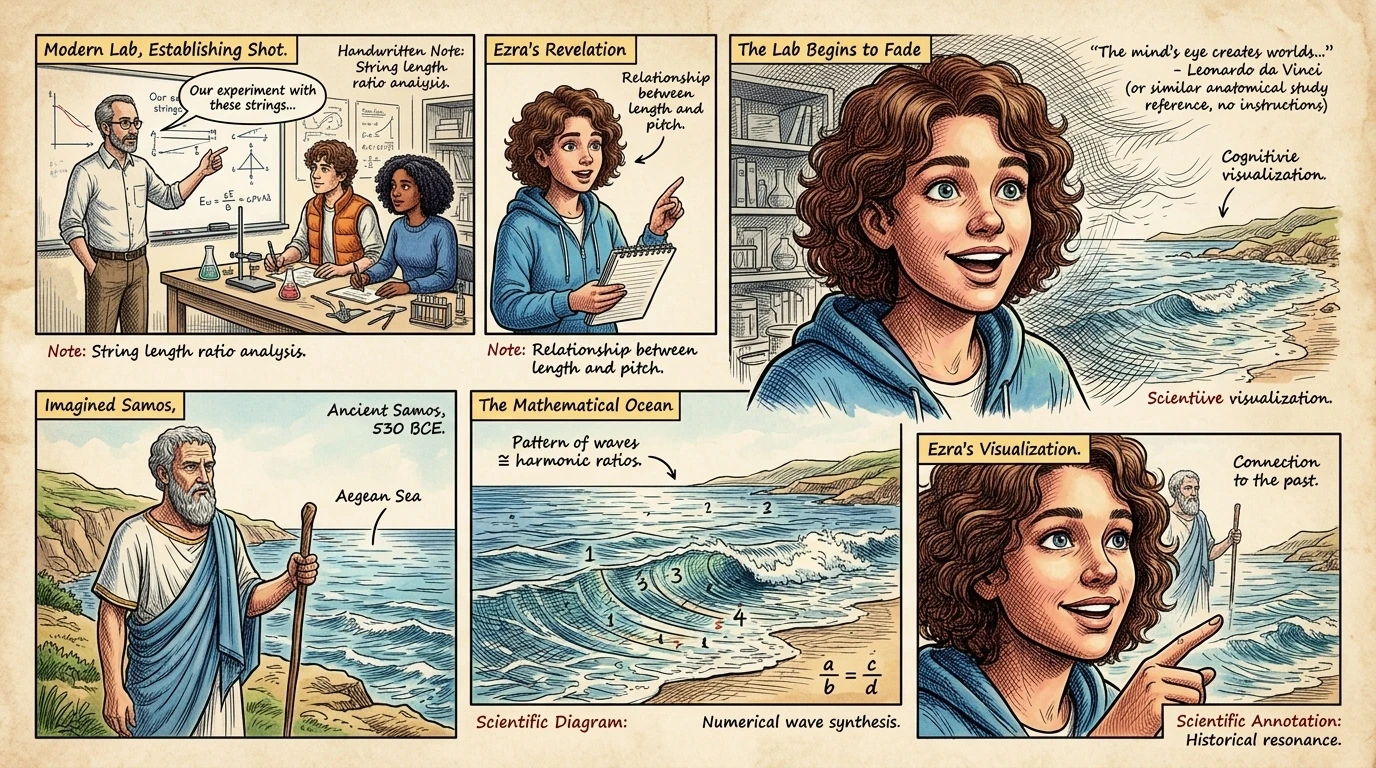
"To find the secret of that pattern, we have to travel back over 2,500 years," Mr. Harris explained, his voice becoming dramatic.
"To find the secret of that pattern, we have to travel back over 2,500 years," Mr. Harris explained, his voice becoming dramatic. The modern lab seemed to fade away. "Imagine a time of brilliant sunshine, white marble temples, and the blue Aegean Sea... ancient Greece." Ezra imagined a man in a simple robe, staring at the sea and thinking about numbers.

"To find the secret of that pattern, we have to travel back over 2,500 years," Mr. Harris explained, his voice becoming dramatic. The modern lab seemed to fade away. "Imagine a time of brilliant sunshine, white marble temples, and the blue Aegean Sea... ancient Greece." Ezra imagined a man in a simple robe, staring at the sea and thinking about numbers.

Page 4
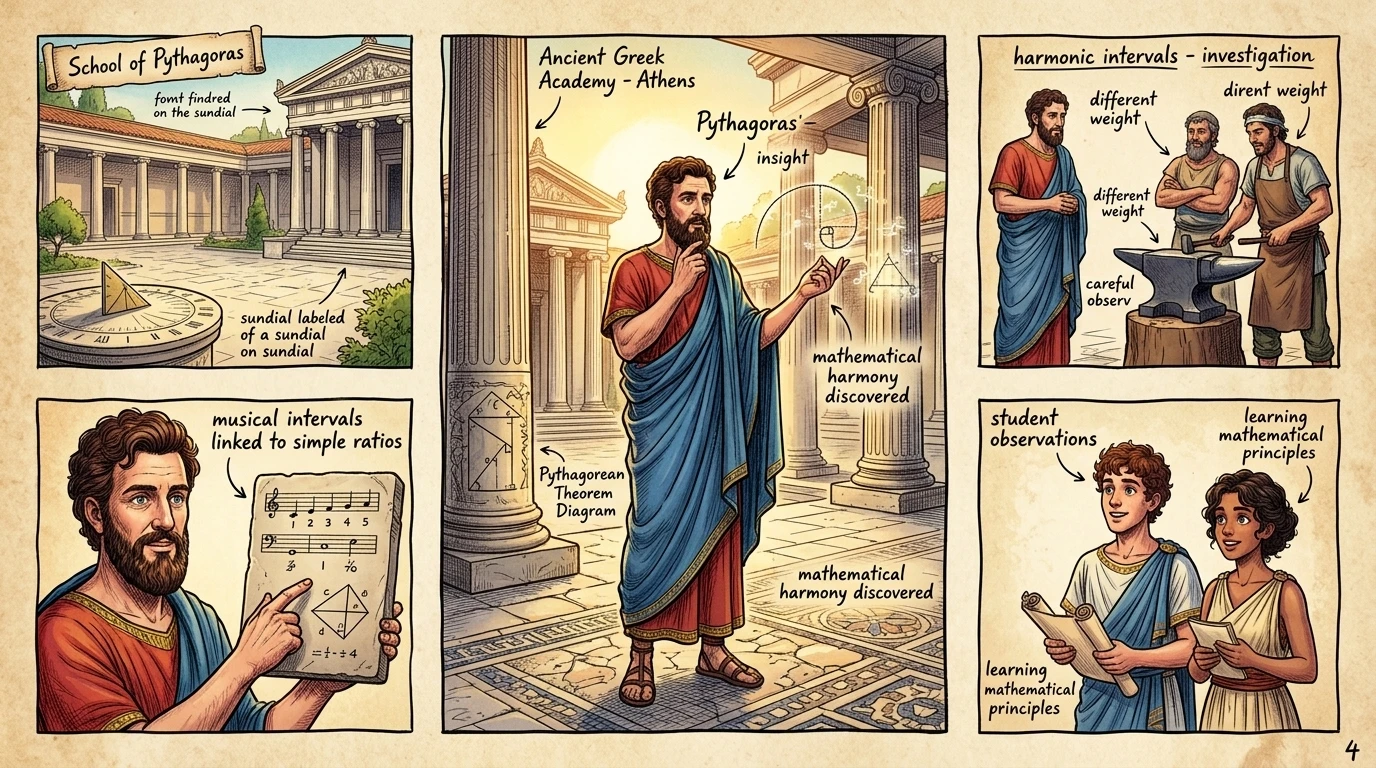
"A brilliant thinker named Pythagoras of Samos lived there," continued the voice-over. "He wasn't just obsessed with triangles; he believed the entire universe…
"A brilliant thinker named Pythagoras of Samos lived there," continued the voice-over. "He wasn't just obsessed with triangles; he believed the entire universe was built from the beautiful, predictable language of numbers. He was convinced that if he looked closely enough, he could find a mathematical pattern in everything, from the stars in the sky to the music he heard in the streets." He saw numbers as the hidden code of reality.

"A brilliant thinker named Pythagoras of Samos lived there," continued the voice-over. "He wasn't just obsessed with triangles; he believed the entire universe was built from the beautiful, predictable language of numbers. He was convinced that if he looked closely enough, he could find a mathematical pattern in everything, from the stars in the sky to the music he heard in the streets." He saw numbers as the hidden code of reality.

Page 5
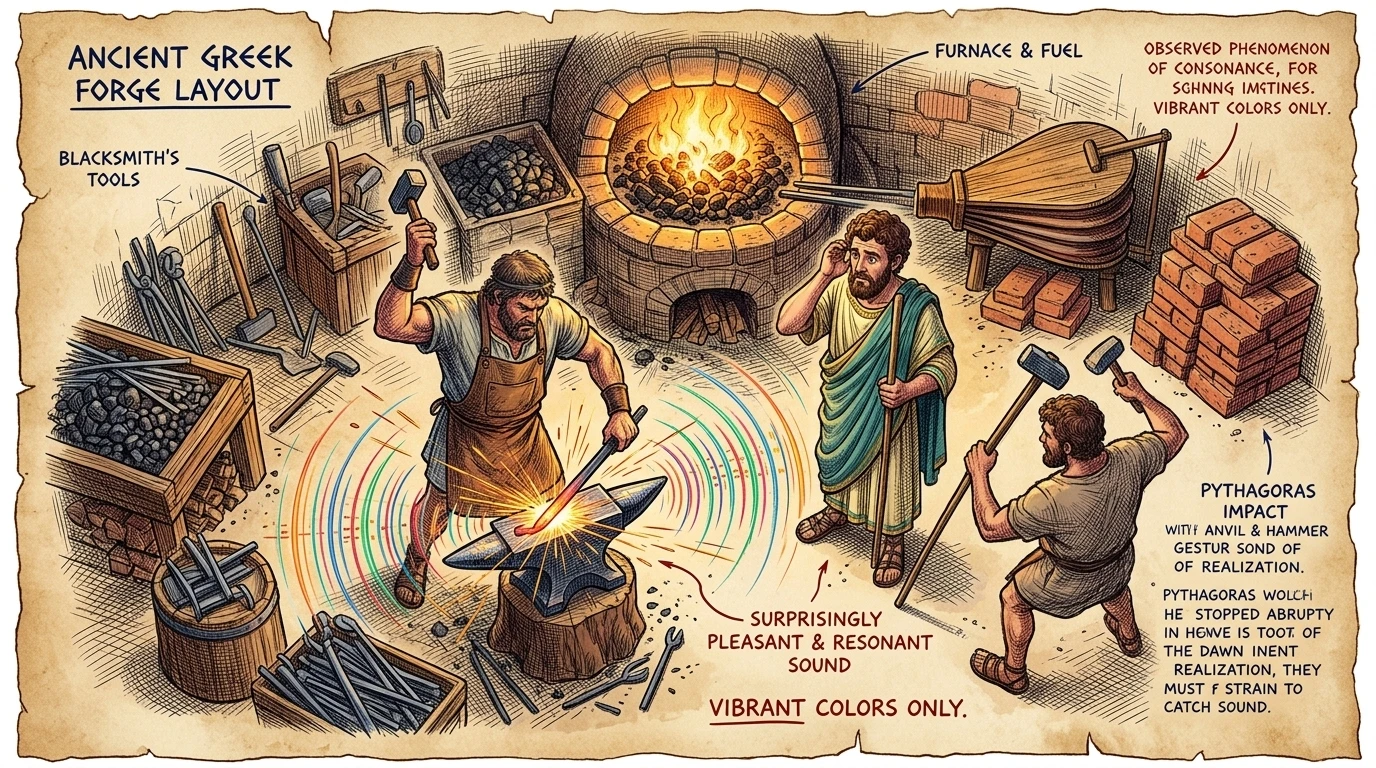
One day, Pythagoras walked past a blacksmith's forge, the sound of hammers ringing out. "Clang! Clonk! Clang!" Most of it was just noise, but then two hammers…
One day, Pythagoras walked past a blacksmith's forge, the sound of hammers ringing out. "Clang! Clonk! Clang!" Most of it was just noise, but then two hammers struck at the same time, and the sound was surprisingly pleasant. He stopped, his head tilted. Why did some sounds clash while others sang together in harmony?

One day, Pythagoras walked past a blacksmith's forge, the sound of hammers ringing out. "Clang! Clonk! Clang!" Most of it was just noise, but then two hammers struck at the same time, and the sound was surprisingly pleasant. He stopped, his head tilted. Why did some sounds clash while others sang together in harmony?

Page 6

Back in his study, Pythagoras experimented with the monochord. He discovered something incredible: when he divided the string by simple whole numbers, the notes…
Back in his study, Pythagoras experimented with the monochord. He discovered something incredible: when he divided the string by simple whole numbers, the notes created a perfect harmony! Dividing the string in half made a note an octave higher—a perfect 2-to-1 ratio. Dividing it into thirds created another beautiful note—a 3-to-2 ratio. Harmony wasn't magic, it was simple math!

Back in his study, Pythagoras experimented with the monochord. He discovered something incredible: when he divided the string by simple whole numbers, the notes created a perfect harmony! Dividing the string in half made a note an octave higher—a perfect 2-to-1 ratio. Dividing it into thirds created another beautiful note—a 3-to-2 ratio. Harmony wasn't magic, it was simple math!

Page 7
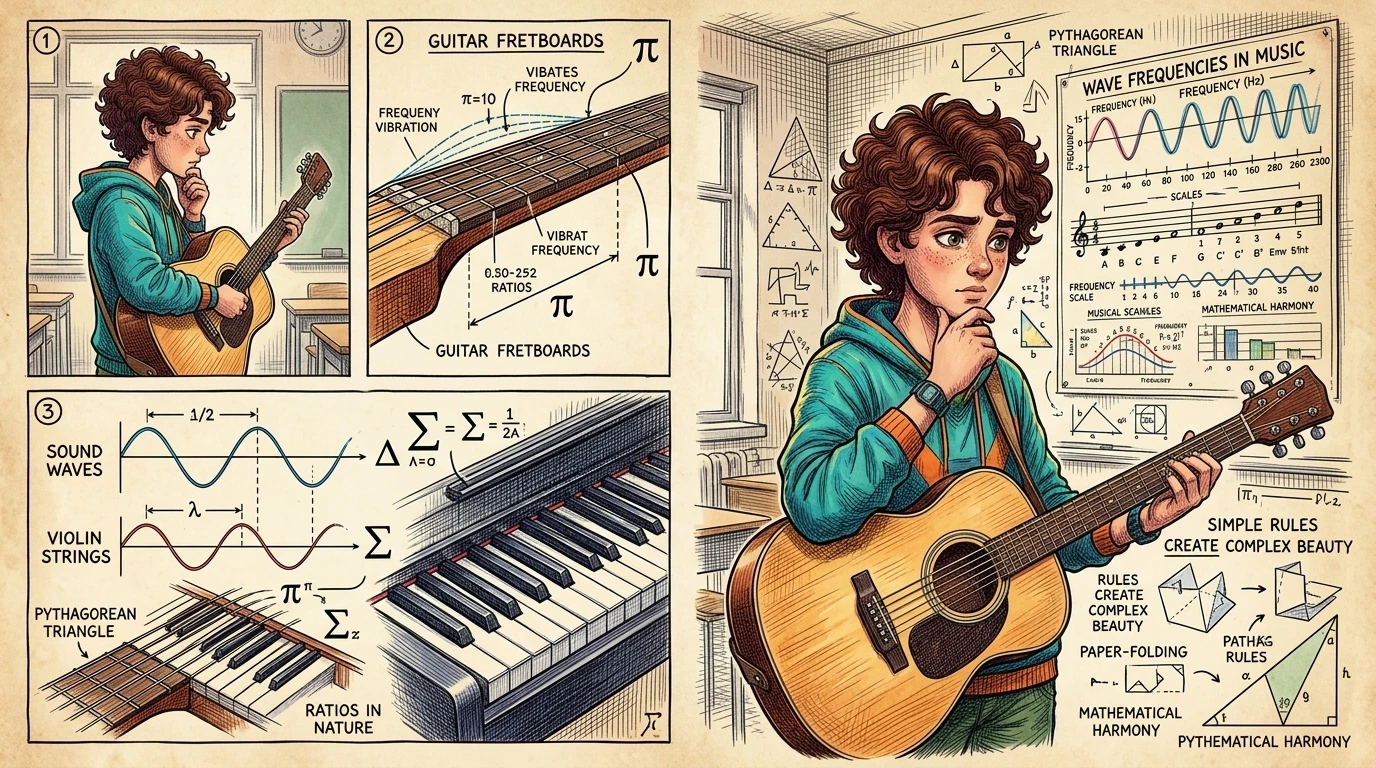
This discovery changed the world, connecting music and mathematics forever. Every piano key, violin string, and guitar fret is designed using these ancient…
This discovery changed the world, connecting music and mathematics forever. Every piano key, violin string, and guitar fret is designed using these ancient ratios. "It's amazing how simple rules can create such complex beauty," Ezra thought. "It's like how if you could fold a piece of paper 42 times, it would be thick enough to reach the Moon!"

This discovery changed the world, connecting music and mathematics forever. Every piano key, violin string, and guitar fret is designed using these ancient ratios. "It's amazing how simple rules can create such complex beauty," Ezra thought. "It's like how if you could fold a piece of paper 42 times, it would be thick enough to reach the Moon!"

Page 8
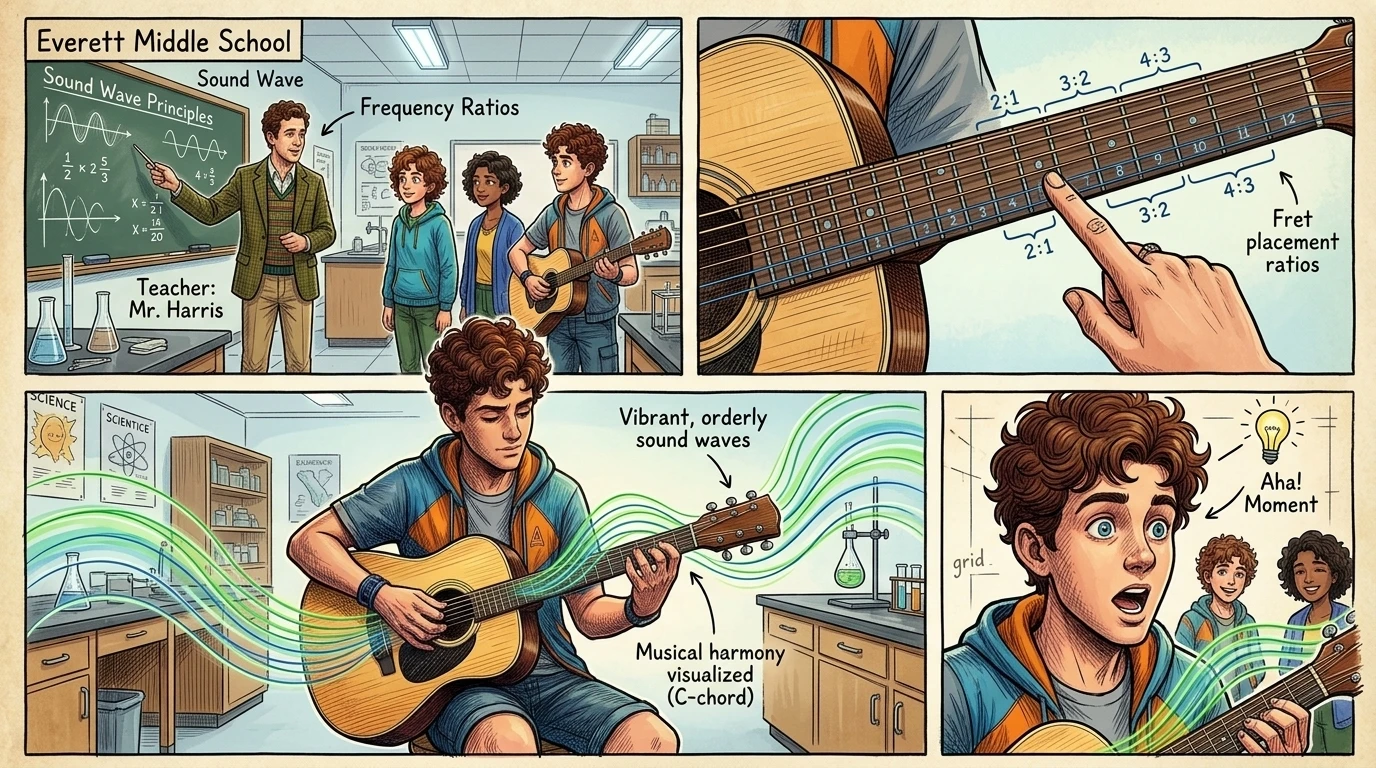
Back in the lab, Ezra's eyes lit up as she grabbed Kai's guitar. "Kai, look! The frets aren't random!" she exclaimed, pointing.
Back in the lab, Ezra's eyes lit up as she grabbed Kai's guitar. "Kai, look! The frets aren't random!" she exclaimed, pointing. "They're placed at the exact mathematical spots to divide the string, just like Pythagoras did!" Kai pressed his fingers where she pointed and strummed. A perfect, ringing C-chord filled the room, and his jaw dropped in amazement.

Back in the lab, Ezra's eyes lit up as she grabbed Kai's guitar. "Kai, look! The frets aren't random!" she exclaimed, pointing. "They're placed at the exact mathematical spots to divide the string, just like Pythagoras did!" Kai pressed his fingers where she pointed and strummed. A perfect, ringing C-chord filled the room, and his jaw dropped in amazement.

Page 9
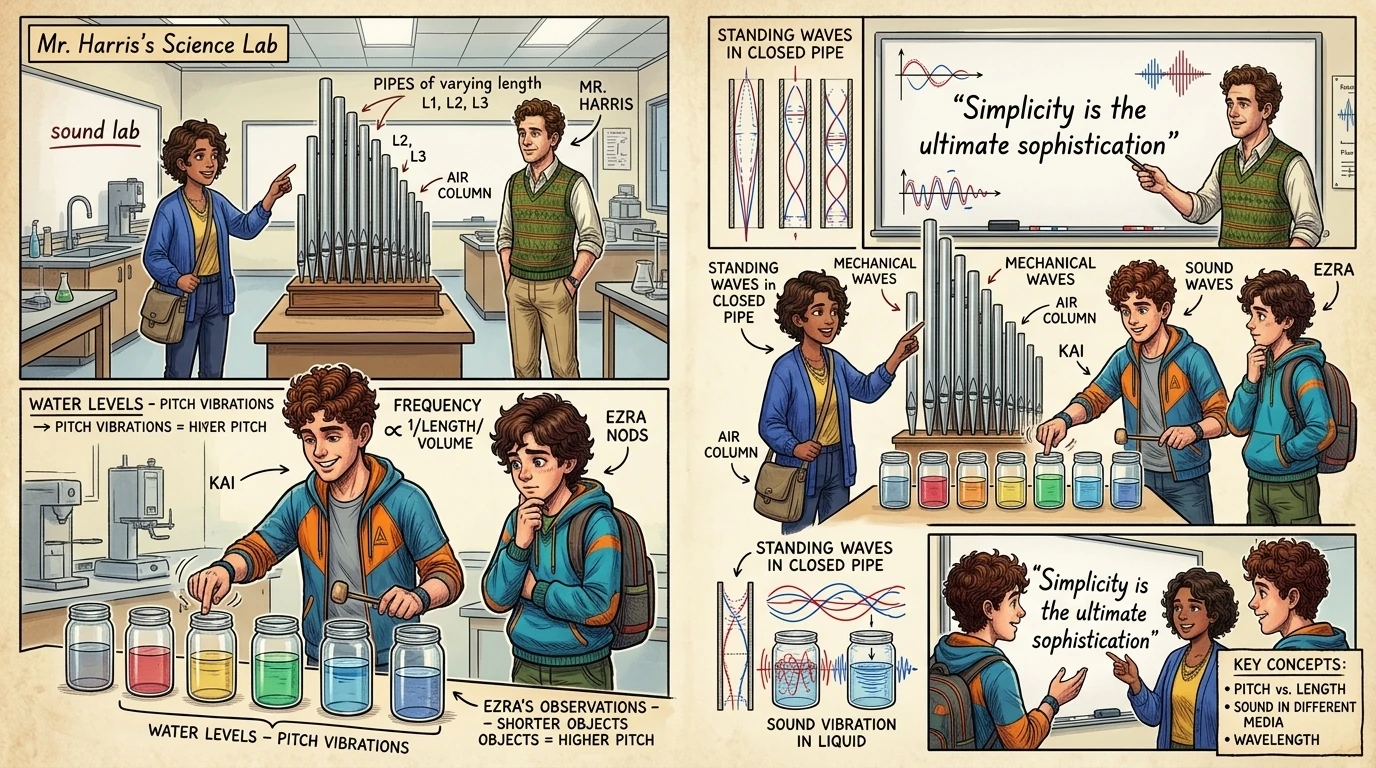
"So that's why pipe organs have pipes of different lengths!" Maya chimed in. Kai added, "And when you tap on glasses with different amounts of water, it's the…
"So that's why pipe organs have pipes of different lengths!" Maya chimed in. Kai added, "And when you tap on glasses with different amounts of water, it's the same principle!" Ezra nodded, remembering a quote. "The artist Leonardo da Vinci once said, 'Simplicity is the ultimate sophistication.' The most beautiful music comes from the simplest math."

"So that's why pipe organs have pipes of different lengths!" Maya chimed in. Kai added, "And when you tap on glasses with different amounts of water, it's the same principle!" Ezra nodded, remembering a quote. "The artist Leonardo da Vinci once said, 'Simplicity is the ultimate sophistication.' The most beautiful music comes from the simplest math."

Page 10
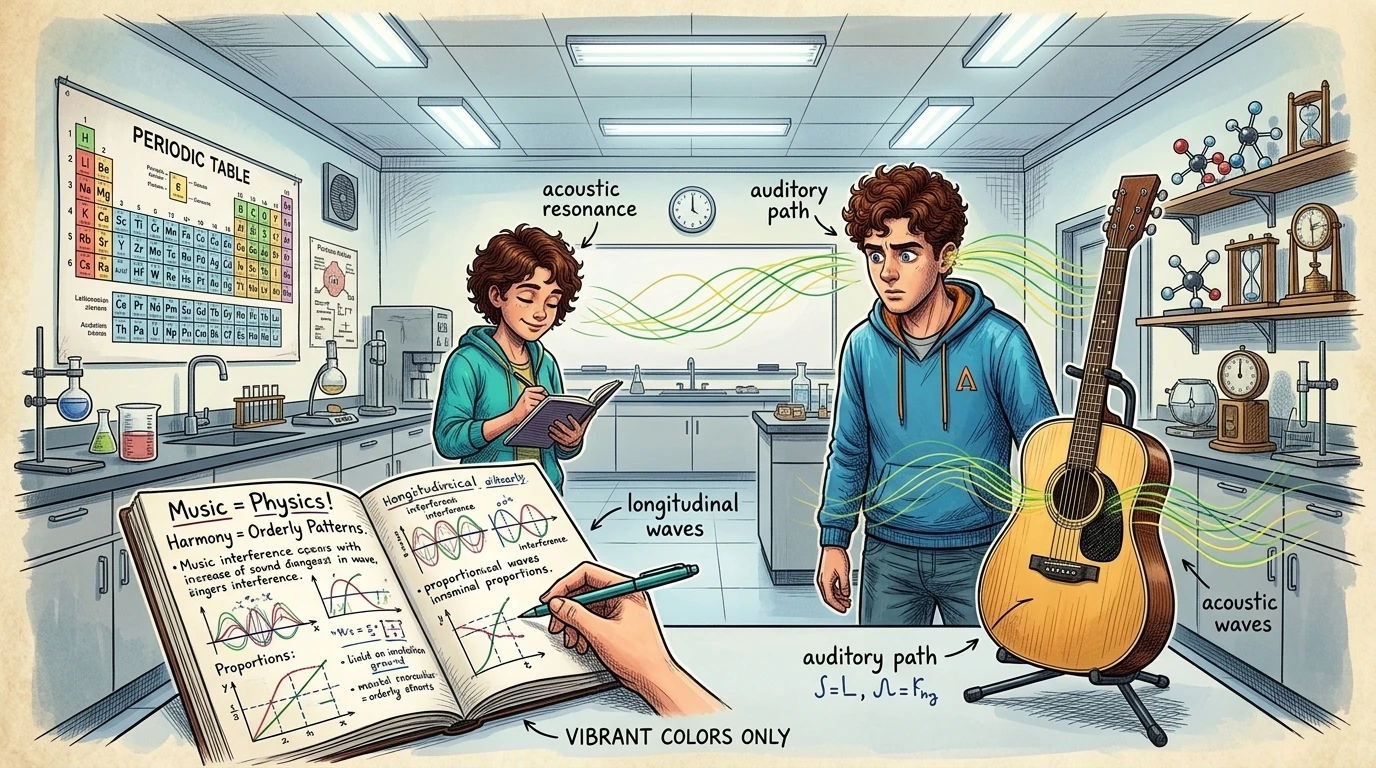
Ezra smiled, grabbing her notebook. "So music isn't just feelings, it's physics! Harmony is just the sound of simple, orderly patterns." Kai stared at the…
Ezra smiled, grabbing her notebook. "So music isn't just feelings, it's physics! Harmony is just the sound of simple, orderly patterns." Kai stared at the guitar, then looked at the air between them. "Okay, I get what harmony is now," he said, a new question dawning in his eyes. "But how does the sound actually travel from the vibrating string all the way to our ears?"

Ezra smiled, grabbing her notebook. "So music isn't just feelings, it's physics! Harmony is just the sound of simple, orderly patterns." Kai stared at the guitar, then looked at the air between them. "Okay, I get what harmony is now," he said, a new question dawning in his eyes. "But how does the sound actually travel from the vibrating string all the way to our ears?"

About this story

  • Location: Greece
  • Audience: kids (ages 6–12)

Questions and answers

Questions and answers about The Physics of Music

Read Wonder Science on your phone

Wonder Science is available on Android. Get Wonder Science on Google Play.

More Wonder Science stories

All Wonder Science stories · Open the library