The Science of Colors

The Science of Colors — an illustrated science story, set in Germany. 10 illustrated pages, free to read on Wonder Science.
The Science of Colors — book cover — Wonder Science
The Science of Colors — an illustrated science story, set in Germany. 10 illustrated pages, free to read on Wonder Science.

Page 1
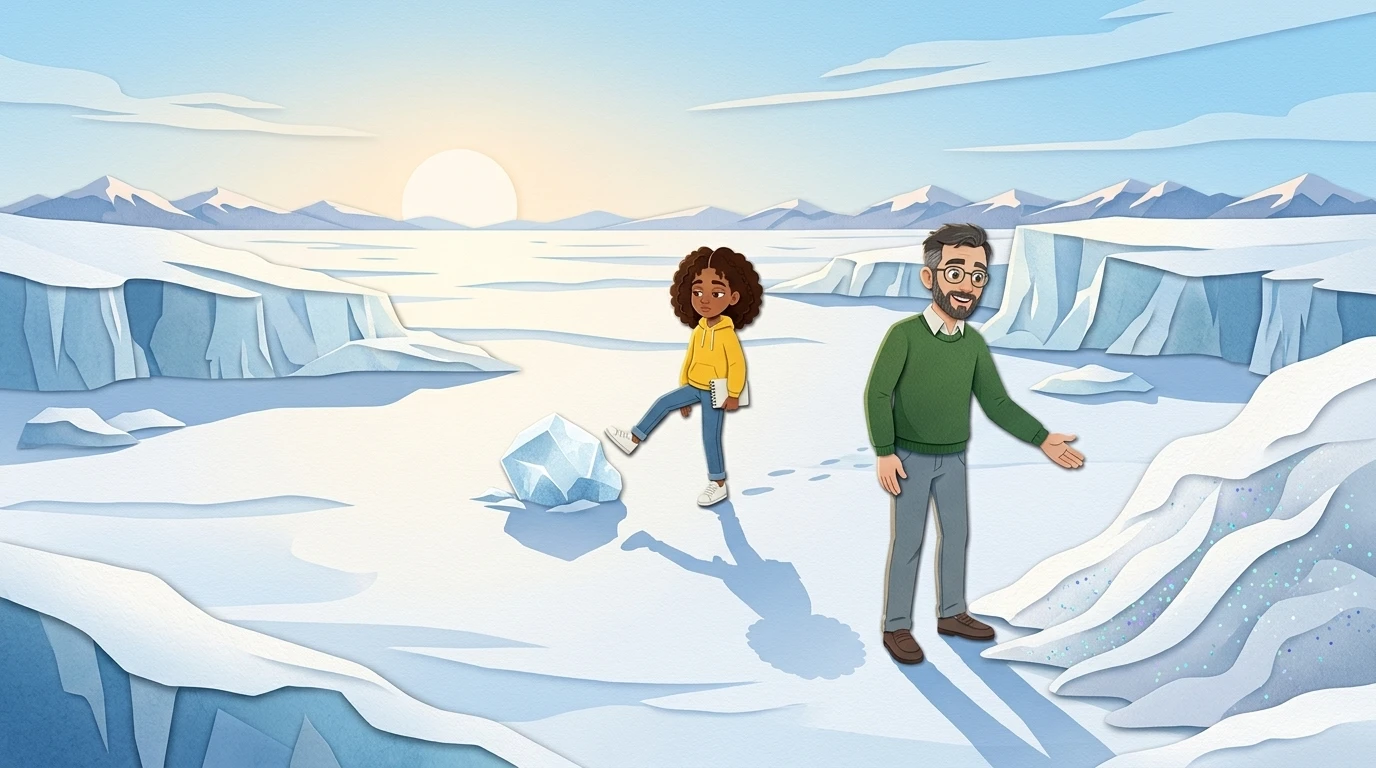
"Ugh, this frozen tundra is so boring!" Malak exclaimed, kicking at a chunk of ice. Her dad chuckled, pointing to a nearby snowdrift. "Look closer, Malak.
"Ugh, this frozen tundra is so boring!" Malak exclaimed, kicking at a chunk of ice. Her dad chuckled, pointing to a nearby snowdrift. "Look closer, Malak. Everything around us, even this seemingly white landscape, is bursting with colors we can't always see! It's all thanks to chemistry."

"Ugh, this frozen tundra is so boring!" Malak exclaimed, kicking at a chunk of ice. Her dad chuckled, pointing to a nearby snowdrift. "Look closer, Malak. Everything around us, even this seemingly white landscape, is bursting with colors we can't always see! It's all thanks to chemistry."

Page 2
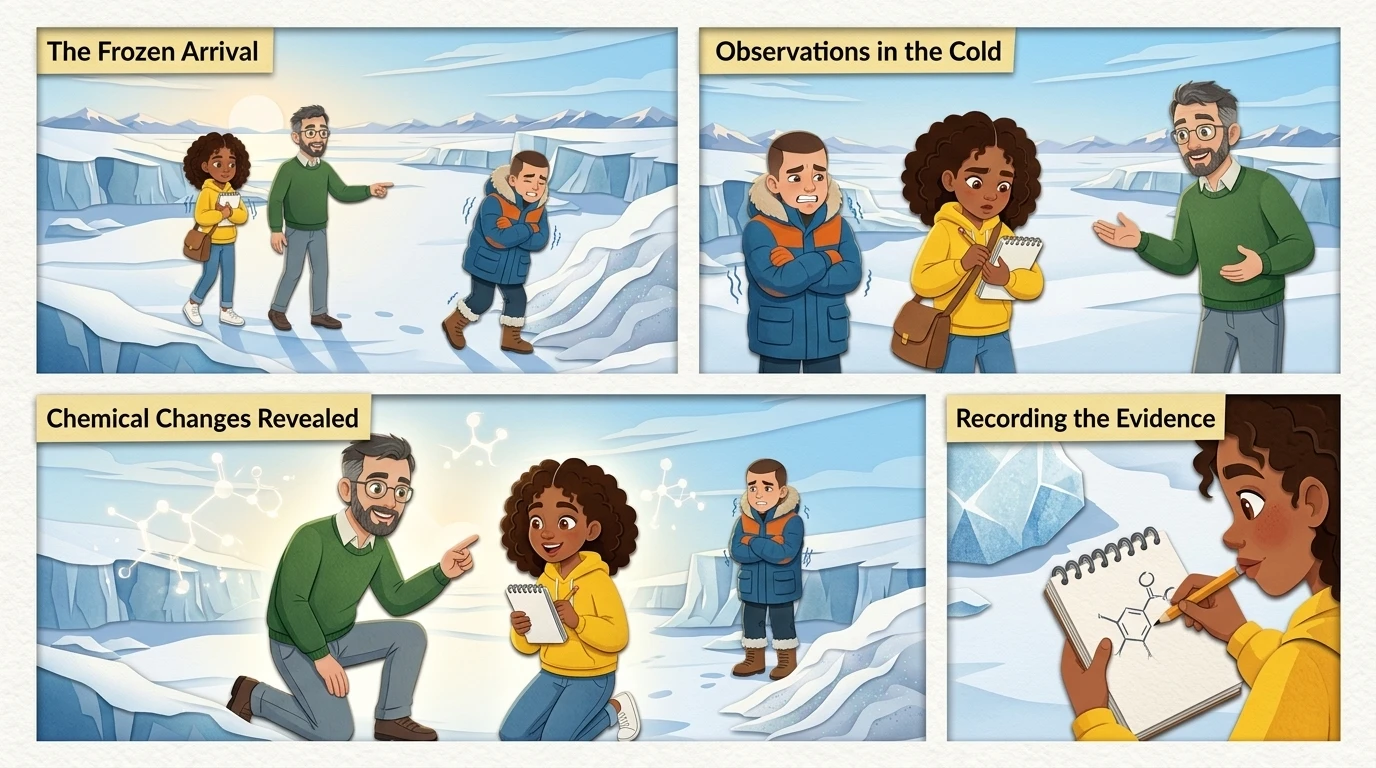
Leandro, bundled in a thick parka, shivered, "Colors we can't see? What does that even mean? Is it like how some animals can see ultraviolet light?" Malak…
Leandro, bundled in a thick parka, shivered, "Colors we can't see? What does that even mean? Is it like how some animals can see ultraviolet light?" Malak pulled out her notebook. "Dad, are the colors really hidden? Can we make them appear somehow?" Her dad smiled, "That's a great question! It involves a bit of chemistry, specifically reactions and how they change things, including colors."

Leandro, bundled in a thick parka, shivered, "Colors we can't see? What does that even mean? Is it like how some animals can see ultraviolet light?" Malak pulled out her notebook. "Dad, are the colors really hidden? Can we make them appear somehow?" Her dad smiled, "That's a great question! It involves a bit of chemistry, specifically reactions and how they change things, including colors."

Page 3
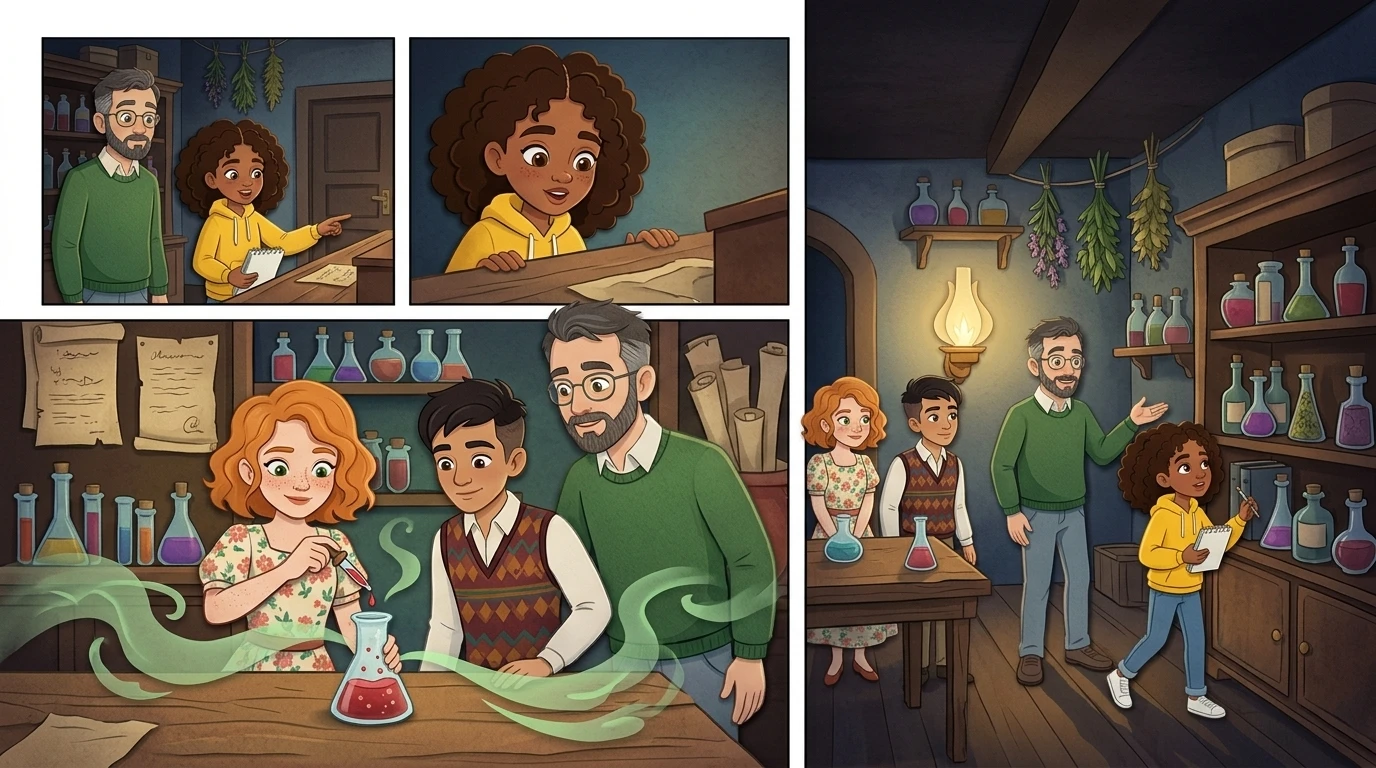
The wind howled, and suddenly, the landscape seemed to dissolve, replaced by something old and grand. A voice echoed, narrating the scene, "Northern Germany…
The wind howled, and suddenly, the landscape seemed to dissolve, replaced by something old and grand. A voice echoed, narrating the scene, "Northern Germany, early 1700s. In a dimly lit apothecary shop..." The scene shifted, showing shelves packed with strange vials and bubbling concoctions. This journey into the past showed where our understanding of color chemistry truly began.

The wind howled, and suddenly, the landscape seemed to dissolve, replaced by something old and grand. A voice echoed, narrating the scene, "Northern Germany, early 1700s. In a dimly lit apothecary shop..." The scene shifted, showing shelves packed with strange vials and bubbling concoctions. This journey into the past showed where our understanding of color chemistry truly began.

Page 4
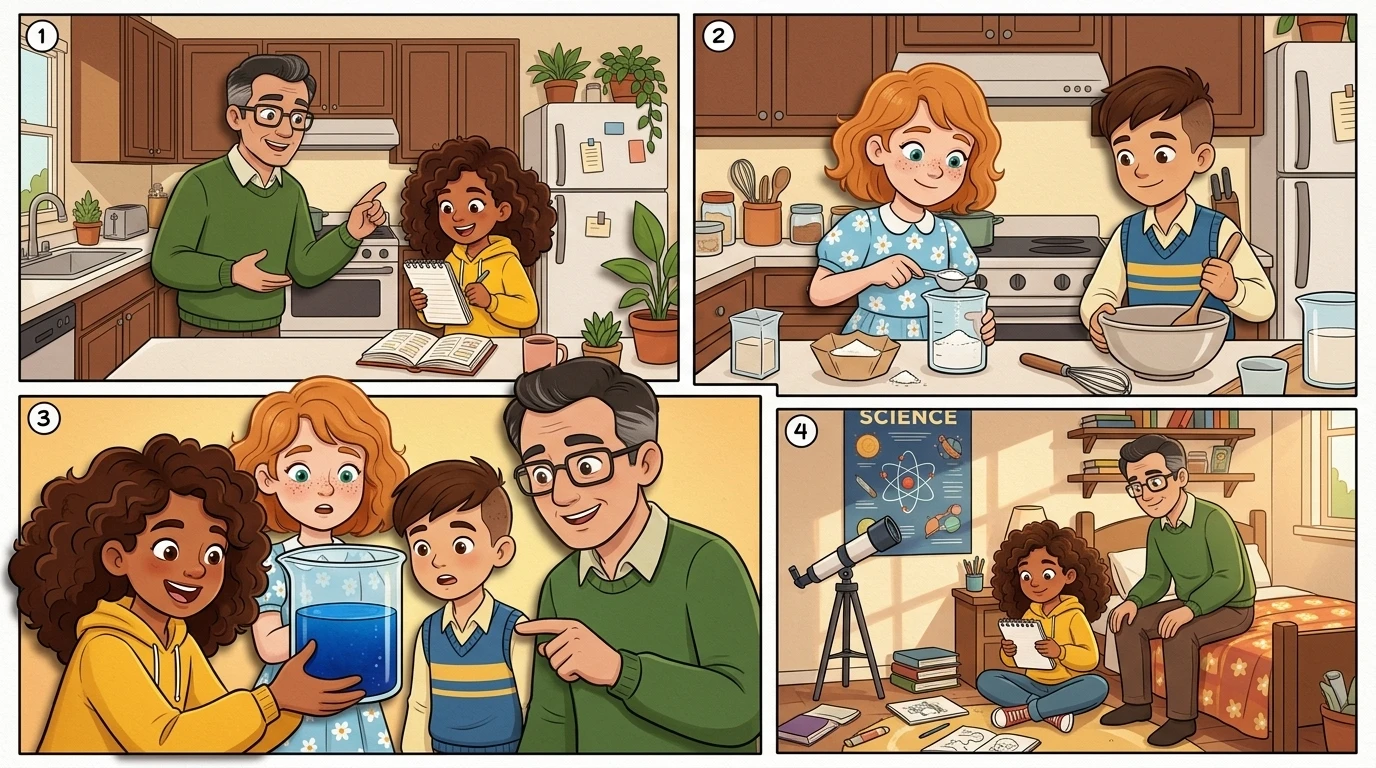
"Meet Johann Konrad Dippel," the voice continued. "Born in Frankenstein castle, he was an alchemist, physician, and scientist who experimented tirelessly.
"Meet Johann Konrad Dippel," the voice continued. "Born in Frankenstein castle, he was an alchemist, physician, and scientist who experimented tirelessly. He was always searching, driven by a deep desire to understand the world around him." A man with long, greasy brown hair down to his shoulders stands in the shop. He wears a brown tunic and stained apron.

"Meet Johann Konrad Dippel," the voice continued. "Born in Frankenstein castle, he was an alchemist, physician, and scientist who experimented tirelessly. He was always searching, driven by a deep desire to understand the world around him." A man with long, greasy brown hair down to his shoulders stands in the shop. He wears a brown tunic and stained apron.

Page 5
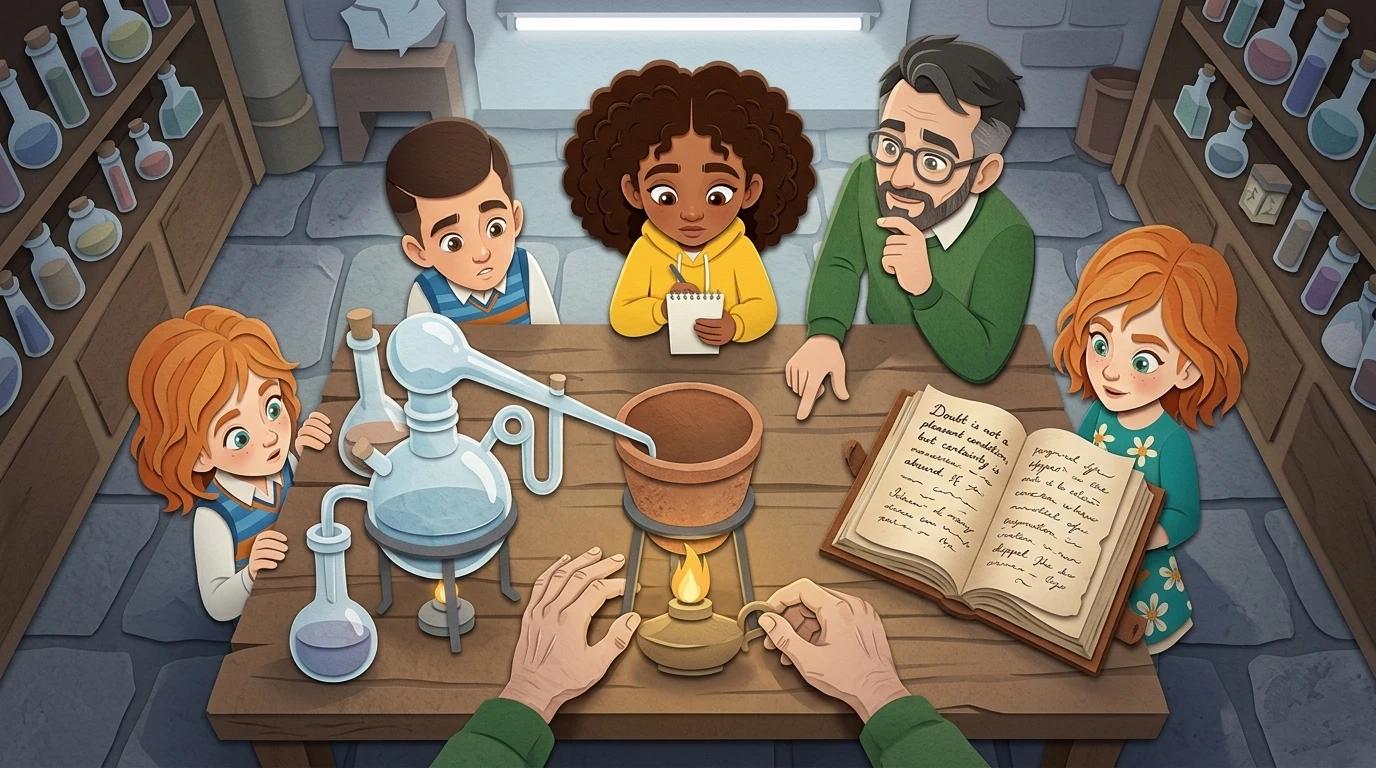
Dippel muttered to himself, adjusting the flame under a crucible. "'Doubt is not a pleasant condition, but certainty is absurd,'" he mumbled, quoting Voltaire…
Dippel muttered to himself, adjusting the flame under a crucible. "'Doubt is not a pleasant condition, but certainty is absurd,'" he mumbled, quoting Voltaire, a philosopher he admired. "I must question everything, test every element, to unlock the secrets of this world!" The old alembic still sat on the table.

Dippel muttered to himself, adjusting the flame under a crucible. "'Doubt is not a pleasant condition, but certainty is absurd,'" he mumbled, quoting Voltaire, a philosopher he admired. "I must question everything, test every element, to unlock the secrets of this world!" The old alembic still sat on the table.

Page 6

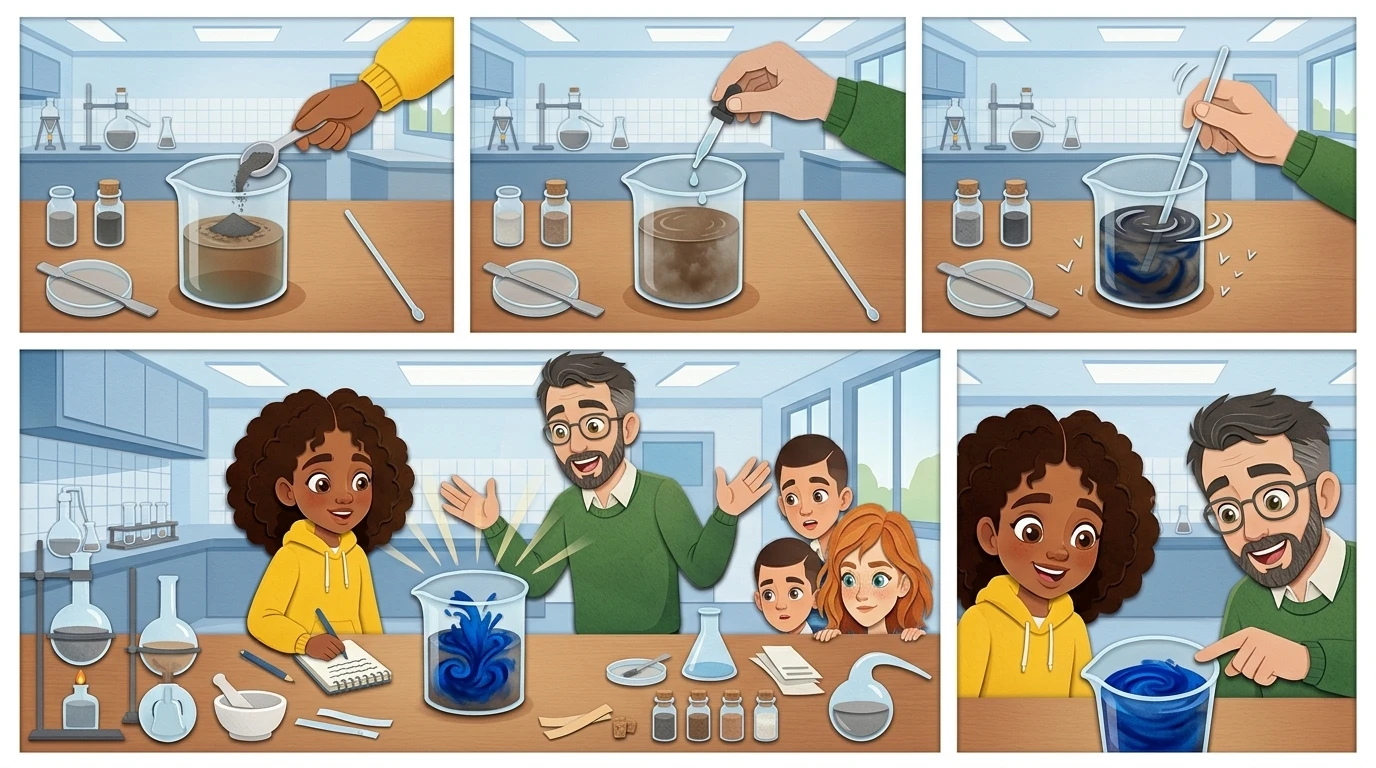
One day, while mixing animal oils with potash, Dippel noticed a peculiar reaction. A vibrant blue pigment formed! "Eureka!" he shouted.
One day, while mixing animal oils with potash, Dippel noticed a peculiar reaction. A vibrant blue pigment formed! "Eureka!" he shouted. "A new color!" This blue became known as Prussian blue, the first modern synthetic pigment, forever changing the world of dyes and inks.

One day, while mixing animal oils with potash, Dippel noticed a peculiar reaction. A vibrant blue pigment formed! "Eureka!" he shouted. "A new color!" This blue became known as Prussian blue, the first modern synthetic pigment, forever changing the world of dyes and inks.

Page 7
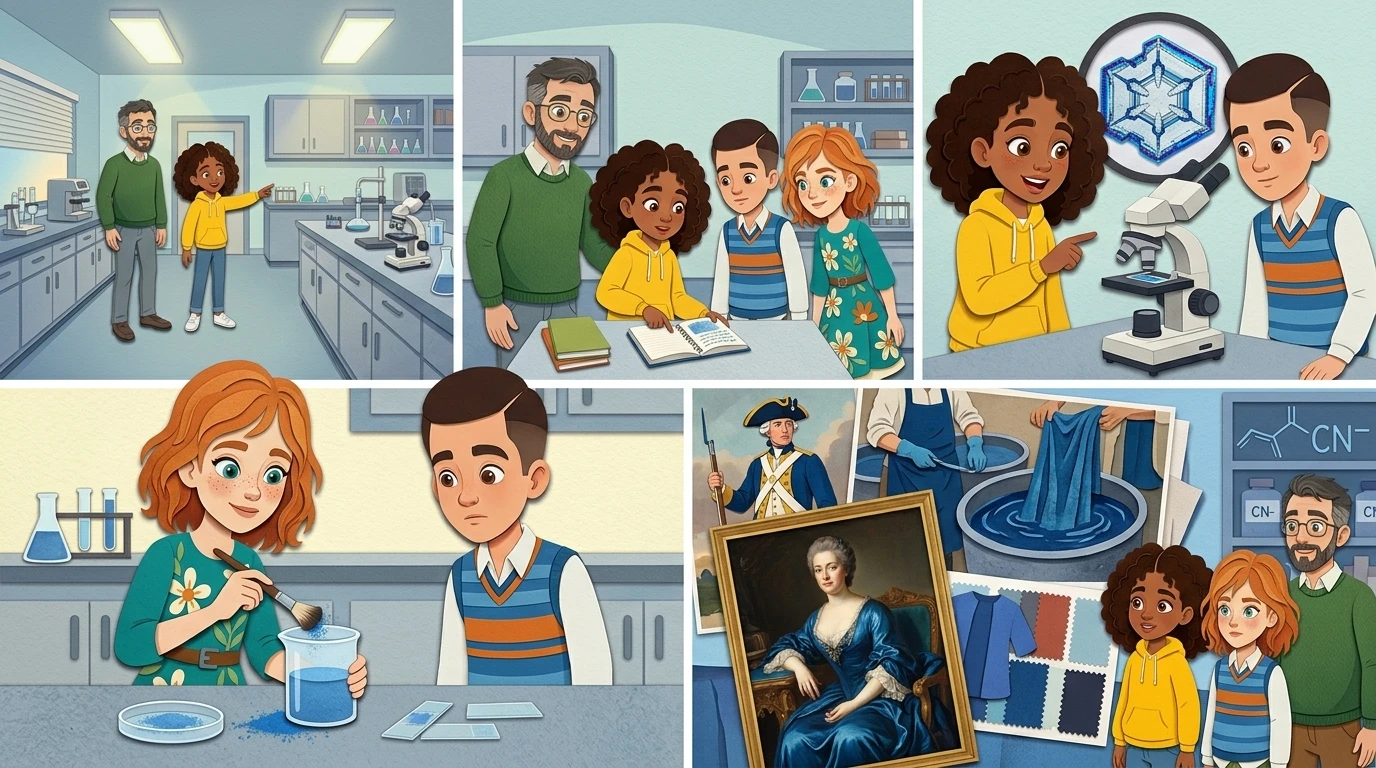
Prussian blue revolutionized art, textiles, and even warfare. Uniforms could now be dyed cheaply, leading to the iconic blue of many armies.
Prussian blue revolutionized art, textiles, and even warfare. Uniforms could now be dyed cheaply, leading to the iconic blue of many armies. Plus, Prussian blue became a precursor to the discovery of cyanide, a crucial molecule used in many things. It's been said that even today, this color is in your clothes! What would Dippel think?

Prussian blue revolutionized art, textiles, and even warfare. Uniforms could now be dyed cheaply, leading to the iconic blue of many armies. Plus, Prussian blue became a precursor to the discovery of cyanide, a crucial molecule used in many things. It's been said that even today, this color is in your clothes! What would Dippel think?

Page 8
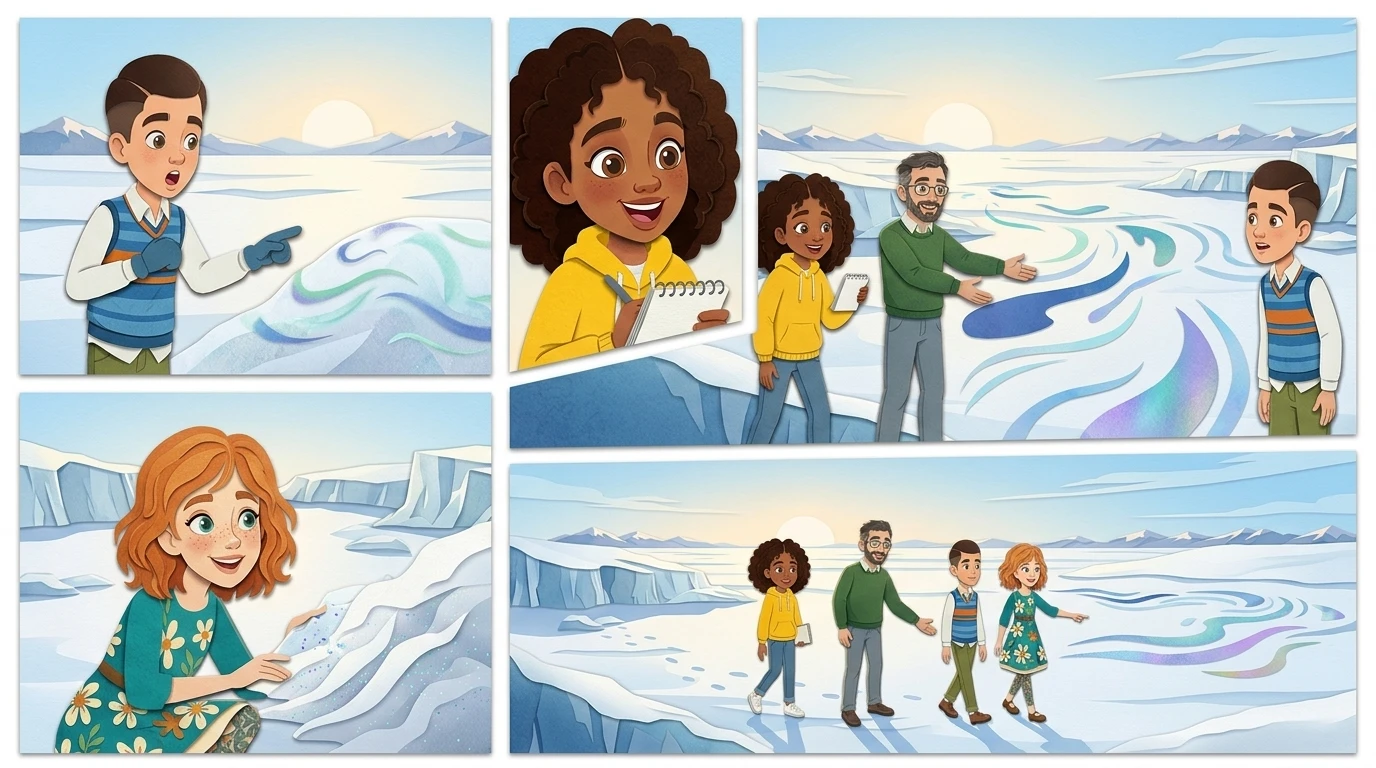
Suddenly, they were back in the tundra. "Whoa!" Leandro exclaimed. "So, colors can be created from chemical reactions?" Malak nodded. "Yeah!
Suddenly, they were back in the tundra. "Whoa!" Leandro exclaimed. "So, colors can be created from chemical reactions?" Malak nodded. "Yeah! Like Prussian blue, it all started from mixing two things together!" Her dad added, "It shows that even a frozen landscape can inspire amazing discoveries!"

Suddenly, they were back in the tundra. "Whoa!" Leandro exclaimed. "So, colors can be created from chemical reactions?" Malak nodded. "Yeah! Like Prussian blue, it all started from mixing two things together!" Her dad added, "It shows that even a frozen landscape can inspire amazing discoveries!"

Page 9
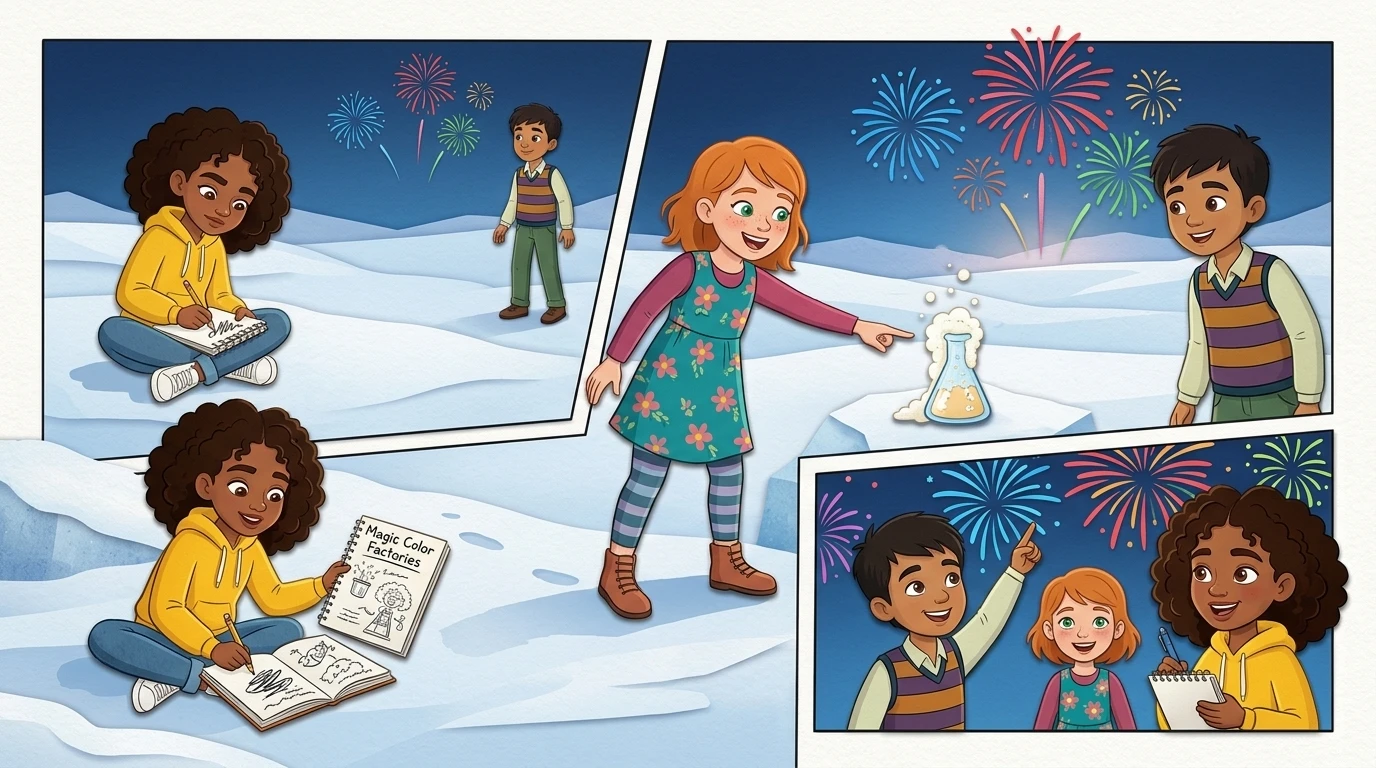
Valentina, who had just joined them, chimed in, "It's like when you mix baking soda and vinegar for a science project; you get bubbles and a whole new…
Valentina, who had just joined them, chimed in, "It's like when you mix baking soda and vinegar for a science project; you get bubbles and a whole new substance!" Leandro added, "Or how fireworks get their colors from different chemicals burning!" Malak scribbled furiously in her notebook. "So, chemical reactions are like magic color factories!"

Valentina, who had just joined them, chimed in, "It's like when you mix baking soda and vinegar for a science project; you get bubbles and a whole new substance!" Leandro added, "Or how fireworks get their colors from different chemicals burning!" Malak scribbled furiously in her notebook. "So, chemical reactions are like magic color factories!"

Page 10
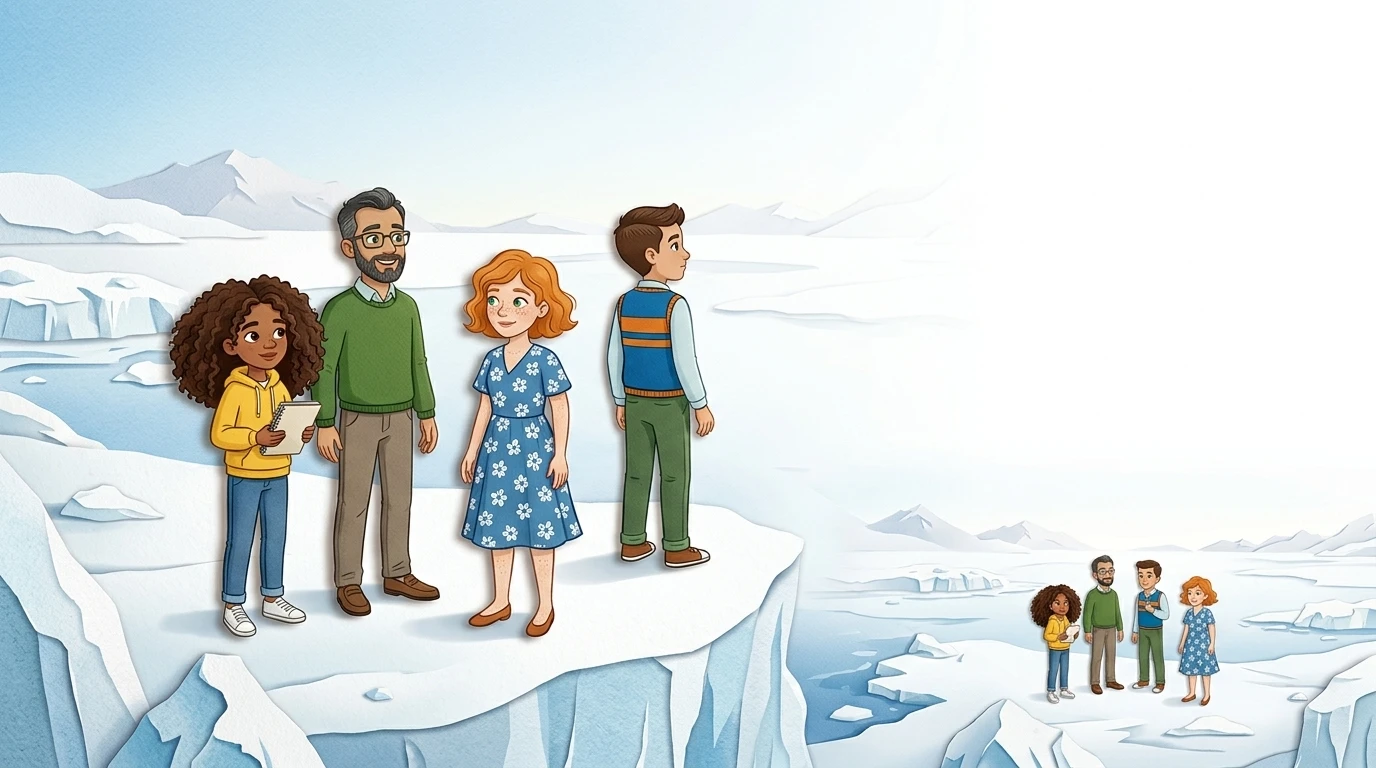
"Exactly!" her dad smiled. "Chemical reactions are responsible for many of the colors we see every day." Leandro, looking out at the icy expanse, asked, "If…
"Exactly!" her dad smiled. "Chemical reactions are responsible for many of the colors we see every day." Leandro, looking out at the icy expanse, asked, "If chemical reactions make colors, what makes diamonds sparkly?" The tundra fades to white.

"Exactly!" her dad smiled. "Chemical reactions are responsible for many of the colors we see every day." Leandro, looking out at the icy expanse, asked, "If chemical reactions make colors, what makes diamonds sparkly?" The tundra fades to white.

About this story

  • Location: Germany
  • Audience: kids (ages 6–12)

Questions and answers

Questions and answers about The Science of Colors

Read Wonder Science on your phone

Wonder Science is available on Android. Get Wonder Science on Google Play.

More Wonder Science stories

All Wonder Science stories · Open the library