The Science of Sports

The Science of Sports — an illustrated science story. 10 illustrated pages, free to read on Wonder Science.
The Science of Sports — book cover — Wonder Science
The Science of Sports — an illustrated science story. 10 illustrated pages, free to read on Wonder Science.

Page 1
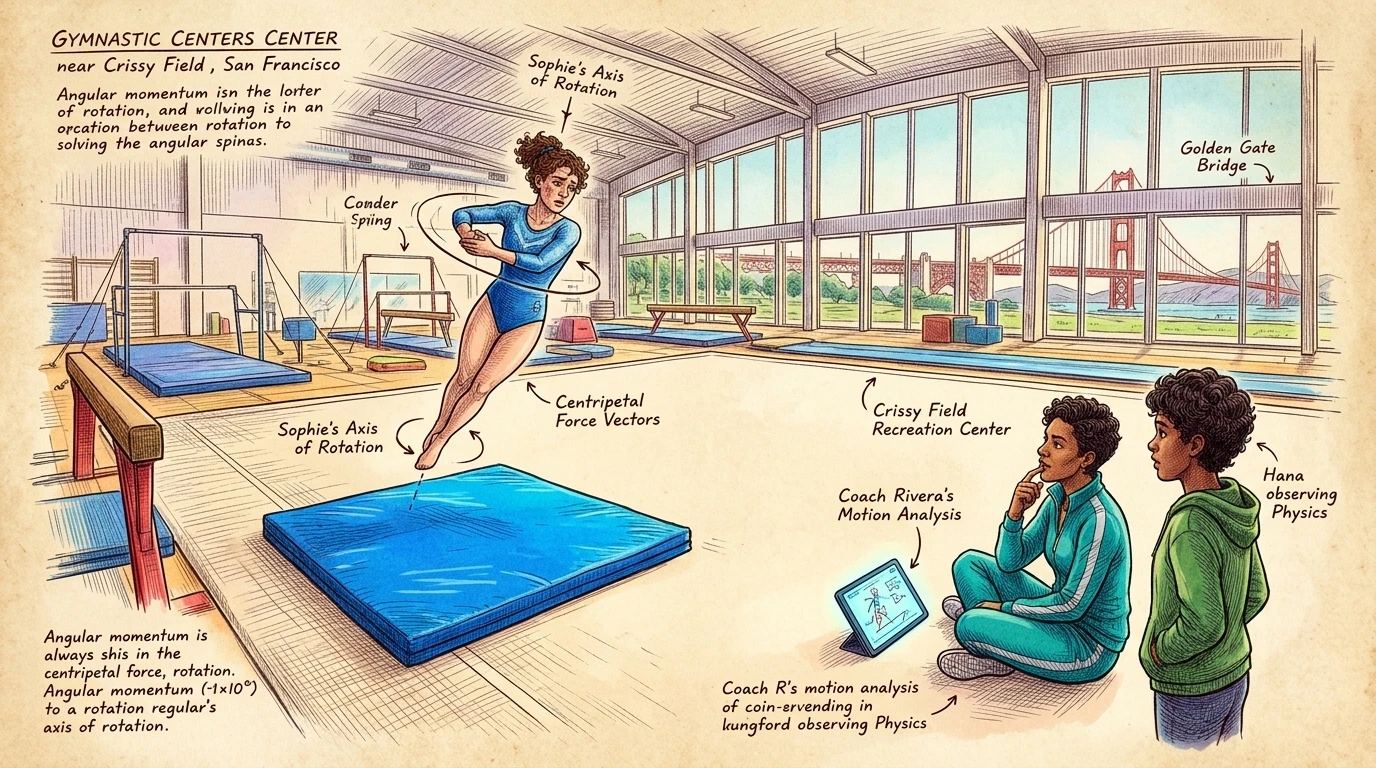
At a bright gymnastics center near Crissy Field, Hana watched her teammate Sophie attempt a dizzying floor spin. Sophie pulled her arms in, wobbled, and tumbled…
At a bright gymnastics center near Crissy Field, Hana watched her teammate Sophie attempt a dizzying floor spin. Sophie pulled her arms in, wobbled, and tumbled onto the mat with a soft thud. "I just can't stick the landing!" Sophie sighed, pushing herself up. Coach Rivera walked over, tapping her chin thoughtfully as she watched the replay on her tablet.

At a bright gymnastics center near Crissy Field, Hana watched her teammate Sophie attempt a dizzying floor spin. Sophie pulled her arms in, wobbled, and tumbled onto the mat with a soft thud. "I just can't stick the landing!" Sophie sighed, pushing herself up. Coach Rivera walked over, tapping her chin thoughtfully as she watched the replay on her tablet.

Page 2

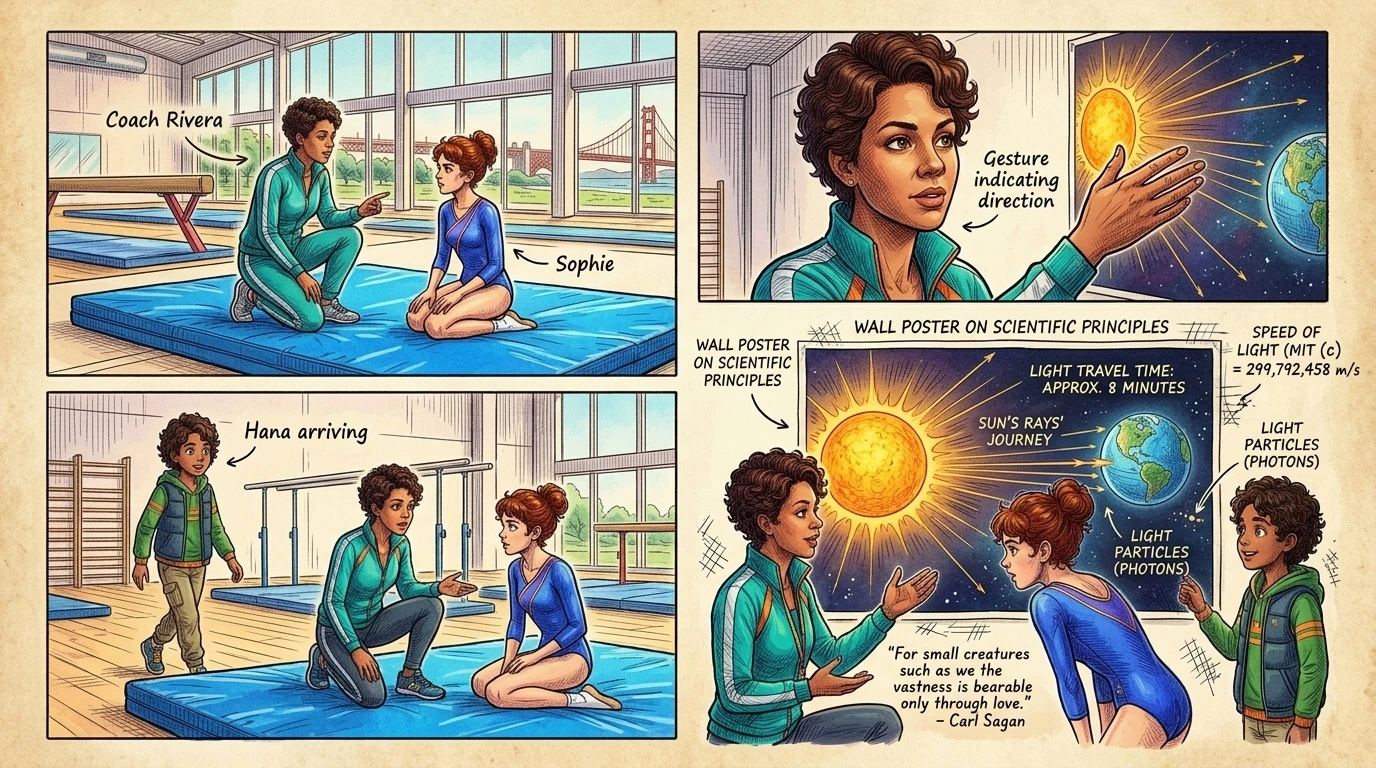
"You're so close, Sophie," Coach Rivera encouraged, kneeling beside her. "You pull your arms in to spin faster, but why does that work?
"You're so close, Sophie," Coach Rivera encouraged, kneeling beside her. "You pull your arms in to spin faster, but why does that work? It's all about physics!" Hana's eyes lit up. "Physics? You mean like science?" The coach smiled, "Exactly. A great scientific idea is like sunlight; as the astronomer Carl Sagan noted, it can take a long time to travel. This idea came from a scientist hundreds of years ago."

"You're so close, Sophie," Coach Rivera encouraged, kneeling beside her. "You pull your arms in to spin faster, but why does that work? It's all about physics!" Hana's eyes lit up. "Physics? You mean like science?" The coach smiled, "Exactly. A great scientific idea is like sunlight; as the astronomer Carl Sagan noted, it can take a long time to travel. This idea came from a scientist hundreds of years ago."

Page 3
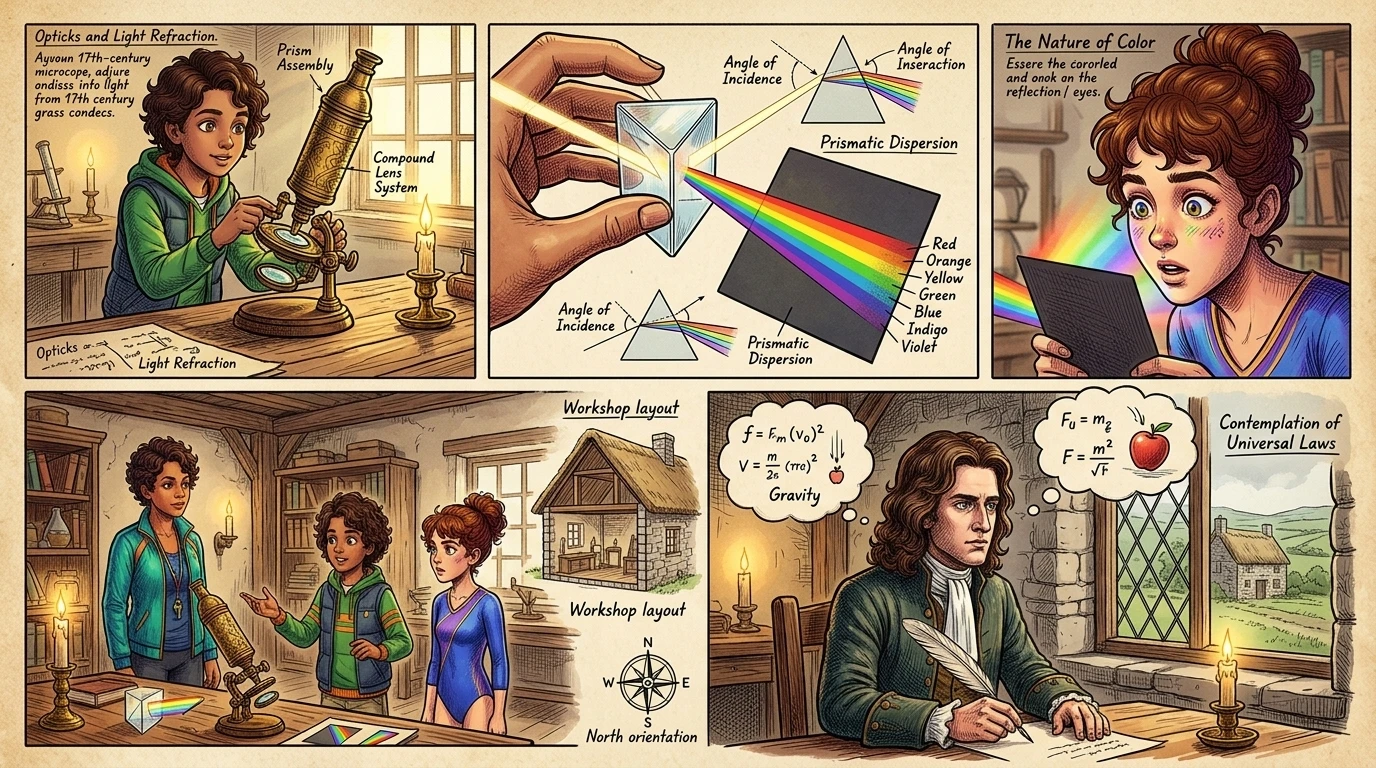
The bustling gym seemed to fade away, replaced by the quiet stillness of a 17th-century English countryside. A small stone cottage stood nestled among green…
The bustling gym seemed to fade away, replaced by the quiet stillness of a 17th-century English countryside. A small stone cottage stood nestled among green fields under a grey, thoughtful sky. Inside, by a small window, a young man was deep in thought, the world outside silenced by a great plague.

The bustling gym seemed to fade away, replaced by the quiet stillness of a 17th-century English countryside. A small stone cottage stood nestled among green fields under a grey, thoughtful sky. Inside, by a small window, a young man was deep in thought, the world outside silenced by a great plague.

Page 4
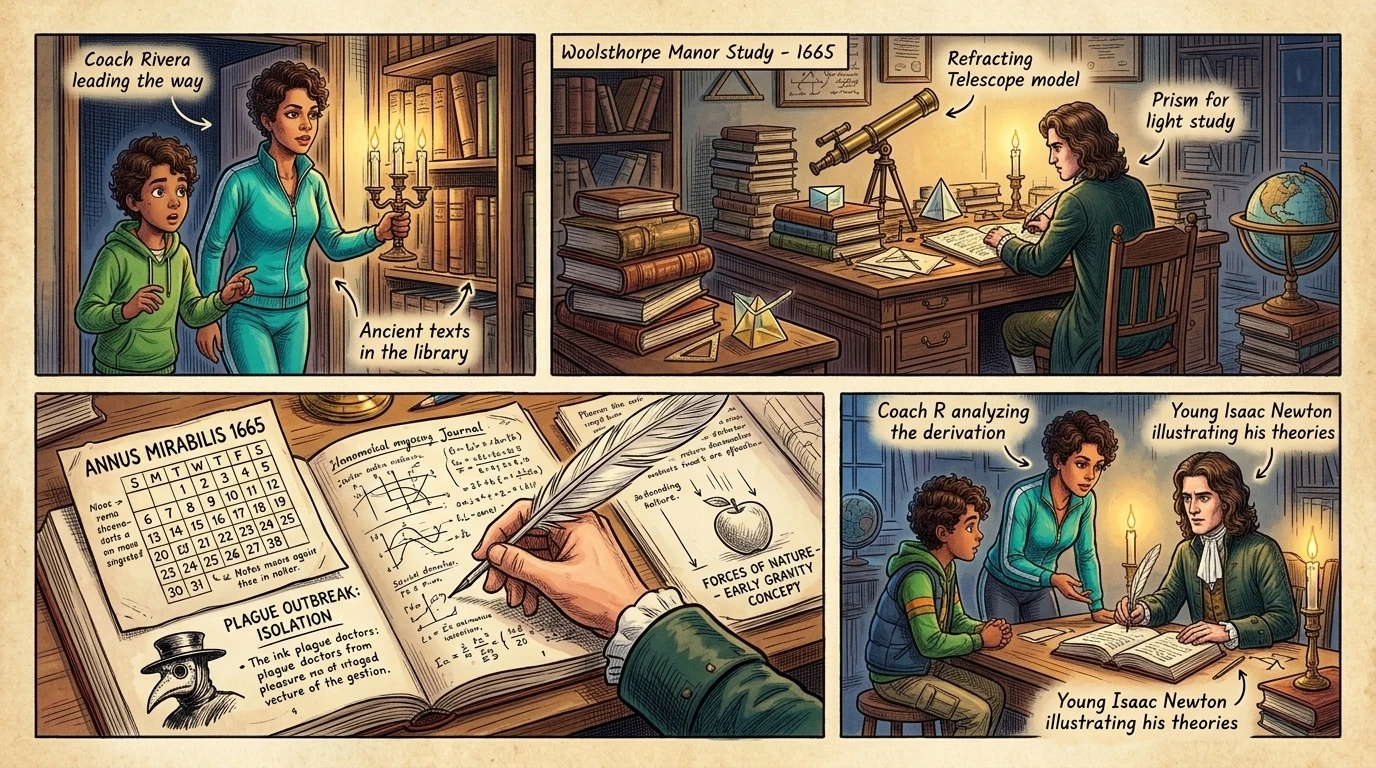
"This was Isaac Newton, a brilliant and often secretive scientist," Coach Rivera's voice explained. "In 1665, when plague closed his university, he returned…
"This was Isaac Newton, a brilliant and often secretive scientist," Coach Rivera's voice explained. "In 1665, when plague closed his university, he returned home and had one of the most productive periods in scientific history. He was fascinated by motion—why things move, why they spin, and why they stop."

"This was Isaac Newton, a brilliant and often secretive scientist," Coach Rivera's voice explained. "In 1665, when plague closed his university, he returned home and had one of the most productive periods in scientific history. He was fascinated by motion—why things move, why they spin, and why they stop."

Page 5
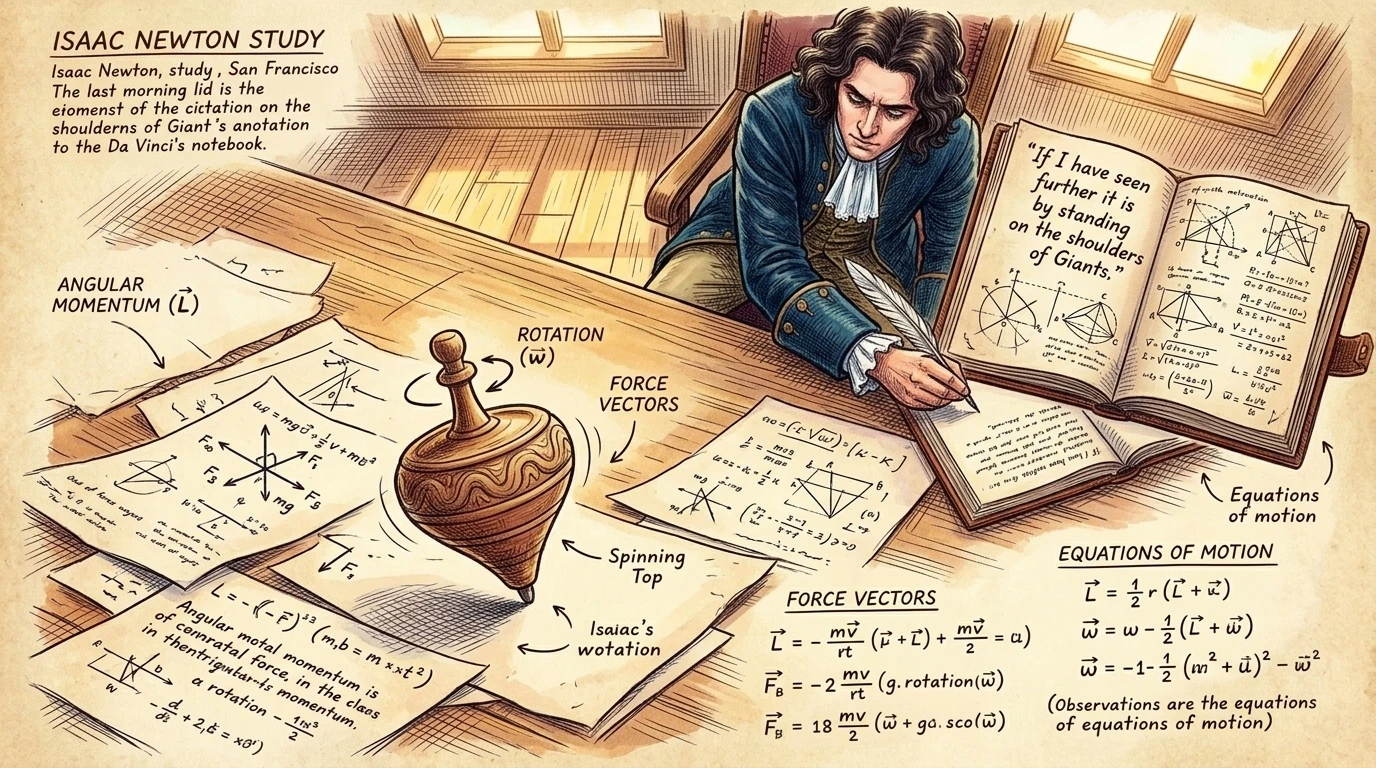
Newton watched the small wooden top spin, seemingly forever, before it finally wobbled and fell. He scribbled furiously in a notebook, a thought taking shape in…
Newton watched the small wooden top spin, seemingly forever, before it finally wobbled and fell. He scribbled furiously in a notebook, a thought taking shape in his mind. He once wrote, 'If I have seen further it is by standing on the shoulders of Giants,' acknowledging that his ideas were built on the work of others before him.

Newton watched the small wooden top spin, seemingly forever, before it finally wobbled and fell. He scribbled furiously in a notebook, a thought taking shape in his mind. He once wrote, 'If I have seen further it is by standing on the shoulders of Giants,' acknowledging that his ideas were built on the work of others before him.

Page 6
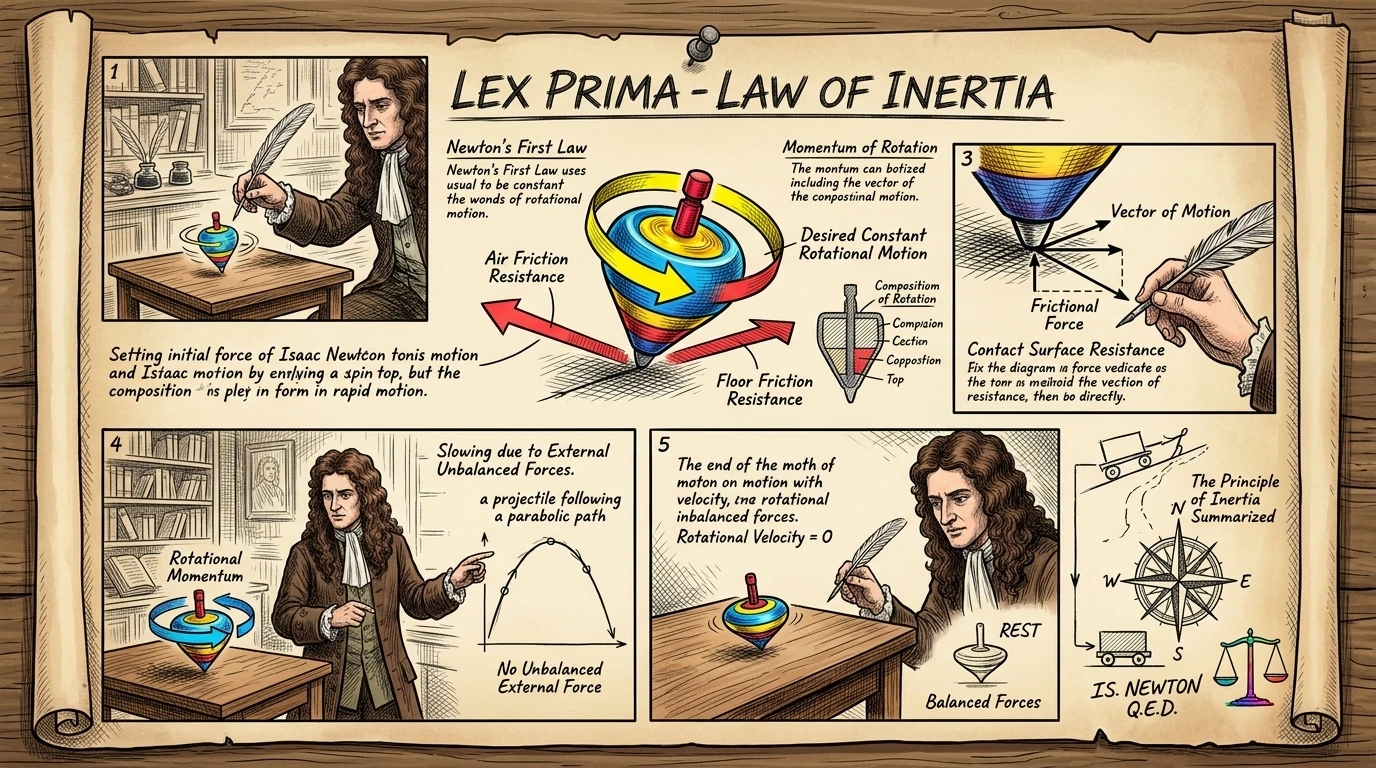
He realized that an object in motion wants to stay in motion, and a spinning object wants to keep spinning! This idea, called inertia, is the first of his…
He realized that an object in motion wants to stay in motion, and a spinning object wants to keep spinning! This idea, called inertia, is the first of his famous Laws of Motion. Unless an outside force like friction from the air or the floor acts on it, a spin will continue on its path.

He realized that an object in motion wants to stay in motion, and a spinning object wants to keep spinning! This idea, called inertia, is the first of his famous Laws of Motion. Unless an outside force like friction from the air or the floor acts on it, a spin will continue on its path.

Page 7
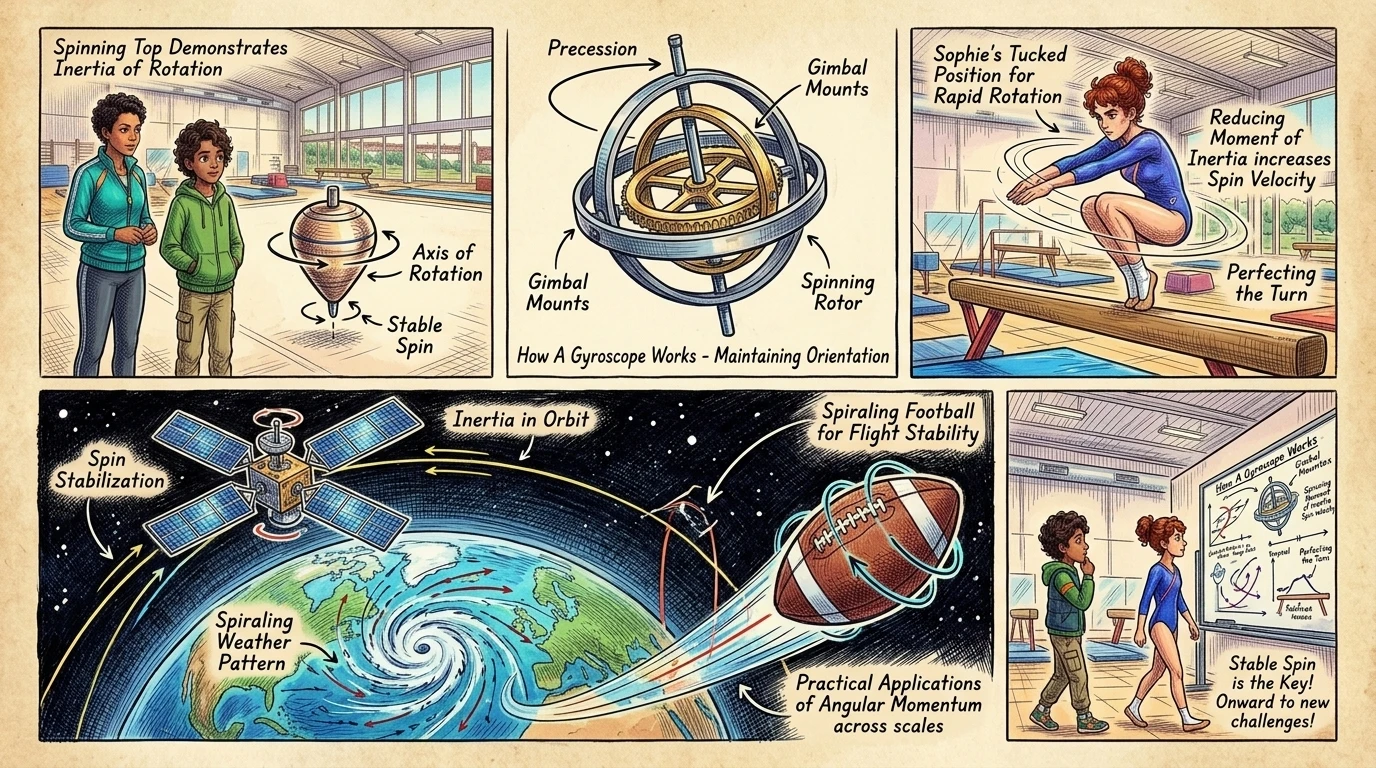
This understanding changed everything! It led to gyroscopes that help navigate ships and airplanes, and allowed engineers to design stable satellites and space…
This understanding changed everything! It led to gyroscopes that help navigate ships and airplanes, and allowed engineers to design stable satellites and space probes. Even the perfect spiral of a thrown football relies on this principle. The Earth itself acts like a giant, stable gyroscope, spinning perfectly in space.

This understanding changed everything! It led to gyroscopes that help navigate ships and airplanes, and allowed engineers to design stable satellites and space probes. Even the perfect spiral of a thrown football relies on this principle. The Earth itself acts like a giant, stable gyroscope, spinning perfectly in space.

Page 8
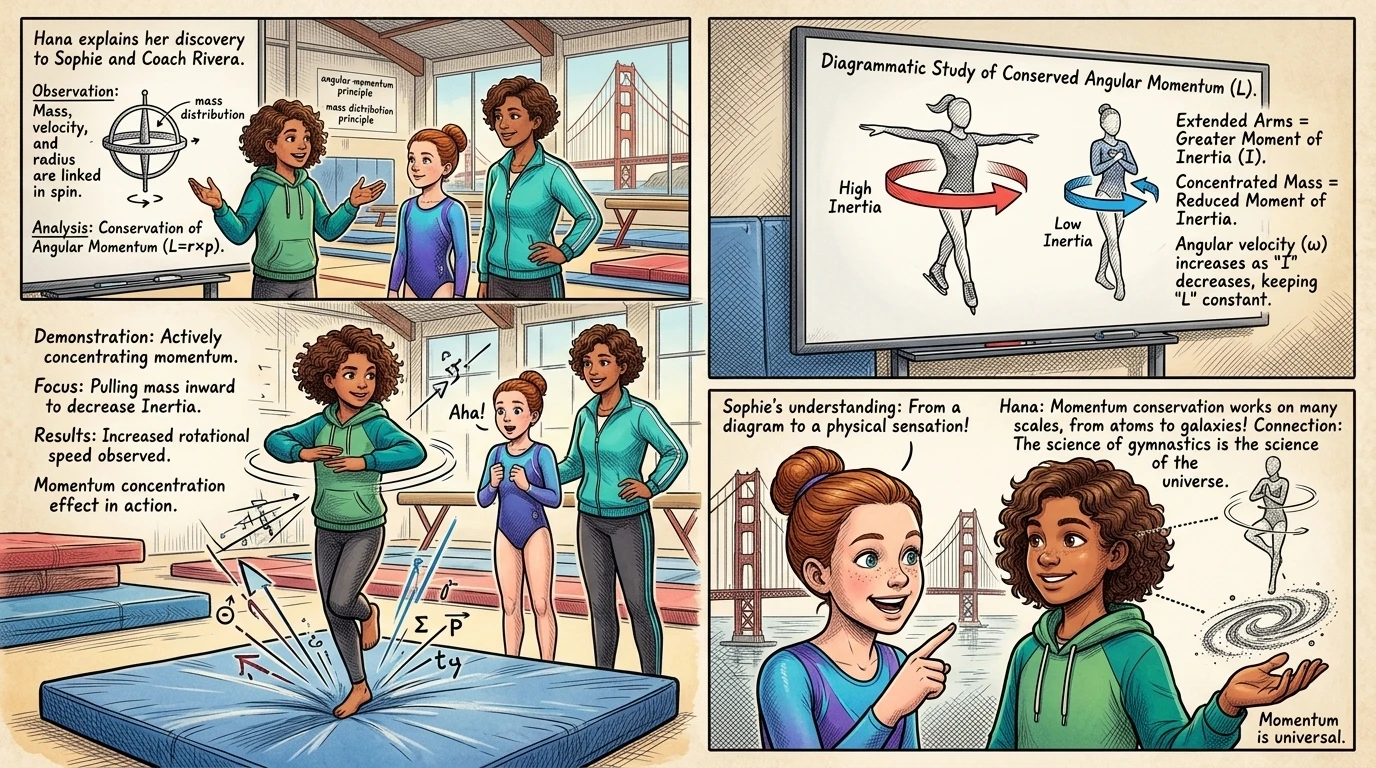
Back in the gym, Hana jumped to her feet. "I get it! Sophie, when you pull your arms in, you're not creating new spin, you're just concentrating it!" Sophie's…
Back in the gym, Hana jumped to her feet. "I get it! Sophie, when you pull your arms in, you're not creating new spin, you're just concentrating it!" Sophie's eyes widened. "Oh! So that's why ice skaters do it too? To make their existing spin faster?" "Exactly!" Hana beamed. "You're conserving your angular momentum!"

Back in the gym, Hana jumped to her feet. "I get it! Sophie, when you pull your arms in, you're not creating new spin, you're just concentrating it!" Sophie's eyes widened. "Oh! So that's why ice skaters do it too? To make their existing spin faster?" "Exactly!" Hana beamed. "You're conserving your angular momentum!"

Page 9
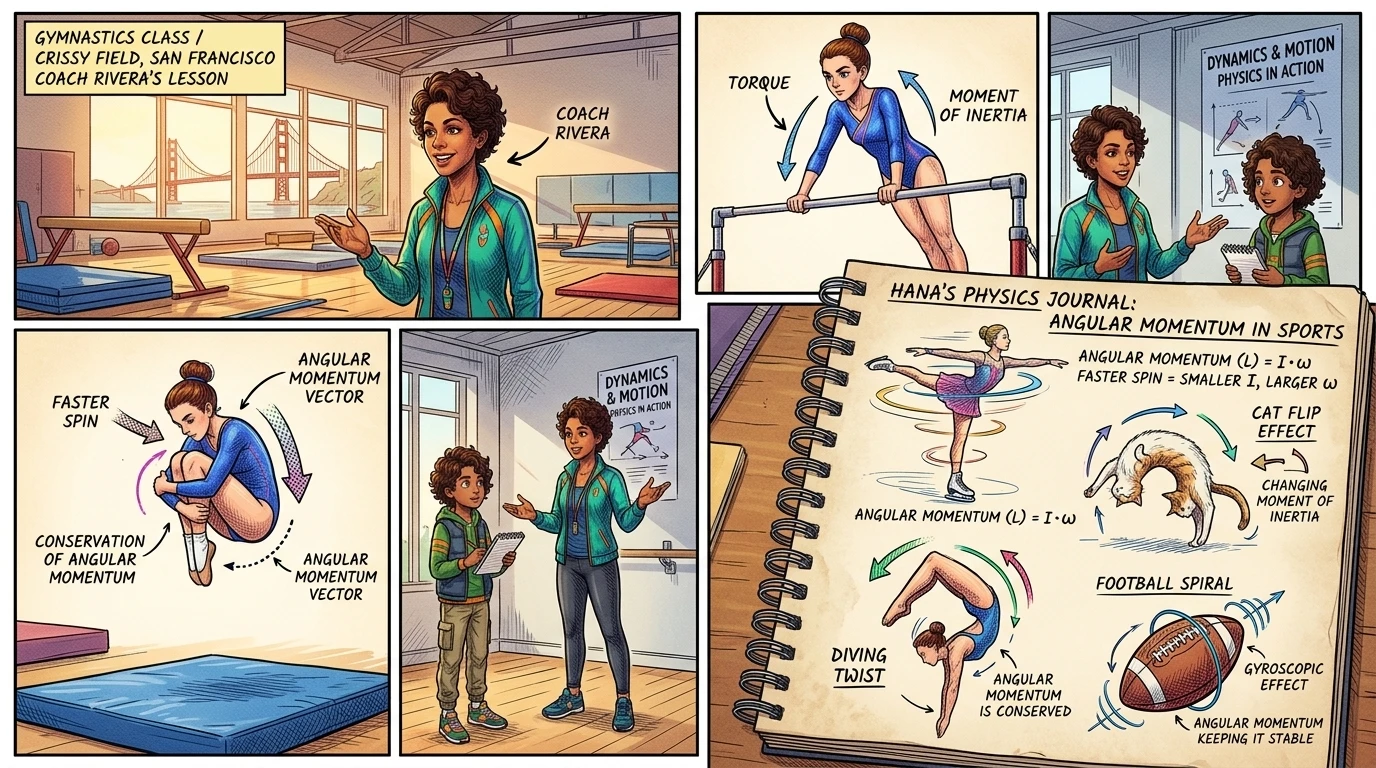
"So it's in figure skating, diving, and even when a cat flips in the air to land on its feet!" Coach Rivera added with a laugh. Sophie snapped her fingers.
"So it's in figure skating, diving, and even when a cat flips in the air to land on its feet!" Coach Rivera added with a laugh. Sophie snapped her fingers. "And a quarterback throwing a football! The spin makes it fly straight!" Hana nodded, furiously sketching a diagram in her notebook. "Science is in every sport!"

"So it's in figure skating, diving, and even when a cat flips in the air to land on its feet!" Coach Rivera added with a laugh. Sophie snapped her fingers. "And a quarterback throwing a football! The spin makes it fly straight!" Hana nodded, furiously sketching a diagram in her notebook. "Science is in every sport!"

Page 10
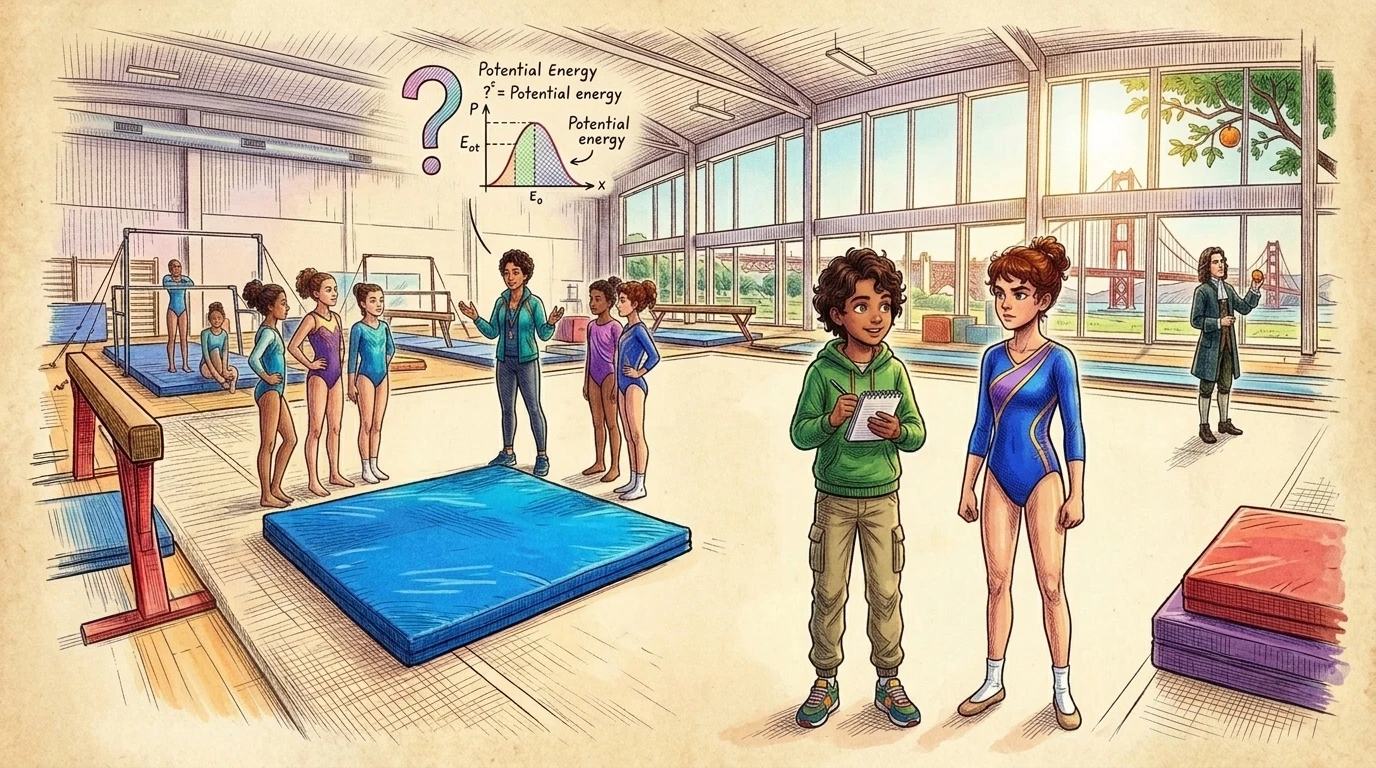
"So, by understanding how things spin, we can master our moves," Hana summarized, closing her notebook with a smile. Sophie stood up, ready to try again.
"So, by understanding how things spin, we can master our moves," Hana summarized, closing her notebook with a smile. Sophie stood up, ready to try again. "Okay, angular momentum... here I come!" Then she paused, looking at the high bar. "But wait... what science explains how we get the energy to jump that high in the first place?"

"So, by understanding how things spin, we can master our moves," Hana summarized, closing her notebook with a smile. Sophie stood up, ready to try again. "Okay, angular momentum... here I come!" Then she paused, looking at the high bar. "But wait... what science explains how we get the energy to jump that high in the first place?"

About this story

  • Audience: kids (ages 6–12)

Questions and answers

Questions and answers about The Science of Sports

Read Wonder Science on your phone

Wonder Science is available on Android. Get Wonder Science on Google Play.

More Wonder Science stories

All Wonder Science stories · Open the library