The Secret Life of Atoms
The Secret Life of Atoms — an illustrated science story. 10 illustrated pages, free to read on Wonder Science.
Page 1
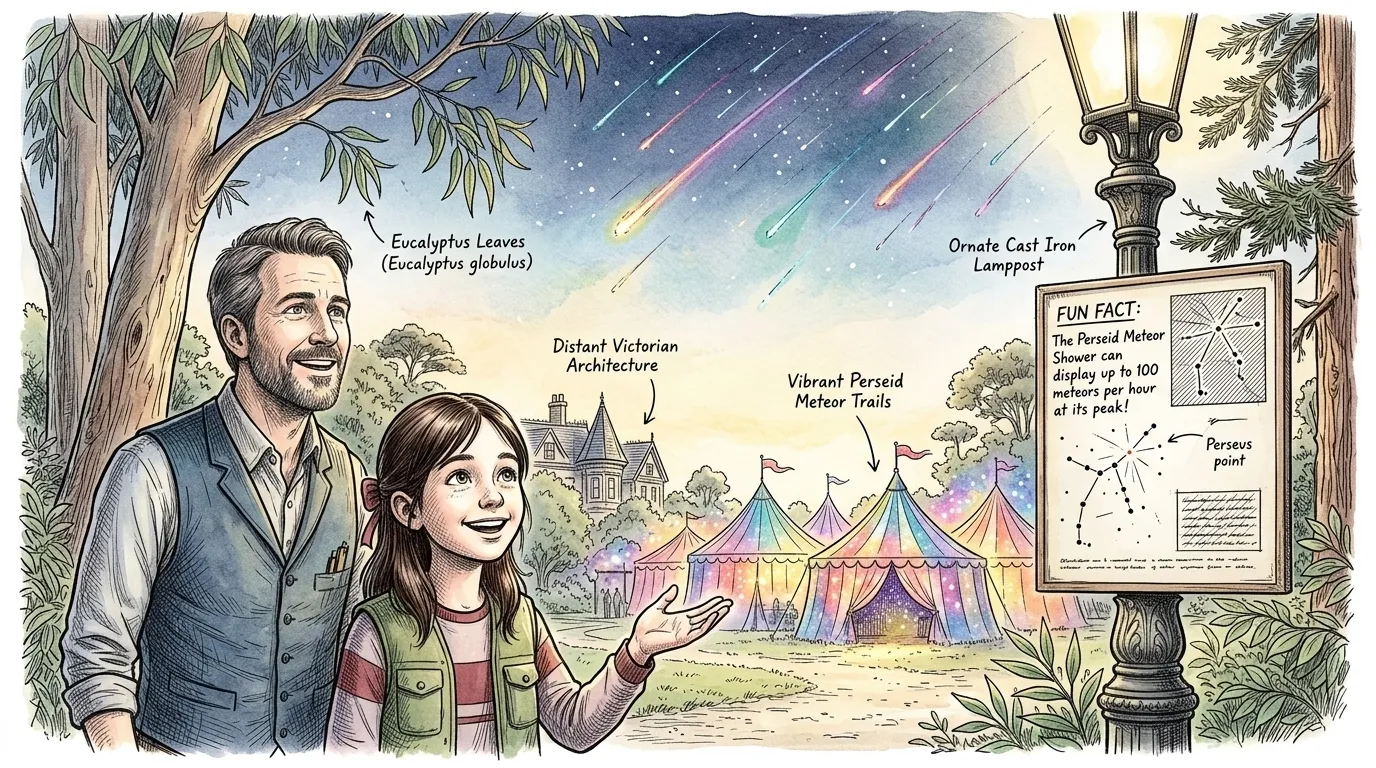
During the peak of the meteor shower, something extraordinary happens. A carnival, shimmering with impossible colors, appears in Golden Gate Park. It's said that the tents are made of stardust and the laughter echoes from distant galaxies.
""Wow! I can't believe it," Mei gasped, her eyes wide as she pointed towards the swirling lights above Stow Lake. "It's even more amazing than the posters said, Dad!""
Fact: Fun Fact: The Perseid meteor shower can display up to 100 meteors per hour at its peak!
Page 2
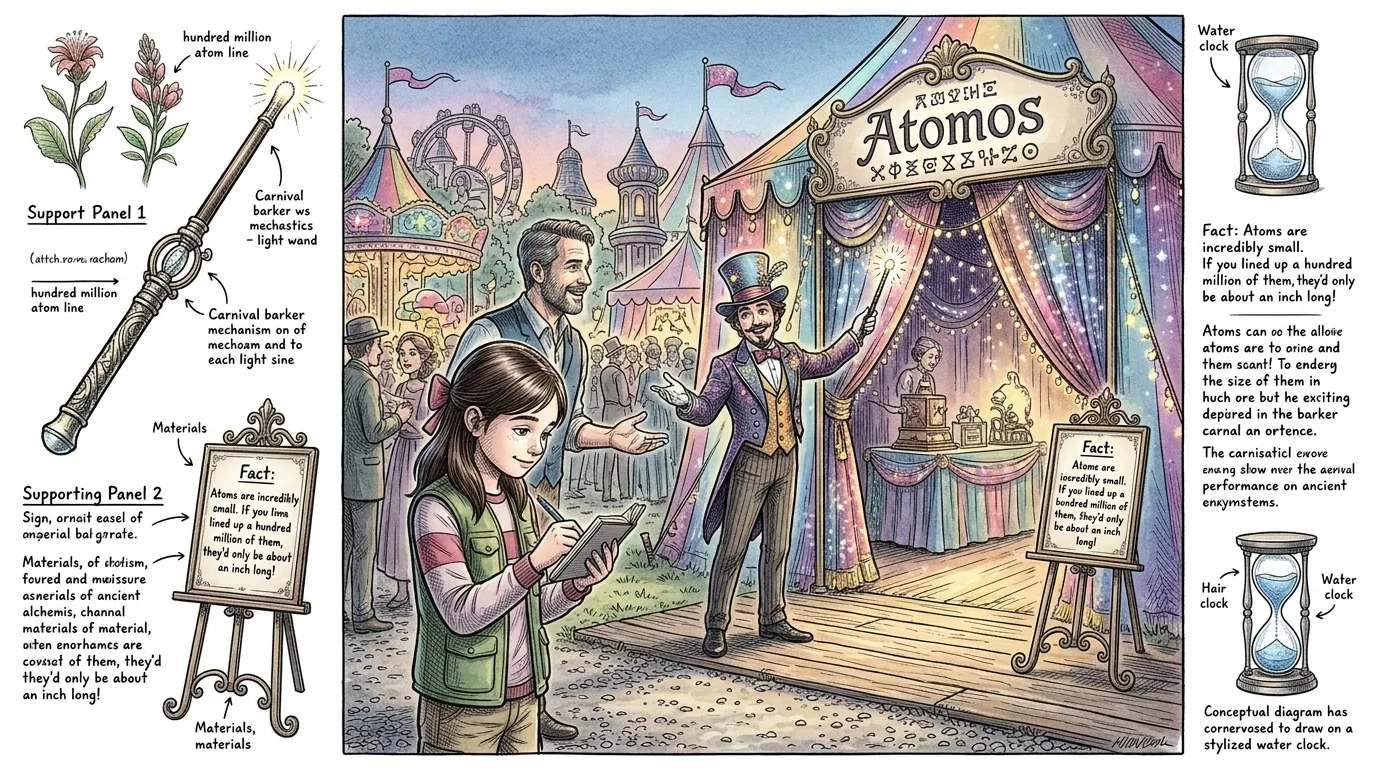
Drawn by the glittering lights, Mei and her father wander deeper into the carnival. They come across a tent labeled 'Atomos' with symbols neither recognizes. A barker calls them closer.
""Step right up, folks! See the building blocks of everything!" the barker exclaimed, gesturing with a sparkling wand. "What do you say, Mei? Want to see what everything is made of?" her dad asked, smiling. "I am curious," Mei said while writing in her notebook."
Fact: Atoms are incredibly small. If you lined up a hundred million of them, they'd only be about an inch long!
Page 3
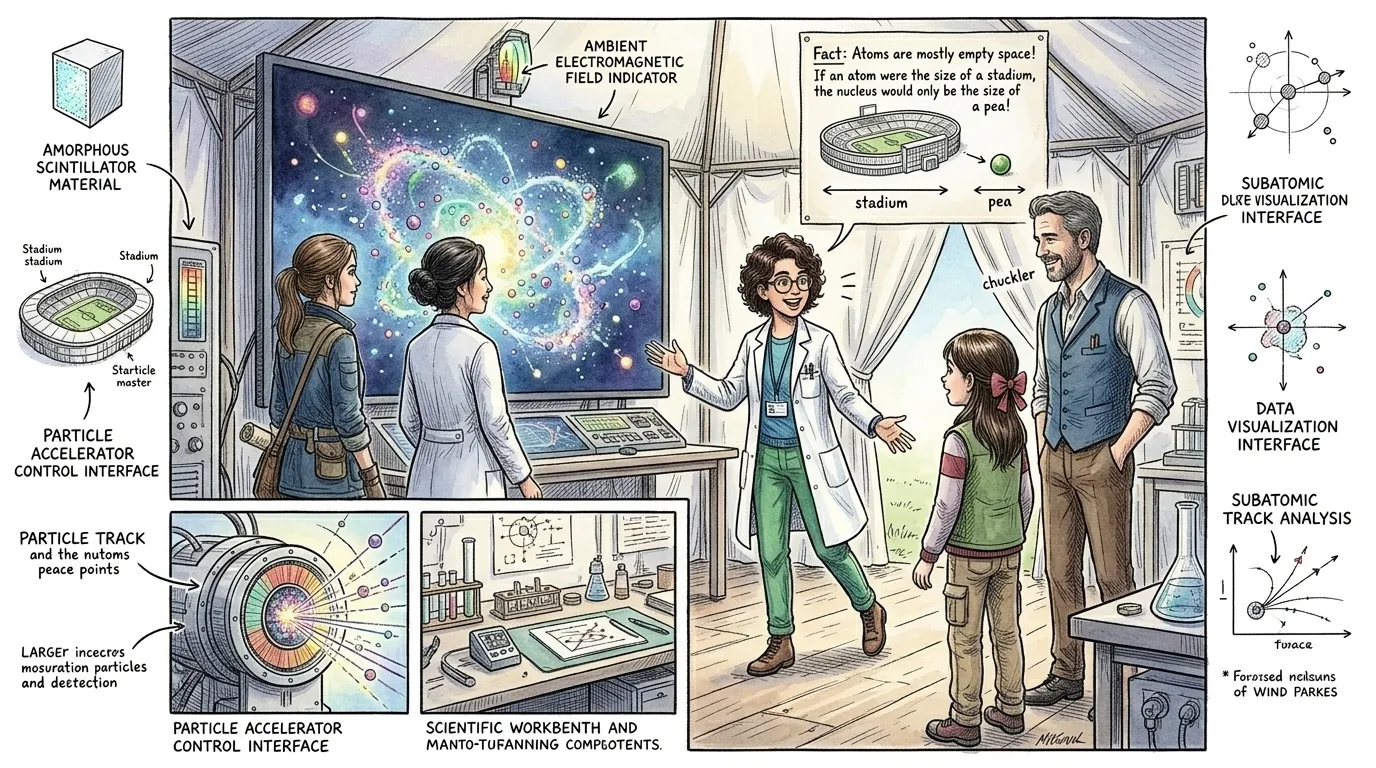
Inside the tent, they find Yasmin and Camila are already gazing at a large screen showing a swirling cloud of particles. A friendly scientist steps forward to greet them.
""Welcome!" The scientist said, her warm olive skin glowed slightly under the strange light. "I'm so excited to show you what everyone and everything is made of!" Yasmin called. Mei's dad chuckled and asked, "What are atoms exactly?""
Fact: Atoms are mostly empty space! If an atom were the size of a stadium, the nucleus would only be the size of a pea!
Page 4
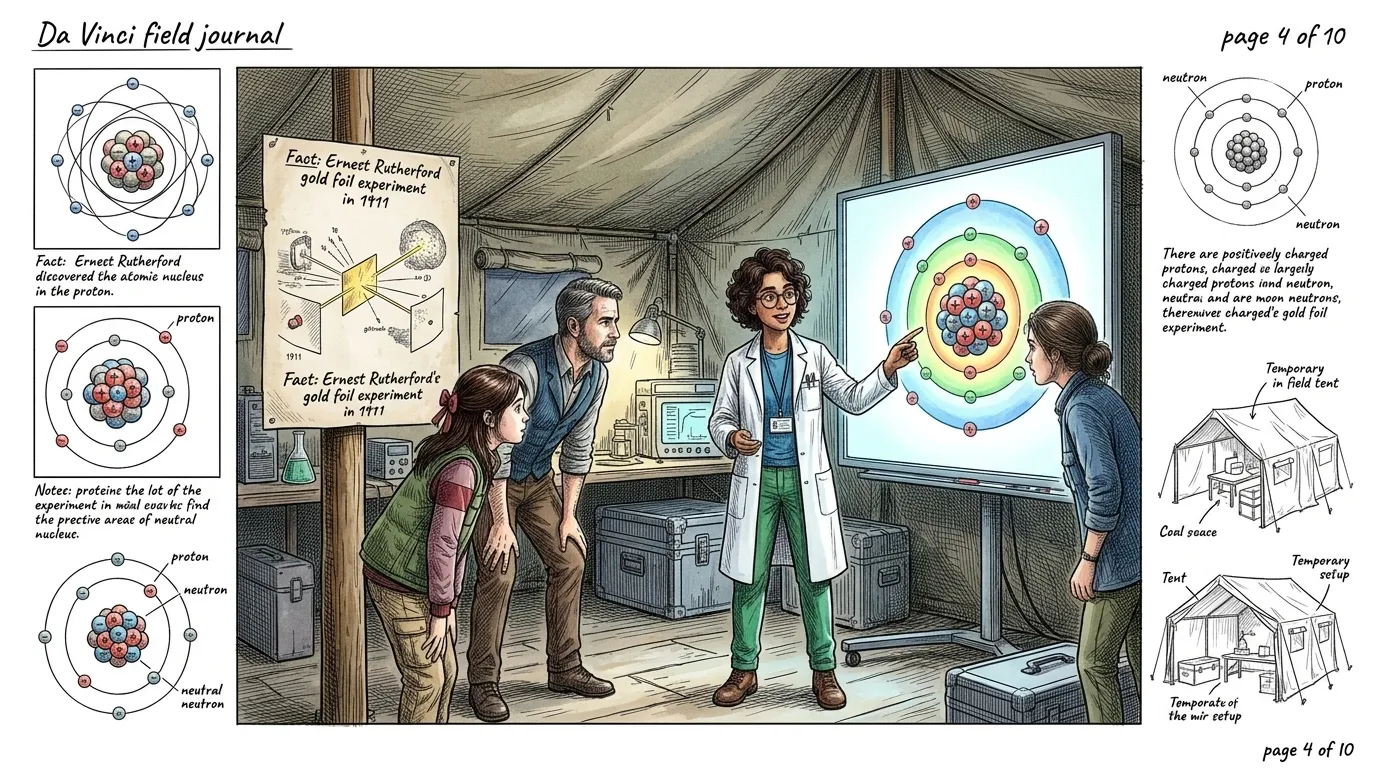
"Atoms are the basic building blocks of matter," Camila explains. "At the center of each atom is the nucleus, composed of protons and neutrons." On the screen, the atom is visualized in layers.
""Protons have a positive charge, neutrons are neutral," Camila pointed to the screen, "and together, they make up almost all of the atom's mass.""
Fact: Ernest Rutherford discovered the atomic nucleus in 1911 through his famous gold foil experiment.
Page 5
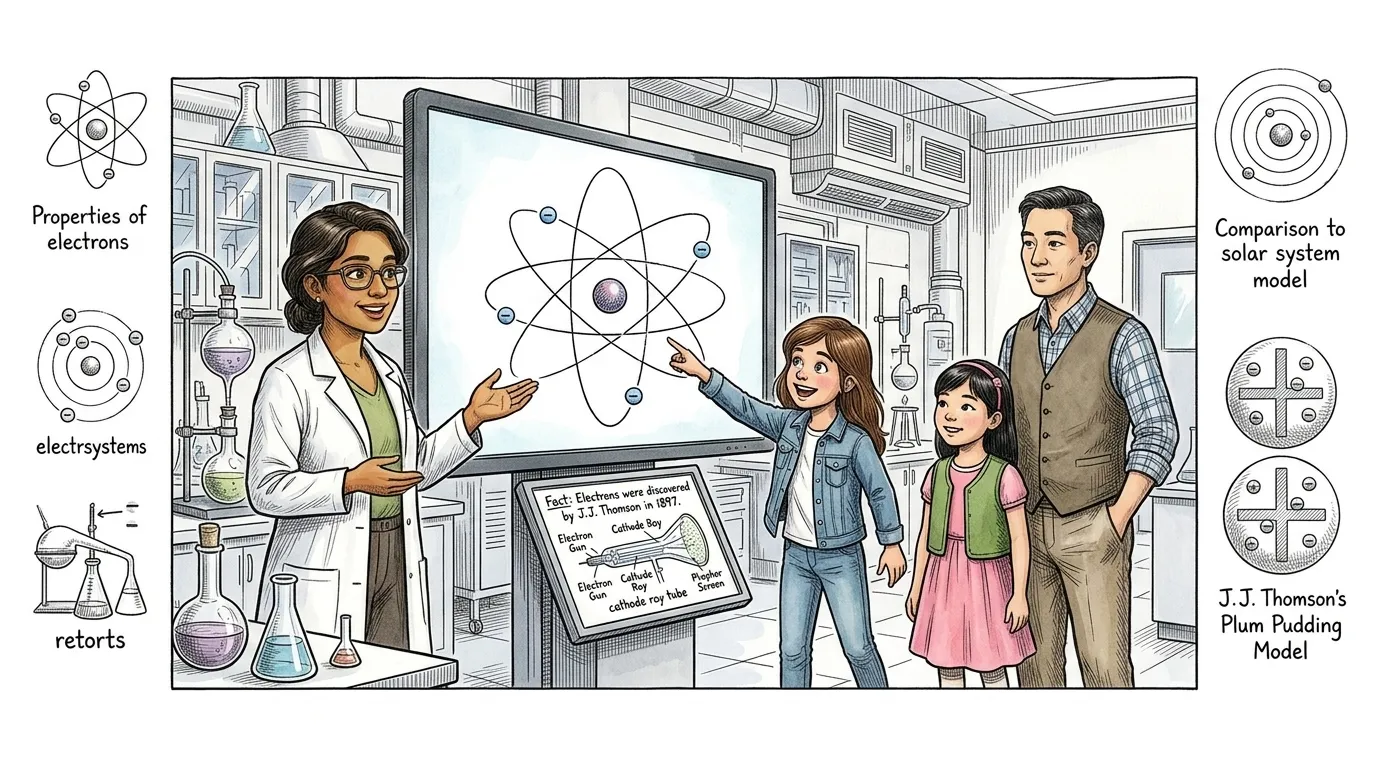
Camila expands the visualization, revealing the electrons. "Orbiting the nucleus are electrons," she says, "which have a negative charge." These electrons whiz around the nucleus at incredible speeds.
""It's like a tiny solar system!" Yasmin exclaimed, pointing at the swirling electrons. "Exactly! And the arrangement of these electrons determines how an atom interacts with other atoms," Camila replies, smiling."
Fact: Electrons were discovered by J.J. Thomson in 1897 using cathode ray tubes.
Page 6
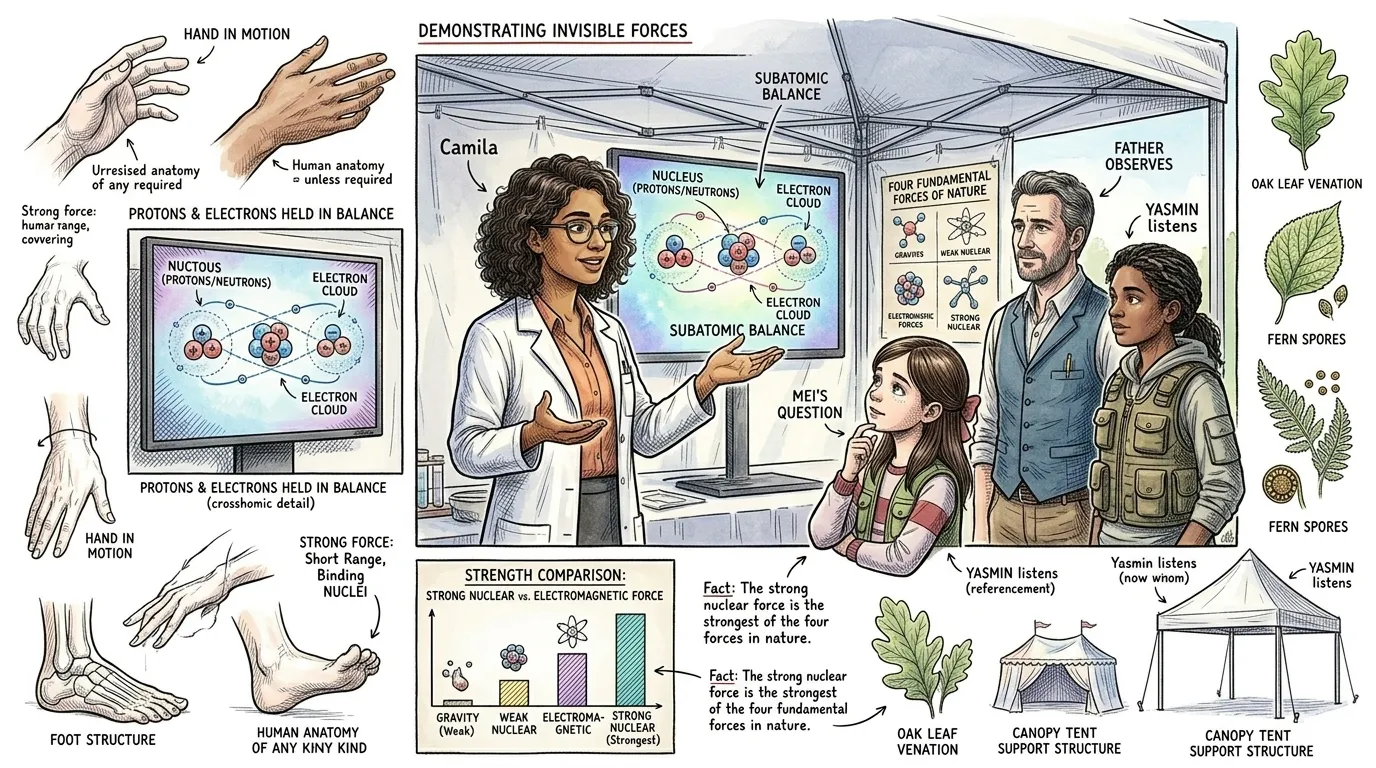
Camila demonstrates how the electromagnetic force holds the atom together. "The positive protons attract the negative electrons," she explains. "It's a balance of forces that keeps everything stable."
""But what keeps the protons from pushing each other apart?" Mei asked, tilting her head in curiosity. "That's where the strong nuclear force comes in! It's even stronger than the electromagnetic force," Camila answered."
Fact: The strong nuclear force is the strongest of the four fundamental forces in nature.
Page 7
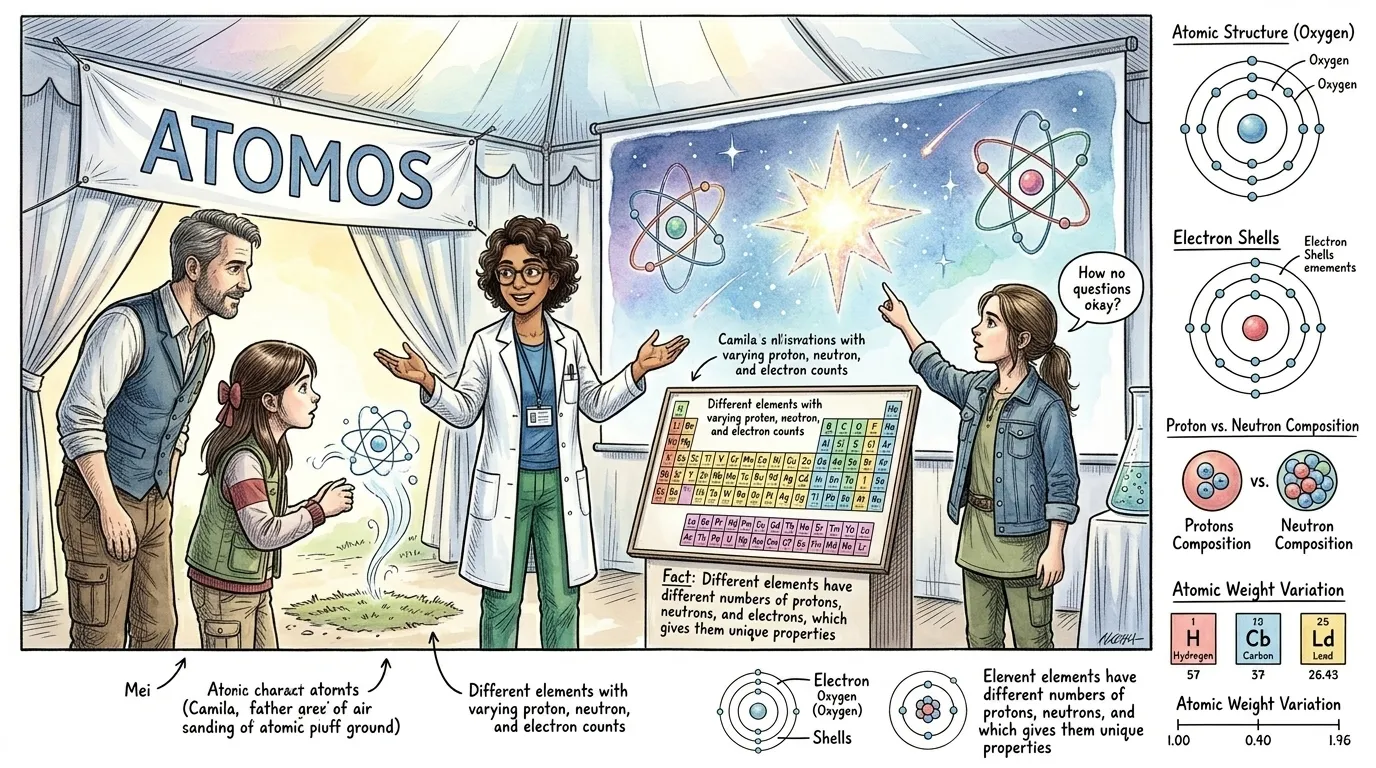
Camila gestures around the tent. "Everything you see is made of atoms," she says. "From the air we breathe to the ground we walk on."
""So, like, the stars too?" asked Yasmin. Camila looked over with a smile and said "Absolutely! Stars are giant balls of plasma, and plasma is made of ionized atoms.""
Fact: Different elements have different numbers of protons, neutrons, and electrons, which gives them unique properties.
Page 8
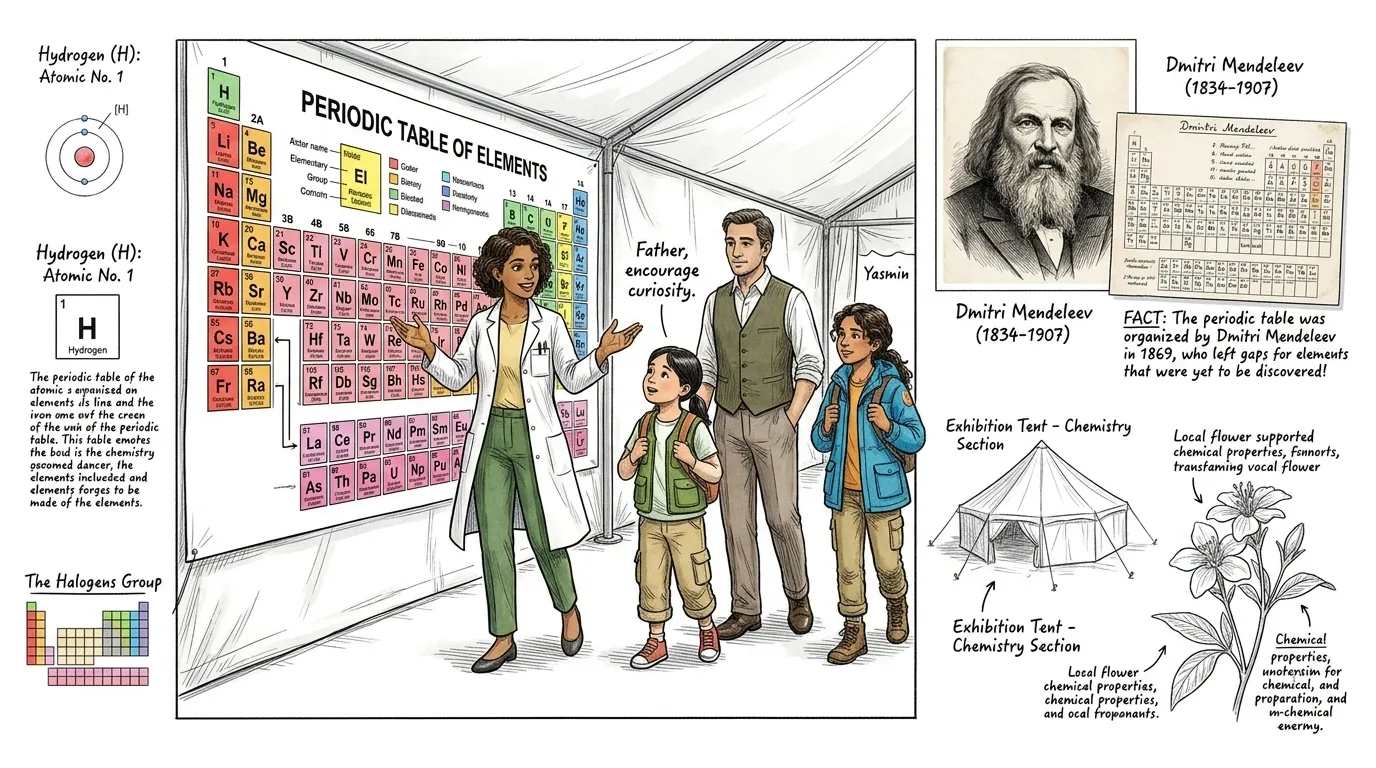
Camila leads them to a large display showcasing the periodic table of elements. "Each square represents a different type of atom, also known as an element," she explains. "They are arranged by their atomic number – the number of protons in the nucleus."
""So each element is just...a different kind of atom?" Mei asked, fascinated. "Exactly! And these elements combine to form all the complex molecules that make up everything around us.", Camila responded."
Fact: The periodic table was organized by Dmitri Mendeleev in 1869, who left gaps for elements that were yet to be discovered!
Page 9
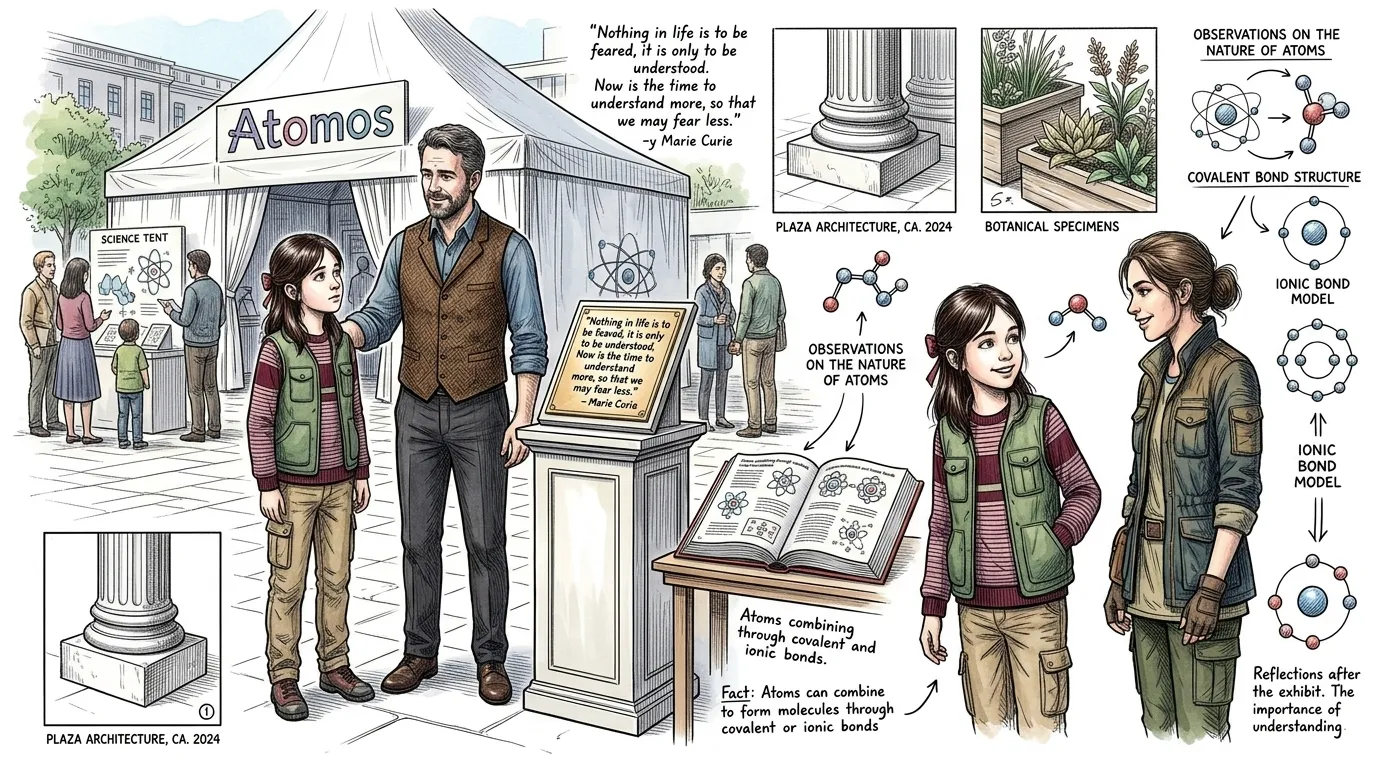
As they prepare to leave, Mei reflects on what she learned. "So, atoms are the key to understanding how everything works," she muses. "Even changes in the world around us."
""That's right, Mei. It all comes down to how atoms interact and rearrange themselves," her dad affirmed. Mei looked at Yasmin, "I understand, now! And that is because, as Marie Curie said, 'Nothing in life is to be feared, it is only to be understood. Now is the time to understand more, so that we may fear less.'""
Fact: Atoms can combine to form molecules through covalent or ionic bonds.
Page 10
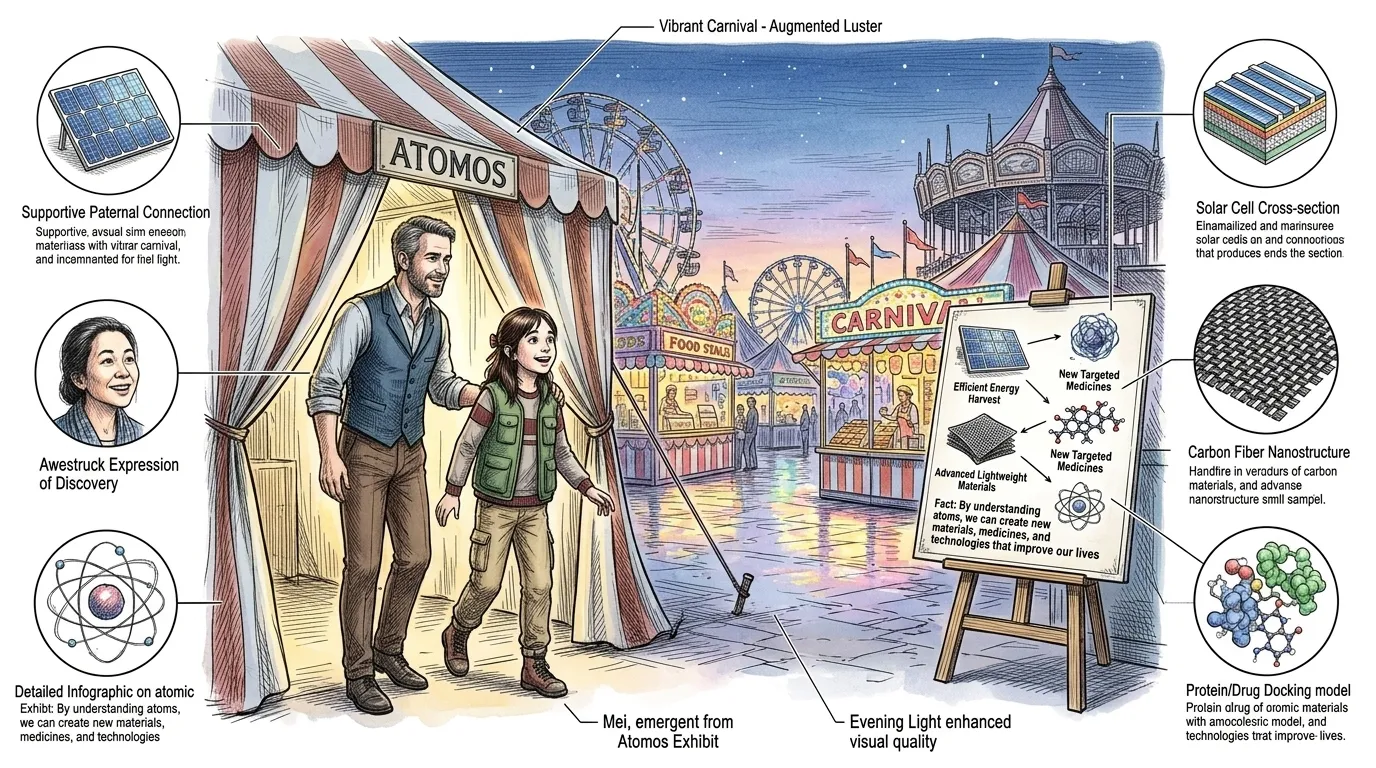
Emerging from the Atomos tent, Mei gazes at the carnival, now seeming even more wondrous. Understanding the secret life of atoms has opened her eyes to the beauty and complexity of the universe.
""The whole universe is made of these tiny things...it's incredible!" Mei exclaimed. "And there's still so much to learn!" her dad said, putting his arm around her. "The world of atoms is worth understanding.""
Fact: By understanding atoms, we can create new materials, medicines, and technologies that improve our lives.
About this story
- Audience: kids (ages 6–12)
Read Wonder Science on your phone
Wonder Science is available on Android. Get Wonder Science on Google Play.