The Secrets of the Milky Way
The Secrets of the Milky Way — an illustrated science story. 10 illustrated pages, free to read on Wonder Science.
Page 1
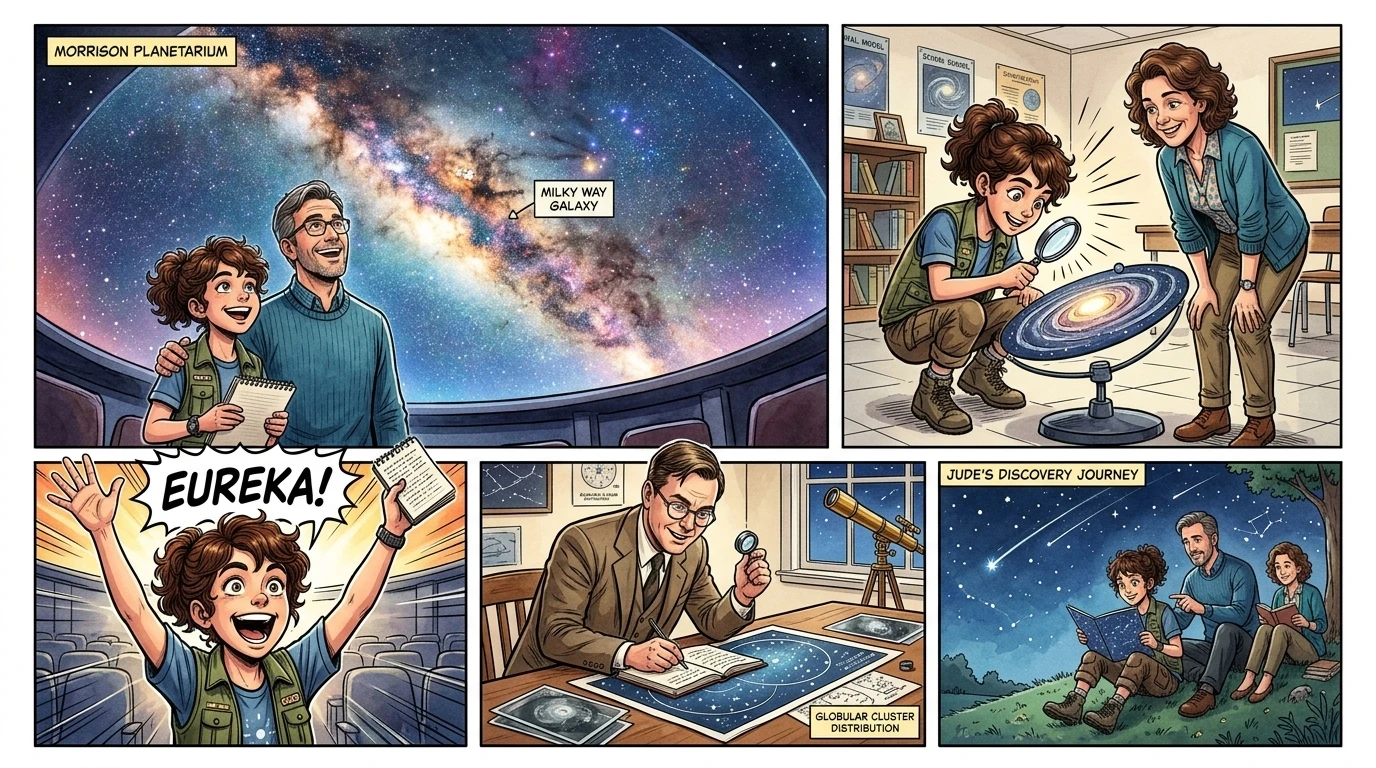
The lights in the Morrison Planetarium faded up, leaving a shimmering river of stars splashed across the giant dome. "Whoa," Jude whispered, her eyes wide as she looked up from her seat. Her father smiled beside her. "That's our home, Jude. The Milky Way galaxy." Jude tilted her head, trying to take it all in. "But if we're inside of it, how do we know what it looks like from the outside?"
Page 2
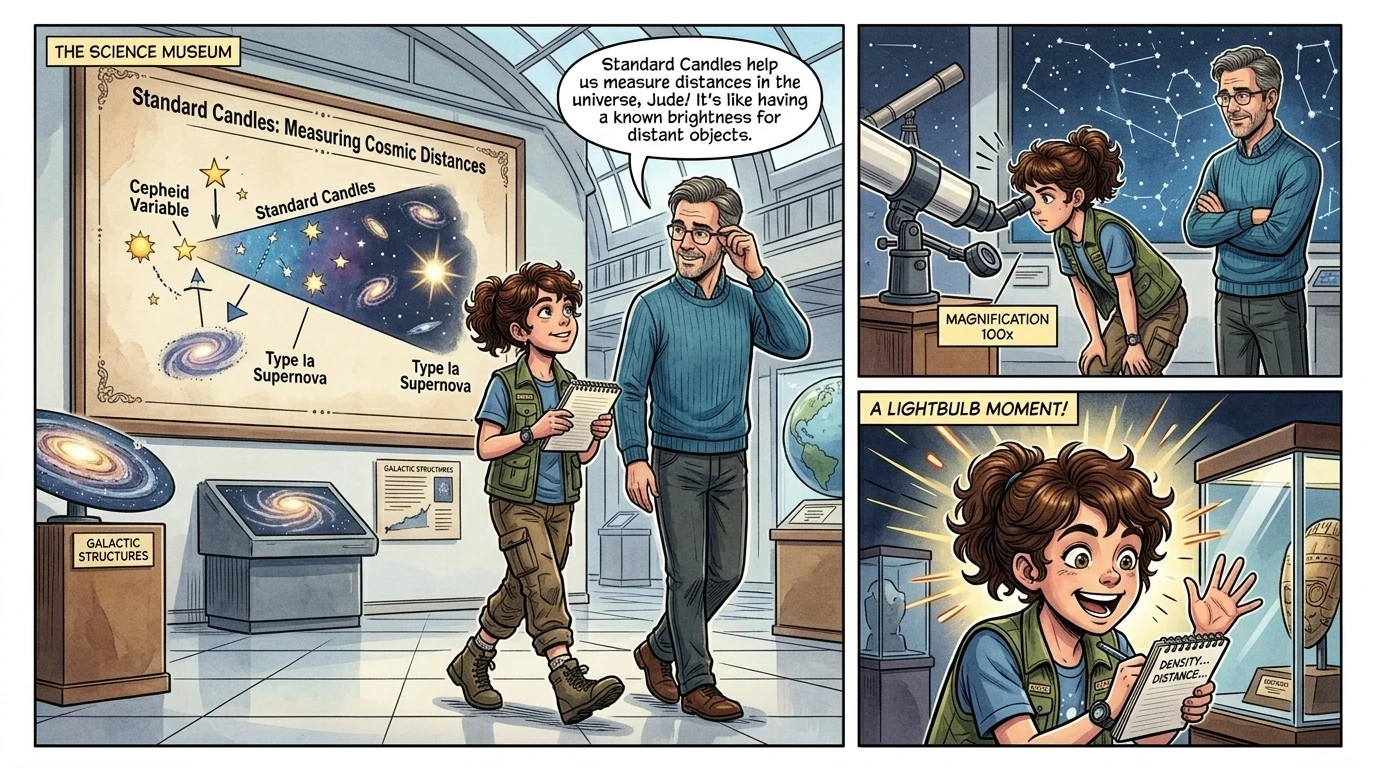
Walking out into the bright hall of the museum, Jude clutched her notebook. "It's like trying to draw a map of your house without ever going outside," she said thoughtfully. Her father nodded, adjusting his glasses. "Exactly! For a long time, scientists thought we were at the very center of it all. They needed a way to measure huge distances, something they called 'standard candles,' to figure out our real address."
Page 3
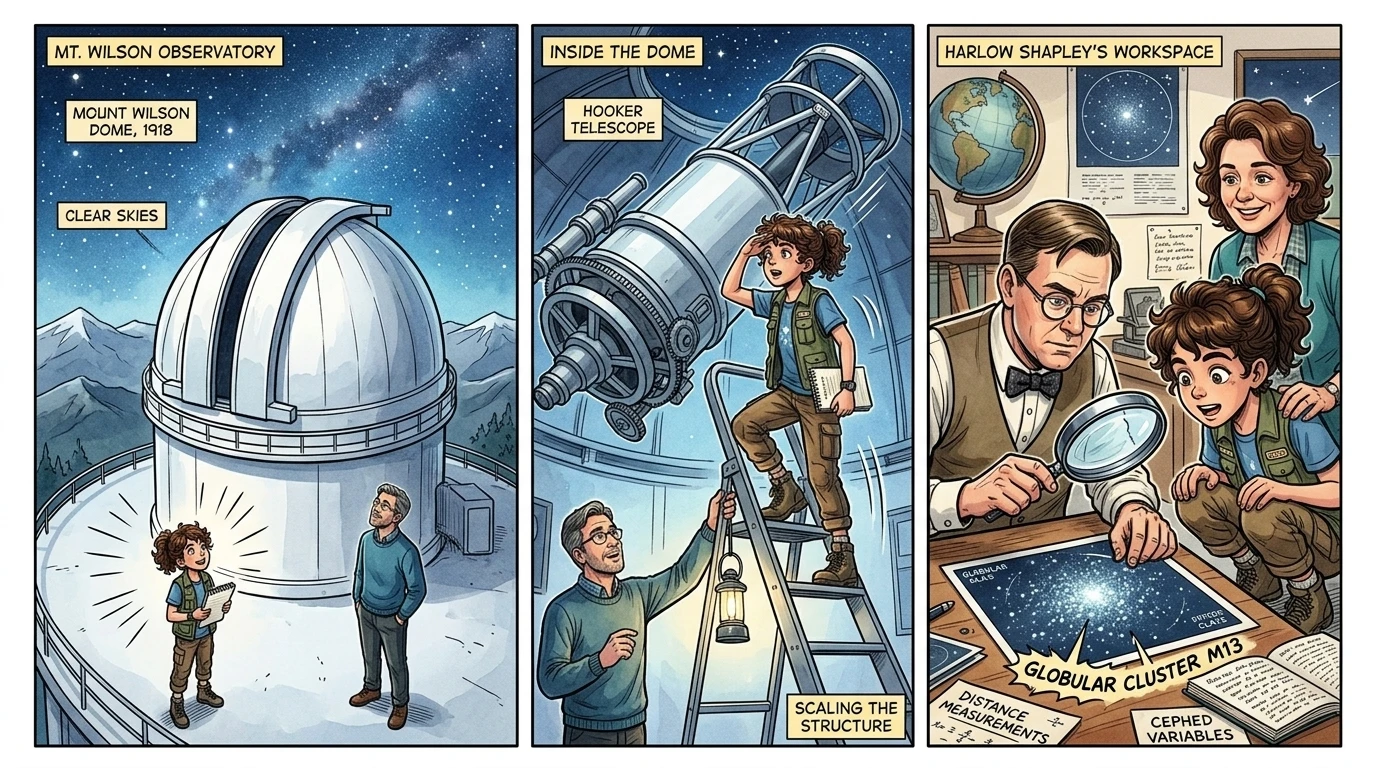
The bustling museum dissolved, replaced by the deep silence of a mountain top over a century ago. It was California in 1918, and the air was cold and clear, perfect for stargazing. On Mount Wilson, a giant white dome pointed toward the heavens like a silent cannon. Inside, astronomers were trying to solve the universe's greatest puzzle: the true shape of our galaxy.
Page 4
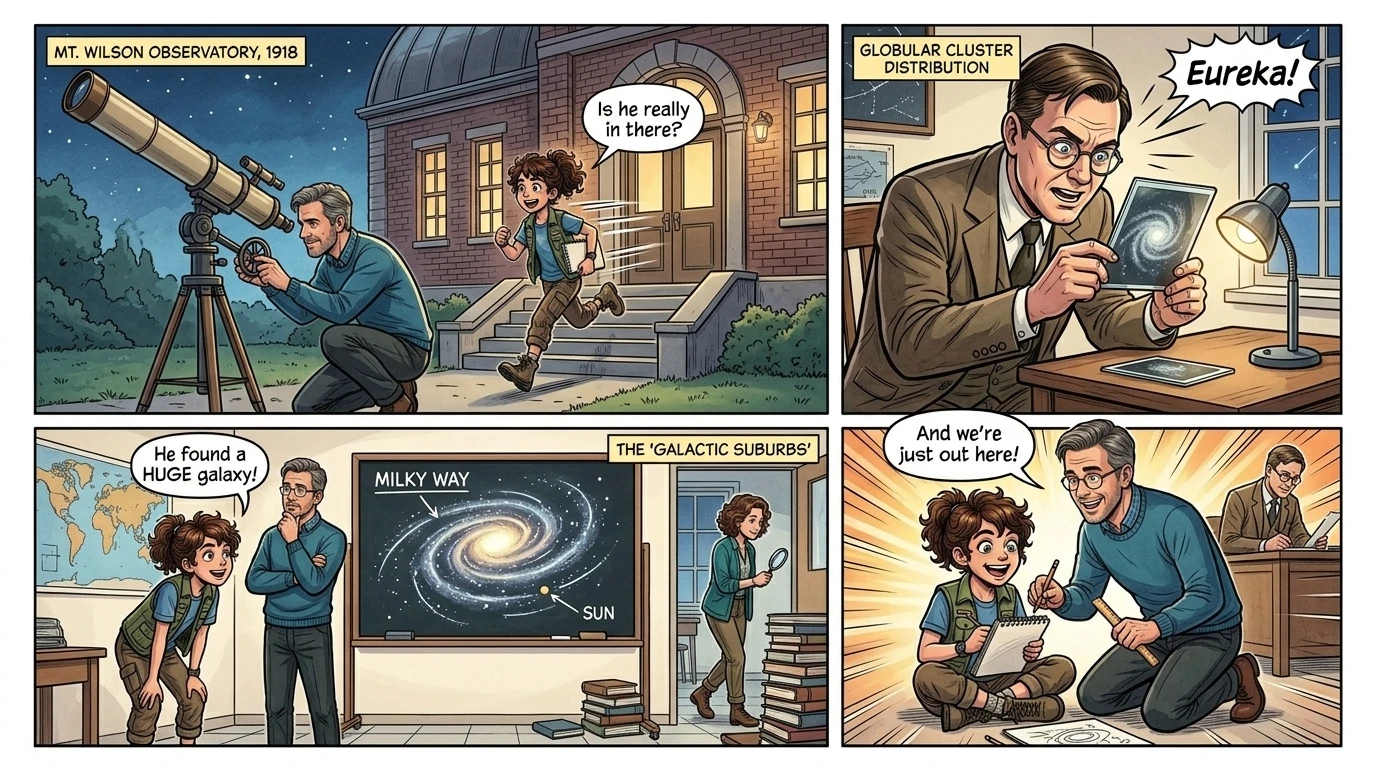
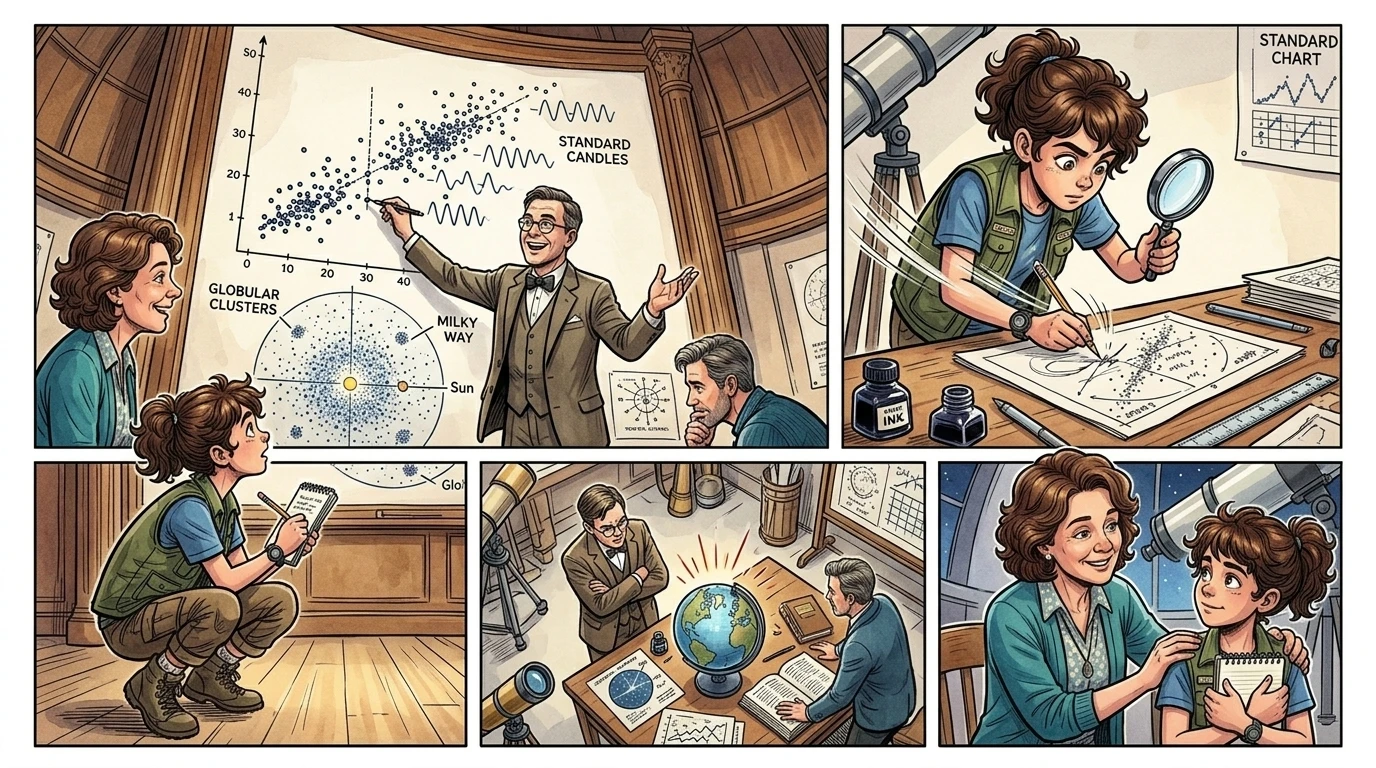
"The astronomer in charge of this mystery was Harlow Shapley," a voice narrated as a determined young man looked over his notes. "He wasn't convinced that our Sun was the star of the show. He suspected we lived in the galactic suburbs, not the glittering downtown."
Page 5
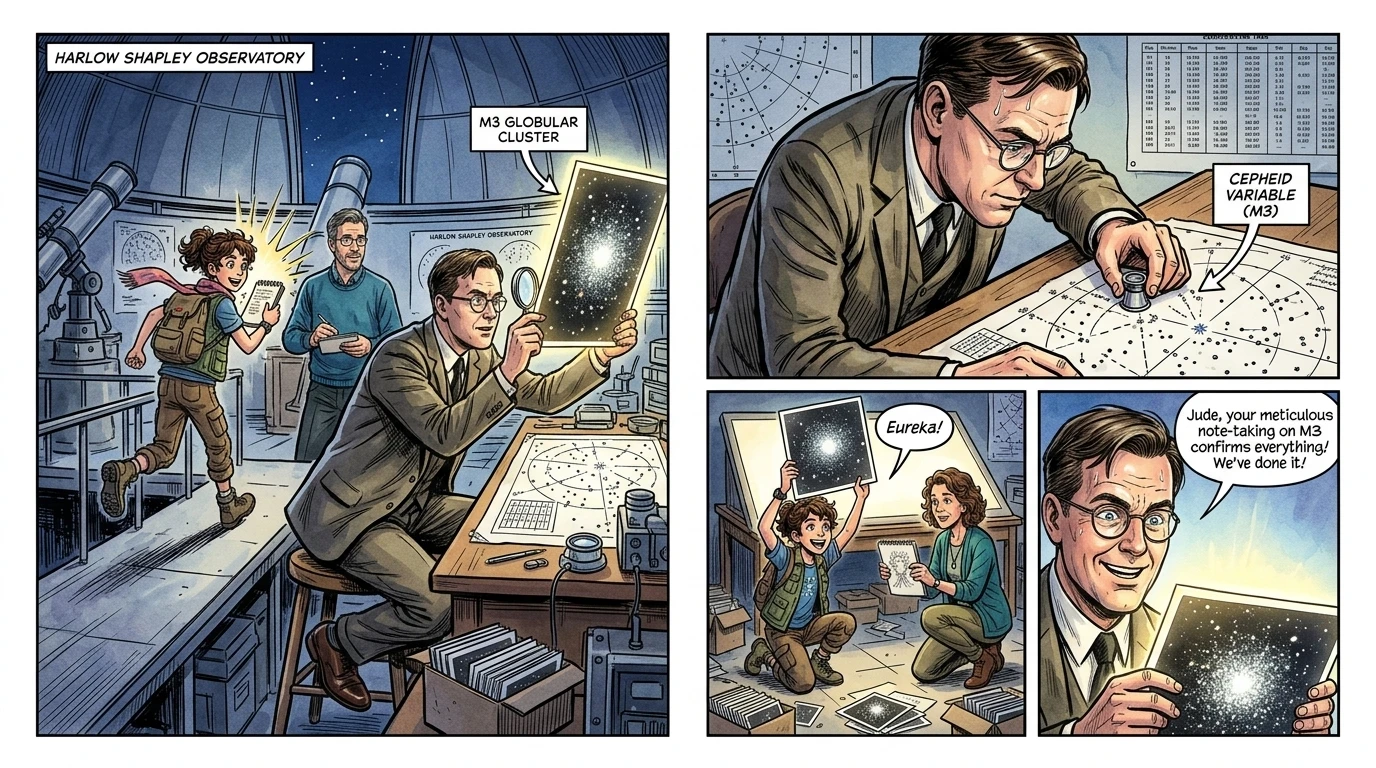
Shapley focused on strange, fuzzy star-cities called globular clusters, which dotted the sky far from the main band of the Milky Way. "If I can measure the distance to these clusters," he muttered, tapping a photograph with his finger, "I can map their true positions. They must hold the key!" He worked for months, comparing the brightness of special pulsating stars he found inside them.
Page 6
Then came the breakthrough! The special stars he studied, called Cepheid variables, were the 'standard candles' astronomers had been looking for. "They all pulse at a specific rhythm based on how bright they are," he exclaimed, plotting points on a huge chart. His map revealed that the globular clusters formed a giant sphere, and the Sun wasn't at the center at all—it was two-thirds of the way out toward the edge.
Page 7
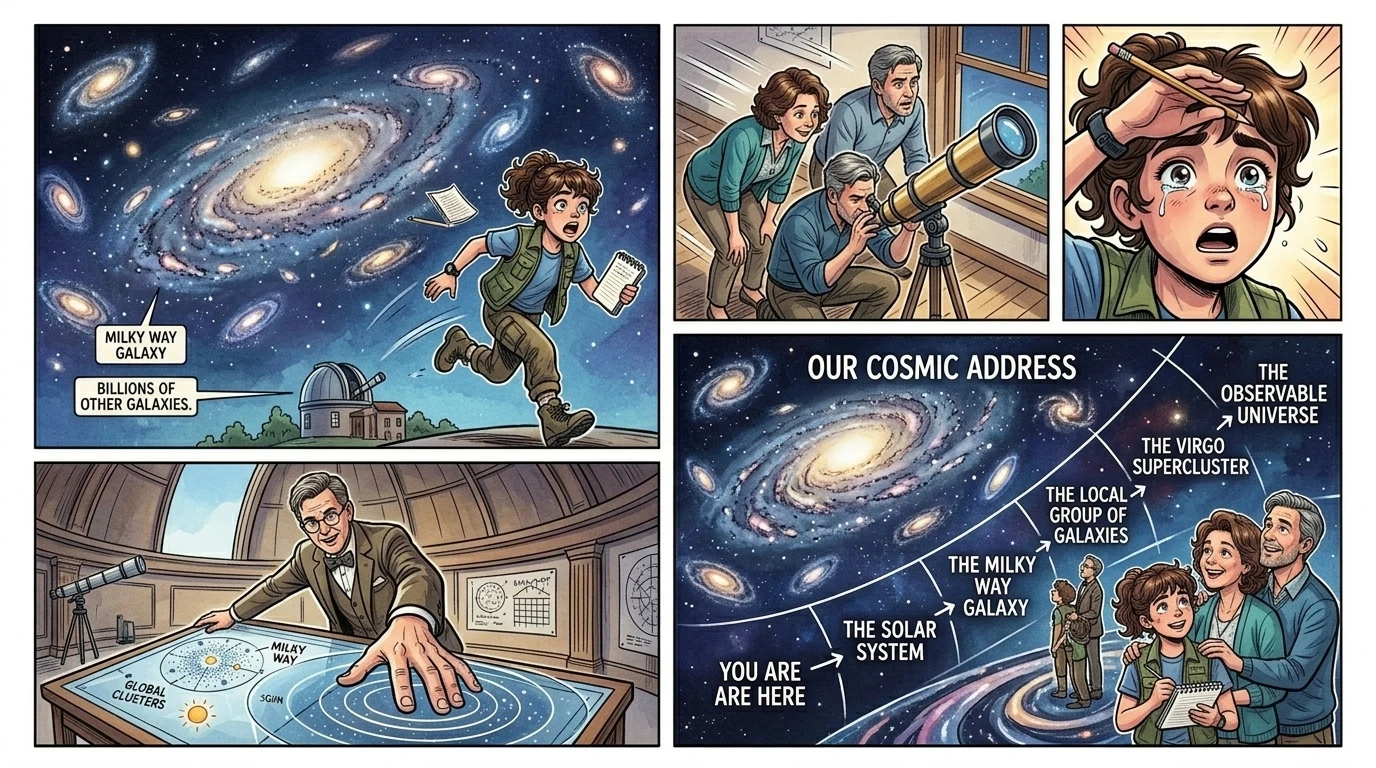
Shapley's discovery in the 1920s changed everything. Suddenly, the universe was vastly bigger than anyone had ever imagined, and humanity was no longer at its center. This giant leap in understanding paved the way for discovering that our Milky Way is just one of hundreds of billions of other galaxies. Our cosmic address suddenly had a lot more lines.
Page 8
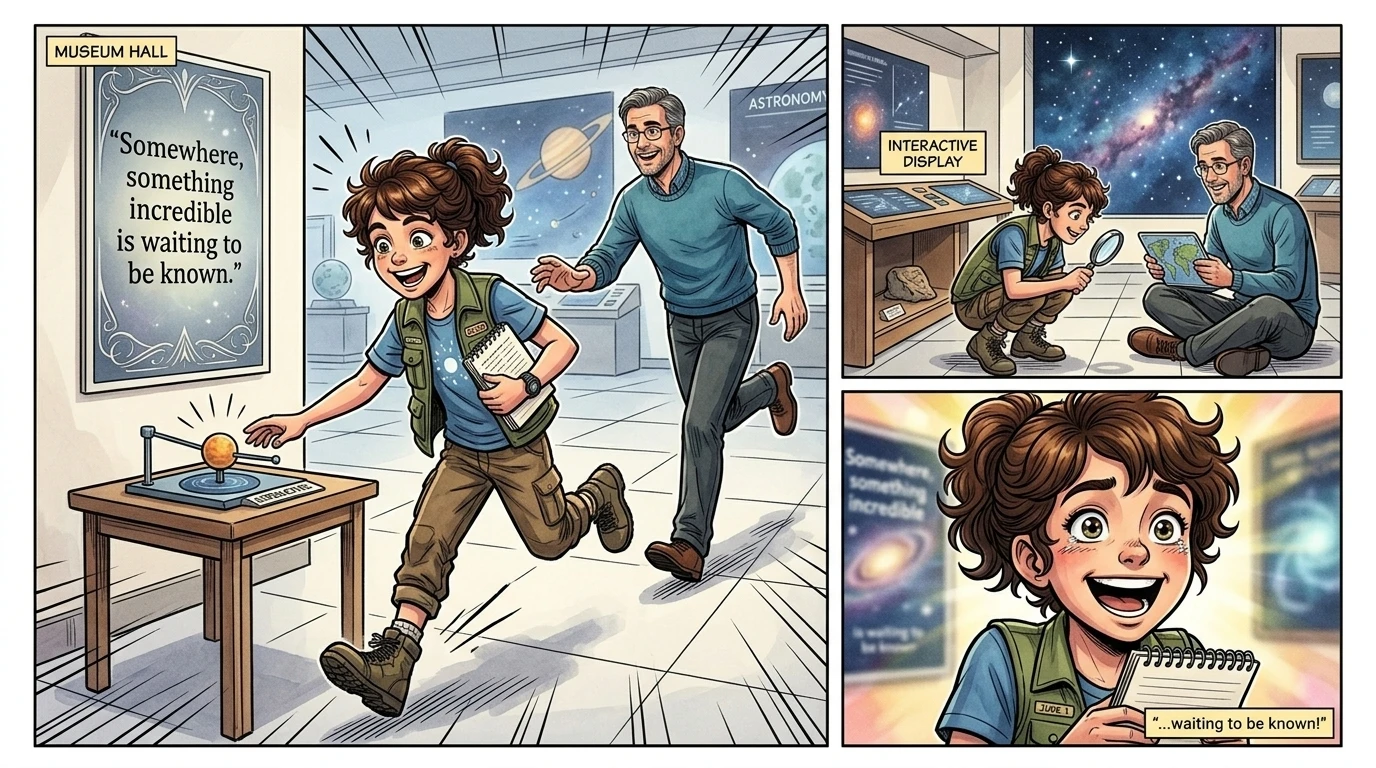
Back at the museum, Jude beamed at her father. "So the Cepheid stars were the standard candles! Shapley used them to find our real address in the galaxy." She thought for a moment. "It's like what the astronomer Carl Sagan said: 'Somewhere, something incredible is waiting to be known.' Shapley just had to figure out how to look!"
Page 9
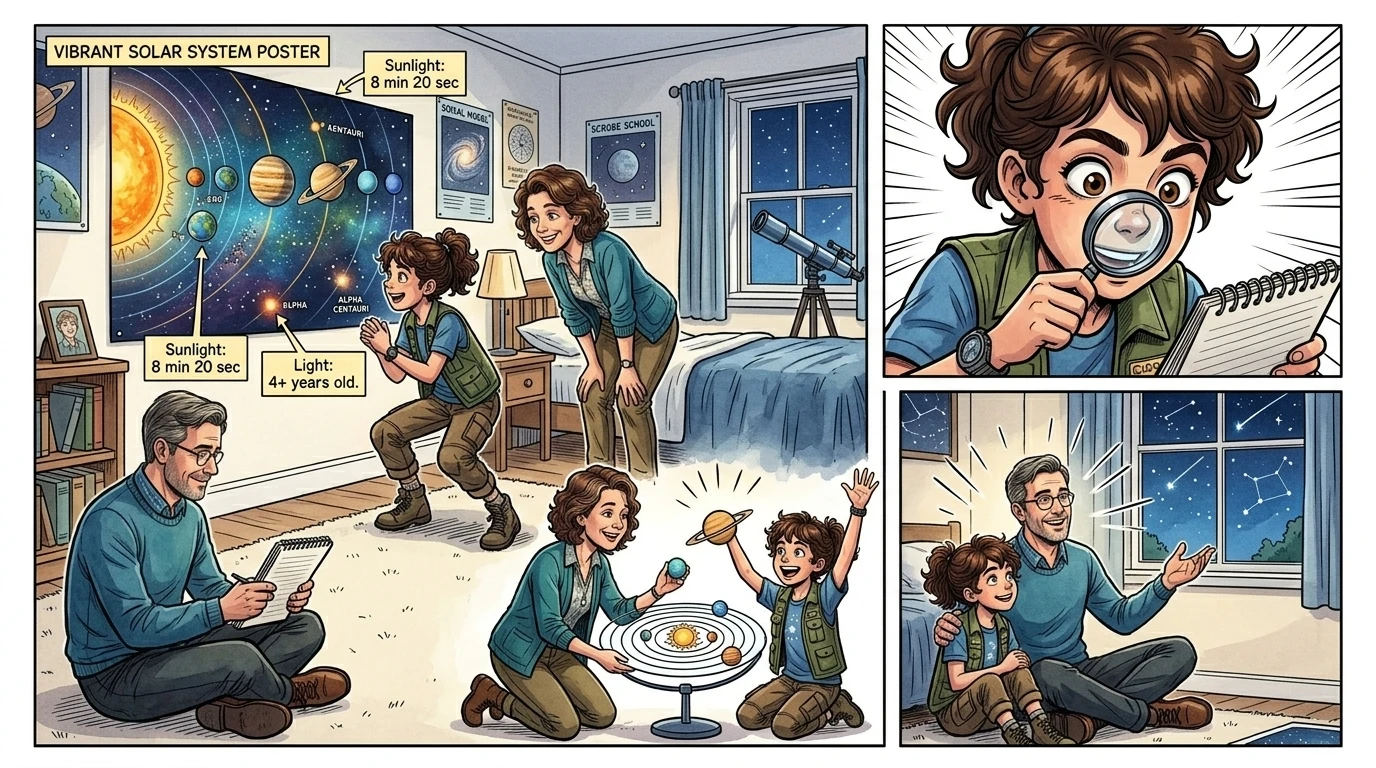
That night, Jude pointed to a poster of the solar system on her bedroom wall. "Mom, Dad, that means the light from the stars is super old! It takes 8 minutes and 20 seconds just for sunlight to reach us." Her mother, smiling, added, "And the light from the nearest star system, Alpha Centauri, is over four years old. You're looking at history every time you look at the night sky."
Page 10
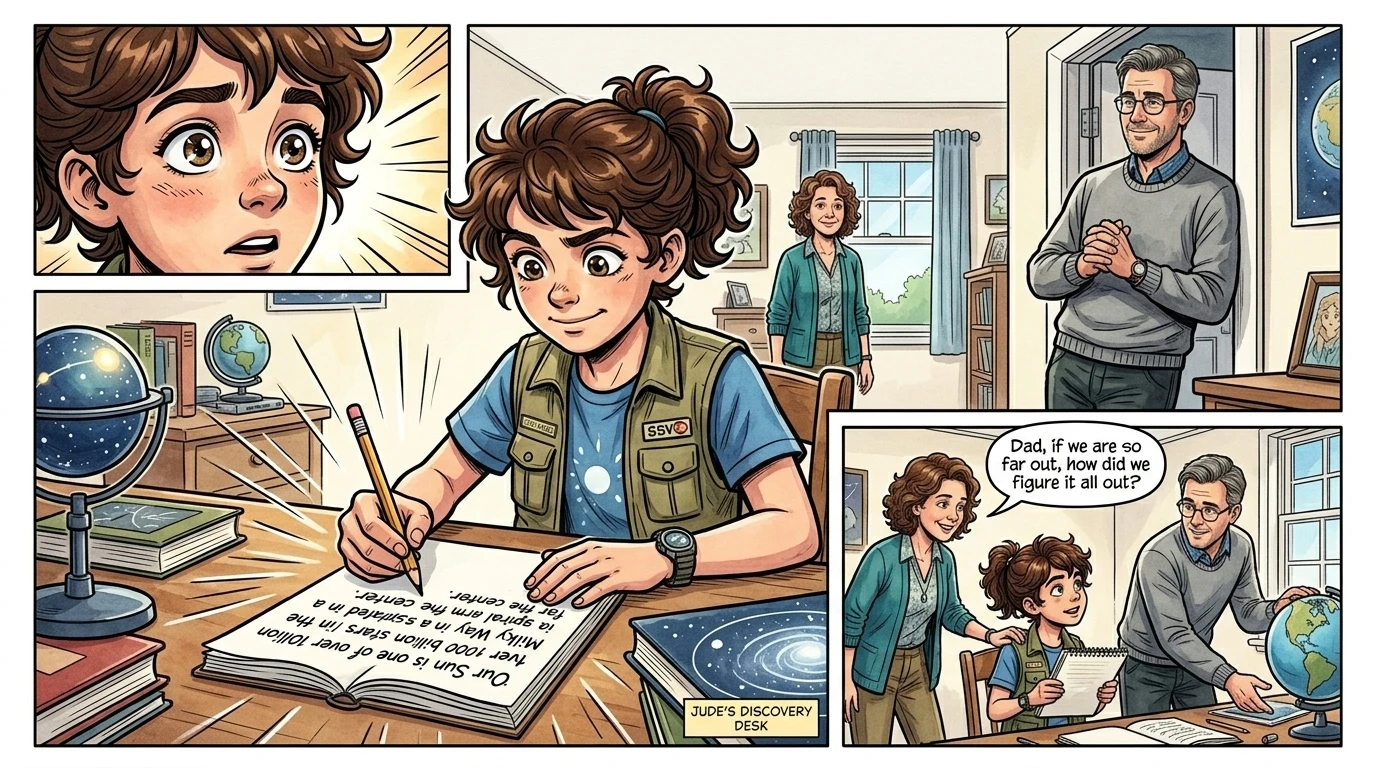
Jude sat at her desk, carefully writing in her notebook: "Our Sun is one of over 100 billion stars in the Milky Way, located in a spiral arm far from the center." She looked up at her parents, a new question already forming in her mind. Her father leaned against the doorframe and asked, "So we know our address... but what exactly is at the very, very center of it all?"
About this story
- Audience: kids (ages 6–12)
Read Wonder Science on your phone
Wonder Science is available on Android. Get Wonder Science on Google Play.