Theodor Boveri
Theodor Boveri — an illustrated science story, set in Global. 10 illustrated pages, free to read on Wonder Science.
Page 1
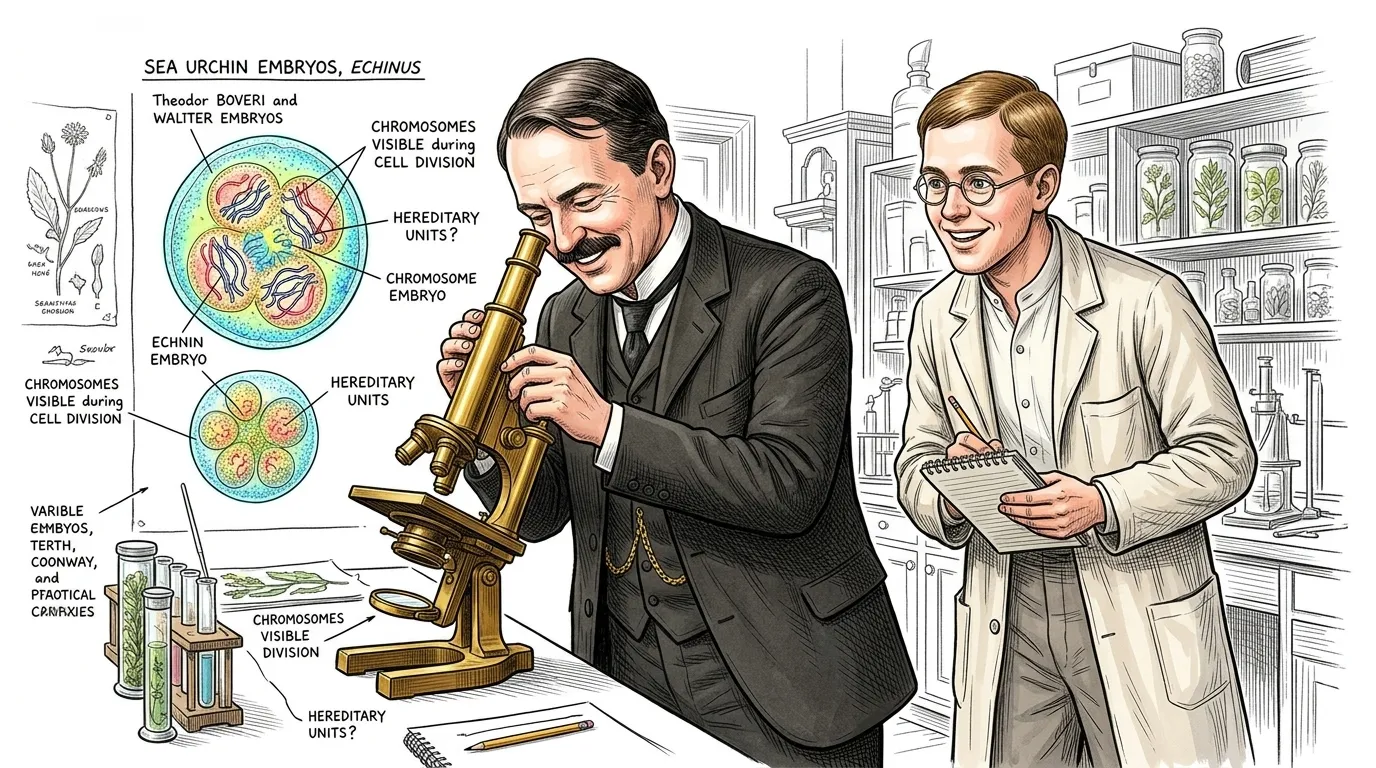
At the close of the 19th century, a fundamental question vexed biologists: how did life's instructions pass from one generation to the next? Amidst the microscopic chaos of cell division, one German biologist, Theodor Boveri, would illuminate a truth so profound it reshaped the very foundations of heredity. His meticulous observations, primarily of sea urchin embryos, revealed the chromosome not merely as a transient cellular structure, but as the indispensable, independent carrier of genetic information. This was a radical departure, proposing that specific traits were tethered to distinct chromosomal entities, a concept far ahead of its time, yet borne out by rigorous empirical evidence.
Page 2
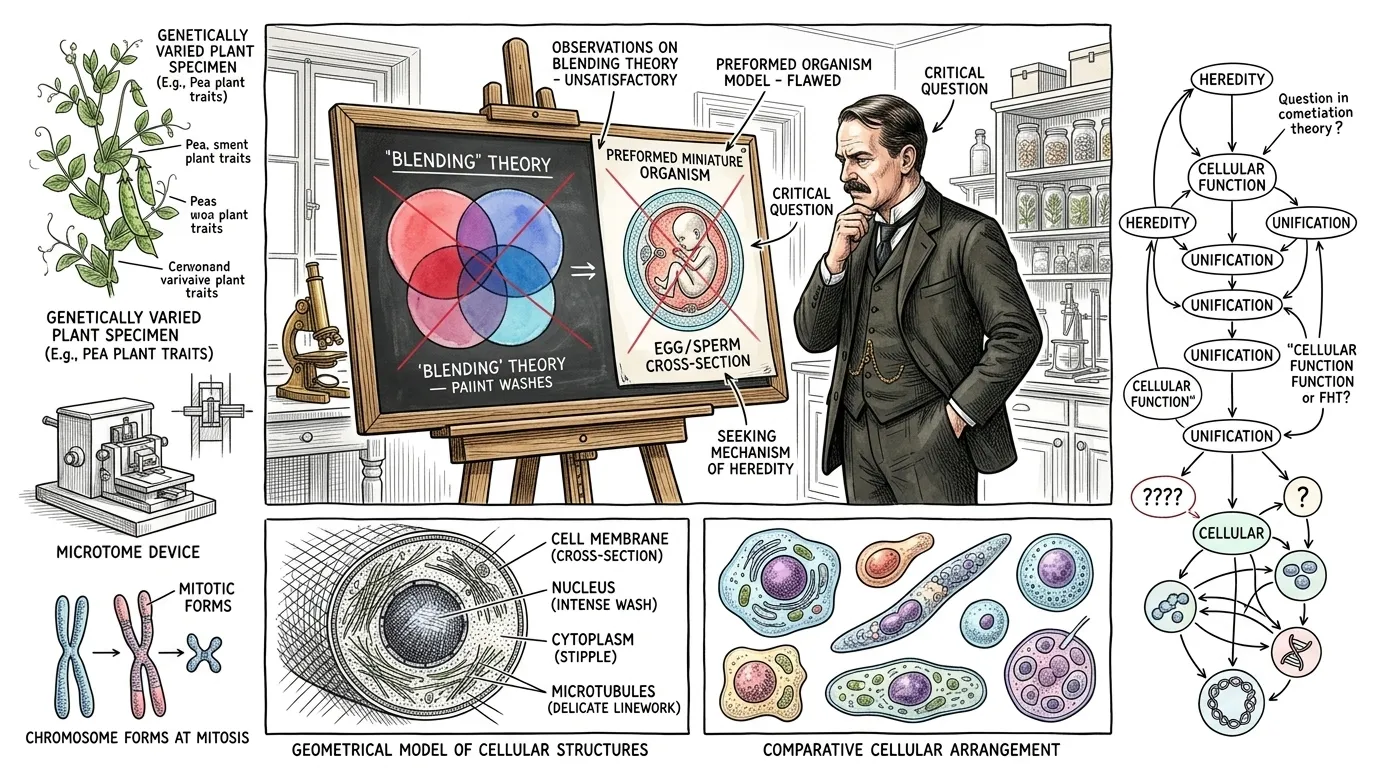
Before Boveri's insights, the mechanism of inheritance remained largely a mystery. Theories ranged from a 'blending' of parental traits, much like mixing paints, to the fanciful idea of preformed miniature organisms within sperm or egg. Scientists understood that the nucleus played a crucial role in heredity, but the specific agents within it, and their precise behavior during reproduction, were opaque. The challenge was immense: observing the infinitesimally small, dynamic processes within a living cell, and then discerning patterns amidst rapid, complex transformations. Boveri sought clarity where others saw only ambiguity.
Page 3
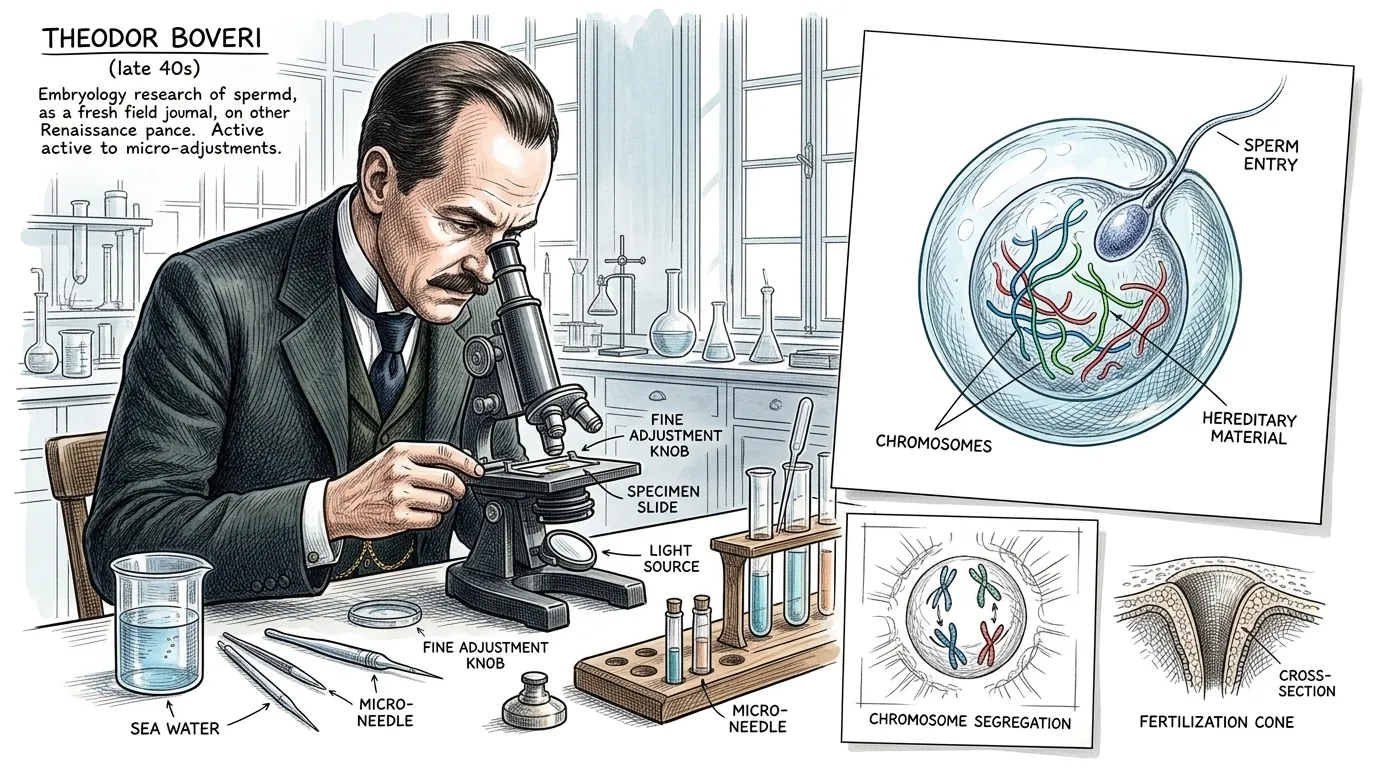
Boveri's chosen subject, the sea urchin, proved an inspired choice. Its transparent eggs allowed for direct observation of internal cellular events during fertilization and early development. He meticulously tracked the journey of the sperm nucleus into the egg, and crucially, the behavior of the thread-like structures within the nucleus – the chromosomes. It was known that the normal development of an organism depended on the fusion of one sperm and one egg. But Boveri delved deeper, examining what happened when this delicate balance was disturbed, inadvertently revealing the profound importance of precise chromosomal contribution.
Page 4
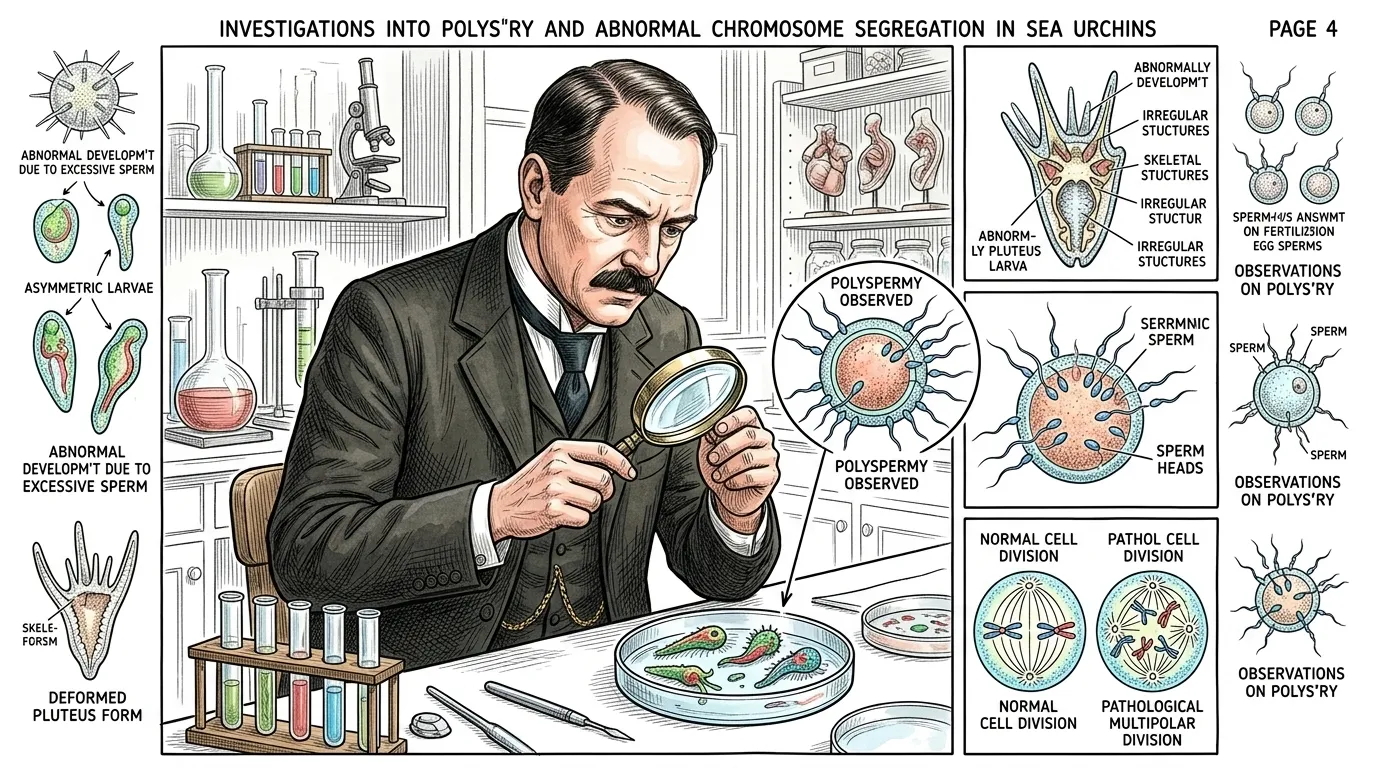
One of Boveri's most critical experimental approaches involved inducing polyspermy—the fertilization of a single sea urchin egg by multiple sperm. Normally, only one sperm enters and contributes its genetic material. However, when two or more sperm penetrated an egg, Boveri observed profound developmental abnormalities. Instead of forming a healthy, symmetrical larva, these polyspermic embryos developed into deformed, asymmetrical, and ultimately inviable organisms. This anomaly provided a crucial window into the precise requirements for proper development, suggesting a direct link between the number of contributing genetic units and the viability of the offspring.
Page 5
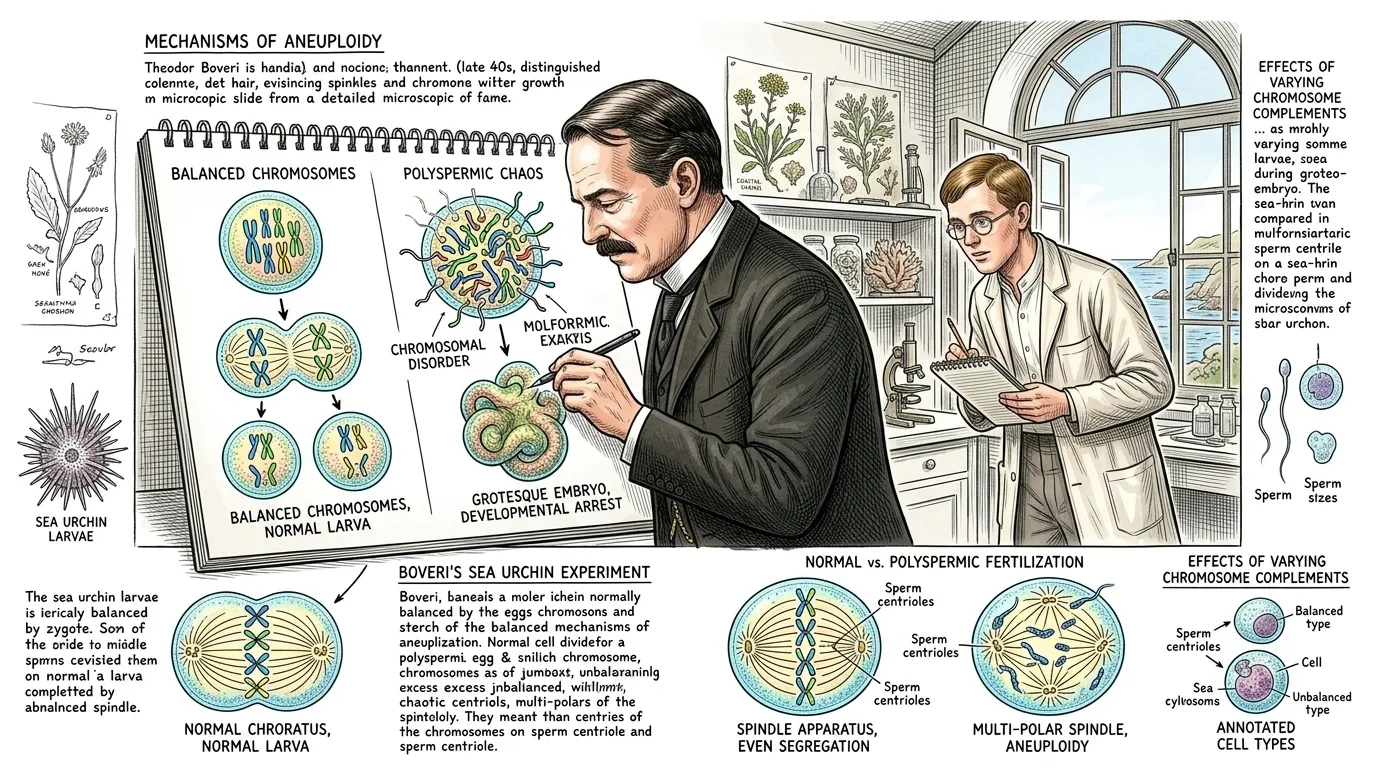
Boveri didn't just observe the abnormal outcomes; he correlated them directly with events at the chromosomal level. When an egg was fertilized by a single sperm, the resulting zygote contained a precisely balanced set of chromosomes, leading to orderly cell division and normal development. However, in polyspermic eggs, the multiple sperm nuclei introduced an excess of chromosomes. Crucially, these chromosomes were then distributed unevenly to daughter cells during subsequent divisions, creating cells with wildly varying, unbalanced chromosome numbers. It was this 'chromosomal chaos' that Boveri linked to the grotesque abnormalities, arguing that each chromosome carried unique, essential hereditary determinants.
Page 6
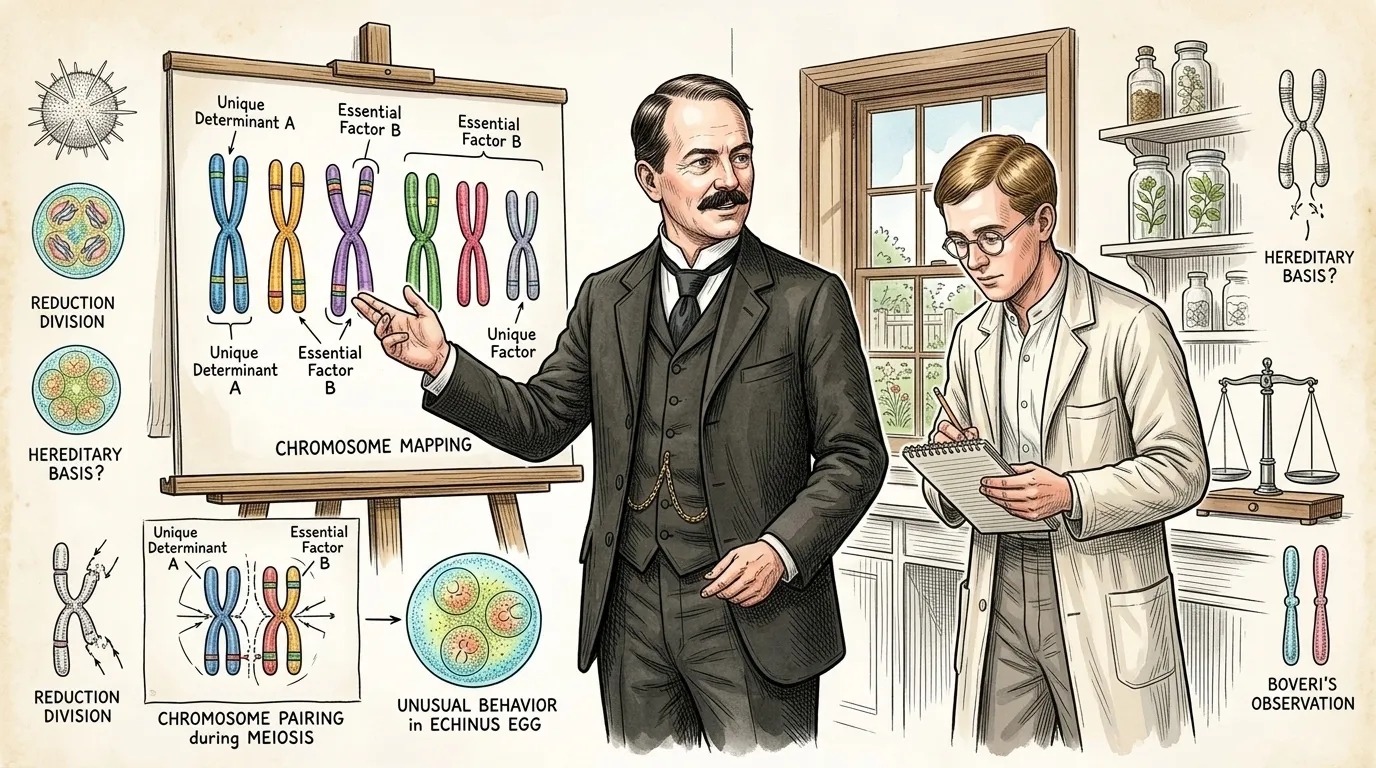
Boveri's groundbreaking conclusion was that individual chromosomes possess distinct hereditary qualities. It wasn't just the total number of chromosomes that mattered, but the specific combination and presence of each type. He posited that each chromosome contained a unique set of 'determinants' necessary for normal development. An imbalance, whether a missing chromosome or an extra one, would disrupt the delicate genetic symphony required for the precise orchestration of cellular growth and differentiation. This understanding was a profound leap beyond merely counting these structures; it attributed specific functional significance to each one.
Page 7
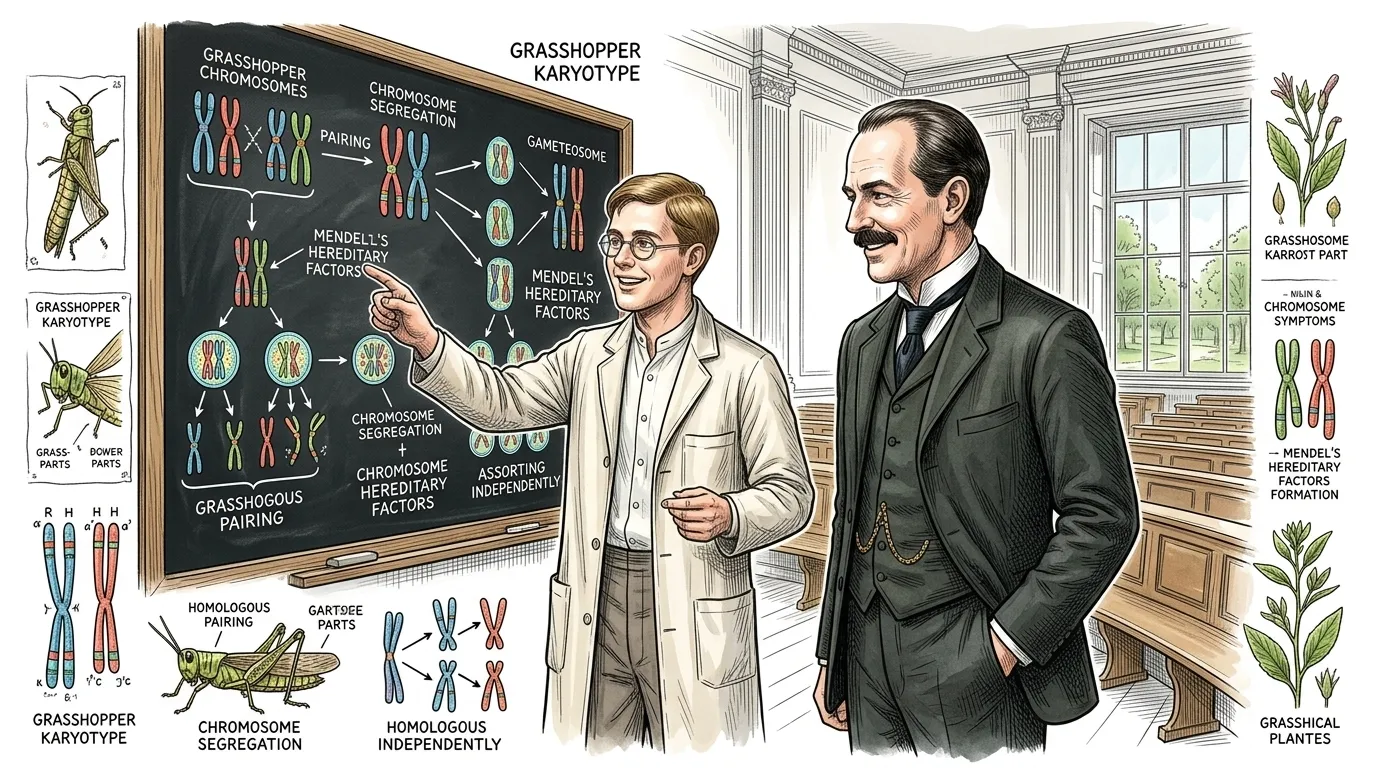
Although Boveri published his seminal work in the early 1900s, his ideas truly resonated when independently corroborated. In 1902, Walter Sutton, an American geneticist working with grasshoppers, made remarkably similar observations. Sutton recognized that chromosomes behaved precisely as Mendel's 'hereditary factors' (genes) were predicted to behave: they existed in pairs, segregated during gamete formation, and assorted independently. Sutton explicitly acknowledged Boveri's parallel insights, formally combining their work into what became known as the Boveri-Sutton Chromosomal Theory of Inheritance. This powerful synthesis provided the physical basis for Mendelian genetics.
Page 8
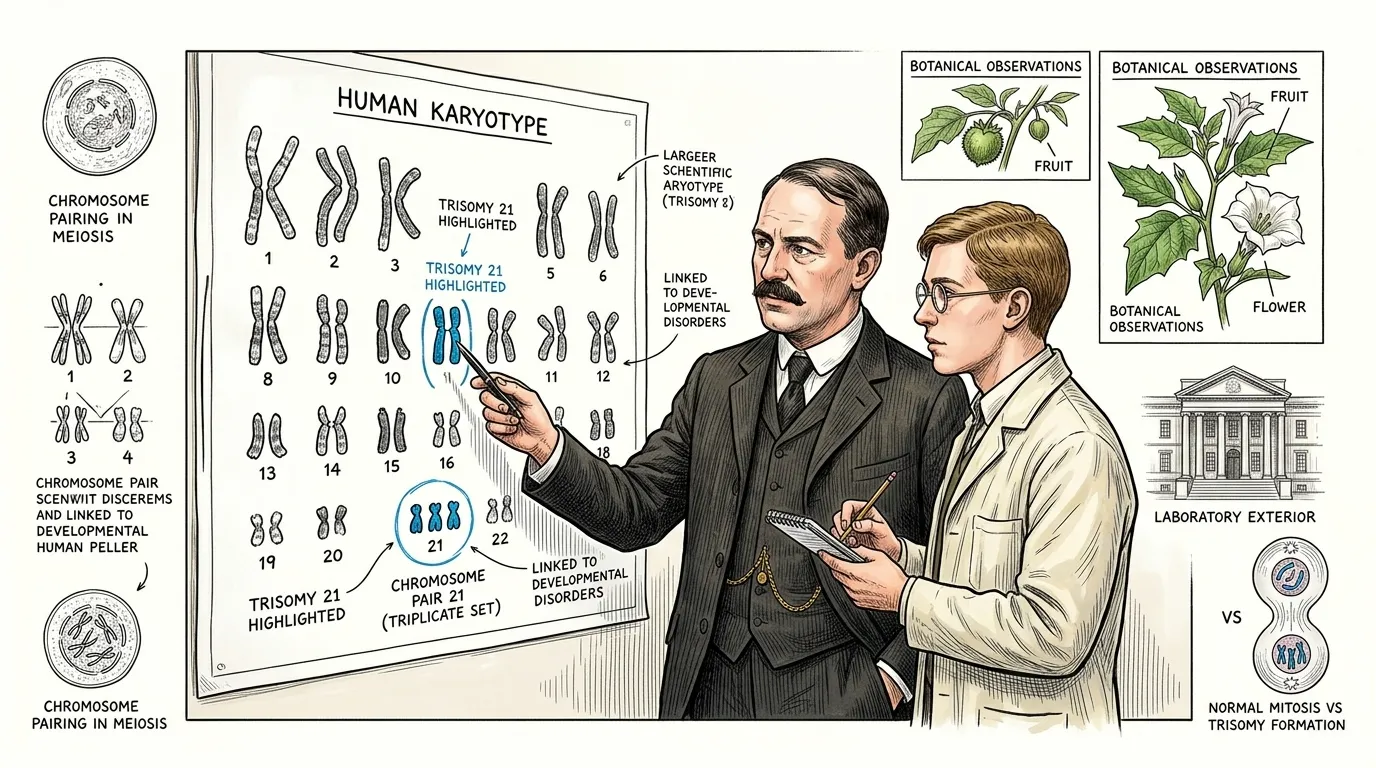
The Boveri-Sutton theory irrevocably linked the physical structures of the cell nucleus to the abstract laws of heredity. This paradigm shift was not merely academic; it laid the groundwork for medical genetics. Understanding that abnormal chromosome numbers could lead to developmental disorders provided a new lens through which to view human conditions. Later discoveries of syndromes like Down syndrome (Trisomy 21) would directly trace their cause to an extra chromosome, validating Boveri's early predictions about the catastrophic effects of chromosomal imbalance. His foundational work became a cornerstone of modern diagnostics and genetic counseling.
Page 9
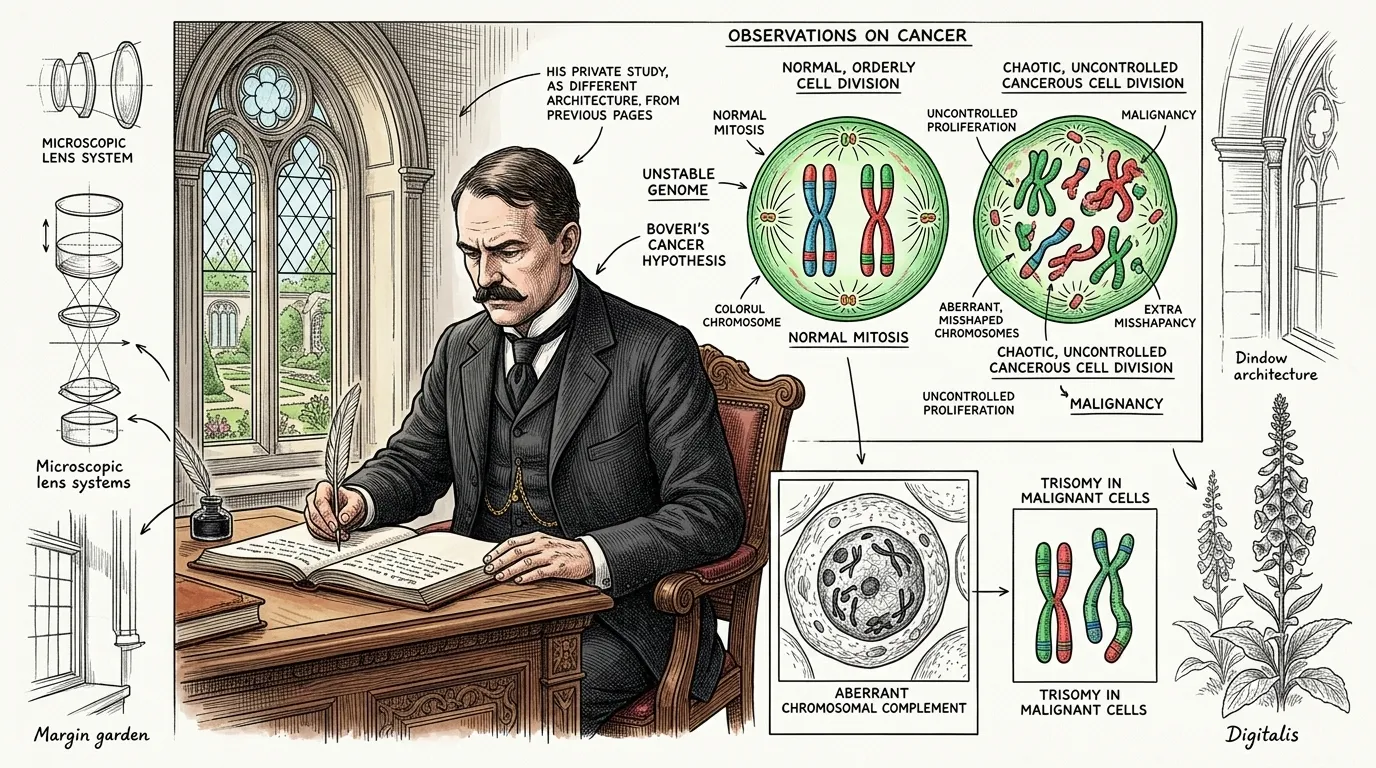
Perhaps Boveri's most astonishingly prescient insight came from his later work on the relationship between chromosomes and malignancy. In 1914, he published a monograph proposing that cancer arises from aberrant chromosomes—specifically, that a cell becomes cancerous when it acquires an abnormal chromosome constitution that deregulates its growth. He suggested that such changes could lead to uncontrolled proliferation, a hallmark of cancer. This 'somatic mutation theory of cancer' was revolutionary, anticipating by decades the discovery of oncogenes and tumor suppressor genes and their chromosomal locations. Boveri provided one of the earliest, most robust frameworks for understanding cancer at a cellular and genetic level.
Page 10
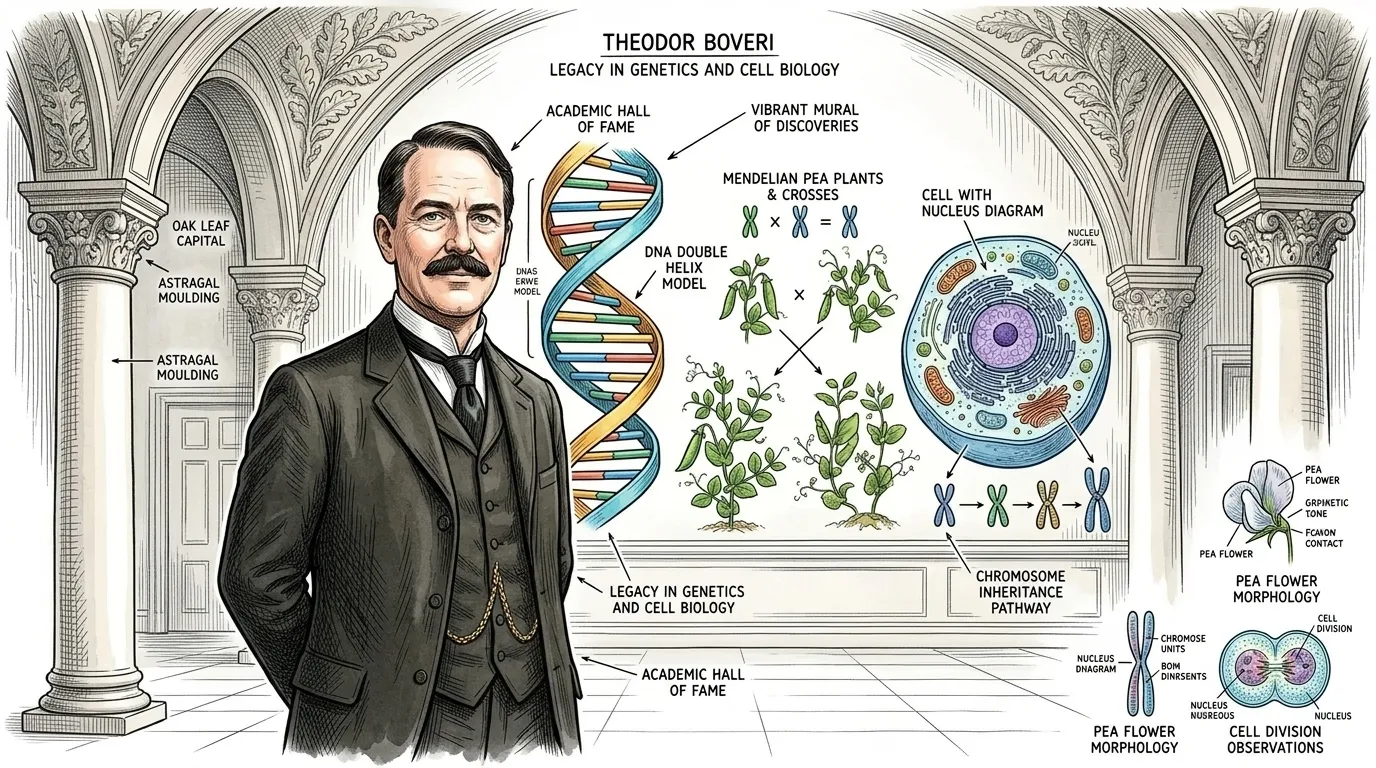
Theodor Boveri's legacy is profound and far-reaching. From his quiet laboratory in Würzburg, he articulated principles that underpin virtually all of modern biology and medicine. His work on chromosomes as carriers of heredity provided the crucial link between cytology and genetics, paving the way for understanding everything from Mendelian inheritance to the molecular structure of DNA. His early insights into the chromosomal basis of cancer continue to guide contemporary research into diagnostics and therapies. Boveri's meticulous experimentation and visionary theoretical framework established him as a true pioneer, a figure whose foundational discoveries remain indispensable to our comprehension of life itself.
About this story
- Location: Global
- Audience: general readers
Questions and answers
Read Wonder Science on your phone
Wonder Science is available on Android. Get Wonder Science on Google Play.