Vera Rubin
Vera Rubin — an illustrated science story, set in Global. 10 illustrated pages, free to read on Wonder Science.
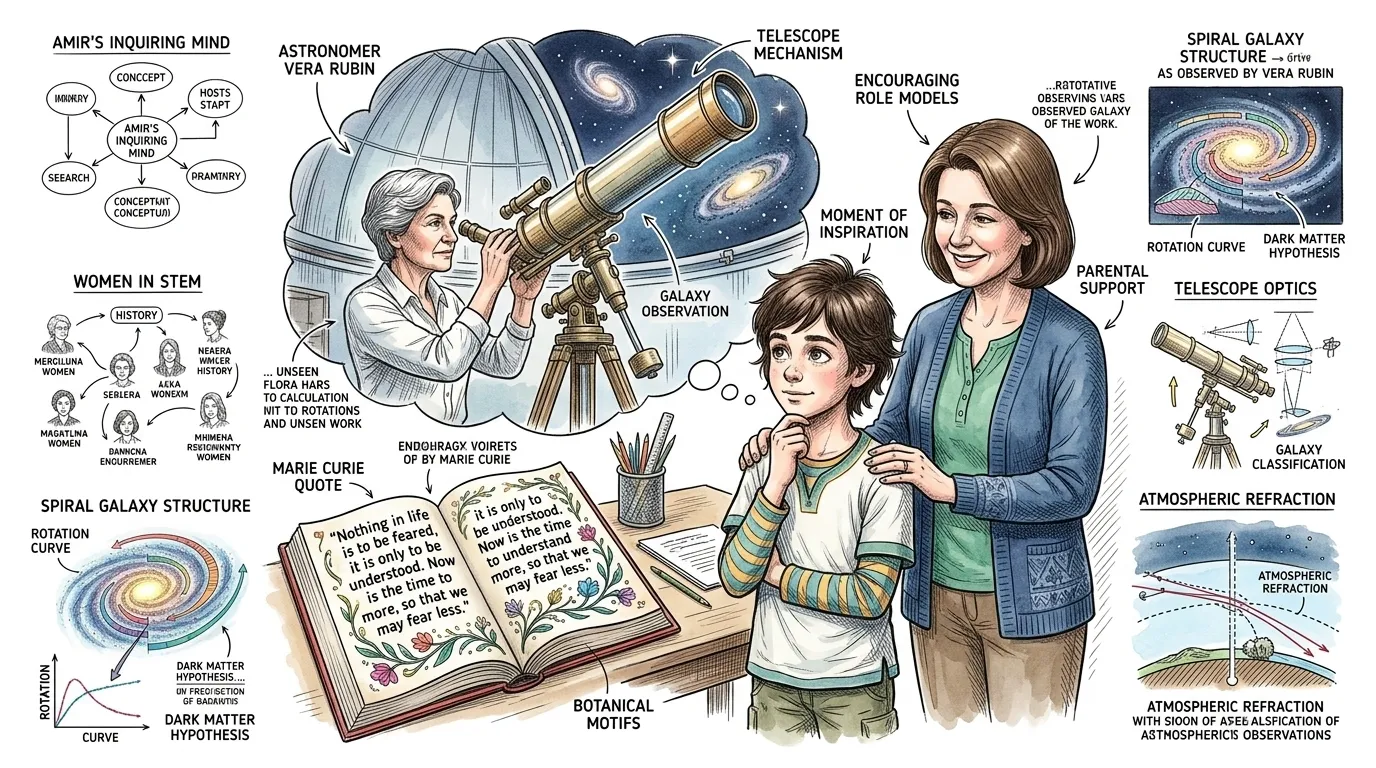
Page 1
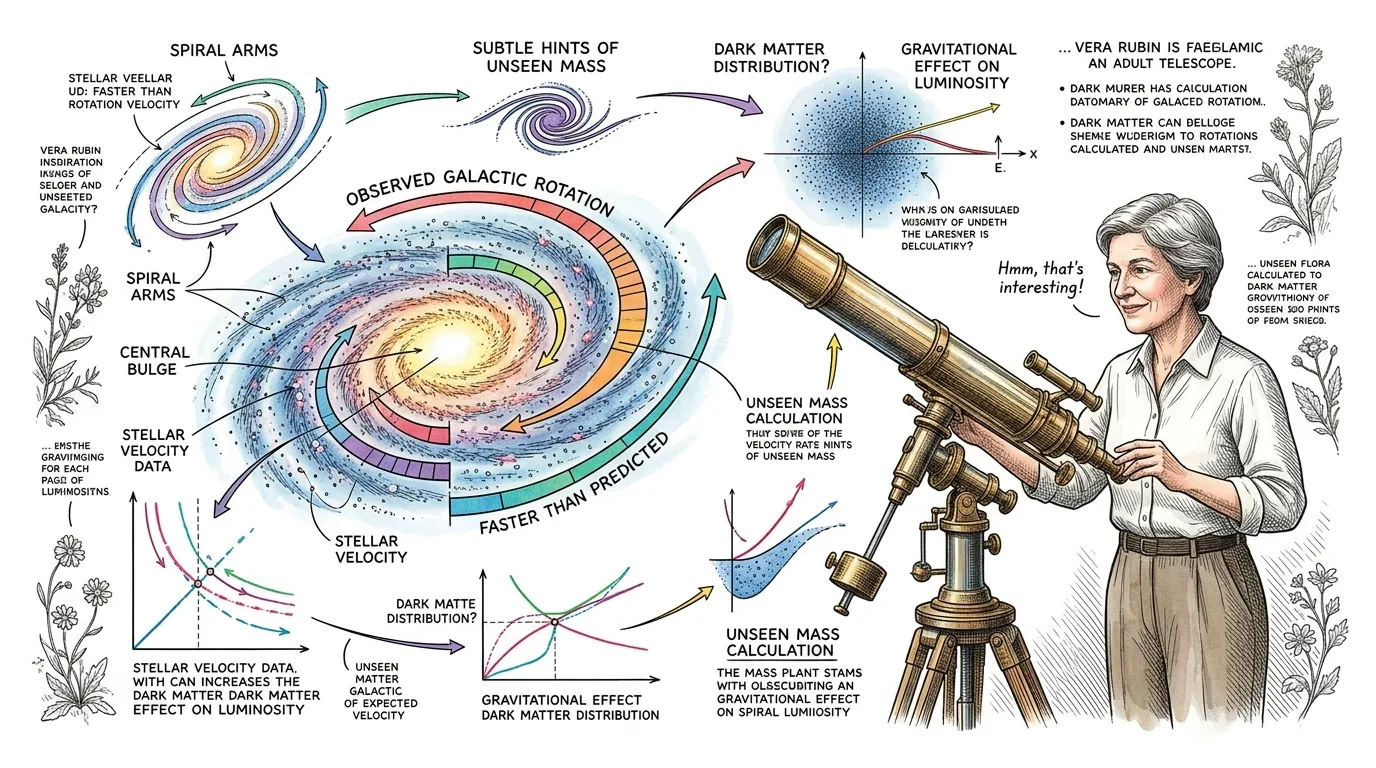
Imagine galaxies spinning in the vast expanse of space. For years, scientists couldn't quite explain their behavior. Vera Rubin, a pioneering astronomer, unveiled a hidden truth. What secrets did she uncover about the universe?
Fact: Galaxies rotate faster than expected, suggesting unseen mass.
Page 2
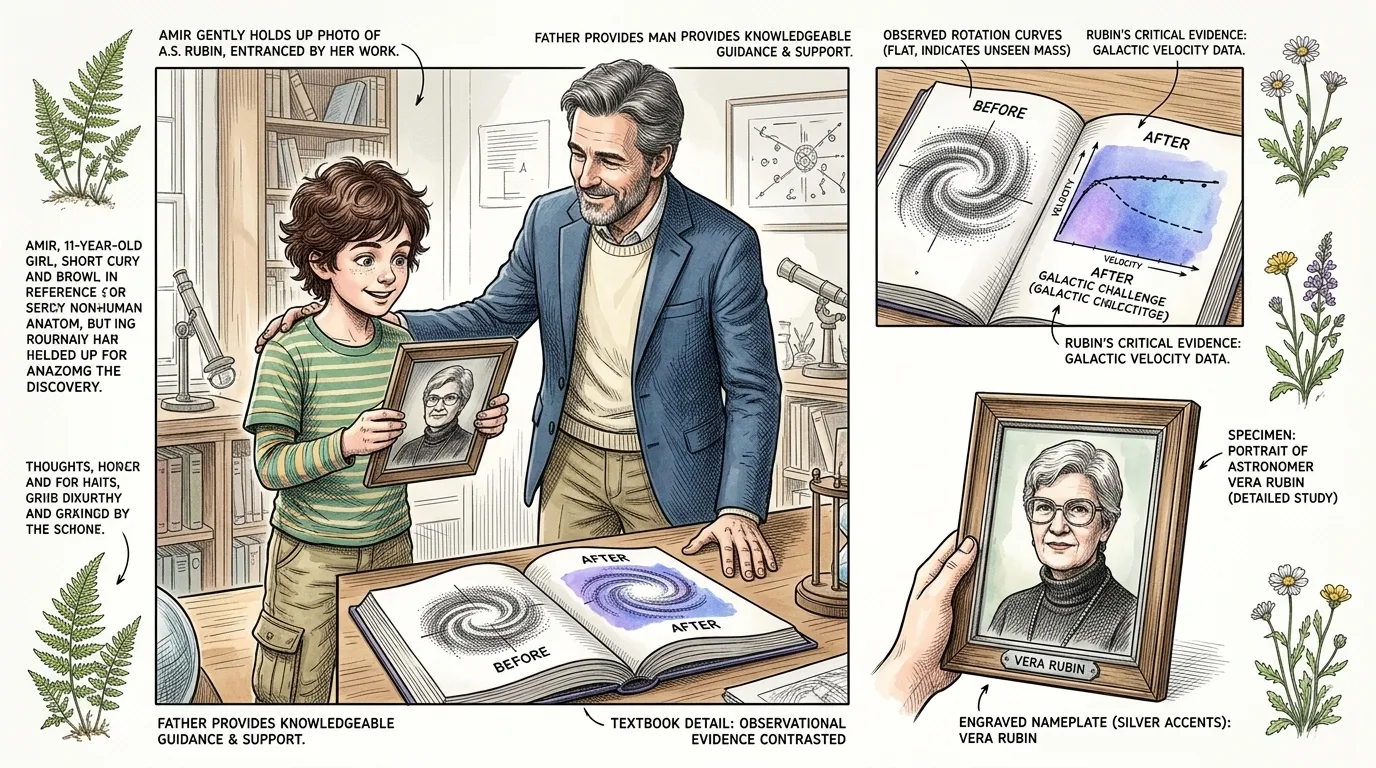
Amir looked at the photo of Vera Rubin. 'Dad, she looks like someone who wasn't afraid to ask questions.' Her father smiled. 'That's exactly who she was. She was fascinated by how galaxies moved.'
"'Didn't people already know how galaxies moved?' asked Amir. Her dad replied, 'They thought they did, but Vera found something that didn't quite add up.'"
Fact: Rubin challenged existing models of galactic rotation.
Page 3
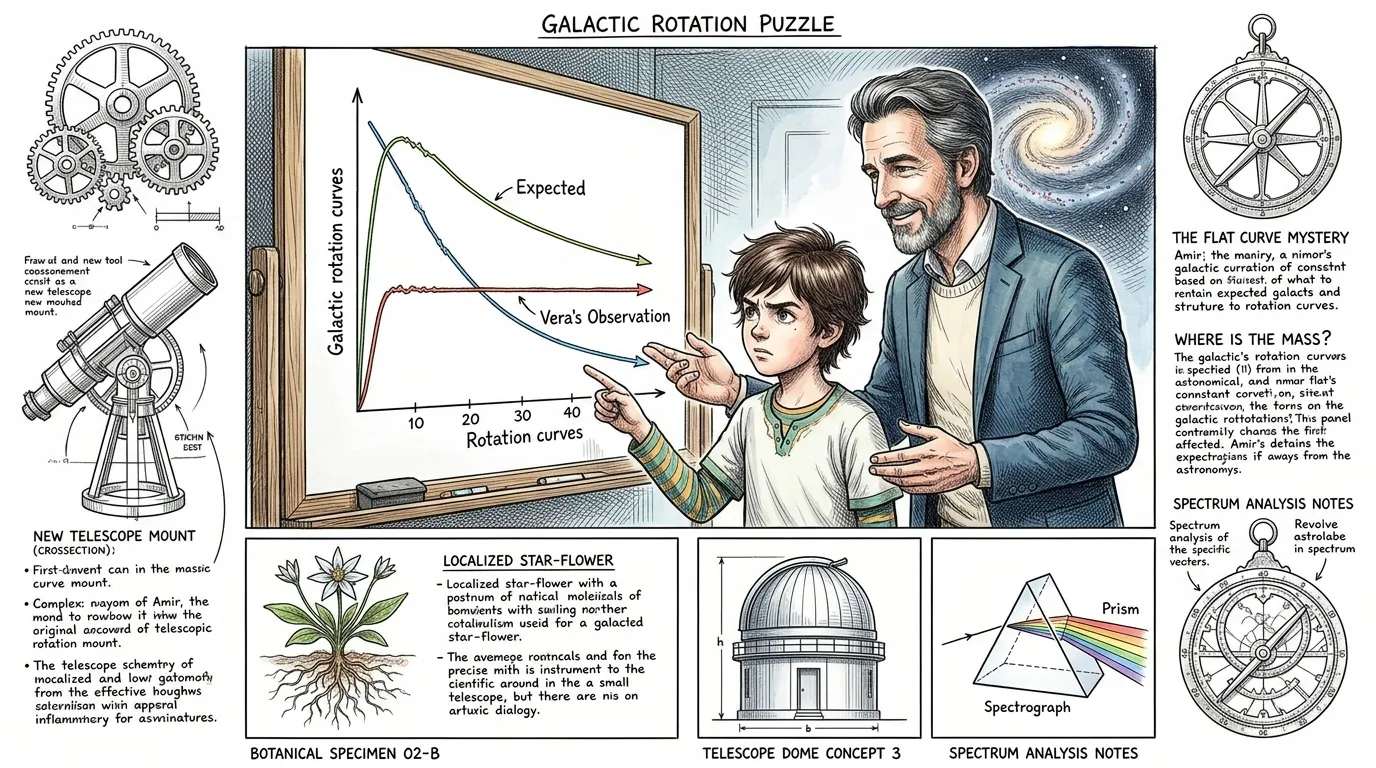
'People thought the stars on the edge of a galaxy should orbit slower because they were further from the mass in the center.' Dad explained. 'Like planets in our solar system, the further out they are, the slower they go.' Amir looked puzzled. 'But that's not what Vera found?'
"Her father nods. 'Exactly. Vera noticed the stars on the edge were orbiting at the same speed as the stars closer in. That was a huge mystery!'"
Fact: Observed rotation curves defied expectations based on visible matter.
Page 4
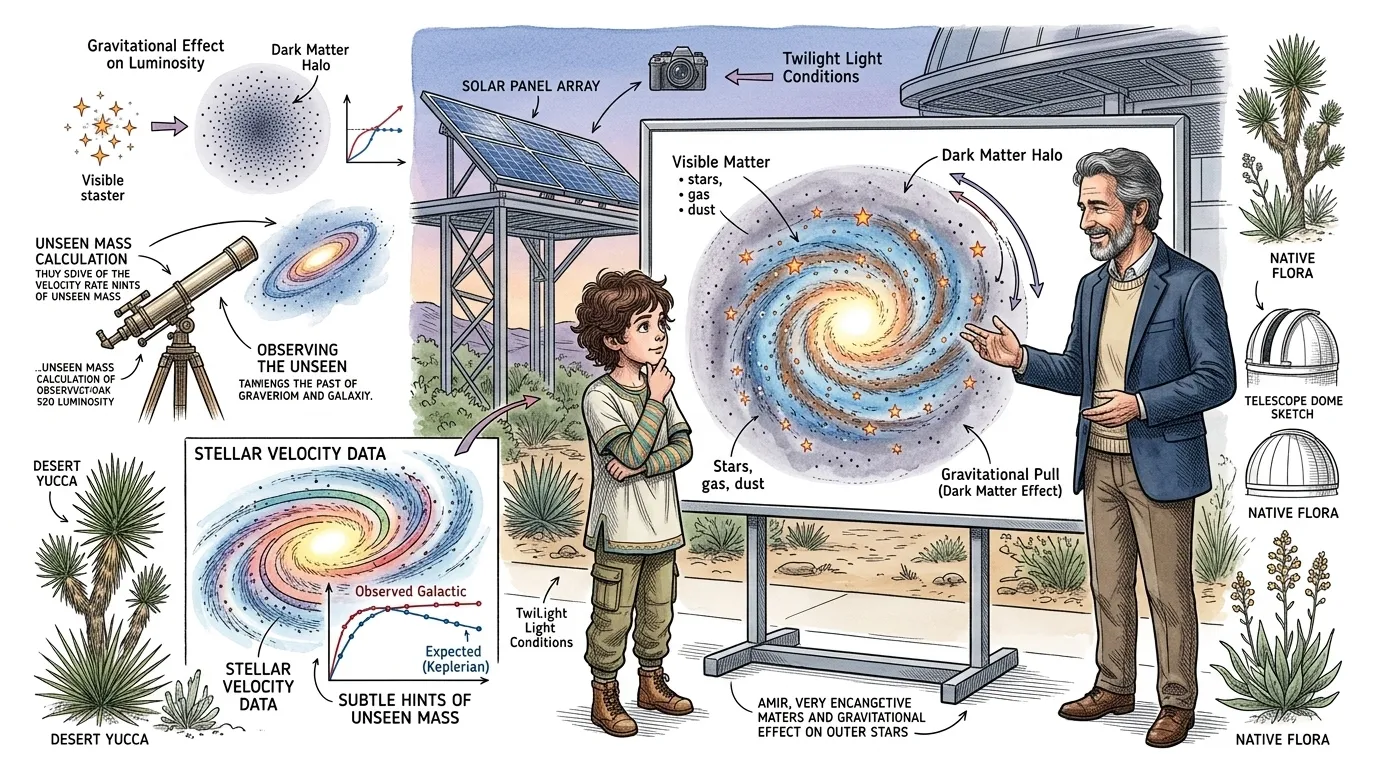
Amir thought about the solar system. 'So, if the stars on the outside are going too fast, what's keeping them from flying away?' Her dad chuckled. 'That's the million-dollar question! Something we can't see must be exerting a gravitational pull.'
"'Like what?' Amir wondered aloud. Dad responds, 'That's where the idea of 'dark matter' comes in. Invisible matter that makes up most of the mass in the galaxy.'"
Fact: Dark matter is hypothesized to explain the 'missing mass' in galaxies.
Page 5
Amir imagined Vera at the telescope. 'She must have been so excited to see this new evidence!' Her mom entered, hearing the conversation. 'It wasn't easy for her. In her era, not everyone believed that women could be scientists.'
"Her mom adds, 'Vera faced a lot of obstacles, but she never gave up on her passion. Just like Marie Curie said, 'You cannot hope to build a better world without improving the individuals.' Vera was always trying to improve things, one discovery at a time!'"
Fact: Rubin faced gender bias in her scientific career.
Page 6
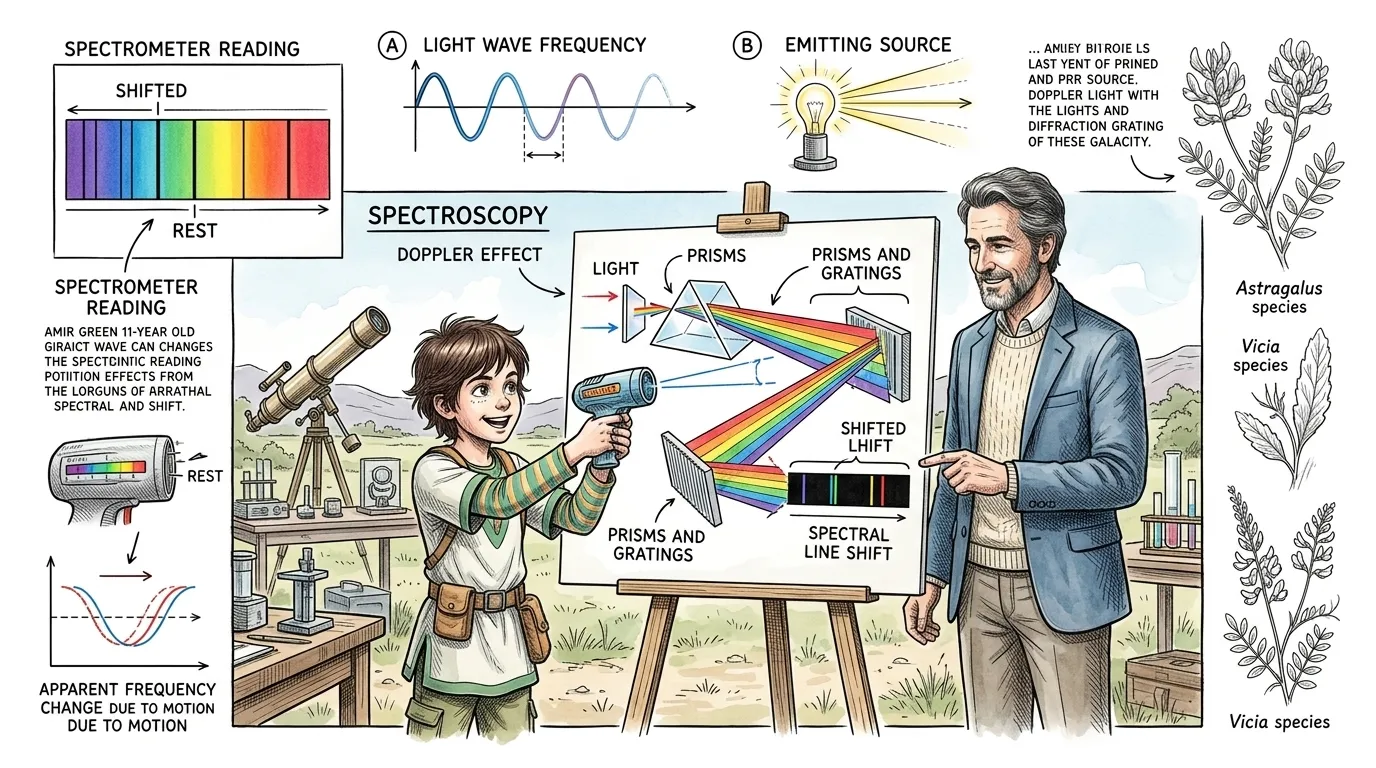
Dad continued. 'Vera used spectroscopy to measure the velocities of stars. By analyzing the light, she could tell how fast they were moving toward or away from us.' Amir thought of traffic cops using radar guns. 'So, like a speed detector for stars?'
"Dad affirmed. 'Exactly! The amount the light shifts, known as the Doppler effect, reveals the star's velocity. Vera used this to map the rotation of galaxies.'"
Fact: Spectroscopy and the Doppler effect enable measuring star velocities.
Page 7
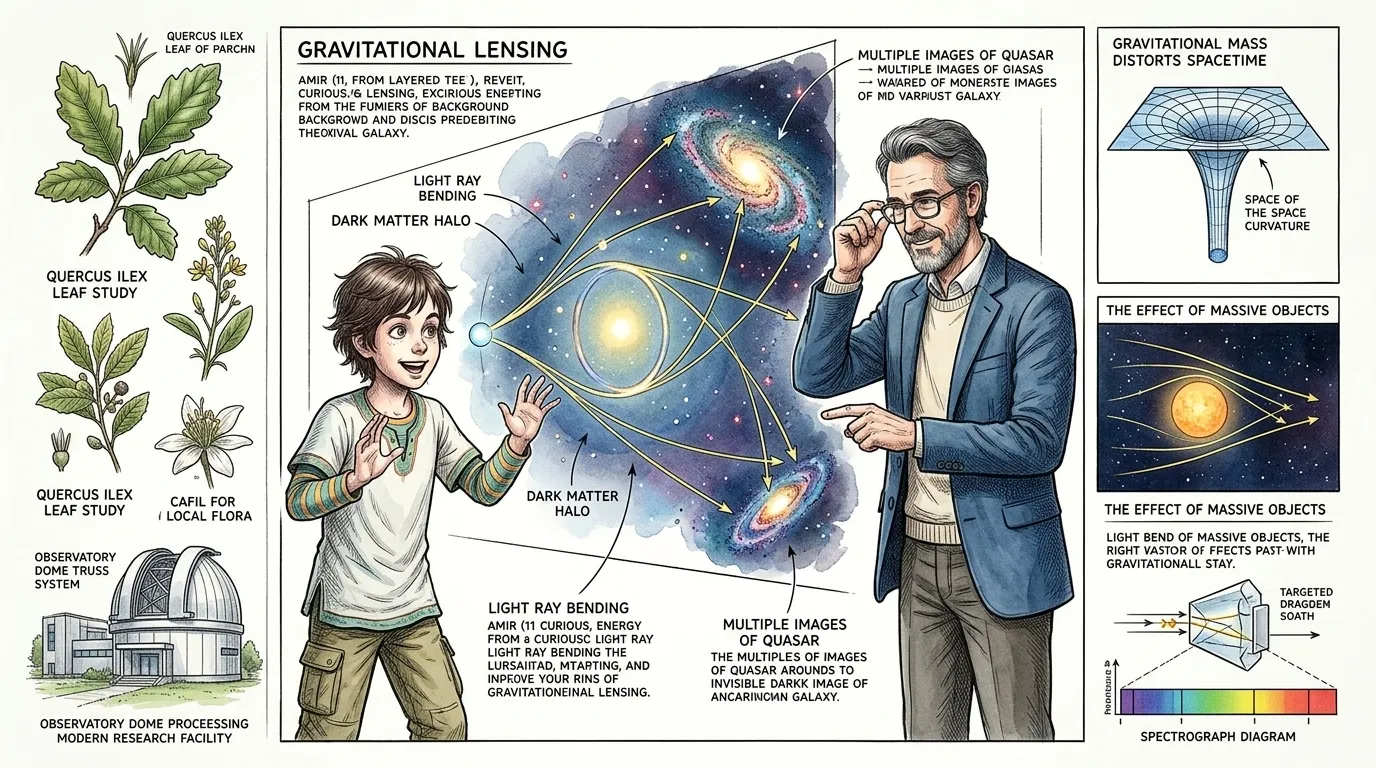
Amir asked, 'If we can't see dark matter, how do we know it's really there?' Dad adjusted his glasses. 'We see its gravitational effects. Light bends around massive objects, even if they're invisible.'
"'So, dark matter acts like a lens?' Amir asked, excitedly. 'Precisely! This 'gravitational lensing' helps confirm the existence and distribution of dark matter.'"
Fact: Gravitational lensing provides evidence for dark matter's existence.
Page 8
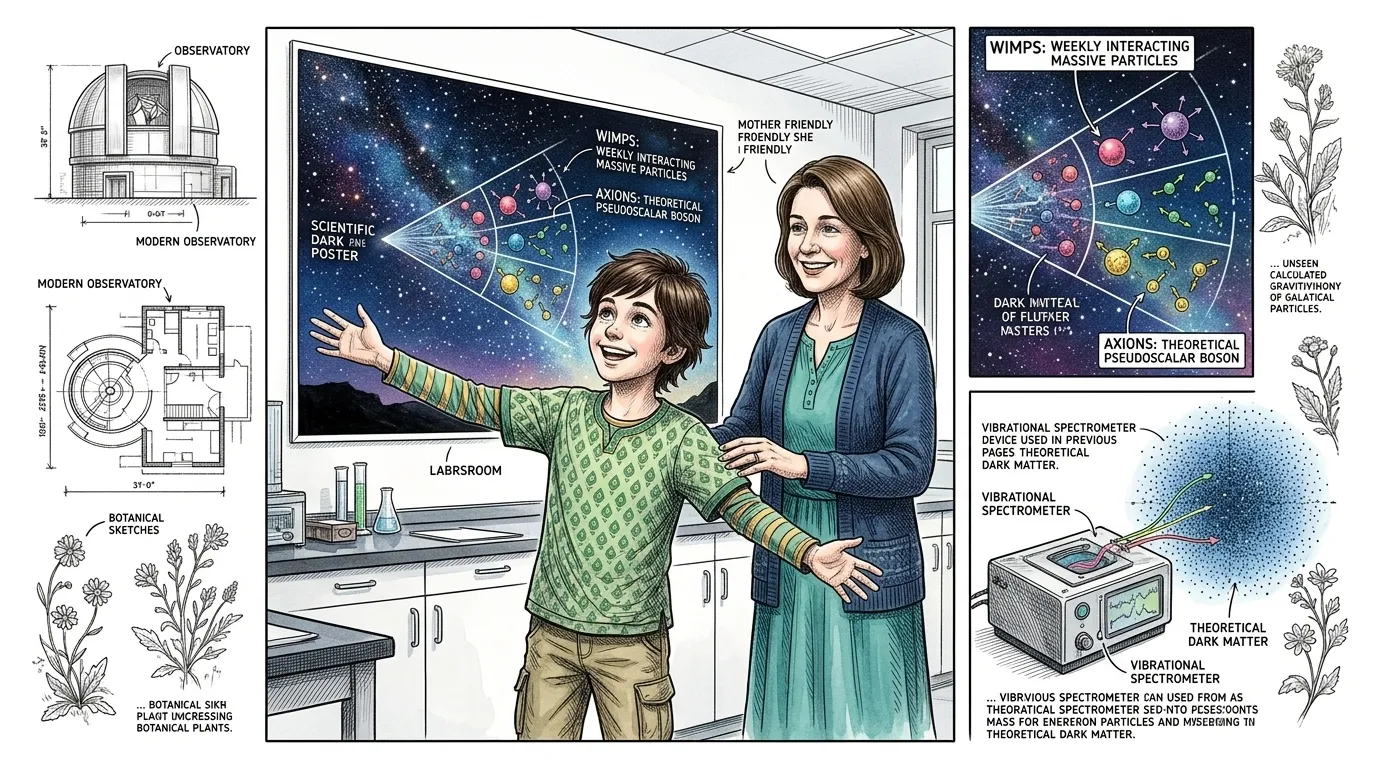
Amir smiled. 'So, Vera Rubin showed the world that what we see is only a small part of the universe!' Her mom smiled back. 'That's right! And it opened up a whole new field of research.'
"Her mother continued, 'Now, scientists are trying to figure out what dark matter is actually made of. It could be new particles, or something else entirely!'"
Fact: Ongoing research seeks to identify the composition of dark matter.
Page 9
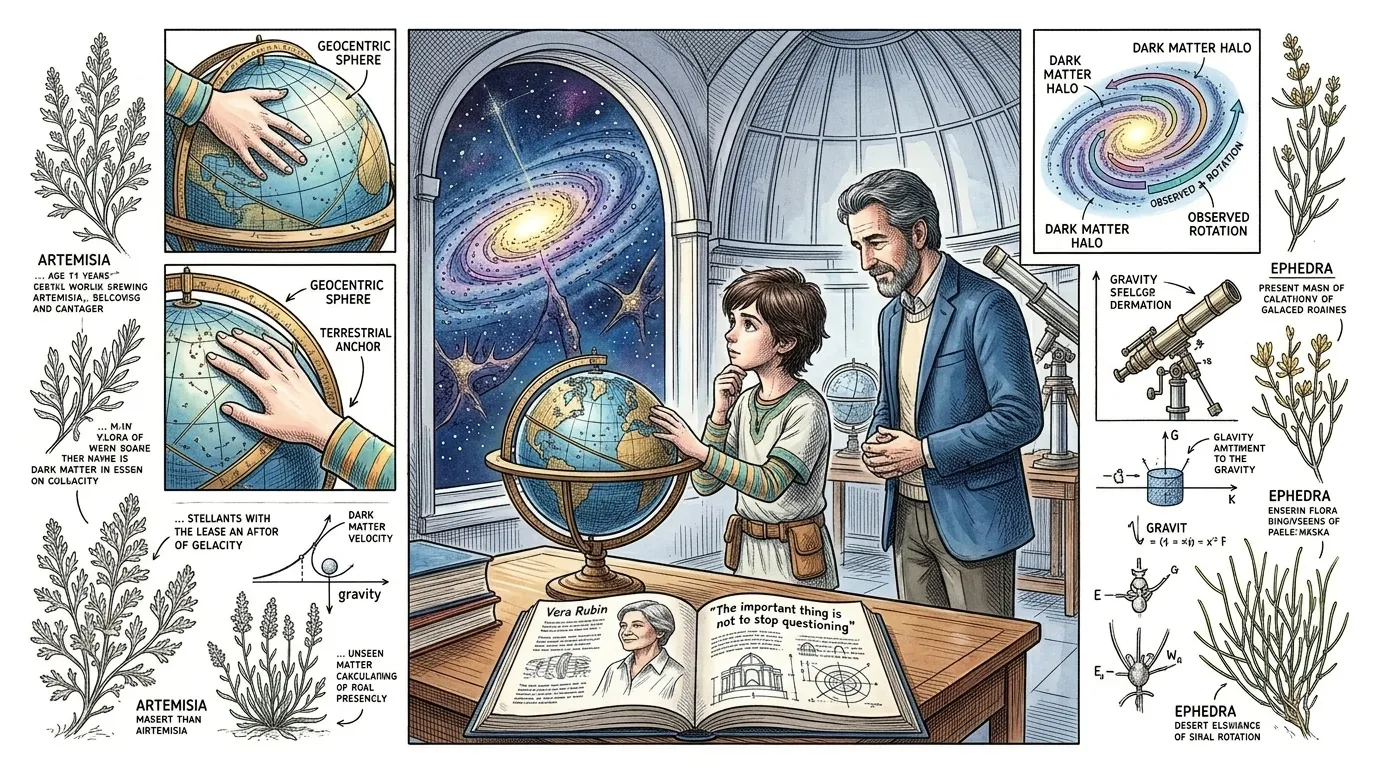
Amir considered the implications. 'Without Vera Rubin, we wouldn't even know that most of the universe is missing!' Her dad nods. 'Her work changed our entire understanding of the cosmos.'
"Her dad added, 'Her meticulous observations, her challenging of accepted theories—that's what science is all about. As Einstein said, 'The important thing is not to stop questioning.' Vera never stopped questioning.'"
Fact: Rubin's legacy inspires future generations of scientists.
Page 10
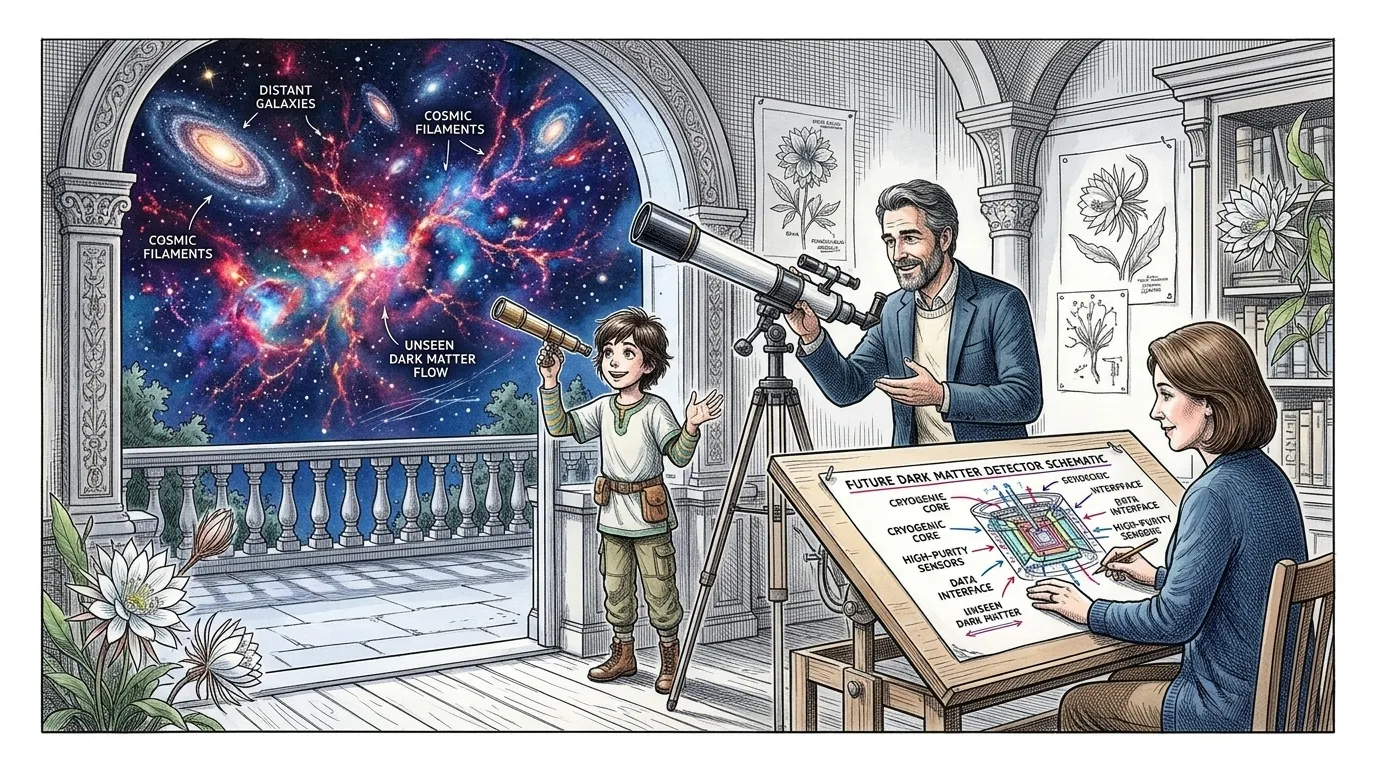
The universe holds countless mysteries, waiting to be uncovered. Vera Rubin showed us that even the most fundamental assumptions can be challenged. And who knows what secrets future scientists will reveal?
Fact: The search for dark matter continues, promising new discoveries.
About this story
- Location: Global
- Audience: kids (ages 6–12)
Questions and answers
Read Wonder Science on your phone
Wonder Science is available on Android. Get Wonder Science on Google Play.