Wernher von Braun
Wernher von Braun — an illustrated science story, set in Global. 10 illustrated pages, free to read on Wonder Science.
Page 1
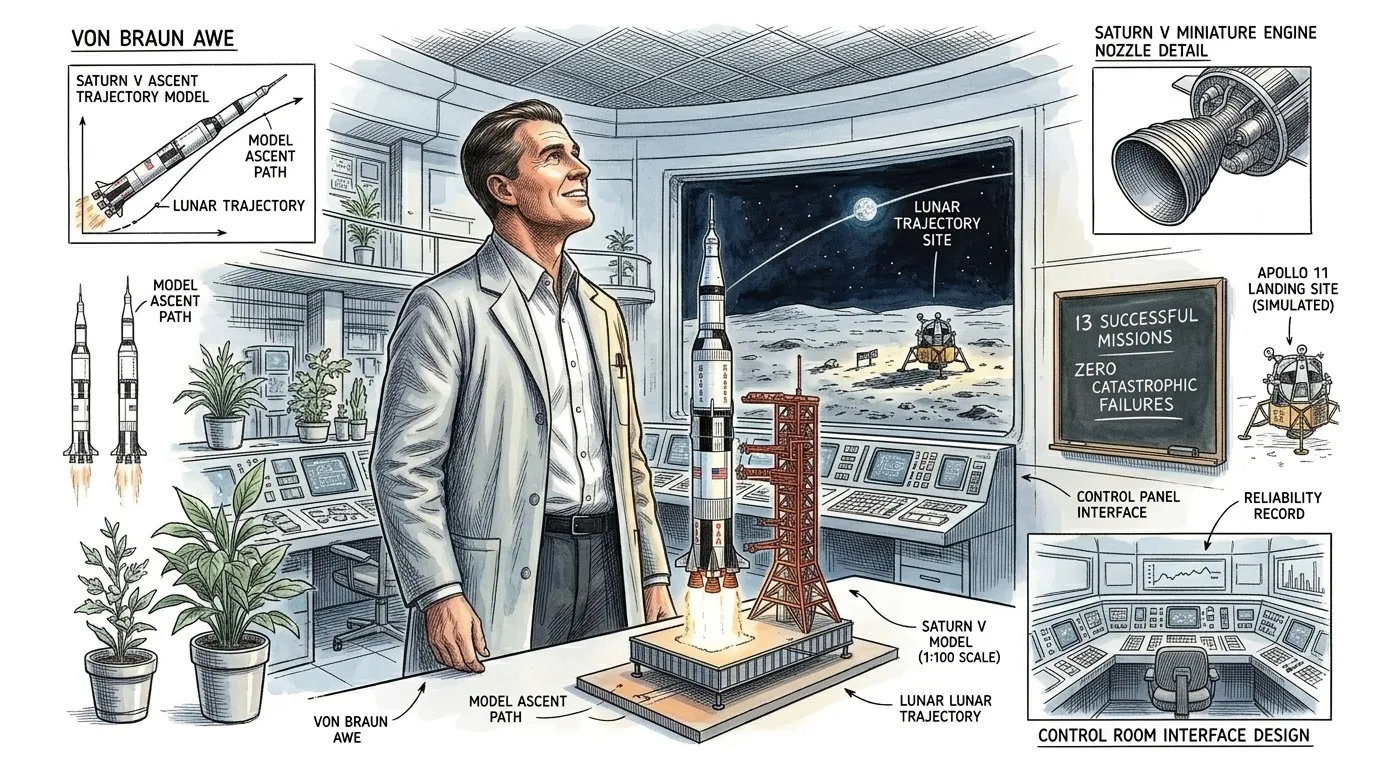
At the dawn of the Space Age, a towering figure stood at the intersection of ambition and engineering: Wernher von Braun. His visionary drive, honed over decades, culminated in the most powerful machine ever built, the Saturn V rocket, designed to propel humanity beyond Earth's confines. This monumental achievement, born from the collective effort of thousands, would ultimately rewrite our understanding of what was possible in the vastness of space. On a sweltering July morning in 1969, at Florida's Kennedy Space Center, the world watched as his creation roared to life, forever linking his name to humanity's greatest voyages.
Page 2
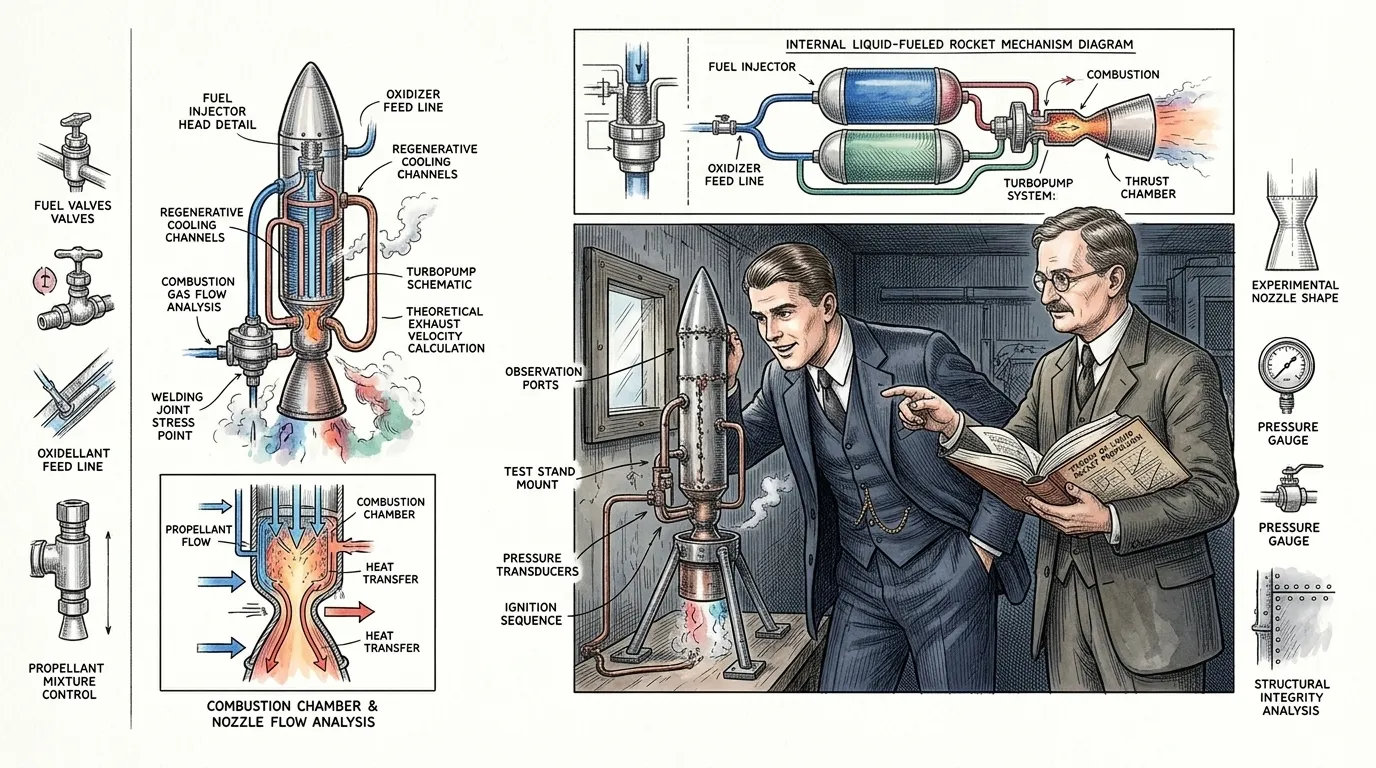
Before the lunar dream, von Braun's journey began with a fervent passion for rocketry in 1920s Germany, ignited by the scientific literature of pioneers like Hermann Oberth. His early experiments, though crude, demonstrated the potential of liquid-fueled rockets, a concept far removed from the fireworks of his youth. This burgeoning expertise, however, soon attracted the attention of military strategists, diverting his focus from space exploration towards the development of advanced ballistic missiles, a path that would inextricably link his early work with conflict.
Page 3
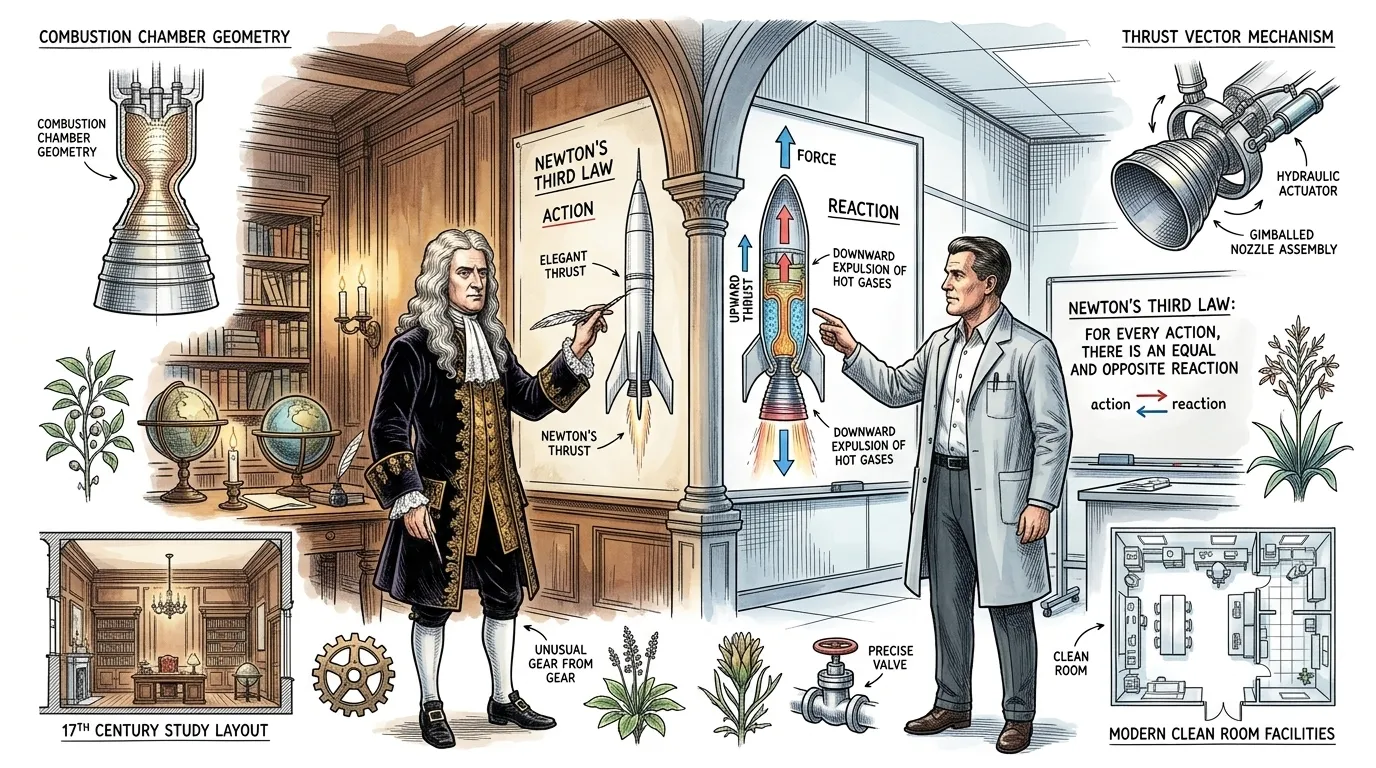
The audacious concept of rocketry, from early designs to the V-2 and beyond, fundamentally relies on the universal laws of motion first articulated by Isaac Newton in the late 17th century. Specifically, Newton's Third Law, which posits that for every action, there is an equal and opposite reaction, explains how a rocket generates thrust. Expelling hot gases downward creates an upward force, propelling the vehicle against gravity and towards the cosmos, a principle von Braun and his team mastered with unprecedented precision to achieve supersonic flight.
Page 4
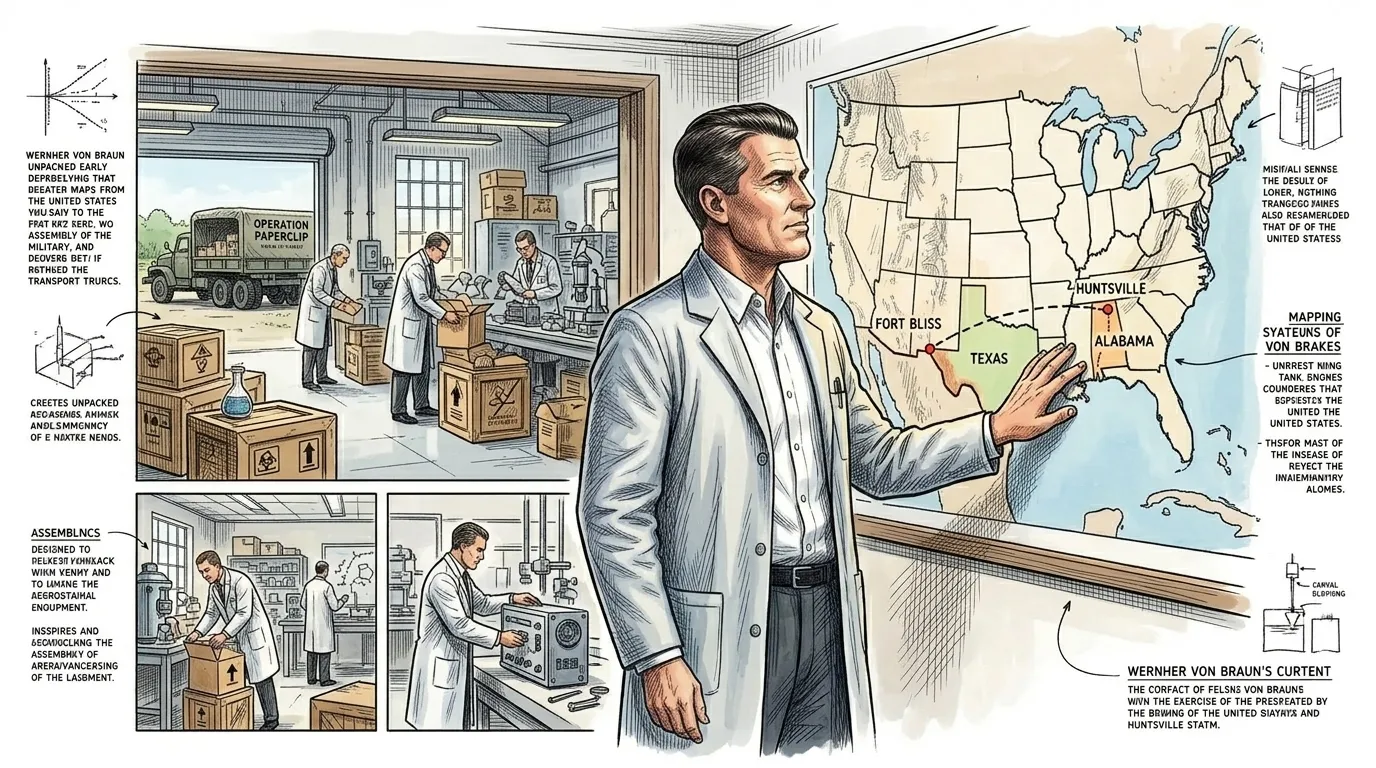
As World War II drew to a close, von Braun and over a hundred of his top rocket scientists surrendered to American forces. Under a clandestine initiative known as Operation Paperclip, these German experts were relocated to the United States, their controversial past weighed against their invaluable technical knowledge. Their initial base at Fort Bliss, Texas, eventually gave way to a permanent home in Huntsville, Alabama, which transformed into the crucible of American rocketry and the birthplace of the nation's burgeoning space program, leveraging their expertise for a new geopolitical era.
Page 5
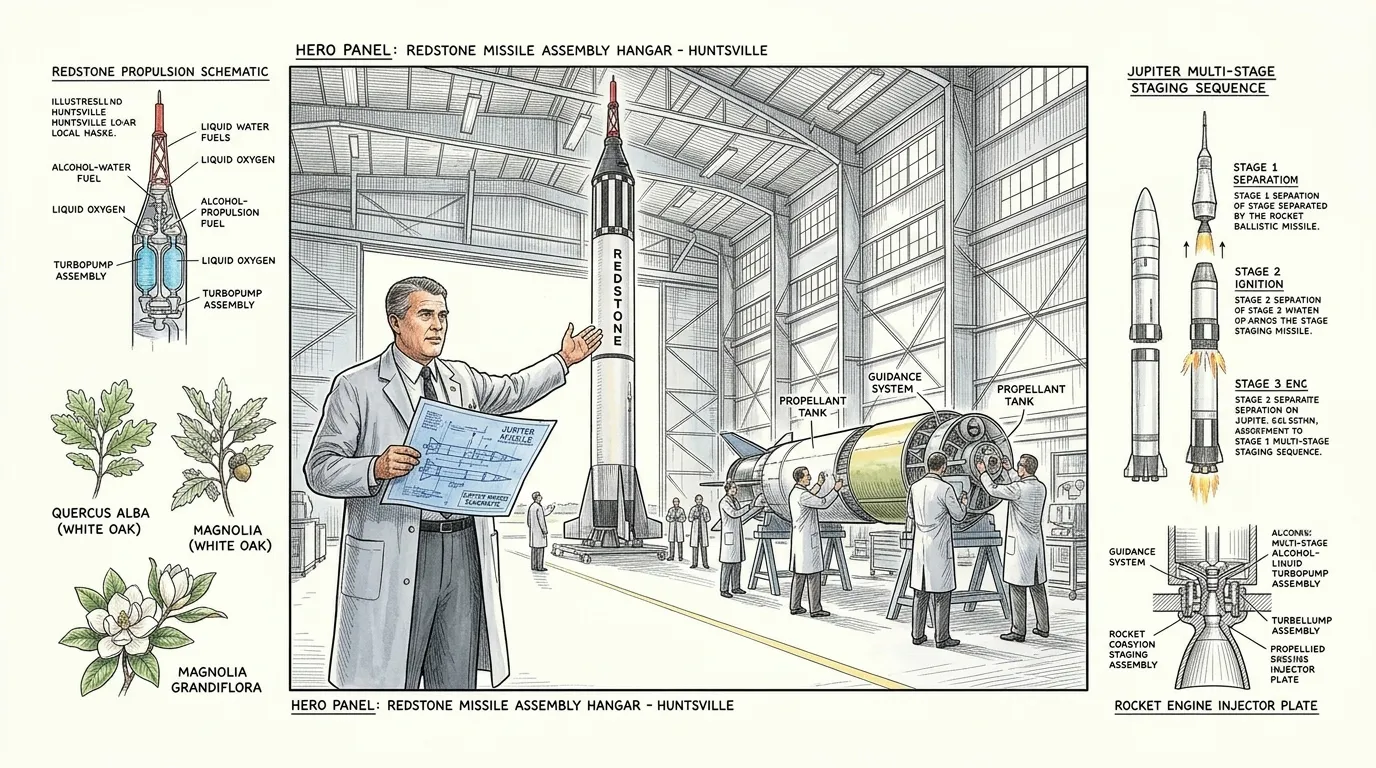
In Huntsville, von Braun's team transitioned from developing weapons for wartime to building the foundational rockets for the United States Army. Their initial triumph was the Redstone ballistic missile, a single-stage, liquid-fueled design that became the backbone of America's early missile program. This success quickly led to the development of the more powerful Jupiter missile, an intermediate-range ballistic missile that demonstrated increasing sophistication. These projects were not merely military advancements; they were essential stepping stones, forging the expertise and infrastructure critical for future space missions.
Page 6
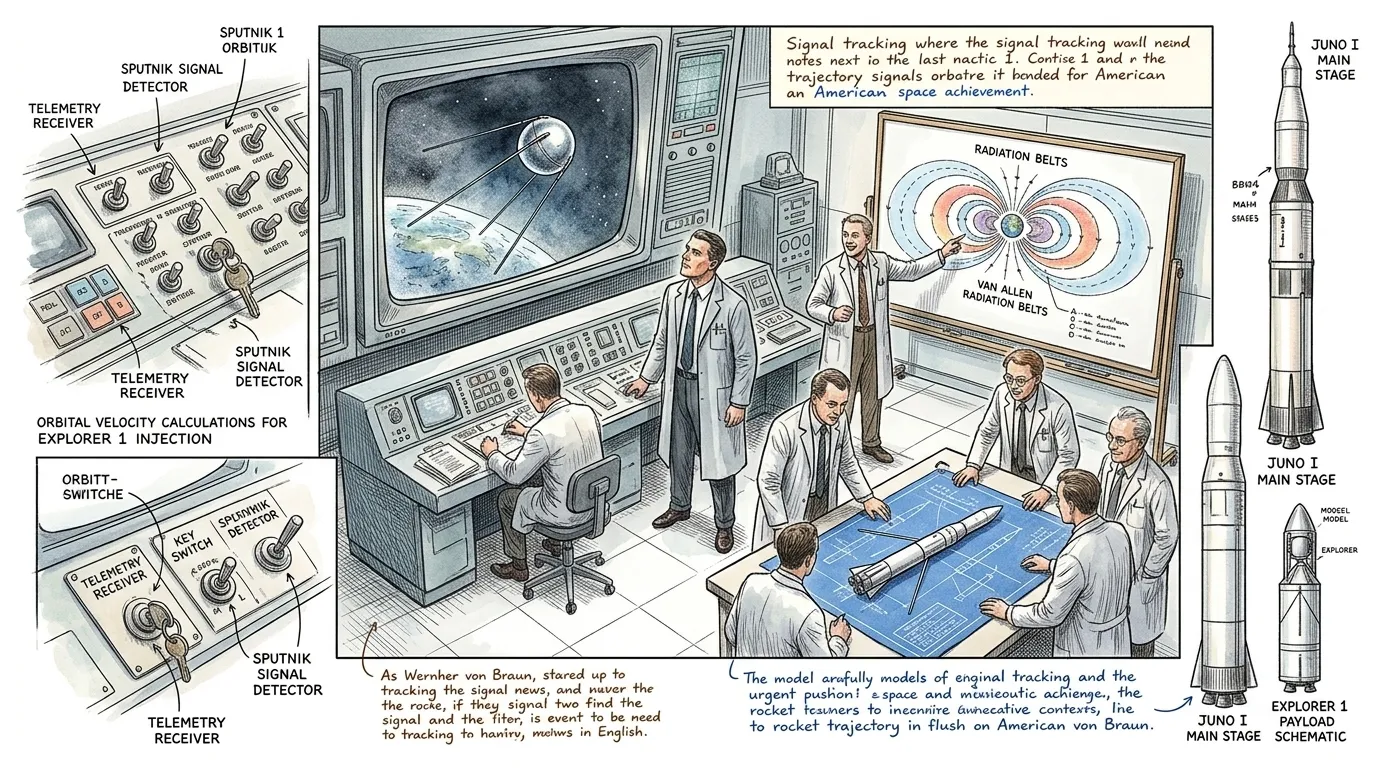
The Soviet Union's launch of Sputnik in October 1957 sent shockwaves across the United States, igniting the intense rivalry known as the Space Race. In response, Wernher von Braun and his team at the Army Ballistic Missile Agency (ABMA) worked feverishly. Just a few months later, on January 31, 1958, their modified Jupiter-C rocket, named Juno I, successfully launched Explorer 1, America's first artificial satellite. This pivotal moment not only boosted American morale but also initiated crucial scientific discoveries, most notably the detection of the Van Allen radiation belts.
Page 7
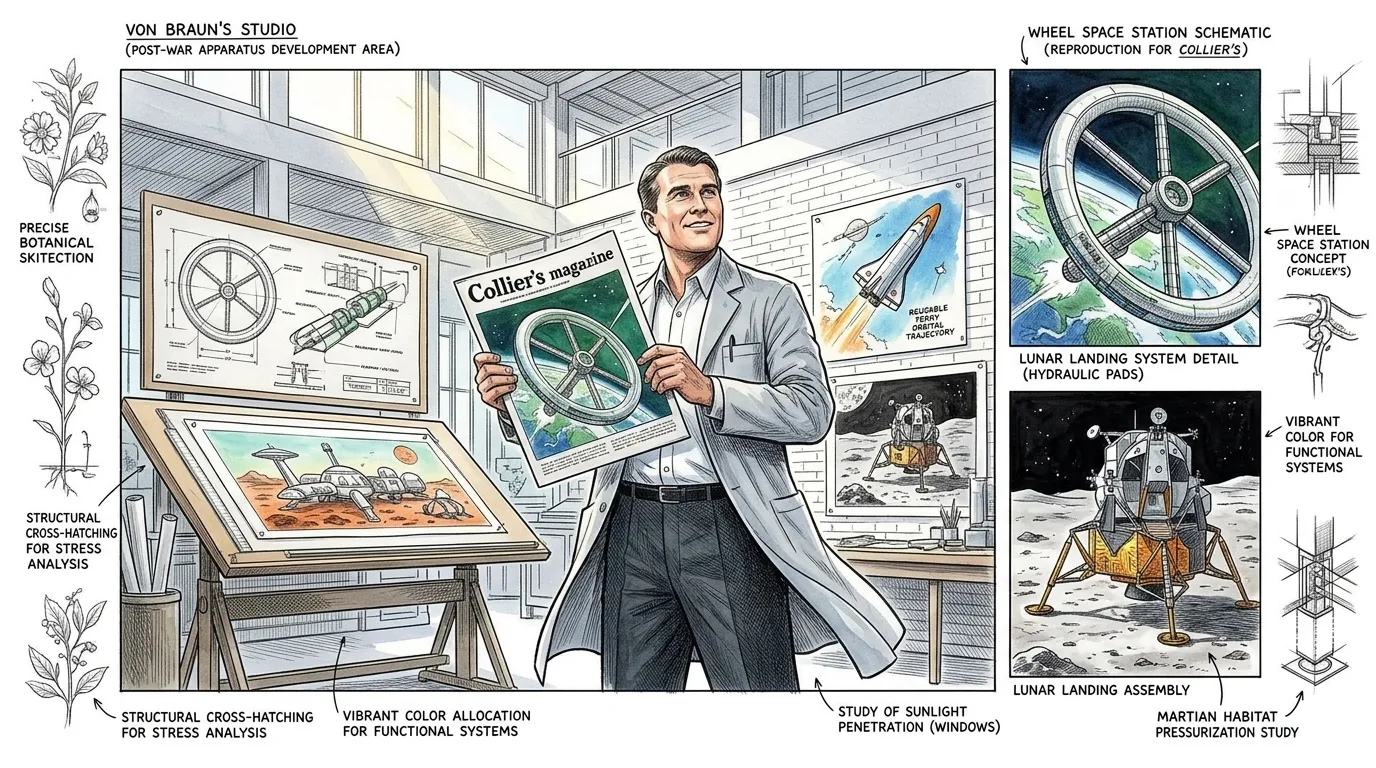
Even as his team developed military missiles and early satellites, von Braun never lost sight of his ultimate goal: human space exploration. Throughout the 1950s, he tirelessly championed ambitious concepts for permanent space stations, reusable ferries, and lunar expeditions. His detailed illustrations and compelling articles in publications like Collier's magazine captured the public's imagination, transforming abstract engineering into tangible dreams of orbital outposts and journeys to Mars, laying intellectual groundwork for future NASA endeavors and inspiring generations to come.
Page 8
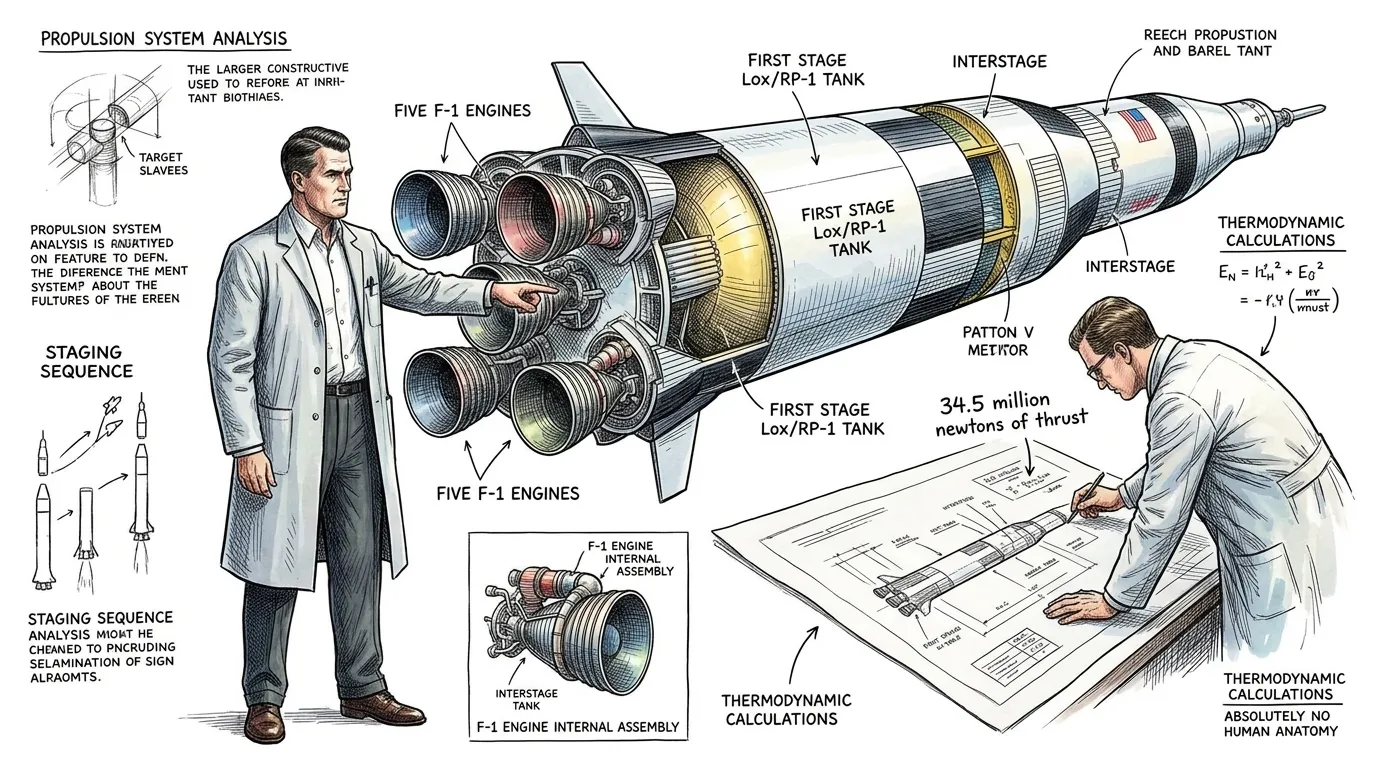
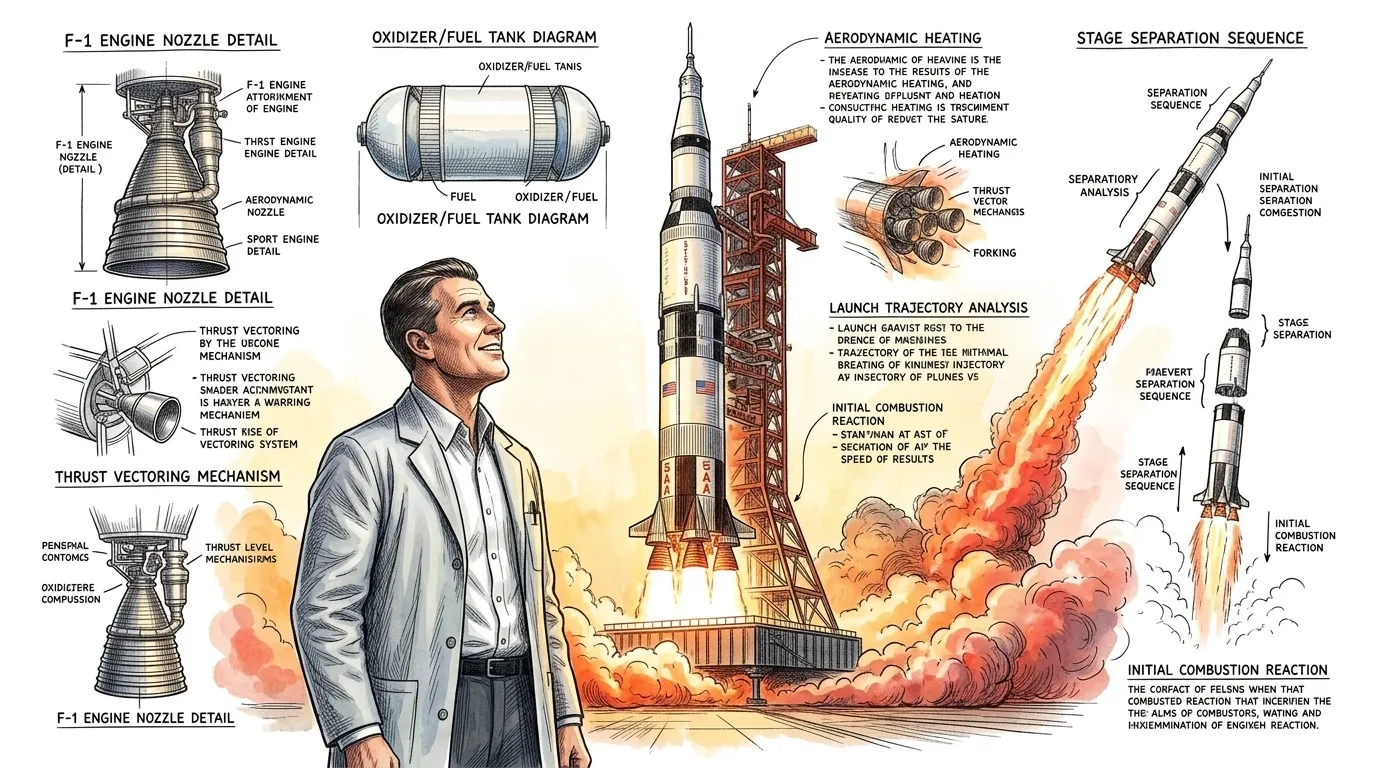
With the creation of NASA in 1958 and President Kennedy's bold challenge to reach the Moon, von Braun's team was tasked with an unprecedented engineering feat: designing a rocket capable of carrying humans to the lunar surface. The result was the Saturn V, a multi-stage, heavy-lift launch vehicle that stood 111 meters tall. Its first stage alone, powered by five F-1 engines, generated 34.5 million newtons of thrust – an incredible display of power required to lift its massive payload and escape Earth's formidable gravitational pull, a testament to meticulous design and relentless testing.
Page 9
The Saturn V rocket, under von Braun's leadership, became the central pillar of the Apollo program. From the initial test flights to the Apollo 11 mission that achieved humanity's first lunar landing in July 1969, its reliability and sheer power were unmatched. It successfully launched 13 missions, never experiencing a single catastrophic failure, a remarkable safety record for such a complex vehicle. Each launch represented a meticulous ballet of engineering and calculation, propelling astronauts toward a dream that had once seemed utterly unattainable, fundamentally altering our species' relationship with the cosmos.
Page 10
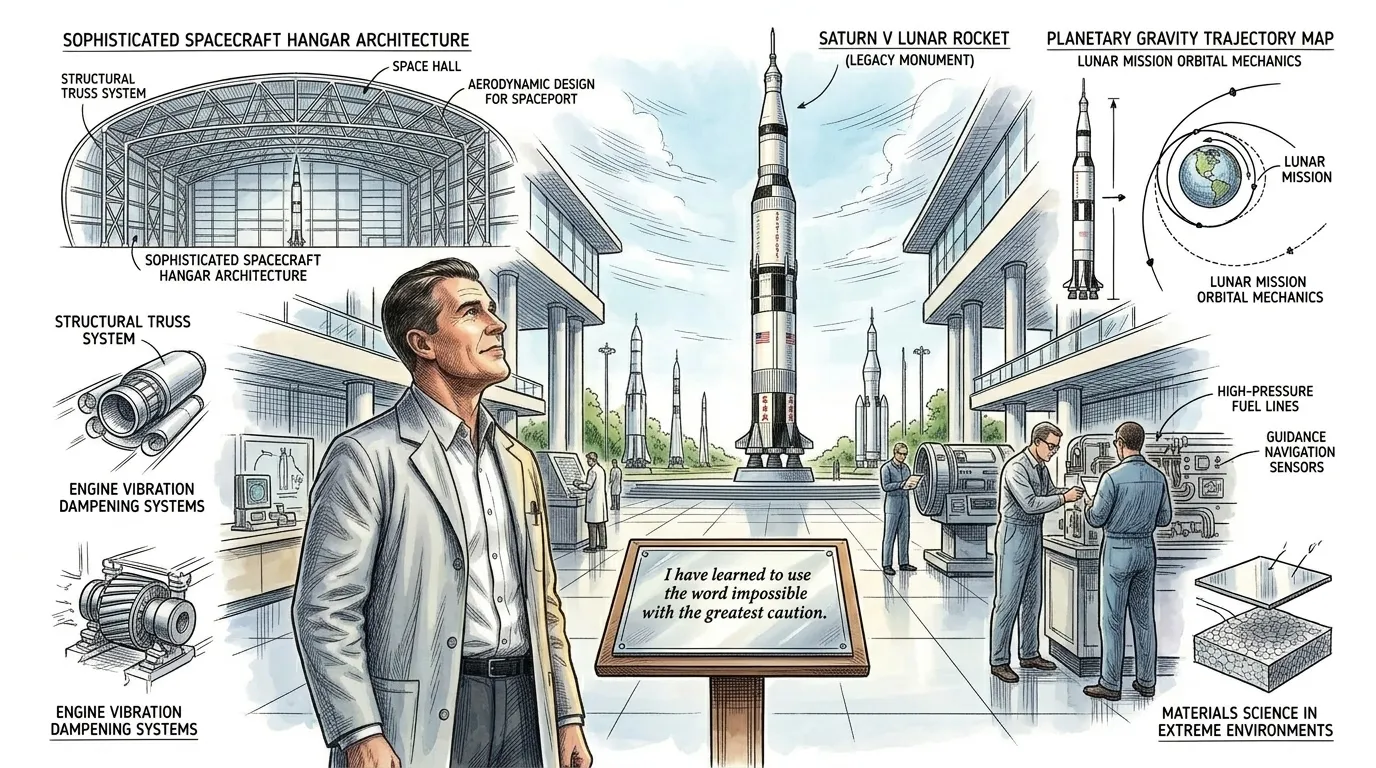
Wernher von Braun's legacy is undeniably complex, marked by both his pivotal contributions to rocketry and the moral ambiguities of his wartime past. He remained a tireless advocate for space exploration, playing a crucial role in establishing NASA's Marshall Space Flight Center and inspiring a generation. His work on the Saturn V laid the groundwork for all subsequent heavy-lift launch vehicles and cemented the United States' leadership in space for decades. As von Braun himself once reflected, 'I have learned to use the word impossible with the greatest caution.' His life embodies the immense power of scientific ambition, perpetually pushing the boundaries of human endeavor while underscoring the profound ethical considerations inherent in groundbreaking technology.
About this story
- Location: Global
- Audience: general readers
Questions and answers
Read Wonder Science on your phone
Wonder Science is available on Android. Get Wonder Science on Google Play.