Why Apples Turn Brown
Why Apples Turn Brown — an illustrated science story, set in France. 10 illustrated pages, free to read on Wonder Science.
Page 1
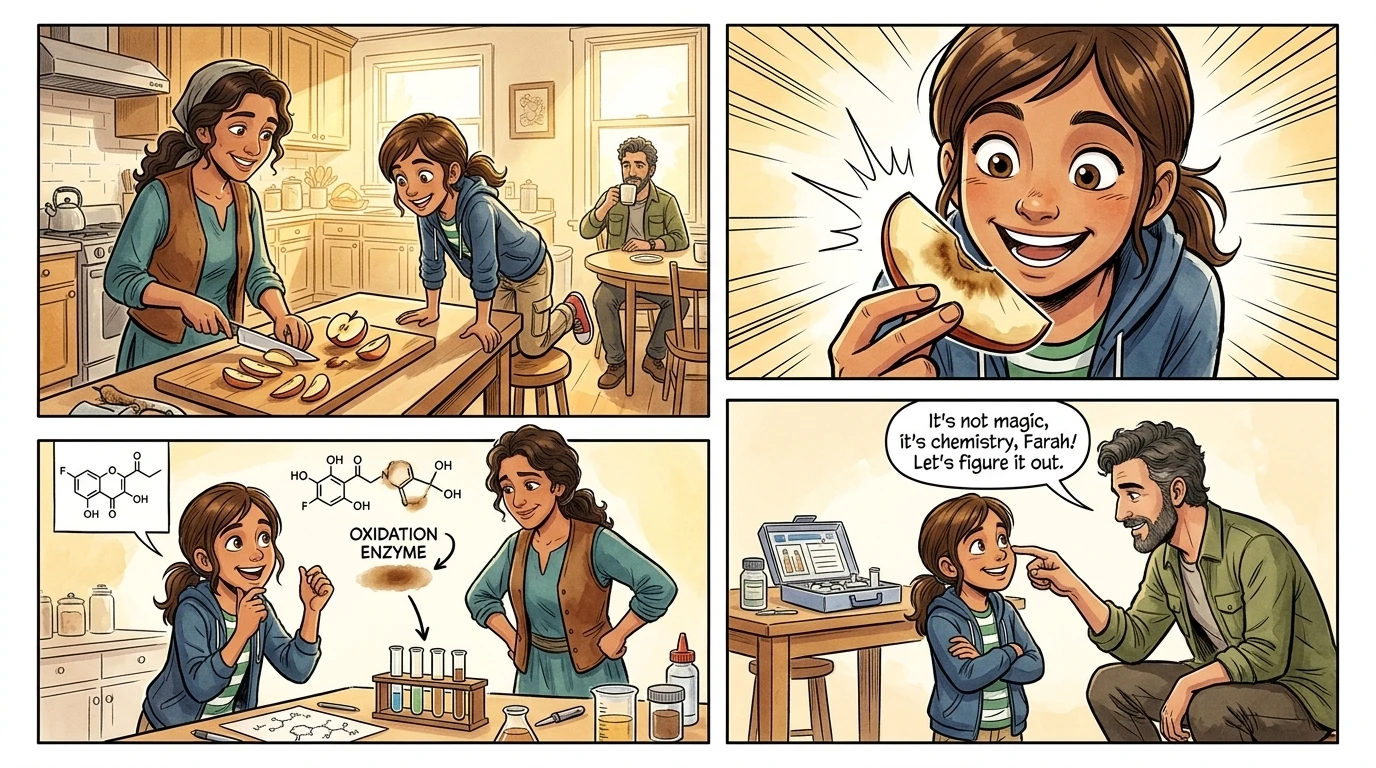
In their sunny Noe Valley kitchen, Farah's mother sighed, looking at a cutting board of freshly sliced apples. "Oh, fiddlesticks! I just cut these for the pie and they're already turning brown." Farah, an energetic 11-year-old, hopped off her stool and peered at the discolored fruit with wide, curious eyes. "Woah, that was fast! Why do they do that, Mom? It's like they get a weird, rusty tan."
Page 2
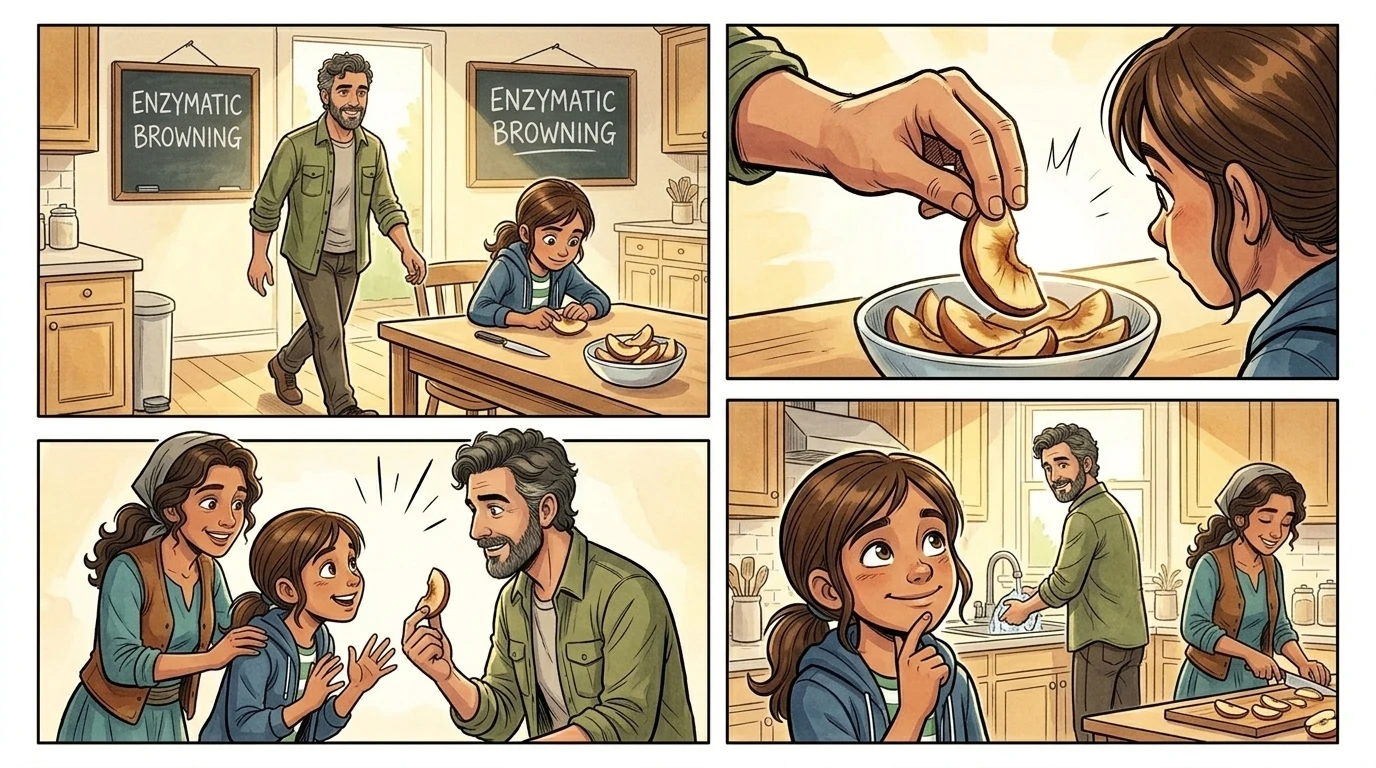
Farah's father walked in, smiling. "It looks like you've discovered a chemical reaction in the wild! It's called enzymatic browning." He picked up a slice, turning it over. "When you cut the apple, you break its cells, and special little proteins called enzymes get exposed to oxygen in the air." Farah tilted her head. "So the apple isn't getting rotten, it's... reacting?"
Page 3
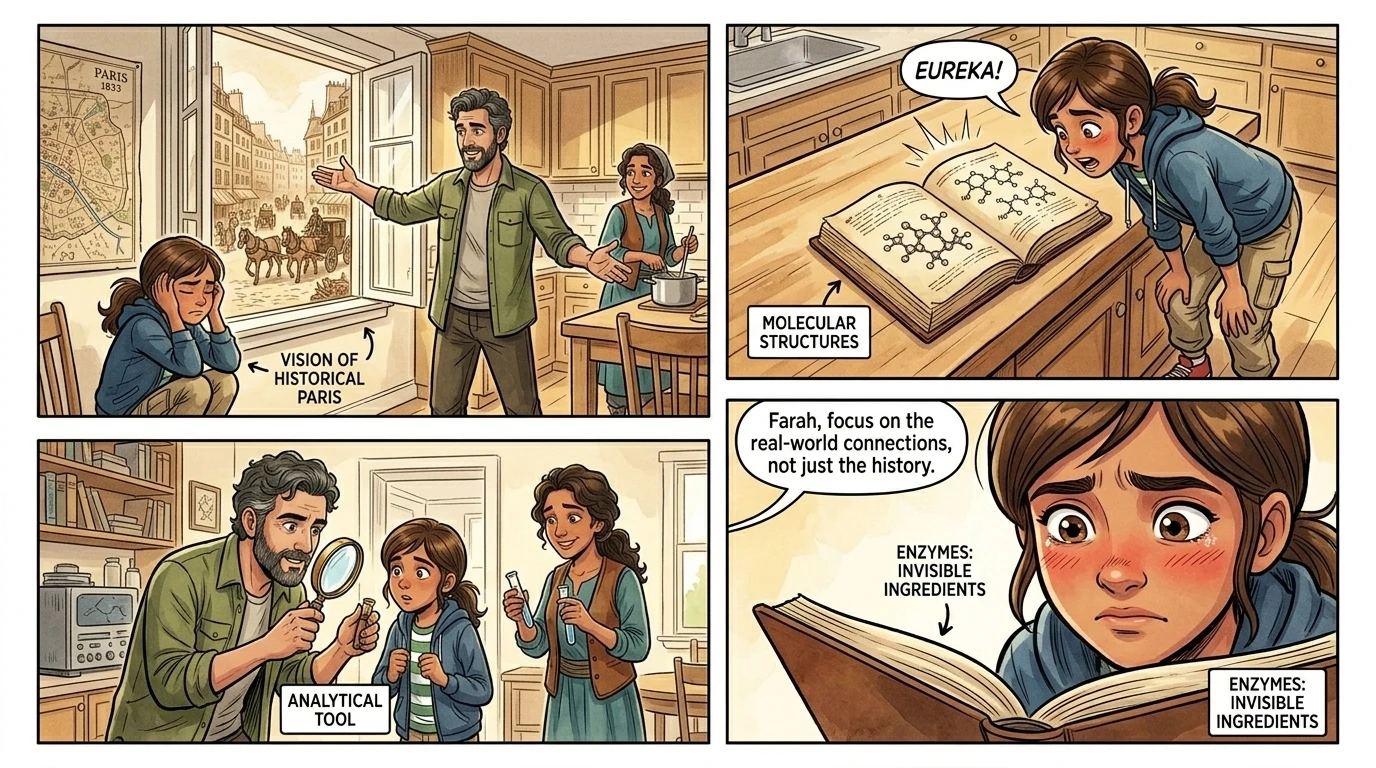
"Exactly! To figure out what those enzymes were, we have to go back in time," her father said, his voice dropping into a storyteller's tone. "Imagine Paris, France, in the 1830s. The city was a buzzing hub of science, with chemists in little laboratories working day and night." Farah closed her eyes, picturing the scene. "They were trying to uncover the invisible ingredients that made life work."
Page 4
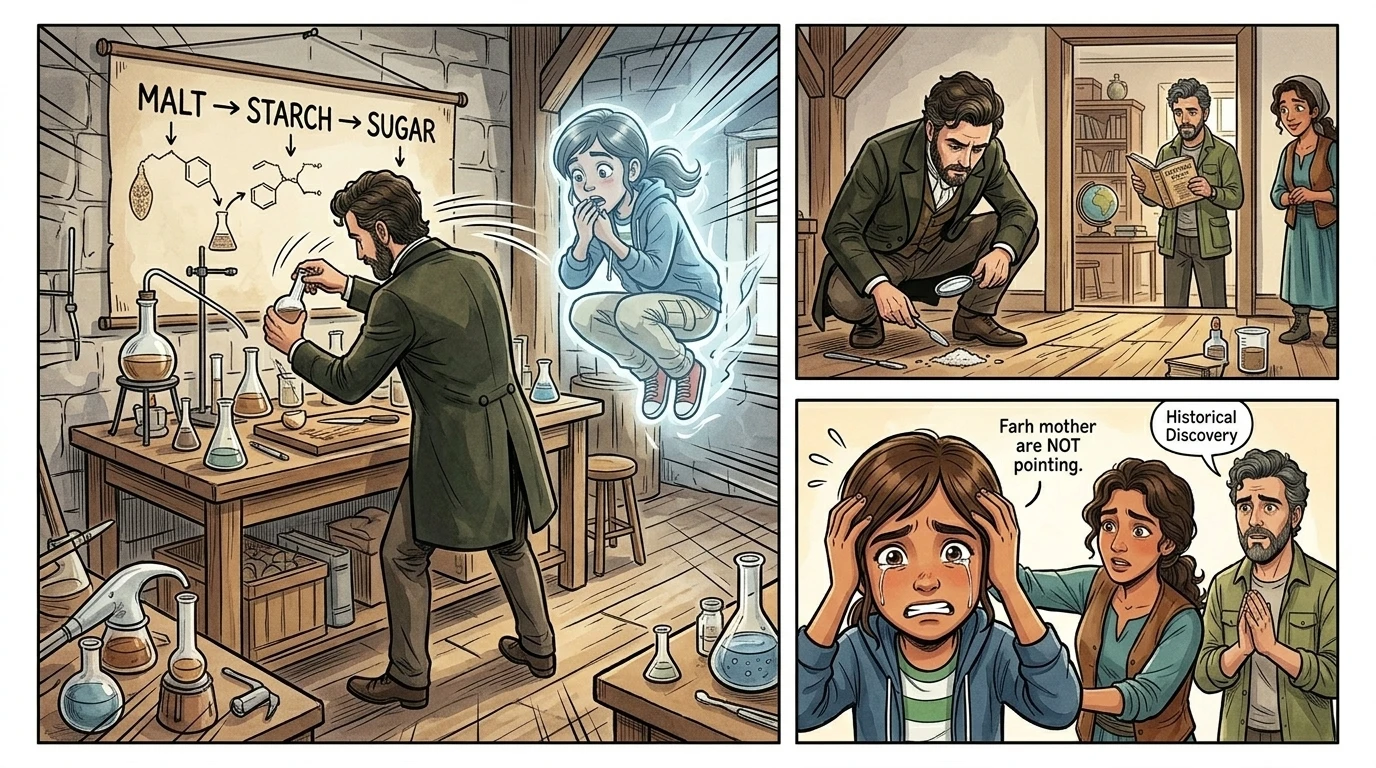
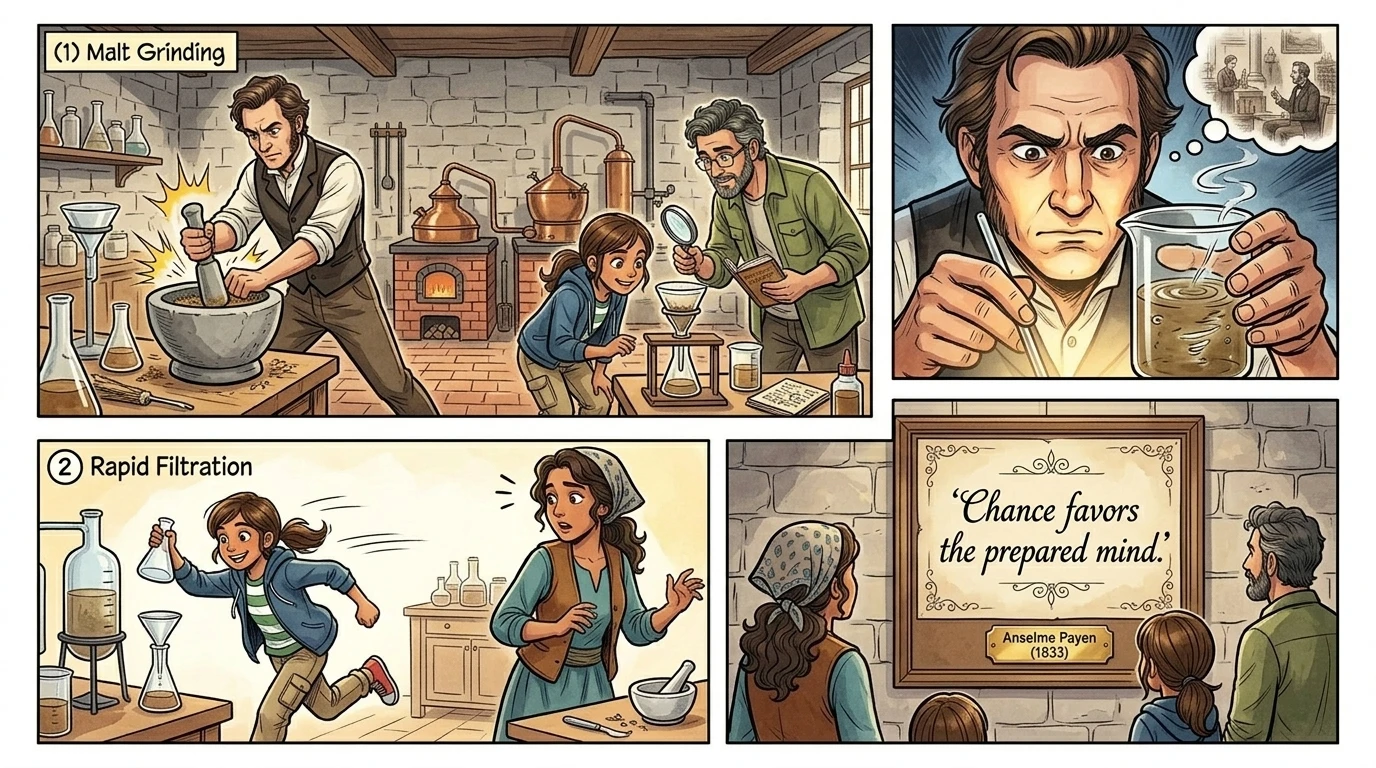
"One of those chemists was a man named Anselme Payen," her father continued. "He was fascinated by everyday things, like why malt could turn starch into sugar to make beer." Farah, now imagining herself in his lab, watched as the scientist worked. "He was determined to find the secret substance responsible for this amazing transformation."
Page 5
"Payen worked tirelessly, trying experiment after experiment," Farah's father narrated. "As the great scientist Louis Pasteur, who came after him, famously said, 'Chance favors the prepared mind.' Payen was definitely prepared." He meticulously ground up malt with water, filtered it, and stared at the resulting liquid, looking for a clue.
Page 6
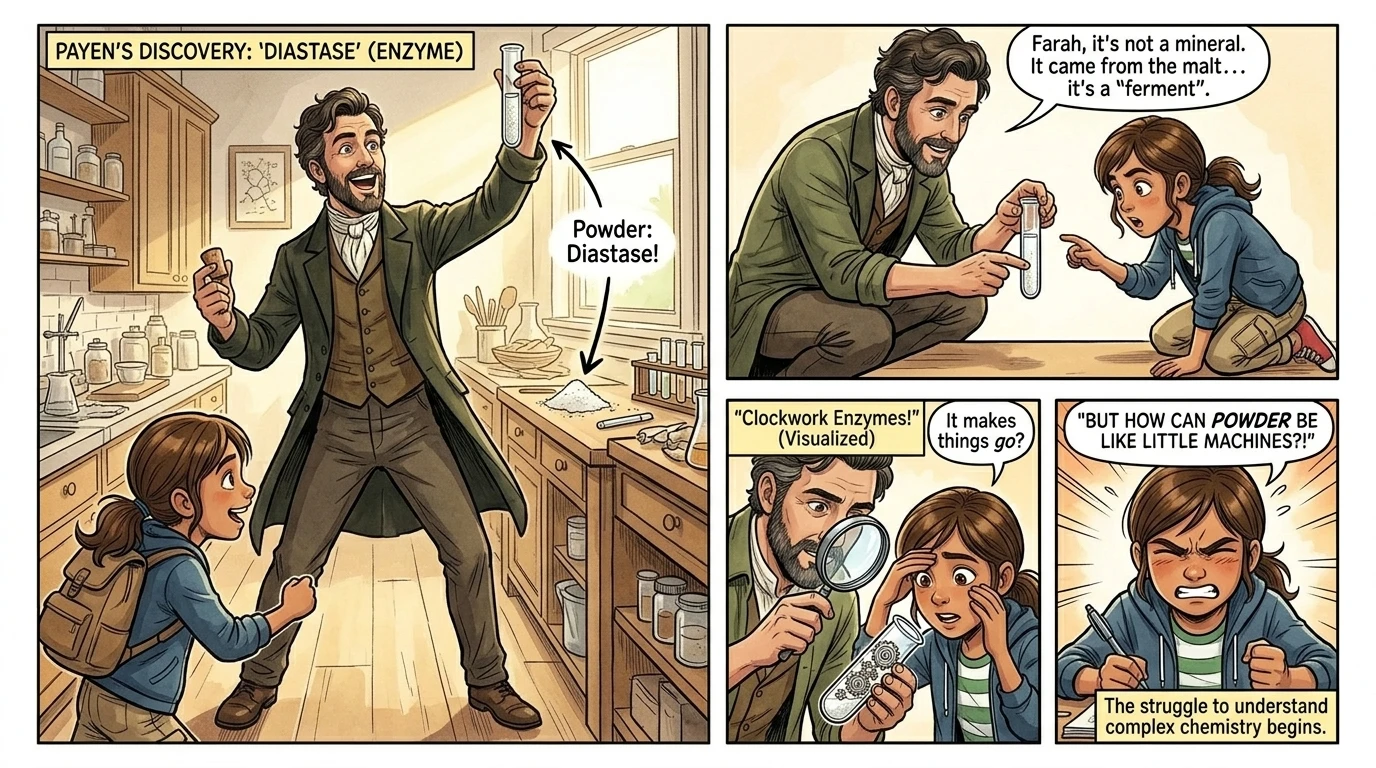
"Then, in 1833, he added alcohol to his malt solution and a strange white powder suddenly appeared!" Farah's father explained. "He had done it! He had isolated the mystery substance and named it 'diastase'—the very first enzyme ever discovered." Farah imagined the tiny enzyme machines. "So the browning stuff in my apple is just a different kind of enzyme machine?"
Page 7
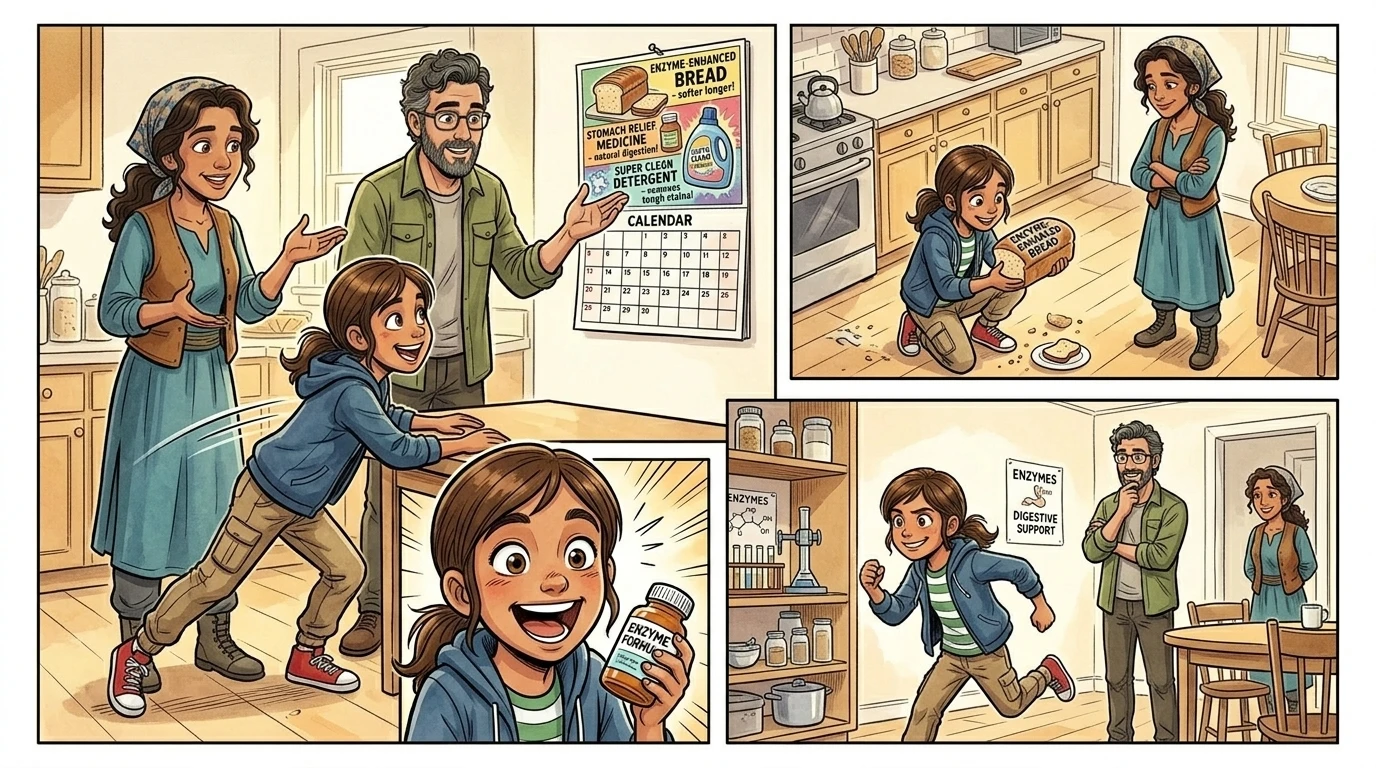
"You got it! Discovering enzymes changed the world," said her mother, joining the story. "We use them to make better bread, create life-saving medicines, and even develop detergents that clean tough stains." Her father added, "Some chemical reactions caused by enzymes are incredibly fast, happening in less than a second!"
Page 8
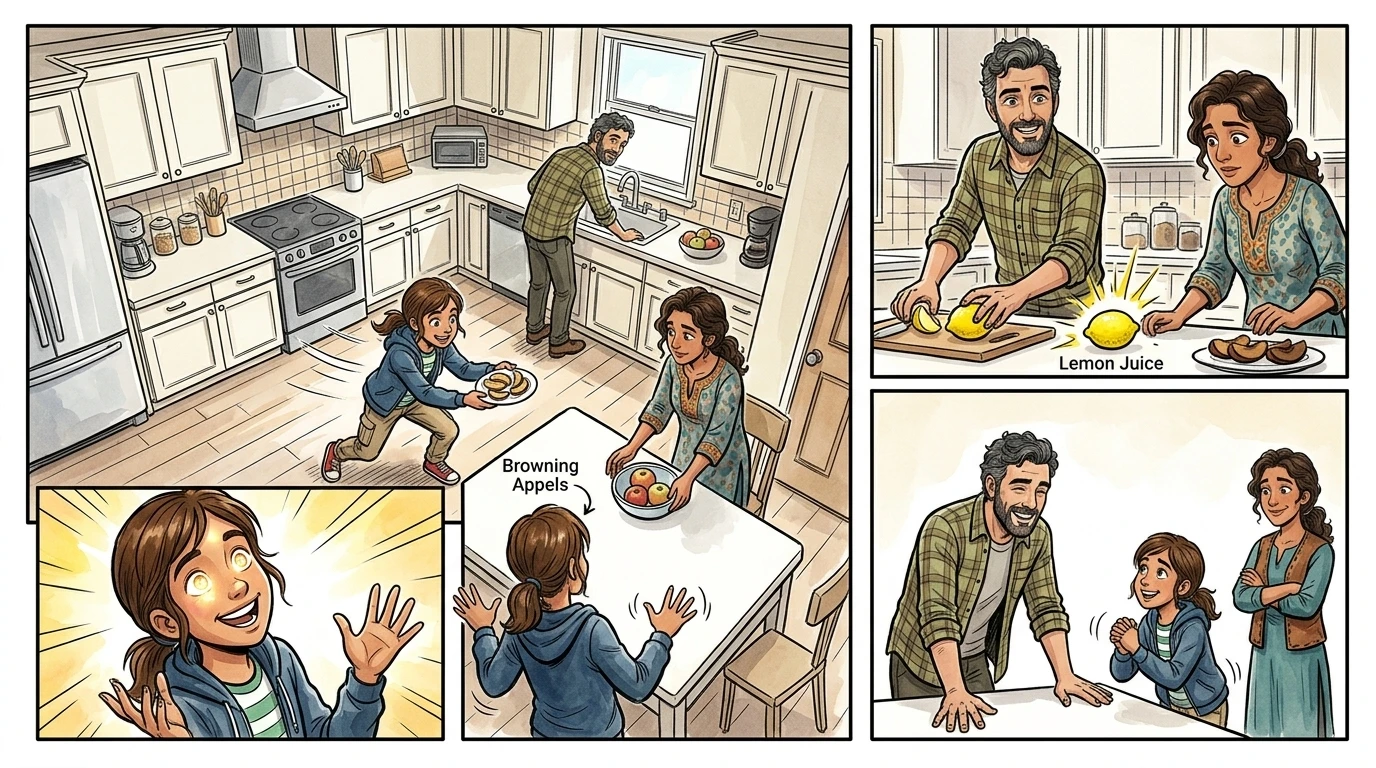
Suddenly, Farah's eyes lit up and she spun around. "Wait a second! Dad, back on page two, you said something else... something about acids!" Her father grinned. "I did. What do you think will happen if we add a weak acid, like lemon juice?" Her mother looked from the browning apples to a lemon on the counter. "An experiment is in order!"
Page 9
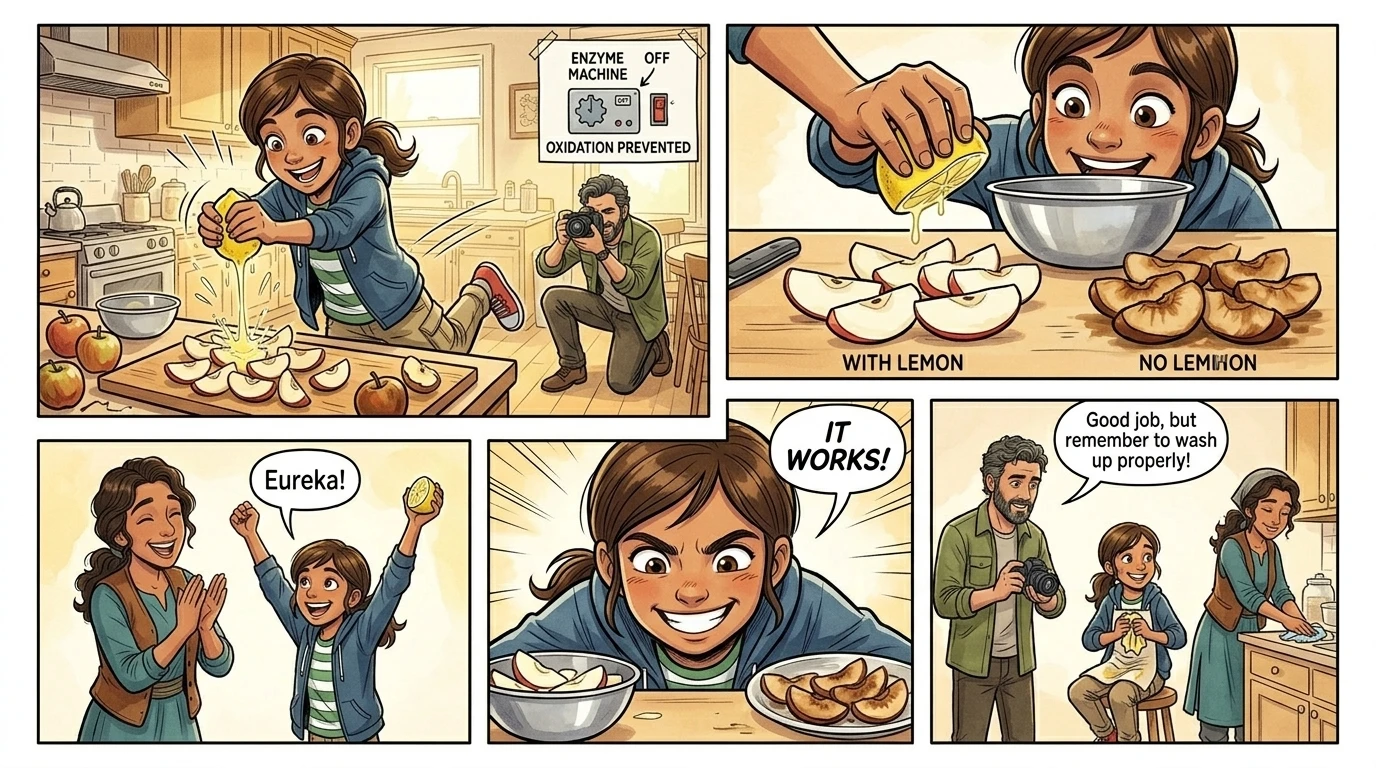
Farah squeezed lemon juice over a fresh batch of apple slices, leaving a few untreated as a control group. They watched as the plain slices slowly browned, while the ones coated in juice stayed perfectly white and crisp. "It worked!" Farah cheered. "The acid deactivated the enzyme machines!" Her mother clapped. "My apple pie is saved by science!"
Page 10
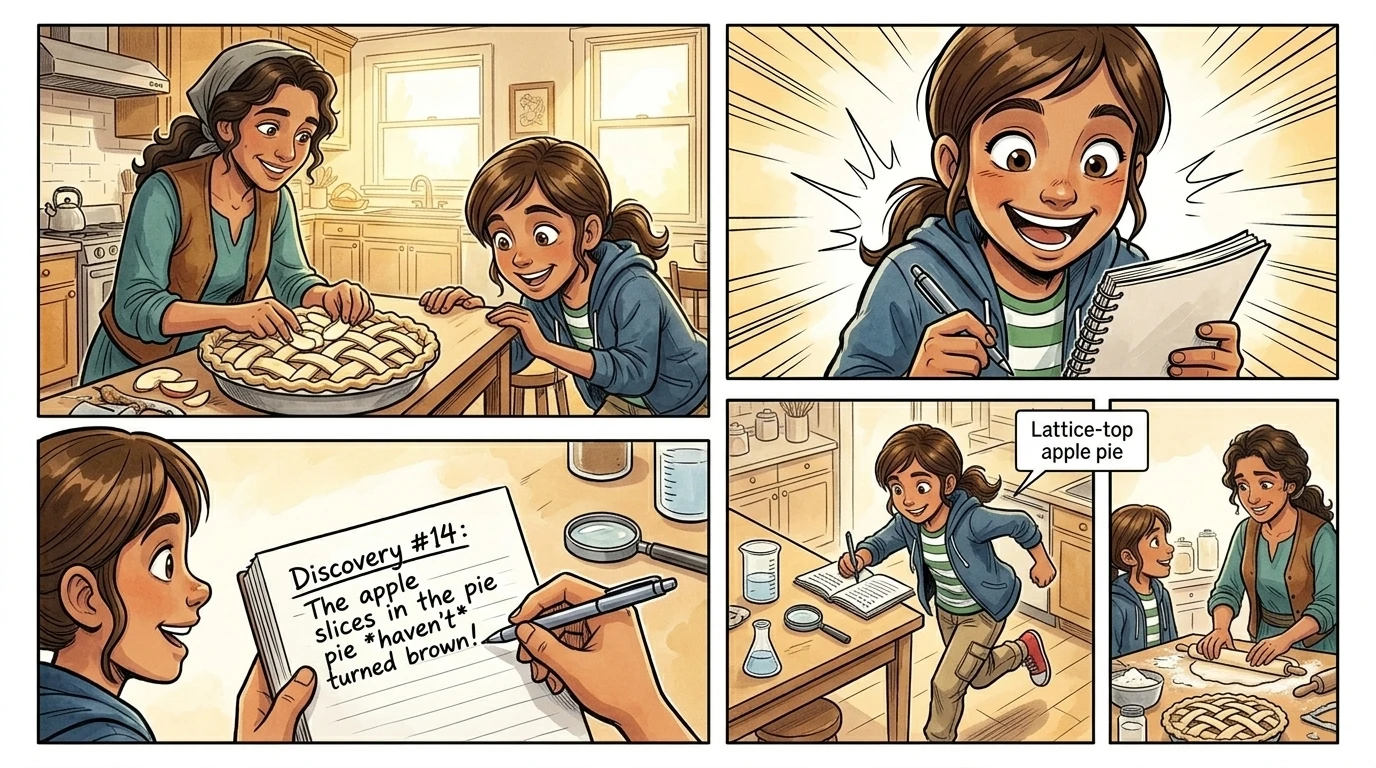
As her mother arranged the perfect apple slices in the pie crust, Farah grabbed her notebook. She wrote, "Discovery #14: Apples turn brown because of enzyme machines that react with air, but acid can turn them off!" Looking at the beautiful lattice on the pie, Farah asked a new question. "So what makes the crust turn golden and taste so yummy in the oven? Is that a different kind of reaction?"
About this story
- Location: France
- Audience: kids (ages 6–12)
Questions and answers
Read Wonder Science on your phone
Wonder Science is available on Android. Get Wonder Science on Google Play.