Why Iron Rusts
Why Iron Rusts — an illustrated science story, set in France. 10 illustrated pages, free to read on Wonder Science.
Page 1
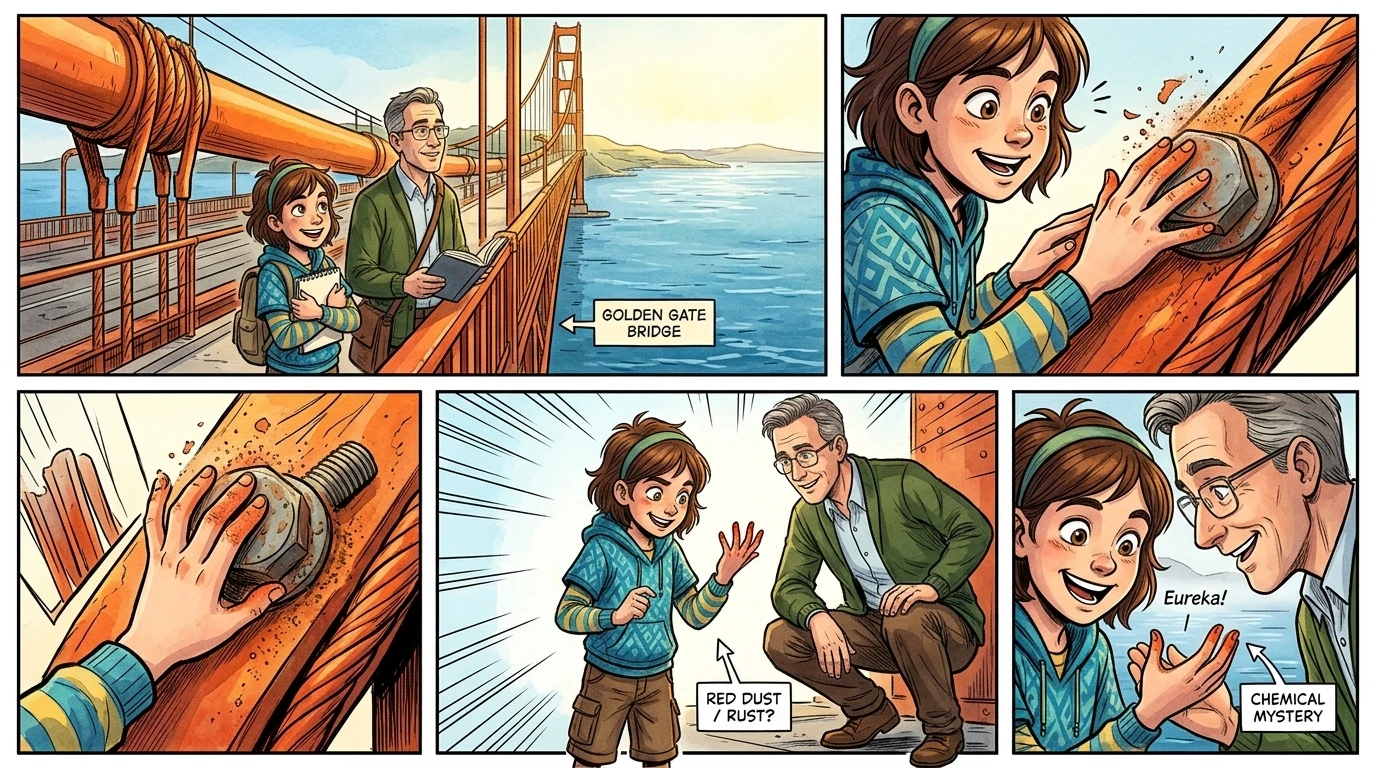
Sara and her father strolled along the walkway of the Golden Gate Bridge, the vast blue bay sparkling below. A thick, cool fog rolled in, dampening the huge orange cables. Sara ran her hand over a massive steel bolt and felt a rough, flaky patch. "Dad, why is this part of the bridge all crumbly and orange?" she asked, pulling her hand back to show him the reddish dust on her fingertips.
Page 2
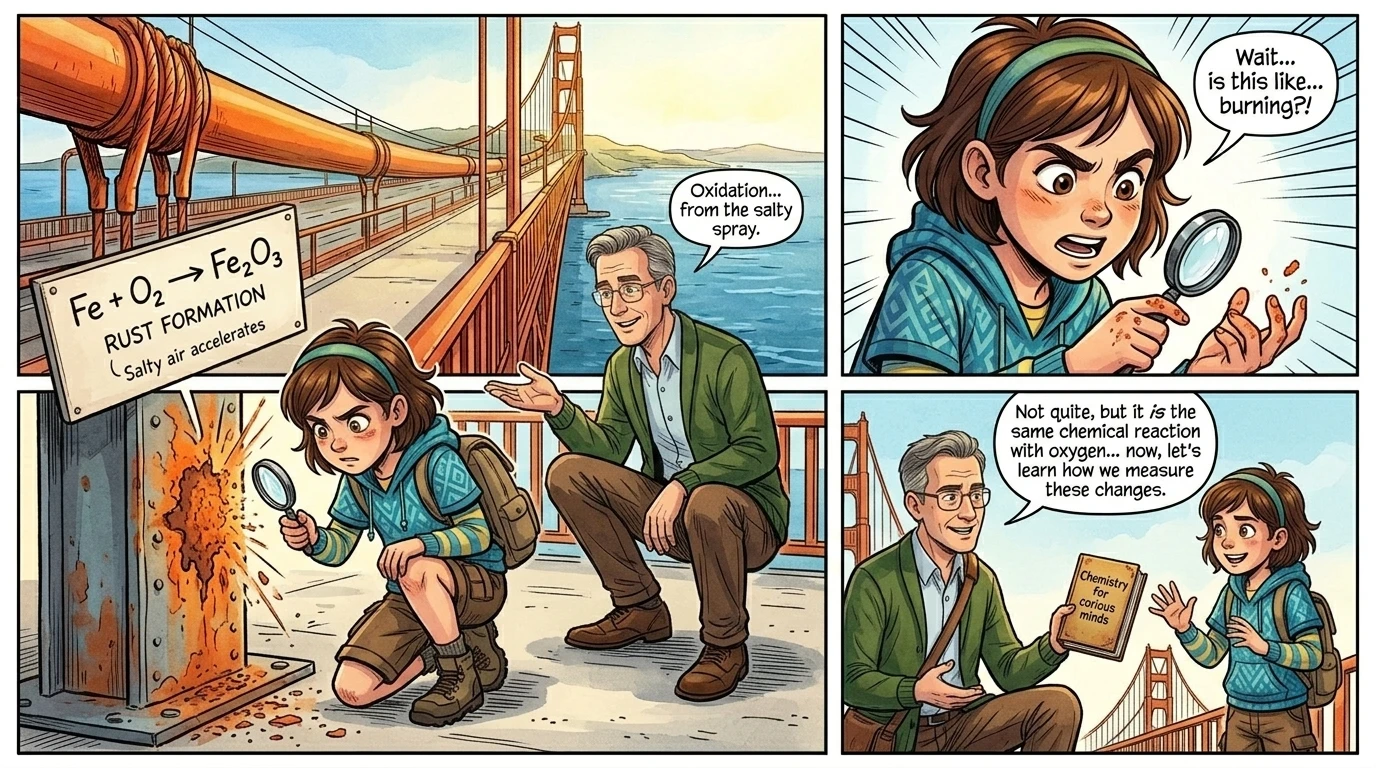
"That's a fantastic observation, sweetie! That's rust," her father said, kneeling beside her. "It's a chemical reaction called oxidation, which is a fancy way of saying the iron in the steel is teaming up with oxygen from the air." He pointed out towards the choppy water. "And the salty spray from the ocean makes it happen much, much faster."
Page 3
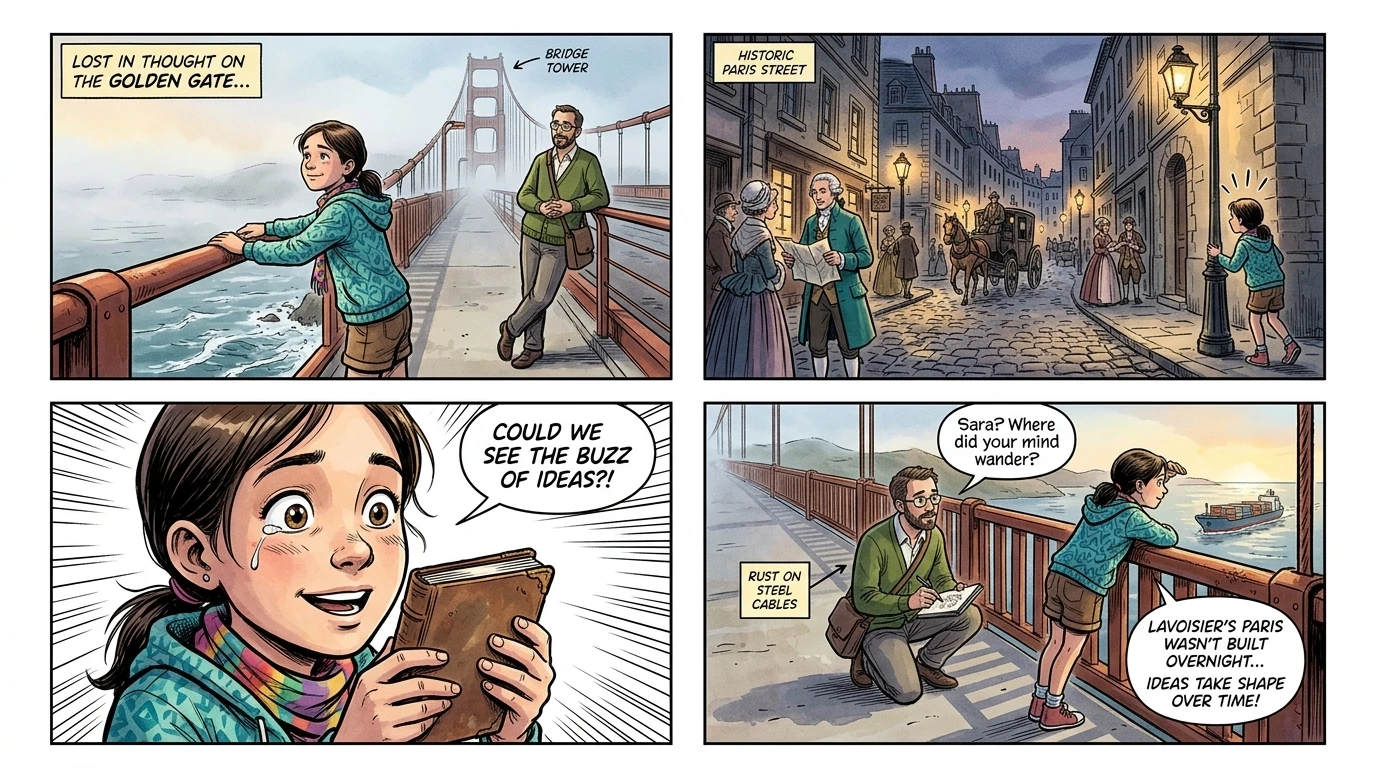
Sara imagined what it was like long ago, before anyone knew what was happening. Her mind drifted back to a time of flickering gas lamps and horse-drawn carriages on cobblestone streets. It was Paris, France, in the late 1700s, a city buzzing with new ideas, where scientists were just beginning to unlock the secrets of the very air they breathed.
Page 4
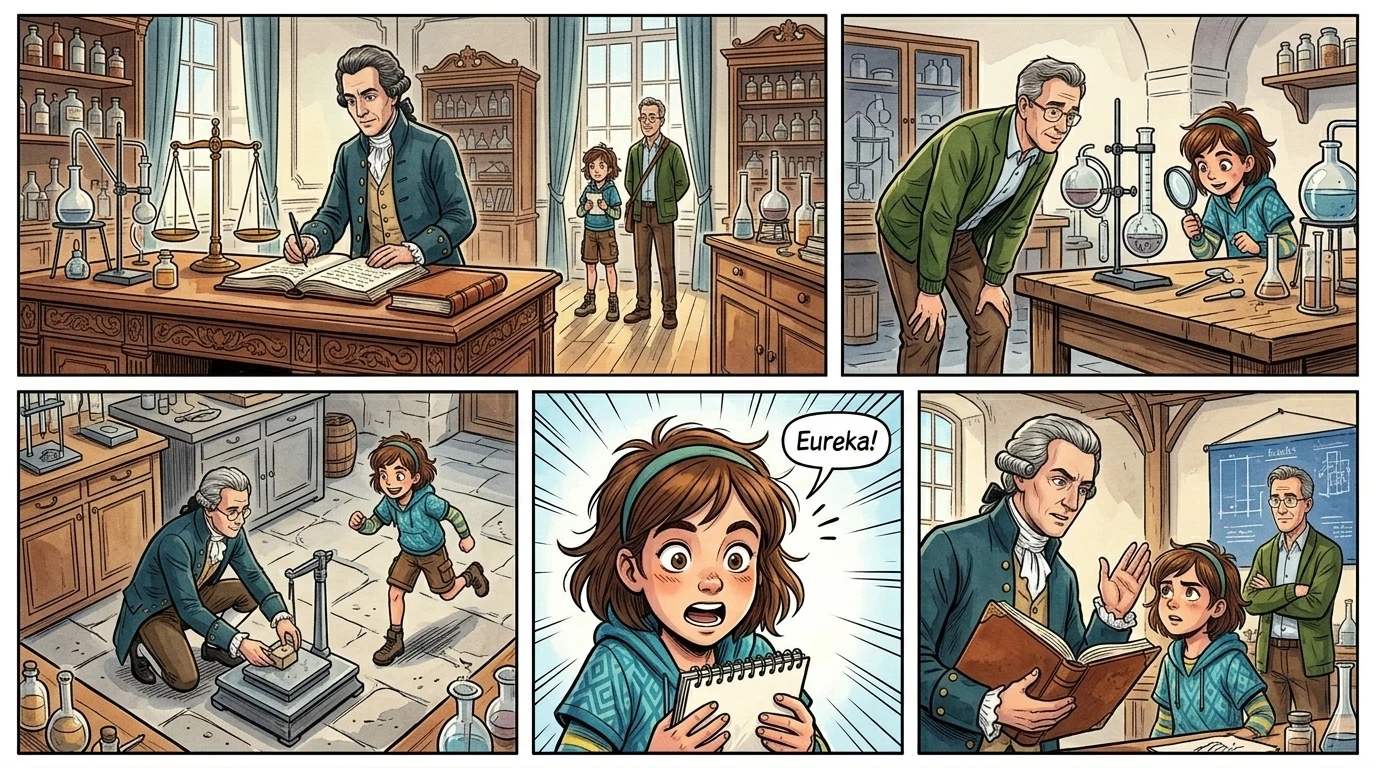
"A brilliant French scientist named Antoine Lavoisier was determined to solve the mystery," her father's voice narrated in her thoughts. Lavoisier wasn't just a chemist; he was also a nobleman and a tax collector who believed that precise measurement was the key to understanding the world. He suspected that when things burned or rusted, they weren't losing something, but gaining it.
Page 5
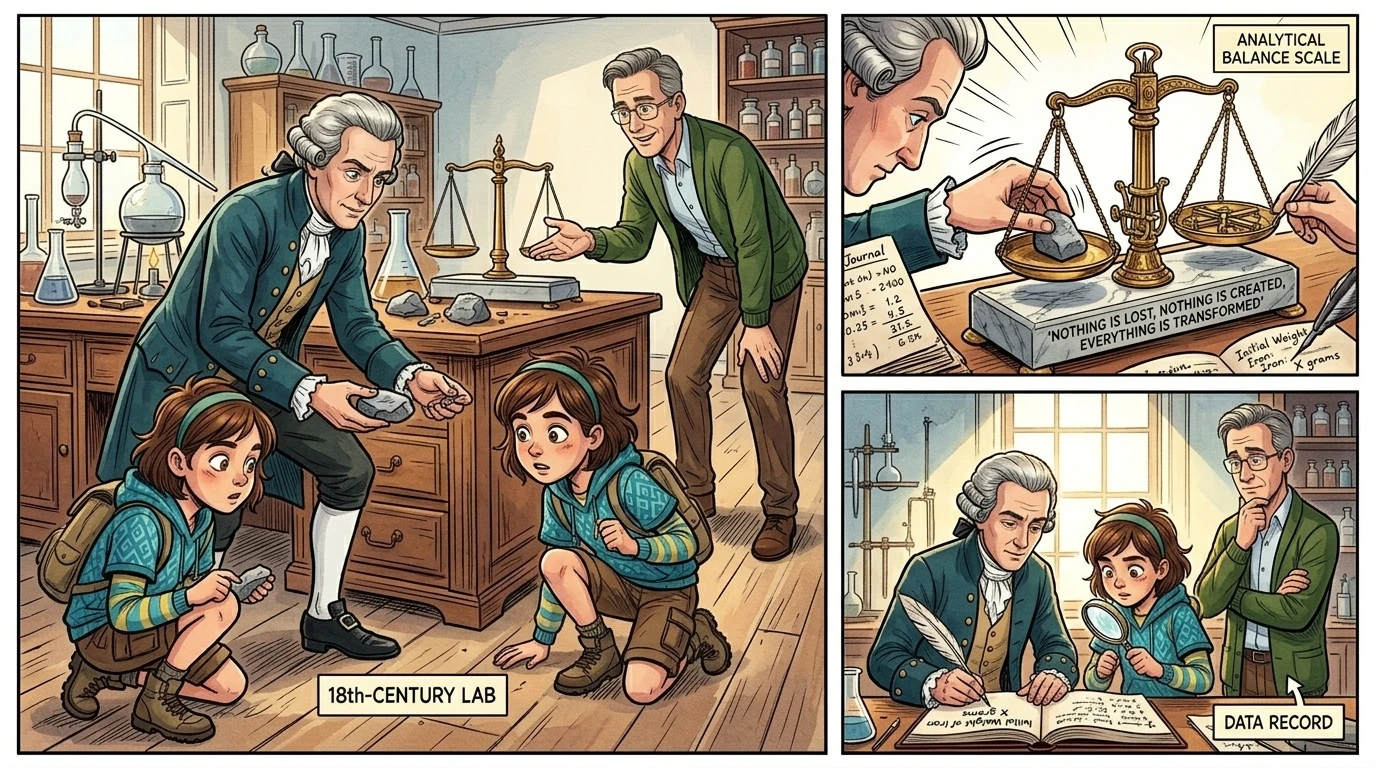
Lavoisier would often say, 'Nothing is lost, nothing is created, everything is transformed.' He picked up a piece of iron, placing it on one side of his hyper-accurate scale. He carefully noted its exact weight in his journal, preparing to perform an experiment that would change chemistry forever.
Page 6
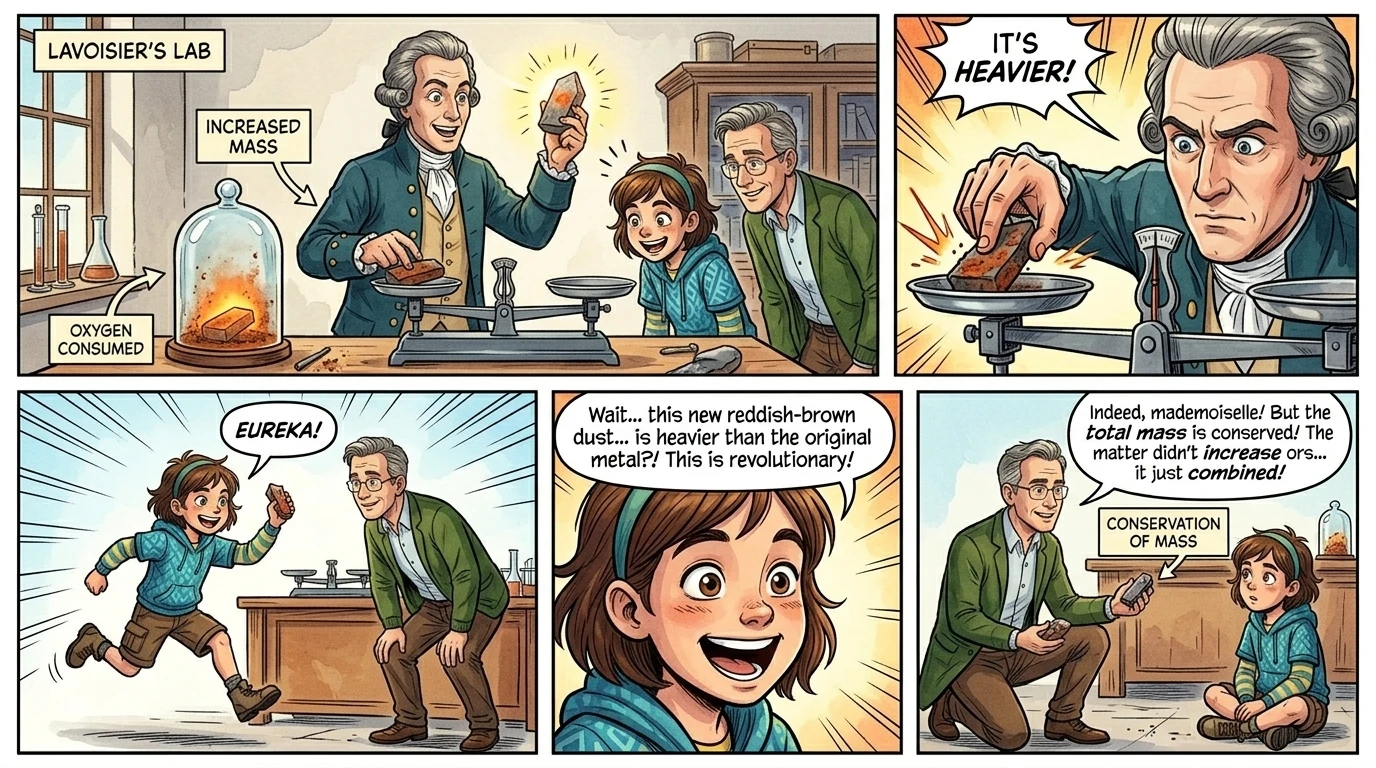
He placed the iron inside a sealed glass bell jar and heated it until it glowed red and formed a layer of rusty powder. When he weighed it again, he made a stunning discovery: the rusted iron was heavier! Lavoisier proved that the iron hadn't lost anything; it had combined with a gas from the air, a gas he named oxygen.
Page 7
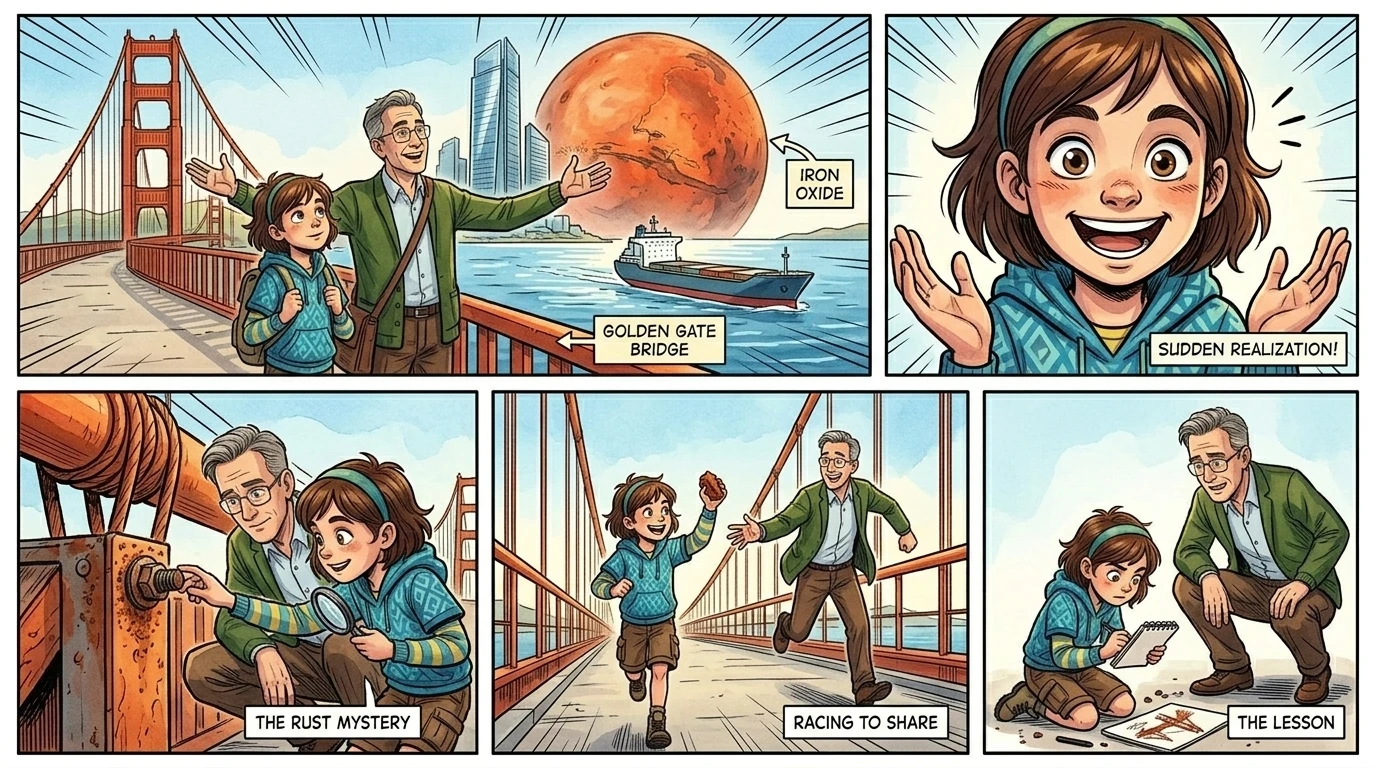
That discovery changed everything, allowing us to protect metals from rusting with paint, coatings, and even by inventing new materials like stainless steel. "Understanding rust helps us build everything from skyscrapers to ships that can sail for decades," her dad's voice concluded. "Even the red color of the planet Mars is because its surface is covered in iron oxide—it's a whole planet of rust!"
Page 8
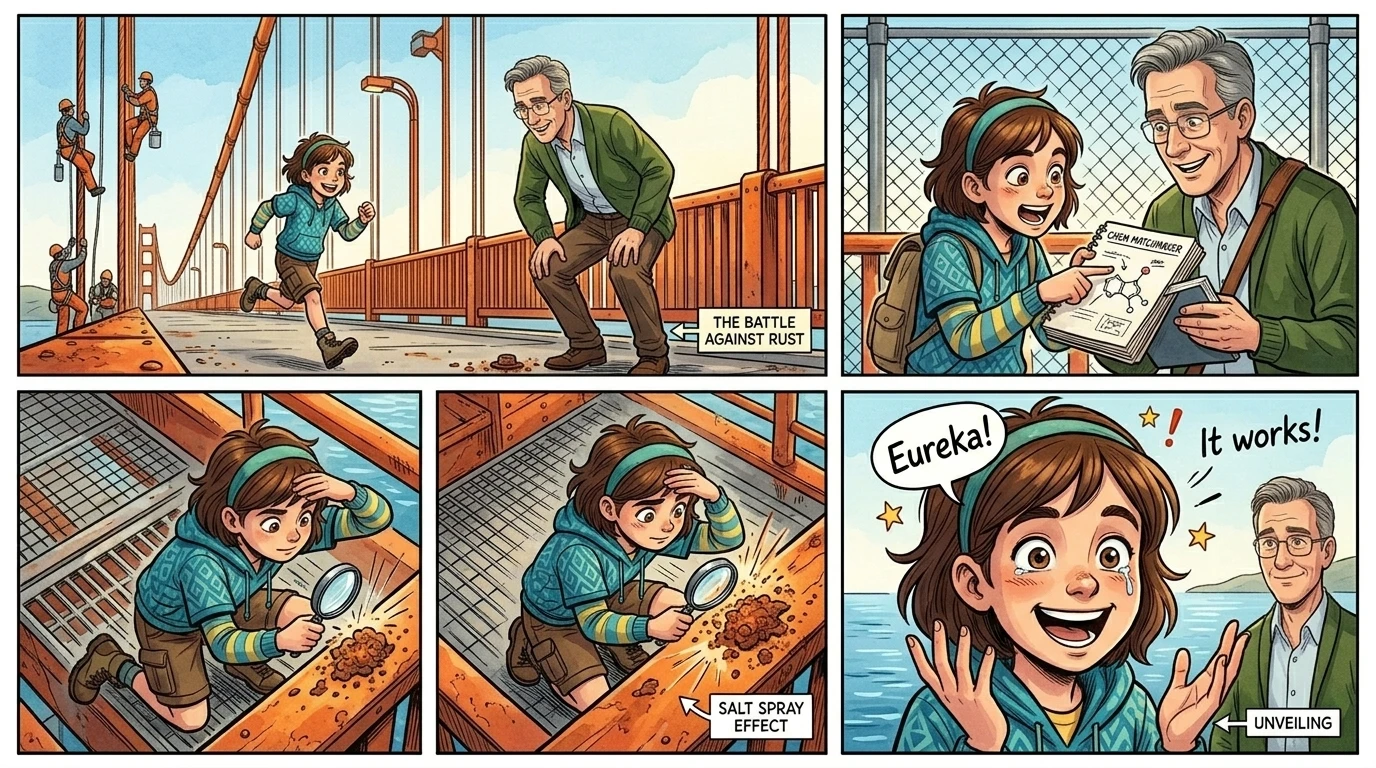
Sara snapped back to the present, the fog swirling around her on the bridge. "Whoa! So the salty ocean air is like a chemical matchmaker, helping the oxygen atoms grab onto the iron atoms faster!" she exclaimed. Her dad smiled. "Exactly! That's why the Golden Gate Bridge has a permanent team of painters working on it all year round."
Page 9
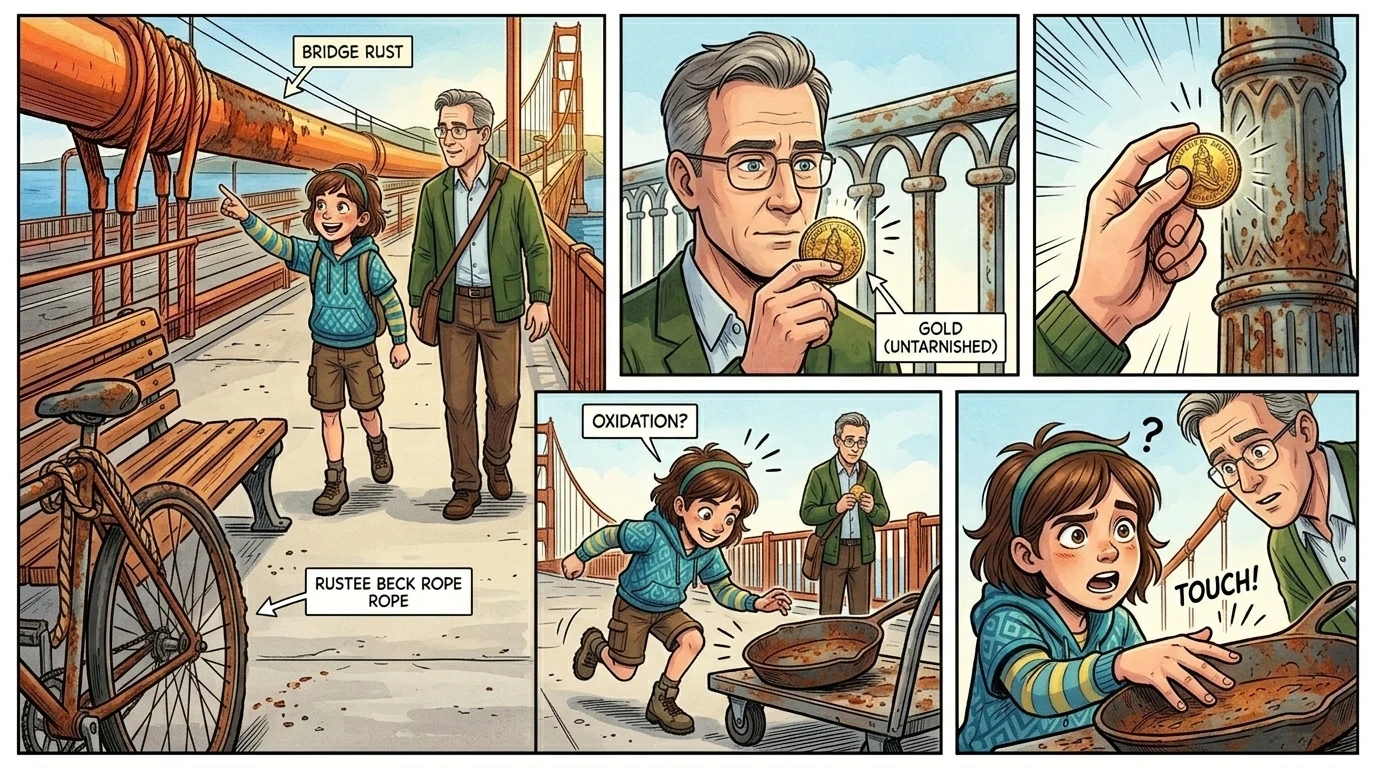
"I see it everywhere now!" Sara said, starting to walk again. "It's on my bike chain when I leave it in the rain, and on the old cast iron pan Mom has." Her dad added, "And it's why some ancient artifacts made of gold look brand new. Gold is a noble metal; it's too proud to team up with oxygen!"
Page 10
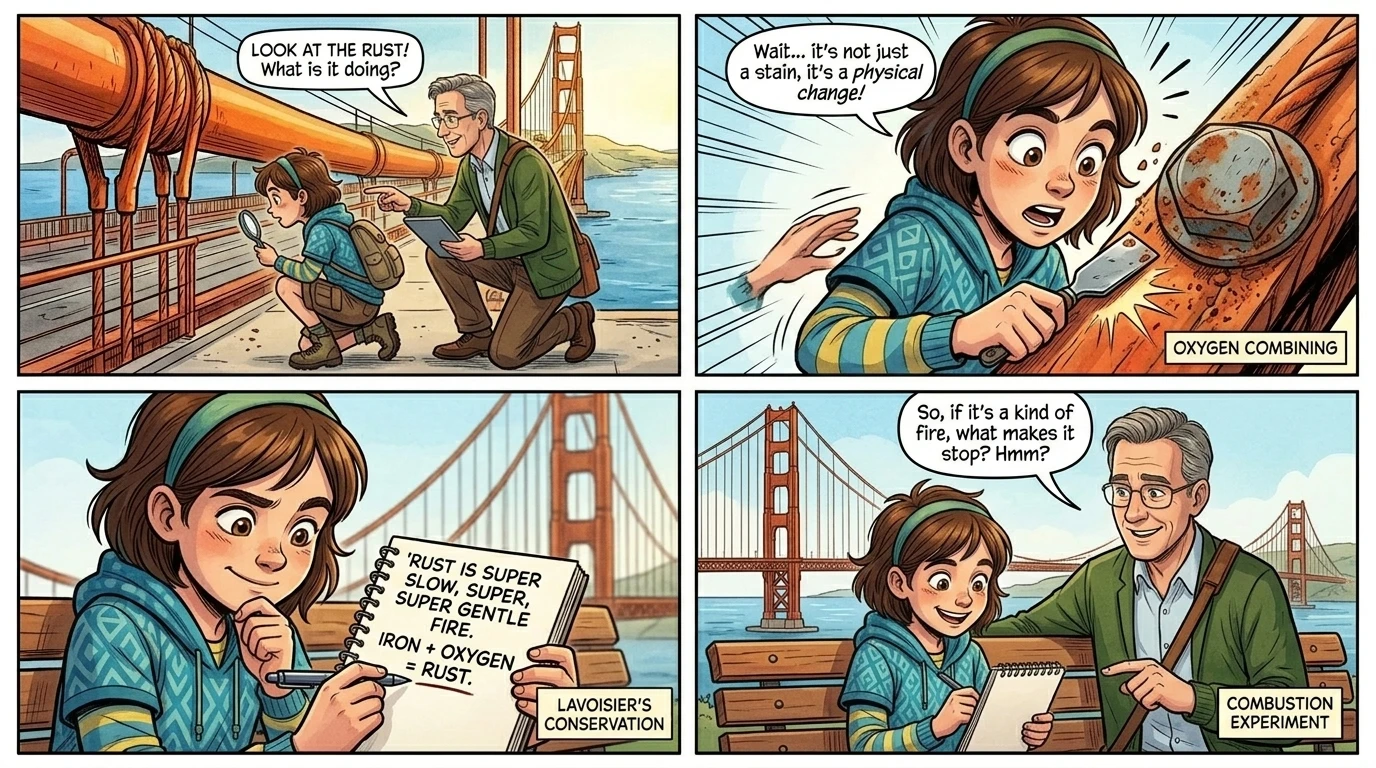
"So rust is really just a super slow, super gentle fire, where iron and oxygen combine," Sara summarized, writing it down in her little notebook. "That is the perfect way to think about it!" her dad replied. "Now, if that's a slow chemical reaction, what do you think happens in a really, really fast one?"
About this story
- Location: France
- Audience: kids (ages 6–12)
Questions and answers
Read Wonder Science on your phone
Wonder Science is available on Android. Get Wonder Science on Google Play.