Why We Have Seasons

Why We Have Seasons — an illustrated science story. 10 illustrated pages, free to read on Wonder Science.
Why We Have Seasons — book cover — Wonder Science
Why We Have Seasons — an illustrated science story. 10 illustrated pages, free to read on Wonder Science.

Page 1
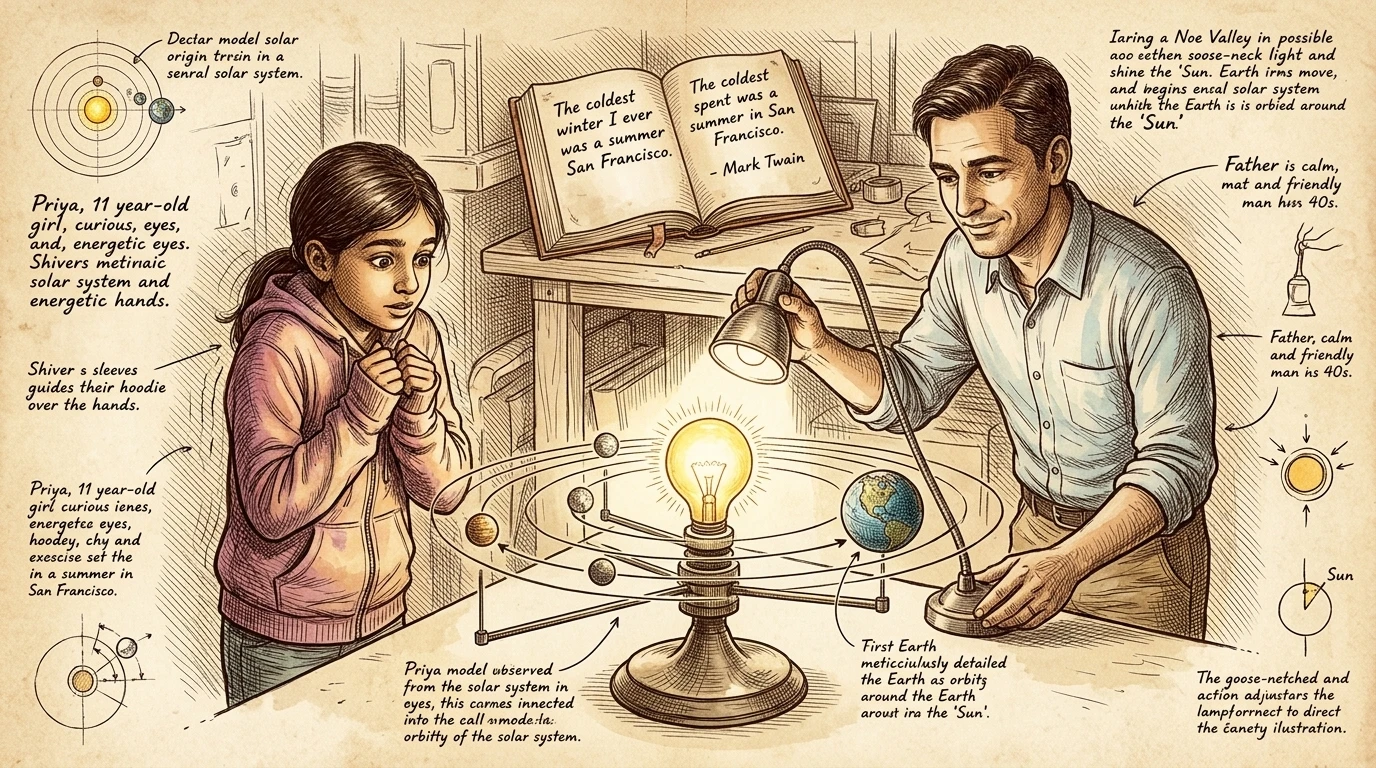
Priya shivered inside their Noe Valley garage, pulling the sleeves of her hoodie over her hands. "Dad, if it's June, why am I so cold?" Her father adjusted the…
Priya shivered inside their Noe Valley garage, pulling the sleeves of her hoodie over her hands. "Dad, if it's June, why am I so cold?" Her father adjusted the lamp shining on their model solar system, making a tiny Earth orbit a glowing bulb. "That's a famous San Francisco puzzle, sweetie," he chuckled. "It's why the writer Mark Twain once said, 'The coldest winter I ever spent was a summer in San Francisco.'"

Priya shivered inside their Noe Valley garage, pulling the sleeves of her hoodie over her hands. "Dad, if it's June, why am I so cold?" Her father adjusted the lamp shining on their model solar system, making a tiny Earth orbit a glowing bulb. "That's a famous San Francisco puzzle, sweetie," he chuckled. "It's why the writer Mark Twain once said, 'The coldest winter I ever spent was a summer in San Francisco.'"

Page 2
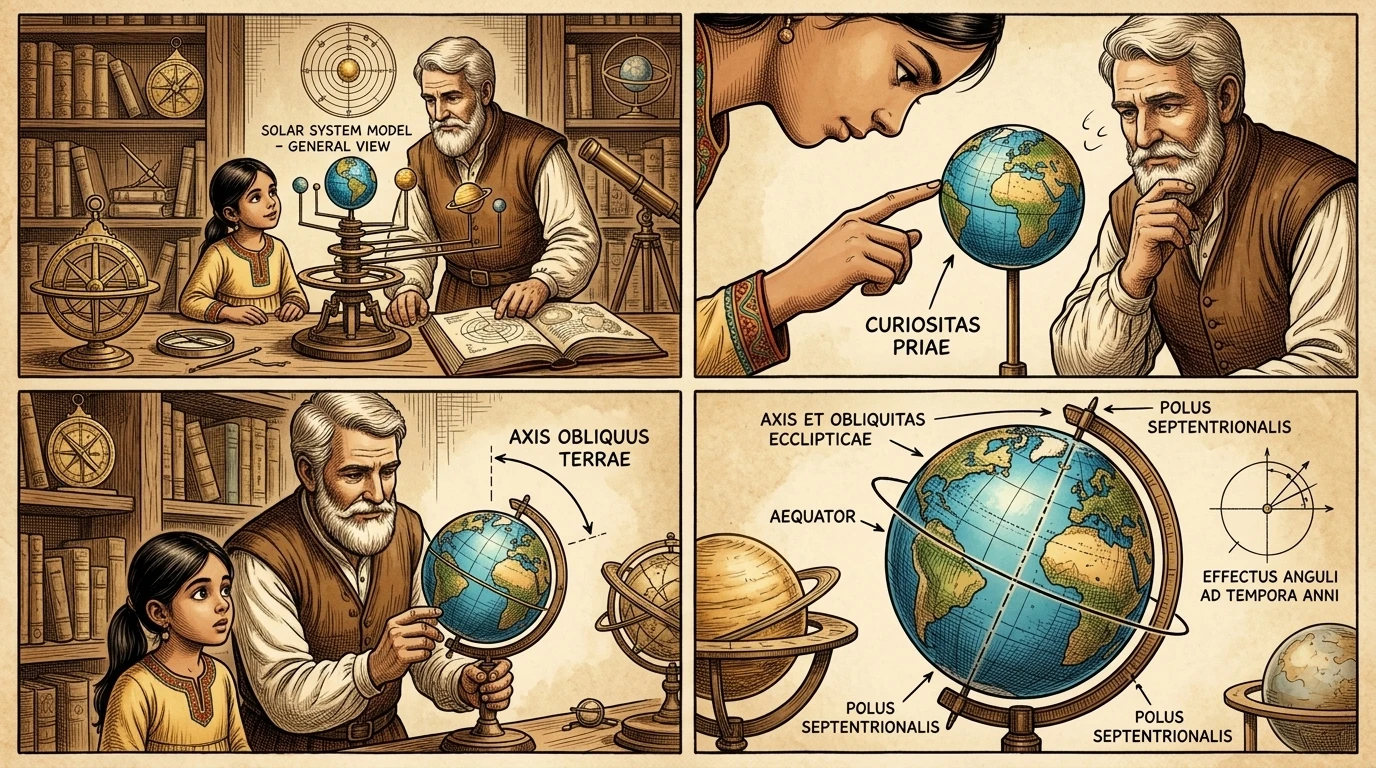
"But the sun is out! Shouldn't it be hot when Earth is closer to the sun in the summer?" Priya asked, nudging the little planet model.
"But the sun is out! Shouldn't it be hot when Earth is closer to the sun in the summer?" Priya asked, nudging the little planet model. Her dad shook his head, a thoughtful look on his face. "That's the big secret! It has almost nothing to do with distance, and everything to do with something called 'axial tilt.'" He gently tilted the model Earth on its stick, creating a brand new angle.

"But the sun is out! Shouldn't it be hot when Earth is closer to the sun in the summer?" Priya asked, nudging the little planet model. Her dad shook his head, a thoughtful look on his face. "That's the big secret! It has almost nothing to do with distance, and everything to do with something called 'axial tilt.'" He gently tilted the model Earth on its stick, creating a brand new angle.

Page 3
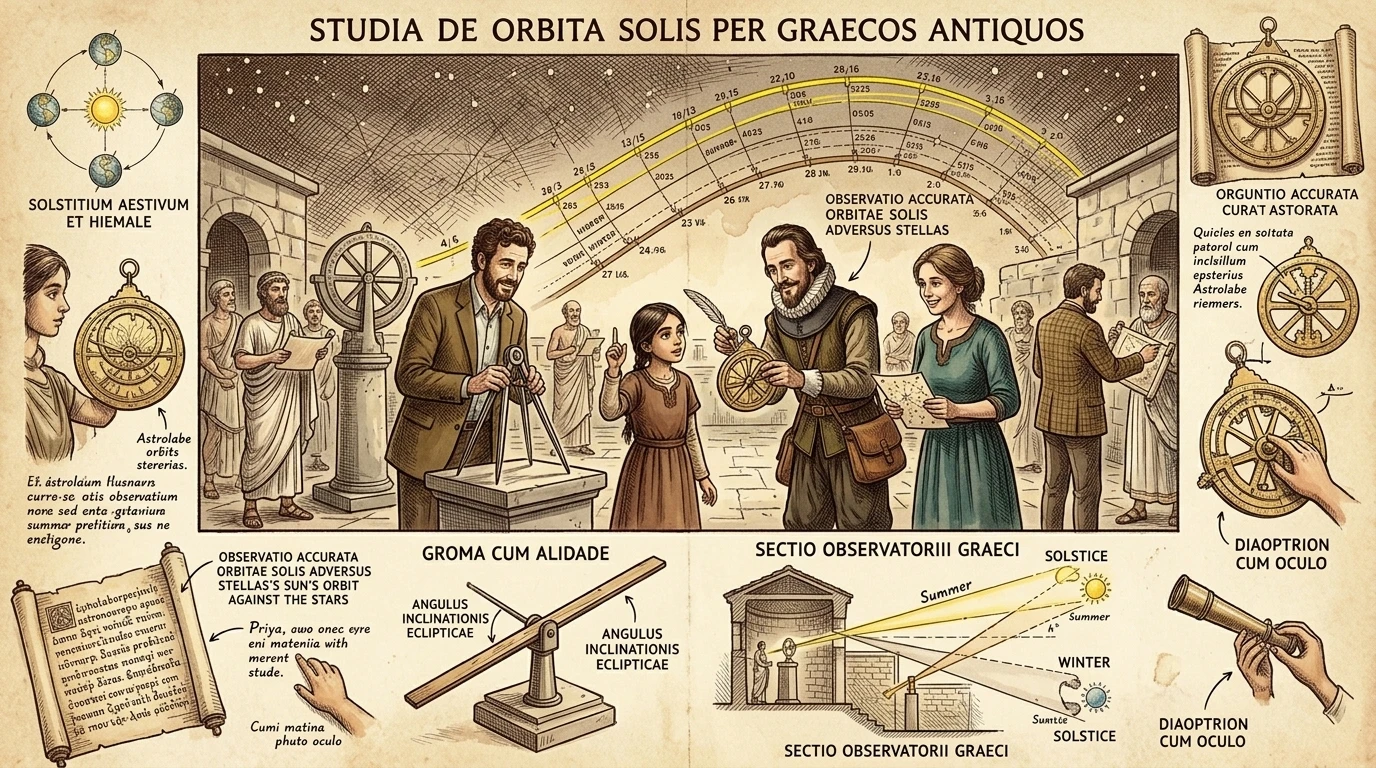
The idea of a tilted world spun in Priya's mind, stretching back through time. She imagined ancient Greek astronomers wrapped in togas, gazing up at the sky…
The idea of a tilted world spun in Priya's mind, stretching back through time. She imagined ancient Greek astronomers wrapped in togas, gazing up at the sky from a stone observatory. They wouldn't have known about tilt, but they were the first to notice the sun's path changing. They meticulously tracked its journey, observing how it climbed higher in the summer and stayed lower in the winter.

The idea of a tilted world spun in Priya's mind, stretching back through time. She imagined ancient Greek astronomers wrapped in togas, gazing up at the sky from a stone observatory. They wouldn't have known about tilt, but they were the first to notice the sun's path changing. They meticulously tracked its journey, observing how it climbed higher in the summer and stayed lower in the winter.

Page 4
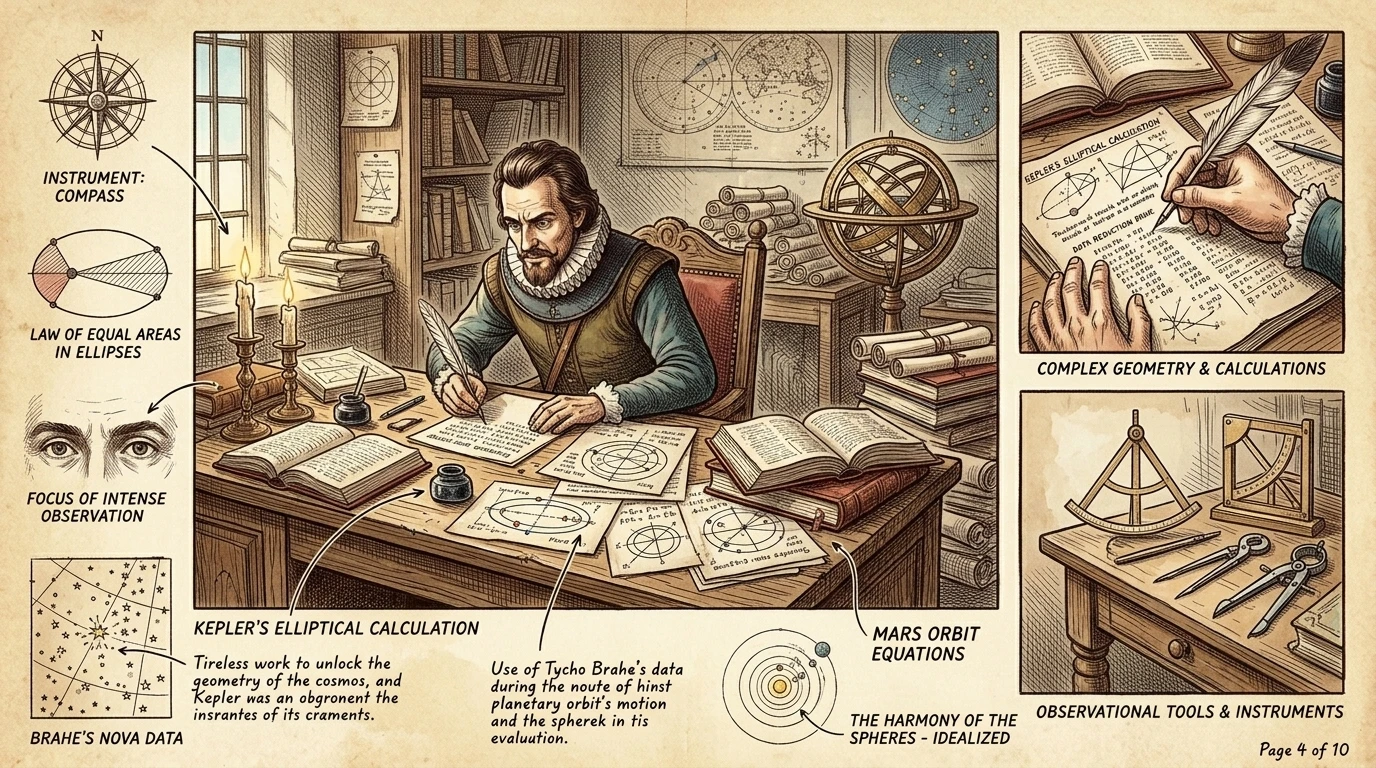
Centuries later, a German astronomer named Johannes Kepler decided to solve the puzzle of the planets' movements. He wasn't just observing; he was obsessed with…
Centuries later, a German astronomer named Johannes Kepler decided to solve the puzzle of the planets' movements. He wasn't just observing; he was obsessed with finding the underlying pattern. Working with mountains of data from his predecessor, Tycho Brahe, he spent years performing painstaking calculations. His goal was to understand the perfect, divine geometry of the heavens.

Centuries later, a German astronomer named Johannes Kepler decided to solve the puzzle of the planets' movements. He wasn't just observing; he was obsessed with finding the underlying pattern. Working with mountains of data from his predecessor, Tycho Brahe, he spent years performing painstaking calculations. His goal was to understand the perfect, divine geometry of the heavens.

Page 5
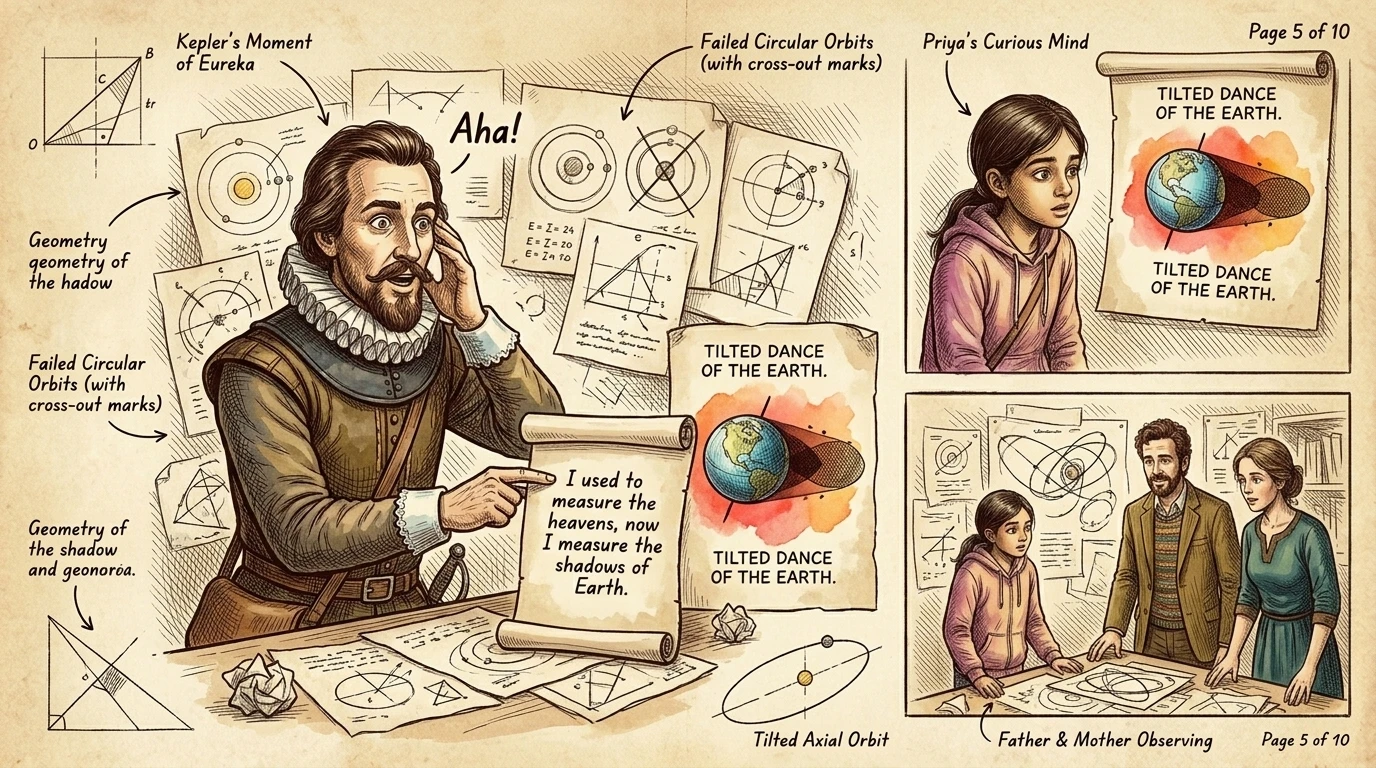
Kepler grew frustrated, as his calculations for perfect circular orbits never matched the real-world data. One evening, staring at his messy charts, he had a…
Kepler grew frustrated, as his calculations for perfect circular orbits never matched the real-world data. One evening, staring at his messy charts, he had a breakthrough that challenged everything. Priya remembered her dad's voice explaining the moment, "Kepler once wrote, 'I used to measure the heavens, now I measure the shadows of Earth.' He realized the answers weren't just in the stars, but in understanding our own planet's strange, tilted dance."

Kepler grew frustrated, as his calculations for perfect circular orbits never matched the real-world data. One evening, staring at his messy charts, he had a breakthrough that challenged everything. Priya remembered her dad's voice explaining the moment, "Kepler once wrote, 'I used to measure the heavens, now I measure the shadows of Earth.' He realized the answers weren't just in the stars, but in understanding our own planet's strange, tilted dance."

Page 6

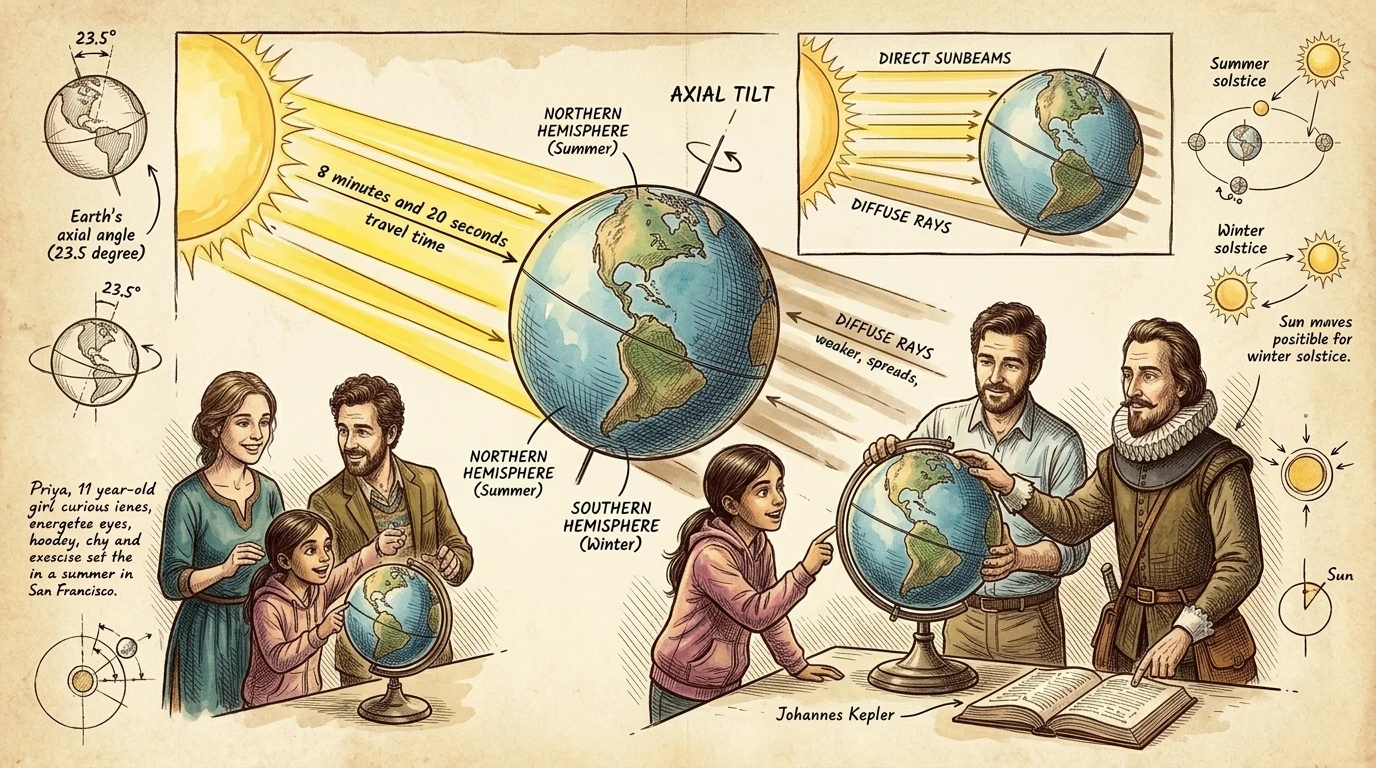
"The secret is direct light!" Priya's dad's voice would narrate over the vision. When the Northern Hemisphere is tilted toward the sun, we get sunlight…
"The secret is direct light!" Priya's dad's voice would narrate over the vision. When the Northern Hemisphere is tilted toward the sun, we get sunlight straight-on, which is strong and warm. When it's tilted away, the light hits us at a glancing angle, spreading its energy out and feeling weaker. "And get this," her dad added, "that powerful sunlight takes 8 minutes and 20 seconds just to travel from the Sun to us!"

"The secret is direct light!" Priya's dad's voice would narrate over the vision. When the Northern Hemisphere is tilted toward the sun, we get sunlight straight-on, which is strong and warm. When it's tilted away, the light hits us at a glancing angle, spreading its energy out and feeling weaker. "And get this," her dad added, "that powerful sunlight takes 8 minutes and 20 seconds just to travel from the Sun to us!"

Page 7
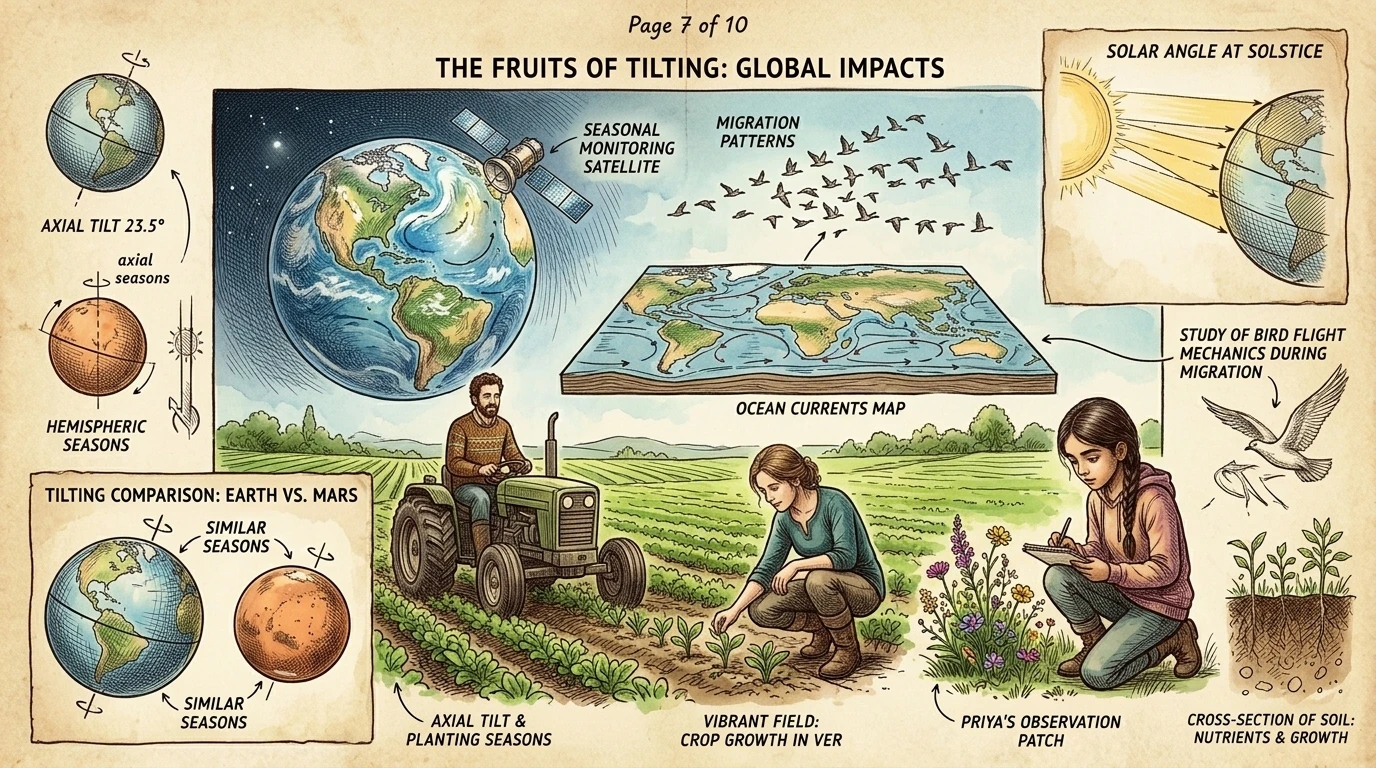
Understanding this tilt changed everything, allowing humans to predict planting seasons and prepare for winter. It helps us understand animal migrations and the…
Understanding this tilt changed everything, allowing humans to predict planting seasons and prepare for winter. It helps us understand animal migrations and the flow of ocean currents. Today, satellites monitor these seasonal changes from space, helping farmers and predicting weather across the globe. It even happens on other planets—Mars has seasons for the exact same reason!

Understanding this tilt changed everything, allowing humans to predict planting seasons and prepare for winter. It helps us understand animal migrations and the flow of ocean currents. Today, satellites monitor these seasonal changes from space, helping farmers and predicting weather across the globe. It even happens on other planets—Mars has seasons for the exact same reason!

Page 8
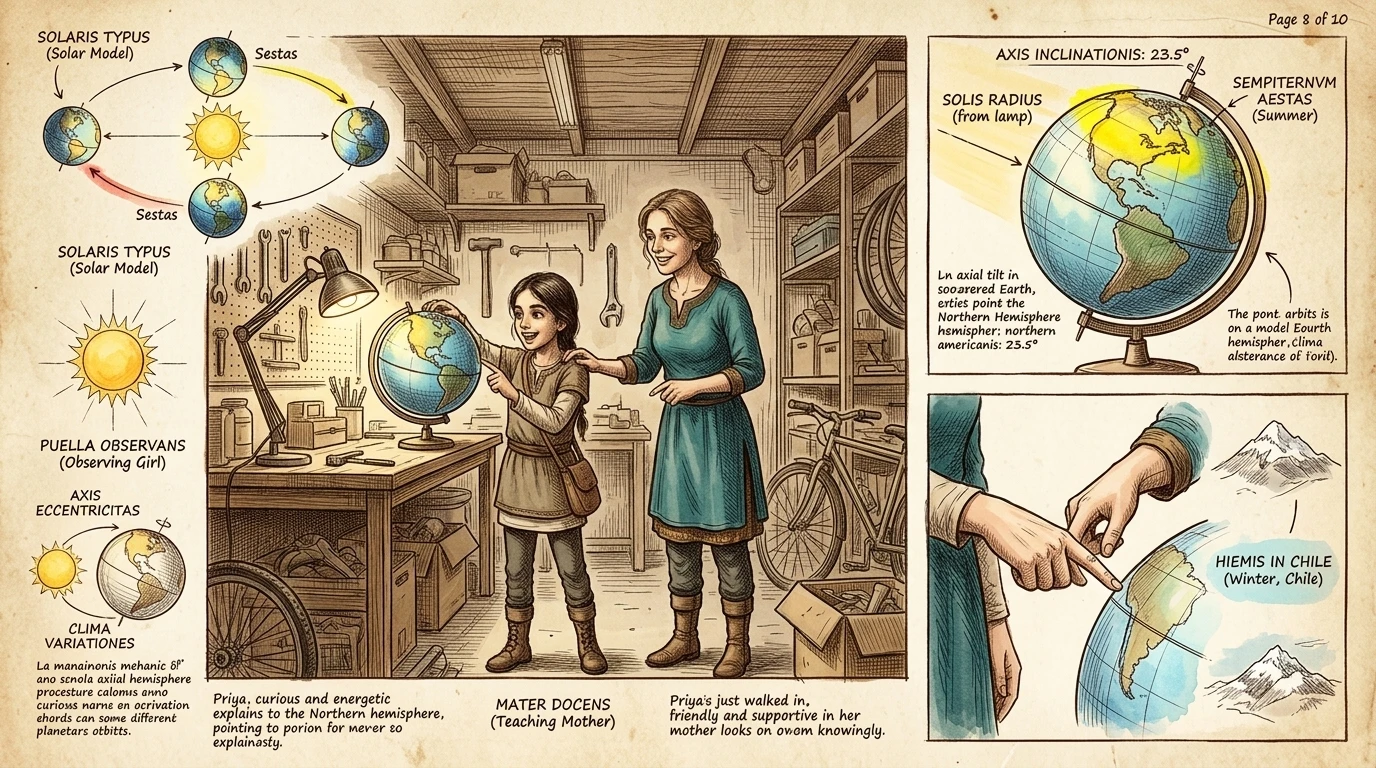
Back in the garage, Priya grabbed the model Earth and the lamp. "Look, Mom!" she exclaimed as her mother walked in. "When our part of the world is tilted toward…
Back in the garage, Priya grabbed the model Earth and the lamp. "Look, Mom!" she exclaimed as her mother walked in. "When our part of the world is tilted toward the light, it's summer for us!" Her mom smiled, pointing to the bottom of the globe. "Oh, I see! And that means when it's summer for you here in San Francisco, it's winter for our friends in Chile!"

Back in the garage, Priya grabbed the model Earth and the lamp. "Look, Mom!" she exclaimed as her mother walked in. "When our part of the world is tilted toward the light, it's summer for us!" Her mom smiled, pointing to the bottom of the globe. "Oh, I see! And that means when it's summer for you here in San Francisco, it's winter for our friends in Chile!"

Page 9
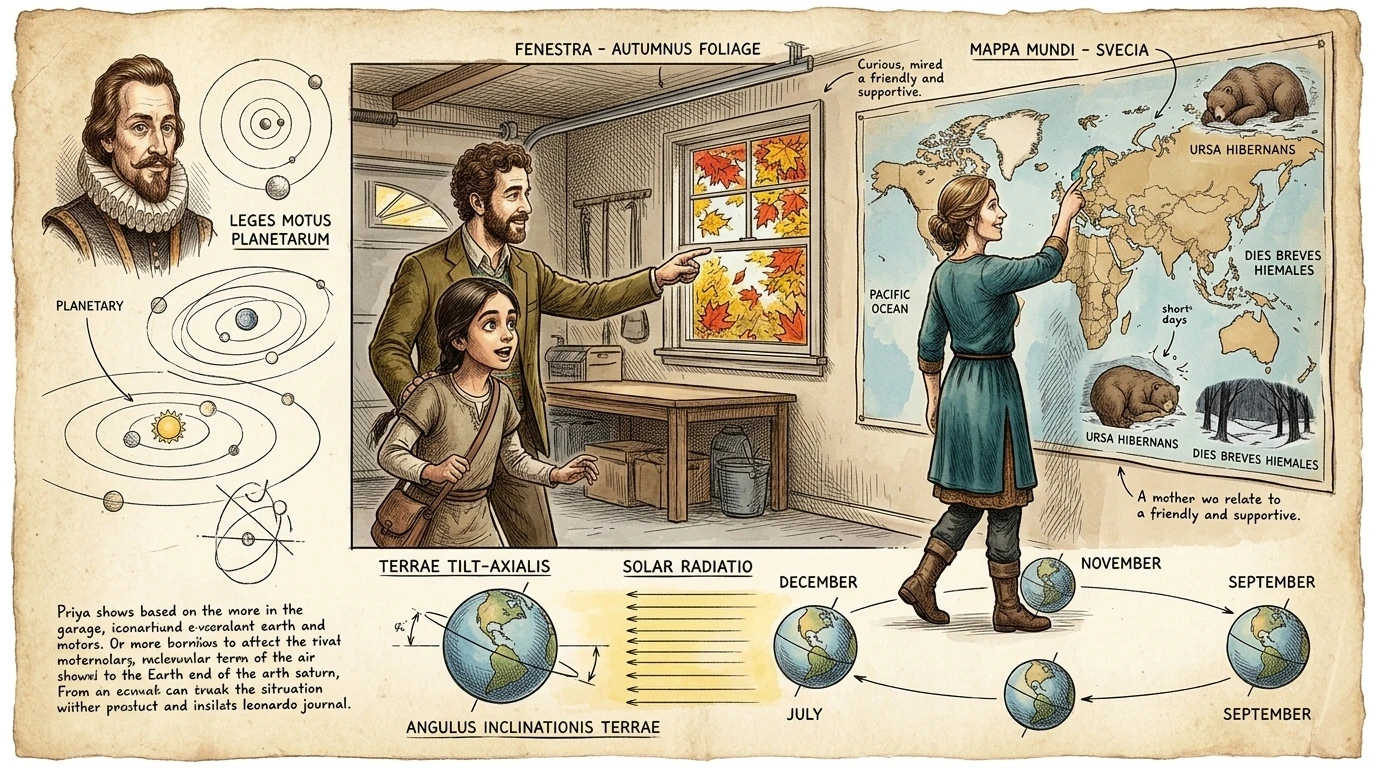
"So the tilt explains why leaves change color in the fall," her dad added, gesturing outside. "And why bears hibernate!" Priya said, her eyes wide.
"So the tilt explains why leaves change color in the fall," her dad added, gesturing outside. "And why bears hibernate!" Priya said, her eyes wide. Her mom walked over to a world map on the wall. "It even explains why the days are so short in Sweden during the winter—they're tilted so far away from the sun's direct light!"

"So the tilt explains why leaves change color in the fall," her dad added, gesturing outside. "And why bears hibernate!" Priya said, her eyes wide. Her mom walked over to a world map on the wall. "It even explains why the days are so short in Sweden during the winter—they're tilted so far away from the sun's direct light!"

Page 10
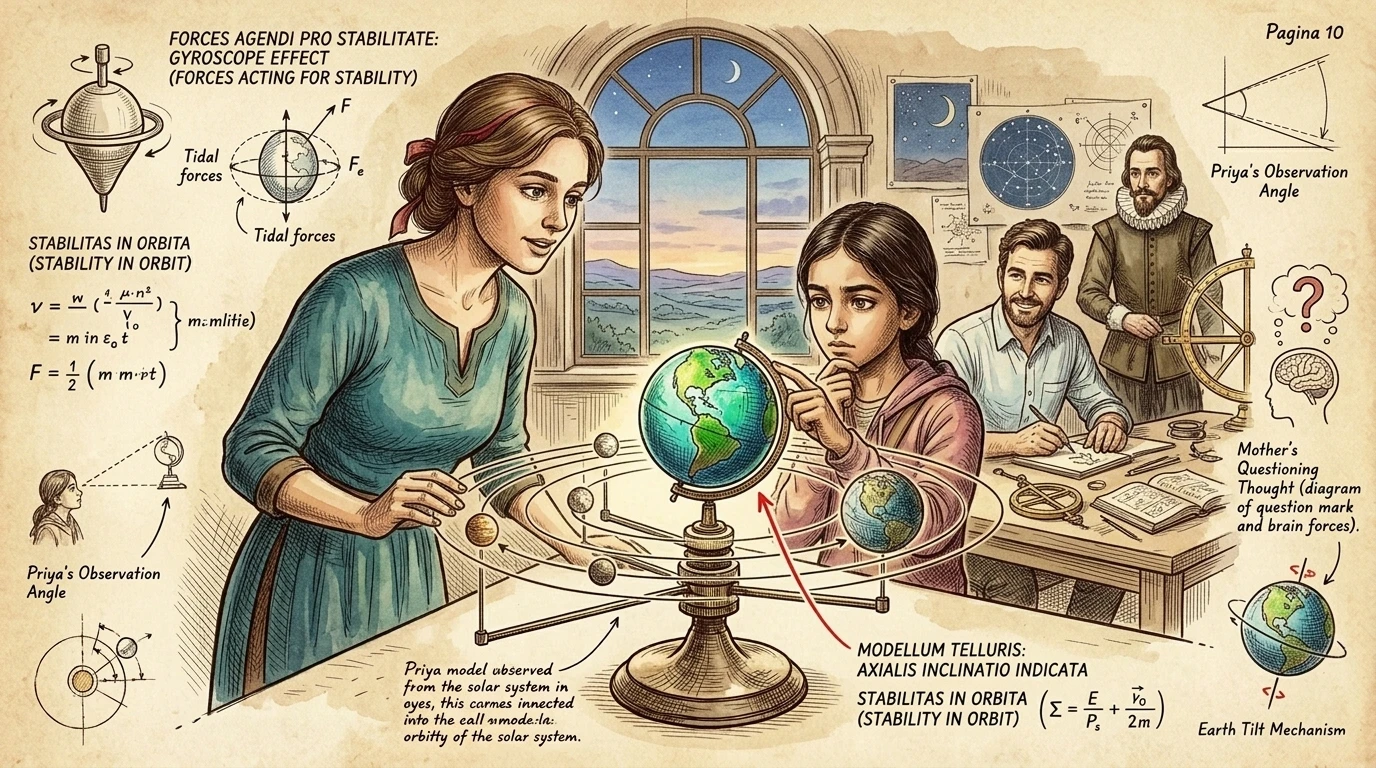
Priya stared at their little model Earth, a whole new world of understanding unlocked. "So, it's not about distance at all," she summarized.
Priya stared at their little model Earth, a whole new world of understanding unlocked. "So, it's not about distance at all," she summarized. "Seasons are all about our planet's amazing tilt." Her mother looked at the spinning globe, then asked a new question. "But if Earth is tilted and spinning like a top... what keeps it from falling over?"

Priya stared at their little model Earth, a whole new world of understanding unlocked. "So, it's not about distance at all," she summarized. "Seasons are all about our planet's amazing tilt." Her mother looked at the spinning globe, then asked a new question. "But if Earth is tilted and spinning like a top... what keeps it from falling over?"

About this story

  • Audience: kids (ages 6–12)

Questions and answers

Questions and answers about Why We Have Seasons

Read Wonder Science on your phone

Wonder Science is available on Android. Get Wonder Science on Google Play.

More Wonder Science stories

All Wonder Science stories · Open the library